🏬Supersize Online Funeral Retailer🪦1000's of Headstones⚱️Over 10,000 Cremation Urns⚰️Caskets Overnight Delivery🛒Funeral & Memorial Superstore🚚FREE Shipping on ALL Orders👨👩👧👦Helping Families for over 20 Years💰Lowest Price Guarantee🏬Supersize Online Funeral Retailer🪦1000's of Headstones⚱️Over 10,000 Cremation Urns⚰️Caskets Overnight Delivery🛒Funeral & Memorial Superstore🚚FREE Shipping on ALL Orders👨👩👧👦Helping Families for over 20 Years💰Lowest Price Guarantee
🏬Supersize Online Funeral Retailer🪦1000's of Headstones⚱️Over 10,000 Cremation Urns⚰️Caskets Overnight Delivery🛒Funeral & Memorial Superstore🚚FREE Shipping on ALL Orders👨👩👧👦Helping Families for over 20 Years💰Lowest Price Guarantee🏬Supersize Online Funeral Retailer🪦1000's of Headstones⚱️Over 10,000 Cremation Urns⚰️Caskets Overnight Delivery🛒Funeral & Memorial Superstore🚚FREE Shipping on ALL Orders👨👩👧👦Helping Families for over 20 Years💰Lowest Price Guarantee
A soft glow at a gravesite can turn an ordinary visit into something quieter and more meaningful. Solar lights for graves have become one of the most popular ways families honor a loved one's resting place, and the options range from simple stake-mounted LEDs to ornate angel figures and cross-shaped lanterns. Choosing the right one depends on a handful of practical factors — the cemetery's rules, the amount of sunlight the plot receives, the light's durability, and the style that feels most fitting for the person you're remembering. This guide walks through each of those factors so you can make a confident purchase. For a broader look at everything involved in navigating cemetery decisions, our pillar guide covers plots, vaults, regulations, and more.
If you already know you want to browse , our catalog offers a curated selection of memorial lighting designed to withstand outdoor conditions year-round.
Solar cemetery lights operate on a straightforward principle. A small photovoltaic panel — usually mounted on the top or back of the unit — absorbs sunlight during the day and converts it into electrical energy stored in a rechargeable battery (most commonly a NiMH cell rated between 1.2V and 3.2V). At dusk, a built-in sensor activates the LED, which draws from the stored charge to produce light through the night. By dawn the LED shuts off and the charging cycle begins again.
The result is a fully self-sustaining light that requires no wiring, no electrical outlet, and no daily attention from you. Most quality units deliver between four and ten hours of illumination on a full charge, though run time depends heavily on the panel's size, the battery's capacity, and how much direct sunlight the site receives.
Key Components to Understand
Knowing what's inside a solar grave light helps you evaluate quality before you buy:
Solar panel: Converts sunlight to electricity. Monocrystalline panels are more efficient in low light than polycrystalline ones, but either type works well in full-sun locations.
Rechargeable battery: Stores energy for nighttime use. NiMH batteries are standard; lithium-ion batteries hold more charge but cost more. Look for units with replaceable batteries so you can swap them out after one to two years.
LED bulb: Produces the visible light. LEDs last tens of thousands of hours, draw very little power, and generate almost no heat — making them far safer than open flames at a gravesite.
Dusk-to-dawn sensor: Automates the on/off cycle so the light operates without any switches or timers.
Housing: The exterior shell — typically resin, powder-coated metal, or weather-resistant plastic — protects the electronics from rain, snow, and UV exposure.
Types of Solar Lights for Graves
Solar grave lights come in several distinct styles, and each suits a different setting and preference.
Lantern-Style Lights
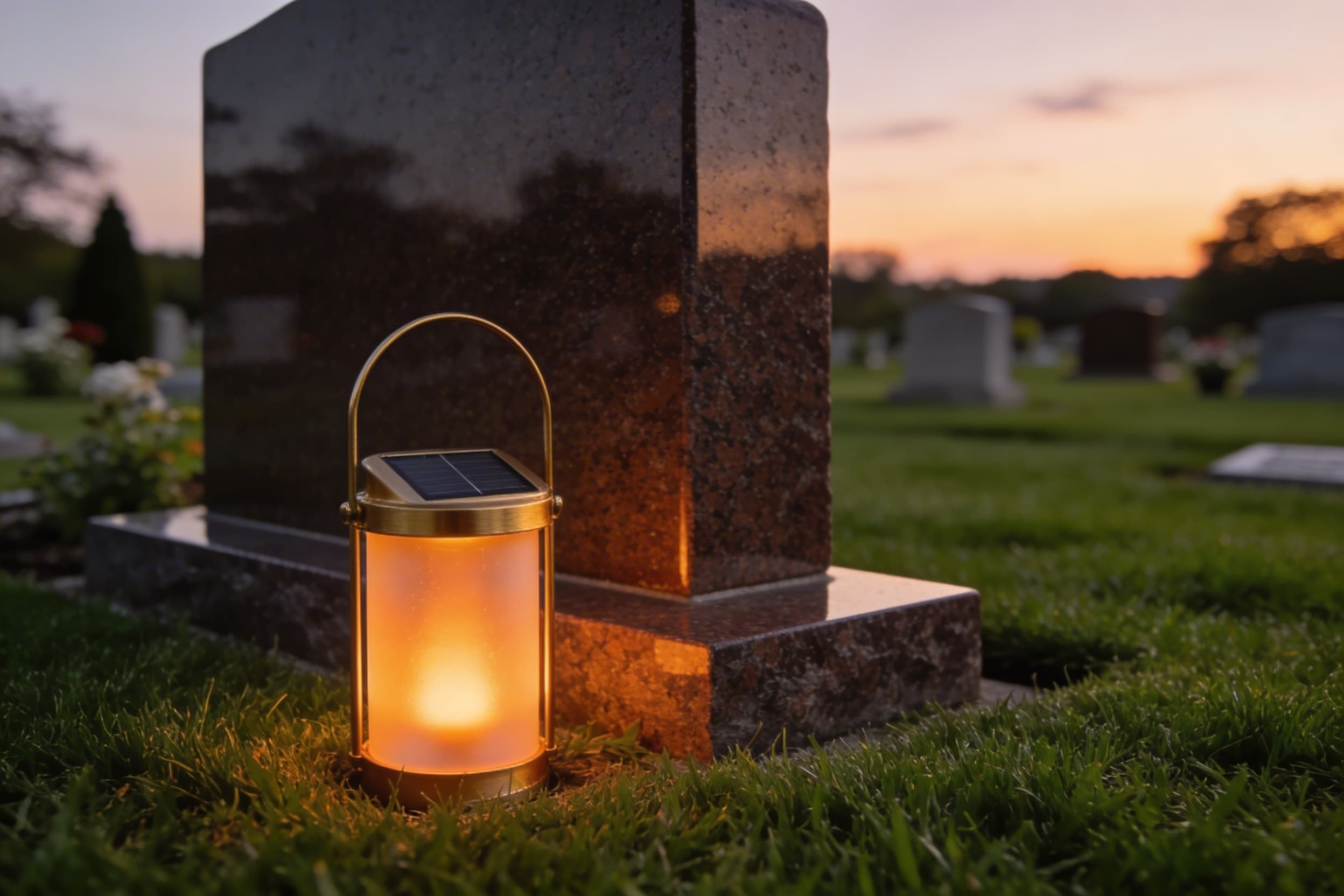
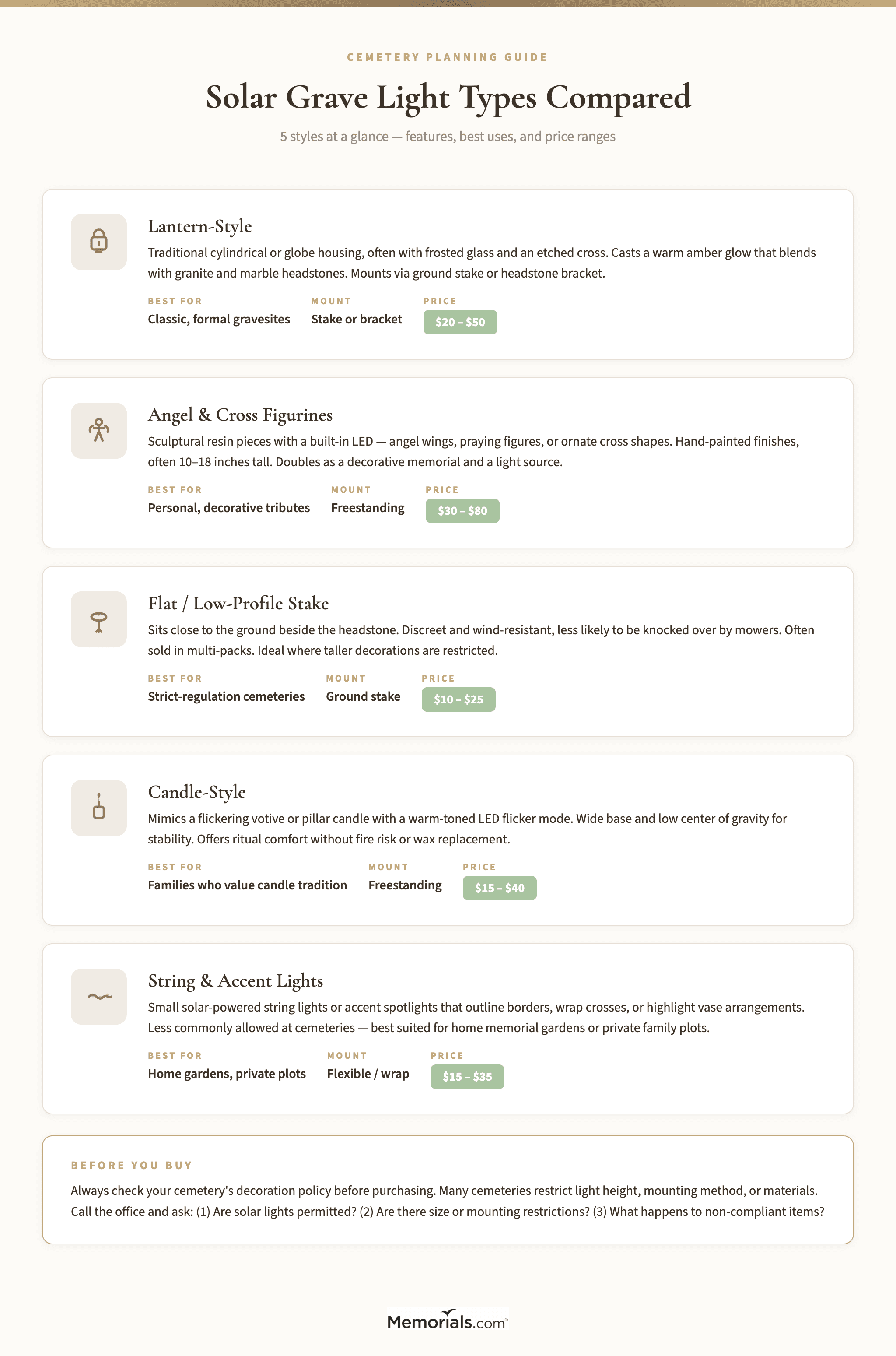
Lantern designs are the most traditional choice. They typically feature a cylindrical or globe-shaped housing — often with an etched cross or frosted glass — that sits on a ground stake or attaches to a headstone bracket. The look recalls the old-fashioned "eternal flame" lamps that have long been a fixture in Catholic and Orthodox cemeteries. These lights cast a warm amber glow and blend naturally with granite or marble headstones.
Angel and Cross Figurines
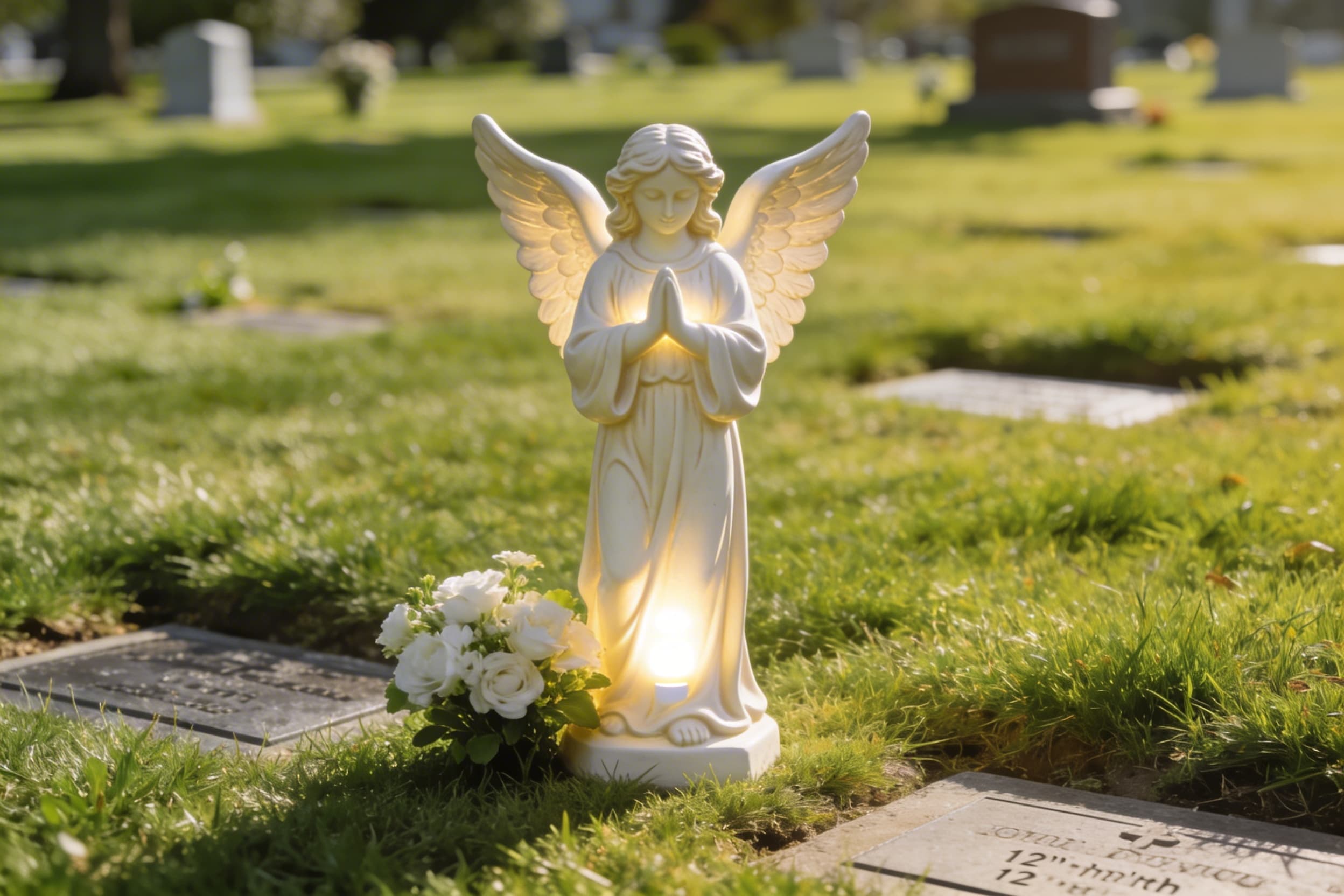
Figurine-style solar lights combine a sculptural element with a built-in LED. Angel designs and cross shapes are the most common, and many are crafted from resin with a hand-painted finish. These pieces tend to be larger — some stand over a foot tall — and serve as both a light source and a decorative memorial. If your cemetery allows freestanding decorations, an angel or cross figurine can add a deeply personal touch alongside other decorating ideas for gravesites.
Flat or Low-Profile Stake Lights
Stake-mounted solar lights sit close to the ground and are the most discreet option. They push directly into the soil near the headstone or along the edge of the plot. Because they have a low profile, they're less likely to be knocked over by wind or lawn maintenance equipment, and many cemeteries that restrict taller decorations still permit flat stake lights.
Candle-Style Lights
Solar candle lights mimic the look of a flickering votive or pillar candle. Some use a warm-toned LED with a flicker mode to simulate a real flame. These are popular for families who want the ritual comfort of a lit candle without the fire risk or the need to replace wax candles after every visit. A wide base and low center of gravity keep them stable outdoors.
String and Accent Lights
Small solar-powered string lights or accent spotlights can outline a grave border, wrap around a memorial cross, or highlight a vase arrangement. These are less common at cemeteries — many restrict them — but they work well for home memorial gardens, memorial benches, or private family plots where regulations are relaxed.
What to Look for When Buying
Not every solar grave light is built to last outdoors through four seasons. Here are the factors that separate a reliable purchase from a disappointing one.
Weather Resistance
Look for an IP65 or higher waterproof rating. IP65 means the light is fully protected against dust and can handle sustained water jets — well beyond what rain or snow will deliver. Units rated below IP44 may not survive a hard winter. Powder-coated metal housings and UV-stabilized resin hold up better than bare plastic, which can crack or yellow after prolonged sun exposure.
Battery Life and Replaceability
A fresh NiMH battery typically lasts one to two years before its capacity drops noticeably. After that, charge times lengthen and run times shorten. The most practical designs use a standard rechargeable battery (AA or AAA NiMH) that you can replace yourself for a few dollars. Sealed units with non-replaceable batteries force you to discard the entire light when the battery degrades — more waste and more cost over time.
Solar Panel Efficiency
Monocrystalline panels are the gold standard for small solar devices. They convert more sunlight per square inch than polycrystalline panels, which matters when the panel is only a few centimeters across. If the gravesite sits under tree cover or on the north side of a building, a more efficient panel makes the difference between a light that glows reliably and one that barely flickers. Consider maintaining gravesite accessories by wiping the panel clean every few weeks — dust and pollen buildup can cut charging efficiency significantly.
Lumens and Light Color
Most memorial solar lights produce between 2 and 15 lumens — enough for a gentle glow, not a floodlight. That softness is intentional; the goal is ambiance and remembrance, not illumination. Warm white (2700K–3000K) and amber tones are the most common and feel the most respectful. Cool white LEDs exist but can look harsh against stone or bronze surfaces.
Mounting Options
Solar grave lights attach in one of three ways:
Ground stake: Pushes into the soil beside the headstone. Simple and portable but can lean or fall in loose ground.
Headstone bracket: Clips or screws onto the top or side of the headstone. More secure but may require cemetery approval. Some cemeteries require staff to install bracket-mounted accessories.
Freestanding base: Sits on a flat surface — a ledger stone, a bench, or a pedestal. Weighted bases resist tipping in moderate wind.
Choose the mount that matches both the gravesite layout and any cemetery rules about attachments.
Price Ranges
Solar grave lights span a wide range:
Basic stake lights: $10–$25. Functional and low-profile, often sold in multi-packs.
Lantern and candle styles: $20–$50. Better build quality, amber or warm white glow, replaceable batteries.
Premium memorial lights: $50–$120+. High-efficiency panels, brass or bronze housing, custom engraving options.
The sweet spot for most families is the $25–$50 range, where build quality and aesthetics align without overspending on features that don't improve outdoor longevity.
Cemetery Regulations and Solar Lights
Before you purchase any solar light, contact the cemetery office. Policies on gravesite decorations — including lights — vary dramatically from one facility to the next, and violations can result in the item being removed without notice.
Common Restrictions
Some cemeteries prohibit all gravesite lights, including solar and battery-powered models. Others allow lights but restrict their size, height, placement, or attachment method. A few of the most common restrictions include:
No items taller than the headstone itself
No stakes driven into the ground within the plot boundary
No attachments to the headstone unless installed by cemetery staff
No glass housings (shatterproof plastic or resin only)
Seasonal cleanup periods during which all decorations are removed
National and state veterans cemeteries tend to have the strictest rules, often permitting only a small seasonal wreath or a single approved floral arrangement. Private and religious cemeteries are generally more flexible, but even they may restrict certain styles. Understanding the full scope of rules for cemetery installations can save you time and disappointment.
How to Check
Call the cemetery's main office before ordering. Ask three direct questions:
Are solar lights permitted on gravesites?
Are there restrictions on mounting method, size, or materials?
What happens to items that don't comply — are they held for pickup or discarded?
If you receive verbal permission, follow up with an email so you have a written record. Policies can change with new management or updated bylaws, and having documentation protects your purchase.
Installation and Placement Tips
Getting the most out of a solar grave light comes down to positioning and a few minutes of setup.
Maximize Sunlight Exposure
Place the light — or at least its solar panel — where it receives the most direct sunlight during the day. South-facing positions in the Northern Hemisphere get the longest sun exposure. Avoid placing lights in the shadow of tall headstones, mausoleums, or trees. If the gravesite is heavily shaded, look for a model with a detachable solar panel connected by a short cable — you can position the panel in a sunnier spot nearby.
Secure the Light Properly
Ground-stake lights should be pushed firmly into compacted soil. In loose or sandy ground, pack soil around the base to prevent leaning. For headstone-bracket models, follow the manufacturer's installation instructions and confirm the cemetery allows bracket attachments. Freestanding lanterns benefit from a flat, level surface — a ledger stone or concrete border works well.
Test Before You Leave
After installation, cover the solar panel with your hand or a cloth to simulate darkness and verify the LED activates. This confirms the battery has a charge and the sensor is working. If the light doesn't turn on, check that any on/off switch is in the correct position (many models ship in the "off" position to preserve battery life during shipping).
Seasonal Considerations
Solar grave lights perform differently across seasons, and planning ahead keeps the light working reliably year-round.
Winter Performance
Shorter days and weaker sunlight reduce charge time and run time during winter months. A light that glows for eight hours in July may manage only four or five hours in January. Snow covering the solar panel blocks charging entirely — brush it off during winter visits. If you plan seasonal gravesite displays that include wreaths or garlands, position them so they don't shade the solar panel.
Summer Heat
High temperatures can degrade battery capacity over time. UV radiation also breaks down lower-quality plastics. Resin and powder-coated metal housings resist UV damage better than untreated plastic. If your region sees extreme summer heat, a light with a replaceable battery lets you swap in a fresh cell each spring without replacing the whole unit.
Storm Preparedness
In regions prone to heavy storms, consider removing lightweight stake lights before severe weather and reinstalling them afterward. Bracket-mounted and weighted freestanding lights are more likely to stay put during high winds. After any storm, check the solar panel for debris or damage.
Solar Lights vs. Battery-Powered and Wired Lights
Solar isn't the only option for grave lighting, and knowing the alternatives helps you decide what fits best.
Battery-powered lights use disposable or rechargeable batteries instead of a solar panel. They work in fully shaded locations where solar lights can't charge, but they require regular battery changes — every few weeks for disposable cells. Over a year, replacement batteries cost more than the solar light itself.
Wired electric lights are rare at cemeteries because most gravesites have no electrical access. They're more common at mausoleums, memorial walls, or columbarium niches where infrastructure supports them.
Flameless LED candles are a hybrid option — battery-powered candles with a flickering LED that mimics a real flame. They're a good alternative if your cemetery prohibits solar stake lights but allows small freestanding candles.
For most outdoor gravesites, solar remains the most practical choice. No wiring, no battery swaps, and no fire risk — just sunlight and a clean panel.
Caring for Solar Grave Lights
A few minutes of maintenance during each cemetery visit keeps a solar light performing well for years.
Panel Cleaning
Wipe the solar panel with a soft, damp cloth to remove dust, pollen, bird droppings, and tree sap. A dirty panel can reduce charging efficiency by 20–30 percent. Avoid abrasive cleaners or rough materials that could scratch the panel surface.
Battery Replacement
Replace NiMH batteries every 12 to 18 months, or sooner if run time drops noticeably. Most units accept standard AA or AAA rechargeable cells available at any hardware store. Always use rechargeable batteries — never disposable alkaline cells, which can leak and damage the light's circuitry.
Housing Inspection
Check the housing for cracks, fading, or loose components at least twice a year. Resin figurines may need a touch-up with outdoor-grade paint if they've faded. Tighten any loose screws on bracket-mounted models. If the housing seal has failed and moisture is visible inside the lens, replace the unit — internal corrosion will eventually disable the LED.
Alternatives for Home Memorials
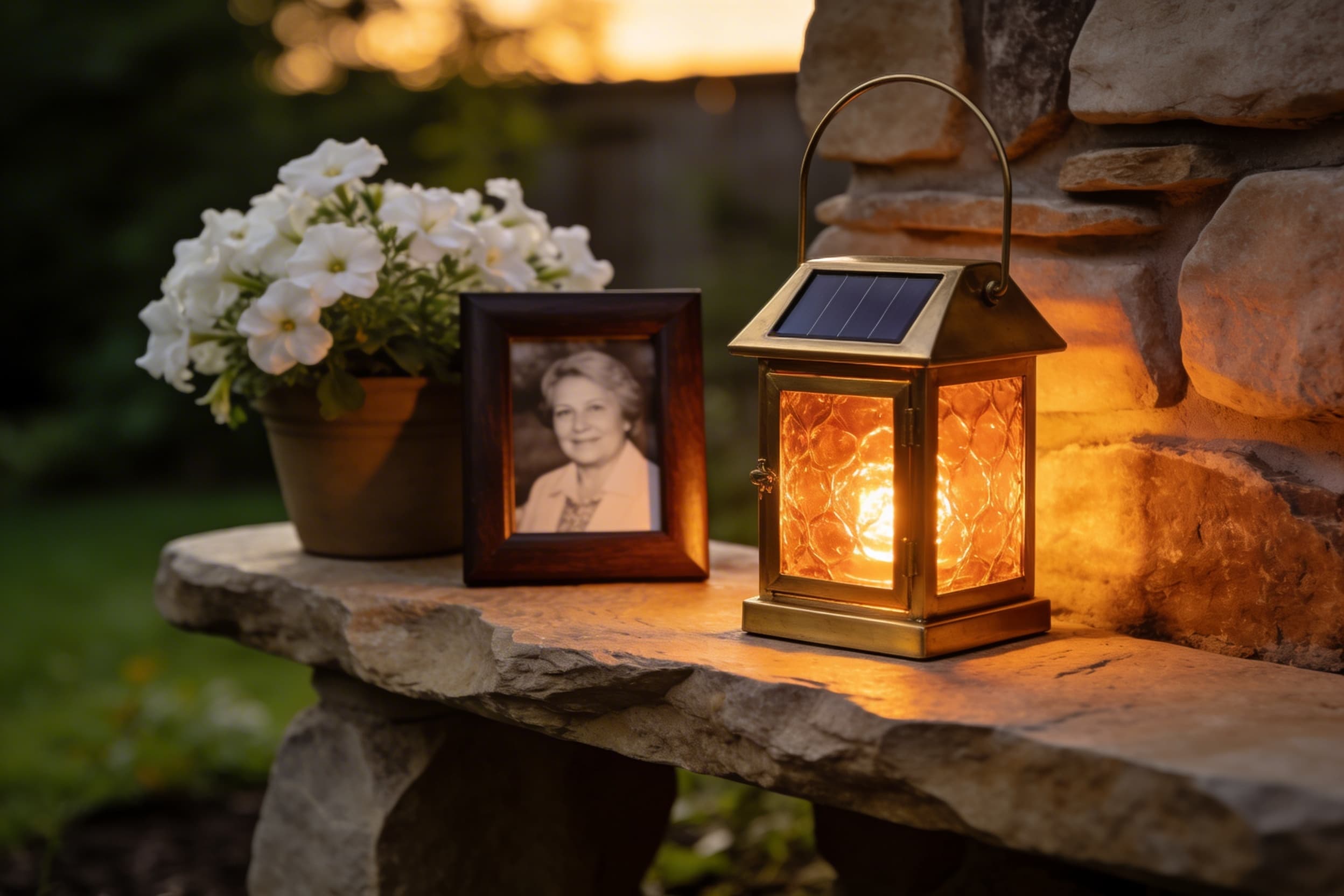
If your cemetery doesn't allow solar lights — or if you prefer to keep a memorial at home — solar lighting works beautifully in a dedicated remembrance space. A shelf beside a photo and a cremation urn, a garden corner with a memorial stone, or a patio table with a small lantern can all become personal memorial areas. At home, you have full control over placement, style, and brightness without worrying about cemetery regulations. Combining a solar light with grave decorations like a memorial planter or a wind chime creates a layered tribute that feels both personal and lasting.
Frequently Asked Questions
Are solar lights allowed in all cemeteries?
No. Cemetery policies on decorations vary widely. Some cemeteries welcome solar lights while others prohibit all forms of lighting, including solar and battery-powered models. Always call the cemetery office before purchasing to confirm their specific rules on lights, mounting methods, and allowable materials.
How long do solar grave lights last?
The LED itself can last 25,000 hours or more, which translates to many years of nightly use. The limiting factor is usually the rechargeable battery, which degrades after 12 to 18 months. Units with replaceable batteries can last five years or longer with periodic battery swaps and basic panel cleaning.
Do solar grave lights work in winter?
Yes, but with reduced performance. Shorter daylight hours and weaker winter sun mean less charge time and shorter run time at night. Keeping the panel free of snow and debris helps maximize whatever sunlight is available. In northern climates, expect roughly half the run time you'd get in summer.
Can I use solar lights for a pet's grave?
Solar memorial lights work just as well for a pet's resting place as for a human loved one's. The same selection criteria apply — weather resistance, battery life, and mounting method. Some manufacturers offer pet-specific designs with paw prints or animal motifs.
What brightness level is appropriate for a gravesite?
Most solar grave lights produce between 2 and 15 lumens, which creates a soft, respectful glow rather than bright illumination. This low-lumen output is intentional — it provides visibility and ambiance without disturbing neighboring gravesites. If you want a brighter display, choose a unit in the 10–15 lumen range, but check that the increased brightness doesn't violate cemetery guidelines.