🏬Supersize Online Funeral Retailer🪦1000's of Headstones⚱️Over 10,000 Cremation Urns⚰️Caskets Overnight Delivery🛒Funeral & Memorial Superstore🚚FREE Shipping on ALL Orders👨👩👧👦Helping Families for over 20 Years💰Lowest Price Guarantee🏬Supersize Online Funeral Retailer🪦1000's of Headstones⚱️Over 10,000 Cremation Urns⚰️Caskets Overnight Delivery🛒Funeral & Memorial Superstore🚚FREE Shipping on ALL Orders👨👩👧👦Helping Families for over 20 Years💰Lowest Price Guarantee
🏬Supersize Online Funeral Retailer🪦1000's of Headstones⚱️Over 10,000 Cremation Urns⚰️Caskets Overnight Delivery🛒Funeral & Memorial Superstore🚚FREE Shipping on ALL Orders👨👩👧👦Helping Families for over 20 Years💰Lowest Price Guarantee🏬Supersize Online Funeral Retailer🪦1000's of Headstones⚱️Over 10,000 Cremation Urns⚰️Caskets Overnight Delivery🛒Funeral & Memorial Superstore🚚FREE Shipping on ALL Orders👨👩👧👦Helping Families for over 20 Years💰Lowest Price Guarantee
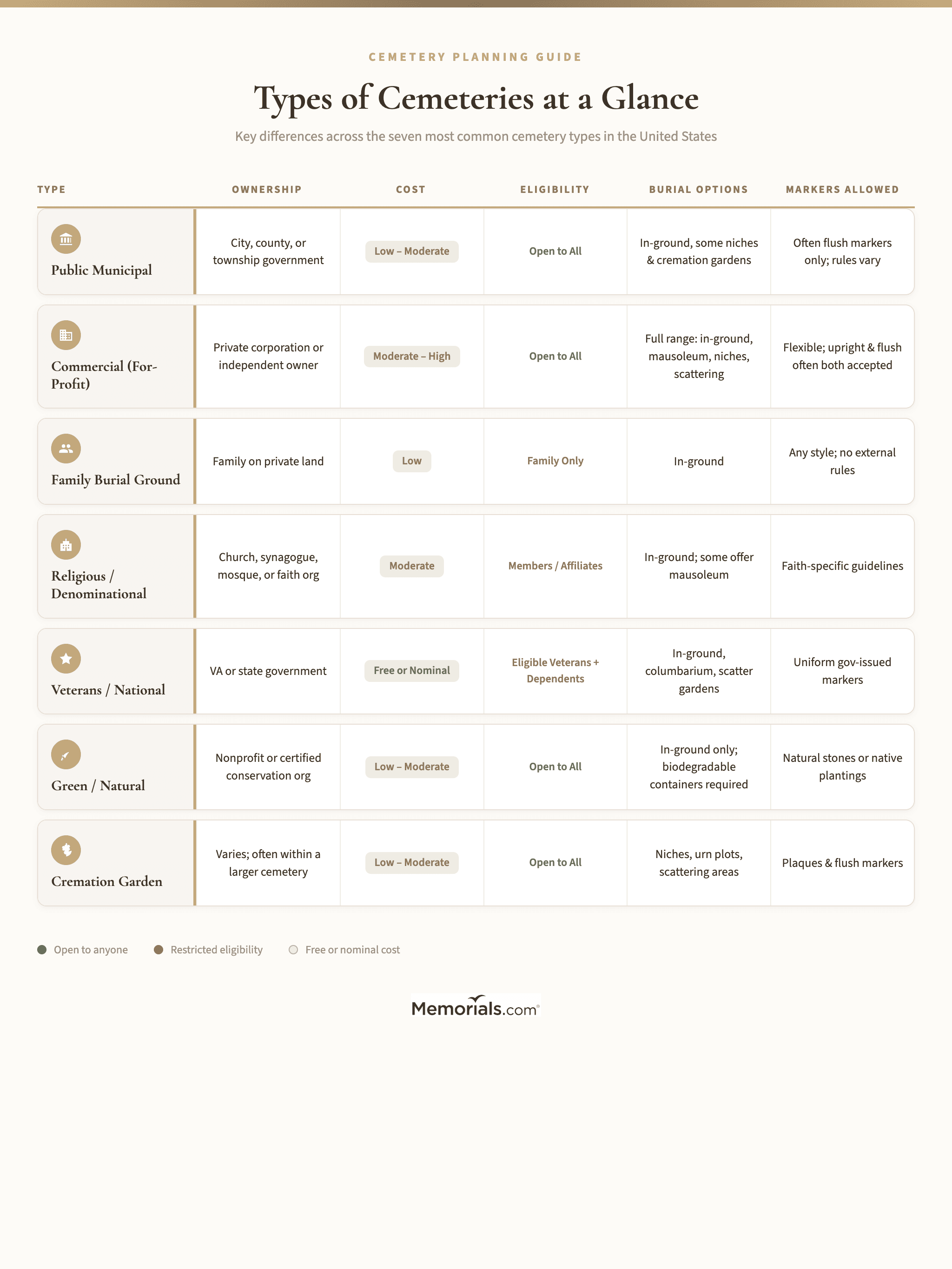
Not every cemetery operates the same way. Some are open to the entire community, while others reserve space for a particular faith, a single family, or veterans of military service. The type of cemetery you choose shapes everything from cost and availability to the kinds of grave markers and decorations allowed at the gravesite. Understanding the differences helps families make a decision that honors their loved one and fits their values — and it is one of several considerations covered in our guide to planning a cemetery purchase.
This guide walks through the major types of cemeteries you will encounter in the United States, explains how each one works, and highlights what families should consider before committing to a plot or niche.
Public cemeteries are owned and maintained by a city, county, or township government. They are funded at least partially through local tax revenue and are open to any resident of the community — regardless of religious background, military service, or family affiliation.
Because they serve broad populations, municipal cemeteries tend to be the most affordable option for purchasing a burial plot. They typically offer standard in-ground burial, and many also include columbarium niches or cremation gardens for families choosing cremation. However, the range of services can vary widely. Some municipal grounds provide perpetual care, meaning the local government is responsible for mowing, landscaping, and general upkeep indefinitely. Others operate on tighter budgets and may offer only minimal maintenance.
One trade-off with public cemeteries is that they often have stricter rules about headstone styles and grave decorations. Many require flush markers — flat plaques set level with the ground — rather than upright monuments. If the family has a preference for a particular monument style, it is worth reviewing the cemetery's regulations before purchasing a plot. Our comparison of flat vs. upright headstones covers what each style offers.
Availability can also be an issue. In densely populated areas, some municipal cemeteries are near capacity or already closed to new burials, leaving families to look at other options.
What to ask before choosing a public cemetery
Families should inquire about whether perpetual care is included in the plot price, what types of monuments and decorations the cemetery permits, and whether the grounds offer both traditional burial and cremation interment options. Understanding cemetery plot pricing for municipal grounds helps set realistic expectations, since costs vary considerably by region.
Private and Commercially Operated Cemeteries
The term "private cemetery" covers two very different arrangements, and the distinction matters.
For-profit commercial cemeteries
Many of the cemeteries families encounter through funeral homes or online searches are actually privately owned, for-profit businesses — sometimes operated by large national corporations. Despite being privately held, these grounds are open to the public and sell plots, niches, and mausoleum crypts to anyone willing to pay. They often market themselves as "memorial parks" and tend to offer a wider range of services than municipal cemeteries: landscaped gardens, on-site chapels, perpetual care funds, and more flexible monument guidelines.
The trade-off is cost. Commercial cemeteries typically charge higher prices for plots, opening-and-closing fees, and ongoing maintenance. Families should ask exactly what their purchase includes and whether perpetual care is guaranteed by a trust fund or simply promised.
True private cemeteries and family burial grounds
A true private cemetery is one where lots are not sold to the general public. The most common example is a family burial ground — a small plot on private land designated for relatives only. Family cemeteries were once widespread in rural America during the 19th and early 20th centuries. While less common today, they still exist and are governed by state-specific regulations.
The primary concern with a family burial ground is long-term access. If the surrounding property is sold, the family may or may not retain the right to visit the graves, depending on state law. Some states guarantee access to family cemeteries even after a land sale; others do not. Families considering a private burial ground should consult local statutes before making a decision.
Religious and Denominational Cemeteries
Religious cemeteries are owned and managed by a church, synagogue, mosque, or other faith-based organization. Burial is typically reserved for members of that congregation or denomination, though some religious cemeteries are more inclusive than others.
Catholic cemeteries, for example, are usually consecrated ground blessed by the diocese. Historically, Catholic cemeteries required that the deceased had received last rites and been a practicing member of the faith, though many dioceses have relaxed these requirements in recent decades. Jewish cemeteries follow their own traditions — burials generally happen within 24 hours of death, embalming is not practiced, and simple wooden caskets are customary. Islamic cemeteries orient graves toward Mecca and typically prohibit above-ground markers or elaborate monuments.
The rules governing religious cemeteries vary significantly from one organization to another. Families should speak directly with the affiliated religious institution to understand eligibility requirements, permitted burial practices, and monument guidelines.
Religious cemeteries often carry a strong sense of community and shared tradition. For families whose faith is central to their identity, being laid to rest among fellow congregants can be deeply meaningful.
Veterans and National Cemeteries
Veterans cemeteries provide burial at little or no cost to eligible service members, veterans, and in many cases their spouses and dependents. There are two main systems in the United States:
National cemeteries are administered by the U.S. Department of Veterans Affairs through the National Cemetery Administration. There are more than 155 national cemeteries across the country, including well-known grounds like Arlington National Cemetery (which is managed by the Department of the Army). Eligible veterans receive a gravesite, headstone or marker, opening-and-closing of the grave, perpetual care, and military funeral honors — all at no charge to the family.
State veterans cemeteries are operated by individual states and may charge nominal fees for plots or services, though many offer benefits comparable to the national system. Eligibility requirements for state cemeteries can differ from the federal guidelines, so families should verify with the specific facility.
Veterans cemeteries are maintained to exacting standards. Rows of uniform white headstones, precise landscaping, and dedicated memorial sections create an atmosphere of respect and solemnity. Many also include columbarium walls for cremated remains and scatter gardens for families who prefer that option.
To determine eligibility and locate the nearest veterans cemetery, families can contact the VA's National Cemetery Scheduling Office or work with their funeral director.
Green and Natural Burial Cemeteries
Green cemeteries represent a growing movement toward environmentally conscious end-of-life practices. These grounds prioritize minimal ecological impact and often function as conservation land that supports native plant and animal habitat.
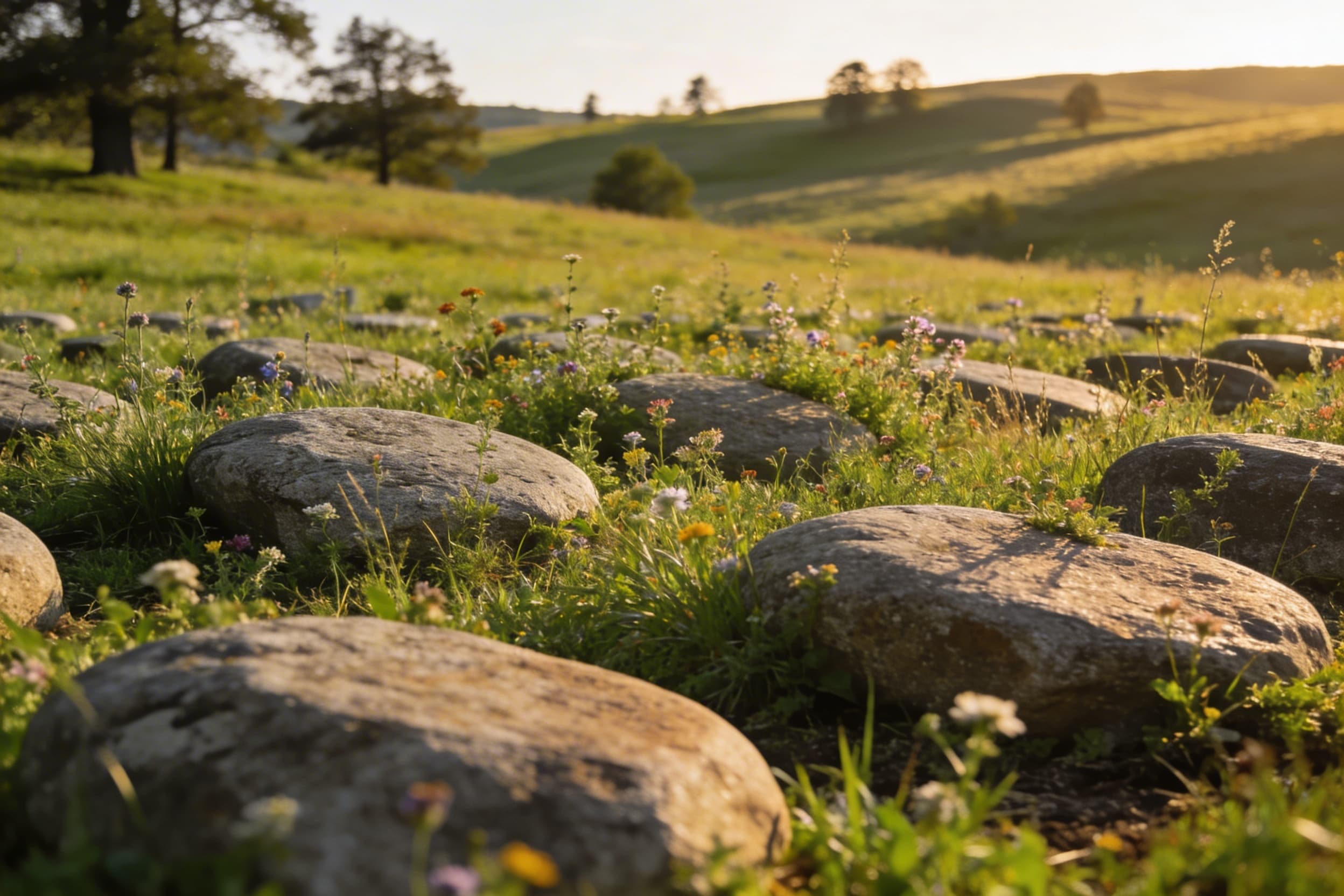
The defining features of a green cemetery include the use of biodegradable caskets, shrouds, or cremation urns instead of metal caskets and concrete vaults. Embalming with formaldehyde-based chemicals is typically prohibited or strongly discouraged. Grave markers, when allowed, tend to be natural fieldstones, engraved rocks, or native plantings rather than polished granite monuments.
Some green cemeteries operate as standalone burial grounds certified by organizations like the Green Burial Council. Others exist as designated green sections within larger traditional cemeteries, offering families an eco-friendly option without requiring a completely separate facility.
Costs at green cemeteries can actually be lower than traditional burial because they eliminate the need for a vault, an embalmed body, or an expensive casket. However, availability is still limited in many parts of the country. Families interested in natural burial should research options early, as not every community has a certified green cemetery nearby.
Cremation-Only Cemeteries and Gardens
As cremation rates in the United States continue to rise — now exceeding 60 percent of all dispositions — more cemeteries are creating dedicated spaces specifically for cremated remains. These areas go by several names: cremation gardens, urn gardens, memorial gardens, or ash scattering sections.
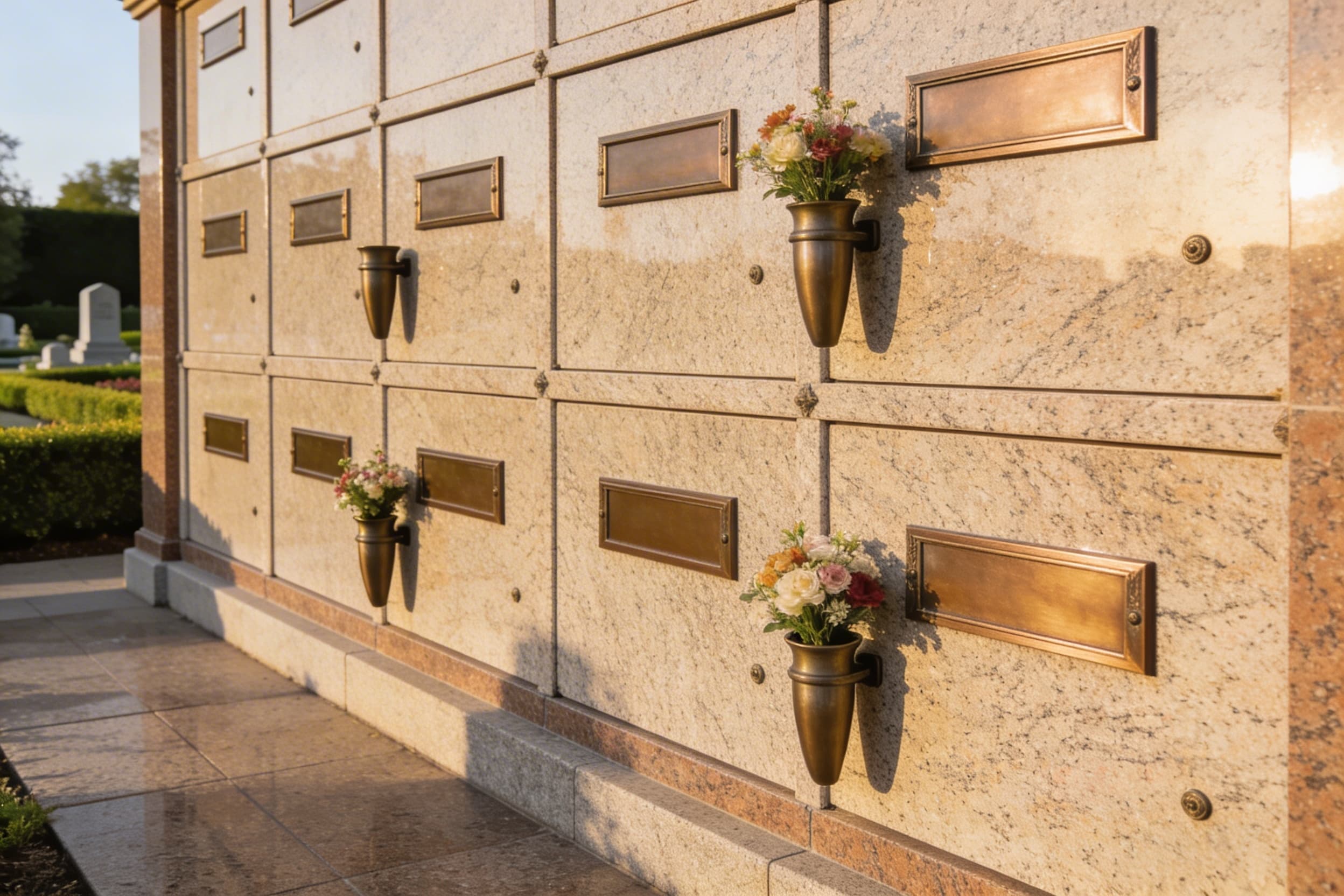
A cremation garden typically offers several placement options. Ground burial of an urn in a smaller-than-standard plot is the most common. Many also feature columbarium walls — freestanding structures with individual niches where urns are sealed behind engraved plaques. For families who want to learn more about this option, our guide to columbariums covers niche sizes, costs, and plaque selection in detail. Some cremation gardens also include scattering areas where ashes are dispersed over a communal garden or water feature.
Cremation-only sections exist within traditional cemeteries as well as in standalone memorial gardens. They are especially appealing to families who want a permanent, visitable memorial but do not need a full burial plot. If you are still weighing all the possibilities for cremated remains, our guide to what to do with ashes after cremation covers the full range of options.
Families choosing cremation cemetery placement should ask whether an urn vault is required for ground burial, as many cemeteries mandate a vault or outer container to prevent the ground from settling over time.
Memorial Parks
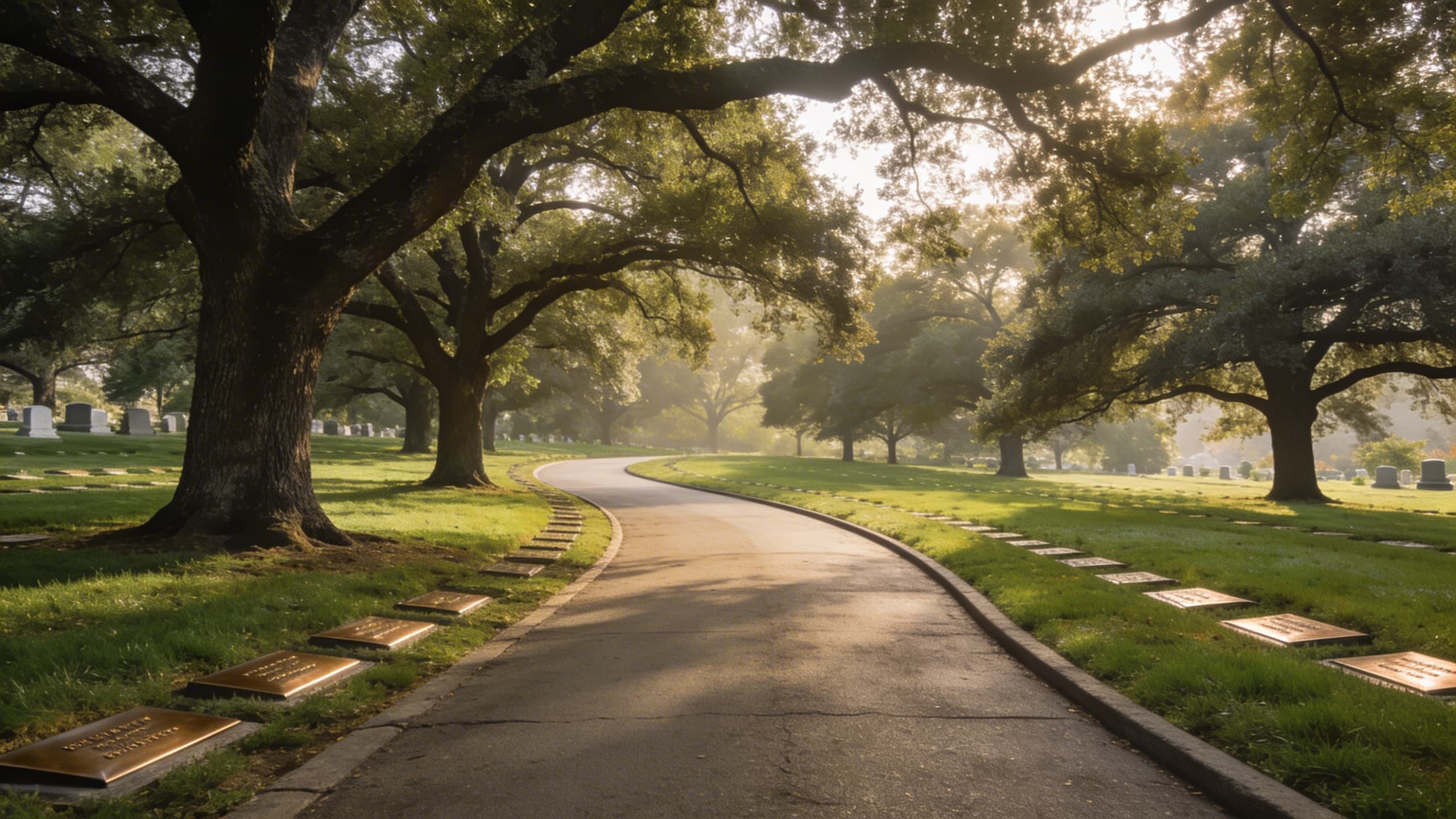
Memorial parks are a specific style of cemetery — typically privately owned — designed to look and feel like a landscaped garden or public park rather than a traditional burial ground. The hallmark of a memorial park is the use of flush bronze or granite markers set level with the turf, creating an uninterrupted expanse of manicured lawn without upright headstones.
This aesthetic choice makes maintenance easier and gives memorial parks their signature serene, open appearance. Families who visit these grounds often appreciate the well-kept landscaping, water features, and themed garden sections.
Memorial parks frequently offer a full range of options: traditional in-ground burial, mausoleum entombment, columbarium niches, and cremation gardens. Many are operated by large cemetery corporations and include on-site chapels, reception facilities, and even pre-planning offices.
The downside for some families is the restriction on upright monuments. If a particular headstone design or family monument is important, a memorial park may not be the right fit. Families should also compare the best cemetery memorial options to understand what styles work in each setting.
Pet Cemeteries
Pet cemeteries provide a dedicated space to memorialize beloved animals with the same dignity afforded to human burial. These grounds offer individual plots, urns, headstones, and sometimes even cremation services for dogs, cats, horses, and other companion animals.
Regulations governing pet cemeteries vary by state. Some states require licensing and oversight similar to human cemeteries, while others have minimal regulation. Families should ask about perpetual care, plot ownership terms, and what types of markers are permitted before purchasing a space.
A related question many families ask is whether a pet's cremated remains can eventually be buried alongside a human family member in a traditional cemetery. The rules differ by cemetery and jurisdiction — some cemeteries allow it, while others strictly prohibit comingled remains. For a closer look at this topic, see our article on whether pet ashes can be buried with humans.
How to Choose the Right Type of Cemetery
With so many options, the decision often comes down to a few practical considerations:
Religious and cultural alignment. If faith traditions shape how the family approaches death and burial, a denominational cemetery may be the most fitting choice. Conversely, families without a religious affiliation may prefer a public or commercial cemetery with no faith-based restrictions.
Budget. Municipal cemeteries and veterans cemeteries are generally the most affordable. Green cemeteries can be cost-effective as well, since they eliminate vaults and embalming. Commercial memorial parks tend to carry higher price tags.
Burial vs. cremation. Families choosing traditional casket burial need a cemetery that offers full-size plots and accepts upright markers if desired. Families choosing cremation have more flexibility — virtually every cemetery type now accommodates urns, niches, or scattering in some form.
Long-term maintenance. Ask whether the cemetery guarantees perpetual care and how that care is funded. A well-endowed trust fund gives more assurance than a verbal promise.
Monument and decoration policies. Cemeteries differ widely on what is allowed at the gravesite. Families who plan to leave flowers, solar lights, or seasonal decorations should review the rules carefully. Understanding cemetery visitor etiquette also helps ensure that any tributes placed at the grave comply with the grounds' guidelines.
Location. Proximity to family matters for regular visitation. A beautiful cemetery two states away may not serve the family as well as a modest local option.
Availability. Especially in urban areas, some cemeteries are full or nearly so. Beginning the search early — even before an immediate need — gives families more choices.
Frequently Asked Questions
What is the difference between a cemetery and a graveyard?
In common usage the two terms are often interchangeable, but historically a graveyard referred specifically to burial grounds attached to a church — typically on church property and managed by the congregation. A cemetery is a larger, standalone burial ground that is not necessarily affiliated with a church. Most modern burial grounds are classified as cemeteries.
Can anyone be buried in a public cemetery?
Public municipal cemeteries are generally open to all community residents. However, some may prioritize residents of a specific city or county, and a few older public cemeteries have reached capacity and no longer accept new burials. It is always best to confirm availability and residency requirements directly with the cemetery office.
Are green cemeteries more expensive than traditional cemeteries?
Green cemeteries are often comparable to or less expensive than traditional burial because they eliminate costs associated with embalming, metal caskets, and concrete burial vaults. The plot price itself varies by location, but the overall out-of-pocket cost for a green burial can be significantly lower.
Do all cemeteries allow cremation burials?
Most modern cemeteries accommodate cremated remains in some form — whether through urn garden plots, columbarium niches, or designated scattering areas. However, policies vary, and some older or denominational cemeteries may have restrictions. Families should ask the cemetery directly about cremation options and any requirements for a vault or outer container.
Can I bury a pet in a human cemetery?
Policies differ by cemetery and jurisdiction. Some cemeteries permit comingled human and pet remains in the same plot, while others prohibit it. A growing number of cemeteries offer designated pet sections or allow pet urns to be placed alongside a human burial. Check with your specific cemetery and local regulations before making plans.
Choosing the right type of cemetery is one of the most personal decisions a family will make. Whether the priority is affordability, faith traditions, environmental stewardship, or proximity to family, there is a type of cemetery that fits. Take the time to visit several options in person, ask detailed questions about costs and regulations, and bring along someone you trust for support. Explore our full selection of cemetery products — including plaques, vases, lights, and accessories — to personalize any gravesite once a cemetery has been chosen.