🏬Supersize Online Funeral Retailer🪦1000's of Headstones⚱️Over 10,000 Cremation Urns⚰️Caskets Overnight Delivery🛒Funeral & Memorial Superstore🚚FREE Shipping on ALL Orders👨👩👧👦Helping Families for over 20 Years💰Lowest Price Guarantee🏬Supersize Online Funeral Retailer🪦1000's of Headstones⚱️Over 10,000 Cremation Urns⚰️Caskets Overnight Delivery🛒Funeral & Memorial Superstore🚚FREE Shipping on ALL Orders👨👩👧👦Helping Families for over 20 Years💰Lowest Price Guarantee
🏬Supersize Online Funeral Retailer🪦1000's of Headstones⚱️Over 10,000 Cremation Urns⚰️Caskets Overnight Delivery🛒Funeral & Memorial Superstore🚚FREE Shipping on ALL Orders👨👩👧👦Helping Families for over 20 Years💰Lowest Price Guarantee🏬Supersize Online Funeral Retailer🪦1000's of Headstones⚱️Over 10,000 Cremation Urns⚰️Caskets Overnight Delivery🛒Funeral & Memorial Superstore🚚FREE Shipping on ALL Orders👨👩👧👦Helping Families for over 20 Years💰Lowest Price Guarantee
Choosing between a flat headstone and an upright headstone is one of the first decisions families face when selecting a memorial. Both styles serve the same essential purpose — marking a loved one's resting place with dignity and permanence — but they differ in appearance, cost, cemetery compatibility, and the amount of space available for personalization. Understanding how each style works, what it costs, and where it is permitted will help you choose a memorial that honors your loved one and fits your circumstances. For a complete walkthrough of the purchasing process from start to finish, see our guide on how to buy a headstone.
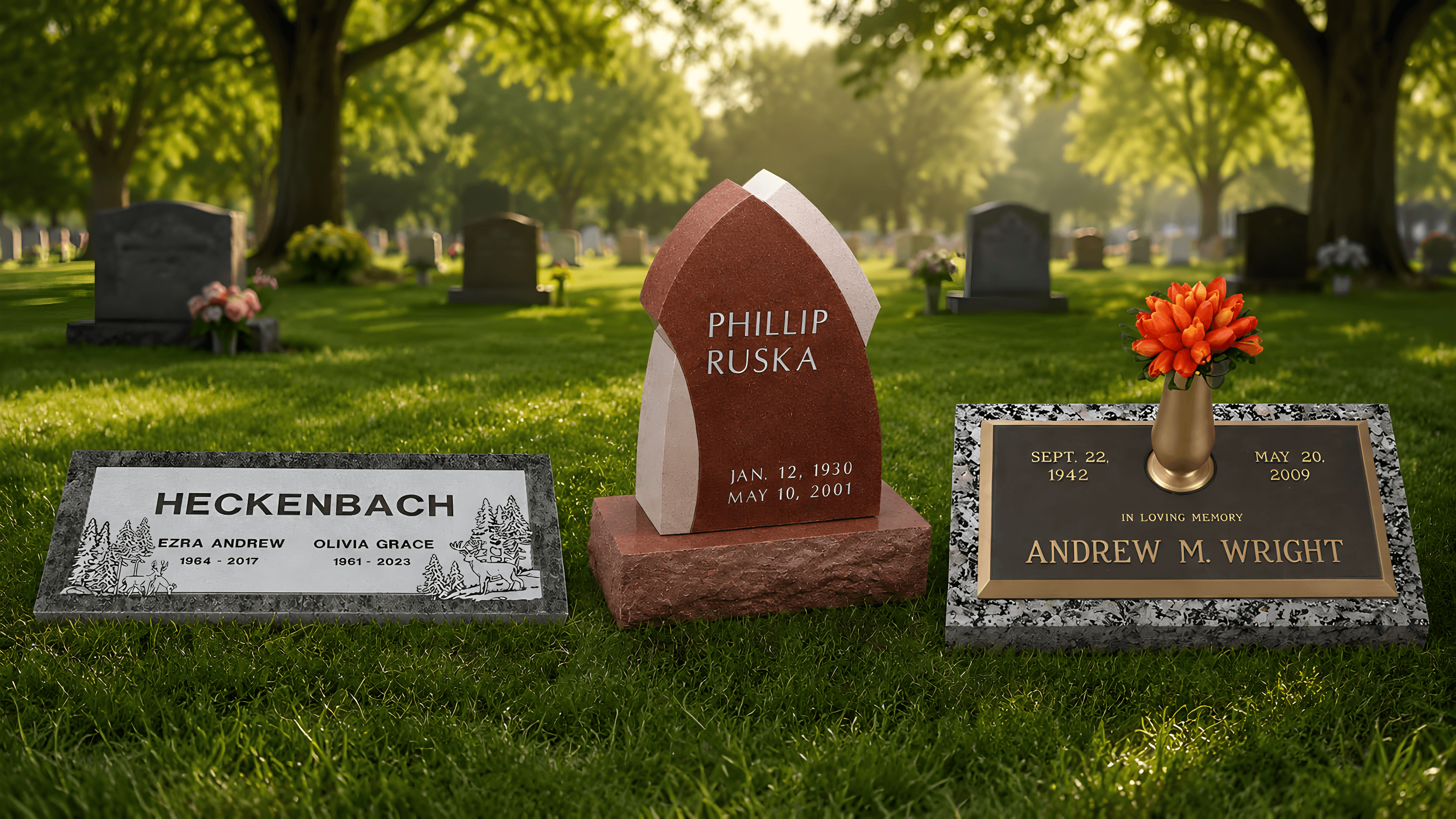
This guide compares flat headstones, , and slant markers — the three most common memorial styles in American cemeteries today. If you are still learning the broader terminology, our explains how these terms relate to one another.
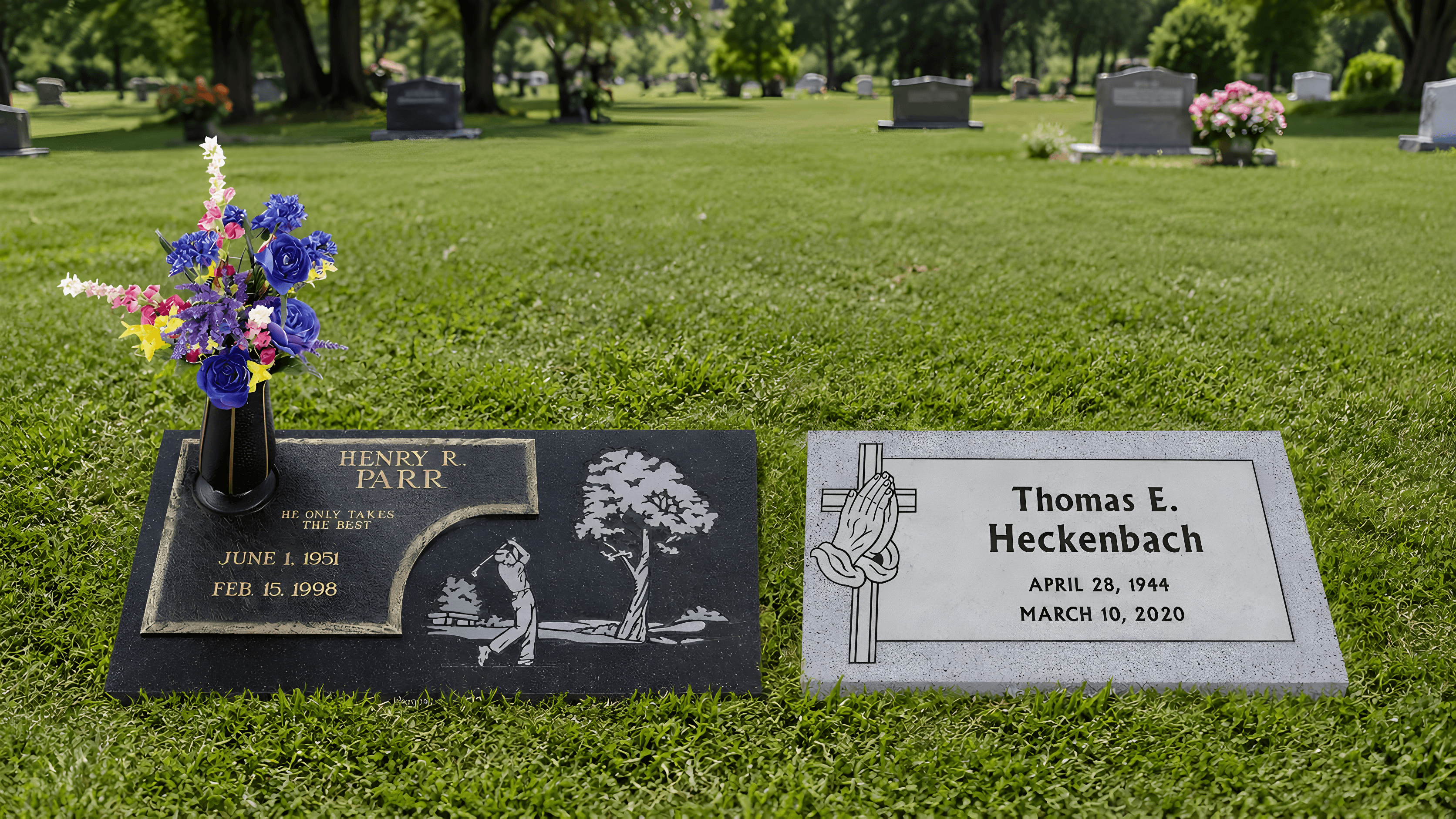
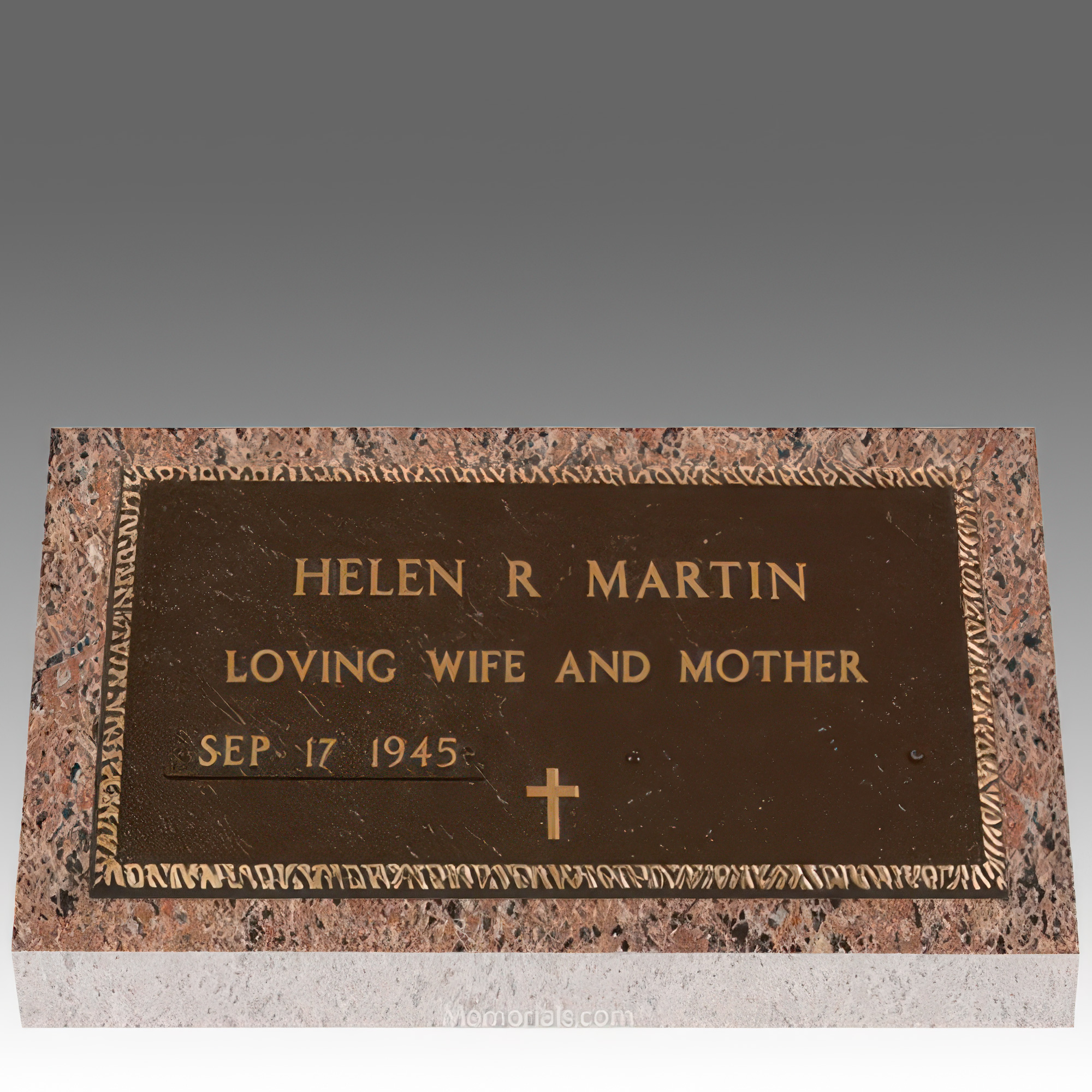
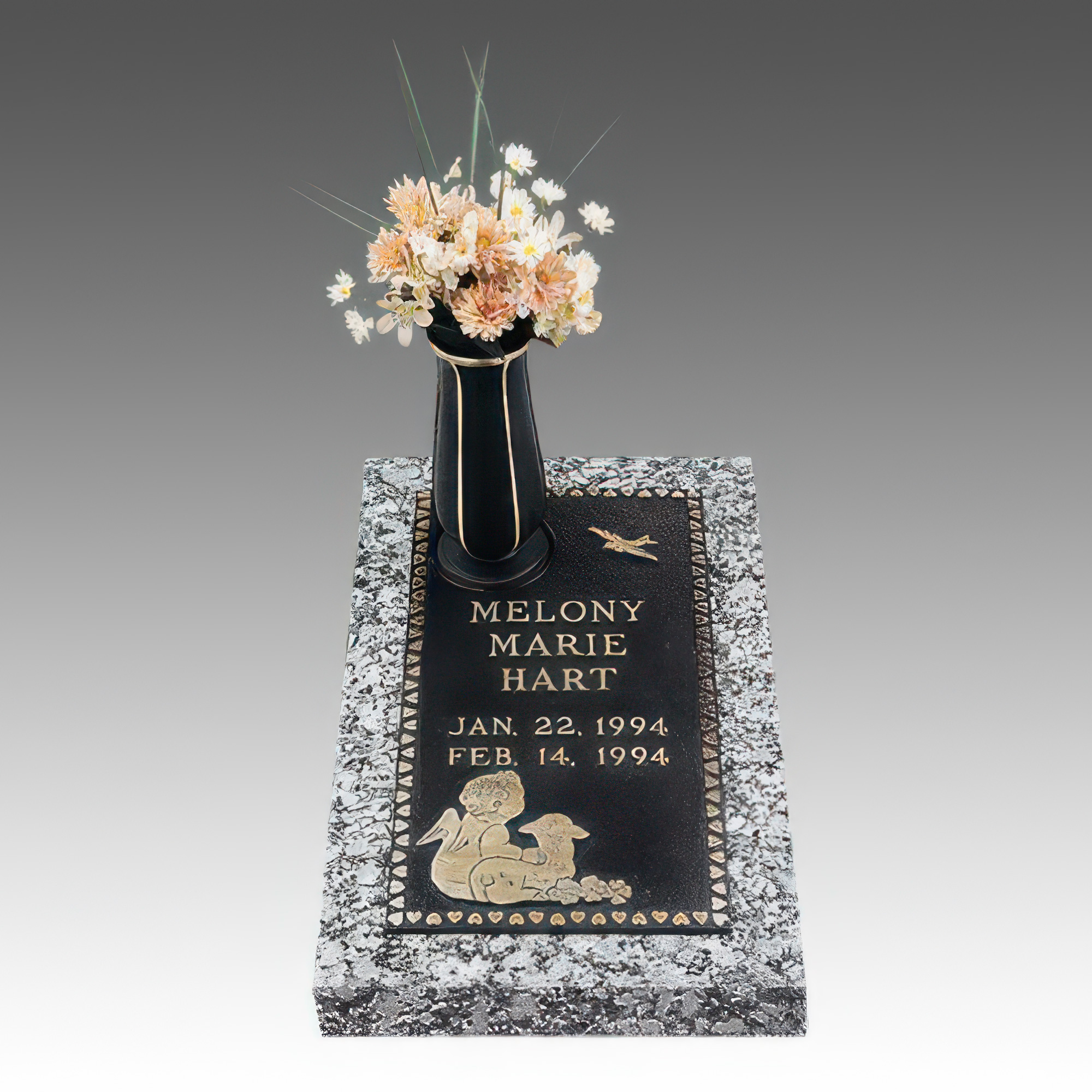
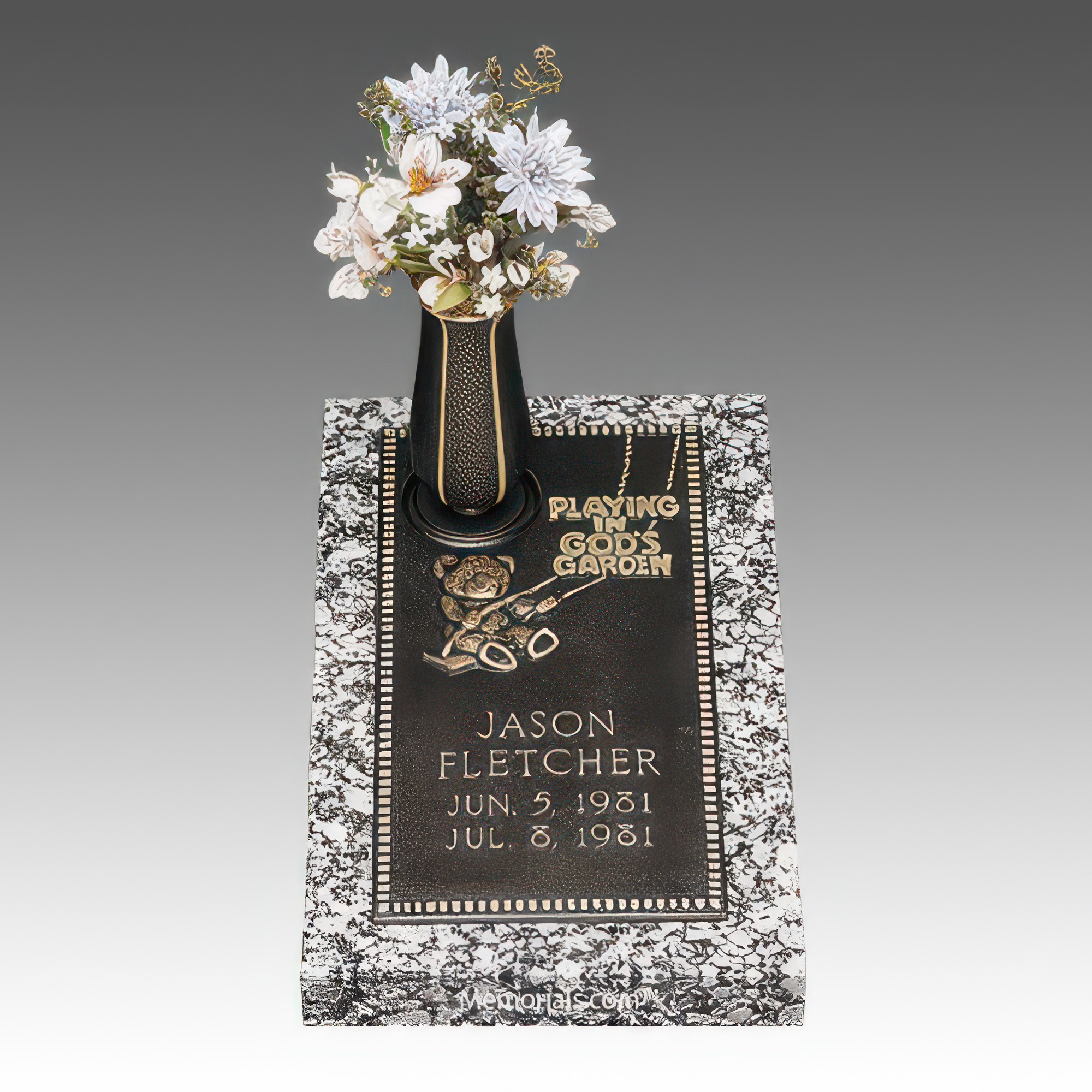
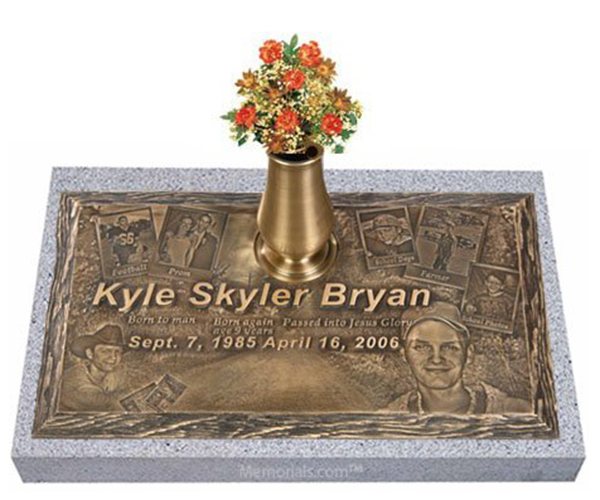
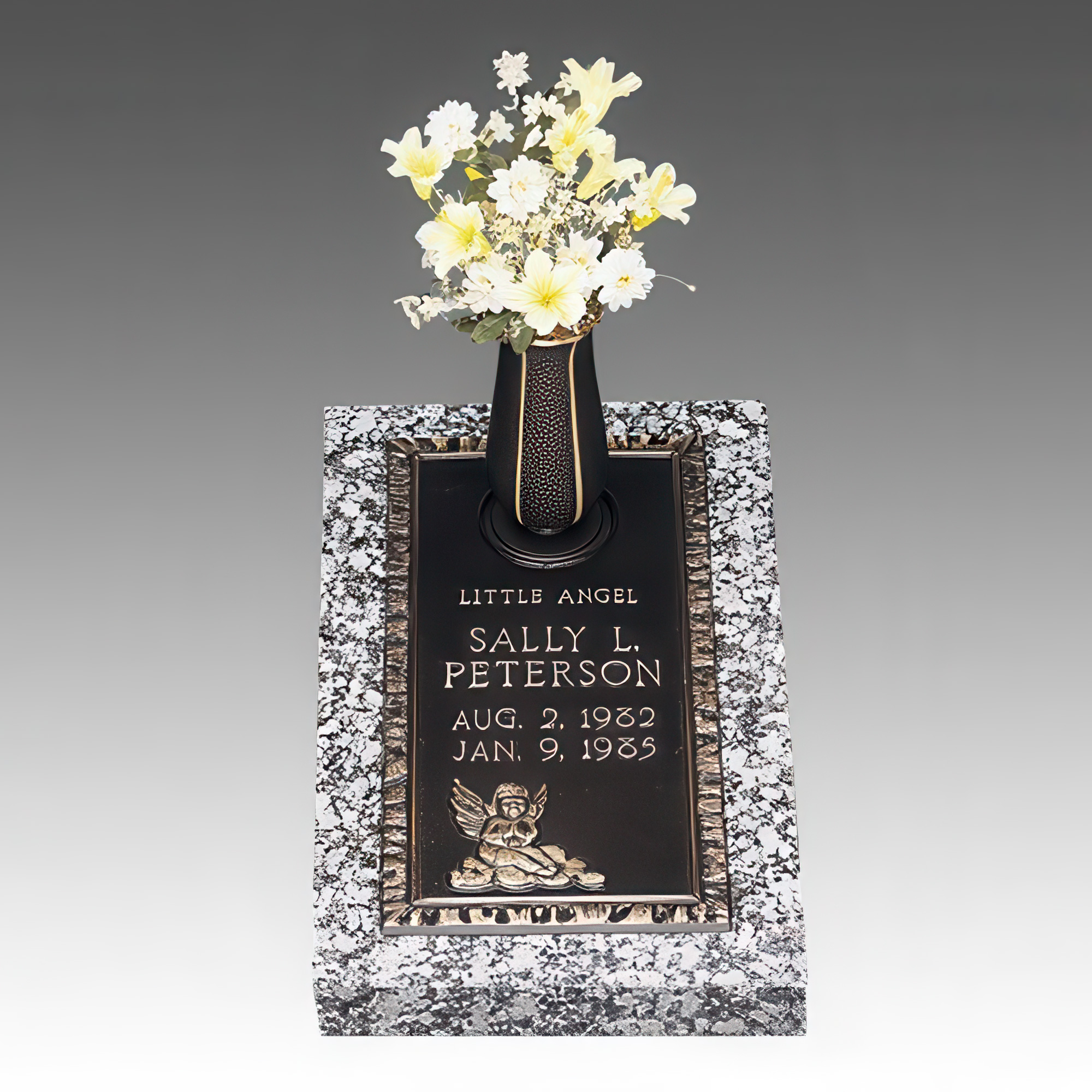
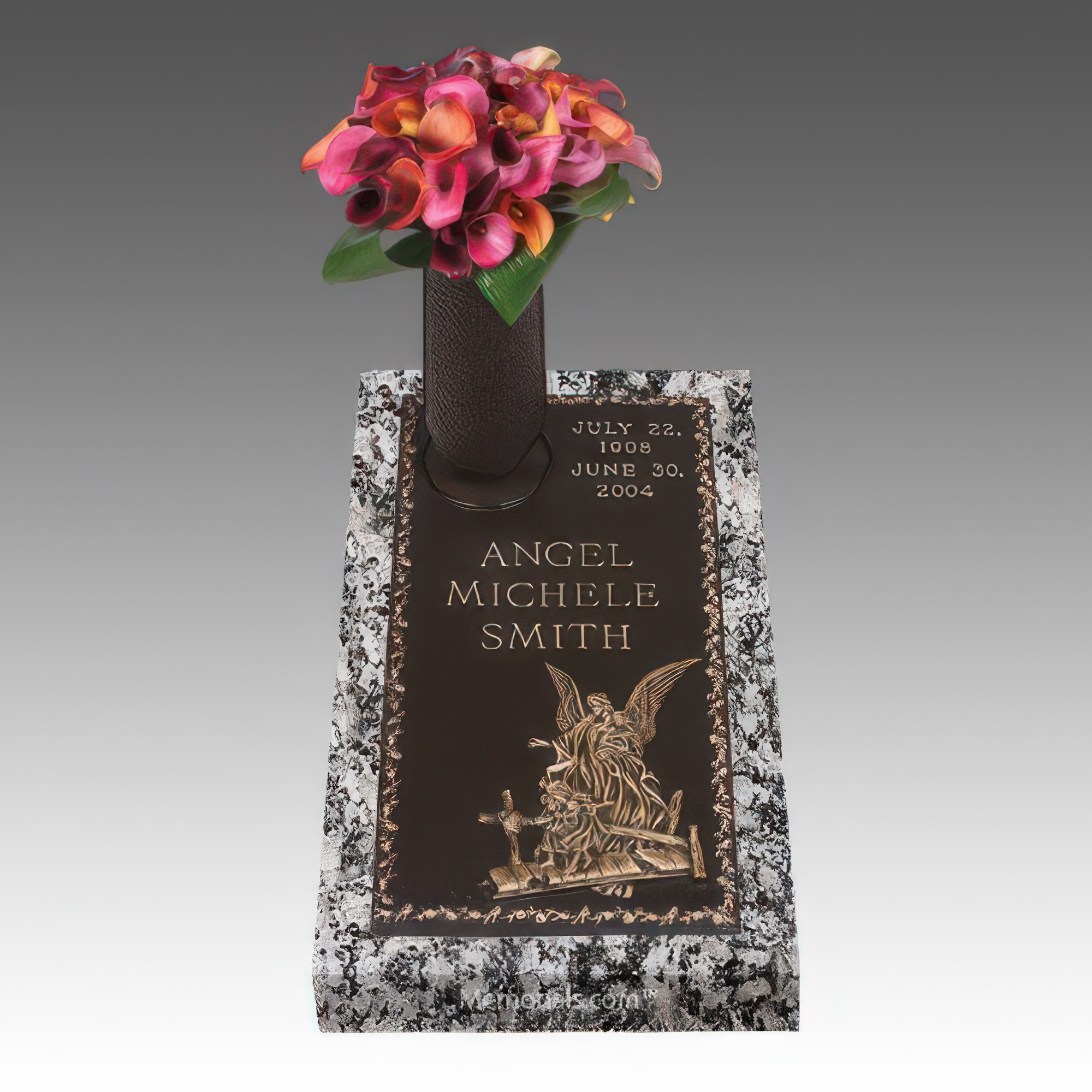
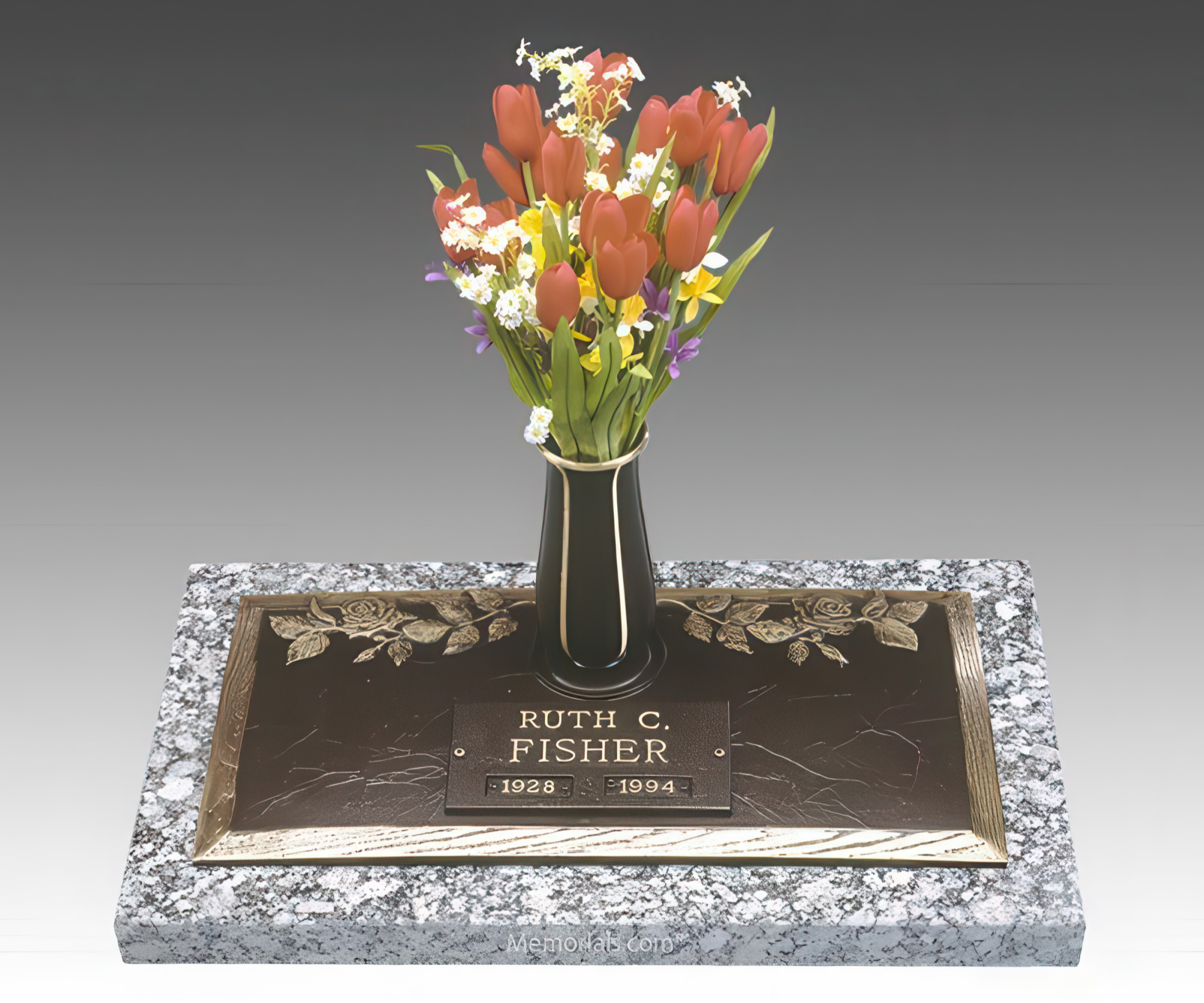
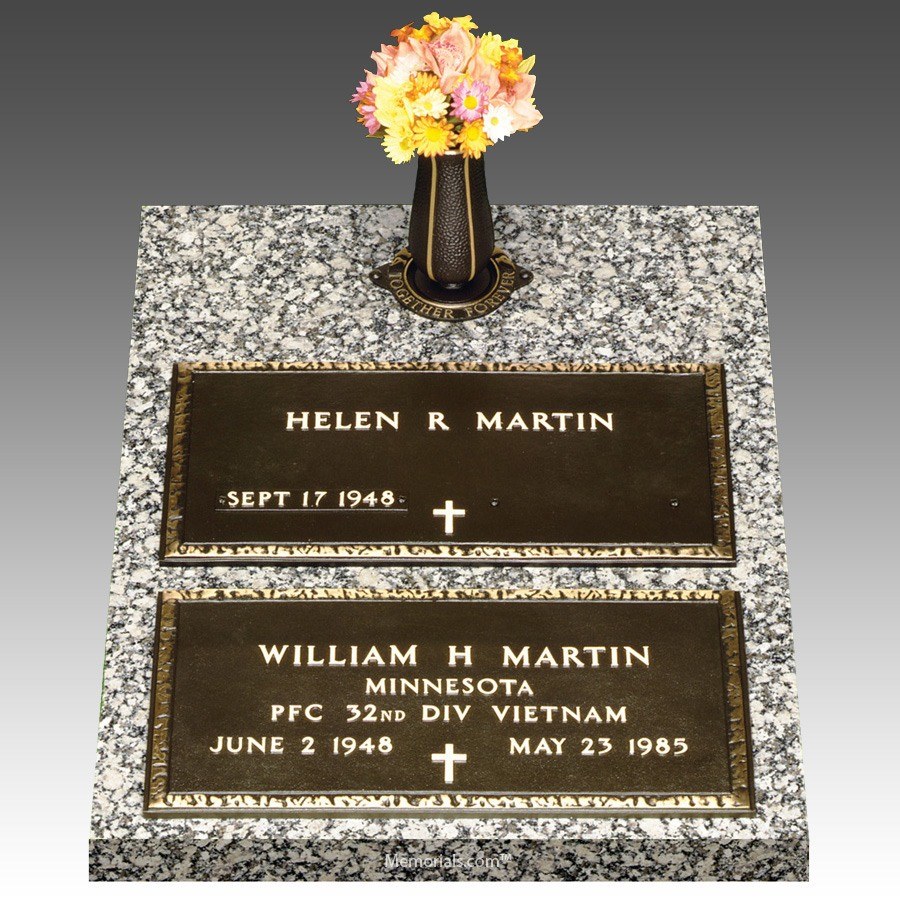
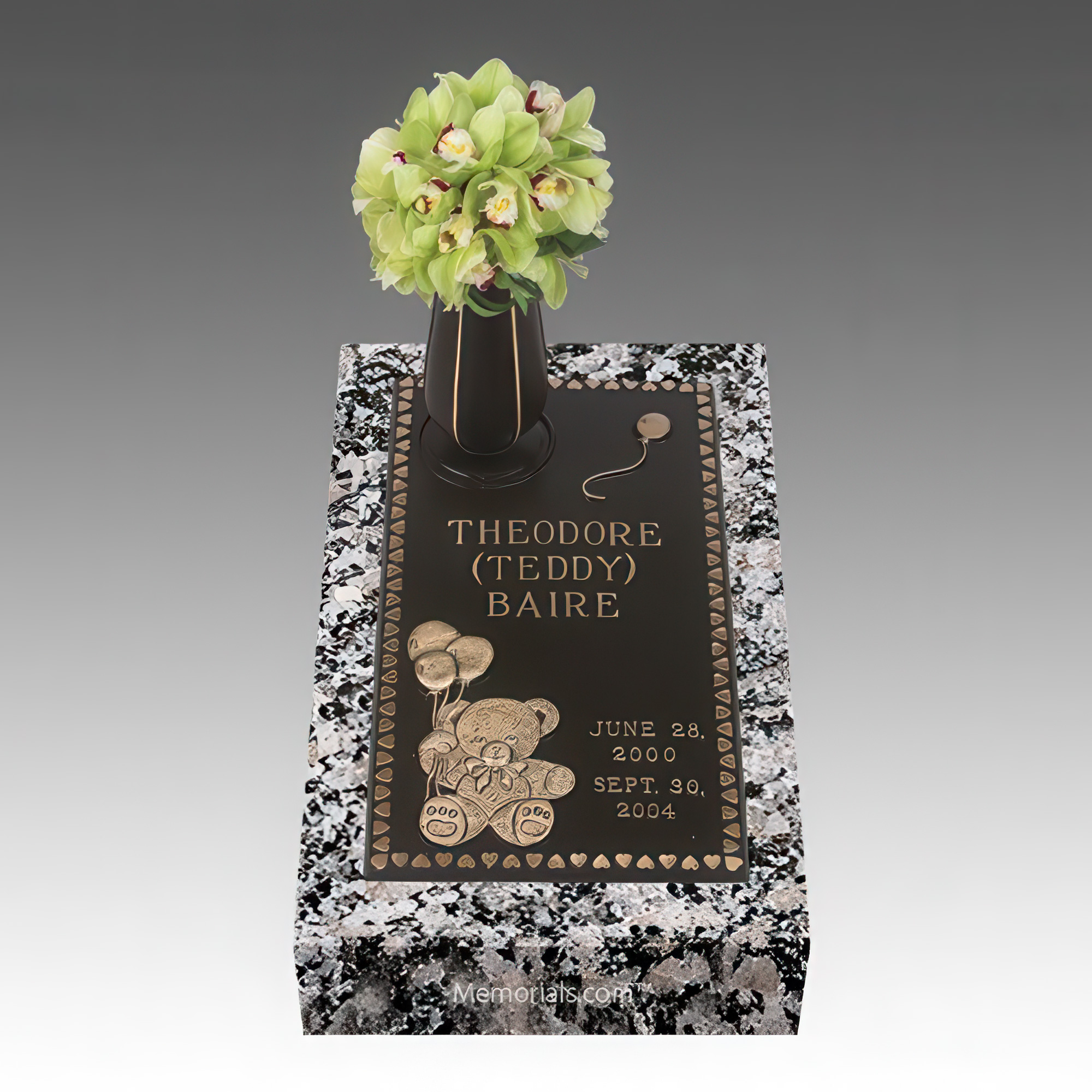
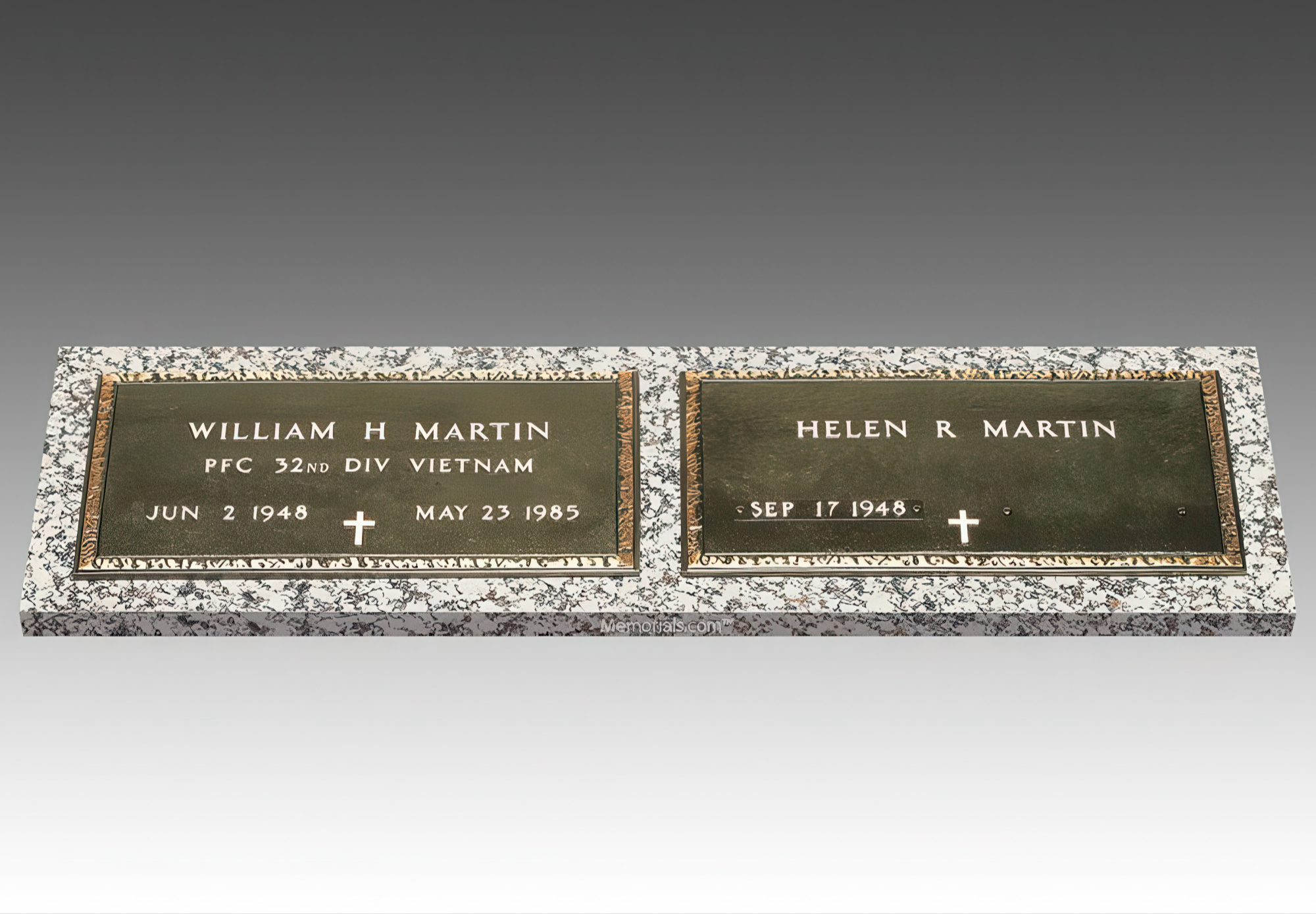
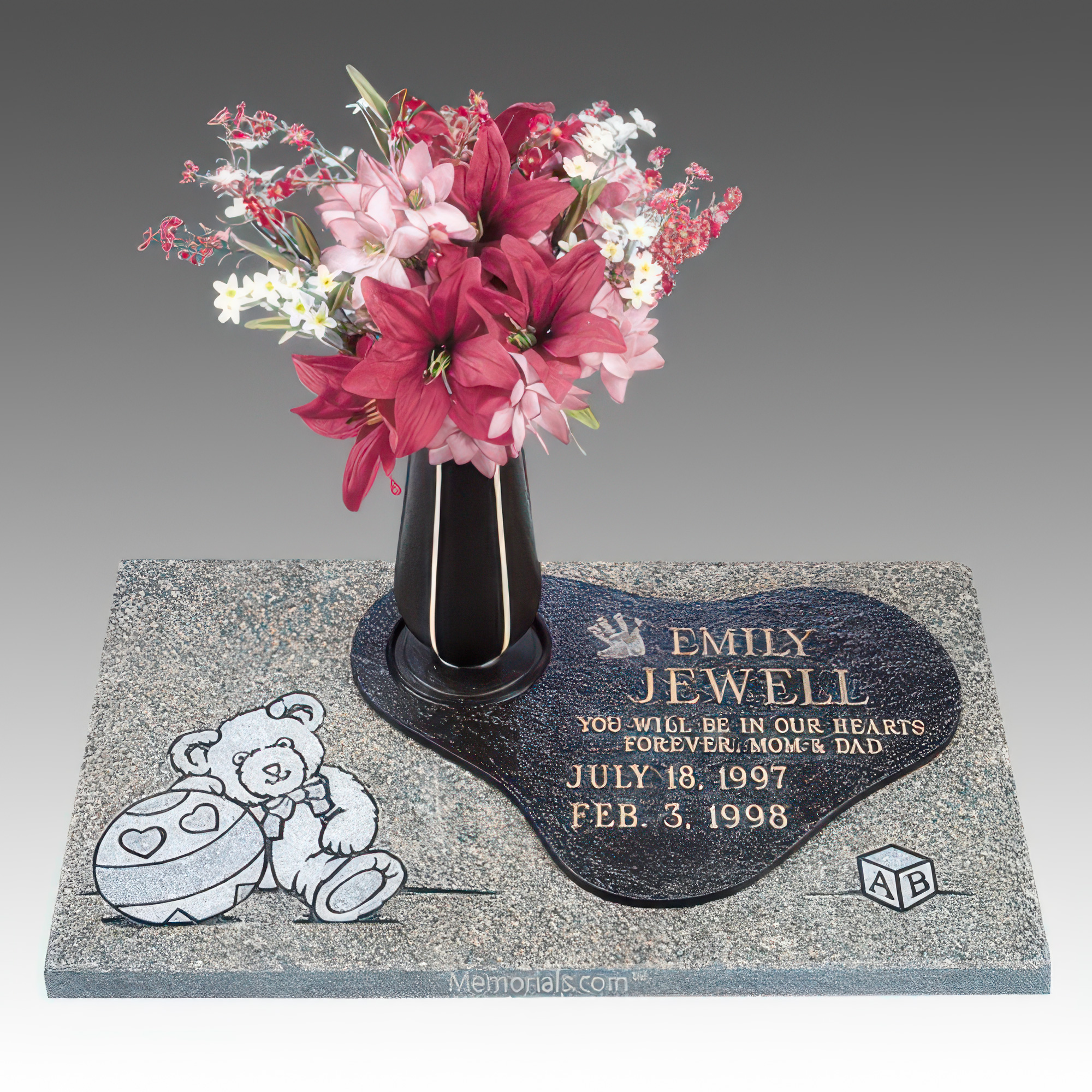
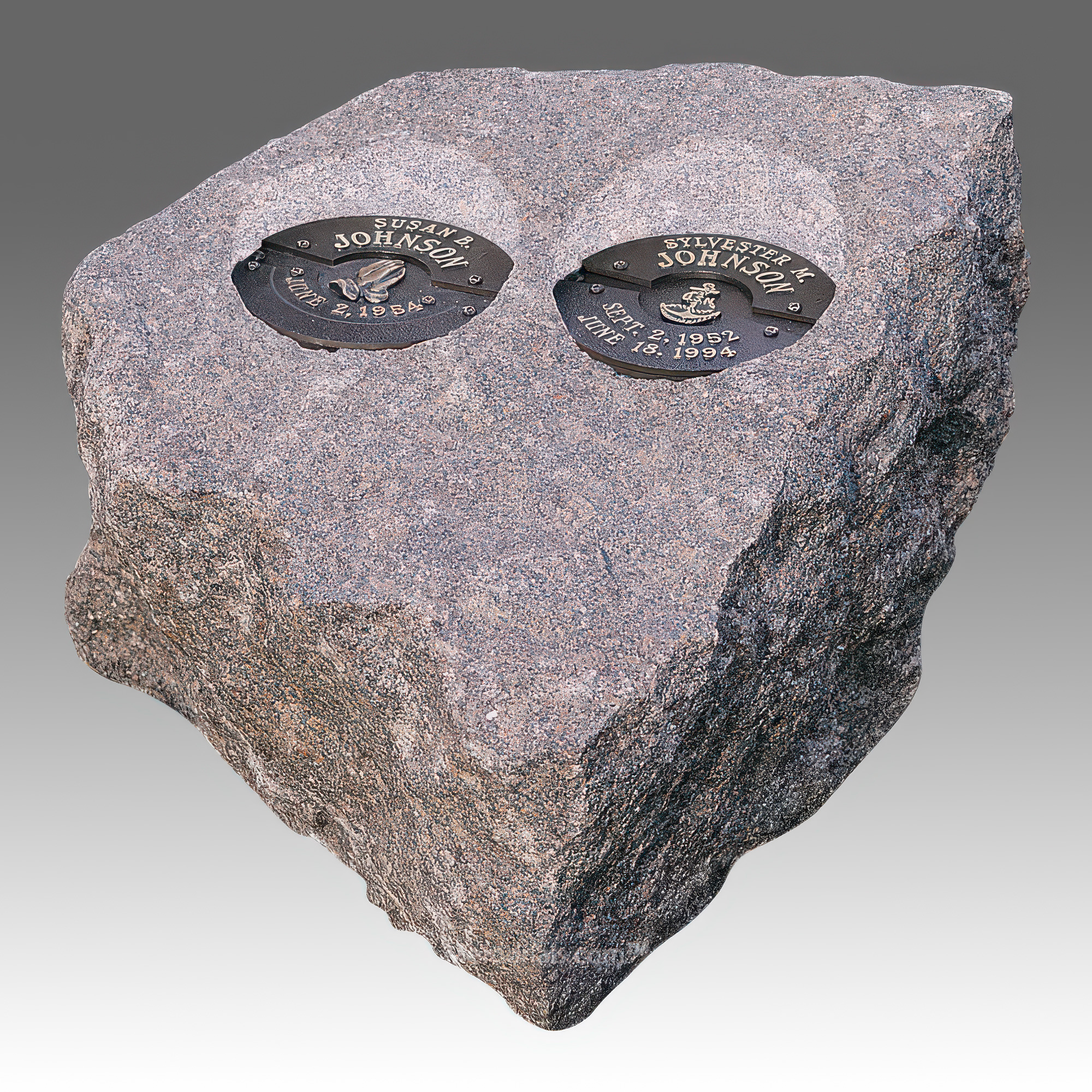
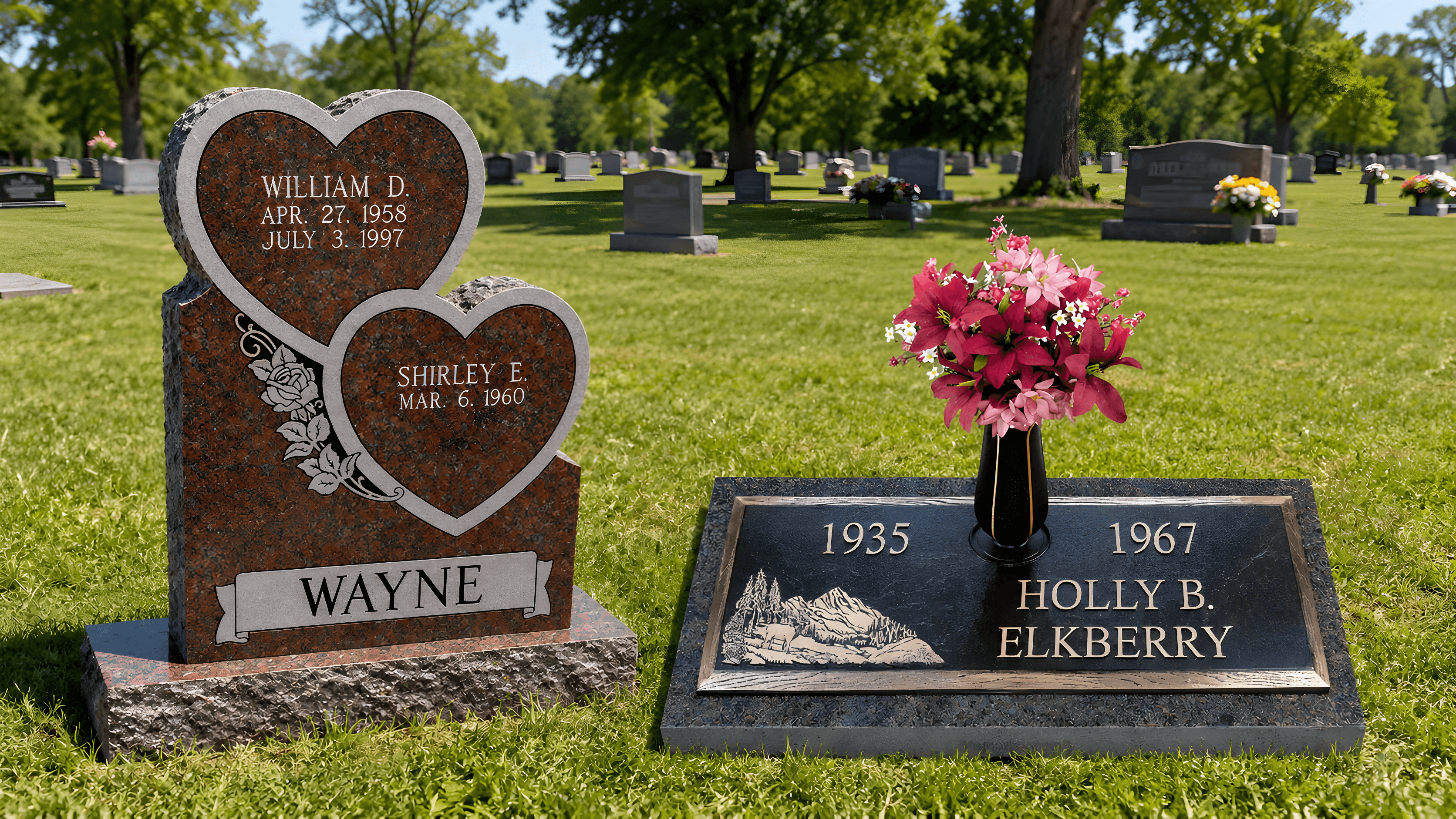
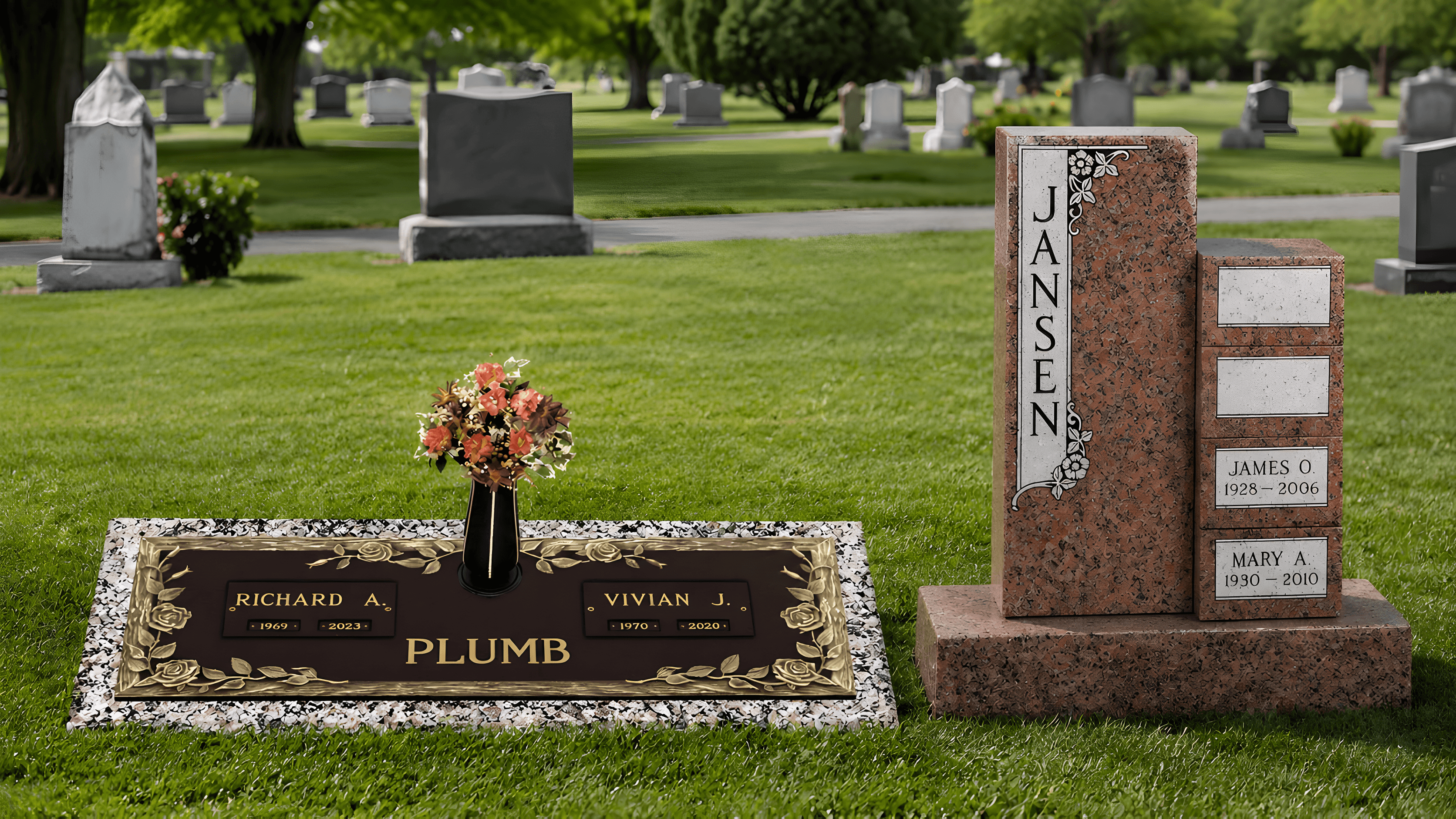
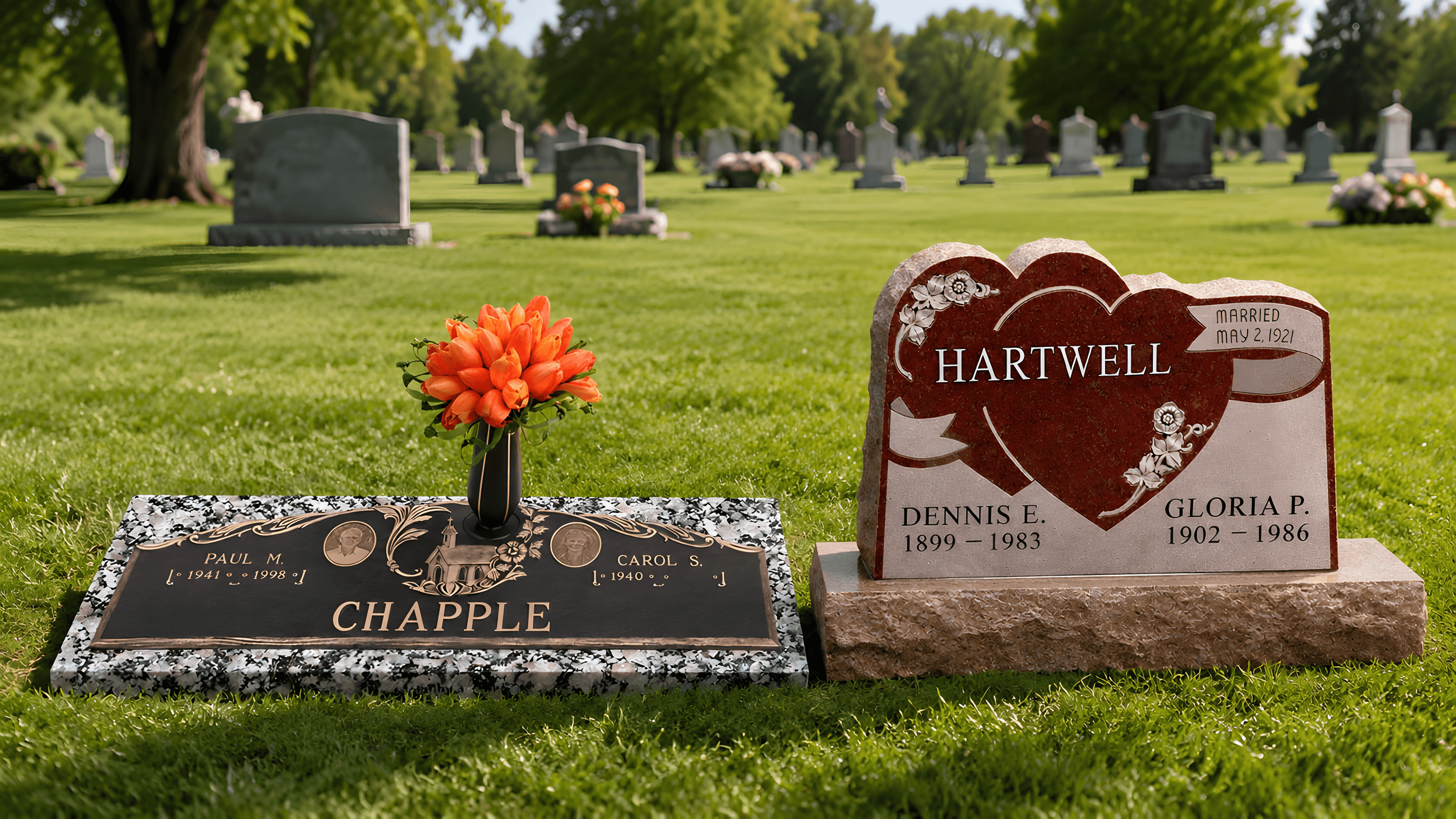
A flat headstone — also called a flush marker, grass marker, or lawn-level marker — sits level with the ground or is raised only slightly above it. Most flat grave markers are rectangular, typically four inches thick, and made from granite or bronze. Some cemeteries set them on a concrete foundation beneath the surface for long-term stability.
Flat headstones come in two common variations. A true flush marker rests completely level with the surrounding lawn. A bevel marker, sometimes called a pillow marker, is slightly raised — usually about two inches higher in the back than in the front — creating a gentle slope that makes inscriptions easier to read without kneeling.
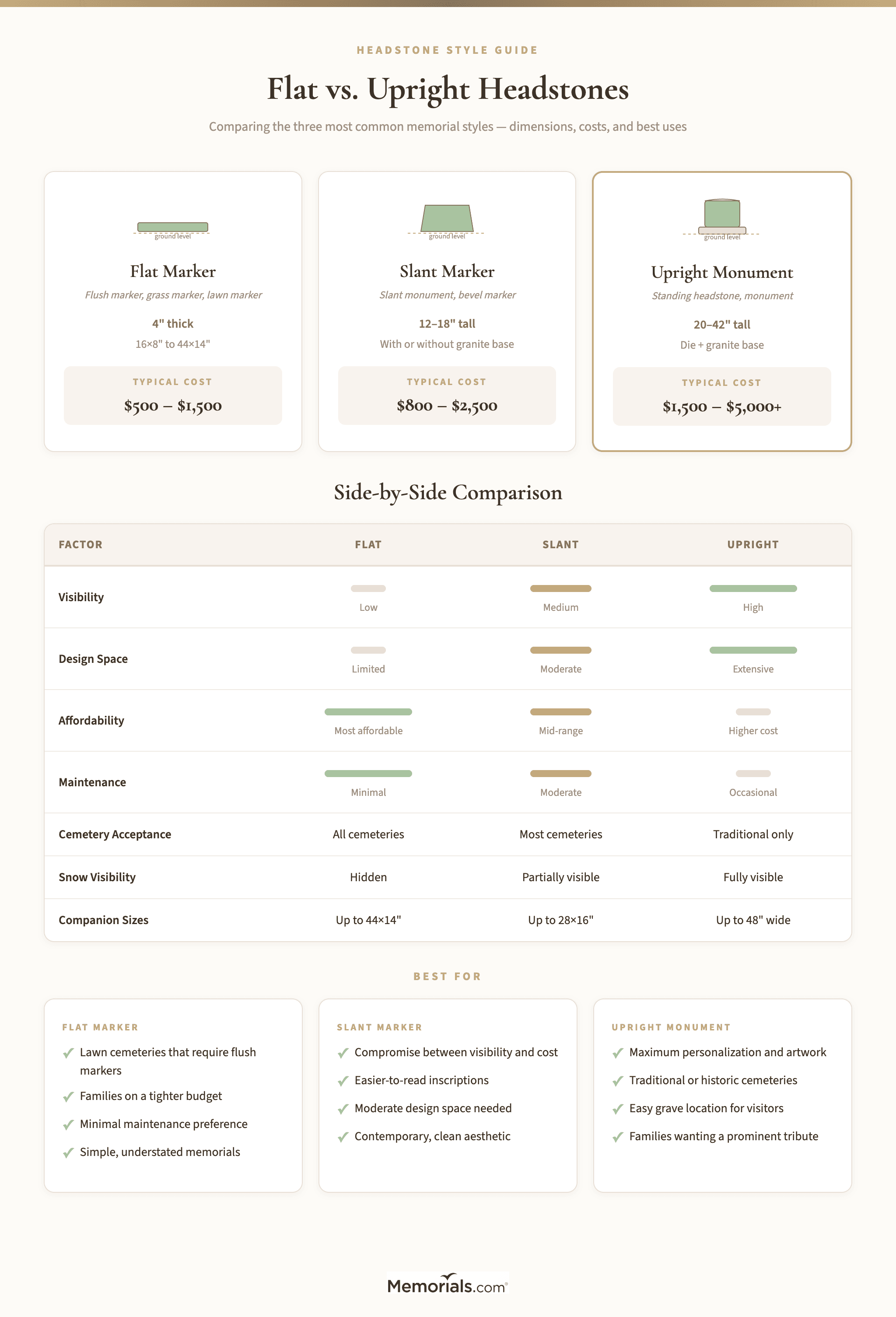
Standard flat marker sizes range from 16 by 8 inches for a single grave to 44 by 14 inches for a companion marker. Because they sit at ground level, flat headstones create a clean, uniform appearance across the cemetery landscape. Many modern memorial parks require flat markers exclusively to simplify maintenance and mowing.
Browse Our Most Popular Headstones & Grave Markers
Handcrafted memorials to honor your loved one for eternity
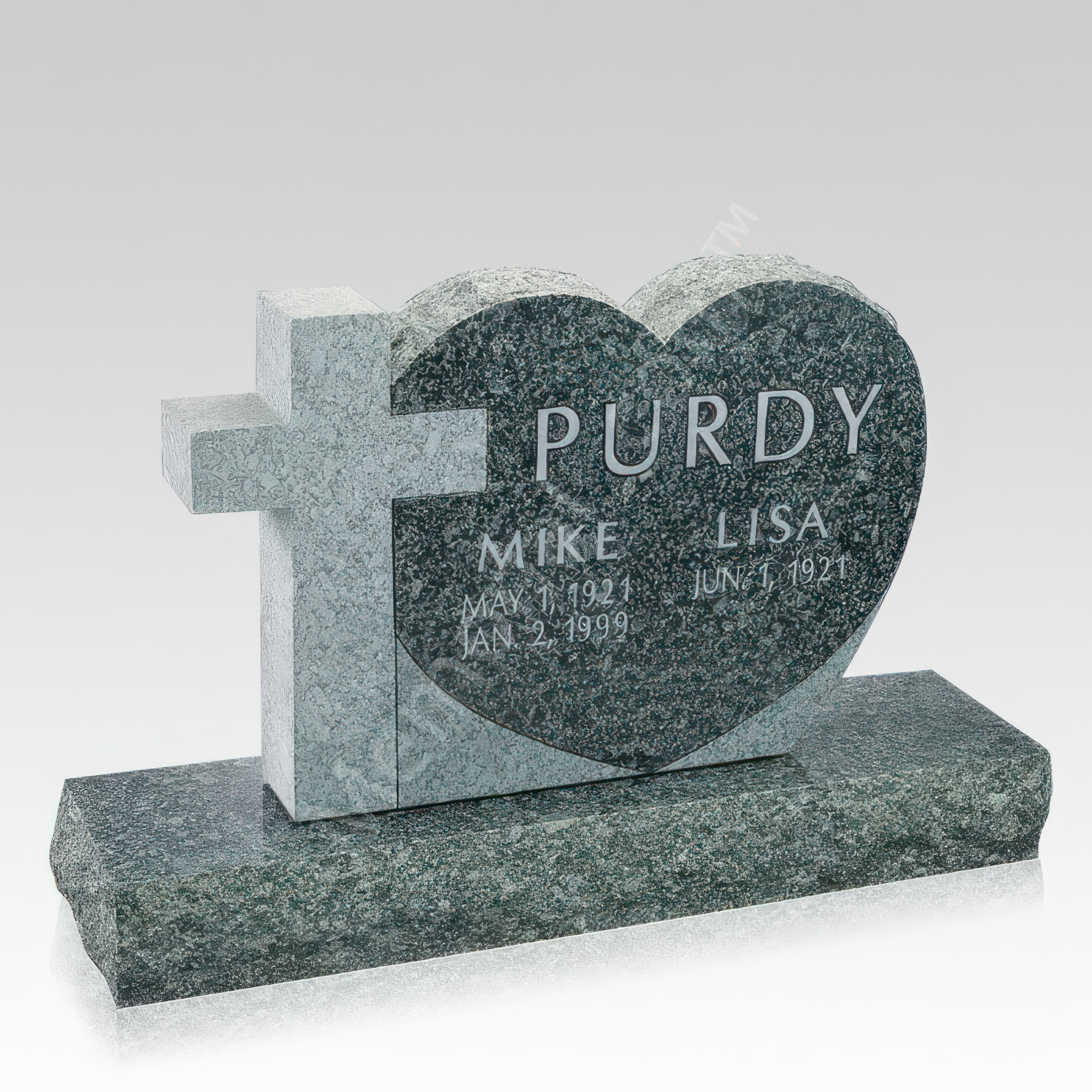
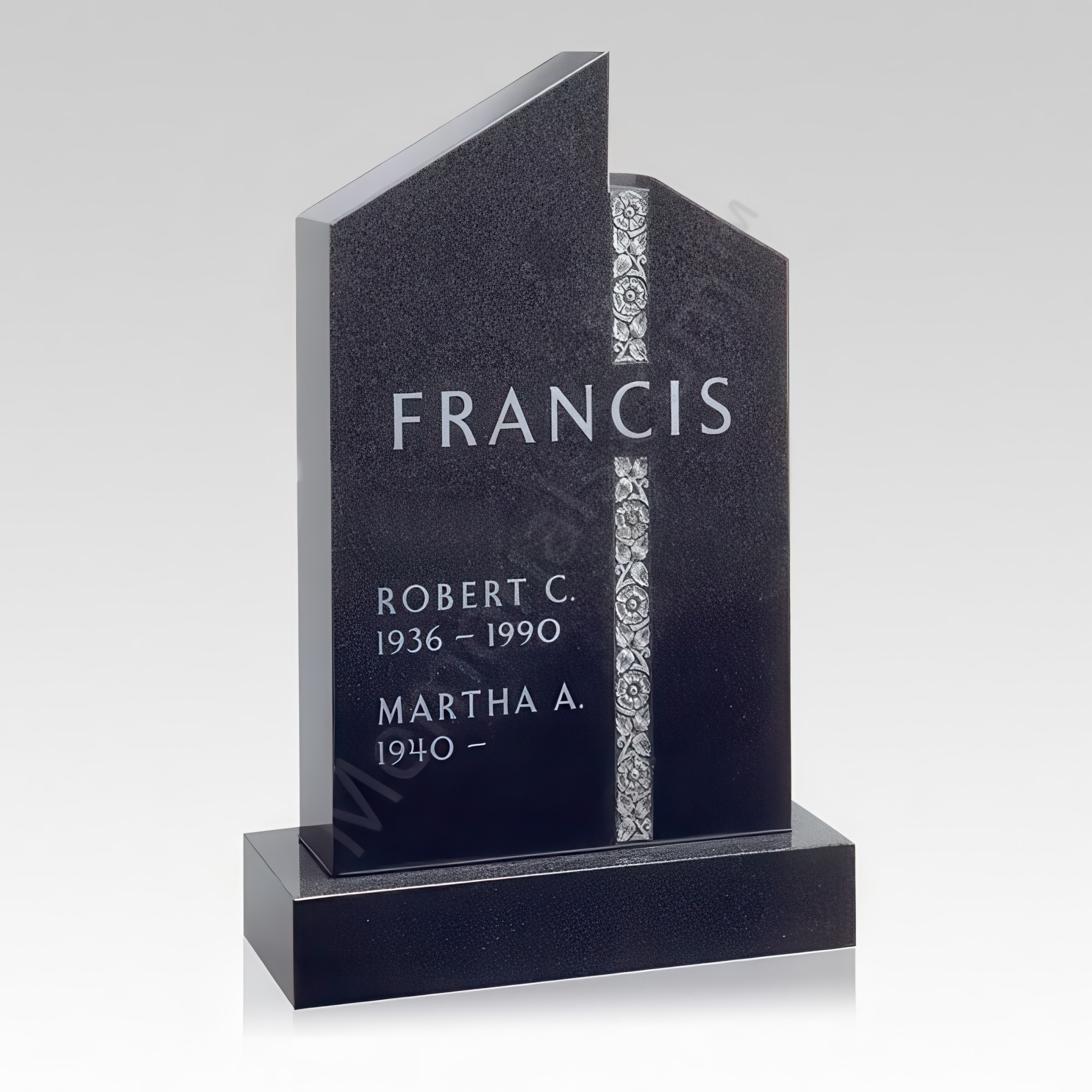
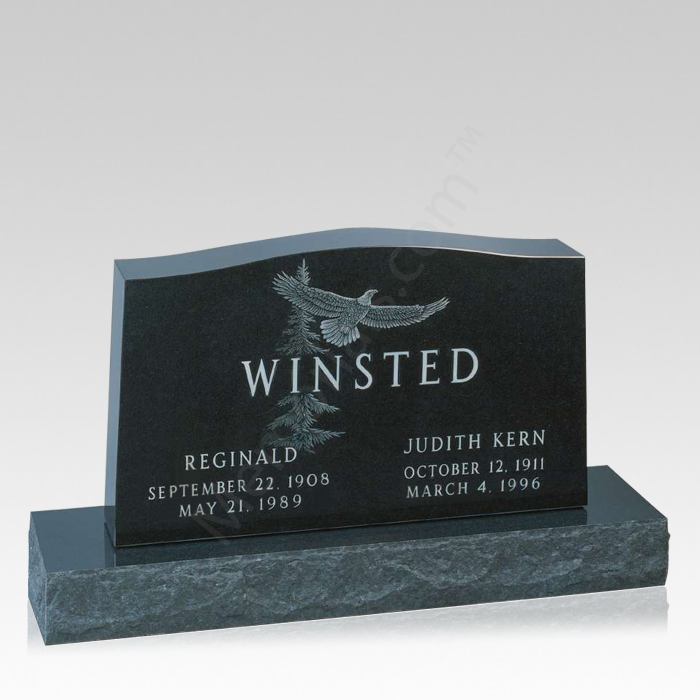
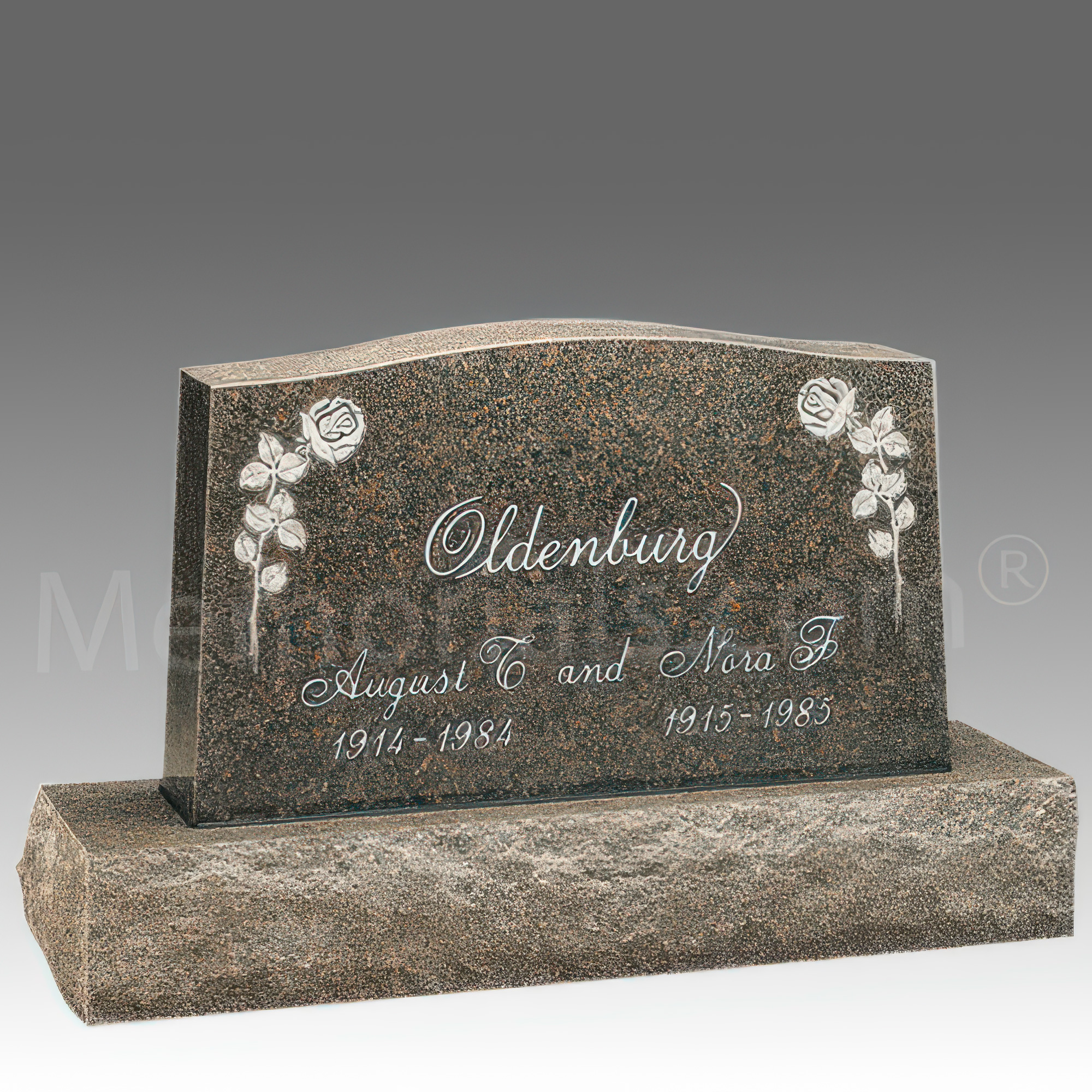
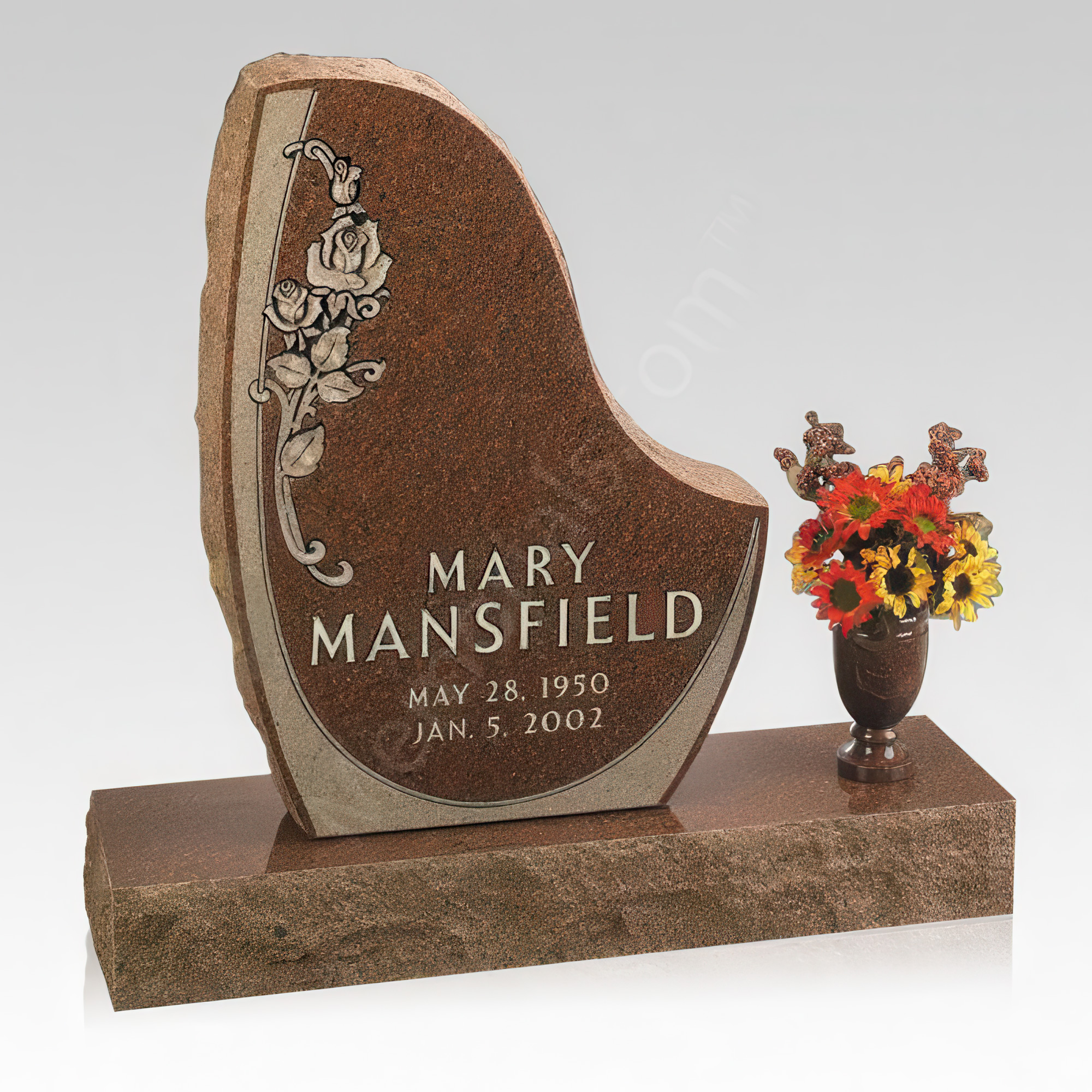
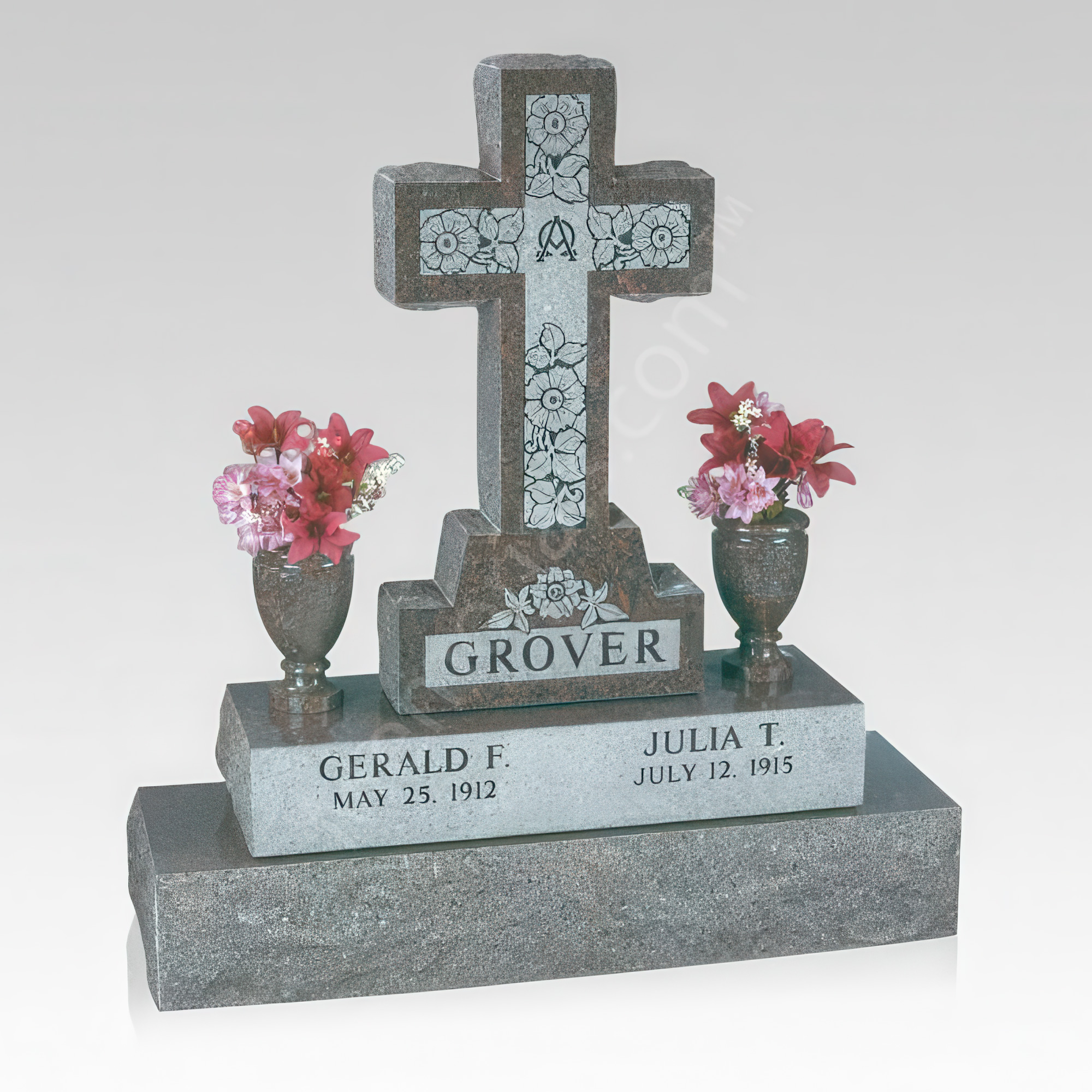
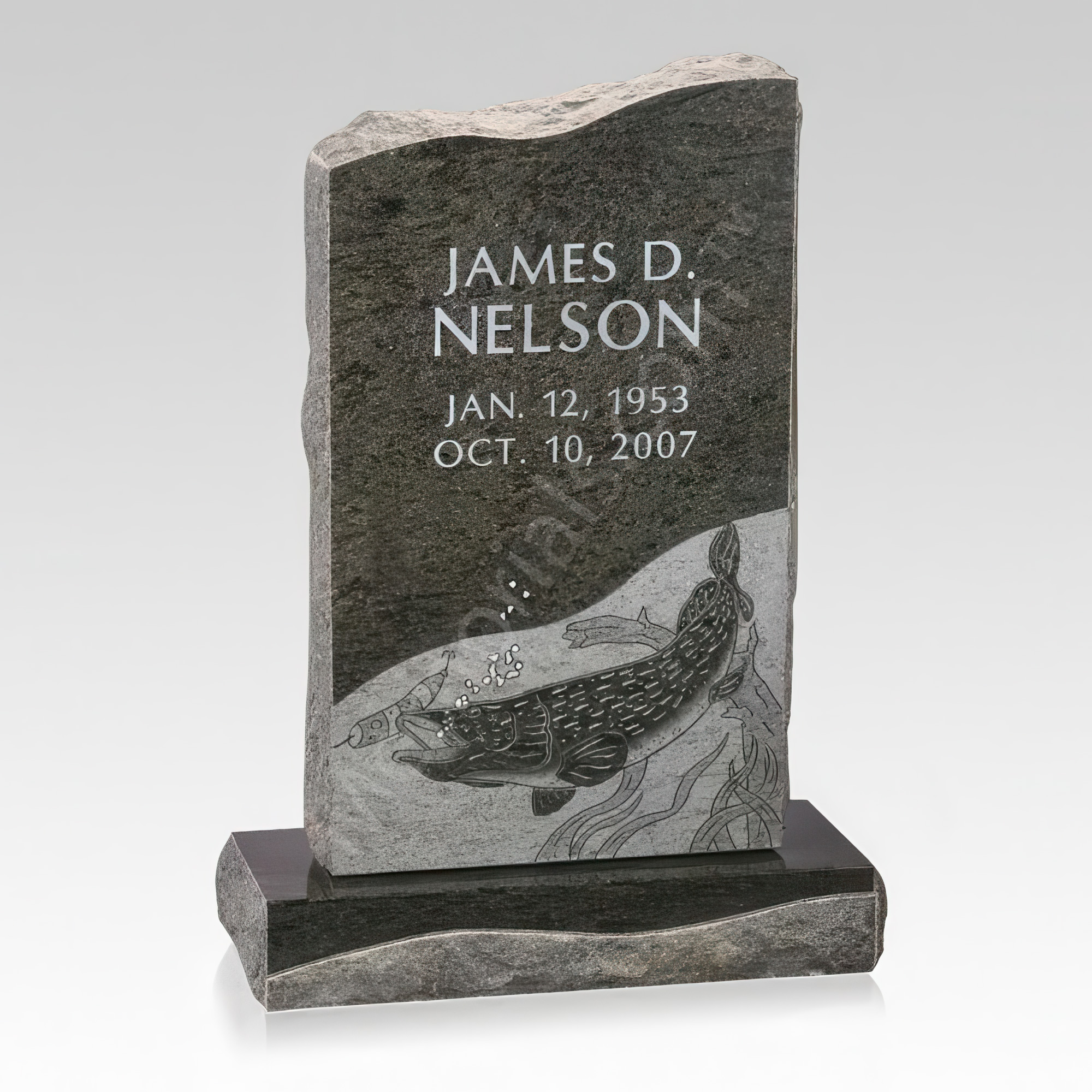
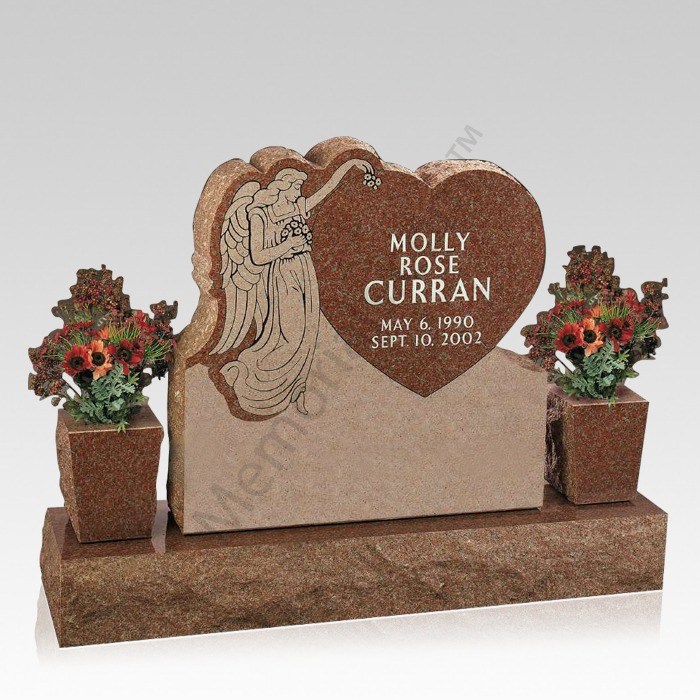
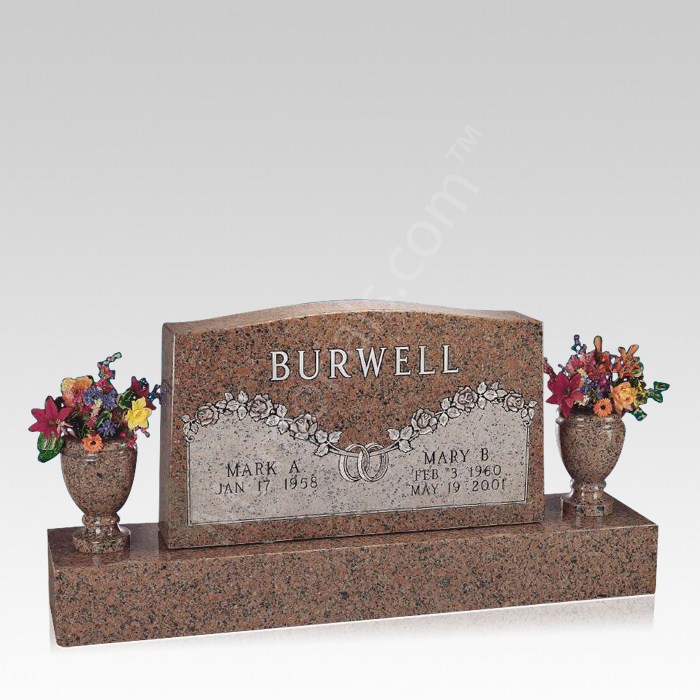
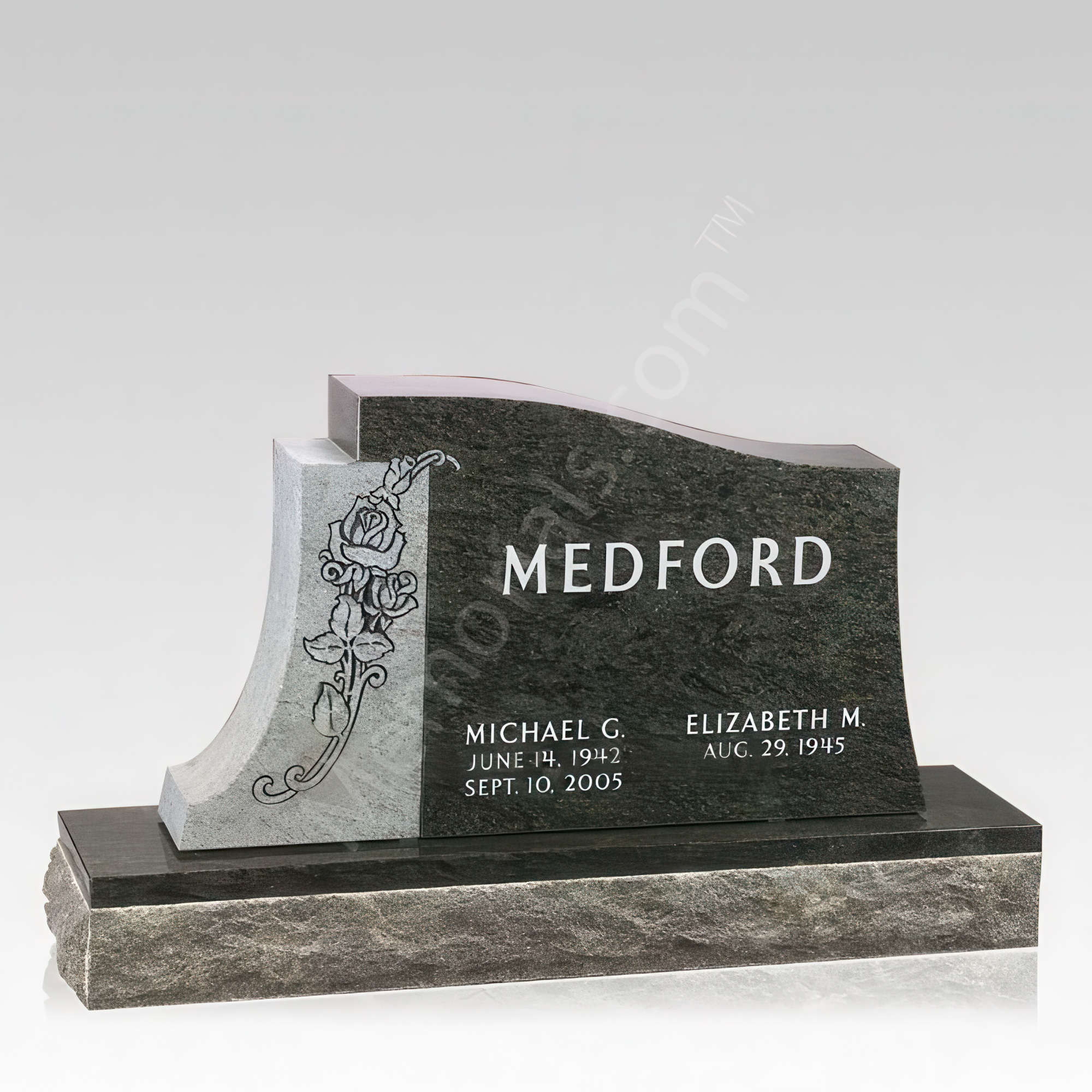
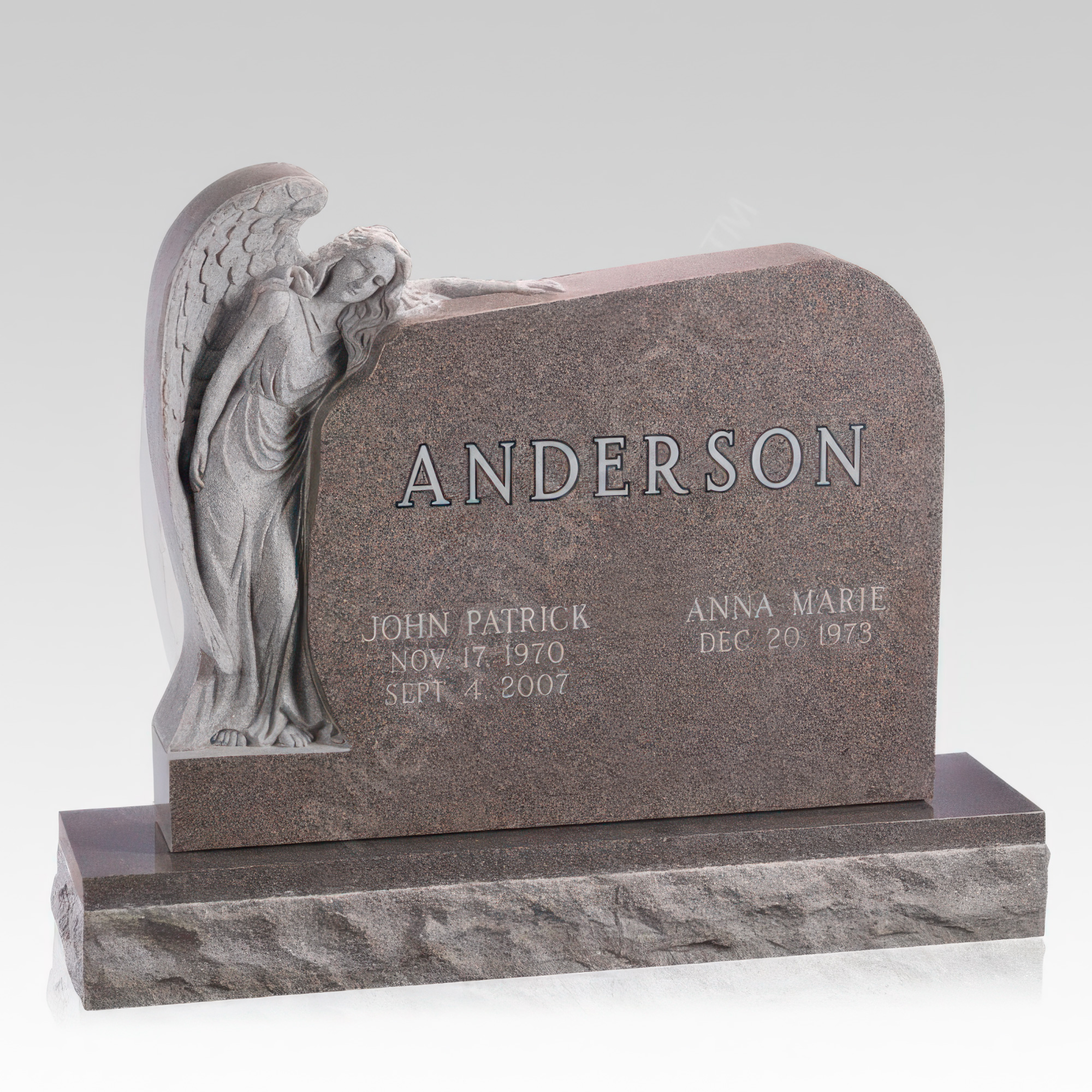
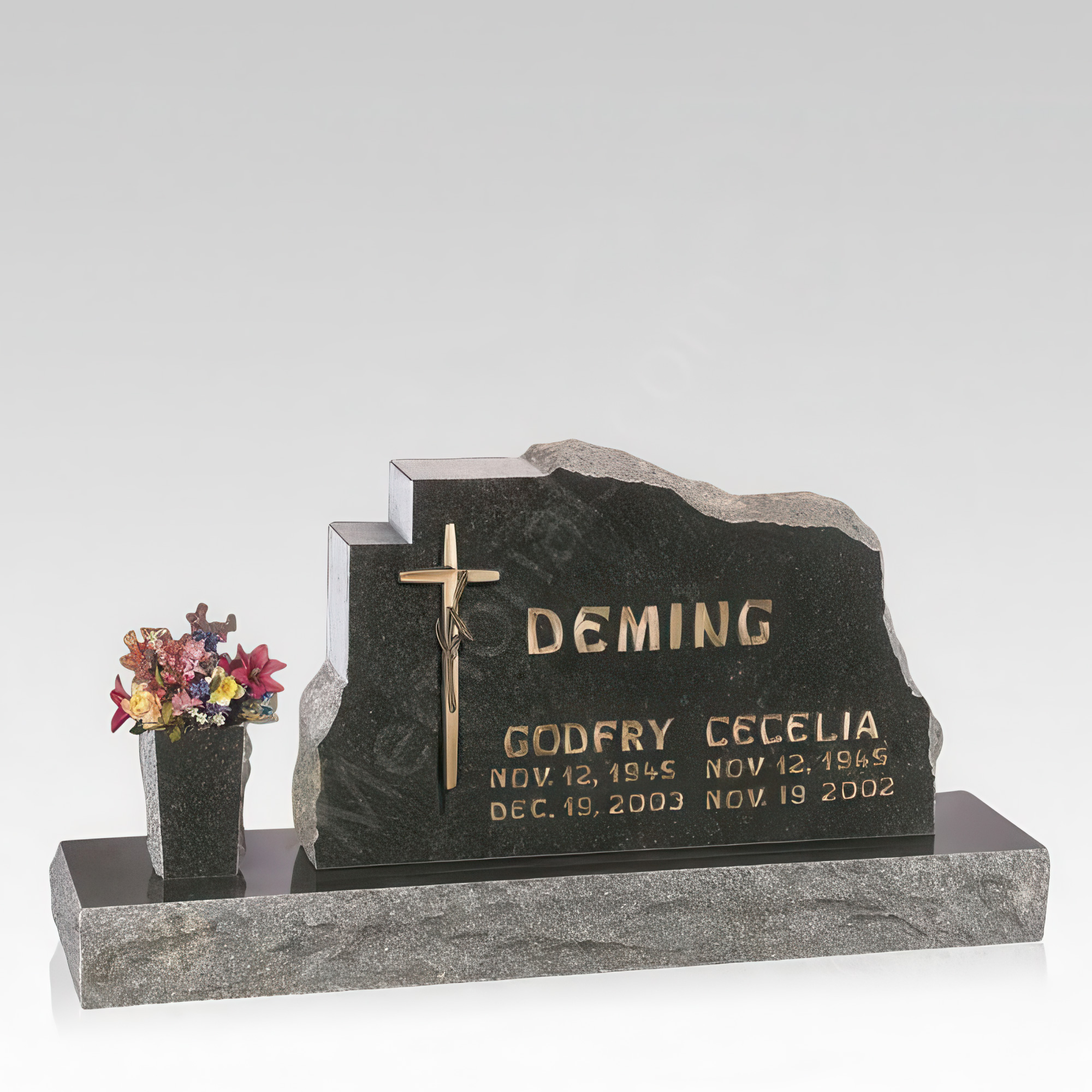
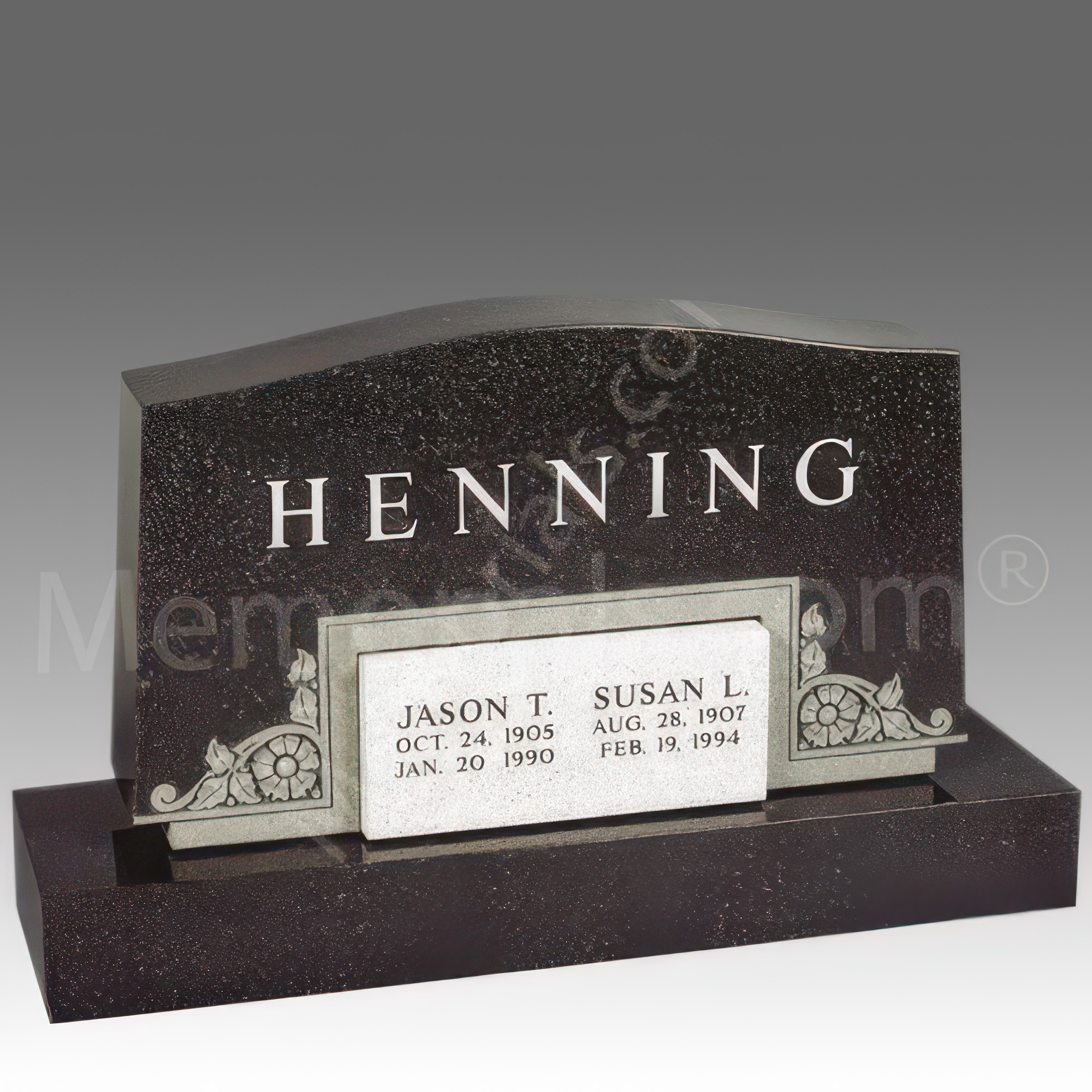
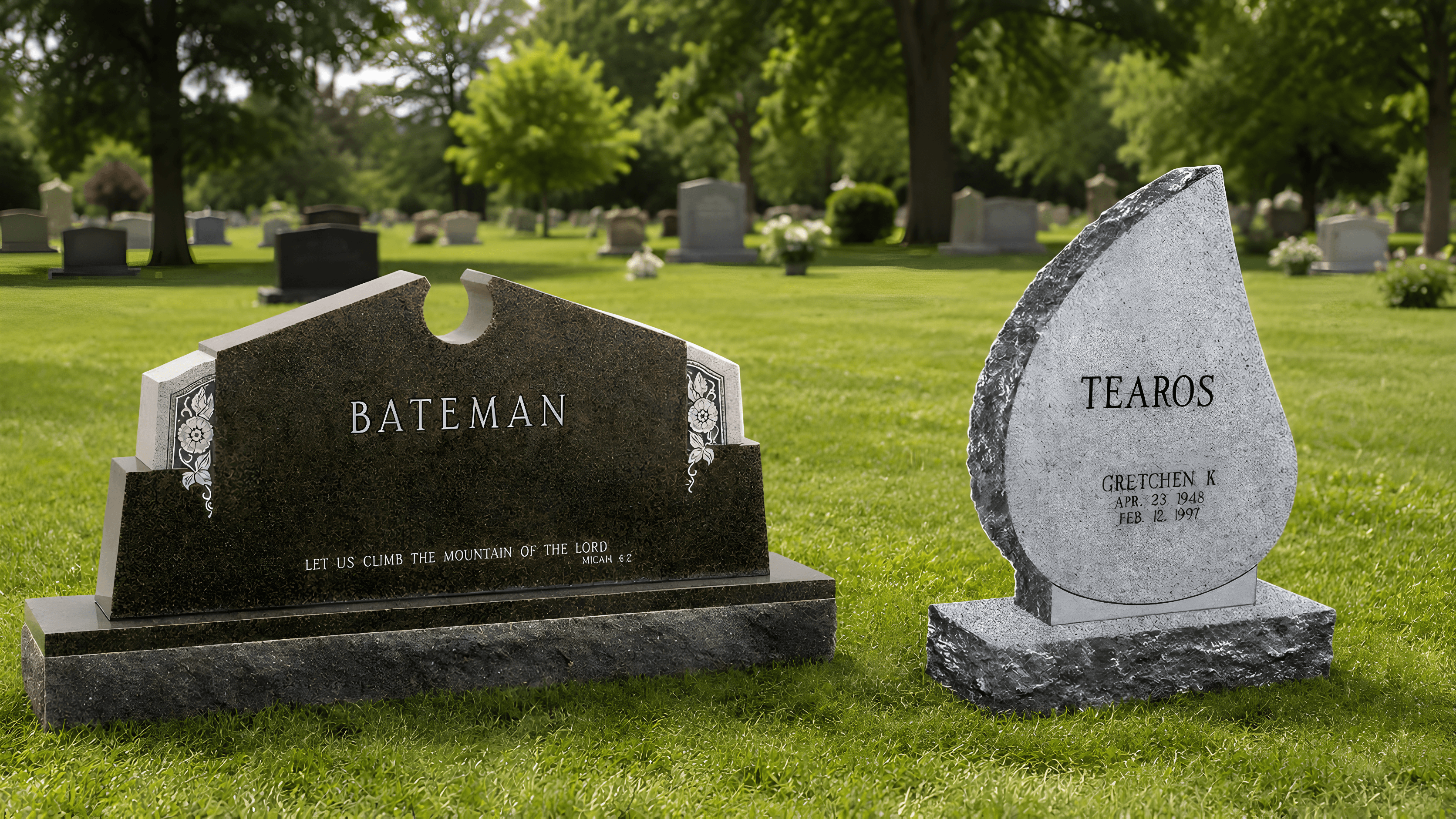
An upright headstone — also called a monument or standing marker — consists of two parts: the die (the vertical tablet that displays engravings) and the base (the horizontal foundation that supports it). Upright headstones stand anywhere from 20 to 42 inches tall, depending on the size and cemetery rules. They are the most traditional and recognizable style of memorial in most American cemeteries.
The die can be shaped in several ways. A serpentine top features a gentle S-curve along the upper edge and is the most popular finish. Other common shapes include flat top, oval top, rooftop, and corner rounds. Families can also order custom shapes — hearts, crosses, or freeform designs — though these require additional fabrication time and cost.
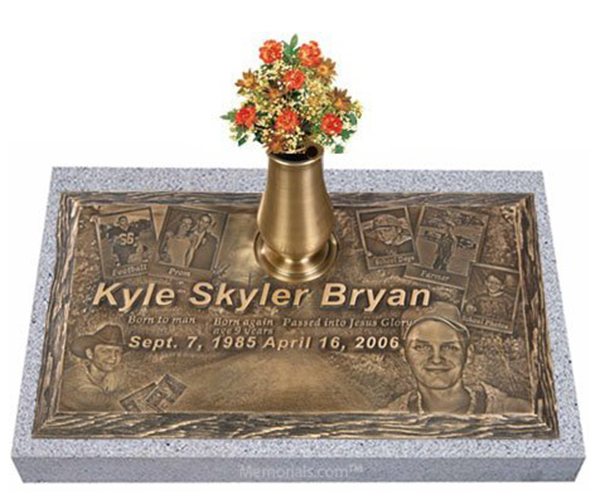
Granite is the standard material for upright monuments because of its durability, wide color range, and ability to hold fine engraving detail for decades. Some families choose bronze plaques mounted on granite bases, which combine the classic look of bronze lettering with the strength of stone.
What Is a Slant Headstone?
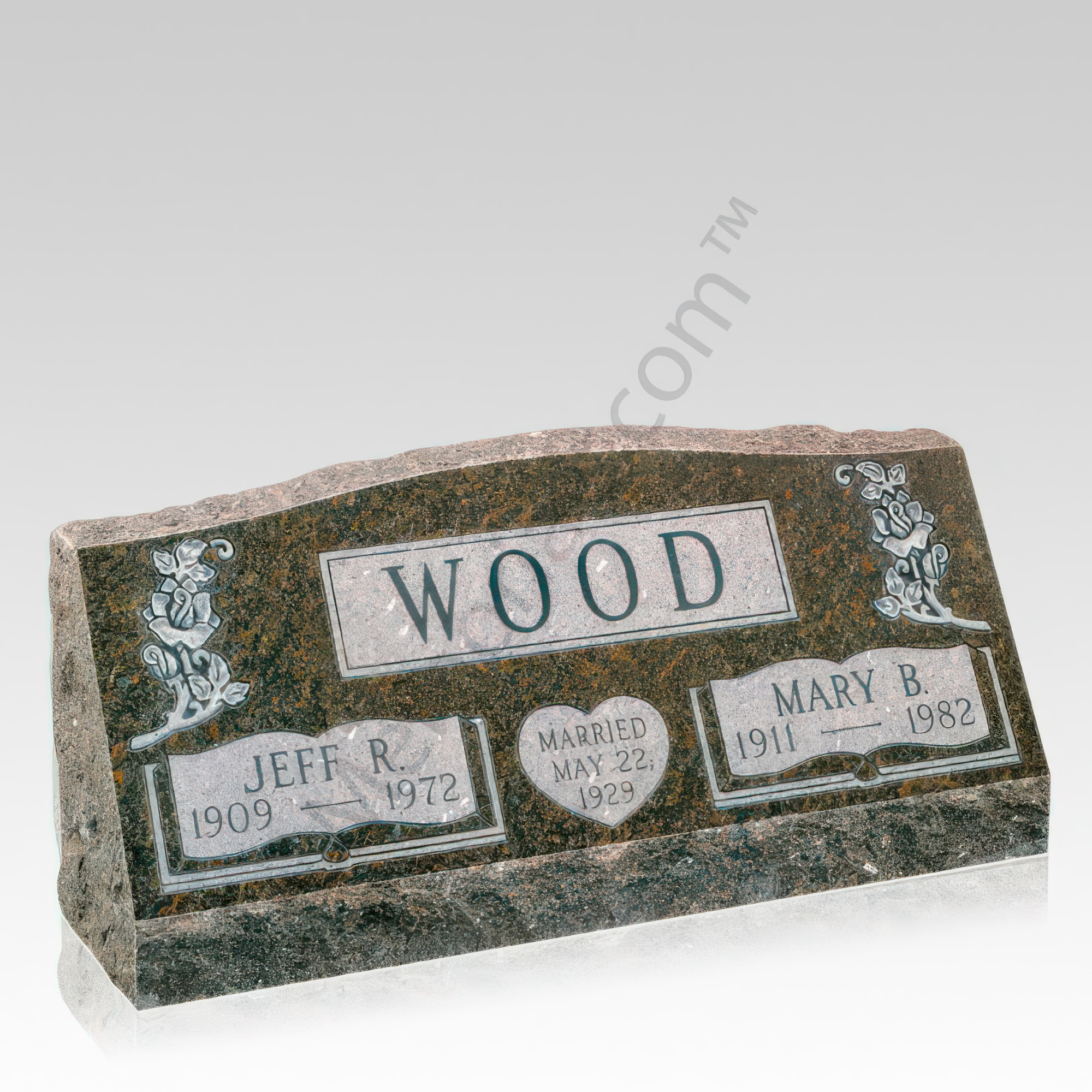
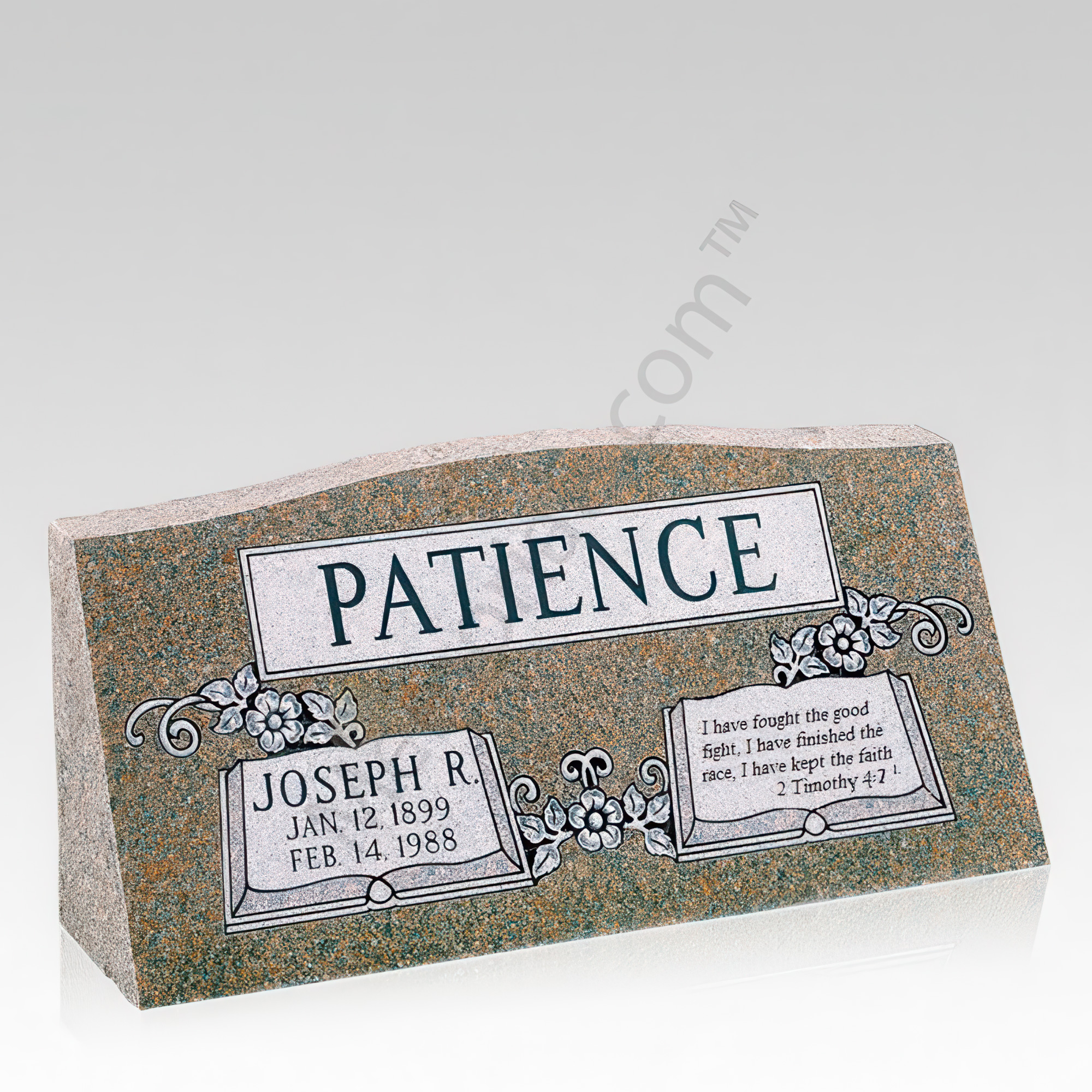
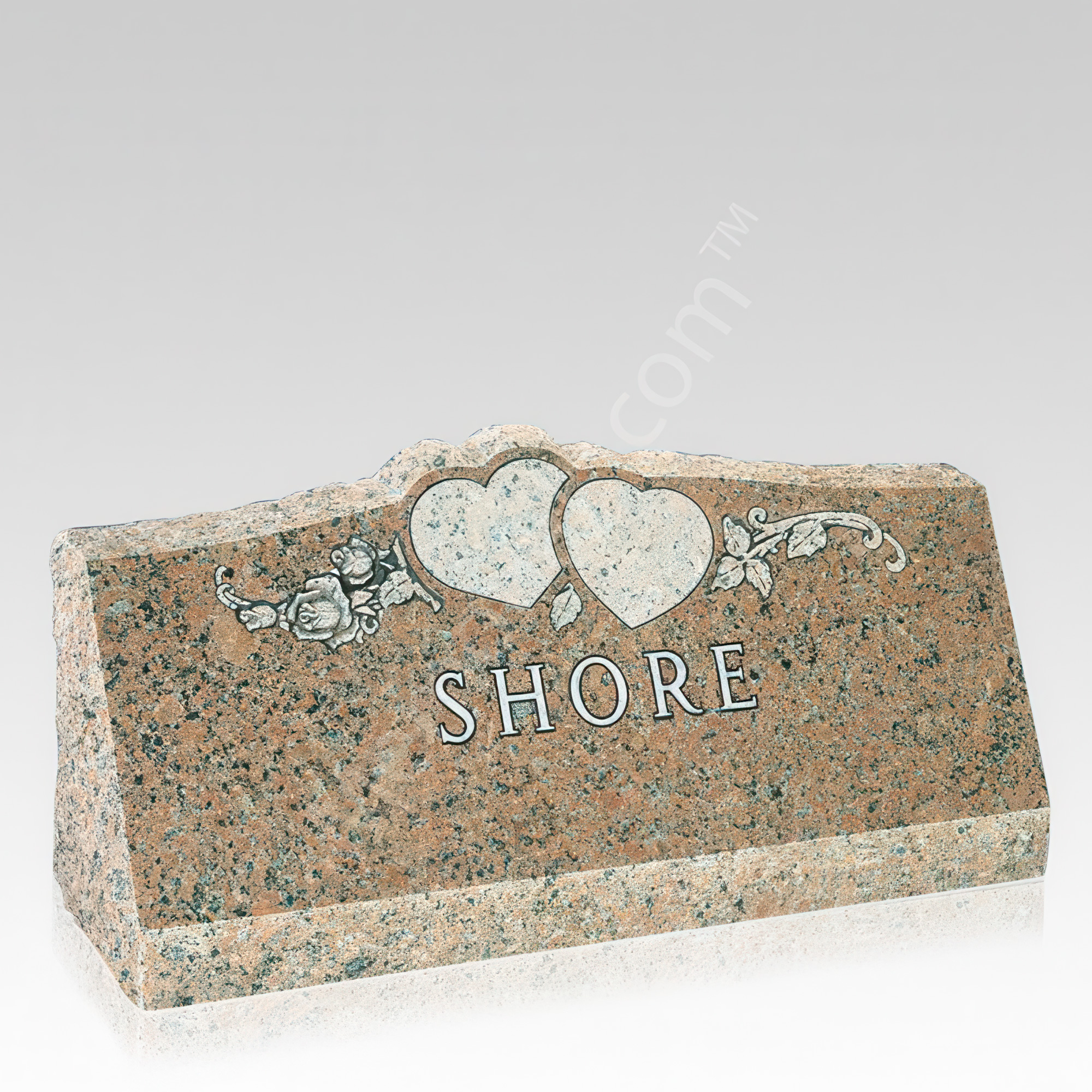
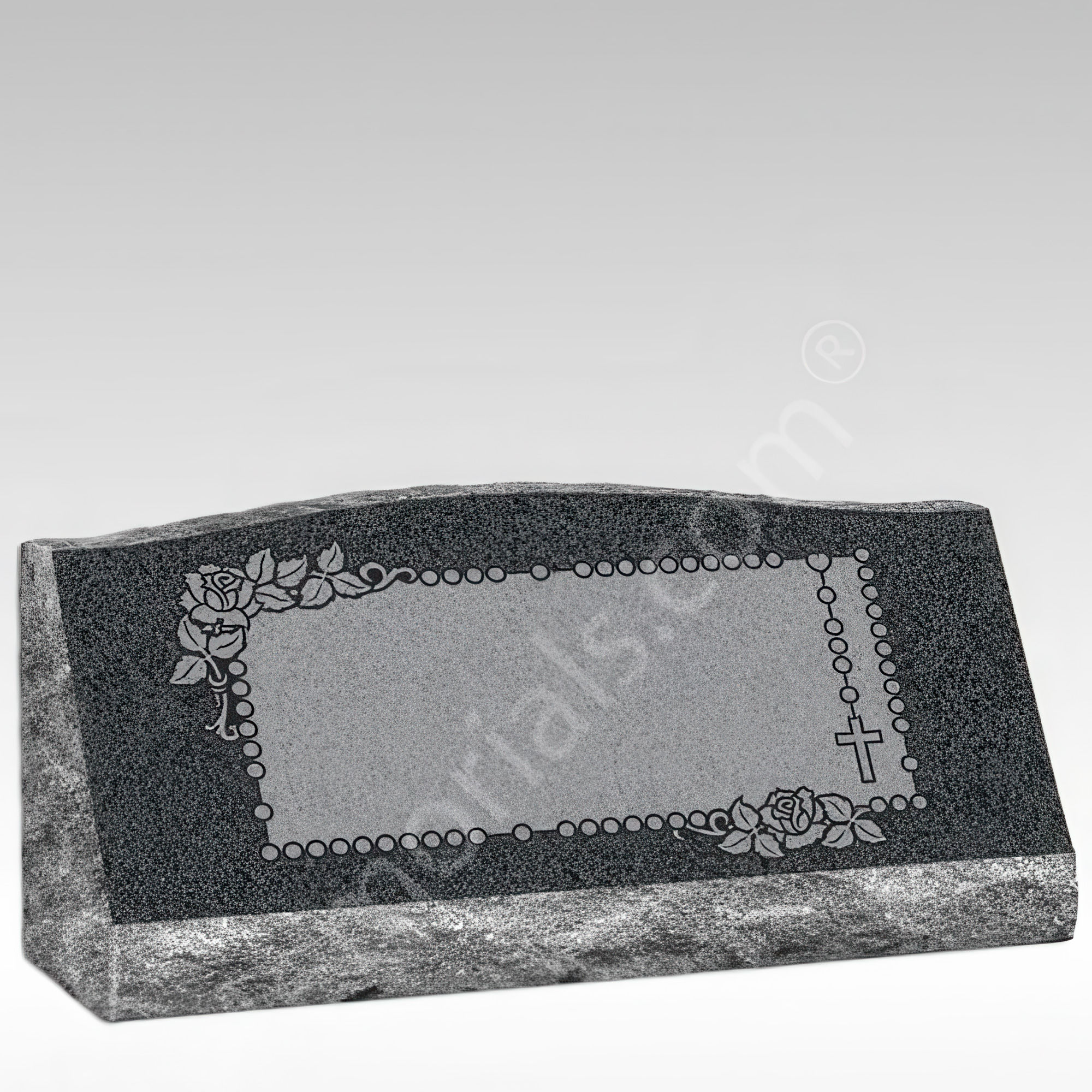
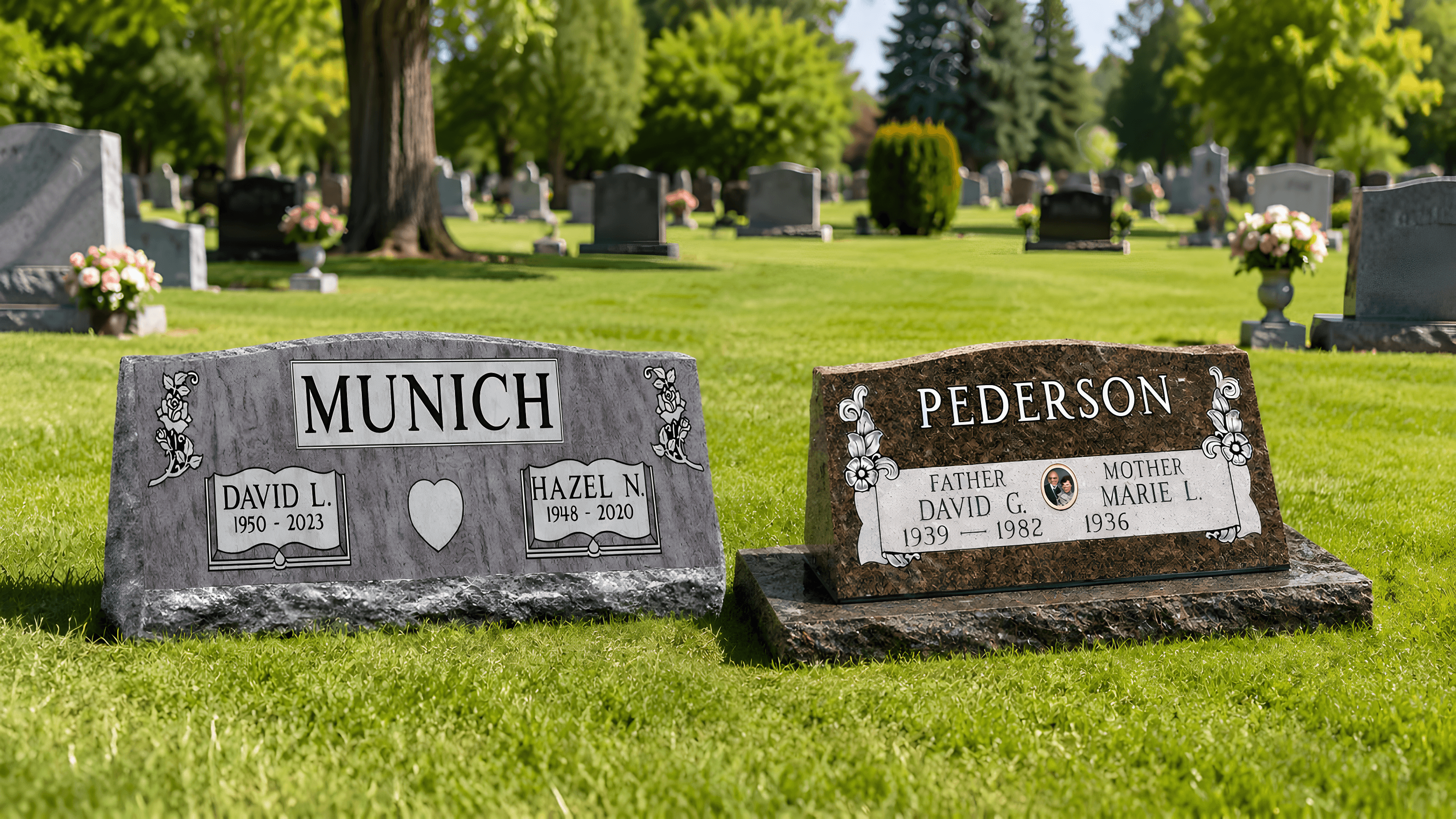
A slant headstone falls between flat and upright styles. It sits above ground level with a steeply angled front face, typically standing 12 to 18 inches tall in the back and tapering toward the front. Slant grave markers can be set on a granite base or mounted directly on a poured concrete foundation.
A standard slant marker has a feature called nosing — a two-inch flat ledge along the bottom front edge — that gives the stone a finished look and provides a small shelf for flowers or decorations. Full-face slant markers eliminate the nosing, using the entire front surface for engraving.
Slant headstones appeal to families who want more visibility than a flat marker offers but prefer a less imposing profile than a full upright monument. The angled face also makes inscriptions easier to read from a standing position, which is a practical advantage for visitors.
Flat vs. Upright Headstones: Key Differences
Size and Visibility
The most obvious difference is how each memorial interacts with its surroundings. Flat markers blend into the cemetery lawn and can only be read by someone standing directly above them. In winter, a flat marker may be completely hidden beneath snow. An upright headstone is visible from a considerable distance, making it easier for family members and friends to locate the grave. Slant markers offer a middle ground — visible from nearby but not as prominent as a full upright monument.
Design and Personalization
Upright headstones provide significantly more surface area for engravings, artwork, and personalization. A standard single upright die offers two sides (front and back), each with roughly 300 to 500 square inches of usable space. This allows room for full names, birth and death dates, epitaphs, religious symbols, portraits, scenic etchings, and decorative borders. Families can also add lettering to the base.
Flat headstones are more limited. A single flat marker provides roughly 100 to 200 square inches of engraving space — enough for names, dates, and a short inscription, but not enough for detailed artwork or lengthy passages. Bevel markers offer slightly more room because the angled surface is marginally larger.
Cost
Price is often a deciding factor. Flat markers are the most affordable option, with single granite markers typically ranging from $500 to $1,500 depending on size, stone color, and engraving complexity. Bevel markers fall in a similar range, sometimes slightly higher due to the additional cutting required.
Upright headstones cost more because they require substantially more material and labor. A single upright monument with base typically starts around $1,500 and can range to $5,000 or higher for larger sizes, premium granite colors, and detailed custom artwork. Double companion uprights for couples cost more than singles due to their wider dimensions. For a detailed breakdown of pricing at every level, see our headstone cost comparison.
Slant markers fall in between, generally ranging from $800 to $2,500 depending on size and base requirements.
Beyond the marker itself, families should factor in additional costs: cemetery foundation or setting fees (typically $200 to $500), design fees for custom artwork, and in some cases, required permits.
Not every cemetery permits every style. This is one of the most important factors to check before falling in love with a particular design. Cemetery rules vary widely, and violating them can mean your chosen headstone is rejected at installation.
Many modern memorial parks and lawn cemeteries require flat markers exclusively. These cemeteries prioritize a uniform, manicured appearance and need the ability to mow over grave markers without obstruction. Some older, traditional cemeteries require upright monuments in certain sections and flat markers in others. A few cemeteries restrict height, width, and thickness for upright stones — and some mandate granite bases of a specific size. For a comprehensive overview of what cemeteries can and cannot require, see our guide to cemetery regulations for markers.
The single most important step is to contact your chosen cemetery before you order. Request their written regulations, including dimensions, approved materials, and foundation requirements. This prevents costly surprises.
Materials
Both flat and upright headstones are most commonly made from granite — the most durable natural stone used in memorials. Granite resists weathering, holds engraving detail for generations, and comes in a wide range of colors from classic gray and black to red, blue, and mahogany. For a deeper exploration of stone and metal options, see our guide on headstone materials explained.
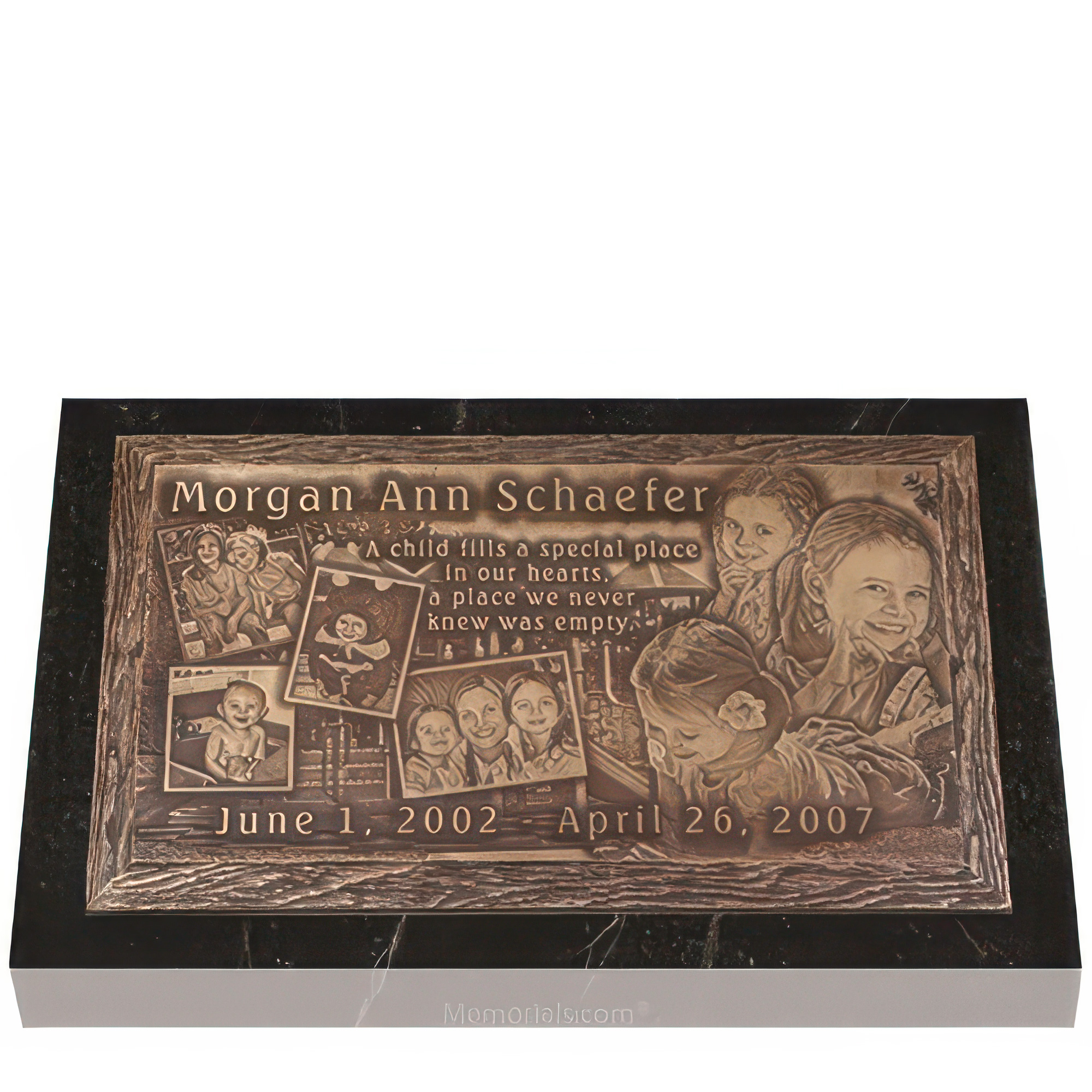
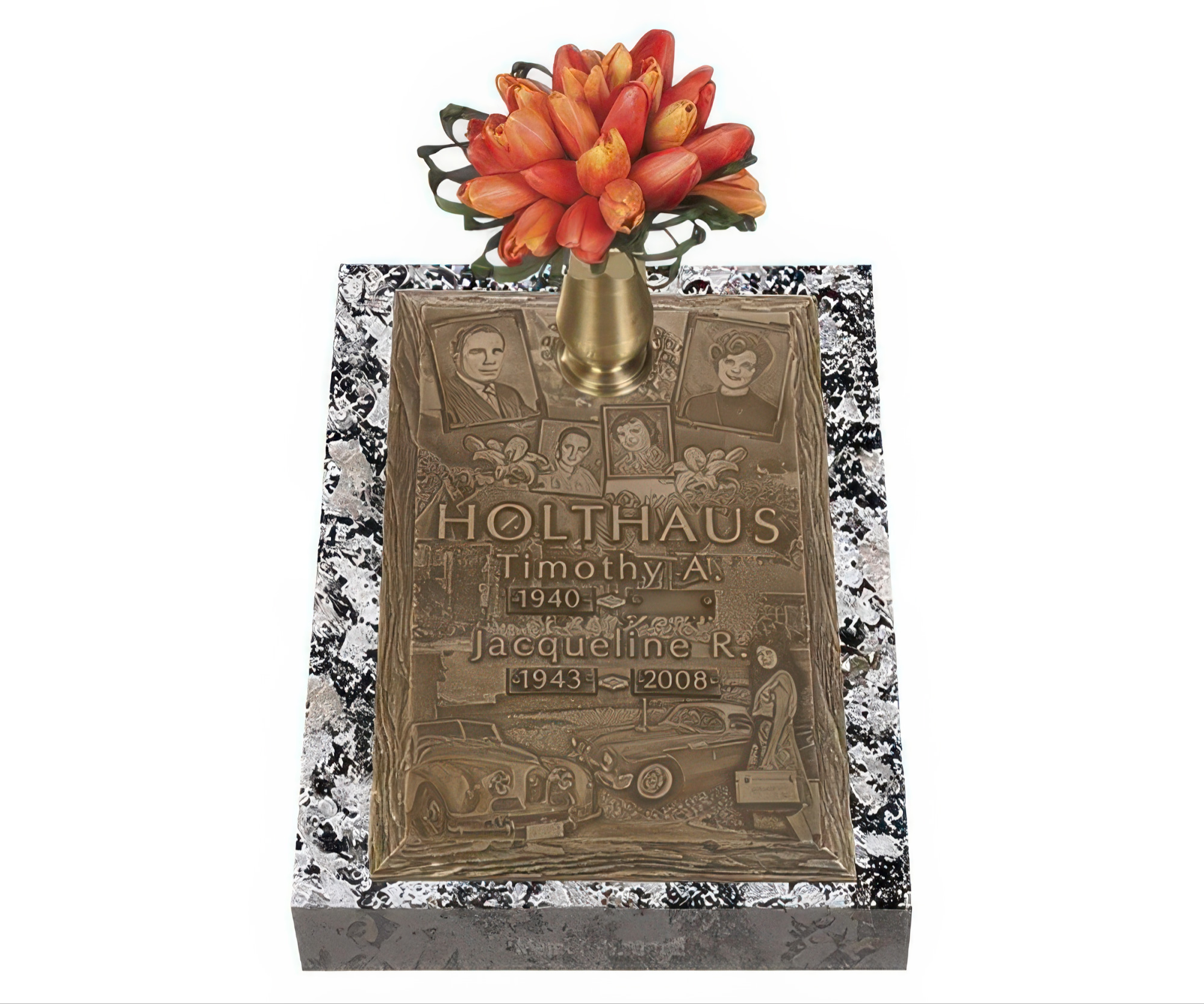
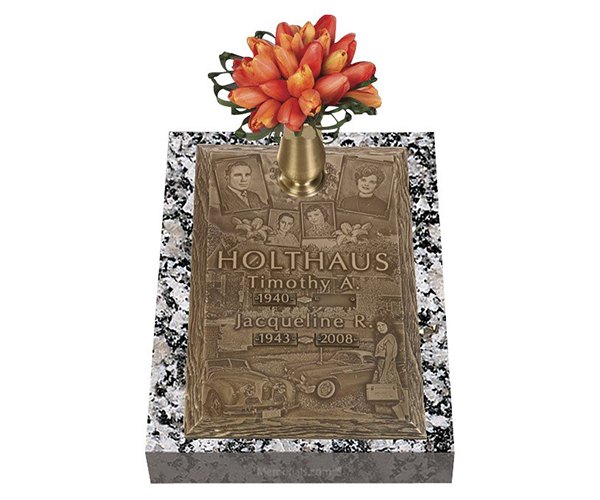
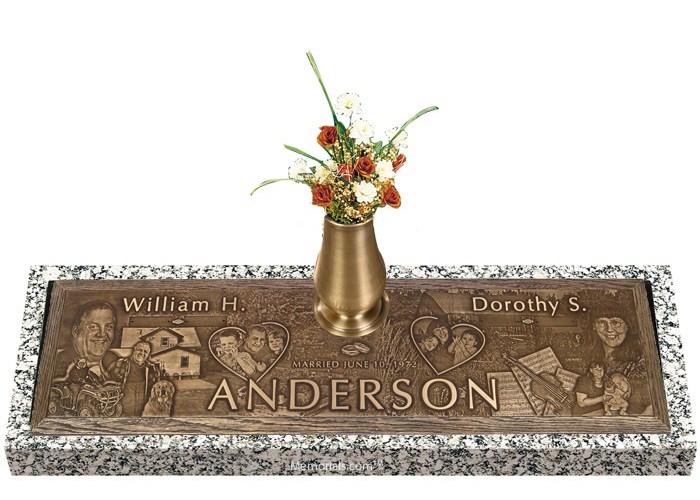
Bronze is a popular alternative for flat markers. Bronze grave markers typically consist of a cast bronze plaque mounted on a granite foundation. Bronze resists corrosion well and develops a rich patina over time, though some families and cemeteries prefer regular cleaning to maintain the original luster.
Marble, once the standard material for gravestones, has largely fallen out of favor for new installations because it weathers more quickly than granite, softening inscriptions over time — especially in humid or coastal climates.
Maintenance
Flat headstones require less ongoing maintenance than upright monuments. Because they sit at ground level, they are not exposed to the same wind loads and are less likely to shift or topple. However, flush markers can become obscured by grass encroachment and may need periodic edging to keep inscriptions visible.
Upright headstones may need occasional releveling if the base shifts due to frost heave or soil settling. The vertical surface collects more dirt, lichen, and biological growth than a flat surface, so periodic cleaning is recommended — though granite is extremely resilient and a simple wash with water and a soft brush is usually sufficient.
Slant markers share maintenance characteristics with both. They are less prone to shifting than full uprights but more visible than flush markers, making dirt and growth easier to notice and address.
Flat vs. Upright for Cremation Memorials
Families choosing cremation have additional options. Both flat and upright headstones can mark a cremation burial plot, but the sizing, foundation, and niche compatibility may differ from traditional full-casket burial.
Flat cremation markers are often smaller than standard flat headstones and may be placed in designated cremation garden sections. Some cemeteries allow cremation urns to be buried directly beneath a flat marker with a smaller foundation. Upright cremation monuments, while less common, are available and can mark individual or companion cremation plots. For a full overview of cremation-specific memorial types, see our guide to cremation headstone and marker options.
Choosing between flat and upright comes down to four questions.
What does the cemetery allow? This is the threshold question. If the cemetery requires flat markers only, the decision is made for you. If the cemetery permits both, you have the full range of options.
What is your budget? Flat markers are the most affordable. Slant markers offer a step up in visibility and design space at a moderate increase in cost. Upright monuments provide the most personalization and presence but at the highest price point.
How much personalization do you want? If you envision a simple marker with a name, dates, and a short phrase, a flat headstone serves that purpose elegantly. If you want room for portraits, scenic etchings, religious imagery, military emblems, or lengthy epitaphs, an upright monument gives you the canvas.
How important is visibility? For families who visit frequently and want to locate the grave easily — especially across a large cemetery or in seasons with snow — an upright or slant headstone is the more practical choice. For families who prefer a subtle, understated memorial, a flat marker creates a peaceful, ground-level tribute.
Companion and Double Options
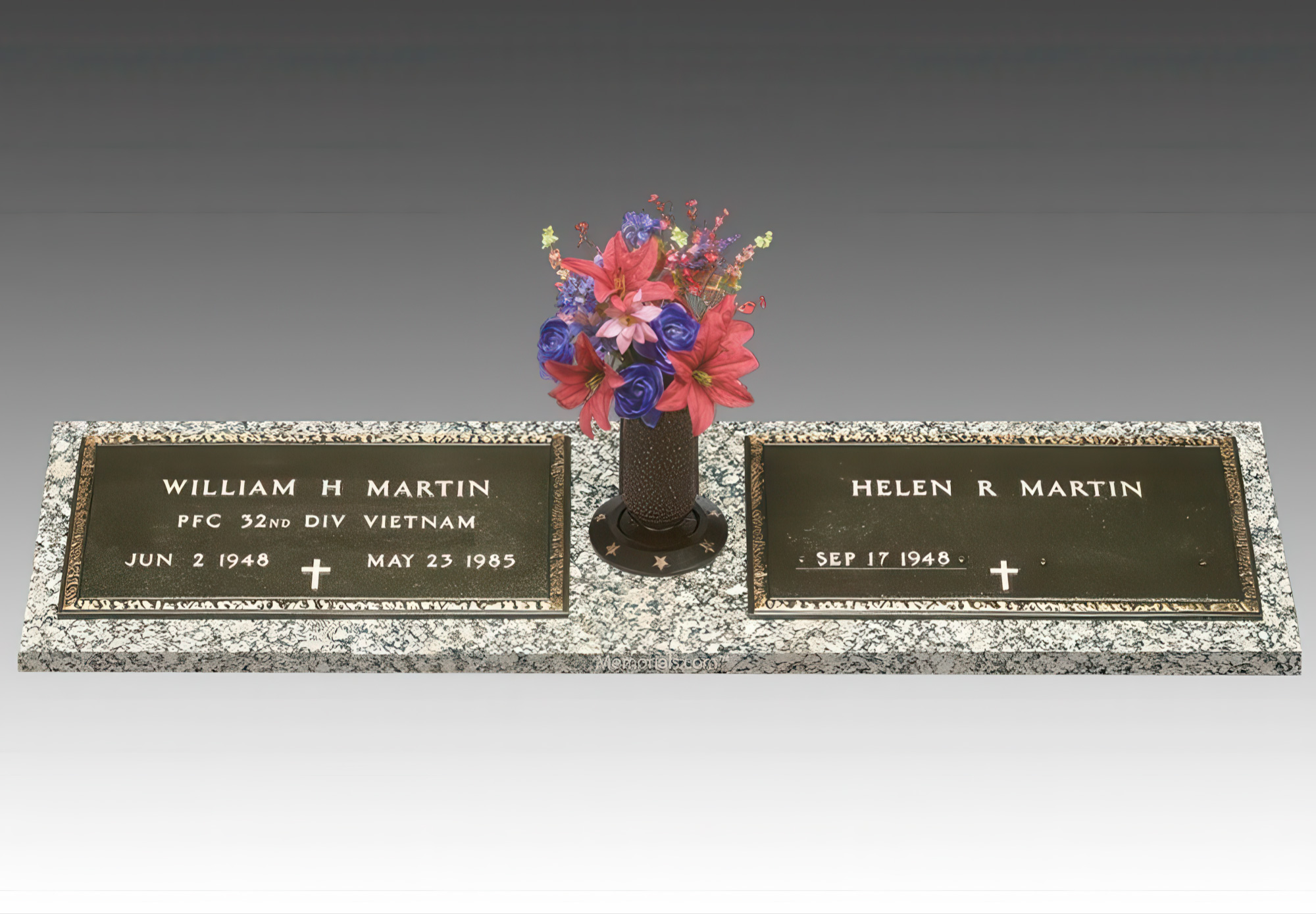
Both flat and upright headstones are available in companion sizes designed for couples or family members who wish to be memorialized together. A companion headstone is wider than a single marker and provides space for two sets of names, dates, and inscriptions.
Companion flat markers typically measure 36 by 14 inches or 44 by 14 inches. Companion upright monuments are wider dies — often 36 to 48 inches — set on proportionally larger bases. Some couples choose a double upright as a pre-need purchase, having one side engraved with their information and leaving the second side blank until it is needed.
Frequently Asked Questions
Are flat headstones cheaper than upright headstones?
Yes, in most cases. Single flat granite markers typically range from $500 to $1,500, while single upright monuments with bases generally start around $1,500 and can reach $5,000 or more. The difference comes down to the amount of granite used and the labor required for fabrication and installation.
Can I choose between flat and upright at any cemetery?
Not always. Many modern memorial parks require flat markers exclusively to maintain a uniform landscape. Other cemeteries permit both styles but restrict upright monuments to specific sections or impose size limits. Always check your cemetery's written regulations before ordering.
What is a bevel headstone?
A bevel headstone is a variation of a flat marker. It sits at ground level but is slightly raised in the back — usually about two inches — creating a gentle slope. This design, sometimes called a pillow marker, makes inscriptions easier to read without kneeling and adds a subtle visual distinction without the height of an upright monument.
Do slant headstones require a base?
Technically, no — slant markers can be set directly on a poured concrete foundation. However, most families and monument companies recommend a granite base for added height, stability, and a more polished appearance. A base also protects the bottom edge of the slant from soil contact and staining.
How long do granite headstones last?
Granite is one of the most durable natural materials available. A well-cut granite headstone — whether flat, slant, or upright — will maintain its structural integrity and legibility for a century or more under normal conditions. Black and dark-colored granites tend to hold engraving detail longest, while lighter colors may show weathering effects slightly sooner.
Choosing What Feels Right
There is no universally correct answer to the flat vs. upright question. The right choice depends on what the cemetery allows, what your budget accommodates, how much design space you need, and what kind of tribute feels meaningful to your family. A flat marker is not less loving because it is smaller, and an upright monument is not excessive because it stands tall. Both serve the same sacred purpose: keeping a name, a story, and a memory alive for everyone who visits.
Memorials.com carries a full selection of flat grave markers, upright headstones, and slant gravestones in granite, bronze, and custom designs. Every headstone ships free.