🏬Supersize Online Funeral Retailer🪦1000's of Headstones⚱️Over 10,000 Cremation Urns⚰️Caskets Overnight Delivery🛒Funeral & Memorial Superstore🚚FREE Shipping on ALL Orders👨👩👧👦Helping Families for over 20 Years💰Lowest Price Guarantee🏬Supersize Online Funeral Retailer🪦1000's of Headstones⚱️Over 10,000 Cremation Urns⚰️Caskets Overnight Delivery🛒Funeral & Memorial Superstore🚚FREE Shipping on ALL Orders👨👩👧👦Helping Families for over 20 Years💰Lowest Price Guarantee
🏬Supersize Online Funeral Retailer🪦1000's of Headstones⚱️Over 10,000 Cremation Urns⚰️Caskets Overnight Delivery🛒Funeral & Memorial Superstore🚚FREE Shipping on ALL Orders👨👩👧👦Helping Families for over 20 Years💰Lowest Price Guarantee🏬Supersize Online Funeral Retailer🪦1000's of Headstones⚱️Over 10,000 Cremation Urns⚰️Caskets Overnight Delivery🛒Funeral & Memorial Superstore🚚FREE Shipping on ALL Orders👨👩👧👦Helping Families for over 20 Years💰Lowest Price Guarantee
The cost of cremation in Wisconsin starts between $895 and $4,295, with a median of $3,295. Those figures come from 21 published Wisconsin price lists read in 2026.
Ask how much is cremation in Wisconsin and the answer is that Wisconsin is expensive: the most expensive state in the country on our figures, against a national median of $1,925, and the most expensive of the twelve Midwestern states. Our cremation cost by state guide sets all fifty side by side.
The state median is the least useful number here. Wisconsin's prices sit in two clumps with nothing in between, and two substantial charges — the crematory fee and the county cremation permit — sit outside the quoted number on most lists. What cremation cost Wisconsin families face depends on the kind of firm you call and the county the death happened in.
Every figure is a floor — the lowest direct-cremation price on the provider's own document, which normally assumes a basic container.
Federal law makes every Wisconsin funeral home hand you an itemized general price list and quote prices over the phone. It exists whether or not the firm publishes it, and it is the only complete version of a Wisconsin price — ask for it by name.
The hole in the middle is the thing to see. Six published floors in the state sit at $1,595 or below and the next one up is $2,500 — a $905 band, straddling the national median, with nothing in it.
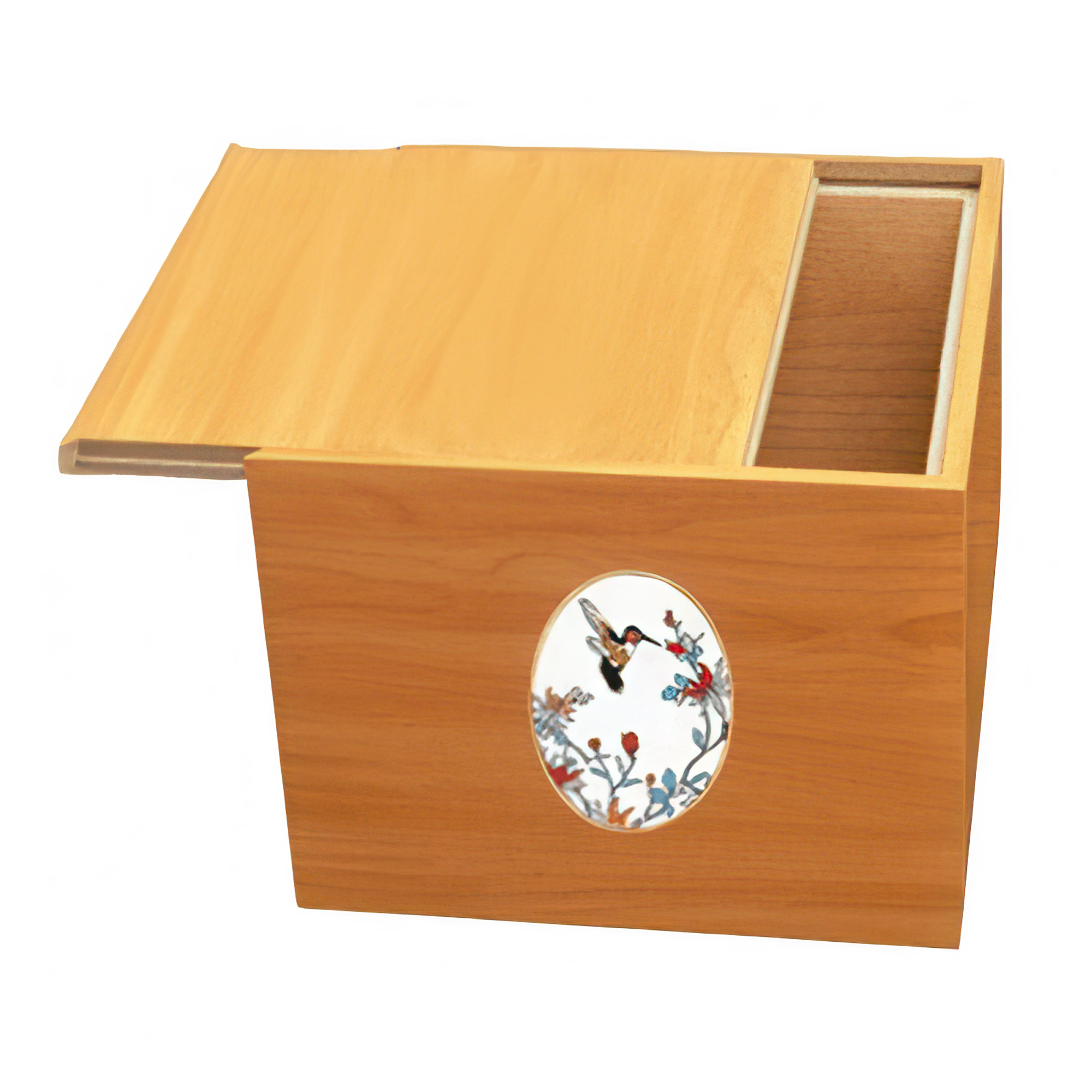
Urns for After a Direct Cremation
Not one of the 23 Wisconsin price lists includes a temporary container
The firms at the bottom of Wisconsin's range and the firms at the top are not the same kind of business, and that is most of the gap. The cheapest published floors belong to cremation societies and cremation-first operators: several own their crematory, they arrange by phone or online, and there is no chapel to walk into. From the middle of the range upward it is nearly all full funeral homes — chapels, arrangement offices, viewing rooms, staffed hours — offering direct cremation as one line on a long price list.
The cheaper firm is not undercutting anybody. It is selling less. A chapel, a viewing room and staff on call at three in the morning are real costs, carried by the visitations, funerals and burials that firm also sells. A cremation society carries none of them, so its price is close to what a transfer, the paperwork and a retort cost. Both perform the identical cremation — but a firm with no chapel cannot give you a viewing beforehand or a service with your loved one present, and it cannot turn into a burial if the family changes its mind.
And the cheaper firm is not a lesser licensee. Wisconsin registers the crematory business under Wis. Stat. § 440.71(1) and licenses funeral directors and establishments separately under ch. 445; there is no cut-price Wisconsin license for a cremation-only firm. The society down the road is a licensed funeral home like any other — one society's own package description begins "Professional services of a licensed funeral home." What separates the two ends of the range is what each has chosen to sell.
And a budget-sounding name is not a price promise. A provider that advertises itself as the low-cost arm of a larger funeral-home group can still sit in the middle of the state's range, while a cremation society a few miles down the same road publishes a floor near the bottom of it. Read the figure, not the name.
The container ceiling that Wisconsin's lists do not have
In most states the top of a quoted cremation range is a container rather than a service: the federal Funeral Rule makes an advertised range cover every box a provider stocks. That is why every number on this page is a floor. In Wisconsin that mechanism barely shows up — across the price lists we read, none doubles its own low, so the spread here is a genuine spread between businesses.
What Is Included, and What Is Not
Wisconsin price lists describe what they cover inconsistently. Some itemize every component, some price direct cremation by container variant, and some list only what they leave out. Identical inclusion wording turns up on lists whose prices differ by thousands, which is the clearest proof that an inclusion list is not a price. Ask for the itemized general price list instead.
So ask these six, one at a time, before you compare two Wisconsin quotes:
Is the cremation itself inside this price? The crematory fee is a separate charge on several lists.
Which container does this price assume, and what does the next one up cost?
How far does the transfer reach before mileage starts, and what changes after hours?
Where will your loved one be cared for during the 48 hours the law requires, and is that charged?
Which county issues the cremation permit, and is it inside the price?
How many certified death certificates are included, and what is each extra one?
Two of those six move a Wisconsin quote most. On several lists the crematory fee is printed as an explicit exclusion — a couple of hundred dollars to nearly a thousand, higher again above a weight threshold — so the floor beside it is not the price of a cremation. And nothing may be cremated within 48 hours of death or of its discovery, so a list that never mentions refrigeration or sheltering has not told you where those two days of care happen, or at whose expense.
Smaller charges sit outside the headline price too, all of them from providers' own documents: after-hours or private-home transfers, a holiday transport fee, mileage beyond a set radius, insurance paperwork filing, an in-person arrangement fee, a rush charge, witnessing the cremation, and storage of the ashes past the first month. Certified death certificates are a state charge — $20 for the first and $3 for each additional. Our guide to how many death certificates you need is worth reading first.
The county permit, which sits outside the quoted price
Wis. Stat. § 979.10(1)(a) forbids any cremation without a permit from the coroner or medical examiner of the county — not only for suspicious deaths, as in most states, but for every cremation. That officer must make "a careful personal inquiry into the cause and manner of death" and state on the permit that they viewed the body.
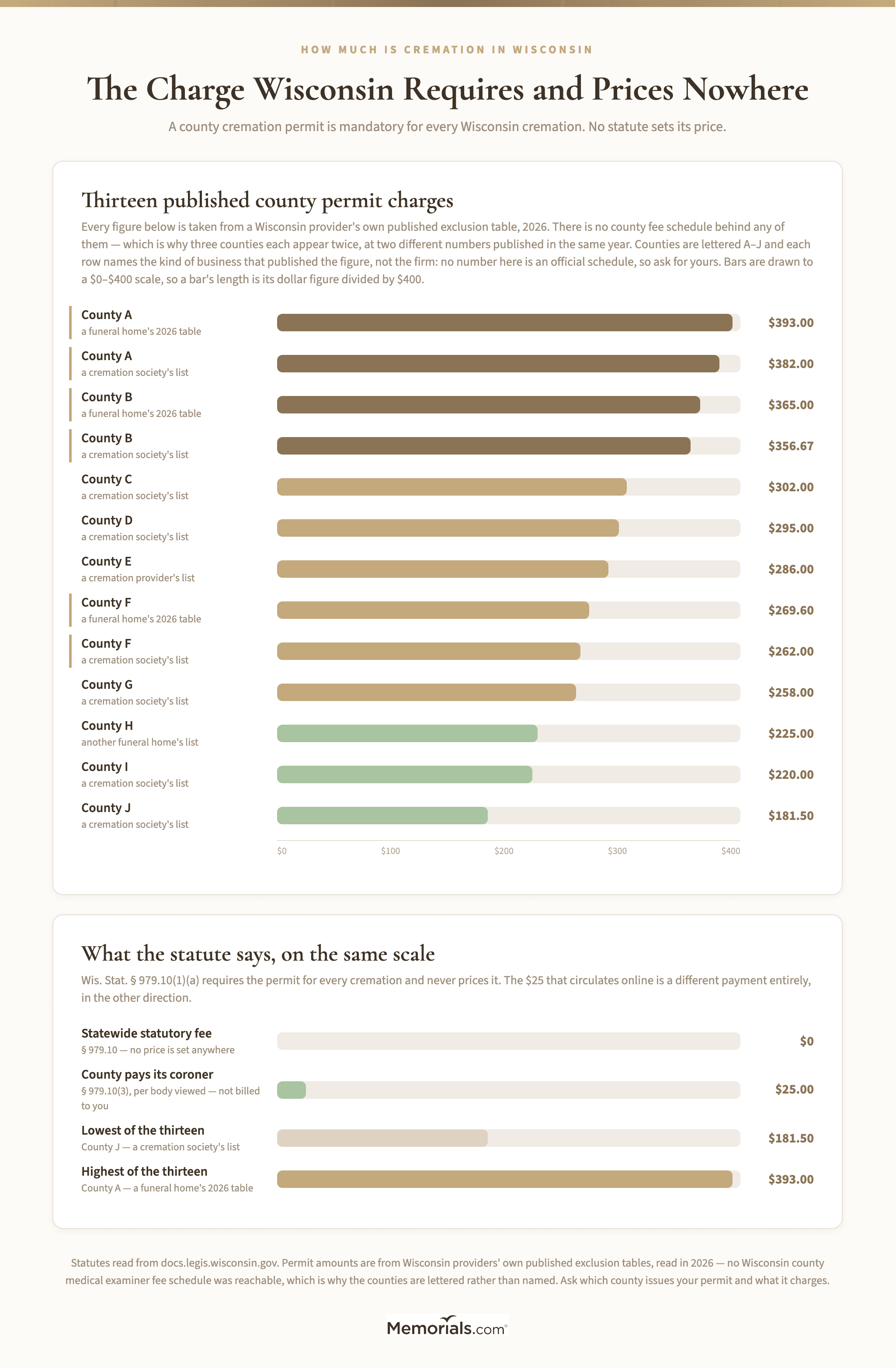
No statute prices it. The $25 in § 979.10(3) that circulates online is not a family's cost at all: it is what a county pays its own coroner for each viewing, and it disappears where the coroner is salaried.
The figures that do exist come from providers' own exclusion tables, and they are real money — roughly $180 to just under $400 depending on the county, which against a cheap cremation is a large slice of the bill. Two providers reading the same county in the same year sometimes publish different amounts, so treat any figure as typical rather than as a published government schedule, and ask the funeral home for the amount in the county where the death occurred. Some lists fold the permit in and itemize it; at least one document manages to say in one sentence that its price covers the permit and in the next that permits are excluded. Assume it is yours to pay until the paperwork says plainly that it is not.
Wisconsin requires a county cremation permit for every cremation and prices it nowhere in statute. These figures come from providers' own exclusion tables, and three counties appear twice, at two different numbers published in the same year. Ask which county issues yours, what it costs, and whether the quote in front of you includes it.
Cremation Costs in Milwaukee
Milwaukee is the one Wisconsin metro with enough published prices to compare, and it splits exactly the way the state does: a few cremation-first operators at the bottom, a longer list of funeral homes with premises above them, the same empty band between. Several of those firms print the crematory fee separately rather than folding it into the floor, and the county permit goes on top of every one of them, so two quotes can be much further apart than the headline numbers suggest.
It is also where the two kinds of business are easiest to confuse. One group's cheapest published cremation tier includes dressing and casketing, a video tribute and staff for witnessing the cremation — a full service, not a direct cremation, and not something to set beside a cremation society's package.
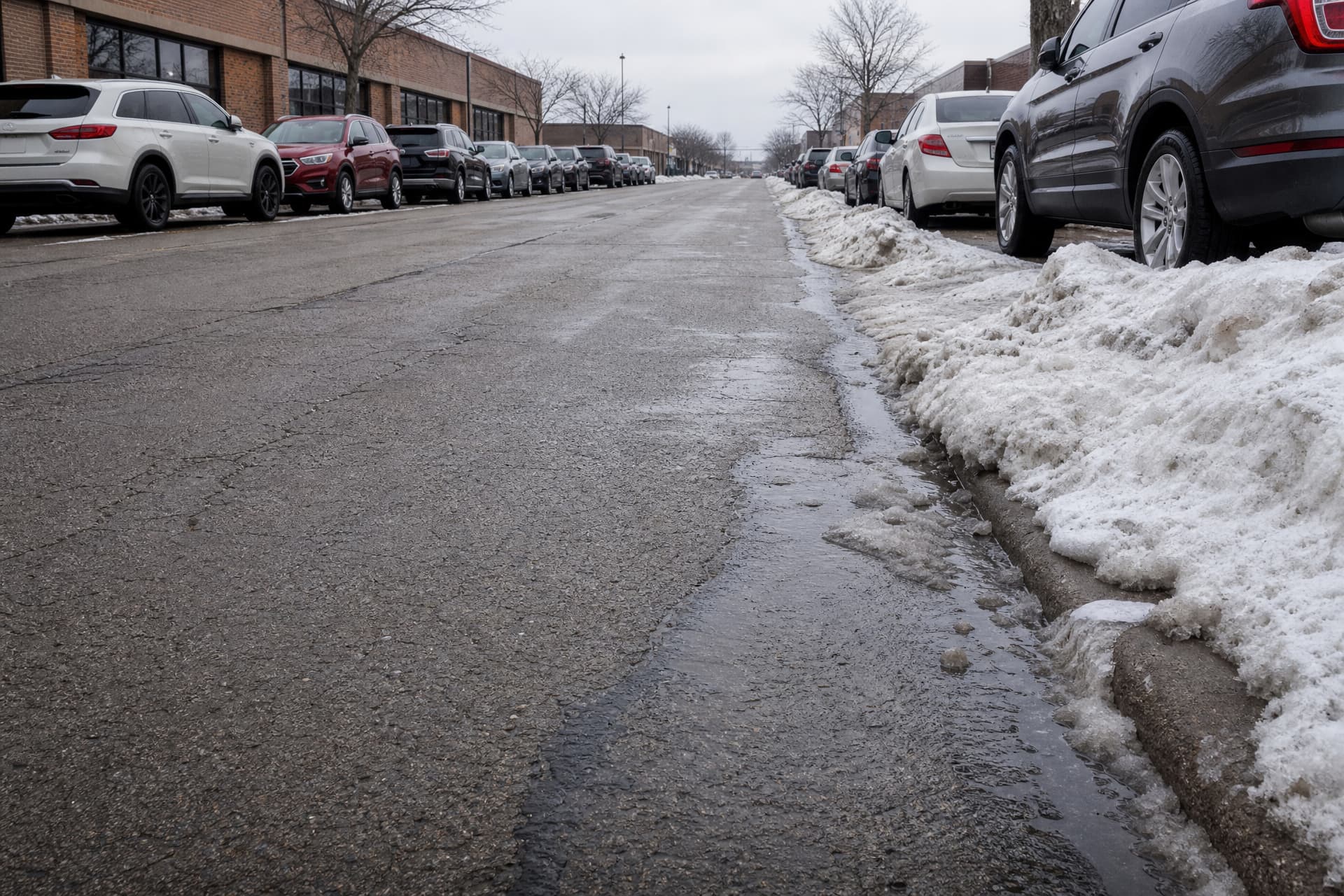
A commercial street in the Milwaukee suburbs. Two firms a few miles apart on one road can reach very different totals for the same direct cremation once each one's crematory fee is counted, and both can fairly call themselves the affordable option.
Wisconsin Cremation Laws That Affect Cost
Wisconsin has a genuine 48-hour waiting period, one of the strictest in the country. Wis. Stat. § 979.10(1)(a) reads: "No person may cremate the corpse of a deceased person within 48 hours after the death, or the discovery of the death, of the deceased person unless the death was caused by a contagious or infectious disease." That is the entire exception — no coroner waiver, no family waiver, no hardship clause. Note the second clock, or the discovery of the death, which is the longer one where nobody witnessed it.
The 48 hours is the floor. The paperwork is the ceiling. The coroner or medical examiner must normally issue the permit within 24 hours of the viewing or of the medical certification arriving, whichever is later — but § 69.18(2) gives the certifying physician, coroner or medical examiner six days after the pronouncement of death to complete that certification. In a slow case it is the certification, not the waiting period, that sets your timeline.
Three documents, not one. A Wisconsin crematory may not begin until it holds the signed cremation authorization, the county cremation permit and the report for final disposition. That last one authorizes burial or other disposition except cremation, so the county permit is always needed on top of it.
Who may authorize, and what a disagreement costs. Section 154.30 sets the order: whoever your loved one named in a written authorization, then the spouse, the adult children by majority, parents, siblings, more distant kin, the guardian. If a class deadlocks it goes to the probate court — and the funeral home, crematory or cemetery may petition the court itself, add its legal fees to the cost of final disposition, and charge the family for refrigeration and shelter for every day the dispute runs. That is a cost exposure with no ceiling, and the plainest argument for putting your own wishes in writing in advance.
No casket is required, but a container is. A Wisconsin crematory may not require a casket or refuse remains that are not casketed or embalmed, and federal law makes it a deceptive practice to require a casket for direct cremation or to offer no alternative container. What § 440.78(3)(c) does require is a container that is readily combustible, leak-resistant, closable and safe to handle. Embalming is not required either.
A family may do this themselves. A member of the immediate family who personally arranges and conducts the final disposition may take their loved one into their own care with no funeral director involved, under § 69.18(1)(a), and may hold the funeral at home. Only a licensed funeral director may embalm, and the family may not take on that care where a communicable disease is a risk. Whether a crematory will accept remains delivered by a family rather than a licensee is its own policy, so call first.
Scattering has one rule and one number. Under § 440.80(2), cremated remains may go into a grave, niche or crypt, or "in any other lawful manner, but only if the remains are reduced to a particle size of one-eighth inch or less" — a processing standard, not a list of permitted places, and crematories process to that size anyway. A cemetery's permission is needed to place ashes there, and nothing else needs a permit, because cremation is itself the final disposition. Our guide to the laws and etiquette of scattering ashes covers the general position; for DNR properties, state parks and inland waters, ask the Wisconsin DNR.
One change is coming. 2023 Wis. Act 84 directs the Department of Health Services to design a statewide cremation permit application form, which counties requiring a form must then use. Today each county runs its own paperwork, which is much of why the fees vary. Treat the statewide form as authorized rather than in force.
How to Lower the Cost in Wisconsin
Decide the kind of firm before you shop the price. A cremation society and a funeral home sell different things, and only one of them can put on a viewing. Once you know which you want, compare inside that group.
Ask for the general price list in writing. A "starting at" number is not a price — some Wisconsin firms publish nothing more than that phrase on a page titled transparent pricing.
Compare all-in. The fullest Wisconsin lists show the arithmetic: professional services, container, crematory fee, county permit, certified death certificates and an urn, less a package discount. A much lower floor that is four of those line items short is not cheaper — it is not comparable as printed.
Call across the gap, not within it. No published Wisconsin floor we found sits between $1,595 and $2,500, so there is no middle to settle for. Call two firms from the bottom group and two from the top, and put the same six questions to all four.
Check the effective date. Marketing pages outlive price lists, and a firm can still be advertising an old figure while its current list carries a higher one. The most recent itemized list is the one that binds.
Consider the whole decision, not just the cremation. If you are weighing alternatives, cost of cremation vs burial sets the two side by side, how much a funeral costs covers the full-service figure, and direct cremation explains what actually happens and in what order.
And do it early if you can — none of this is work a grieving family can do in an afternoon.
The Wisconsin cremation permit is a county charge, not a state one, and it is bought at a counter like this. What it costs depends on the county where the death occurred, and no statute sets the amount.
Choosing an Urn
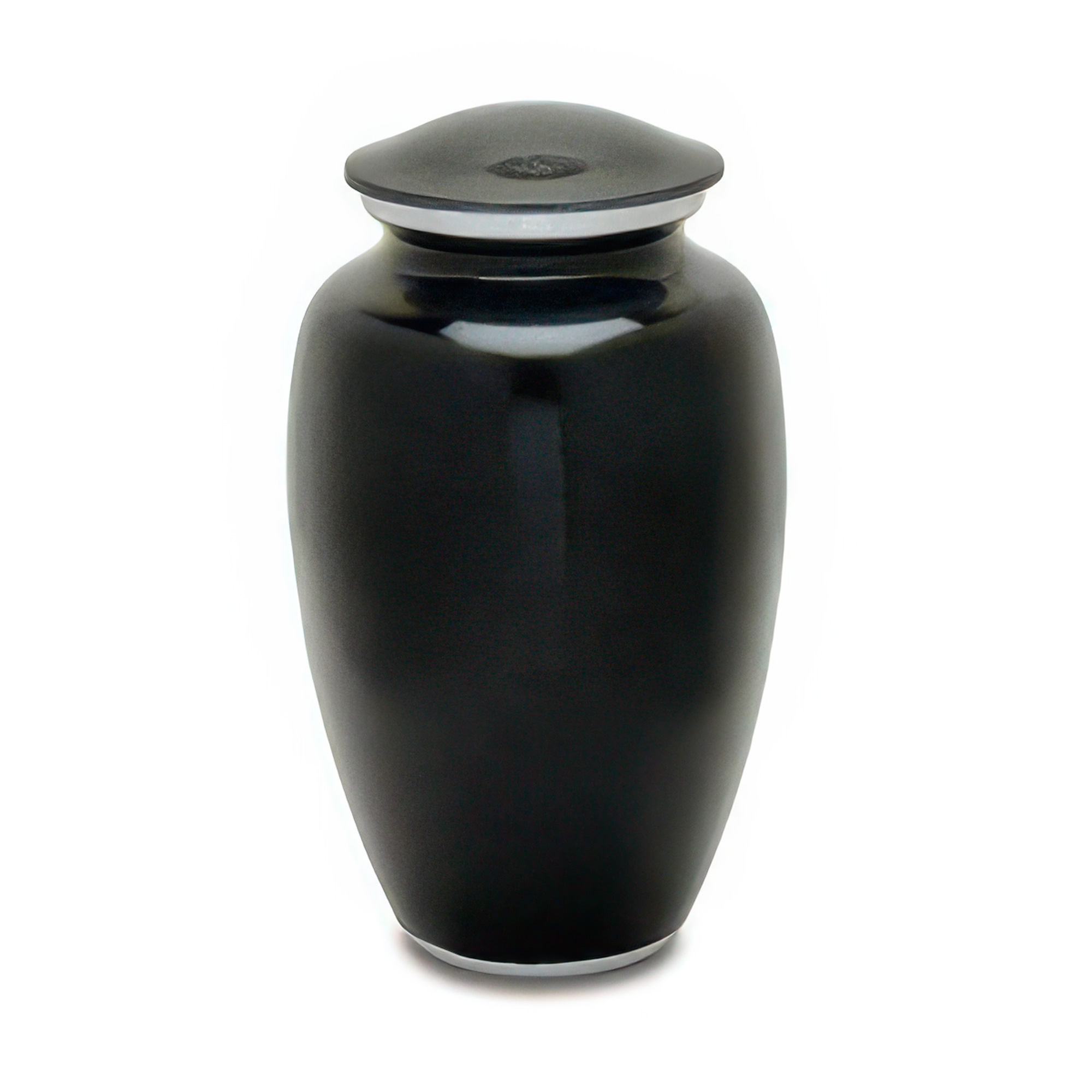
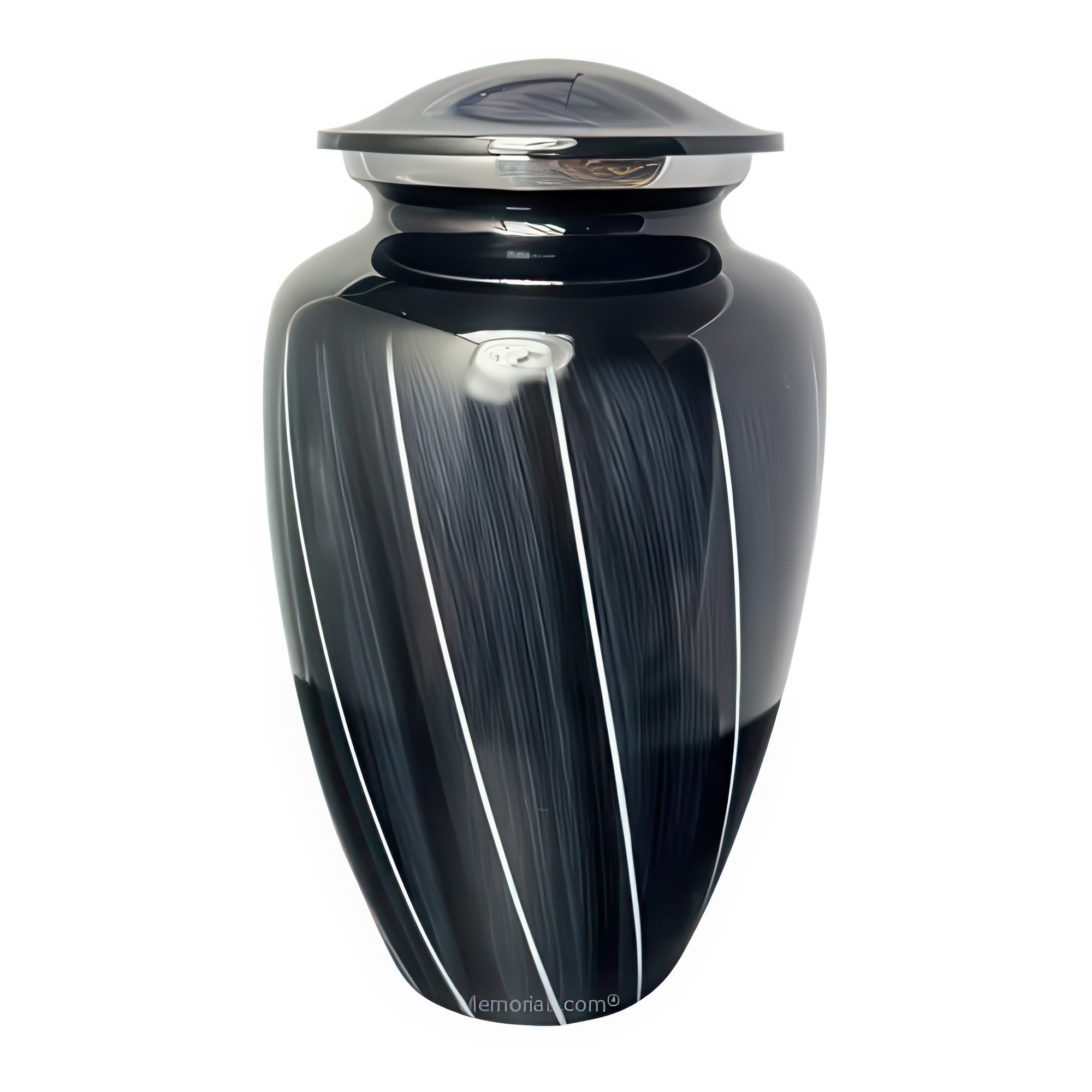
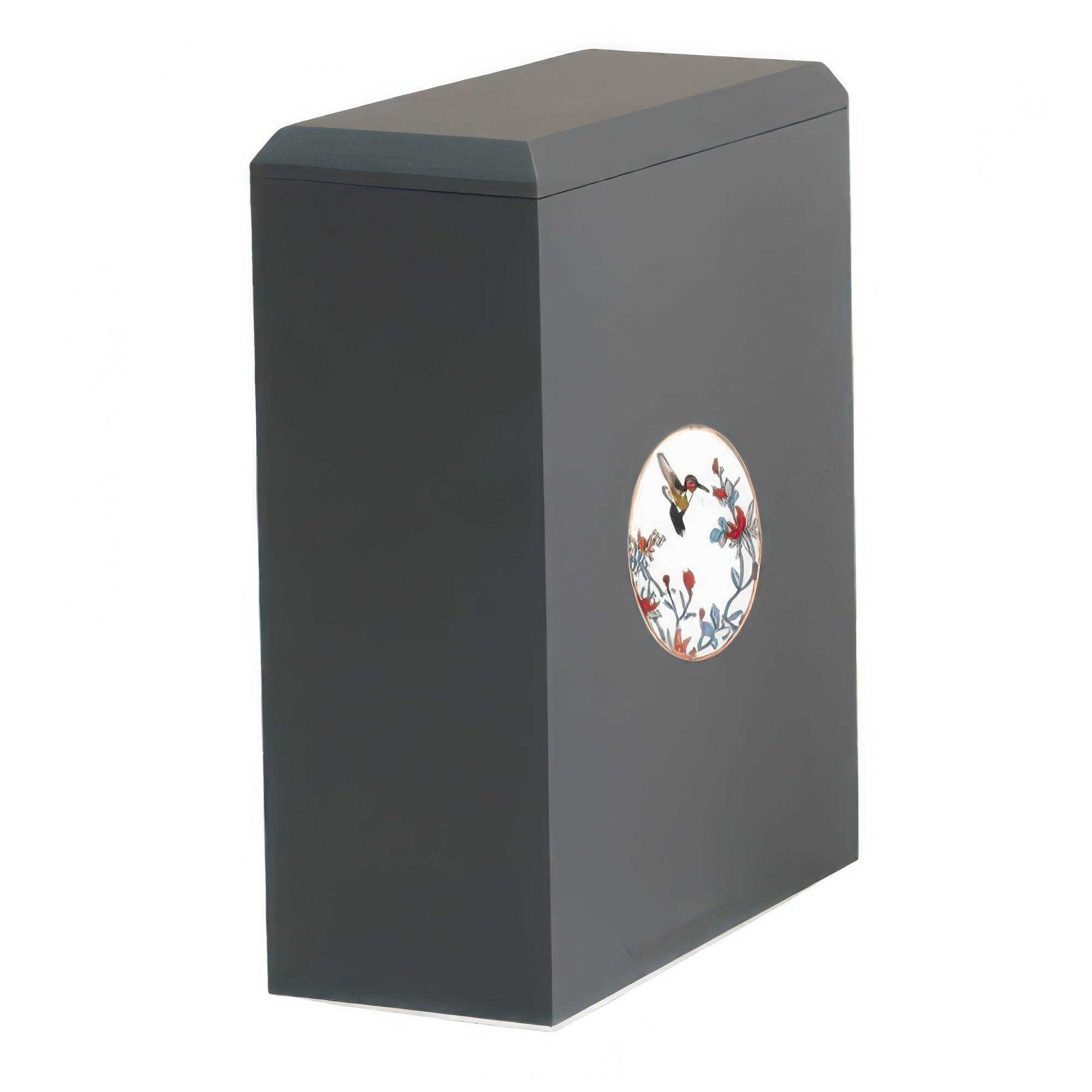
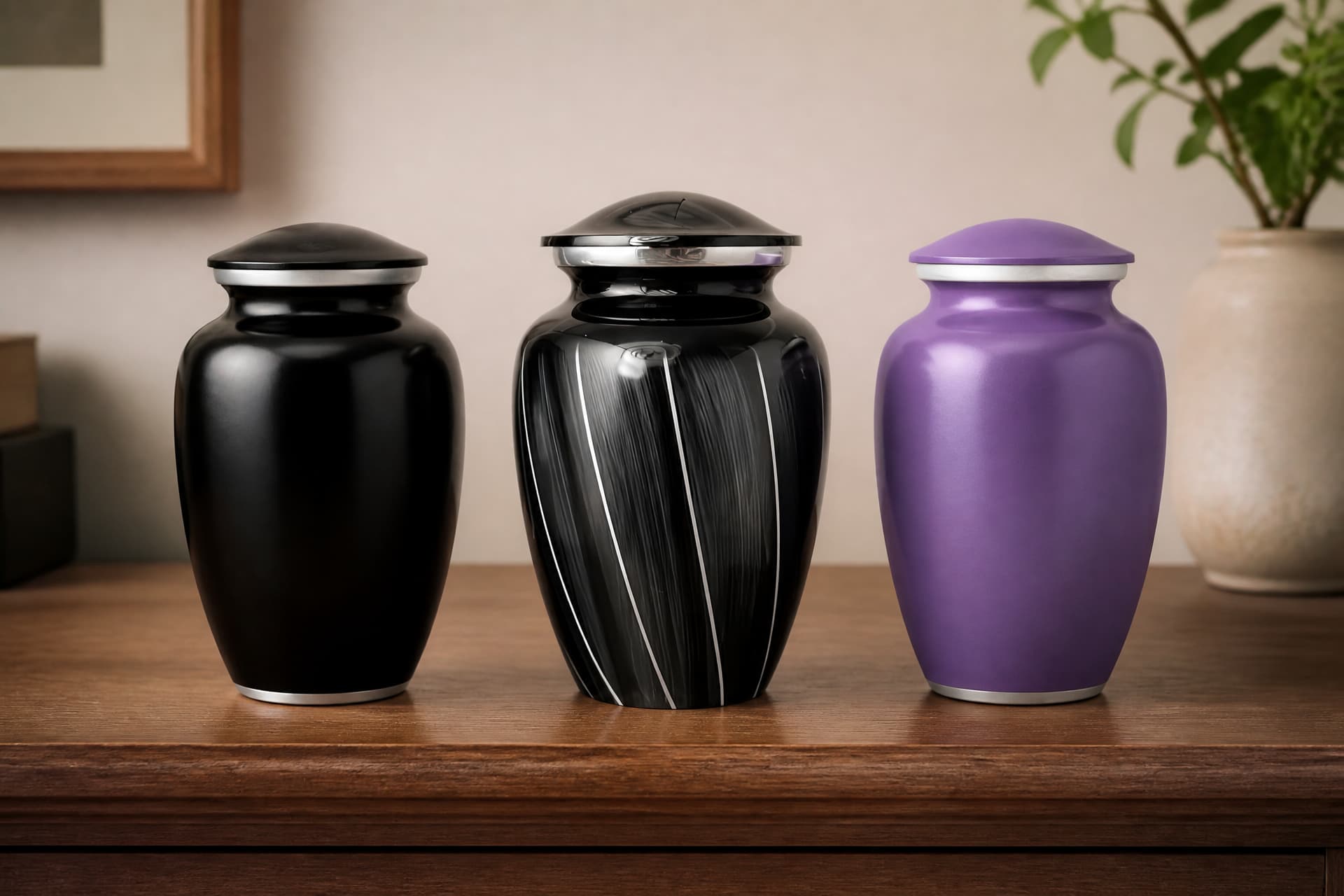
Do not assume a Wisconsin direct-cremation price carries a container for the ashes. A few lists name a basic permanent one, plenty say nothing about a vessel at all, so ask. The urn is a separate decision anyway, made afterwards, at home, with no funeral director in the room — and where providers do price urns the numbers move fast, from very little for a plain container into the thousands for a display piece. There is no relationship between what a cremation cost and what an urn should cost, and no reason to buy the vessel from the firm that carried out the cremation.
For the fuller version of that decision, how much a cremation urn costs works through materials and price bands, and our range of cremation urns is organized by how you plan to keep them.
Frequently Asked Questions
How much does cremation cost in Wisconsin? Direct cremation starts between $895 and $4,295, median $3,295, from 21 published Wisconsin price lists read in 2026 — the most expensive state in the country.
What is the average cost of cremation in Wisconsin? We publish the median, $3,295, not the mean: Wisconsin's prices sit in two clumps with a $905 hole between them, so an average lands in the hole and describes nobody. Treat any average cost of cremation in Wisconsin as a starting point, not a quote.
What is the difference between a cremation society and a funeral home in Wisconsin? What each sells, not what each is licensed to do — Wisconsin has no separate, cheaper license for a cremation-only firm. A society arranges by phone or online and has no chapel, which is why Wisconsin's floor sits under $1,000. A funeral home carries a building, viewing rooms and staffed hours, and can hold a viewing the society cannot offer at any price.
Why is cremation cost in Wisconsin so much higher than in neighboring states? Ohio's median is $1,195 and Wisconsin's $3,295. Wisconsin's cremation-only tier is thin — six firms at $1,595 or below — its funeral-home tier crowded, and two charges sit outside most quoted numbers.
Is there a waiting period before cremation in Wisconsin? Yes. Wis. Stat. § 979.10(1)(a) forbids cremation within 48 hours of death or of its discovery, excepting only contagious or infectious disease, with no family or coroner waiver. The medical certification can take six days.
Does a medical examiner have to approve every cremation in Wisconsin? Yes — for every cremation, not only deaths meeting an investigation trigger as in most states, and that officer must view the body.
What does the Wisconsin cremation permit cost? No statute prices it; counties set it, and providers' own exclusion tables run from roughly $180 to just under $400. The $25 in § 979.10(3) that circulates online is not your fee — it is what a county pays its own coroner.
Do I have to buy a casket for cremation in Wisconsin? No. A crematory may not require one, and federal law forbids a provider to require one or refuse an alternative container. The container must be rigid, closable and readily combustible.
Can I scatter ashes in Wisconsin? Generally yes, and the statutory condition is about processing rather than place: § 440.80(2) allows disposal in any other lawful manner only if the remains are reduced to one-eighth inch or less.
In Short
Wisconsin's median floor is $3,295, but the shape underneath matters more: six firms at $1,595 or below, eighteen at $2,500 or above, and a $905 hole between them, because those are two kinds of business selling the same disposition. Decide which kind you want before you compare a price — the cheapest cannot give you a viewing at any price, and the most expensive is selling you a building you may never use.
Then get two answers in writing, from the general price list: is the cremation itself inside the price, and what will the county cremation permit add?