🏬Supersize Online Funeral Retailer🪦1000's of Headstones⚱️Over 10,000 Cremation Urns⚰️Caskets Overnight Delivery🛒Funeral & Memorial Superstore🚚FREE Shipping on ALL Orders👨👩👧👦Helping Families for over 20 Years💰Lowest Price Guarantee🏬Supersize Online Funeral Retailer🪦1000's of Headstones⚱️Over 10,000 Cremation Urns⚰️Caskets Overnight Delivery🛒Funeral & Memorial Superstore🚚FREE Shipping on ALL Orders👨👩👧👦Helping Families for over 20 Years💰Lowest Price Guarantee
🏬Supersize Online Funeral Retailer🪦1000's of Headstones⚱️Over 10,000 Cremation Urns⚰️Caskets Overnight Delivery🛒Funeral & Memorial Superstore🚚FREE Shipping on ALL Orders👨👩👧👦Helping Families for over 20 Years💰Lowest Price Guarantee🏬Supersize Online Funeral Retailer🪦1000's of Headstones⚱️Over 10,000 Cremation Urns⚰️Caskets Overnight Delivery🛒Funeral & Memorial Superstore🚚FREE Shipping on ALL Orders👨👩👧👦Helping Families for over 20 Years💰Lowest Price Guarantee
Thanksgiving is built around gathering, gratitude, and togetherness. When someone you love is no longer at the table, those very qualities can make the holiday feel like an amplifier for grief — turning what used to be a warm, familiar celebration into a day when their absence is almost unbearable. The empty chair. The quiet where their laughter used to be. The dish nobody else makes quite the same way.
But grief and gratitude are not opposites. They can sit side by side at the same table, and many families discover that weaving small acts of remembrance into Thanksgiving brings unexpected comfort — a way to say, "You are still here with us." Whether this is your first Thanksgiving after loss or you have carried this absence for years, there are gentle, meaningful ways to honor the person you miss. Our complete grief support guide offers additional support for navigating loss during difficult seasons.
This article shares twelve practical traditions for remembering loved ones at Thanksgiving, from table tributes and candle lighting to keepsake displays and acts of generosity. Choose the ones that feel right for your family, adapt them freely, and give yourself permission to grieve and celebrate at the same time.
Why Thanksgiving Grief Feels So Intense
Holidays carry memory in a way that ordinary days do not. Every tradition — the turkey in the oven, the football game on television, the moment before the meal when someone says grace — is connected to the people who shaped those rituals over the years. When one of those people is gone, the routine itself becomes a reminder of loss.
Thanksgiving can be especially challenging for several reasons. It is centered on family togetherness, so the absence of a loved one is physically visible. It asks us to express gratitude, which can feel complicated when grief is still raw. And it often falls close to the anniversary of a loss or shortly before the December holidays, compressing emotional weight into a short stretch of weeks.
None of this means Thanksgiving has to be dreaded. Psychologists who study grief and ritual consistently find that families who create intentional moments of remembrance during holidays report feeling closer to the person they lost — not further away. The traditions below are drawn from that principle: small, purposeful acts that honor the past while making space for the present.
Setting a Place at the Table
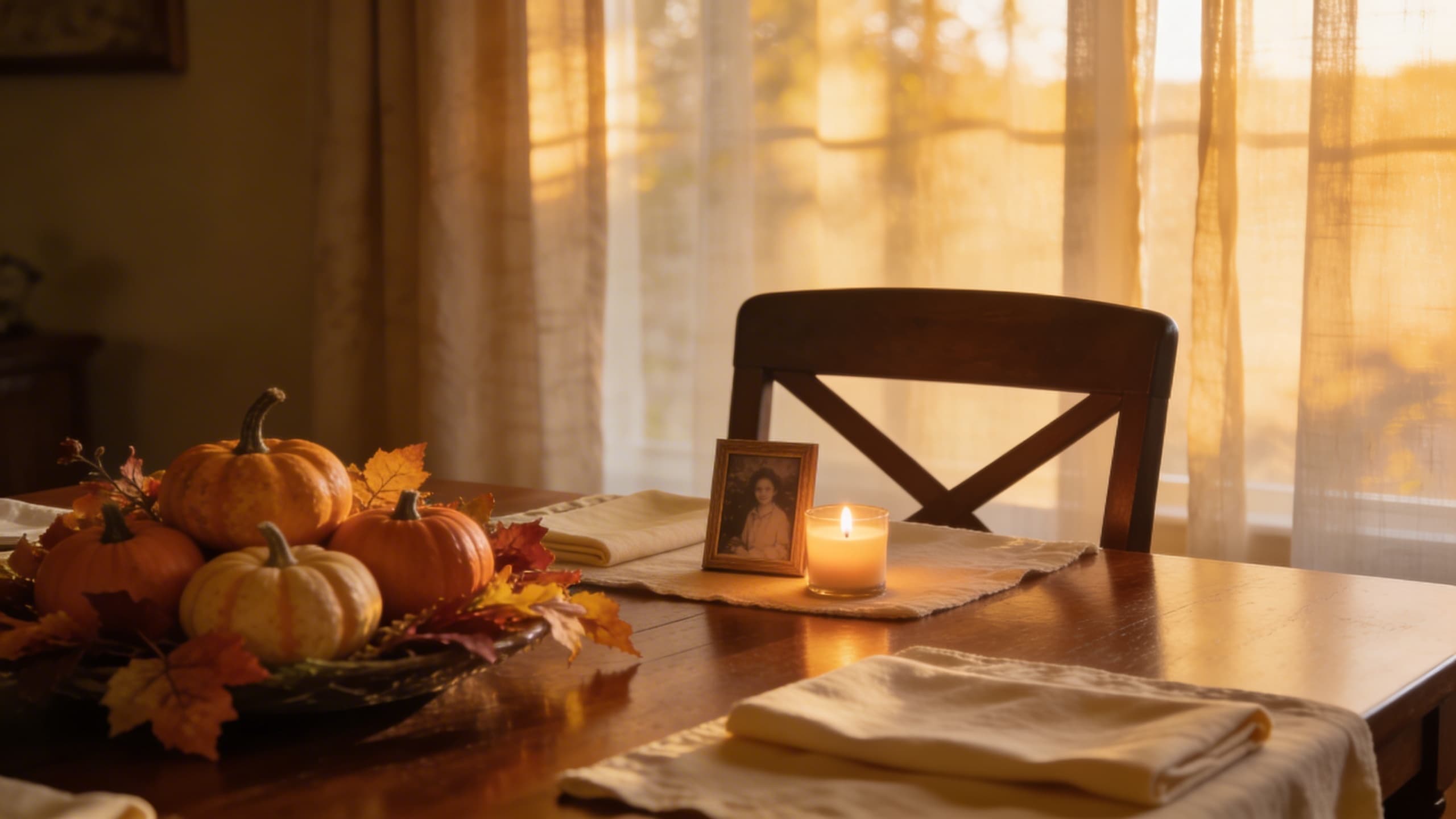
One of the most recognized Thanksgiving memorial traditions is setting a place at the table for your loved one. Sometimes called the "empty chair" or "missing seat" tradition, this gesture acknowledges their absence honestly rather than pretending the gathering is unchanged.
There are several ways to approach this. Some families set a full place — plate, silverware, napkin — exactly as they would for any guest. Others prefer a symbolic version: a single candle, a flower, or a favorite photograph at the spot where the person used to sit. A handwritten note card with a line like "Always in our hearts" can add a quiet, personal touch.
If you are hosting young children, the empty chair can become a conversation starter. Explain who used to sit there and invite the child to share a memory or place a drawing at the setting. This turns an abstract concept of loss into something tangible and inclusive, helping younger family members feel part of the remembrance rather than confused by it.
The beauty of a table tribute is its simplicity. It requires no planning, no purchases, and no speeches. It simply says: we notice you are not here, and we still set a place for you.
Lighting a Candle in Their Memory
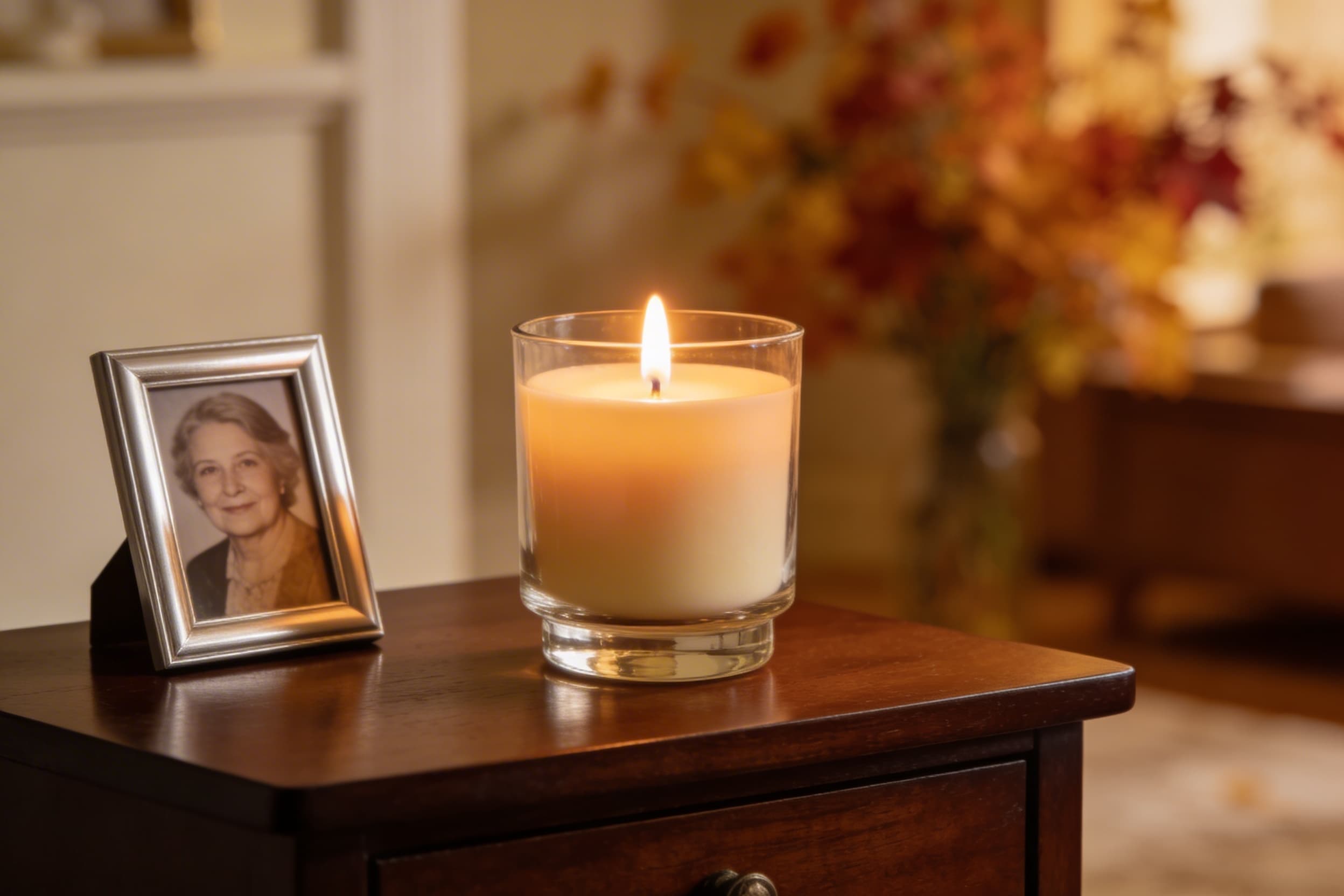
A candle lighting ceremony before the Thanksgiving meal is one of the most universally practiced memorial rituals across cultures and faiths. The warm glow of a flame has long symbolized the enduring presence of someone who has passed, and the act of lighting it together gives the family a shared moment of reflection before the bustle of dinner begins.
Choose a candle that feels meaningful — perhaps one in their favorite color, a scented candle that reminds you of them, or a dedicated memorial candle holders designed for remembrance. Place the candle where everyone can see it throughout the meal: the center of the table, a side table near the dining area, or alongside a small photograph.
You might invite someone to say a few words as the candle is lit — a brief blessing, a favorite quote, or simply "We light this candle for [name]." Alternatively, a moment of silence lets everyone connect with their own memories without the pressure of speaking. Either approach works. The point is not performance; it is presence.
If your loved one was someone who would have preferred humor over solemnity, a toast with their favorite beverage can serve the same purpose. Raise a glass, share a funny memory, and let the laughter coexist with the tears. Both are valid ways to honor someone you love.
Cooking and Sharing Their Favorite Recipe
Food is memory made physical. The scent of a particular dish can transport you back to a specific Thanksgiving table, a specific conversation, a specific laugh. Preparing your loved one's favorite recipe and serving it at the holiday meal is one of the most emotionally resonant acts of remembrance a family can share.
If your grandmother's sweet potato casserole was legendary, make it exactly the way she did. If your father always insisted on a particular stuffing recipe, follow his method step by step. The dish does not have to be perfect — the imperfections might even spark stories about the times it turned out slightly wrong and everyone ate it anyway.
Get other family members involved in the preparation. Cooking together slows the day down and creates space for storytelling that might not happen at the formal table. As you chop, stir, and season, share the history behind the recipe: who taught it to whom, what substitutions were made over the years, what your loved one would say if they tasted this version.
When the dish reaches the table, acknowledge its significance. A simple "This is Mom's corn pudding — we're making it in her honor" gives everyone permission to feel both the sadness and the warmth at once.
Sharing Memories and Stories Around the Table
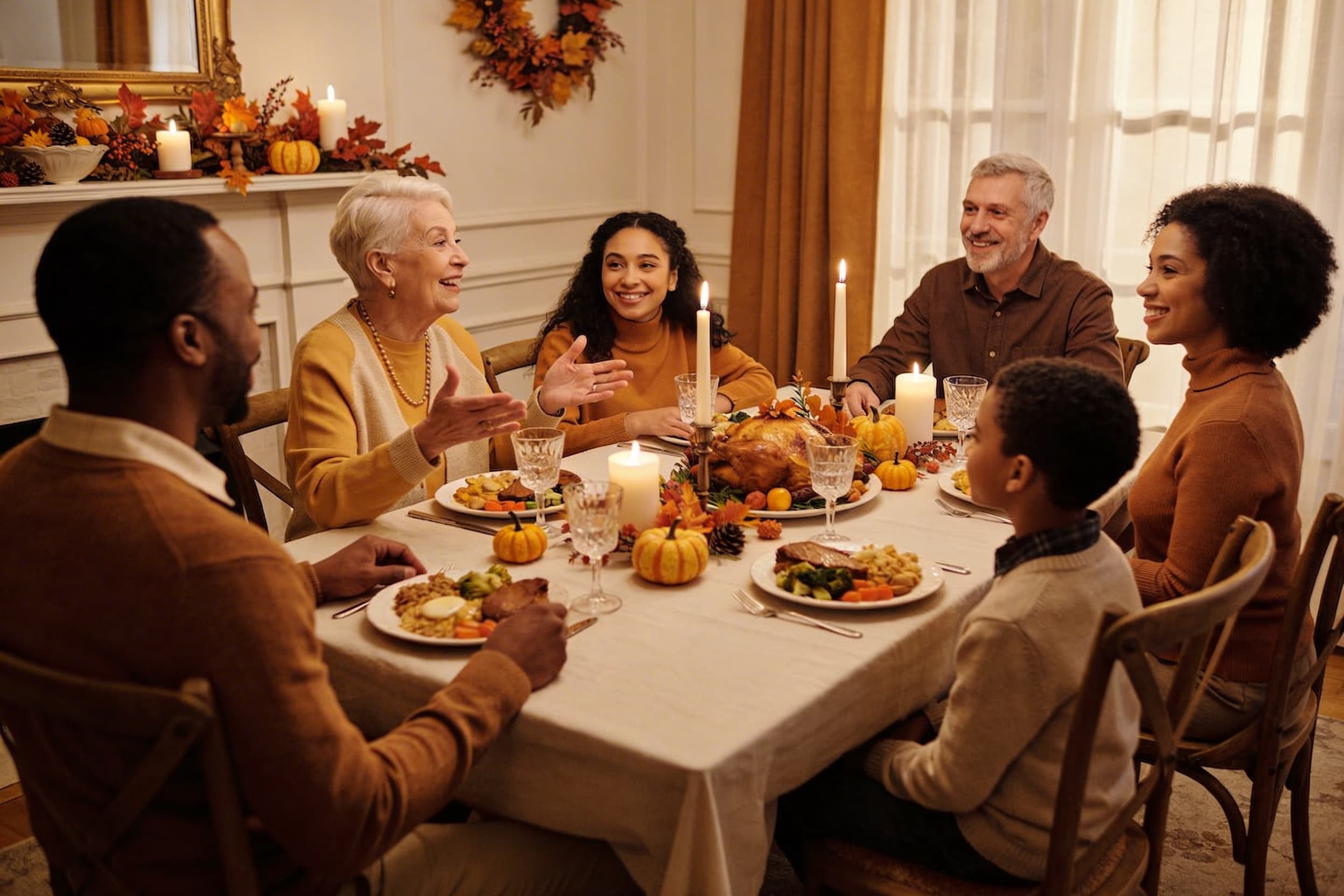
Thanksgiving gatherings already tend toward storytelling — old family jokes, childhood anecdotes, the year the dog stole the turkey. Channeling that natural impulse into intentional memory sharing is one of the most powerful ways to keep a loved one's presence alive.
Before or after the meal, invite each person at the table to share a favorite memory of the person you are honoring. It does not need to be a long speech. A single sentence — "I remember when Dad used to sneak cranberry sauce before dinner and pretend he didn't" — can spark an entire cascade of related stories. These stories give younger family members, especially those who may not have known the person well, a living sense of who they were.
If your family is less comfortable with open sharing, structured alternatives work just as well. A gratitude jar is a popular option: set out a jar and slips of paper, and ask each guest to write down something they are grateful for about the loved one. Read the slips aloud together at the end of the meal. A memory tablecloth takes a similar approach — spread a plain fabric cloth on the table and invite guests to write memories, inside jokes, or drawings directly onto it with markers. Over the years, the cloth becomes a layered record of the family's collective remembrance.
A tribute toast before the meal can also set a warm, inclusive tone for the day. Raise a glass to the person who is missing, speak a few words, and let the gathering begin from a place of honest acknowledgment rather than unspoken sadness.
Creating a Thanksgiving Memorial Display
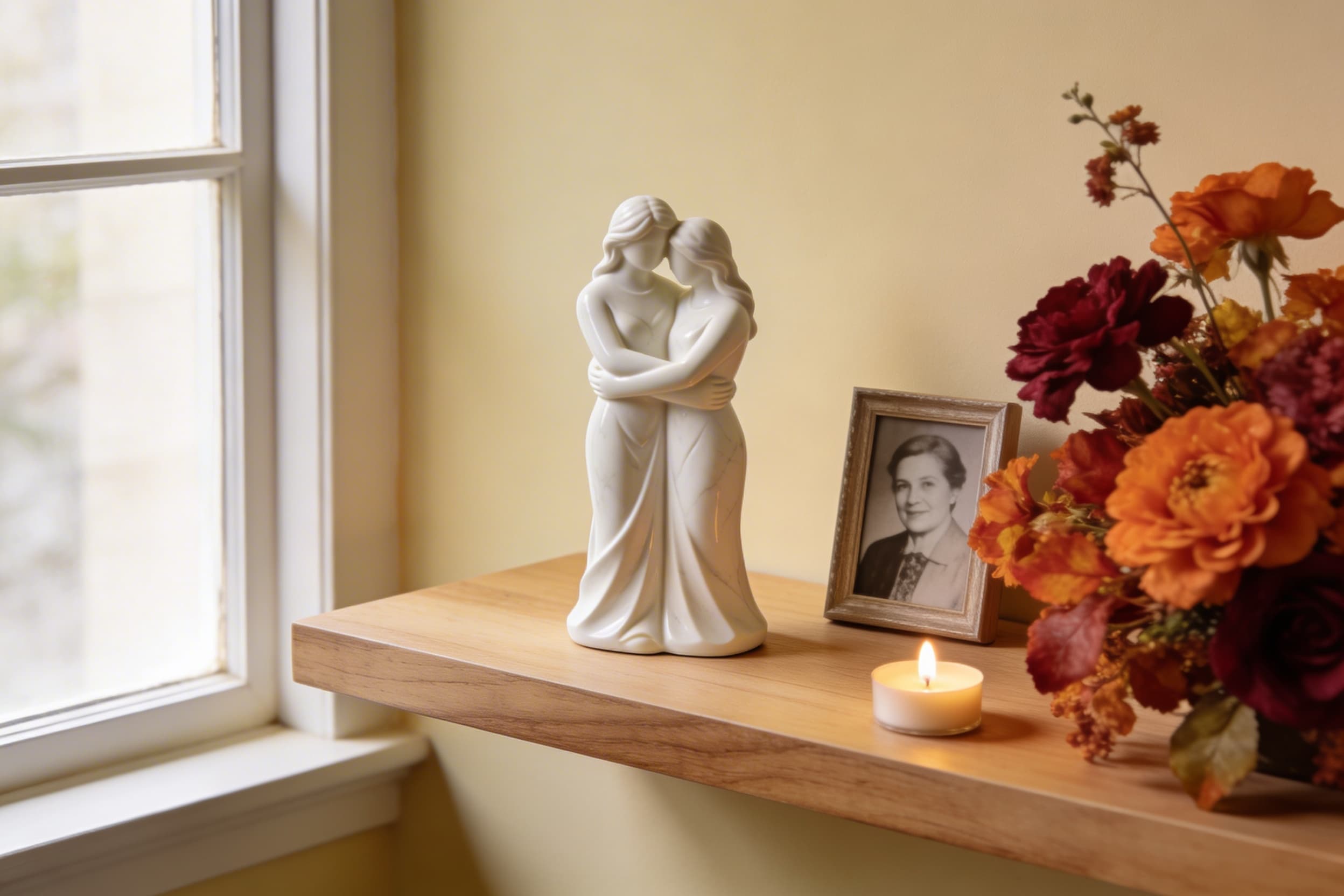
A dedicated memorial display gives everyone a physical focal point for remembrance throughout the day. Set up a small table or shelf space in a quiet area of the home and arrange items that reflect your loved one's personality: photographs, a favorite book, a piece of their handwriting, a small figurine, or any keepsake that carries their memory.
Keepsake sculptures that capture tender moments — a parent holding a child, a couple embracing — can serve as a beautiful centerpiece for this kind of display. Paired with a candle and a single photograph, they create an atmosphere that is both dignified and deeply personal.
For families who celebrate both Thanksgiving and Christmas, season keepsakes designed for holiday remembrance can bridge the two occasions. A memorial ornament placed on the Thanksgiving display can later move to the Christmas tree, creating continuity between the seasons and reinforcing the idea that remembrance is not limited to a single day.
If you enjoy crafting, consider making a memorial centerpiece for the dining table. Arrange autumn flowers, small pumpkins, and a framed photo of your loved one in a fall-themed display. Invite children to contribute drawings, pressed leaves, or handmade cards. The centerpiece becomes a collaborative act of love — something the whole family built together in the person's honor.
Helping Children Honor a Loved One at Thanksgiving
Children often experience grief differently than adults, and the structured chaos of a holiday gathering can leave them feeling confused about why certain adults are emotional or why the day feels "off." Including them in age-appropriate remembrance activities gives them a way to process their own feelings while feeling connected to the family's shared experience.
Drawing is one of the gentlest entry points. Invite a child to draw their favorite memory with the loved one — a trip to the park, a bedtime story, a silly face Grandpa used to make. As they draw, ask them about the memory and encourage them to share the finished picture with the family. This activity lets children express grief in their own language and at their own pace.
Baking the loved one's favorite dessert together is another natural approach. Let younger children measure ingredients, stir the batter, and decorate the finished product. Share stories about why this dessert was meaningful while you work. The sensory experience — the smell of the oven, the taste of the batter — creates a physical connection to the absent person that children understand intuitively.
For older children and teenagers, writing a letter to the loved one can be meaningful. They might write about what has happened since the person passed, what they wish they could tell them, or what they are most thankful for about having known them. The letter can be placed at the memorial display, tucked inside a memory box, or kept privately. There is no wrong approach.
The most important thing is to let children know that their feelings — sadness, confusion, anger, even relief that the holiday is still happening — are all acceptable. Grief does not follow a schedule, and children deserve the same permission to feel complicated emotions that we extend to ourselves.
When This Is Your First Thanksgiving After Loss
The first Thanksgiving without a loved one can be the hardest holiday of the year. Everything feels different — the grocery list, the seating arrangement, the rhythm of the day itself. Families who are navigating the first week after loss or are still in the early months of grief may find that the anticipation of the holiday is actually harder than the day itself.
Give yourself permission to change the plan. If hosting a full dinner feels overwhelming, consider a smaller gathering, a meal at a restaurant, or even a quiet day at home with just your immediate family. There is no rule that says Thanksgiving must look the way it always has. Some families find that breaking the usual routine — trying a new location, inviting new guests, or shifting the meal to brunch instead of dinner — makes the day more manageable.
The people around you often want to acknowledge the empty chair and do not know how. If somebody has asked what to write, our guide to sympathy messages groups the wording by relationship, which is usually the part that stalls them.
At the same time, do not feel pressured to eliminate every tradition. If making your mother's pie is comforting, make the pie. If watching the parade together still feels right, watch the parade. The goal is not to erase the past or to preserve it in amber — it is to find the version of the day that your family can navigate with honesty and grace this year.
If you are struggling, let the people around you know. You do not need to perform normalcy. A brief "This is hard, and I'm glad you're here" can break the tension and give everyone else permission to acknowledge their own grief as well.
Building Holiday Traditions That Carry Their Memory Forward
Memorial traditions are not fixed. They evolve as families grow, as grief changes shape, and as new members join the table who never knew the person being honored. The traditions you start this Thanksgiving may look different five years from now, and that is exactly as it should be.
Some families find that giving back in their loved one's name brings a sense of purpose to the holiday. Volunteering at a food pantry, donating to a charity the person supported, or performing a random act of kindness on Thanksgiving morning are all ways to extend their legacy beyond your own table. Charitable giving keeps the person's values alive in a tangible way and can become a tradition that children carry forward into their own families.
Others discover that the holiday rituals they create for Thanksgiving naturally extend into other seasons. If lighting a candle at Thanksgiving brought comfort, consider remembering loved ones at Christmas with a similar ceremony. If a memory-sharing tradition worked well in November, try honoring a loved one on Mother's or Father's Day with a version tailored to that relationship. Holiday remembrance is not a single event — it is a practice that grows alongside your grief and your healing.
For families looking for year-round remembrance beyond the holidays, there are dozens of creative memorial ideas that bring daily comfort — from home displays and garden memorials to sympathy gifts and memorial keepsakes designed to keep a loved one's memory close no matter the season.
What Matters Most
There is no correct way to remember someone at Thanksgiving. A grand ceremony and a quiet moment of thought while washing dishes carry equal weight. What matters is that you do not try to pretend the absence does not exist — and that you do not let the grief consume the gratitude.
Your loved one would want you to eat the turkey, laugh at the same jokes, and hold the people around you a little closer. They would also understand if you need to step outside for a moment, cry into the mashed potatoes, or leave the gathering early. Grief and celebration are not mutually exclusive. They are, in fact, proof of the same thing: that someone mattered deeply enough to be missed.
This Thanksgiving, set the place, light the candle, tell the story. Let their memory be part of the feast.
Frequently Asked Questions
How do you honor a deceased loved one at Thanksgiving?
There are many ways to honor a loved one at Thanksgiving, and the most meaningful ones tend to be simple. Setting an empty chair or place setting at the table is one of the most recognized traditions. Lighting a memorial candle before the meal gives the family a shared moment of reflection. Preparing the person's favorite recipe, sharing stories and memories around the table, and creating a small memorial display with photos and keepsakes are all gentle, inclusive approaches. Some families also make charitable donations in the person's name or volunteer together on Thanksgiving morning.
Is it okay to cry at Thanksgiving dinner after losing someone?
Grief does not follow a calendar, and tears at a holiday gathering are completely natural. Most people at the table will understand, and acknowledging the emotion honestly — rather than trying to suppress it — often helps everyone present feel more comfortable being open about their own feelings. If you feel overwhelmed, stepping outside for a few minutes is perfectly fine. Let those around you know what you need, even if it is simply a quiet moment alone.
How do I talk to children about a loved one who died before Thanksgiving?
Keep the conversation age-appropriate, honest, and gentle. Let children know that the family is missing someone they loved, and that it is normal to feel sad, confused, or even okay during the holiday. Invite them to participate in remembrance activities like drawing a picture, helping bake a special recipe, or adding an item to a memorial display. Avoid euphemisms like "went to sleep" that can confuse young children. Instead, use clear, simple language and follow their lead on how much they want to discuss.
What do you say at Thanksgiving when someone is missing?
A brief acknowledgment before the meal is often enough. Something like, "Before we begin, we want to remember [name] — we wish they were here with us, and we are grateful for every Thanksgiving we shared with them." This opens the door for others to share their own words if they choose, without pressuring anyone to speak. A toast with the loved one's favorite beverage can add warmth and even a touch of humor if that fits the person's personality.
How do I handle the first Thanksgiving after a death?
The first Thanksgiving without a loved one is often the most difficult. Give yourself permission to change traditions, scale down the gathering, or take breaks during the day. Some families find it helpful to acknowledge the difficulty openly at the start of the meal rather than trying to maintain normalcy. Others find comfort in keeping routines as close to normal as possible. There is no right approach — only the one that feels manageable for you and your family this year.