🏬Supersize Online Funeral Retailer🪦1000's of Headstones⚱️Over 10,000 Cremation Urns⚰️Caskets Overnight Delivery🛒Funeral & Memorial Superstore🚚FREE Shipping on ALL Orders👨👩👧👦Helping Families for over 20 Years💰Lowest Price Guarantee🏬Supersize Online Funeral Retailer🪦1000's of Headstones⚱️Over 10,000 Cremation Urns⚰️Caskets Overnight Delivery🛒Funeral & Memorial Superstore🚚FREE Shipping on ALL Orders👨👩👧👦Helping Families for over 20 Years💰Lowest Price Guarantee
🏬Supersize Online Funeral Retailer🪦1000's of Headstones⚱️Over 10,000 Cremation Urns⚰️Caskets Overnight Delivery🛒Funeral & Memorial Superstore🚚FREE Shipping on ALL Orders👨👩👧👦Helping Families for over 20 Years💰Lowest Price Guarantee🏬Supersize Online Funeral Retailer🪦1000's of Headstones⚱️Over 10,000 Cremation Urns⚰️Caskets Overnight Delivery🛒Funeral & Memorial Superstore🚚FREE Shipping on ALL Orders👨👩👧👦Helping Families for over 20 Years💰Lowest Price Guarantee
More families are choosing cremation than ever before, and many still want a permanent, visitable place at the cemetery where loved ones can gather and remember. A cremation headstone or grave marker provides exactly that — a lasting tribute that marks a final resting place for cremated remains, just as a traditional headstone does for a casket burial.
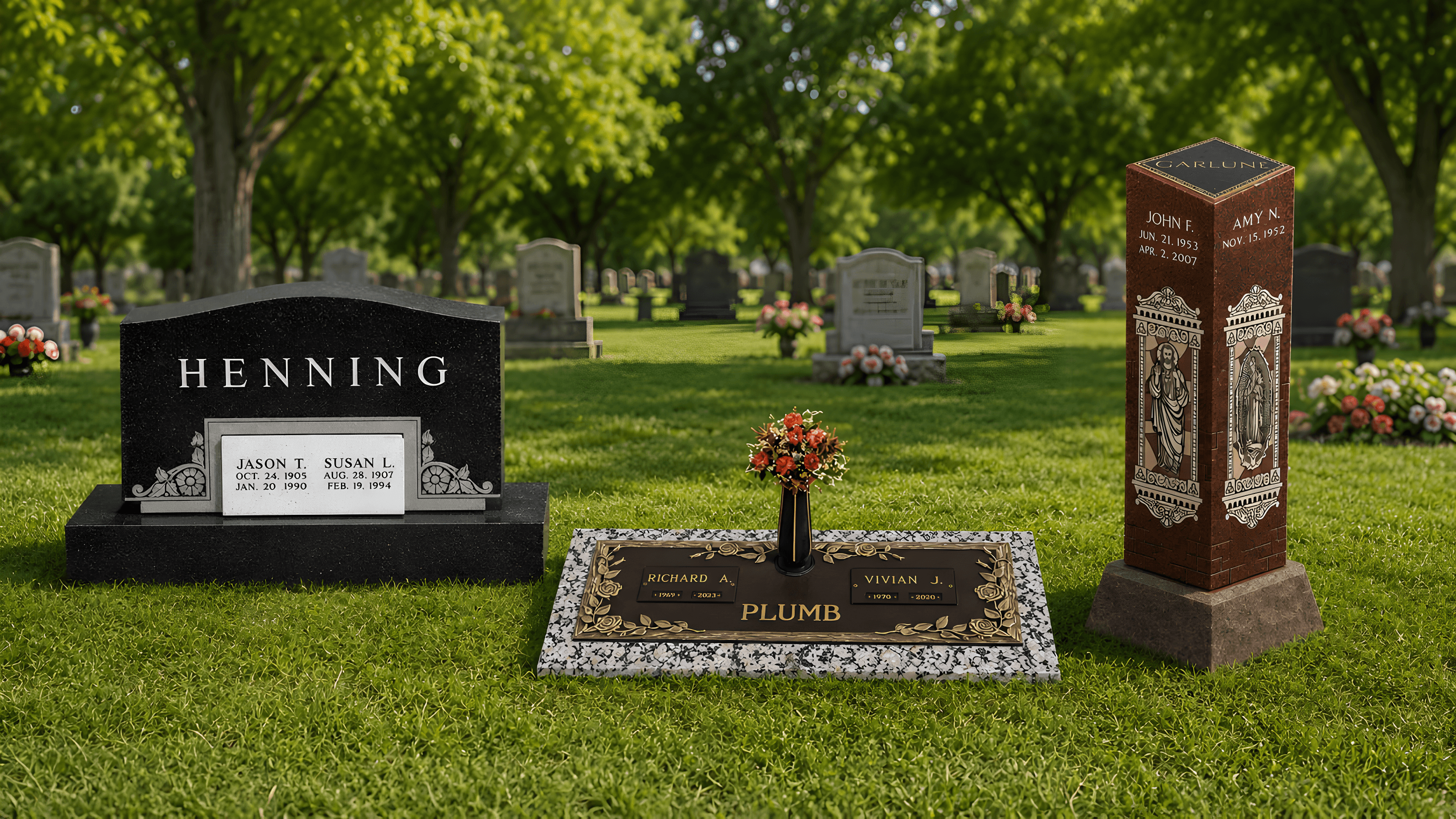
If you are exploring cremation headstone options for the first time, the variety of styles can feel overwhelming. Upright monuments with built-in urn compartments, flat bronze markers that sit flush with the lawn, freestanding memorial pillars — each serves a different purpose and fits different cemetery requirements. This guide walks through every major type so you can make a confident decision. For a broader look at the entire headstone buying process, our guide on covers everything from selecting a cemetery to placing your order.
Understanding the difference between a headstone vs grave marker explained in simple terms is a helpful starting point. In the cremation world, those same distinctions apply: some options stand upright, some lie flat, and each has unique advantages worth considering.
Upright Cremation Headstones: Monuments That Hold Ashes
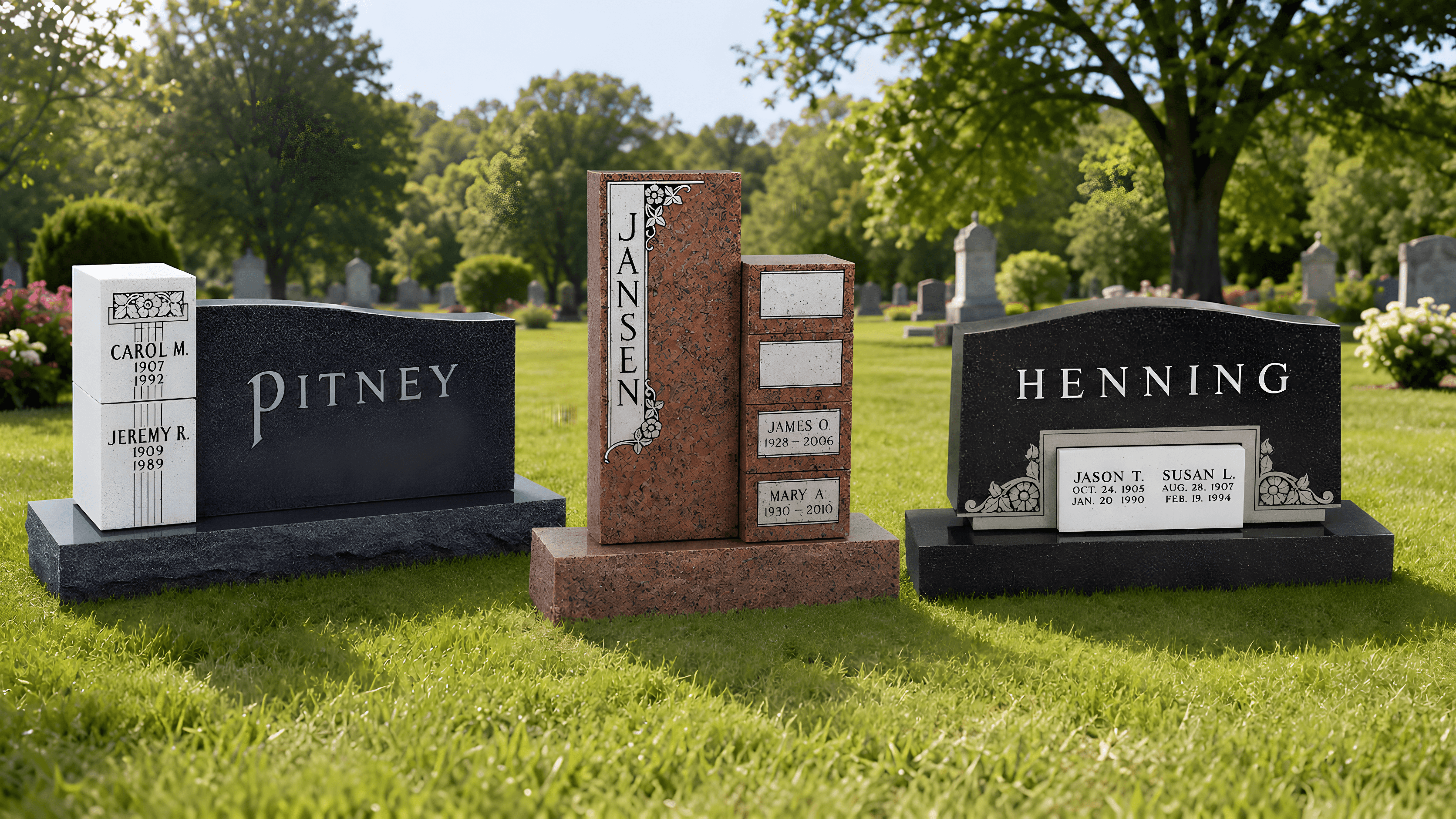
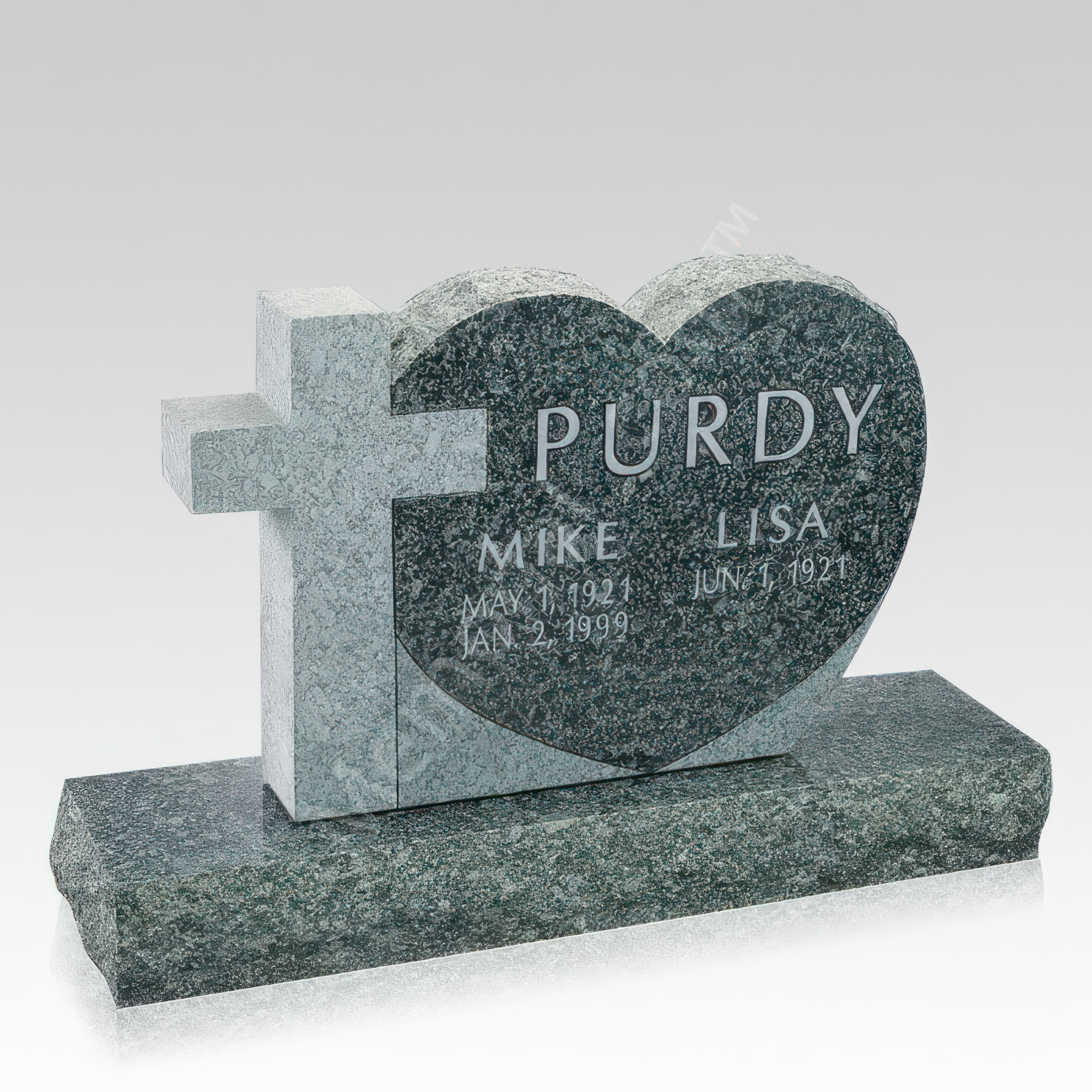
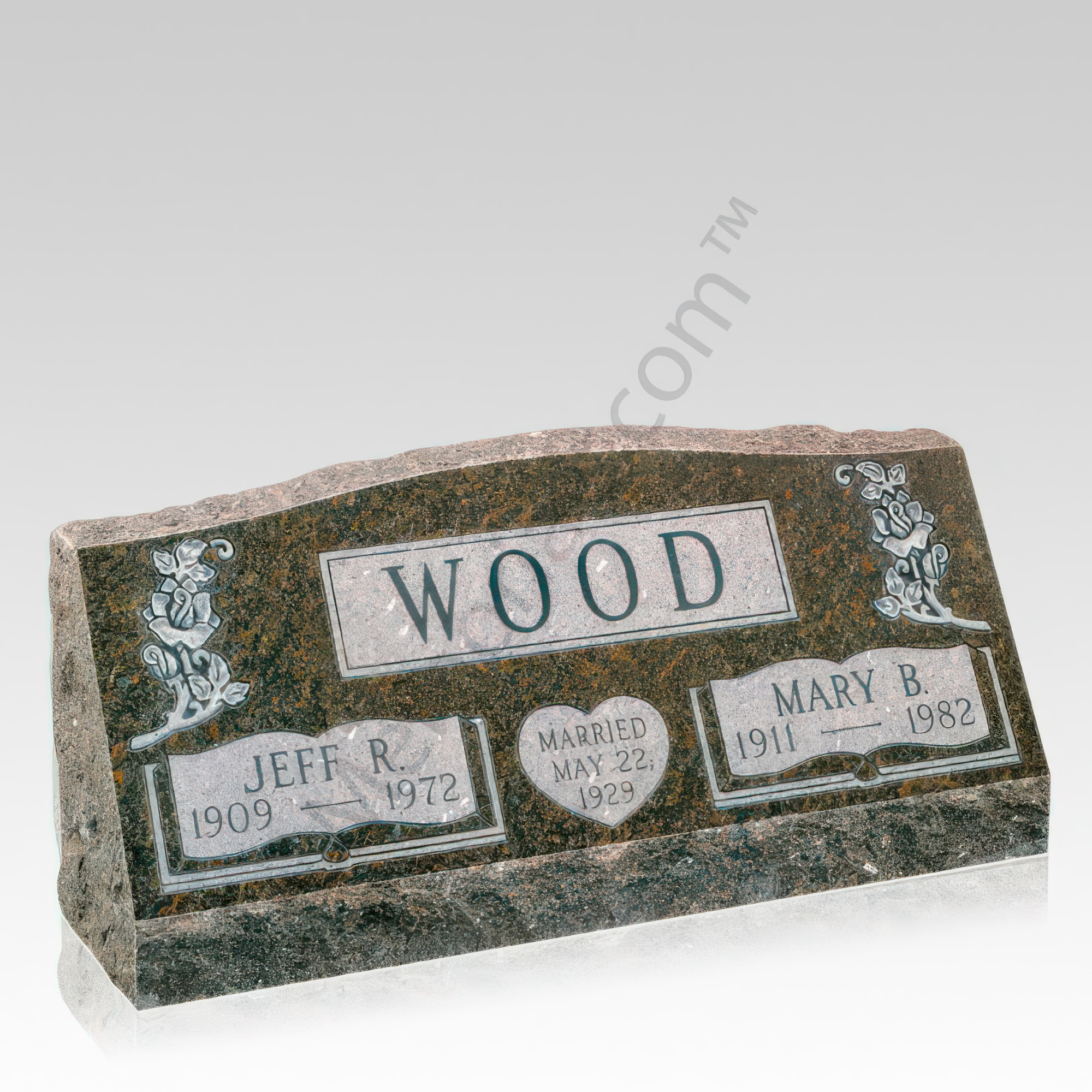
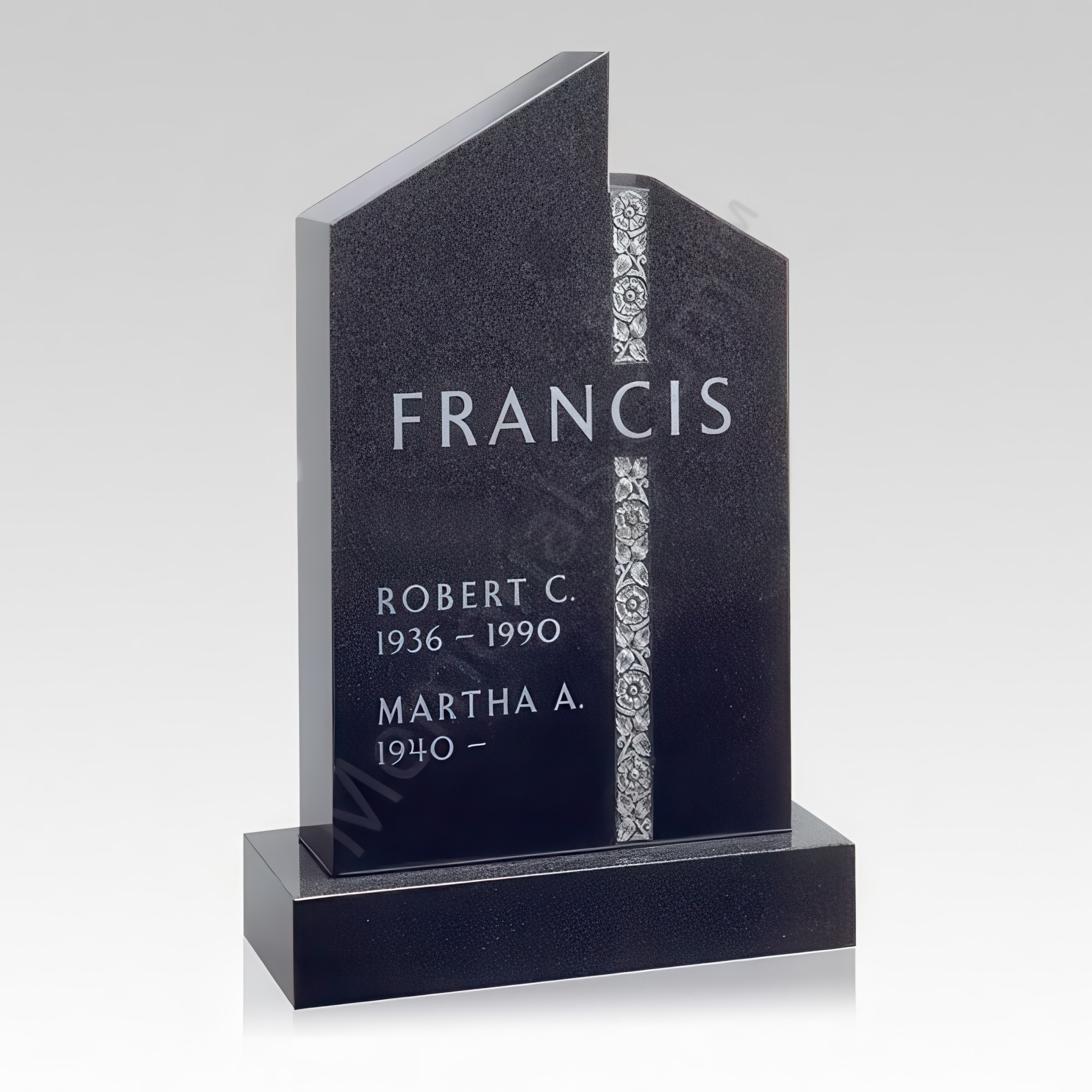
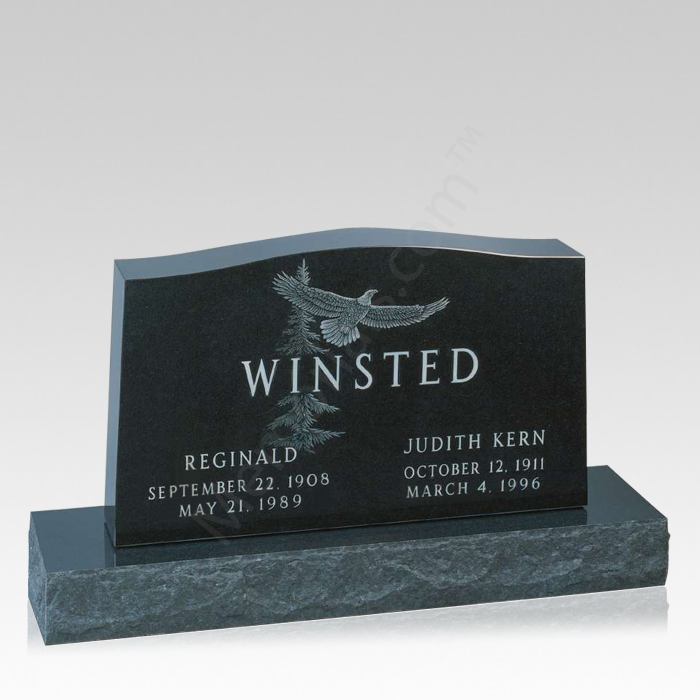
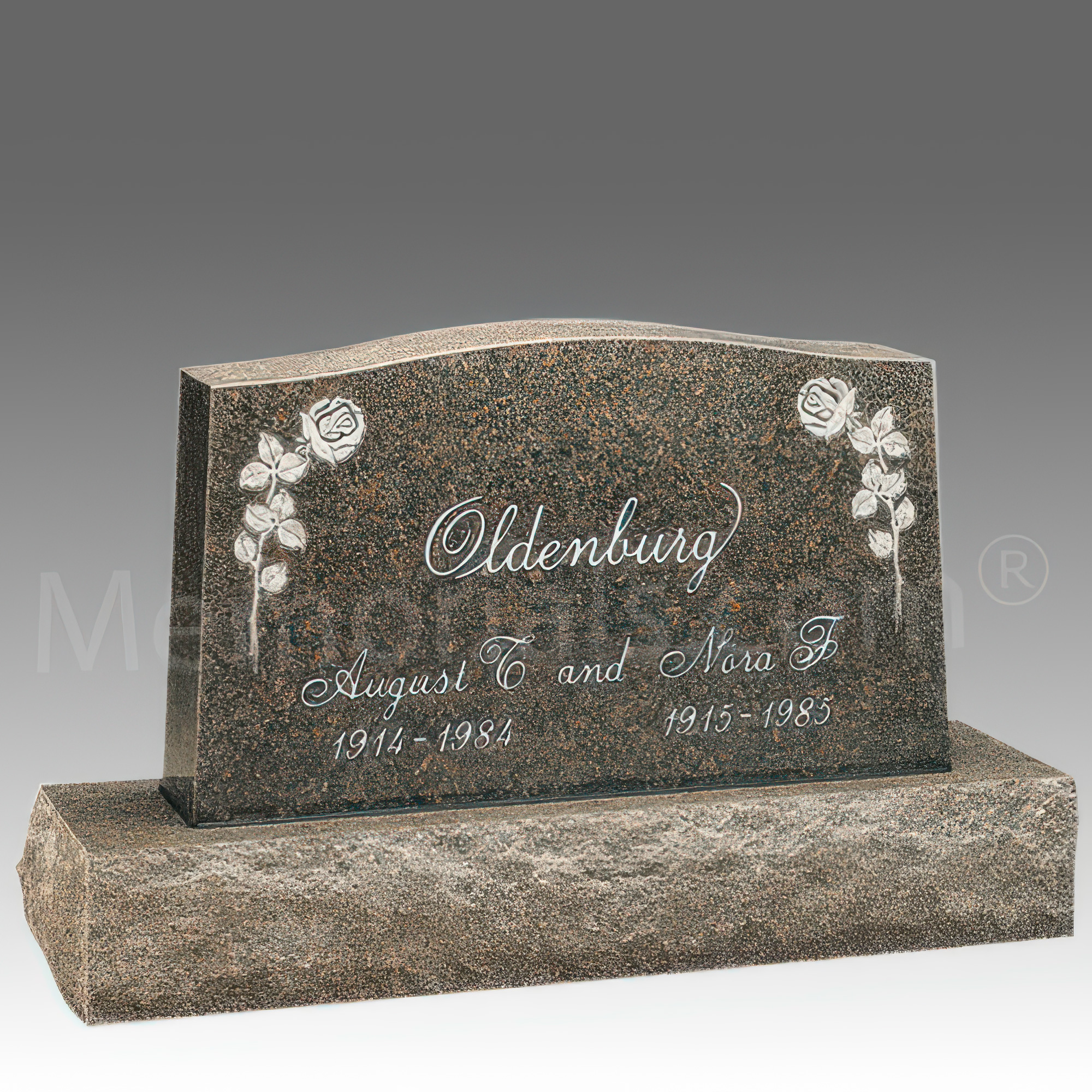
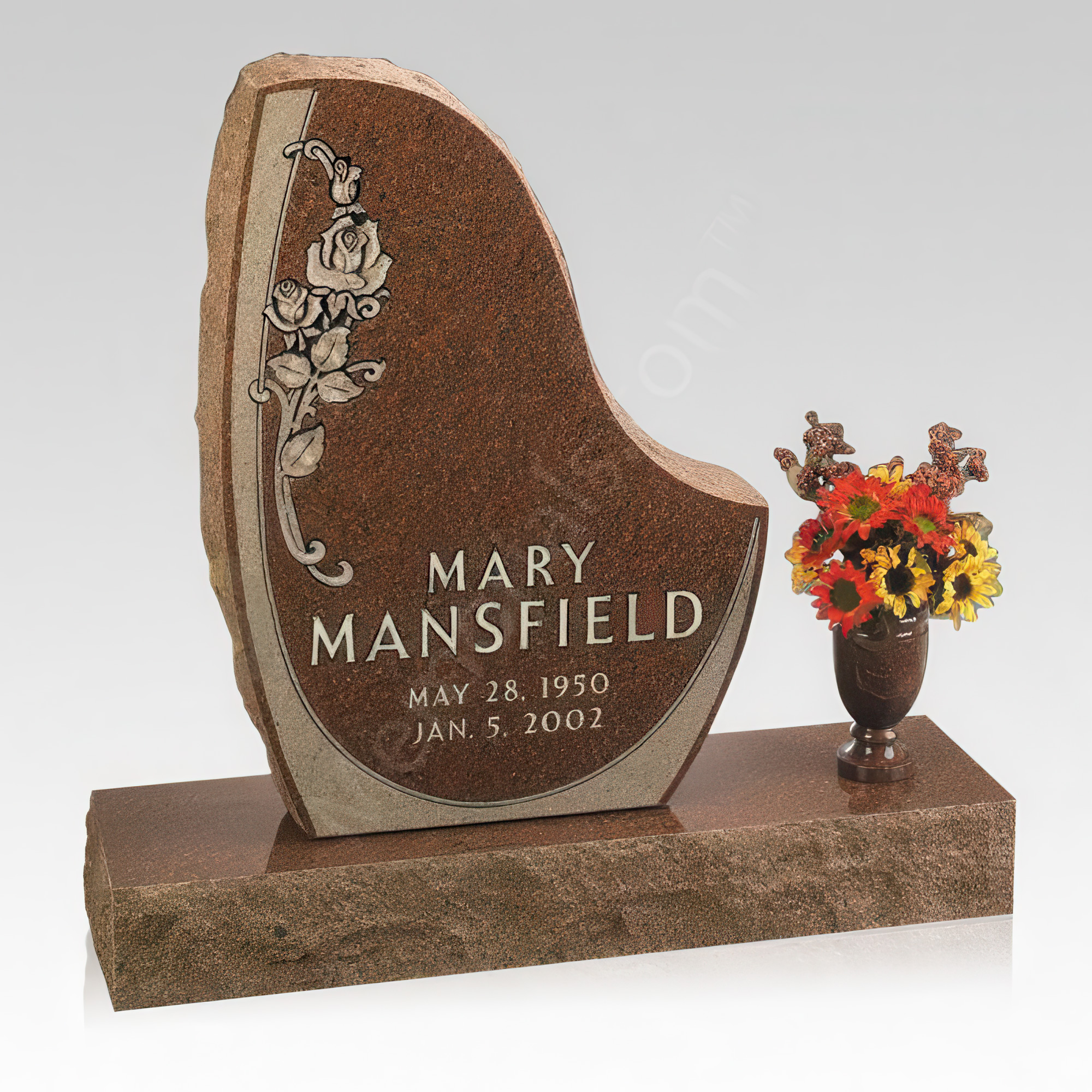
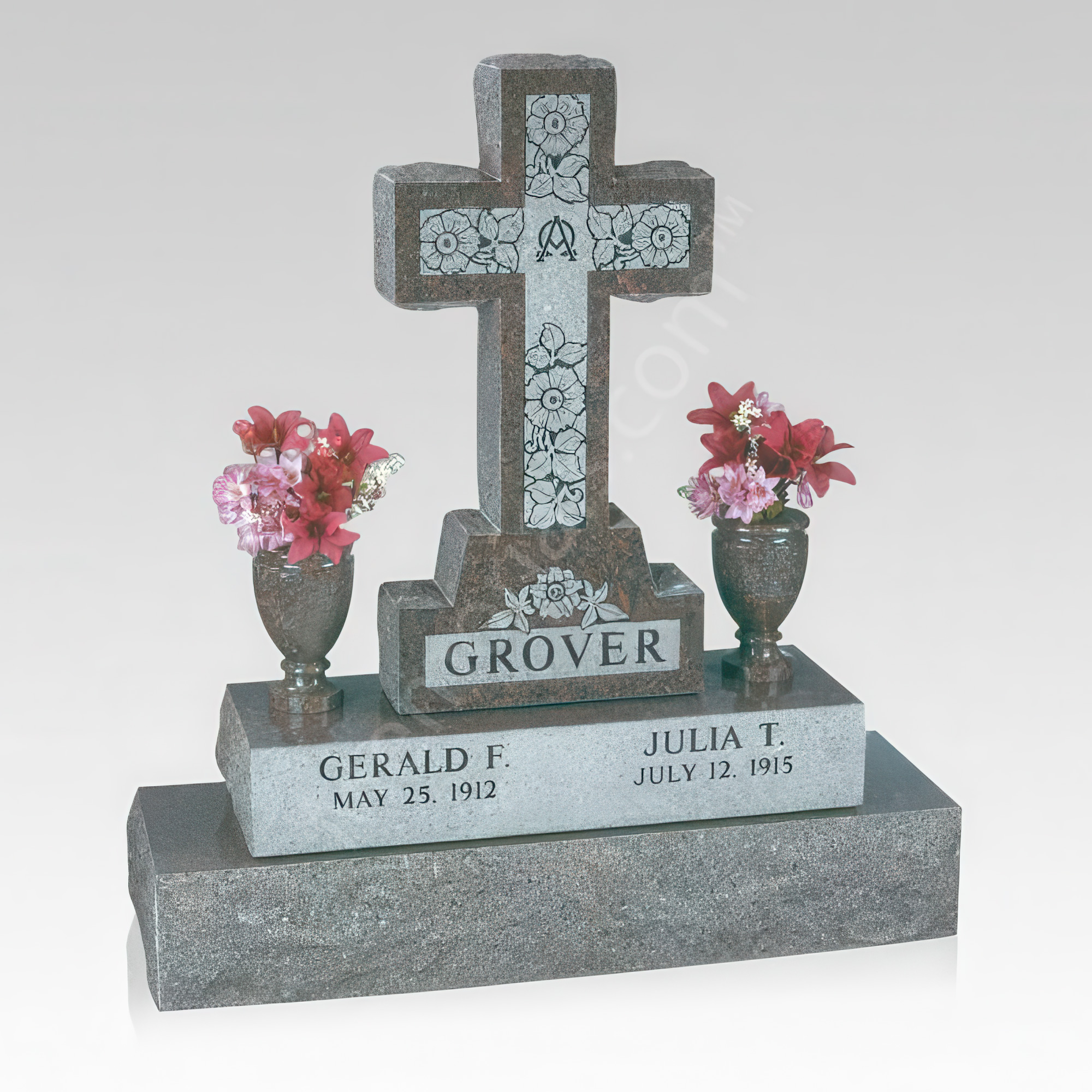
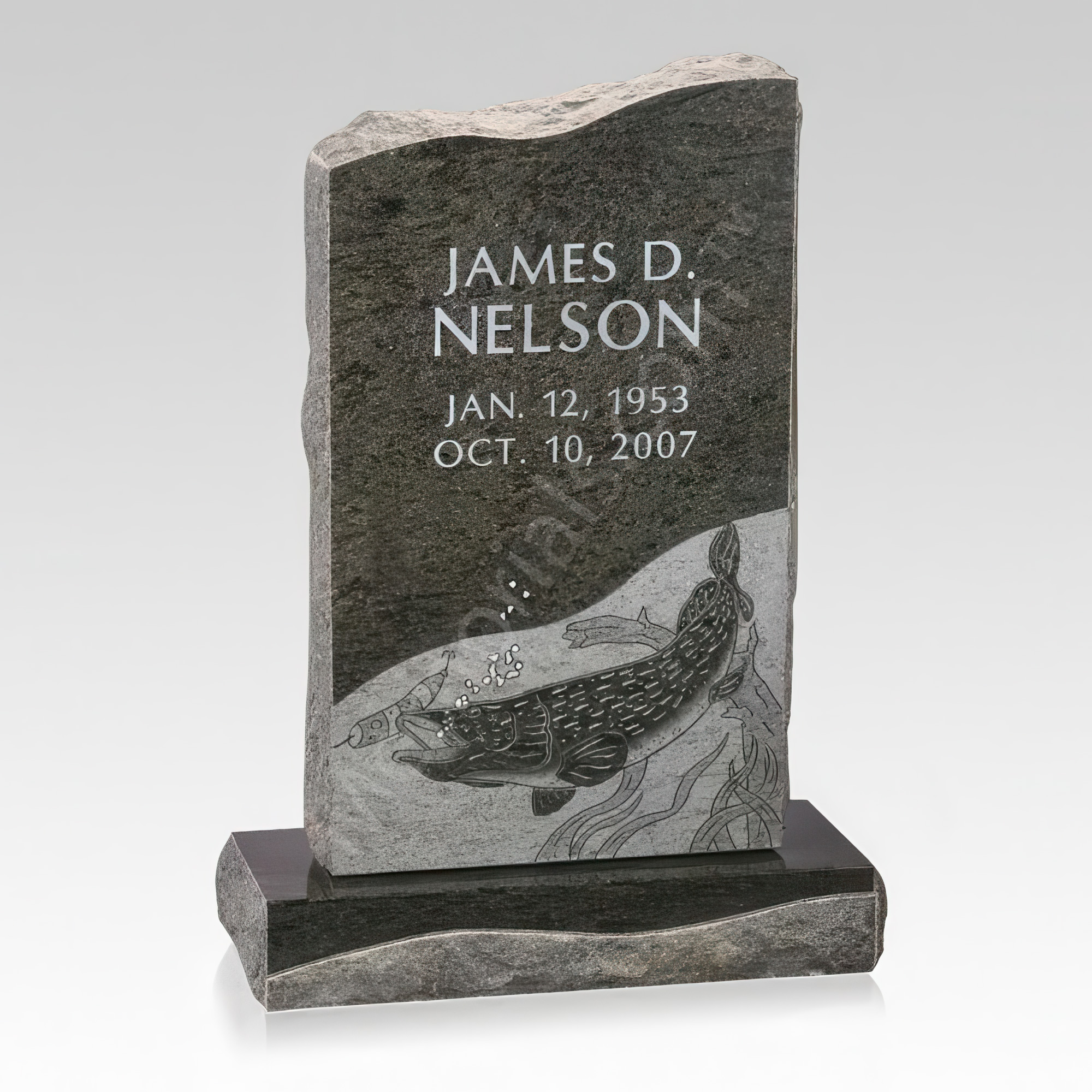
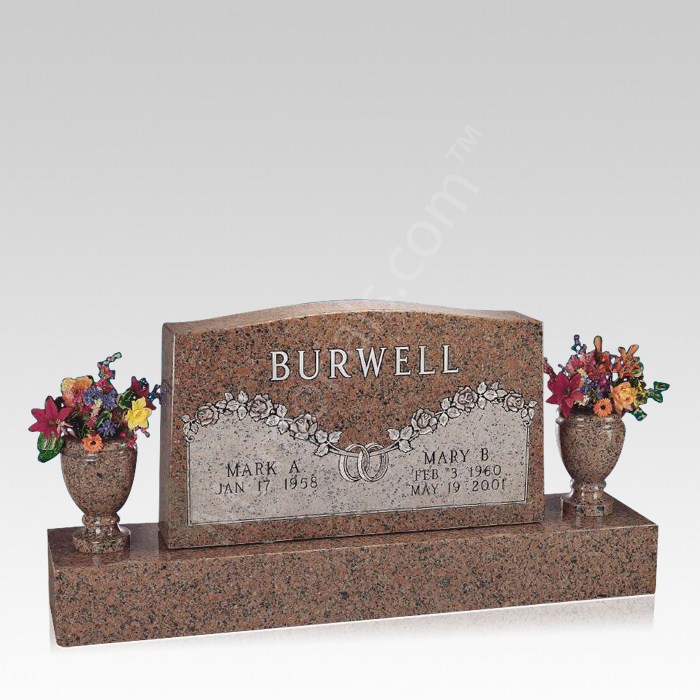
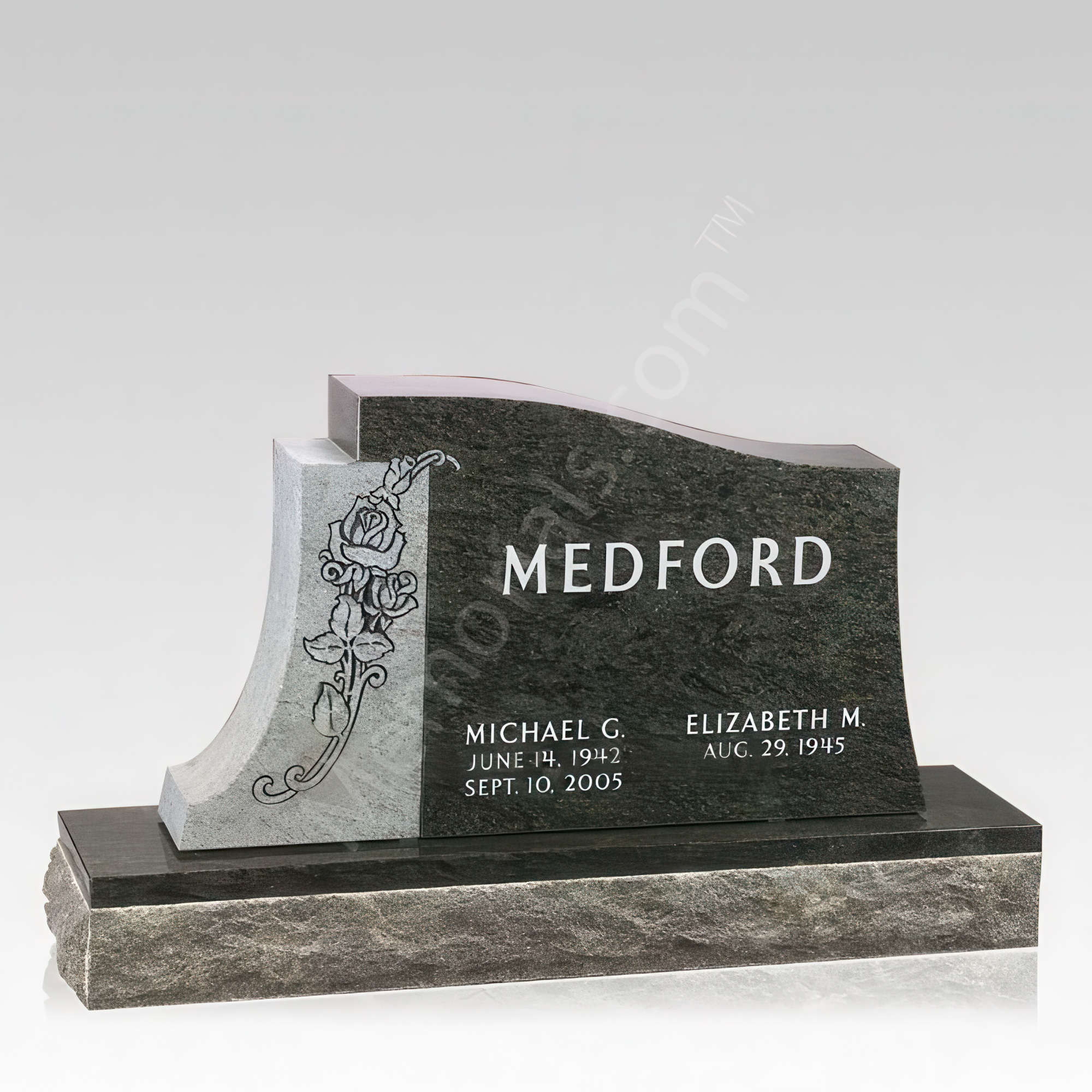
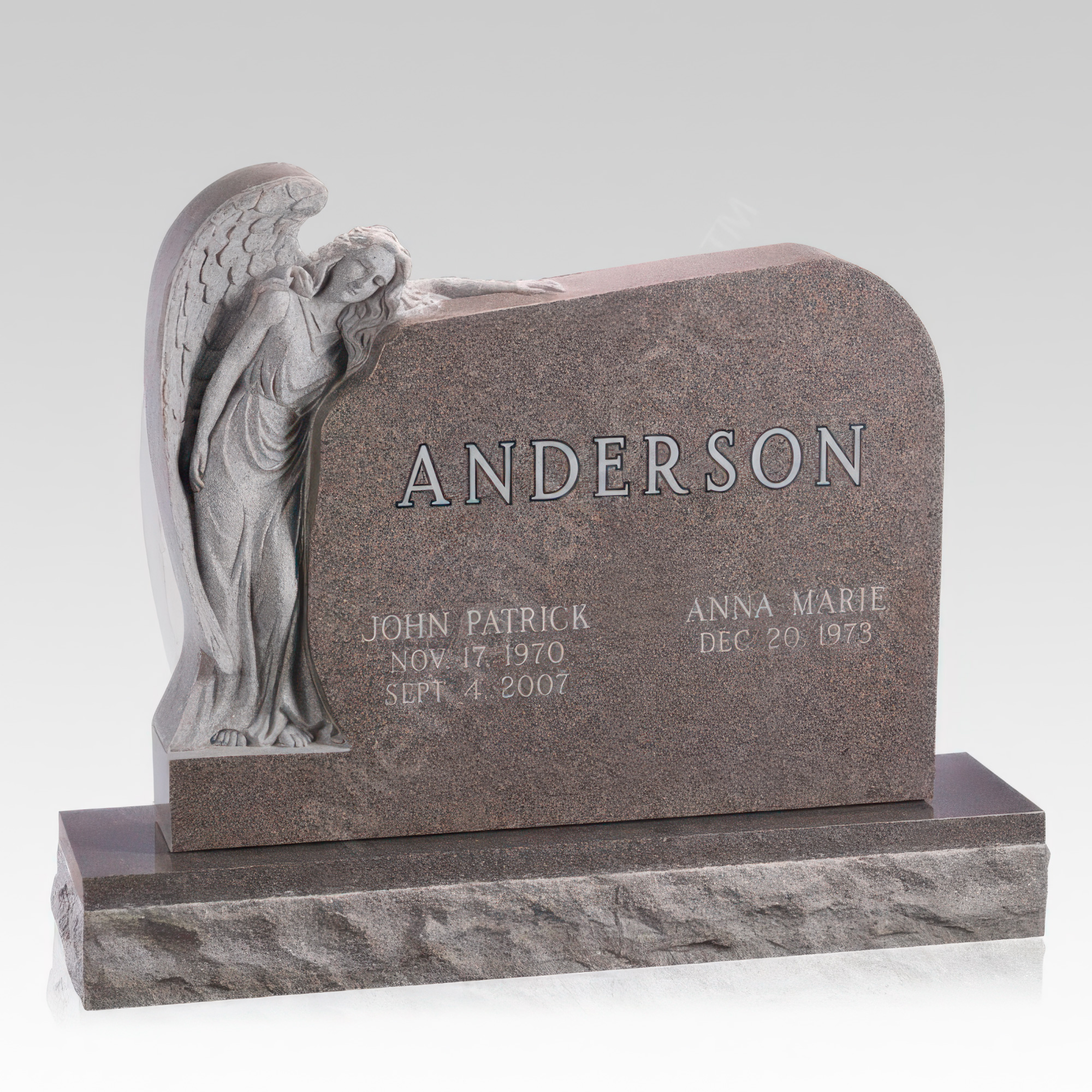
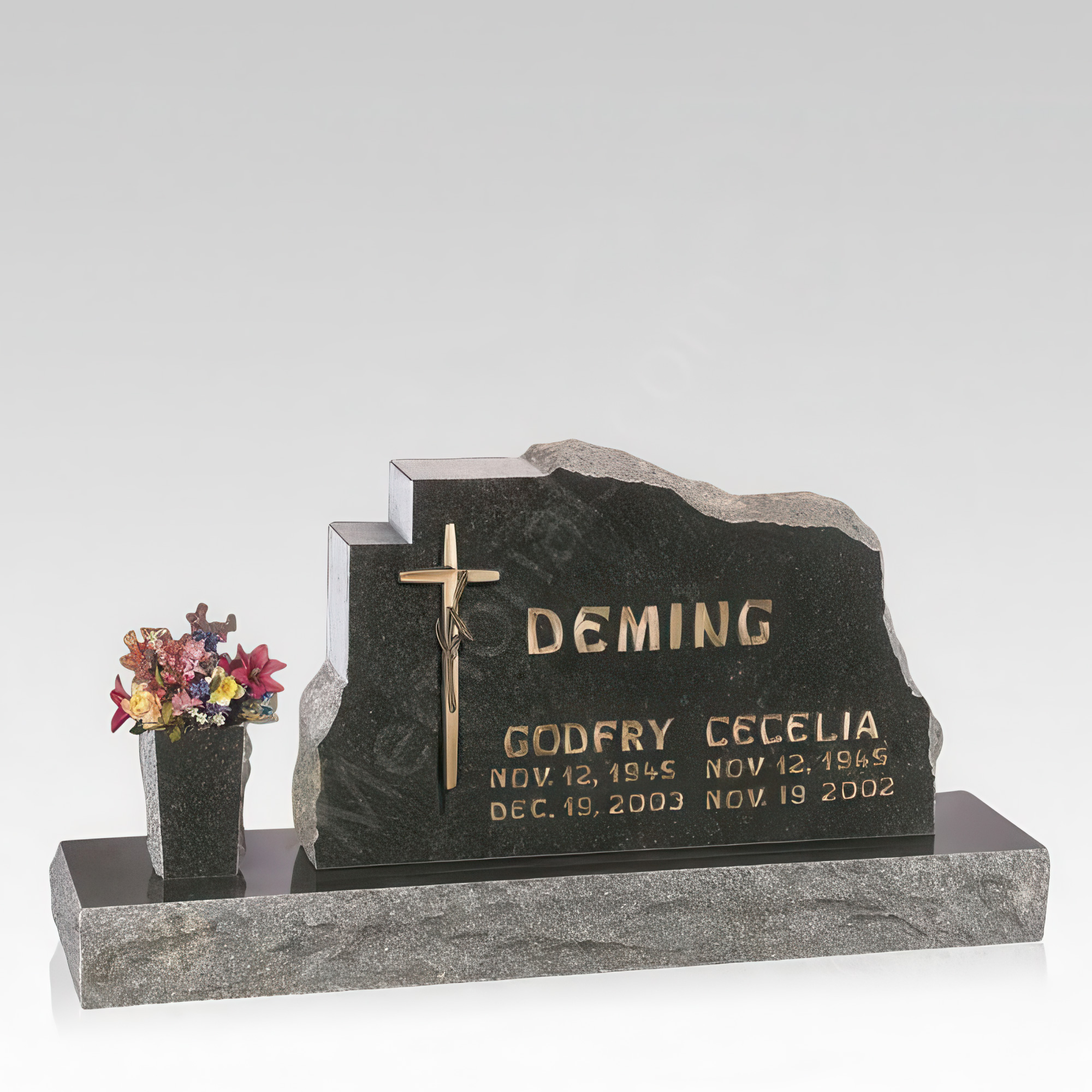
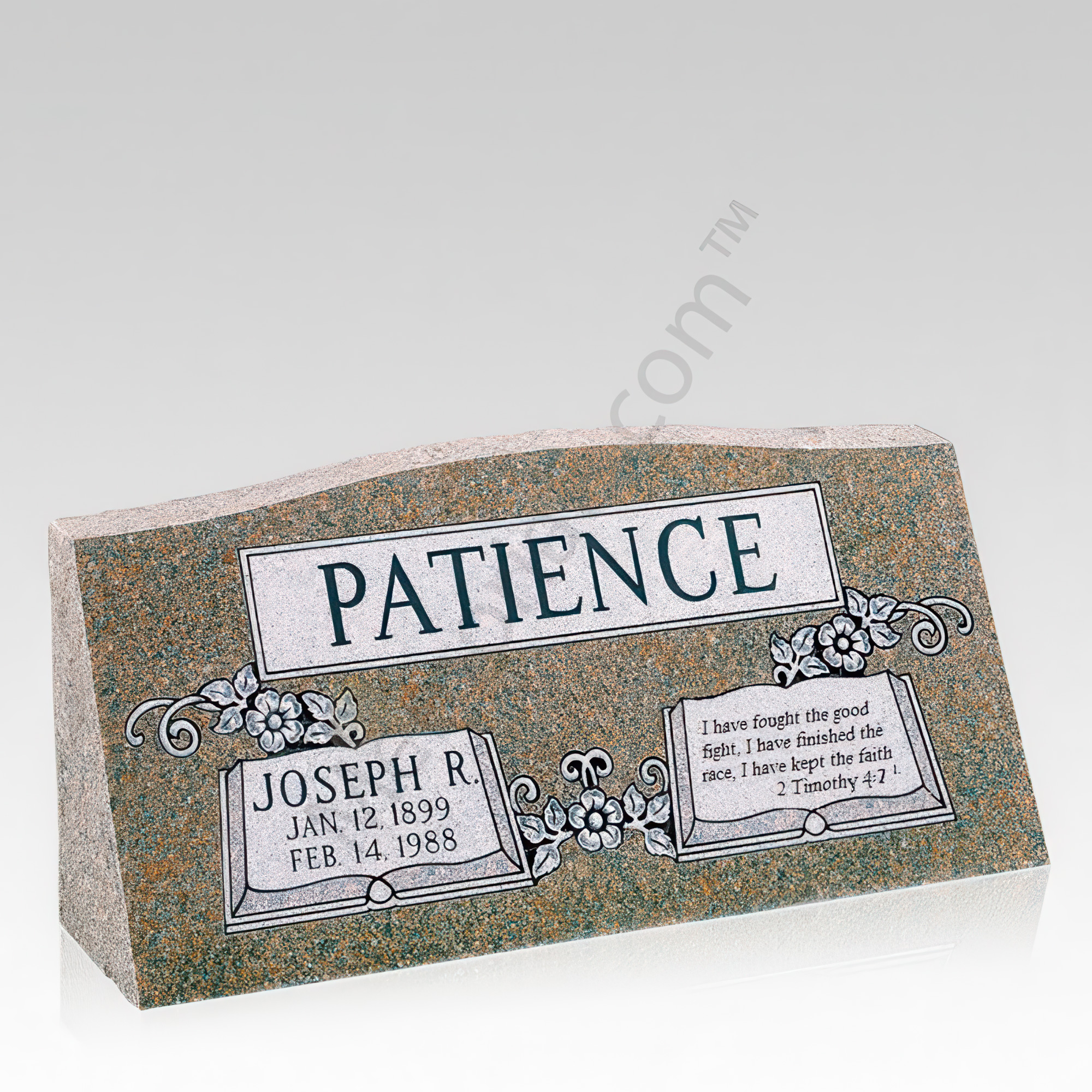
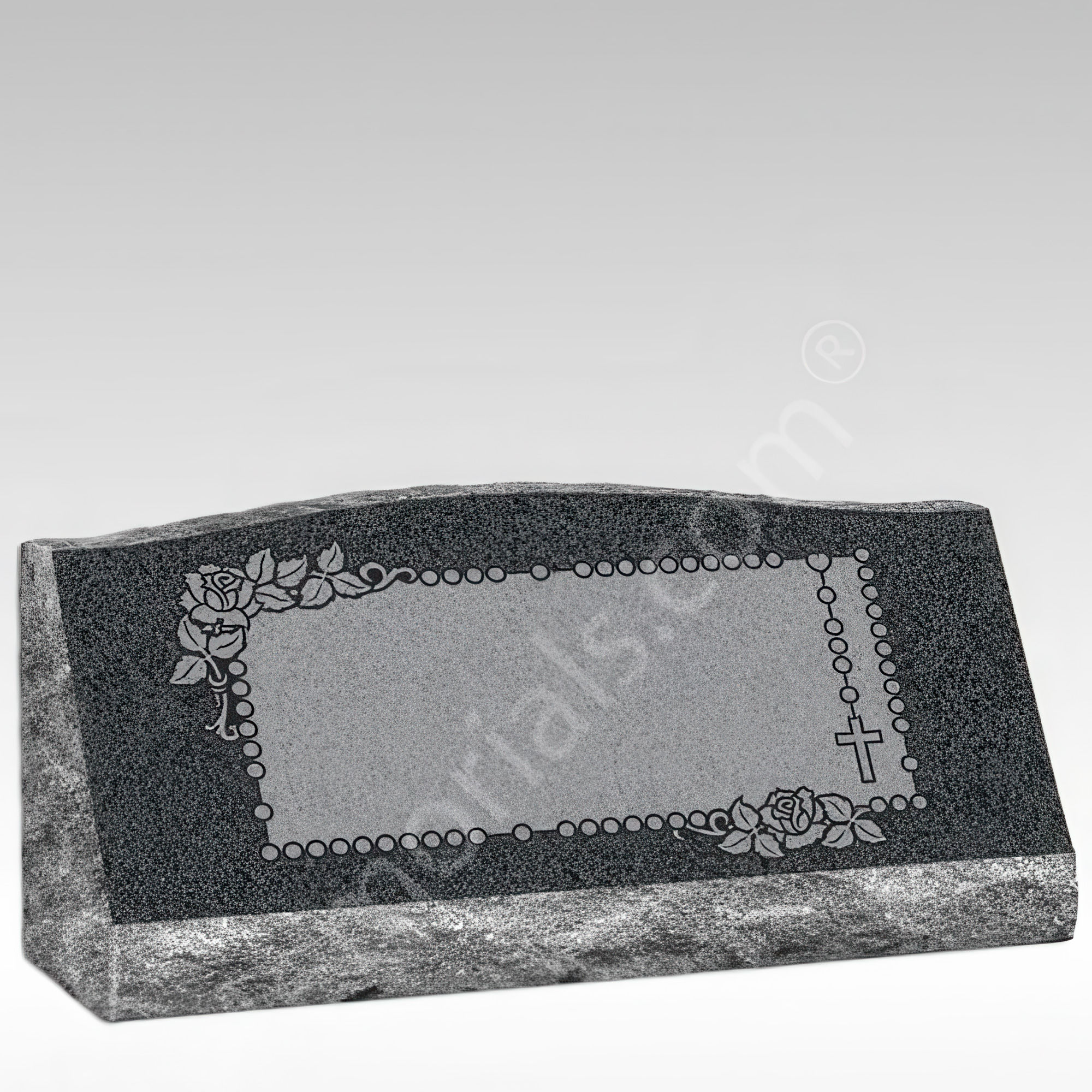
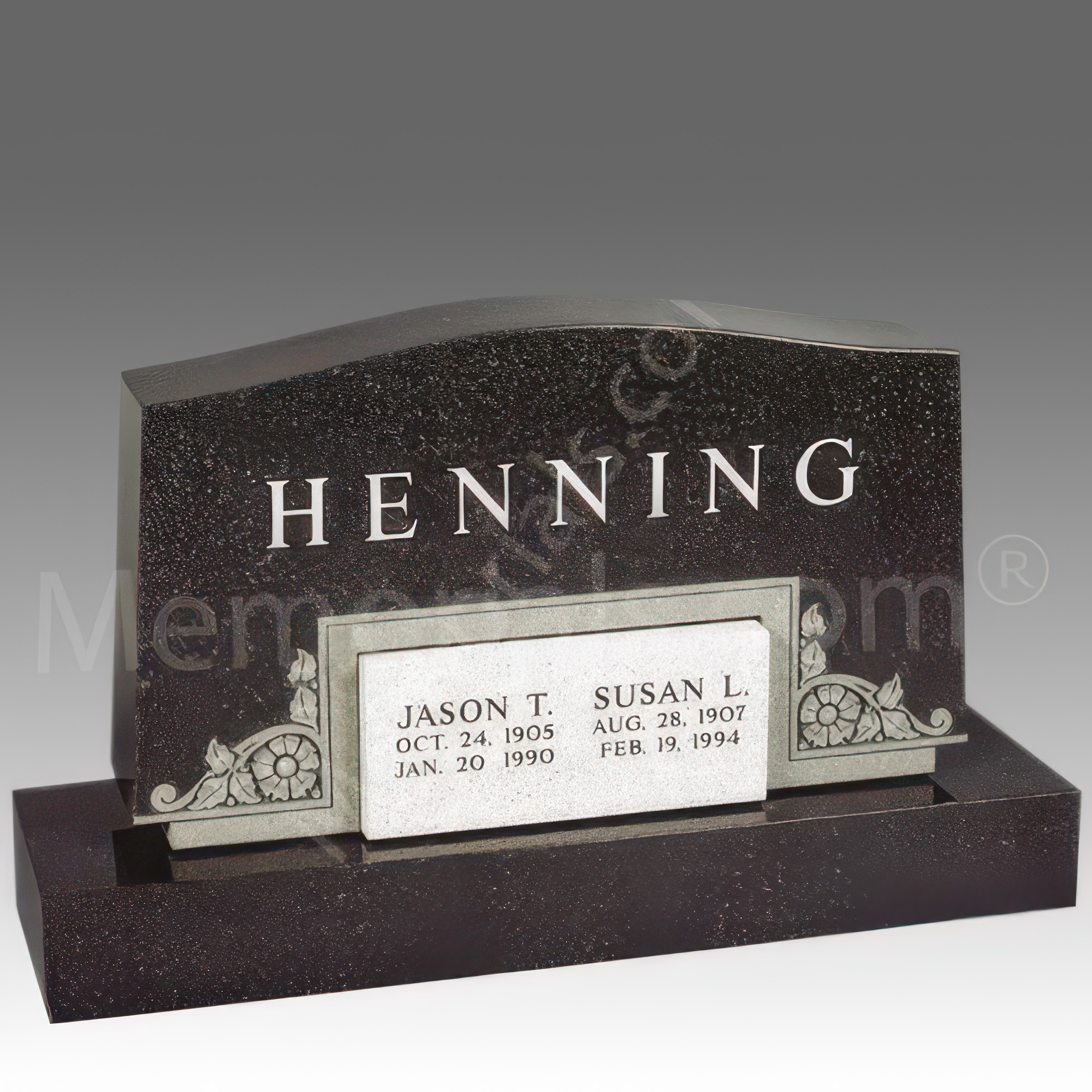
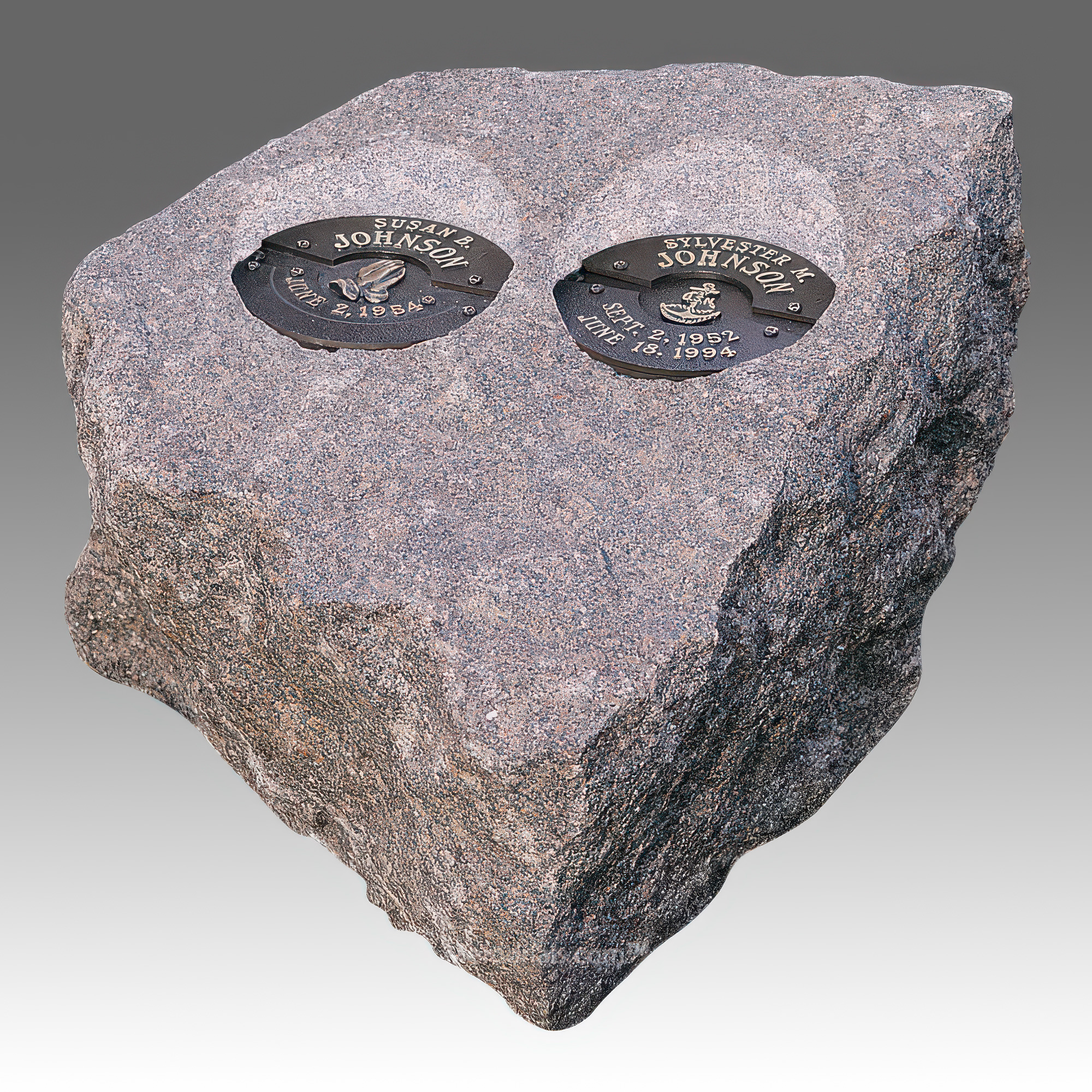
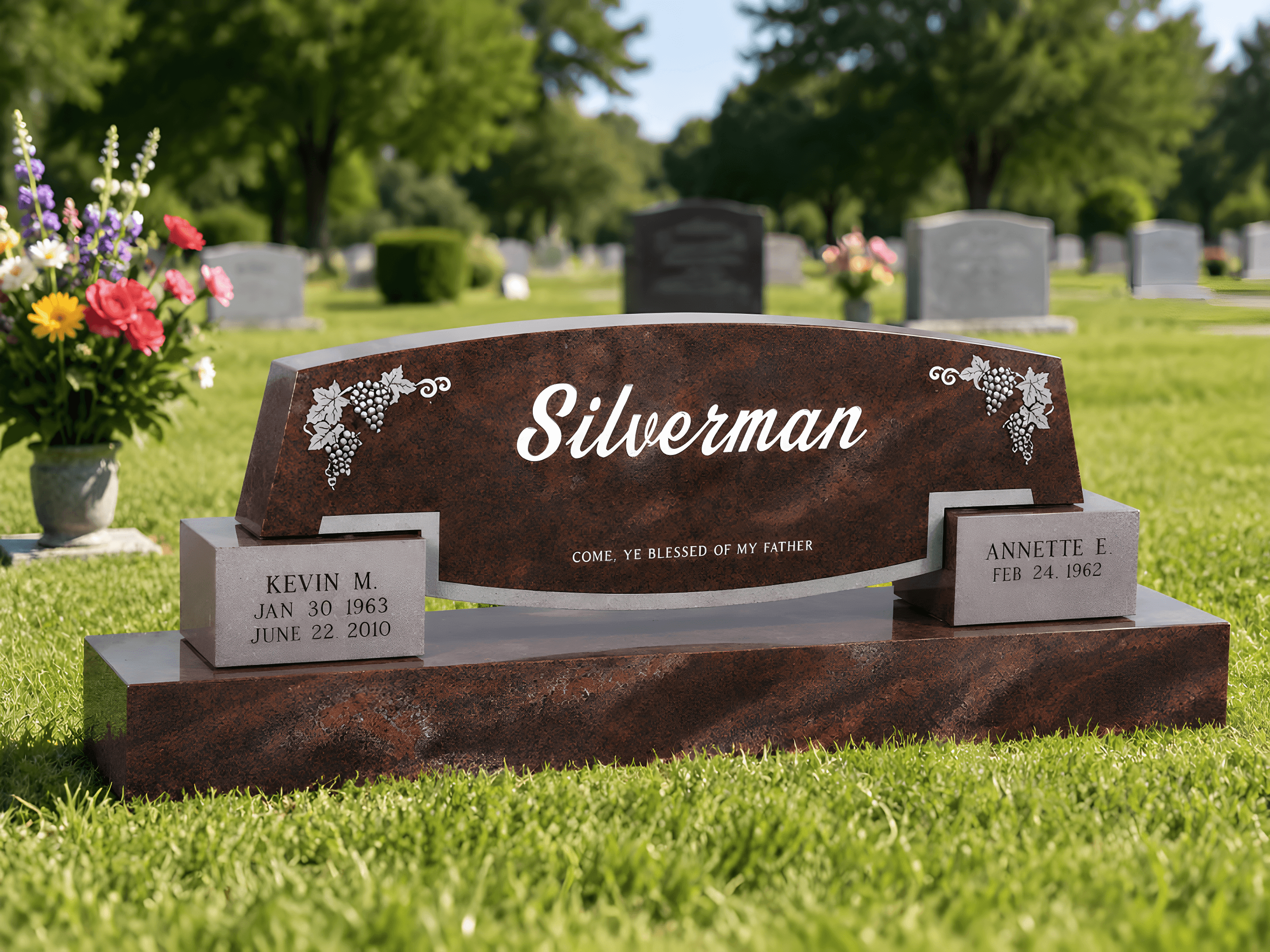
Upright cremation headstones are standing granite monuments that look nearly identical to traditional headstones, with one important difference — they contain a concealed compartment designed to hold a full set of cremated remains. The urn compartment is typically cored into the base or lower section of the stone, sealed with a granite plug or a threaded cap to protect the ashes from moisture and the elements.
These monuments are crafted from natural granite, which is available in a wide range of colors including black, gray, mahogany, blue, and white. Granite is the most popular material for cemetery memorials because of its exceptional durability. It resists weathering, does not fade in sunlight, and can be polished to a mirror-like finish that holds engraved details for generations.
Who Chooses Upright Cremation Headstones?
Families often choose upright cremation monuments when they want:
A traditional, prominent memorial that is easy to locate in the cemetery
A single monument that serves as both a headstone and a permanent home for the ashes
The option to include detailed engravings, portraits, or custom artwork on a large surface area
A companion-style monument for two people, with room for two sets of cremated remains
The height and visibility of an upright cremation headstone make it a natural choice for families who value having an easily recognizable gathering place. Many cemeteries allow these monuments in designated upright sections, though size and foundation requirements vary. Be sure to check cemetery marker regulations at your specific cemetery before ordering, as some sections only permit flat markers.
Browse Our Most Popular Headstones & Grave Markers
Handcrafted memorials to honor your loved one for eternity
Full names, birth and death dates, and a meaningful epitaph
Laser-etched portraits or photographs
Religious symbols such as crosses, Stars of David, or praying hands
Nature scenes, military emblems, or hobby-related imagery
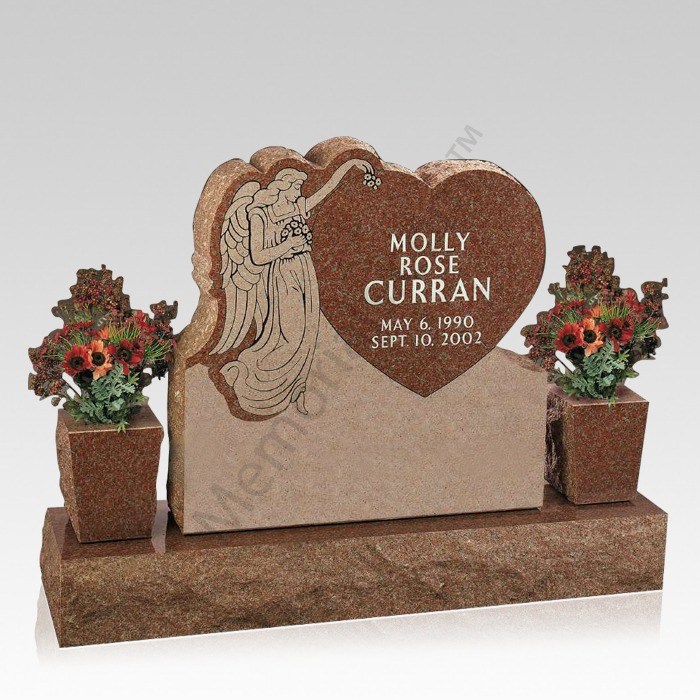
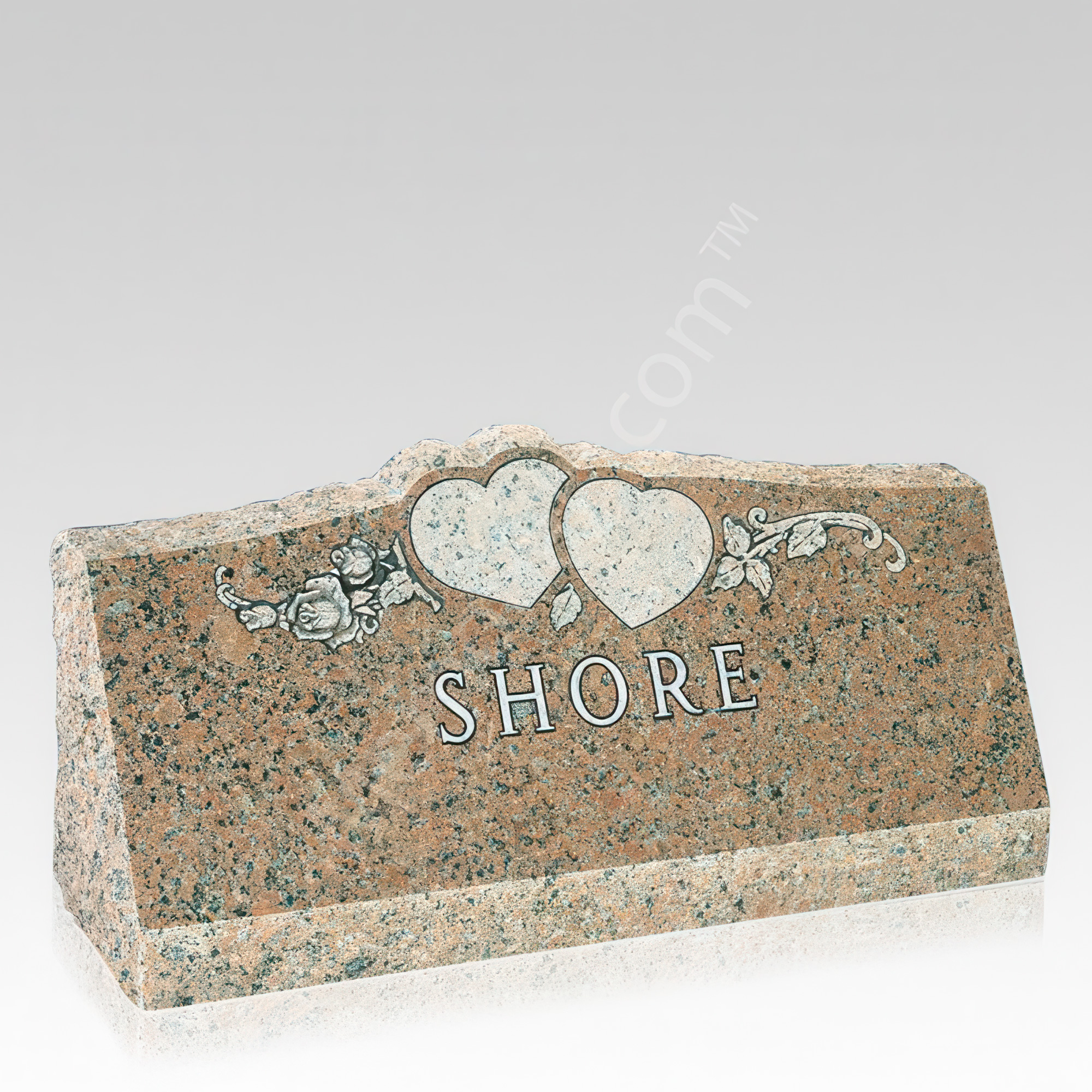
Custom shapes including heart tops, teardrop profiles, and gothic arches
The front face is typically polished for inscription, while the sides and back may be finished in a natural rock-pitch texture for an elegant contrast.
Flat Grave Markers for Cremated Remains
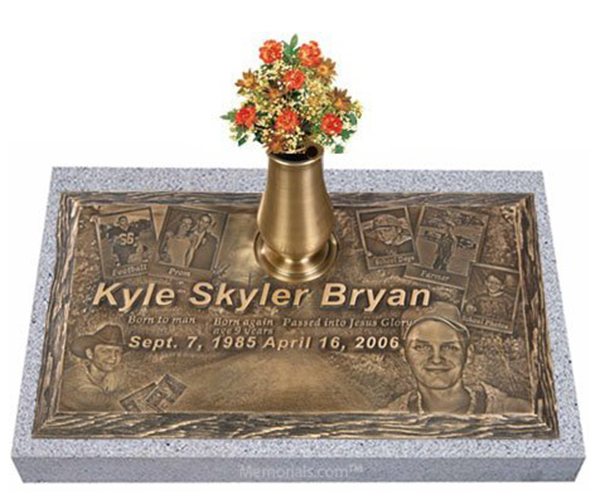
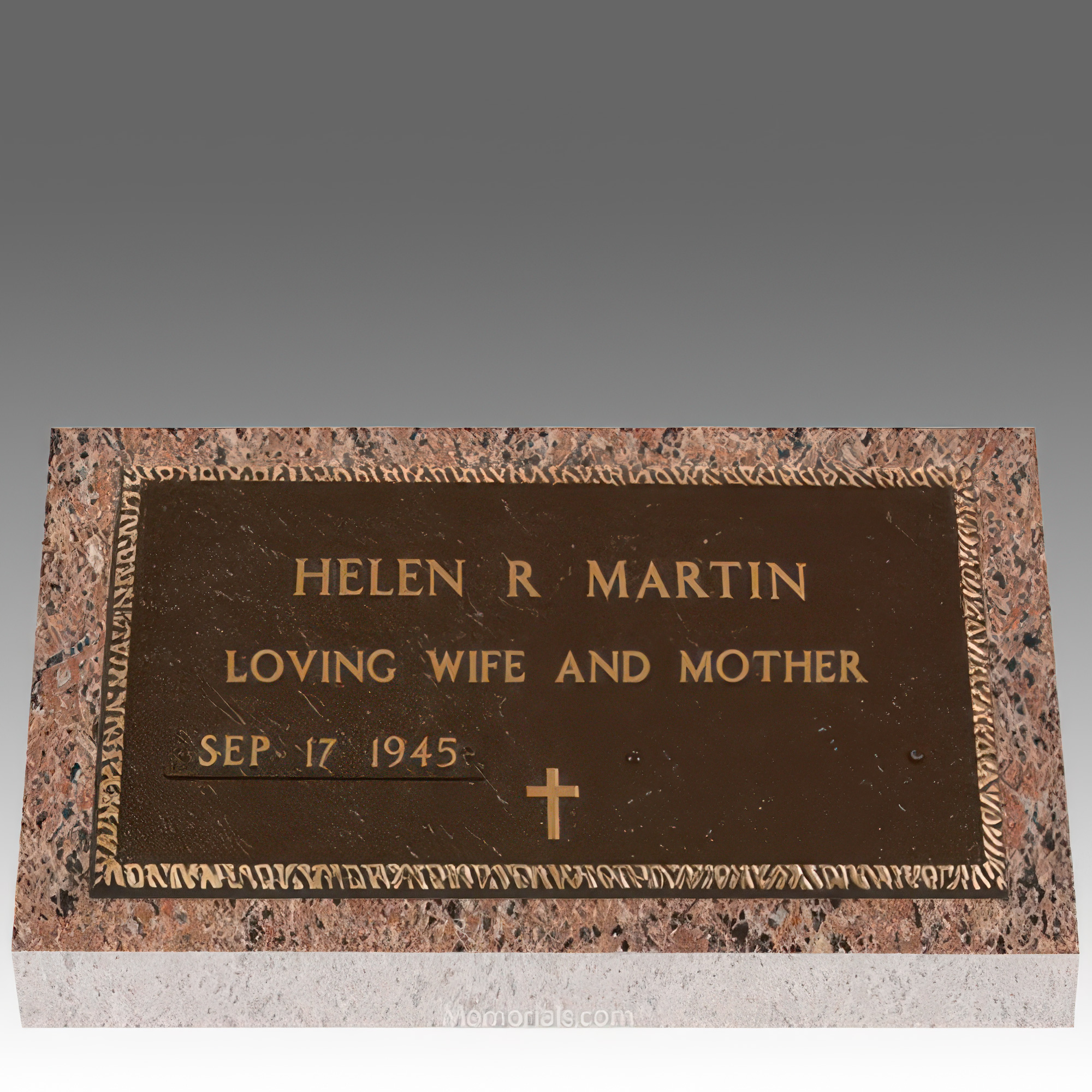
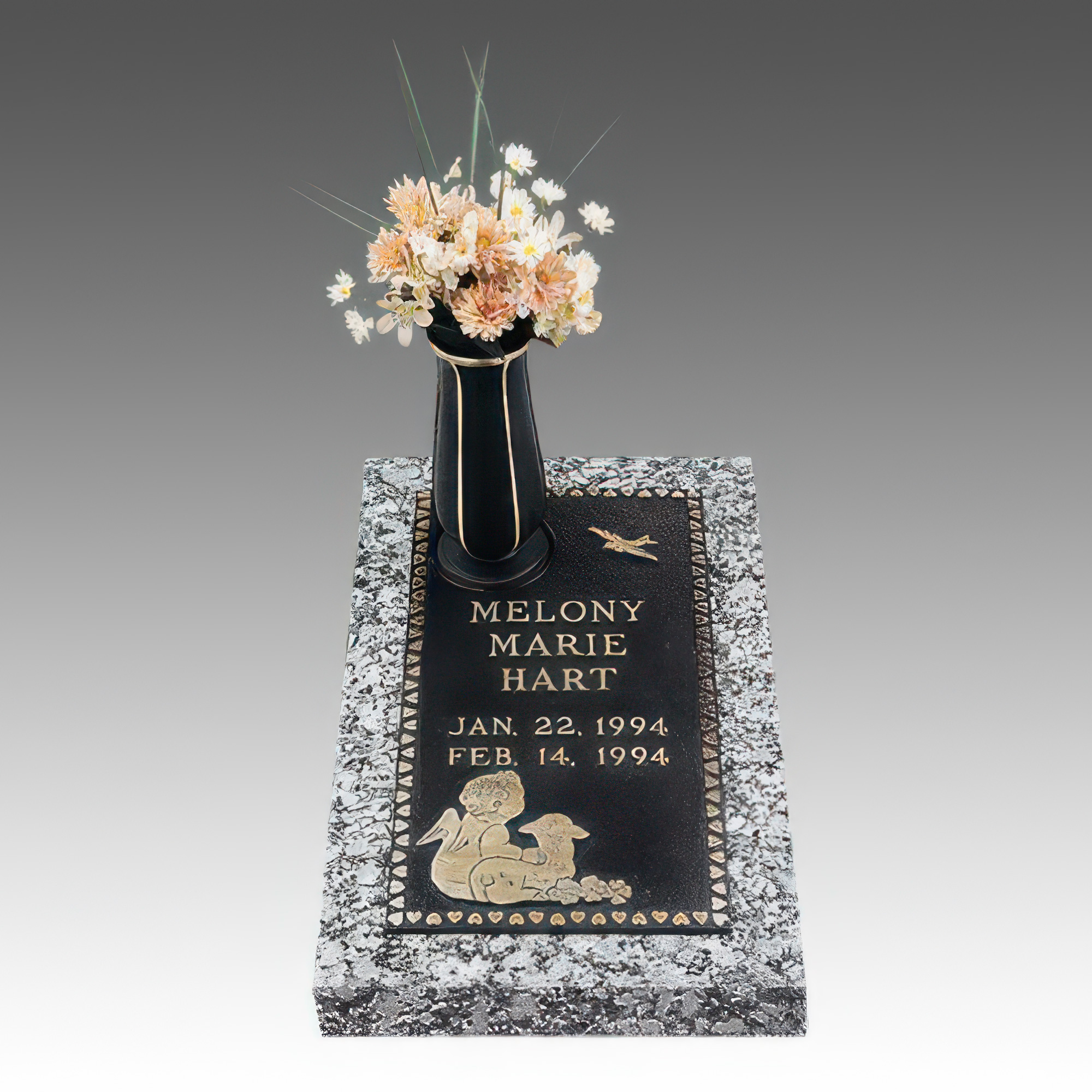
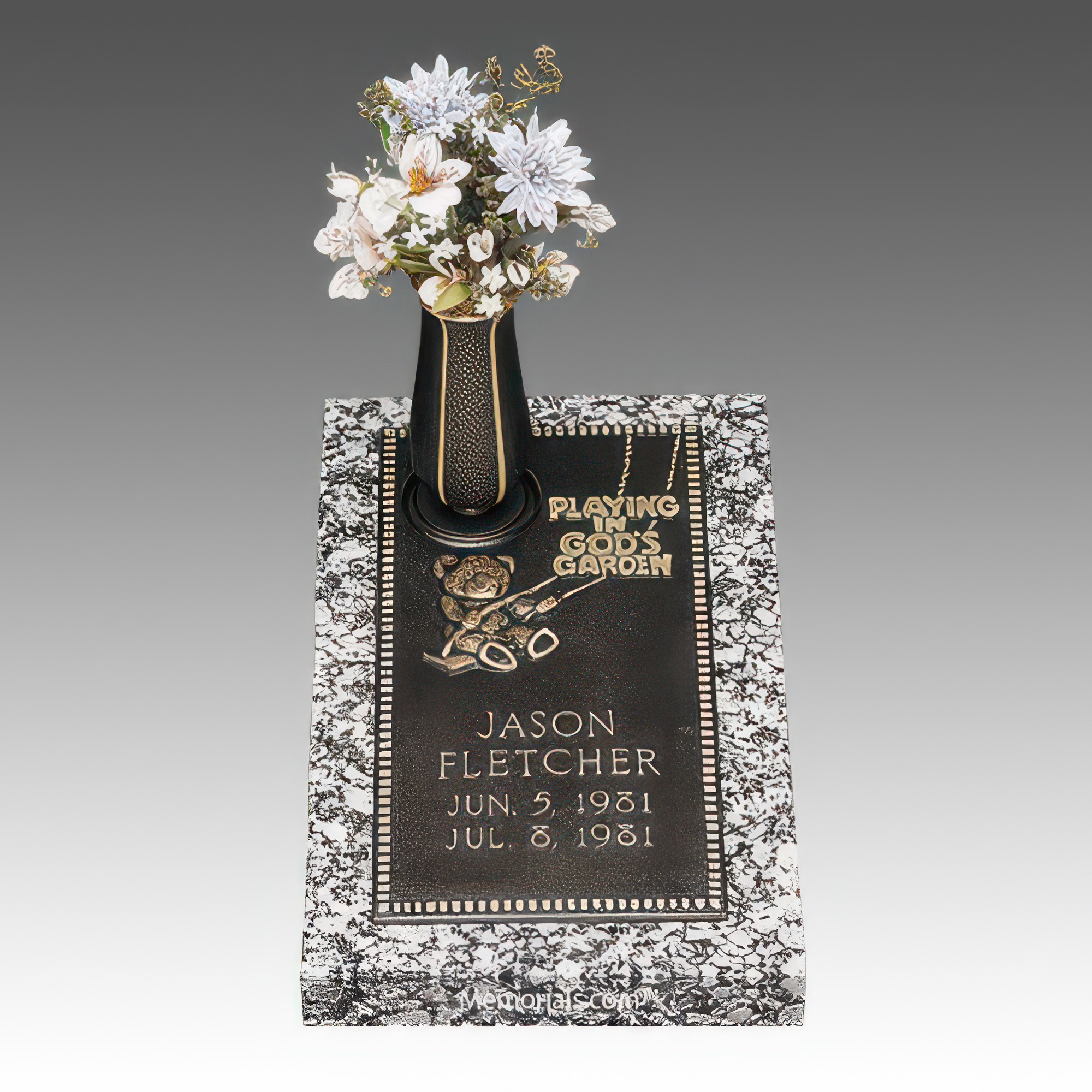
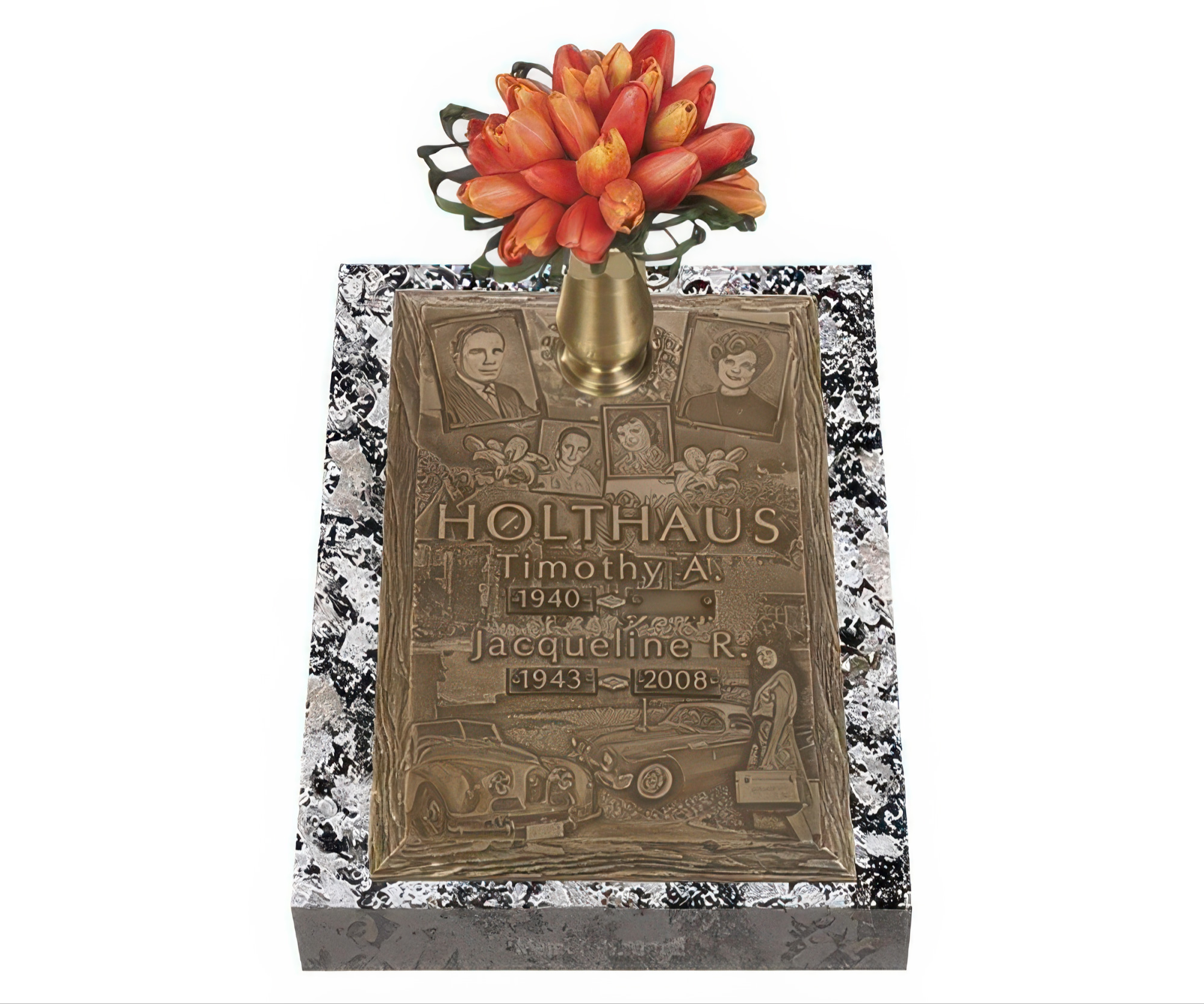
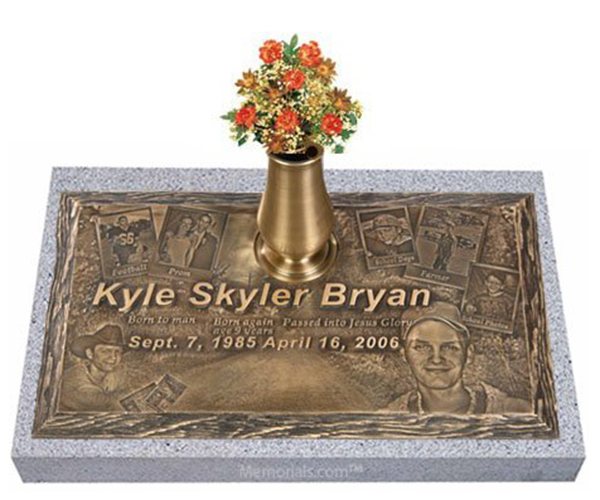
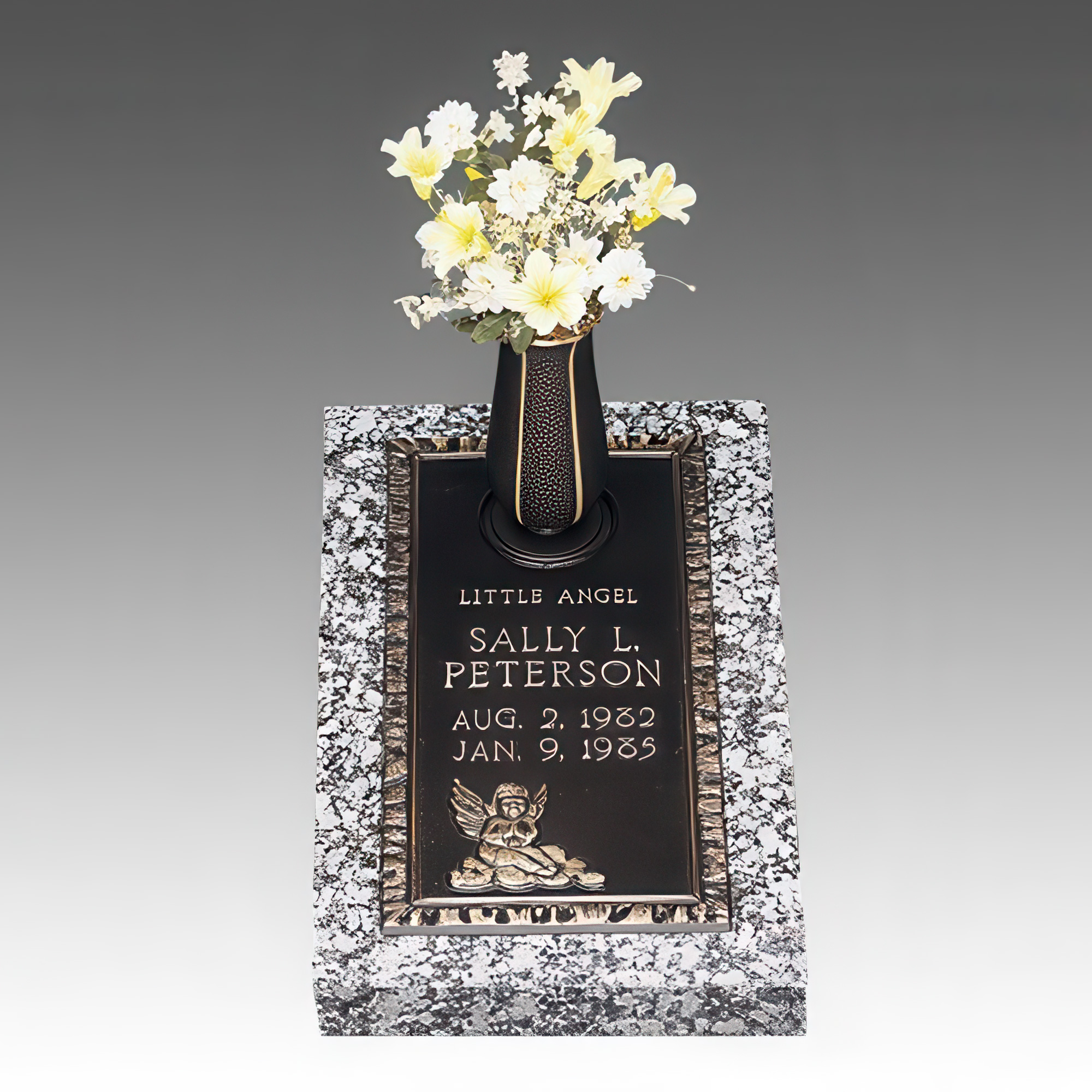
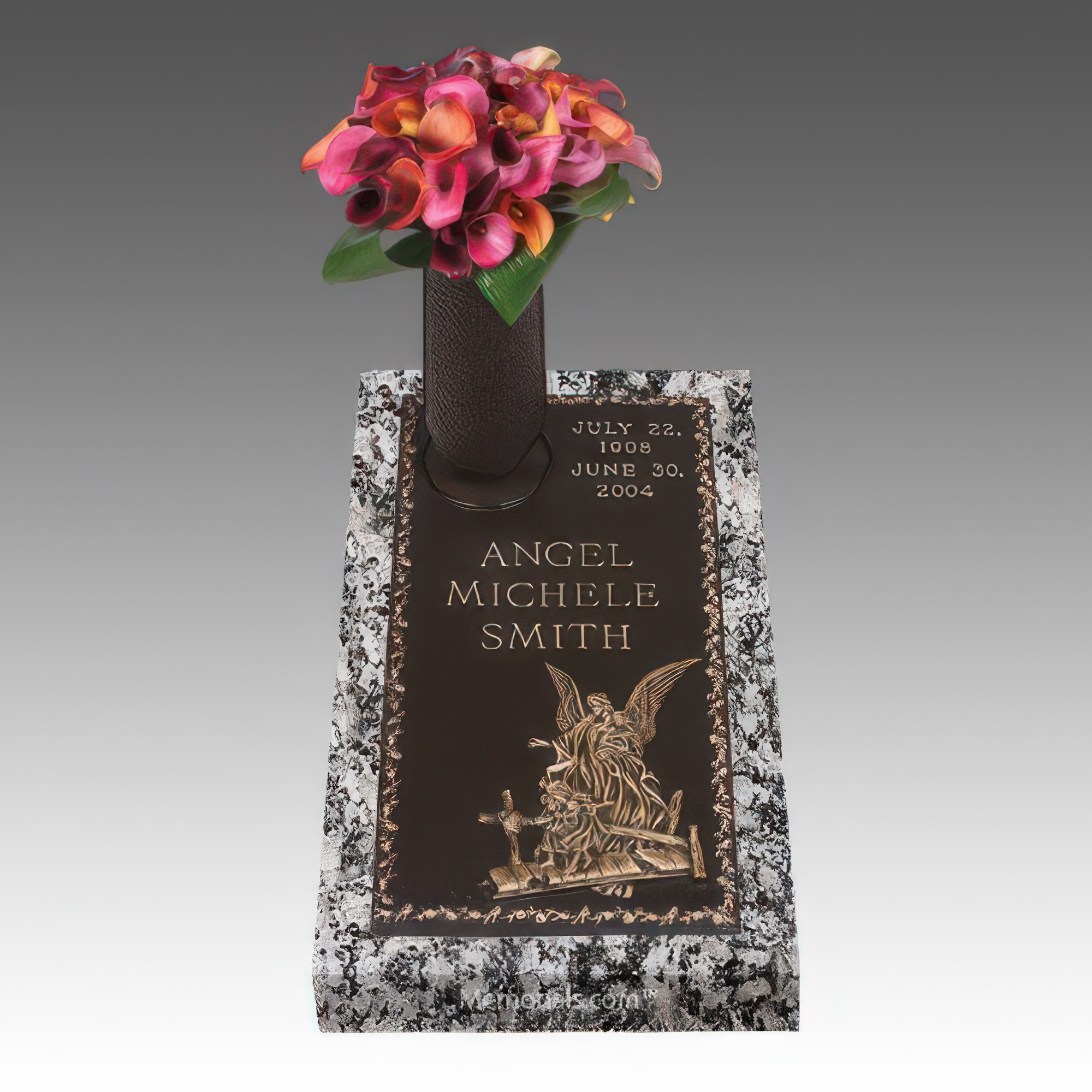
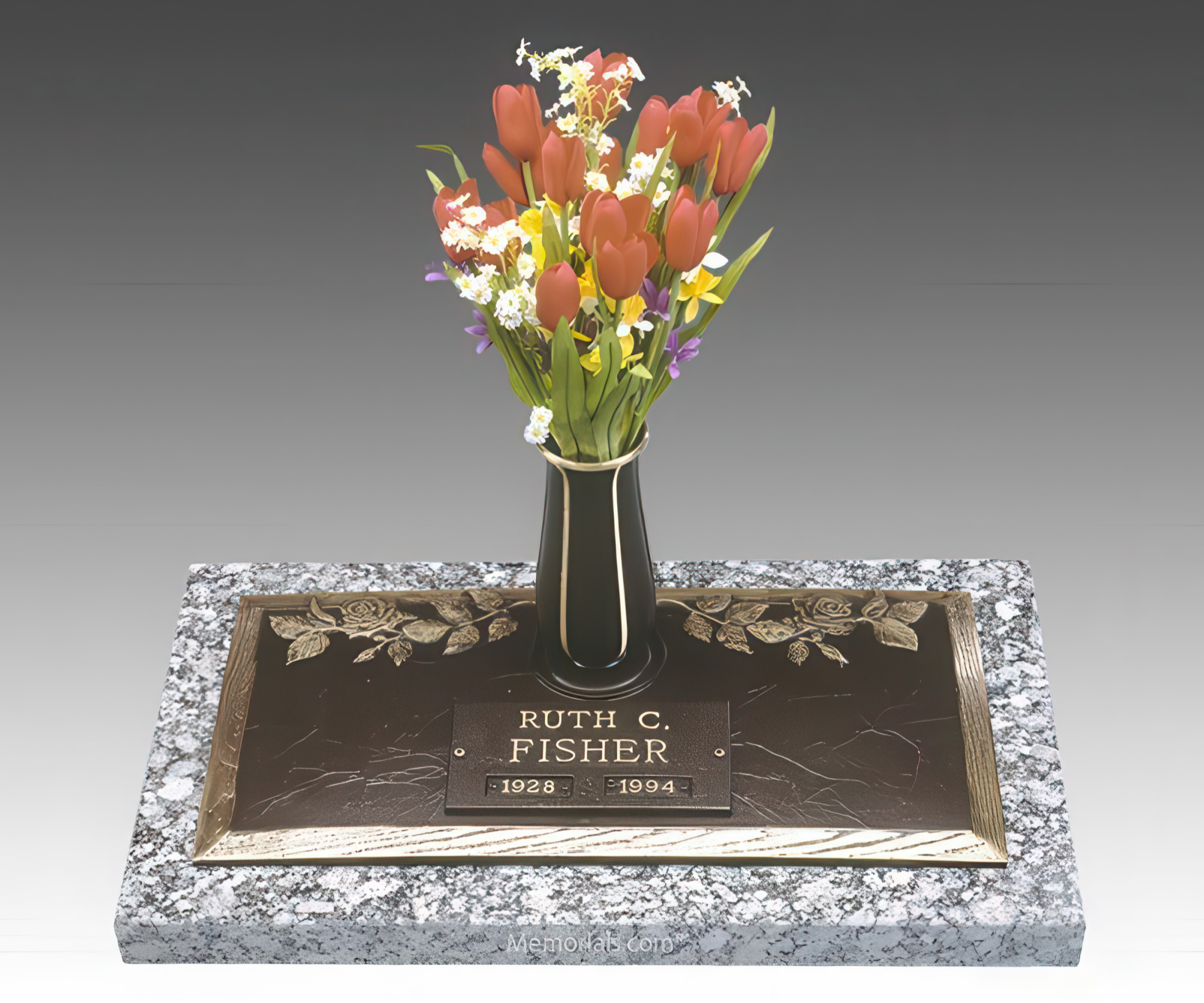
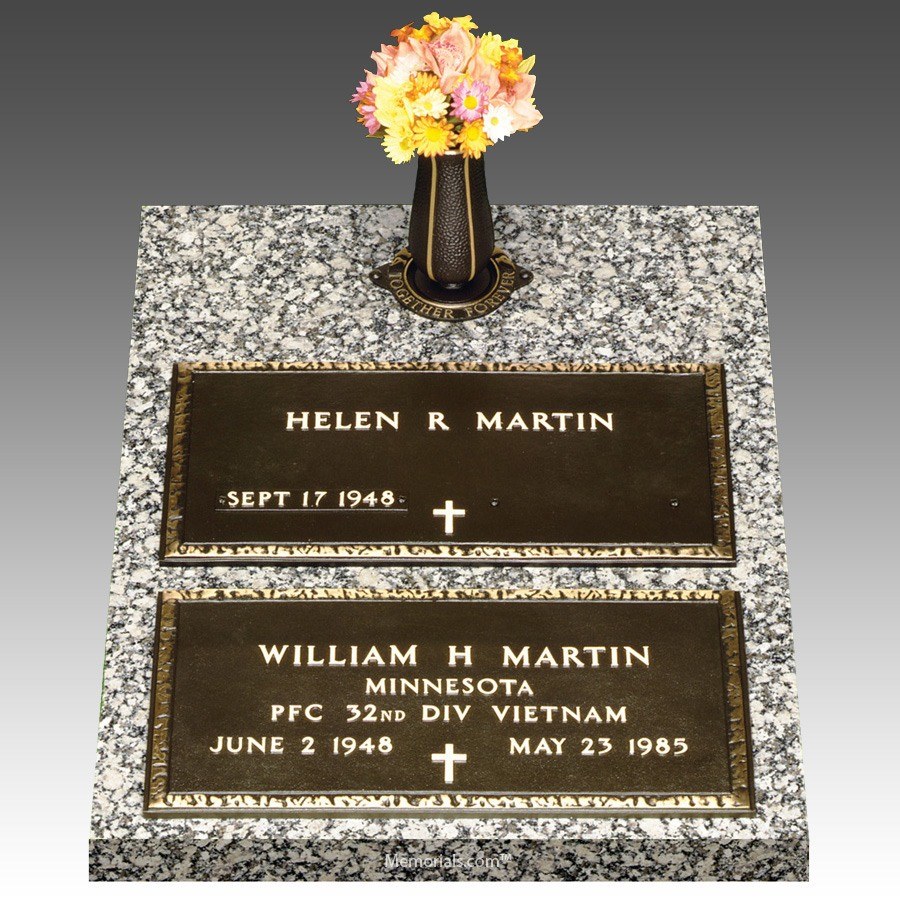
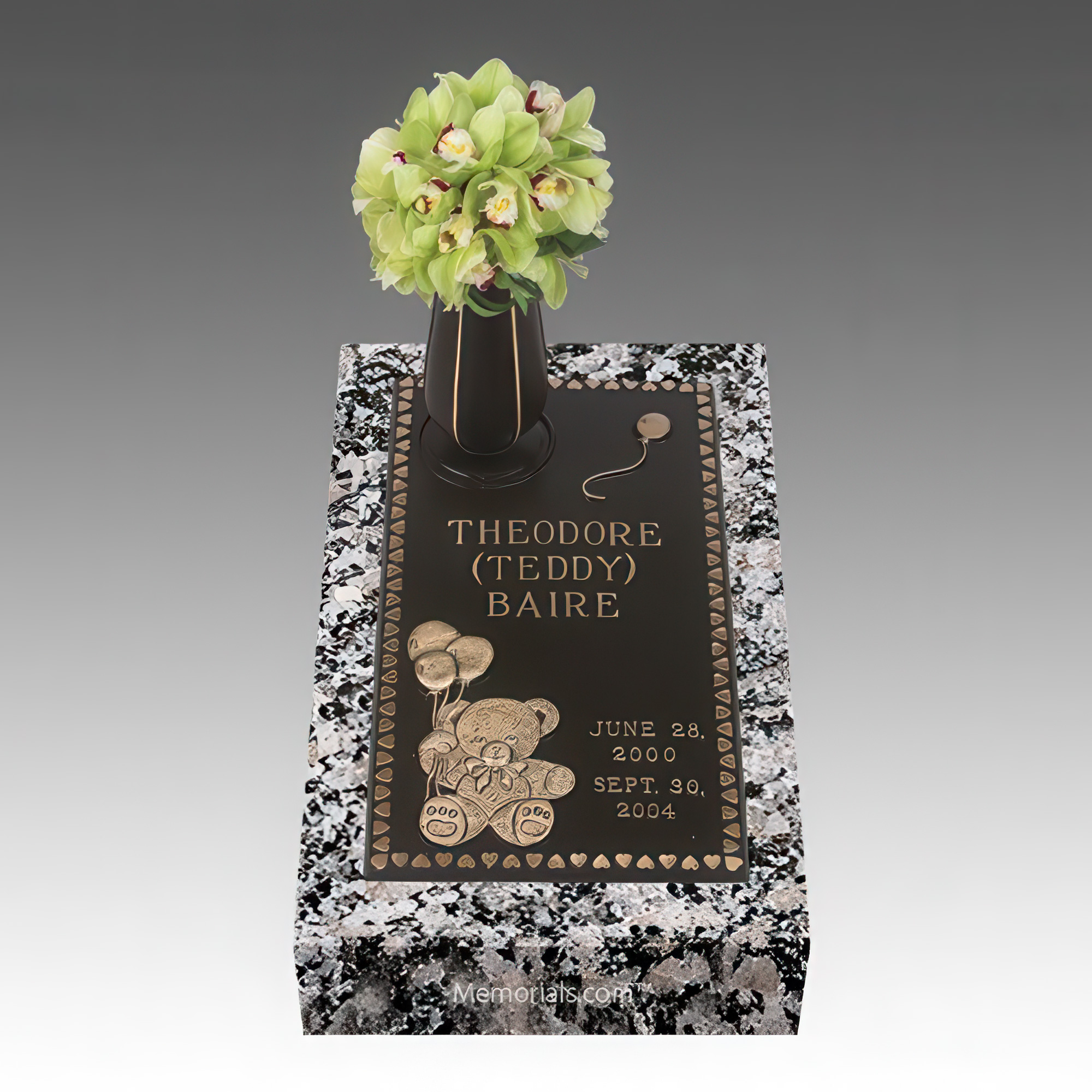
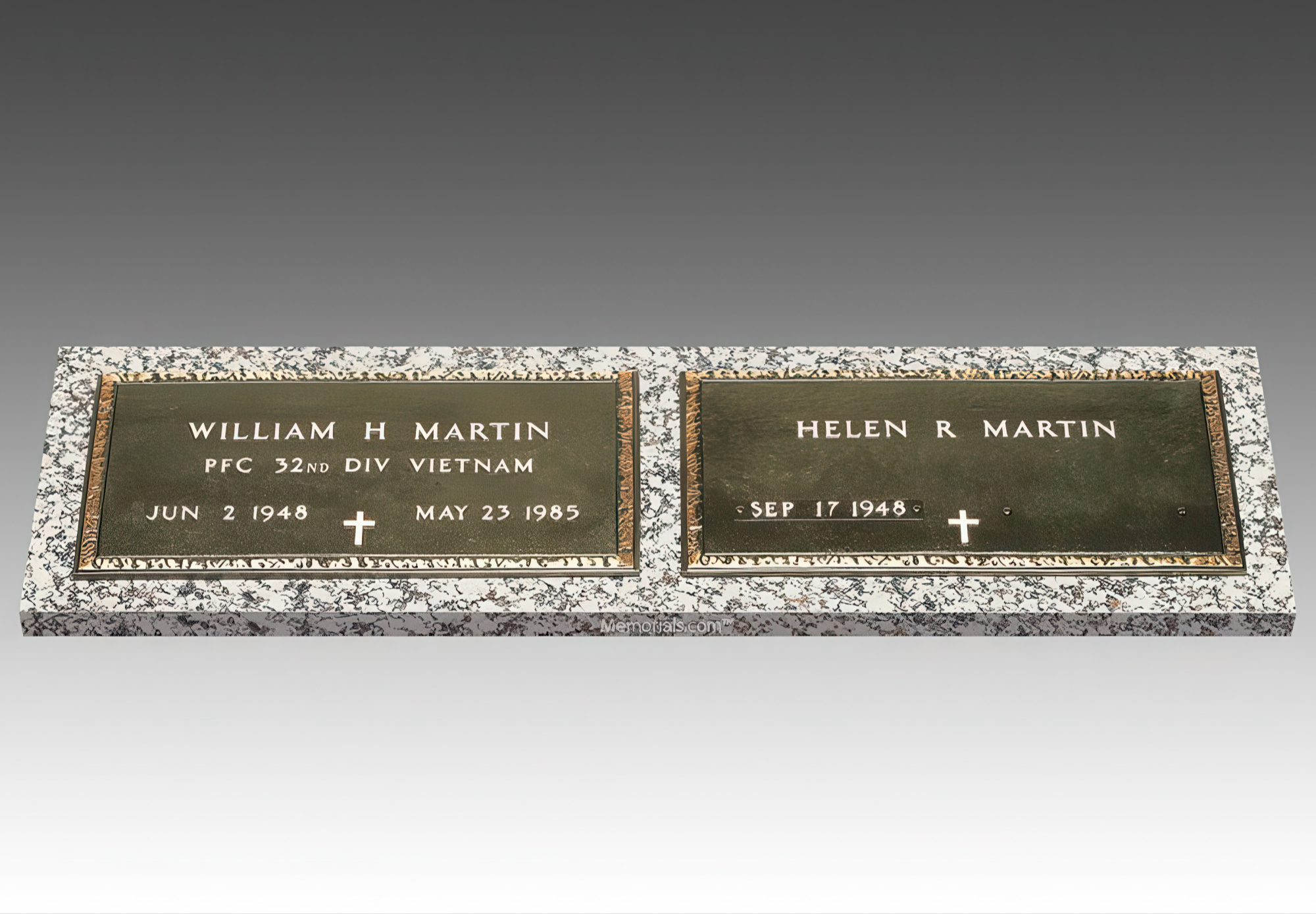
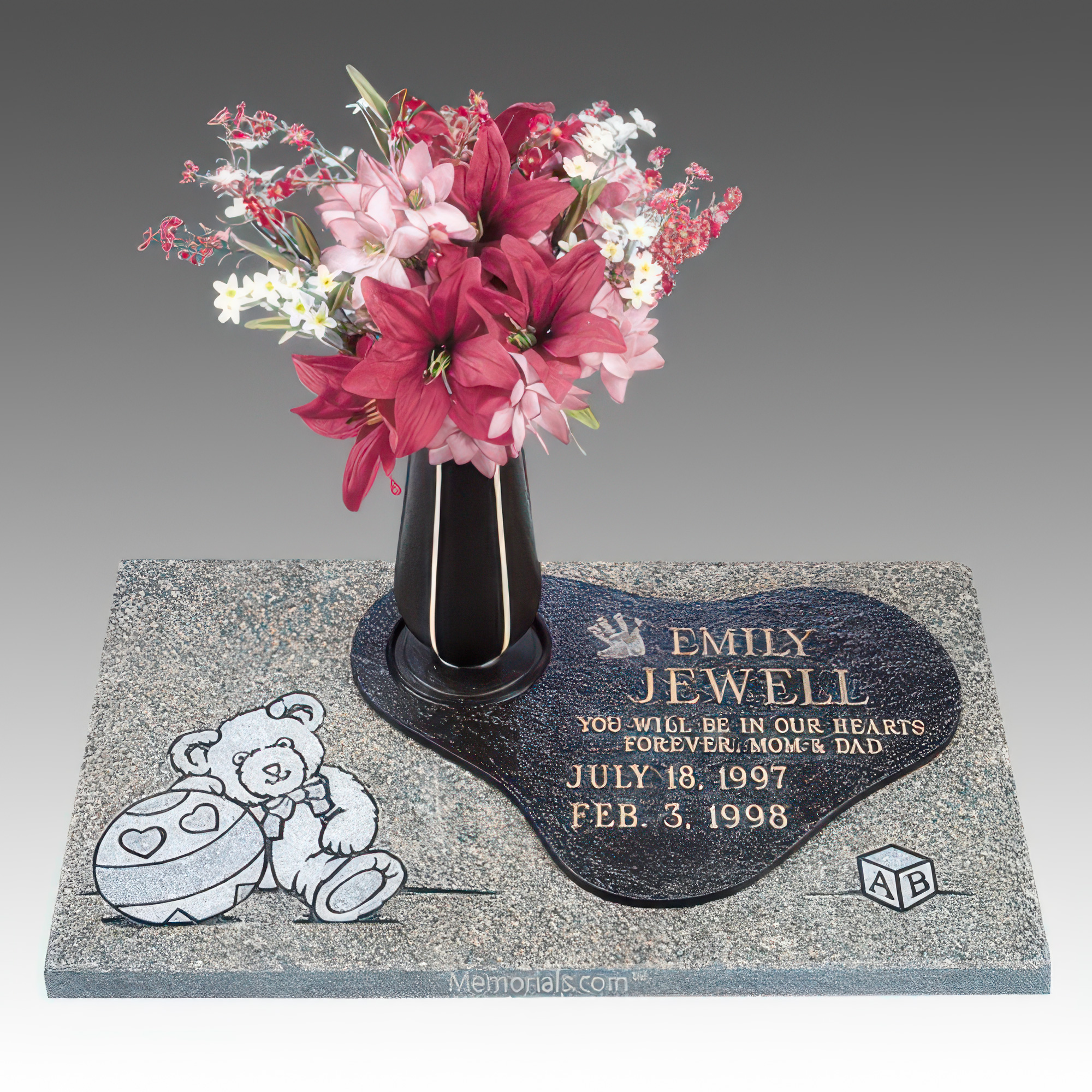
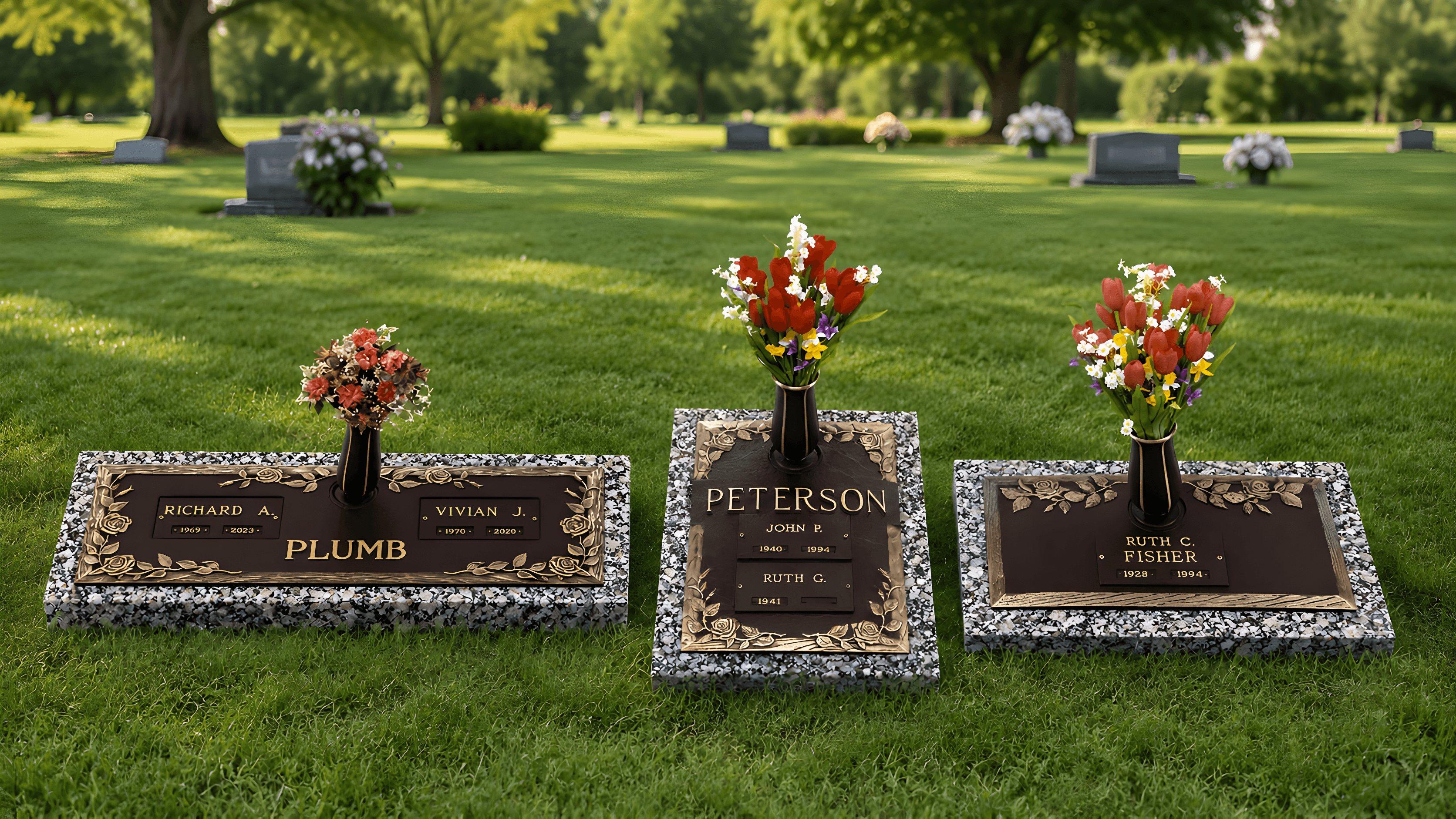
Flat grave markers for cremated remains are lawn-level memorials that sit flush with the ground. They combine a bronze nameplate mounted on a granite base with a built-in repository beneath the plaque that holds the cremated ashes. The bronze plaque lifts off or unscrews to reveal a durable polymer receptacle large enough for one full set of adult cremated remains.
Flat cremation markers are among the most popular cremation memorial options for several reasons. They meet the requirements of nearly every cemetery — including memorial parks and lawn sections that prohibit upright monuments. They are also more affordable than upright headstones, making them accessible to families working within a tighter budget.
Individual markers typically measure 24 inches by 12 inches (bronze) on a 28-by-16-inch granite base. They hold one cremation receptacle and memorialize a single person.
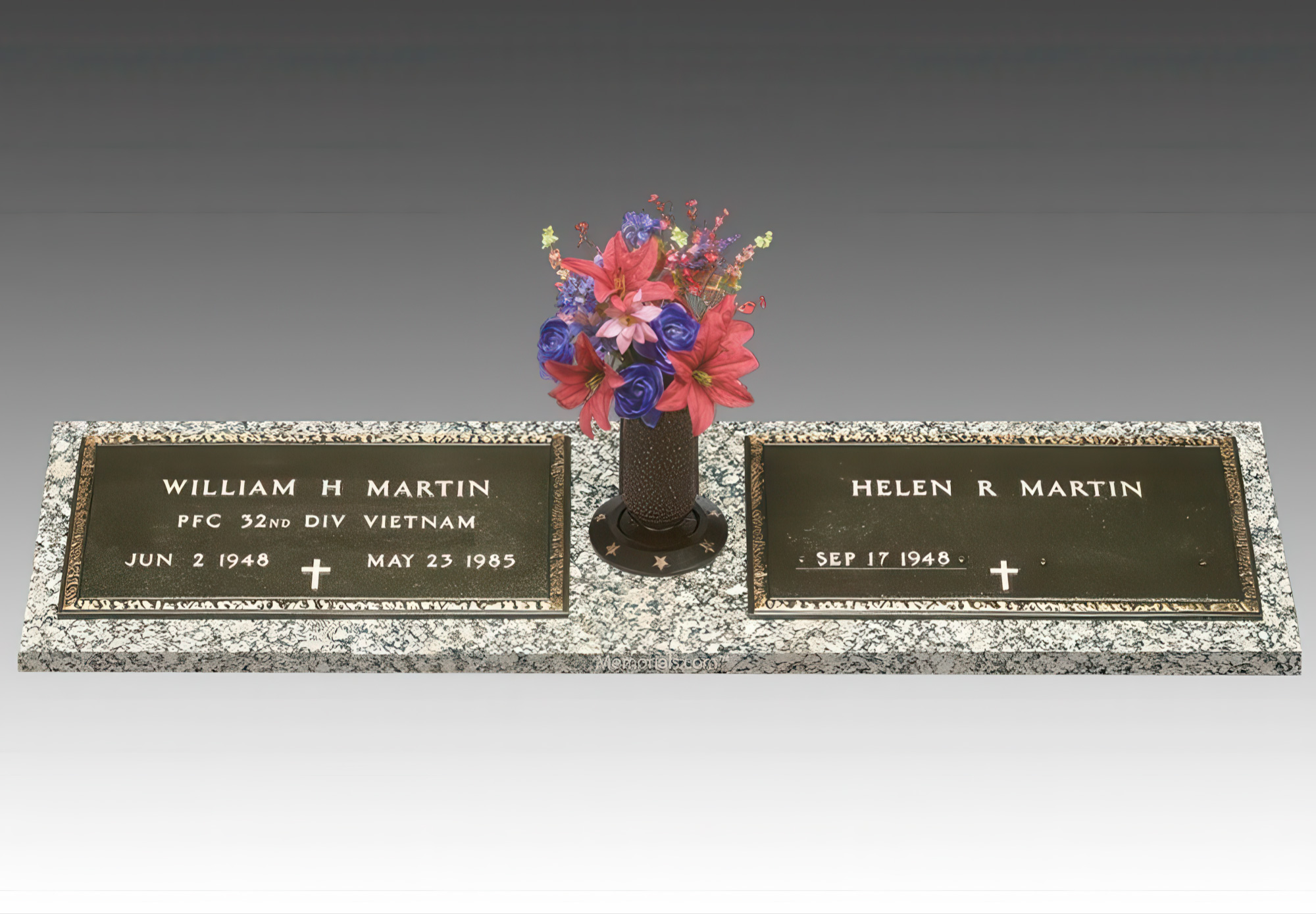
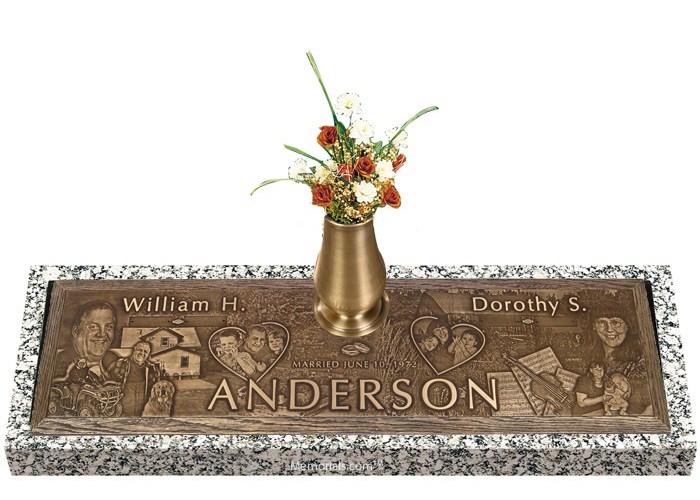
Companion markers are wider, accommodating two bronze nameplates and two separate cremation repositories. Standard companion sizes range from 36 by 13 inches up to 56 by 16 inches in bronze, with proportionally larger granite bases. Companion markers are ideal for spouses or partners who want to share a single memorial.
A flat vs upright headstone comparison can help you weigh the practical differences — from visibility and maintenance to cost and cemetery acceptance — before you commit to a style.
Materials and Durability
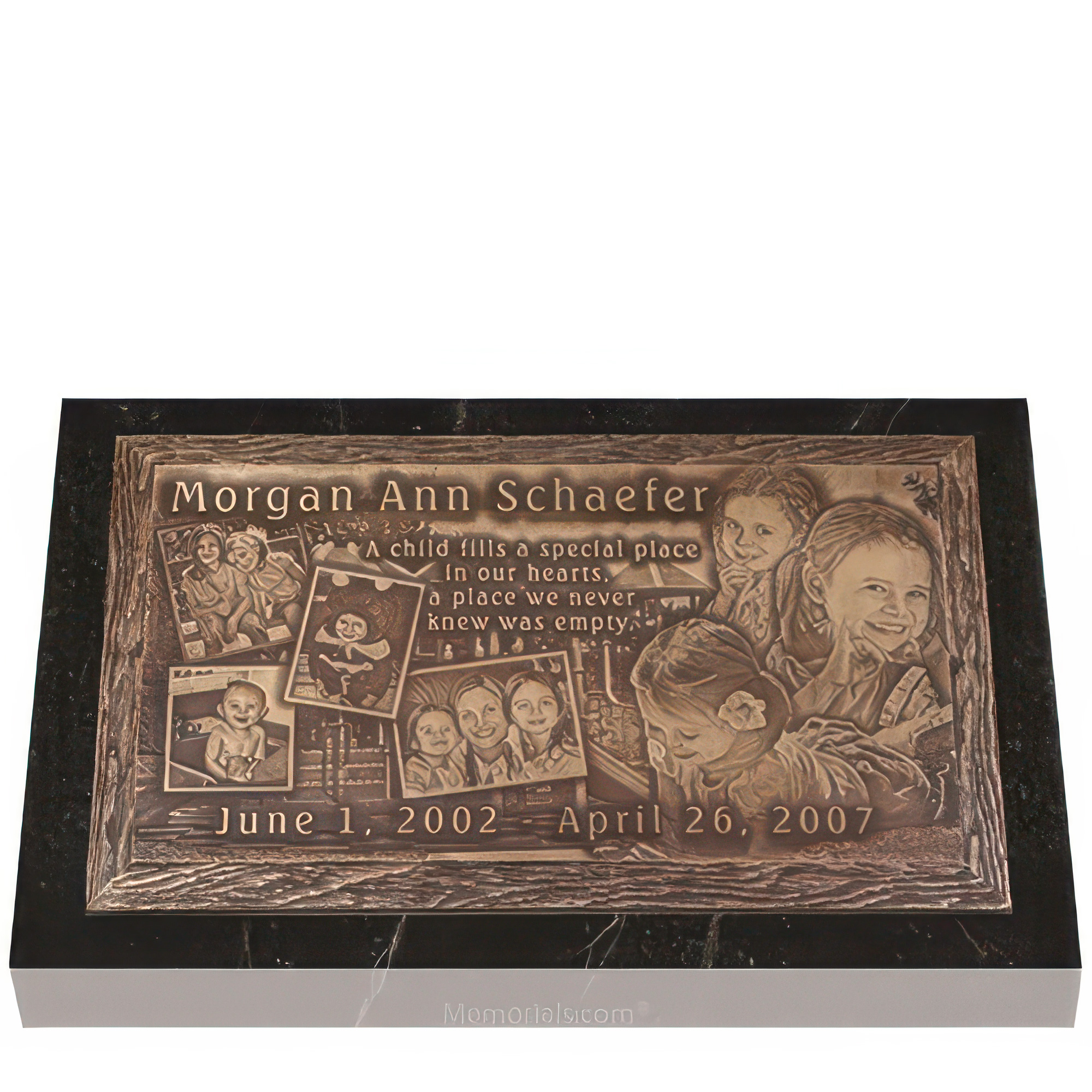
The bronze plaque on a flat cremation marker is cast with raised lettering, emblems, and decorative borders. Bronze develops a natural patina over time that many families find attractive, though periodic cleaning with a soft cloth and bronze cleaner keeps the original finish bright.
The granite base provides structural support and protection for the cremation receptacle underneath. Granite colors for flat markers typically include gray, mahogany, and black. The receptacle itself is made from a high-density polymer sealed with a gasket to keep moisture, soil, and insects away from the ashes.
Memorial Cremation Pillars
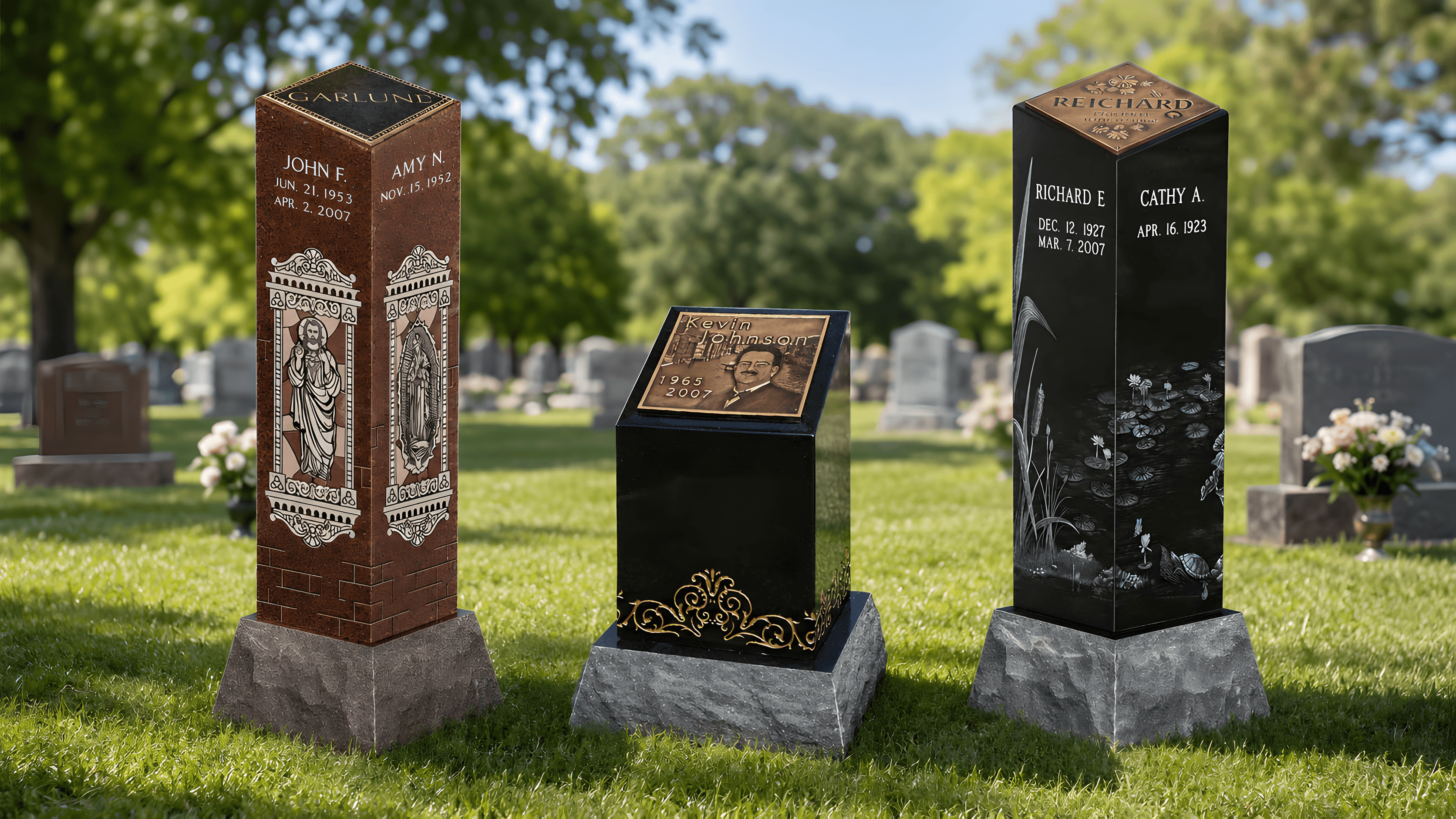
Memorial cremation pillars are freestanding granite columns designed to hold cremated remains inside a sealed chamber. Unlike traditional headstones that are placed at the head of a burial plot, cremation pillars can often be installed in cremation gardens, urn courts, or other designated areas within a cemetery.
A cremation pillar typically stands between two and four feet tall, with a square or rectangular cross-section. The urn chamber is accessed through a removable granite panel on the back or side of the pillar. Some designs feature a polished face for inscription and a contrasting natural-finish body, creating a striking visual appearance.
The cemetery offers a cremation garden or memorial court without traditional grave plots
The family prefers an above-ground memorial that does not require an underground burial
Multiple family members want their ashes housed in a single, prominent monument
The design goal is a distinctive, architectural memorial that stands apart from rows of flat markers
Because cremation pillars do not require a traditional grave plot, they can sometimes reduce overall cemetery costs — you may not need to purchase a full burial plot, just a space in the cremation garden.
Design and Personalization
Cremation pillars are typically personalized with:
Laser-etched or sandblasted inscriptions on the polished face
Selecting the right cremation memorial comes down to a few practical questions:
Where Will the Memorial Be Placed?
Start by contacting the cemetery to learn what types of memorials they allow. Some sections only permit flush markers, while others accept upright monuments or pillars. Cemetery rules also dictate maximum dimensions, required foundation specifications, and approved materials. Getting this information early prevents costly changes later.
Do You Want the Memorial to Hold the Ashes?
Not every cremation headstone holds ashes. Some families bury the urn separately in a cremation plot and place a standard headstone or marker above it. Others prefer a memorial with a built-in urn compartment so the headstone and the ashes are united in one structure.
If holding the ashes within the memorial is important to you, upright cremation headstones and cremation pillars offer the most substantial urn compartments. Flat cremation markers also hold ashes, though in a smaller, in-ground receptacle.
How Many People Will the Memorial Serve?
For a single individual, any cremation memorial type works. For couples or family members, companion flat markers or larger upright monuments with dual urn compartments are designed to accommodate two or more sets of remains. Some cremation pillars can also be configured with multiple chambers.
What Is Your Budget?
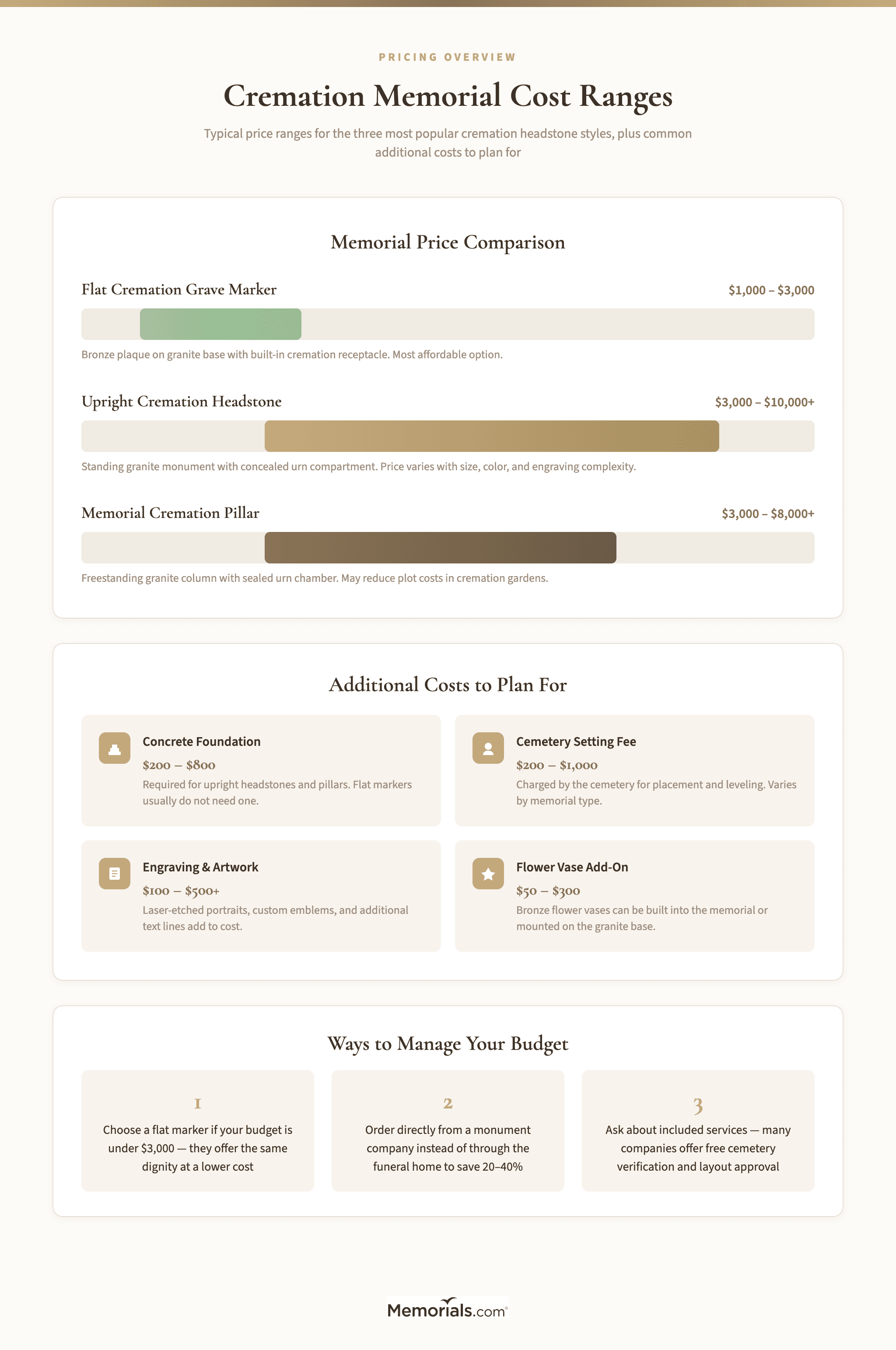
Cremation memorial costs vary significantly by type, size, material, and degree of personalization:
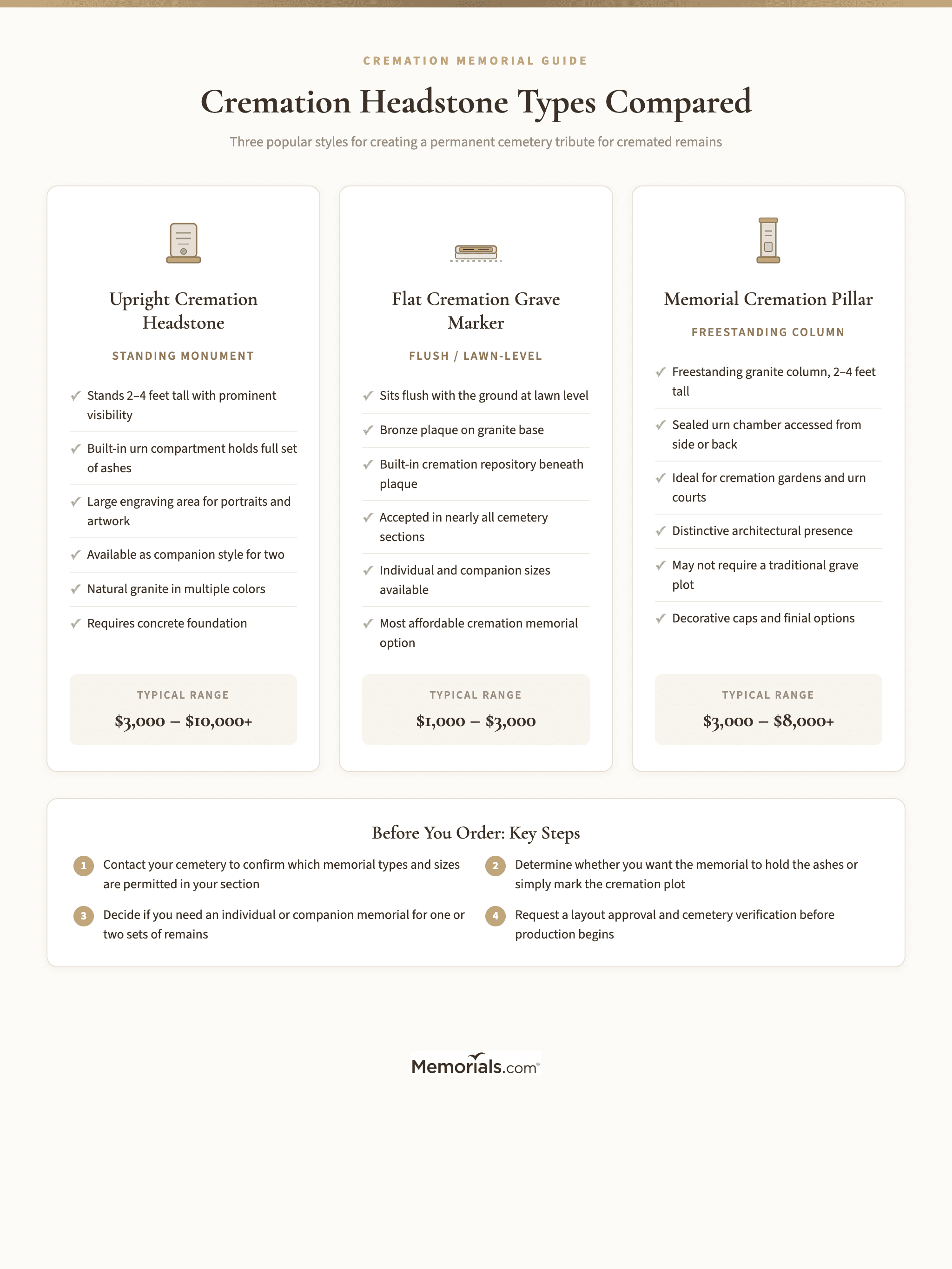
Flat cremation grave markers generally range from $1,000 to $3,000, making them the most budget-friendly option
Upright cremation headstones typically cost between $3,000 and $10,000 or more, depending on size and complexity
Memorial cremation pillars fall in a similar range to upright headstones, with pricing driven by height, granite type, and customization
Installation fees, foundation costs, and cemetery setting charges are additional expenses to factor into your total budget. Many monument companies — including Memorials.com — include cemetery verification and layout approval at no extra charge.
Materials Used in Cremation Memorials
Granite
Granite is the standard material for upright cremation headstones, cremation pillars, and the bases of flat markers. It is an igneous rock formed from cooled magma, giving it exceptional hardness and weather resistance. Popular granite colors for cremation memorials include:
Black granite — offers high contrast for laser-etched portraits and detailed artwork
Gray granite — traditional and versatile, blends with most cemetery settings
Mahogany granite — a warm reddish-brown tone that adds distinction
Blue granite — subtle blue-gray tones for a unique, elegant look
Granite requires virtually no maintenance beyond occasional cleaning with water and a soft brush.
Bronze
Bronze is used for the nameplates on flat cremation grave markers and sometimes for plaques affixed to upright monuments or pillars. Cast bronze allows for raised lettering, detailed emblems, and decorative borders that hold up beautifully over decades. Bronze naturally develops a greenish patina with age, which some families prefer, while others choose to maintain the original warm metallic finish with periodic polishing.
Cremation Receptacles
The urn compartment or cremation repository within these memorials is typically made from high-density polymer or treated granite. Polymer receptacles feature gasket seals to prevent moisture intrusion. In upright headstones, the compartment may be cored directly into the granite and sealed with a threaded granite cap.
Cemetery Requirements and Installation
Every cemetery has specific rules governing cremation memorials. Common regulations include:
Approved memorial types — some sections are restricted to flat markers only; others allow upright monuments
Maximum dimensions — size limits on height, width, and depth vary by section
Foundation requirements — upright headstones and pillars typically require a poured concrete foundation
Approved materials — most cemeteries require granite and bronze; some restrict other stones
Installation providers — many cemeteries require installation by approved contractors
Before placing an order, always request a copy of the cemetery's rules and regulations for the specific section or lot. A reputable monument company will handle cemetery verification on your behalf to confirm the memorial you choose will be approved.
The Installation Process
For flat cremation markers, installation is straightforward — the granite base is set into the ground at grade level, and the bronze plaque is mounted on top. The cremation receptacle is positioned beneath the plaque.
Upright cremation headstones require a concrete foundation that must cure before the monument is set. Foundation dimensions are dictated by the cemetery and typically extend several inches beyond the headstone footprint on all sides. The monument is then placed and leveled on the cured foundation.
Cremation pillars follow a similar installation process to upright monuments, with foundation requirements scaled to the pillar's height and weight.
Personalizing Your Cremation Memorial
Regardless of which style you choose, personalization transforms a cremation headstone from a simple marker into a meaningful tribute. Common personalization elements include:
Inscriptions and epitaphs — Beyond names and dates, many families add a short verse, quotation, or personal message. Popular choices include religious passages, lines from poems, or phrases that capture the person's spirit.
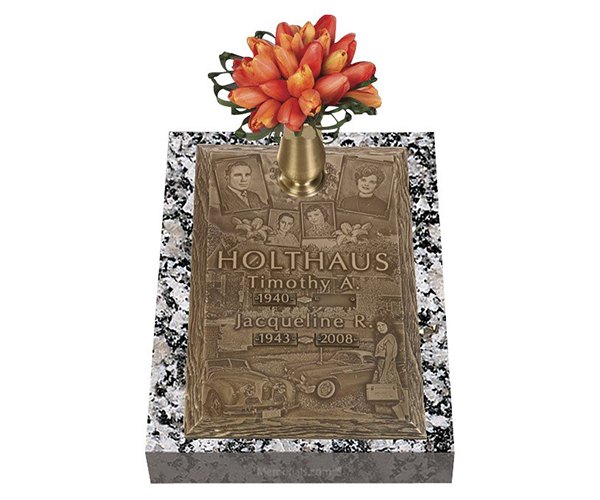
Portraits and images — Laser etching allows photographic-quality portraits to be reproduced on polished granite surfaces, especially black granite. Bronze photo medallions are another option for flat markers and upright headstones.
Emblems and symbols — Religious symbols, military insignia, fraternal organization logos, and hobby-related images can be engraved or cast into the memorial. These details add layers of meaning and help tell the story of the person memorialized.
Flower vases — Both flat markers and upright headstones can be fitted with bronze flower vases, either built into the memorial or mounted separately on the granite base.
Frequently Asked Questions
Can you put a headstone on a cremation grave?
Yes. Cremation graves can have the same types of headstones and markers as traditional burial plots. Many families choose a standard headstone for a cremation plot where the urn is buried below ground. Others choose a cremation headstone with a built-in urn compartment that holds the ashes within the monument itself.
What is the difference between a cremation headstone and a cremation grave marker?
A cremation headstone is an upright monument — it stands vertically and is visible from a distance. A cremation grave marker is a flat, lawn-level memorial that sits flush with the ground. Both can hold cremated remains, but they differ in visibility, size, cost, and cemetery acceptance. Upright headstones offer more engraving space and prominence, while flat markers are more affordable and accepted in nearly all cemetery sections.
How much does a cremation headstone cost?
Flat cremation grave markers typically range from $1,000 to $3,000. Upright cremation headstones generally cost between $3,000 and $10,000 or more. Memorial cremation pillars fall in a similar range to upright headstones. Final cost depends on the size, granite color, level of personalization, and any additional fees for the foundation and cemetery installation.
Do cremation headstones hold all of the ashes?
Most cremation headstones and markers are designed to hold a full set of adult cremated remains, which typically weighs between three and seven pounds. Upright cremation headstones and pillars have the largest urn compartments. Flat cremation markers use a polymer receptacle that holds one full set of adult ashes. Companion versions hold two sets.
Are there cemetery restrictions on cremation headstones?
Yes. Cemeteries set rules about which memorial types, sizes, and materials are allowed in each section. Some sections only permit flat markers, while others accept upright monuments. Foundation specifications, approved installers, and placement within the lot are also regulated. Always check with your cemetery before purchasing a cremation memorial.
Finding the Right Cremation Memorial
Choosing a cremation headstone or grave marker is a deeply personal decision, and there is no single right answer. Flat markers offer simplicity and wide cemetery acceptance. Upright monuments provide prominence and generous personalization space. Cremation pillars offer a distinctive architectural presence. The best choice is the one that fits your cemetery's requirements, your budget, and — most importantly — the way your family wants to honor and remember someone they love.
Browse the full collection of cremation memorial options at Memorials.com — from standing monuments and flush markers to freestanding pillars. Every cremation memorial ships free with cemetery verification and layout approval before production.