🏬Supersize Online Funeral Retailer🪦1000's of Headstones⚱️Over 10,000 Cremation Urns⚰️Caskets Overnight Delivery🛒Funeral & Memorial Superstore🚚FREE Shipping on ALL Orders👨👩👧👦Helping Families for over 20 Years💰Lowest Price Guarantee🏬Supersize Online Funeral Retailer🪦1000's of Headstones⚱️Over 10,000 Cremation Urns⚰️Caskets Overnight Delivery🛒Funeral & Memorial Superstore🚚FREE Shipping on ALL Orders👨👩👧👦Helping Families for over 20 Years💰Lowest Price Guarantee
🏬Supersize Online Funeral Retailer🪦1000's of Headstones⚱️Over 10,000 Cremation Urns⚰️Caskets Overnight Delivery🛒Funeral & Memorial Superstore🚚FREE Shipping on ALL Orders👨👩👧👦Helping Families for over 20 Years💰Lowest Price Guarantee🏬Supersize Online Funeral Retailer🪦1000's of Headstones⚱️Over 10,000 Cremation Urns⚰️Caskets Overnight Delivery🛒Funeral & Memorial Superstore🚚FREE Shipping on ALL Orders👨👩👧👦Helping Families for over 20 Years💰Lowest Price Guarantee
Headstone sizes vary widely depending on the type of memorial, the cemetery's rules, and whether the marker is for a single burial, a companion plot, or a cremation interment. Choosing a size that fits the gravesite, accommodates the inscription you have in mind, and meets the cemetery's dimensional limits is one of the first practical decisions in selecting the right headstone. This guide breaks down standard headstone dimensions by type, explains how cemetery regulations affect your options, and helps you match a marker size to the gravesite and your design goals.
How Headstone Dimensions Are Measured
All headstones and grave markers follow the same measurement convention in the memorial industry. Dimensions are listed as (sometimes called thickness for flat markers).
Length is the distance from left to right as you face the marker. Width (or depth) is the distance from front to back. Height is the vertical measurement from the base of the stone to its tallest point. For flat markers, the height is often referred to as thickness because it typically measures only 3 to 4 inches.
Understanding these terms matters because cemetery regulations reference them directly. A cemetery might specify a maximum height of 42 inches or a minimum thickness of 4 inches, and knowing which measurement they mean prevents ordering a marker that does not comply.
Browse Our Most Popular Headstones & Grave Markers
Handcrafted memorials to honor your loved one for eternity
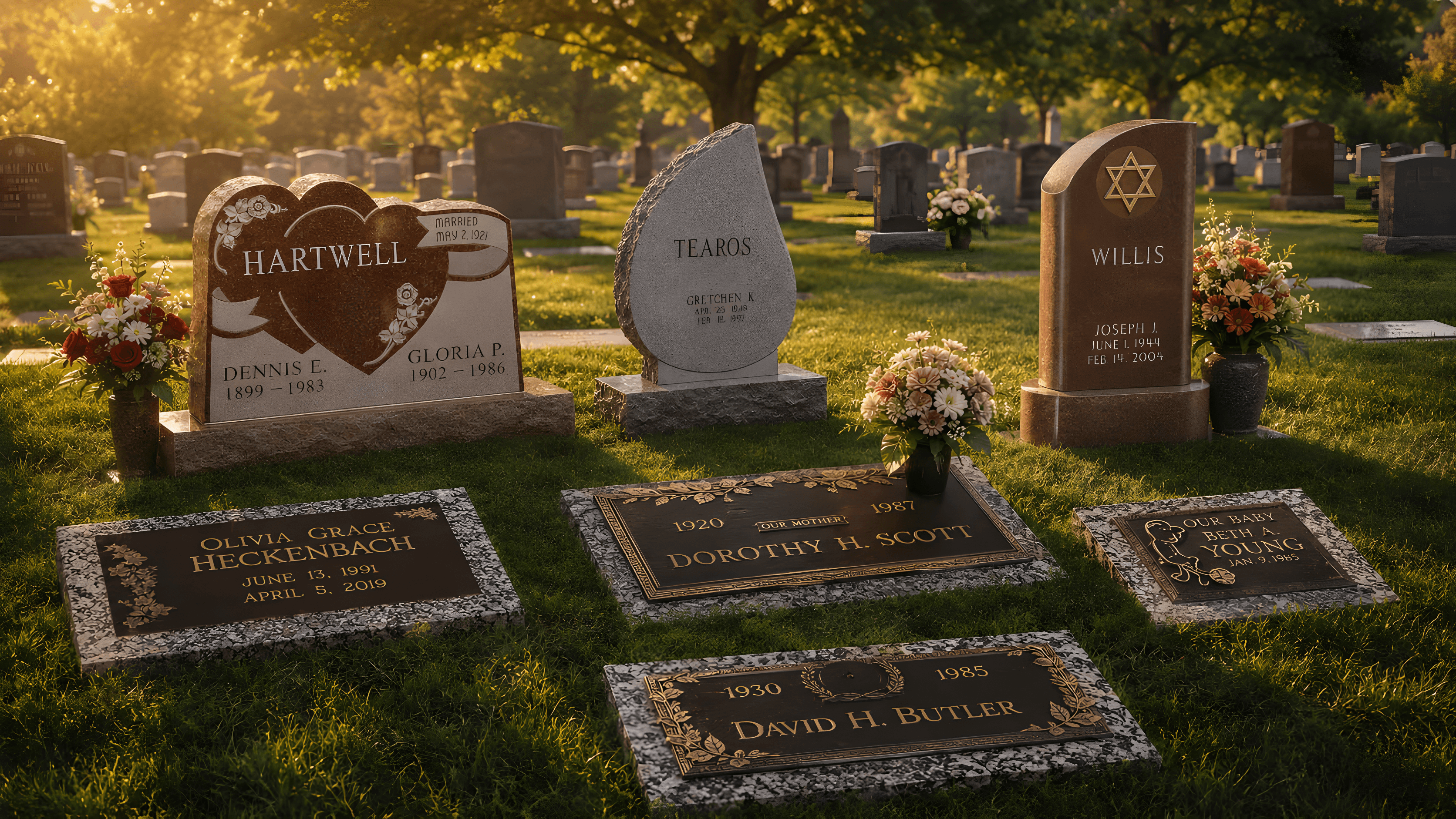
Headstone dimensions fall into predictable ranges depending on the style. Below are the most common sizes you will encounter for each category.
Flat Grave Markers (Flush Markers)
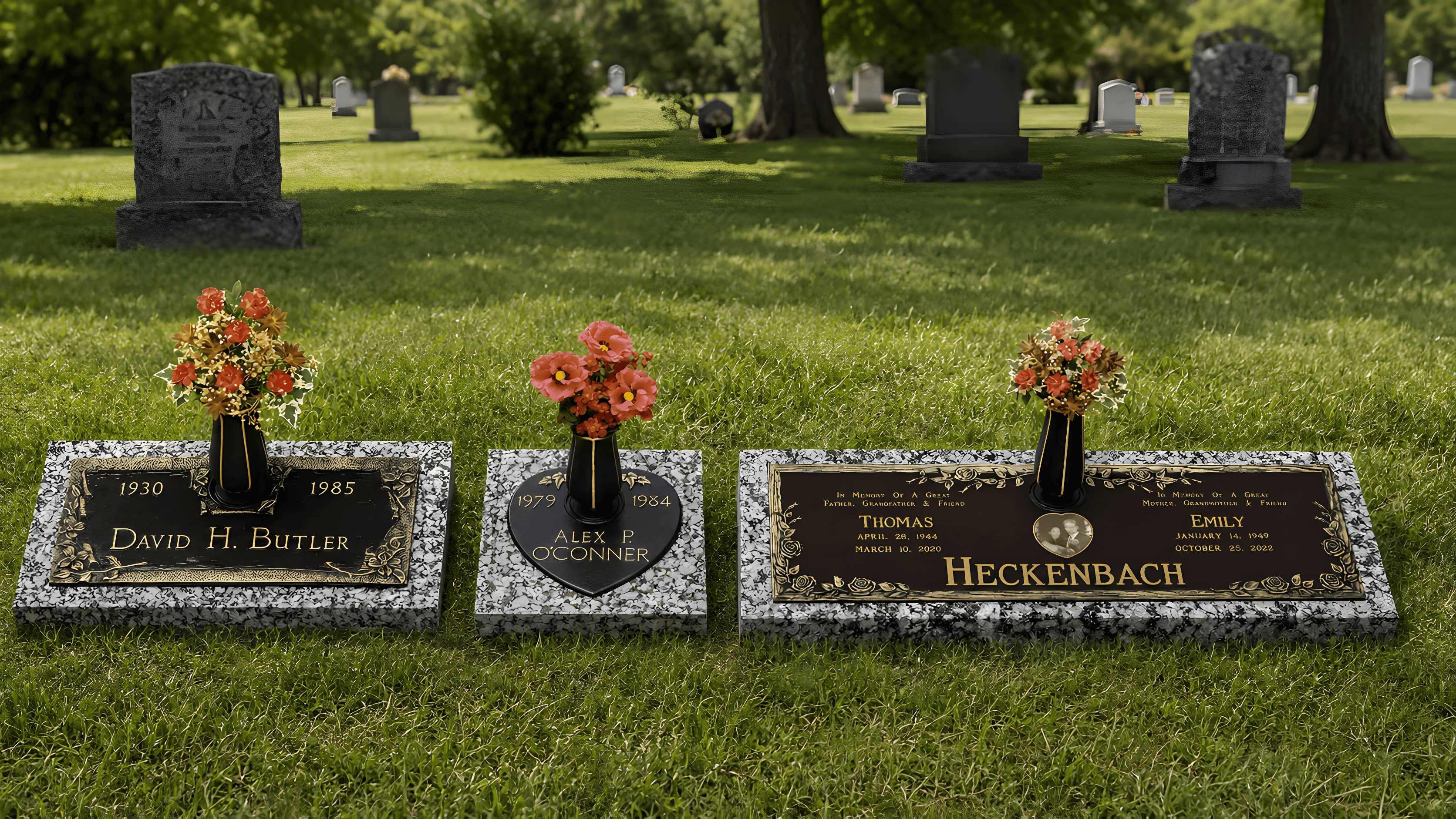
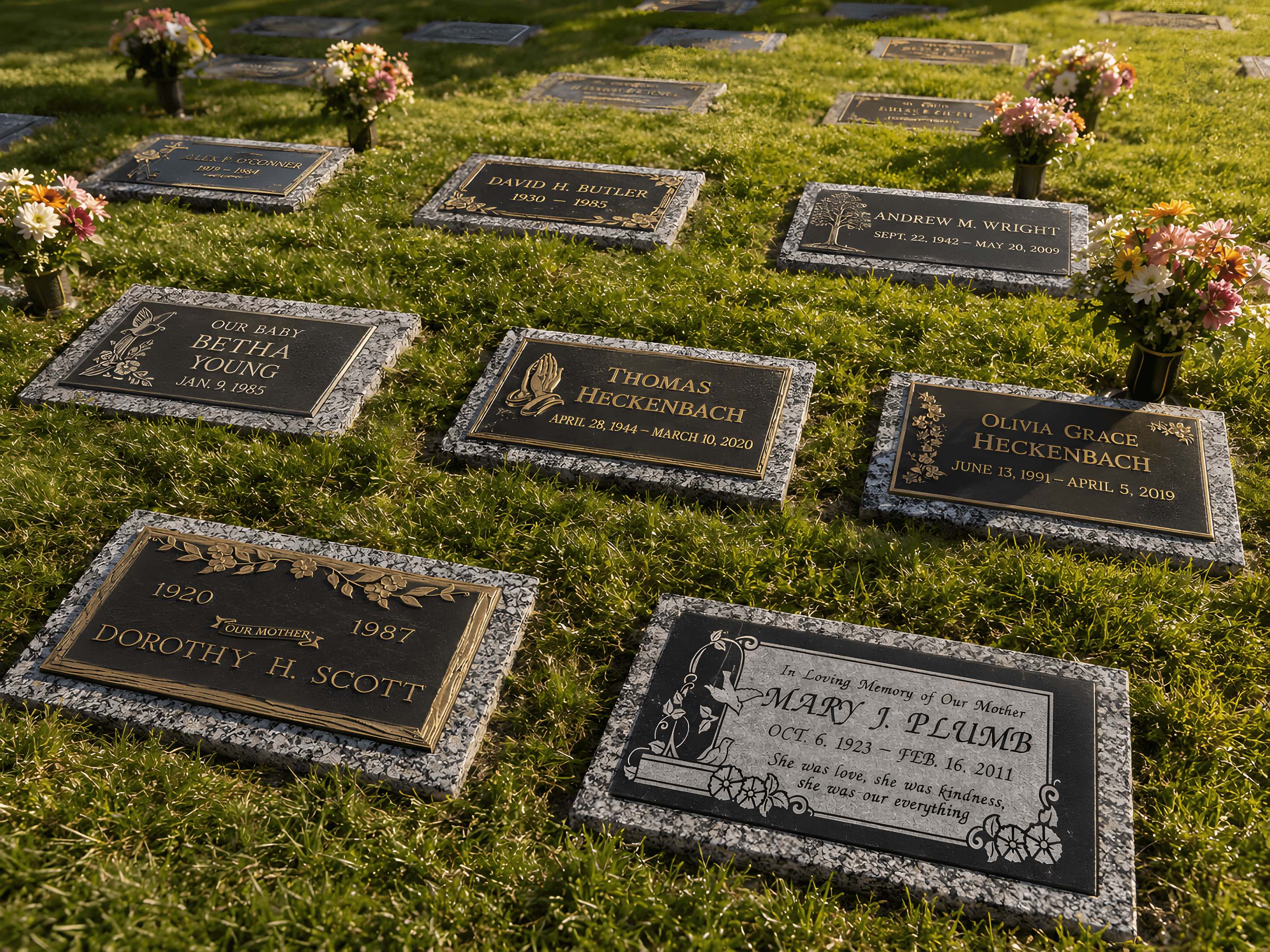
Flat grave markers sit level with the ground and are the most size-regulated type of memorial. Their low profile makes them easier for cemeteries to maintain because mowing equipment can pass directly over them.
Common flat marker sizes include:
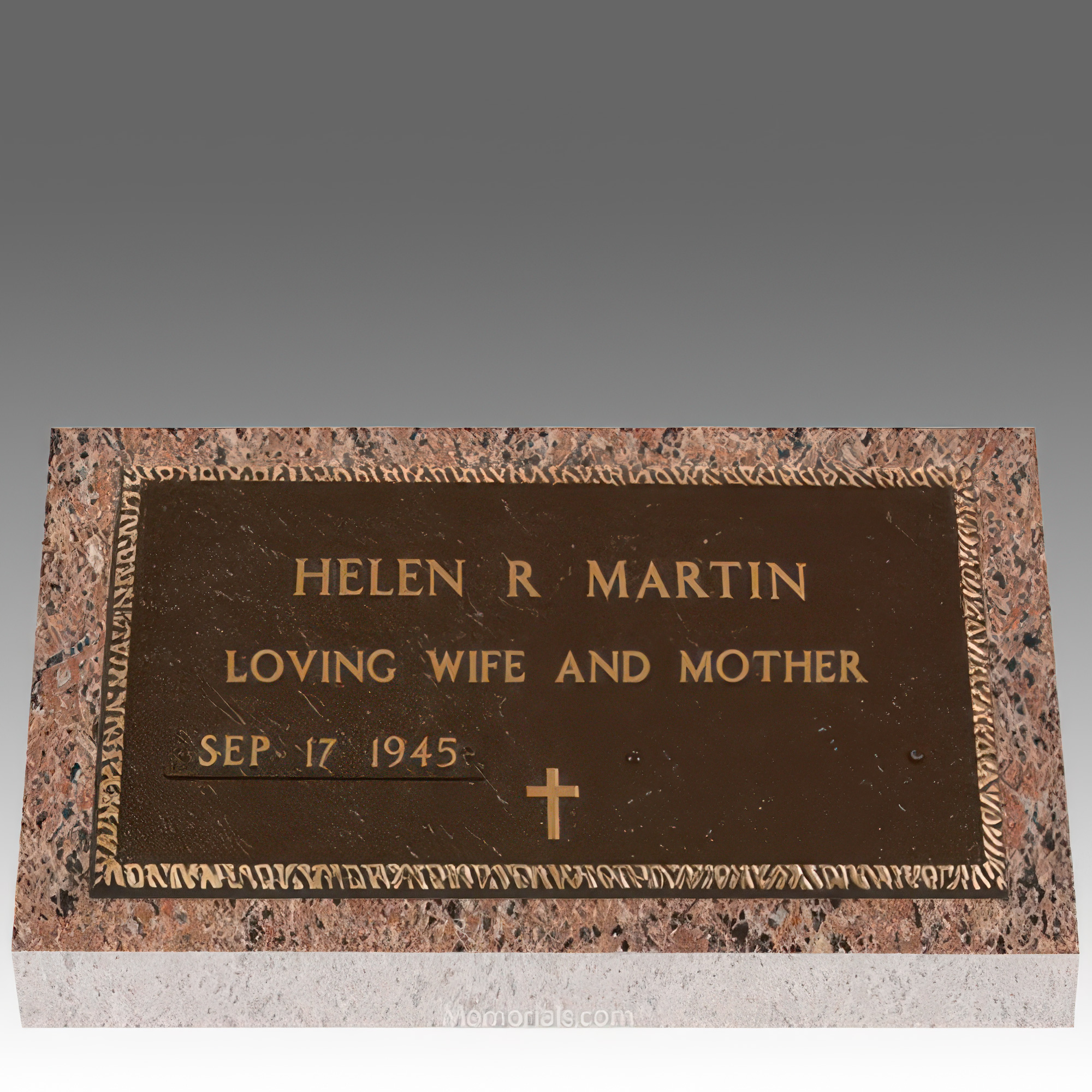
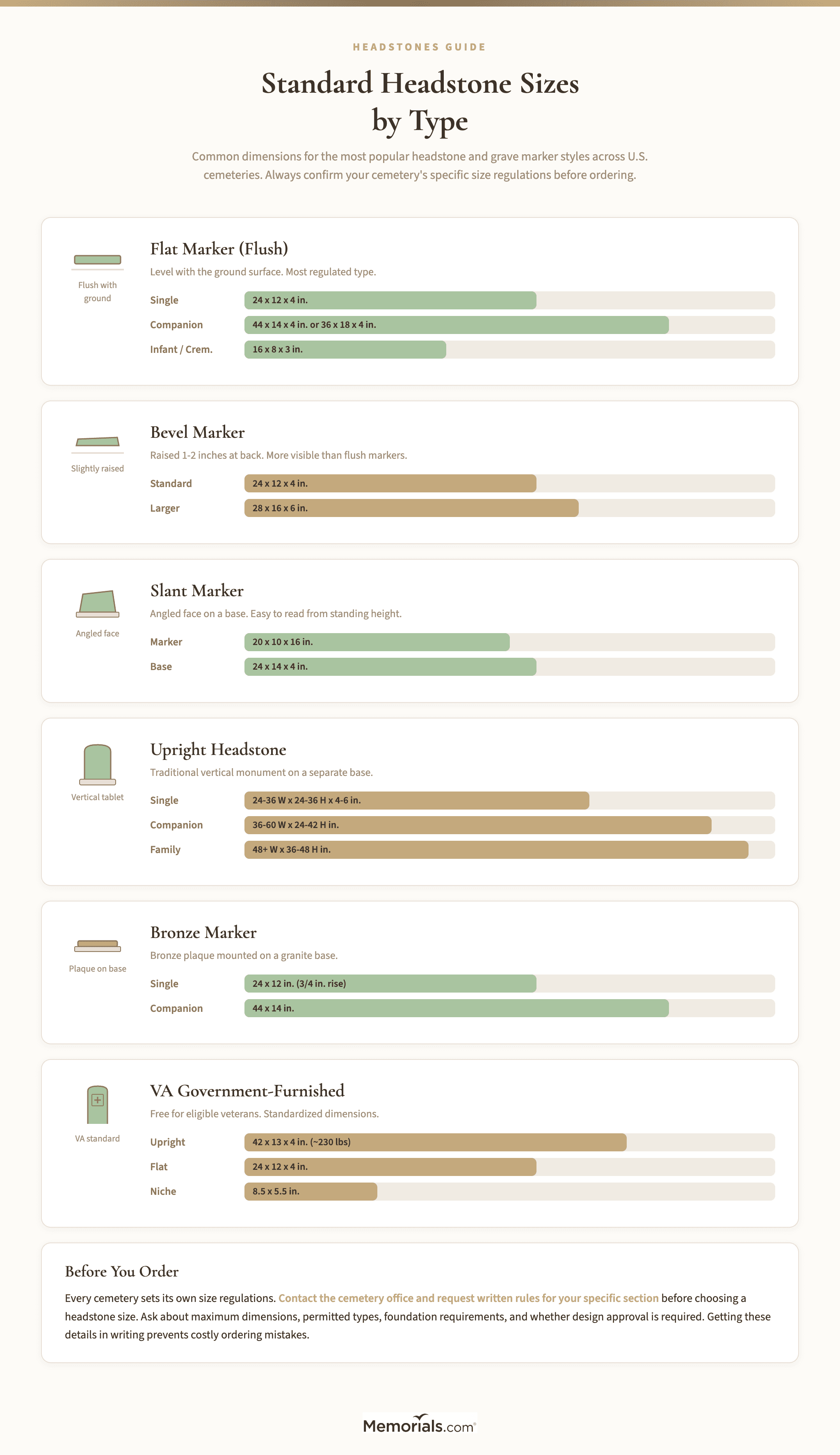
Single flat markers: 24 × 12 × 4 inches is the most widely accepted standard across U.S. cemeteries. Some cemeteries also allow 20 × 10 × 4 inches for more compact lots or 28 × 16 × 4 inches for plots that allow a slightly larger marker with room for more inscription detail.
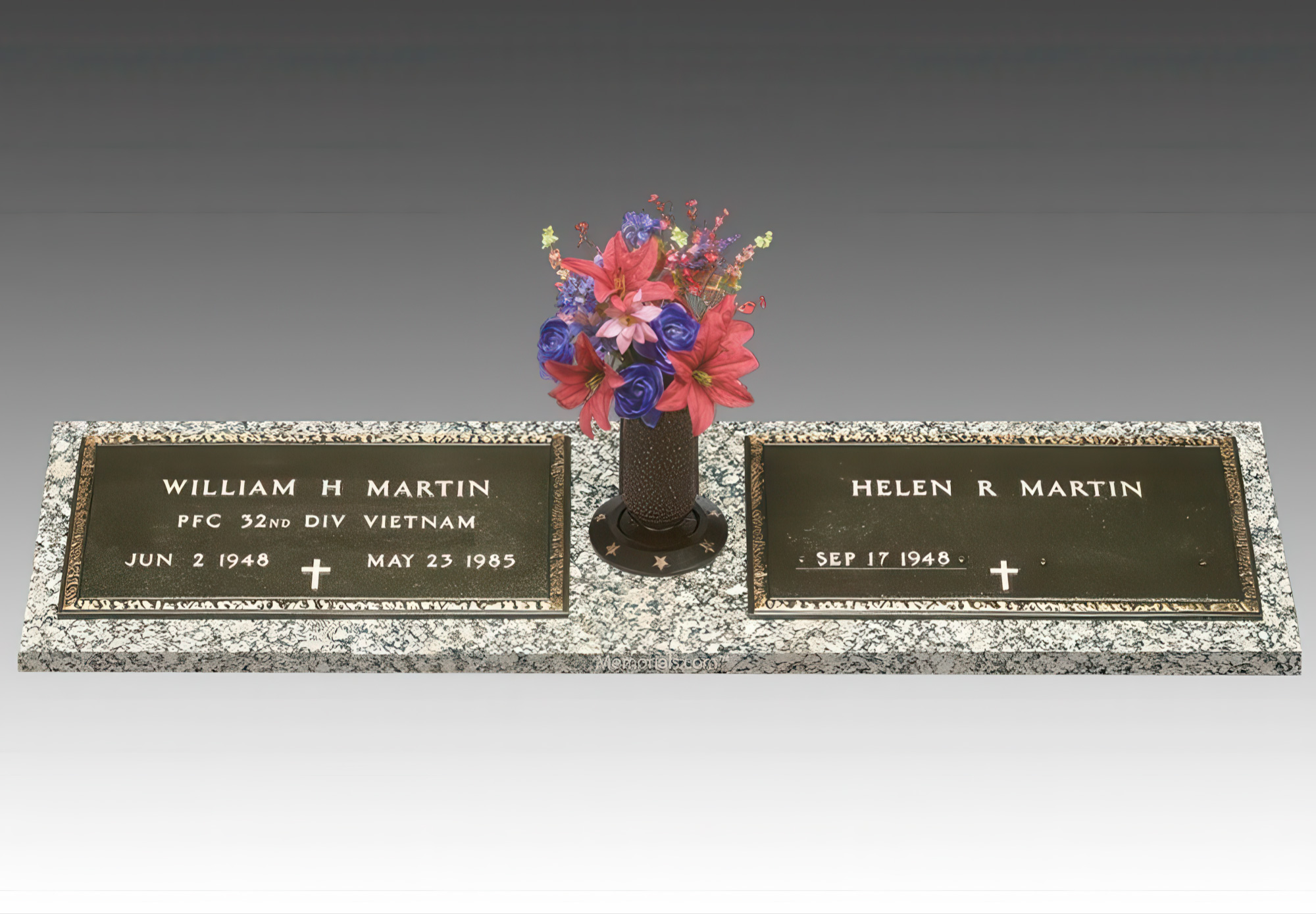
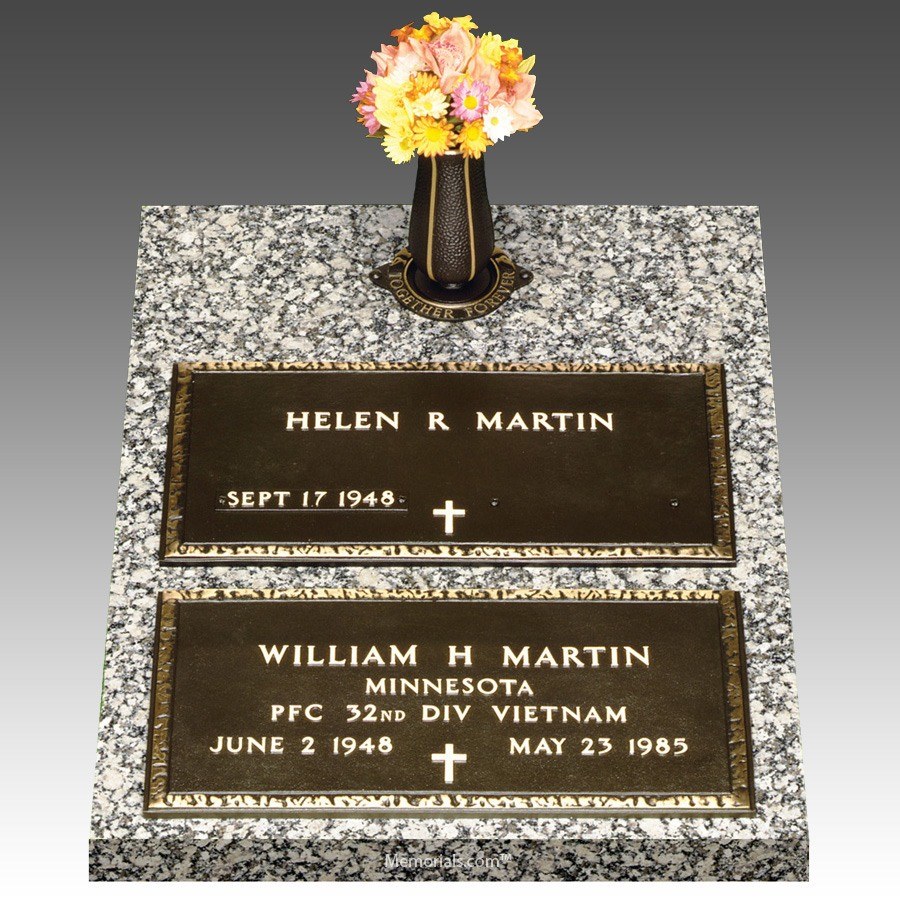
Companion flat markers: Designed to span two adjacent graves, companion flat markers typically measure 36 × 18 × 4 inches or 44 × 14 × 4 inches. The wider format provides space for two names, sets of dates, and shared design elements.
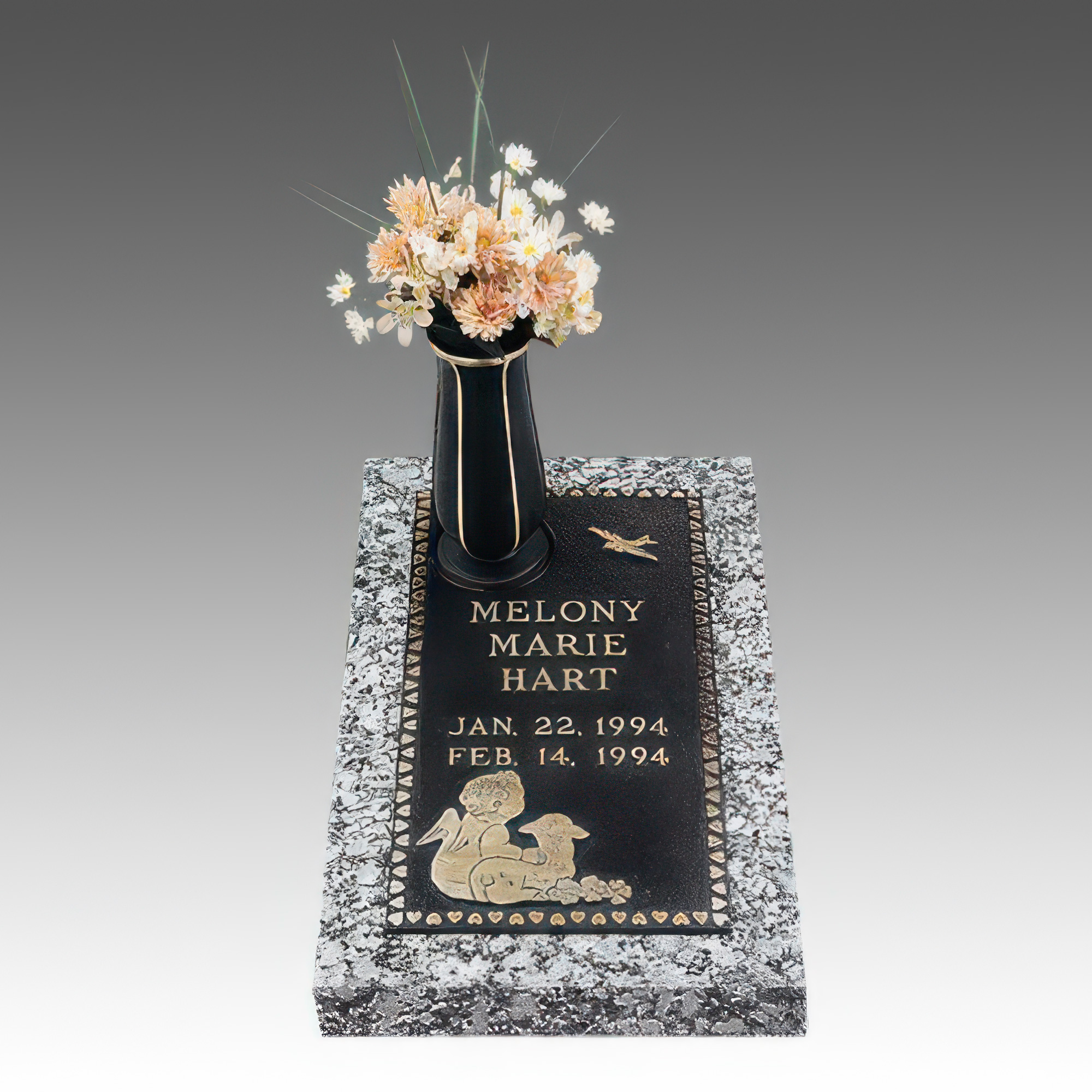
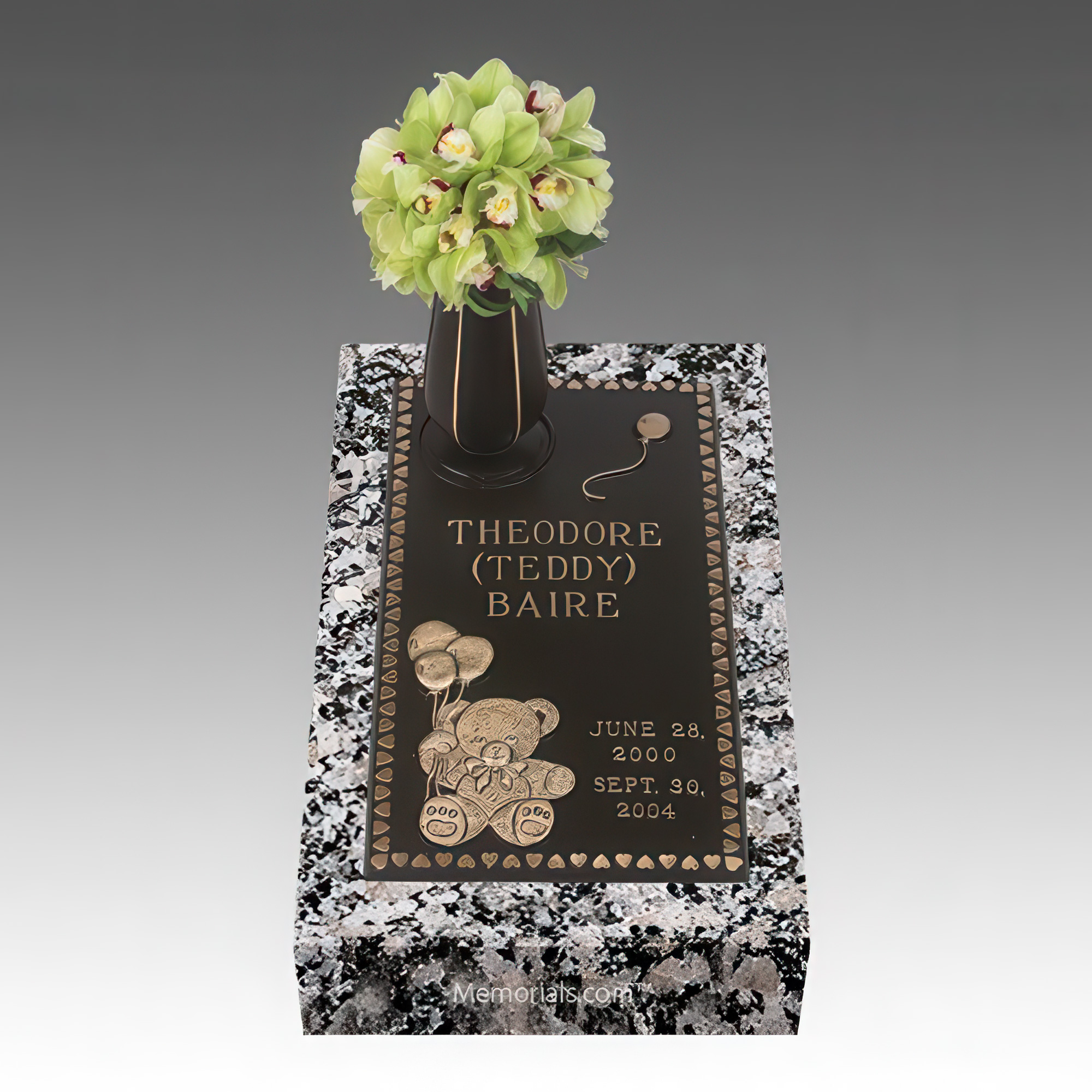
Infant and cremation flat markers: These smaller markers are usually standardized at 16 × 8 × 3 inches or 18 × 12 × 4 inches, depending on the cemetery section and plot type.
Upright Headstones (Monuments)
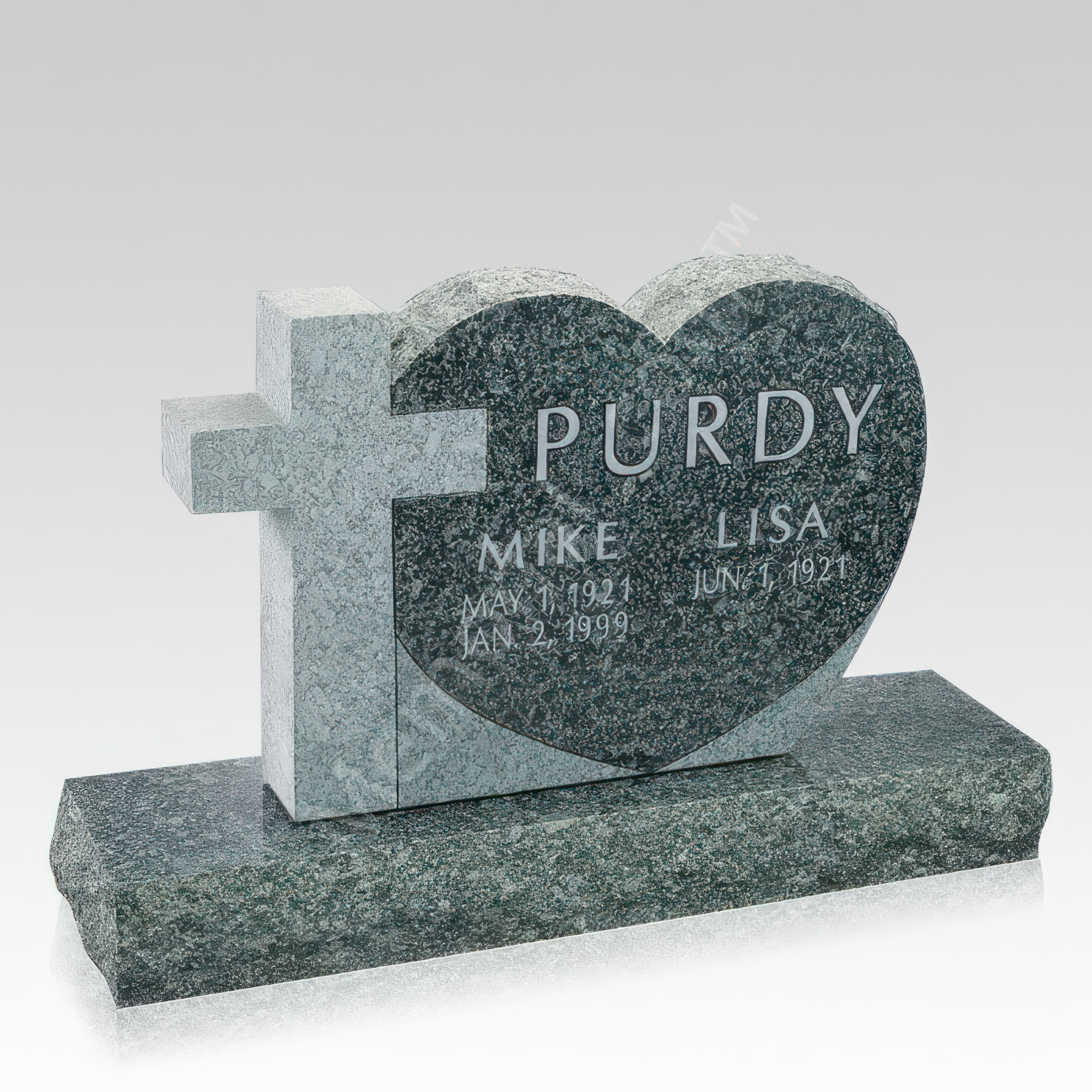
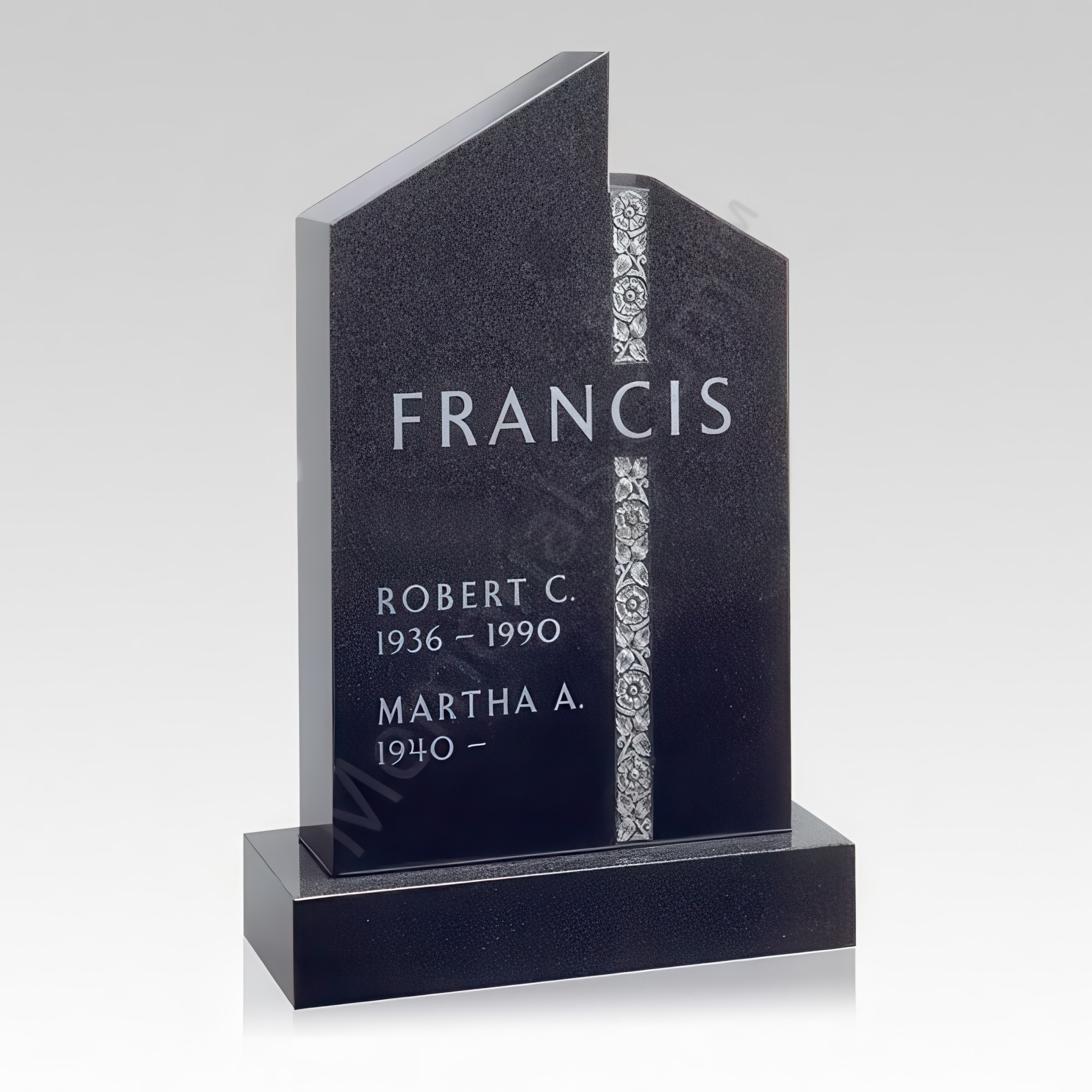
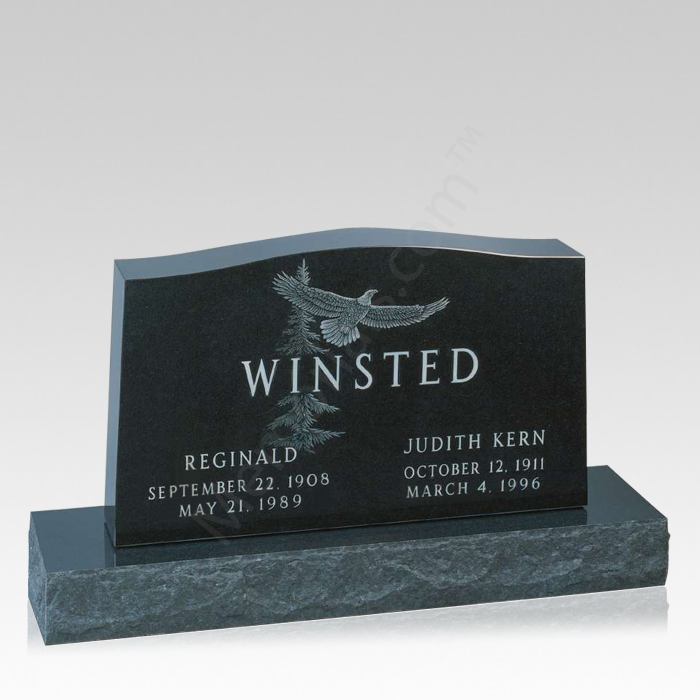
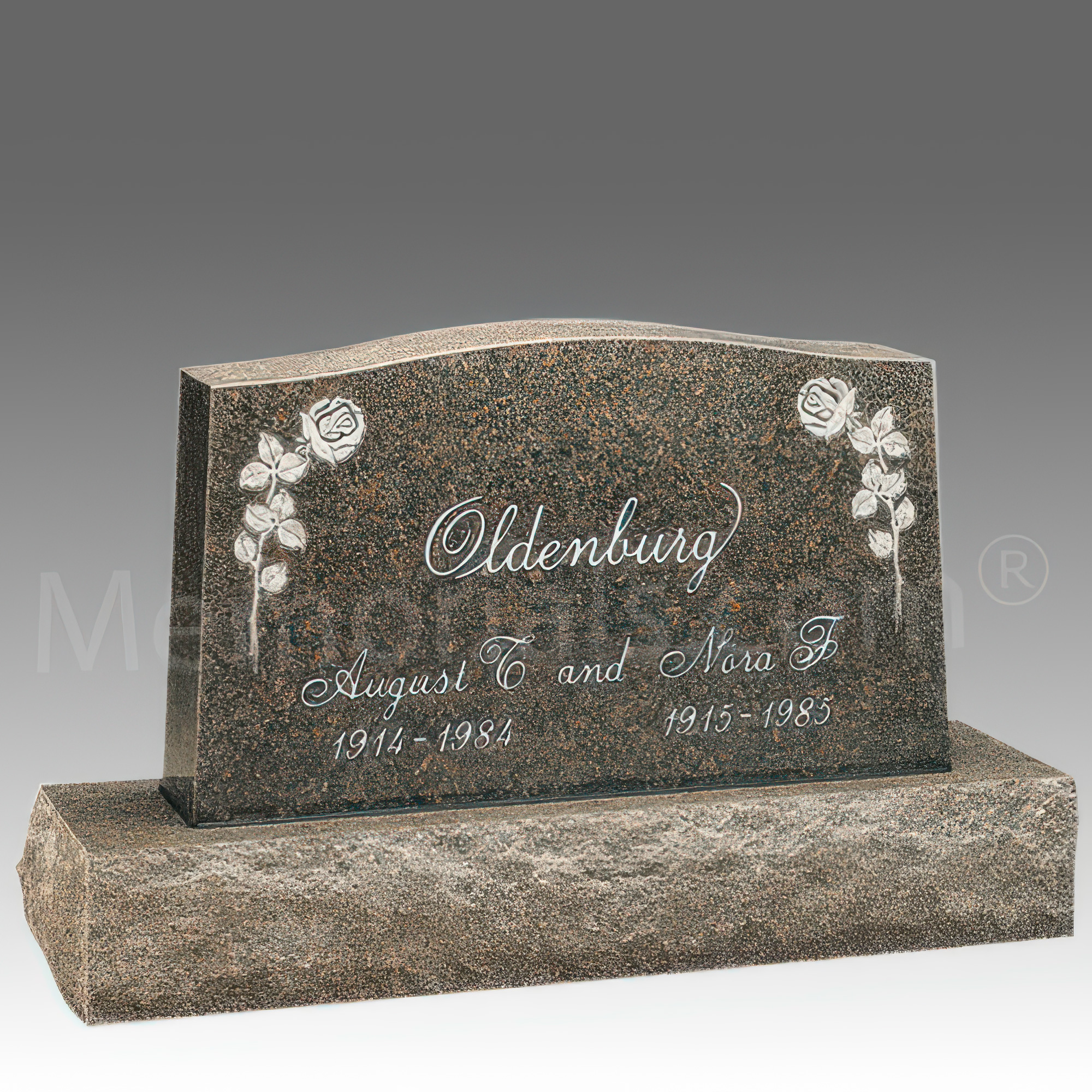
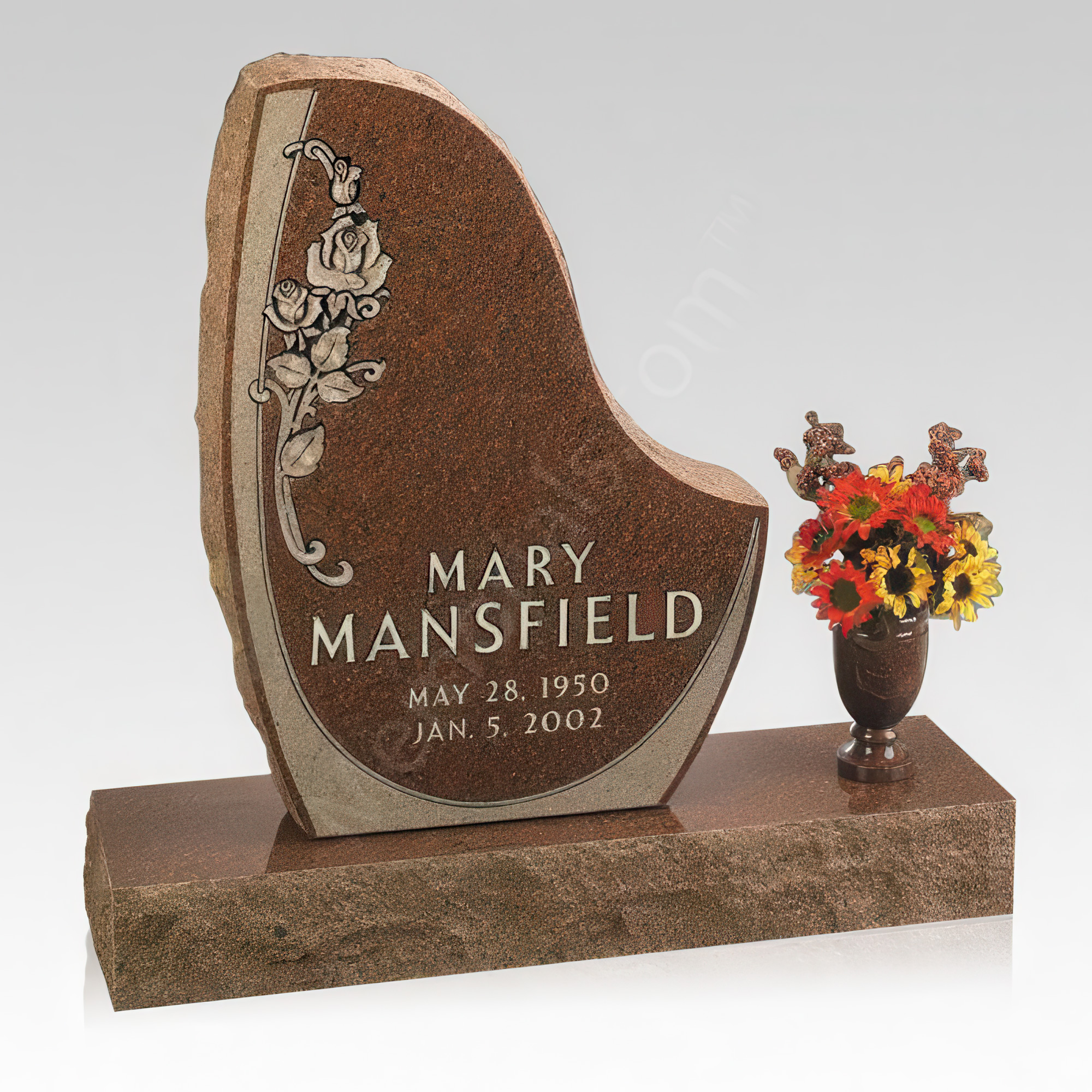
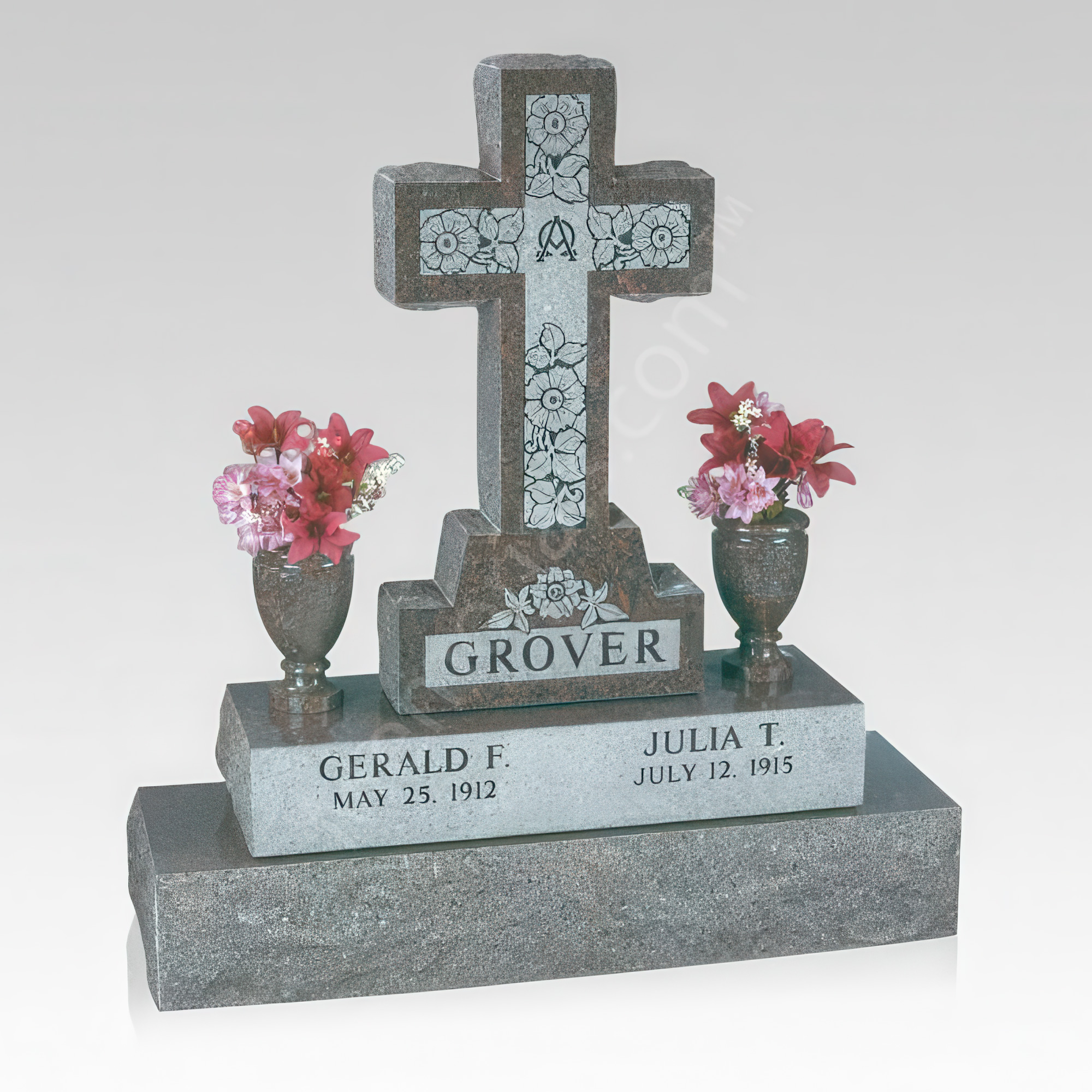
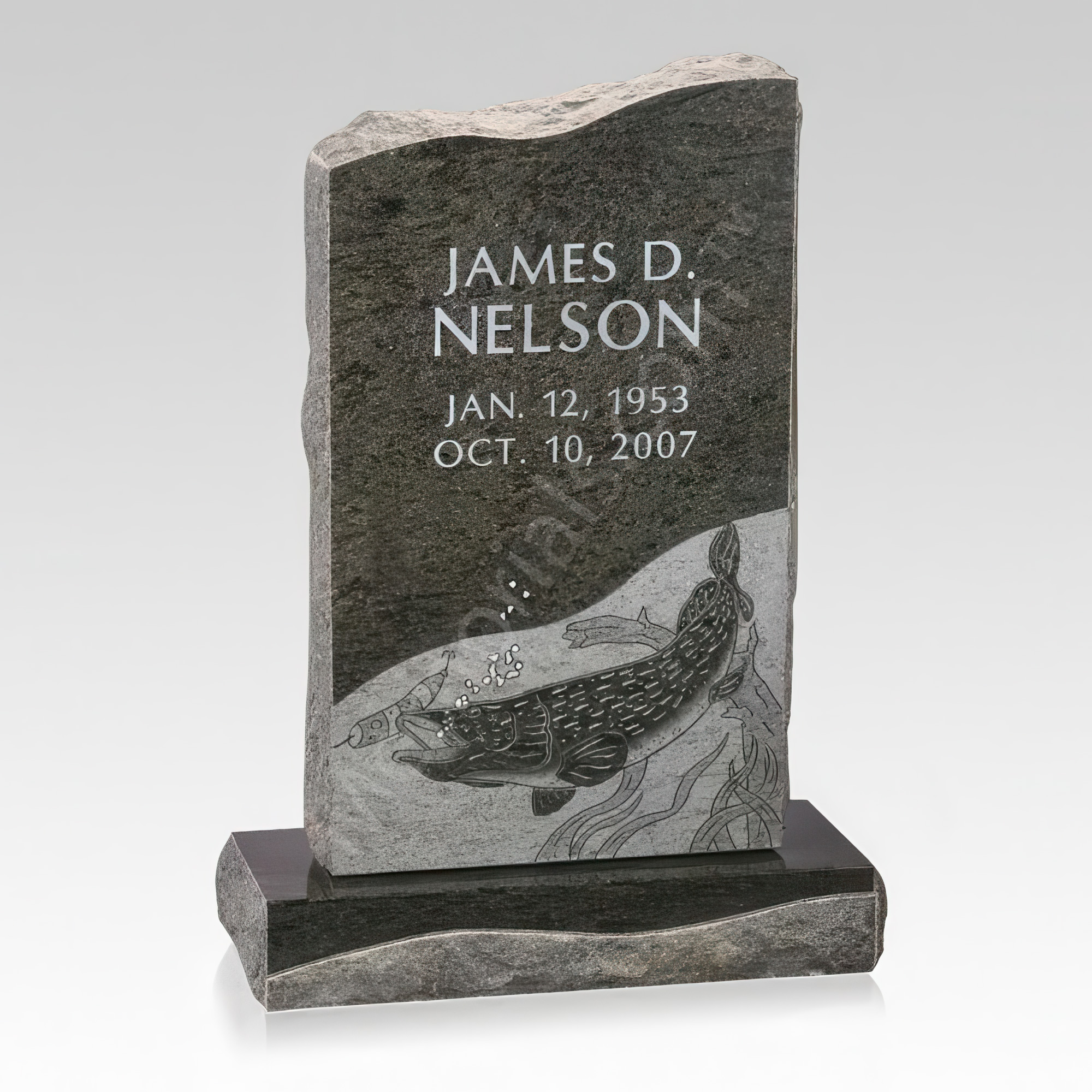
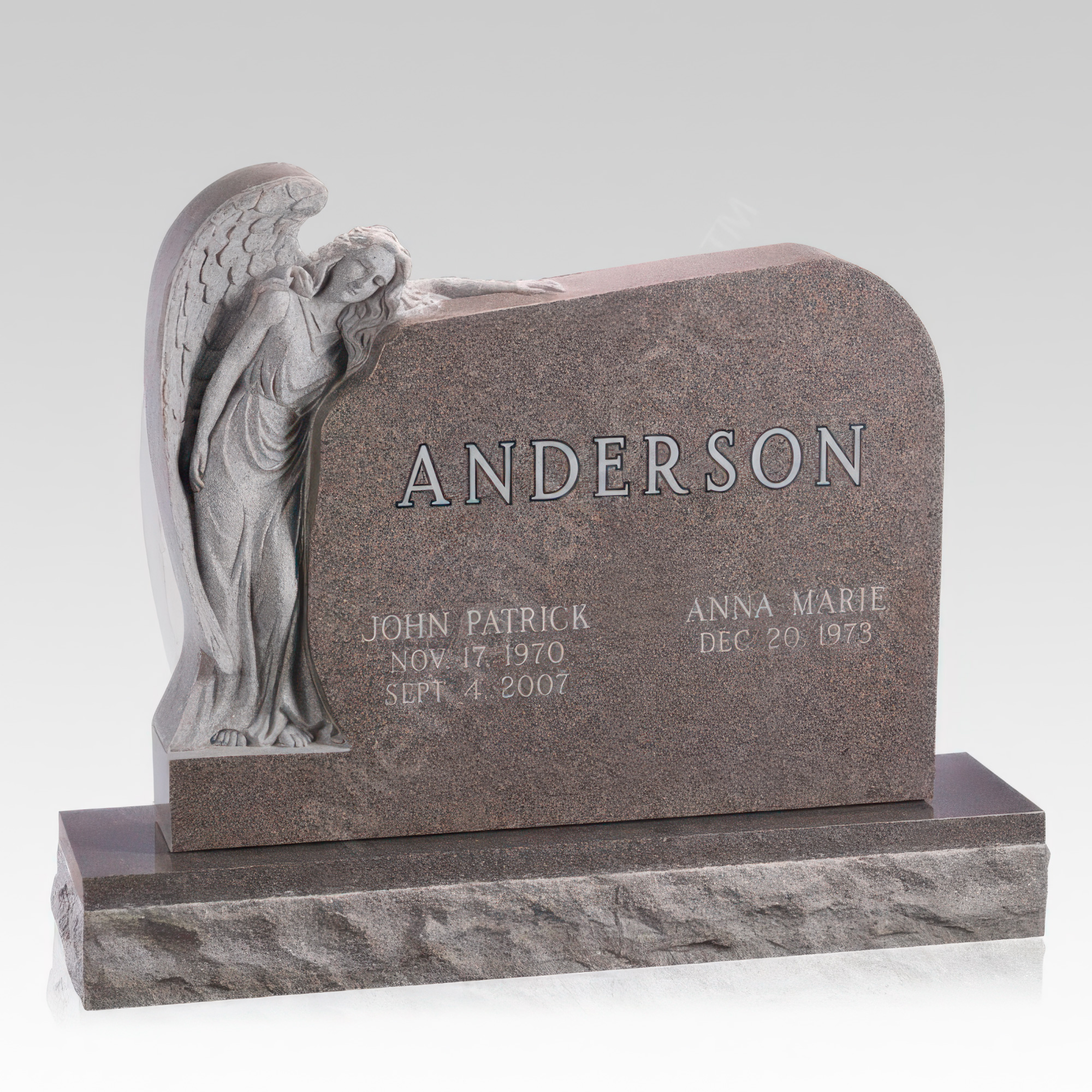
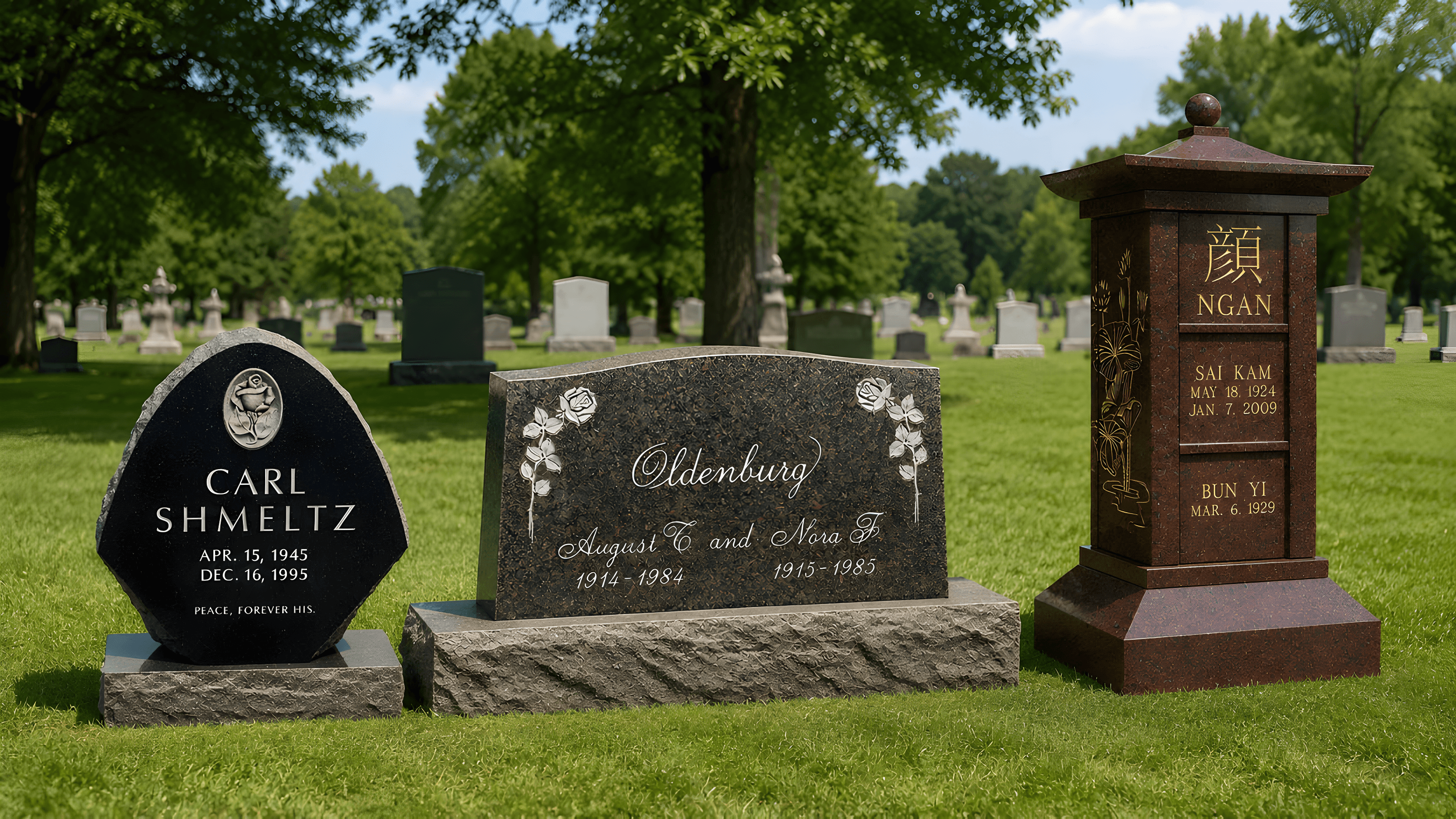
Upright headstones are the traditional vertical style that most people picture when they think of a gravestone. They consist of two pieces: the upright tablet and a separate base.
Single upright headstones typically range from 24 to 36 inches in height and 18 to 30 inches in width. The thickness of the tablet is usually 4 to 6 inches. The base adds another 4 to 6 inches of height and extends several inches beyond the tablet on each side for stability.
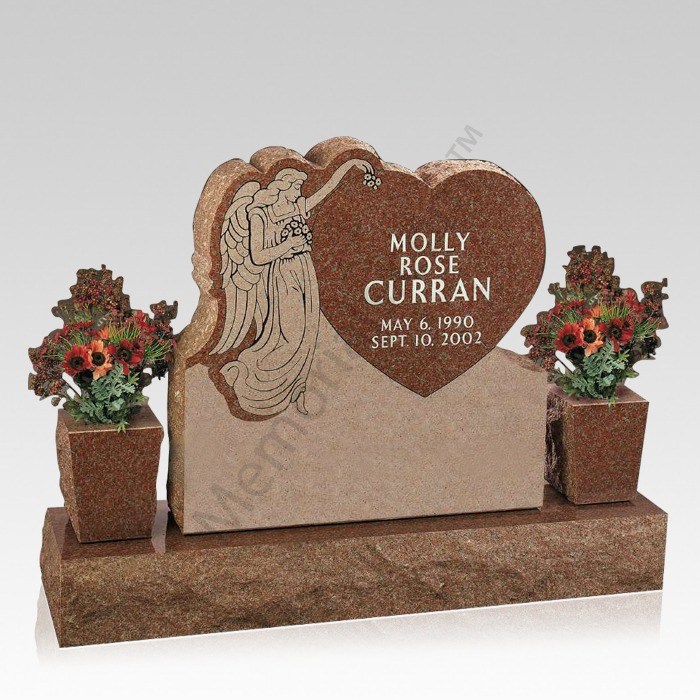
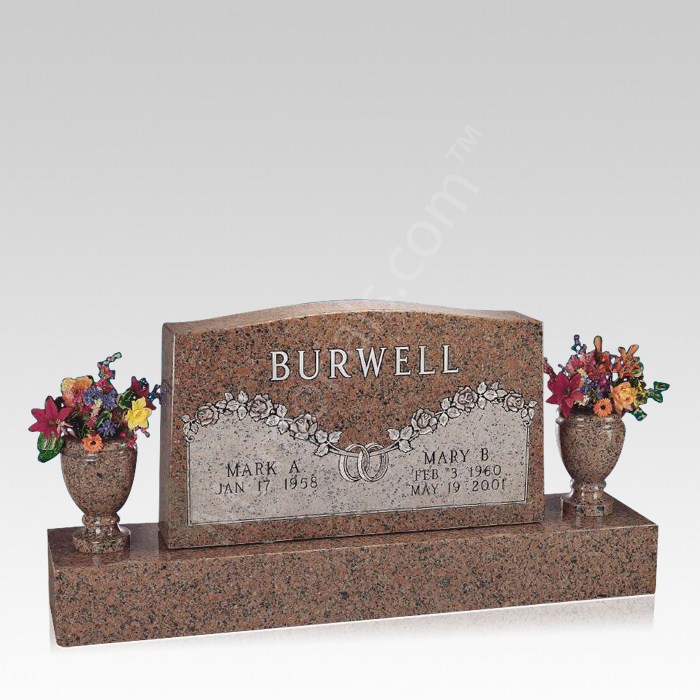
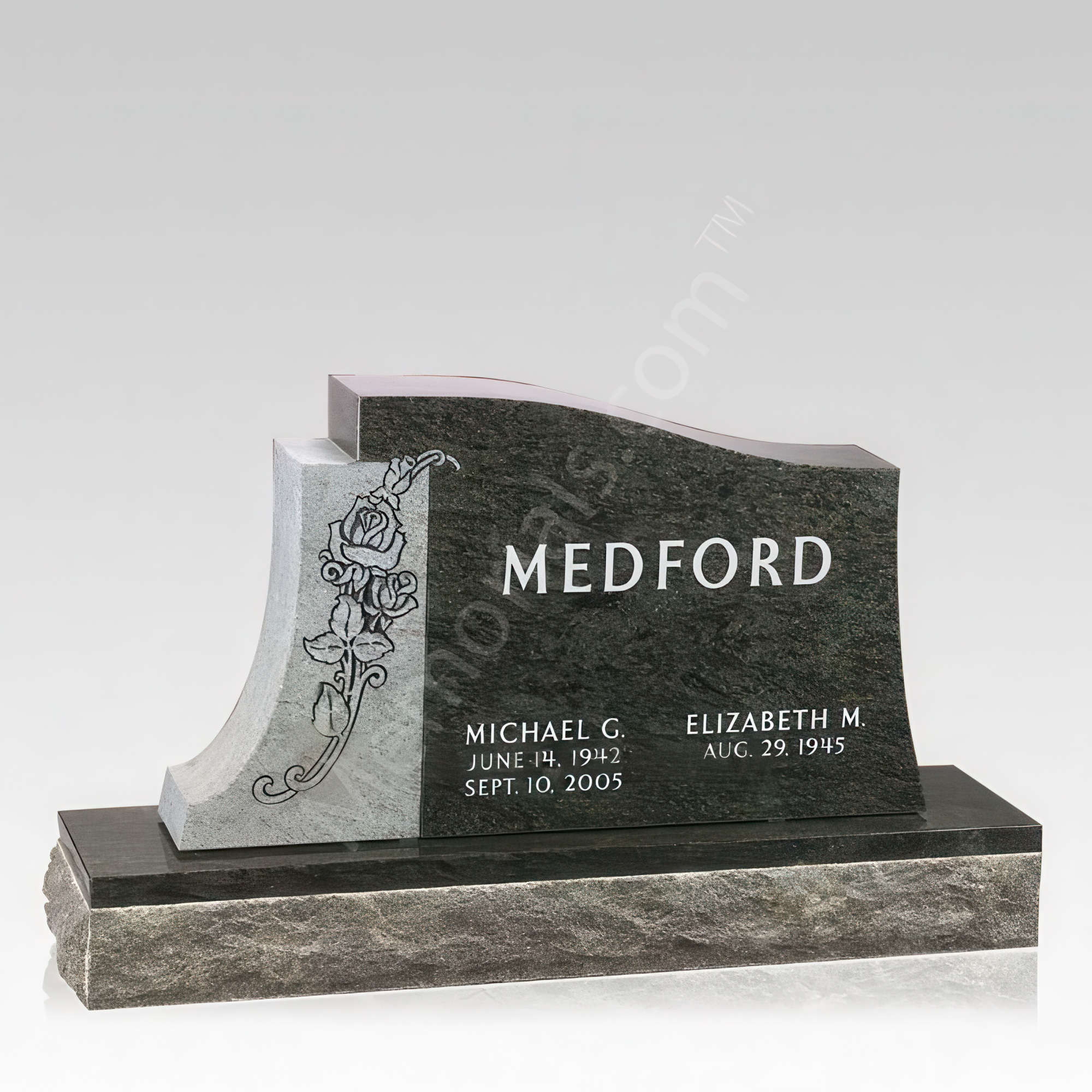
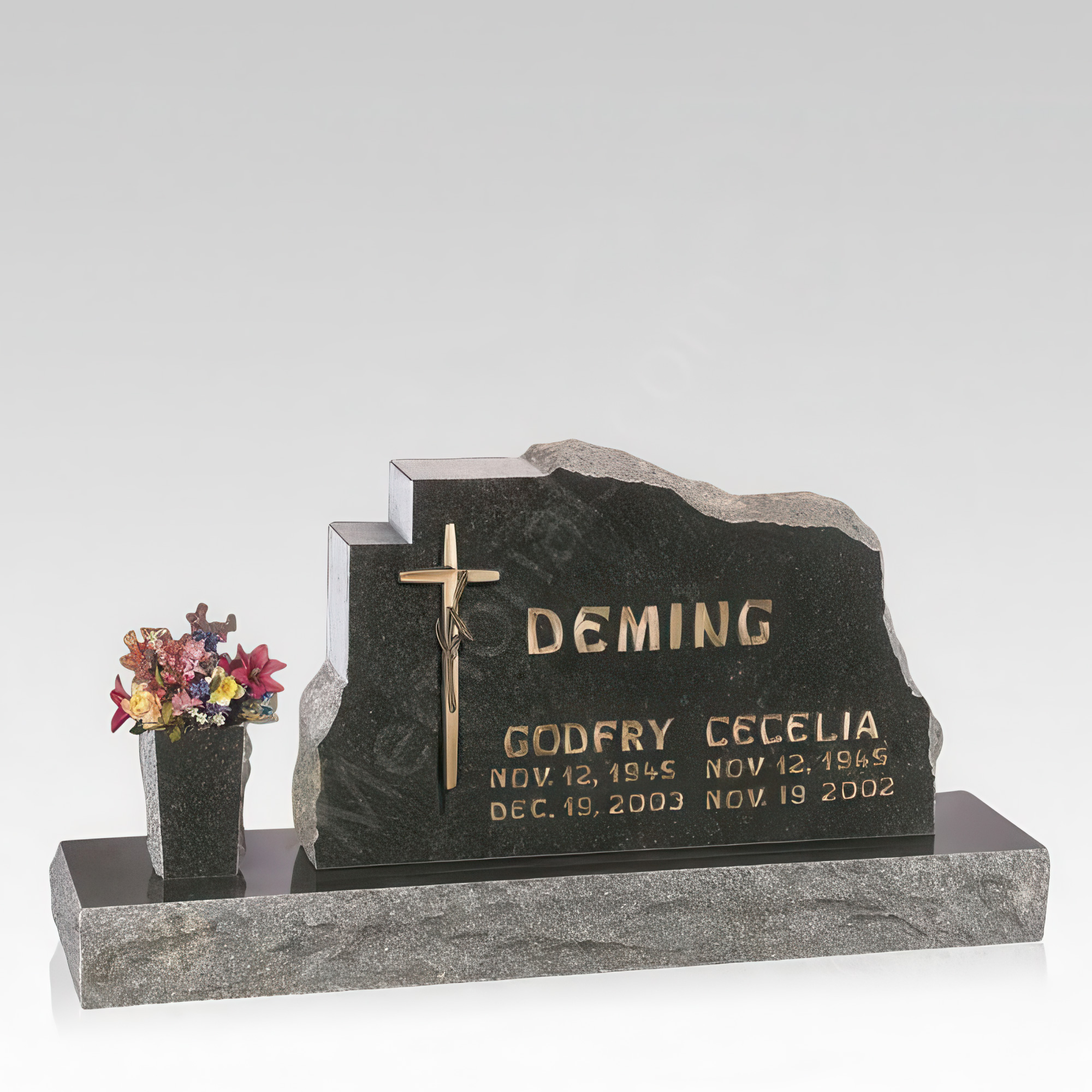
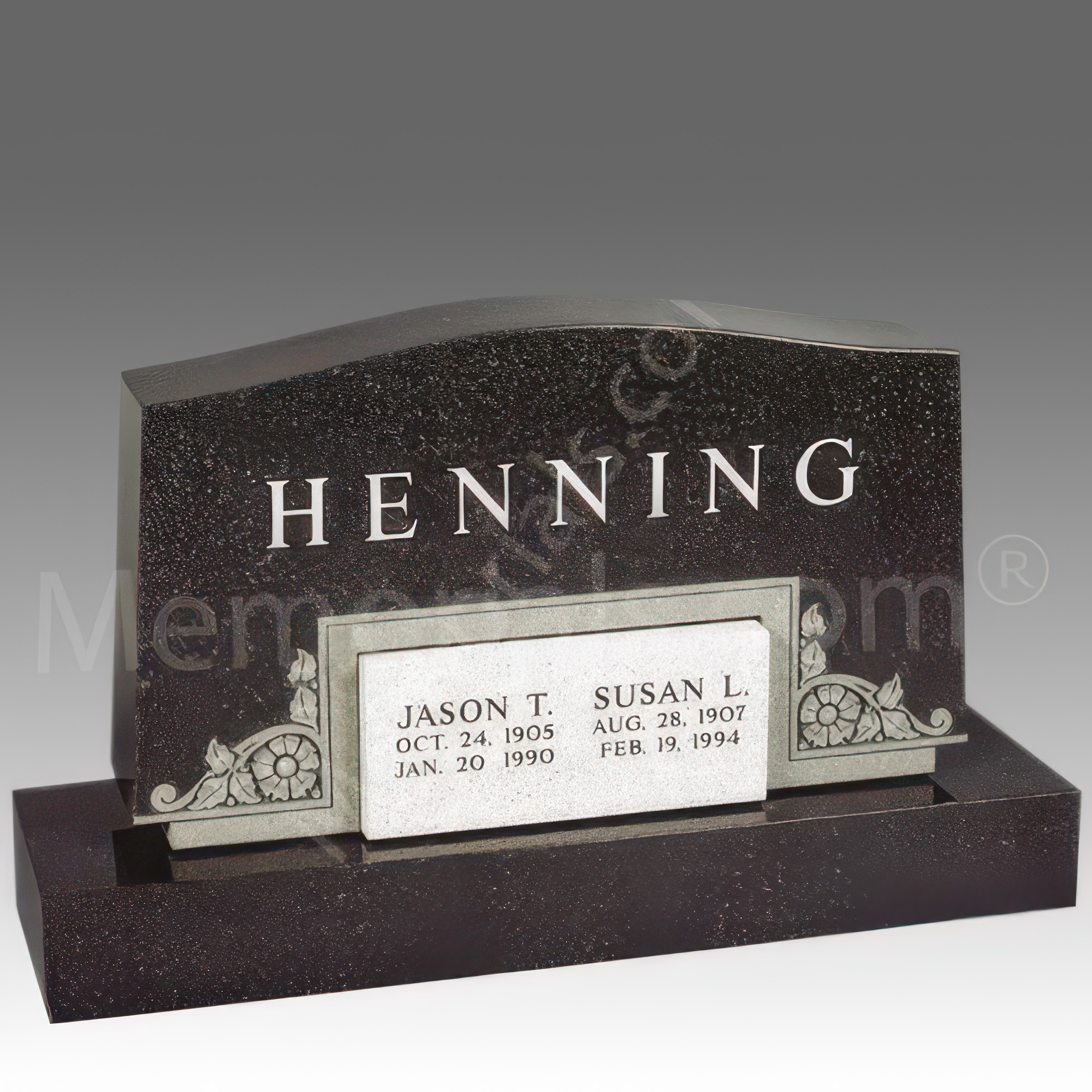
Companion upright headstones are wider to accommodate two inscriptions. Widths generally range from 36 to 60 inches, with heights similar to single uprights (24 to 42 inches).
Family monuments can be significantly larger, sometimes measuring 48 inches wide or more, with heights reaching 48 inches or above. These serve as a central marker for an entire family plot, with smaller individual markers placed at each gravesite.
For those still weighing the visual and practical differences between these styles, our guide to flat vs upright headstone styles walks through the pros and cons of each format.
Slant Markers
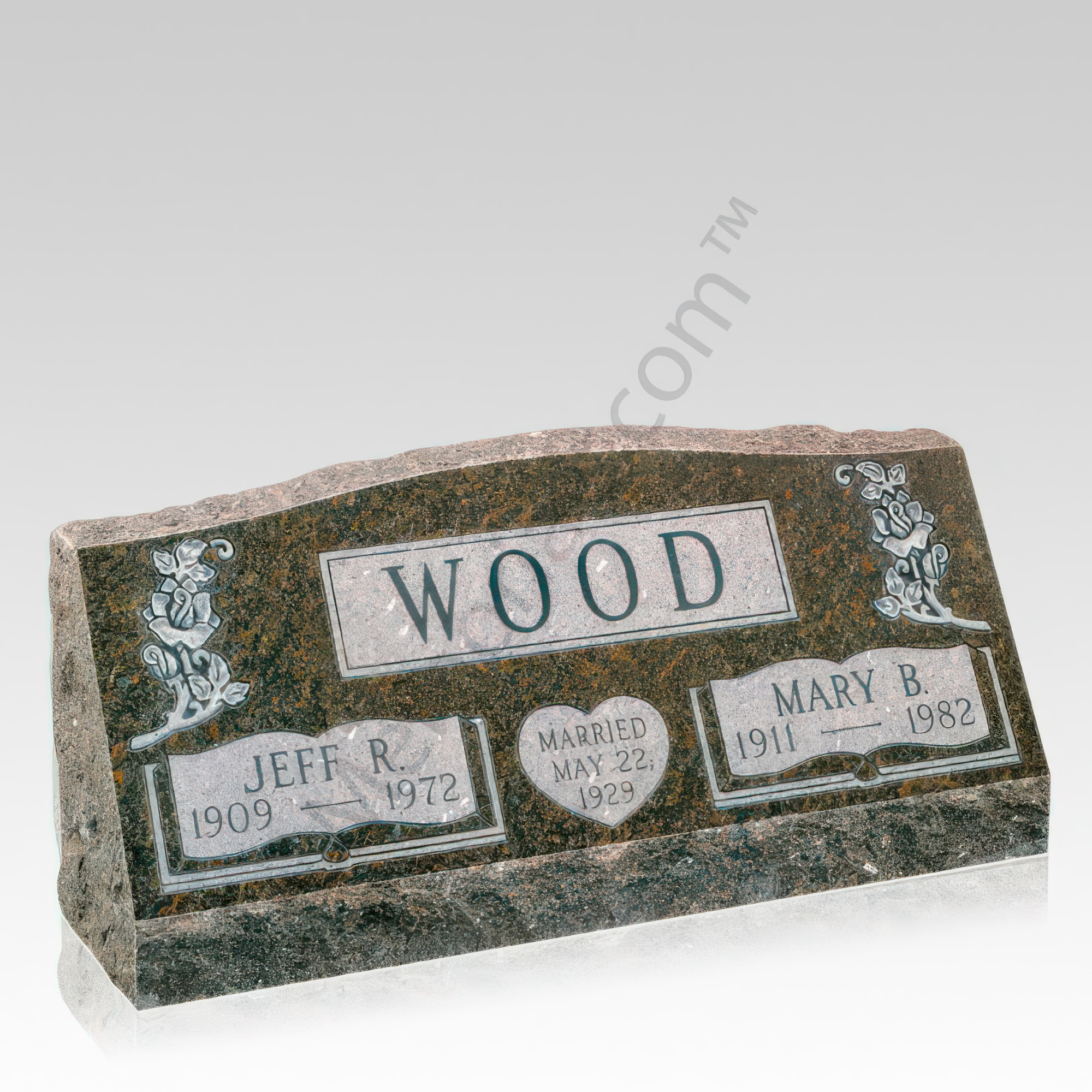
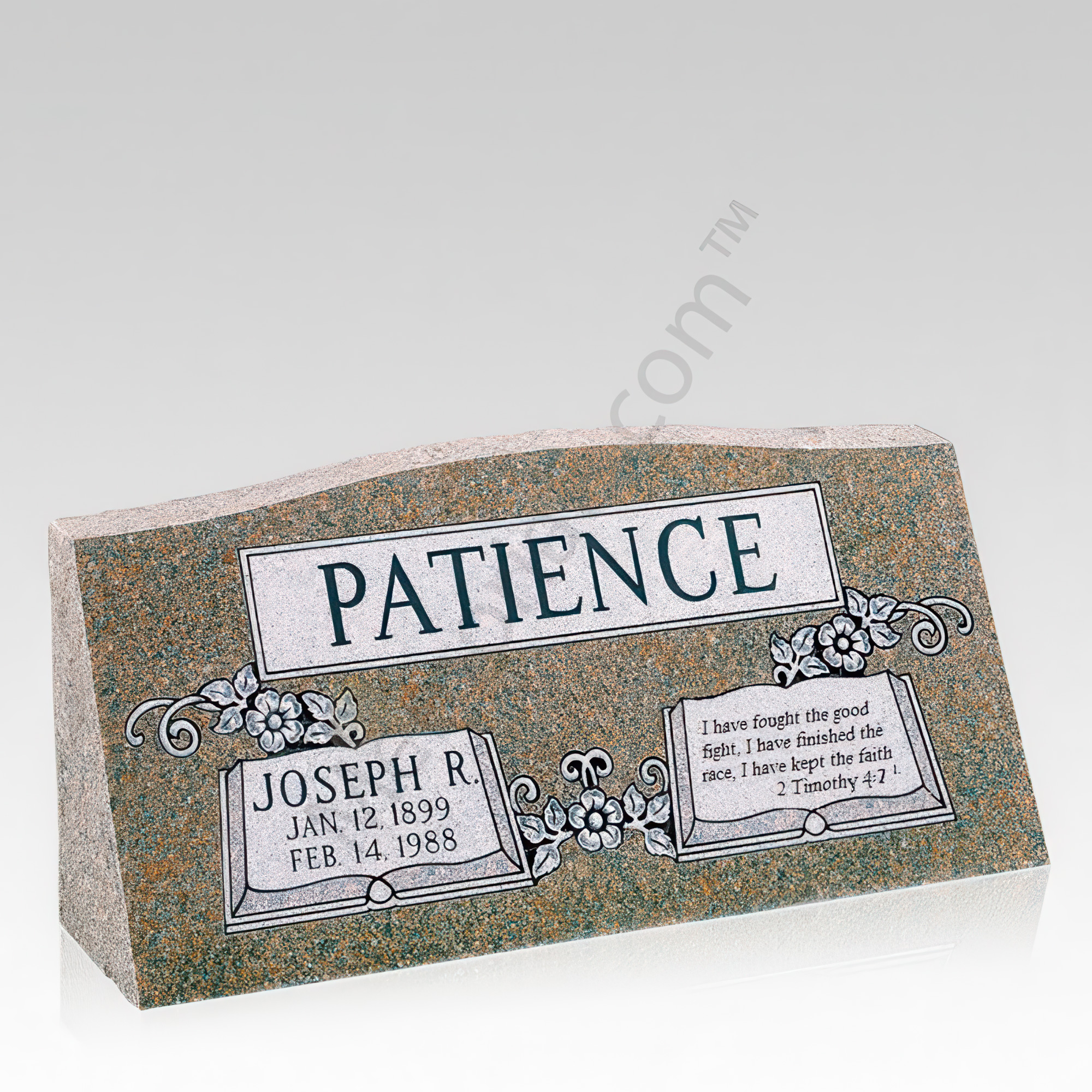
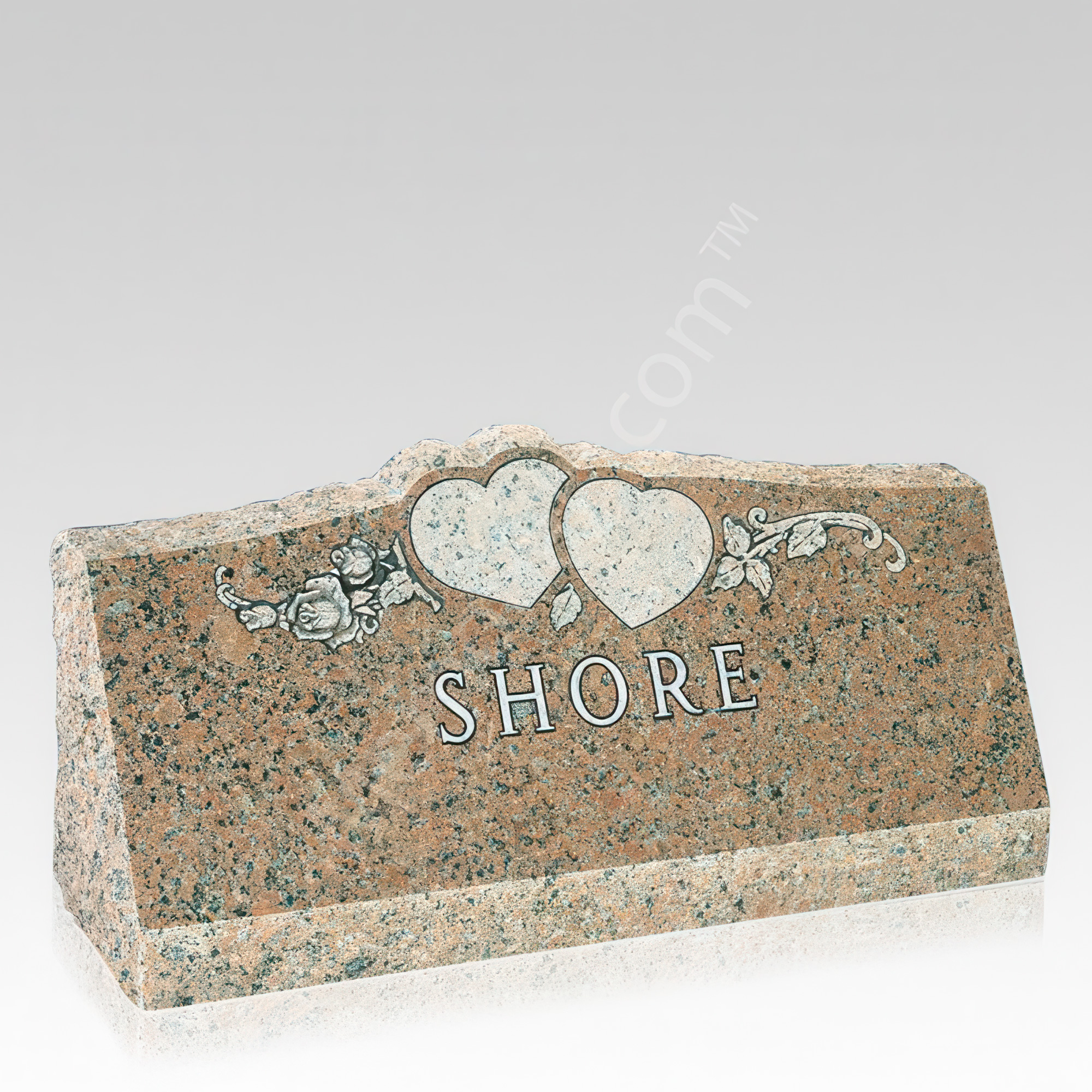
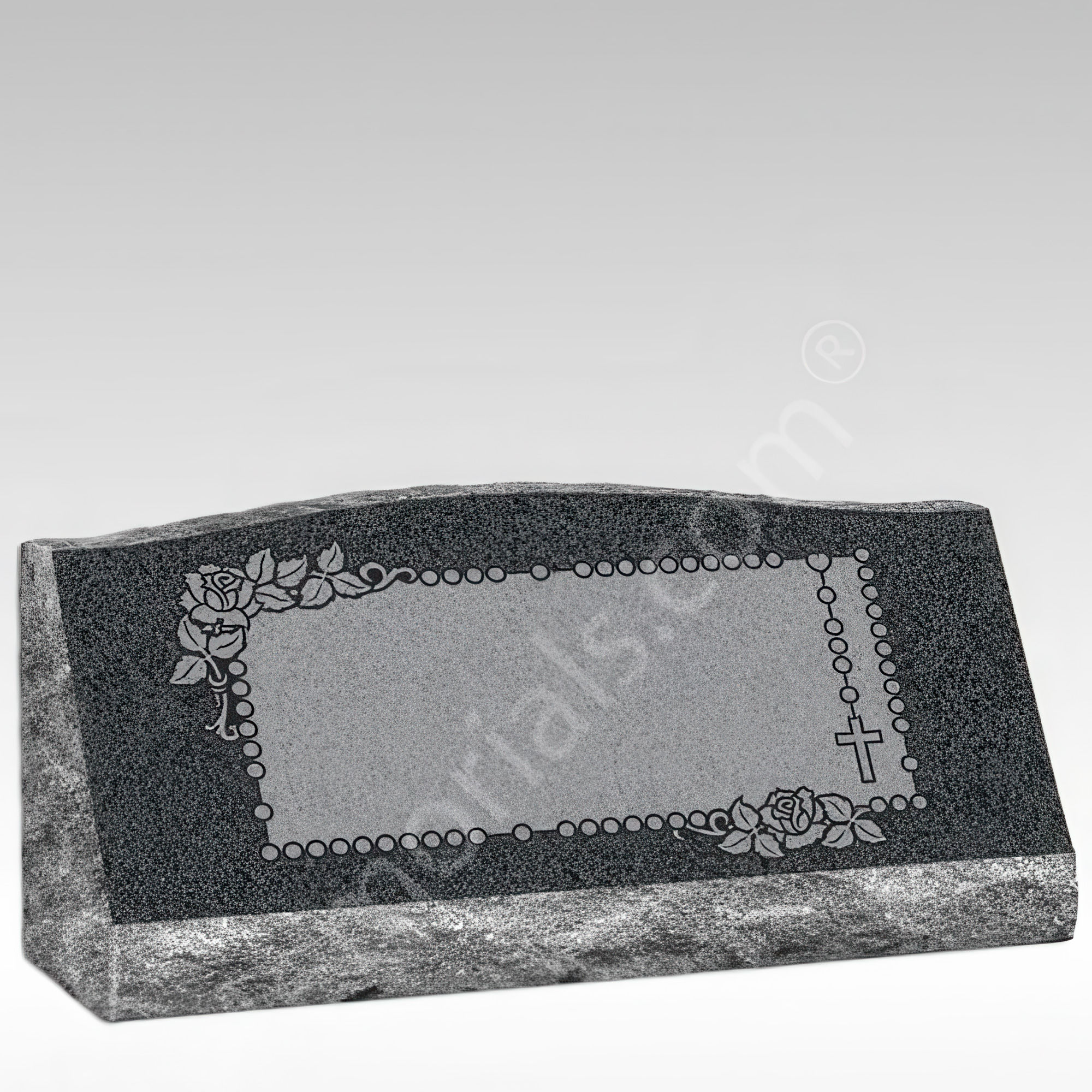
Slant markers feature an angled front face that makes inscriptions easier to read from a standing position. They are taller at the back and slope downward toward the front.
Common single slant marker sizes include 20 × 10 × 16 inches (with a base) and 24 × 12 × 18 inches. The base for a slant marker usually measures 24 × 14 × 4 inches or 28 × 16 × 4 inches, adding stability and a polished visual foundation.
Bevel Markers
Bevel markers sit slightly raised above ground level, typically angled 1 to 2 inches higher at the back than the front. They bridge the gap between fully flush markers and taller slant styles. Standard bevel marker sizes are similar to flat markers — 24 × 12 × 4 inches or 28 × 16 × 6 inches — but the slight rise makes them more visible and easier to read.
Ledger Markers
Ledger markers are large, flat slabs that cover all or most of the burial plot. Full ledger dimensions can reach 72 × 30 × 6 inches or larger. Half ledgers typically measure 48 × 24 × 6 inches. Because of their size, ledger markers require a substantial concrete foundation and are among the most expensive flat options.
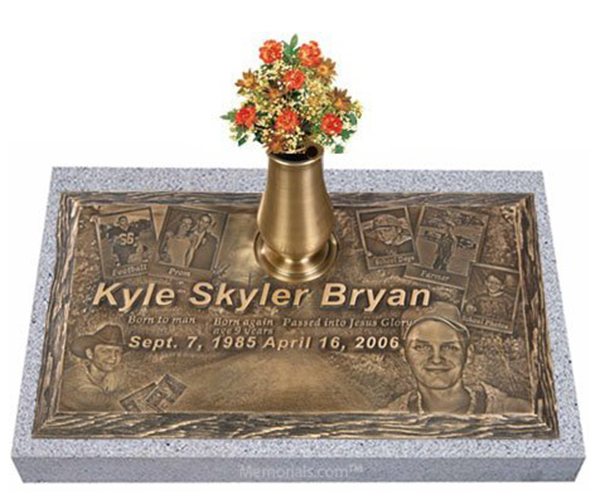
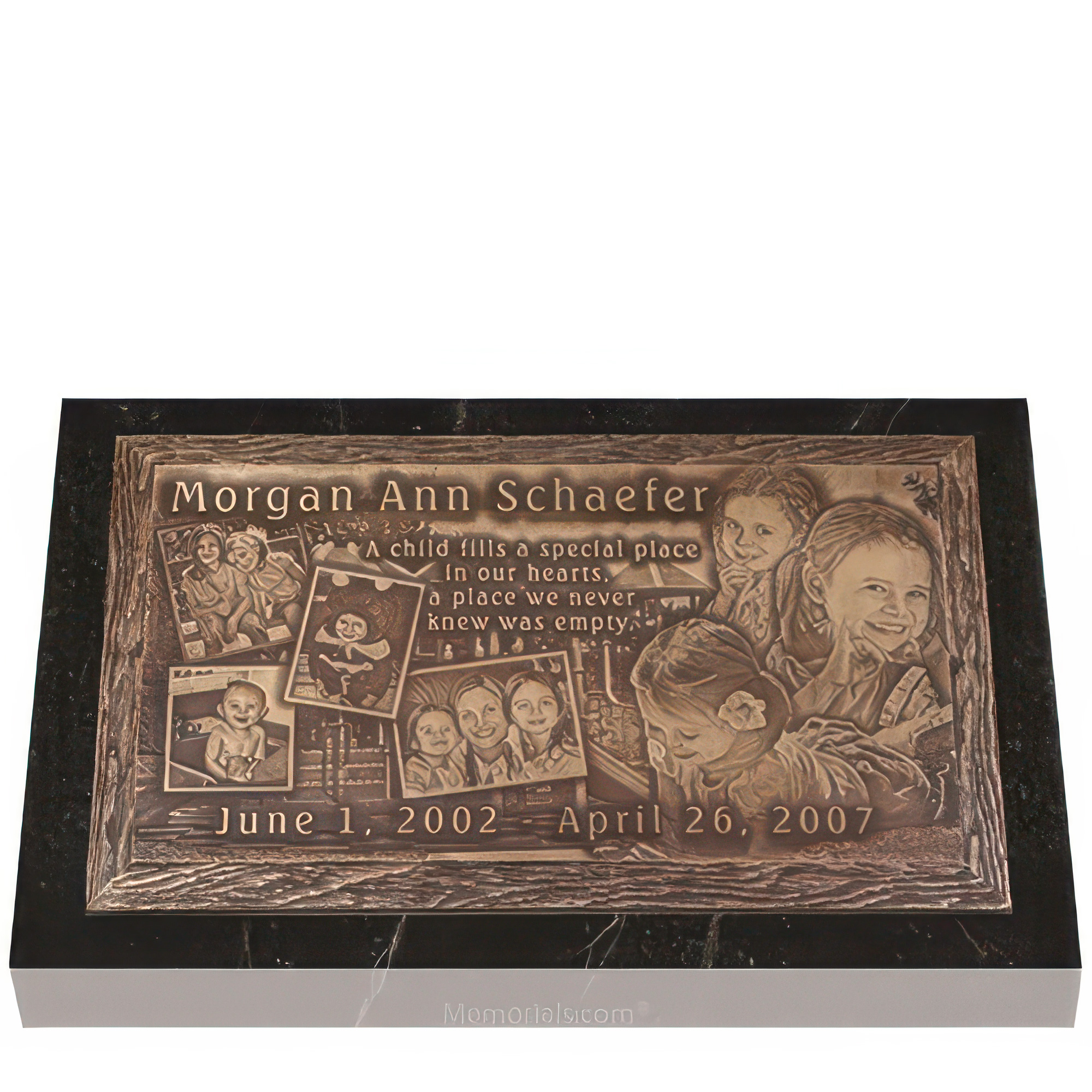
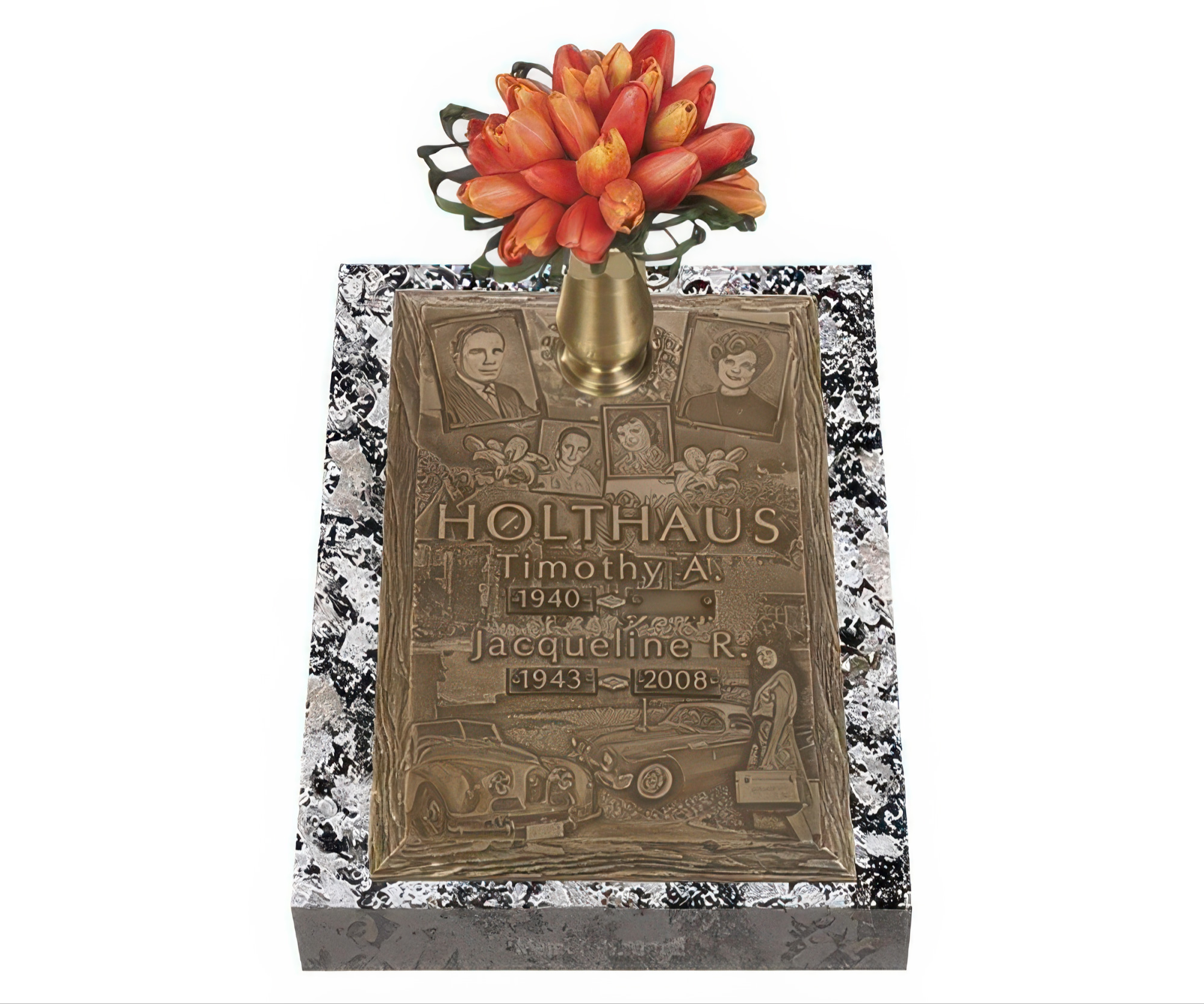
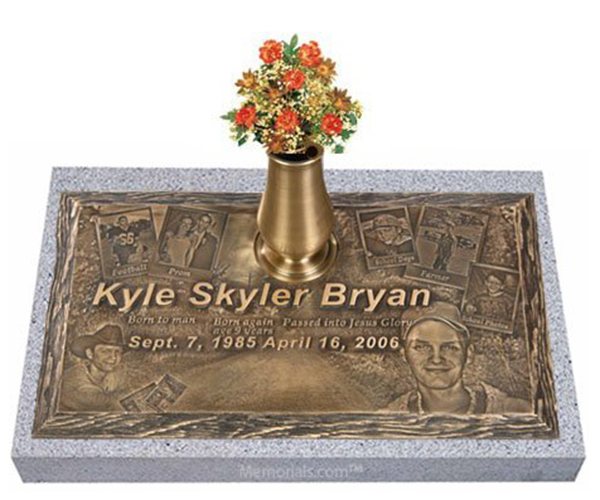
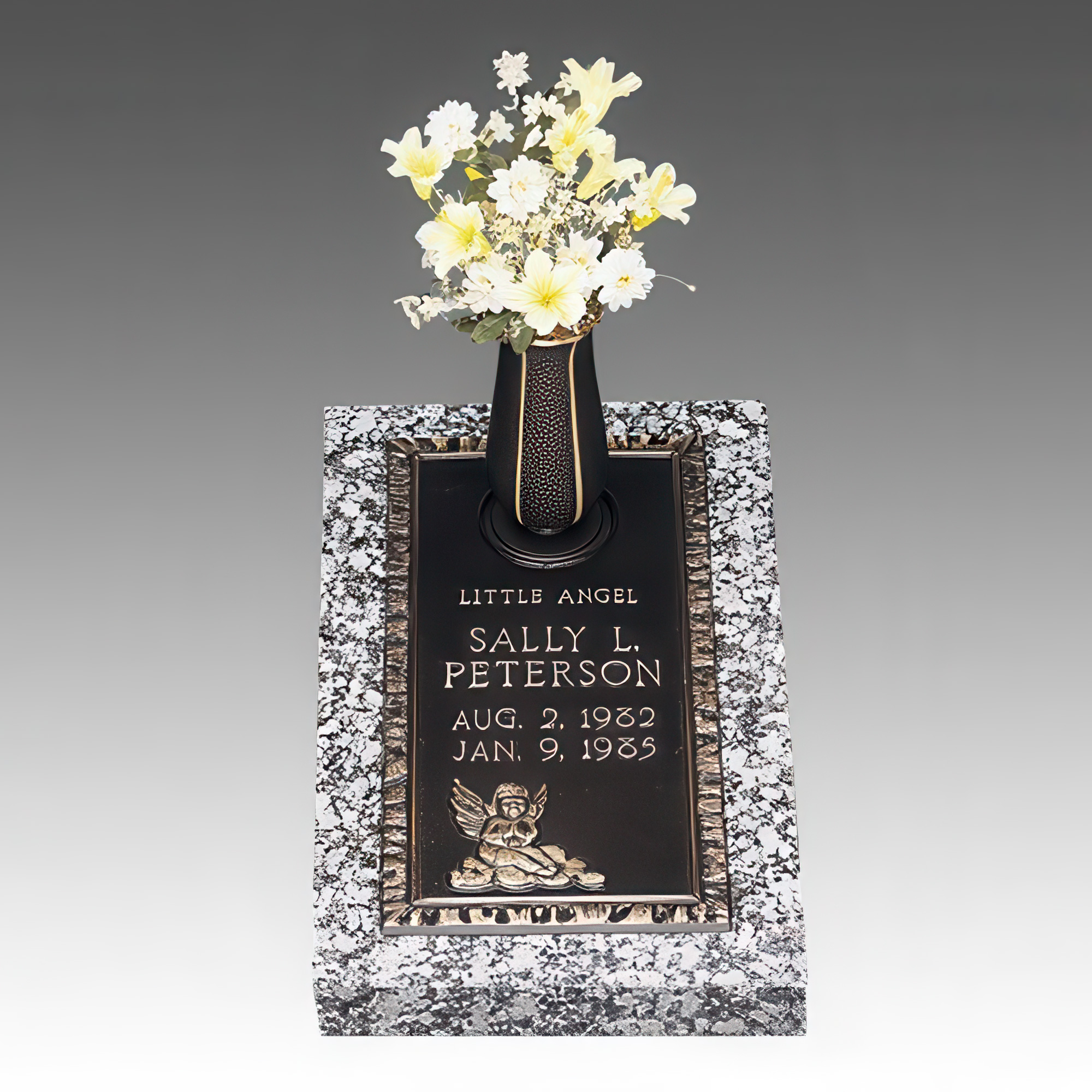
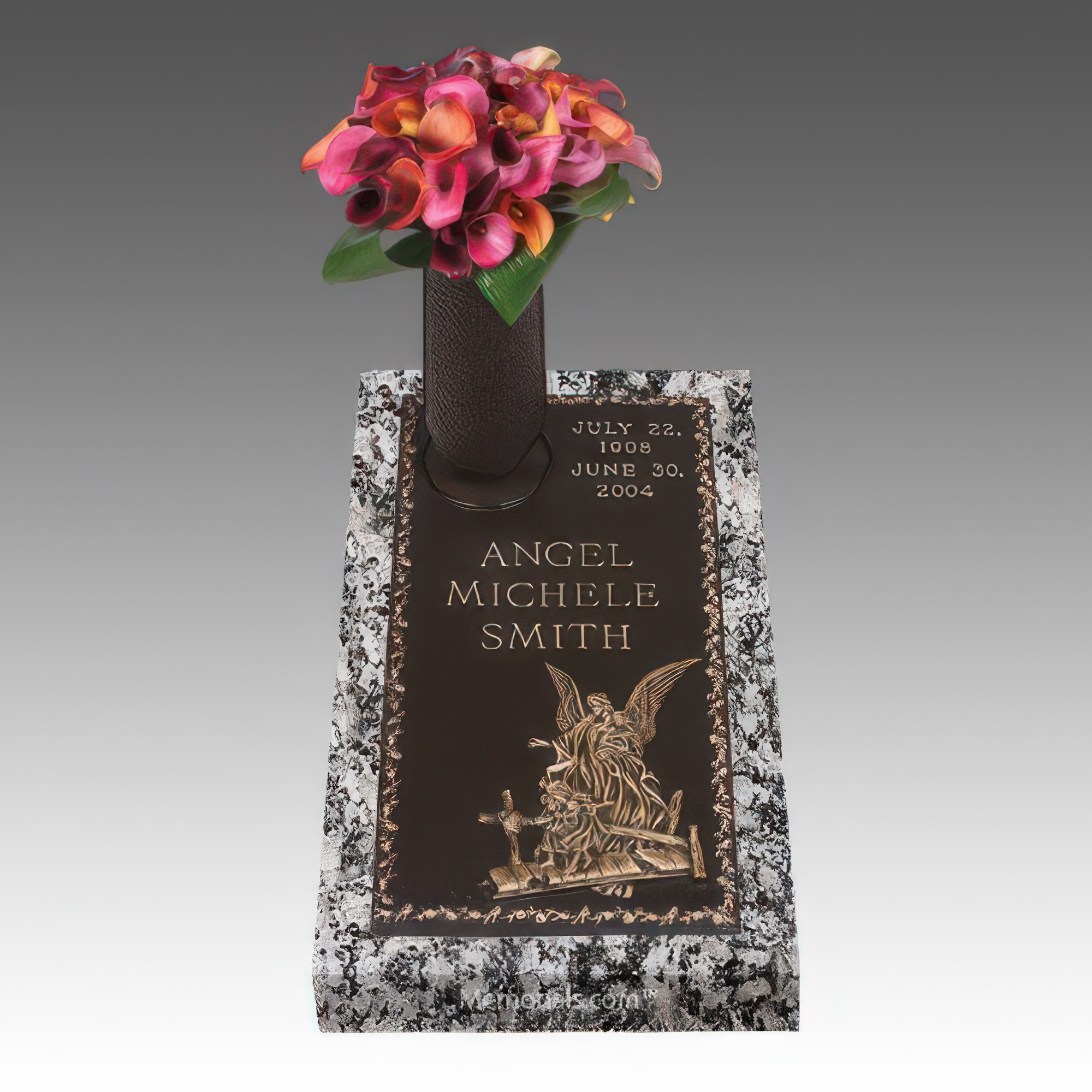
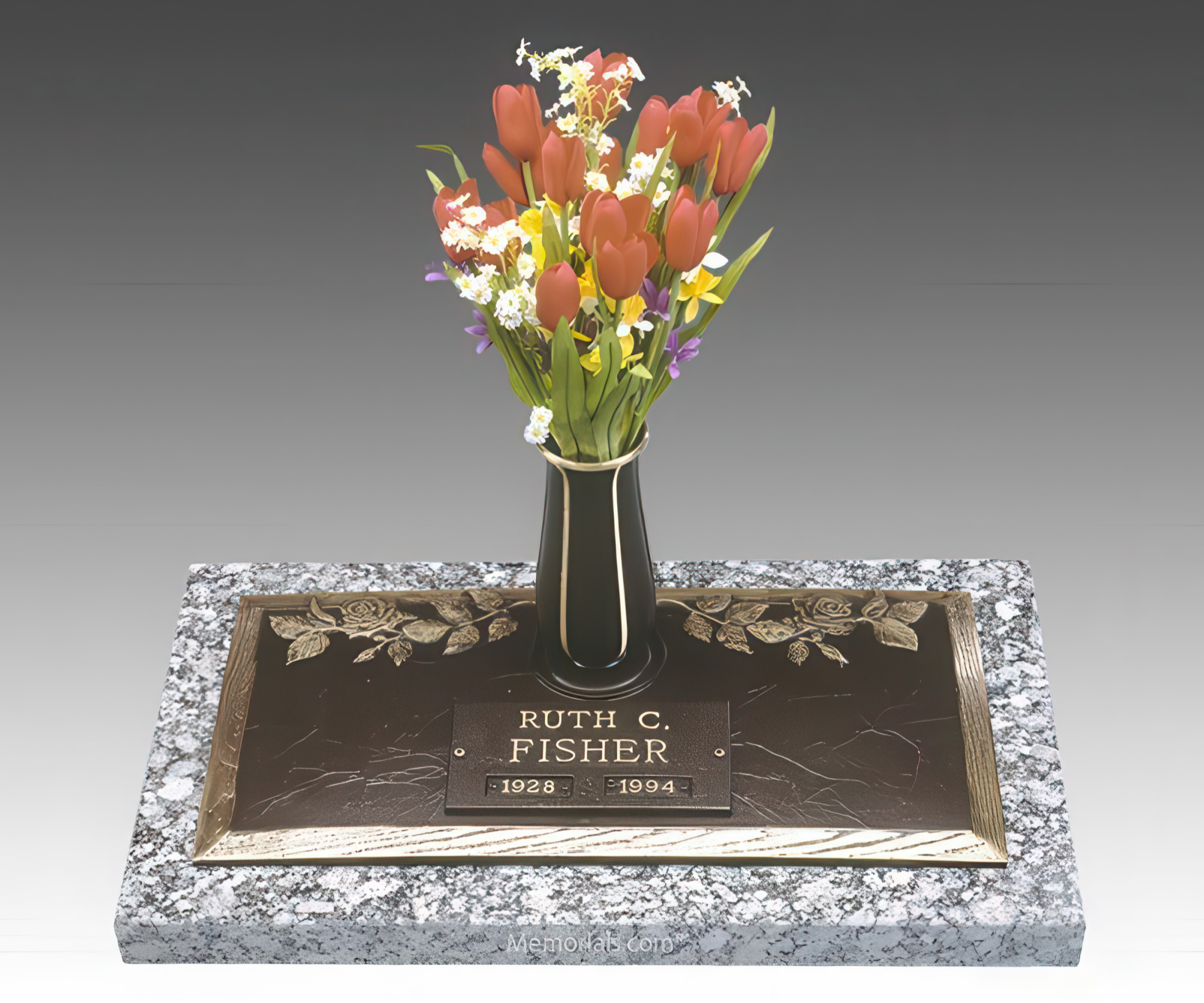
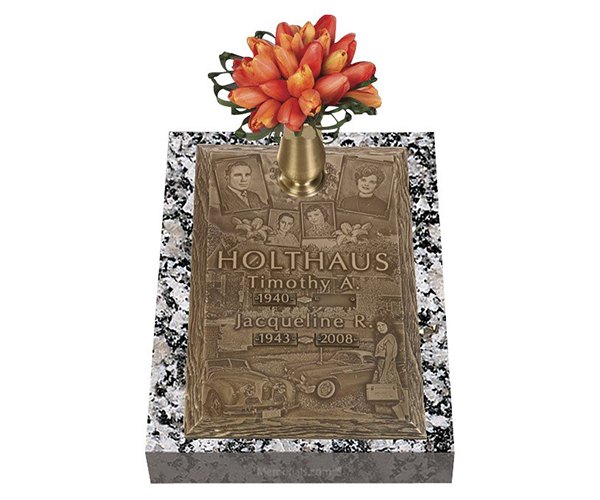
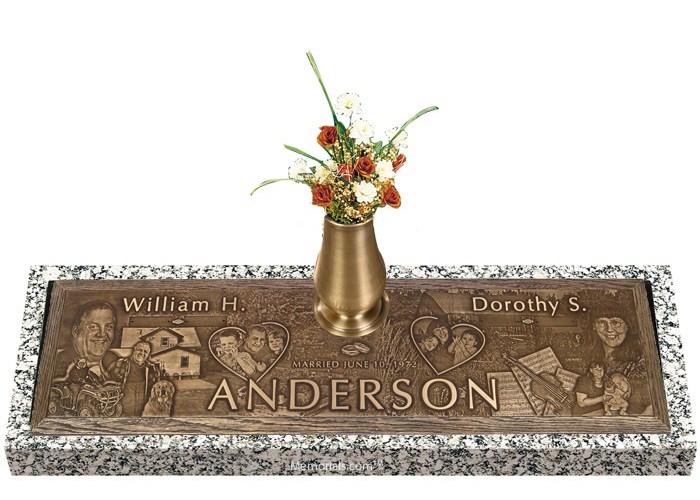
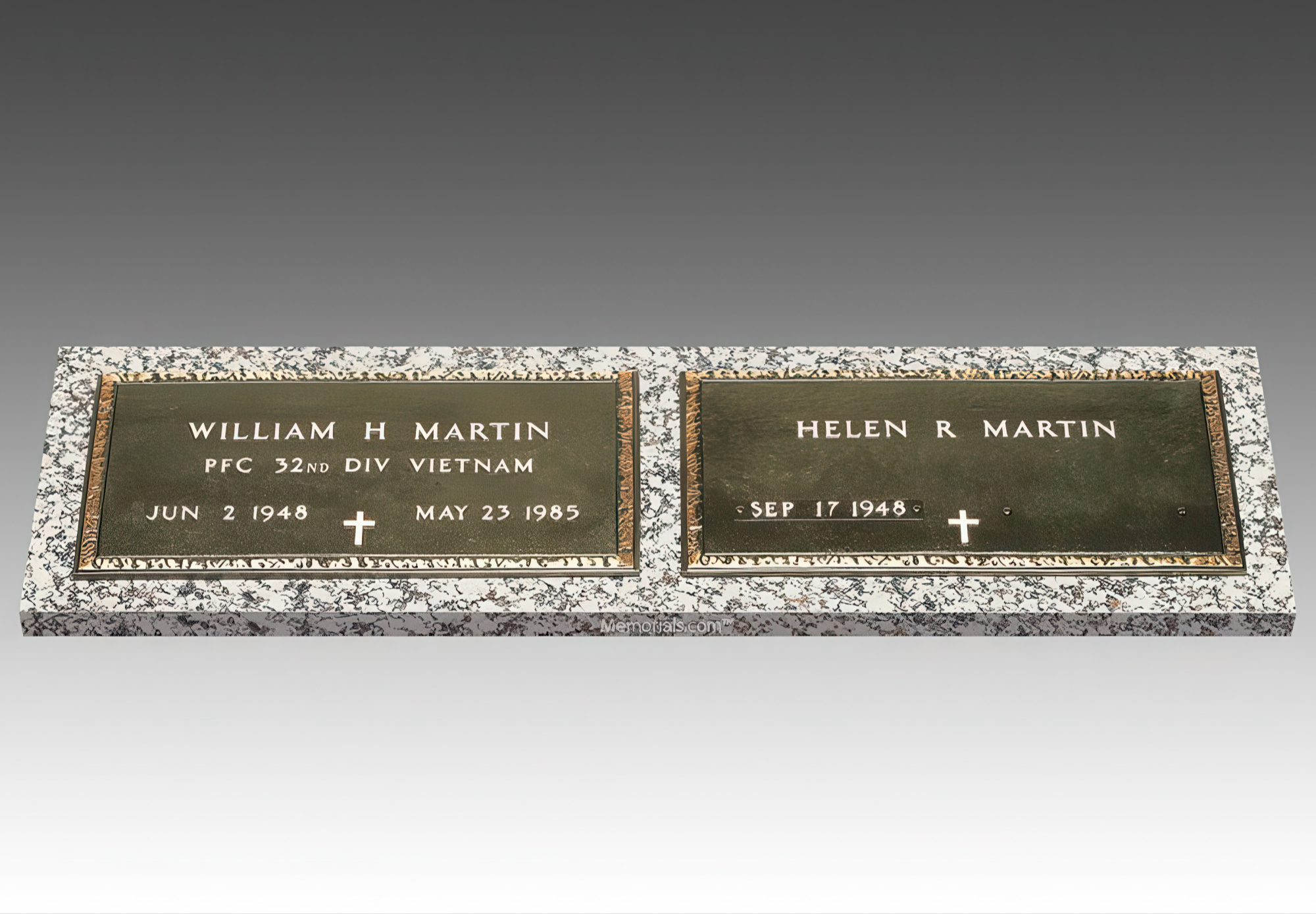
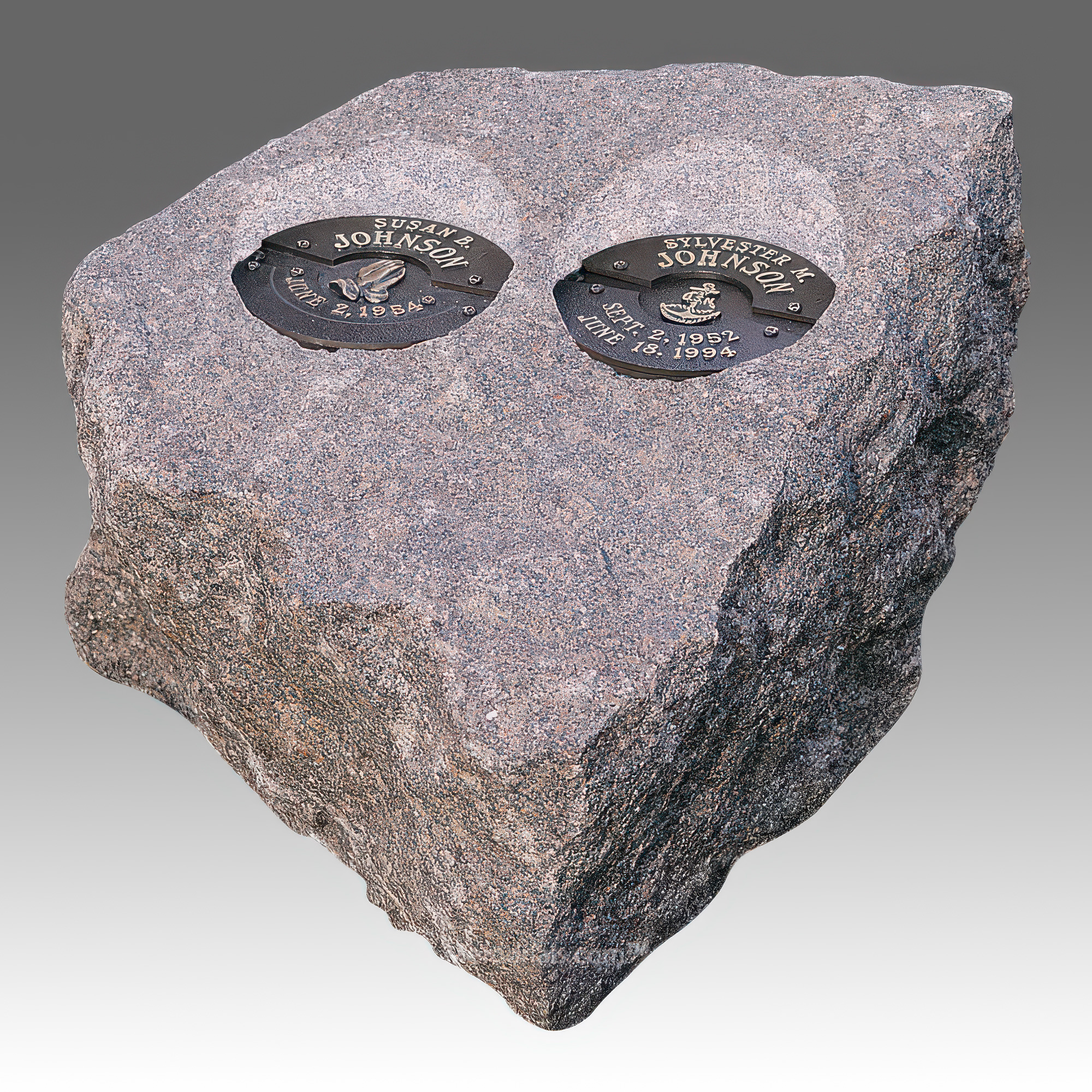
Bronze markers are flat plaques mounted onto a granite base. The bronze plaque itself typically measures 24 × 12 inches for a single marker, with a 3/4-inch rise from the base surface. Companion headstones in bronze commonly measure 44 × 14 inches. The granite base usually extends 2 to 4 inches beyond the plaque on each side.
The VA provides headstones for graves of eligible veterans at no cost. VA-furnished upright granite and marble headstones are standardized at 42 × 13 × 4 inches and weigh approximately 230 pounds. VA flat markers measure 24 × 12 × 4 inches, and VA flat bronze markers are 24 × 12 inches with a 3/4-inch rise.
Bench Monuments
Memorial bench monuments serve a dual purpose as both a headstone and a place for visitors to sit and reflect. Standard bench monument sizes range from 48 to 60 inches long, 18 to 24 inches deep, and 18 to 24 inches tall. Some cemeteries restrict bench monuments to designated sections, so confirming availability is essential before ordering.
How Size Affects Headstone Cost
Larger headstones require more raw material, more labor for shaping and engraving, and heavier equipment for delivery and installation. These factors combine to make size one of the biggest drivers of total cost.
A simple 24 × 12 flat granite marker typically starts at a few hundred dollars, while a 36-inch-wide upright monument with a matching base can range from $1,000 to $3,000 or more. Adding design complexity, custom shapes, or premium granite colors at larger sizes pushes costs higher still. Our headstone pricing guide provides a detailed breakdown of what to expect at each price level.
Foundation costs also scale with size. Larger monuments need deeper, wider concrete footings, and many cemeteries charge a separate foundation fee based on the monument's footprint. Understanding these headstone installation requirements before ordering prevents budget surprises.
Cemetery Headstone Size Requirements
Every cemetery sets its own headstone size regulations. These rules ensure visual consistency across sections, protect groundskeeping access, and maintain structural safety. No two cemeteries are identical, so confirming the rules for your specific section is the single most important step in the process.
Why Cemeteries Regulate Size
Cemeteries restrict headstone dimensions for several practical reasons. Uniform heights in flat-marker-only sections allow mowing crews to work efficiently without navigating around obstacles. Height restrictions in upright sections prevent monuments from overshadowing neighboring graves. Foundation specifications ensure that heavy stones remain stable and level as the ground settles over time. A deeper look at cemetery marker regulations explains how these rules work in practice.
Common Cemetery Size Rules
While every cemetery is different, certain patterns appear frequently:
Flat-marker-only sections typically allow markers up to 24 × 12 × 4 inches for singles and 44 × 14 × 4 inches for companions. Some sections limit height to 4 inches total, requiring the marker to sit fully flush with the surrounding turf.
Upright monument sections often set a maximum height of 36 to 42 inches (including the base) and a maximum width of 24 to 36 inches for single graves. Companion uprights may be permitted up to 48 or 60 inches wide.
Foundation requirements are tied directly to headstone size. A common rule requires the concrete foundation to extend 4 inches beyond the monument on each side and reach a depth of 24 to 30 inches. Some cemeteries pour the foundation themselves and charge the family for the work, while others allow an approved monument company to handle it.
Veterans' sections in national and state cemeteries follow VA specifications. Only government-furnished headstones or markers meeting exact dimensional standards are permitted. Private cemeteries with veterans' sections may accept VA markers or allow private markers that meet the cemetery's own size limits.
Before ordering a headstone, contact the cemetery office and ask for the written size regulations for your specific section. Key questions to cover:
What types of markers are permitted — flat only, or are uprights and slants also allowed? What are the maximum dimensions for length, width, and height, including the base? Are there minimum size requirements? What foundation specifications apply, and who is responsible for pouring the foundation? Are there restrictions on base material, granite color, or finish type? Is prior design approval required before manufacturing?
Getting these answers in writing protects you from ordering a marker that the cemetery will not accept. Many disputes arise from relying on verbal guidance that turns out to be incomplete or inaccurate.
How to Choose the Right Headstone Size
Choosing the right size involves balancing several factors: the cemetery's dimensional limits, the amount of text and design you want, the visual presence you prefer, and your budget.
Match the Size to Your Inscription
The amount of engraving you plan directly affects the minimum marker size. A simple name and dates fit comfortably on a 24 × 12 flat marker. Adding an epitaph, a verse, a military emblem, or a photo medallion requires more surface area. If your planned inscription needs additional space, stepping up to a 28 × 16 marker or choosing an upright monument gives you room without crowding the lettering.
Consider the Plot Layout
Single-grave plots generally accommodate markers up to 24 to 30 inches wide. Double-wide or companion plots can support markers 36 inches or wider. Family plots with a central monument and individual footstones require careful planning to ensure the main monument does not encroach on adjacent grave spaces.
Factor in Surrounding Monuments
Visiting the cemetery and observing the markers near your plot provides useful context. If neighboring monuments are all 24-inch uprights, a 48-inch family monument may feel out of proportion. Conversely, a small flat marker in a section of tall uprights may not provide the visibility you want.
Work Within Your Budget
Smaller markers cost less, but they also limit personalization. If budget is a concern, a well-designed flat marker or a modest slant marker can still create a meaningful and lasting tribute. The key is choosing a size that gives you enough inscription space without paying for surface area you do not need.
Cremation and infant sections often have their own sizing standards that differ from full-burial areas.
Cremation markers in designated cremation gardens are typically smaller, with maximum dimensions of 18 × 12 × 4 inches or 16 × 8 × 3 inches for flush markers. Some cemeteries allow small upright markers up to 18 inches tall in cremation sections. Niche plaques for columbarium walls follow separate standards — the VA niche marker, for example, measures 8.5 × 5.5 inches with a 7/16-inch rise.
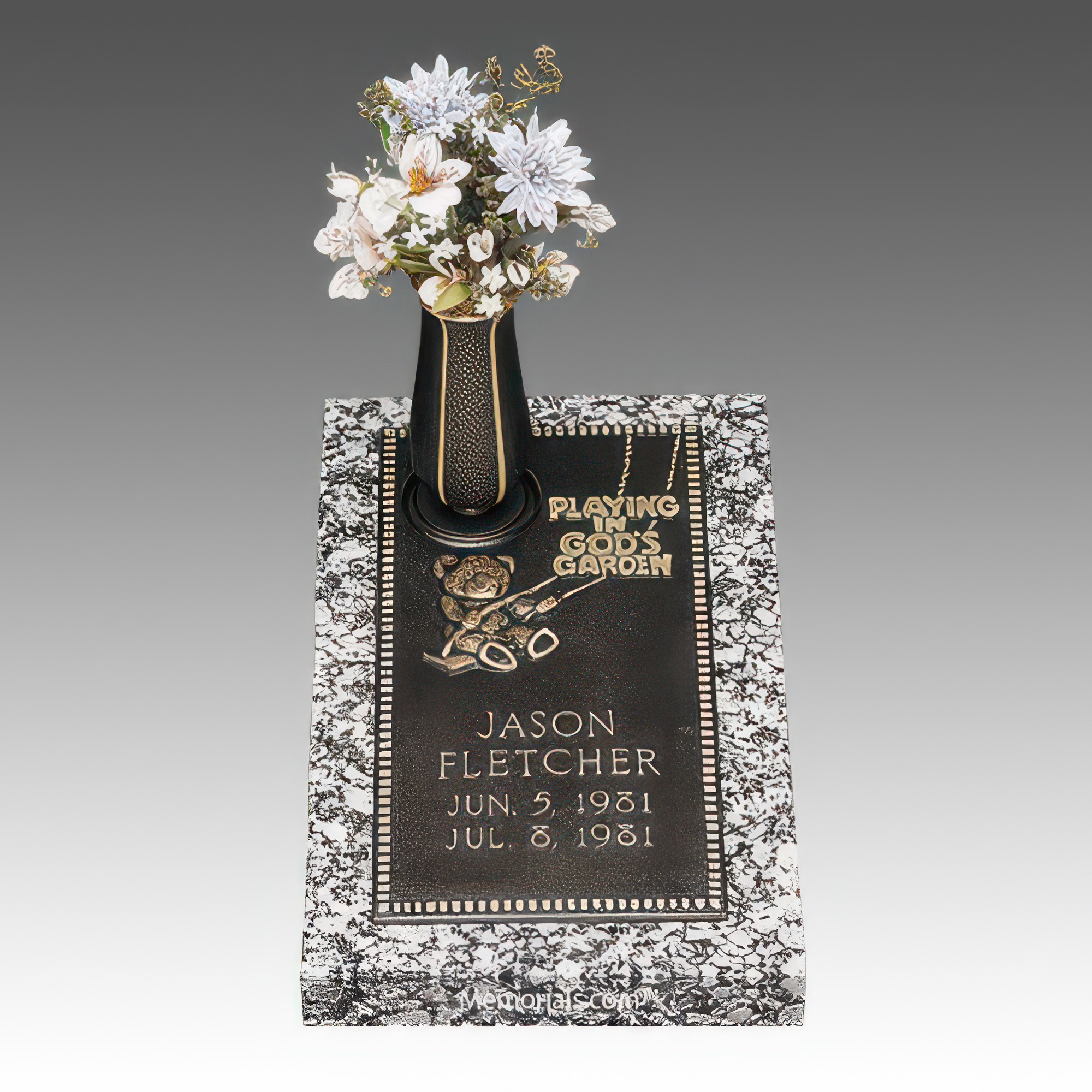
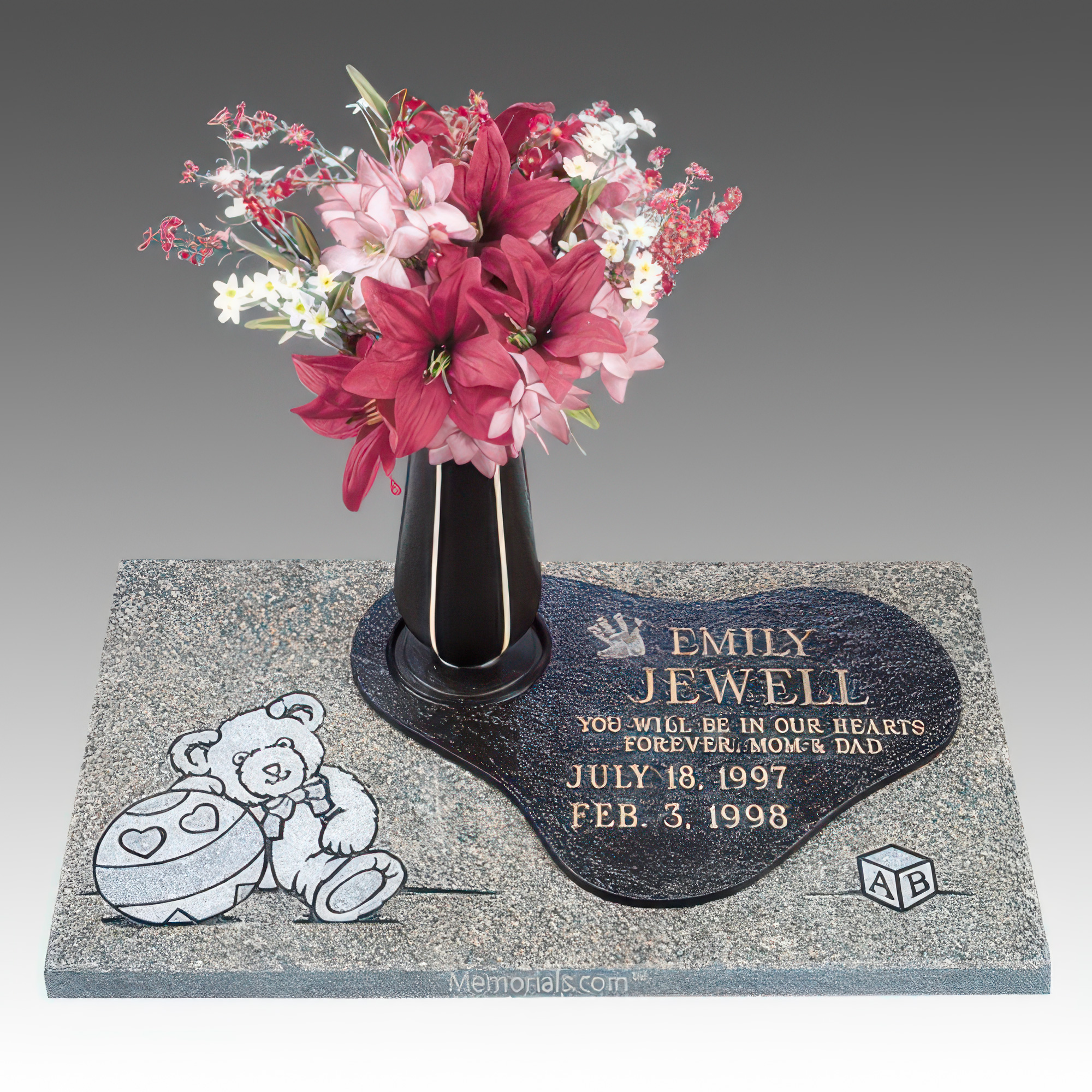
Infant markers are sized for smaller burial plots and may be restricted to 16 × 8 × 3 inches or 18 × 12 × 4 inches. Bronze infant markers follow similar proportions. The inscription area is limited at these sizes, so families often choose brief text with a single motif or symbol.
Frequently Asked Questions
What is the standard headstone size for a single grave?
The most common flat marker size for a single grave is 24 × 12 × 4 inches. For upright headstones, single monuments typically range from 24 to 36 inches wide and 24 to 36 inches tall, plus the height of the base. The exact size allowed depends on the cemetery's section-specific rules.
Can I get a headstone larger than the cemetery's maximum size?
No. Cemeteries enforce their size regulations strictly, and a marker that exceeds the permitted dimensions will be refused at installation. If you want a larger memorial, ask the cemetery about family monument sections or estate lots that allow bigger monuments.
How do I find out my cemetery's headstone size rules?
Call or visit the cemetery office and request the written regulations for your section. Ask specifically about maximum and minimum dimensions, permitted marker types (flat, slant, upright), base requirements, and foundation specifications.
Does headstone size affect the price?
Yes. Larger headstones use more material, require more labor for shaping and engraving, and cost more to ship and install. The foundation also needs to be larger, which adds to the total cost. A flat marker can cost a fraction of what a full upright monument does, largely because of the difference in size.
Are VA headstones a standard size?
VA-furnished upright headstones are standardized at 42 × 13 × 4 inches (approximately 230 pounds). VA flat markers measure 24 × 12 × 4 inches, and VA flat bronze markers are 24 × 12 inches with a 3/4-inch rise. These specifications are set by the National Cemetery Administration and apply across all national cemeteries.
Finding the Right Headstone for Your Needs
Headstone sizes follow well-established standards, but the final decision always comes down to what your cemetery allows and what best serves the memory you want to create. Start by requesting your cemetery's written size rules, then explore the style and material options that fit within those limits. Whether you choose a simple flat marker or a prominent upright monument, the right size creates a lasting tribute that honors your loved one for generations.