🏬Supersize Online Funeral Retailer🪦1000's of Headstones⚱️Over 10,000 Cremation Urns⚰️Caskets Overnight Delivery🛒Funeral & Memorial Superstore🚚FREE Shipping on ALL Orders👨👩👧👦Helping Families for over 20 Years💰Lowest Price Guarantee🏬Supersize Online Funeral Retailer🪦1000's of Headstones⚱️Over 10,000 Cremation Urns⚰️Caskets Overnight Delivery🛒Funeral & Memorial Superstore🚚FREE Shipping on ALL Orders👨👩👧👦Helping Families for over 20 Years💰Lowest Price Guarantee
🏬Supersize Online Funeral Retailer🪦1000's of Headstones⚱️Over 10,000 Cremation Urns⚰️Caskets Overnight Delivery🛒Funeral & Memorial Superstore🚚FREE Shipping on ALL Orders👨👩👧👦Helping Families for over 20 Years💰Lowest Price Guarantee🏬Supersize Online Funeral Retailer🪦1000's of Headstones⚱️Over 10,000 Cremation Urns⚰️Caskets Overnight Delivery🛒Funeral & Memorial Superstore🚚FREE Shipping on ALL Orders👨👩👧👦Helping Families for over 20 Years💰Lowest Price Guarantee
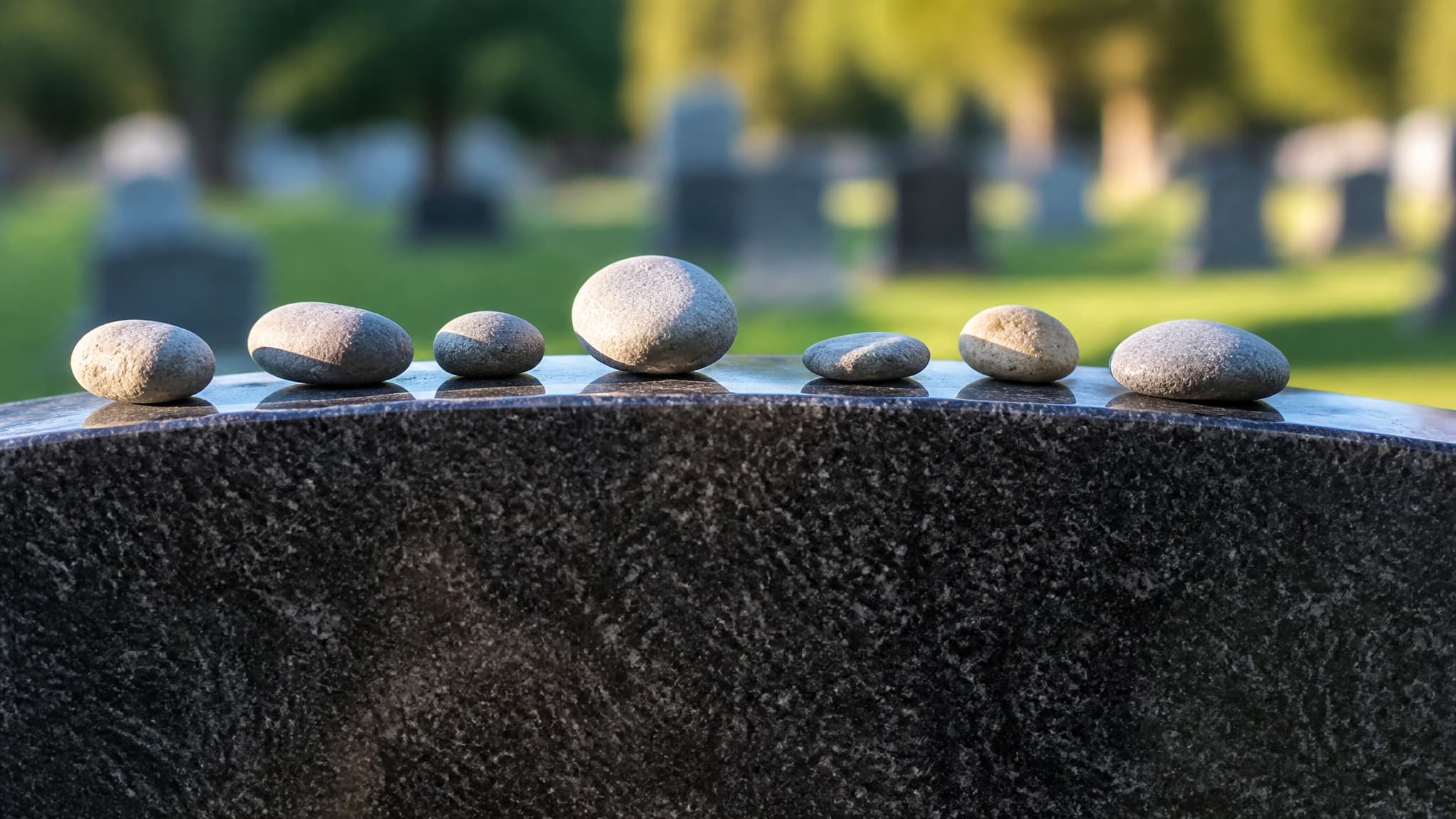
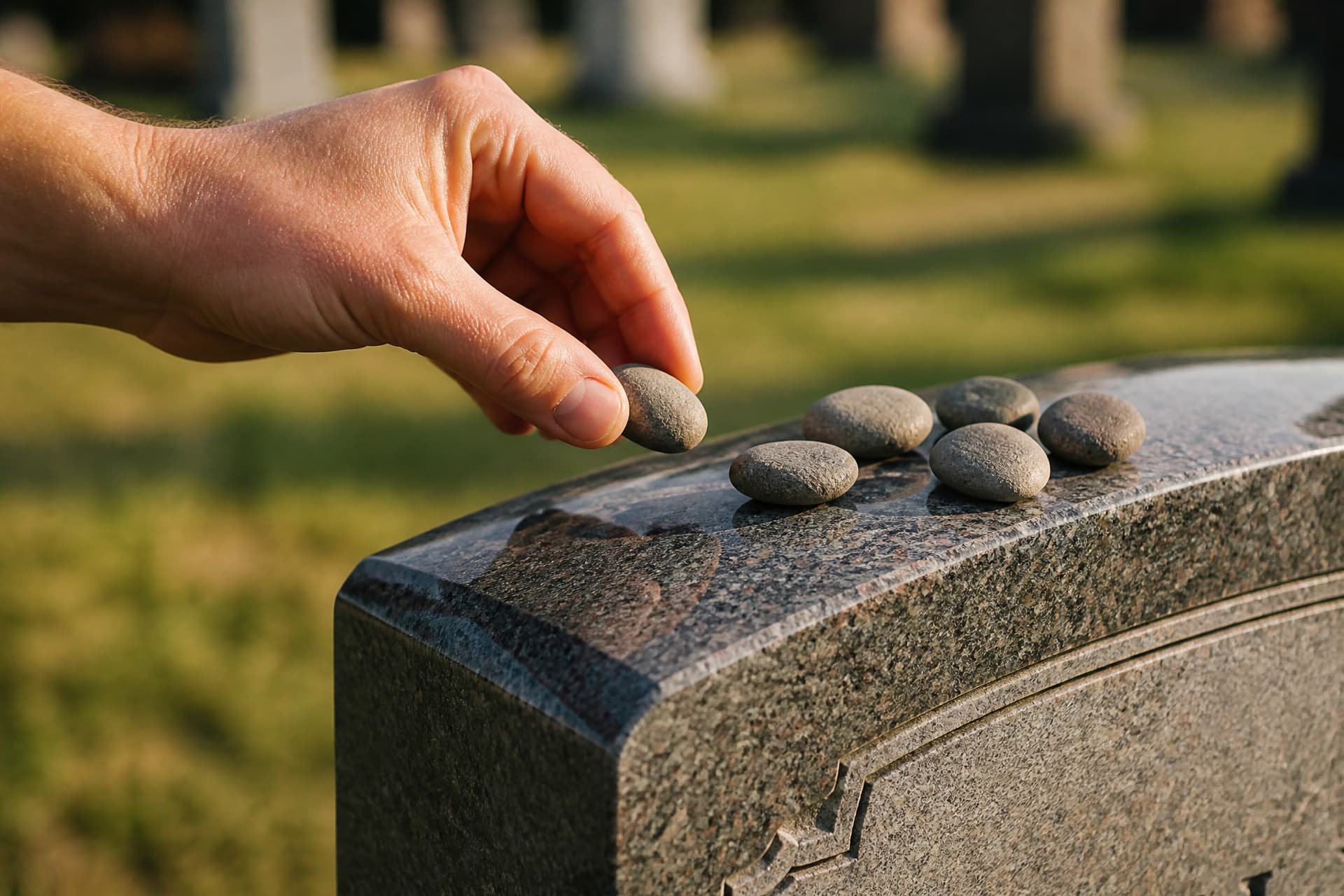
Walk through a cemetery and you will eventually see a row of small pebbles balanced along the top of a headstone. They are not debris, and the groundskeeper did not leave them. Someone put each one there deliberately, and visitors who notice usually want to know the same thing: what does placing a stone on a grave mean, and is it something they should do themselves?
The answer is less straightforward than most short versions suggest. The practice is strongly associated with Jewish tradition, where it is close to universal, but it is older and broader than any single faith, and even within Judaism there are several competing explanations rather than one agreed origin. This guide covers what the stones mean, where the custom most likely came from, who practices it, and how to take part respectfully.
Ask about the stones on graves meaning and you will be given several answers, but every one of them starts there.
The whole of the custom. No cost, no preparation, nothing said, and a mark that is still there when the next visitor arrives.
Unlike flowers, which wilt within days and are cleared away, a stone stays where it is put. A headstone crowded with pebbles is visible evidence that the person buried there is still being visited and still being remembered, and it remains visible to the next visitor months later. A grave with no stones on it tells a quieter and sadder story.
That permanence is the heart of the custom. Everything else is an argument about why it began.
Shop Memorial Stones
Engraved natural stones for a grave, a garden, or a scattering site
The Jewish grave stones tradition is the version of this custom most people have encountered, and in Jewish practice placing a small stone on the marker at the end of a visit is close to universal. It is done at the graves of family, at the graves of strangers, and at memorials, and it is the reason most people in English-speaking countries have encountered the custom at all. The final scene of Schindler's List, in which survivors and actors file past Oskar Schindler's grave in Jerusalem each laying a stone, introduced the practice to a very large audience that had never seen it.
Several explanations circulate within the tradition, and Jewish sources themselves treat them as possibilities rather than settled history.
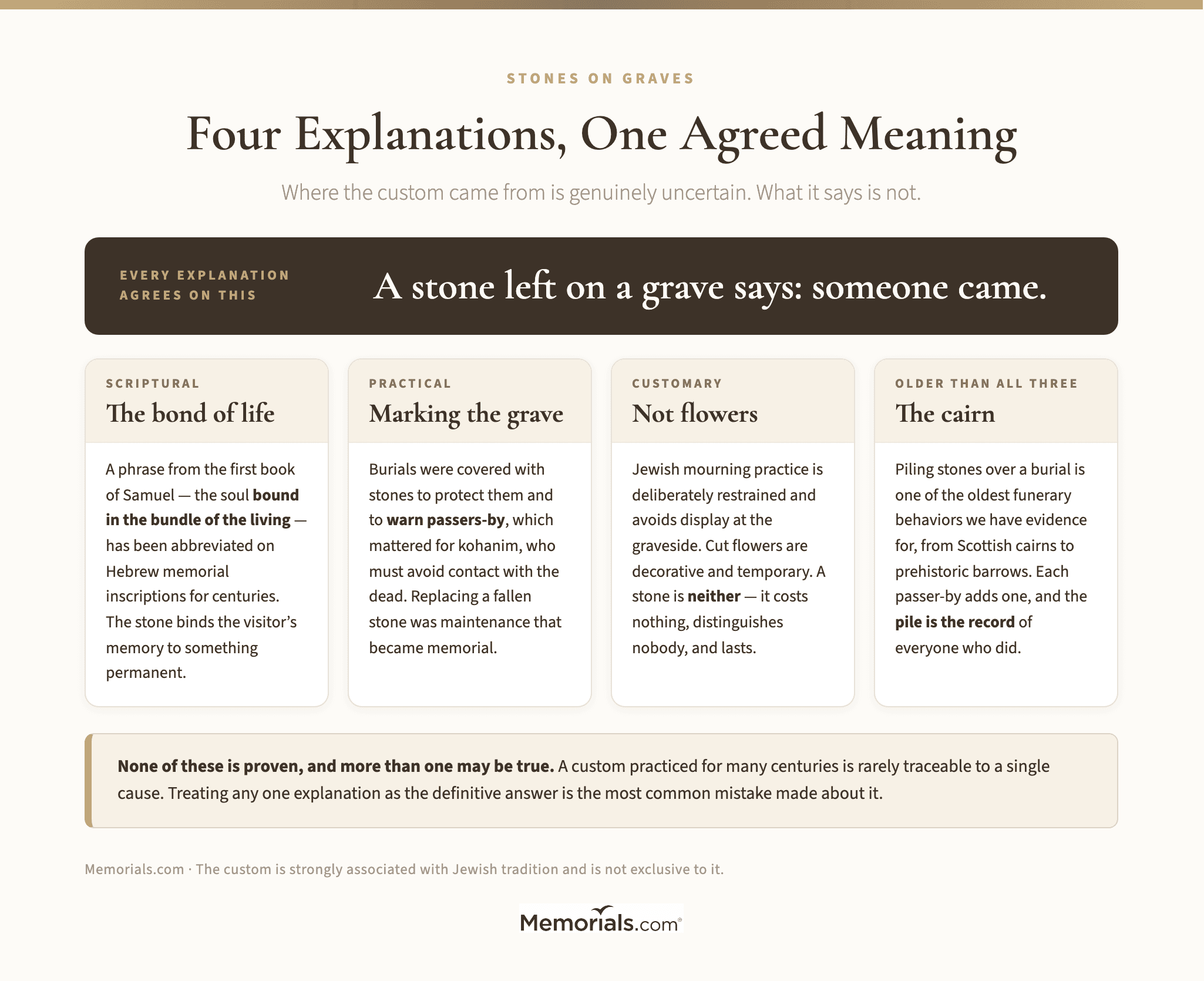
The bond of life. The most frequently cited connection is to a phrase from the first book of Samuel, where Abigail tells David that his soul will be "bound in the bundle of the living." Hebrew memorial inscriptions have used an abbreviation of that phrase for centuries, and it is commonly read as the source of a gesture that binds the visitor's memory to the person in something permanent. Our guide to religious imagery covers how that vocabulary of inscription developed.
Marking the grave. A more practical explanation traces the custom to the need to mark burial sites clearly in the ancient Near East. Graves were covered with piles of stones, both to protect the body and to warn passers-by, which mattered particularly for kohanim, members of the priestly line, who are required to avoid contact with the dead. A visitor who replaced a fallen stone was maintaining that warning. On this reading the gesture began as maintenance and became a memorial.
A substitute for flowers. Traditional Jewish mourning practice is deliberately restrained and avoids display at the graveside, and cut flowers, which are decorative and temporary, sit awkwardly with that restraint. A stone is neither. It costs nothing, it distinguishes nobody, and it lasts.
None of these is provable, and it is entirely possible that more than one is true. A custom that has been practiced for many centuries is rarely traceable to a single cause, and treating any one explanation as the definitive answer is the most common mistake made in writing about it.
Where the custom came from is genuinely contested. What it says is not, and every account agrees on the same sentence.
It Is Not Only a Jewish Custom
The association with Jewish tradition is real and strong, but stones on graves are much wider than that.
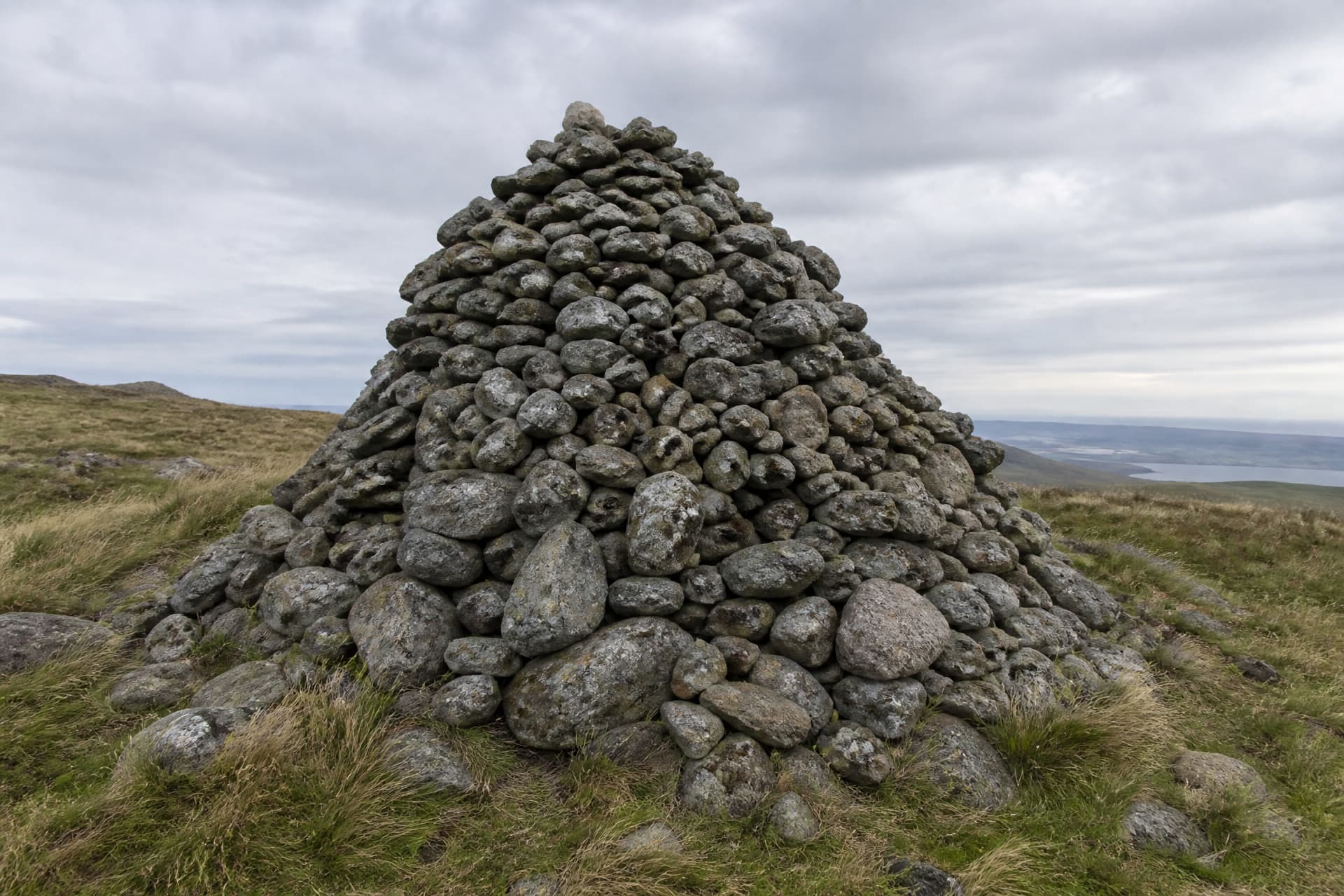
Piling stones over or beside a burial is one of the oldest human funerary behaviors we have evidence for, and cairns appear across an enormous geographic range. Scottish and Irish burial cairns, prehistoric long barrows across northern Europe, roadside marker piles, and memorial cairns raised at the site of a death all work on the same principle: each person who passes adds a stone, and the pile is the accumulated record of everyone who did. The phrase "I'll put a stone on your cairn," a Scottish expression of respect, comes directly from that practice.
A cairn is the same gesture at scale. Each passer-by adds one stone, nobody clears them, and the pile becomes the accumulated record of everyone who came.
The custom has also traveled well beyond its origins in modern American cemeteries. At military graves in particular, stones sit alongside a wider set of objects left by visitors, each carrying its own meaning. Our guide to military grave traditions covers the coins, rocks and tributes left at veterans' graves and what each one signals about the visitor's relationship to the deceased.
The closely related custom of leaving coins is the one most often confused with it, and it means something quite different. We cover it separately in why coins are left on headstones.
What the Stones Do Not Mean
A few readings turn up repeatedly and are worth correcting.
They are not an offering, and they are not left for the deceased to use or receive. The gesture is directed at memory and at other visitors, not at the dead.
They are not a form of weighing down or containing the deceased. That explanation appears occasionally online, usually attached to a claim about keeping the soul from wandering, and it has no basis in the mainstream traditions that actually practice the custom.
Size and quality carry no message. A small plain pebble picked up from the path is as meaningful as anything chosen in advance, and in most accounts of the tradition the ordinariness is part of the point.
There is no required number, and the stones are not counted. A single stone is a complete gesture.
How to Leave a Stone Respectfully
If you want to take part, the etiquette is simple and mostly about restraint.
Use a small, natural stone. A pebble that fits comfortably in your palm. Painted rocks, polished decorative stones and engraved keepsakes are a different custom with a different meaning, and they are also the objects cemeteries most often remove.
Place it, do not throw it. Set the stone gently on the top edge, the shoulder, or the base of the marker.
Never place a stone on a damaged monument. Weight on a cracked or unstable stone can worsen the damage. Our headstone restoration and repair guide covers what deterioration looks like and why loose or spalling stone should be left alone.
Do not remove stones other people have left. They are someone else's visit. The only exception is a groundskeeper clearing a marker for maintenance.
Check the cemetery's rules if you are leaving anything else. Policies on objects at the graveside vary widely, and our notes on cemetery etiquette cover what is generally accepted.
One practical note. Stones sitting on a polished granite surface for long periods can leave faint rings where dirt and moisture collect underneath. This is cosmetic and it cleans off, but it should be cleaned correctly rather than scrubbed, and our guide to how to clean a headstone explains the method for each material.
Stones as a Permanent Memorial
The visiting custom has a larger cousin. If a small stone says someone came, a stone chosen and placed deliberately at the graveside says something intended to last much longer.
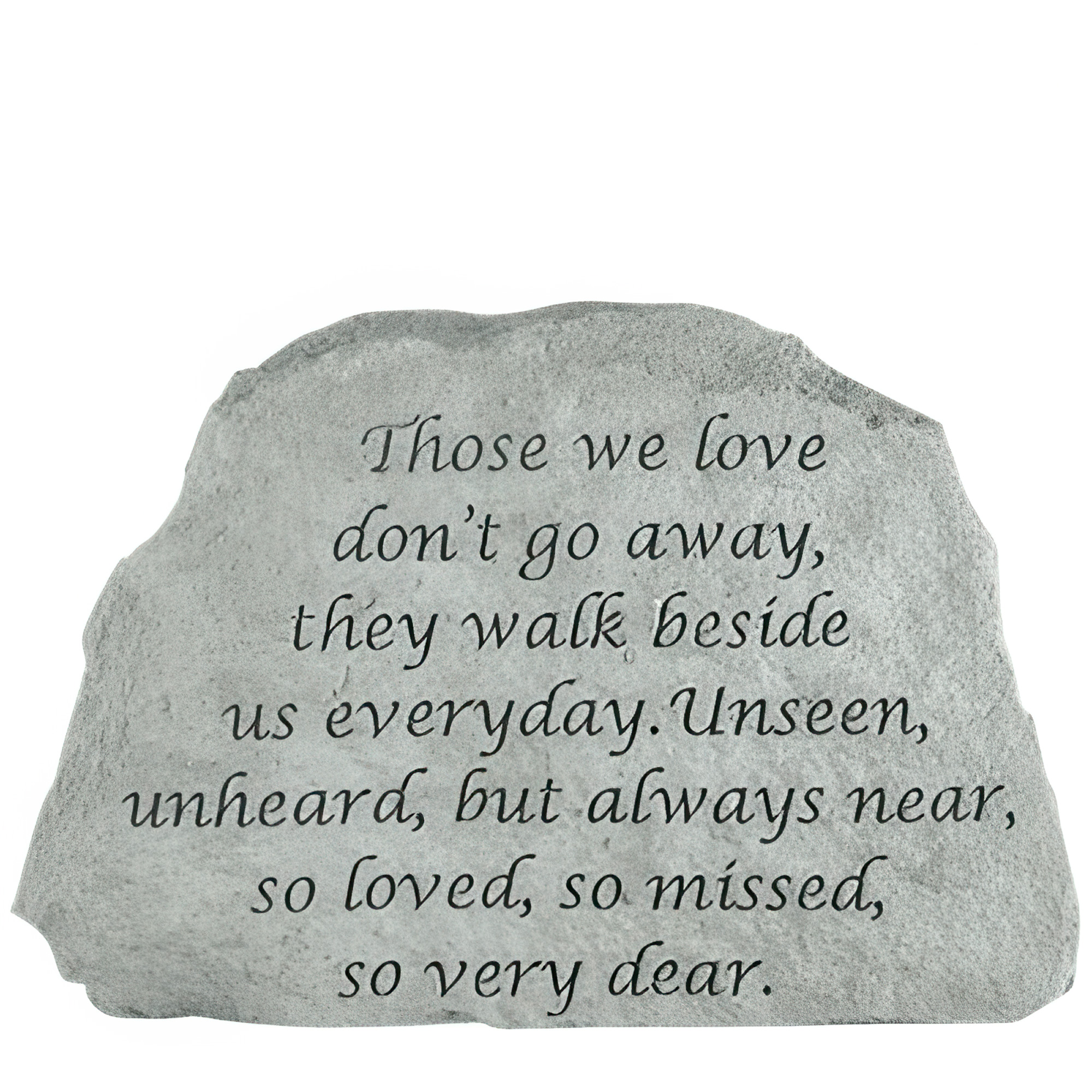
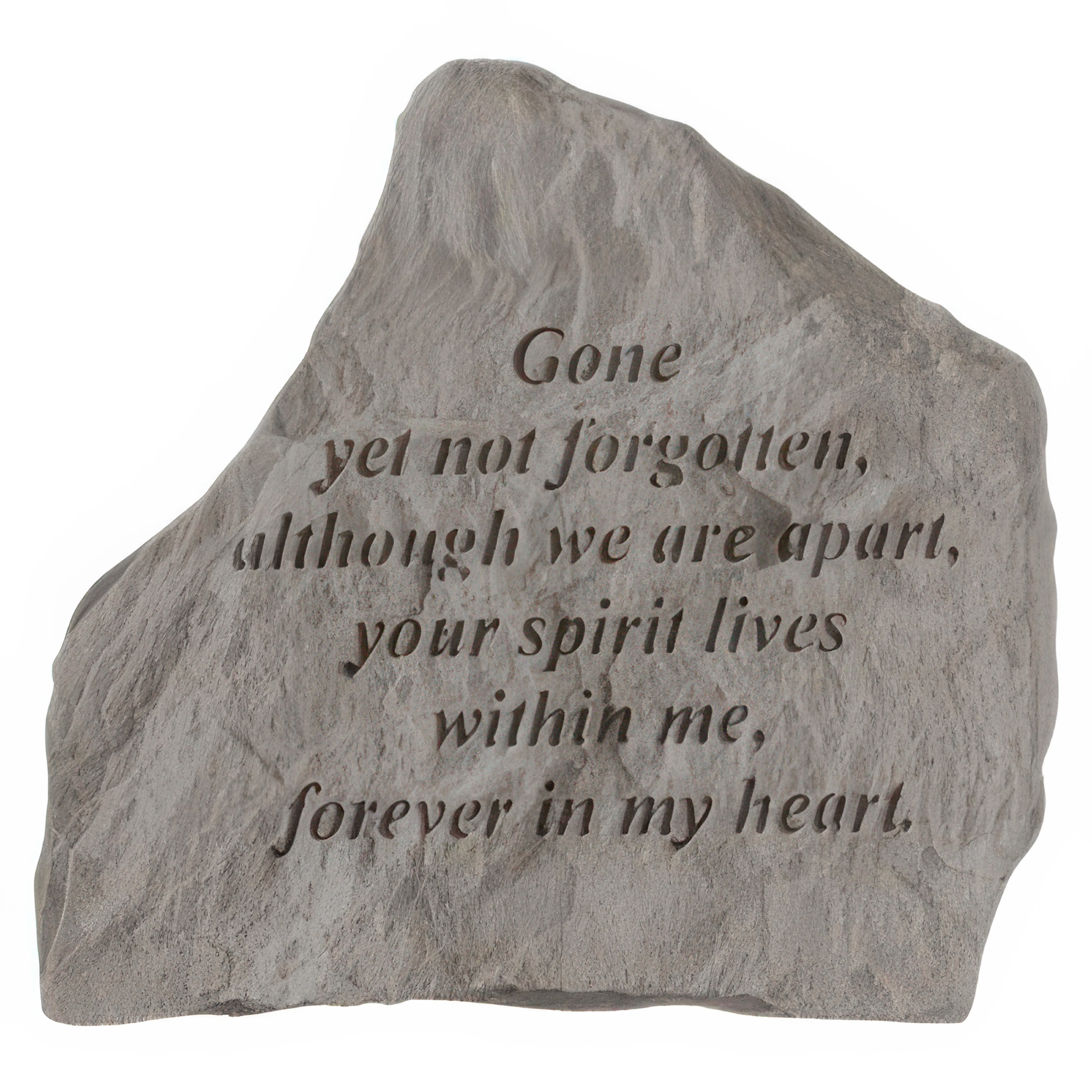
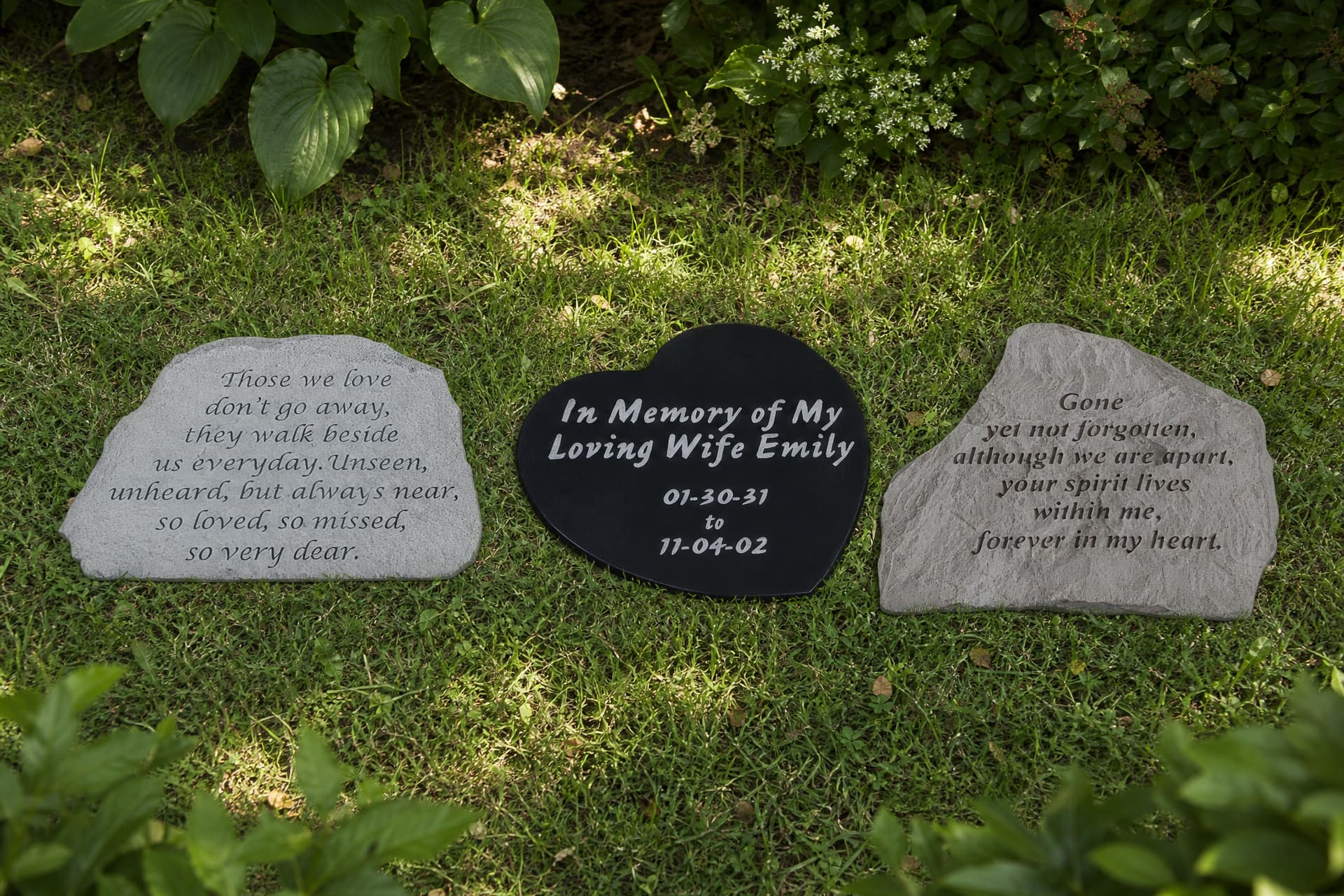
Families increasingly mark a grave, a garden, or a scattering site with an engraved natural stone rather than a conventional upright monument, particularly where a cemetery permits only flush markers or where the memorial is on private ground. Our range of memorial stones covers that format, which keeps the visual language of the visiting custom while carrying a name and dates.
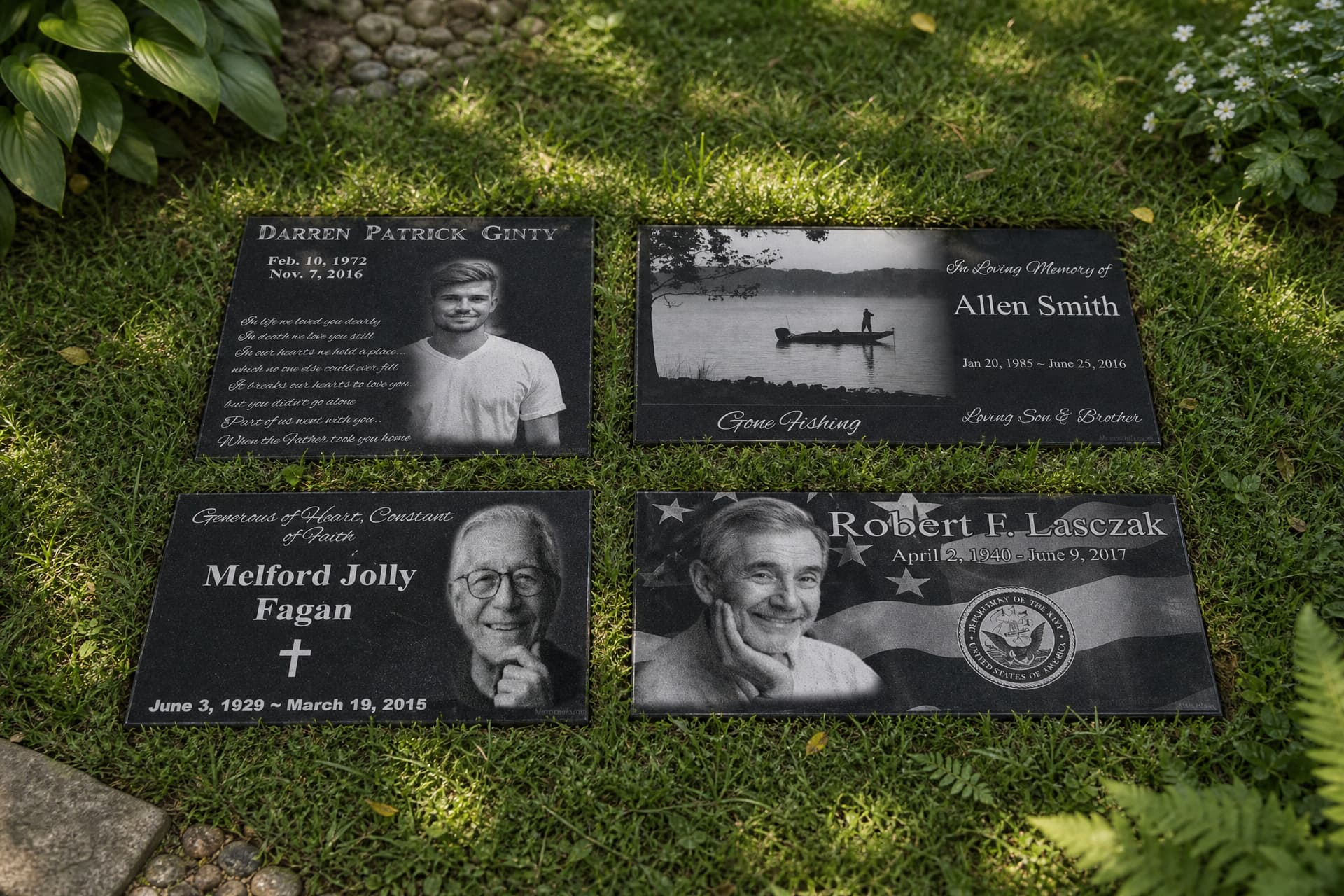
Where the inscription is the point, laser engraved memorial stones hold fine lettering and images on a natural face without the stone stopping looking like a stone.
There is a smaller version of the same idea, and it is the one closest in spirit to the custom itself. Keepsake memory stones are sized to be held rather than sited, and families use them at home, in a garden, or carried to the graveside and left there deliberately. A stone chosen for someone and placed once is doing what every pebble on a headstone is doing, with a name on it.
Where a full monument is the right answer, the material itself carries meaning too. Granite dominates the trade for practical reasons, and the design vocabulary carved into it has its own long history, covered in our guide to headstone symbols and their meanings. Our own grave stone range covers the upright and flush formats available.
Stones at Public Memorials
The custom has moved outward from individual graves to collective ones, and that is where many people first see it.
At Holocaust memorials, at war memorials, and at the sites of public tragedies, visitors leave stones in large numbers, often at markers that cover no burial at all. The gesture works the same way it does at a graveside. It records a visit at a place where there may be no family left to visit, and where the people being remembered may have no individual grave anywhere. At memorials to events rather than to named people, the accumulation of stones is frequently the only record that anybody came.
This is also why you will see stones at memorial benches, at roadside markers, at trailhead plaques, and at trees planted in someone's memory. None of those is a grave. What they have in common is that they are places where someone is remembered, and the custom has proved willing to follow the memory rather than the body.
When the Stones Are Cleared
Cemeteries do remove them, and it usually has nothing to do with disrespect.
Most cemeteries clear markers periodically so that the grounds can be mowed and the monuments inspected, and anything sitting on or beside a stone is collected during that pass. Some cemeteries schedule these clearances and post the dates; others do it as needed. Flush markers are cleared more aggressively than upright ones for the simple reason that anything left on them is directly in the path of the equipment.
If you visit and find that stones you left are gone, that is almost always what happened. The customary response is not to complain but to leave another one, which is consistent with the logic of the tradition: the stone was never the point, the visit was.
A few cemeteries do restrict the custom outright, usually as part of a broader policy limiting objects at the graveside. That policy will be in the rules you were given when the plot was purchased, and the cemetery office will confirm it. Our guide to cemetery grave decoration ideas covers what is typically allowed and what is typically removed.
Frequently Asked Questions
Is it disrespectful to leave a stone on a grave if I am not Jewish? No. The gesture is widely understood as a mark of respect, and non-Jewish visitors leave stones at Jewish graves and at graves of every other kind without giving offense. If you are visiting a Jewish cemetery, following the custom is generally seen as a courtesy.
What do stones on graves mean when there are many of them? That the grave is visited often. The accumulation is the message, which is why the stones are left in place rather than cleared between visits.
Should I bring a stone or find one at the cemetery? Either is fine. Many people pick one up on the walk in. Some cemeteries and Jewish burial societies keep a basket of small stones near the gate for visitors.
Can I write on the stone I leave? It is better not to. A plain stone is the tradition, and cemeteries are more likely to remove marked or decorated objects during maintenance.
Does the stone have to go on top of the headstone? No. The top edge is the most common position because it is visible, but stones are equally often placed on the base, the shoulder of an upright monument, or on the ground beside a flush marker.
Why stones rather than flowers? Because they last. Flowers are cleared away within days and say nothing to the next visitor. A stone stays, and the point of the gesture is that it is still there when somebody else arrives.
A Small Stone, Left on Purpose
The custom survives because it asks almost nothing of the person doing it and gives a great deal to whoever comes next. No cost, no preparation, no words required, and a mark that outlasts every other thing a visitor could leave.
If you are planning a memorial rather than visiting one, the choices around material, format and inscription are covered in our complete guide to buying a headstone.