🏬Supersize Online Funeral Retailer🪦1000's of Headstones⚱️Over 10,000 Cremation Urns⚰️Caskets Overnight Delivery🛒Funeral & Memorial Superstore🚚FREE Shipping on ALL Orders👨👩👧👦Helping Families for over 20 Years💰Lowest Price Guarantee🏬Supersize Online Funeral Retailer🪦1000's of Headstones⚱️Over 10,000 Cremation Urns⚰️Caskets Overnight Delivery🛒Funeral & Memorial Superstore🚚FREE Shipping on ALL Orders👨👩👧👦Helping Families for over 20 Years💰Lowest Price Guarantee
🏬Supersize Online Funeral Retailer🪦1000's of Headstones⚱️Over 10,000 Cremation Urns⚰️Caskets Overnight Delivery🛒Funeral & Memorial Superstore🚚FREE Shipping on ALL Orders👨👩👧👦Helping Families for over 20 Years💰Lowest Price Guarantee🏬Supersize Online Funeral Retailer🪦1000's of Headstones⚱️Over 10,000 Cremation Urns⚰️Caskets Overnight Delivery🛒Funeral & Memorial Superstore🚚FREE Shipping on ALL Orders👨👩👧👦Helping Families for over 20 Years💰Lowest Price Guarantee
Ask for an Irish blessing funeral reading and almost every family means the same one. Almost nobody is told the thing that matters: it will not fit on the stone.
The blessing beginning May the road rise up to meet you runs to six lines, and its longest line is forty-one characters. A flat grave marker holds two to four lines at roughly twenty to thirty characters each. The arithmetic does not work, and families discover this at the monument company after they have already decided.
So this page does two jobs. It gives you the traditional blessings in full, for the service and the program where length costs nothing. And it gives you the short lines that actually fit an inscription, with the character counts, so you can choose before you are standing at a counter.
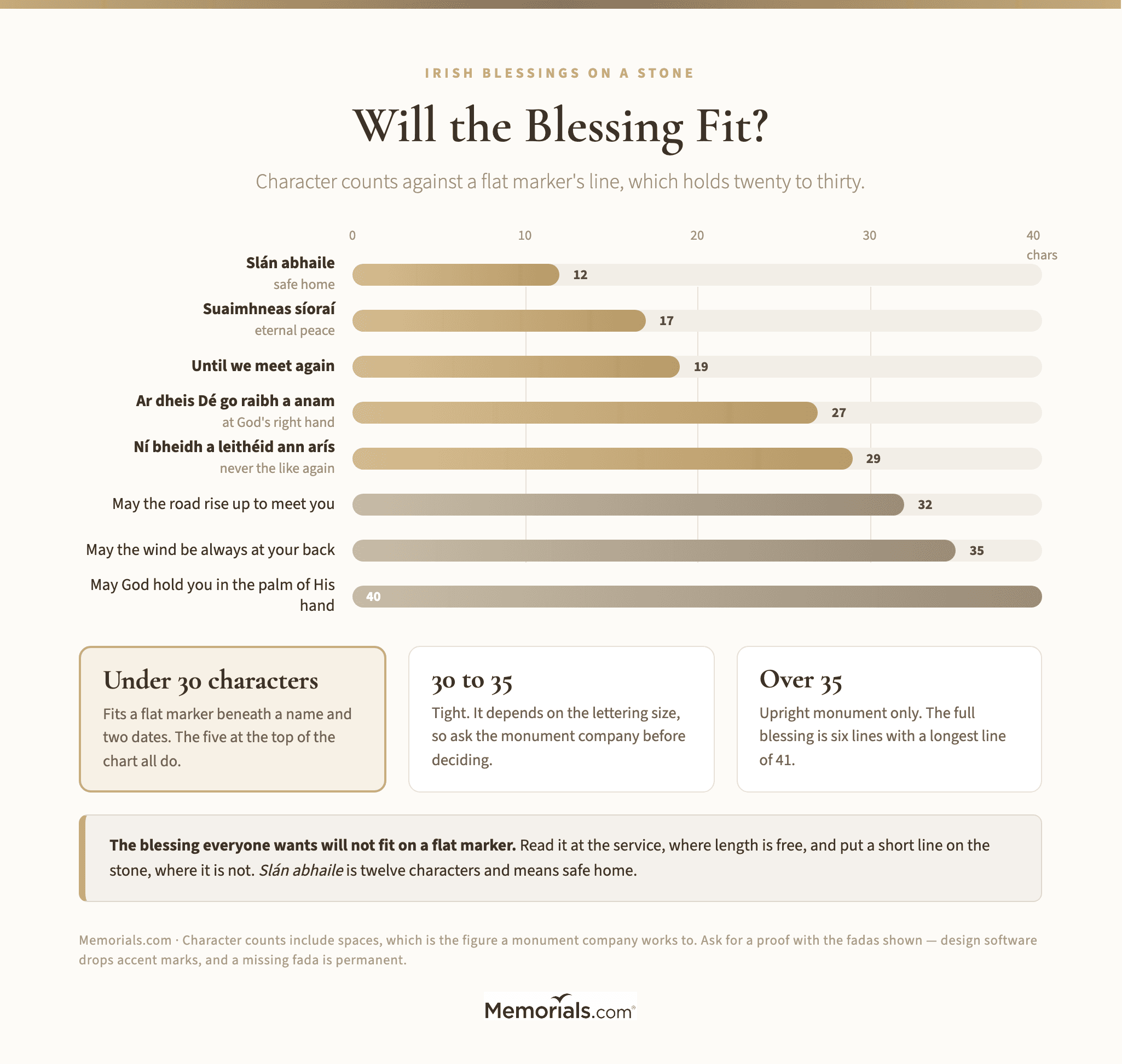
Character counts include spaces, which is the figure a monument company works to. The five shortest all fit a flat marker beneath a name and two dates; the blessing everyone wants does not.
The traditional Irish blessing, in the form most widely used:
May the road rise up to meet you, May the wind be always at your back, May the sun shine warm upon your face, The rains fall soft upon your fields, And until we meet again, May God hold you in the palm of His hand.
It is anonymous and traditional. Versions of it circulated in Irish and in English long before anyone printed a definitive text, which is why you will see the lines ordered differently and the fourth line rendered half a dozen ways. There is no authoritative version, and no one to ask permission from.
For a funeral service it is close to perfect. It is the right length read aloud, it carries no doctrine anyone will object to, and most of a room will recognize it.
For a headstone it is the wrong choice, and the reason is purely mechanical. Six lines at up to forty-one characters is an upright monument's worth of text, not a marker's. More on that below.
Shop Granite Headstones
Flat markers and upright monuments, engraved to order
These are the ones to consider if the blessing is going on a stone. The character count is the whole line including spaces, which is the number a monument company works to.
Line
Characters
Fits a flat marker?
Slán abhaile
12
Yes, easily
Suaimhneas síoraí
17
Yes
Until we meet again
19
Yes
Ar dheis Dé go raibh a anam
27
Yes
Ní bheidh a leithéid ann arís
29
Yes, at the limit
May the road rise up to meet you
32
Tight — ask first
May the wind be always at your back
35
Tight — ask first
May the sun shine warm upon your face
37
Upright only
May God hold you in the palm of His hand
40
Upright only
What the Irish ones mean:
Slán abhaile — safe home. An everyday farewell, which is exactly why it lands on a grave.
Suaimhneas síoraí — eternal peace.
Ar dheis Dé go raibh a anam — may his soul be at God's right hand. The standard Irish formula spoken of the dead. Use a hanam for a woman.
Ní bheidh a leithéid ann arís — there will never be the like again. Said of someone singular.
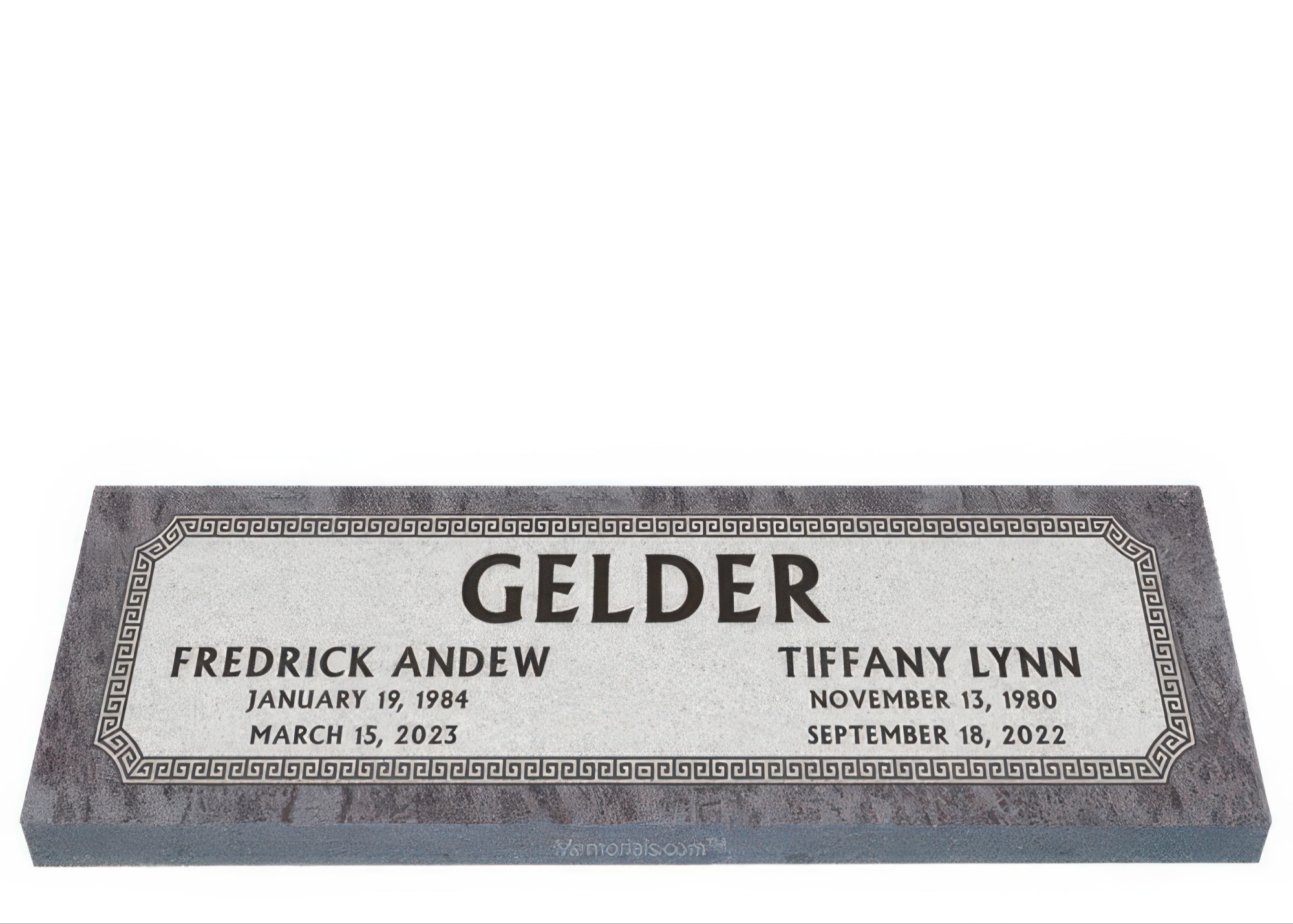
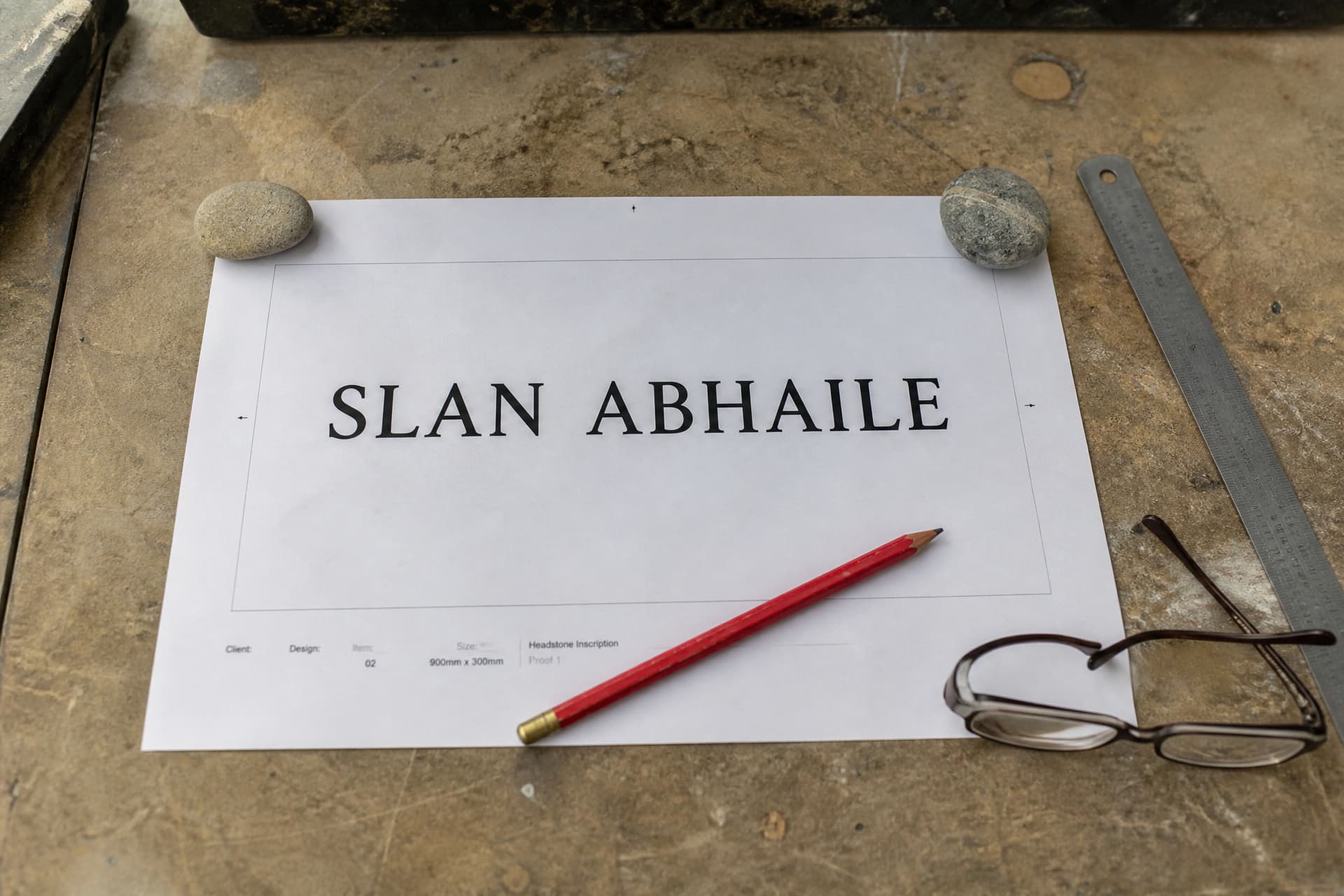
If you are engraving Irish, ask the monument company to show you a proof with the fadas — the accent marks — in place. They change the meaning, they are frequently dropped by design software, and a missing fada on a stone is permanent.
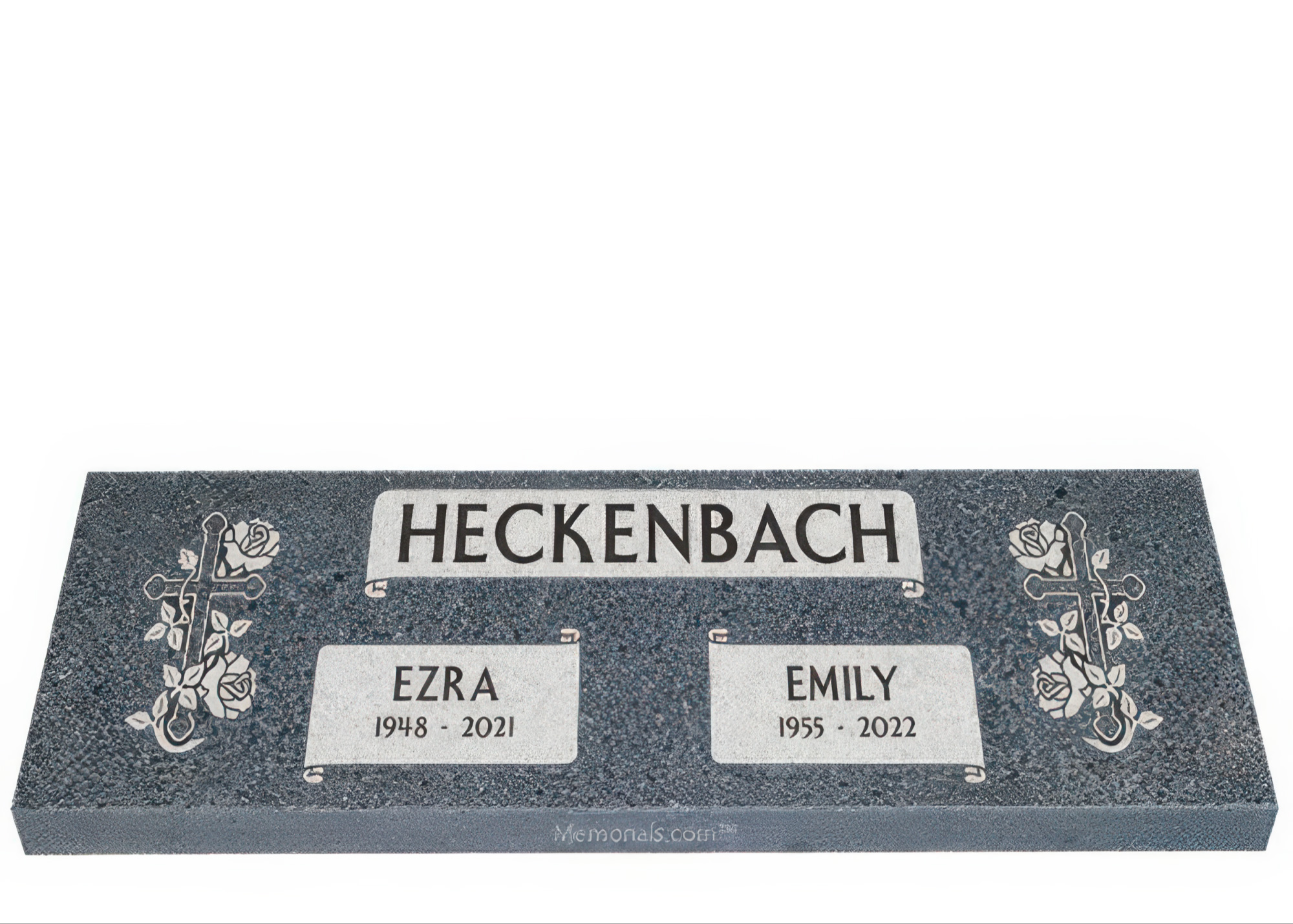
This is the proof to ask for, and this is also the mistake to catch on it. The fada is missing from Slán, which is a different word without it, and on the stone it would be permanent.
What Actually Fits, by Stone
This is the part that decides everything else, and it comes from the format rather than the words.
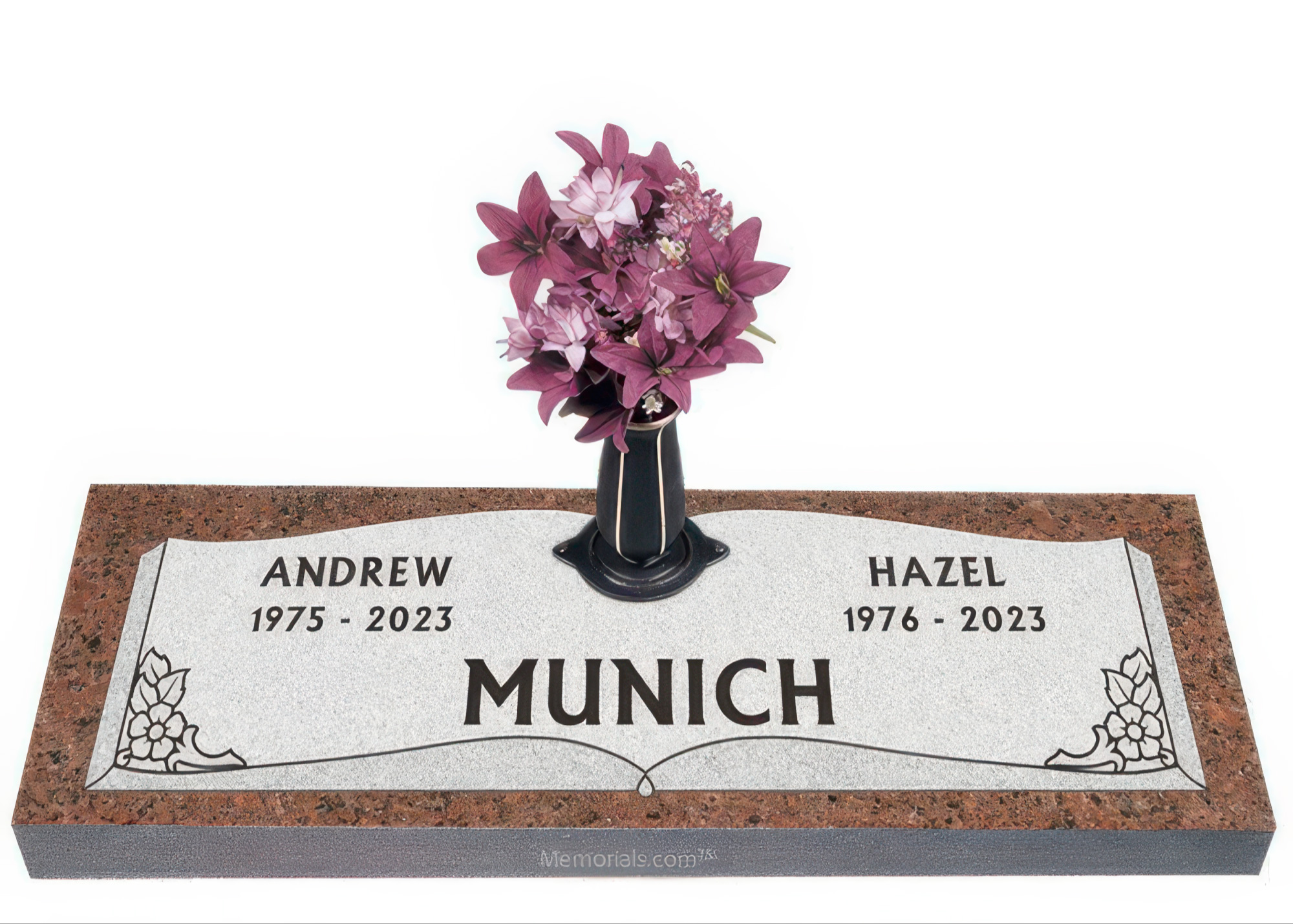
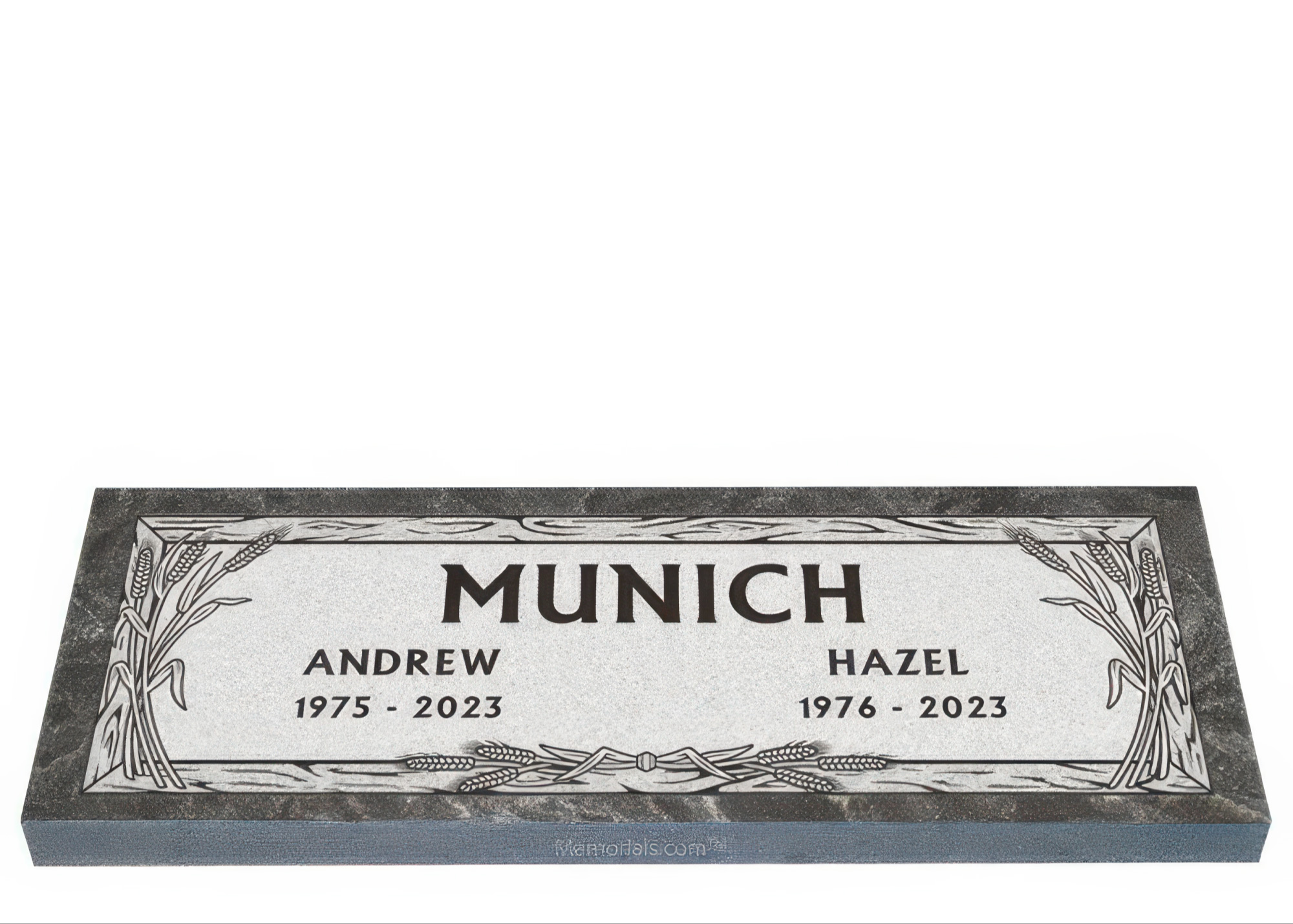
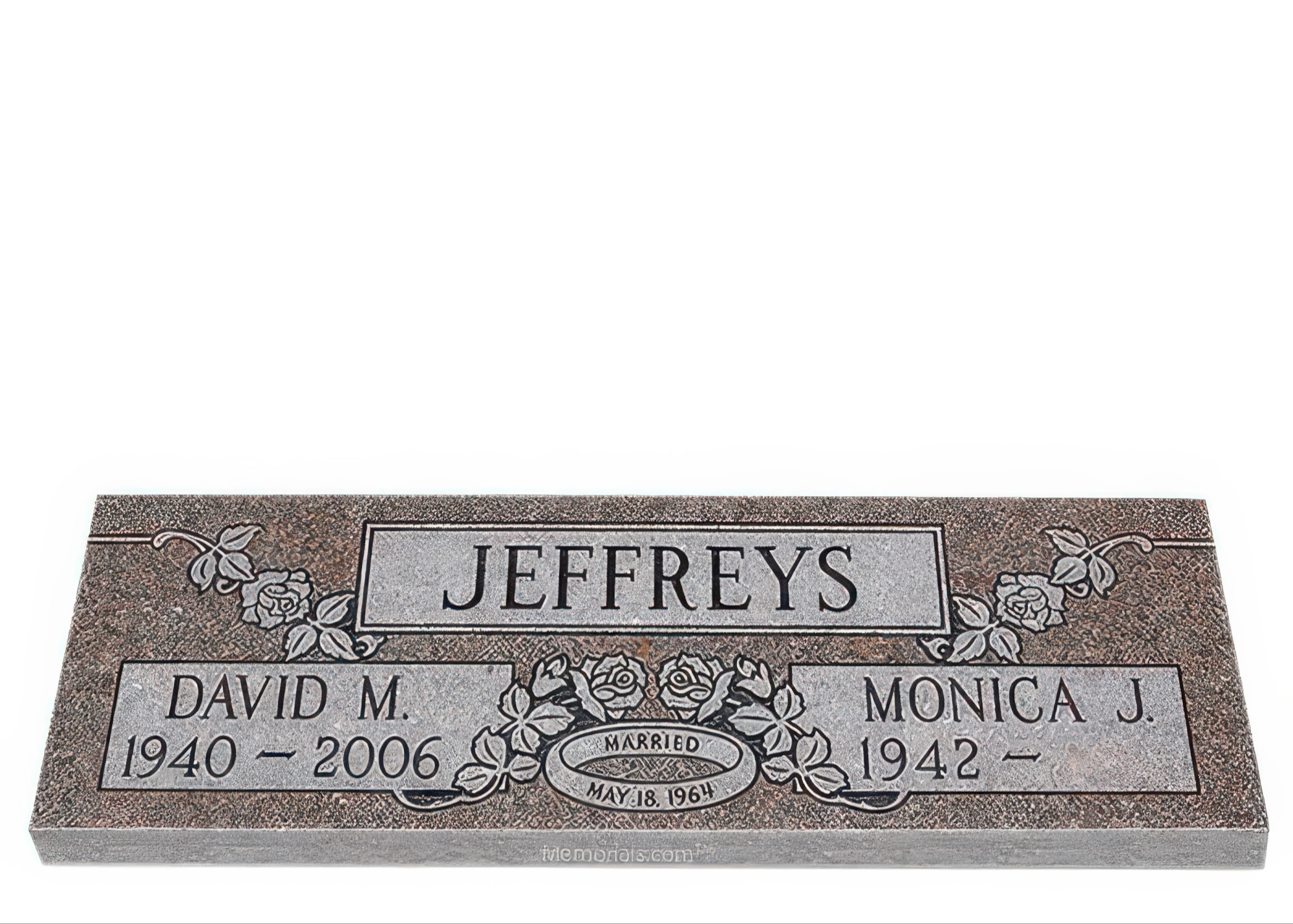
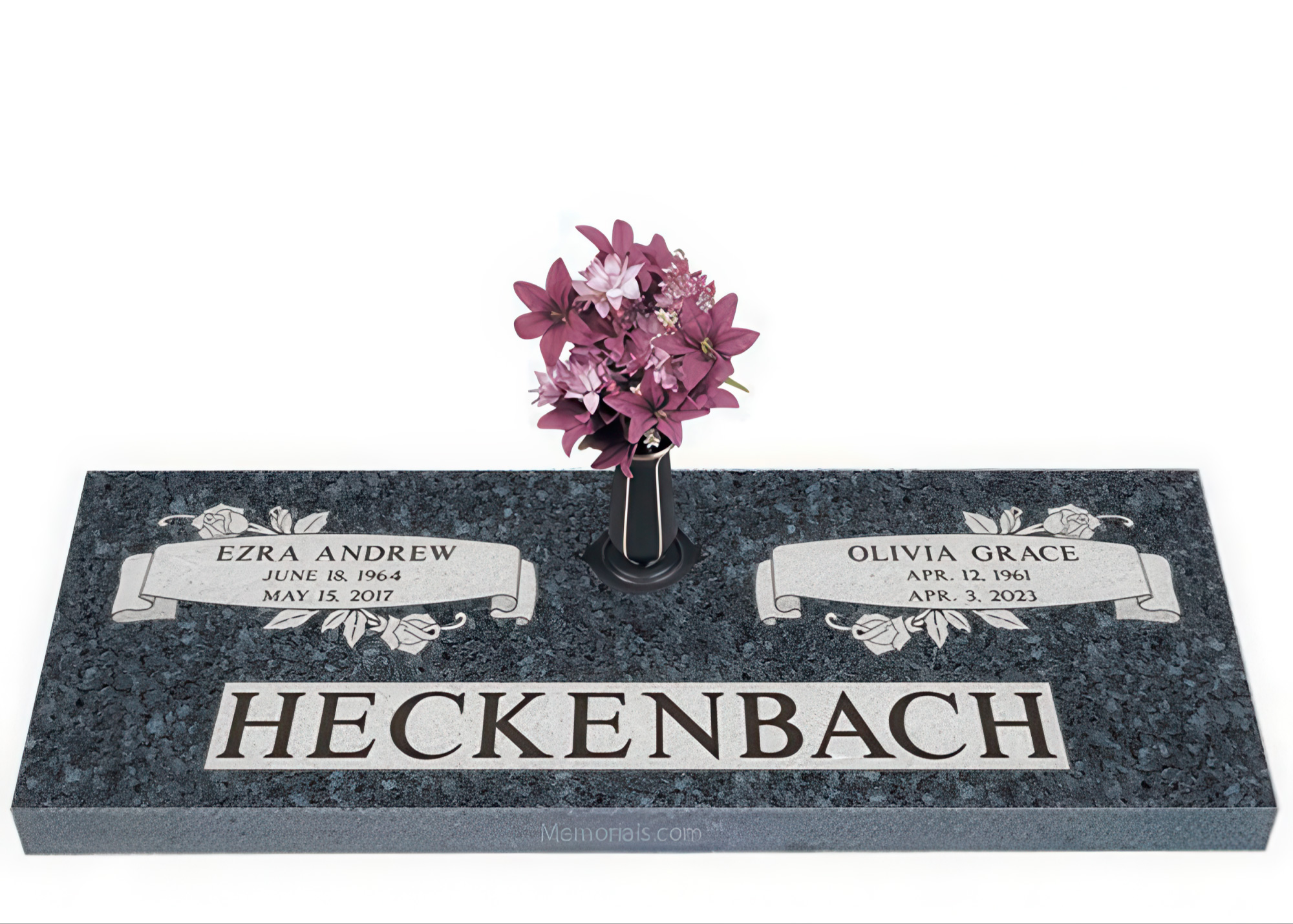
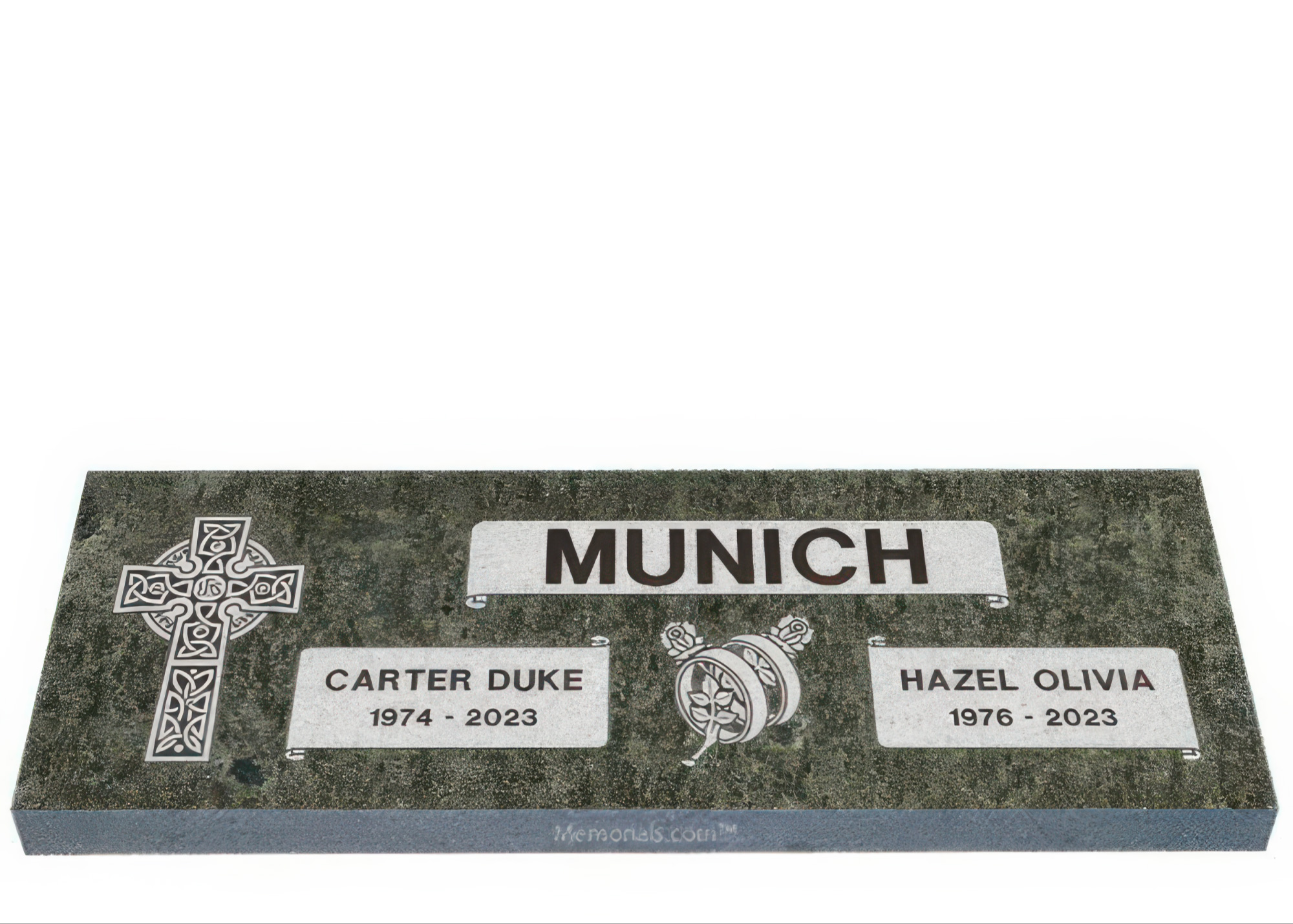
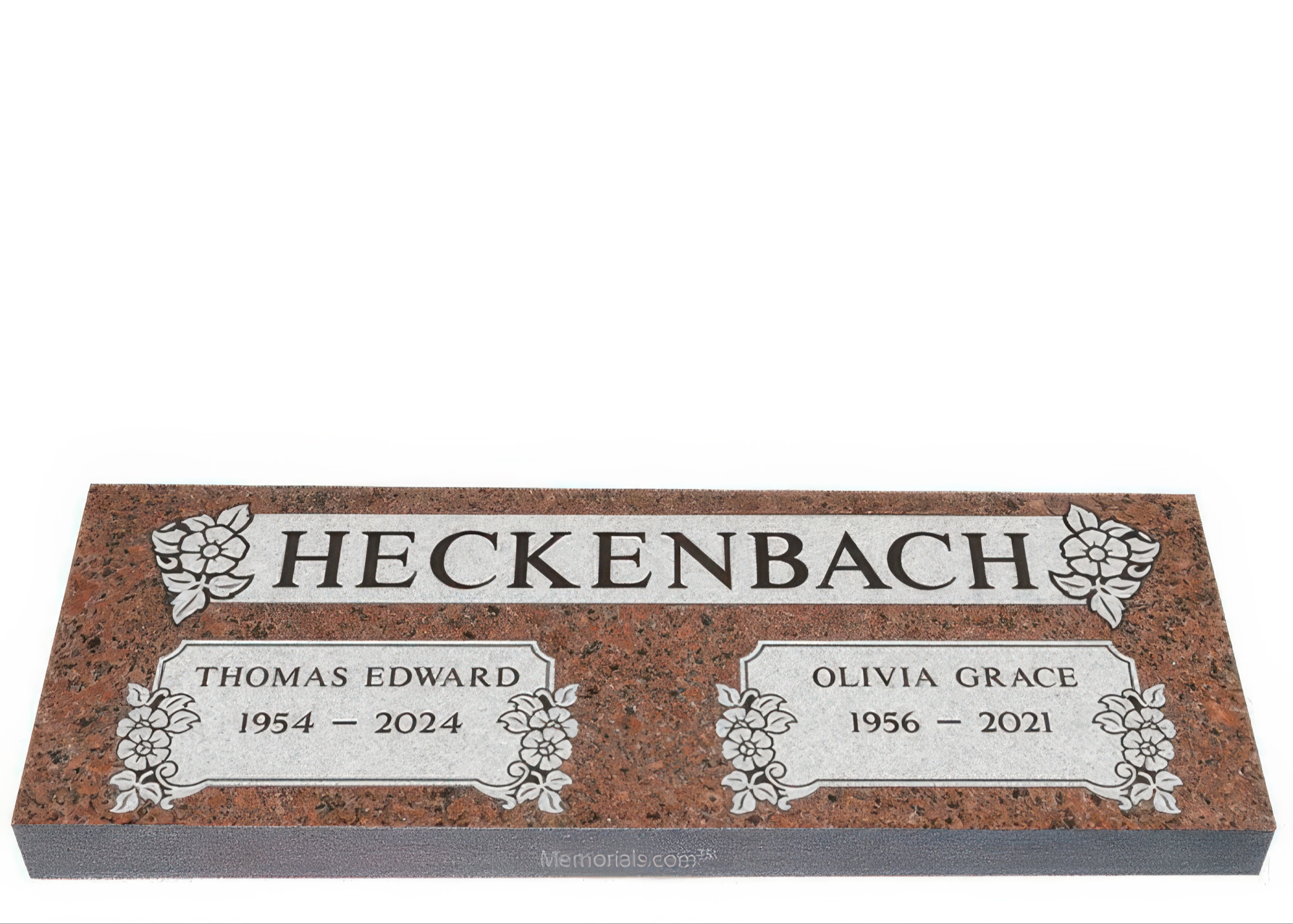
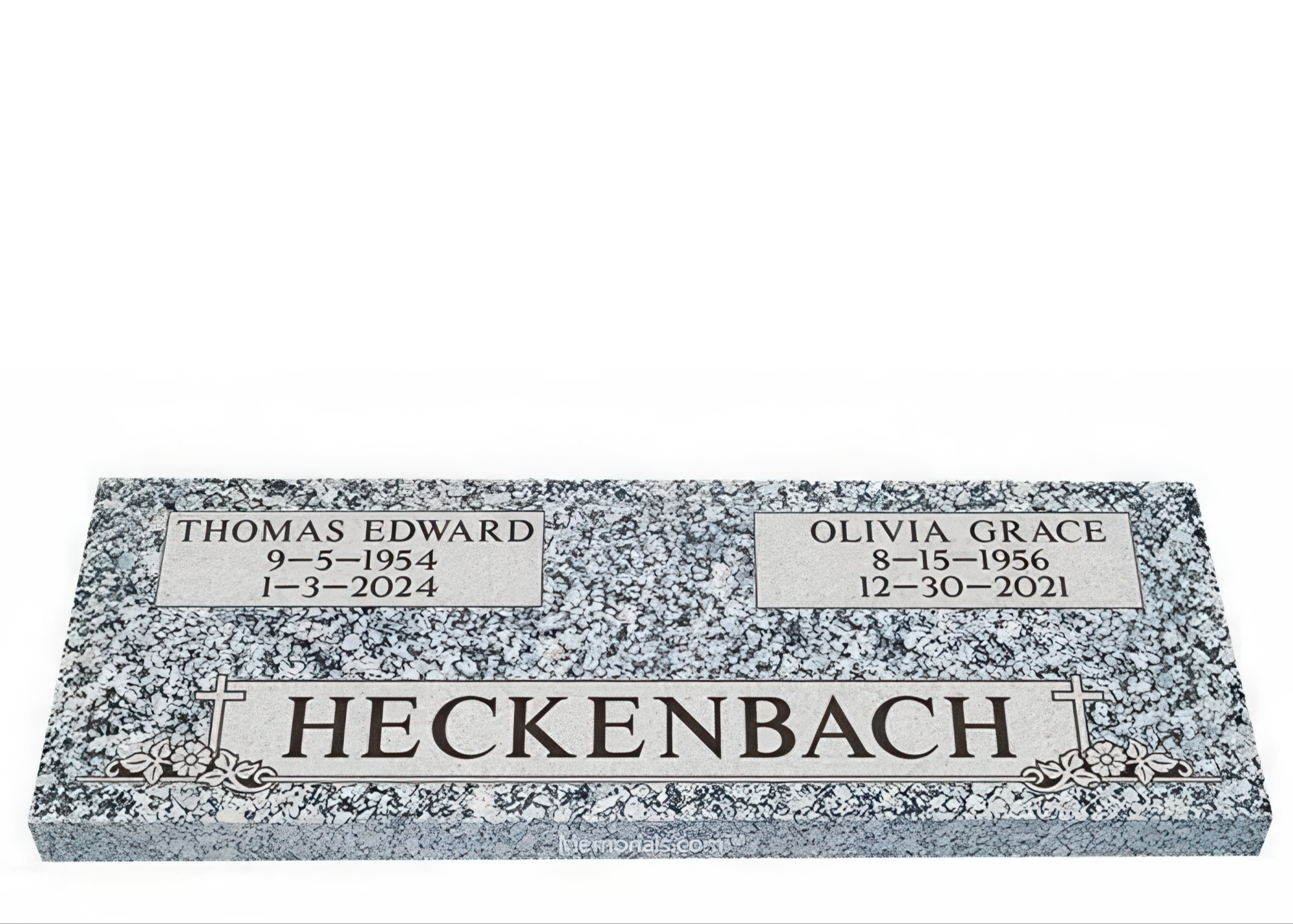
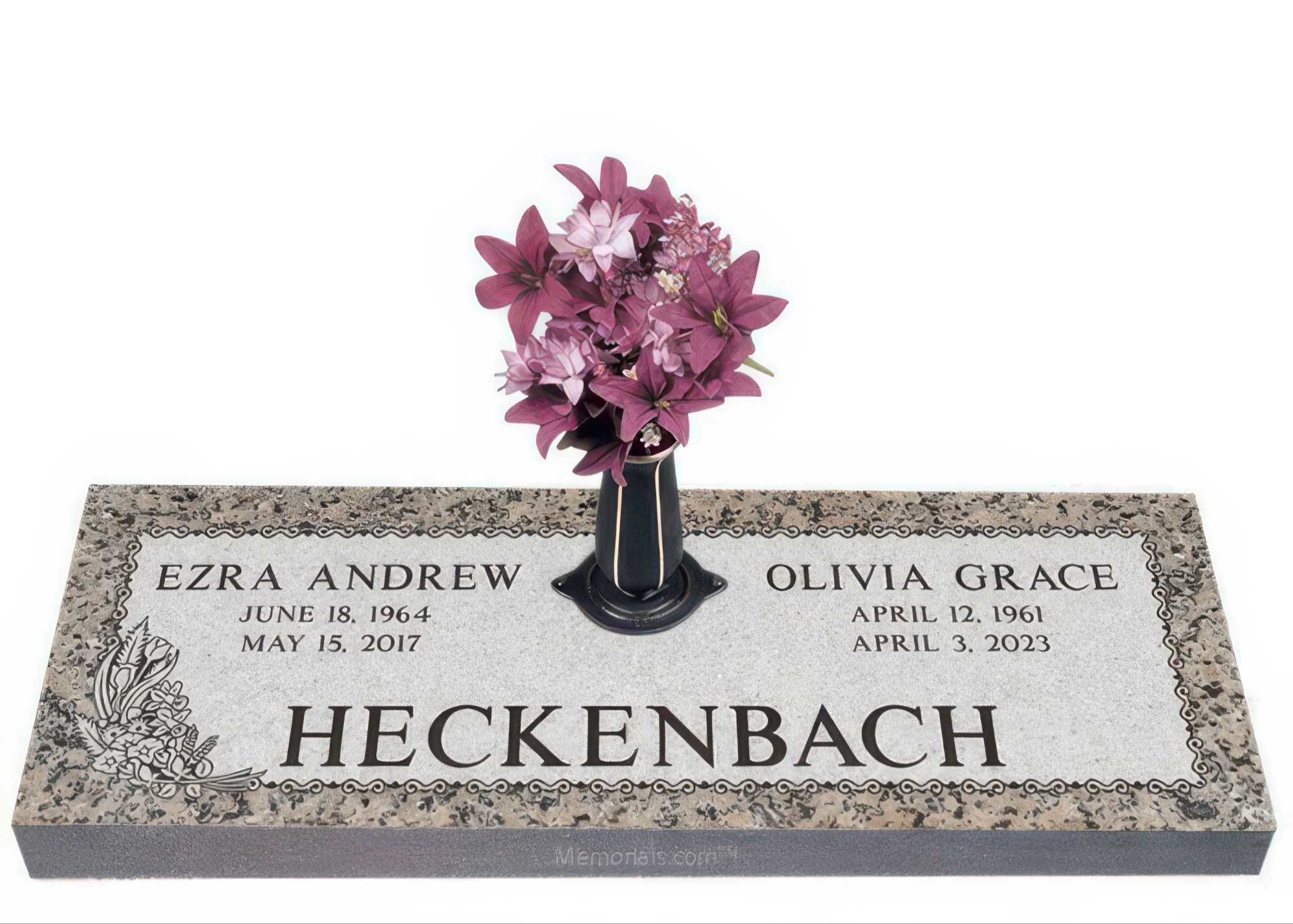
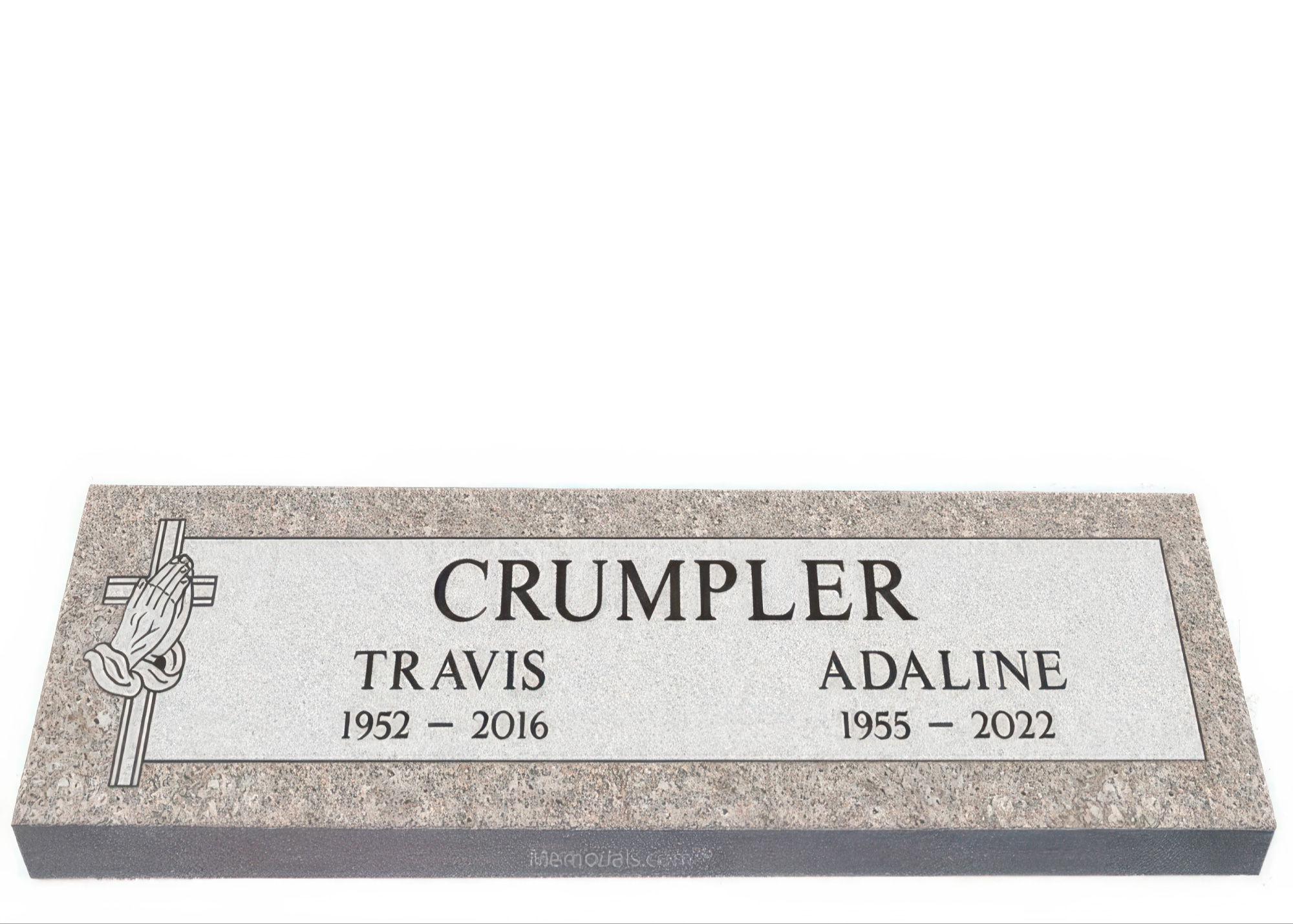
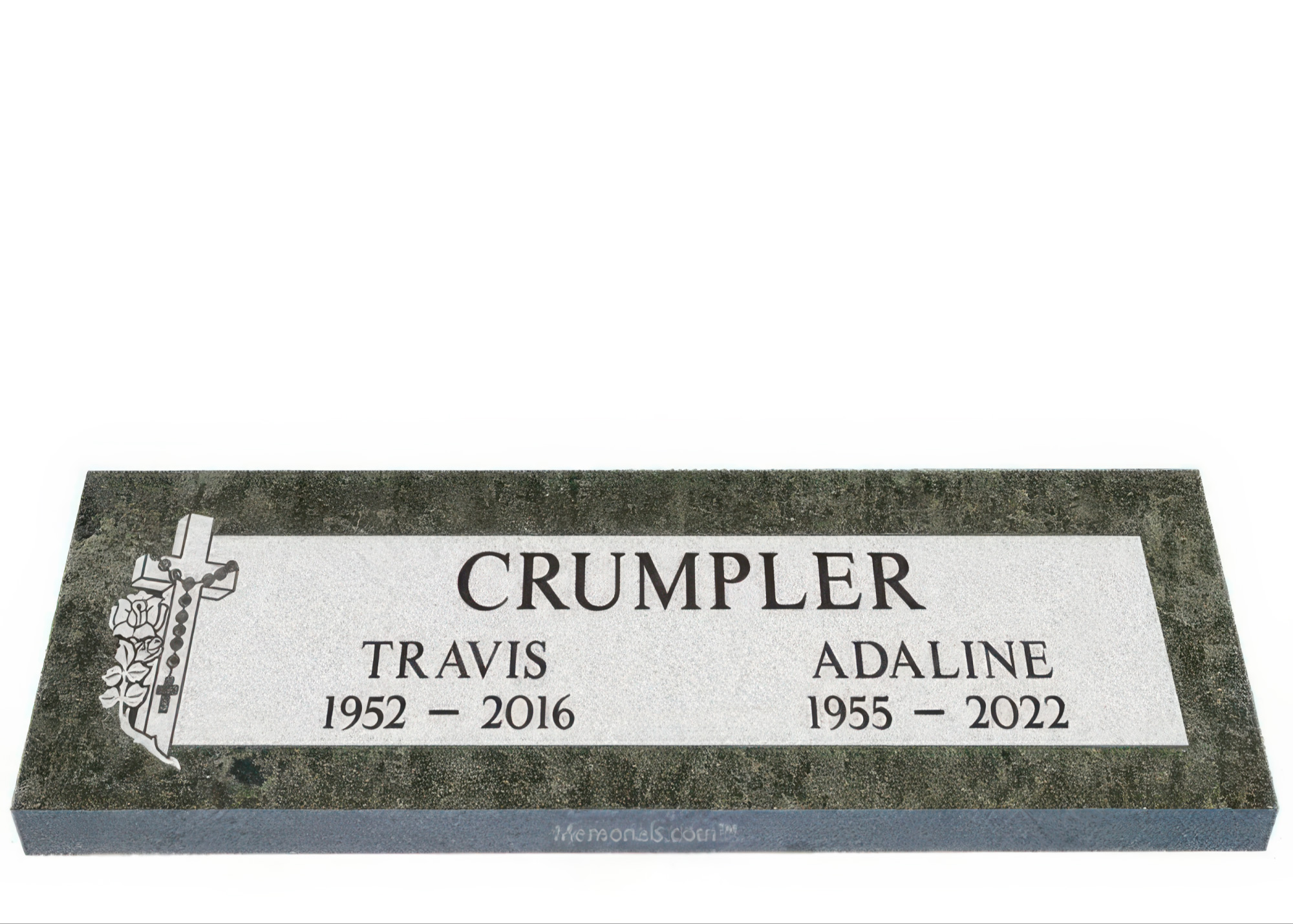
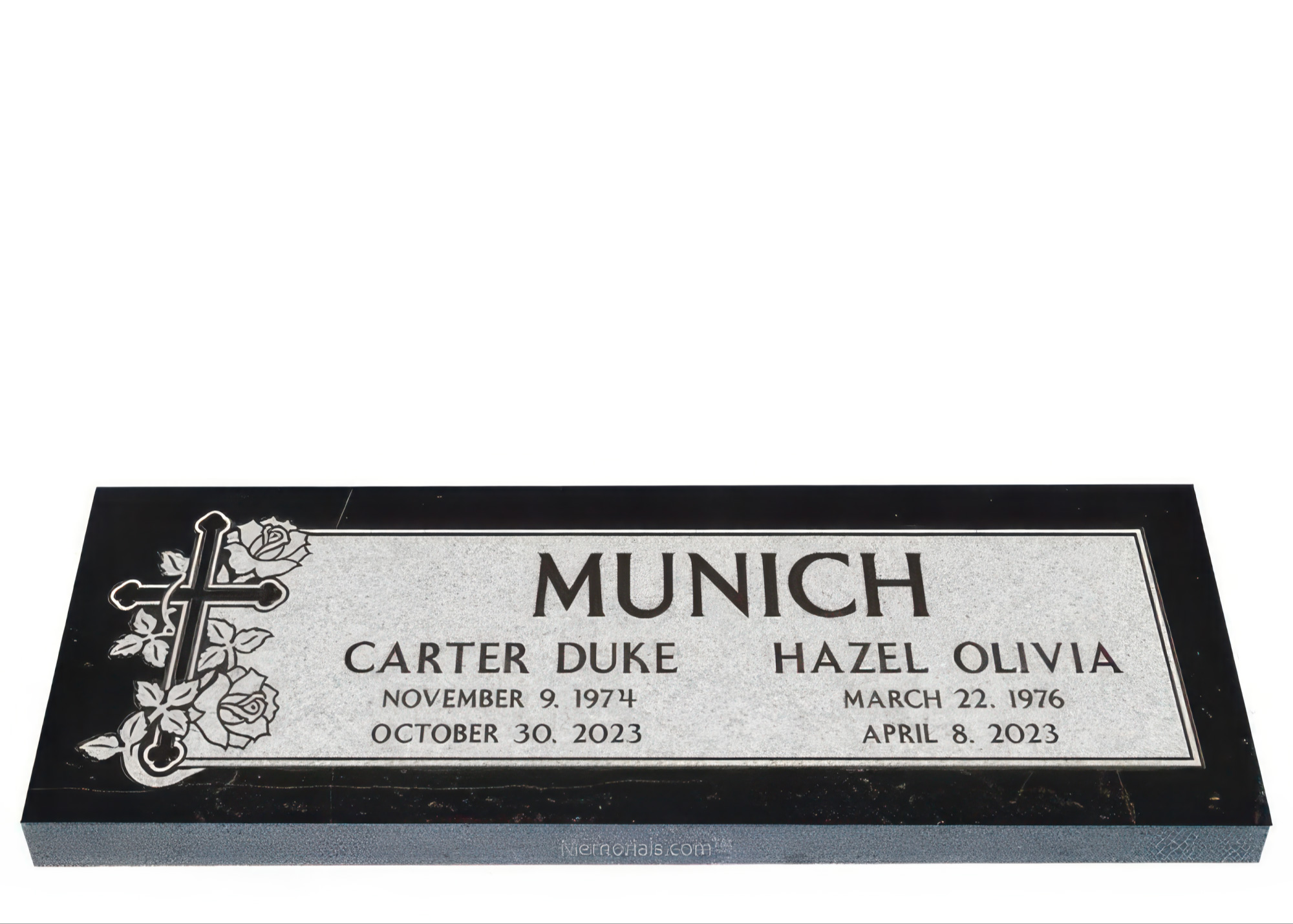
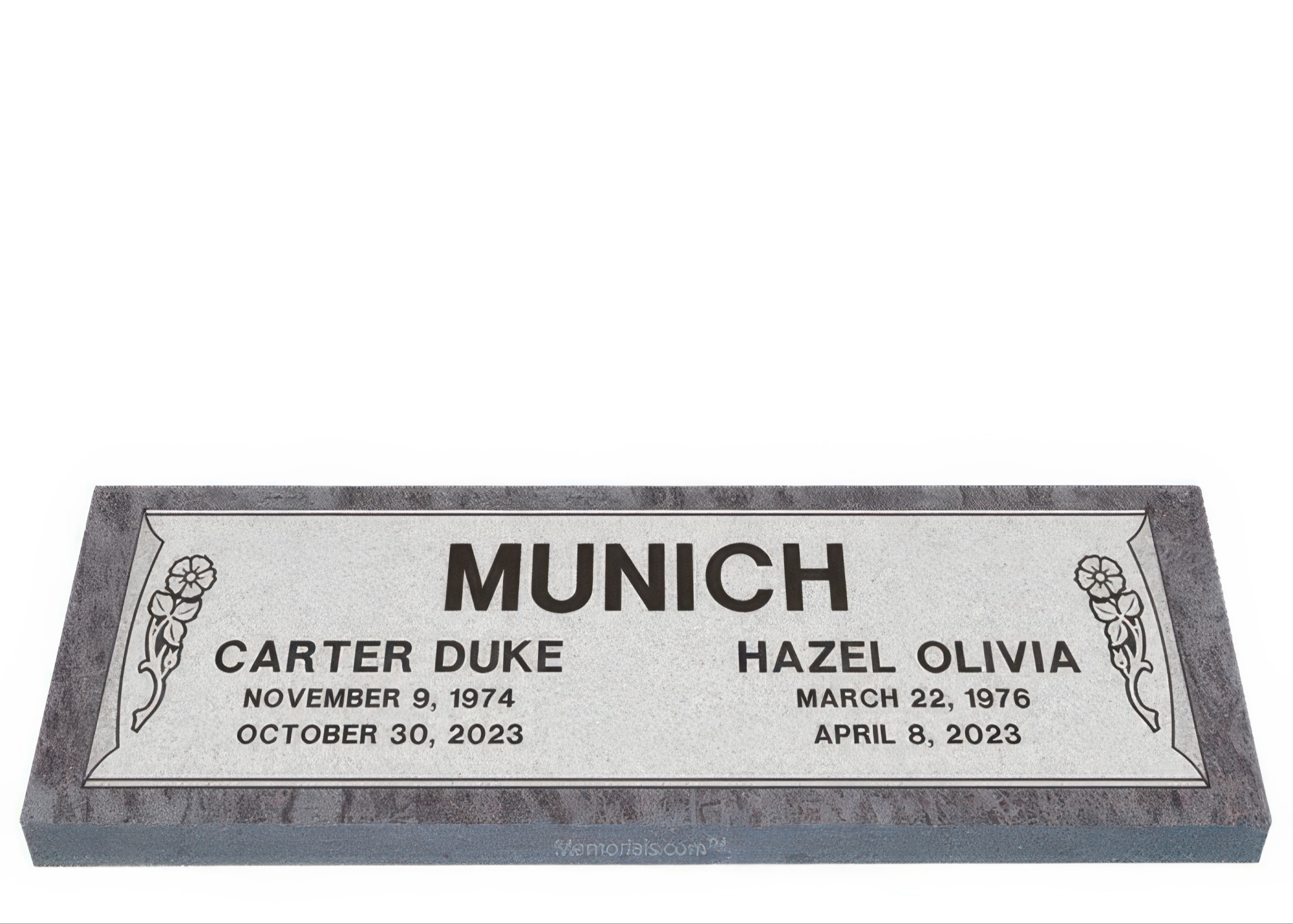
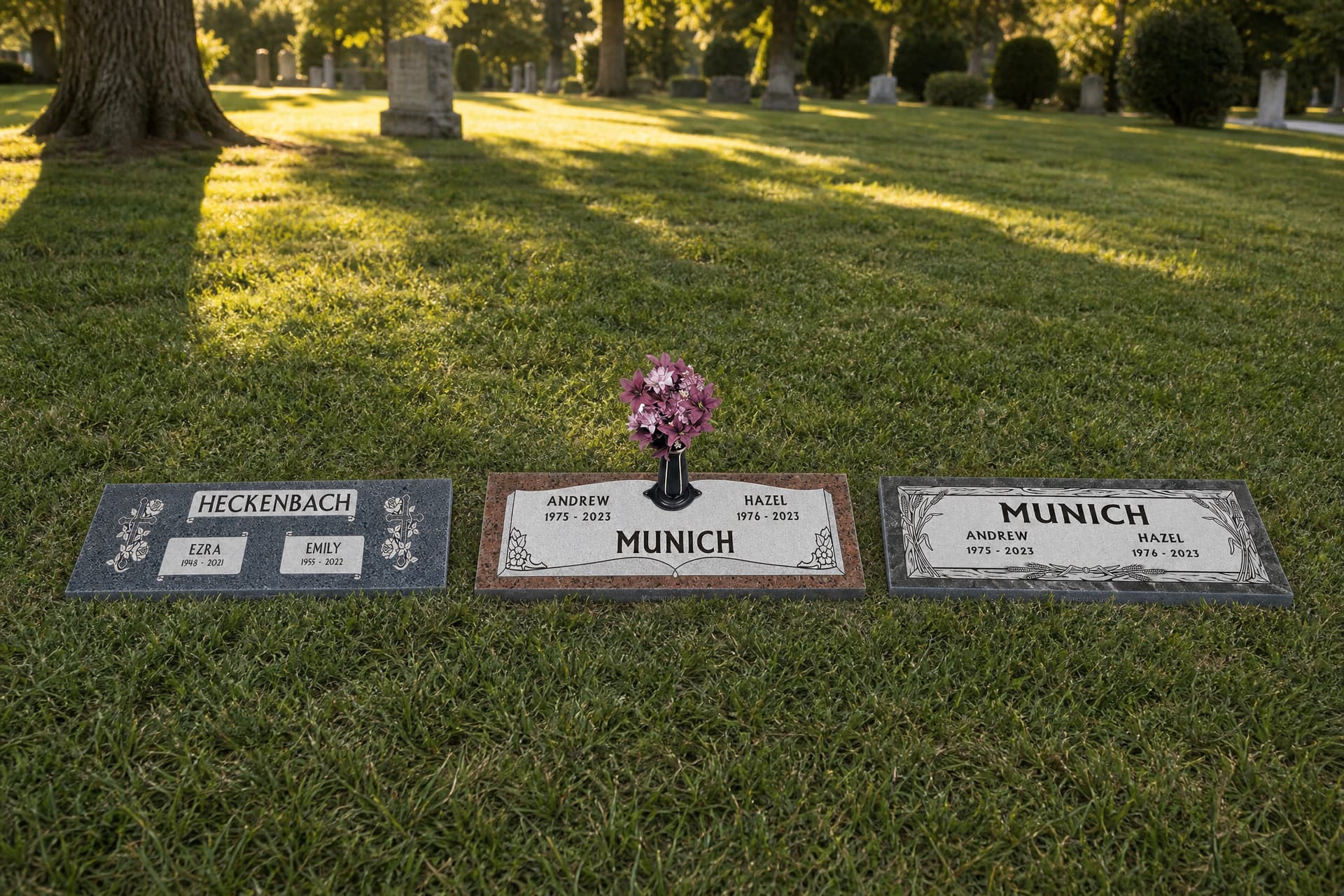
A flat grave marker holds two to four lines at roughly twenty to thirty characters per line. Once the name and dates are set, you have one or two lines left. A short Irish line fits. The full blessing does not.
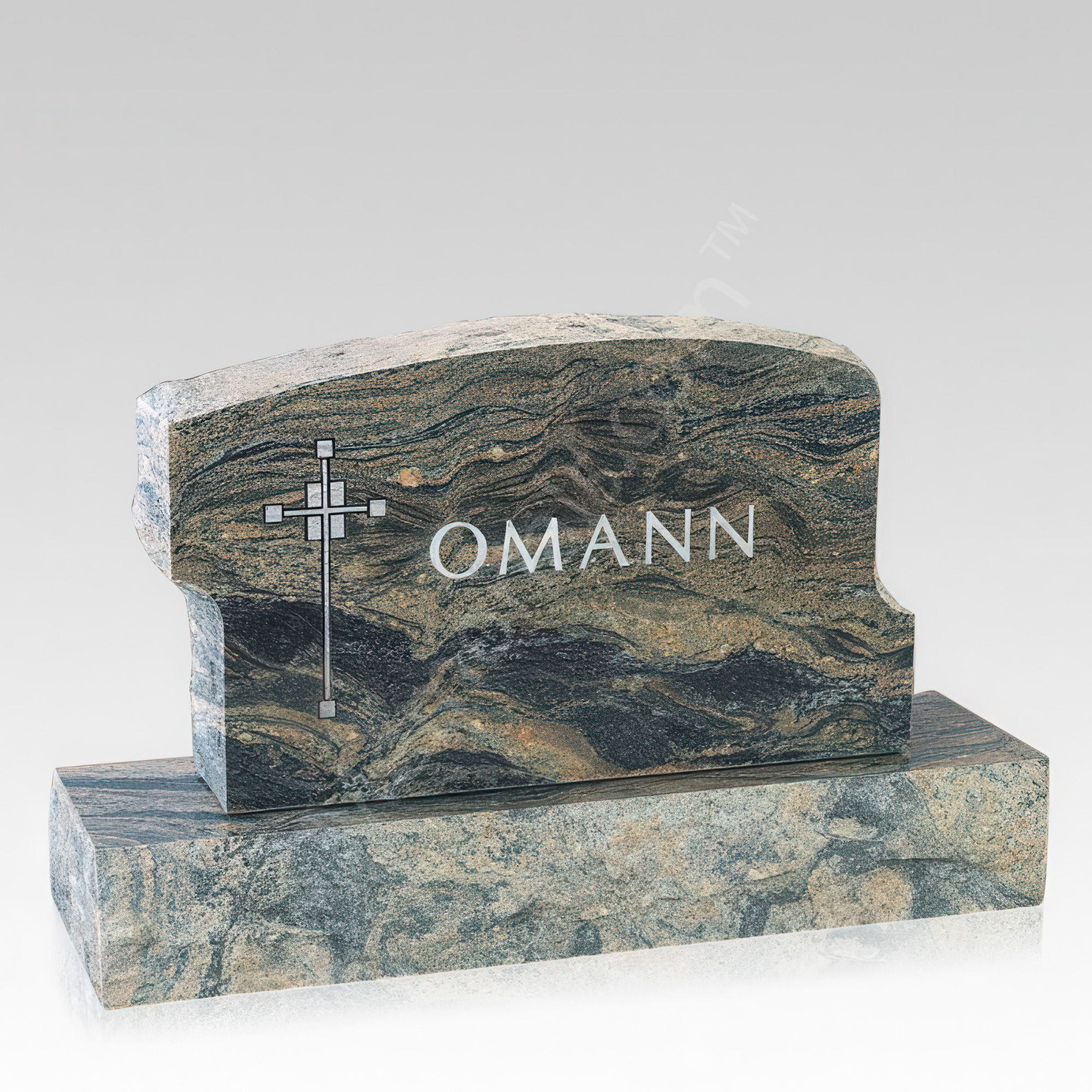
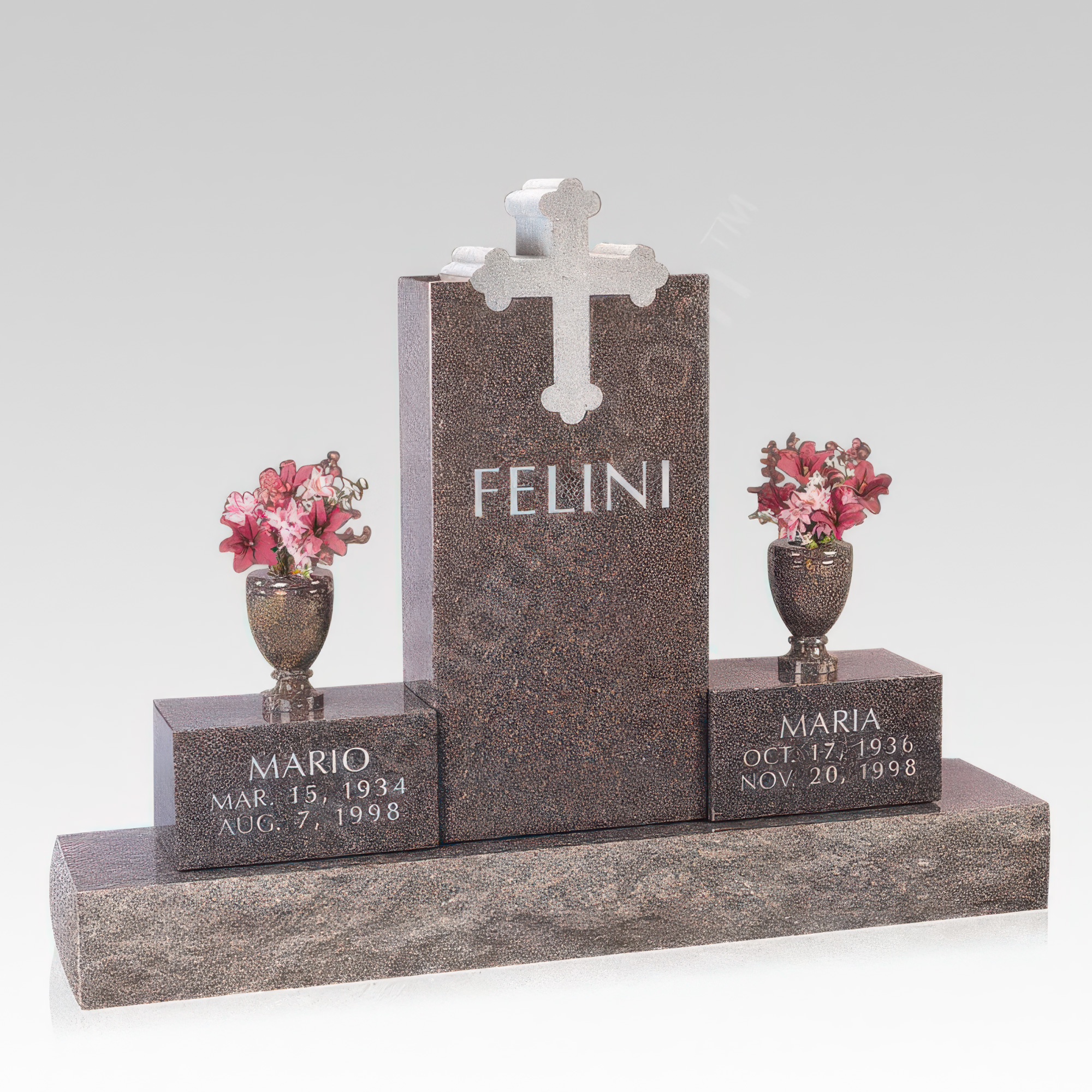
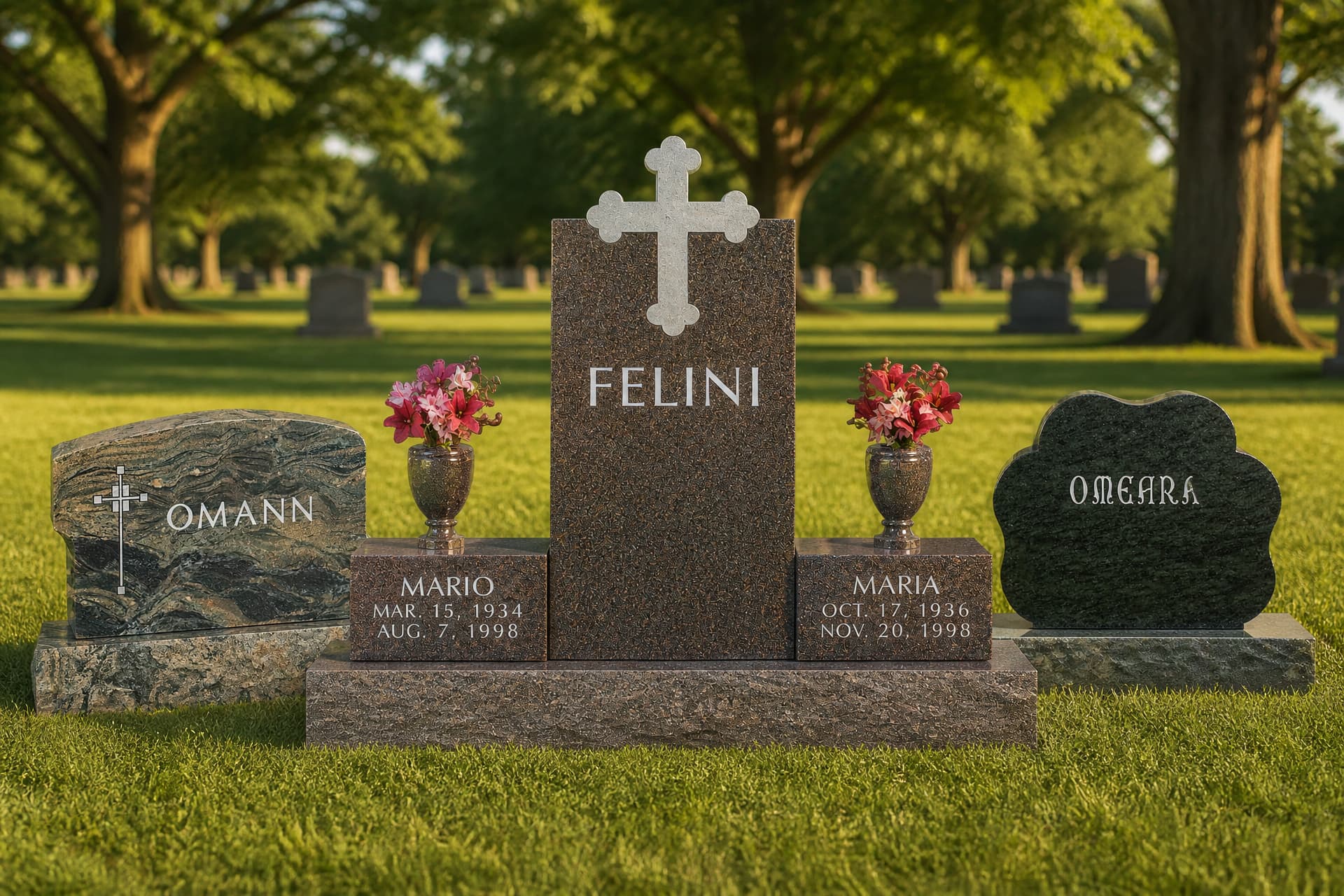
An upright granite monument holds six to ten lines or more depending on width, so the full blessing becomes possible — though it will occupy the entire face and leave little room for anything else.
Every additional line adds cost. That is true at every monument company, and it is why the choice between a four-word line and a six-line blessing is a budget decision as much as an editorial one. Our guide to how much a headstone costs covers what drives the number.
Before you commit, ask the monument company two questions: how many characters fit on a line at the lettering size you have chosen, and how many lines are inside the base price. Our memorial engraving guide covers the carving methods and what each one costs.
Celtic Blessings for a Headstone
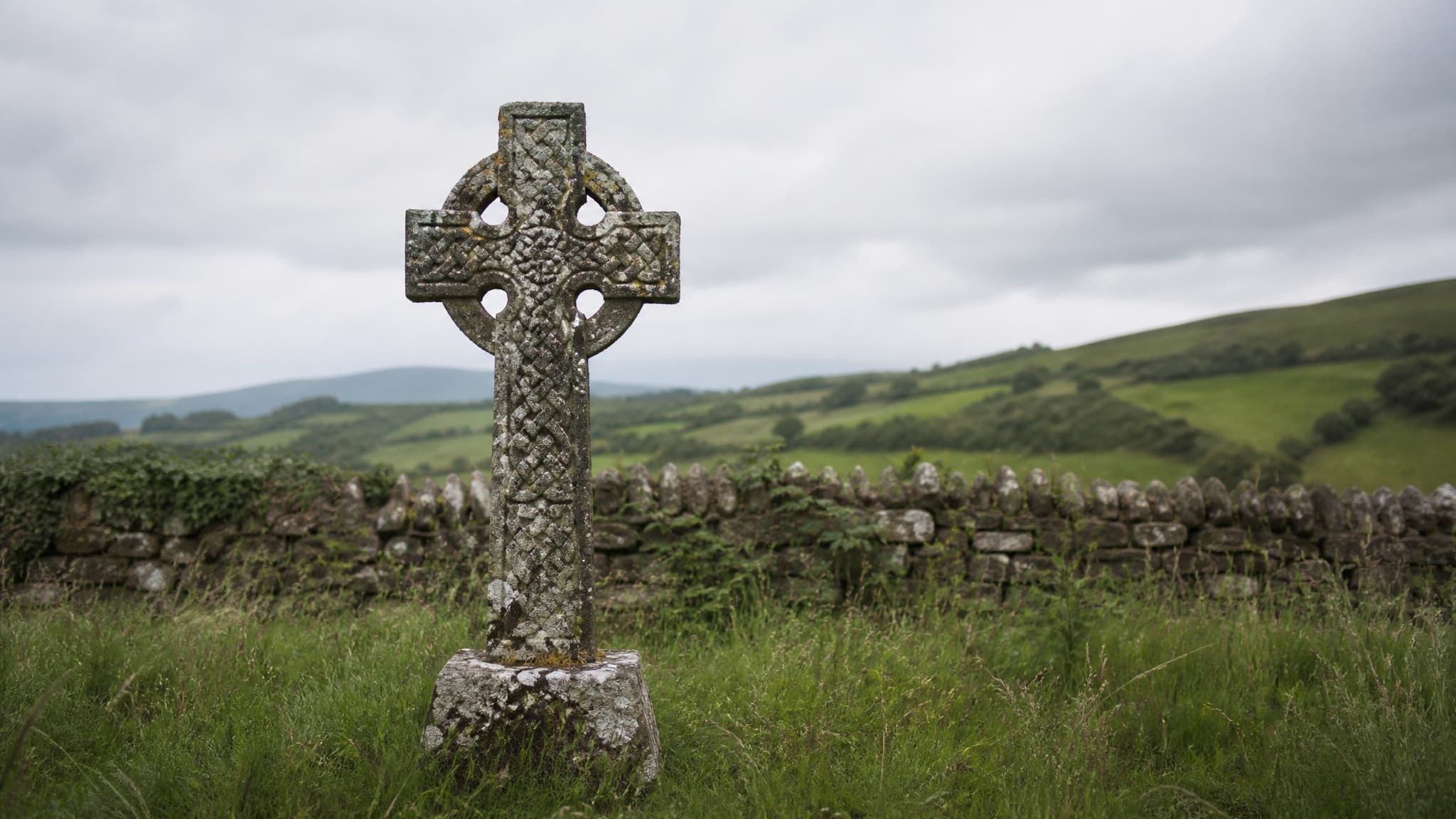
A celtic blessings headstone usually means one of two things, and they are worth separating.
The words. Old Irish and Scottish Gaelic blessings, many of them genuinely ancient. The Breastplate attributed to Saint Patrick dates to around the eighth century and is unambiguously in the public domain; Christ with me, Christ before me, Christ behind me is its best-known passage and it engraves well because each clause is short.
The ornament. The Celtic cross, the triquetra, interlace knotwork and the spiral. These are carved rather than lettered, and they change the arithmetic above: ornament takes space that lettering would otherwise use. A Celtic cross carved into the face of an upright stone can easily halve the room left for text.
If you want both, design them together rather than choosing the words first. Our guide to headstone symbols and their meanings covers what the ornament traditionally signifies, and granite headstones is where most Celtic work is carved, because granite holds fine detail.
A Celtic cross is also a statement of faith, and what may be carved is not only a question of space. Our guide to religious imagery on memorials covers which traditions restrict figurative work and which cemeteries require a symbol rather than permit one.
Irish Funeral Prayers for the Service
Irish funeral prayers are a different instrument from an inscription: length costs nothing, and the room hears them once.
The traditional blessing, in full, as above. It is the commonest choice and it suits the end of a eulogy or the graveside.
Ar dheis Dé go raibh a anam — spoken as a response, often after the name. In many Irish families this is said rather than read, and it needs no introduction.
The Breastplate of Saint Patrick, or the short passage from it. Eighth century, public domain, and long enough to fill a reading slot.
A decade of the rosary. Not a blessing, but it is what actually happens at a great many Irish wakes and funerals, and a family expecting it will notice its absence more than they would notice a missing poem.
Psalm 23. In the King James Version it is public domain and safe to print. Modern translations are not.
A practical note: if someone will read in Irish, ask them to read it aloud to one other person first. Irish orthography does not map onto English pronunciation, and a reader guessing at Ar dheis Dé in front of a church is a kindness nobody needs.
At the graveside the blessing costs nothing to say in full. Everything in this article about length applies to the stone, not to the reading.
Where Irish Funeral Traditions Fit Around the Words
Irish funeral traditions carry most of the meaning of the day, and the blessing is a small part of it. The wake is the substantial thing — the house open, the body at home, the visiting that runs late and gets louder as it goes. Our guide to Irish wake traditions covers that properly.
What matters for the inscription is that the blessing is not where the tradition lives. A family who wants the Irish character of the day to show does better with the wake, the music and the people than with six lines carved into granite that nobody will read twice.
If You Are Choosing Under Time Pressure
Most people reading this have a monument appointment in a few days, so here is the decision stripped to its parts.
Decide the format first, not the words. A flat marker and an upright monument are different writing assignments, and knowing which you are buying removes most of the options before you have to weigh them.
Count the name and the dates first. They are not optional and they go on before anything else. On a flat marker they routinely take two of the three or four lines available, which is why the blessing gets one line and not six.
Pick the line you can say out loud. If you stumble reading it in the kitchen, it is the wrong line. That is a better test than whether it looks well on a page, because the people who visit the stone will read it in their heads in your voice.
Take the Irish to the proof stage early. Accent marks, spelling of a anam against a hanam, and the lettering style all interact, and all three are cheaper to argue about on paper.
Do not fill the space because it is there. An upright stone that can hold ten lines does not need ten. A name, two dates and four words is a common and dignified result, and it is what most families land on when nobody is pushing them.
What Families Actually Choose
Across the inscriptions we see, the Irish ones divide into three groups, and the split is fairly even.
The short English line.Until we meet again is the most-used of these by a distance. It is nineteen characters, it needs no translation, and it works under any name.
The Irish formula.Ar dheis Dé go raibh a anam for a family with the language, or with enough of it to mean something. It signals more than it says, which is the point.
The one line lifted from the blessing. Usually May the road rise up to meet you, cut from its six and standing alone. At thirty-two characters it is tight for a flat marker but it does fit on many, and it carries the whole of the blessing for anyone who knows it.
The fourth option, and the one worth naming because families rarely consider it, is no blessing at all — a name, the dates, and beloved father or nothing. An Irish funeral's character comes from the days around it rather than from the granite, and a plain stone is not a missed opportunity.
On Copyright, Because a Stone Is Permanent
This is the section most blessing lists leave out, and a headstone is the worst possible place to get it wrong.
Safe to engrave: the traditional blessing above, the Breastplate of Saint Patrick, Irish-language formulas like Ar dheis Dé go raibh a anam, the King James Psalms, and anything published before 1930.
Not safe without permission: song lyrics, and poems by twentieth-century Irish poets. Yeats is the one families most often reach for. His work published before 1930 is in the public domain in the United States; his later work is not, and the line people want — Cast a cold eye on life, on death — comes from Under Ben Bulben, published in 1939. Check before carving it.
Worth checking rather than assuming: anything circulating online with no author named. A blessing reproduced on fifty websites without attribution is not thereby traditional; it is frequently a modern piece whose author has been lost in the copying. If you cannot find an origin, choose something you can.
The practical risk on a private headstone is low. The practical cost of recarving one is not.
Choosing the Stone
The words and the stone are one decision. Granite takes fine lettering and Celtic detail and is what most Irish memorial work is carved in; the darker stones give the highest contrast with unpainted lettering, which matters for a long inscription read at a distance.
If you are at the beginning of this, our headstones range shows the formats and what each one holds, and what an epitaph is covers how inscriptions are structured before you fill one in.
Other languages run into the same arithmetic and solve it differently. Our guide to rest in peace in spanish counts the phrases the same way and reaches the opposite conclusion: every one of them fits, so the choice there is editorial rather than mechanical.
Frequently Asked Questions
What is the traditional Irish blessing for a funeral?
The one beginning May the road rise up to meet you and ending May God hold you in the palm of His hand. It is anonymous and traditional, there is no authoritative version, and it is free to print and read.
Will the full Irish blessing fit on a headstone?
Not on a flat marker. It is six lines with a longest line of forty-one characters, against a flat marker's two to four lines at twenty to thirty characters. An upright granite monument can hold it, though it will fill the face.
What is the short Irish phrase said about someone who died?
Ar dheis Dé go raibh a anam — may his soul be at God's right hand. Use a hanam for a woman. At twenty-seven characters it fits a flat marker comfortably.
Can I put an Irish blessing on the stone in Irish?
Yes, and many families do. Ask for a proof with the fadas shown, because design software drops accent marks routinely and the error is permanent once carved.
Is a Celtic cross an Irish blessing?
No — it is ornament rather than words, and the two compete for space. A carved Celtic cross can halve the room left for lettering, so design the symbol and the inscription together.
Are Irish blessings copyrighted?
The traditional ones are not, and neither is the Breastplate of Saint Patrick or the King James Psalms. Twentieth-century Irish poetry usually is — the Yeats line families most often want is from a 1939 poem. Check before carving.
The Short Version
Read the full blessing at the service, where length is free. Put a short line on the stone, where it is not.
Slán abhaile is twelve characters and means safe home. On a flat marker beneath a name and two dates, that is very often the whole of what there is room for, and it is enough.