🏬Supersize Online Funeral Retailer🪦1000's of Headstones⚱️Over 10,000 Cremation Urns⚰️Caskets Overnight Delivery🛒Funeral & Memorial Superstore🚚FREE Shipping on ALL Orders👨👩👧👦Helping Families for over 20 Years💰Lowest Price Guarantee🏬Supersize Online Funeral Retailer🪦1000's of Headstones⚱️Over 10,000 Cremation Urns⚰️Caskets Overnight Delivery🛒Funeral & Memorial Superstore🚚FREE Shipping on ALL Orders👨👩👧👦Helping Families for over 20 Years💰Lowest Price Guarantee
🏬Supersize Online Funeral Retailer🪦1000's of Headstones⚱️Over 10,000 Cremation Urns⚰️Caskets Overnight Delivery🛒Funeral & Memorial Superstore🚚FREE Shipping on ALL Orders👨👩👧👦Helping Families for over 20 Years💰Lowest Price Guarantee🏬Supersize Online Funeral Retailer🪦1000's of Headstones⚱️Over 10,000 Cremation Urns⚰️Caskets Overnight Delivery🛒Funeral & Memorial Superstore🚚FREE Shipping on ALL Orders👨👩👧👦Helping Families for over 20 Years💰Lowest Price Guarantee
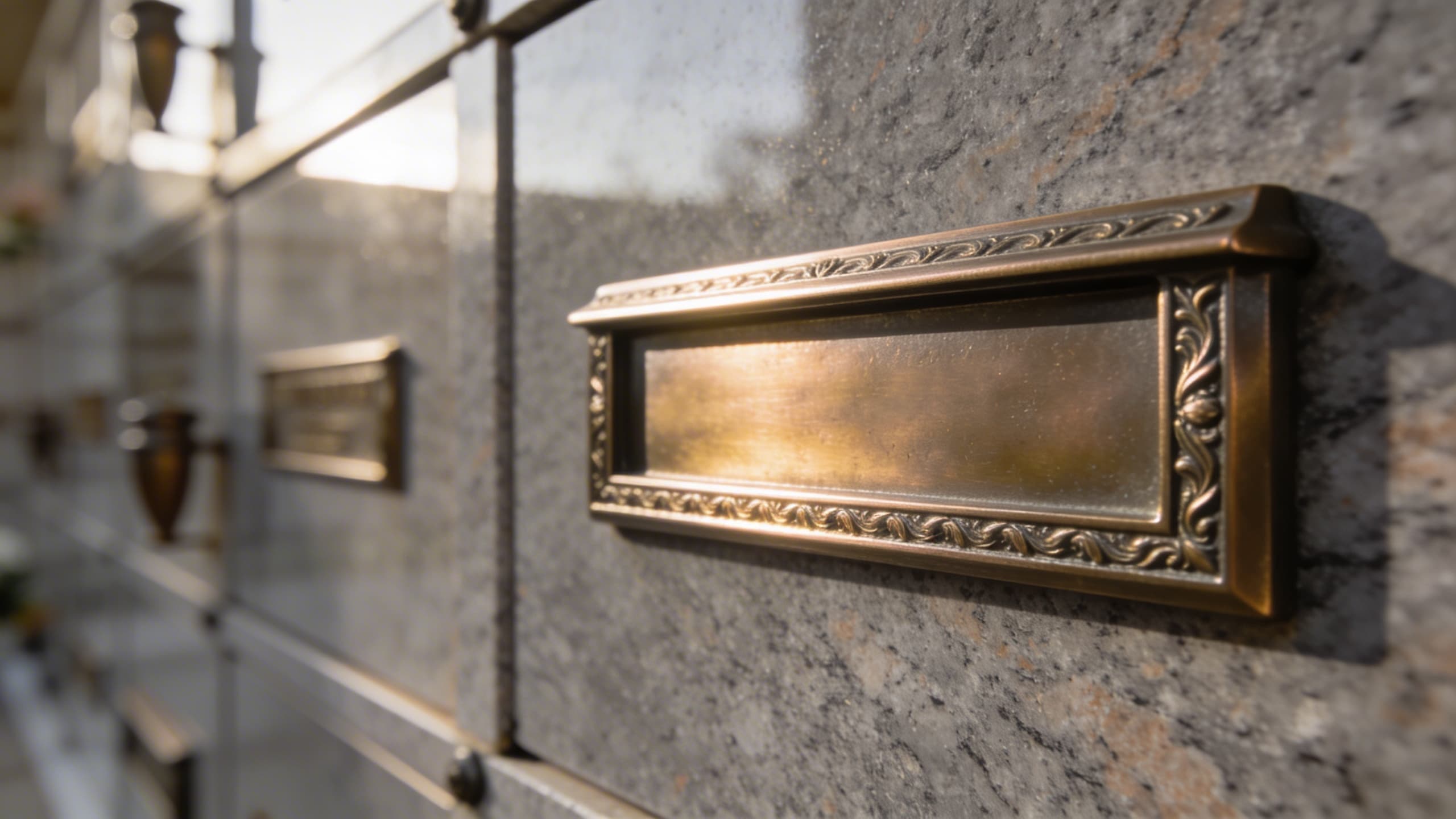
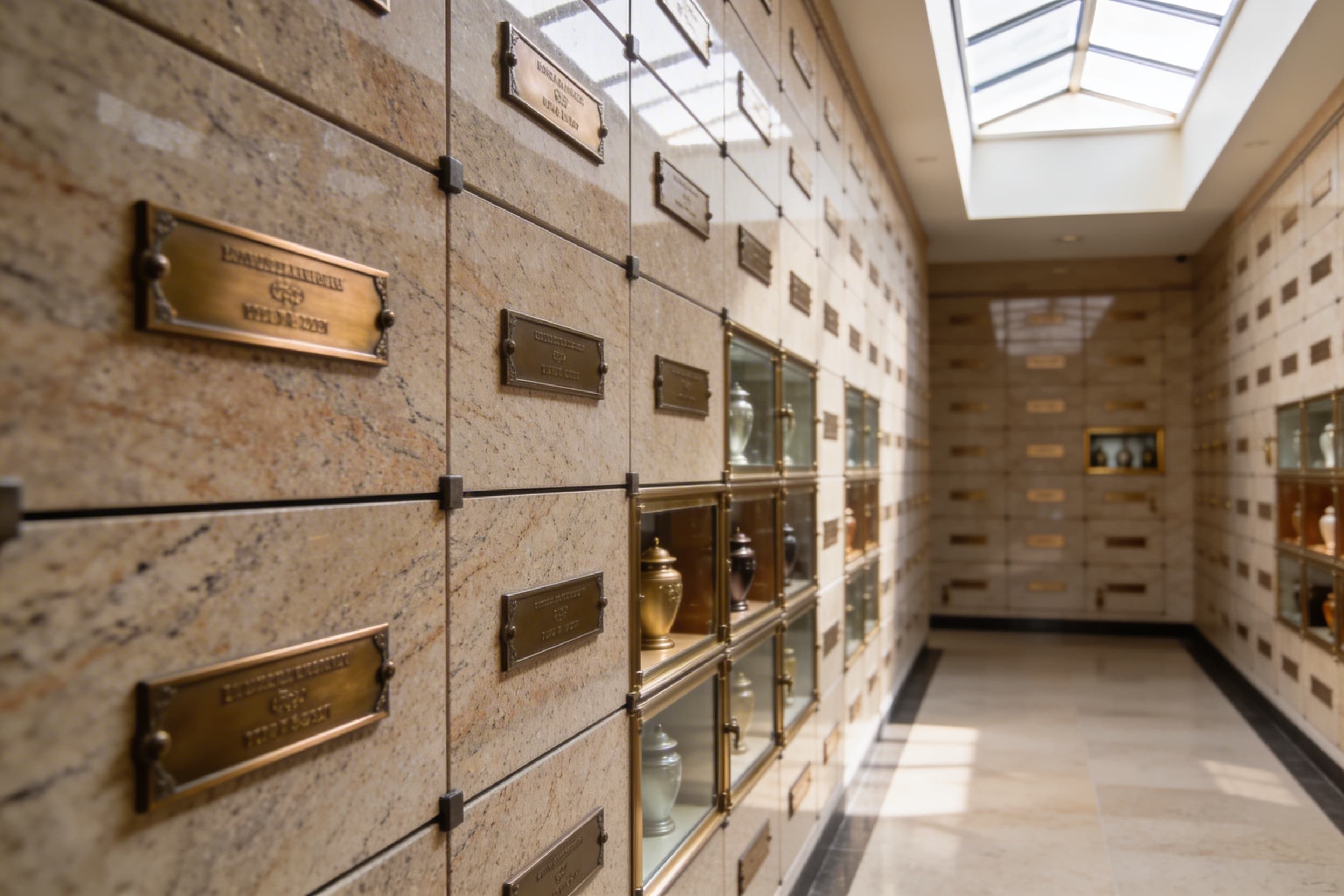
A cremation niche plaque is the bronze or metal panel mounted on the front of a columbarium niche or mausoleum crypt. It bears the name, dates, and often a short inscription or emblem honoring the person whose urn rests inside. For many families, this small plaque becomes the most visible and enduring part of a cremation memorial — the place where visitors pause, read a name, and remember.
Choosing the right plaque matters because columbarium niches offer limited surface area for personalization. Unlike a full headstone, a niche plaque must convey a lifetime of meaning on a panel that typically measures 11 by 4 inches. This guide walks through materials, design options, sizing, inscriptions, and cost so you can make a confident choice. If you are still weighing whether a columbarium niche suits your family's needs, our covers every cemetery option side by side.
Families exploring columbarium placement for the first time will find helpful context in our overview of understanding columbariums and niches, which explains how these structures work and what to expect during the selection process.
What Are Cremation Niche Plaques?
A niche plaque — sometimes called a niche plate, niche marker, or niche front — is a small memorial panel fastened to the exterior of a columbarium niche. Its purpose is simple: identify who rests within and provide a surface for personalized tribute. Plaques can also be mounted on mausoleum crypts that hold urns, though these are more commonly called crypt plates.
The distinction between a niche plaque and a crypt plate is largely one of location. Niche plaques attach to columbarium compartments sized for urns. Crypt plates attach to mausoleum crypts, which may hold caskets or urns depending on the design. Both serve the same commemorative function, and many manufacturers produce them on the same casting line.
Most cremation niche plaques sold today are cast in bronze, though granite and stainless steel options exist at some cemeteries. The plaque style is often predetermined by the columbarium manufacturer or the cemetery itself, so families should confirm available options before placing an order independently.
Materials and Construction
Cast Bronze
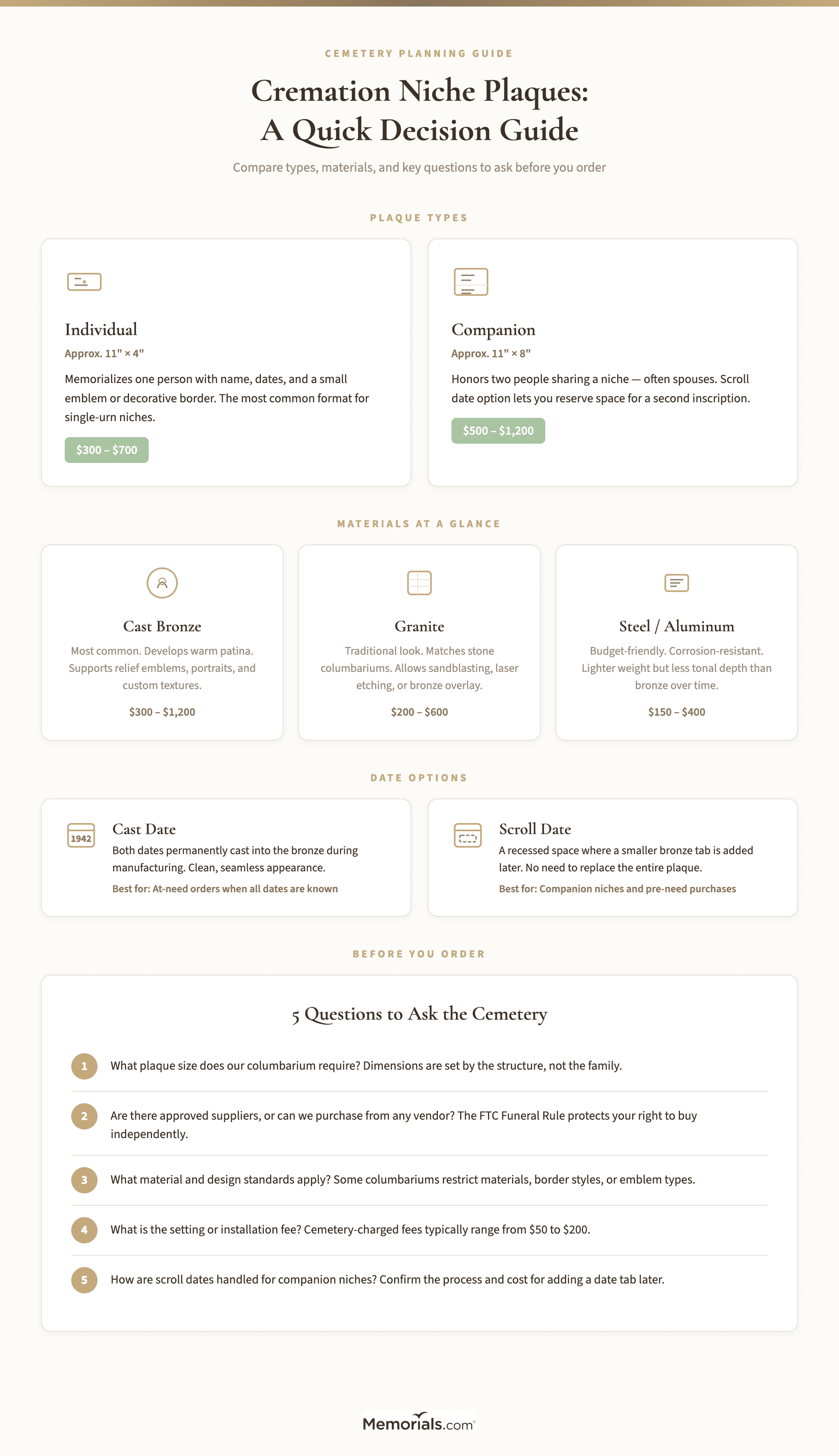
Bronze is the traditional and most widely used material for niche plaques. Cast bronze offers exceptional durability, weather resistance, and a dignified aesthetic that develops a warm patina over time. Most bronze memorial plaques are poured from lead-free bronze alloys and then hand-finished to bring out fine detail in lettering and relief artwork.
Bronze niche plaques accommodate flat relief and sculpted emblems, portrait insets, and a range of background textures — from leatherette to pebbled finishes. A protective polyurethane coating is typically applied to slow oxidation and maintain contrast between raised lettering and the background.
Granite
Some columbariums use granite shutters or granite-faced niche doors rather than bronze plates. Granite allows for sandblasted inscriptions, laser etching, or the attachment of a smaller bronze nameplate on top. Granite offers a traditional cemetery appearance and matches well when the columbarium itself is constructed from stone.
Stainless Steel and Aluminum
A small number of manufacturers offer stainless steel or aluminum niche plates. These materials cost less than bronze and resist corrosion, but they lack the warm tonal depth that bronze develops over decades. Aluminum plaques are lighter and more affordable, though they can dent more easily and may not age as gracefully.
Types of Niche Plaques
Individual Plaques
An individual niche plaque memorializes one person. Standard dimensions are approximately 11 inches wide by 4 inches tall, though exact sizes vary by columbarium manufacturer. Individual plaques typically include a name, birth and death dates, and a small emblem or decorative border.
Companion Plaques
Companion plaques memorialize two people who share a niche — often spouses or partners. These plaques are wider or use a vertically stacked layout to accommodate two sets of names and dates. Some families purchase a companion plaque with one person's information cast at the time of the first interment and a blank scroll space reserved for the second.
Scroll Date and Cast Date Options
Niche plaques handle date inscriptions in two ways. Cast date plaques have the birth and death dates permanently cast into the bronze during manufacturing. Scroll date plaques leave a recessed space where a smaller bronze date tab or scroll is added later — useful when the plaque is purchased before the second person in a companion niche has passed.
Mausoleum crypt plates follow a similar format, with individual and companion options available for crypts that hold urns or casketed remains.
Personalization and Design Options
Inscriptions
The most common inscription elements on a niche plaque include the full name (first, middle initial, last), birth and death dates, and a short epitaph or sentiment. Space is limited — most plaques accommodate 15 to 30 characters per line across two to four lines — so brevity is essential.
Popular inscription phrases include:
"Forever in Our Hearts"
"Beloved Mother and Grandmother"
"Rest in Peace"
A meaningful date, nickname, or single word like "Cherished"
Families who want guidance on meaningful wording for memorial inscriptions can explore our memorial engraving guide, which covers epitaph ideas, formatting, and lettering styles across all memorial types.
Emblems and Symbols
Bronze niche plaques can incorporate flat relief or sculpted emblems that add visual depth and personal meaning. Common categories include:
Religious symbols — crosses, Stars of David, rosaries, praying hands, the Hindu Om, and other faith-based imagery
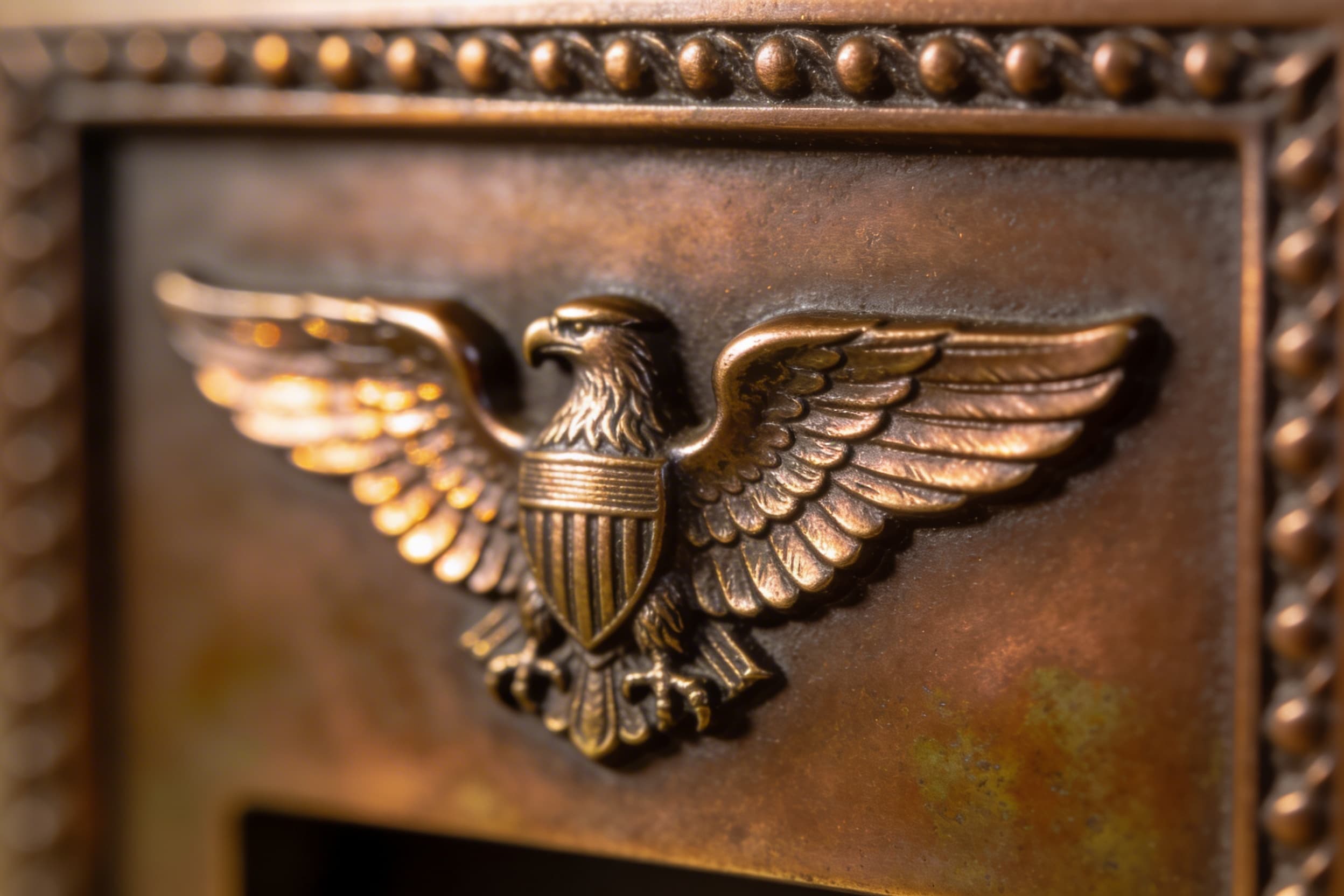
Military and veteran emblems — branch-of-service seals, medals, or patriotic motifs for veterans who served
Fraternal and organizational insignia — Masonic symbols, Elks, Knights of Columbus, and similar organizations If the plaque carries a compass and square, the service itself may follow the Masonic rite; the sprig of acacia explains what happens at the graveside and why.
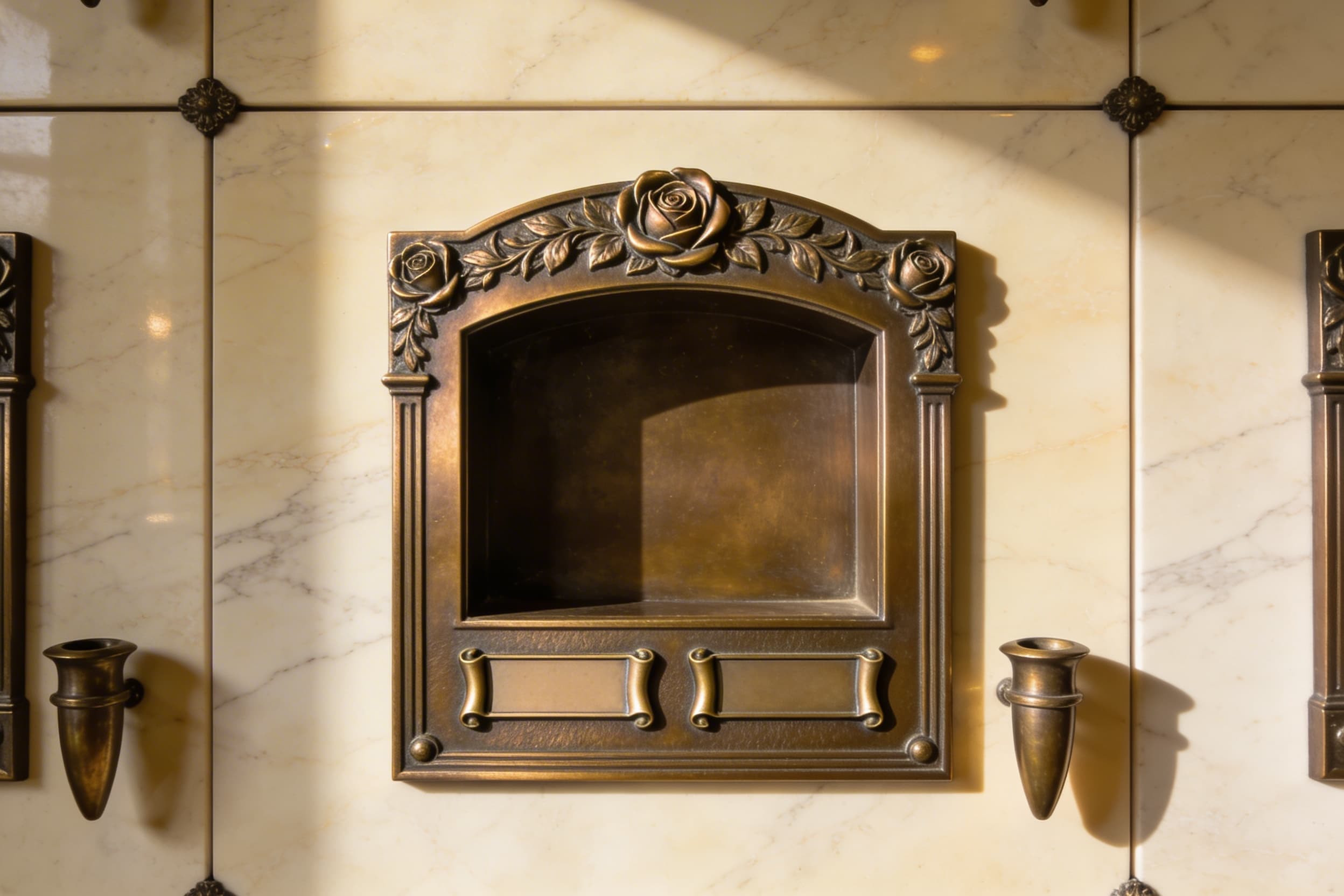
Nature and hobby motifs — roses, doves, oak leaves, fishing scenes, musical instruments, or other imagery reflecting the person's passions
The level of detail possible in an emblem depends on plaque size. Smaller individual plaques accommodate flat relief emblems well, while larger companion plaques may support sculpted or three-dimensional emblems.
Portraits
Some niche plaque designs include a ceramic photo inset or a laser-etched portrait cast directly into the bronze. Ceramic photos offer lifelike color reproduction and are sealed behind glass or a clear protective dome. Laser-etched portraits render a black-and-white image with fine detail but lack color. Both options require a high-resolution photograph (300 dpi minimum) provided by the family.
Sizing and Cemetery Requirements
Niche plaque dimensions are typically dictated by the columbarium manufacturer, not the family. Most columbariums are designed with a standard niche opening, and the plaque must fit that opening precisely. Common sizes include:
Standard individual: 11" × 4" or 12" × 4"
Companion: 11" × 8" or 12" × 6"
Mausoleum crypt plates: 16" × 8" or larger, depending on crypt dimensions
Before ordering a plaque from any source, families should confirm the required dimensions, material type, and mounting method with the cemetery or columbarium operator. Many cemeteries have pre-approved plaque suppliers or specific design standards that must be followed. Understanding cemetery rules for markers and plaques before purchasing prevents costly mistakes and delays.
The FTC Funeral Rule
Under the Federal Trade Commission's Funeral Rule, families are not required to purchase a plaque through the cemetery or funeral home. You may buy from any vendor, including online retailers, as long as the plaque meets the cemetery's published specifications. The cemetery cannot charge a fee for accepting a plaque purchased elsewhere, though they may charge a standard installation or setting fee.
How Niche Plaques Are Ordered and Installed
Ordering Process
Confirm specifications — Contact the cemetery or columbarium operator to obtain the required plaque size, material, design template, and any approved supplier list.
Select a design — Choose an individual or companion layout, background texture, border style, emblem, and inscription text. Most suppliers provide a digital proof for approval before casting begins.
Approve the proof — Review the layout carefully. Verify spelling, dates, and emblem placement. Changes after casting has begun may incur additional charges or require a full re-order.
Manufacturing — Cast bronze plaques typically take 8 to 12 weeks to manufacture. Some suppliers offer expedited timelines at an additional cost.
Delivery and installation — Plaques are shipped directly to the cemetery or to the family. In most cases, only cemetery staff are authorized to mount the plaque on the niche. A setting fee of $50 to $200 is common.
Mounting Methods
Bronze niche plaques are secured to the columbarium face using one of several methods:
Blind studs — Threaded posts on the back of the plaque align with pre-drilled holes in the niche face. No visible fasteners.
Rosette screws — Decorative screw covers that mount through the plaque face. Visible but intentionally designed as part of the aesthetic.
Adhesive mounting — Used on some indoor columbariums where drilling is not practical.
The columbarium design determines which mounting method applies. Families generally do not choose the mounting method — it is dictated by the structure.
How Much Do Niche Plaques Cost?
Niche plaque pricing depends on material, size, design complexity, and whether a portrait or custom emblem is included. Here is a general cost range:
Plaque Type
Typical Price Range
Standard bronze individual
$300 – $700
Bronze companion
$500 – $1,200
Granite niche front
$200 – $600
Bronze with ceramic photo
$500 – $1,000
Stainless steel or aluminum
$150 – $400
These prices cover the plaque itself. Additional costs may include the cemetery's setting fee ($50 – $200), shipping, and any expedited manufacturing surcharges. Some cemeteries include a basic plaque in the niche purchase price, with upgrades available at additional cost.
When families are weighing the total financial picture, the plaque cost is one piece of the larger decision about urn placement options at a cemetery — alongside the niche lease or purchase, opening and closing fees, and any vault requirements for in-ground alternatives.
Niche Plaques vs. Other Memorial Markers
Families sometimes ask how niche plaques compare to headstones, flat markers, or dedication plaques used in memorial gardens. The key differences come down to scale, location, and level of customization.
A headstone offers significantly more surface area for inscriptions, artwork, and design. A niche plaque, by contrast, works within a compact format where every word and element must earn its place. This limitation is also a strength — the plaque's simplicity creates a focused, dignified tribute without visual clutter.
For families deciding between a niche and a burial plot, the plaque question is part of a larger set of considerations including cost, long-term maintenance, and the kind of visiting experience they want. A columbarium niche with a well-chosen plaque offers a clean, weatherproof memorial that requires virtually no upkeep from the family.
Caring for a Niche Plaque
Bronze niche plaques are designed for decades of outdoor exposure with minimal maintenance. The protective clear coat applied during manufacturing resists oxidation and preserves the contrast between raised lettering and the background.
Over time, bronze develops a natural patina — a gradual darkening that many families find adds warmth and character. If the family prefers to maintain the original finish, a gentle cleaning with mild soap, water, and a soft cloth once or twice a year is sufficient. Avoid abrasive cleaners, steel wool, or harsh chemicals that can strip the protective coating.
Granite niche fronts can be cleaned with plain water and a non-abrasive cloth. Laser-etched inscriptions on granite require no special care. Ceramic photo insets should be wiped gently to avoid scratching the protective dome.
If a plaque becomes damaged, faded beyond the patina stage, or needs a date scroll added, contact the cemetery office. They can coordinate with the original manufacturer or an approved vendor for repair or replacement.
Frequently Asked Questions
Can I buy a niche plaque from a third-party vendor instead of the cemetery?
Yes. The FTC Funeral Rule allows families to purchase memorial products from any vendor. The cemetery cannot refuse to install a plaque purchased elsewhere, though they may require it to meet their published size, material, and design standards. Always confirm specifications with the cemetery before ordering.
How long does it take to receive a bronze niche plaque?
Cast bronze plaques typically require 8 to 12 weeks for manufacturing. Some foundries offer rush production in 5 to 10 business days at an additional fee. Granite niche fronts with laser etching may have shorter lead times of 3 to 6 weeks.
What if only one person has passed and we want a companion plaque?
Many families order a companion plaque with one person's full information cast at the time of the first interment. The second side is left with a blank scroll space or a date scroll tab that can be added later. This approach avoids replacing the entire plaque when the second person passes.
Are there restrictions on what I can engrave on a niche plaque?
Most cemeteries have guidelines governing inscription content, font size, and language. Religious symbols and military emblems are generally permitted. Some cemeteries restrict non-traditional imagery or require approval for custom designs. Check with the cemetery's administrative office before finalizing your design.
Can I add a photo to a niche plaque?
Yes. Many bronze plaque manufacturers offer ceramic photo insets or laser-etched portrait options. Ceramic photos provide color reproduction, while laser etching creates a detailed grayscale image. Both require a high-resolution photograph from the family. Photo options add $100 to $300 to the base plaque price.
Choosing with Confidence
A cremation niche plaque may be small in scale, but it carries enormous meaning. It is the marker that visitors see, the inscription that family members read aloud to grandchildren, and the tribute that endures for generations inside a columbarium or mausoleum.
Start by contacting the cemetery to confirm plaque specifications and approved designs. Review proof layouts carefully before approving production. And choose an inscription and emblem combination that captures something genuine about the person being remembered — not just their name and dates, but a phrase, symbol, or image that tells their story.
Browse Memorials.com's complete collection of memorial plaques and niche plaques to find a lasting tribute that honors your loved one with dignity and care.