🏬Supersize Online Funeral Retailer🪦1000's of Headstones⚱️Over 10,000 Cremation Urns⚰️Caskets Overnight Delivery🛒Funeral & Memorial Superstore🚚FREE Shipping on ALL Orders👨👩👧👦Helping Families for over 20 Years💰Lowest Price Guarantee🏬Supersize Online Funeral Retailer🪦1000's of Headstones⚱️Over 10,000 Cremation Urns⚰️Caskets Overnight Delivery🛒Funeral & Memorial Superstore🚚FREE Shipping on ALL Orders👨👩👧👦Helping Families for over 20 Years💰Lowest Price Guarantee
🏬Supersize Online Funeral Retailer🪦1000's of Headstones⚱️Over 10,000 Cremation Urns⚰️Caskets Overnight Delivery🛒Funeral & Memorial Superstore🚚FREE Shipping on ALL Orders👨👩👧👦Helping Families for over 20 Years💰Lowest Price Guarantee🏬Supersize Online Funeral Retailer🪦1000's of Headstones⚱️Over 10,000 Cremation Urns⚰️Caskets Overnight Delivery🛒Funeral & Memorial Superstore🚚FREE Shipping on ALL Orders👨👩👧👦Helping Families for over 20 Years💰Lowest Price Guarantee
The cremation cost West Virginia families face starts between $1,099 and $3,190, with a median of $2,547.50, from 10 published West Virginia price lists in 2026.
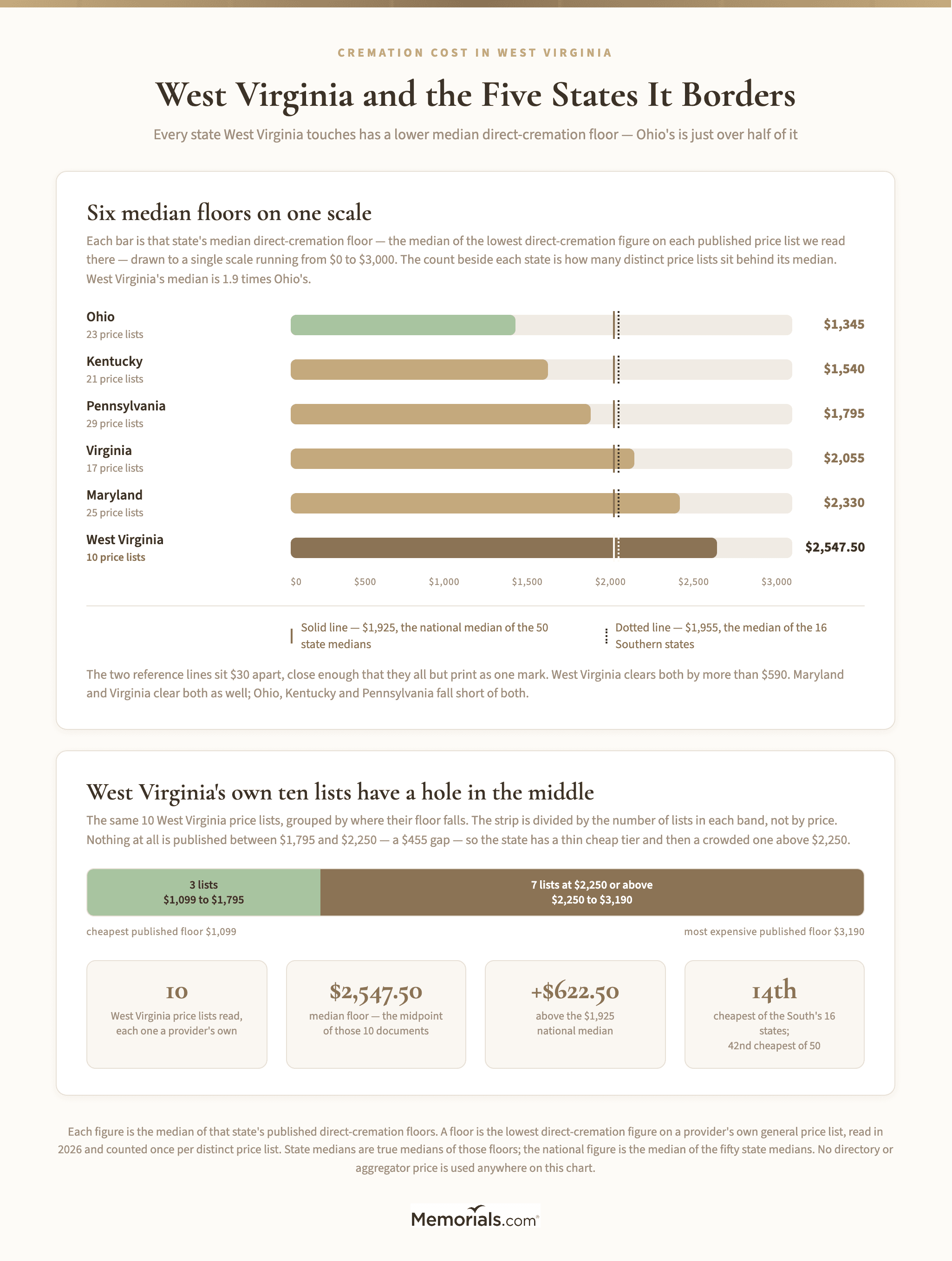
That median makes West Virginia the 42nd cheapest of the fifty states — the ninth most expensive — sitting $622.50 above the national median of $1,925. Our cremation cost by state guide sets all fifty side by side with the evidence behind each one.
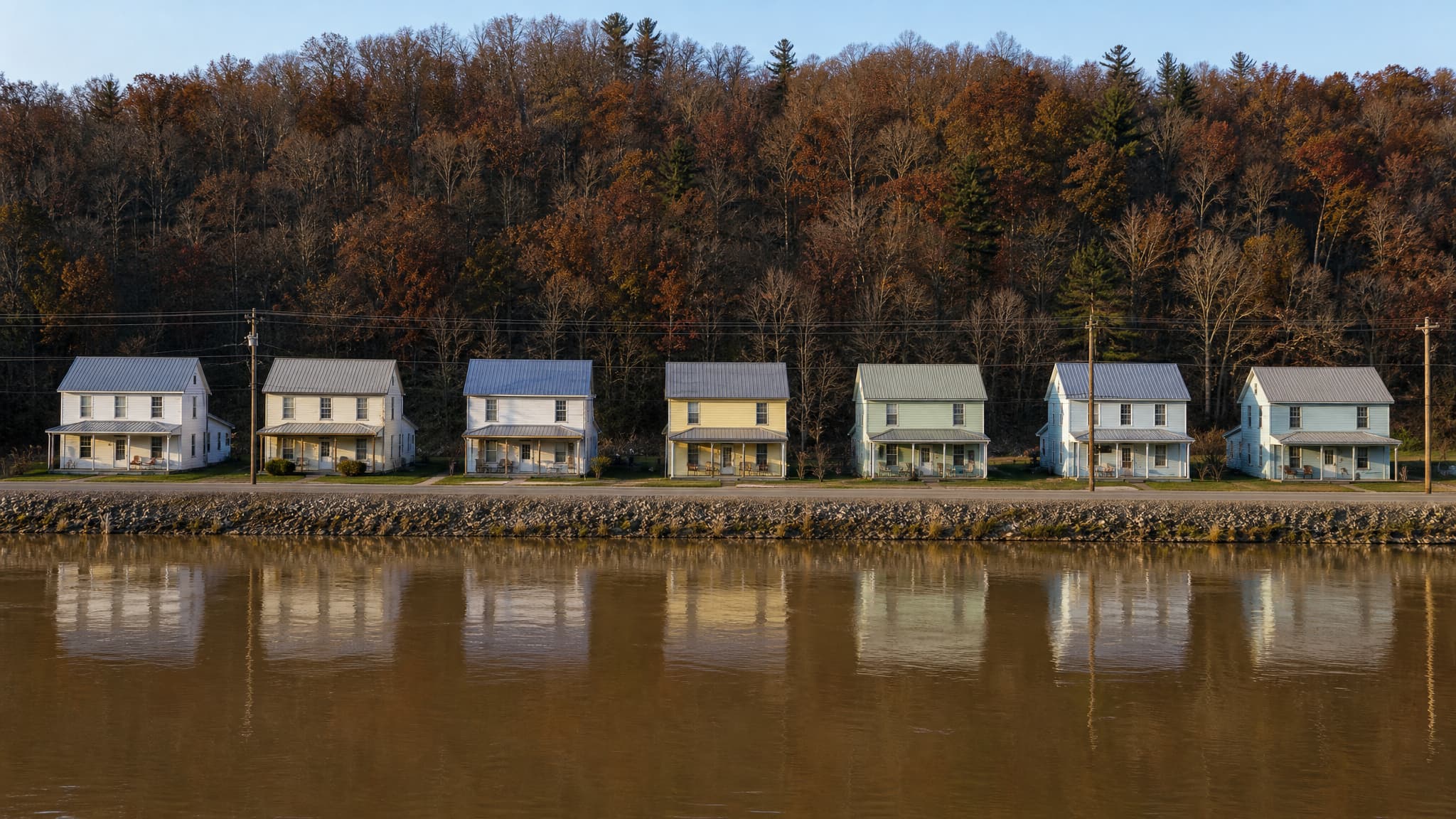
The number that actually matters here is regional. West Virginia is the third most expensive of the sixteen Southern states, and every single state on its border is cheaper — one of them by more than half. A family standing on the Ohio River can look across the water at a state where the median direct cremation is less than half of what it is on this side.
Across 10 West Virginia published price lists, direct cremation starts between $1,099 and $3,190, with a median of $2,547.50.
Cheapest published floor
$1,099
Median floor
$2,547.50
Most expensive published floor
$3,190
Price lists read
10
West Virginia's national rank
42nd cheapest of 50
West Virginia's rank in the South
14th cheapest of 16
Neither end of that range is what it looks like. The $1,099 is the oldest document in the file — a discounted package price from 2022 rather than a current itemized rate — so do not plan around it. The lowest currently effective floor in the state is $1,595, at a cremation-only provider whose price covers the container, the state cremation permit and basic death-certificate processing.
The $3,190 at the top is an ordinary current price at a full-service funeral home, and it has company: seven of the ten lists start at $2,250 or more.
Ask for the price list rather than hunting for one. Federal law makes every West Virginia funeral home give you an itemized general price list and quote prices over the telephone, but nothing requires any of them to put one on the internet. The funeral home nearest you may sit above or below every figure on this page, and one telephone call is the only way to find out.
Ohio, directly across the water, has a median floor of $1,195 — 47% of West Virginia's. We do not know why, and nobody has measured it. What the two states show side by side is a difference in who is selling: Ohio's cheapest published floor is $570, and West Virginia has nothing remotely like it. Documents written near the rivers routinely price two and three states' cremation permits on one page, so the firms nearest the water already work both sides of it.
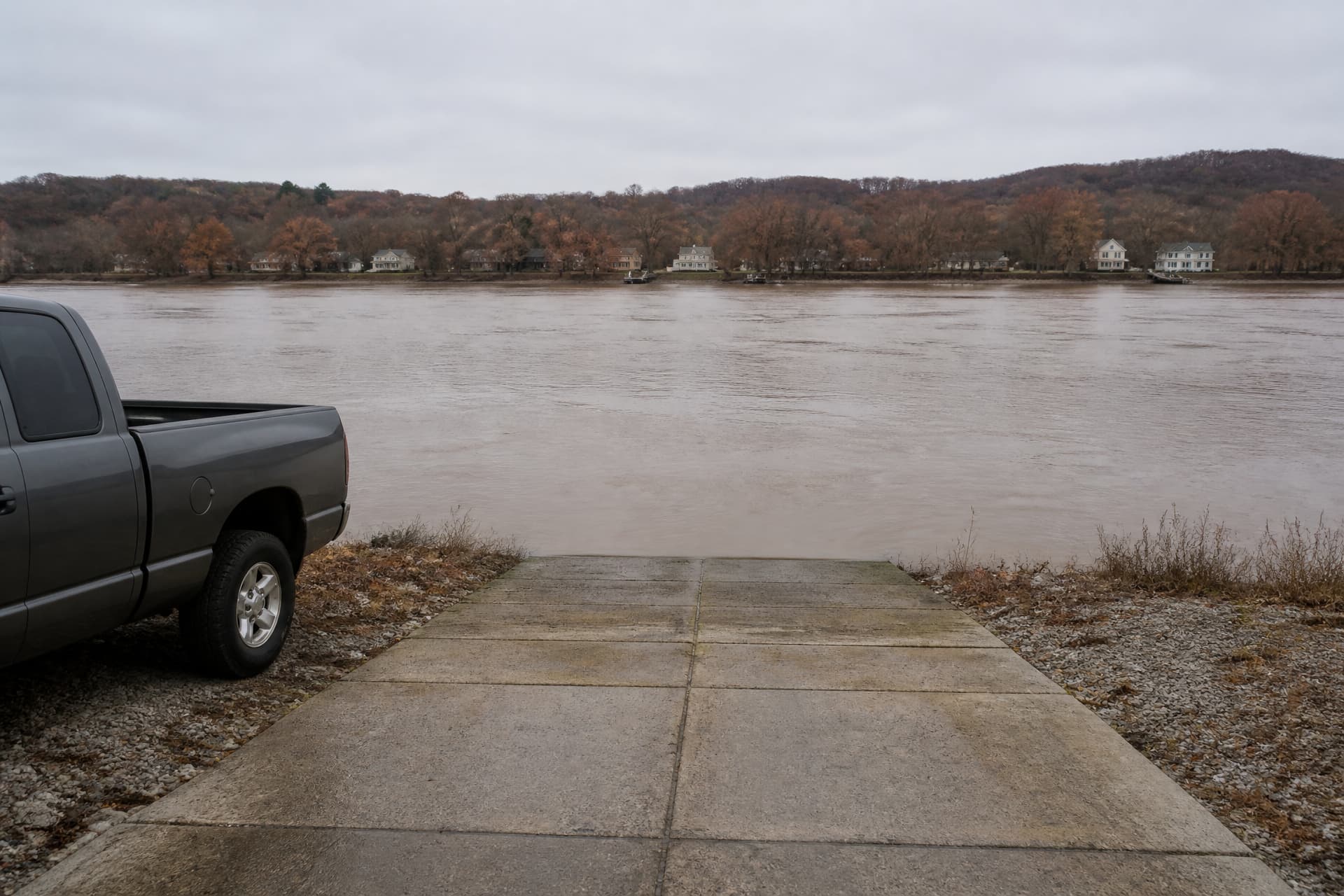
The far bank is Ohio, where the median published direct-cremation floor is $1,195 against West Virginia's $2,547.50. Price lists written within sight of this water often quote two states' cremation permits on one page.
Every state West Virginia touches has a lower median direct-cremation floor, and Ohio's is just over half of it. Read the price-list counts beside the bars: West Virginia's ten is the smallest denominator on the chart, which is a limit on the finding rather than an explanation of it.
The cheaper numbers you will meet online first
Search for the cost of cremation in West Virginia and the first figures you meet will be lower than everything on this page. Many of them are not prices at all.
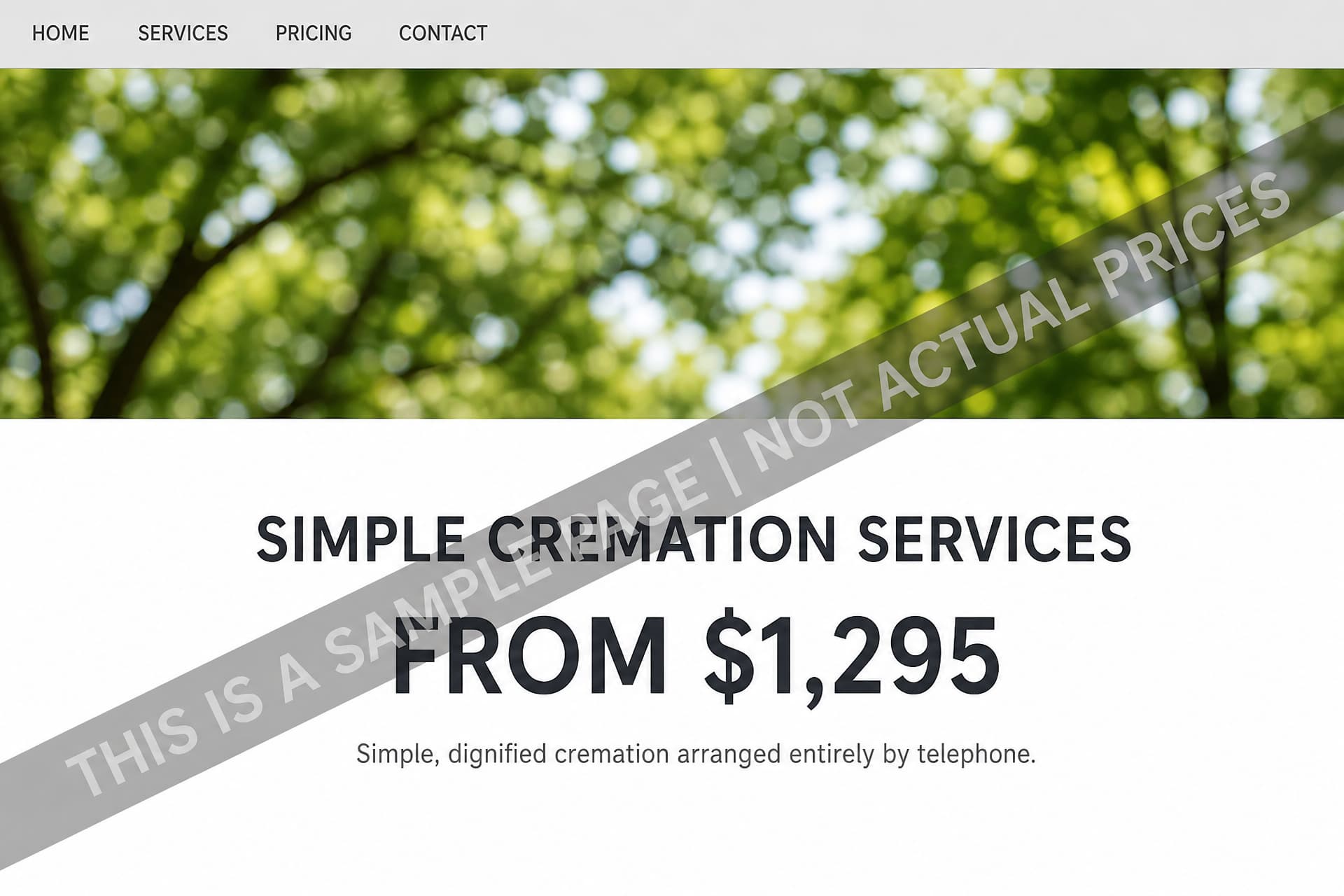
Seventeen near-identical microsites, one for each of seventeen West Virginia funeral homes, share a single domain and all advertise the same simple-cremation headline of $1,295 — and every one is stamped, on the page itself, "THIS IS A SAMPLE PAGE | NOT ACTUAL PRICES." Elsewhere a firm's own price-list link serves its website vendor's demonstration file, a polished document belonging to a fictional company in another state. Around those sit the directory sites, publishing confident city averages with nothing behind them. A cost of cremation West Virginia number with no source behind it is usually a national average wearing a local title.
The page tells you itself. Seventeen West Virginia funeral homes have a microsite like this one, every one carrying the same $1,295 and the same stamp across it — and where the firm publishes a real price list, it starts at more than twice that.
Urns for Two, and Urns With a Photograph
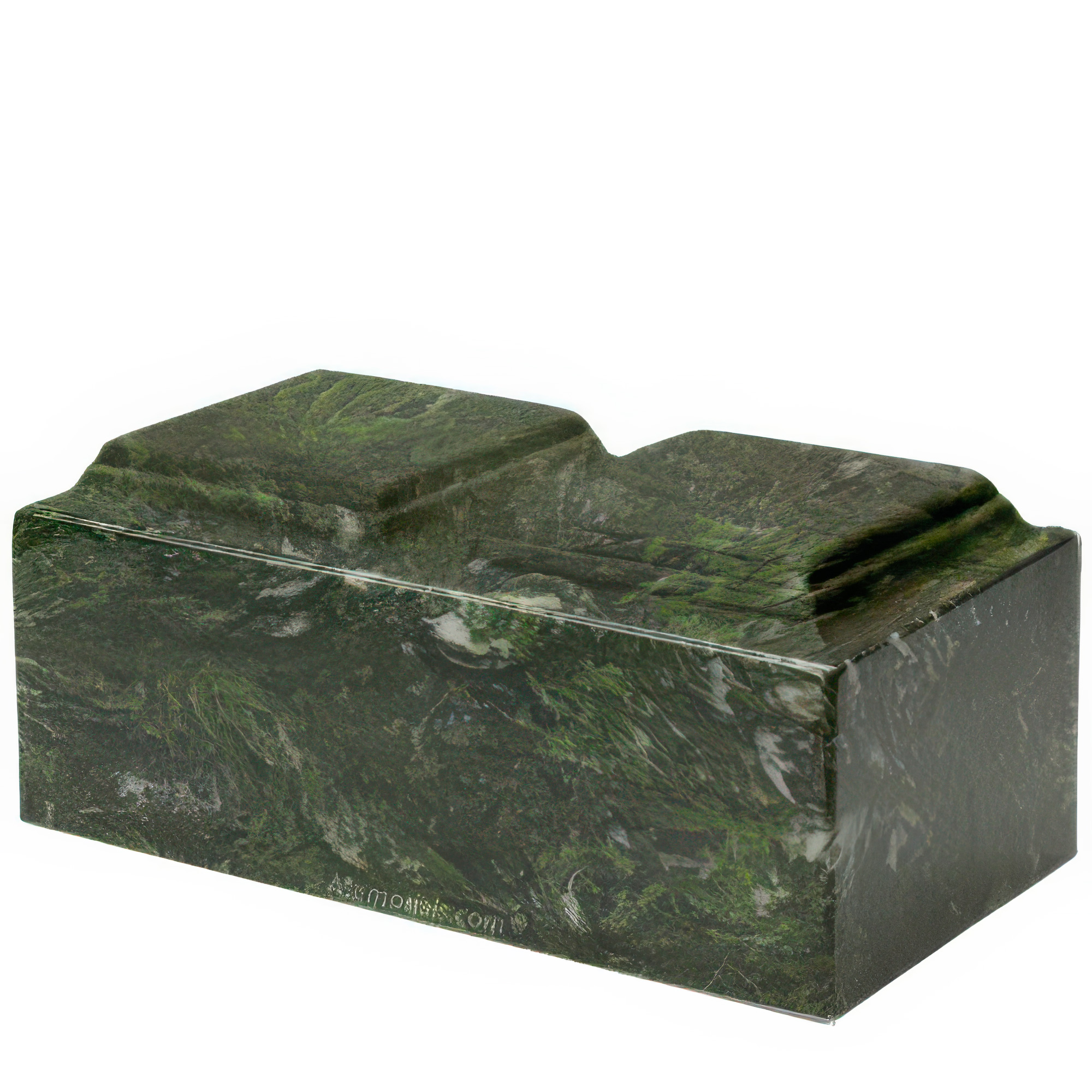
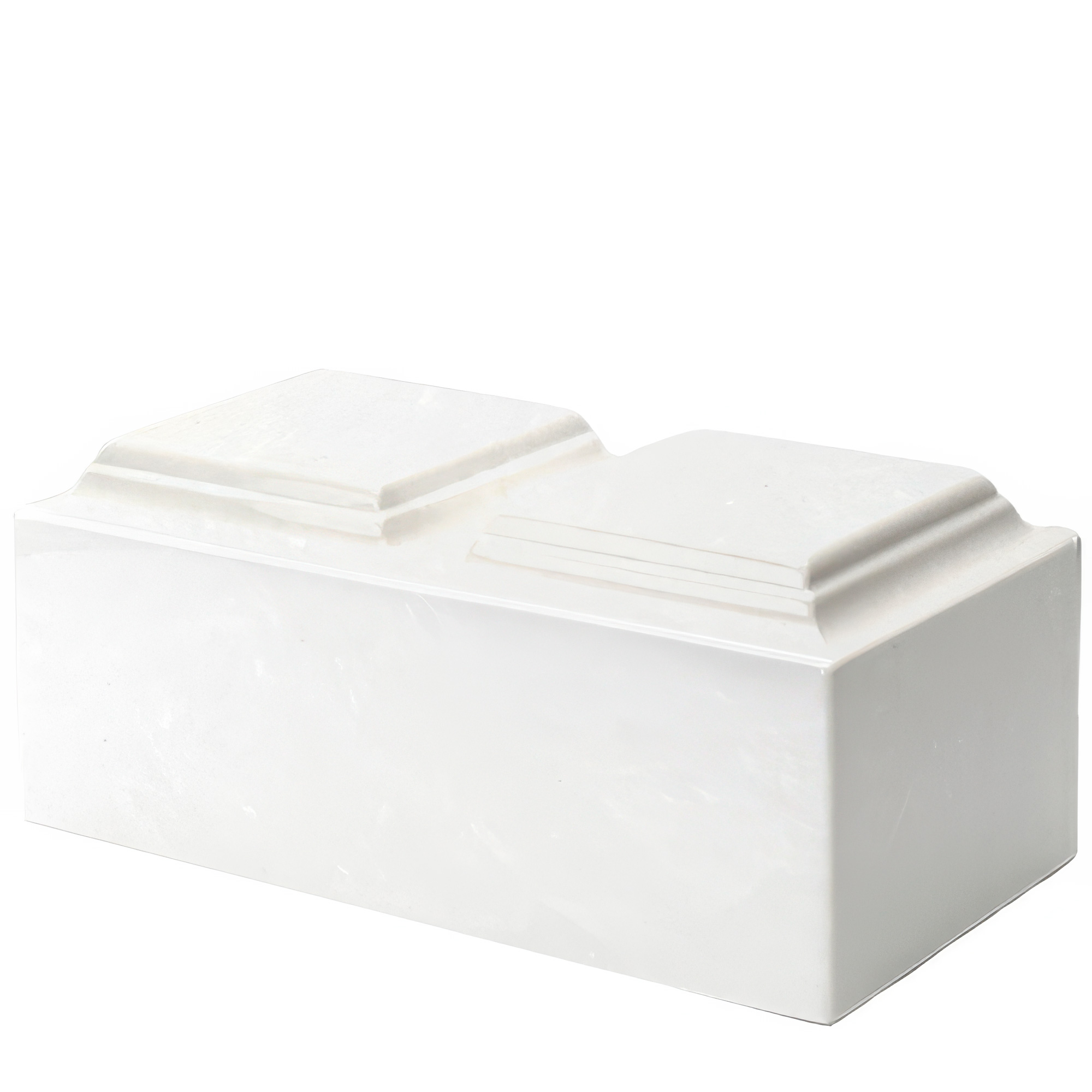
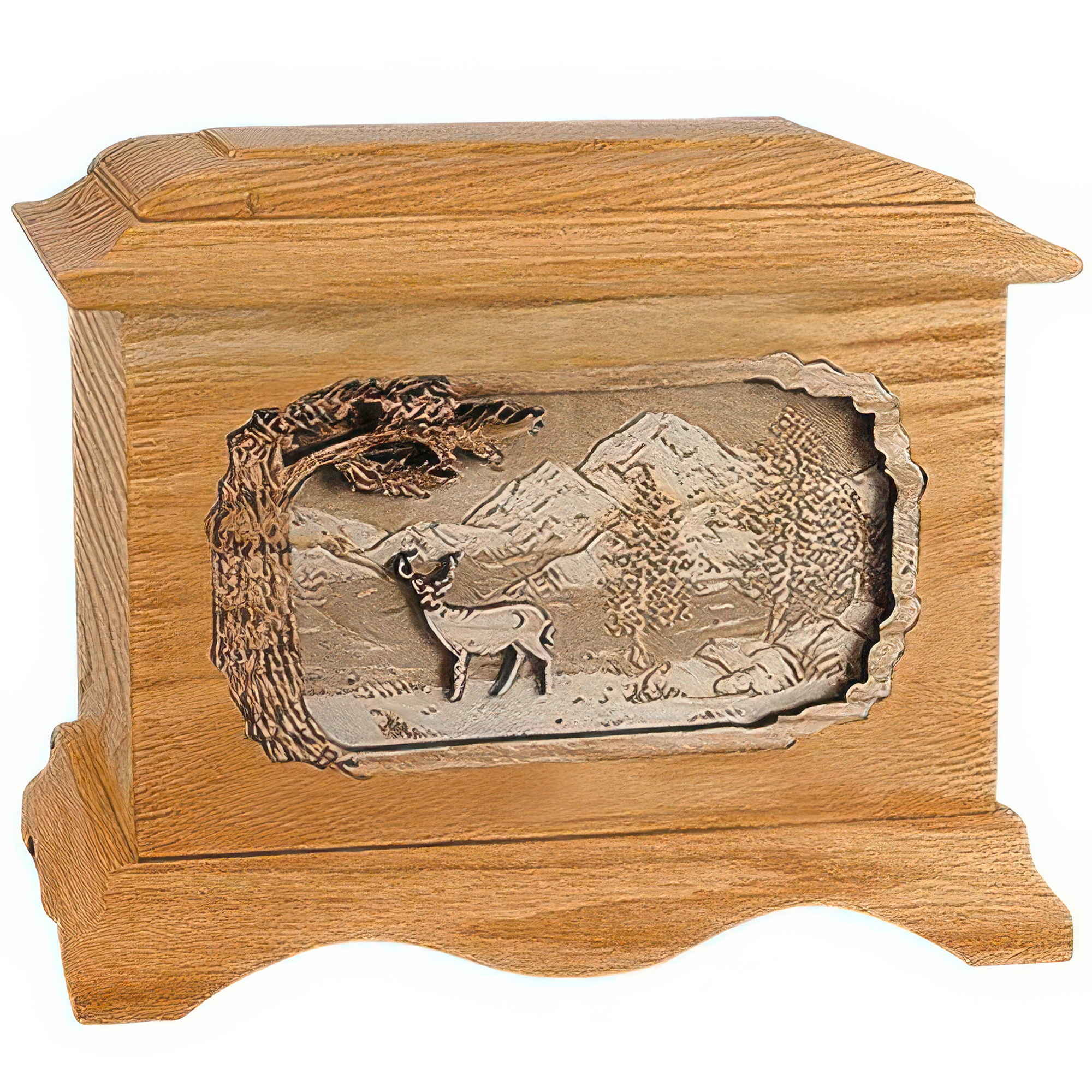
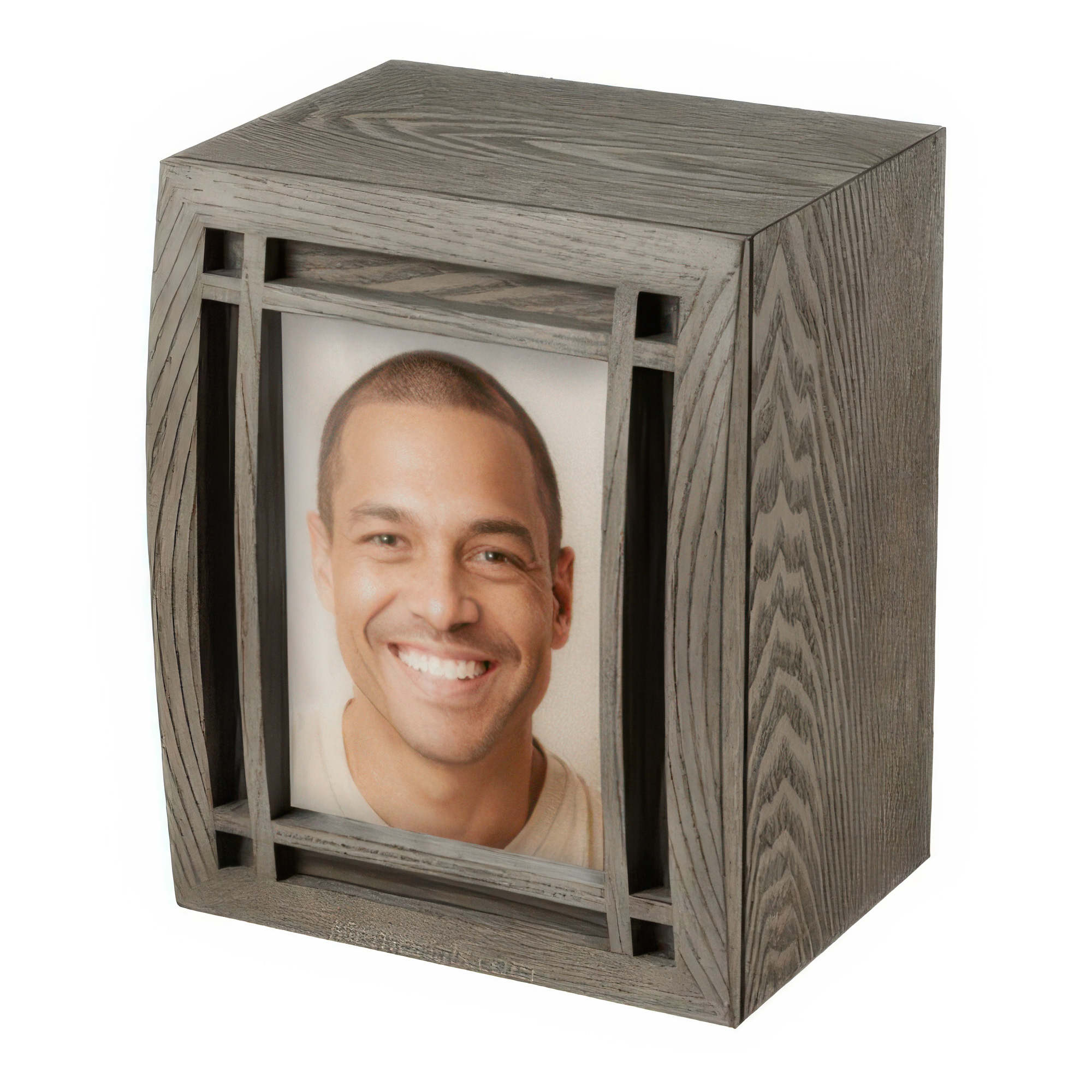
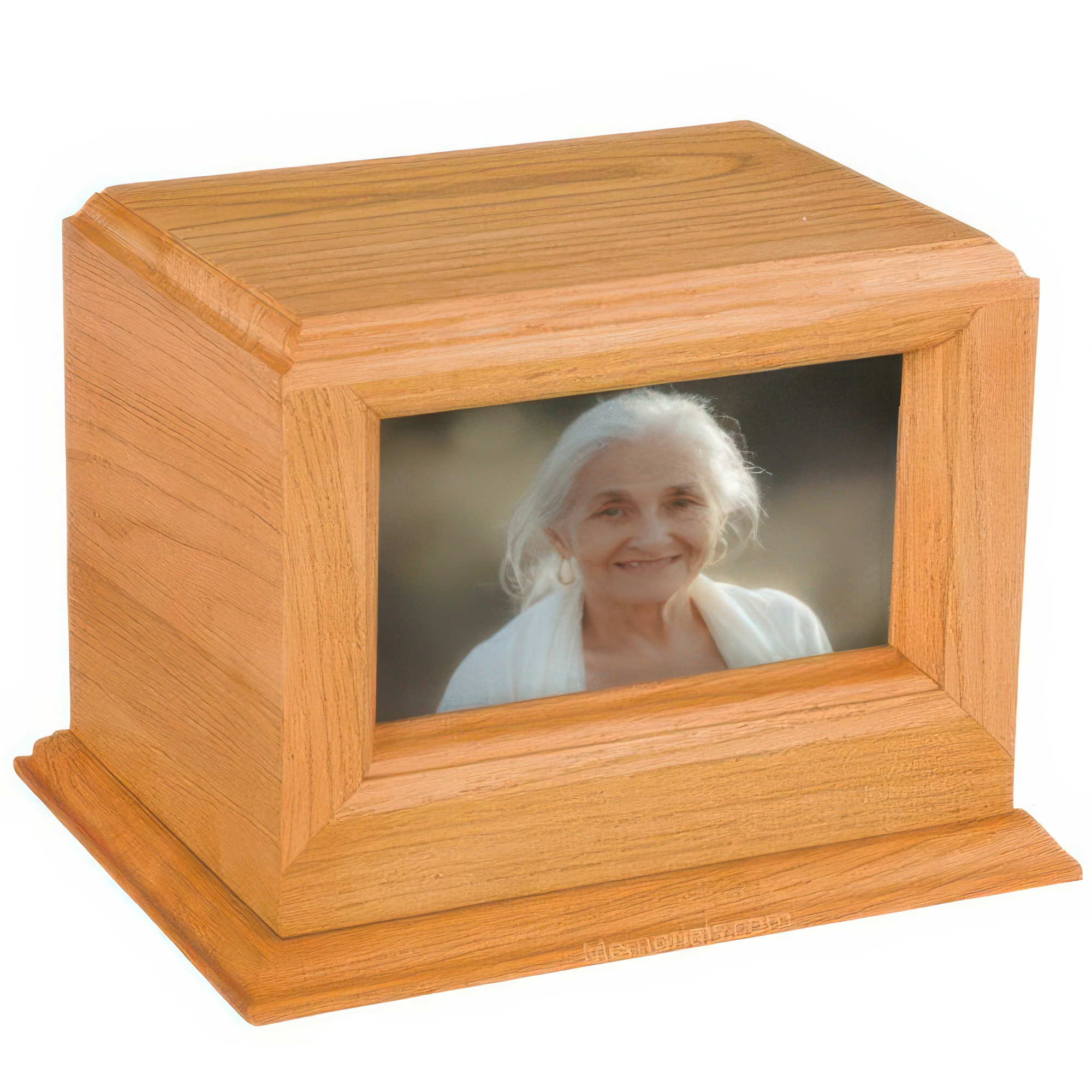
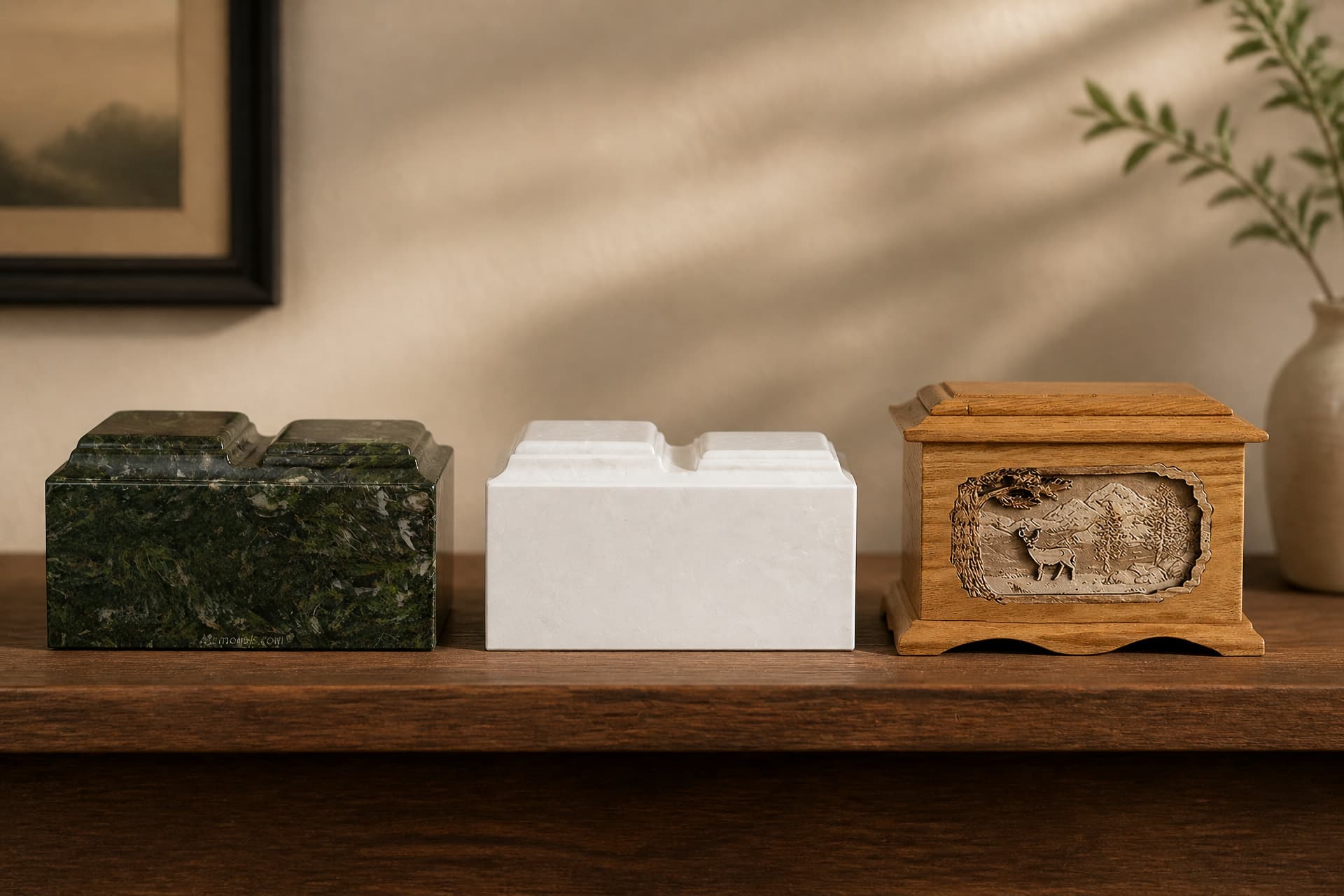
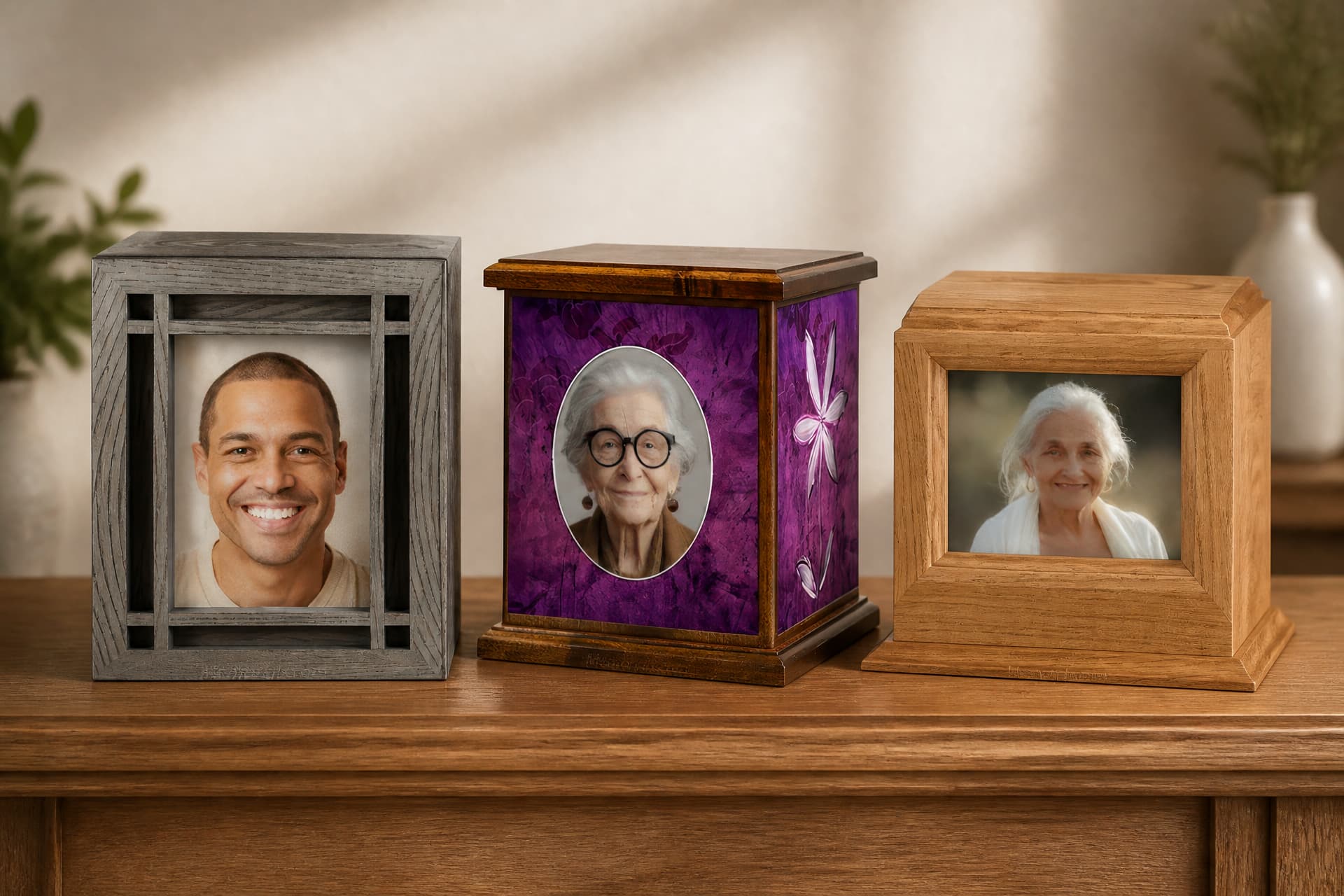
The six urns pictured above — companion urns that hold two people, and photo urns that carry a portrait on the front
Bottom to top, West Virginia's published floors span 2.9 times. Most of that gap is explained by one thing, and it is not that anybody is overcharging: the firms at the bottom and the firms at the top are not the same kind of business. Work out which of the two you want before you start comparing prices, because the cheaper kind cannot give you the other kind's funeral at any price.
The two kinds of business
A cremation-only provider owns or contracts a retort, sells one service by telephone or through an online portal, and has no chapel or viewing rooms to keep lit and staffed. That firm sets the floor. West Virginia has exactly two of them in our data, and both sit in the same pair of river valleys within about an hour of each other — so for much of the state, the cheap tier is a drive rather than a choice.
A full-service funeral home carries a building, arrangement and viewing rooms, staffed hours, a place to care for your loved one, and a hearse, and it sells direct cremation as one line among dozens. Eight of the ten lists belong to one, and that mix is the single biggest difference between West Virginia and the states around it.
The cheaper firm is not undercutting anybody; it is selling less. The chapel, the staff and the hours are carried by the services that firm actually sells — a viewing, a service with your loved one present, a graveside committal. Which is also why the higher price can be worth paying: if you want any part of the larger thing, you are already at the firm that can do it.
Unlike Florida, which licenses a cremation-only establishment as its own category, we found no separate West Virginia license class for one. So the distance from the bottom of the state's range to the top is a business model rather than a credential, as far as we could establish.
What the cheaper option cannot do
A cremation-only provider cannot hold a viewing, cannot run a service with your loved one present, and cannot turn into a burial if the family changes its mind next week. Some will not keep your loved one in their care long enough for relatives to travel.
So the sequence is: decide what you want to happen, then find the cheapest firm that can do it. Done the other way round, the cheapest quote in the state buys a cremation and a telephone call, and the money you saved cannot buy a viewing afterwards.
A published ceiling is usually a box, not a service
Four West Virginia lists print a top figure at more than twice their bottom one, and every one of them prints the reason a line or two below: the container options. The bare figure at the bottom is usually the version where the family supplies the container; a fiberboard or cardboard alternative costs a little more; and a cremation casket sits at the ceiling.
The federal Funeral Rule requires a direct-cremation line to cover every container the firm stocks, from fiberboard to hardwood, so the top of a printed range is the most expensive box in the building rather than a service anyone is buying. A five-figure cremation price quoted from the top of such a range is technically sourced and practically meaningless.
What Is Included, and What Is Not
Price lists describe what they cover inconsistently — some itemize, some price by container variant, some list only what they exclude. That is why the itemized list is the thing to ask for: a quote read down the telephone, without the document beside it, is not comparable to anything. Four questions decide most of the difference between two West Virginia quotes.
The container. Several of the state's published floors are the version where the family supplies the container, so the advertised number is a price for something you have not finished buying. Across the lists that price their own cheapest box, it adds $75 to $350.
Sheltering and care of your loved one. Where it is inside the price, the document usually says for how long. Where it is not, it is a daily charge, generally $75 to $100 a day once the first day or two has passed. The paperwork below takes a few days on its own, so this is rarely hypothetical.
The crematory's own fee. Some lists fold it in and some add it on, and we found a document that answers the question both ways on a single page, with a three-figure fee riding on the difference. Ask which sentence governs before you sign. A faster return, where it is offered at all, is priced separately too.
How they want to be paid. The cheapest full-service packages in the state tend to be cash or check at the time of arrangement, with a surcharge for a credit card, and some are not eligible for pre-planning or a private viewing. We also found fees for a death at home, and mileage beyond a firm's own service area.
Death certificates sit outside almost every price. West Virginia Vital Registration charges $12 per certified copy, effective July 1, 2023, and the state receives that $12 whatever a third-party ordering website adds on top. Work out how many death certificates you need before you order them.
What the state charges on top
No cremation may take place in West Virginia without a permit. W. Va. Code § 61-12-9 requires whoever performs or requests the cremation to secure one from the Chief Medical Examiner, the county medical examiner, or the county coroner of the county where the death occurred. The statute sets no dollar amount — it authorizes "a reasonable fee, as determined by the Chief Medical Examiner" — so we will not publish a state figure, because the state does not publish one.
What we can publish is how the lists treat it. Most that mention the permit exclude it from the quoted price without naming an amount; the one list that itemizes it prints $50.00. On a $2,547.50 median that is small money, but it appears on no competitor's West Virginia page, so ask where it sits before you compare two quotes.
West Virginia Cremation Laws That Affect Cost
There is no waiting period in the West Virginia Code. Nothing requires a hold before cremation. What sets the clock instead is paperwork: § 16-5-19 requires the death certificate to be filed within five days of death and before final disposition, gives the funeral director 48 hours to get it to the certifying clinician, and gives the clinician 24 hours to complete the medical certification. Realistically that is a few days. If you have read that West Virginia imposes a 48-hour wait, that claim does not belong to this state.
West Virginia puts a deadline on the crematory, which is unusual and worth knowing. Where no time was agreed, § 61-12-9 makes it a misdemeanor to take more than 21 days from receiving your loved one to perform the cremation, or more than 35 days to return the cremated remains. So where a firm sells a faster return as a paid extra, the law already guarantees an outer limit, and the fee buys speed rather than certainty.
Who may authorize the cremation runs in a statutory order, at § 61-12-9(g): the deceased's own written wishes first, whether in a will, an advance directive or a pre-need contract; then the surviving spouse, then next of kin, then representatives and public officials. The cheapest way to save money on this is to write your wishes down, because a document at the top of that order removes the delay of assembling signatures at the bottom of it.
No casket is required. An alternative container of fiberboard or cardboard satisfies West Virginia, and one of the state's own price lists says so in plain words: "State and local laws do not require a casket for cremation." Federal law forbids a provider from telling you otherwise, at 16 C.F.R. § 453.3(b)(1), and requires them to make an alternative container available.
Alkaline hydrolysis is recognized. West Virginia's licensing statute at § 30-6-3 defines water cremation alongside flame cremation as a form of final disposition, so if a provider near you offers it, it is a lawful option here rather than a gray area.
There is help for families who cannot pay, and it has a shape. The West Virginia Bureau for Family Assistance pays up to $1,000 toward the funeral expenses of an indigent adult or child. In practice the funeral home's own charge is capped, the state pays its $1,000, the family pays the balance up front, and only a direct cremation or a direct burial qualifies — request any additional service or merchandise and the assistance is forfeited. That last clause is the one to know in advance.
On scattering, we have nothing verified and will not guess. We could not locate a West Virginia statute governing the scattering of cremated remains in either direction — none permitting it and none restricting it. That is a statement about what our search found, not a conclusion that no rule exists. Our guide to scattering ashes laws and etiquette covers the principles that apply almost everywhere; for a specific West Virginia park, river or piece of private land, ask whoever owns it.
How to Lower the Cost in West Virginia
Every question that moves real money here is asked on the first telephone call.
Decide first whether the family will want time with your loved one. That single answer chooses between the two kinds of business above, and it is worth more than any comparison you can do afterwards.
Ask what the quote leaves outside it — the container, the cremation permit, the crematory's own fee, and the daily charge for care once the first day or two has passed. Those four lines are where two West Virginia quotes stop measuring the same thing.
Ask how they want to be paid. The cheapest packages in the state tend to be cash at the time of arrangement, with a surcharge for a card.
Ask about membership if a cremation society serves your area. It is a small one-time fee that takes a few hundred dollars off, but it has to be bought before the death, which makes it a pre-planning question rather than an at-need one. The same is true of the state assistance above: up to $1,000, but only against a direct cremation or direct burial.
Read the effective date on the document. West Virginia's cheapest published figure sits on its oldest price list. The one with the most recent effective date and a stated inclusion list is the one that binds.
And look outside your own county. The two cheapest genuine operators in the state sit in the same pair of river valleys, and published floors run 2.9 times from bottom to top across the state. Then look at the whole decision rather than the line item: cost of cremation vs burial sets the two side by side, how much a funeral costs covers the full-service figure, and direct cremation explains what actually happens, in what order, and what you are not obliged to buy.
Choosing an Urn
Whether the price includes any vessel for the ashes is worth asking, and the answer is rarely an urn the family chose. Some lists include a plain plastic box or a simple chest; elsewhere you receive whatever the crematory supplies the ashes in. The urn is a separate decision, made later, and you are under no obligation to buy it from whoever performed the cremation.
How much does cremation cost in West Virginia? Between $1,099 and $3,190 to start, with a median of $2,547.50, across the 10 West Virginia price lists we read in 2026. The realistic floor is $1,595, because the $1,099 is a discounted package on a price list effective in 2022.
What is the average cost of cremation in West Virginia? We publish the median rather than the mean, because a handful of high full-service prices pull an average upward and describe nobody. The median is $2,547.50. Treat any figure for the average cost of cremation in West Virginia with suspicion unless the page says where it came from.
Why is the cost of cremation in West Virginia higher than in Ohio or Kentucky? We do not know, and we will not invent a reason. What the documents show is that West Virginia's ten lists contain two cremation-only operators and eight full-service funeral homes, and that its cheapest current price is $1,595 where Ohio's lowest published floor is $570.
How much is cremation in West Virginia, all in? Take the published floor and add what the list leaves outside it: the container where the price is a family-supplied one, the cremation permit, any daily sheltering charge, and death certificates at $12 each. On the $2,547.50 median that realistically lands between $2,700 and $3,000.
Is there a waiting period before cremation in West Virginia? No. We found no statutory hold in the West Virginia Code. The delay is paperwork — the death certificate must be filed within five days and before disposition — so plan on a few days rather than on a fixed wait.
Do I have to buy a casket for cremation in West Virginia? No. An alternative container of fiberboard or cardboard is sufficient, and federal law forbids a funeral provider from telling you state law requires a casket. Where a West Virginia price list shows a range topping five figures, that top number is a casket.
In Short
The cremation cost in West Virginia is the third highest in the South — a median floor of $2,547.50 across ten published price lists — and every state on the border is cheaper, Ohio by more than half. The reason visible in the documents is not that West Virginia funeral homes charge more than Ohio funeral homes. It is that the state has almost no cremation-only tier: two operators, both in the same pair of river valleys, and full-service funeral homes everywhere else.
So decide which kind of firm you want before you start comparing, because the cheapest option in the state cannot give you a viewing at any price. Then ask for the itemized general price list and read three lines on it — the container, the cremation permit and the daily sheltering charge — because those are the lines where two West Virginia quotes stop describing the same thing.