🏬Supersize Online Funeral Retailer🪦1000's of Headstones⚱️Over 10,000 Cremation Urns⚰️Caskets Overnight Delivery🛒Funeral & Memorial Superstore🚚FREE Shipping on ALL Orders👨👩👧👦Helping Families for over 20 Years💰Lowest Price Guarantee🏬Supersize Online Funeral Retailer🪦1000's of Headstones⚱️Over 10,000 Cremation Urns⚰️Caskets Overnight Delivery🛒Funeral & Memorial Superstore🚚FREE Shipping on ALL Orders👨👩👧👦Helping Families for over 20 Years💰Lowest Price Guarantee
🏬Supersize Online Funeral Retailer🪦1000's of Headstones⚱️Over 10,000 Cremation Urns⚰️Caskets Overnight Delivery🛒Funeral & Memorial Superstore🚚FREE Shipping on ALL Orders👨👩👧👦Helping Families for over 20 Years💰Lowest Price Guarantee🏬Supersize Online Funeral Retailer🪦1000's of Headstones⚱️Over 10,000 Cremation Urns⚰️Caskets Overnight Delivery🛒Funeral & Memorial Superstore🚚FREE Shipping on ALL Orders👨👩👧👦Helping Families for over 20 Years💰Lowest Price Guarantee
If you are asking how much is cremation in Virginia, the short answer is $995 to $5,250, with a median of $2,055. That comes from 17 published Virginia price lists in 2026, taking the lowest direct-cremation figure printed on each.
On price the Commonwealth is unremarkable. Its median floor sits about $130 above the national median of $1,925 — 30th cheapest of the fifty states, 10th cheapest of the South's sixteen. What is not unremarkable is the spread: the highest Virginia floor is more than five times the lowest, and almost all of that gap comes down to one decision you make before you ever compare a number — whether you are buying from a cremation-only provider or from a full funeral home. Add the $100 medical examiner's certificate the Commonwealth requires on every cremation, and you have most of why the cost of cremation in Virginia is hard to compare list to list.
Every figure in this guide is a floor: the lowest direct-cremation line on a provider's own published document. Across the 17 Virginia lists we read, those floors run $995 to $5,250, with a median of $2,055.
Read that range for its shape rather than for its extremes. The floors do not spread evenly between the two ends. Most sit at $1,995 or below and the rest at $2,495 or above, with a $500 step between the two groups and nothing inside it.
Geography matters less than which group you land in. The same metro areas turn up at both ends of the range, so a low floor and a high one can sit a few miles apart.
A firm that does not publish its prices online is not necessarily an expensive one. Federal law makes every Virginia funeral establishment hand you an itemized general price list and quote prices over the telephone, but nothing requires a firm to put one on its website — so if a firm you are considering has not put one there, ask it for the same document.
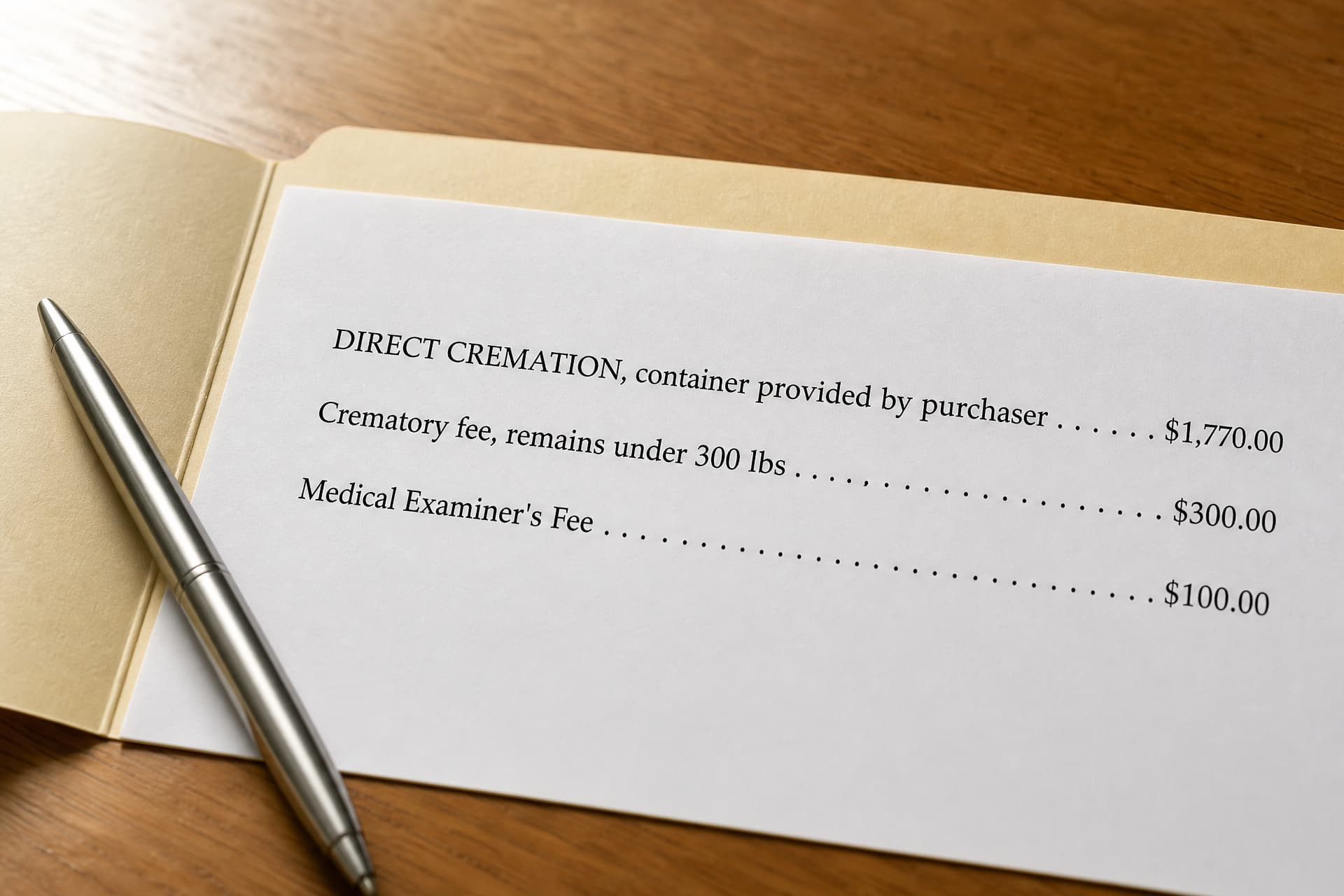
The line that appears on Virginia price lists and almost nowhere else. Virginia requires a certificate from the Office of the Chief Medical Examiner before every cremation in the Commonwealth, and the lists that name the fee put it at $100.
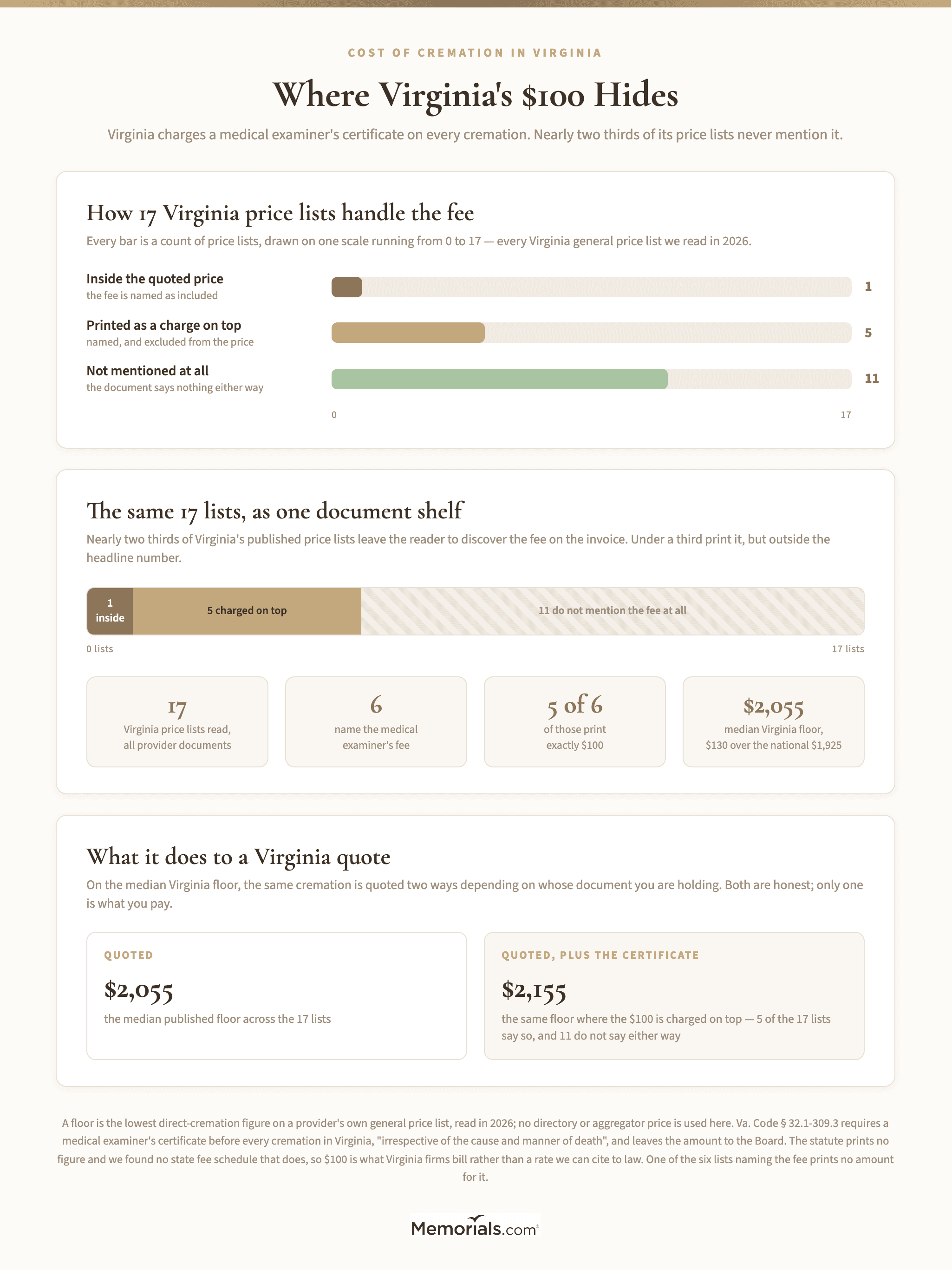
Virginia's $100 medical examiner's cremation certificate, and where it hides. Some lists fold the fee into the quoted price, some print it as an extra on top, and some say nothing about it at all — so the same $1,700 quote can mean $1,700 or $1,800 depending on whose document you are holding. Ask which one you have been given.
This explains most of Virginia's spread, and it is the decision to make first: the firms at the bottom of the range and the firms at the top are not the same kind of business.
A cremation-only provider owns or contracts a retort and sells almost nothing else. Most of the firms in the lower group carry the word cremation in the business name, which is the quickest way to tell which kind of firm you are looking at. You arrange by telephone or online, often without setting foot in an office. There is no chapel and no viewing room, because neither is part of what they sell. These firms set Virginia's floor.
A full funeral home sells a building and the hours inside it. Every one of the firms in the upper group calls itself a funeral home, service or establishment, and every one of their lists also carries caskets, viewings and full funerals. Direct cremation is one line on a long document.
The cheaper firm is not undercutting the expensive one. It is selling less. The chapel, the parking, the viewing rooms and the staff who answer the telephone at two in the morning are real costs, carried by the services a funeral home actually sells. A firm with none of them can print a floor under $1,000 and still make money — but it generally cannot offer a viewing beforehand, a service with your loved one present, or a burial if the family changes its mind, because it has no room to hold one in. That is not a licensing difference: under Va. Code § 54.1-2814.1(A) and 18VAC65-20-435, a crematory serving families directly holds the same license as the firms at the top of the range. What separates them is the building.
So decide which kind of firm you want before you compare prices. If the family will want time together in a room with your loved one present, price funeral homes against each other; the cheapest option cannot give you a viewing at any price. If you want the cremation and nothing else, price the cremation-only firms against each other and treat the top of the range as capacity you would pay for and not use.
The headline number is not the number
Some Virginia lists quote direct cremation with the crematory fee and the medical examiner's certificate sitting outside it, then publish a higher figure elsewhere on the same website that includes both — several hundred dollars apart, both honest, and only one of them what you pay. Others leave out refrigeration, which is billed by the day and unavoidable on a direct cremation because there is no embalming.
The widest numbers you will see quoted are not price ranges at all. The federal Funeral Rule requires a provider's direct-cremation line to cover every box they stock, from a cardboard alternative container to a hardwood casket, so the top of that range is the most expensive casket on the shelf with a cremation attached. Same cremation, different box — which is why a claim that cremation costs in Virginia run from under a thousand dollars into five figures is technically sourced and practically useless. We explain the mechanism at length in our national cremation cost by state guide.
So the figure worth comparing is never the headline. Ask what the number includes, line by line, on the itemized list.
What the Price Covers, and What Virginia Adds
Price lists describe what they cover inconsistently. Some itemize every line; some price direct cremation by container variant, so the cheapest figure assumes the family supplies the box; some name only what they leave out. That is why the itemized list is the thing to ask for — it is the one document a Virginia firm has to give you, and the only way to make two quotes mean the same thing. Go through it and ask about each of these by name:
Basic services of the funeral director and staff, the non-declinable fee at the top of nearly every list.
Bringing your loved one into the provider's care, and transportation to the crematory — sometimes two separate charges.
The cremation itself, and the crematory fee where the firm owns no retort.
Refrigeration or sheltering, the item Virginia lists are most likely to bill by the day.
Filing the death certificate and permits, and what each certified copy costs.
The container your loved one is cremated in. Every cremation needs one, and it is often outside the number — some of the cheapest published floors say on the same line that the cremation container is not included.
A temporary container for the ashes, if you are not choosing an urn straight away.
The medical examiner's certificate — Virginia's own, and the next section.
The $100 Virginia adds to every cremation
Virginia's government fee on a cremation is unusual twice over: it applies to every case, and its price lists agree on the number.
Va. Code § 32.1-309.3 requires a medical examiner's certificate before every cremation in the Commonwealth, "irrespective of the cause and manner of death." Most states involve a medical examiner only when a death is reportable — violent, sudden, suspicious. Virginia sends all of them.
The statute leaves the amount to the Board, and we could not find a published state fee schedule that names it, so we will not call $100 Virginia's statutory rate. What the documents say is this: the Virginia price lists that name the fee print $100, several of them describing it as required by state law. Treat that as typical rather than a government schedule; ask the funeral home to confirm it, and to say where it sits — inside the quoted price, printed on top, or not mentioned at all.
Refrigeration is the second Virginia item to ask about, and it has a regulation behind it. Where cremation cannot take place within 24 hours, 18VAC65-20-436 requires your loved one to be kept in refrigeration at about 40° Fahrenheit unless embalmed. Since a Virginia cremation waits on the medical examiner's certificate and on a death certificate Va. Code § 32.1-263 gives three days to file, 24 hours is a low bar — and where lists charge for refrigeration separately, the published day rates run from about $30 to $200.
Other charges Virginia lists commonly put outside the headline number: certified copies of the death certificate at $10 to $12 each; sales tax on merchandise at 5.3%; card processing fees of 2% to 3%; oversize charges of $200 to $350 above 300 pounds; expedited or after-hours cremation, from a few hundred dollars to well over a thousand; and $100 to $265 to mail cremated remains.
There is no waiting period, and no in-state permit. Neither Va. Code § 54.1-2818.1, nor § 32.1-309.3, nor 18VAC65-20-436 imposes a delay — the 24 hours in the refrigeration regulation is a storage standard, not a wait — and Va. Code § 32.1-265(D) says plainly that no permit is required where a Virginia death is disposed of in Virginia. Many states charge for a burial-transit or disposition permit; Virginia issues none. A transit permit is needed only to take your loved one out of the Commonwealth, and no schedule we found names a fee for it.
So Virginia's timeline has no clock and no permit, and exactly one gate. The medical examiner's certificate is what a Virginia direct cremation waits for, and the queue at the Office of the Chief Medical Examiner sets the pace. Once it is issued, how long the cremation process takes covers the rest.
There is a step families do not expect: someone has to identify your loved one in person. Va. Code § 54.1-2818.1 asks the next of kin or their representative to do it before the cremation, falling back to any other adult who can positively identify them. It is not a charge on a price list; it is an appointment, and worth knowing about in advance.
Put the authorization in writing, and Virginia's slowest problem never starts. Under Va. Code § 54.1-2825 you may name the person who will control your disposition, in a signed and notarized writing they accept in writing, and that designation takes priority; a servicemember may do the same on DD Form 93. Without one, the list of next of kin in Va. Code § 54.1-2800 — spouse, adult children, parents, siblings and onward — is not a priority order. Va. Code § 54.1-2807.01 ranks nobody: any of them may petition the circuit court, and the funeral establishment may stop until there is an order or a signed agreement. That is slower and more expensive than families expect, and one notarized page avoids it.
No casket is required, and Virginia says so itself. Under 18VAC65-20-436 no crematory may require a casket before cremation, or require the ashes to go into an urn; the container need only be combustible and leak-resistant. Va. Code § 54.1-2808.3(A) also writes the federal Funeral Rule into Virginia law, so a firm must accept a casket you bought elsewhere. 18VAC65-20-435 adds that a crematory must register before it opens and that its manager and every retort operator must be certified.
Virginia is one of the states that requires the certification at the level of the person, not just the building. Under 18VAC65-20-435 every individual who operates a retort in Virginia must hold certification from CANA or the ICCFA, and a trainee may only work under certified supervision for six months.
Scattering is the dimension Virginia leaves least settled. The only Virginia scattering statute we found, Va. Code § 54.1-2808.1, governs unclaimed remains — a facility rule, not a grant of rights to a family. We could not establish Virginia's position on scattering on private land, in state parks or in state waters, and we are not going to imply one; policy there is administrative rather than statutory, so ask the Department of Conservation and Recreation before you plan around a state park. Offshore is settled and federal: 40 C.F.R. § 229.1 allows cremated remains in ocean waters at least three nautical miles from land, with notice to the EPA within 30 days. Our guide to scattering ashes laws and etiquette covers the general position.
A family can file the paperwork and do the driving. Va. Code § 32.1-263 lets the next of kin complete the death certificate, and Va. Code § 54.1-2819 expressly does not prohibit private individuals from transporting a family member, by preference or in observance of religious custom. What those rights do not produce is an unlicensed crematory at the other end.
How to Lower the Cost in Virginia
Decide first whether the family will want time with your loved one beforehand. It saves more than anything else here: a viewing puts you in the funeral-home group whatever else you do, and not needing one puts the lowest published floors in the state within reach.
Ask whether the $100 medical examiner fee is inside the price. A document that is silent about the fee is not a document that has absorbed it.
Then ask about refrigeration and the container. Both are often outside the headline figure and both are hard to avoid. At the top of the published day rates, a weekend of refrigeration costs more than a cardboard container and a death certificate combined.
Ask what day of the week matters. Some Virginia lists qualify what the price covers with the word "weekday", then print a weekend or holiday cremation charge further down the same document — a four-figure difference on the same package, decided by the day a person happens to die.
Read the small print on an advertised price. A "member" rate from a cremation society usually sits beside a higher figure for everybody else, with membership required some hours before the death; and some providers charge a couple of hundred dollars more for the same package arranged in person rather than online. Neither difference is a difference in what you receive.
Read the effective date. Virginia firms leave superseded price lists on their own websites beside the current one, and the most recent effective date is the one that binds. If a list is a scan you cannot copy a figure out of, get the numbers by telephone instead.
Call four firms and ask each the same five questions. Do you have a chapel, and can you arrange a viewing? Is the crematory fee inside this number? Is the medical examiner fee? Is refrigeration, and at what daily rate? Which container does the price assume? Virginia's range collapses from confusing to comparable under those five.
A temporary container for the ashes is rarely part of a Virginia direct-cremation price; where a list mentions one at all, it is usually priced as merchandise. Almost every Virginia family therefore chooses the urn afterwards, at home, with no funeral director in the room — and no crematory may require you to buy one from them.
Two things before you buy. Virginia's 5.3% sales tax applies to funeral merchandise, an urn bought from a funeral home included. And if the urn is going into a cemetery rather than onto a shelf, the cemetery may require it to sit inside a vault — our guide to urn vault requirements for burial explains when that applies and when it does not.
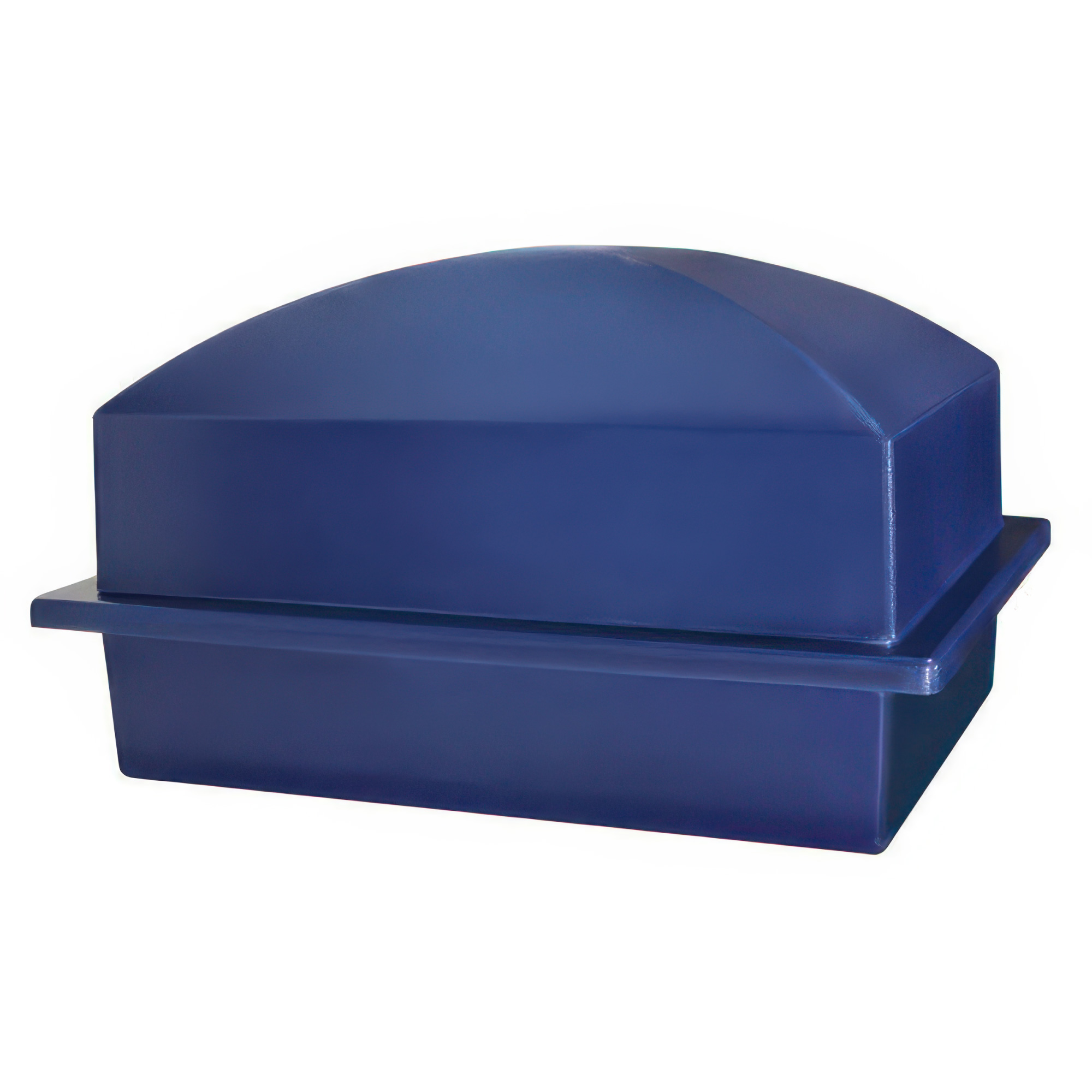
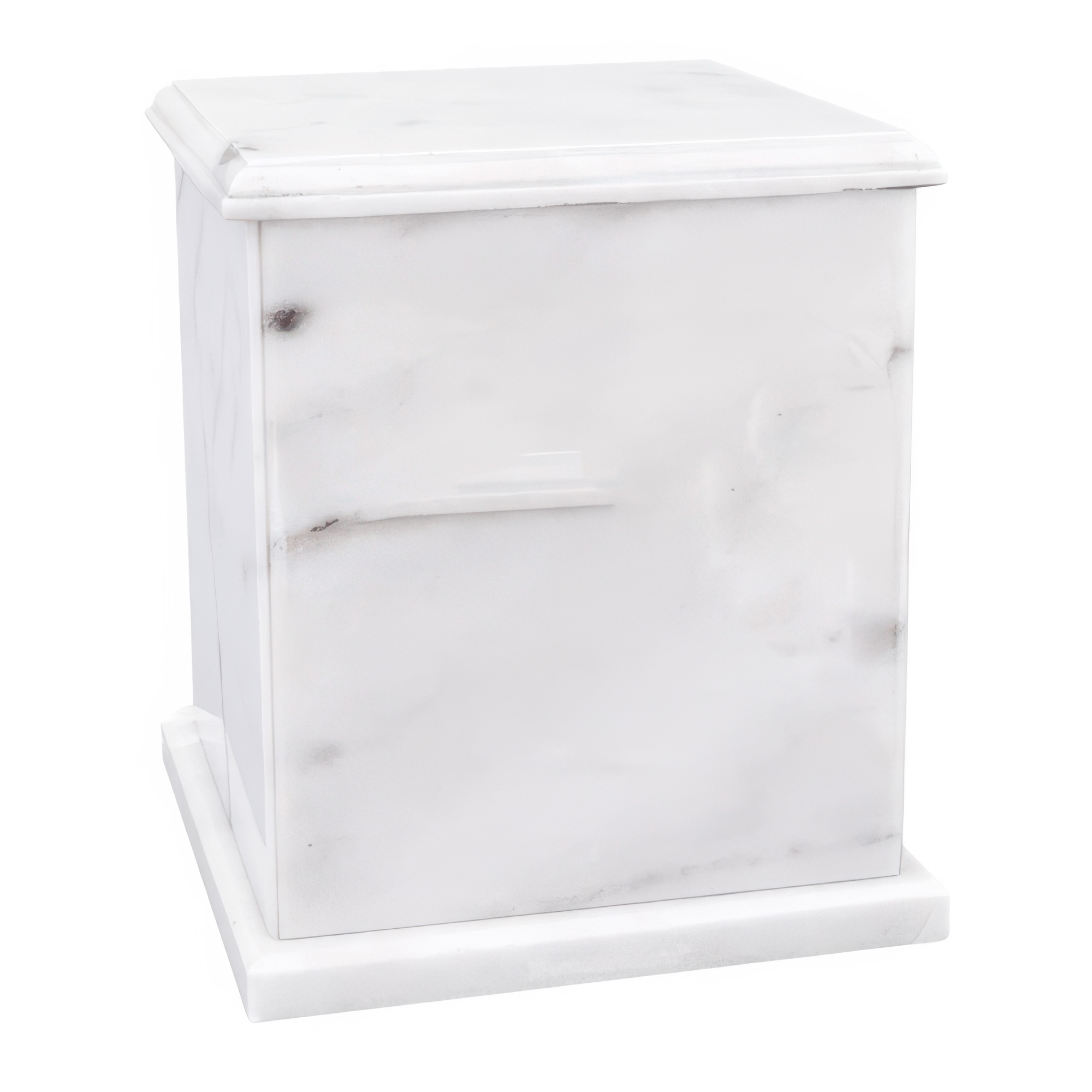
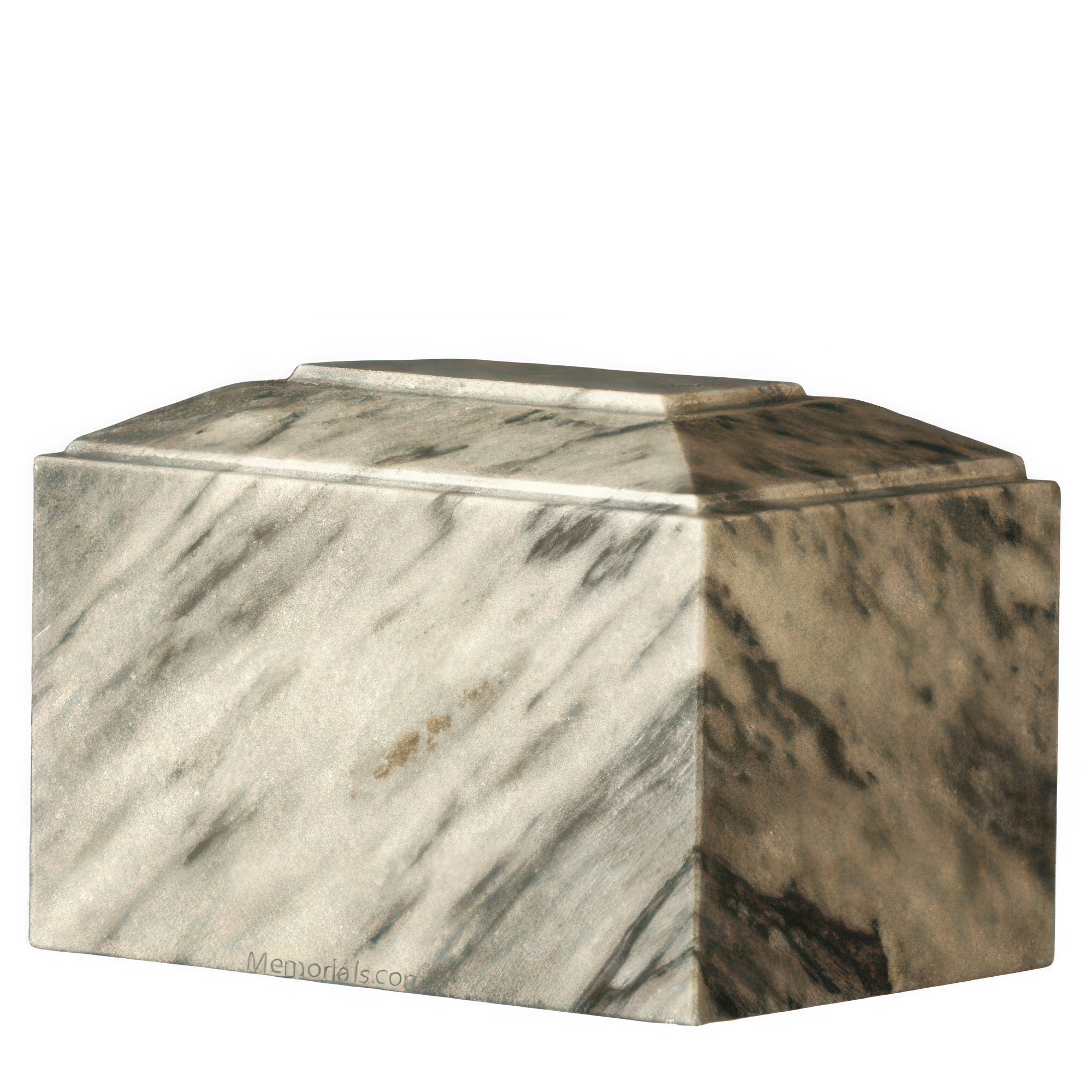
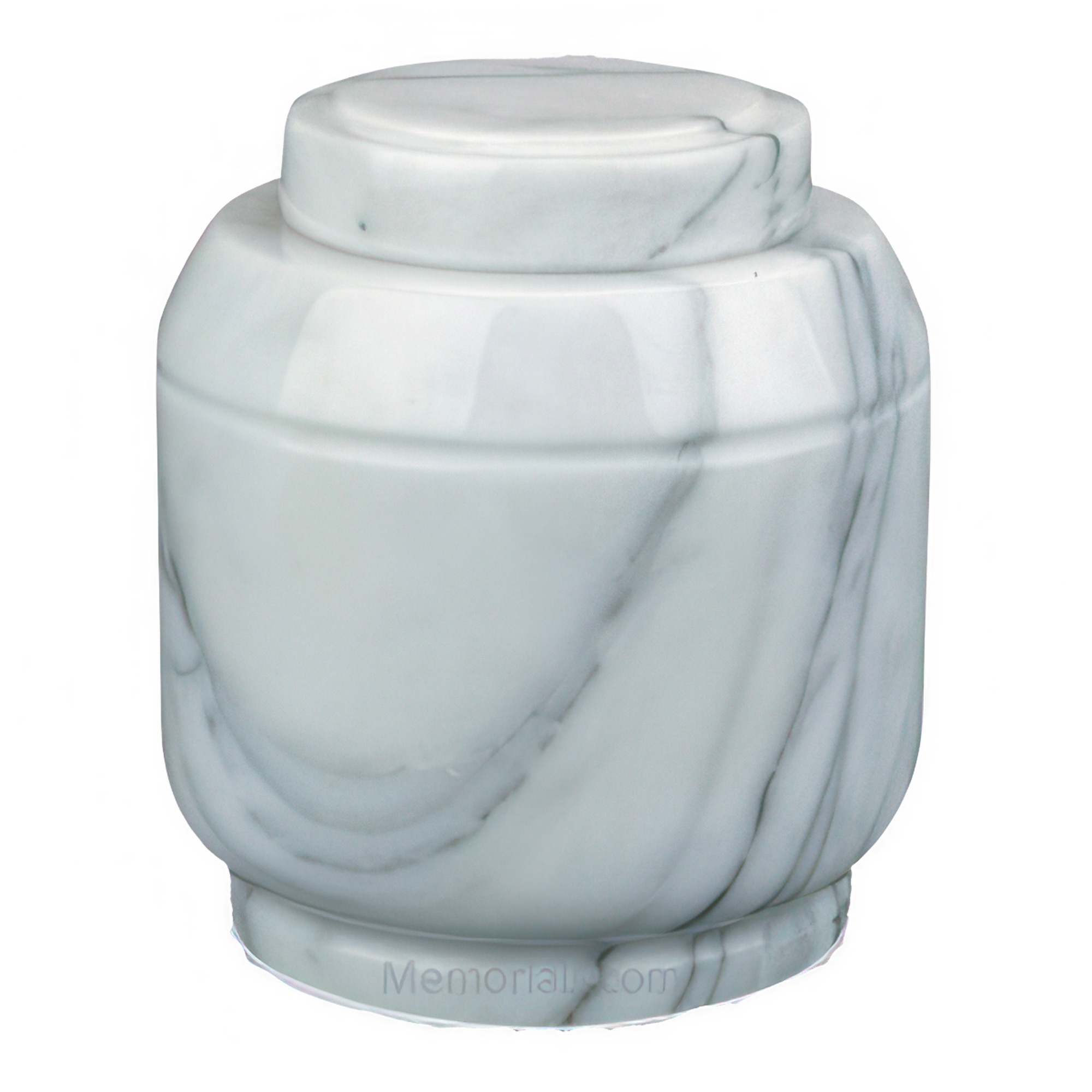
There is no relationship between what a cremation cost and what the urn should cost. How much a cremation urn costs works through materials and price bands, and our full range of cremation urns is organized by how you plan to keep them.
Frequently Asked Questions
How much does cremation cost in Virginia? Direct cremation in Virginia starts between $995 and $5,250, with a median of $2,055. That puts Virginia 30th cheapest of the fifty states, about $130 above the national median.
What is the average cost of cremation in Virginia? We publish the median, $2,055, rather than the mean, because the lists in the upper group drag an average upward and describe nobody. Treat any published average cost of cremation in Virginia with suspicion unless you can see the prices behind it.
How much does it cost to be cremated in Virginia, all in? Take the published floor and add what the list leaves outside it — the $100 medical examiner certificate, refrigeration at $30 to $200 a day, the container where it is excluded, and death certificates at $10 to $12 each. On the median $2,055 floor that is realistically $2,200 to $2,500.
Is there a waiting period before cremation in Virginia? No. What you are waiting for is the medical examiner's certificate required by Va. Code § 32.1-309.3, and a death certificate, which Va. Code § 32.1-263 requires to be filed within three days and before disposition.
Does a medical examiner have to approve every cremation in Virginia? Yes, and this is unusual. Va. Code § 32.1-309.3 requires an Office of the Chief Medical Examiner certification before every cremation in the Commonwealth, "irrespective of the cause and manner of death." Most states involve a medical examiner only for reportable deaths.
What is the Virginia cremation permit fee? There is no in-state cremation or disposition permit to buy — Va. Code § 32.1-265(D) says so. The charge you will actually see is the medical examiner's cremation certificate, which the Virginia price lists that name it price at $100. The statute leaves the amount to the Board, so treat $100 as what Virginia firms bill rather than a rate we can cite to law.
Do I have to buy a casket for cremation in Virginia? No. 18VAC65-20-436 says no crematory may require a casket before cremation or require the ashes to be placed in an urn, and Va. Code § 54.1-2808.3 means a firm must accept a casket you bought elsewhere.
Who decides on the cremation if the family disagrees? A circuit court, if it comes to that. Virginia does not rank its next of kin: Va. Code § 54.1-2807.01 lets any of them petition the court, and the funeral establishment may decline to proceed until there is an order or a signed agreement. A signed and notarized designation under Va. Code § 54.1-2825 avoids it.
Can I scatter ashes in Virginia? Offshore, yes — federal rules allow it in ocean waters at least three nautical miles from land, with notice to the EPA within 30 days. On land and in state waters we could not establish the Virginia position and would rather say so than guess. Ask the Department of Conservation and Recreation, and ask the landowner.
In Short
The cremation cost in Virginia families face sits a little above the national middle — a $2,055 median floor, 30th cheapest of the fifty states. The work is not finding the cheapest firm. It is deciding first which kind of firm you want, because the two clusters in Virginia's published floors are two kinds of business selling different products under one name.
Then ask for the itemized list, check its effective date, and find out what sits outside the quote: the $100 medical examiner certificate, refrigeration, and the container.