🏬Supersize Online Funeral Retailer🪦1000's of Headstones⚱️Over 10,000 Cremation Urns⚰️Caskets Overnight Delivery🛒Funeral & Memorial Superstore🚚FREE Shipping on ALL Orders👨👩👧👦Helping Families for over 20 Years💰Lowest Price Guarantee🏬Supersize Online Funeral Retailer🪦1000's of Headstones⚱️Over 10,000 Cremation Urns⚰️Caskets Overnight Delivery🛒Funeral & Memorial Superstore🚚FREE Shipping on ALL Orders👨👩👧👦Helping Families for over 20 Years💰Lowest Price Guarantee
🏬Supersize Online Funeral Retailer🪦1000's of Headstones⚱️Over 10,000 Cremation Urns⚰️Caskets Overnight Delivery🛒Funeral & Memorial Superstore🚚FREE Shipping on ALL Orders👨👩👧👦Helping Families for over 20 Years💰Lowest Price Guarantee🏬Supersize Online Funeral Retailer🪦1000's of Headstones⚱️Over 10,000 Cremation Urns⚰️Caskets Overnight Delivery🛒Funeral & Memorial Superstore🚚FREE Shipping on ALL Orders👨👩👧👦Helping Families for over 20 Years💰Lowest Price Guarantee
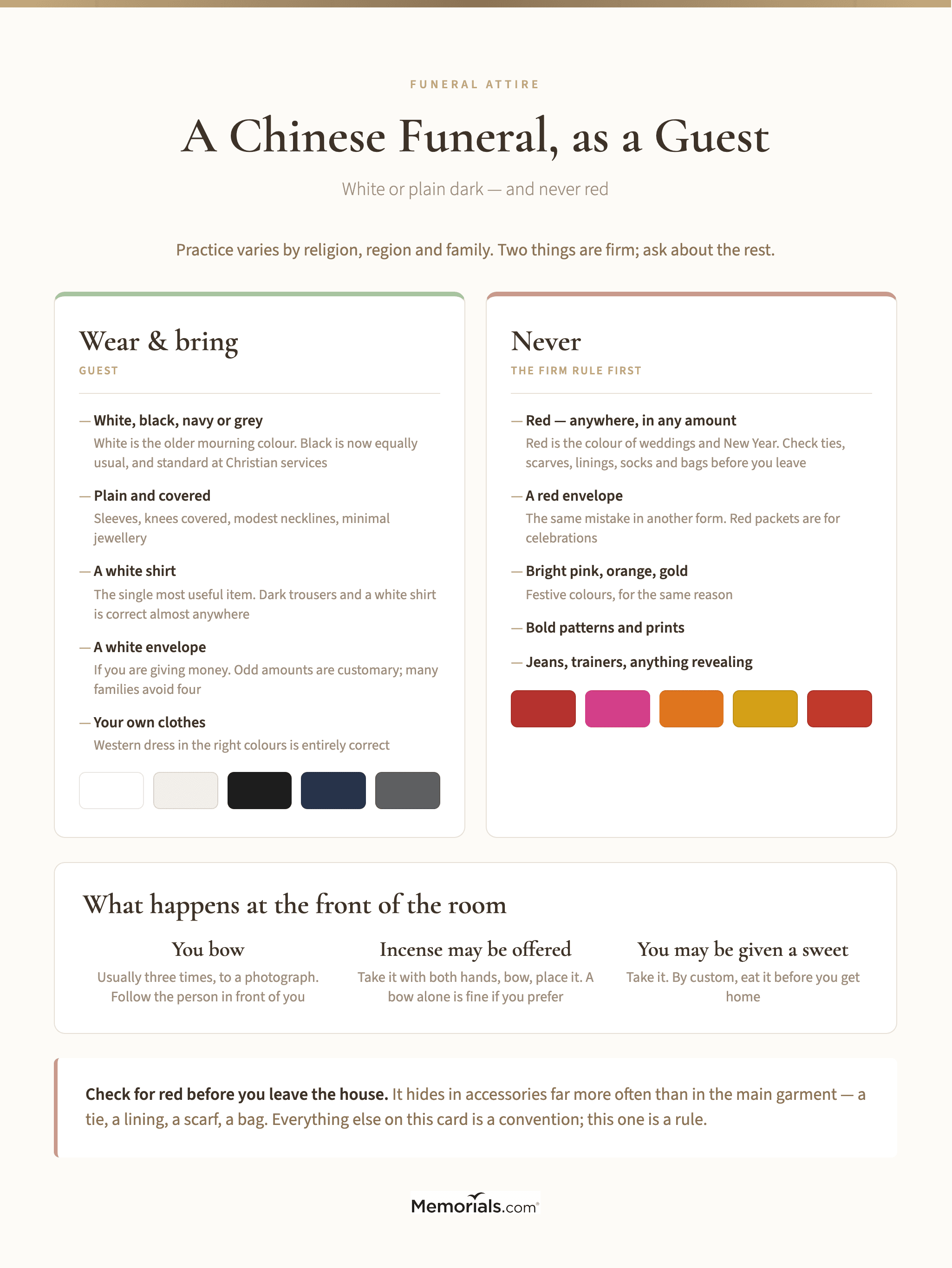
White, or plain dark clothing, and absolutely nothing red. That is Chinese funeral attire for a guest, and the red rule is the firmest thing on this page — red signifies joy and celebration, and wearing it to a funeral is a real error rather than a small misjudgement.
This page is written for someone attending as a guest: a colleague, a neighbor, a partner's family. Practice varies a great deal — Buddhist, Taoist, Christian and secular Chinese funerals differ, and families outside China differ again — so the aim here is the handful of things that are firm, and the confidence to ask about the rest.
White Is the Mourning Color — and Red Is Not an Option
Chinese funeral colors invert the Western convention in one direction and reinforce it in another, which is why they confuse people.
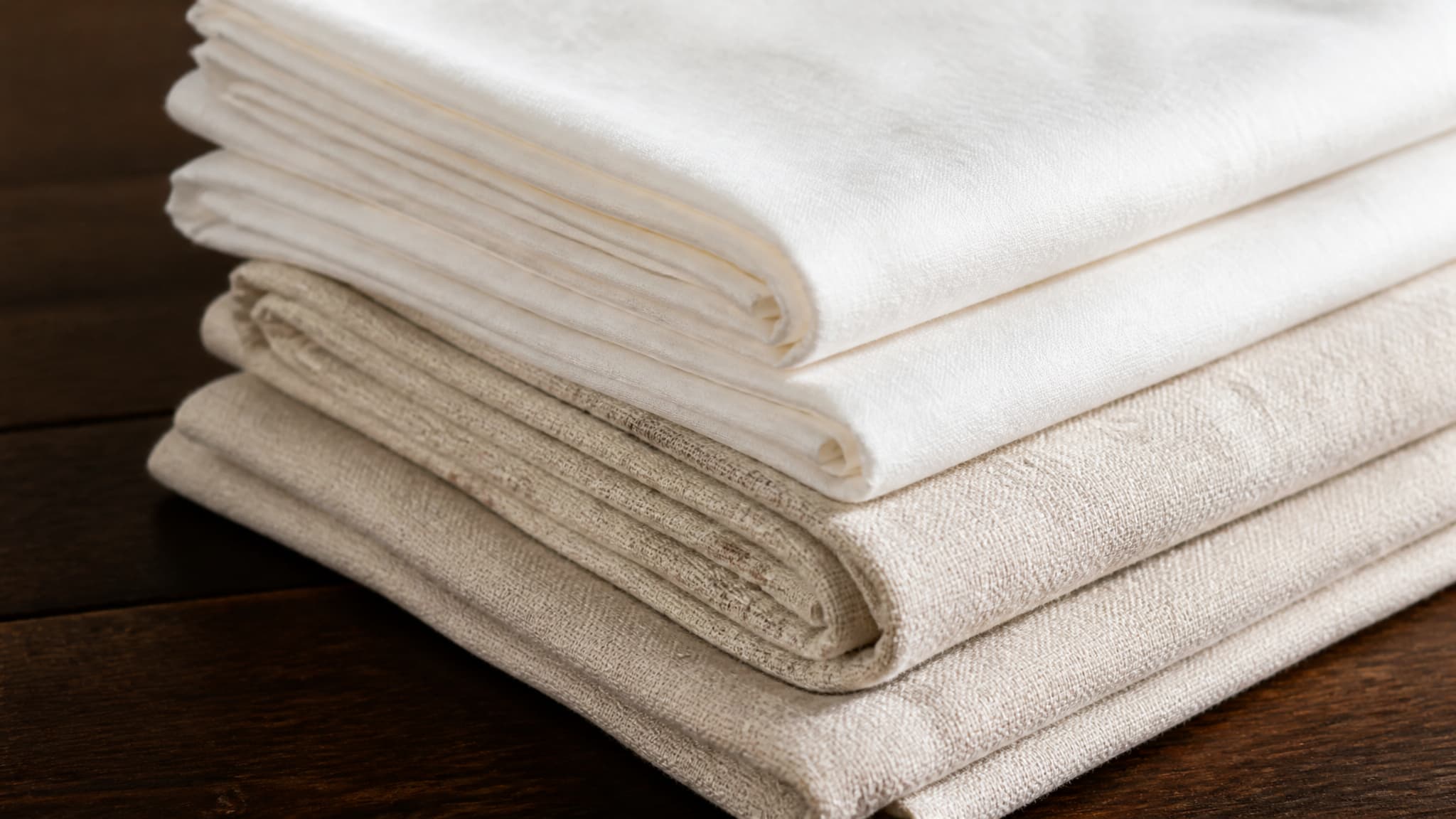
White is the traditional color of mourning. It signifies death and grief, which is exactly why it is worn at funerals and avoided at celebrations. Undyed, plain, unbleached cloth carries the strongest association.
Black is also entirely acceptable now, particularly in Hong Kong, Singapore, Taiwan and among diaspora families, and at any Christian Chinese service. If you own a dark suit or a dark dress, you are appropriately dressed. Navy and gray are equally fine.
Red is the one to be certain about. Red is the color of luck, joy, weddings and New Year. It has no place at a funeral, and unlike most of the conventions on this site, this is not a soft preference — it will be noticed and it will read as either careless or actively unlucky.
Check for red before you leave: a tie, a scarf, a patterned lining, a bright bag, socks. It hides in accessories more often than in the main garment.
Also avoid bright pink, orange and gold for the same reason: they are festive colors.
This is the mirror image of the question most Western readers arrive with — see do you have to wear black to a funeral — and it is a convention shared, for different reasons, with Indian funeral attire, where white is also the mourning color. White mourning is the older and wider convention across much of Asia rather than a Chinese peculiarity, and our guide to funeral traditions around the world sets out what each of them asks of a guest.
What to Wear as a Guest
Working out what to wear to a chinese funeral as a guest is straightforward once the color is settled.
For women:
A white, black, navy or gray dress, at or below the knee, with sleeves.
Or dark pants with a plain white or dark top.
Flat or low shoes — you may be standing, and there may be steps or an outdoor portion.
Minimal jewelry, nothing red, nothing that jingles.
Light or no makeup.
For men:
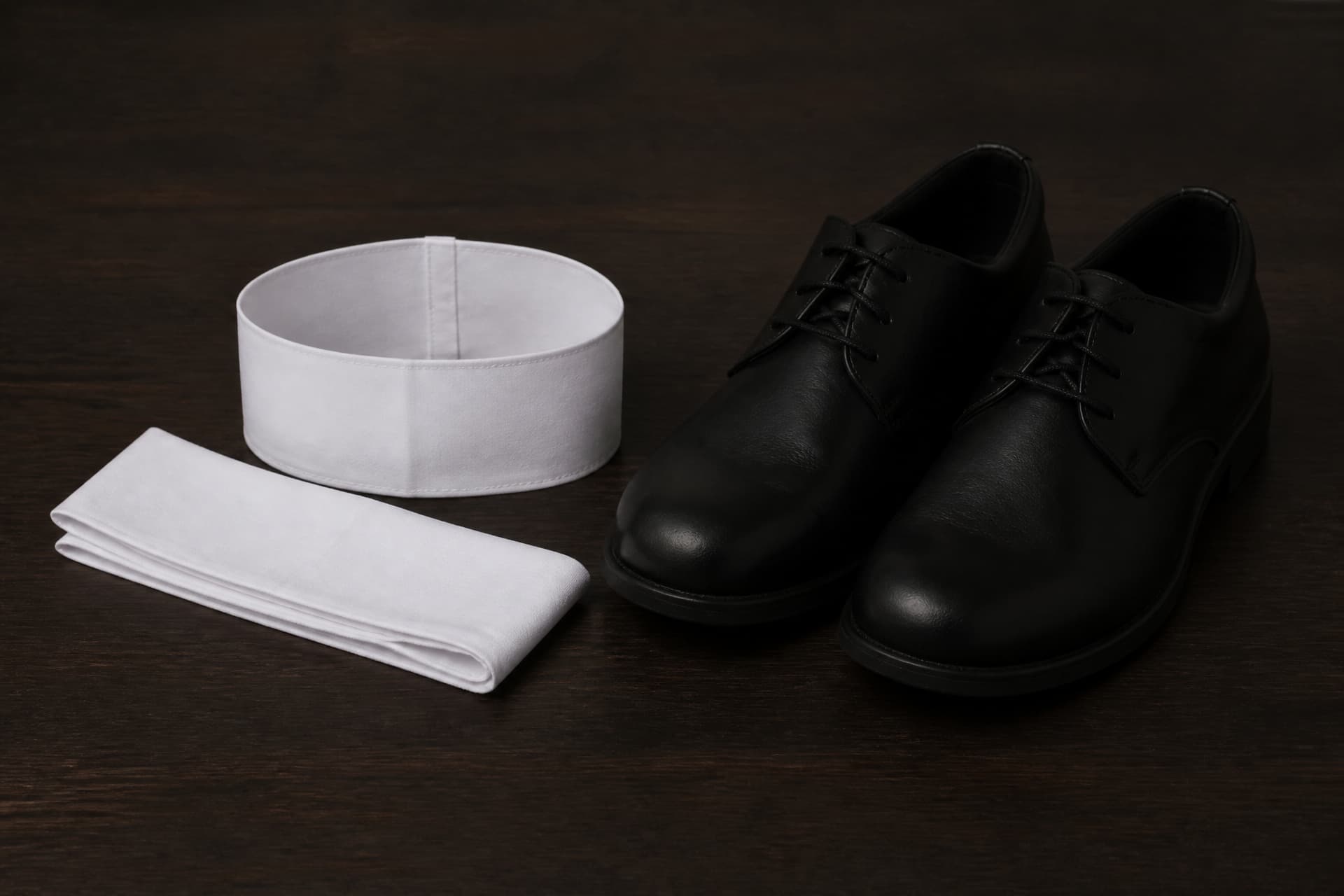
A dark suit with a white shirt, or plain dark pants with a white or pale shirt.
A plain dark tie, or no tie.
Dark shoes.
A plain white shirt is the single most useful item for either. A simple chinese funeral outfit of dark pants and a white shirt is correct almost everywhere, and it is what a great many people in the room will be wearing.
The garments themselves are the Western ones, so only the color rule is different here. Our guide to what to wear to a funeral for men covers the suit, the shirt and the tie in full, including what to do if you own no suit at all.
You are not expected to wear Chinese clothing. Western dress in the right colors is completely appropriate, and a guest turning up in borrowed traditional dress lands awkwardly rather than respectfully.
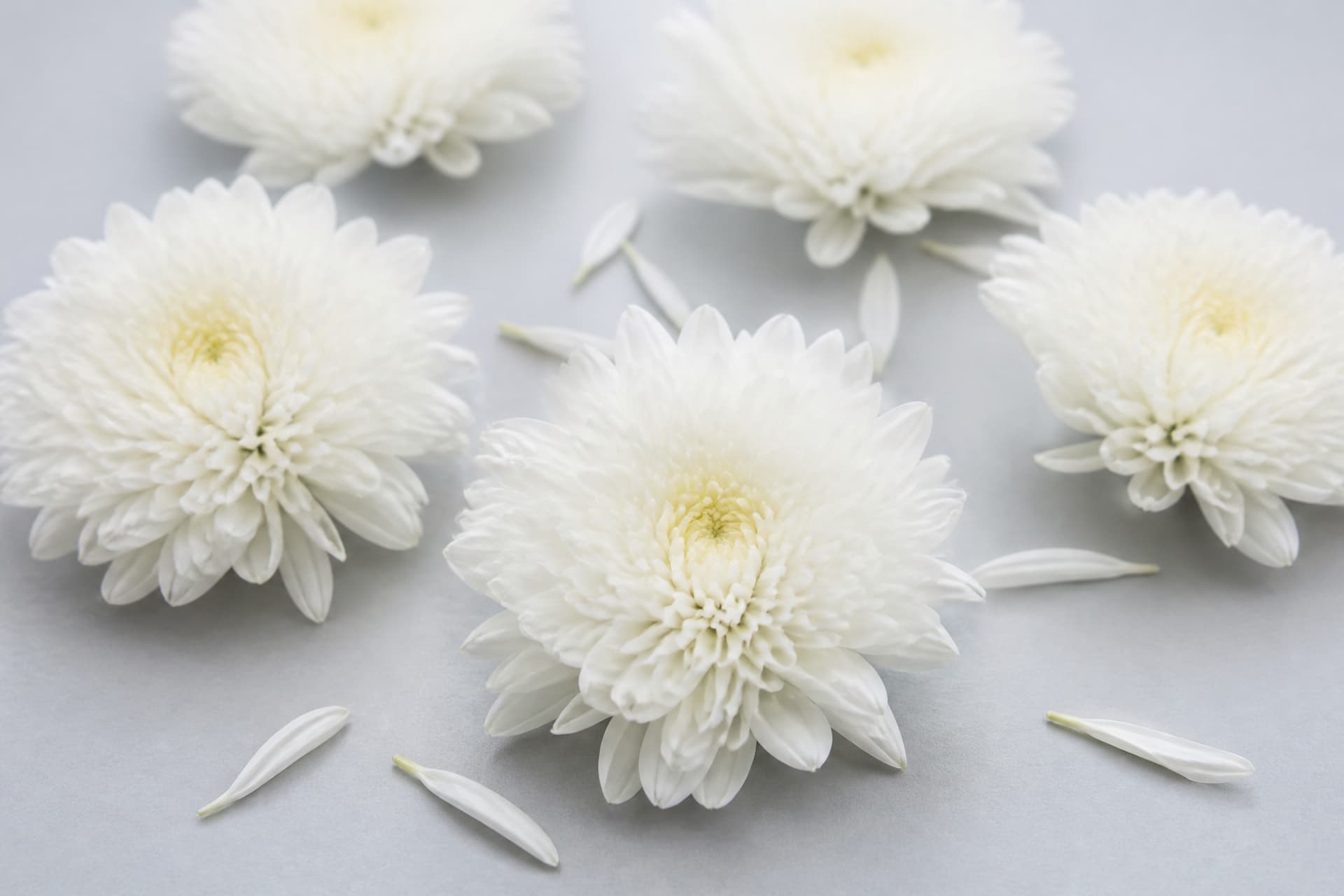
White chrysanthemums are the funeral flower in Chinese tradition — the same bloom that would be an odd choice for a celebration.
What the Family Wears, and Why It Differs
You will see the immediate family dressed differently from everyone else, and it is worth knowing why so it does not read as a dress code you have failed.
Traditional chinese funeral attire for the family is graded by relationship to the deceased. In the fullest version, the children of the person who died wear the coarsest, plainest cloth — undyed hemp or sackcloth — with grandchildren, in-laws and more distant relatives in progressively lighter grades and finer fabrics. Some families still wear these; many now use a simpler marker such as a black armband, a white headband, or a small cloth badge pinned to the sleeve.
None of this applies to a guest. You are not part of the grading system and should not try to join it. If the family hands you a small white or black cloth to wear, put it on — that is an invitation and it is the exception.
The family may wear a white armband or headband marking their relationship to the person who died. A guest wears neither, unless one is handed to them — and then it should be worn.
What the Deceased Is Dressed In
A separate question, and one people search for when they are arranging a funeral rather than attending one.
Traditional chinese funeral clothes for the person who has died are usually called longevity garments — prepared in advance in many families, sometimes bought by the person themselves while living, which is considered auspicious rather than morbid.
A few points that come up:
Layers matter. Traditionally an odd number of layers, and the count carries meaning in some families.
Certain fabrics are avoided. Fur and leather are traditionally not used. Silk and cotton are usual.
Red is avoided here too, for the same reason as everywhere else.
Practice varies enormously, and many modern families simply choose good clothes the person liked.
If you are the one arranging this, the funeral director will know local custom and will ask. Chinese funeral clothes for the deceased are one of the things families most often want to get right and most often have nobody to ask about, so raise it early rather than late.
The White Envelope
The most common practical mistake a Western guest makes, and it has nothing to do with clothes.
Money is frequently given at a Chinese funeral to help with costs. It goes in a plain white envelope — never a red one. The red packet is for weddings, birthdays and New Year, and bringing one to a funeral inverts the meaning completely.
White envelope, plain, no decoration.
Hand it to whoever is receiving at the door, or place it where others are placing theirs.
Amounts vary by region and relationship; an odd number is customary, and many families avoid the number four.
If you are unsure whether money is expected at all, ask whoever invited you. At many services it is not.
White, never red. The red packet means luck and celebration, and the two sit side by side on the same shop shelf.
The guest's checklist for a Chinese funeral: white, black, navy or grey are all fine; nothing red anywhere, including a lining, a scarf or socks; bring a white envelope rather than a red one; and wear your own Western clothes rather than borrowed traditional dress.
Bowing, Incense and What Happens
Knowing the shape of the event removes most of the worry, and no attire page covers it.
You will probably be invited to bow to a photograph of the deceased, usually three times. Follow the person in front of you; nobody expects you to know the count.
Incense may be offered. Take it with both hands, bow, and place it in the holder. If you would rather not, a bow alone is fine and nobody will comment.
You may be given a sweet or a red thread on leaving. Take it. It is meant to send you home with something lucky after a sad occasion — eat the sweet before you get home, by custom.
The family may receive you at the entrance. A short word is enough; long conversations are for later.
There may be an outdoor portion, at a grave or a crematorium, so bring a coat.
Buddhist, Taoist, Christian and Secular Services
The most useful thing to know is how much this varies.
Buddhist services involve chanting, often by monks, and may run for some time. Guests sit or stand quietly; participation is not required.
Taoist services may include more elaborate ritual, music and paper offerings burned for the deceased.
Christian Chinese services are frequently close to a Western funeral, with hymns and a eulogy — and black is entirely usual.
Secular services are increasingly common and are usually the simplest to attend.
Wakes often run over several evenings, and guests come and go rather than staying throughout. A short visit is normal and not rude.
Diaspora families in the US, UK, Canada and Australia frequently blend these with local convention, so the funeral you attend may be much simpler than anything described here. Those offerings are not generic paper: the foil squares, the folded ingots and the printed notes each mean something different, which our guide to the spiritual meaning of burning paper sets out.
What Children Wear
The one place a Western parent is most likely to get this wrong, and it is worth stating plainly: red is the default color for Chinese children's clothing, because it carries luck. A child's wardrobe is often full of it, and at a funeral it is the single worst thing they could arrive in.
White, off-white, gray or black. Plain, and no exceptions on the red.
Check the shoes and the coat too, not just the outfit. Red trim on sneakers is easy to miss on the way out of the door.
No character prints, no bright colors, nothing with gold lettering.
Babies and toddlers in plain white or pale neutrals. White is a mourning color here, so it is the safe choice rather than the risky one it would be in the West.
Older children may be given a white headband or armband by the family if they are related. Guests' children are not part of the grading system described above.
Our general guide to funeral clothes for kids covers the Western default, where the advice runs almost exactly the other way.
What Not to Wear
Red, in any amount — the firm one.
Bright pink, orange, gold, or anything festive.
Bold patterns and prints.
Anything revealing — short skirts, low necklines, bare shoulders.
A red envelope, which is the same mistake in another form.
Casual clothing — jeans, sneakers, shorts.
Strong fragrance, in rooms that are often crowded and warm with incense.
If You Are Not Sure, Ask
The single most useful thing on this page is that asking is normal and welcome.
Chinese funeral customs differ by region, by religion, by generation and by how long a family has lived outside China. Nobody expects a guest from another background to know which version they are attending, and one sentence — "I want to make sure I do the right thing, is there anything I should know?" — will get you a clear answer and be received as care.
If the family has asked for something specific, that request outranks everything on this page.
Can I wear black to a Chinese funeral? Yes. Black is entirely acceptable and is now common, particularly among diaspora families and at Christian services. White is the older mourning color and equally correct.
Why can't I wear red? Red signifies joy, luck and celebration — it is the color of weddings and New Year. At a funeral it inverts the meaning of the occasion, and it is noticed.
Should I bring anything? Often a white envelope with money toward costs, and sometimes white flowers. Ask whoever invited you; at many services neither is expected.
Do I need to bow or take incense? You will usually be invited to. Follow the person ahead of you, and if you would prefer not to take incense, a bow alone is completely acceptable.
How long should I stay at the wake? Wakes often run over several evenings and guests come and go. A short visit is normal.
In Short
White or plain dark, nothing red, modest and covered. Bring a white envelope if you are giving money. Follow the person in front of you at the front of the room.
Chinese funeral practice varies more than any single page can capture, and nobody expects you to have learned it. Getting the color right and asking about the rest is the whole of what is being asked of you.