🏬Supersize Online Funeral Retailer🪦1000's of Headstones⚱️Over 10,000 Cremation Urns⚰️Caskets Overnight Delivery🛒Funeral & Memorial Superstore🚚FREE Shipping on ALL Orders👨👩👧👦Helping Families for over 20 Years💰Lowest Price Guarantee🏬Supersize Online Funeral Retailer🪦1000's of Headstones⚱️Over 10,000 Cremation Urns⚰️Caskets Overnight Delivery🛒Funeral & Memorial Superstore🚚FREE Shipping on ALL Orders👨👩👧👦Helping Families for over 20 Years💰Lowest Price Guarantee
🏬Supersize Online Funeral Retailer🪦1000's of Headstones⚱️Over 10,000 Cremation Urns⚰️Caskets Overnight Delivery🛒Funeral & Memorial Superstore🚚FREE Shipping on ALL Orders👨👩👧👦Helping Families for over 20 Years💰Lowest Price Guarantee🏬Supersize Online Funeral Retailer🪦1000's of Headstones⚱️Over 10,000 Cremation Urns⚰️Caskets Overnight Delivery🛒Funeral & Memorial Superstore🚚FREE Shipping on ALL Orders👨👩👧👦Helping Families for over 20 Years💰Lowest Price Guarantee
Funeral Traditions Around the World: How Different Faiths and Cultures Bury and Mourn Their Dead
funeral
A funeral you have never been to before is not a test you can fail. Funeral traditions differ enormously in what they ask of the people who arrange them, and remarkably little in what they ask of the people who attend: arrive, be quiet, follow whoever is in front of you, and stay a while afterward. Almost everything that frightens a first-time guest turns out to be a detail nobody was going to hold against them.
This guide is for two readers. The first has been invited to a service in a faith or a culture that is not theirs — a colleague's father, a partner's grandmother — and has hours rather than days to work out what is expected. The second is arranging one: usually the Americanized generation trying to honor a grandparent's practice they only half remember, discovering that the funeral home has not done it before either.
The single most important thing to know before any of the specifics: variation is the norm, not the exception. "Hindu funerals" describes the practice of more than a billion people across regions, castes, languages and diaspora generations. "Chinese funerals" spans Buddhist, Taoist, Christian and entirely secular families. Every page below says what is commonly observed and where practice diverges, because a page that presents one version as the version is wrong for most of the people reading it.
Lists of funeral customs read as a parade of unrelated exotica. They are not unrelated. Strip away the vocabulary and every tradition on earth is answering the same four questions, and it is the answers — not the rituals — that differ.
What happens to the body? Into the ground, into fire, into water, into the air, or onto a shelf above ground.
How fast? Within twelve hours, or after a week of arrangements. This is the answer that most often blindsides an American guest.
Who does the work? A licensed funeral home, or the dead person's own community, washing and dressing them by hand.
How long does mourning last, and what marks the end of it? Three days, seven, thirteen, forty, forty-nine, or a year with a service at every stage.
Hold those four in mind at an unfamiliar funeral and the service becomes readable. You will not know the words, but you will know what is being decided and roughly where in the sequence you are standing.
Shop Religious Urns and Green Caskets
Faith-specific vessels, and the woven caskets families choose when a tradition asks for a plain one
The disposition of a body is the oldest decision a community makes, and there are only a handful of answers.
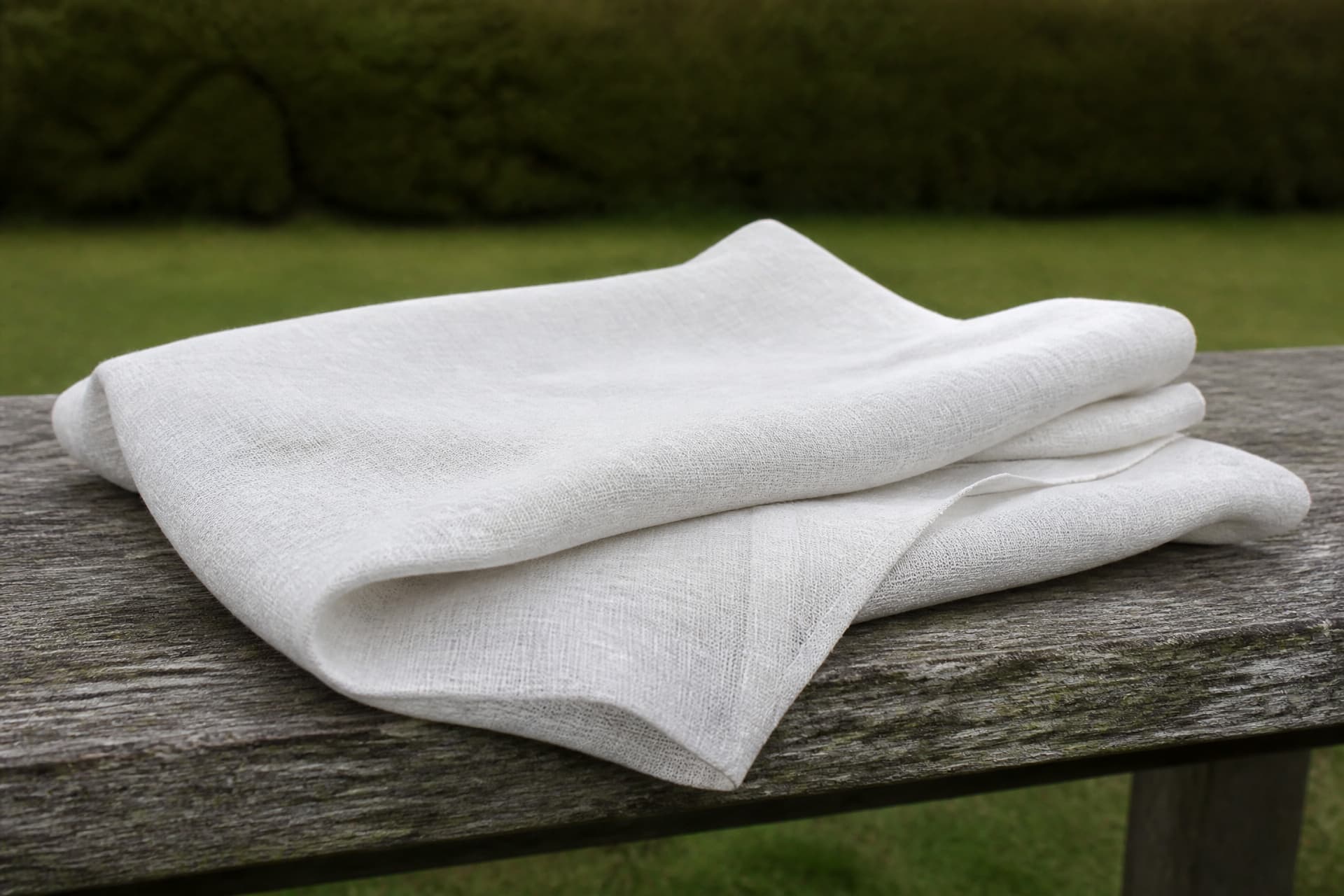
Into the ground, in cloth. Burial without a rigid container is the oldest and plainest version of the thing, and it remains the requirement in Islam and traditional Judaism rather than an alternative to something else. A burial shroud is legal in every state, and if anyone has told a family that a cemetery will refuse one, that is worth checking rather than accepting.
Into the ground, in a container. The American default. A funeral casket, a vault, a marked plot and a graveside service is so thoroughly the norm here that it can be mistaken for the neutral option, which it is not — it is one culture's answer among many, and a fairly recent one.
Into fire, in a chamber. Cremation is now the majority choice in the United States and has been the expected rite in Hindu and most Buddhist practice for millennia. Where the ashes go afterward is its own decision: kept at home, divided among family, scattered, or interred, which is where families look for burial urns designed to go into the ground rather than onto a shelf. If the choice between the two is still open in your family, cremation vs burial sets out what actually separates them.
Into fire, in the open. A funeral pyre is the ordinary rite for a large share of the world's population and is very nearly unavailable in the United States. That gap is the source of a great deal of quiet distress in immigrant families, and it has partial answers.
Into the air. A sky burial is neither a cremation nor a burial. On much of the Tibetan Plateau it is not an extreme; it is the ordinary funeral, the one most families expect.
Into water, or above the ground.Water burial has its own rules and its own federal distance requirements. Above-ground placement runs from a columbarium niche to the cliff coffins of Sagada. And for families whose priority is the land rather than the rite, green burials covers what a natural burial ground will and will not accept.
Cloth, not a container, is what most of humanity has been buried in for most of history. It is still the requirement in Islam and traditional Judaism, and it is legal in every US state — a fact many families are told the opposite of.
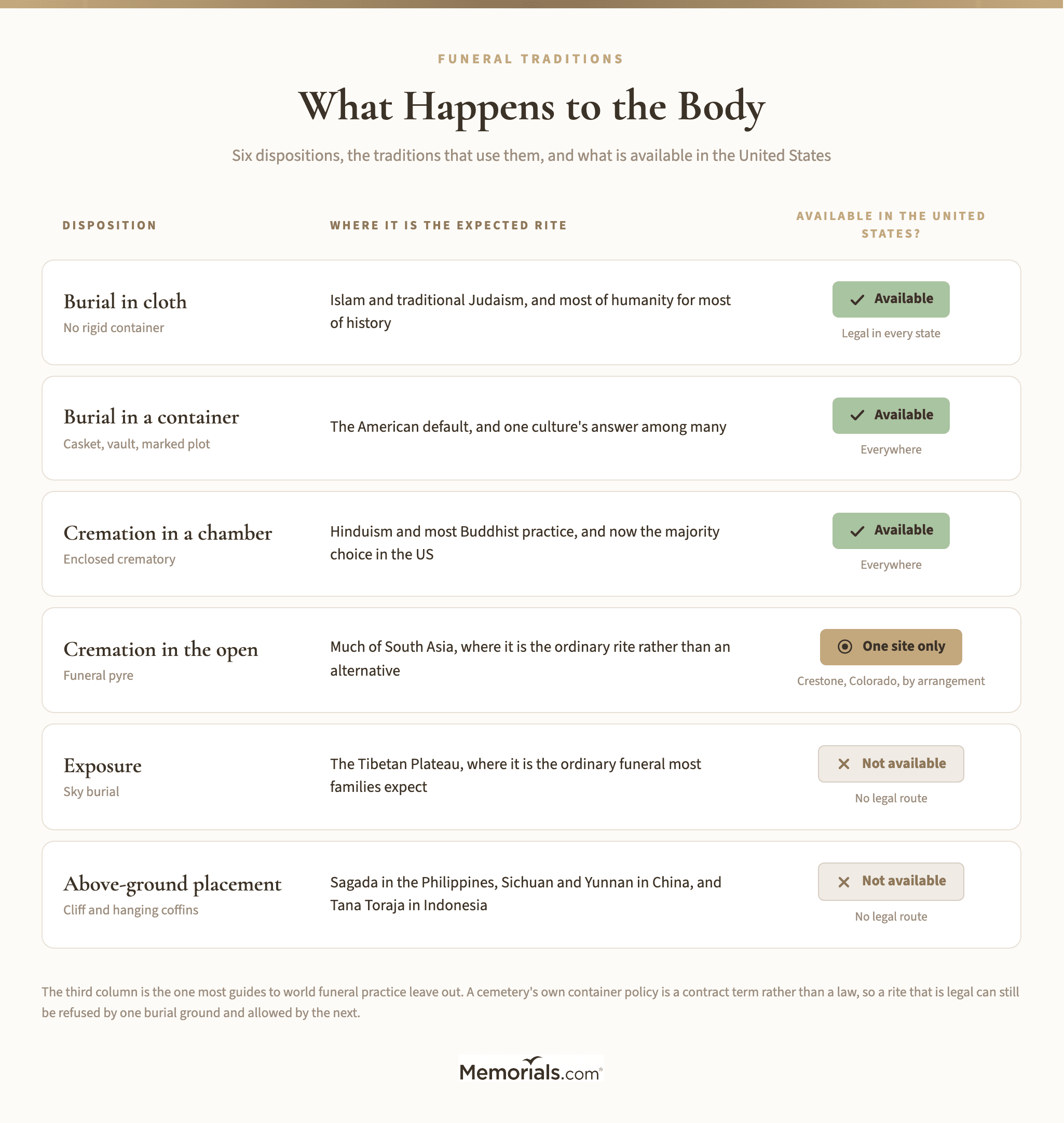
The six dispositions and where they stand legally here. Burial in cloth, burial in a container and chamber cremation are available everywhere in the US; open-air pyres are available at a single site; sky burial and cliff burial are not available at all. That legal column, rather than the ritual one, is what decides most American families' options.
How Fast, and Why It Matters to You
The speed of a funeral is the difference that catches out an American guest more than any other, because the American assumption is a week.
In Islam, burial is expected within about twenty-four hours of death and often happens within twelve. There is no viewing, no wake, no week of arrangements and no embalming. If you have been invited to a Muslim funeral, it is probably happening today or tomorrow morning, and the speed is a form of respect rather than a sign that something has gone wrong. Traditional Jewish practice moves on a similar clock, generally aiming for burial within a day where the calendar allows.
A death in a Hindu family moves just as quickly: the cremation is commonly held the same day or at the next dawn, which means a family is choosing a funeral home, reaching a priest and deciding who will perform the rite within hours rather than days.
Two practical consequences for a guest. You will be given very little notice, and that is not rudeness. And there will usually be no viewing to attend beforehand — if you were planning to pay respects at a separate visitation, there may not be one. If the American sequence itself is unfamiliar, the difference between a wake, a funeral and a viewing explains what the three events here actually are.
Who Does the Work
In the American default, a funeral home takes custody of a body within hours and returns it washed, embalmed, dressed and in a casket. Most of the world does not work that way, and the exceptions are not fringe.
In Judaism, a body is washed, purified and dressed by a chevra kadisha — a small volunteer burial society, always the same gender as the person who died, working privately and without payment. In Islam, the washing is performed by family members of the same gender. In many Buddhist communities the family sits with the body and the temple takes the lead rather than a commercial provider.
What that means for a family here is that the work is available to ask for, and often is not offered. A funeral director who has never been asked will not volunteer it. Naming the rite you want is usually enough; the practices below each explain how to ask.
It also changes what a guest is doing there. At a funeral where the community handled the body, the service is the second half of something the room has already done together. Standing quietly at the back is not a lesser form of participation — it is the correct one for an outsider, and nobody is scoring it.
How Long Mourning Lasts
Almost every tradition sets a formal end to the most intense period of mourning, and the dates are specific enough to plan around. This is the part families most often get wrong when they are half a generation removed from the practice.
Three days. In Islamic practice the formal mourning period is three days, during which the family receives visitors and, by long custom, the neighbors and extended family do the cooking. A widow observes a longer period, and the "forty days" many people have heard of belongs to other traditions rather than to this one.
Seven, thirty and a year. Jewish mourning runs in widening rings: shiva is the seven days that begin after burial, sheloshim closes the thirtieth day, and the anniversary is marked every year afterward.
Ten and thirteen days. In Hindu practice the tenth day marks the end of the most intense observance and the thirteenth carries terahvin, a ceremony with prayers, a meal and the family's formal return to ordinary life. If one relative has told you the thirteenth day and another the tenth, neither of you has been misinformed.
Three, nine and forty. Orthodox Christian families hold a memorial service on the third day, the ninth and the fortieth, then at six months, at one year and on the anniversary every year after that. The fortieth day is the largest of them.
Forty-nine days. Buddhist traditions that keep the practice mark a memorial every seventh day, seven times, with the last and largest falling on the 49th day after death. Japanese practice follows the same forty-nine days and then continues at longer intervals, in some families for decades.
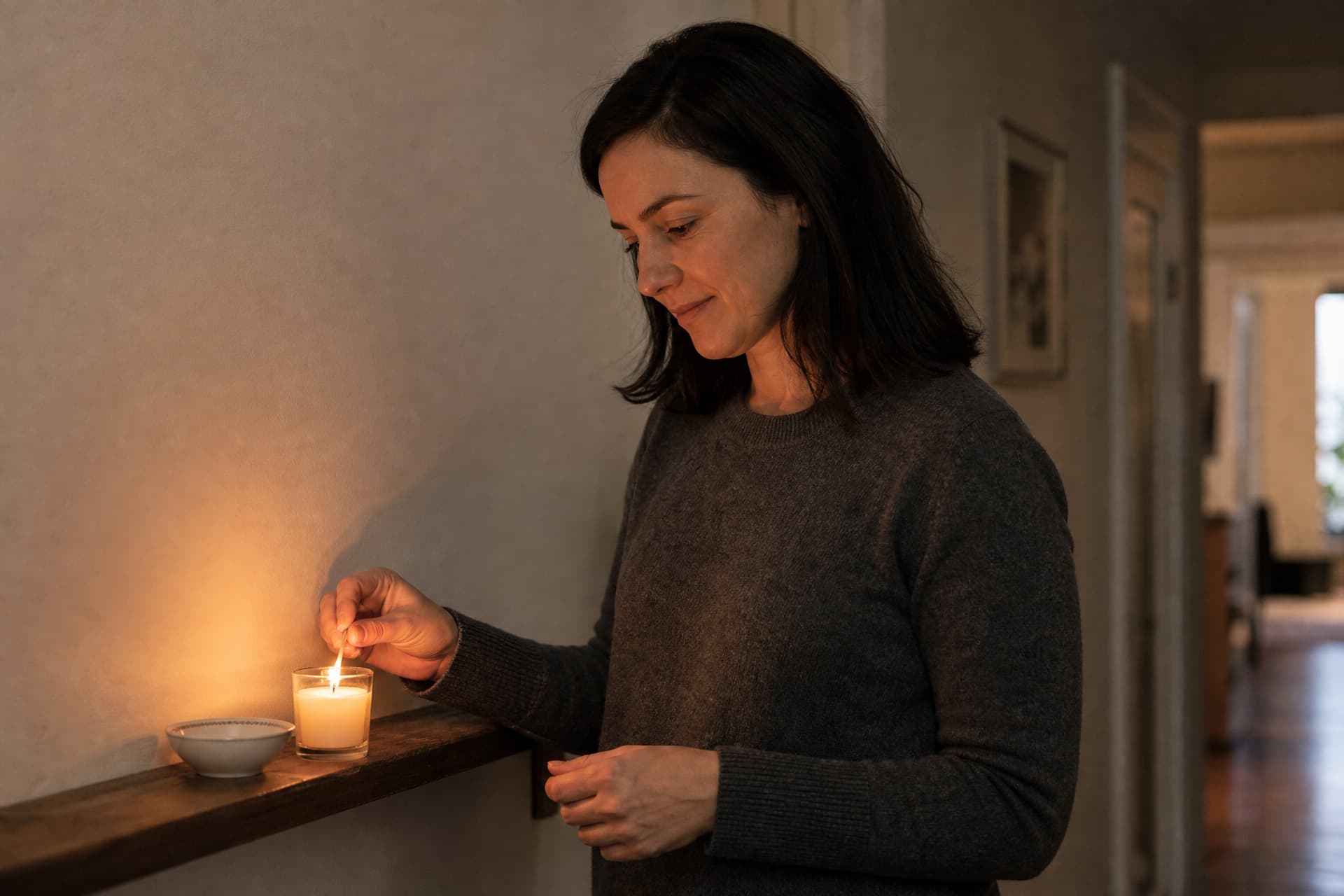
The mourning calendar is why so many traditions end up with a shelf. A candle at seven days, at thirty, at forty-nine or on an anniversary needs somewhere to stand, and the shelf usually outlasts every other arrangement a family makes.
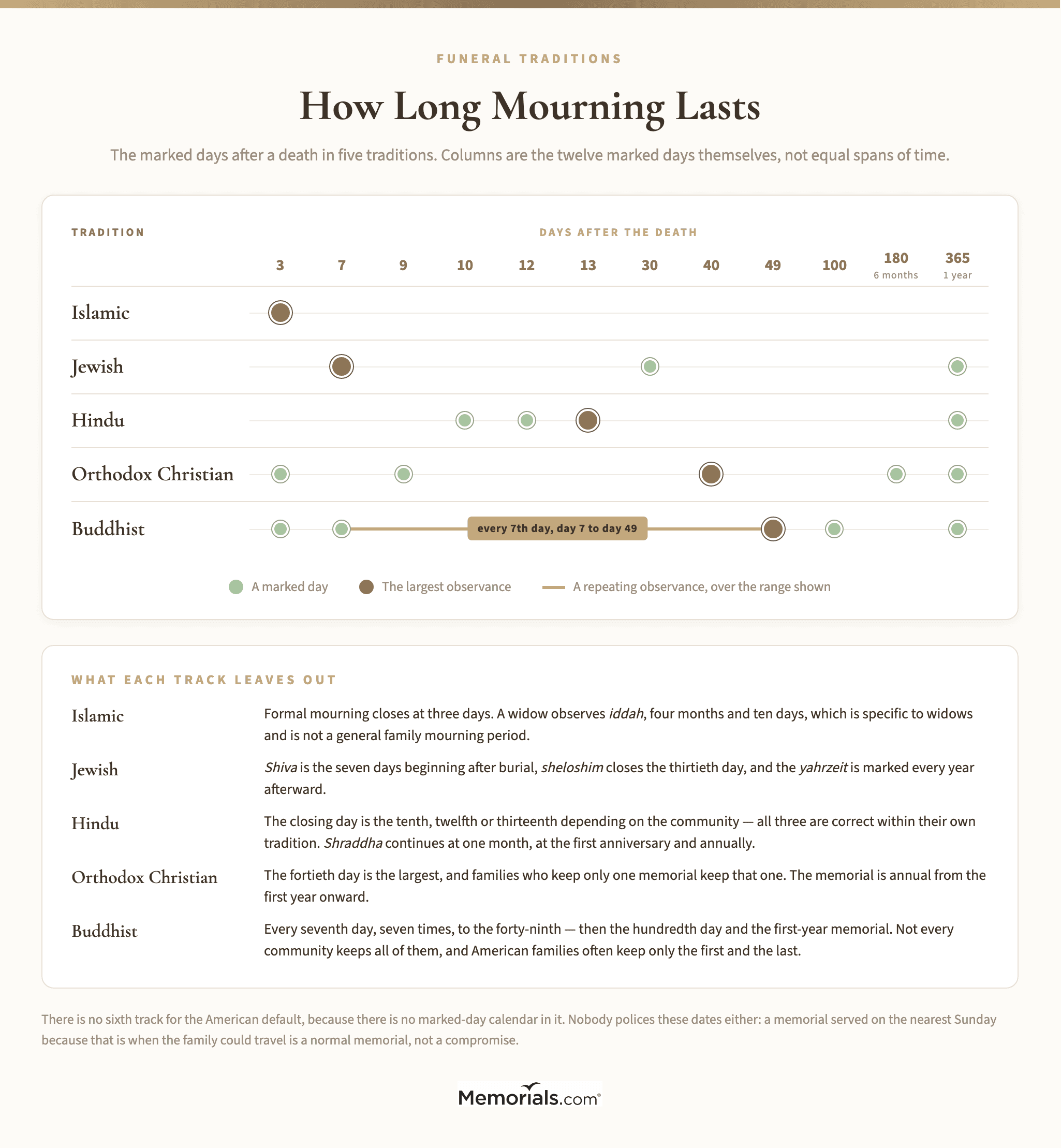
Five traditions on one timeline. Islamic mourning closes at three days; Jewish practice marks seven, thirty and the year; Hindu practice marks the tenth, twelfth or thirteenth day depending on the community; Orthodox Christian practice marks three, nine and forty, then six months and every year; Buddhist practice marks every seventh day to forty-nine, then the hundredth day. Almost every family looking up "when is the memorial" is looking for one of these twelve dates.
The Objects a Tradition Asks For
A tradition is easiest to recognize by its objects, and a guest who understands what an object is doing will not mishandle it.
Cloth. Plain, white and pocketless in Jewish and Islamic practice alike, and identical for someone who died wealthy and someone who died with nothing. That is the point of it rather than a side effect.
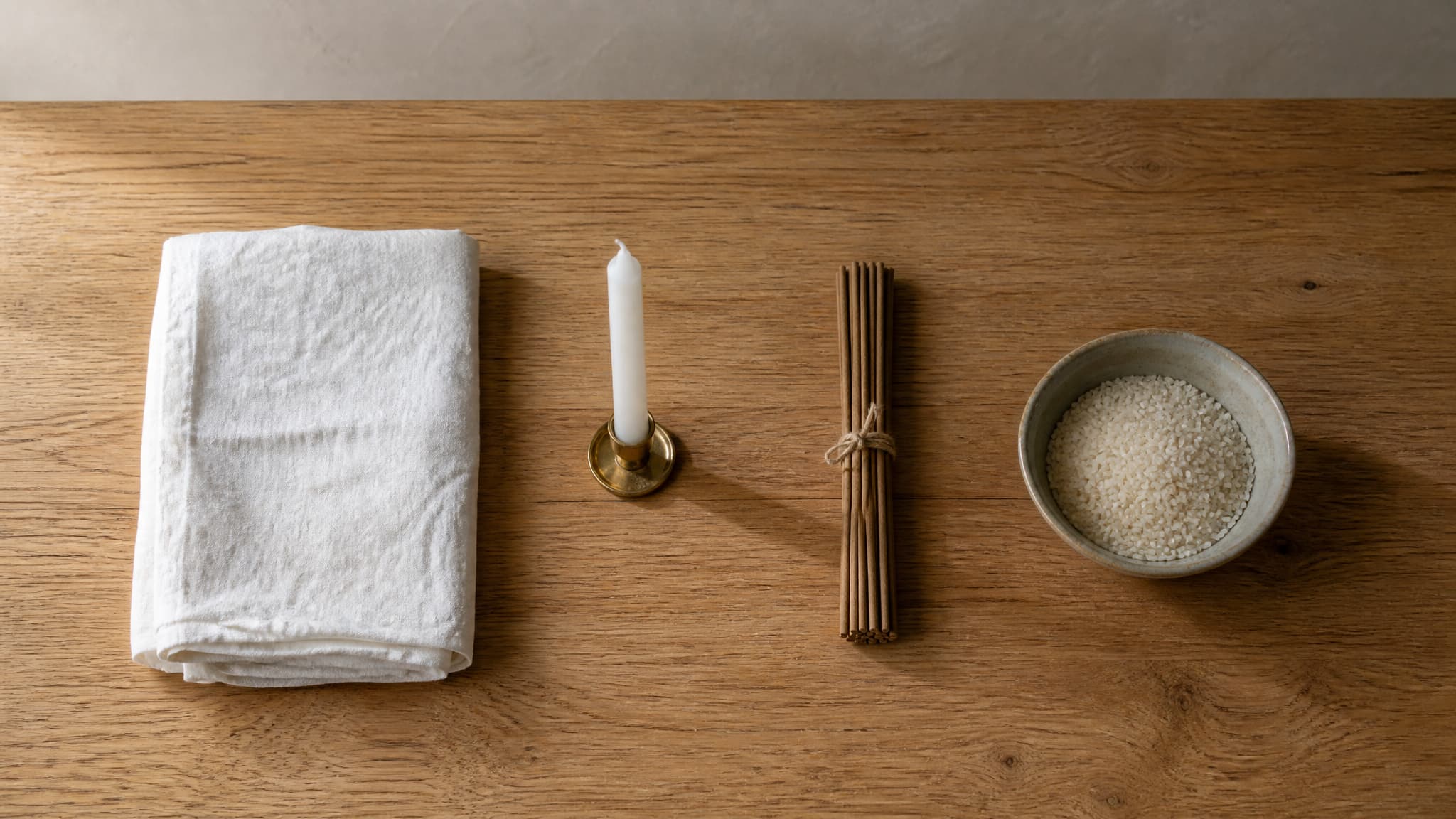
Light. A candle marks the anniversary in Jewish homes, the path back in Mexican ones, and the days of the wake in Catholic and Orthodox ones. Nothing on a memorial table does more work than a candle, and nothing is easier for a visiting guest to get quietly wrong — the usual rule is that a memorial candle is left to burn out on its own rather than blown out.
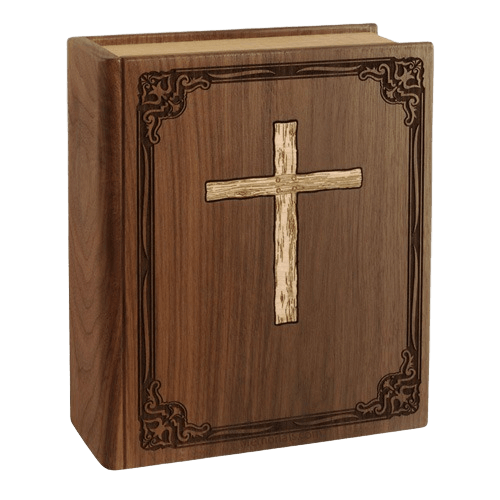
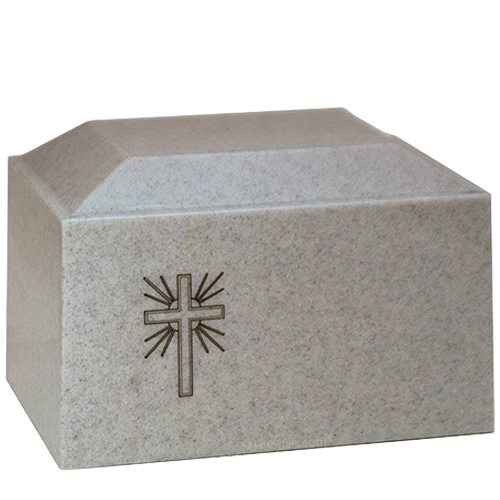
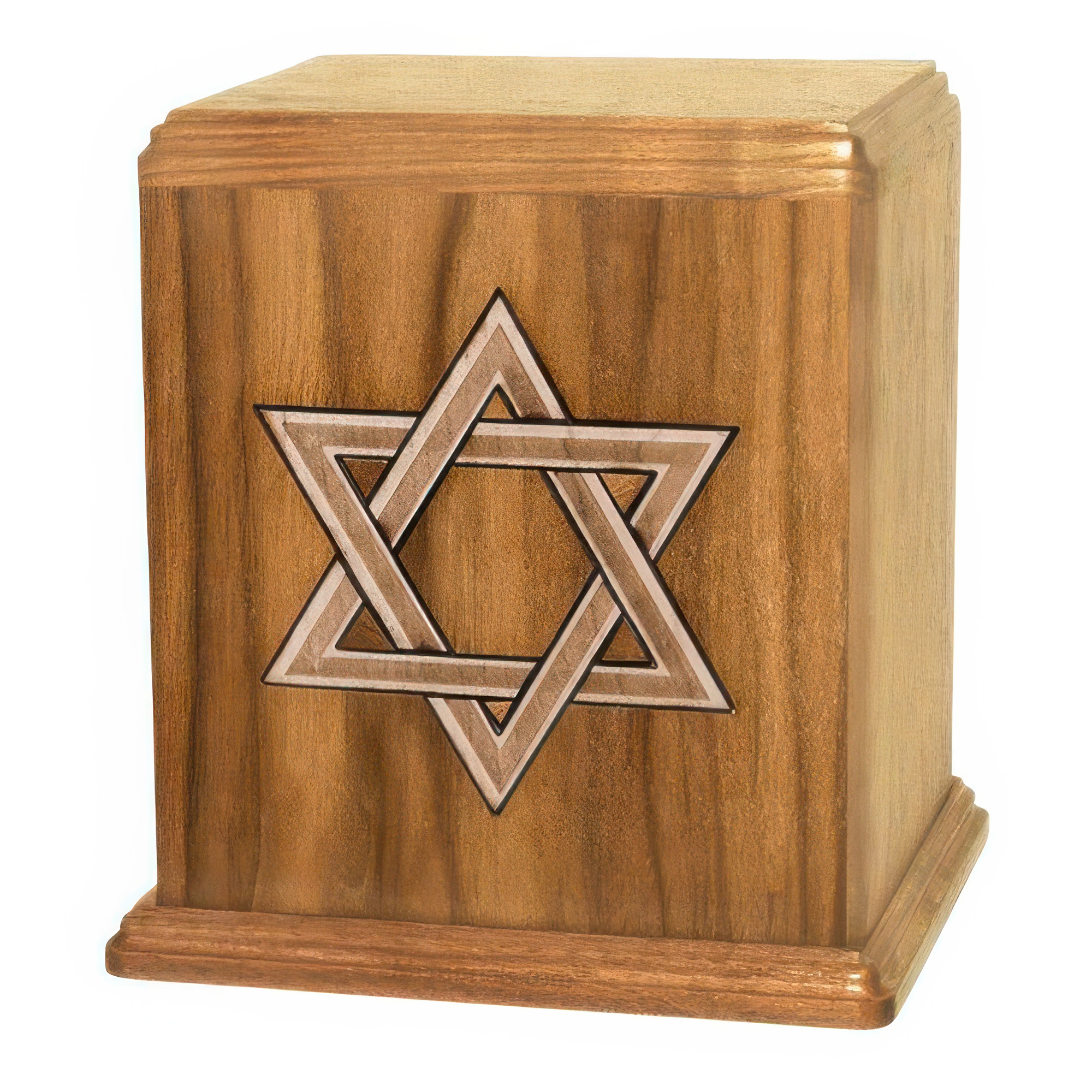
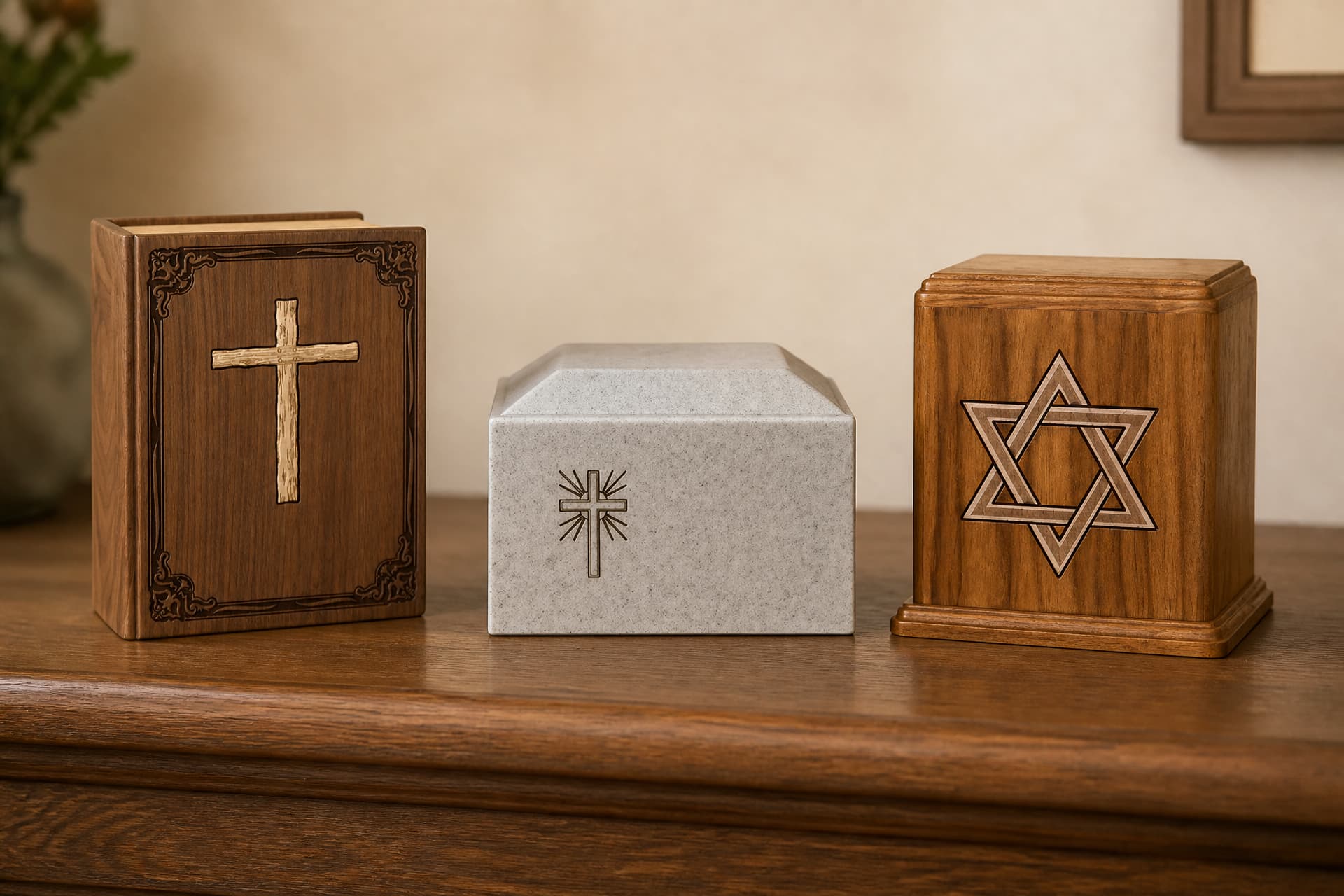
A vessel. Where a tradition cremates, the urn becomes the object the family lives with. Faith-specific vessels exist for exactly this reason — Christian urns with a cross or a praying figure, lotus forms for Buddhist families, plain unornamented vessels where ornament would be wrong. If a family is choosing one and the tradition has requirements, the religious and cultural urn guide sets out what each practice expects.
Food. The meal after a funeral is not an afterthought anywhere. It is koliva at an Orthodox memorial, raisin pie in Pennsylvania Dutch country, a purvey in Scotland, and casseroles left on a porch across most of America. Feeding the bereaved is the most universal funeral custom there is.
Marking a grave is more recent than most people assume. Communities buried their dead in one recognized place for thousands of years before anyone carved a name — the oldest cemetery in the world predates the oldest known grave marker by a very long way, and the earliest markers were boundary stones rather than memorials. Today headstones for graves are so standard in the United States that their absence reads as neglect, when in much of the world a family's dead are in a shared tomb or a temple columbarium with no individual stone at all.
Who visits, and when, varies as much as the marker does. Some traditions expect regular graveside visits on named days. Some expect almost none, on the reasoning that the dead are not there. And in at least one, the family takes the dead back out again: the Malagasy ceremony of turning the bones, which is not a funeral and is not a burial, but a scheduled reunion.
If You Have Been Invited and You Are Not a Member
This is the part that keeps people up the night before, so here it is plainly.
Ask whoever invited you. It is an ordinary question, nobody will be offended, and one sentence solves most of it: "I want to do this right and I don't know your customs — is there anything I should wear, bring, or avoid?" That sentence is more useful than anything written below, because it comes from someone who knows this particular family.
Separate what is required from what is customary from what is regional. They get flattened together constantly, and the result is a list that sounds like thirty rules. There are usually about two. Covering your head in a gurdwara or a synagogue and removing your shoes at a temple or mosque are requirements — genuine ones, and the house will have coverings by the door if you arrive without. Bringing food, sending flowers or staying for the meal are customs, and failing a custom is not a problem. Everything else is regional.
Wear your own respectful clothes, adapted. A guest is not expected to dress as a member of the tradition, and should not — a white shirt instead of a black one, a scarf to cover the head, shoes that come off easily. The exception is when the family has specifically asked. If the general question is the one you are stuck on, our funeral attire guide covers what dark, covered and unobtrusive actually means, including four traditions where the American default is wrong.
Know the two or three specific things to avoid, and why. Red at a Chinese funeral, because red signifies joy. Flowers at an Islamic burial, where they are not part of the rite. Photographs of the body anywhere. Loud condolences to a family observing silence. Vague respectfulness helps nobody; the named thing does.
The family's own instruction overrides everything on this page. It always does. If they tell you to come as you are, come as you are.
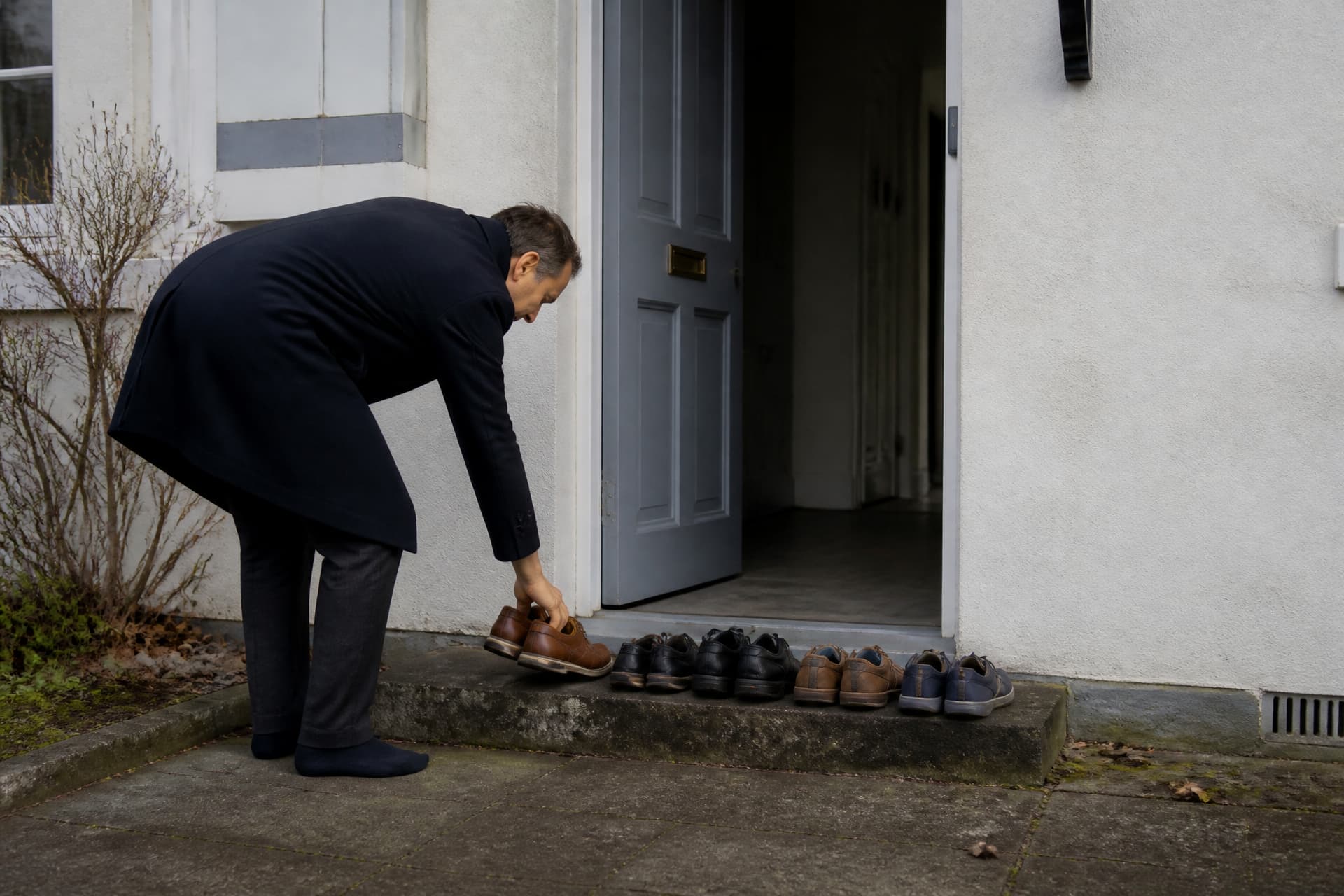
Shoes off at the door is one of the few genuine requirements a guest can fail, and it is also one of the easiest to spot — if there are shoes on the step, add yours to them.
When the Tradition Is Not Available Where You Live
Most guides to world funeral practice stop at describing. The question a family in the United States actually has is whether they can do it here, and the honest answers vary a great deal.
Sometimes yes, with paperwork. Burial in cloth, burial without embalming, same-day burial and family involvement in washing and dressing are all legal, and the obstacle is usually a funeral home that has never been asked rather than a law. A cemetery may have its own container policy, which is a contract term and not a statute.
Sometimes only in one place. Open-air cremation exists in the United States at a single site, by arrangement, and nowhere else.
Sometimes not at all. Sky burial and cliff burial have no legal route here, and no amount of persistence produces one.
And often, a partial version is genuinely enough. Families adapt constantly and have always adapted: the ashes immersed in a river here rather than the Ganges, the ninth-night prayers held in a living room rather than a village, the piper booked for the graveside without the rest of it. A rite performed in part is still the rite. Nobody's tradition survived to the present day by refusing to travel.
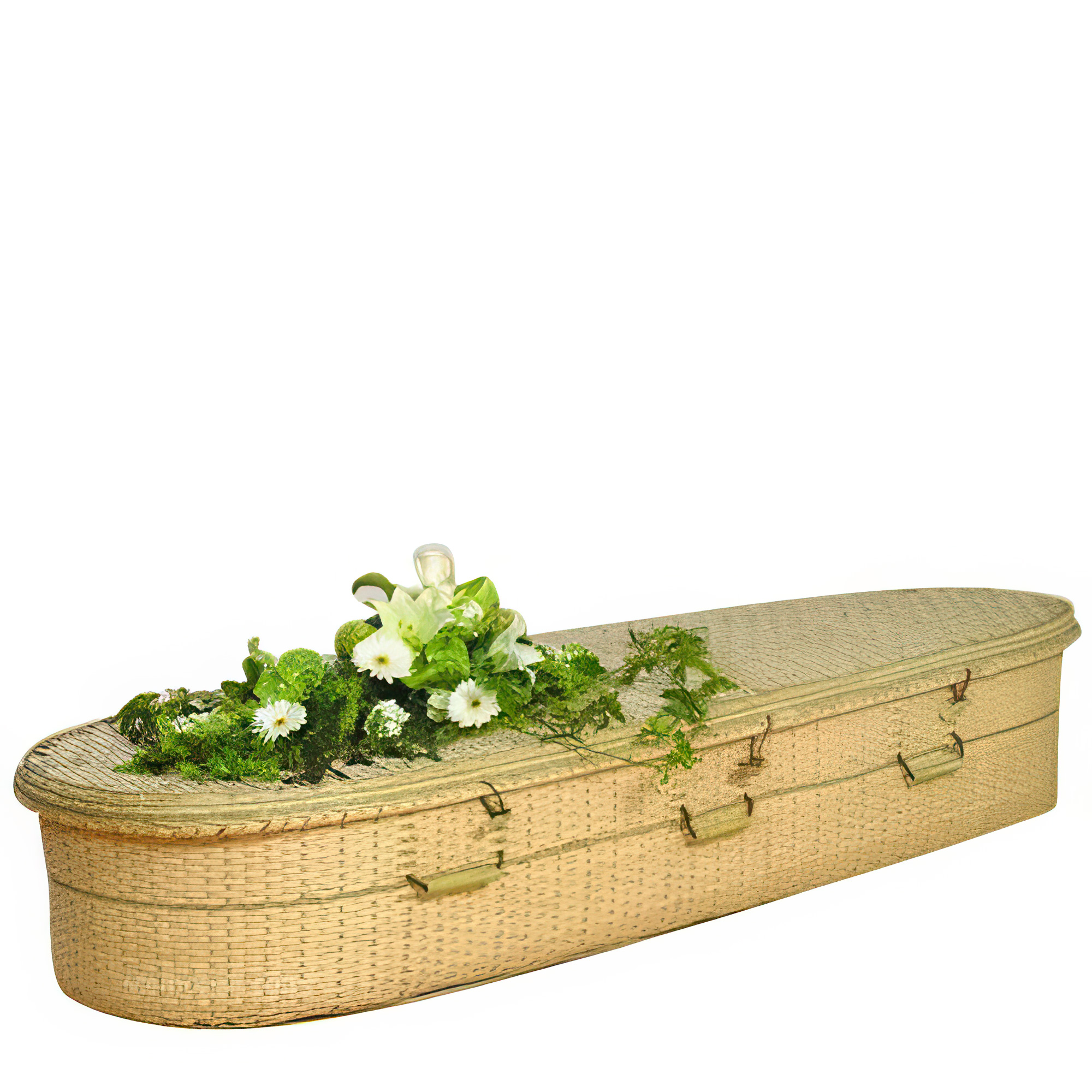
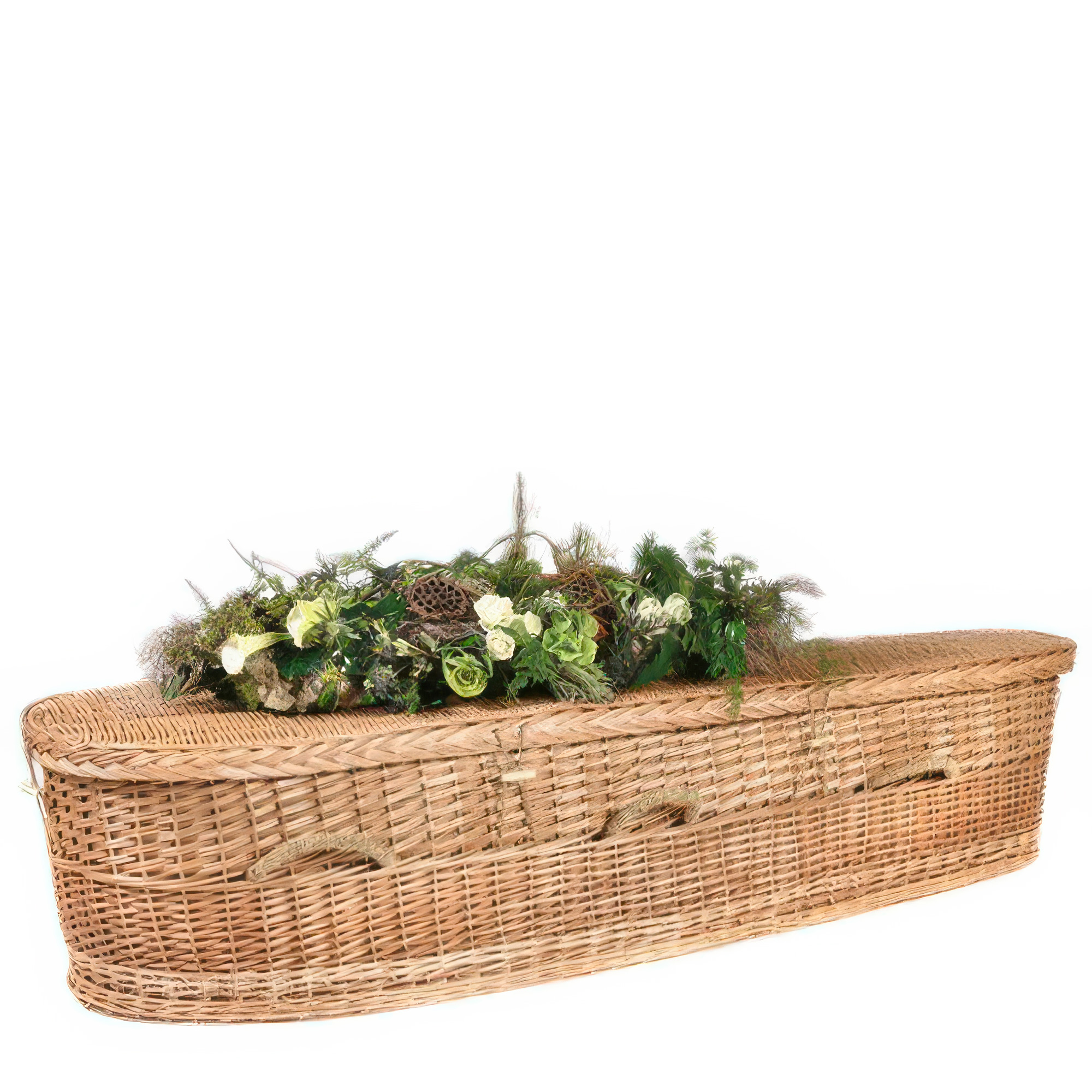
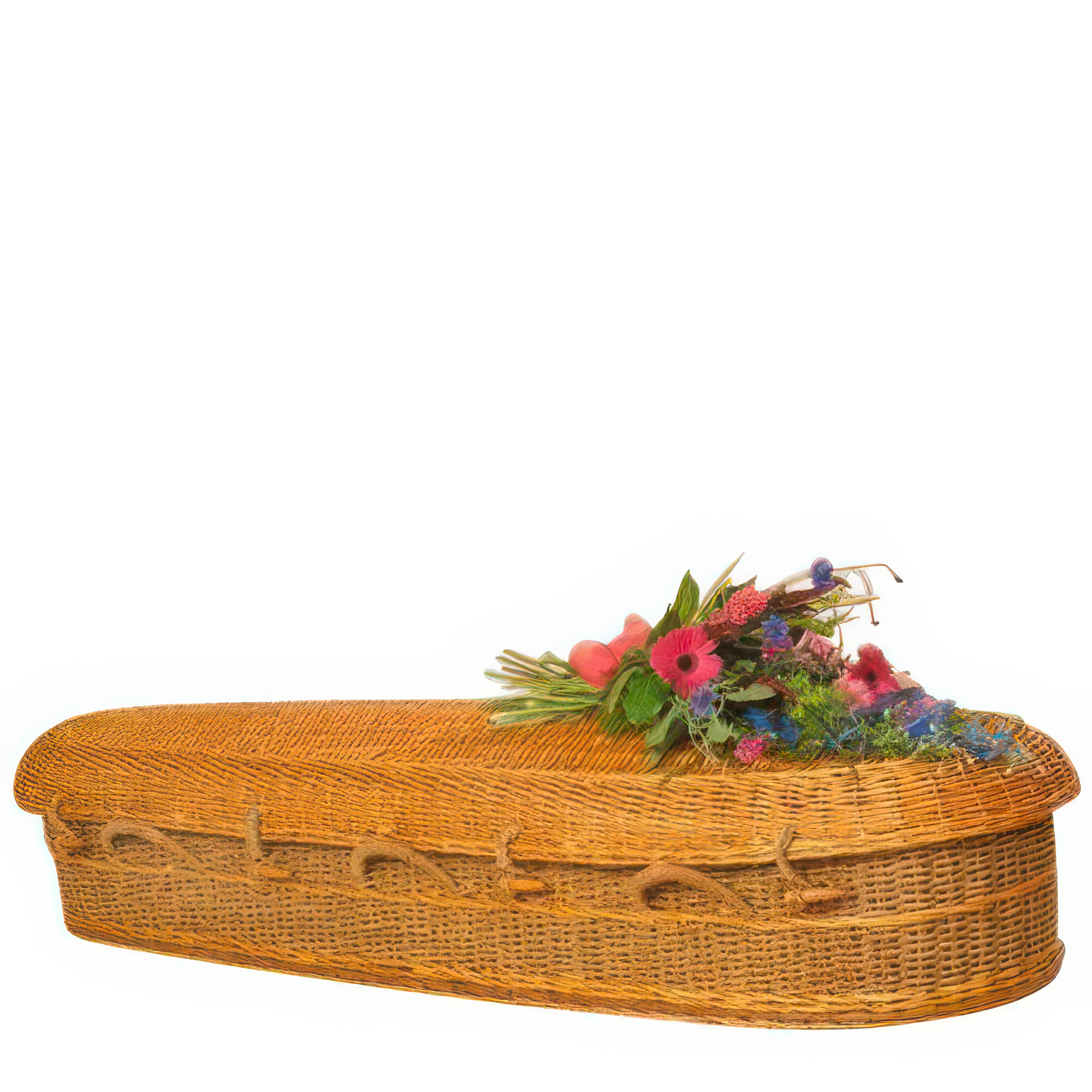
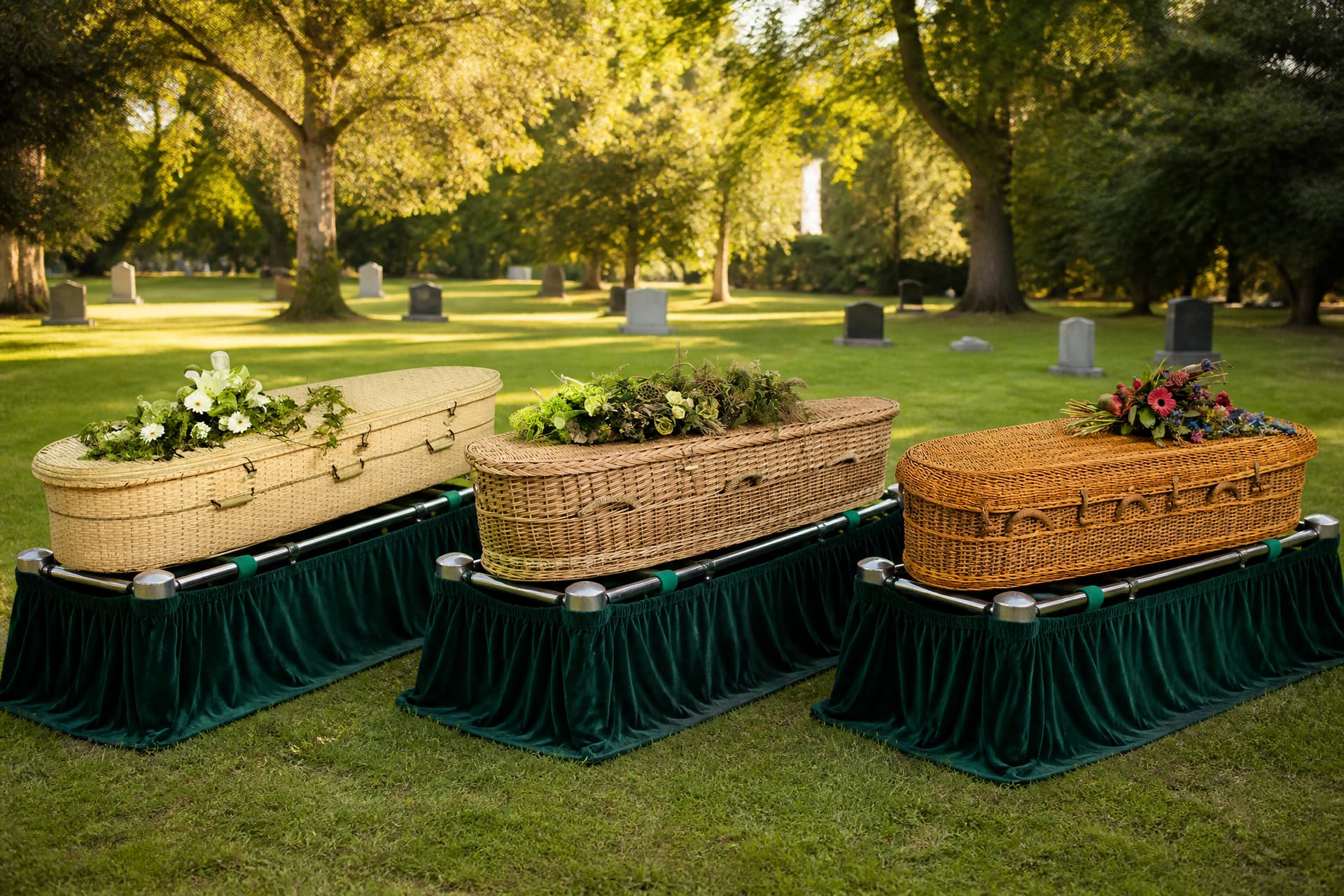
Where a tradition calls for no container or a plain one, the modern route is usually a natural-material casket a cemetery will accept — the compromise between what the rite asks for and what a burial ground's own policy requires. Products from left to right: Bamboo Green Casket , Willow Green Casket and Seagrass Green Casket.
The Ones That Are Mostly Myth
Three things a great many people believe, and one of them is probably the reason you are here.
The burning ship. The image nearly everyone carries of a Viking funeral — a longship pushed out from the beach and set alight by a flaming arrow — comes from Victorian painting and twentieth-century film. The real rite was quieter, more varied, and considerably more interesting.
The curse on a dead person's clothes. There is no tradition anywhere on earth that puts misfortune on someone for wearing what a dead relative wore. The warning is real, the belief behind it is traceable, and the answer to the question is no.
The single authentic version. There isn't one. There is no single Hindu funeral, no single Buddhist funeral, no single Chinese funeral. Anyone who tells you a family is doing it wrong is describing their own region's practice and calling it the rule.
The Funeral Traditions Hub Library
This guide is part of the Memorials.com funeral traditions collection — twenty-nine pages in all. Every page below answers one specific version of the question and goes considerably deeper than this overview.
The Major Faith Traditions
The practices a guest is most likely to be invited into, each written for someone attending rather than for someone already inside it.
Muslim Funeral Guide: Janazah Prayers and Burial Traditions — Ghusl, kafan, the janazah prayer, the direction of the grave and the handfuls of earth, plus what US cemeteries require and where faith meets local law. Also settles the "forty days" confusion.
Janazah: What Happens at an Islamic Funeral — The same rite from the guest's side, written for someone who has been invited to one happening tomorrow morning and has no idea what will be expected of them.
Hindu Funeral Traditions and Cremation Rites, Step by Step — What happens at home in the first hours, who lights the fire, the tenth and thirteenth days, and what families do about immersing the ashes when the Ganges is eight thousand miles away.
Buddhist Funeral Customs and Memorial Practices — You are welcome, plain dark clothing is safe at most US temples with one exception worth knowing, and quiet observation is the whole job. Then cremation, the urn, and where the ashes go.
Panikhida: The Orthodox Memorial Service — Fifteen or twenty minutes, mostly sung. The third day, the ninth, the fortieth, then six months and every year after. Plus koliva, Soul Saturdays, and how to request one.
9 Day Novena Prayer for the Dead: The Nine Days, Explained — For the person who has been asked to lead the nine nights. When they begin, what one evening looks like, how to set up a place to pray at home, and how to include family who do not pray.
Three separate practices that get compressed into one paragraph everywhere else.
Tahara: What Happens Before a Jewish Burial — The washing, purification and dressing carried out privately by a volunteer burial society, so that the family does not have to. The five parts of the rite, and how to ask for it.
Yahrzeit Candle: When to Light It and How Long It Burns — Sundown on the evening before the Hebrew anniversary, and let it burn out on its own. Plus what a leap year does to the date, and the four other times a year one is lit.
What Happens to the Body
The dispositions themselves — including the ones no American funeral home will offer.
Burial Shrouds: History, Materials and Modern Use — Legal in every state, older than every other option, and routinely refused by people who believe it is not allowed. What cemeteries actually accept, what it costs, and how to make one.
Viking Funeral Traditions: The Rite, the Belief, and the Myth — The flaming arrow never happened. What a ship burial actually was, who received one, what went into the grave with them, and what is genuinely possible for a family who has asked for one.
Traditions Rooted in One Place
Five practices that belong to a specific country, region or city, and travel differently.
Japanese Funeral Traditions: What Happens, in Order — A wake on the evening after the death, a farewell ceremony the next morning, cremation that afternoon, then forty-nine days. The order barely changes from one family to the next.
Bone Picking Ceremony: Kotsuage and the Japanese Funeral Rite — After the cremation the family gathers the bones themselves, two people holding one fragment, feet first and head last. Why the chopsticks, how much is collected, and what happens to the rest.
Second Line Funeral: How a New Orleans Jazz Funeral Works — The band walks out slow and comes back swinging. What the first line is, who gets one, how a family arranges it, what it costs, and how to join a procession without turning it into tourism.
Famadihana: Madagascar's Turning of the Bones, Explained — A family opens the ancestral tomb, rewraps the dead in fresh silk and dances with them. It is not a funeral; the funeral was years earlier, and this is what happens once someone has finished becoming an ancestor.
What Happens in the House
The half of a death that takes place at home, in the days and years afterward.
Dia de los Muertos Velas: What the Candles on an Ofrenda Mean — Every other guide gives the candles one paragraph. They are the part that does the work: where they go on the levels of the altar, how many, what the colors mean, and the night at the grave.
Why Do People Cover Mirrors When Someone Dies — Three unrelated reasons given by several unrelated traditions, and how long the sheets stay up: day seven in shiva, day thirty at sheloshim, day forty in Orthodox Christian practice.
Funeral Pie: The Amish Raisin Pie Served After a Funeral — A pie so reliably present at the meal after a funeral that its name became a way of saying somebody was dying. What is in it, why raisins, and what a visitor should do with a plate of it.
The Questions People Search Anyway
Two pages that answer a question directly rather than describing a practice.
Is It Bad Luck to Wear a Dead Person's Clothes? — No. Where the warning came from, what different traditions actually say, the Victorian families who did the opposite, and what to do with a closet you cannot face.
The American default is a viewing or wake a few days after the death, a service at a funeral home or a place of worship, a procession to the cemetery, a graveside committal and a meal afterward. Embalming, a casket and a marked plot are so standard that they read as neutral rather than as one culture's choices. Regional practice varies more than most people expect — a New Orleans jazz funeral and a Pennsylvania Dutch funeral meal belong to the same country.
Why do some funerals happen within 24 hours?
Because the tradition requires it. Islamic practice expects burial within about a day of death and often within twelve hours, and traditional Jewish practice aims for a similar timeframe. Neither involves embalming, which is what makes the speed possible. A guest given almost no notice has not been an afterthought; that is simply the schedule.
Which religions do not allow cremation?
Islam does not permit it, and Orthodox Judaism does not. Orthodox Christianity has historically opposed it, with practice varying by jurisdiction. Catholicism permits cremation but has requirements about what happens to the ashes. Hinduism, Sikhism, Jainism and most Buddhist traditions expect it. Where a family is weighing the decision, Jewish views on cremation and planning a Catholic funeral go into what each tradition actually asks.
How long is the mourning period after a death?
There is no single answer, and the specific dates are worth knowing because families plan around them: three days in Islamic practice, seven and then thirty in Jewish practice, ten and thirteen in Hindu practice, the third, ninth and fortieth days in Orthodox Christian practice, and forty-nine days in the Buddhist traditions that keep the observance. Most also mark the first anniversary.
Can you have a funeral pyre or a sky burial in the United States?
An open-air pyre is possible at one site in the United States, by arrangement, and nowhere else. Sky burial has no legal route here at all, and neither does cliff burial. Where the rite itself is unavailable, families generally keep the parts that are — the prayers, the timing, the mourning calendar and the community's role — which is what adaptation has always looked like.
In Short
Learn the four questions and the rest follows. What happens to the body, how fast, who does the work, and how long mourning lasts — every tradition on this page is answering those, and once you can hear which answer is being given, an unfamiliar funeral stops being unreadable.
If you are the guest: ask the person who invited you. One sentence, asked plainly, beats every list on the internet including this one, and asking it has never once given offense.
If you are the family: almost everything you have been told is impossible here is merely unfamiliar to the funeral home you called. Burial in cloth, no embalming, same-day burial, washing the body yourselves, keeping the ashes at home for forty-nine days — those are available, and the way to get them is to name the rite rather than to ask whether it can be accommodated. For the parts that genuinely cannot be done here, keep the timing and the prayers and let the rest adapt. If the tradition asks for a particular vessel, a shroud, or a plain container, those exist to be chosen deliberately rather than settled for, and the pages above say what each practice expects. And if what you actually need this week is a room full of people fed, the Irish wake is as good a place to start as any tradition on earth.