🏬Supersize Online Funeral Retailer🪦1000's of Headstones⚱️Over 10,000 Cremation Urns⚰️Caskets Overnight Delivery🛒Funeral & Memorial Superstore🚚FREE Shipping on ALL Orders👨👩👧👦Helping Families for over 20 Years💰Lowest Price Guarantee🏬Supersize Online Funeral Retailer🪦1000's of Headstones⚱️Over 10,000 Cremation Urns⚰️Caskets Overnight Delivery🛒Funeral & Memorial Superstore🚚FREE Shipping on ALL Orders👨👩👧👦Helping Families for over 20 Years💰Lowest Price Guarantee
🏬Supersize Online Funeral Retailer🪦1000's of Headstones⚱️Over 10,000 Cremation Urns⚰️Caskets Overnight Delivery🛒Funeral & Memorial Superstore🚚FREE Shipping on ALL Orders👨👩👧👦Helping Families for over 20 Years💰Lowest Price Guarantee🏬Supersize Online Funeral Retailer🪦1000's of Headstones⚱️Over 10,000 Cremation Urns⚰️Caskets Overnight Delivery🛒Funeral & Memorial Superstore🚚FREE Shipping on ALL Orders👨👩👧👦Helping Families for over 20 Years💰Lowest Price Guarantee
Almost every account of the spiritual meaning of burning paper starts in the wrong place, with the fire. Start with the parcel instead. Somebody folded that sheet, decided who it was for, and carried it to a place where it could be lit. The burning is only the last step, and the reason it is done at all is that fire is understood to move a thing from a world where it can be held into one where it cannot.
That single idea explains nearly all of it. The paper is a stand-in for something real. The recipient is a particular person, usually named out loud. And the fire is the route between them. It is the same logic behind a coin, a lit candle, a plate of food left on a table, and it appears in enough separate places that our death symbolism guide treats it as one of the recurring answers rather than as one culture's peculiarity.
What follows is what the paper actually is, when families burn it, how it is done and in what order, where an American family can safely and legally do it, and what the act means when there is no tradition behind it at all — when somebody writes a letter to a dead parent and puts it in a fire pit in the yard.
What Burning Paper Is Meant to Do
Ask what does burning paper symbolize and you will usually be handed one word — transformation — which is true and tells you nothing you can act on. The useful version has three parts, and most burning rituals are doing at least two of them at once.
Sending. The object stops existing here in a form anyone can pick up, and is understood to arrive somewhere else. This is the premise of paper offerings: the goods are not pretend, they are being converted. What the family burns is a token in this world and the real thing in the other one.
Releasing. The thing burned is one you are choosing not to keep. A letter you will never send, a list of things you did not get to say, a photograph you cannot look at any longer. Nothing is delivered. The point is that it is gone and that you watched it go.
Ending. Fire is also simply how you finish something. Paperwork gets burned. The reason burning reads as final is that it is genuinely irreversible in a way that throwing something away is not — you cannot go back to the trash and retrieve it.
The reason the same act carries all three meanings is that fire is the only everyday process that turns a solid object into something that visibly goes upward and does not come back. Smoke leaves. Ash stays. Every tradition below has built on that one observation, and the differences between them are mostly about who is on the receiving end.
Joss Paper, Spirit Money and Hell Bank Notes
The largest and oldest version of this is Chinese, and it is not one object but a whole category of them. In English they are usually called joss paper — joss being an old trading-pidgin word for a god or an idol, the same word that gives us joss sticks for incense. In Chinese the plainest name translates as paper money.
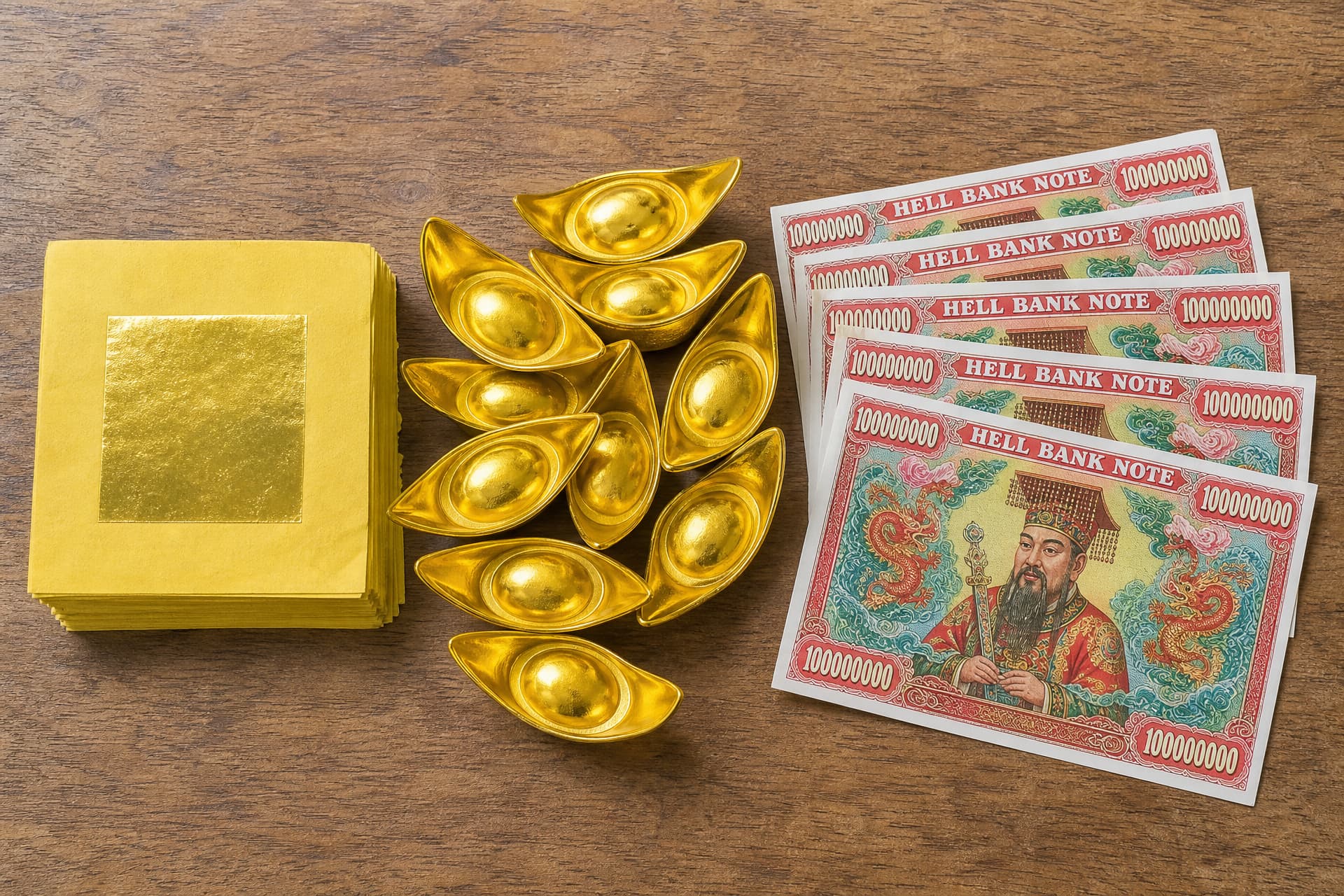
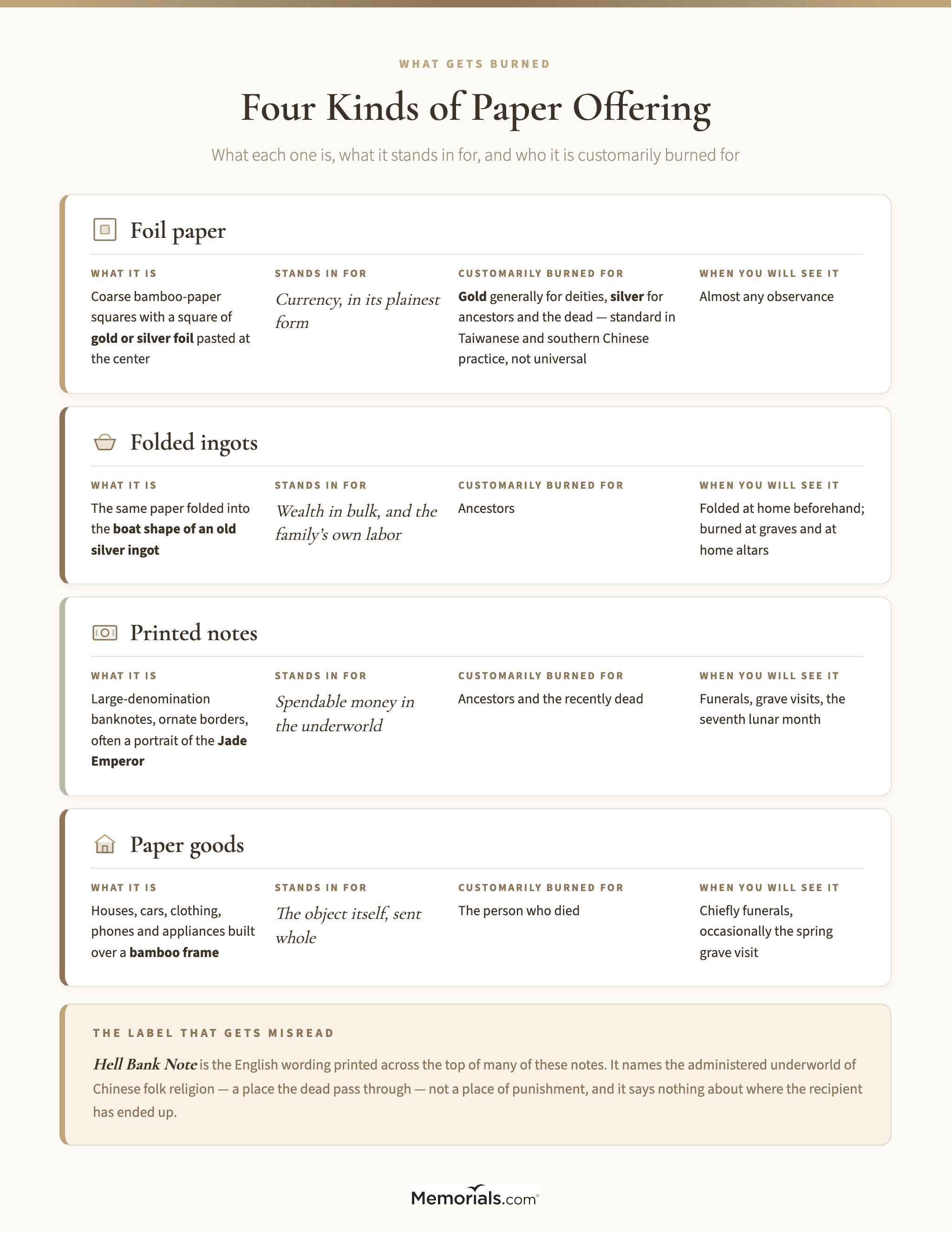
The three most common forms sit at very different prices. The foil squares are sold by the bundle for a few dollars, the ingots are usually folded at home by the family, and the printed notes are the newest of the three and the one an American reader is most likely to have seen.
The forms worth recognizing:
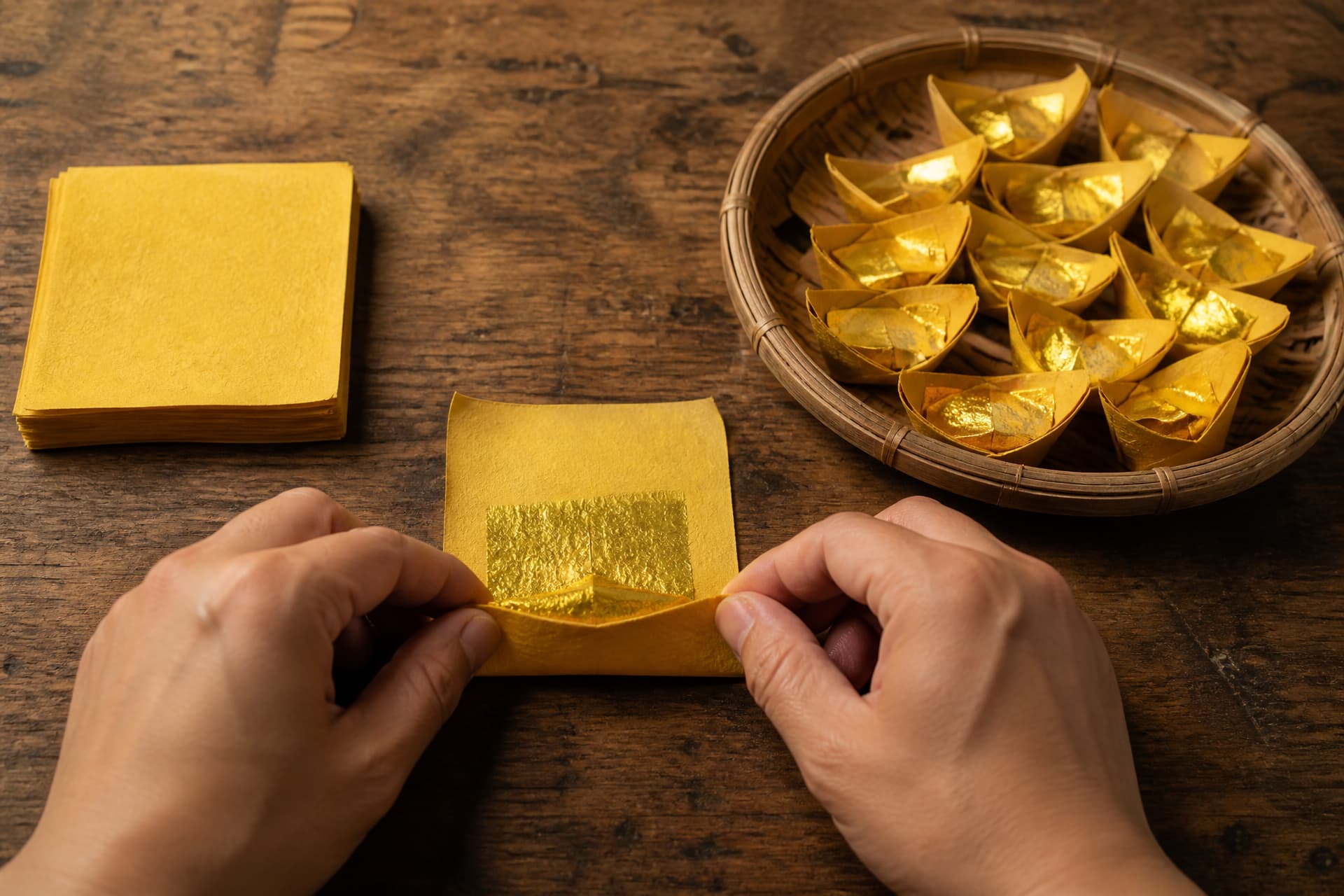
Foil paper. Coarse squares of bamboo paper with a small square of gold or silver foil pasted at the center. In Taiwanese and southern Chinese practice the gold is generally for gods and the silver for ancestors and the dead — a distinction that is standard in some regions and unfamiliar in others, so it is worth asking rather than assuming.
Folded ingots. The same paper folded into the boat shape of an old silver ingot. Folding them is frequently a family job, done together in the days before, and there are households where the folding is as much a part of the observance as the burning.
Printed notes. Large-denomination banknotes, often carrying a portrait of the Jade Emperor and a number with an unserious quantity of zeros. Many are printed in English with the words Hell Bank Note across the top. The word is doing something an American reader will misread: it names the underworld of Chinese folk religion, an administered place the dead pass through, not a place of eternal punishment, and it is not a statement about where the recipient has ended up.
Paper goods. Whole objects built from paper and bamboo frame — a house, a car, a suit of clothes, a phone, a washing machine. These are made to be burned and they are usually the centerpiece of a funeral rather than a routine grave visit.
The distinction that matters most to a guest is the last column. Foil paper and ingots are routine and are burned at almost any observance; a paper house is a funeral object, and turning up with one at a spring grave visit would be like bringing a casket spray to a birthday.
The usual account of where all this came from is that paper stood in for the real thing. Valuables were once buried with the dead; paper substitutes are cheaper, safer and infinitely more generous, and a family that could not bury silver could burn a great deal of paper silver. How old that substitution is and where it started are genuinely disputed, and any page that gives you a century is more confident than the record allows.
When Families Burn Joss Paper
Paper offerings are not a once-a-year thing, and the occasions are worth knowing because they are what determines how much of it you will see.
At the funeral and in the weeks after. This is the heaviest burning, and the paper goods appear here — the house, the car, the clothes. Many families follow a schedule of observances through the seven weeks after a death, with the forty-ninth day marked particularly. If you have been invited to attend, the practical question is usually what to wear rather than what to do, and what guests wear to a Chinese funeral answers a set of questions that catch out almost every first-time guest.
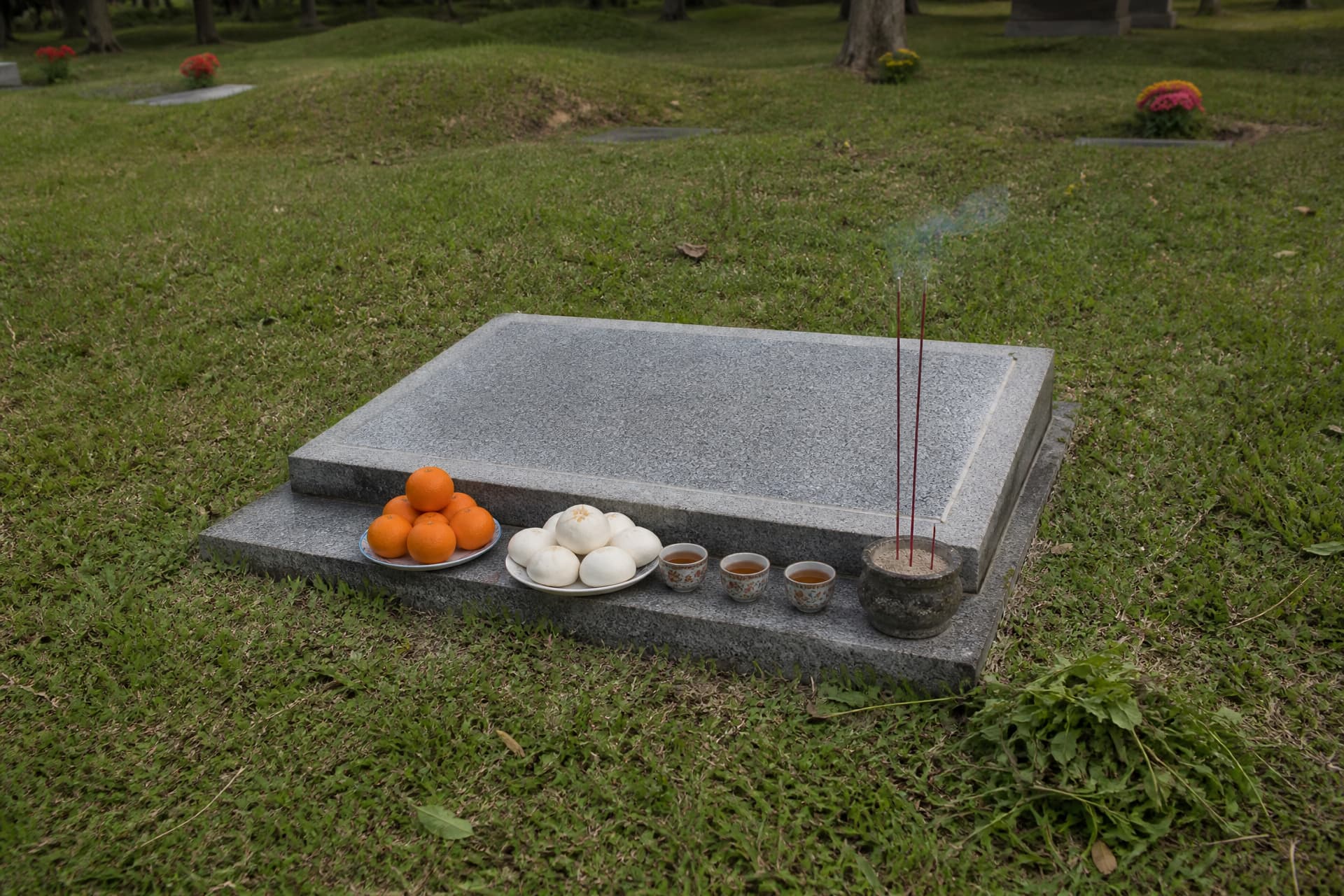
At the grave in spring. The tomb-sweeping observance falls in early April. Families clean the headstone, pull the weeds, lay out food and drink, light incense, and burn paper. It is a maintenance visit and a meal as much as a rite, and it is often the largest family gathering of the year after the New Year itself.
In the seventh lunar month. The ghost month, with its festival on the fifteenth day. The distinctive thing about this one is that the offerings are not only for your own dead. Wandering spirits with no family to feed them are provided for too, which is why offerings appear at roadsides and outside doorways rather than only at graves.
The food is set out first and taken home again afterward, and the family eats it. Nothing is left to spoil on the stone — the offering is in the presenting, not in the leaving.
On death anniversaries, and at home. Many households keep an ancestral photograph or tablet on a shelf with incense and a small offering, and burn paper on the anniversary of a death. If you are building something similar, the practical questions about height, placement and what belongs on it are the same ones covered in our guide to a home altar, whatever tradition it is built for.
Who does this is broader than most Americans assume. It belongs primarily to Chinese folk religion, but it is practiced by families who describe themselves as Buddhist, as Taoist, as both, and as neither. Some Buddhist clergy regard it as custom rather than doctrine and quietly discourage it. Almost nobody stops doing it on that account.
How to Burn Joss Paper
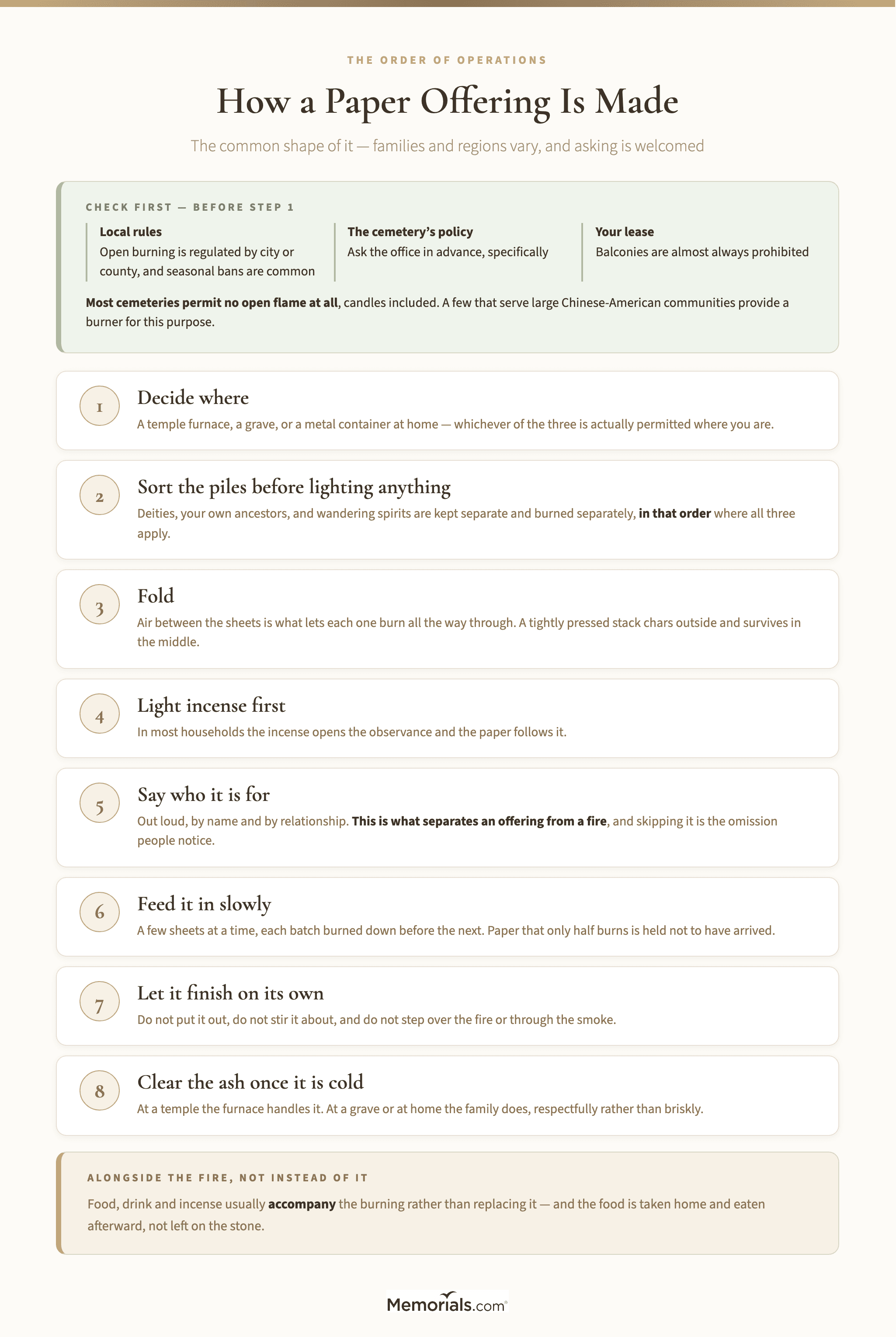
People who ask how to burn joss paper are usually not asking about theology. They are asking because they are about to do it in front of relatives who grew up with it, and they do not want to get it wrong. The order below is the common shape of it. Families vary, regions vary, and the safest thing a first-timer can do is ask the oldest person present how their family does it — that question is welcomed, not resented.
1. Decide where. A temple's furnace, a grave, or a metal container at home. This is the step with real constraints attached, and the next section is entirely about it.
2. Sort the piles before you light anything. What is for deities, what is for your own ancestors and what is for wandering spirits are kept separate and burned separately, in that order where all three apply. Mixing them is the most common mistake a guest makes.
3. Fold. Foil squares are folded, and sheets are creased so that air can get between them. There is a practical reason underneath the custom: a tightly pressed stack chars on the outside and survives in the middle.
Folding is the slow part and it is frequently the sociable part. In a lot of families it happens the evening before, at a kitchen table, with several people working through a bundle and talking.
4. Light incense first, in most households. Incense opens the observance and the paper follows it.
5. Say who it is for. Out loud, by name and by relationship — grandmother, father, the family name. This is the step that makes the difference between burning paper and making an offering, and skipping it is the omission people actually notice.
6. Feed it in slowly. A few sheets at a time, letting each batch burn down before adding more. Paper that only half burns is widely held not to have arrived, which is the whole reason the folding and the pacing matter.
7. Let it finish on its own. Do not put it out, do not stir it about impatiently, and do not step over the fire or through the smoke. Wait until it has gone out by itself.
8. Leave the ash where it belongs. At a temple furnace the temple handles it. At a grave or at home, the ash is cleared away once it is cold — respectfully, not swept into a trash bag in front of everyone.
Only two of the eight steps are about the fire. The rest are about the parcel — who it is for, what is in it, and that it is announced — which is a fair summary of what separates an offering from a bonfire.
Two things that are not steps but are worth knowing. Food, drink and incense usually accompany the burning rather than replacing it, and the food is taken home and eaten afterward. And some families burning for somebody who is not buried nearby will mark a circle on the ground and burn inside it, leaving a gap facing the direction of the person's home, on the understanding that the offering should reach the person it was addressed to and not whoever happens to be passing.
Where You Can Safely and Legally Burn
This is the part no explainer covers, and it is the part that stops an American family in its tracks.
Open burning is regulated locally and the rules are not intuitive. Whether you may light a fire in a container in your own yard depends on your city or county, and in much of the country it depends on the month — seasonal burn bans are common and are enforced. Check the rule for where you actually are before you plan an observance around it.
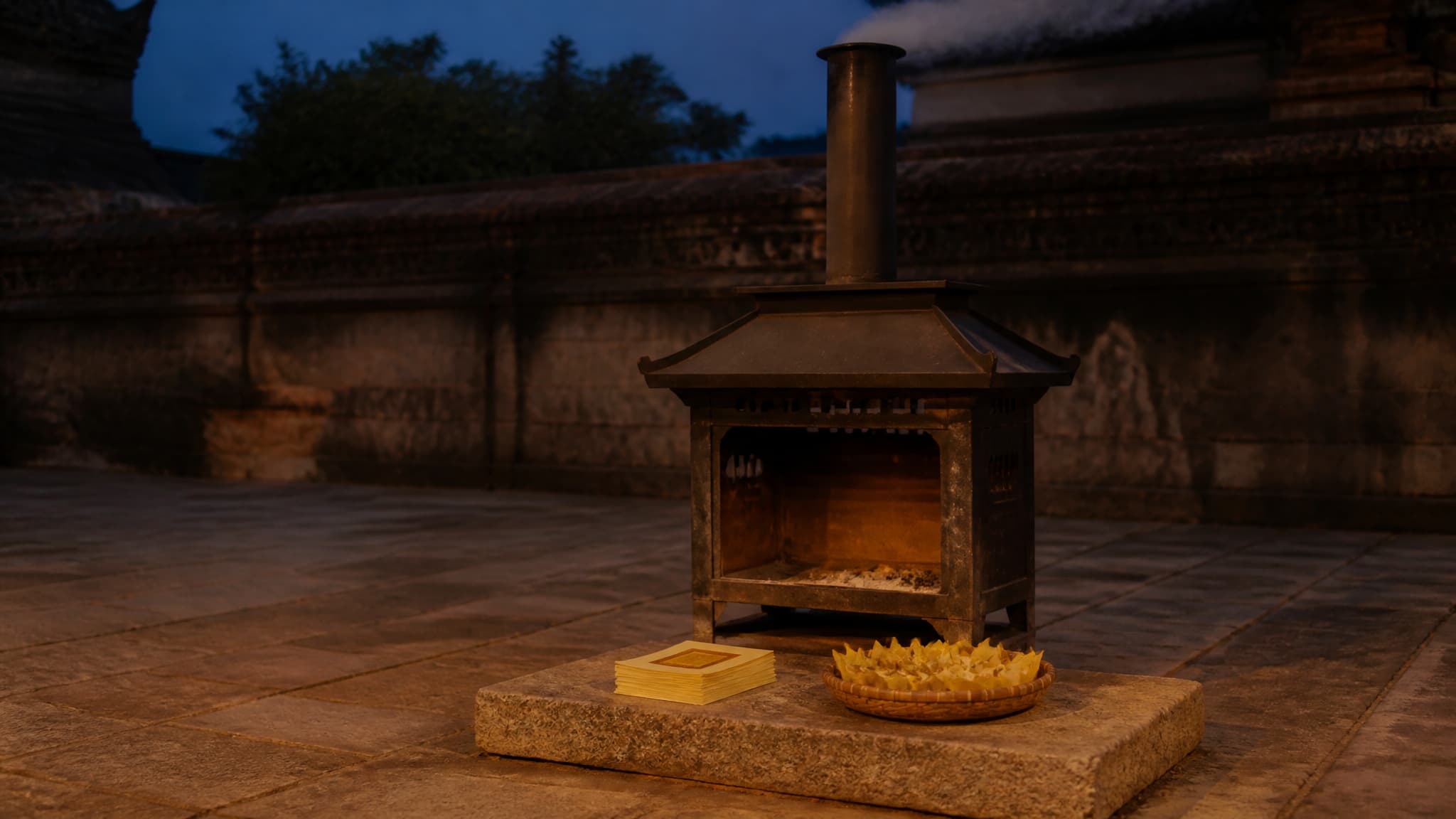
Most cemeteries do not permit open flame at all. Some that serve large Chinese-American communities provide a burner for exactly this purpose; most cemeteries prohibit anything that burns, candles included, and a grounds crew will extinguish it. Ask the office, in advance and specifically, rather than assuming. The broader question of what a cemetery does and does not allow a visitor to do is covered in our guide to cemetery etiquette.
Apartments and condominiums are almost always a no. Balcony burning is prohibited by most leases and by fire code in most places, and a metal bucket does not change that.
A temple is usually the answer. Temples that serve communities where this is practiced generally have a proper enclosed furnace, and using it is the safest and most correct option available to a family without a yard. Many funeral homes will also accommodate a burning at a service if you ask when you are making arrangements — again, ask early, because it is not something that can be arranged on the day.
If none of that is available, a family can do everything except the fire: clean the grave, lay out the food, light incense where it is permitted, and say the words. The address is the part that carries the meaning.
Burning a Letter to Someone Who Died
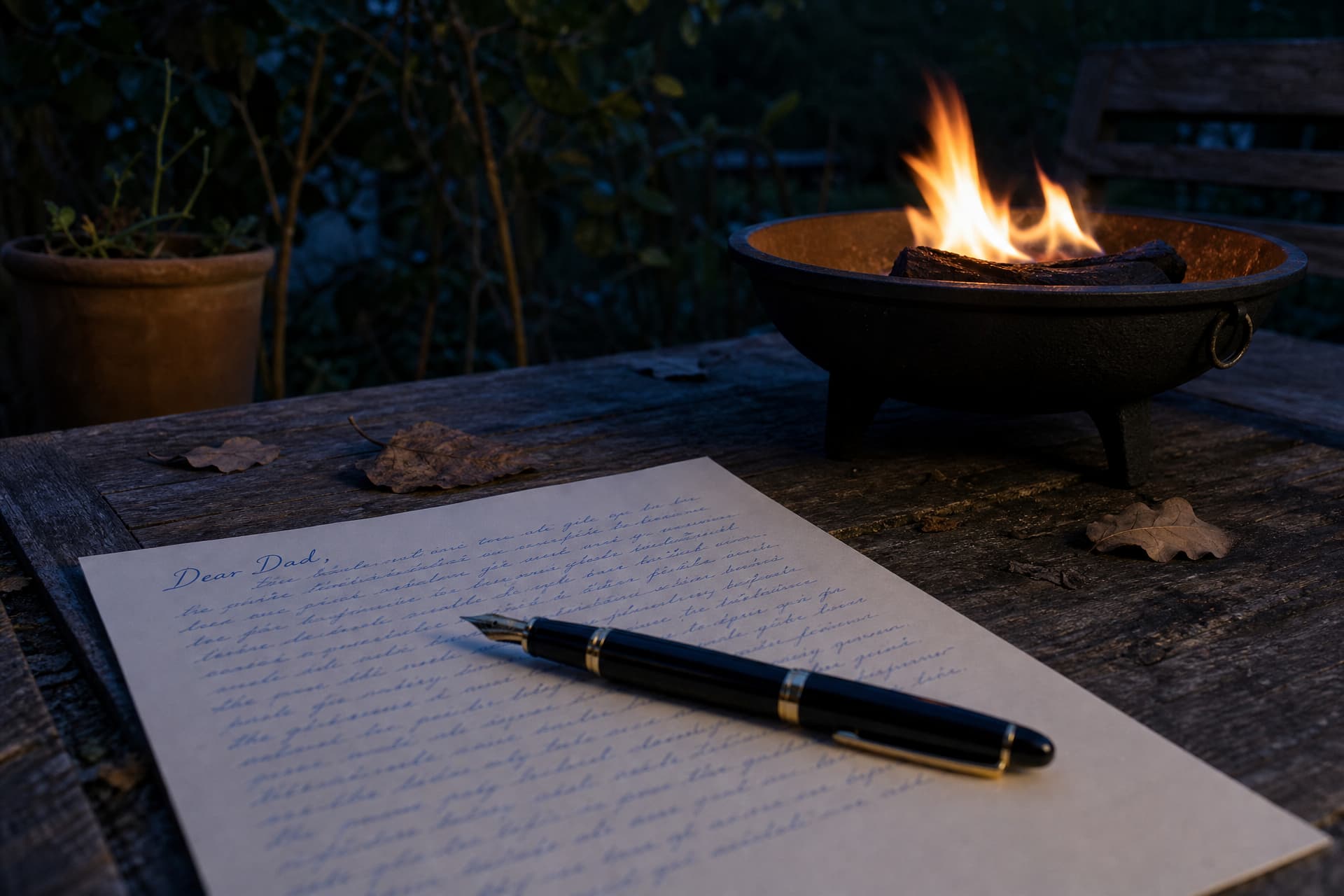
A large share of the people asking this question are not asking about joss paper at all. They wrote something to a person who died — the apology they never made, the news they wanted to tell them, the ordinary Tuesday thing they still reach for the phone about — and then they burned it, and they want to know whether that counts as anything.
It does, and it is worth being precise about what it is and is not.
It is not a delivery. Paper offerings rest on a premise about where the goods go. An unsent letter rests on nothing of the kind, and pretending otherwise cheapens both. Nothing arrives.
It works anyway, and for a reason that does not require belief. Writing to someone who died gets you to say the thing in your own words instead of circling it. Burning it settles what happens to it — no drawer, no rereading it at two in the morning, no wondering whether to keep it. The letter existed, it was addressed, and then it was finished. That is a complete act.
People who do this often read the letter out loud first, alone or with one other person there. It is the reading, more than the burning, that most of them describe afterward as the part that mattered.
If you are going to do it, a few things make it better. Write it by hand. Be specific — one memory, one unsaid sentence, one question — rather than general. Read it aloud before it goes in the fire, because the same words land differently spoken. And burn it somewhere that will not become an emergency: a fire bowl, a grill, a fireplace, and the same local burning rules as above.
Saying something out loud when you burn it is worth the awkwardness, and if the wording is the part that stalls you, the openings in our guide to what to say out loud at an ash scattering transfer almost directly.
Fire in Other Traditions
Once you know what to look for, the same grammar shows up everywhere, in versions that have nothing to do with each other.
Vietnamese families burn paper offerings in a practice closely parallel to the Chinese one, with the same logic and different names.
Japanese midsummer observances use fire as a signal rather than as freight — small fires lit to welcome the dead home at the start of the visit and to send them off at the end. Nothing is being converted. The fire is a landmark.
Incense is the miniature version, and it is the most widespread of all of them: something is consumed, the smoke rises, and the rising is the point.
A lit candle is doing a smaller version of the same thing in traditions that burn nothing else. A candlelight vigil has no theory of delivery attached and it still gathers a hundred people around a set of small flames, which is worth thinking about; our guide to memorial candles covers what different traditions do with them.
Mexican households do the opposite and it is instructive. On an ofrenda the dead are given food, drink and a named sugar skull, and none of it is burned — the guest is understood to come here rather than to receive a shipment there. The sugar skull meaning is the same premise as a paper house, routed the other way.
And the oldest version in this hub is not paper but metal — a coin placed with the dead to pay a fare that the living cannot pay for them. Provisioning the dead is not a Chinese idea or a Greek one. It is very close to a human default.
What all of them share is a refusal to accept that a relationship ends because one party is unreachable. Fire, food and a coin are three answers to the same problem, and the words spoken over a grave when what the ashes are said to become is recited are a fourth.
When Paper Burns on Its Own
Some people arrive at this question the other way around. A page caught light. A letter went up faster than expected, or would not catch at all, or burned in a way that seemed to mean something. What does it signify?
Honestly: nothing that anyone can tell you. There is no shared tradition that assigns a fixed meaning to how a piece of paper happens to burn, and pages that offer you one are inventing it. Paper burns according to how dry it is, how it is stacked and which way the air is moving.
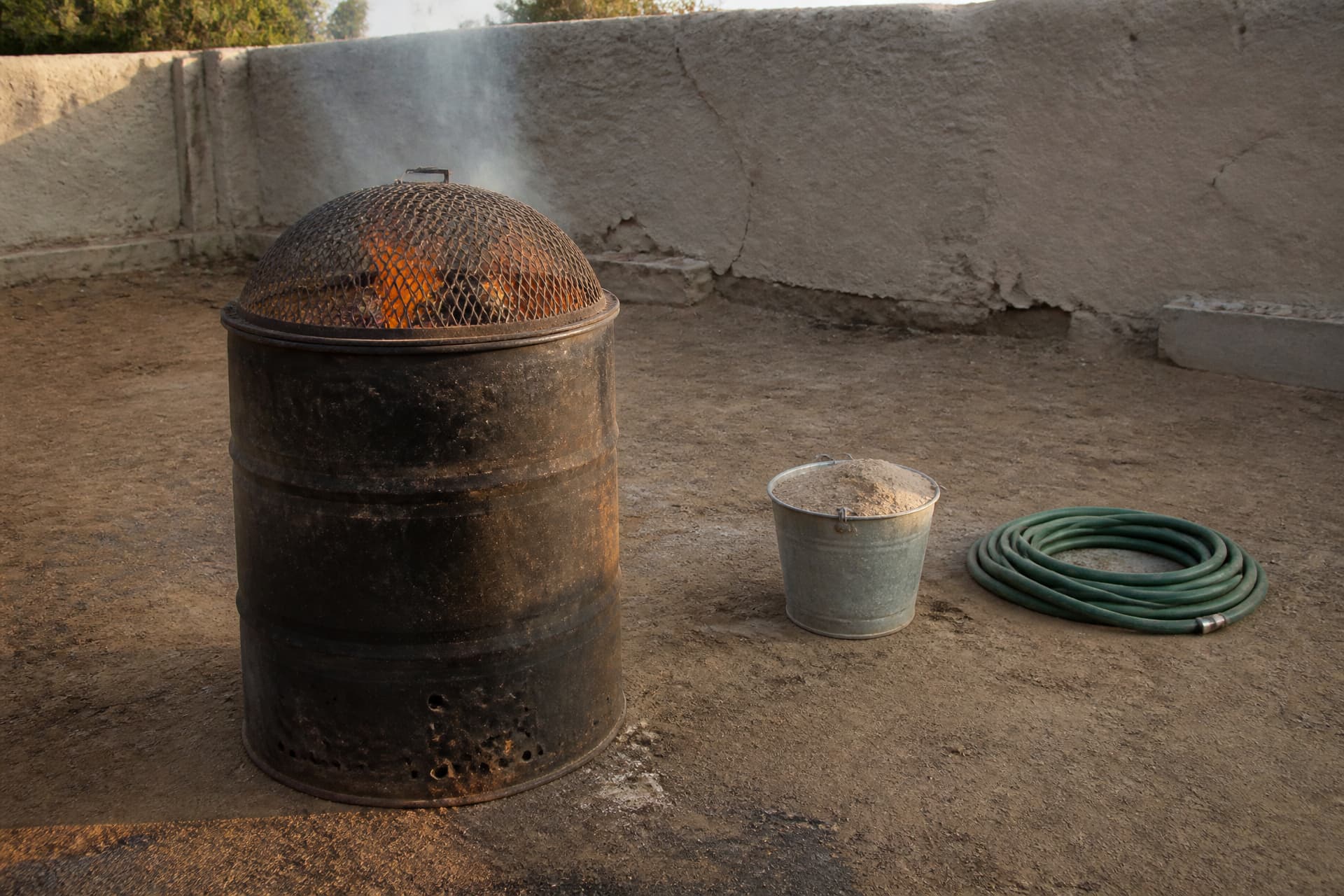
The mesh lid is the detail worth copying. It keeps burning fragments from lifting out on the updraft, which is the single most likely way a paper offering becomes a fire department call.
What is traditional is the opposite direction: rules about burning done deliberately and done badly. Paper that only half burns is held not to have arrived. Offerings sorted into the wrong pile go to the wrong recipient. Those are meanings attached to choices a person made, not omens read off an accident.
That distinction runs through this whole hub. A stopped clock is a good comparison — the spiritual meaning of clock stopping turns out to be almost entirely about clocks that families stopped on purpose, and very little about clocks that stopped by themselves. Superstitions about the household after a death behave the same way, which is why the question of whether keeping ashes at home brings bad luck has a much calmer answer than the search results suggest.
Frequently Asked Questions
What does burning paper mean spiritually?
In the traditions where it is a formal practice, it means transfer: the paper stands in for something real, and the fire is understood to move it to a named person who has died. Outside those traditions, burning paper usually means release — an act that makes something final because you watched it go.
Is burning joss paper a religious practice?
It belongs to Chinese folk religion rather than to any one organized faith, and it is practiced by families who identify as Buddhist, Taoist, both or neither. Some Buddhist clergy treat it as custom rather than doctrine. In practice it functions more like a family obligation than a confession of belief.
What do you say when you burn joss paper?
Address the person by name and by relationship, say what you are sending and why, and speak normally. There is no fixed formula and no requirement to be eloquent. Announcing the recipient out loud is the part that is genuinely expected.
Can you burn joss paper at a cemetery in the United States?
Only where the cemetery permits it, and most do not allow open flame of any kind. A few cemeteries serving communities where the practice is common provide a dedicated burner. Call the office and ask before the day rather than arriving with a bundle of paper.
Is it disrespectful to burn joss paper if you are not Chinese?
Taking part at the invitation of a family whose observance it is, doing what they do, is welcomed. Staging your own version of somebody else's rite because you liked the look of it is a different act. The line is participation against performance, and the practical test is whether anyone from that tradition asked you to be there.
What the Fire Is Actually Carrying
Strip away the differences and every version of this is a family declining to accept that a person is out of reach. The paper house says a father should not be without shelter. The coin says a fare has to be paid. The letter in the fire bowl says a thing that needed saying got said. None of them are really about fire; fire is only the most convincing way anyone has found to make an object leave.
That is why this hub treats the recurring objects together rather than one culture at a time. Read across the symbols of grief and mourning and the repetitions become impossible to miss — the same handful of gestures, invented separately, in places that never met.
If you are the one making the arrangements rather than attending them, the same instinct usually shows up in the objects a family chooses to keep. Our guide to an urn that honors faith and culture is written for exactly that decision, and it is the same question in a permanent form: what does this family need this object to say.