🏬Supersize Online Funeral Retailer🪦1000's of Headstones⚱️Over 10,000 Cremation Urns⚰️Caskets Overnight Delivery🛒Funeral & Memorial Superstore🚚FREE Shipping on ALL Orders👨👩👧👦Helping Families for over 20 Years💰Lowest Price Guarantee🏬Supersize Online Funeral Retailer🪦1000's of Headstones⚱️Over 10,000 Cremation Urns⚰️Caskets Overnight Delivery🛒Funeral & Memorial Superstore🚚FREE Shipping on ALL Orders👨👩👧👦Helping Families for over 20 Years💰Lowest Price Guarantee
🏬Supersize Online Funeral Retailer🪦1000's of Headstones⚱️Over 10,000 Cremation Urns⚰️Caskets Overnight Delivery🛒Funeral & Memorial Superstore🚚FREE Shipping on ALL Orders👨👩👧👦Helping Families for over 20 Years💰Lowest Price Guarantee🏬Supersize Online Funeral Retailer🪦1000's of Headstones⚱️Over 10,000 Cremation Urns⚰️Caskets Overnight Delivery🛒Funeral & Memorial Superstore🚚FREE Shipping on ALL Orders👨👩👧👦Helping Families for over 20 Years💰Lowest Price Guarantee
Search for a funeral cardboard coffin and you will find two completely different products sold under almost the same words. Confusing them is why most people arrive at this topic with the wrong idea of what they are looking at.
The first is the alternative container — the plain, unfinished box a crematory uses when a family supplies nothing else. No handles, no lining, not meant to be seen. It appears on nearly every price list in the country, and it is the cheapest line on it.
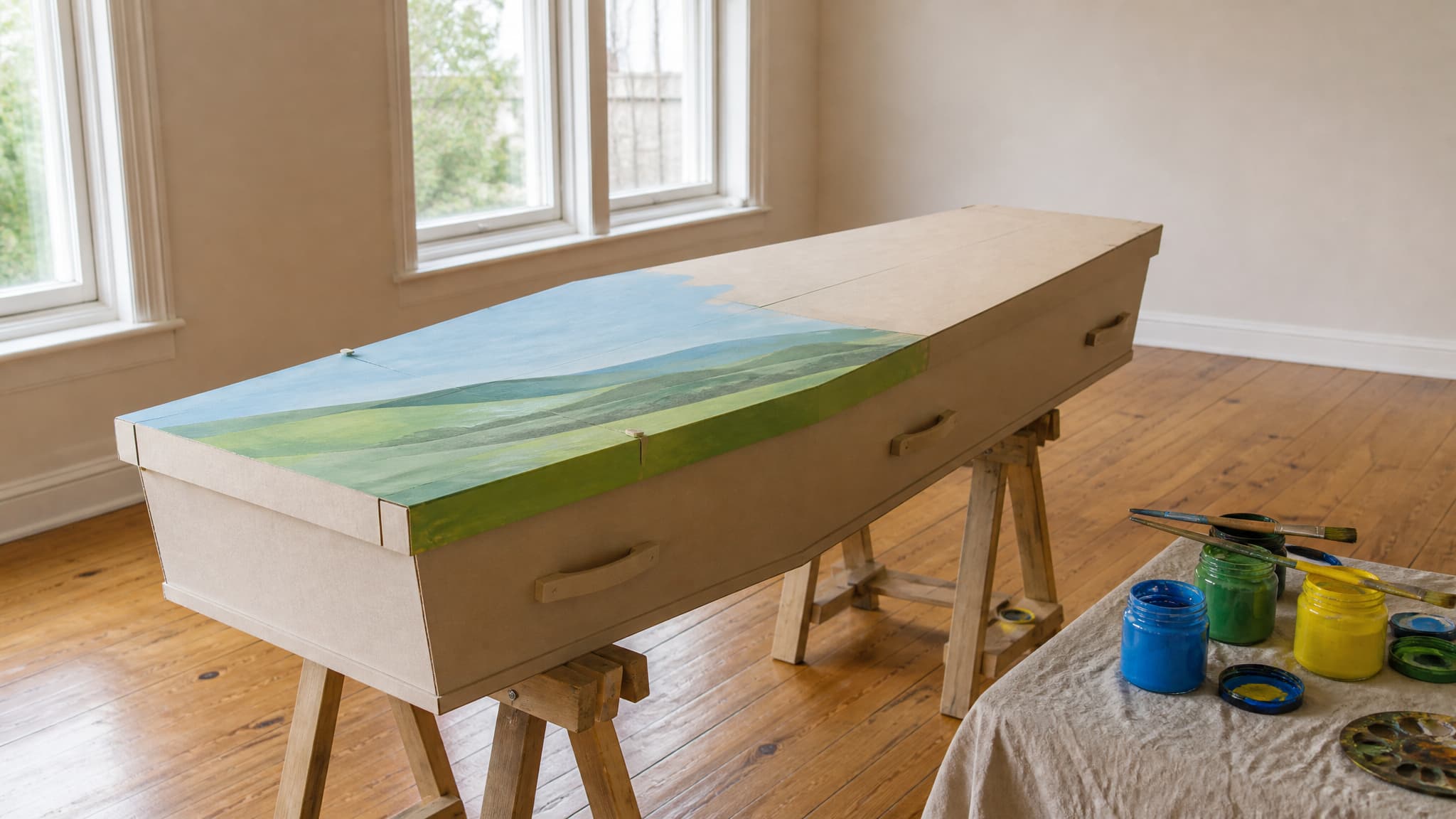
The second is a cardboard coffin: a properly engineered container, built from heavy multi-layer board, rated to carry an adult, designed to be carried by pallbearers, and — this is the part people actually want — designed to be drawn on, painted, written on and handled by the family.
This article is about the second one. It is a real decision with real rules attached, and the decorating is the reason most families make it.
Not a shipping box. The material is typically heavy corrugated or honeycomb board, several layers thick, sometimes with an internal frame or reinforced base, and it is engineered against a stated weight rating.
Check the rating, because it is the number that matters. Suppliers print it, and it commonly sits somewhere between 200 and 350 pounds. If the rating is not stated anywhere, that is a reason to look elsewhere.
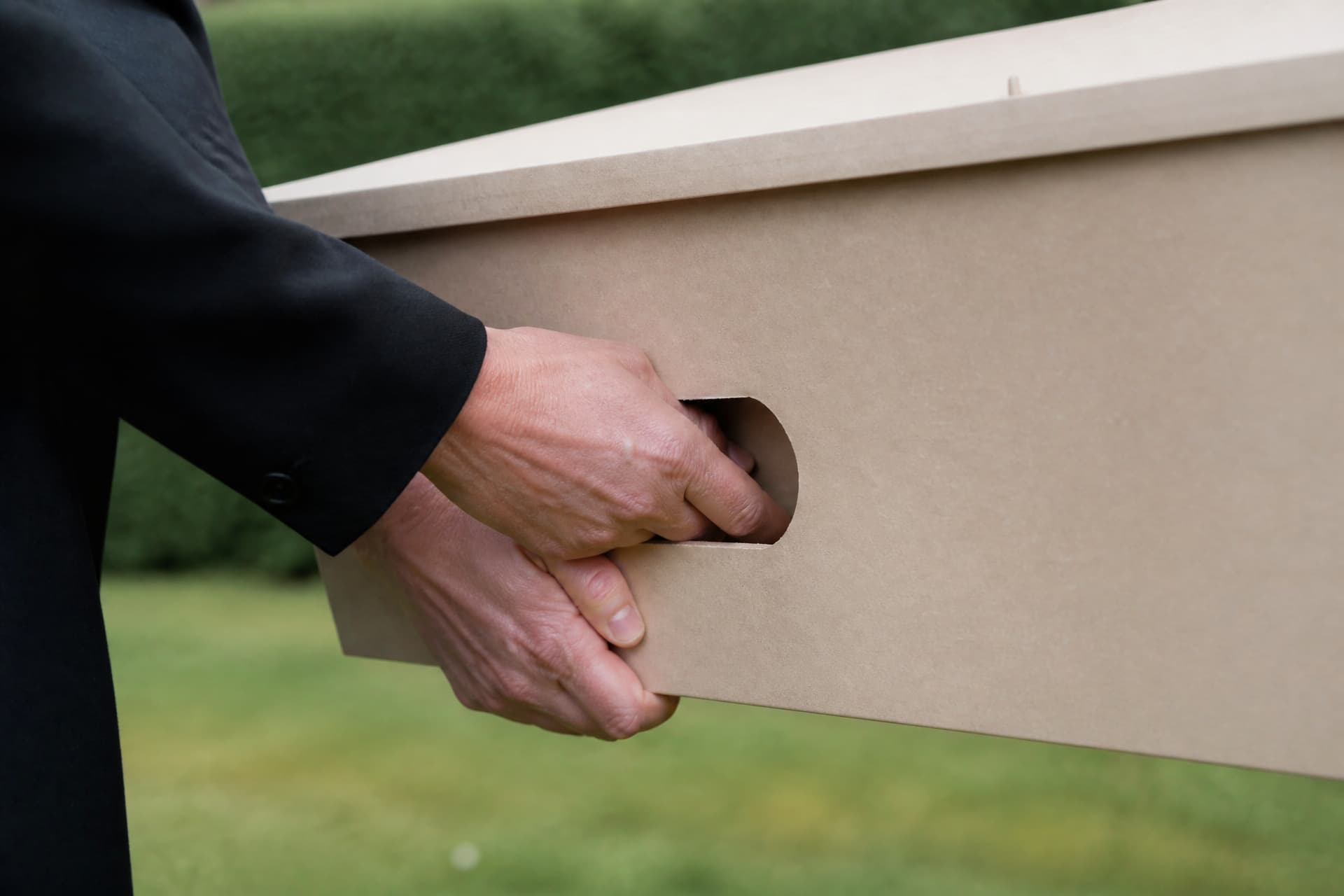
Most come with a simple unbleached cotton or paper liner and a base board. Handholds are usually cut into the sides rather than fitted as rails, which changes how it is carried — more on that below.
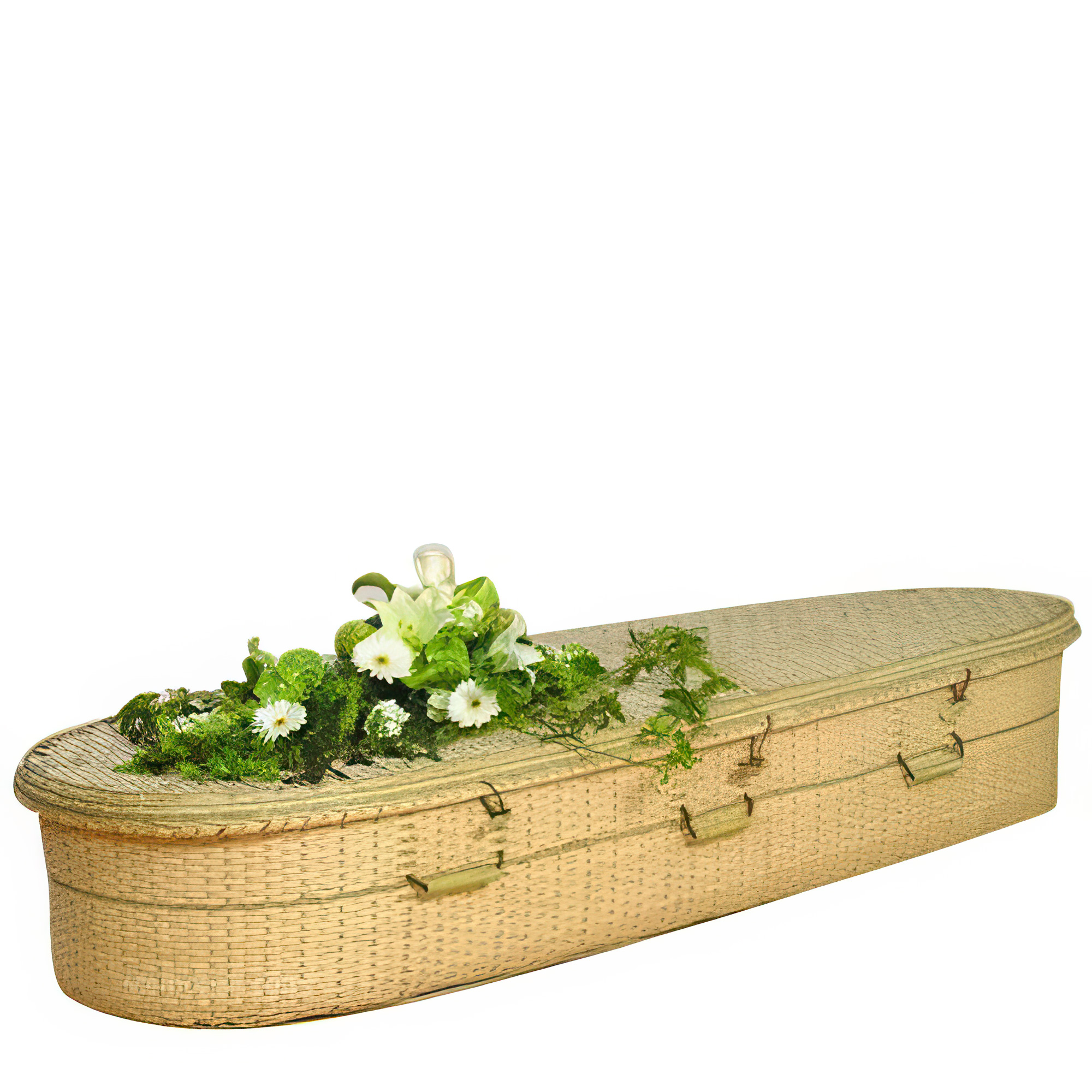
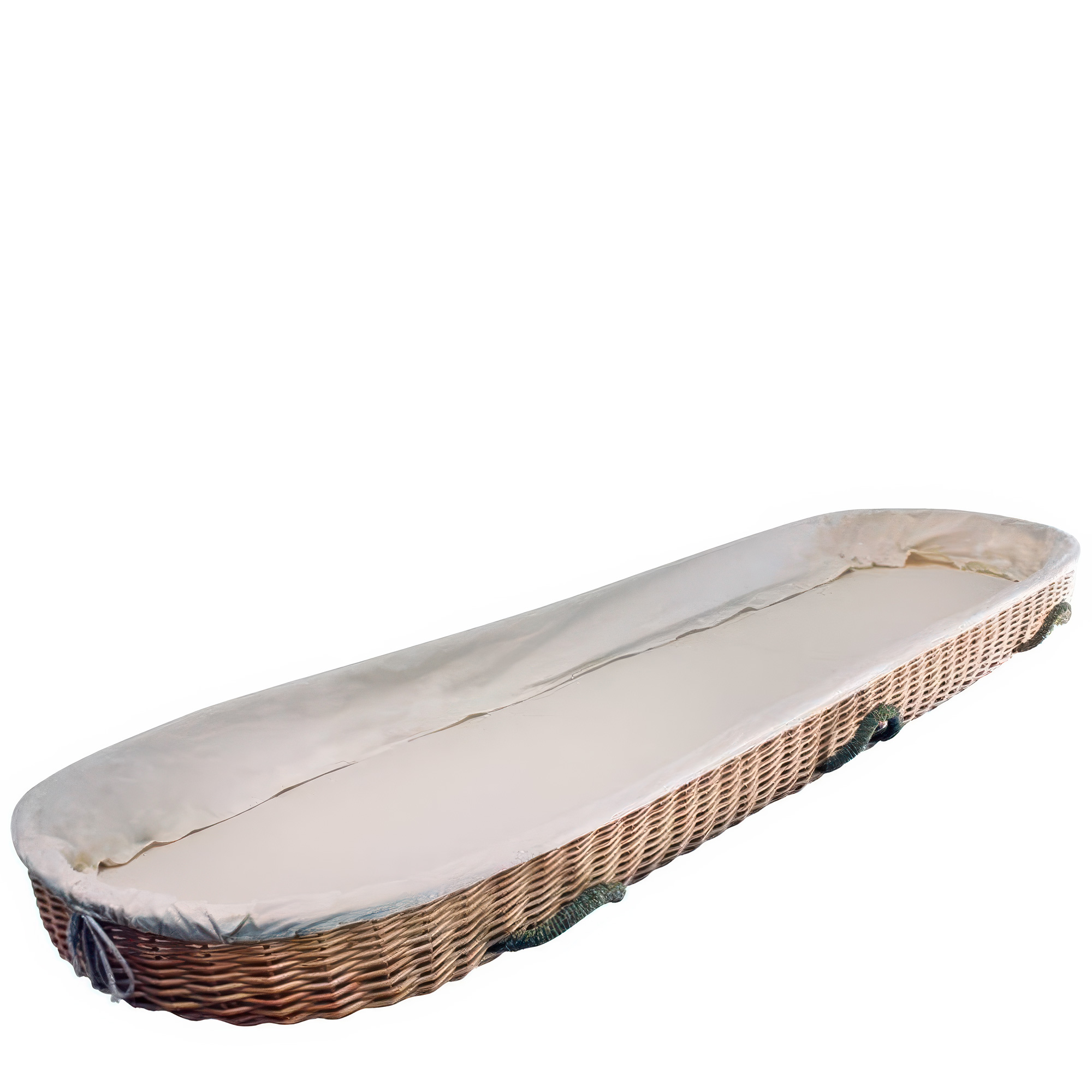
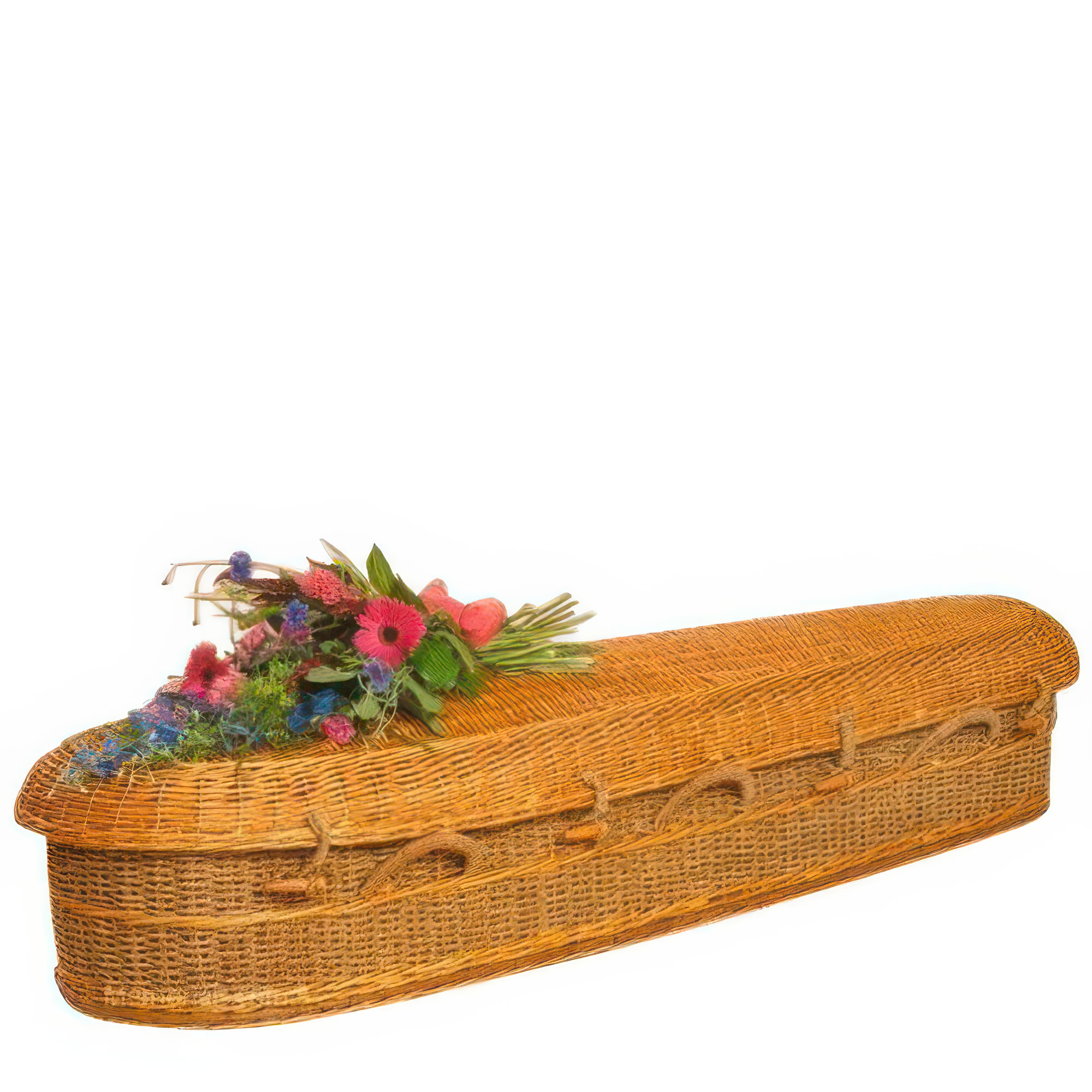
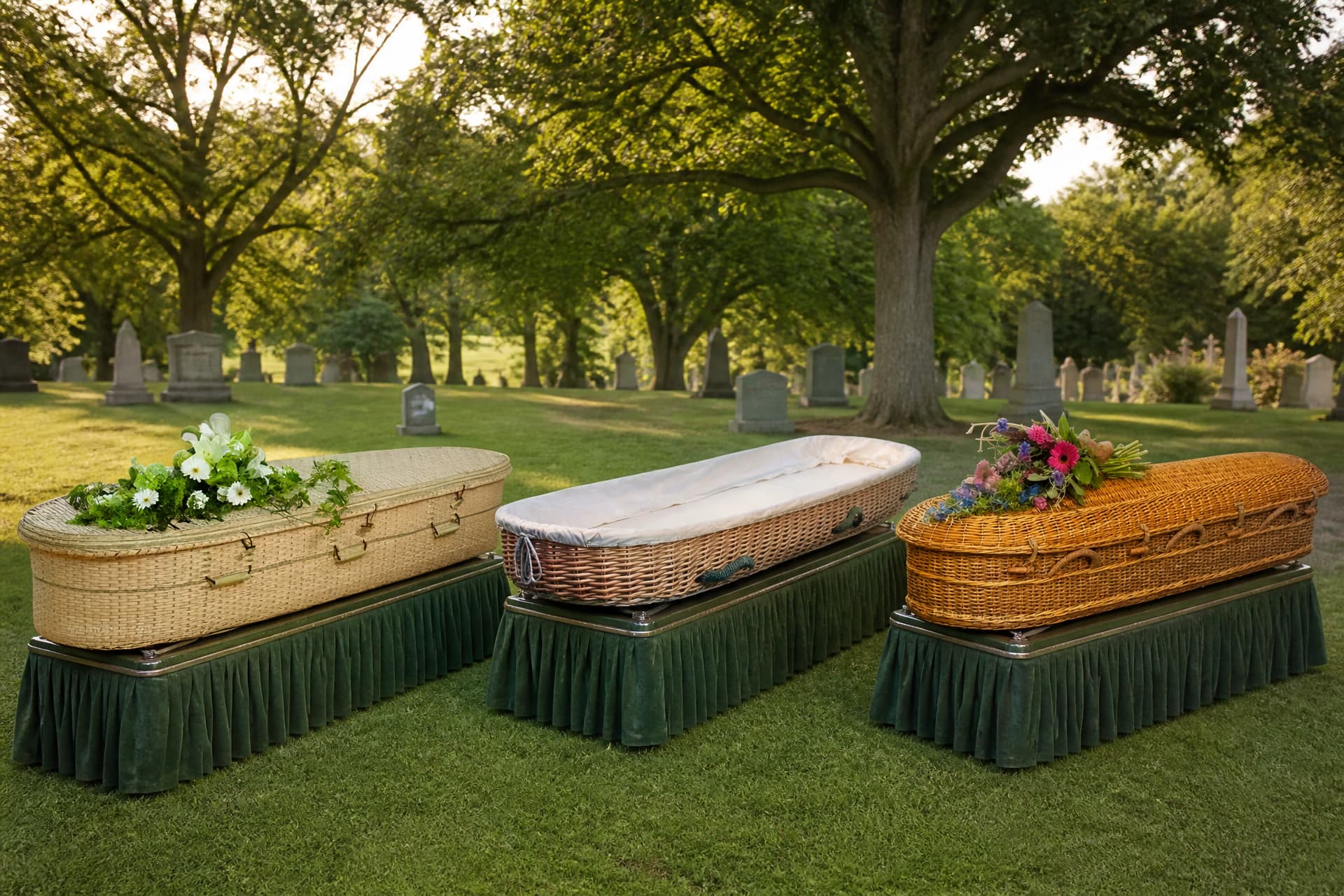
They are made for both burial and cremation, which is not true of every eco-friendly option. For comparison across the other materials, our wicker and biodegradable casket guide covers willow, bamboo and seagrass, and casket vs coffin explains why the tapered coffin shape costs less than a rectangular casket.
Three separate questions, with three different answers.
For cremation: yes, essentially always. Crematories require a rigid, combustible container, and cardboard satisfies that requirement comfortably. Our cremation planning guide covers what the container has to do.
For a green burial: usually preferred. Natural burial grounds want nontoxic, biodegradable materials and no concrete vault, and cardboard is among the materials they are set up for. The Green Burial Council is the main certifying body in the US, and our green burials guide covers what these cemeteries ask for.
For a conventional cemetery: usually yes, but expect a vault. Most conventional cemeteries require a burial vault or grave liner regardless of what container goes inside it — that is a cemetery rule rather than a state law, and it exists to stop the ground settling. It is not a rejection of cardboard. With a vault carrying the earth load, the coffin inside it is doing much less work.
Ask the cemetery before you buy. Rules vary from one cemetery to the next in the same town, and this is a five-minute phone call that prevents an expensive mistake.
One thing you do not have to negotiate: the funeral home must accept a coffin you supply. The federal Funeral Rule requires it and forbids them from charging a handling fee for the privilege. If you meet resistance, that is the rule to cite.
What It Costs
Cardboard sits at the bottom of the range, and the saving is genuine rather than nominal.
Plain cardboard coffins generally run from around $100 to $500 depending on size, construction and finish. Printed or pre-decorated designs cost more. Against the $500 to $3,000 typical of a wooden coffin, or the $1,000 to $10,000-plus range for caskets, the difference is the largest single saving available in a funeral.
Two things to watch. Delivery can be a meaningful share of the price on something this bulky. And a plain white coffin you intend to decorate needs supplies, which is a small cost but not nothing.
It is worth saying plainly that cost is not why most families choose one. The decorating is.
Cardboard Coffin Decoration: What Actually Works
This is the real reason the option exists, and it is the part worth doing carefully.
A cardboard coffin decoration project turns the most passive object at a funeral into something the family made. People who have done it describe the afternoon spent painting as the part they remember — which is the same thing families say about choosing photographs for a celebration of life.
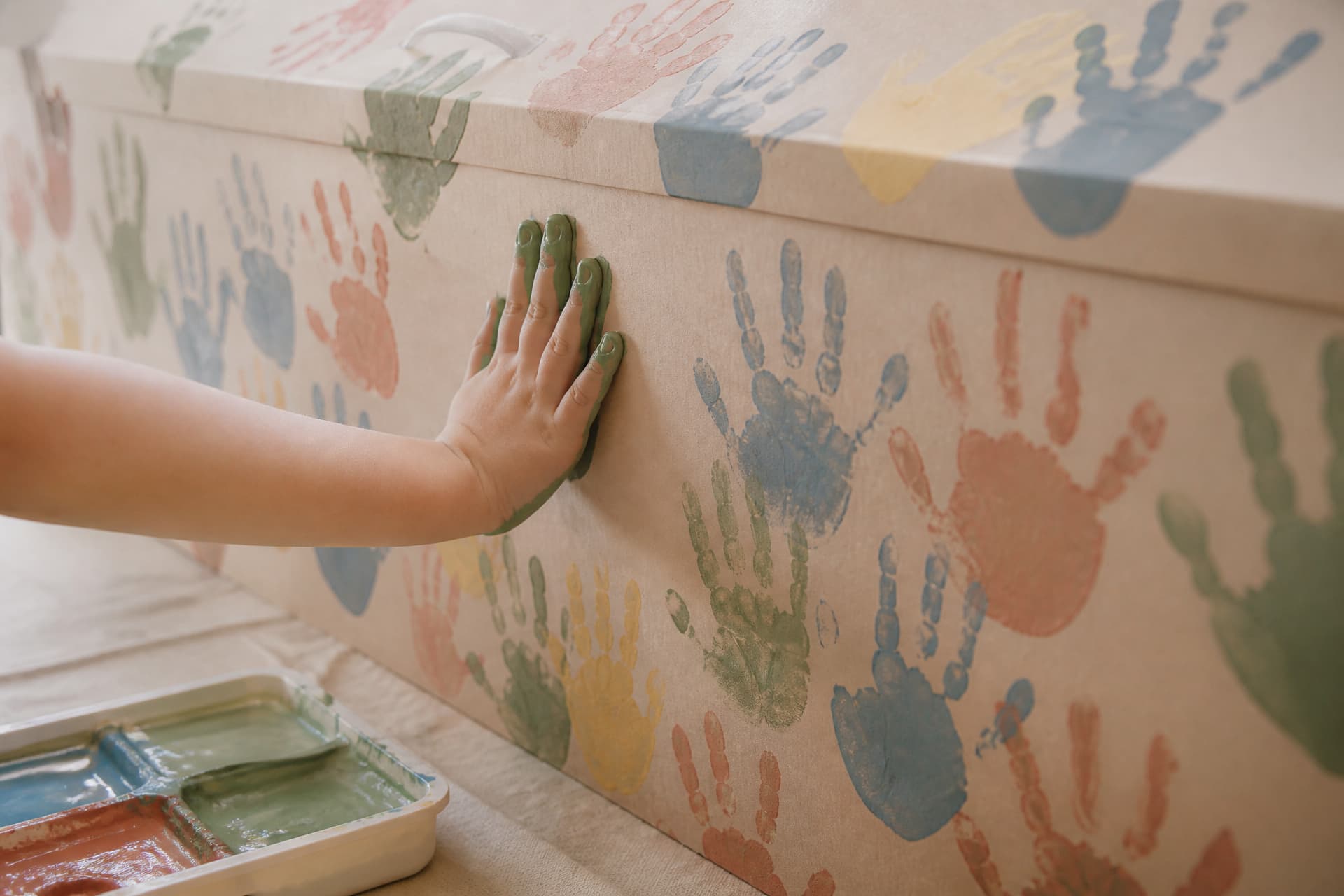
The approach that works for any age and needs no artistic ability at all. A shallow tray of water-based paint, and everyone who came gets to put something on it.
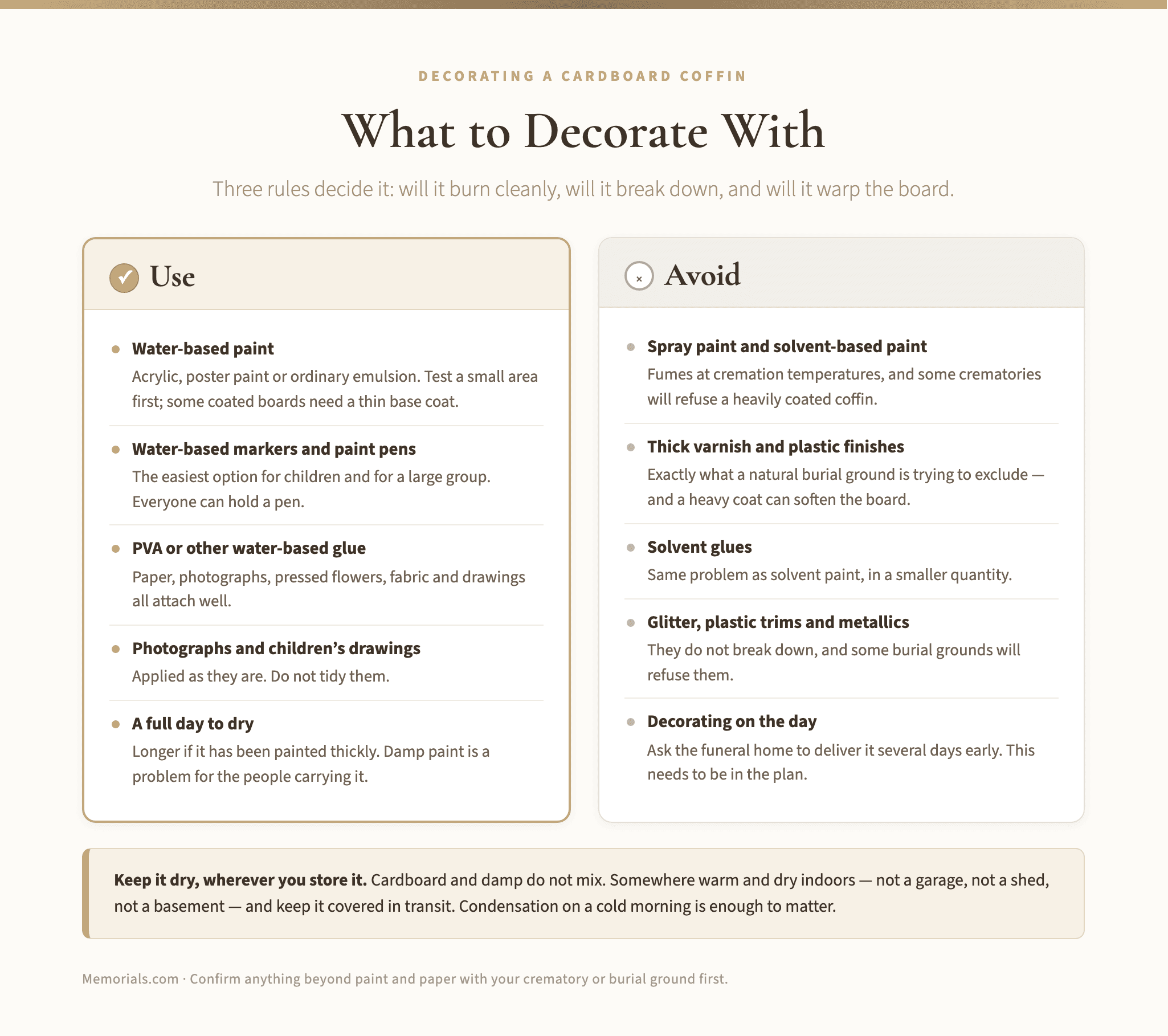
Use water-based paint. Acrylic, poster paint and ordinary emulsion all work well and adhere to the board without soaking through. Test a small area first; some coated surfaces need a light key or a thin base coat.
Avoid solvent-based paint, spray paint and heavy varnish. Three reasons, and they stack. Solvents and plastic finishes produce fumes at cremation temperatures and some crematories will refuse a coffin that is heavily coated. For a green burial, a plastic-based finish is exactly what the cemetery is trying to exclude. And a thick coat can soften or warp the board.
Water-based markers and paint pens are the easiest option for writing, and they are what you want if children or a large group are taking part. Everyone can hold a pen; not everyone can hold a brush.
Glue with PVA or another water-based adhesive, not a solvent glue. Paper, photographs, pressed flowers, fabric and drawings all attach well.
Skip glitter, plastic embellishments and anything metallic if there is any chance of a green burial. They do not break down and some grounds will refuse them.
Let it dry completely. A full day is sensible, longer if it has been painted thickly. Damp paint on a coffin being carried is a problem for the people carrying it.
Decorate before the day, not on it. The funeral home can usually deliver the coffin to you a few days ahead, or you can collect it. Arrange this early — it is a normal request but it needs to be in the plan.
Three questions decide everything on this list: will it burn cleanly, will it break down, and will it warp the board. Water-based passes all three.
Decorated Cardboard Coffins: Ideas That Work
The decorated cardboard coffins that land best are usually the least designed. A few approaches worth stealing:
Handprints. Every person at the gathering, in a different color, with names written small beneath. It works for any age and requires no artistic ability whatsoever.
Messages in a border. Leave a wide blank band around the sides and invite people to write in it. Some families leave it open at the visitation so the writing continues.
A single landscape. A view they loved, painted across the lid by whoever in the family paints. Everyone else does the sides.
Photographs, glued and varnished over with a thin water-based sealer. Mix eras; the blurry ones work.
Their own work. A pattern from a quilt they made, a drawing of theirs scaled up, their handwriting copied from a letter.
Team colors, or a flag, or a map with a route drawn on it.
Children's drawings, applied as they are. Do not tidy them. That is the point.
Plain, with one thing. A single name in good lettering on plain board is dignified and takes an hour.
A caution worth saying out loud: not every family wants this, and that is fine. For some, the idea of decorating is a comfort and for others it is intrusive. Ask before organizing it, and give people an easy way to decline.
The Practical Cautions
Three things genuinely catch people out.
Moisture is the real limitation. Cardboard and damp do not mix. Keep it somewhere dry and warm — not a garage, not a shed, not a basement. Do not set it down on wet grass at the graveside; use a board or the lowering device. Condensation on a cold morning is enough to matter, so keep it covered in transit.
The grip is the thing to brief people on. Cut-out handholds sit lower than the rails on a wooden coffin and there is no rim to hold, so lift from underneath where you can.
Carrying it is different. Cut-out handholds sit lower than the rails on a wooden coffin and there is no rim to grip, so the hold feels unfamiliar even to people who have done it before. Use the same number of bearers you would otherwise, brief them beforehand, and consider a trolley or bier for the longer part of the route. Lift from underneath where you can rather than by the handholds alone.
Check the interior arrangements with the funeral home. The liner, the base board and how your loved one is placed and supported are all things the funeral director handles routinely, but they are worth confirming rather than assuming, particularly if you bought the coffin yourself.
What to Ask Before You Order
Five questions settle almost everything, and all of them are quicker to ask than to fix afterward.
What is the weight rating, and what are the internal dimensions? Standard sizes fit most adults, but oversize is a real constraint on a rigid board container and lead times on a larger one are longer. Give the funeral director the measurements and let them confirm the fit.
Does the cemetery require a vault or liner? Ask the cemetery, not the funeral home, and ask about the specific section you are buying into.
Will the crematory accept it decorated? Most will. Confirm it if you are planning anything beyond paint and paper.
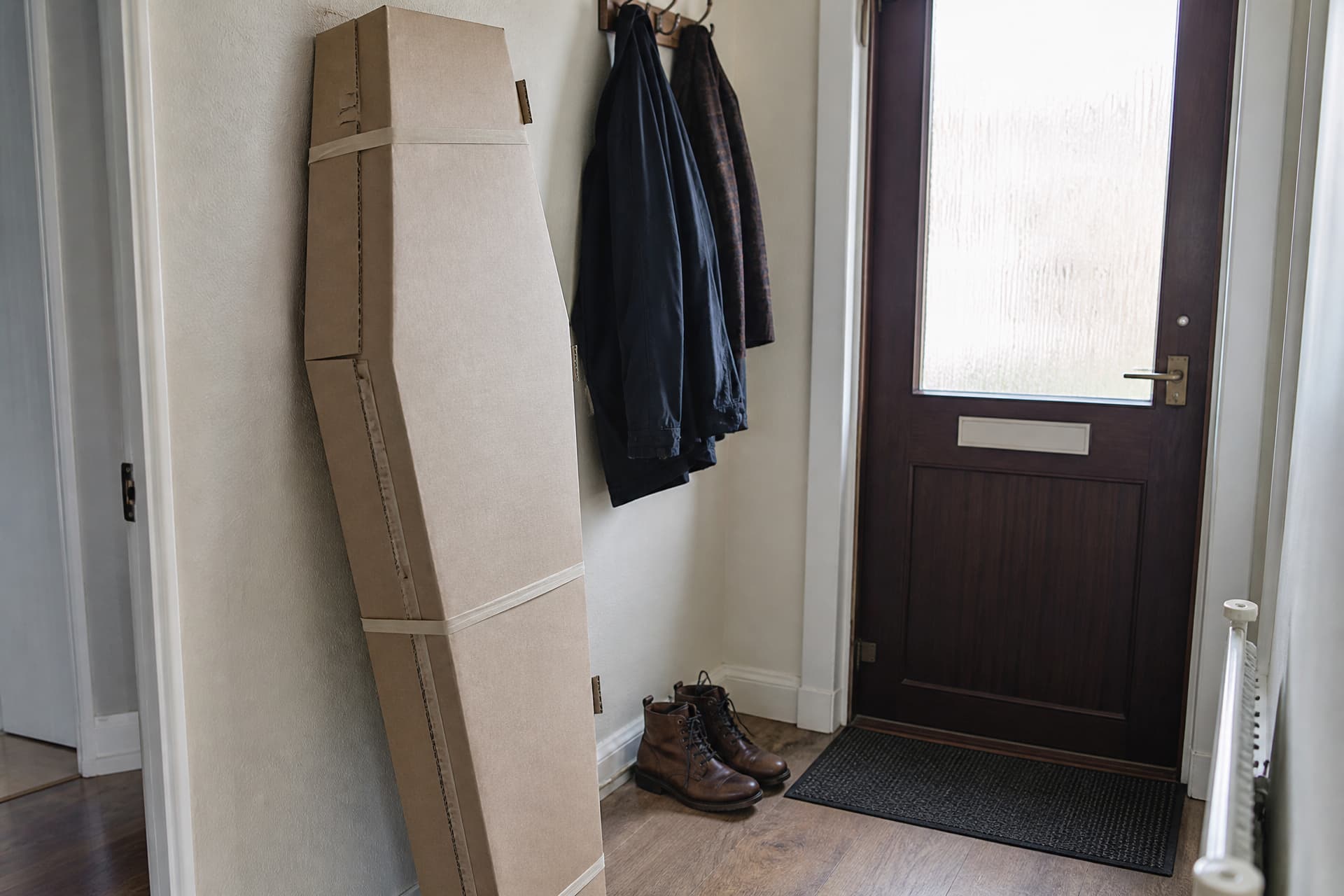
When can I have it, and where will I put it? You want it several days early and you need a dry, warm, flat space roughly seven feet long. This is the question families forget until the coffin is in the driveway.
Who transports it, and when does it go back? Delivery to your home and collection before the service are usually arranged by the funeral home, but they need warning.
The question families forget until the coffin is in the driveway. You want it several days early, and you need a dry, warm, flat space roughly seven feet long.
If you are buying the coffin yourself rather than through the funeral home, tell the funeral director early. They will handle a family-supplied container routinely, and the Funeral Rule requires them to, but the arrangements around it are easier when they are planned rather than announced.
Who It Suits
It suits you if you want a green burial, if a direct cremation is the plan and you would rather the container was not anonymous, if the family wants something to do together, or if there are children who need a way to take part.
It suits you less if the cemetery has rules you would have to fight, if there will be a long viewing in a warm room, or if anybody close to the decision would find the idea distressing. A funeral is not the place to win an argument about materials.
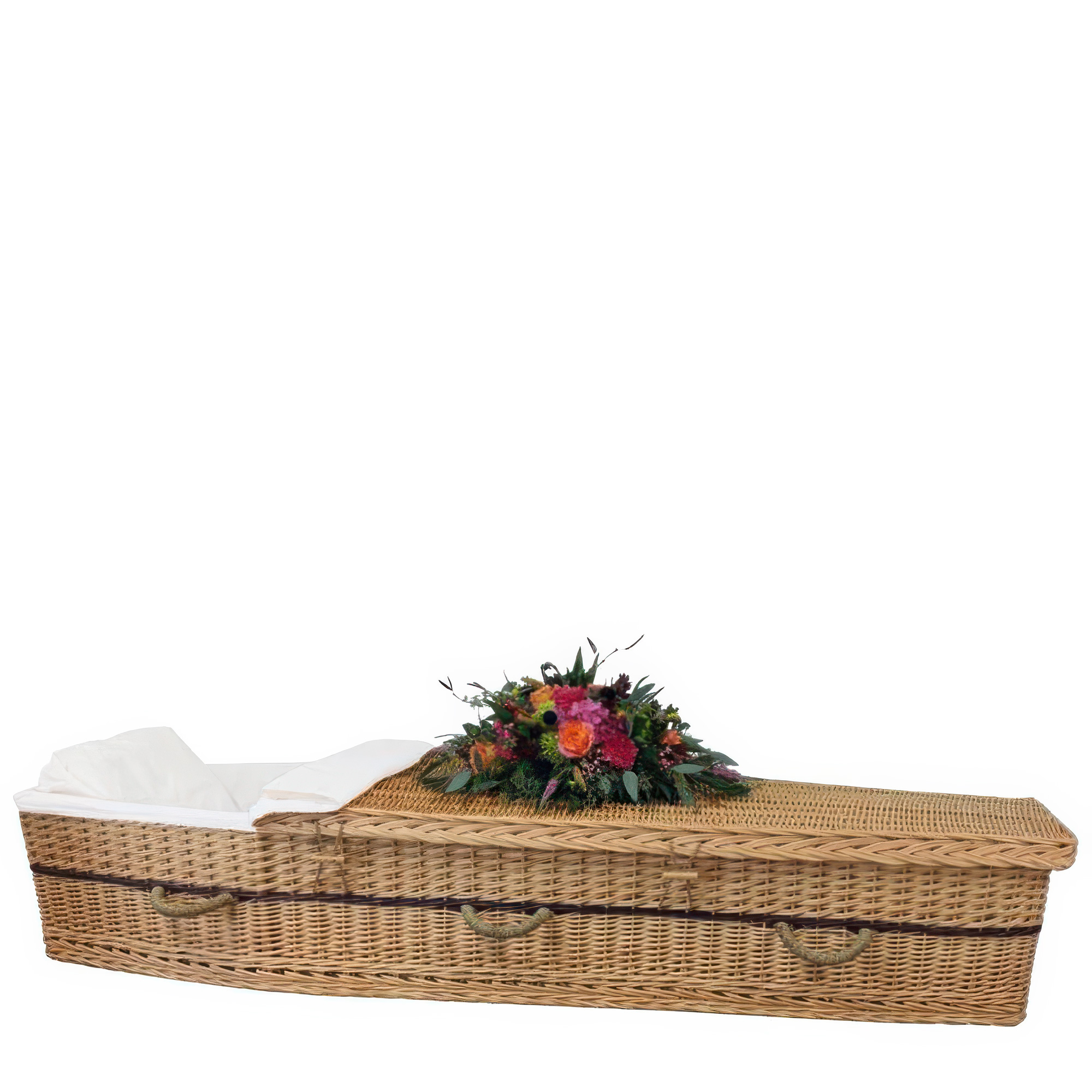
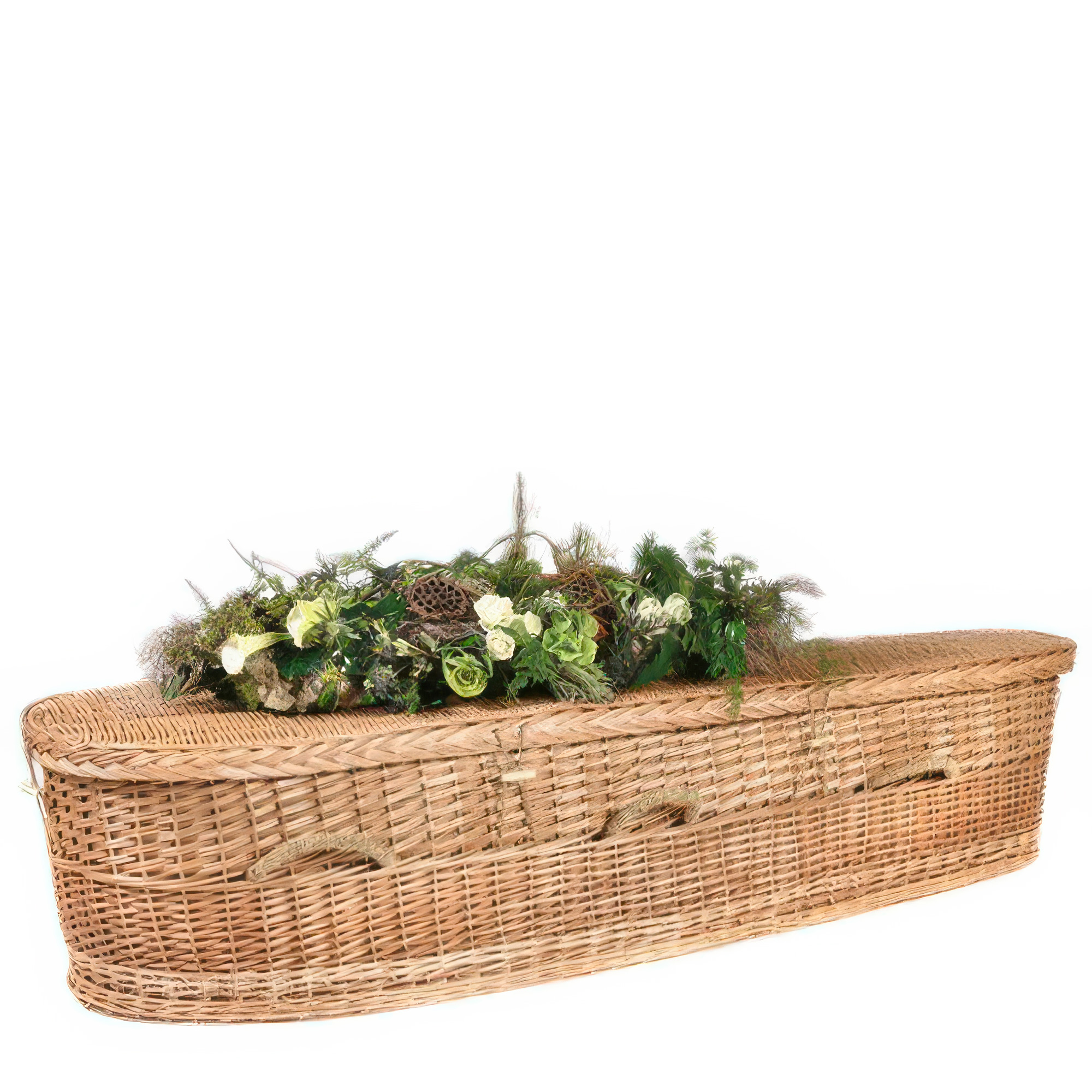
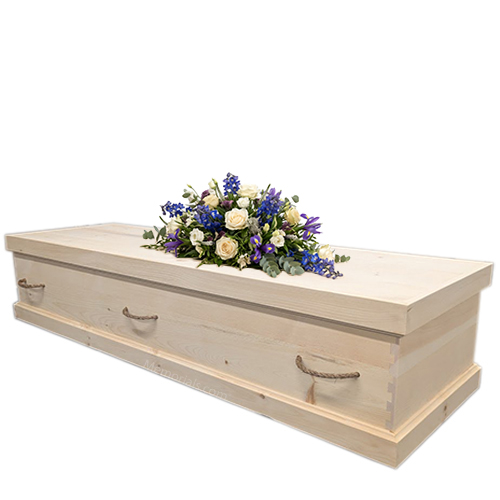
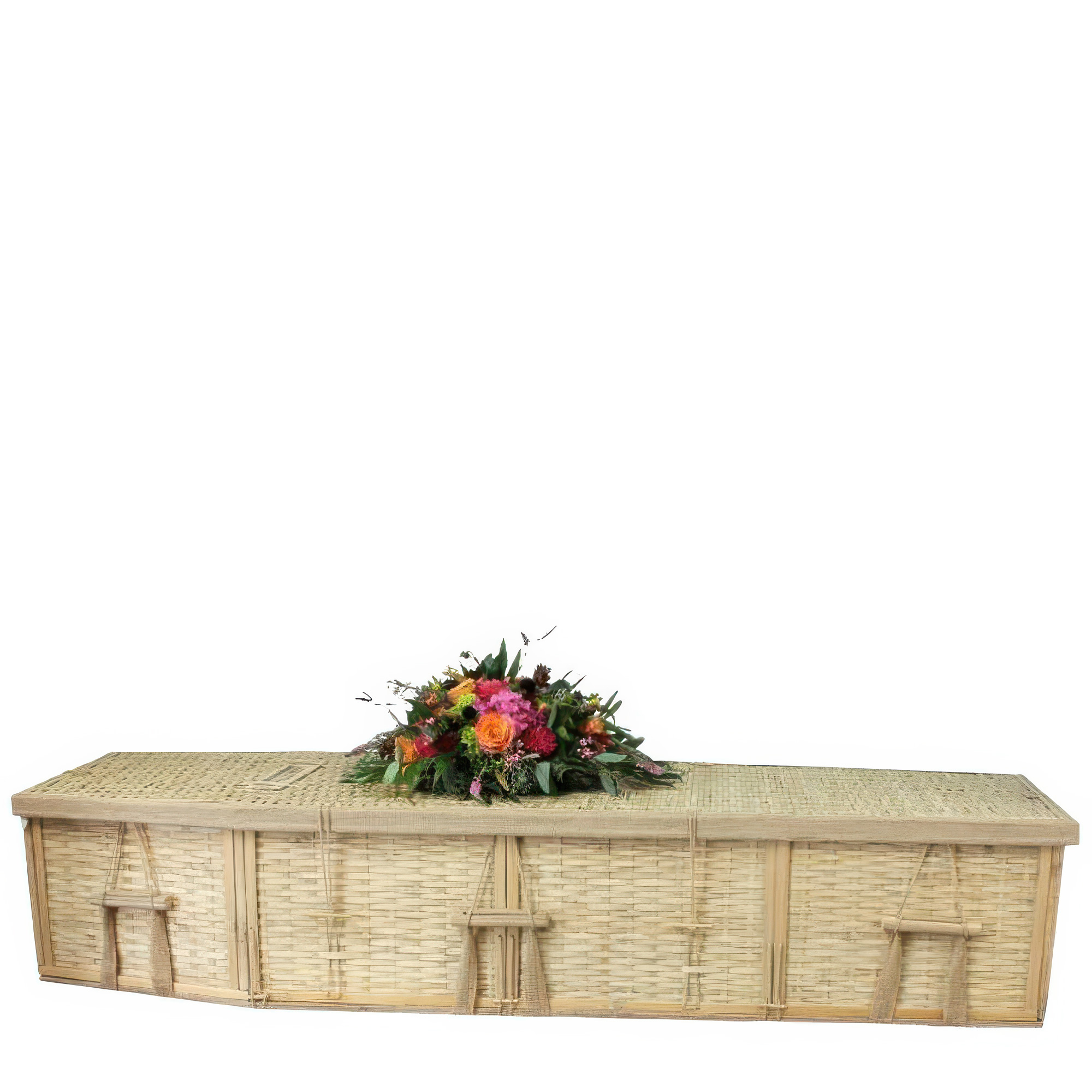
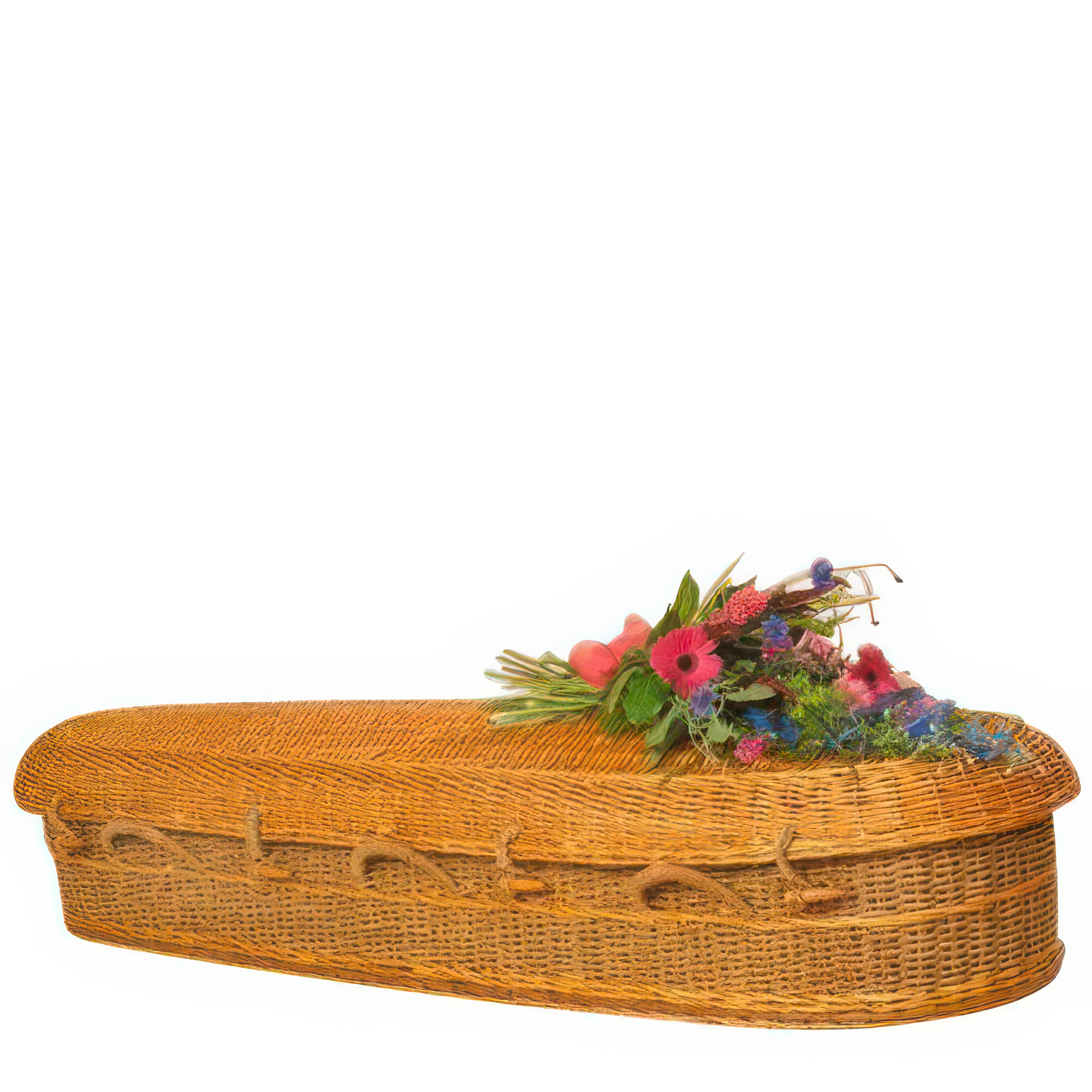
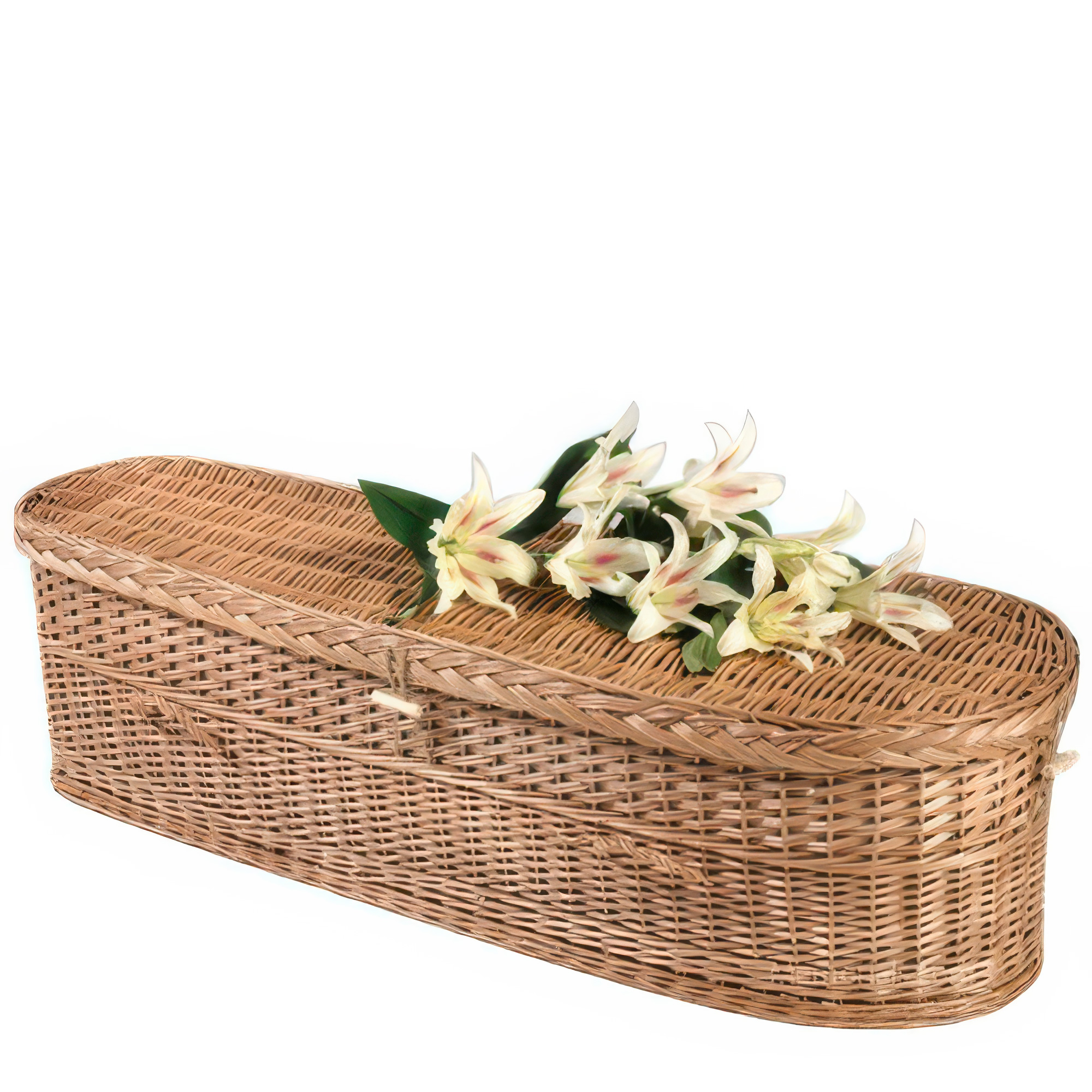
If a cardboard coffin is not right but the underlying instinct is, the alternatives are real. Woven willow, bamboo and seagrass caskets are biodegradable and more conventional in appearance; a burial shroud is simpler still; and a plain unfinished wooden coffin sits between the two. Mushroom coffins are the newest option in the category.
Frequently Asked Questions
Are cardboard coffins allowed in cemeteries?
Generally yes, though most conventional cemeteries require a burial vault or grave liner regardless of the container inside it. Green burial grounds usually accept cardboard and prohibit the vault instead. Rules differ cemetery by cemetery, so call before buying.
Can you be cremated in a cardboard coffin?
Yes. Crematories require a rigid, combustible container and cardboard meets that requirement. Avoid heavy varnish, plastic finishes and solvent-based paint, which some crematories will refuse.
How much does a cardboard coffin cost?
Typically $100 to $500 for a plain one, depending on size and construction, with printed designs costing more. It is the lowest-cost container available and the saving against a wooden coffin or a casket is substantial.
Will a cardboard coffin hold an adult?
Yes — they are engineered to a stated weight rating, commonly between 200 and 350 pounds. Check the rating before ordering, and treat an unstated rating as a reason to buy elsewhere.
What paint should I use to decorate one?
Water-based paint: acrylic, poster paint or emulsion. Water-based markers and paint pens are easiest for groups and children. Avoid spray paint, solvent-based paint and thick varnish, and allow a full day to dry.
Can the funeral home refuse a coffin I bought myself?
No. The federal Funeral Rule requires funeral homes to accept a container supplied by the family and forbids a handling fee for doing so.
Do cardboard coffins look cheap?
Plain ones look plain, which some families want and others do not. Decorated, they rarely read as cheap — they read as made, which is a different thing entirely and usually the reason people choose one.
The Short Version
A cardboard coffin is a real coffin, rated to carry an adult, accepted for cremation almost everywhere and preferred at green burial grounds. It costs a few hundred dollars rather than a few thousand, and the funeral home has to accept one you supply.
Call the cemetery first, keep it dry, use water-based paint, and let it dry overnight. Then give the pens to the children and let them get on with it — because a coffin covered in handprints is the only part of a funeral that a seven-year-old will ever feel useful at. Our funeral planning guide covers the arrangements around it.