🏬Supersize Online Funeral Retailer🪦1000's of Headstones⚱️Over 10,000 Cremation Urns⚰️Caskets Overnight Delivery🛒Funeral & Memorial Superstore🚚FREE Shipping on ALL Orders👨👩👧👦Helping Families for over 20 Years💰Lowest Price Guarantee🏬Supersize Online Funeral Retailer🪦1000's of Headstones⚱️Over 10,000 Cremation Urns⚰️Caskets Overnight Delivery🛒Funeral & Memorial Superstore🚚FREE Shipping on ALL Orders👨👩👧👦Helping Families for over 20 Years💰Lowest Price Guarantee
🏬Supersize Online Funeral Retailer🪦1000's of Headstones⚱️Over 10,000 Cremation Urns⚰️Caskets Overnight Delivery🛒Funeral & Memorial Superstore🚚FREE Shipping on ALL Orders👨👩👧👦Helping Families for over 20 Years💰Lowest Price Guarantee🏬Supersize Online Funeral Retailer🪦1000's of Headstones⚱️Over 10,000 Cremation Urns⚰️Caskets Overnight Delivery🛒Funeral & Memorial Superstore🚚FREE Shipping on ALL Orders👨👩👧👦Helping Families for over 20 Years💰Lowest Price Guarantee
The image almost everyone carries — a longship pushed out from the beach, set alight by a flaming arrow — is not something the Norse did. It comes from Victorian painting and twentieth-century film. A real Viking funeral was quieter, more varied, and once you know what to look for, considerably more interesting: sometimes a cremation on an open pyre, sometimes a body laid in a boat and buried whole under a mound of turf, and almost always accompanied by the objects the person had actually used.
Three things are worth separating before we go any further, because popular writing on this subject runs them together. There is the rite, which archaeology can show us. There is the belief behind it, which comes to us through poems written down two centuries after Scandinavia converted to Christianity. And there is the modern picture, which is largely nineteenth-century art. This page takes them one at a time, and then answers the question that brings a smaller and more serious group of readers here: someone in the family has asked for this, and what is actually possible? Our wider sets the Norse rite beside the other ways cultures have chosen to send their dead.
The Viking Age runs roughly from the late 700s to the middle of the 1000s, across Norway, Denmark and Sweden and everywhere Norse people settled. Across that span and that geography there was never one funeral. There were two broad rites, both in use at the same time, and a great deal of local variation on top of them.
Did Vikings burn their dead? Often, yes — but not always, and the split is not random. Cremation on an open pyre was dominant in some regions and periods, particularly earlier and further north and east. Inhumation, where the body was buried intact, became more common as the period went on and as contact with Christian Europe deepened. At Birka, the trading town on Lake Mälaren in Sweden, both rites sit in the same cemetery. A family chose according to where they lived, when they lived, what they could afford, and what their neighbors did.
After a cremation, the burnt bone was gathered up. It might go into a clay pot, into a cloth bag, into a small stone-lined box, or simply be heaped and covered with a mound of earth — a barrow, or a howe, as the northern isles still call them. That gathering step matters, because it is the same step a modern family takes when they collect remains from a crematory. The vessel changed. The gesture did not.
The one detailed eyewitness account we have was written by an outsider. In 921 an Abbasid diplomat named Ahmad ibn Fadlan traveled from Baghdad to the middle Volga and watched a group he calls the Rus bury a chieftain. His description is vivid and grim: the ship drawn up on the riverbank, the dead man dressed and seated inside it, animals killed and placed with him, an enslaved woman killed as part of the rite, and then the whole thing burned where it stood, with a mound raised over the ashes.
Read it carefully and note what it does not say. The ship never touched the water. It burned on land. And Ibn Fadlan was describing one funeral, of one man, among one group of Norse traders more than a thousand miles from Norway, through an interpreter, as a foreign visitor seeing it once. It is the most-quoted source on this subject and the most over-extended. Whatever the Rus on the Volga did in 921 is evidence about the Rus on the Volga in 921.
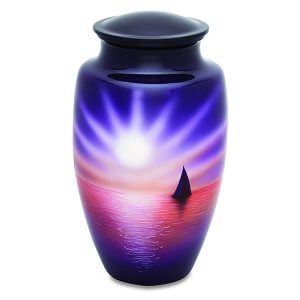
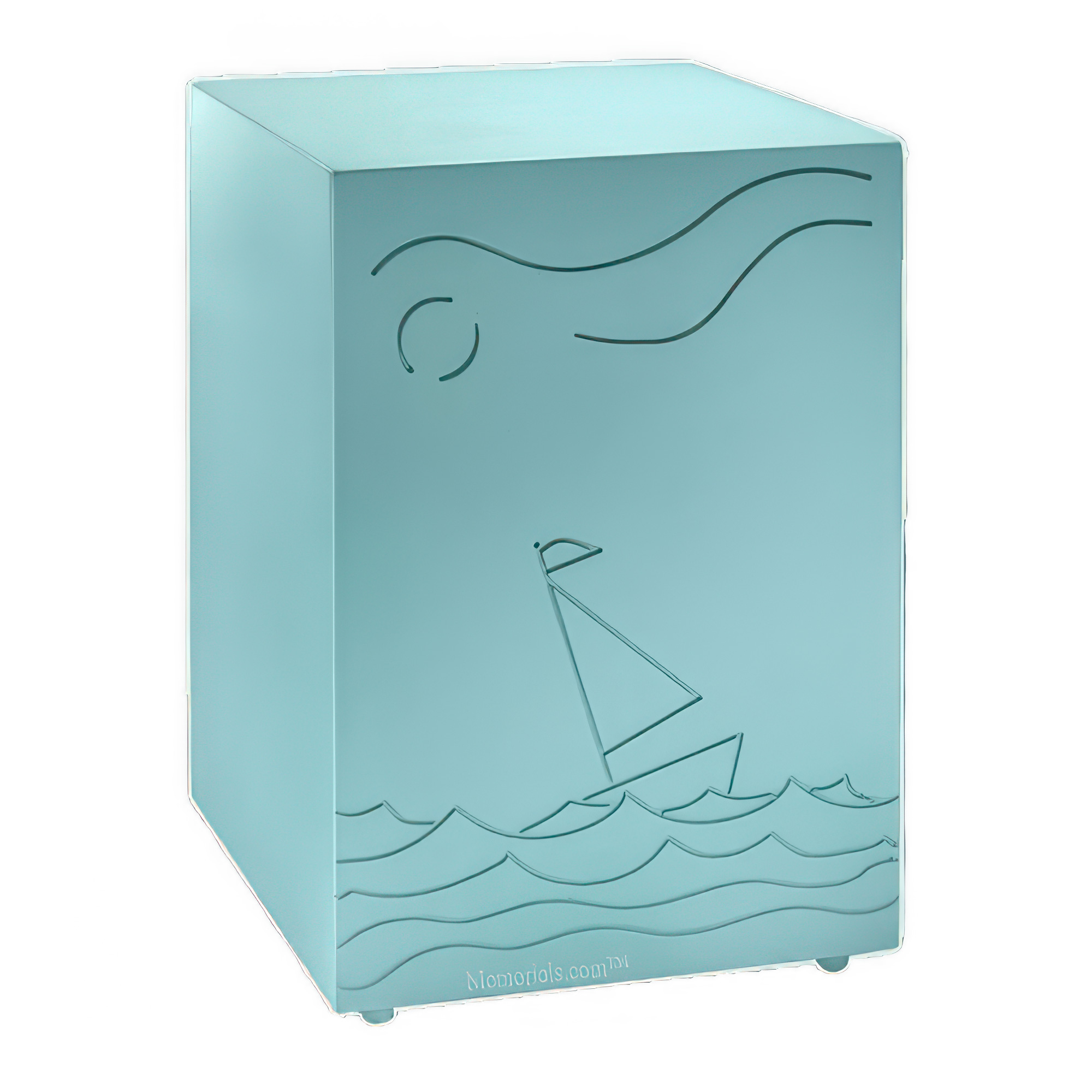
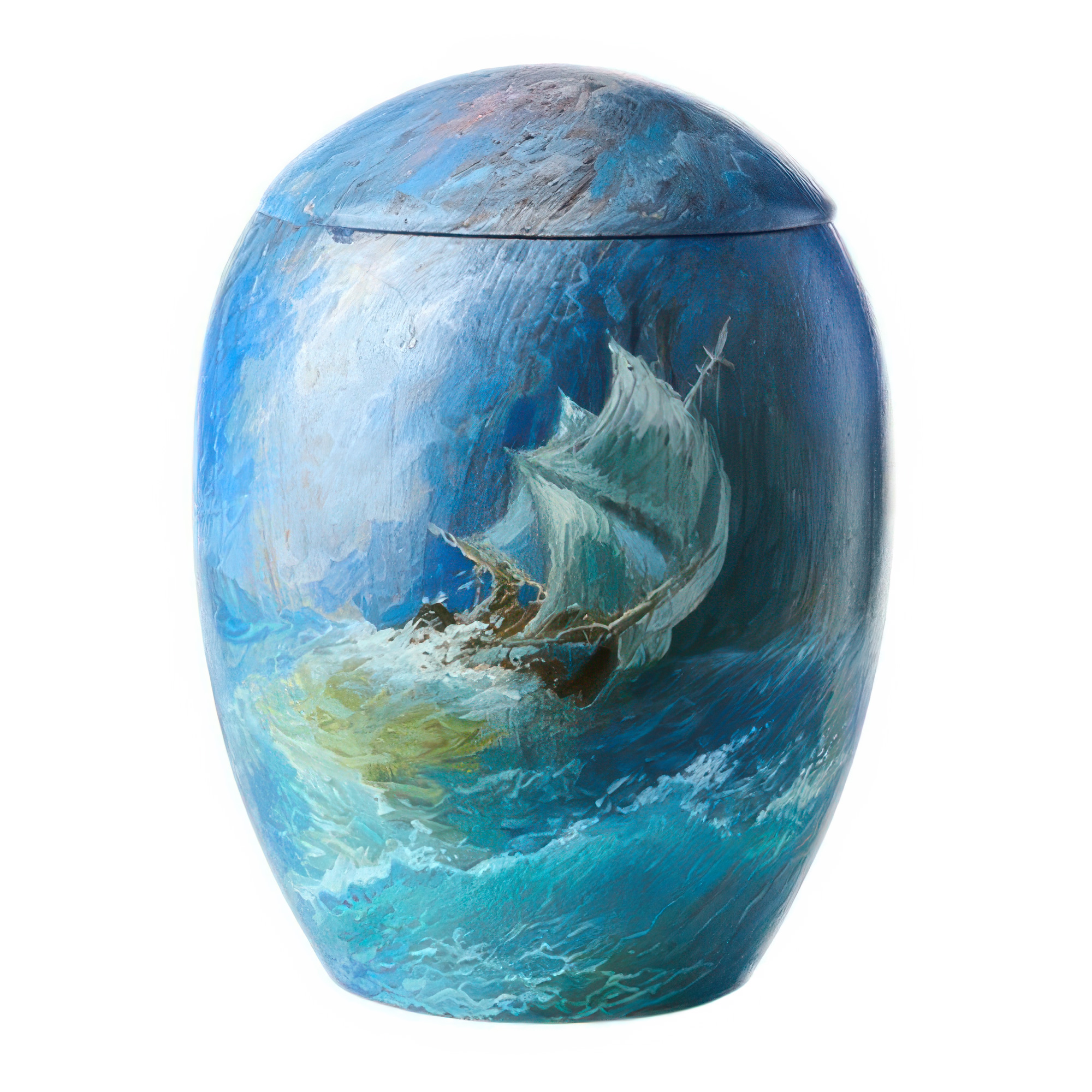
Urns for a Norse-Inspired Farewell
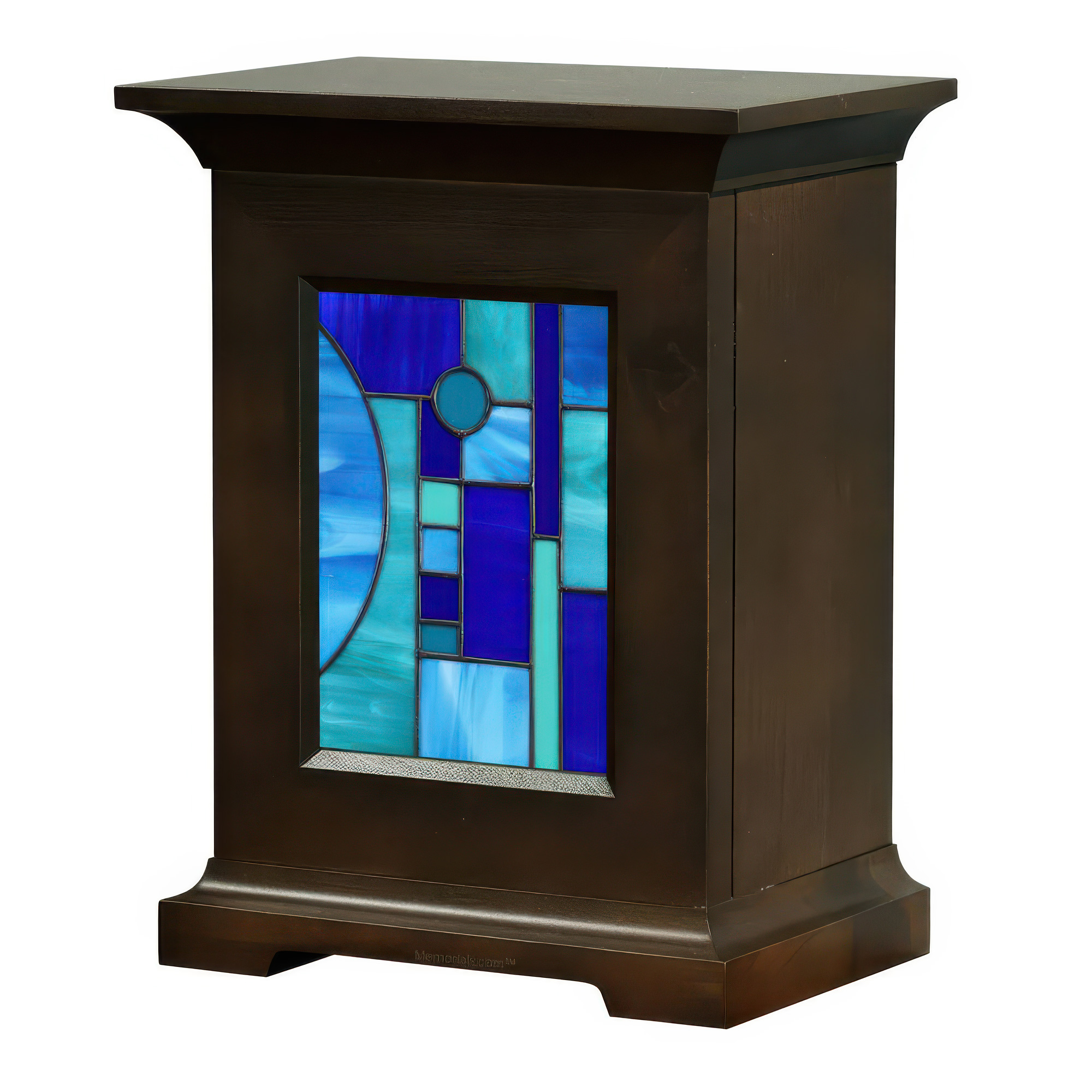
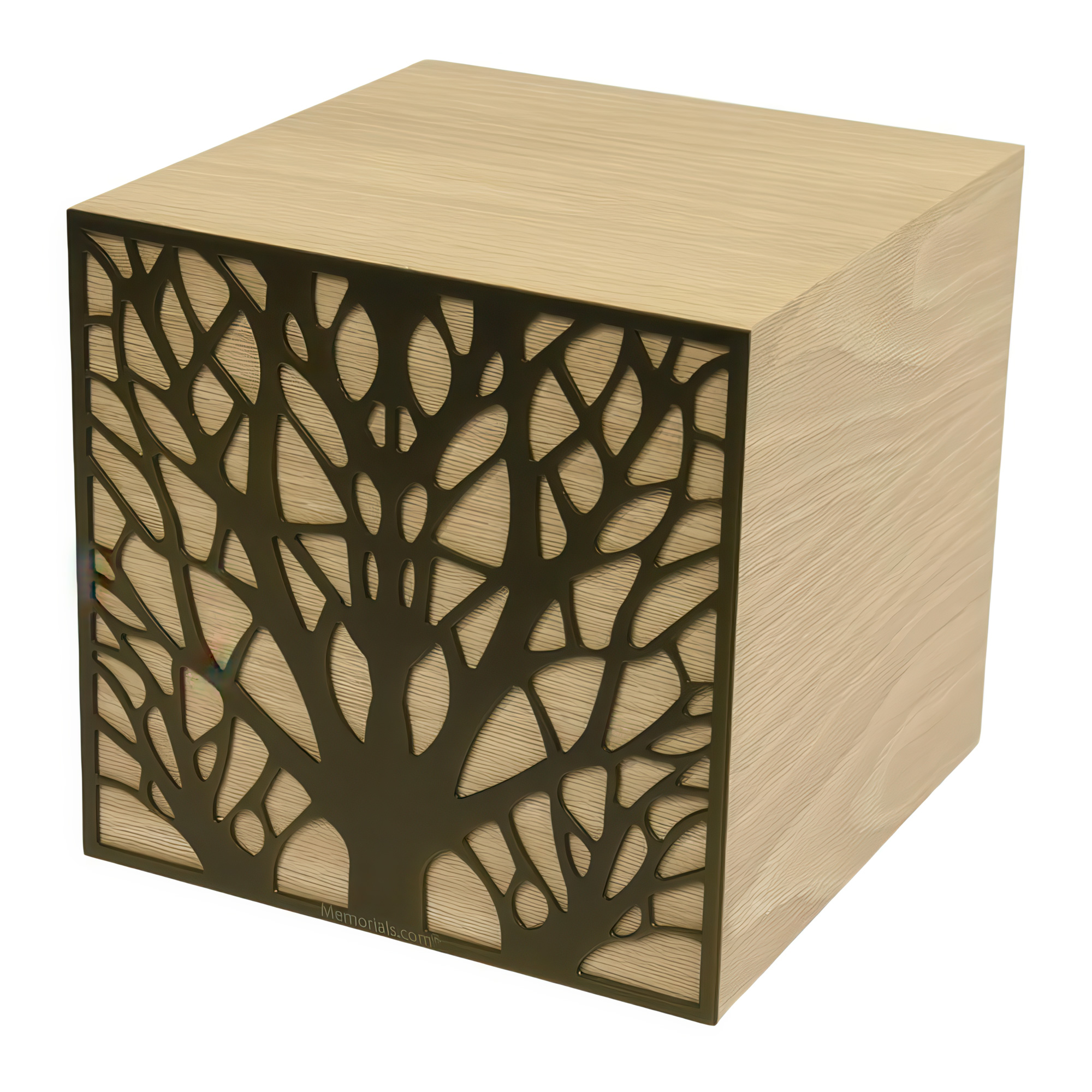
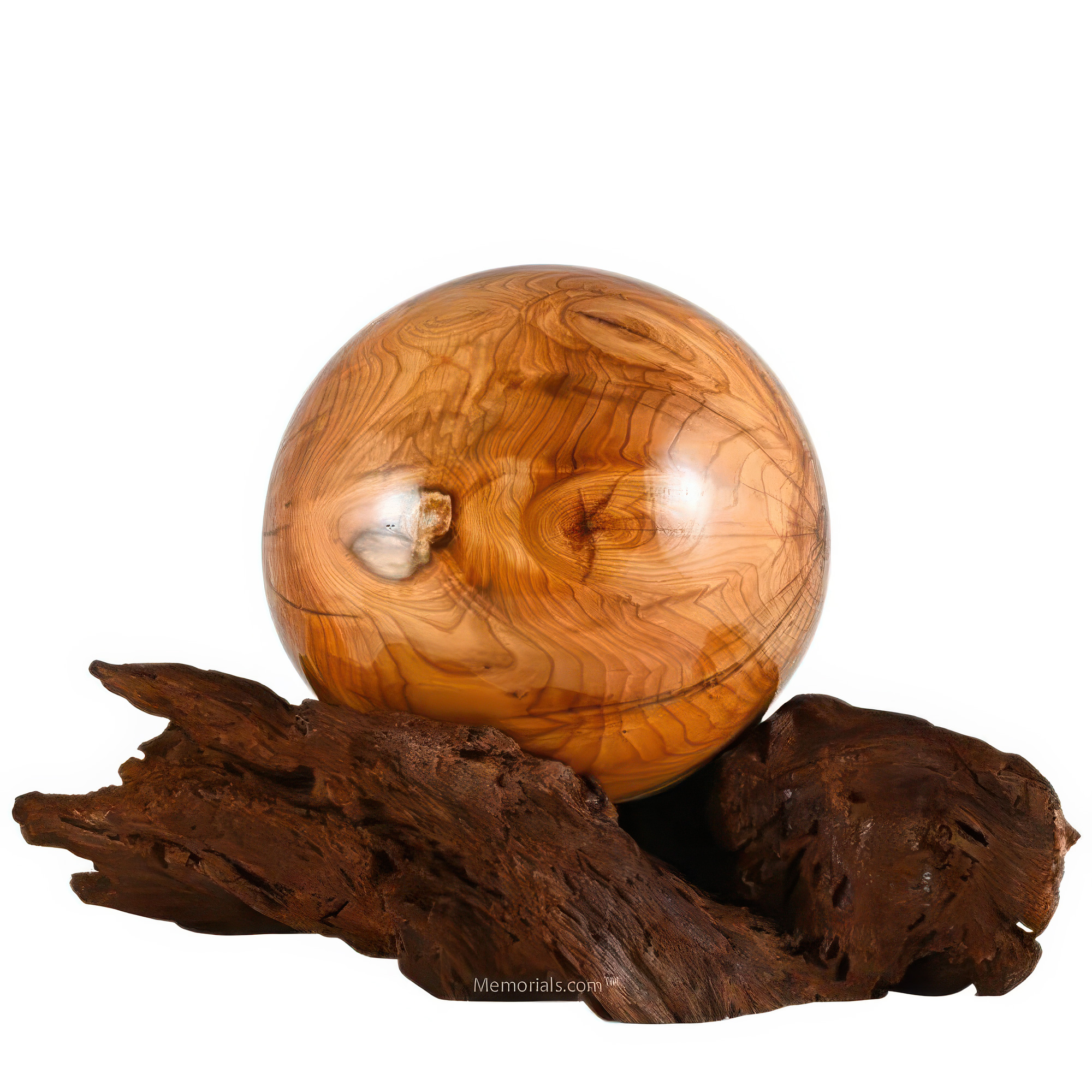
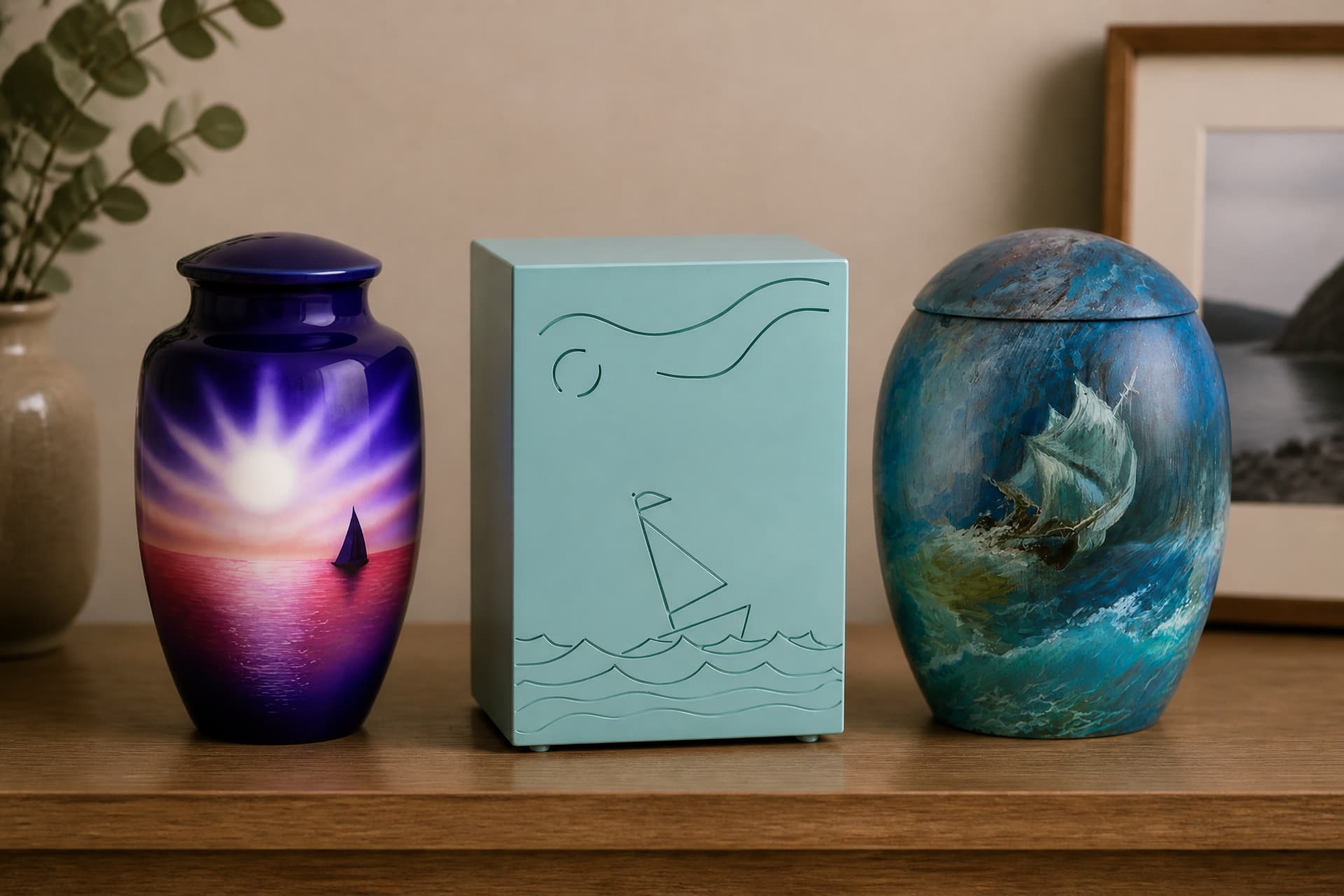
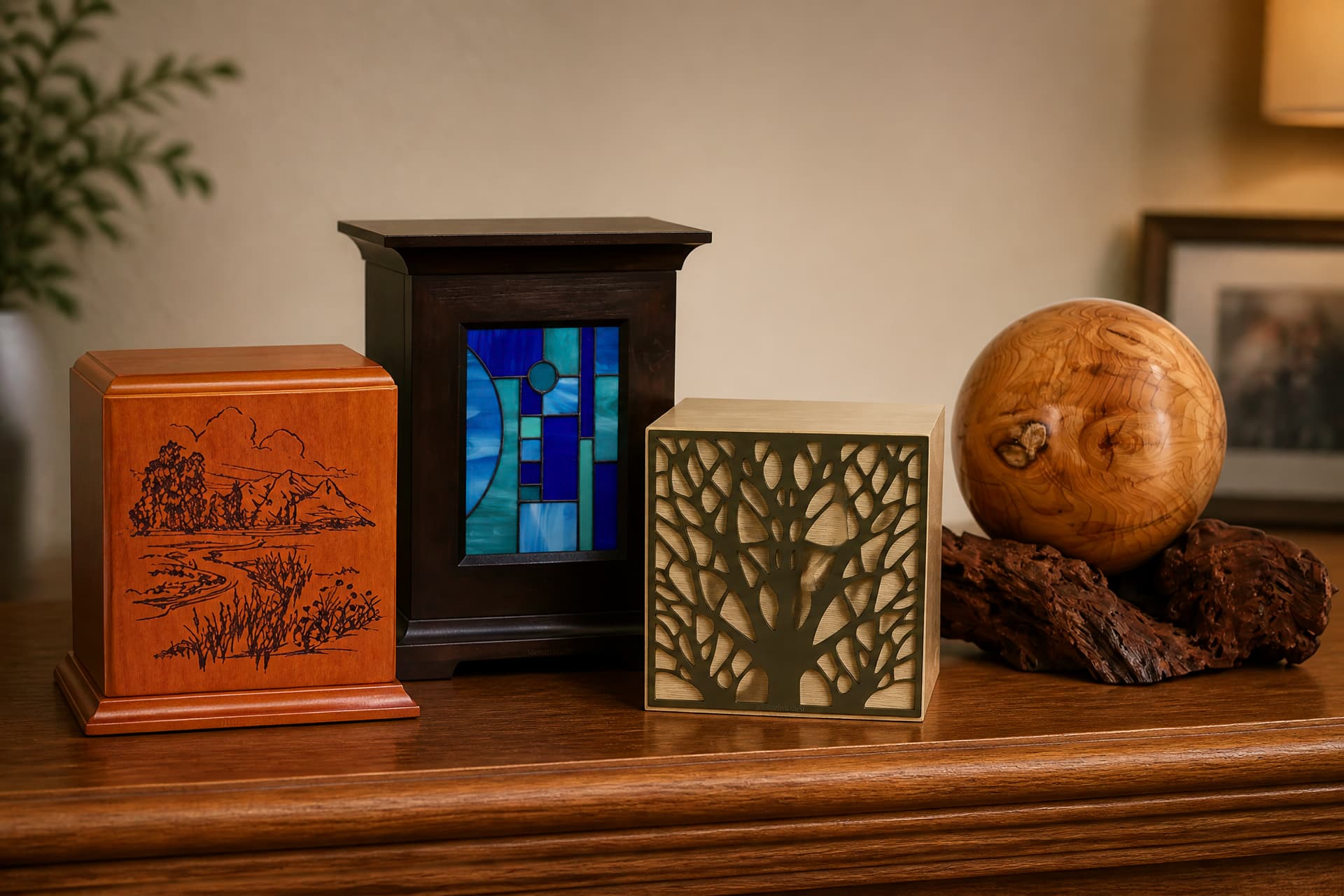
The vessels shown in this article — wood, metal and porcelain
The famous ships were buried, not burned, which is precisely why we still have them.
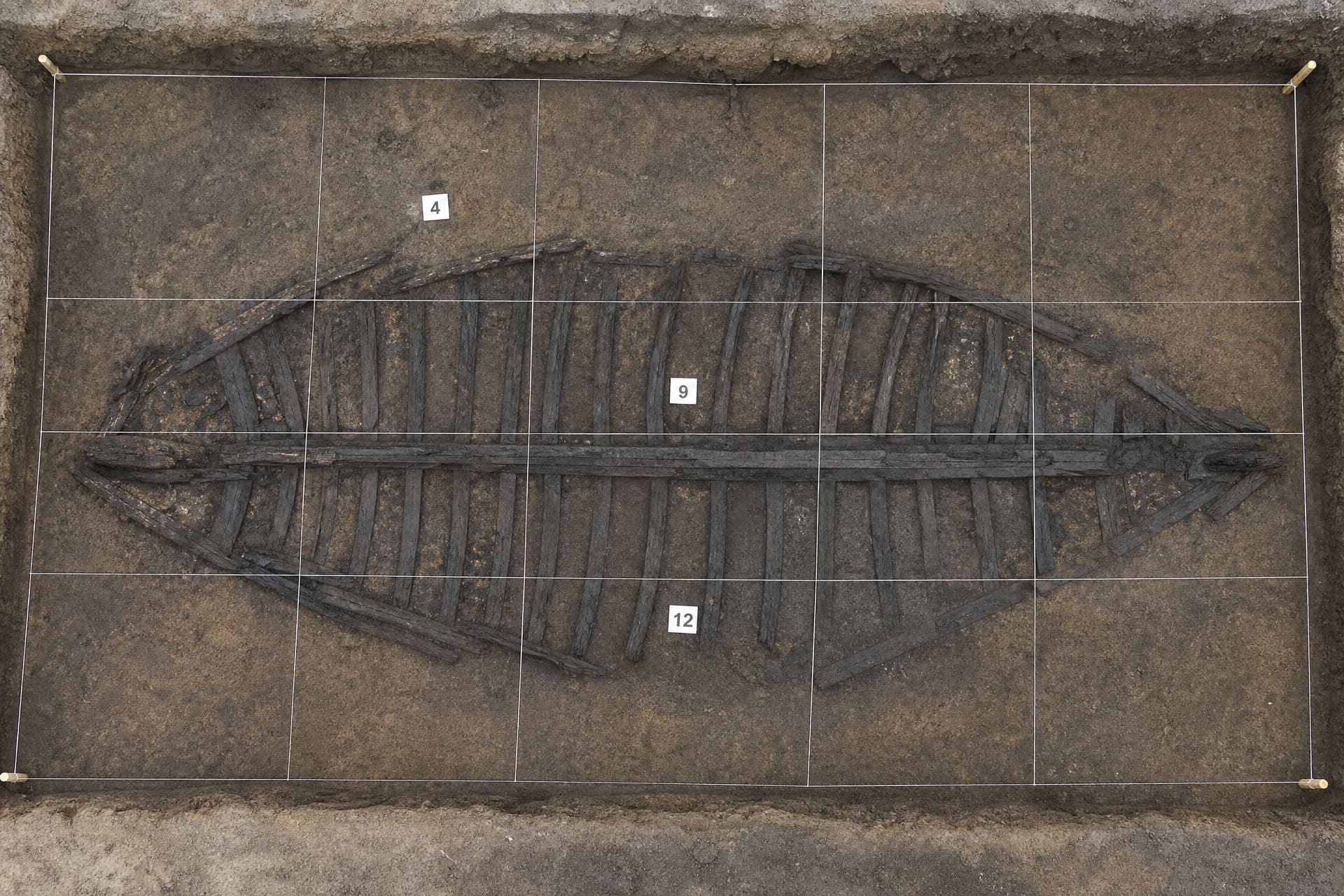
The Oseberg burial in Norway, dated by tree rings to 834, put a seagoing oak ship over seventy feet long into a trench, with two women inside it, and covered the whole thing in turf and blue clay. The clay sealed out air. That is the entire reason a wooden ship from the ninth century survived to be excavated in 1904, along with a wagon, sledges, beds, chests, textiles, tools and the remains of horses. The Gokstad burial, from around 900, is the same idea: a man in a large ship under a mound, with smaller boats, horses and dogs.
Ship burial of that scale was for a very small number of people. Most Viking Age graves are unremarkable — a body or a scatter of cremated bone, a knife, a brooch, a handful of beads, occasionally nothing at all. Between the extremes sits the boat grave, where a small working boat rather than a ship carried the dead. A boat grave is what a prosperous farming family could manage. A ship burial is what a dynasty announces.
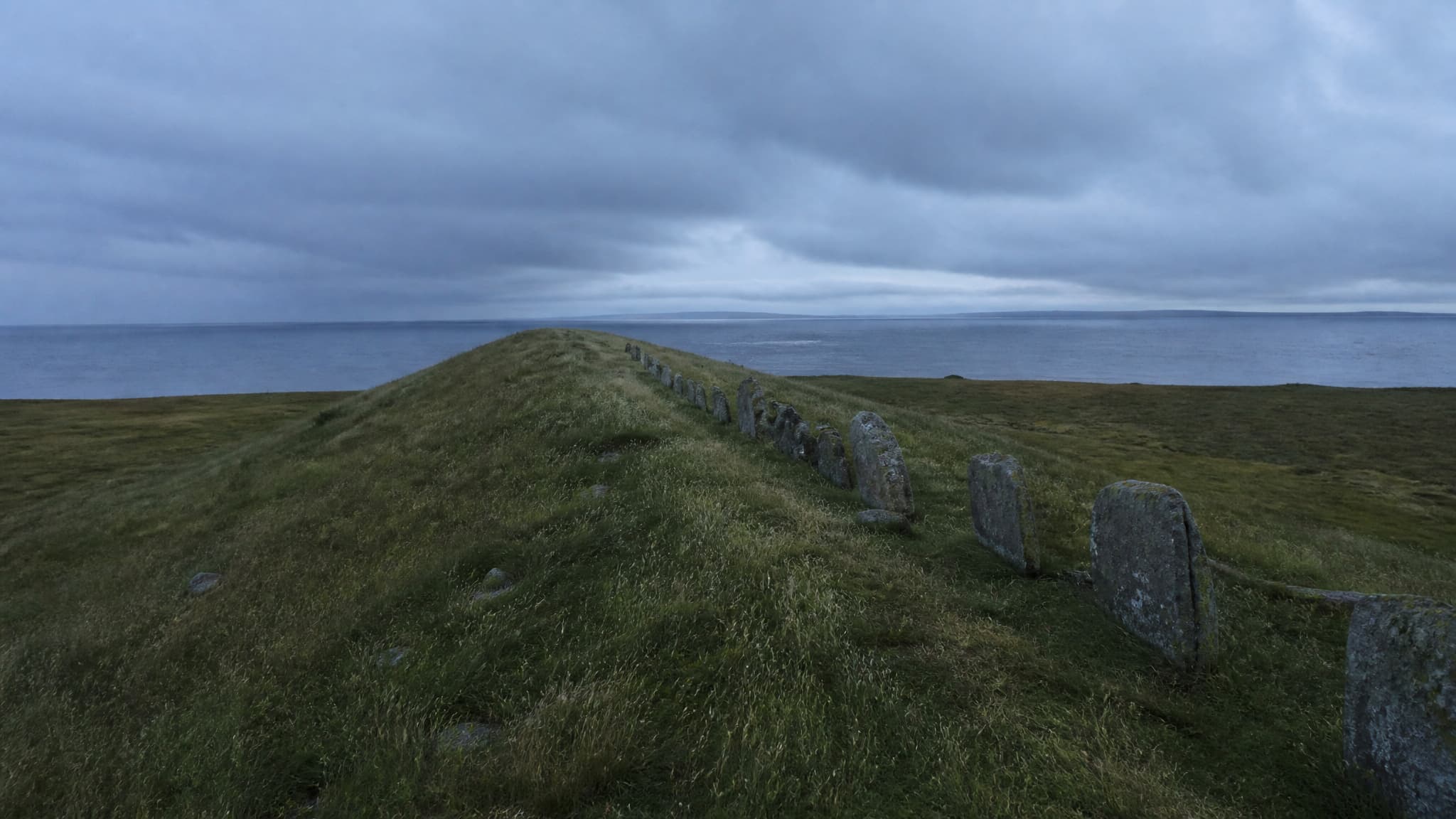
Norse graves are also not confined to Scandinavia. Some of the best-preserved sit in the Northern Isles, where Norse settlement lasted for centuries and left its language in the place names. The Scar boat burial on Sanday in Orkney held a woman, a man and a child in a small boat under a cairn of stones, with a whalebone plaque and a gilded brooch. If you are working through the funeral customs of that part of the world, our guide to Scottish funeral traditions picks up where the Norse layer leaves off.
What survives of a ship burial is usually a stain and a line of rivets. Oseberg and Gokstad are exceptional because wet clay sealed the wood before it could rot.
What Was Buried With Them
Look at a list of grave goods from any well-recorded Norse burial and the striking thing is how practical it is. Weapons and riding gear. Brooches, beads, and the spindle whorls and shears of textile work. Cooking equipment. A comb. Scales and weights for someone who traded. Keys, which in a Norse household signaled who ran it. Food. Horses and dogs.
This is not treasure in the pirate sense. It is equipment. Whoever assembled the grave was assembling a person — the tools of a trade, the marks of a rank, the animals that person rode and worked with. You do not send someone off with a comb, a cooking pot and a saddled horse unless the destination is literal enough to need them.
That instinct is not unique to the Norse, and the parallels are exact enough to be worth noticing. Greek and Roman families placed a coin with the dead to pay the ferryman across the river of the underworld; our article on the obol coin traces that practice and what happened to it. Different currency, same conviction: the dead are going somewhere, the journey has requirements, and it is the living who have to provision it.
The ship itself belongs on the list. It is the largest grave good anyone ever gave.
The Viking afterlife was not one place, and the single most common error in popular writing is to talk as though it were. Norse mythology afterlife beliefs describe several destinations, sorted less by how a person had behaved than by how they died.
Valhalla is Odin's hall, roofed with shields, where the einherjar fight through the day, are healed, and feast through the night, held in reserve for the last battle at Ragnarök. But the sources are explicit that Odin does not get everyone: Freyja takes half of those who fall, to her own field, Fólkvangr. Those who die of sickness or old age — which is nearly everybody — go down to Hel, a realm named for the figure who rules it, described as cold and dim but not as punishment. It is not a hell in the Christian sense; no one is being burned there for anything. And those lost at sea belong to Rán, the sea goddess who draws the drowned into her net.
So did Vikings believe in Valhalla? The poems say so clearly, which is not quite the same as saying every Norse farmer expected to end up there. The Valhalla afterlife that films and video games have made famous was, in the material we actually have, a specialist destination for a specific kind of death — and a hall for warriors is a poor fit for most of the people buried in these cemeteries.
There is a further caveat that honest writing on this subject has to carry. Almost everything readable about Valhalla, Fólkvangr and Hel comes from Iceland in the 1200s: the poems of the Poetic Edda and Snorri Sturluson's Prose Edda, written down by Christian authors more than two centuries after Iceland converted. That does not make them worthless. It makes them a memory of a religion rather than a manual for one, and it explains why the beliefs they preserve are tidier and more systematic than anything the graves suggest.
The hall is the model for the Norse afterlife, not the exception to it. Valhalla is a good winter feast that never ends, which tells you what the people describing it valued.
The Burning Ship, the Flaming Arrow, and Where the Image Came From
No Norse source describes a body sent out to sea in a burning boat. The archaeology does not show it either, and it could not: a ship pushed out and burned leaves nothing to excavate, so the practice would be invisible even if it happened. What we do find is the opposite arrangement — cremation graves containing the burnt iron rivets of a boat, which means a boat was burned on land, with the body, and the ashes and the ironwork stayed put.
The modern picture assembled itself in the nineteenth century out of real ingredients badly combined. Ibn Fadlan supplied a burning ship. Romantic painting supplied the sea: Frank Dicksee's The Funeral of a Viking, exhibited in 1893, put a blazing longship on open water and fixed the image for everyone who came after. Wagner and Victorian medievalism supplied the mood. Then cinema supplied the arrow — the 1958 film The Vikings closes on a ship set alight by archers on the shore, and that shot has been reproduced ever since.
The flaming arrow is the detail worth being blunt about, because it is the one people most often believe. Nothing in the written record mentions it. It is also poor practice: setting a pyre alight from fifty yards with a burning arrow is unreliable, and there is no reason to attempt it when a person with a torch is standing right there. It exists because it looks extraordinary on film, which is a good reason for a film and no reason at all for a funeral.
There is a practical objection too. A seagoing ship was among the most valuable things a Norse community owned — years of labor, scarce oak, iron by the hundredweight. Burning one and losing it to the tide was an act of colossal expenditure. That is exactly why the handful of people who did receive a ship got one, and exactly why almost nobody did.
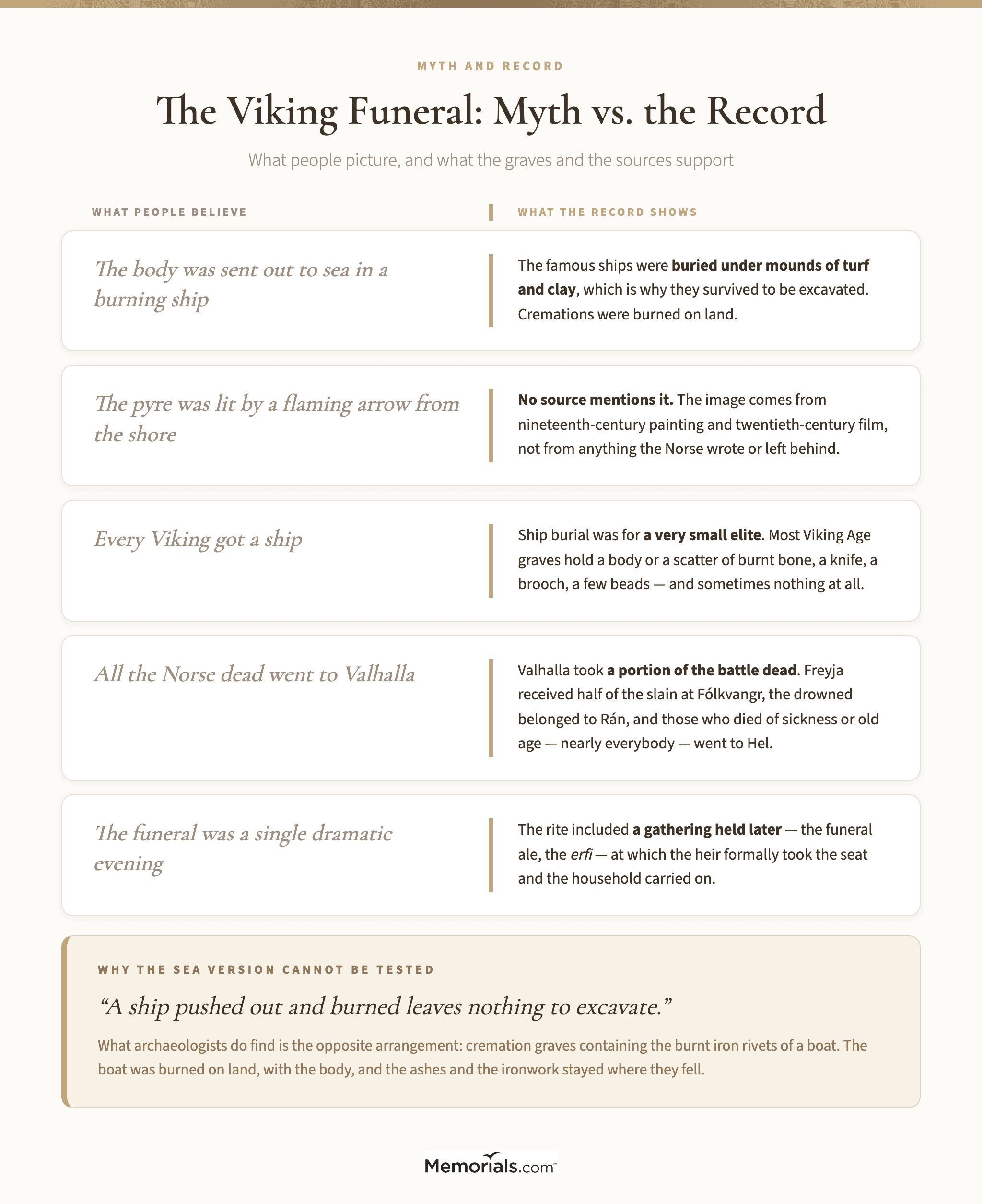
Five beliefs about Norse funerals set against what the graves and the written sources actually support. The burning ship and the flaming arrow are the two that survive almost entirely on artwork and film.
Cremation Then and Now
An open-air cremation is slow and public. It needs a large volume of dry fuel, hours of burning, and someone tending it. What it leaves behind is not powder but bone — fragments, sometimes recognizably shaped, which then have to be gathered by hand. A funeral pyre does not vaporize a person, and neither does anything else.
That is the continuity most people miss when they compare it with a modern crematory. The cremation process today happens in a closed, regulated chamber rather than on a hillside, and the fragments that come out of it are mechanically processed to a uniform texture before the family receives them. The machinery is entirely different. The material is the same material. A Norse family gathering bone from a cooled pyre and an American family collecting a container from a funeral home are performing the same act at different points on the same line.
What genuinely changed is the audience. The pyre was watched. It took most of a day, in the open, in front of everyone who had known the person, and the smoke was visible for miles. Modern cremation is deliberately invisible, happening in a building the family usually never enters. Some of the recent interest in open-air rites is really an argument about that — not about fire, but about whether a death should be witnessed.
That argument shows up wherever the disposal of a body is treated as a statement rather than a logistics problem. Tibetan sky burial is the same reasoning in a landscape with no timber and no soil to dig: the body goes where the belief says the person is going. Norse ship burial says the dead are traveling. Sky burial says the body is an offering and the person has already left. Both are arguments made with a body because there is nothing else to make them with.
Modern cremation urns are the last step of the same sequence, and the most direct inheritance the Norse left us. The clay pot in a Birka grave and a sealed vessel on a shelf in Minnesota are the same object, doing the same job.
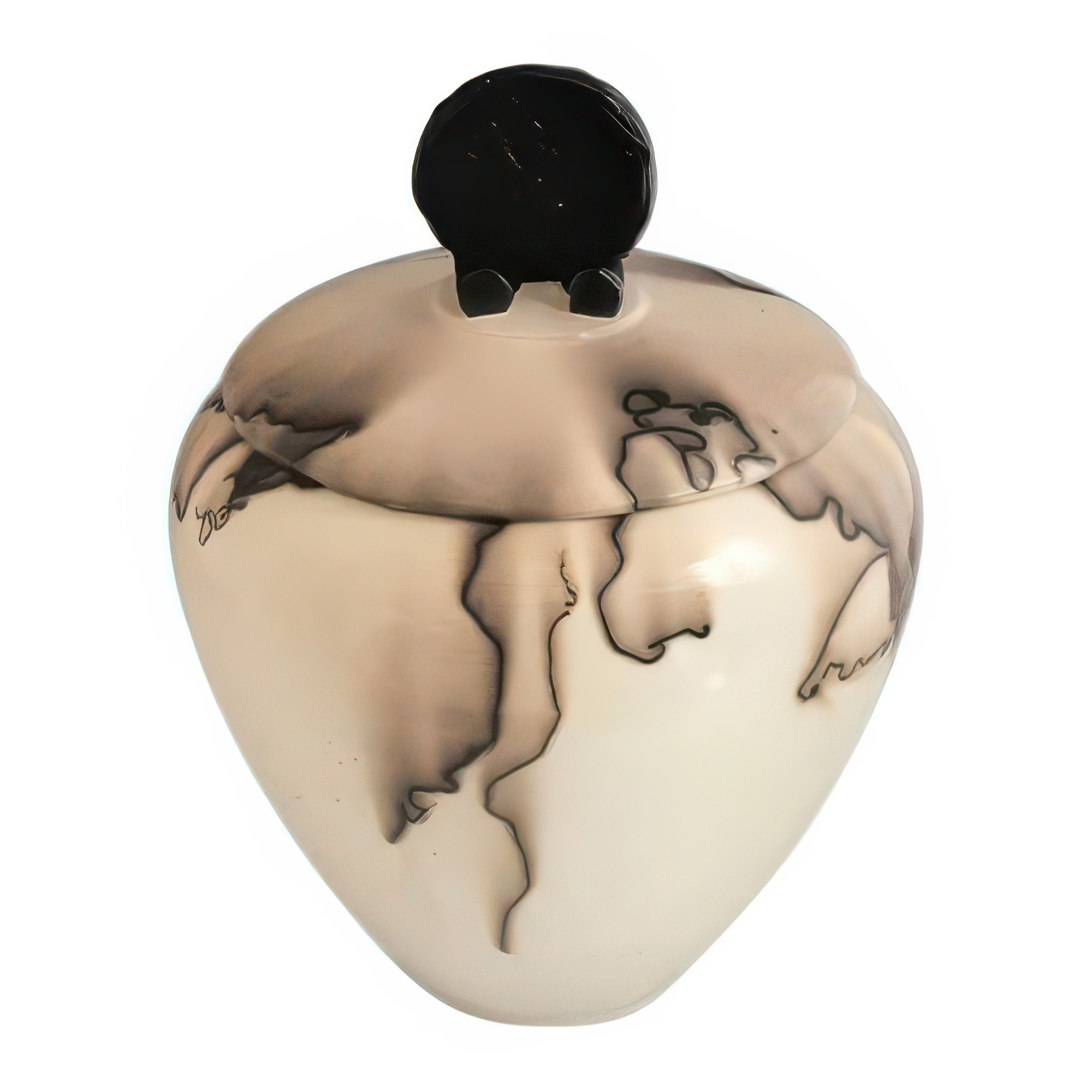
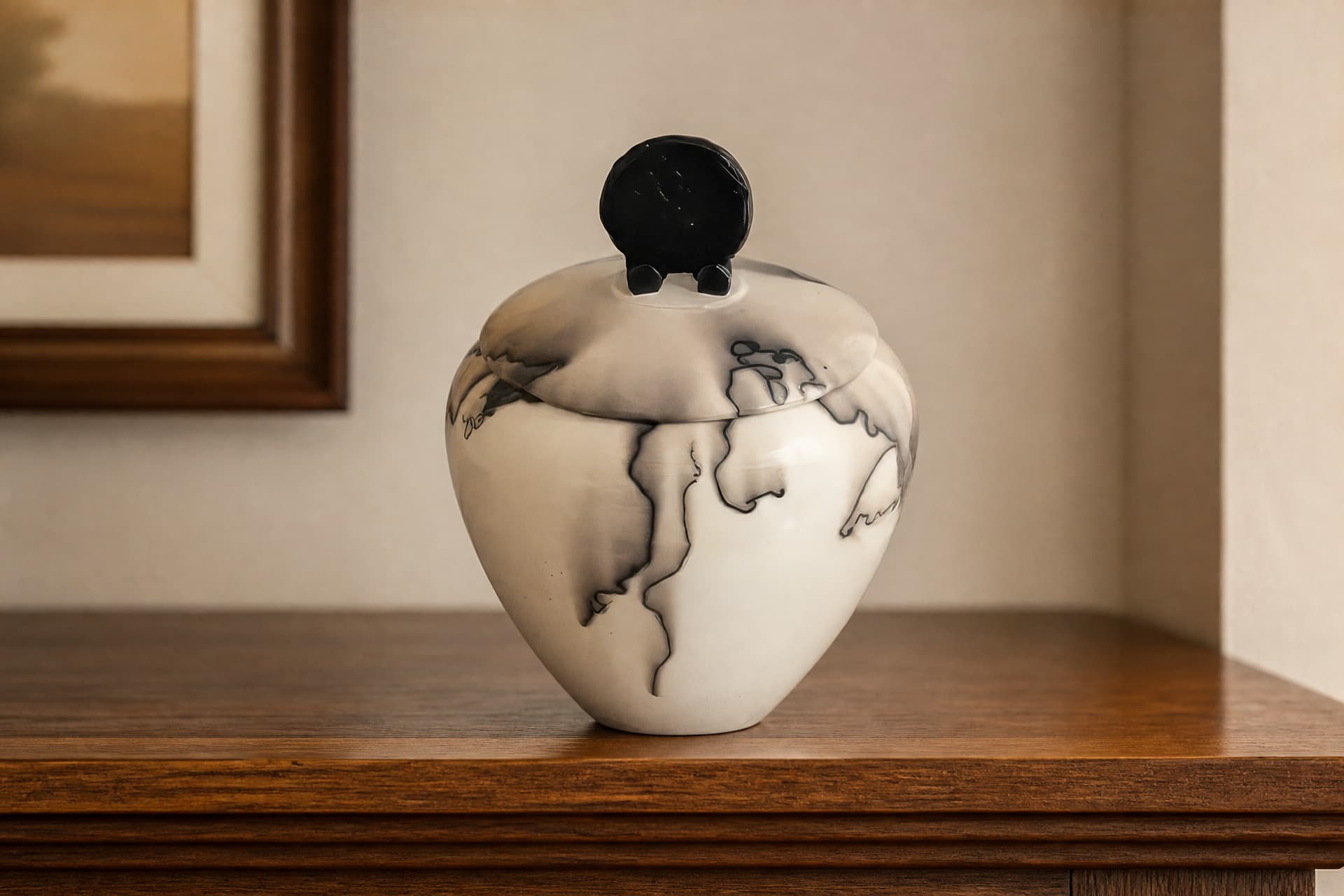
Explicitly Norse memorial pieces are rare, and this one is Norse in its name rather than its decoration: hand-thrown porcelain, marked with horsehair so that no two come out alike. Product shown: Viking Warrior Porcelain Urn.
If Someone in Your Family Has Asked for a Viking Funeral
People say it more often than you would expect, usually half as a joke, and then someone has to answer it seriously. If your father told everyone he wanted to go out like a Viking, the request is more answerable than it sounds — but not in the literal form, and it is worth knowing why before you start calling funeral homes.
The two parts that are out are the two parts from the movie. Burning a body in the open is prohibited in nearly every American jurisdiction, and setting a burning boat adrift raises a separate stack of problems: navigation hazard, open burning, and the simple fact that nobody will sell you a vessel to destroy. The honest answer to is a Viking funeral legal is that the theatrical version is not, and that almost everything the person actually wanted is.
Cremation itself carries straight across. It is the same rite, done indoors, and it is the choice more than half of American families now make. Nothing about a cremation stops you from building the rest of the day around it.
Scattering at sea is closer to the source than most people realize, and it is permitted. Federal rules allow cremated remains to be committed to the ocean at least three nautical miles from shore, with a short report filed afterward; inland waters are governed separately and by state. Our guide to scattering ashes laws covers what applies where, including the permissions people usually forget. If you are scattering from a boat, scattering urns are built for exactly that moment — a controlled opening you can manage one-handed over a rail in wind, rather than a lid somebody has to wrestle with.
If what the person wanted was a vessel going out on the water, that is available too. Biodegradable urns, designed to float briefly and then break down completely in salt water, are the nearest lawful thing to a ship sent out on the tide, and the visual is genuinely close: something carrying the person, moving away from the shore, and not coming back.
For a family who would rather keep the remains, the vessel is where the character of the farewell lives. Among our ceramic urns there is a hand-thrown porcelain piece named for a Viking warrior, decorated with horsehair so that no two are alike — unusual, because most of what looks Viking online is costume merchandise rather than a piece built to hold someone. Wood is the other honest choice here, and closer to the source material than porcelain is.
Then there is the part everybody forgets, and it may be the most authentically Norse option on the list. The Norse held a funeral ale, the erfi, some time after the death rather than on the day of it, and it was the occasion at which the heir formally took the seat and the household continued. A loud, well-fed gathering held a month later, where people tell stories and someone raises a cup, is not a consolation prize. It is the closest thing on offer to what these people actually did.
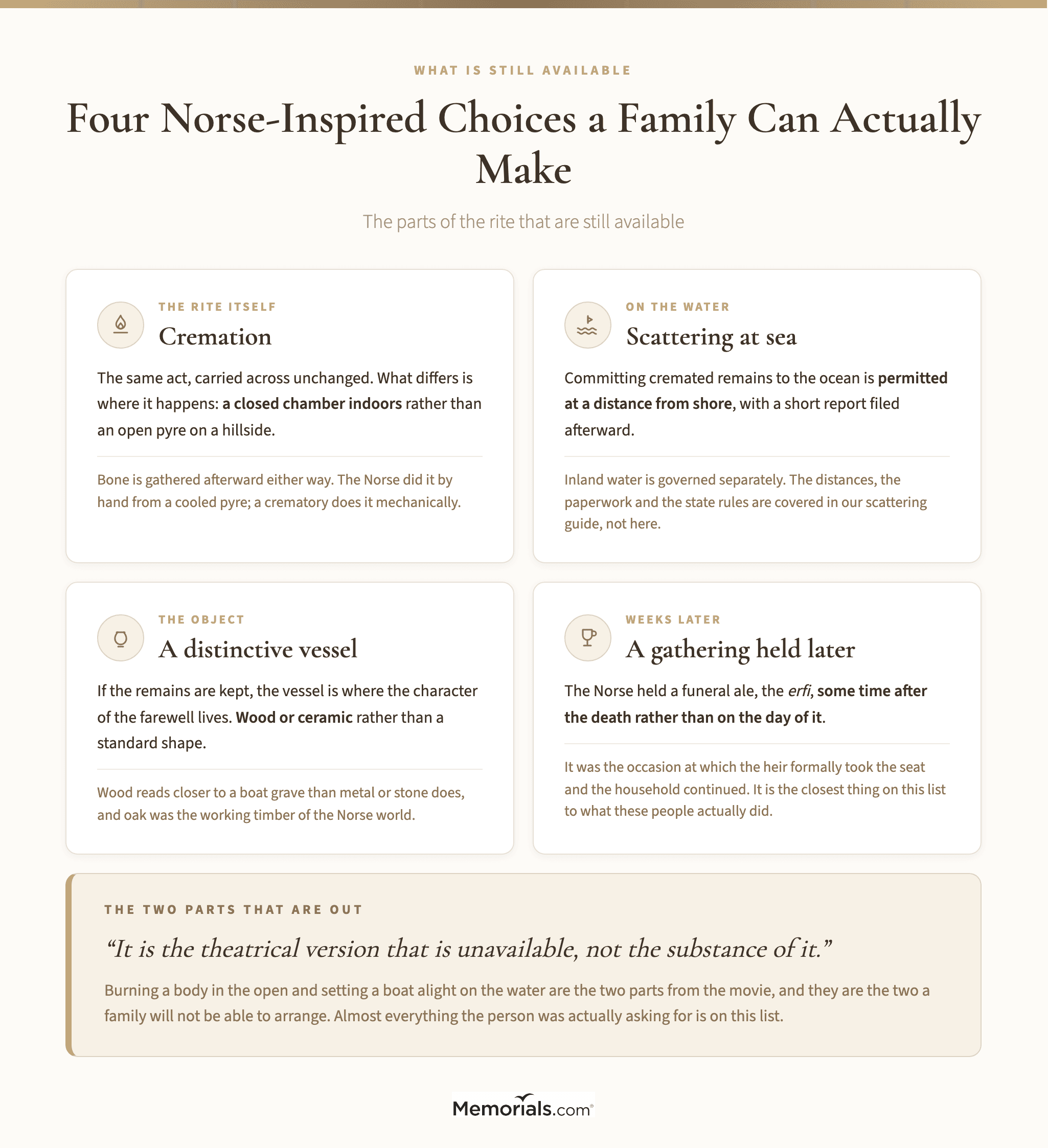
Four choices that carry the shape of a Norse farewell without the parts that are not permitted. The rules governing scattering vary by water and by state, and are covered in the scattering guide rather than here.
The rite as people imagine it collides with two modern rules: open-air cremation is prohibited in almost every American jurisdiction, and deliberately burning a vessel on navigable water is not permitted either. Neither restriction is aimed at the Norse; both are ordinary fire, air quality and navigation law. Our article on the funeral pyre covers where open-air cremation is possible in the United States and under what conditions.
Did Vikings burn their dead?
Sometimes. Cremation and burial were both in use throughout the Viking Age, and which one a community favored depended on region, period and status. Some cemeteries contain both. After a cremation the burnt bone was collected and placed in a container or under a mound, rather than left where the pyre had stood.
Did Vikings believe in Valhalla?
The written sources describe Valhalla in detail, so the belief was real — but it was one destination among several, and reserved for a portion of those who died in battle. Freyja received half of the slain at Fólkvangr, most people went to Hel, and the drowned belonged to Rán. Those sources were also written down in Christian Iceland around two centuries after conversion, which is worth holding in mind.
Is a Viking funeral legal in the US today?
The theatrical version is not, but the substance of it is. Cremation is legal everywhere. Committing cremated remains to the ocean is permitted under federal rules at a set distance from shore, with a report filed afterward, and inland water is regulated by state. What you cannot do is burn a body outdoors without a specific authorization, or set a boat alight and let it go.
Did they really light the ship with a flaming arrow?
No source describes it, and there is no archaeological trace of it. The image comes from nineteenth-century painting and twentieth-century film rather than from anything the Norse wrote or left behind. If a pyre was lit, it was lit by someone standing next to it.
What was buried with a Viking?
Whatever the person used. Weapons and riding equipment, textile tools, cooking gear, combs, keys, scales, food, and in the wealthiest graves animals and a boat or ship. The pattern across thousands of graves is equipment rather than valuables, which is one of the strongest indications that the journey was understood literally.
What a Viking Funeral Was Really For
Strip away the arrow and the burning hull and what is left is a set of decisions any family would recognize. These people chose a form of disposal that matched what they believed. They sent the dead with the things that identified them. They marked the place with something that would still be visible in a generation. Then they gathered, ate, drank and formally carried on.
That is not a historical curiosity. It is a description of what a funeral is still for. The Norse simply did it with more conviction and better props than most cultures manage, and they left the mounds to prove it.
If someone in your family has asked for this, the useful question is not how close you can get to the movie. It is which part of it they meant — the fire, the water, the ship, or the gathering — because each of those has a modern answer, and the answers combine. Families who want the vessel to say something specific usually start with unique urns rather than with a standard shape, for the same reason the Norse buried a ship: what you put someone in is a statement about who they were.