🏬Supersize Online Funeral Retailer🪦1000's of Headstones⚱️Over 10,000 Cremation Urns⚰️Caskets Overnight Delivery🛒Funeral & Memorial Superstore🚚FREE Shipping on ALL Orders👨👩👧👦Helping Families for over 20 Years💰Lowest Price Guarantee🏬Supersize Online Funeral Retailer🪦1000's of Headstones⚱️Over 10,000 Cremation Urns⚰️Caskets Overnight Delivery🛒Funeral & Memorial Superstore🚚FREE Shipping on ALL Orders👨👩👧👦Helping Families for over 20 Years💰Lowest Price Guarantee
🏬Supersize Online Funeral Retailer🪦1000's of Headstones⚱️Over 10,000 Cremation Urns⚰️Caskets Overnight Delivery🛒Funeral & Memorial Superstore🚚FREE Shipping on ALL Orders👨👩👧👦Helping Families for over 20 Years💰Lowest Price Guarantee🏬Supersize Online Funeral Retailer🪦1000's of Headstones⚱️Over 10,000 Cremation Urns⚰️Caskets Overnight Delivery🛒Funeral & Memorial Superstore🚚FREE Shipping on ALL Orders👨👩👧👦Helping Families for over 20 Years💰Lowest Price Guarantee
A funeral pyre is a structure of stacked wood on which a body is cremated in the open air, outdoors, in front of the people who came to say goodbye. There is no chamber, no door and no machinery. The plain answer to what is a funeral pyre is a fire built for one purpose and tended by the people who loved the person on it, and it is the oldest funeral rite still in daily use anywhere in the world.
Most readers arrive here with one of two questions — what a pyre actually is, or whether they are allowed to have one — and this page answers them in that order. It sits alongside the rest of our funeral traditions guide, which covers how different faiths and cultures carry out a funeral.
What a Funeral Pyre Is
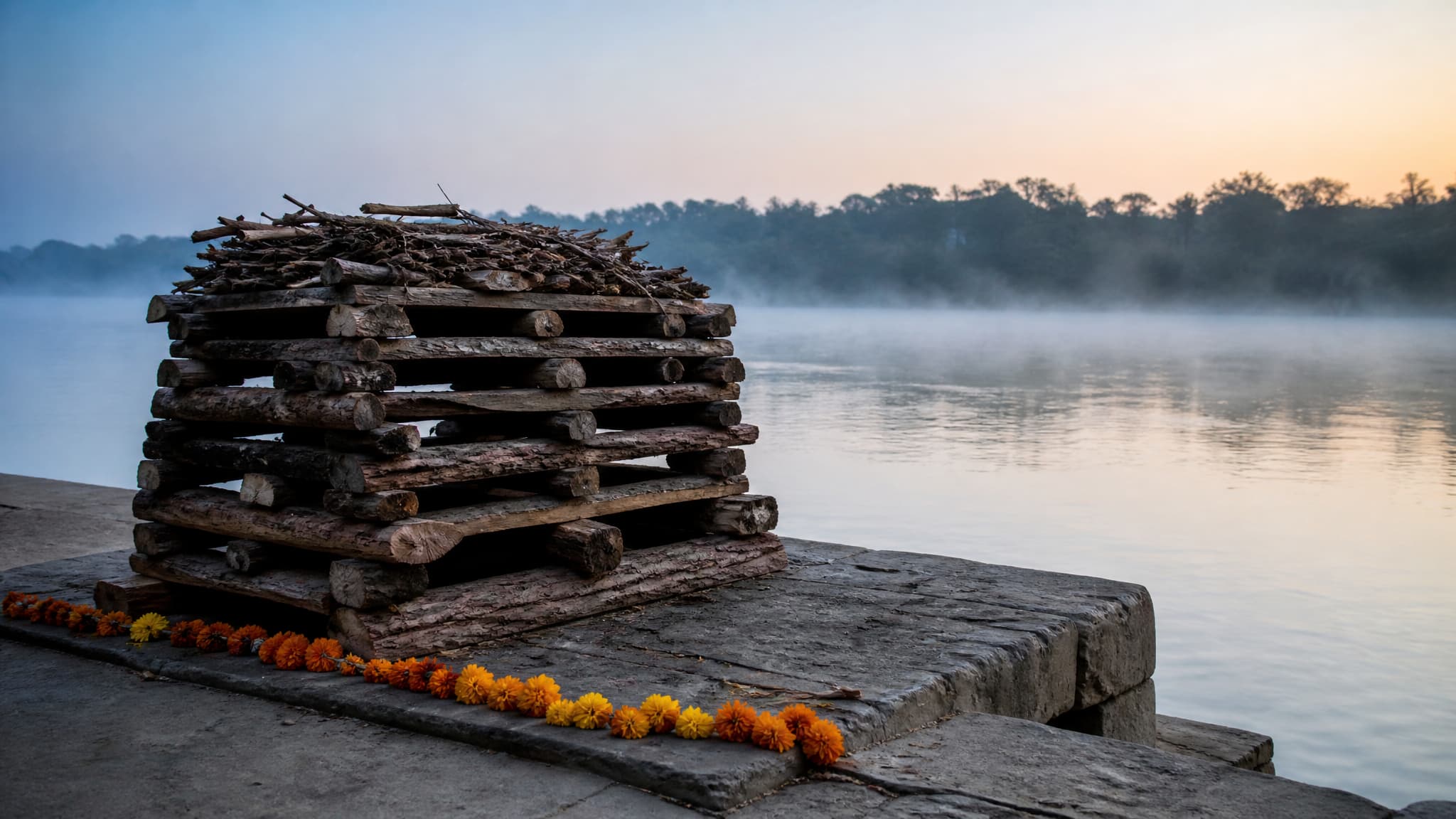
The funeral pyre meaning recorded in dictionaries is narrow and physical: the wood, not the ceremony. A pyre is the built structure — heavy logs laid in a crossed lattice so air can move through the stack, lighter wood and kindling above them, and a platform or a prepared patch of ground underneath. The body rests on top, usually wrapped in cloth rather than enclosed in anything, often still on the bier that carried it there. Everything around the fire — the prayers, the circling, the lighting itself — is the funeral. The pyre is the object.
The word is often typed funeral pire; the spelling is pyre, from the Greek pura, meaning fire. Older English writing uses "funeral pile" for the same thing, which is why the phrase turns up in translations of Homer and in nineteenth-century travel accounts of India.
A pyre funeral is not a separate legal or religious category. It is a cremation, carried out with wood and open air instead of gas and a lined chamber, and every tradition that uses one treats it as the cremation rather than as a spectacle attached to one. Where the word is used loosely — a bonfire on a beach, a boat set alight offshore — you are almost always looking at fiction rather than at practice.
The place set aside for it is a cremation ground: in South Asia usually a walled site or a stretch of riverbank, with attendants who build the pyre, manage the fire and gather what is left. Nothing about the rite is improvised, and nothing about it happens out of sight. The openness is the point of it.
How a Pyre Cremation Actually Works
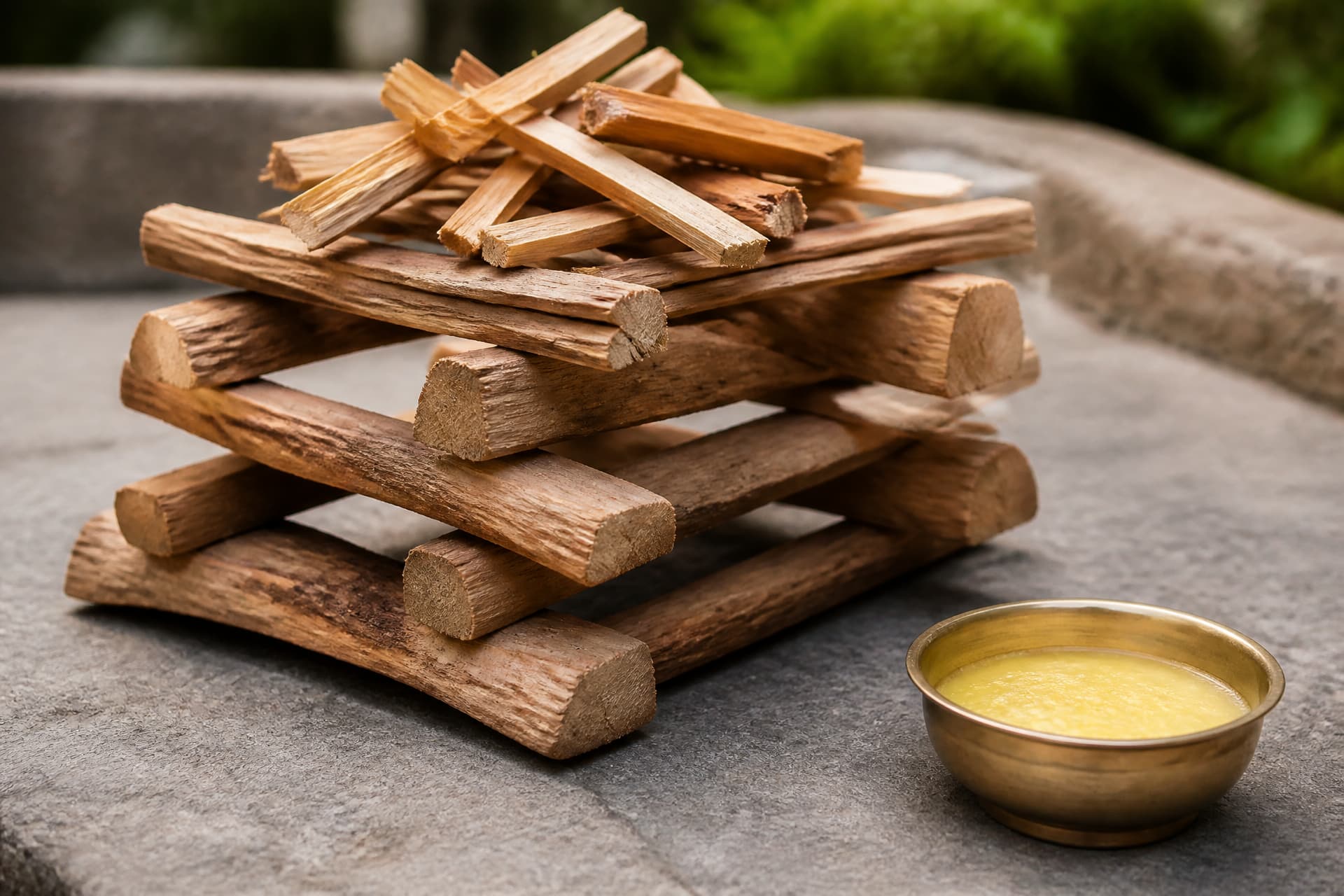
A cremation pyre is built rather than delivered. The base is a platform of stone, brick or packed earth. Heavy split hardwood goes down first, crossed so that air moves up through the stack, then lighter wood, then kindling. Where a family can afford it, sandalwood is added for its scent, and clarified butter — ghee — is poured over the whole structure, an accelerant and an offering at once. The quantity of wood involved is substantial; this is a fire measured in hundreds of pounds of fuel, not in armloads.
A pyre cremation is also slow. A modern crematory runs a body through a lined chamber, called a retort, at roughly 1,400 to 1,800°F for something in the range of an hour and a half to three hours. An open fire burns cooler, longer and far less evenly than that, so attendants tend it throughout — adding wood, repositioning the stack as it settles and collapses. The work takes most of a day, and in most traditions the family stays for it.
That is the largest practical difference from the cremation process an American family will recognize. A crematory operator loads a chamber and closes a door; the family, if they are present at all, watches from a room. At a pyre, a designated relative lights the fire, and the mourners stand at the pyre-side for hours while it burns.
What comes back to the family is different too. A crematory returns bone fragments that have been processed — cremulated — into the uniform gray powder people picture when they hear the word ashes. A pyre leaves larger, more recognizable pieces of calcined bone mixed with wood ash, gathered by hand once the fire has cooled, often on the following morning.
It should be said plainly that this is not something a family builds in a backyard. It needs a prepared site, a great deal of fuel, people who have done it many times, and — in the very small number of American places where it happens at all — a permit and an organization that holds it. Where open-air cremation is available, it is run by a body that does it repeatedly, not by relatives working from instructions.
The stack is built so air can move through it — heavy split wood crossed at the base, lighter wood and kindling above, and ghee poured over the whole of it.
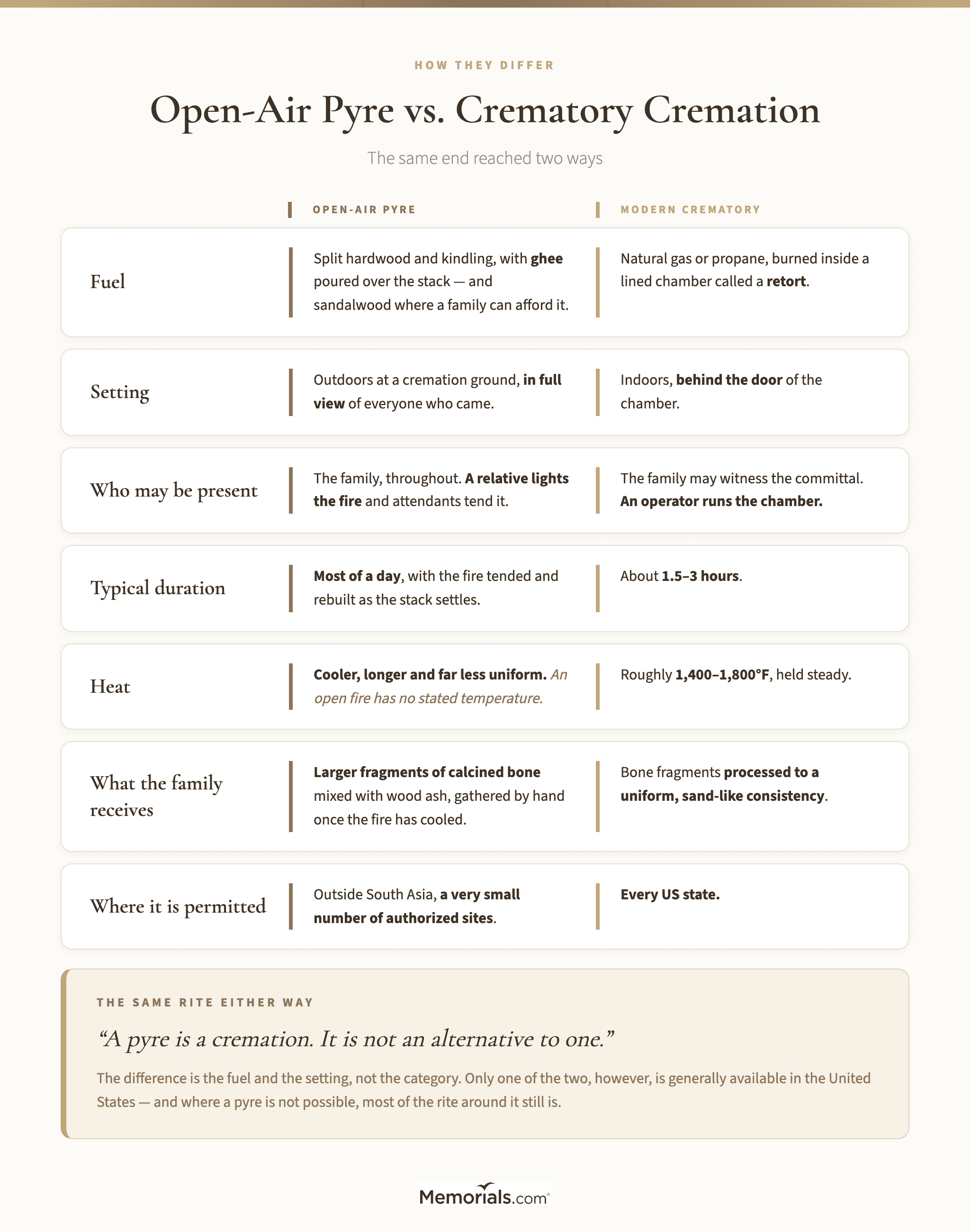
An open-air pyre and a crematory reach the same end by very different means: wood and open air against a gas-fired chamber, most of a day against a few hours, a fire the family tends against one behind a door — and only one of the two is generally available in the United States.
Are Funeral Pyres Legal in the United States?
In almost all of the country, no. Readers usually phrase the question as are funeral pyres legal in the US, and the accurate answer is that no state offers open-air cremation as a general option. A very small number of sites operate under specific local authorization; outside those, it is not available, and a funeral home cannot arrange one for you.
No single federal law bans it, which is why the answer is often given more vaguely than it needs to be. Disposition of a body is governed by state health codes, and those codes describe cremation as something that takes place in a licensed crematory. Over the top of that sit rules on open burning, written by states and counties under the framework of the Clean Air Act, which treat an uncontained fire producing particulate emissions as something to be permitted or prohibited rather than assumed. Zoning decides what a piece of land may be used for. Funeral director licensing decides who may take custody of a body at all. A pyre has to clear every one of those, and it is usually the burning rules and the zoning that stop it.
The emissions question is not a technicality invented to be obstructive. A crematory has a stack, a secondary combustion chamber and monitoring; an open fire has none of that, and the smoke goes wherever the wind takes it. If you want the fuller version of that argument, our page on the environmental impact of cremation sets out what flame cremation actually emits and how it compares with the alternatives.
The documented American exception is Crestone, Colorado, where a community open-air cremation site operates under local authorization and serves the residents of that area. It exists because a small town, a receptive county and a nonprofit willing to run the site all lined up at once. It is not a service that anyone can travel to and book, and it is cited so often precisely because there is so little else to cite.
None of the ordinary paperwork goes away either. A death certificate and a disposition permit are required for any final disposition, whatever form it takes. If you are weighing this seriously, the two offices that can actually answer for your situation are your state health department and your county — not a page like this one, because the rules differ by state, by county and sometimes by the individual site.
Every final disposition needs a death certificate and a disposition permit. Your county office and your state health department are the two places that can say what is possible where you live.
Why a Viking-Style Funeral Is Not an Option
Is a Viking funeral legal anywhere in the United States? No, and it fails on two separate counts rather than one. So why are Viking funerals illegal here? Burning a body on a boat set adrift is an open-air cremation, which the rules above already cover, and it is also a disposal of human remains into open water, which is regulated separately. Cremated ashes may be scattered at sea under federal rules, at a set distance from shore. A body is a different matter, and a burning vessel abandoned in a shipping channel adds the Coast Guard to the list of people with an interest in it.
This is also the answer for anyone searching for a funeral pyre on water. The image is a powerful one and it is mostly literary: what the archaeology actually shows is ship burial, a vessel buried in the ground or covered by a mound, rather than the flaming send-off of films and television. Our page on the viking funeral covers what Norse farewells involved and where the myth came from.
Where Open-Air Cremation Is Everyday Practice
For a very large share of the world's population, an open-air cremation is simply what a funeral is. In India, Nepal and Bali, and among Hindu, Sikh and Jain communities elsewhere, the pyre is the ordinary rite, carried out at dedicated cremation grounds under municipal oversight. Practice varies enormously — by region, community, language and family — and any short description of it, this one included, is a summary of something with a great many local forms.
In the Hindu rite, cremation is antyesti, the last of the samskaras that mark a life, and it is understood to release the soul from the body rather than to dispose of remains. Our guide to Hindu funeral traditions sets out the full sequence. The best-known cremation grounds sit on rivers: Manikarnika Ghat at Varanasi on the Ganges, and Pashupatinath in Kathmandu on the Bagmati, where pyres are built on stone steps at the water's edge and the rite that follows the fire is a few paces away rather than a journey. In Bali, Ngaben cremations are public, carefully planned events, sometimes shared between several families at once. Cremation is the usual rite across much of Buddhist Asia as well, though the ceremony around it differs a great deal from place to place — Buddhist funeral customs covers that ground.
One historical practice is often raised alongside the pyre, and it is worth naming once rather than leaving to rumor. Sati, the immolation of a widow on her husband's pyre, was outlawed in India in the nineteenth century and criminalized again by statute in 1987. It is not a living part of the rite, and it belongs to the history of the practice rather than to any description of what happens at a cremation ground today.
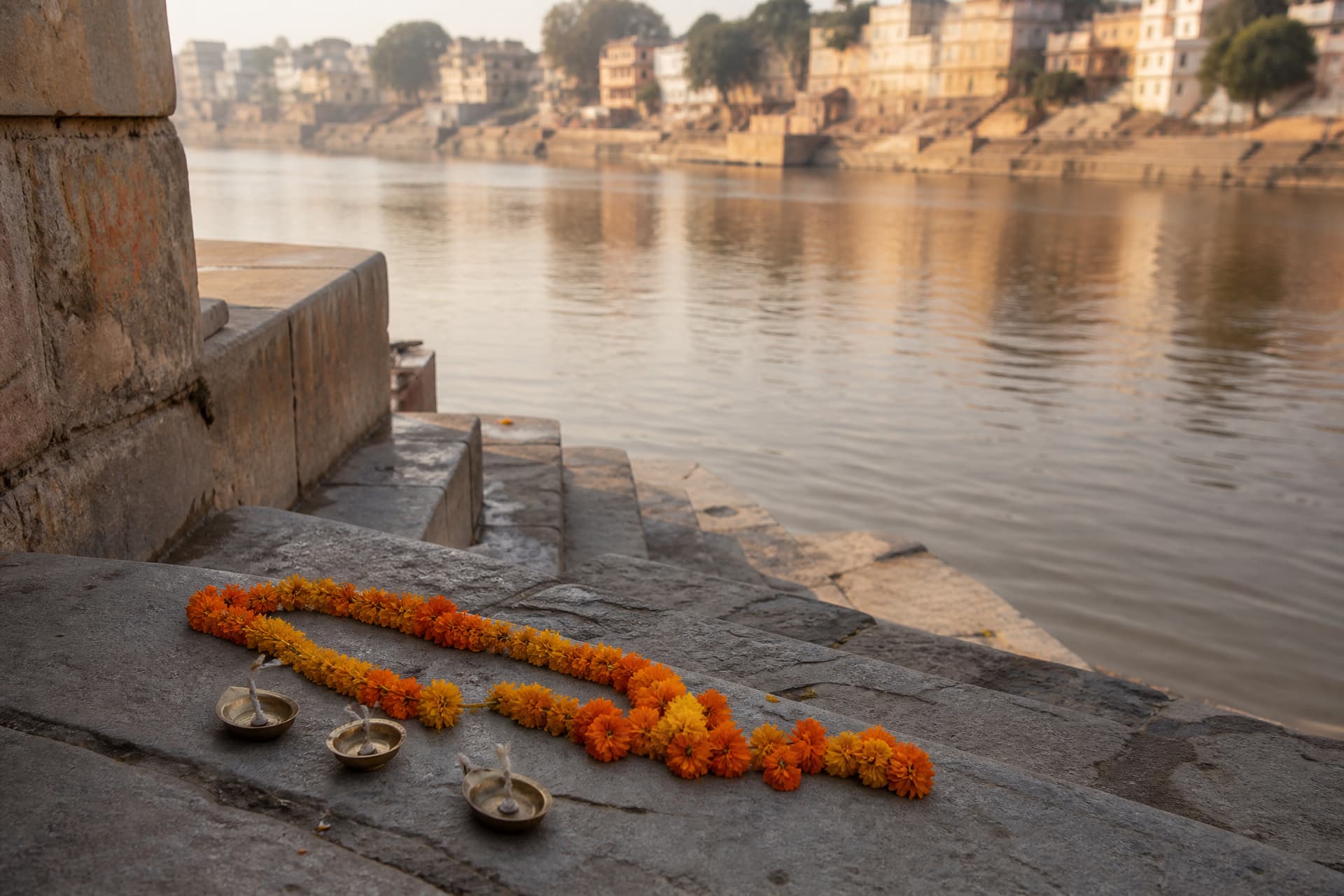
At riverside cremation grounds the water is part of the rite rather than a separate errand — the ashes go in within sight of where the fire was built.
Traditions That Take the Opposite View
It sharpens the picture to look at the traditions that reject cremation outright. Orthodox Judaism and Islam both require burial, usually quickly, and both prepare the body by washing rather than by fire. In the Jewish rite that preparation is tahara, the ritual washing and dressing carried out by a burial society; the Islamic equivalent, ghusl, precedes the janazah prayer. In both, the body goes into the earth in a plain shroud, and the plainness is deliberate.
Elsewhere the contrast is not fire against earth but something else entirely. A Tibetan sky burial returns the body to vultures on an open hillside — another open-air rite that Western regulation has no category for, and another reminder that "cremation or burial" is a narrower set of choices than the world actually uses.
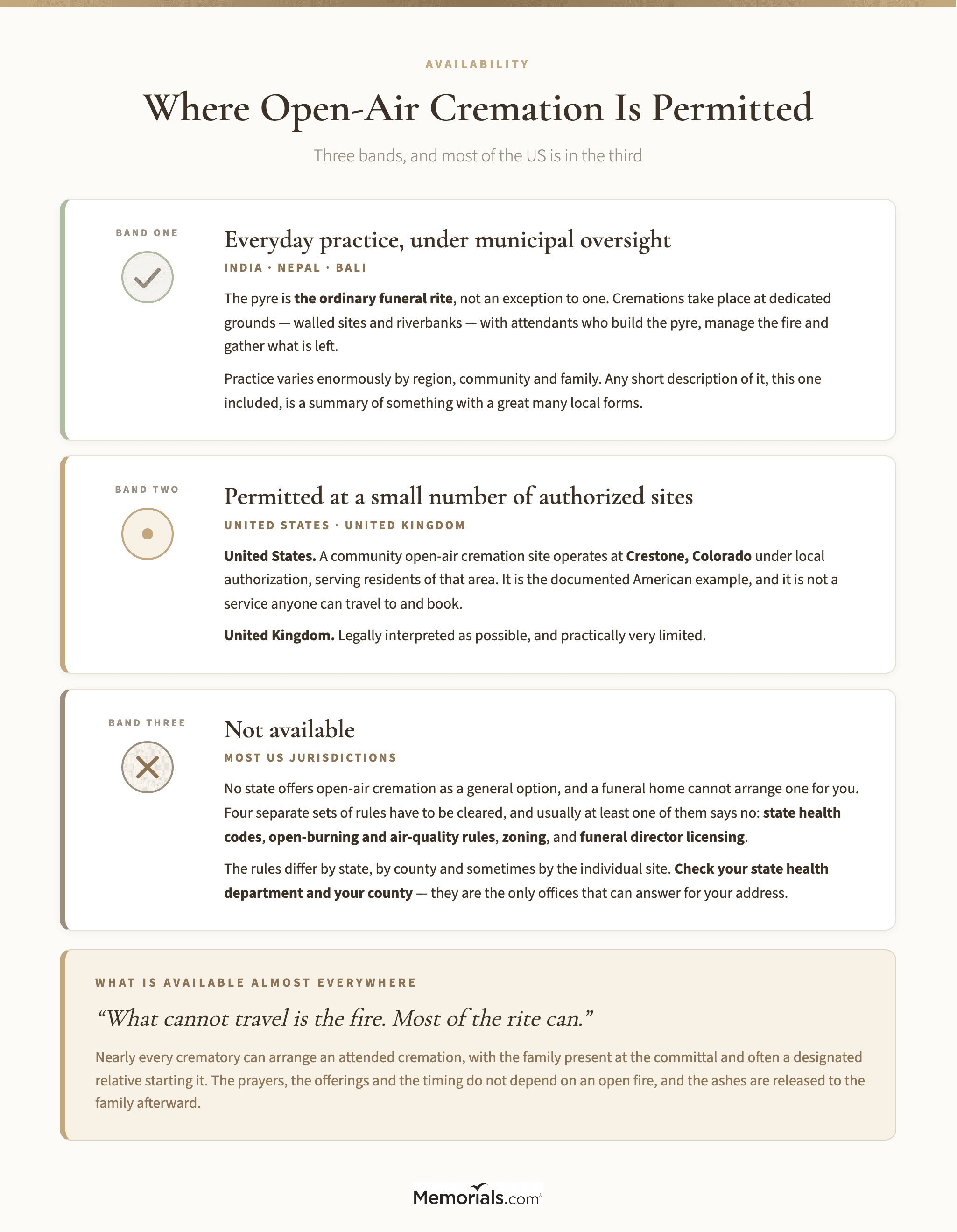
Open-air cremation falls into three bands: everyday practice under municipal oversight in India, Nepal and Bali; permitted at a small number of authorized sites, of which Crestone, Colorado is the documented American example; and simply unavailable across most US jurisdictions, where your state health department and county are the offices that decide.
If Your Tradition Calls for a Pyre and Your State Does Not Allow One
This is a real problem for Hindu, Sikh and Jain families in the United States, and it usually arrives at the worst possible moment: someone has died, the rite asks for something specific, and the law says no. It is worth knowing that most families in this position do not abandon the rite. They move the parts of it that can move, and those turn out to be most of them.
Nearly every crematory can arrange an attended cremation — sometimes called a witness cremation — where the family is present at the committal rather than handing the body over at a door. Many will allow a designated relative to start the cremation, which preserves the part of the sequence that carries the most weight. Ask the funeral home directly, and ask early. In areas with a substantial South Asian community this is a routine request, and crematories that serve those families often have a room set aside for exactly this and staff who have done it many times.
The rites themselves are portable. A priest can perform them at the crematory; the chanting, the circling, the offerings and the timing do not depend on an open fire. What is not portable is the fire itself, and the wood, and standing in the open while it burns. That is a genuine loss and it is better named than glossed over. Families describe the substitute as close enough to be right and different enough to be felt, which is an honest way to hold it.
What follows the cremation can be carried out exactly as tradition asks. The ashes are released to the family, and carrying them to water — a river at home, or a river here — is unaffected by any of the rules that stop the pyre itself.
What Happens to the Ashes
What a family receives after a cremation of any kind is bone rather than ash in the everyday sense, processed to a fine, pale, sand-like consistency. Some families keep a portion at home in a cremation urn and release the rest, which is a common arrangement when relatives are spread across two countries and only some of them can be at the water.
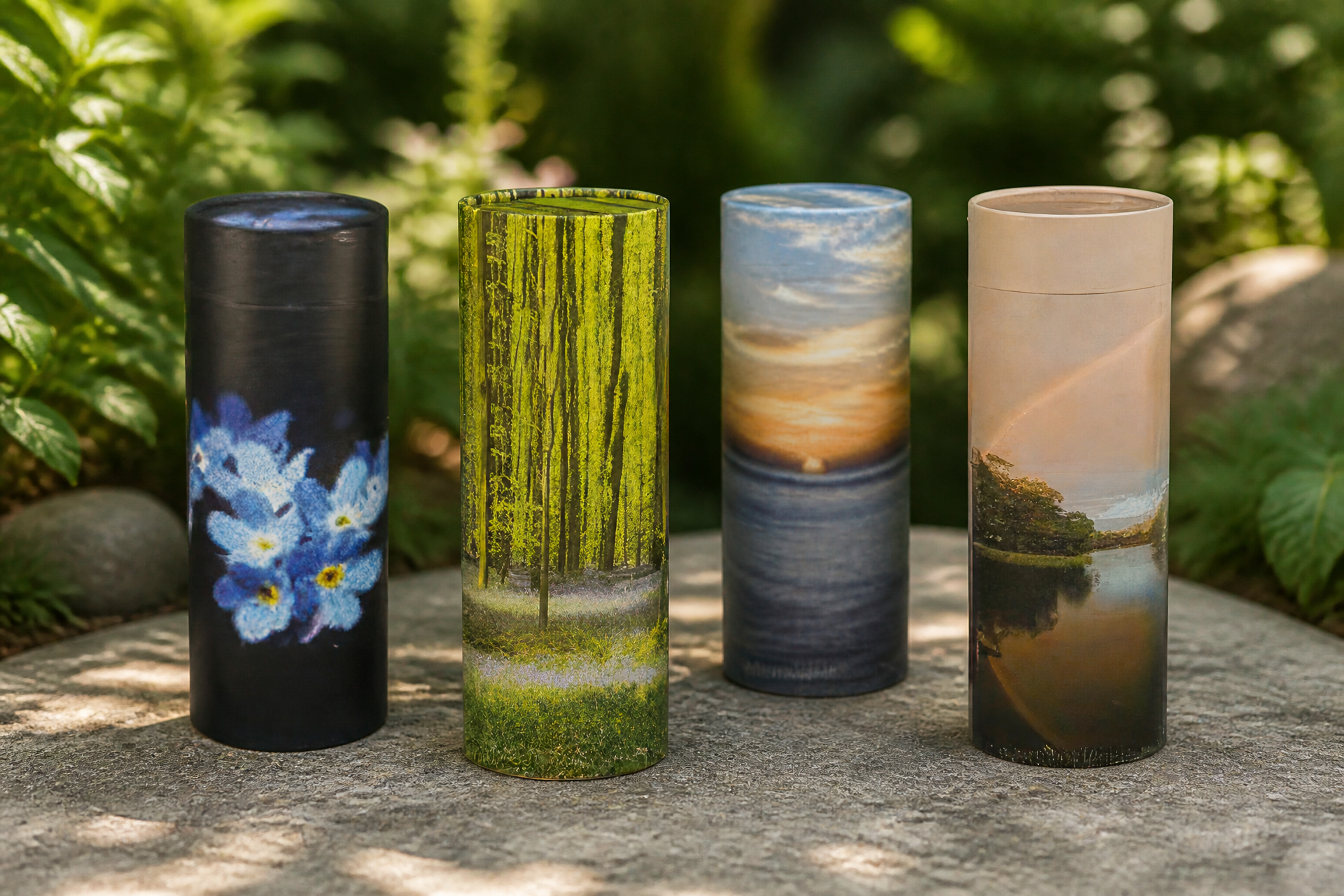
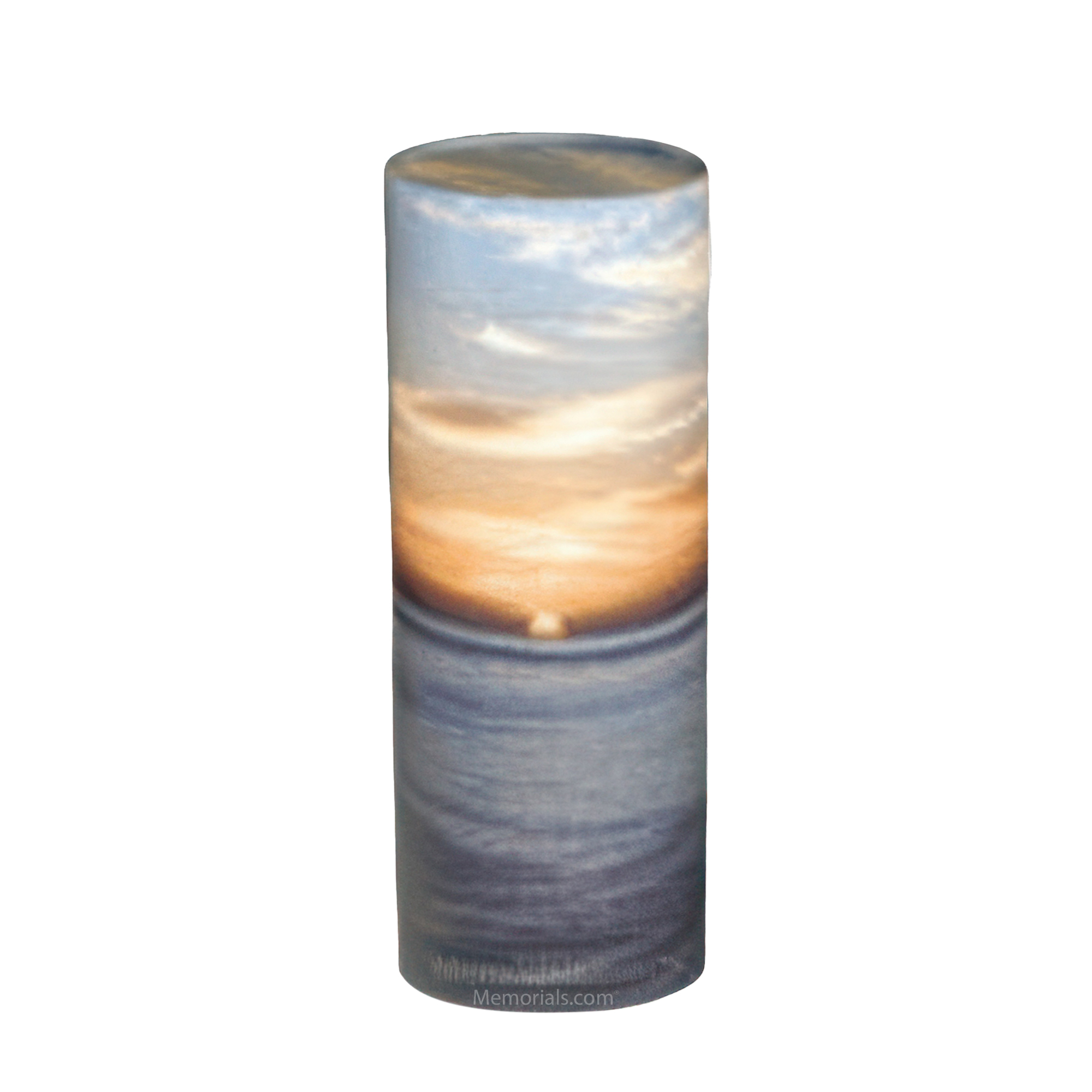
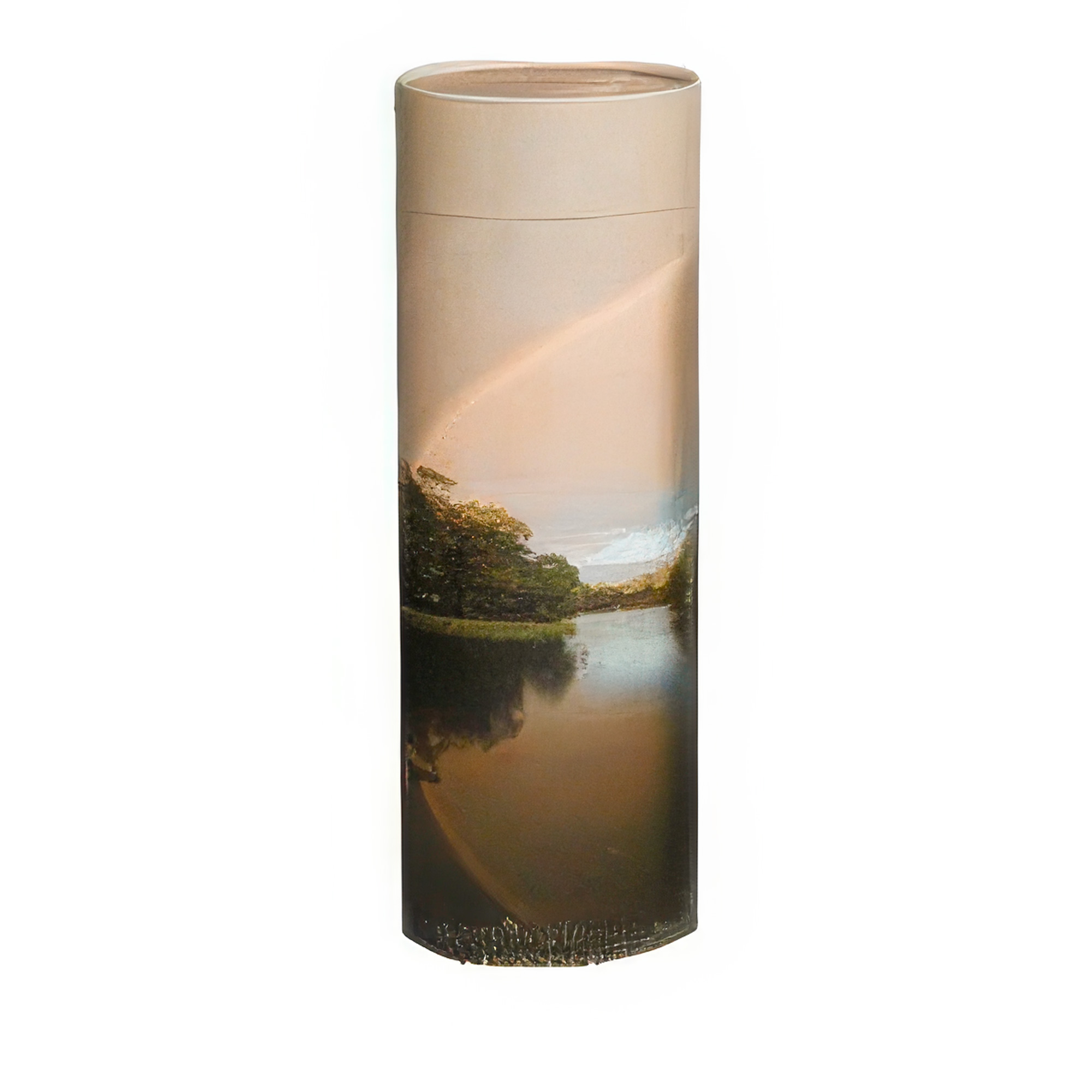
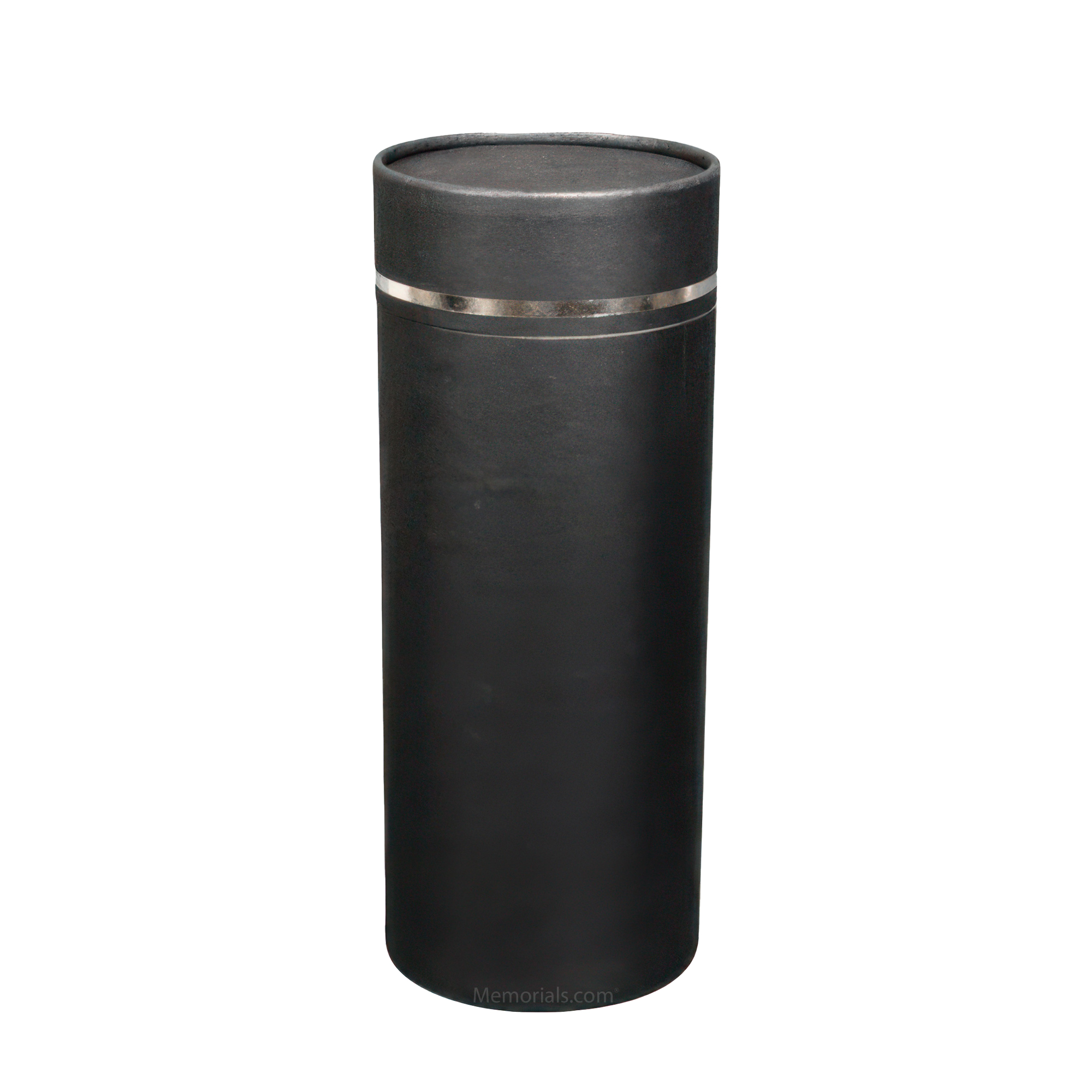
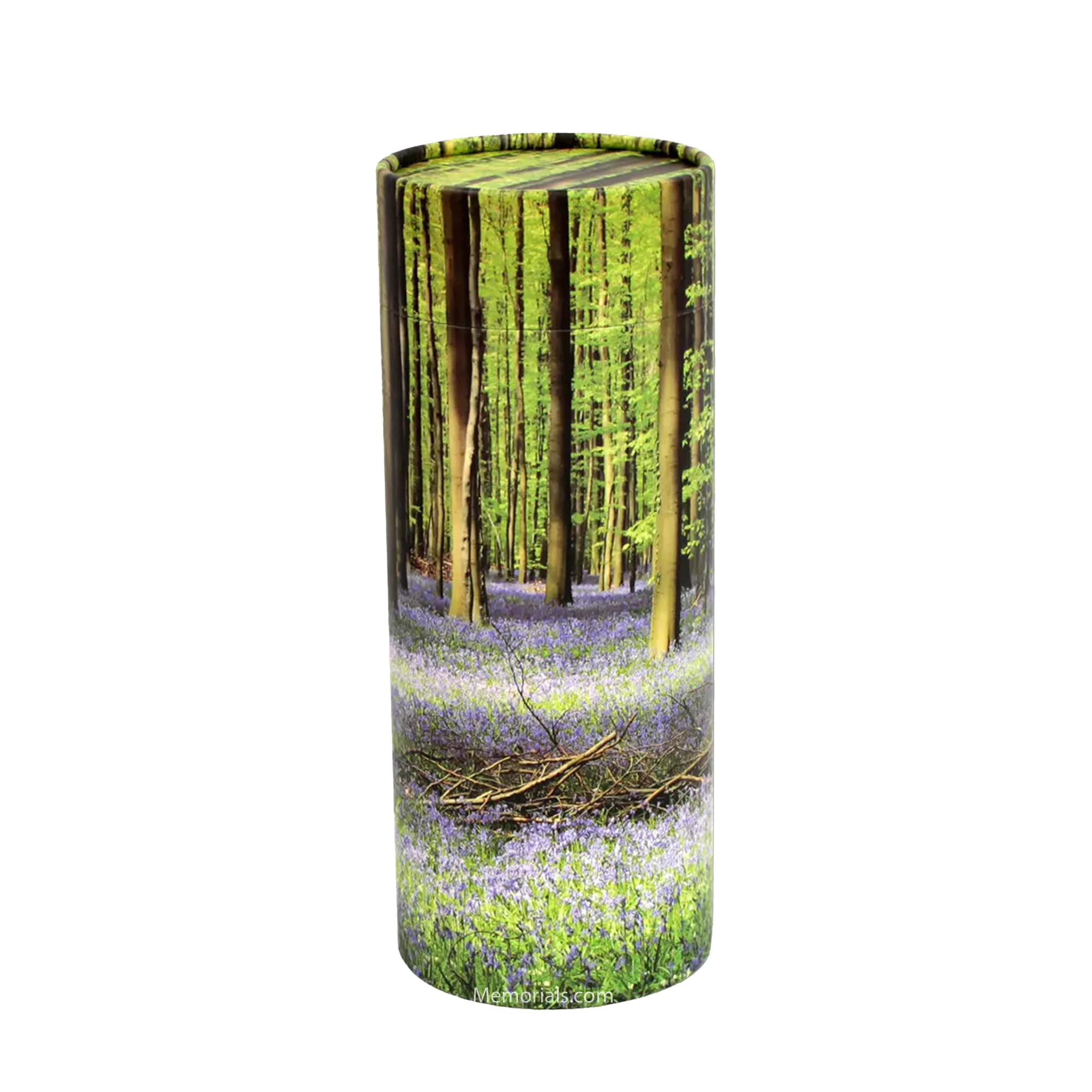
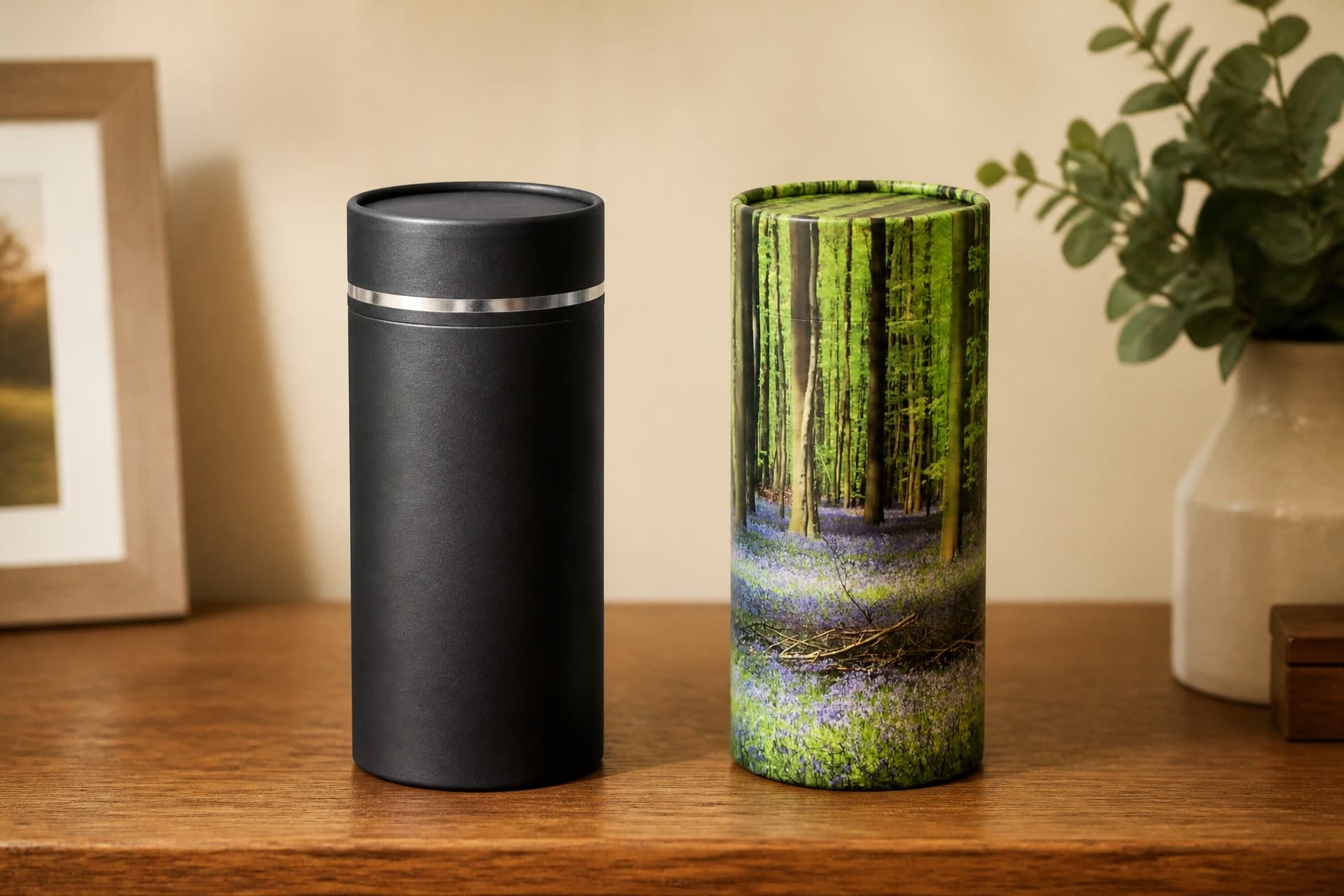
Most do not keep them. Where the pyre is the tradition, the ashes go to a river, and the vessel matters more than people expect. Pouring cleanly, from a container that can be opened with one hand in wind, on a riverbank or from a boat, is the difference between a composed moment and a scramble at the worst time to be having one. That is what scattering urns for ashes are made for — a controlled opening designed to pour in a steady stream, and in some designs a vessel that can be released into the water itself.
Where you may scatter is a separate question with a real answer, and it depends on the water or the land involved: federal rules govern scattering at sea, individual rivers and parks set their own, and private land needs the owner's permission. Our guide to scattering ashes covers the permissions and the practical side, including what to do about wind, witnesses and the timing of the day.
In almost all of the country, no. No state offers open-air cremation as a general option; a very small number of sites operate under specific local authorization, of which the community site at Crestone, Colorado is the documented example. State health codes, local open-burning and air-quality rules, zoning and funeral director licensing all have to be satisfied, and in most places at least one of them rules it out. Your state health department and your county are the only offices that can answer for your address.
Why are Viking funerals illegal?
Because the version people picture fails two sets of rules at once. Burning a body outdoors is an open-air cremation, which almost nowhere in the United States permits, and setting an adrift boat alight also puts human remains into navigable water and a burning vessel into a waterway. Cremated ashes may be scattered at sea under federal rules; an unburned body on a boat is a different question entirely.
What is a funeral pyre?
A structure of stacked wood on which a body is cremated in the open air. Heavy wood is crossed at the base so air can move through it, lighter wood and kindling go above, and the body rests on top, usually wrapped in cloth. The fire is lit by a relative rather than by an operator, and it burns for most of a day with attendants tending it.
Can I have a funeral pyre?
Almost certainly not where you live, unless you are in the small area served by an authorized community site. What is available nearly everywhere is an attended cremation: your own rites performed at the crematory, the family present at the committal, a relative starting the cremation, and the ashes released to you afterward for scattering.
How is a funeral pyre different from cremation?
It is a form of cremation, not an alternative to one. The differences are the setting and the fuel: wood and open air rather than a gas-fired chamber, most of a day rather than a few hours, a fire the family tends rather than one behind a door, and larger fragments of bone returned rather than the uniform powder a crematory produces by processing them.
Where That Leaves You
If you came here out of curiosity, the thing worth carrying away is that the pyre is not a curiosity at all. It is the ordinary, unremarkable funeral rite of a very large part of the world, carried out at established grounds by people who do it professionally, and the reason it looks strange from here is regulatory rather than cultural.
If you came asking whether you can have one, the answer is almost certainly no where you live, and the near version is available almost everywhere: an attended cremation with your own rites, your own people at the committal, and the ashes released to you afterward. It is not the same thing. It is close enough that a great many families have found it right, and it is worth asking your funeral home about long before anyone needs it.
And when the day comes to carry the ashes to water, the choice of vessel is a small decision with more resting on it than it seems. A container made to pour, chosen quietly in advance rather than in the hour before, is one fewer thing to think about on a morning that will already be full.