🏬Supersize Online Funeral Retailer🪦1000's of Headstones⚱️Over 10,000 Cremation Urns⚰️Caskets Overnight Delivery🛒Funeral & Memorial Superstore🚚FREE Shipping on ALL Orders👨👩👧👦Helping Families for over 20 Years💰Lowest Price Guarantee🏬Supersize Online Funeral Retailer🪦1000's of Headstones⚱️Over 10,000 Cremation Urns⚰️Caskets Overnight Delivery🛒Funeral & Memorial Superstore🚚FREE Shipping on ALL Orders👨👩👧👦Helping Families for over 20 Years💰Lowest Price Guarantee
🏬Supersize Online Funeral Retailer🪦1000's of Headstones⚱️Over 10,000 Cremation Urns⚰️Caskets Overnight Delivery🛒Funeral & Memorial Superstore🚚FREE Shipping on ALL Orders👨👩👧👦Helping Families for over 20 Years💰Lowest Price Guarantee🏬Supersize Online Funeral Retailer🪦1000's of Headstones⚱️Over 10,000 Cremation Urns⚰️Caskets Overnight Delivery🛒Funeral & Memorial Superstore🚚FREE Shipping on ALL Orders👨👩👧👦Helping Families for over 20 Years💰Lowest Price Guarantee
Ask what does a dove represent and you get one word back: peace. That is true, and it is about a third of the answer. Across the traditions that put the bird on gravestones, funeral programs and urns, the dove has stood for three things at once — peace, the soul itself, and news that the worst has passed. The third is the oldest, and it is the one that explains why a bird ended up on so many memorials in the first place.
This page separates the strands, because they usually arrive tangled. There are five traditions with genuinely different claims, one bird that may have shown up at your window since a death, and one practical decision about a funeral that a lot of families make without knowing what they are actually booking. The other symbols families ask about — flowers, colors, animals, the ones carved into stone — sit together in our death symbolism guide.
What a Dove Represents, in Short
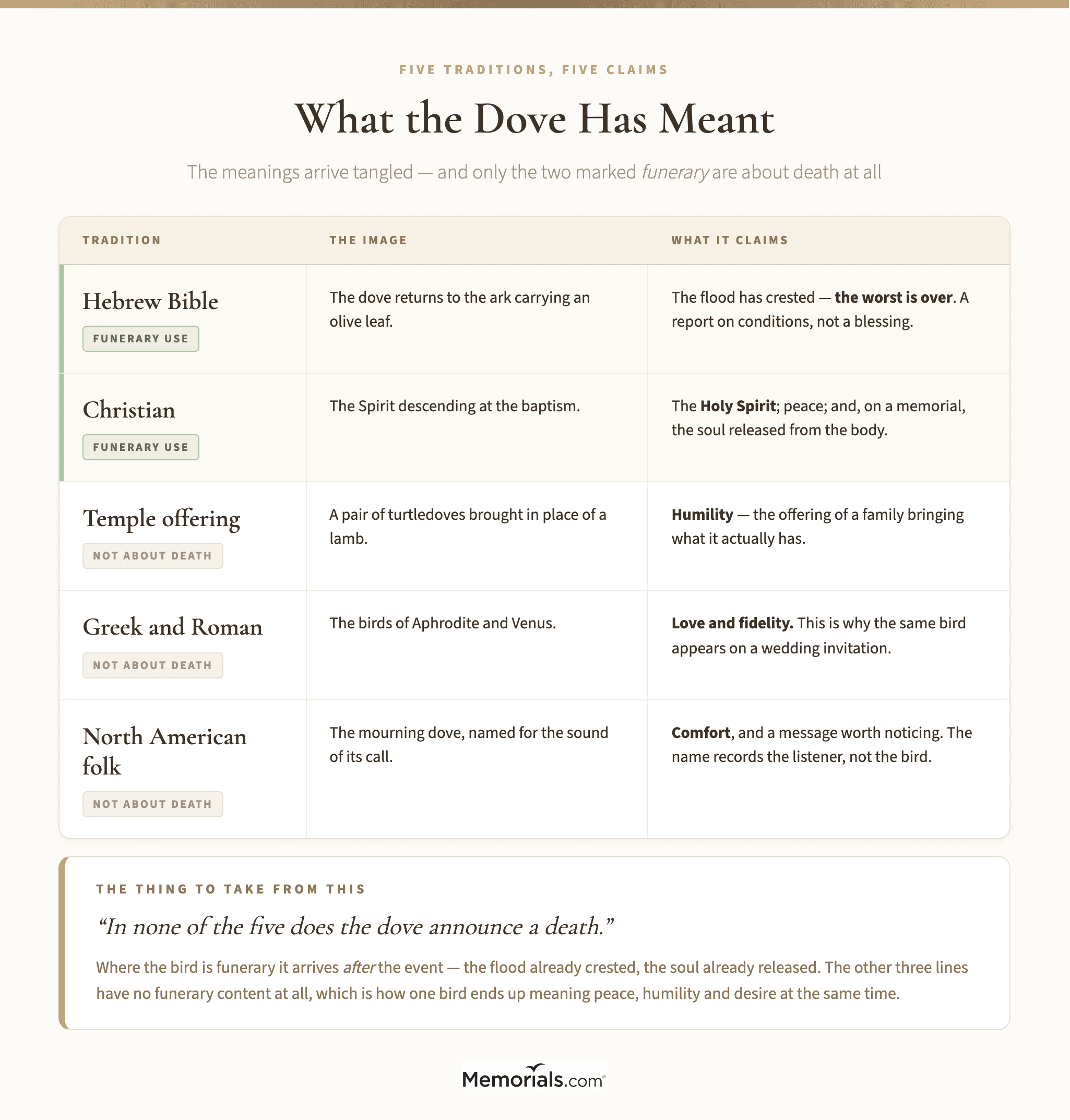
Dove symbolism runs along five lines, and most of the confusion comes from mixing them.
Peace. The best-known meaning, and the youngest of the group in its modern political form. It descends from the flood story, not from any general association between doves and calm.
The soul. In Christian and Jewish funerary art the dove often stands for the departed person, released from the body. This is why a carved dove leaving a stone reads the way it does.
The Holy Spirit. In Christian usage specifically, the dove is the Spirit's image. The dove holy spirit connection comes from a single scene in the Gospels, and it is the reason the bird appears in baptismal art as often as in memorial art.
Fidelity and love. In the Greek and Roman world, doves were the birds of Aphrodite and Venus. That branch has nothing to do with death at all, and it is why doves also show up at weddings.
A message. The mourning dove of North America is named for its call, and folk usage across the continent reads its voice as comfort — a sound that says someone is being remembered.
The five traditions make five different claims, and only two of them are about death. Reading them as one meaning is where most confusion about the dove starts.
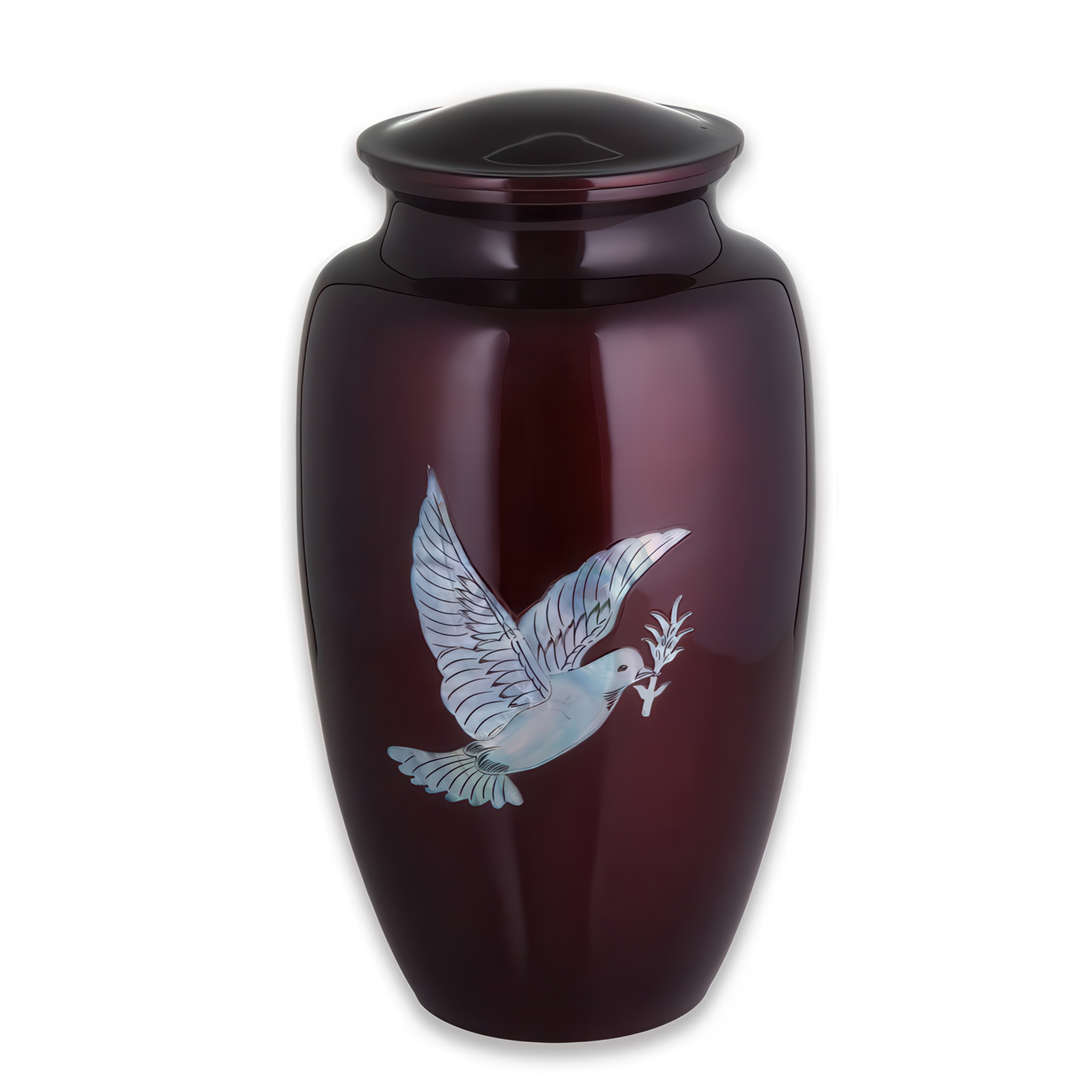
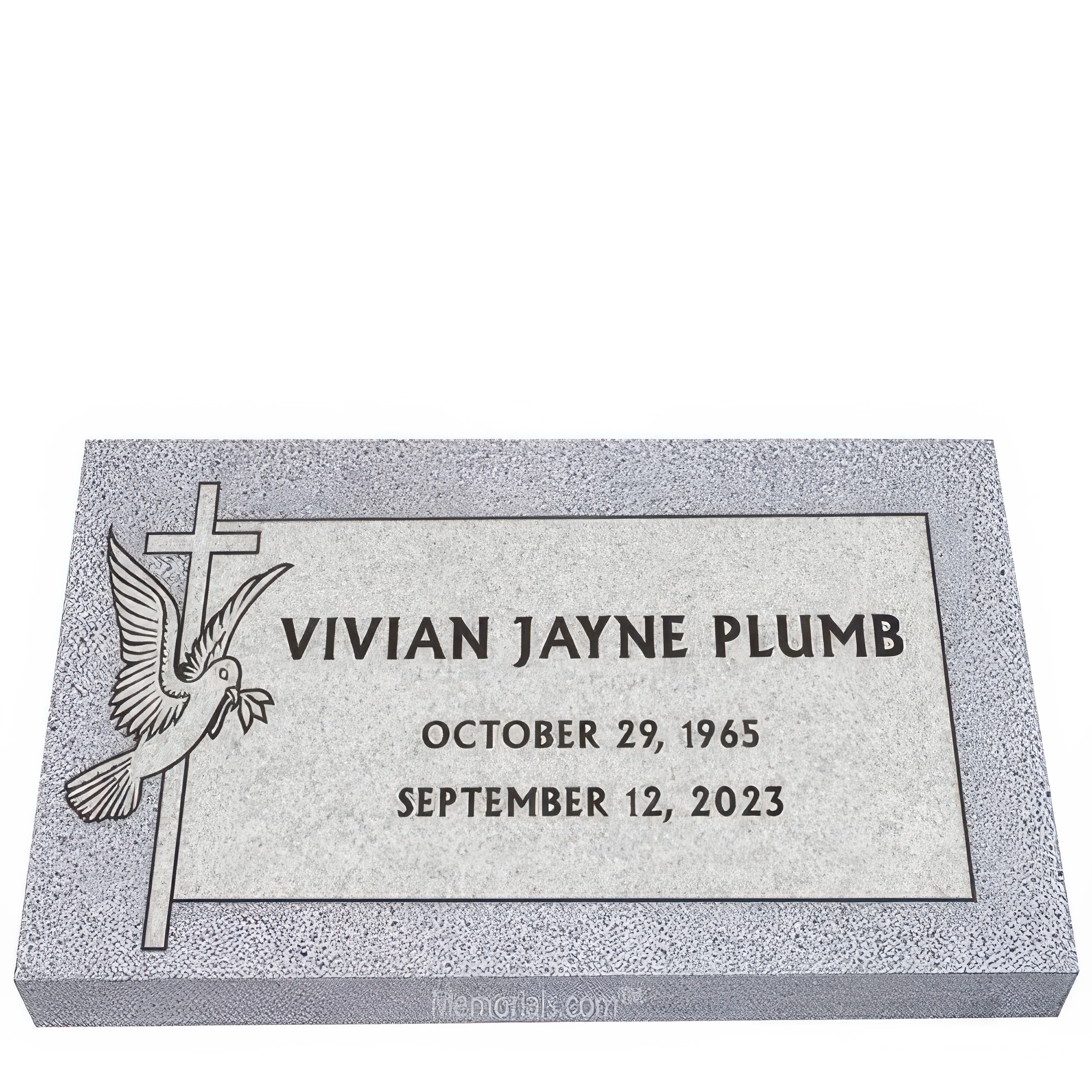
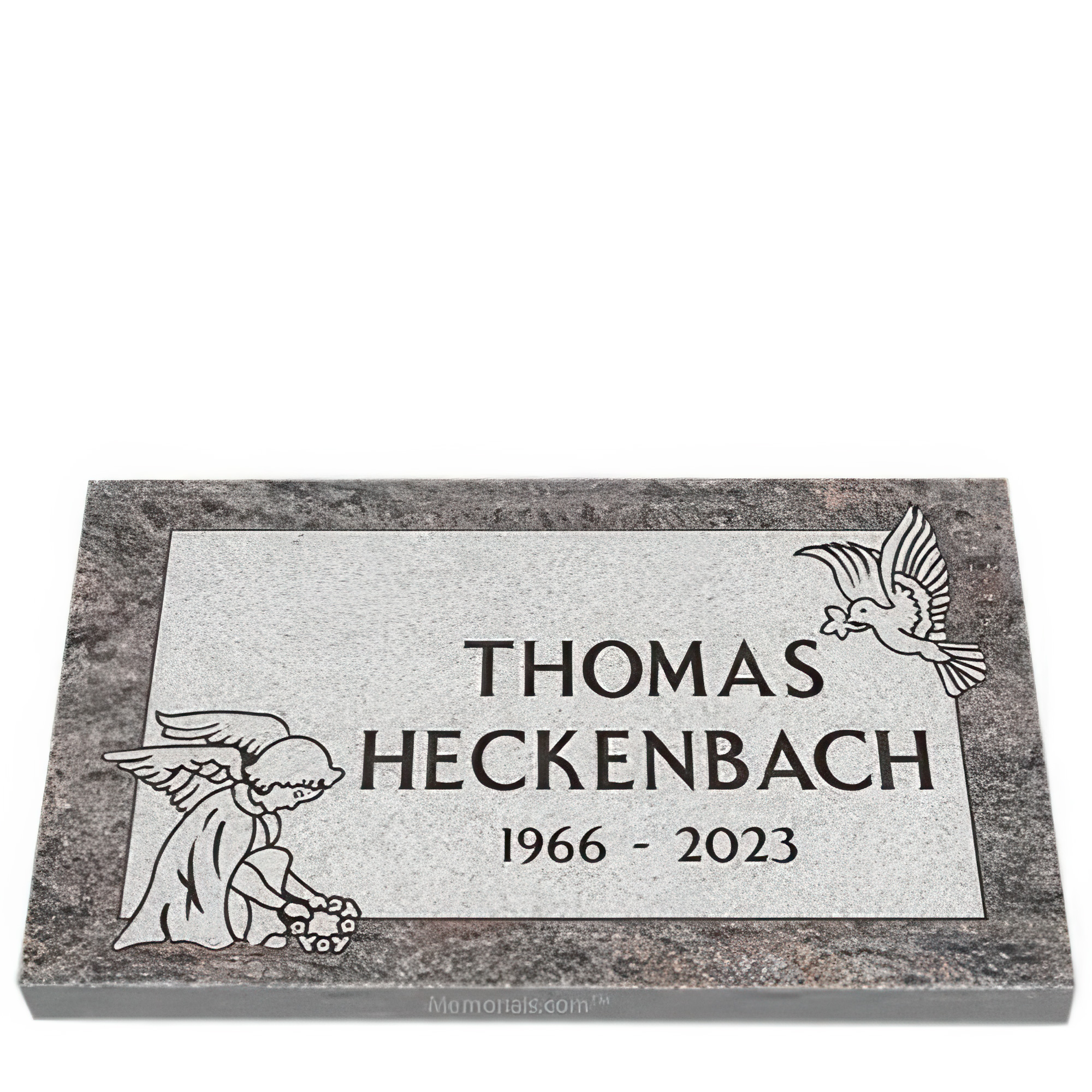
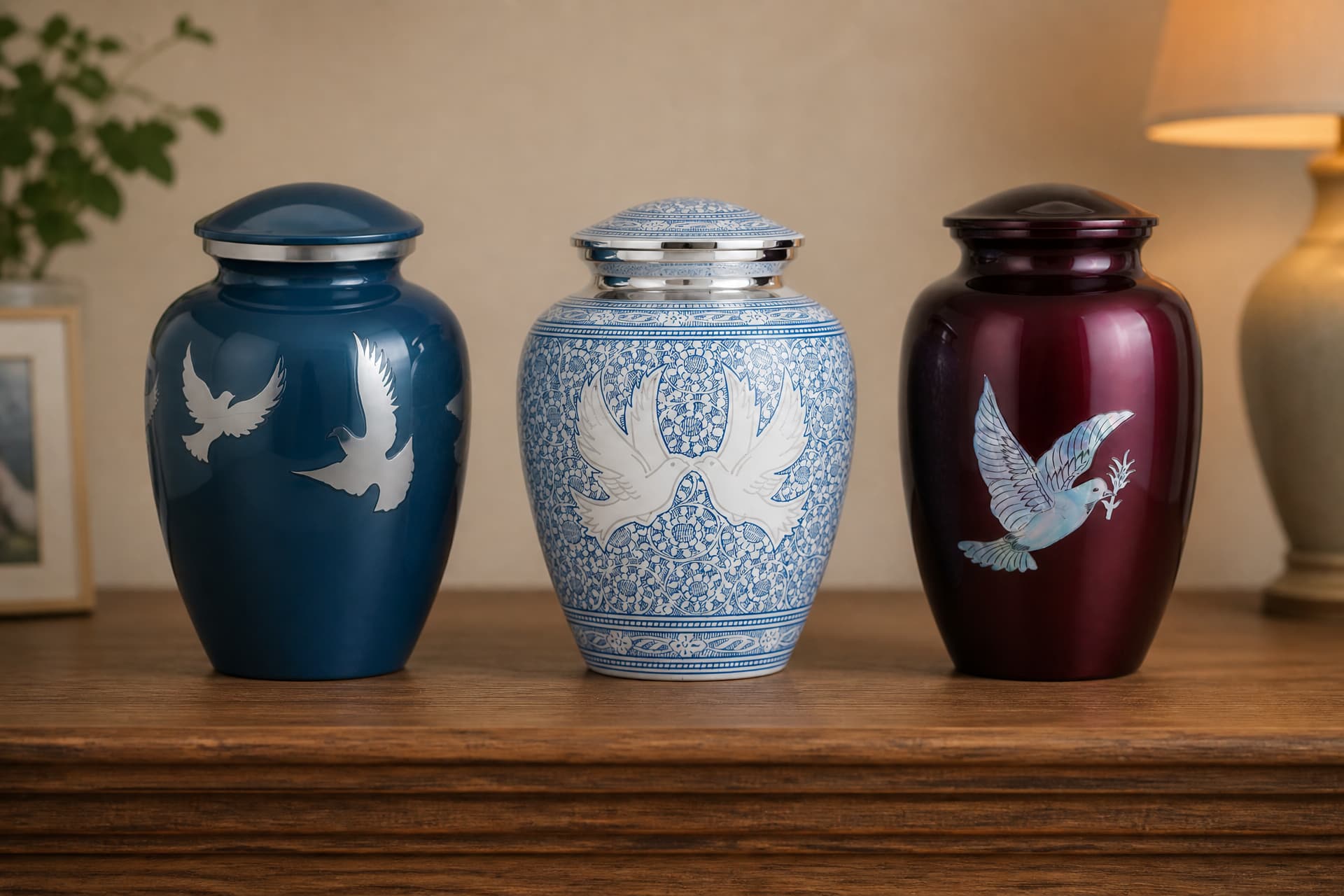
Shop Dove Urns and Grave Markers
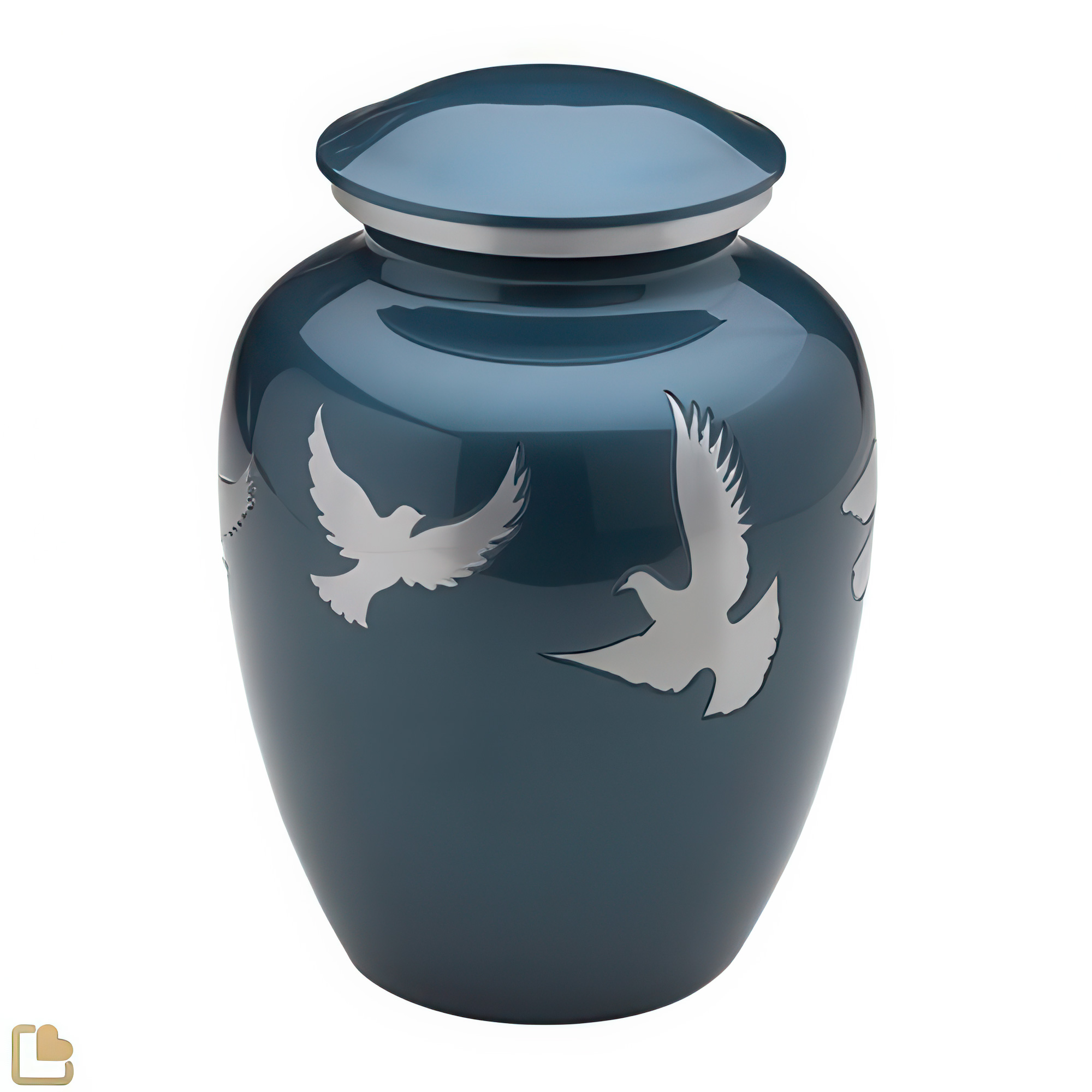
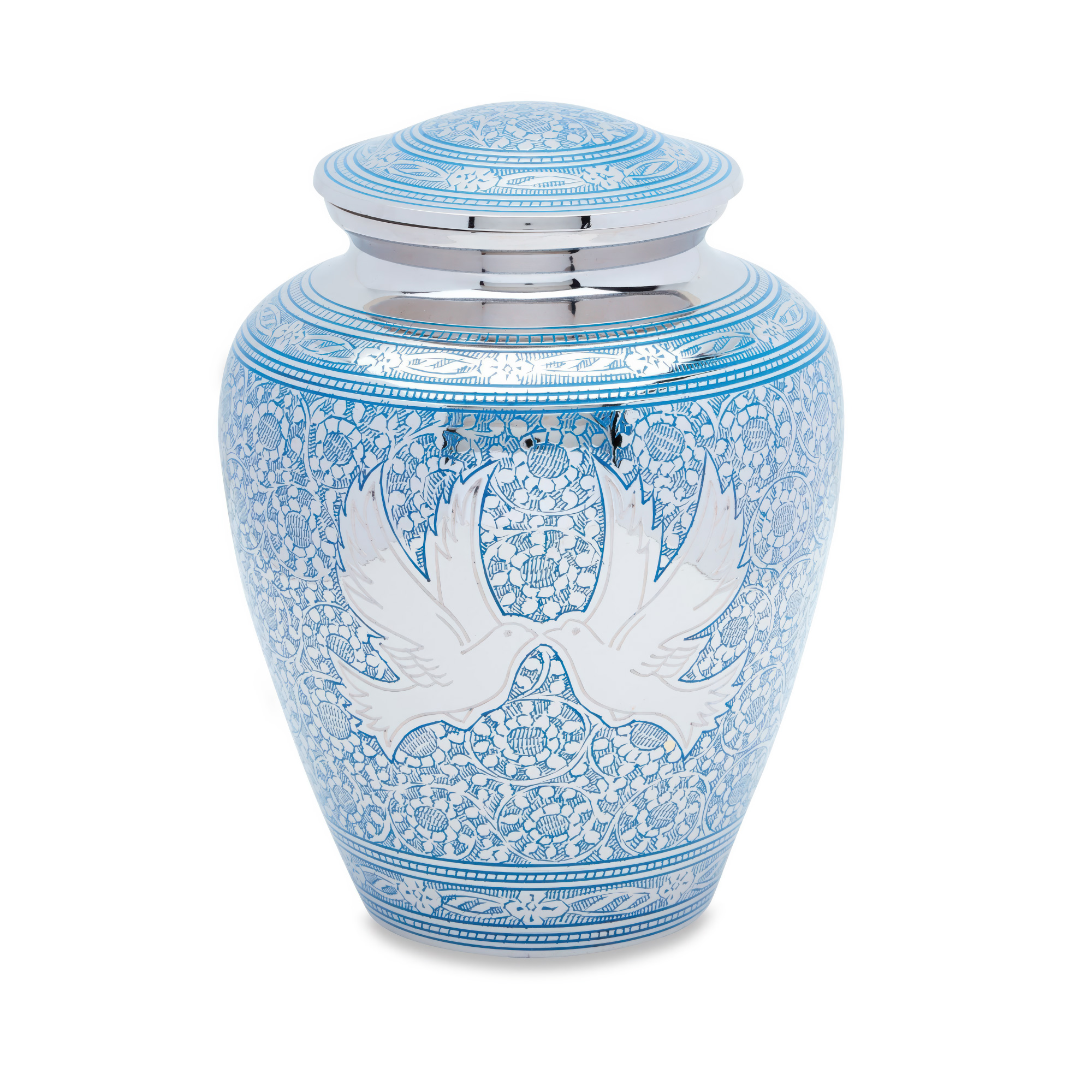
The dove designs shown above, in metal and in granite
Everything traces back to one moment in the flood account. Noah sends a bird out over the water and it comes back carrying evidence: "And the dove came in to him in the evening; and, lo, in her mouth was an olive leaf pluckt off: so Noah knew that the waters were abated from off the earth" (Genesis 8:11, King James Version).
Two details in that sentence are worth slowing down on. The first is that the text says a leaf, not a branch. The branch is what art made of it, and the branch is what stuck. The second is what the leaf actually proves. It is not a promise about the future and it is not a blessing. It is data. Somewhere out there the water has dropped far enough for a tree to be showing, which means the worst is over.
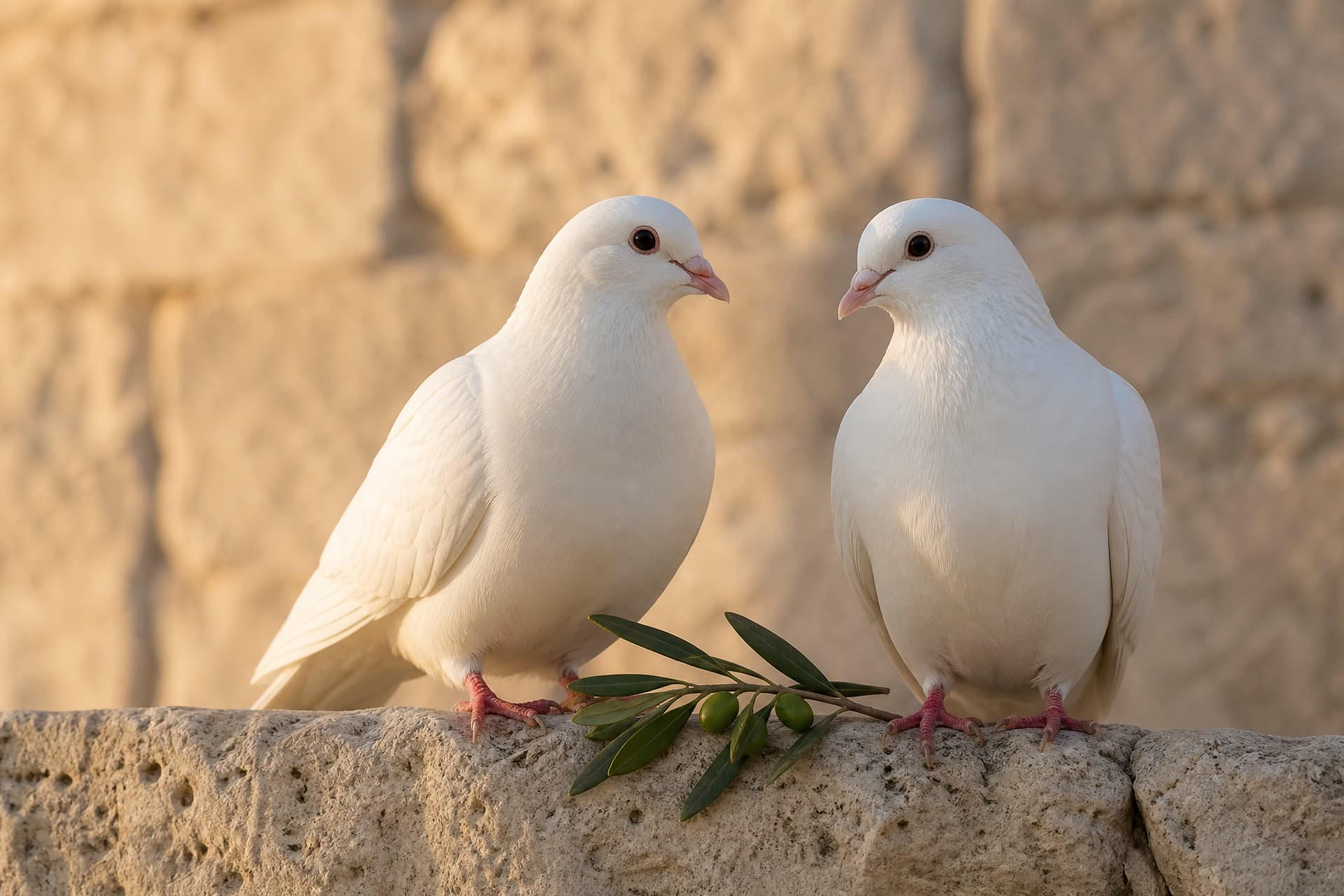
People searching dove with olive branch meaning death are usually working from a small mis-reading. The image is not about dying. It is about survival — the point at which a catastrophe stops getting worse. That is exactly why it reads so well after a death: it does not claim the loss was good, only that the flood has crested. A dove and olive branch carved on a marker says the same thing to the family that it said to Noah.
The King James text says an olive leaf, not a branch. Artists reached for the branch because it is legible from a distance, and that version is what ended up on the stones.
The Dove in Christian Art and on Memorials
The second scene that shaped the symbol is the baptism. "He saw the Spirit of God descending like a dove, and lighting upon him" (Matthew 3:16, King James Version). From that one line the dove became the standard visual shorthand for the Holy Spirit in Western Christian art, and once a form is that widely legible it travels. The bird moved from baptismal fonts to funerary carving without needing to be explained.
On memorials the direction the bird faces does real work. A dove descending, wings angled downward, is generally the Spirit arriving — comfort, grace, presence. A dove ascending or in level flight is generally the soul departing. A dove at rest, perched, often marks peace attained rather than peace hoped for. None of this is a fixed code, and stonecutters have never been rigidly consistent about it, but a monument dealer will usually design to those conventions if you ask.
The dove sits inside a much larger vocabulary of carved emblems — anchors, clasped hands, broken columns, lambs, weeping willows. Our guide to symbols of grief and mourning covers the wider set, and if you are trying to read a stone you already have, our reference on headstone symbols works through what the common motifs meant to the people who chose them.
Doves in Judaism, Islam and the Classical World
The dove is older than its Christian use and it means different things elsewhere.
In the Hebrew Bible the bird carries both the flood story and a second, quieter thread: the dove as the soul that wants out. "And I said, Oh that I had wings like a dove! for then would I fly away, and be at rest" (Psalm 55:6, King James Version). That line is on a great many memorials, and it is not about peace so much as about exhaustion — the wish to be somewhere else. Doves were also the offering of the poor. A family who could not bring a lamb brought "a pair of turtledoves, or two young pigeons" (Luke 2:24, King James Version), which gave the bird a permanent association with humility and with a gift that costs what the giver has.
In Islam the dove is not a formal religious symbol in the way the Christian dove is, but a widely told tradition holds that a pair of doves nested at the mouth of the cave where the Prophet sheltered during the migration to Medina, and that their nest helped conceal him. It is a story that gets repeated rather than a doctrinal claim, and it gives the bird a reputation for protection. Islamic funerary practice is deliberately plain about imagery, so the dove rarely appears on the grave itself; our page on the angel of death covers how death is actually pictured in that tradition.
In Greece and Rome, doves belonged to Aphrodite and Venus. That is a symbolism of love, desire and fidelity, with no funerary content whatsoever — which is why the same bird can appear on a wedding invitation and a sympathy card without contradiction. It is also a good reminder that mourning emblems drift. The black carnations people associate with funerals today were not a mourning flower for most of the flower's history either.
White Dove Meaning in Death and Mourning
The whiteness matters, and it is a later addition. Most wild doves are not white. The white bird of the sympathy card is a domestic variety, bred for color, and the color is doing what white does everywhere in Western funeral imagery: purity, innocence, a clean state.
Search dove symbolism death and most of what comes back treats the bird as an omen, which is where the anxiety in these questions comes from. The queries themselves give it away — white dove meaning death, dove death symbolism, and plain dove death all circle the same worry, which is whether the bird was a warning. In the traditions above, it is not. There is no established Western tradition in which a dove predicts a death or announces one. The bird arrives after. It is the flood report, the soul at rest, the Spirit descending — every one of those is a bird that shows up when the event is already over.
That is genuinely not true of every bird, which is why the question keeps getting asked. Ravens, owls and magpies do carry omen traditions in Europe and North America, and if that is the thread you are pulling, our guide to bird symbolism sorts out which birds have been read as warnings and which have not. The dove is not one of them.
What It Means When a White Dove Visits You
The question people actually type is what does it mean when a white dove visits you, usually after a bird has turned up somewhere it does not normally turn up, within days or weeks of a death. It deserves a straight answer rather than a mystical one, and the straight answer has two halves.
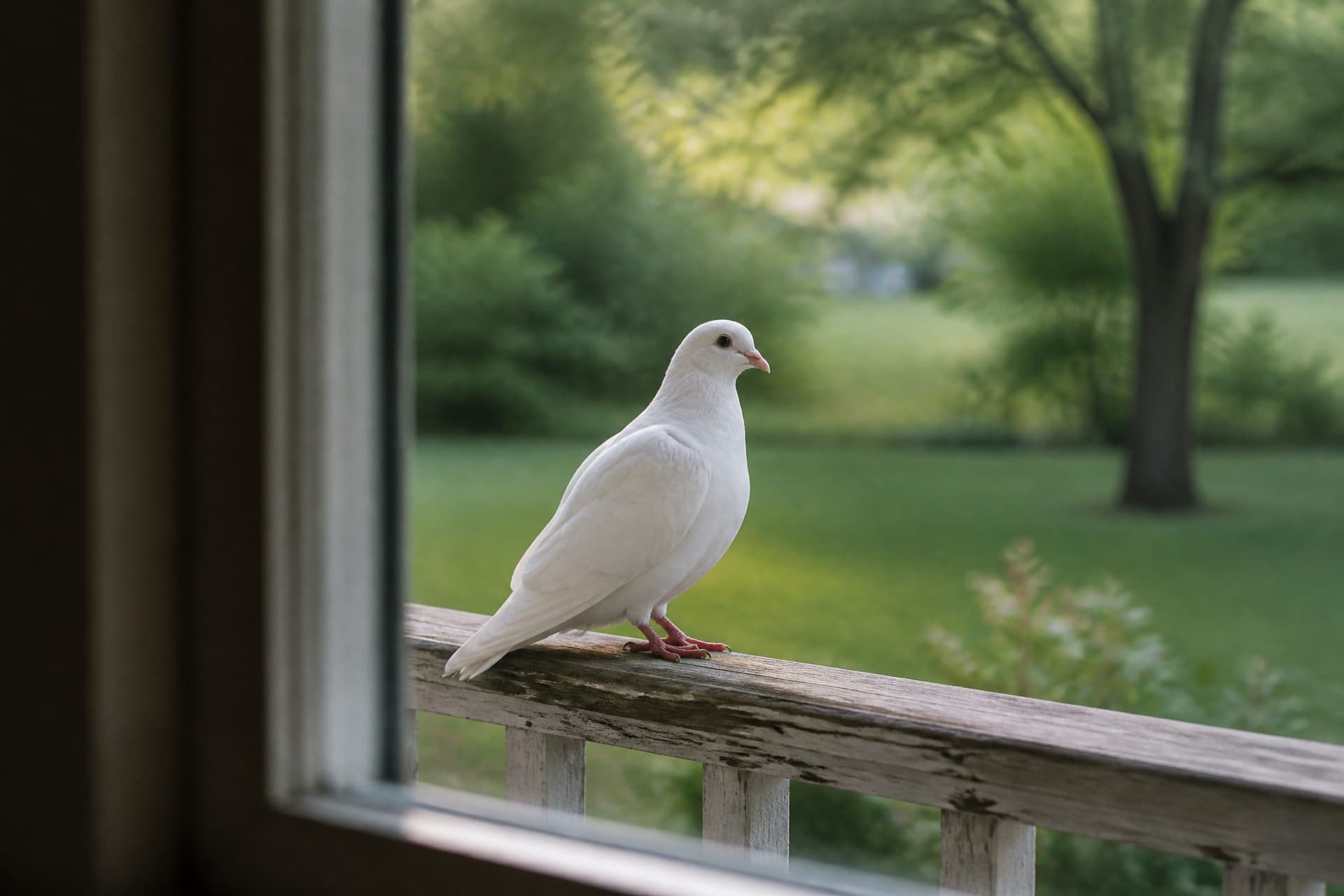
The first half is what the bird was doing. A white dove in a yard in North America is almost never a wild animal. It is a released or escaped domestic bird — a ringneck dove or a white homing pigeon — and those birds are tame, conspicuous, and drawn to people because people are where food is. If a startlingly white bird landed on your porch rail and stayed, the likeliest explanation is that it belongs to somebody nearby and has no fear of you. A related search, seeing a white bird meaning something in particular, more often turns out not to involve a dove at all: egrets, gulls and pigeons with patchy white plumage account for a great many of them.
The second half is that none of the above makes the noticing a mistake. People have read birds as messages for as long as there is any record of people, and grief sharpens attention in a way that makes the reading almost automatic. Noticing that a bird appeared on the morning of the funeral is not a failure of reasoning. It is what a mind does when it is looking for the person everywhere. Whether it was a sign is not a question anyone else gets to settle for you, and it does not need settling to be worth keeping.
The same pattern turns up with other species, most commonly the cardinal in the eastern United States. If that is the bird in your story rather than a dove, our page on seeing a red cardinal covers where that particular association came from.
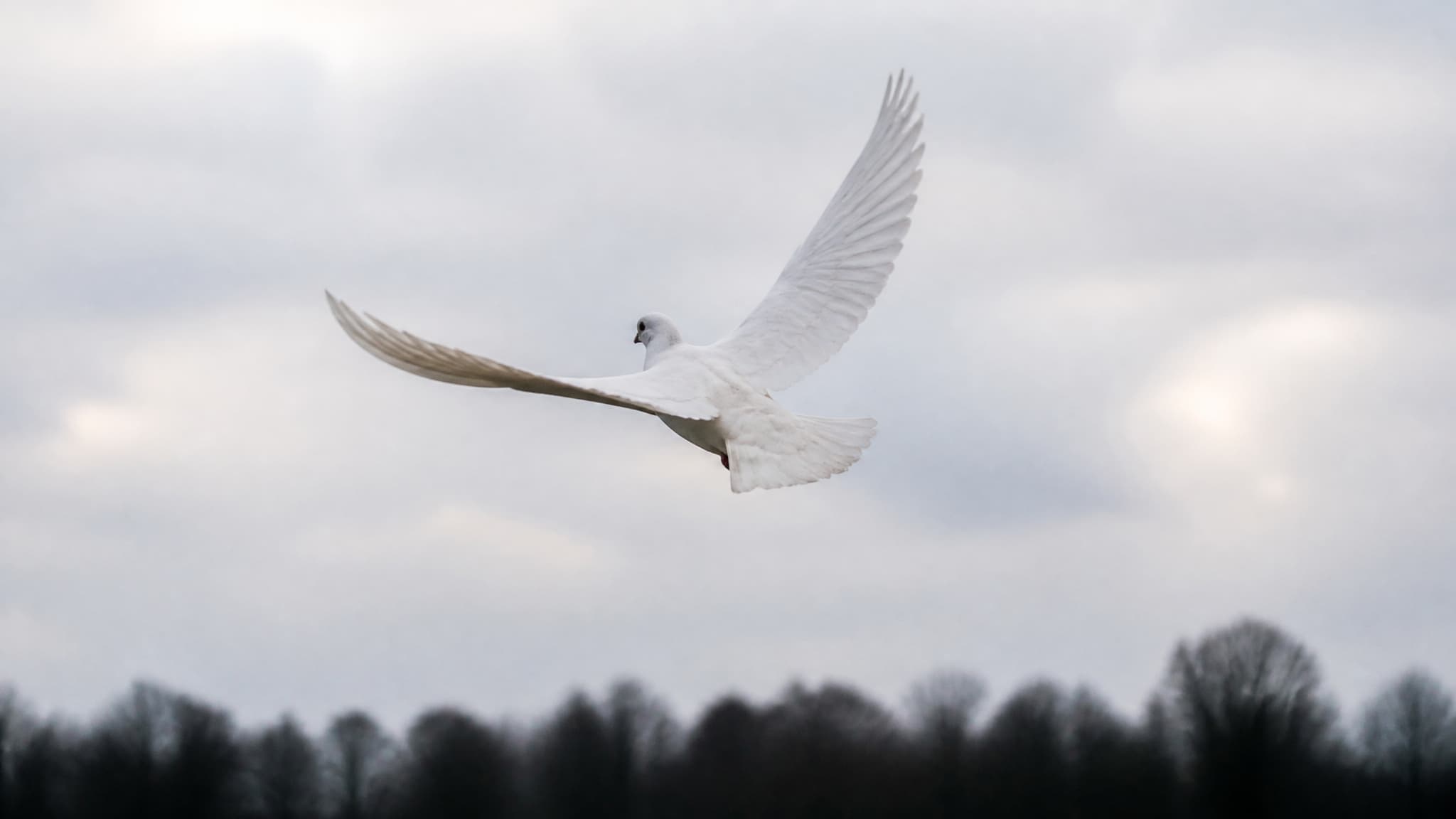
A white dove that lets you get close is almost always somebody's bird. That does not make it less worth watching from the window.
Why a Mourning Dove Sounds the Way It Does
There is a second bird in this story and it is easy to confuse with the first. The mourning dove of North America is grayish-brown, wild, extremely common, and named entirely for its voice.
It is worth asking why does a mourning dove coo at all, because the answer is not what the name suggests. The call is a perch coo — an advertising call, given by males from an exposed spot, used to attract a mate and to hold a territory. The bird is not sad. It is the avian equivalent of a personal ad, and it sounds early in the morning because that is when it carries furthest and competes with least.
That gap between what the sound is and what it does to us is the whole point. A soft, falling, repeated call at dawn lands on a grieving person as lament whether or not anything is lamenting, and the English name records the reaction rather than the bird. The same substitution shows up all over mourning practice, where a sound gets assigned a meaning it never carried on its own — our page on the death song follows that idea in the other direction, where the sound is chosen deliberately.
White Doves at a Funeral: What Actually Gets Released
A release is the most common reason doves come up in funeral planning, and it is where the gap between the symbol and the reality is widest.
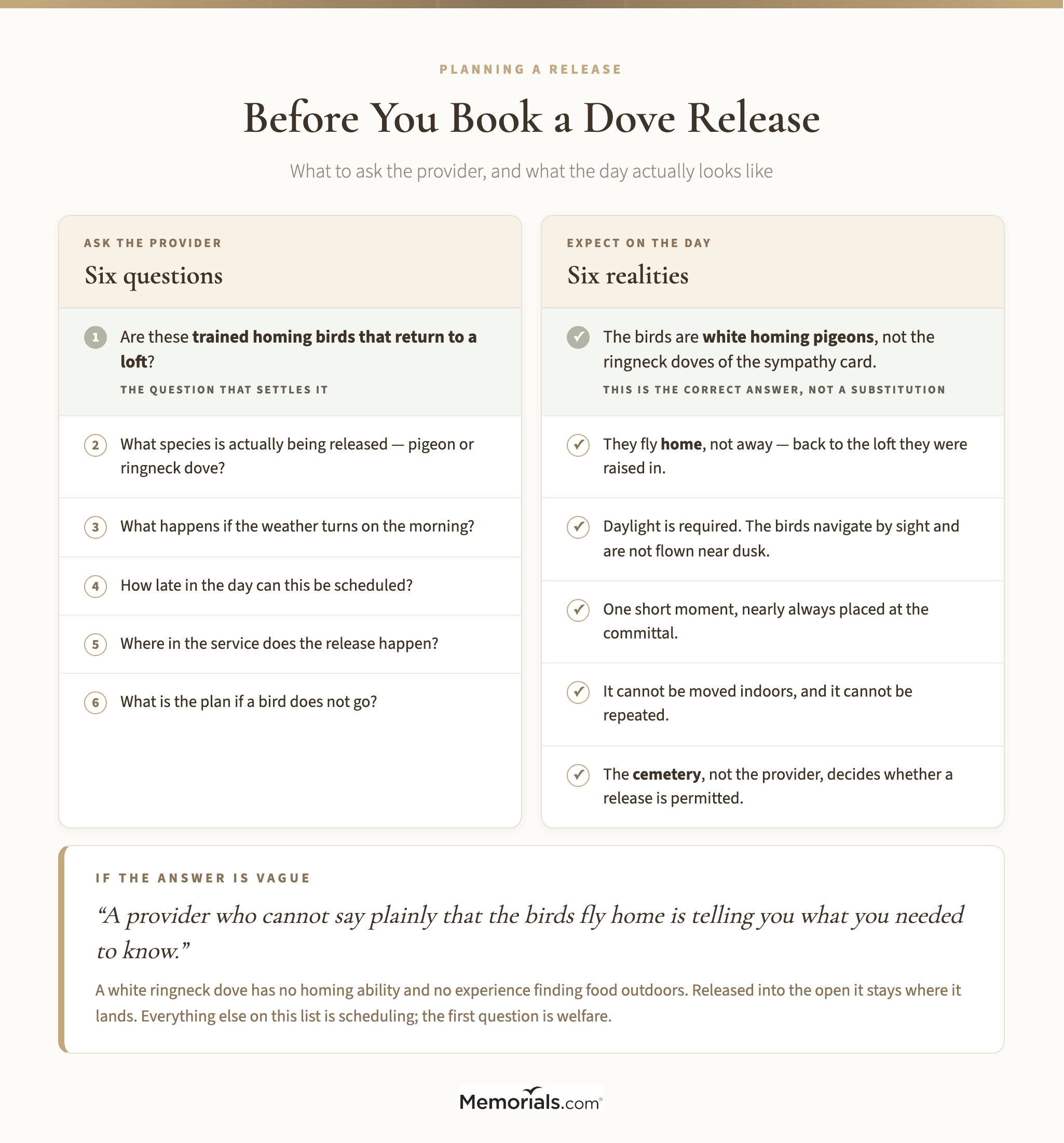
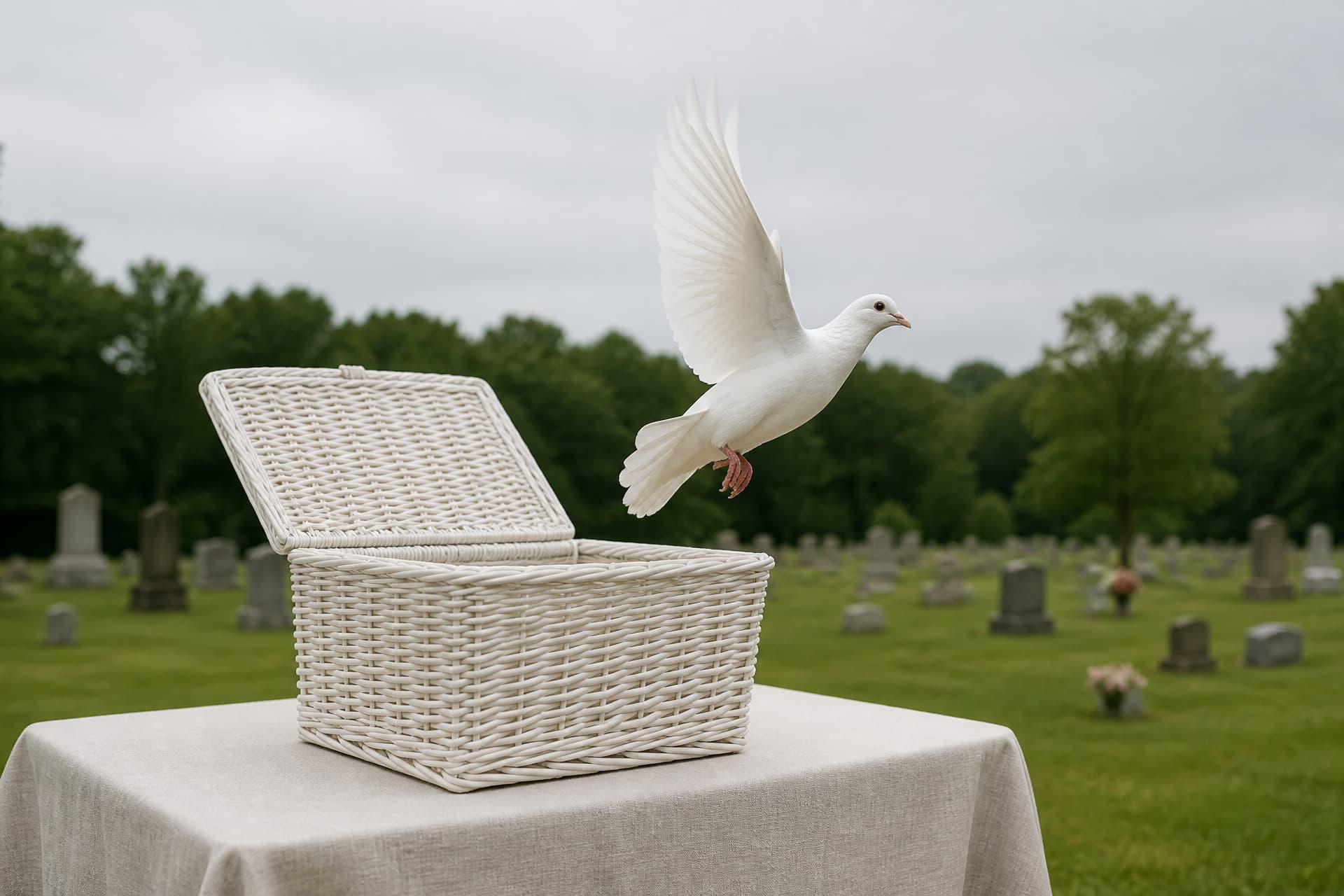
Families looking for white doves for funerals generally picture the bird from the sympathy card. What a reputable release company actually flies is a white homing pigeon — a rock pigeon bred for white plumage and trained to return to its loft. That is not a substitution or a cheat. It is the only version of the ceremony that works, because a homing bird released miles from home will get home, and a true white dove will not.
This is the single most useful thing to know before booking anything. The white ringneck dove sold in pet stores is a domesticated bird with no homing ability and no experience finding food outdoors. Released into the open it does not fly off into a new life; it stays where it lands, gets cold, and is taken by a hawk or a cat within a few days. Some vendors do release ringneck doves. If a provider cannot tell you plainly that their birds are trained homing birds that return to a loft, that is the answer to your question.
The one question that settles it: are these trained homing birds that fly back to a loft? Everything else on the list is scheduling.
The rest is logistics, and they are unforgiving. A release needs daylight, because the birds navigate visually and will not be flown close to dusk. It needs weather a bird can fly in. It cannot be moved indoors. It happens once, it takes under a minute, and it is almost always placed at the committal — after the words, as the casket or urn is lowered or set. Timing it against the line "ashes to ashes, dust to dust" is common enough that some officiants build the pause in; the phrase itself has its own history, which our page on ashes to ashes, dust to dust traces. Availability, cost and whether a given cemetery permits a release at all vary too much to state here, so ask the cemetery before you book a white dove for funeral day.
If a dove for funeral use is off the table — an indoor service, bad weather, a cemetery that says no — the symbol does not have to go with it. A single bird carved on the program, a dove on the marker, or a moment of silence at the same point in the service carries the same idea and cannot be canceled by rain. Our planning a memorial service guide covers where a symbolic moment like this fits in the order of events.
The release lasts less than a minute, and it is nearly always placed at the committal rather than during the eulogy.
Putting the Dove on a Memorial
A release is over the same day. If the bird has come to mean something to a family, the durable places to put it are the urn and the marker, and the dove is better served there than almost any other motif because it is the most widely produced one.
On urns the design ranges from a single bird in low relief on a plain body to a pair in flight wrapping the whole piece. Metal takes the image particularly well — cast or etched relief holds a clean edge and reads from across a room, which matters if the urn is going to be kept on display rather than interred. Among metal urns for human ashes the dove appears in polished silver relief, in deep enamel colors and in bronze, in everything from a small keepsake to a full-size piece.
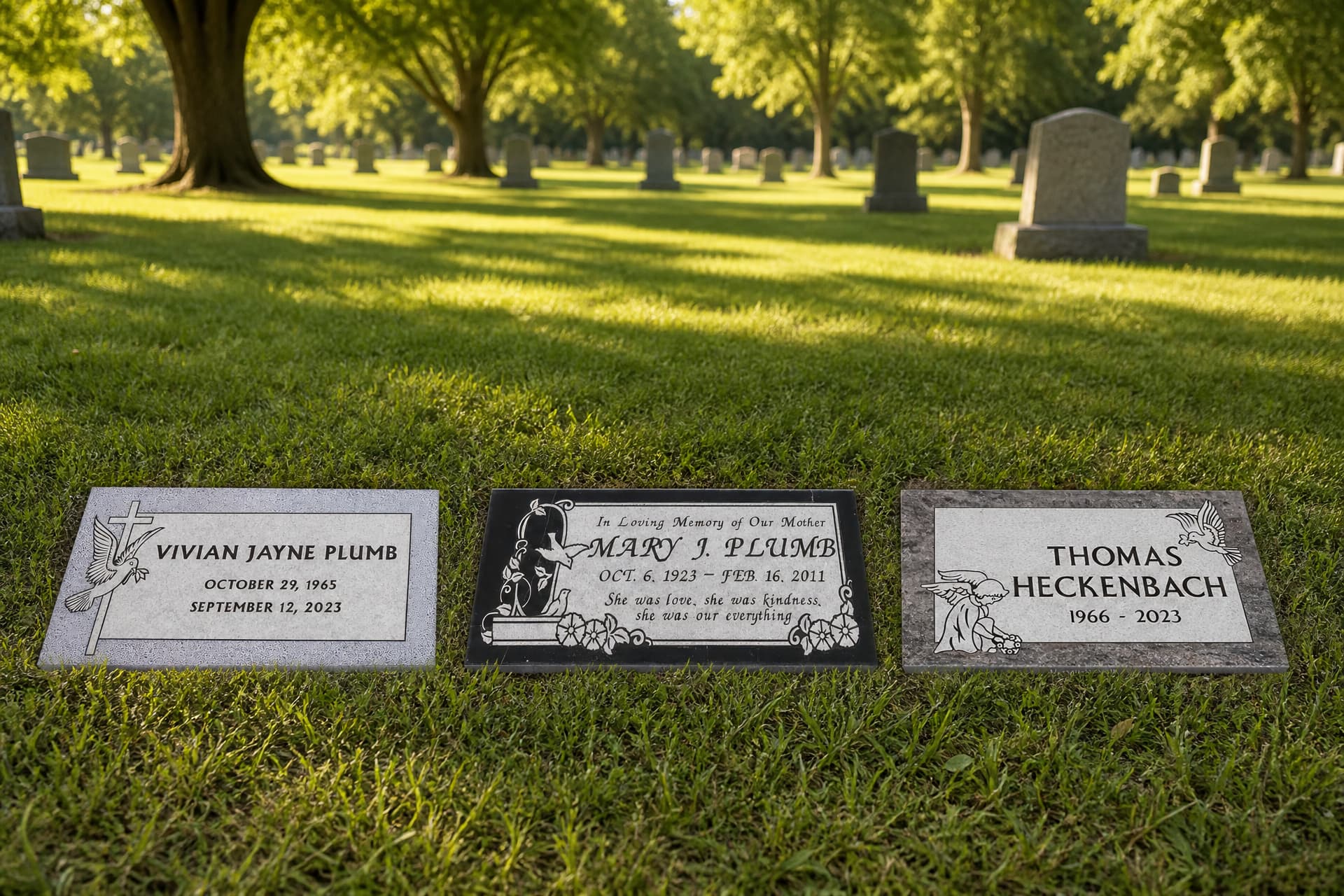
On stone the dove is one of the oldest and most requested carvings, and it is why two of the phrases people search in this family are product searches rather than symbolism ones. The bird works especially well on flat grave markers, where a low-relief carving reads cleanly from standing height and does not compete with the inscription for space. Paired doves are common on markers for couples, and a single ascending bird is the usual choice for one name.
How the bird is cut matters as much as whether it is there. A sandblasted outline, a shallow etch and a deep relief age very differently over decades of weather, and the difference in cost is not always the difference you would guess. Our guide to headstone engraving designs covers the methods and what each one looks like after twenty years outdoors.
Frequently Asked Questions
What does a dove represent spiritually?
Depending on the tradition, one of three things: the Holy Spirit in Christian usage, the soul of the departed in funerary art, or peace after catastrophe from the flood story. These are separate claims that often get merged. In none of them does the bird predict or announce a death.
What does a dove with an olive branch mean?
It means the danger has passed. In the flood account the bird returns with an olive leaf, which proves that the water has dropped far enough for a tree to show. Art turned the leaf into a branch. On a memorial it reads as peace after a hard time rather than as a statement about the death itself.
Is seeing a white dove after a death a sign?
Nobody can answer that for you, and anyone who says otherwise is guessing. What can be said is that a white dove in a North American yard is almost certainly an escaped or released domestic bird rather than a wild one, and that noticing it is a normal thing a grieving mind does. Both of those can be true at once.
Are the white doves released at funerals really doves?
Usually not. Reputable release companies fly white homing pigeons, which are trained to return to their loft. A true white ringneck dove has no homing ability and does not survive long outdoors, so a provider who releases them is not doing the ceremony properly. Ask what bird is being flown before you book.
Why does a mourning dove coo so early in the morning?
The call is a male perch coo used to attract a mate and hold a territory, and dawn is when sound carries best and competing noise is lowest. The bird is advertising, not grieving. The mournful quality is in the human ear, and it is where the species got its English name.
The Dove Is Allowed to Just Be a Dove
If a bird brought you here, the honest summary is that the dove has carried a great deal of meaning for a very long time, that most of it is about relief rather than loss, and that none of it requires you to decide anything about what happened at your window last Tuesday.
What the symbol is genuinely good for is permanence. A release is a minute. A carved bird on a marker or a dove worked into an urn is there in thirty years, in the same place, saying the same thing to somebody who never met the person. That is a small decision with a long reach, and it is worth making deliberately rather than in the week after a death when everything is being decided at once.