🏬Supersize Online Funeral Retailer🪦1000's of Headstones⚱️Over 10,000 Cremation Urns⚰️Caskets Overnight Delivery🛒Funeral & Memorial Superstore🚚FREE Shipping on ALL Orders👨👩👧👦Helping Families for over 20 Years💰Lowest Price Guarantee🏬Supersize Online Funeral Retailer🪦1000's of Headstones⚱️Over 10,000 Cremation Urns⚰️Caskets Overnight Delivery🛒Funeral & Memorial Superstore🚚FREE Shipping on ALL Orders👨👩👧👦Helping Families for over 20 Years💰Lowest Price Guarantee
🏬Supersize Online Funeral Retailer🪦1000's of Headstones⚱️Over 10,000 Cremation Urns⚰️Caskets Overnight Delivery🛒Funeral & Memorial Superstore🚚FREE Shipping on ALL Orders👨👩👧👦Helping Families for over 20 Years💰Lowest Price Guarantee🏬Supersize Online Funeral Retailer🪦1000's of Headstones⚱️Over 10,000 Cremation Urns⚰️Caskets Overnight Delivery🛒Funeral & Memorial Superstore🚚FREE Shipping on ALL Orders👨👩👧👦Helping Families for over 20 Years💰Lowest Price Guarantee
The angel of death Islam describes is a single specific being with one assigned task, and the Qur'an gives him a job title rather than a name. It calls him malak al-mawt — literally, the angel of death. That is the only way the text refers to him. The name most people arrive with, Azrael, is not in the Qur'an at all.
That gap between the name and the source is where nearly every misunderstanding about this figure lives. It is also why the answer you get from a movie, a comic or a search summary is usually half right: the angel is real in Islamic belief, the role is precisely defined, and the name is a later addition that most Muslims nonetheless use without controversy.
Here is what the Qur'an says, where the name Azrael came from, how the angel differs from the Western reaper, and what any of it means if you are attending a Muslim funeral this week. He sits alongside the other personifications of death we cover in our — and he is the one that fits the category least comfortably.
One thing before anything else: Islam is not one practice. It spans Sunni and Shia traditions, four major Sunni schools of law, and communities from Indonesia to Michigan whose customs around dying differ in real ways. What follows is what the shared sources say and what is commonly observed. Where a family's practice differs, the family is right about their own funeral.
Who the Angel of Death Is in Islam
The role is narrow and it is worth stating exactly.
In Islamic belief, angels — mala'ika — are a created order of beings, made before humanity and made for service. A well-known hadith recorded by Muslim describes angels as created from light, in contrast to jinn created from fire and humans from clay. They are not former humans, not spirits of the dead, and not minor gods. The Qur'an describes them as beings who do not disobey what they are commanded and do exactly what they are told (66:6), and that single sentence does more work than anything else on this page.
Angels in Islam have no free will. That is the doctrinal point everything else follows from. An angel is not weighing anything, not choosing anyone, not exercising discretion. The decision that a life ends belongs to God alone.
So the angel of death in Islam is the one entrusted with taking the soul at the moment God has already appointed. Sura 32, verse 11 makes this explicit: the angel of death, put in charge of you, takes you — and then you are returned to your Lord. The phrasing matters. He is entrusted, appointed over, put in charge of. He does not decide; he is assigned.
A note on wording, once, for the whole page. Translations of the Qur'an differ from one another, sometimes substantially, and Muslim tradition treats the Arabic as the Qur'an itself and any translation as an interpretation of its meaning. Rather than quote one English version as though it were the text, the verses on this page are described in plain English with their references given, so you can look them up in whichever translation you use.
Islamic tradition holds that angels were created from light, before humanity and for service. It is a useful corrective to the Western picture of death as a dark figure: the being who arrives is, in this tradition, made of the same stuff as morning.
Is Azrael in the Qur'an? Where the Name Comes From
Short answer: no. Longer answer: that is not the same as saying the name is wrong.
Azrael in Islam is a name supplied by tradition rather than by scripture. The Qur'an never uses it. Neither, as far as the major collections go, do the best-known hadith. It appears instead in the wider body of later Islamic writing — commentary, stories of the prophets, devotional literature — and in Jewish and Christian angelology of the same broad region and period, which is why versions of it turn up in several traditions that were in contact with one another. Anyone who tells you exactly when and how it entered Islamic use is going further than the record does.
You will see it spelled several ways in English — Azrael, Azra'il, Izra'il, Azrail — because they are all attempts at the same Arabic name, and Arabic does not map cleanly onto the Latin alphabet. None of the spellings is more correct than the others, and none of them is the one the Qur'an uses, because the Qur'an does not use one.
Does that make using the name a mistake? No, and this is the part that gets overstated in the other direction. Enormous numbers of Muslims use the name without any sense of transgression, and it appears constantly in ordinary speech, in poetry and in art across the Islamic world. What it is not is scripture. If you are writing something, or answering a question, or trying to be accurate about what a tradition holds, the honest formulation is: the Qur'an calls him the angel of death; tradition calls him Azrael.
The query people actually type is angel of deaths name, and it expects one word back. The truthful answer is that the text gives him a title, not a name, and that the one-word answer everyone is looking for arrived a few centuries later. That is a better fact than the one they came for.
What the Qur'an Says About the Taking of the Soul
There is a genuine puzzle in the text, and Islamic scholarship has a standard answer to it.
Sometimes the Qur'an speaks of one. Sura 32, verse 11 has a single angel of death, singular, charged with taking you.
Sometimes it speaks of many. Sura 6, verse 61 describes God's messengers, plural, taking a person when death arrives. Sura 4, verse 97 also has angels, plural, taking the souls of those who wronged themselves.
And sometimes it describes the manner rather than the agent. The opening verses of sura 79 refer to those who draw out violently and those who draw out gently — read by most commentators as angels extracting souls, harshly from some and easily from others. Whether a death is gentle is, in this reading, a fact about the person's life rather than about the angel's mood.
The reconciliation almost every classical commentator reaches is straightforward: the angel of death has assistants. One angel is charged with the task and other angels act under him, so the singular and the plural describe the same event at different levels of detail. It is not the only reading ever offered, but it is the mainstream one, and it explains why you will hear both "the angel of death" and "the angels of death" from people describing the same belief.
Worth noticing: none of these passages describes the angel choosing anyone, arguing with anyone, or being resisted. The soul is taken at a moment already fixed. Every dramatic element the Western imagination supplies — the bargain, the chase, the reprieve — is absent from the source.
The Other Angels, and Where He Sits Among Them
Islamic tradition names several angels with defined roles, and separating which names are Qur'anic from which are not is the fastest way to keep them straight.
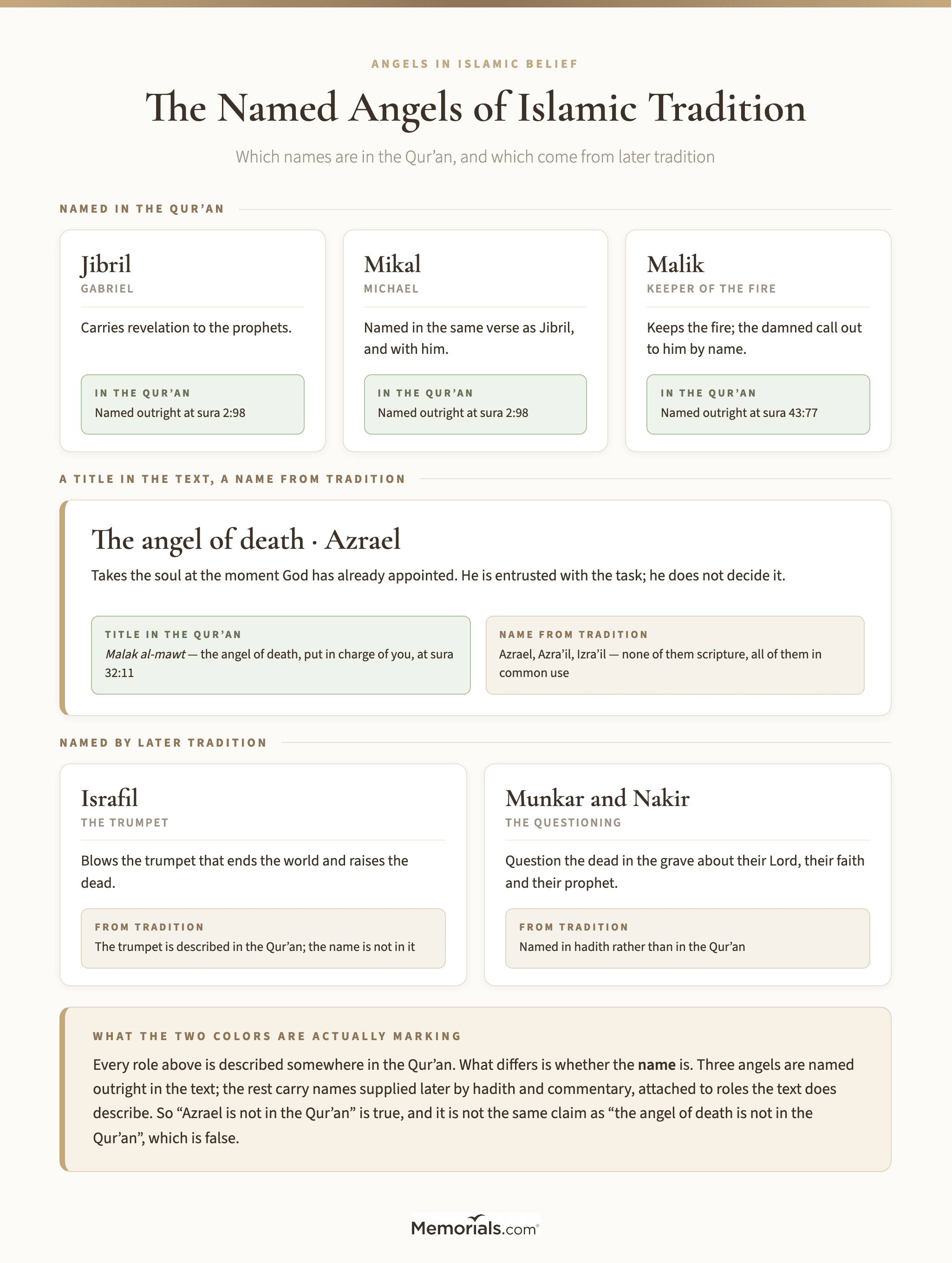
Jibril (Gabriel) carries revelation, and he is named in the Qur'an, alongside Mikal (Michael), at sura 2 verse 98. These two are the only major angels the text names outright.
Israfil blows the trumpet that ends the world and raises the dead. The Qur'an describes the trumpet repeatedly; the name Israfil comes from hadith and later tradition, not from the text.
The angel of death takes the soul. Title in the Qur'an, name from tradition, as above.
Munkar and Nakir question the dead in the grave. Their names come from hadith. They are a separate pair with a separate job, and they are the angels most often confused with the angel of death, because both belong to the same few hours.
Malik keeps the fire, and unusually he is named in the Qur'an, at sura 43 verse 77, where the damned call out to him.
Only three of these angels are named in the Qur'an itself — Jibril, Mikal and Malik. Israfil, Munkar, Nakir and Azrael are all names supplied by hadith and later tradition, attached to roles the text does describe. Knowing which column a name sits in is the difference between describing a tradition accurately and repeating what a search summary told you.
Not a Reaper: Where the Comparison Breaks Down
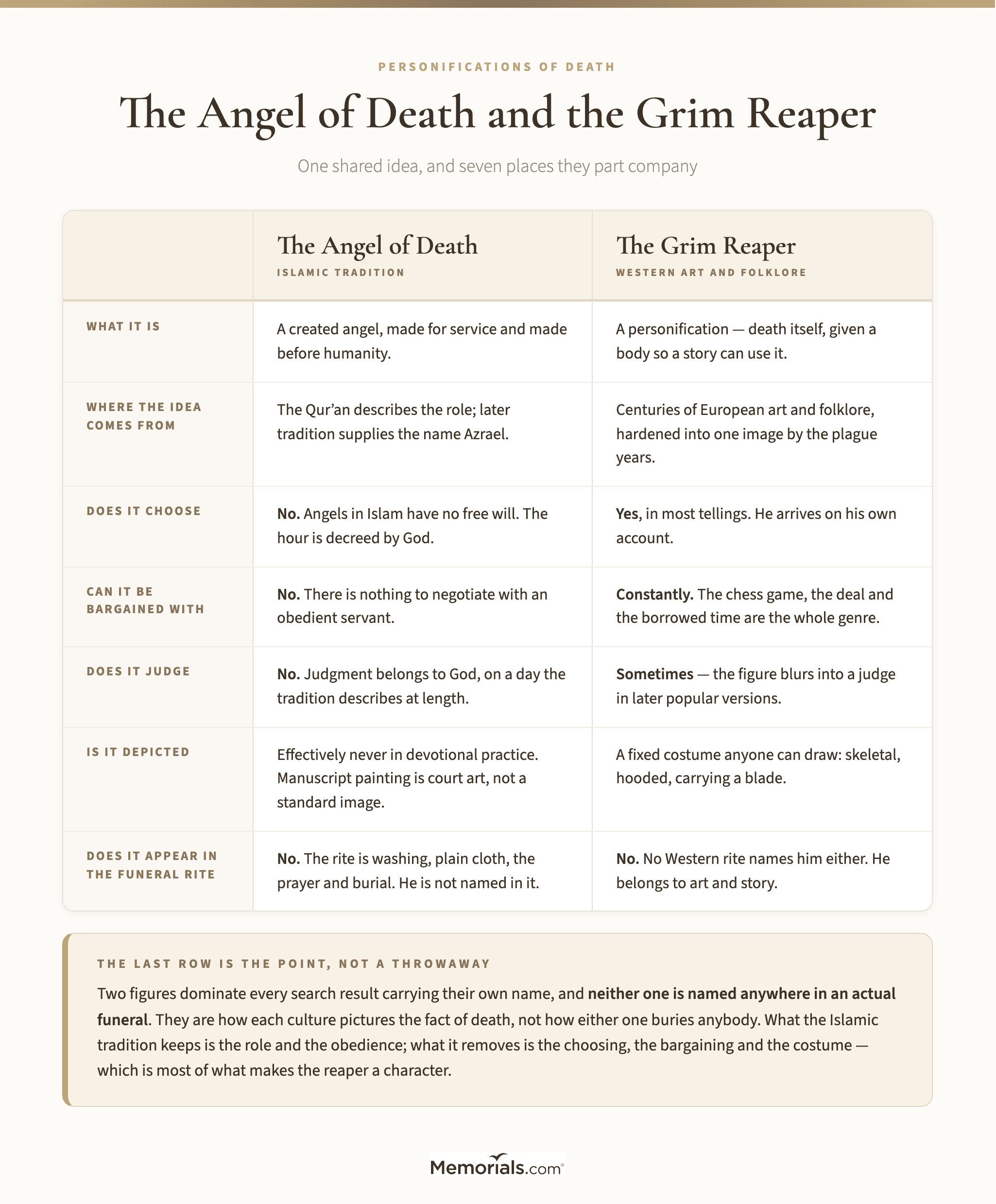
The Grim Reaper is the reference point almost every English-speaking reader brings, and the two figures share exactly one thing: both give the fact of death a face. Past that they diverge on everything that matters.
The reaper is his own agent. The angel is not. Death in the Western figure is something the reaper does; in Islam it is something God decrees and an angel executes. Strip that out and you have not simplified the belief, you have replaced it.
There is no scythe, no skeleton, no hood. The robe, the blade and the hourglass are a specific European visual inheritance, hardened by centuries of plague art. Nothing in Islamic tradition supplies a costume, because — see the next section — Islamic tradition largely does not supply pictures.
He cannot be bargained with, tricked, or delayed. The chess game, the deal, the borrowed time: all of it belongs to a tradition where death is an adversary. Here he is an obedient servant, and there is nothing to negotiate with.
And he does not judge. Judgment in Islam is God's, on a day the tradition describes at length. The angel who takes the soul has no part in weighing it.
Other traditions divide the work differently, and the comparison is the fastest way to see the shape of this one. Greek myth splits the job in two, giving the escort and the ruler of the dead separate names and separate temperaments — the distinction behind Thanatos and Hades. Japanese folklore goes the other way and offers an uncountable class of spirits with no fixed appearance and no agreed number, which is what makes the Japanese shinigami so unlike a single named agent with one defined task.
The two figures agree on one thing and separate on the rest. The Grim Reaper acts on his own account, carries a fixed set of props, and can be argued with in every story he appears in. The angel of death acts only on command, has no agreed appearance, cannot be delayed, and takes no part in judging anyone.
Why There Are No Pictures of Him
This is the part that surprises readers most, and it explains something they have already noticed without being able to name it.
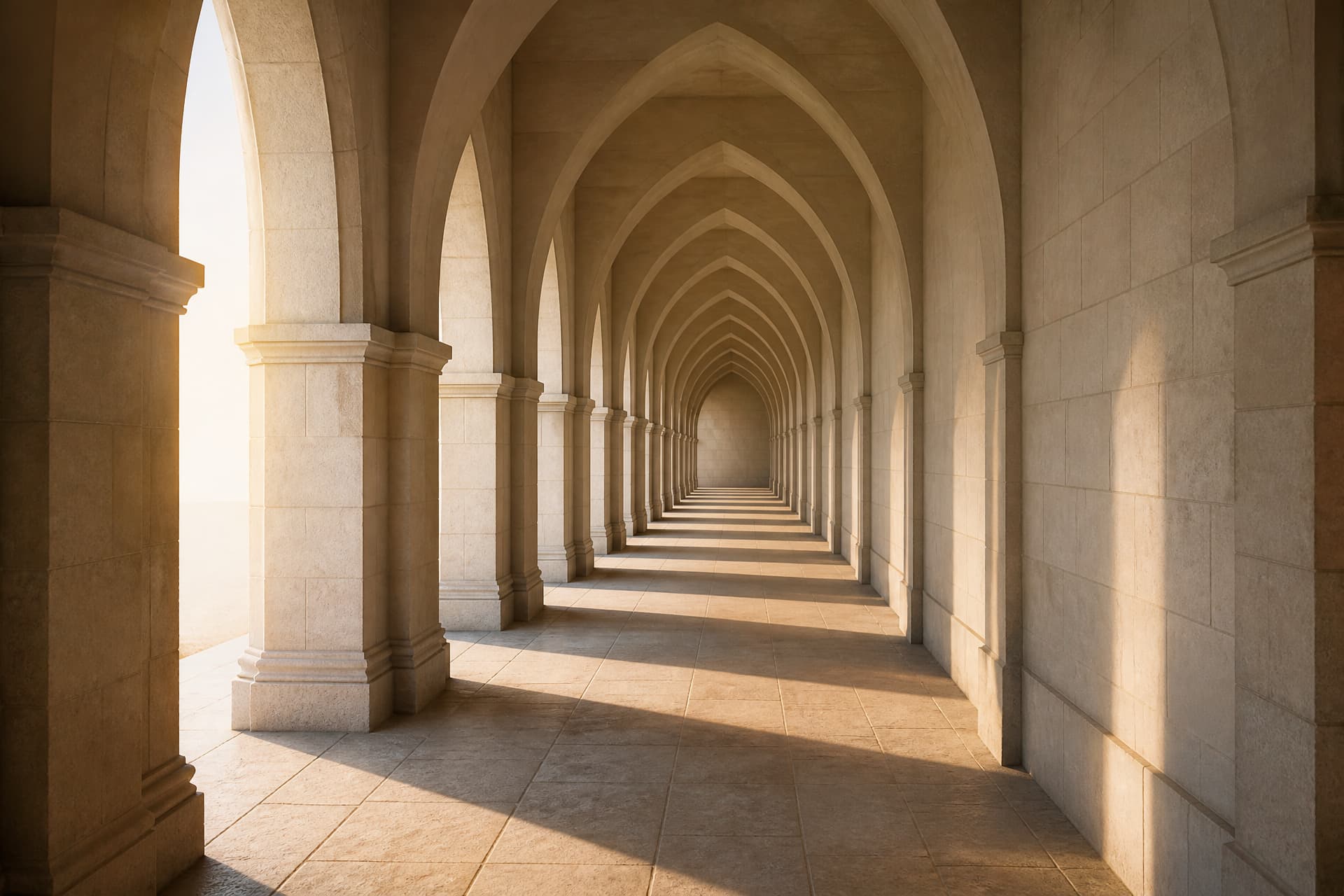
Search for images of Azrael and you get fantasy art, comic panels and album covers. What you do not get is a devotional tradition of depicting him, because most Islamic religious practice avoids figural representation of angels and prophets altogether. The visual culture developed instead toward calligraphy, geometry and architecture — which is why a mosque gives you patterned light and inscribed text where a cathedral gives you painted figures.
The rule is not absolute, and it would be inaccurate to say Muslims never depicted angels: Persian and Ottoman manuscript painting produced a great deal of angelic imagery, sometimes with the faces of sacred figures veiled or left blank. But that is court art rather than devotional practice, and it never produced a standard, recognizable Azrael the way European art produced a standard reaper.
The consequence is that Islam has no equivalent of the usual symbols of grief and mourning that Western culture accumulated — no skull, no hourglass, no weeping figure, no winged blade. What it has instead is a set of words and a set of actions: what is said at the moment of death, what is done with the body, how quickly, and in what order.
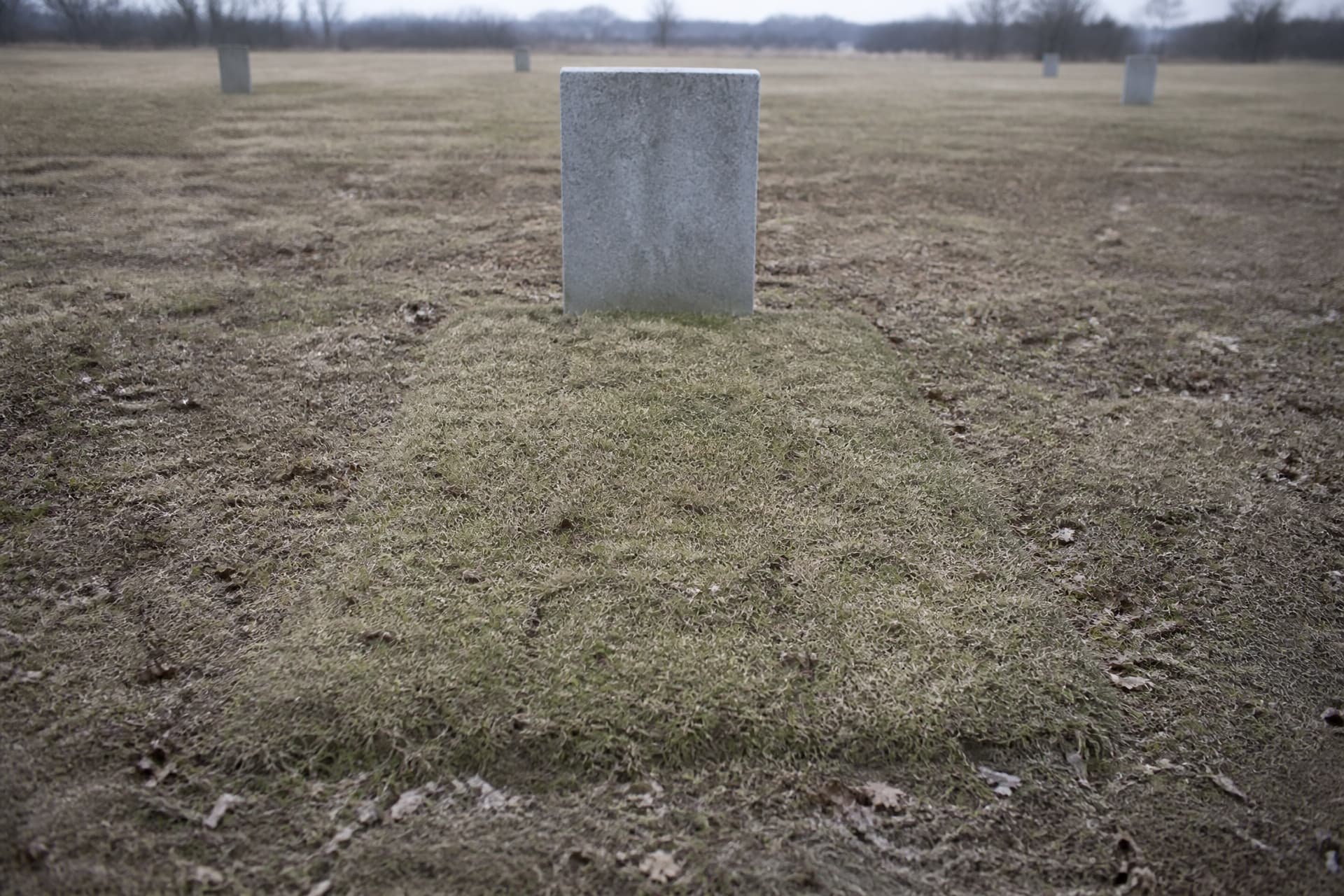
Muslim graves are traditionally kept plain, and in many communities the preference runs to a simple raised mound with a modest stone rather than anything elaborate. The restraint is deliberate: the point of the grave is the person in it, not the monument over it.
The Appointed Time
Islamic belief holds that every life has an ajal — a term, a fixed span — and that it is set before it is lived.
Sura 3, verse 145 says no soul dies except by God's permission, at a time written down. Sura 63, verse 11 says that when that time arrives, God does not postpone it. Between them the two verses close off the entire genre of stories in which death is dodged, and they explain why the angel of death cannot be a character with motives. He arrives when the term ends. He is the last step of a decision, not the decision.
For a believer this is meant to be a comfort rather than a fatalism, and in practice that is roughly how it functions: the hour was never yours to control, so the guilt of having failed to prevent it is misplaced. It is also why you will hear survivors say the death came at its time even when it came far too early. They are not minimizing anything. They are stating a belief about who was in charge.
It makes an interesting contrast with European folk practice, where the hour of a death was something to be read and marked — the household tradition of a clock stopping at the moment of death treats the time as an omen to be interpreted. Islamic tradition treats it as an appointment that was always in the diary.
The idea behind ajal is that the span was set before it was lived. It is meant to land as relief rather than resignation — nobody failed to prevent an appointment they were never holding the diary for.
What Happens After the Soul Is Taken
The tradition is detailed here, and it is also the point at which sources start to vary, so read what follows as the broad shape rather than as a fixed sequence everyone agrees on.
The dead are understood to enter barzakh — a barrier or interval between this life and the resurrection, named in sura 23 verse 100. It is not a final destination and it is not the judgment. It is the waiting, and the tradition describes it as being experienced rather than slept through.
Within it comes the questioning. Hadith describe two angels, named in tradition as Munkar and Nakir, putting questions to the dead in the grave about their Lord, their faith and their prophet. The details differ across collections and across schools, and a great deal of popular material presents one version as though it were the only one. What is broadly shared is the idea that the grave is not inert: something happens there, and it is connected to how the life was lived.
Then, at the end, the trumpet, the resurrection of the body, and the judgment — which is God's, and in which the angel of death has no role whatsoever. He was the doorway. He is not the room.
Barzakh is usually translated as barrier or interval — the stretch between a death and the resurrection. It is a waiting rather than a verdict, which is why Islamic tradition places so little weight on the moment of dying and so much on what preceded it.
What This Means at the Funeral
If you have been invited to a Muslim funeral, the beliefs above translate into a rite that is fast, plain and communal. Practice varies by school, by country and by family, but the elements below are widely shared.
Speed. Burial happens as soon as it reasonably can, often within a day, where local law and the coroner allow. There is usually no visitation period of the kind American funerals build in, and if you are waiting for an invitation to a viewing, it may not be coming.
Washing. The body is washed — ghusl — by family members or community members of the same gender, in a prescribed way.
The plain white cloth. The body is then wrapped in kafan: simple, undyed cloth, commonly three pieces for a man and five for a woman, though this varies. No decoration, no personal clothing, nothing that marks out wealth. The uniformity is the message. Islamic tradition's use of plain white here runs against the Western instinct that mourning is dark, and it is one of the clearest examples of how much the colors of remembrance differ between traditions.
The prayer.Salat al-janazah is a short funeral prayer offered standing, without the bowing and prostration of ordinary prayer. The janazah prayer is a communal obligation, which is part of why Muslim funerals are often much better attended than the family's own social circle would predict.
Burial in the earth, facing Mecca. The body is laid in the grave on its right side, oriented toward the qiblah. Where local rules require a rigid container, the plainest available is the norm.
Cremation is not practiced. Every major school of Islamic law holds that the body must be buried intact, and cremation is prohibited. This is worth knowing before you offer, suggest or assume anything, and it puts Islam alongside its Abrahamic neighbors on this point more than it separates them — Jewish views on cremation run in the same direction for related reasons. The Christian committal formula, ashes to ashes, dust to dust, makes the same claim about returning a body to the earth, and Muslim practice takes it more literally than most churches now do.
Kafan is undyed cloth and nothing else — no ornament, no personal clothing, no indication of who the person was in life. A tradition that dresses everyone identically at the end is making a point about what death does to social rank.
If You Have Been Invited to a Janazah
The most useful sentence on this page is this one: ask the family, or whoever invited you. It is an ordinary question, it is not an imposition, and every Muslim family in a mixed community has answered it before. "Is there anything I should know about what to wear or when to arrive?" is enough.
Three things are worth separating, because pages like this one tend to flatten them together and make everything sound like a rule.
Requirements. Shoes come off where you are told they come off. Modest dress — covered shoulders, covered knees — is expected of everyone. Many mosques seat men and women separately, and you follow whatever arrangement you find.
Customs. Head covering for women is expected in most mosques and is normal at a funeral; bring a scarf. Subdued clothing is right, but there is no requirement that it be black, and our guide to funeral attire covers the general question of what to wear when the tradition is not your own.
Regional practice. Almost everything else. Whether food is brought, how long the family receives visitors, what is said, whether flowers are welcome — all of it varies enormously by community, and none of it is something you can look up and be right about.
You will not be tested. Turning up, standing quietly, and saying you are sorry is nearly the whole of it.
Frequently Asked Questions
Is Azrael mentioned in the Qur'an?
No. The Qur'an refers to malak al-mawt, the angel of death, and never gives him a personal name. Azrael comes from later Islamic tradition and from related angelology outside Islam. Most Muslims use the name freely, but it is not scripture, and the distinction is worth keeping.
Who is the angel of death in Islam, and what is his name?
He is the angel entrusted by God with taking the soul at its appointed time, described in sura 32 verse 11. His name in the Qur'an is his function — the angel of death. In tradition he is Azrael, which is also spelled Azra'il and Izra'il.
Is the angel of death good or evil in Islam?
Neither, in the sense the question intends. He is an angel, and angels in Islam have no free will and no independent purpose; he carries out a command. He is not an adversary, not a tempter, and not a figure to be feared in the way the Grim Reaper is. Fear in Islamic teaching attaches to the judgment, not to the messenger.
Does the angel of death take every soul?
That is the tradition's position, and it accounts for the plural passages in the Qur'an by holding that the angel of death has assistants working under him. So the same event can be described as one angel or as many without contradiction.
What happens immediately after the angel of death takes a soul?
The dead enter barzakh, the interval before the resurrection, and hadith describe two angels questioning them in the grave. In this world, the funeral moves quickly: washing, wrapping in plain white cloth, the funeral prayer, and burial, often within a day.
The Difference Between a Reaper and a Servant
Almost everything that makes the Western death figure interesting as a character — the choosing, the bargaining, the menace — is precisely what Islamic tradition removes. What is left is narrower and, for people who hold it, considerably easier to live with: a created being with no will of his own, arriving at an hour that was set long before, to carry out a decision that was never his.
That is why the bare query azrael islam returns a name attached to a role, rather than a personality. There is no myth cycle here, no stories in which he is outwitted, and no pictures. There is a title, a task, and a very short interval between the task and the burial.
If you are trying to understand a tradition other than your own because a death has put you in the middle of one, the reading that actually helps is usually about practice rather than about angels. Our guide to how faith and culture shape a family's choices sets several traditions side by side, and the rest of this hub covers the figures other cultures have put in the same role.