🏬Supersize Online Funeral Retailer🪦1000's of Headstones⚱️Over 10,000 Cremation Urns⚰️Caskets Overnight Delivery🛒Funeral & Memorial Superstore🚚FREE Shipping on ALL Orders👨👩👧👦Helping Families for over 20 Years💰Lowest Price Guarantee🏬Supersize Online Funeral Retailer🪦1000's of Headstones⚱️Over 10,000 Cremation Urns⚰️Caskets Overnight Delivery🛒Funeral & Memorial Superstore🚚FREE Shipping on ALL Orders👨👩👧👦Helping Families for over 20 Years💰Lowest Price Guarantee
🏬Supersize Online Funeral Retailer🪦1000's of Headstones⚱️Over 10,000 Cremation Urns⚰️Caskets Overnight Delivery🛒Funeral & Memorial Superstore🚚FREE Shipping on ALL Orders👨👩👧👦Helping Families for over 20 Years💰Lowest Price Guarantee🏬Supersize Online Funeral Retailer🪦1000's of Headstones⚱️Over 10,000 Cremation Urns⚰️Caskets Overnight Delivery🛒Funeral & Memorial Superstore🚚FREE Shipping on ALL Orders👨👩👧👦Helping Families for over 20 Years💰Lowest Price Guarantee
Search for a death song and you will be handed a playlist — ten beautiful tracks for a service, sorted by mood, with a note about which ones make people cry. Those lists are useful and we keep several of our own. They are also answering a different question than the one that was typed. In its older sense the phrase does not mean a song about death chosen by the living. It means a song made or sung by the person who is dying: a last statement, in music, by the one it is about.
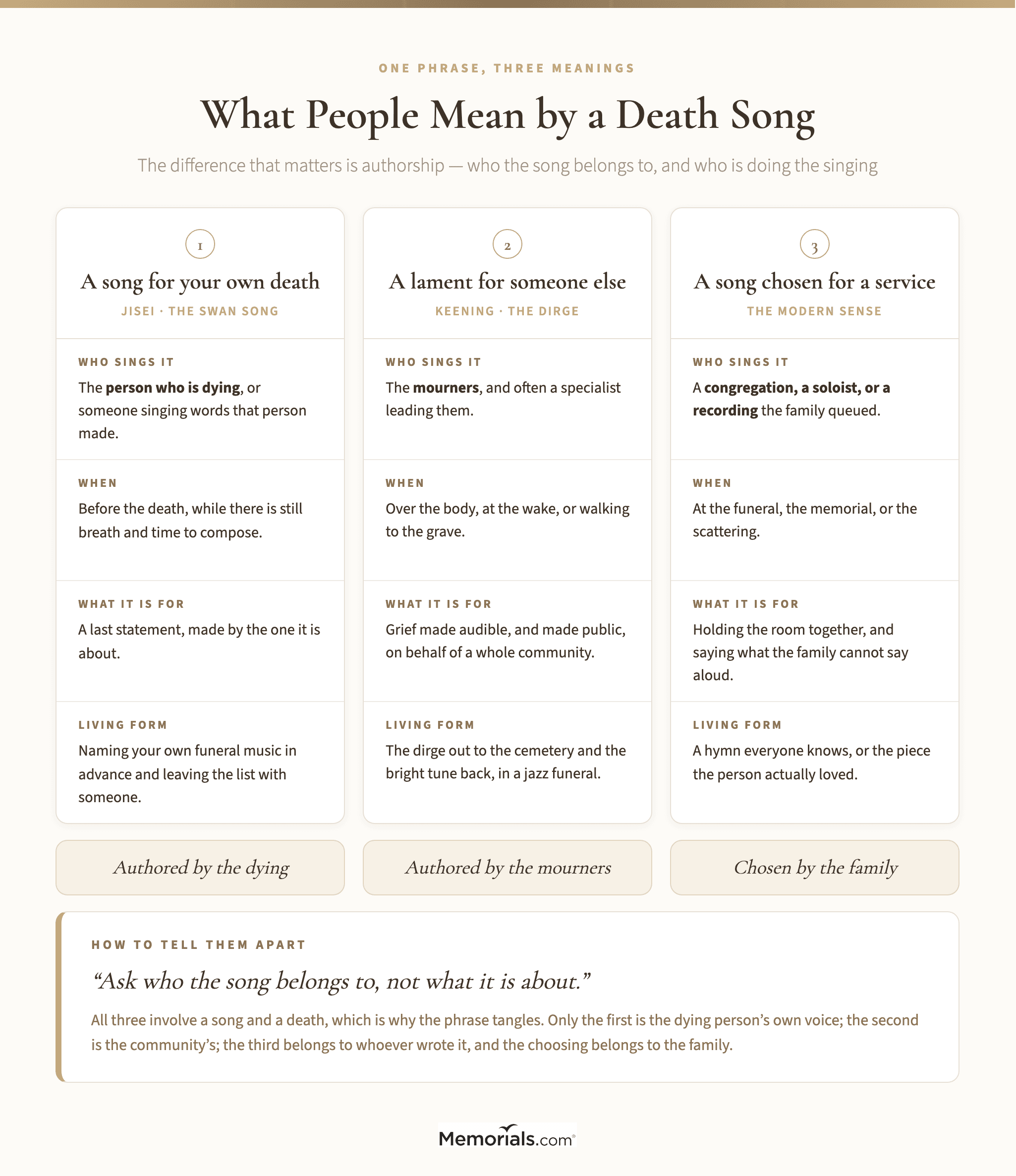
Three meanings have collected around the phrase, and they tangle because each of them involves a song and a death. This page pulls them apart — the song a person composes for their own end, the lament mourners sing for somebody else's, and the ordinary modern sense of a track picked out for a funeral or a scattering. If you are choosing music this week, the last three sections are the practical ones. If you met the phrase in a poem or a game and wanted to know where it came from, start here.
A song belongs in the death symbolism guide for the same reason a stopped clock or a white bird does. Every symbol in that collection is an ordinary thing a culture agreed would stand for the end of a life. A death song is that agreement made out of sound rather than out of an object, which is why it travels so easily and why almost every culture has some version of it.
What a Death Song Actually Is
The three senses are worth separating before anything else, because a reader who cannot tell them apart cannot find what they came for.
A song for your own death. Composed, chosen, or sung by the person who is dying, and understood by everyone present as their final word. This is the oldest sense and the narrowest. Its defining feature is authorship: the dying person is the one speaking.
A lament for somebody else's. Sung by mourners, over a body or at a wake or on the road to a grave. Nobody expects it to be original. Its power comes from the opposite of originality — it is the sound the community makes every time, and a family knows it is being mourned properly because the sound is the one they have heard before.
A song chosen for a service. The modern sense, and by far the most common. A recording, a hymn, a piece the person loved. Authorship belongs to whoever wrote it and the choosing belongs to the family.
These are not competing definitions so much as three answers to one question — who is the song for, and who is doing the singing. A song sits alongside the other symbols of grief and mourning in being a shared code: it works because a room full of people already knows what it means.
The three senses of the phrase, side by side. The difference that matters is authorship — who the song belongs to, and who is doing the singing.
The most familiar death song in English is a bird that does not exist. The ancient Greeks held that the mute swan, silent its whole life, sang once and beautifully as it died. Plato puts the belief in Socrates' mouth in the Phaedo, on the morning of Socrates' own execution: the swans sing loudest at the end, he says, not out of grief but out of gladness at where they are going. It is a rhetorical move as much as a natural-history claim — a man about to die comparing himself to a bird whose last sound is joyful.
The belief is not true. Mute swans do not sing as they die. It survived anyway, for centuries, because it names something people wanted to be true: that a life gathers itself at the end and says one clear thing. English kept the phrase long after it stopped believing the bird. A swan song is now any last performance — a final album, a retiring player's last game — and the funeral sense has almost drained out of it.
Birds carry more of this weight than any other creature. The same instinct that made a swan the emblem of a final voice makes a cardinal at the window feel like a message; bird symbolism in grief and remembrance runs through nearly every tradition on this list, usually as the thing that crosses between here and wherever the dead have gone.
The swan's last song is a myth that outlived its own disproof, because it names something people wanted to be true about the end of a life.
Songs Written for Your Own Death
The Japanese tradition of jisei is the clearest surviving version of the first sense. A jisei is a death poem, written near the end by someone who knows the end is near — Zen monks, poets, and members of the samurai class all composed them. They are short, often only a few lines, and the convention is not to explain oneself. A jisei tends to be an observation rather than a farewell: the weather, a plum branch, the fact of leaving. Some were set to music or chanted; most were simply written and left.
What makes the form remarkable is the discipline in it. The writer knows this is the last thing and refuses to use it for a summary. Compare that to what most of us would produce, given a page and the same knowledge, and the restraint starts to look like the whole point.
The phrase "death song" is also widely attached, in novels and films and popular retellings, to songs sung by Native American warriors facing death. That association is real in the sense that the phrase circulates that way in English. It is not something this page will describe, and the reason is worth stating plainly rather than leaving as an omission: "Native American" covers hundreds of distinct nations with genuinely different practices around dying and mourning, many of which hold explicit views about outsiders documenting or reproducing their funeral rites. A single summary would be wrong about nearly everyone it claimed to describe. If you have a specific tradition in mind, ask someone from it.
There is a living version of the first sense, and most people who use it never call it that. A person planning their own funeral in advance names the music. It gets written on a form, filed with a funeral home or left with a daughter, and it does exactly what a jisei does — it is the dying person's own voice, arriving after they can no longer speak. If that is where you are, the music sits alongside the other decisions on a funeral planning checklist, and it is one of the few items on that list nobody else can get right for you.
Naming your own music in advance is the modern form of the oldest one — the dying person's voice, arriving after they can no longer speak.
Laments, Keening, and the Sound of Grief
The second sense is louder and much older than the first. A lament is sung for the dead by the people left behind, and for most of human history it was not a private matter. It was performed, often by women, often by specialists, and often at a volume that would startle a modern funeral congregation.
Irish keening — caoineadh — is the version English speakers are most likely to have heard of. A keener led the crying at a wake, working over the body in a wailing chant that named the dead person, praised them, and reproached them for leaving. It was skilled work, and in some places paid work. Church authorities disapproved of it for a long time and it faded, but the shape of an Irish wake still shows where it sat; the singing, the storytelling, and the long night with the body are all pieces of the same rite, and you can read what survives in Irish wake traditions.
A dirge is the same idea, slowed down and formalized: a slow, heavy piece played or sung in procession. The word carries the pace with it. Almost every tradition that walks its dead somewhere has one, because a slow tune is the simplest way to make several hundred people move at the same speed.
The New Orleans jazz funeral is the best-known place where both halves survive intact. The band plays a dirge on the way to the cemetery and something bright and fast on the way back, and the crowd that falls in behind the band on the return — the second line — is people who did not know the deceased and came anyway. The music does the whole emotional job of the day, in order: grief first, then release, then the street.
A lament is not a private thing. For most of history it was performed out loud, in public, by people who were good at it.
Christian Funeral Songs and the Requiem
Western funeral music grew mostly out of one liturgy. The Requiem Mass takes its name from its opening line — requiem aeternam dona eis, grant them eternal rest — and its sections were set to music so often, by so many composers, that the form outgrew the service and became a concert piece. Two parts of it still shape what a funeral sounds like. The Dies Irae, the day of wrath, is the terrifying one, and its plainchant melody has been quoted in secular music for centuries as a shorthand for death. The In paradisum, sung as the body leaves the church, is the opposite: quiet, high, and consoling. Medieval Europe had a visual companion to the same idea in the Dance of Death, in which a skeleton leads people of every rank away in a line — a procession set to music, painted on church walls.
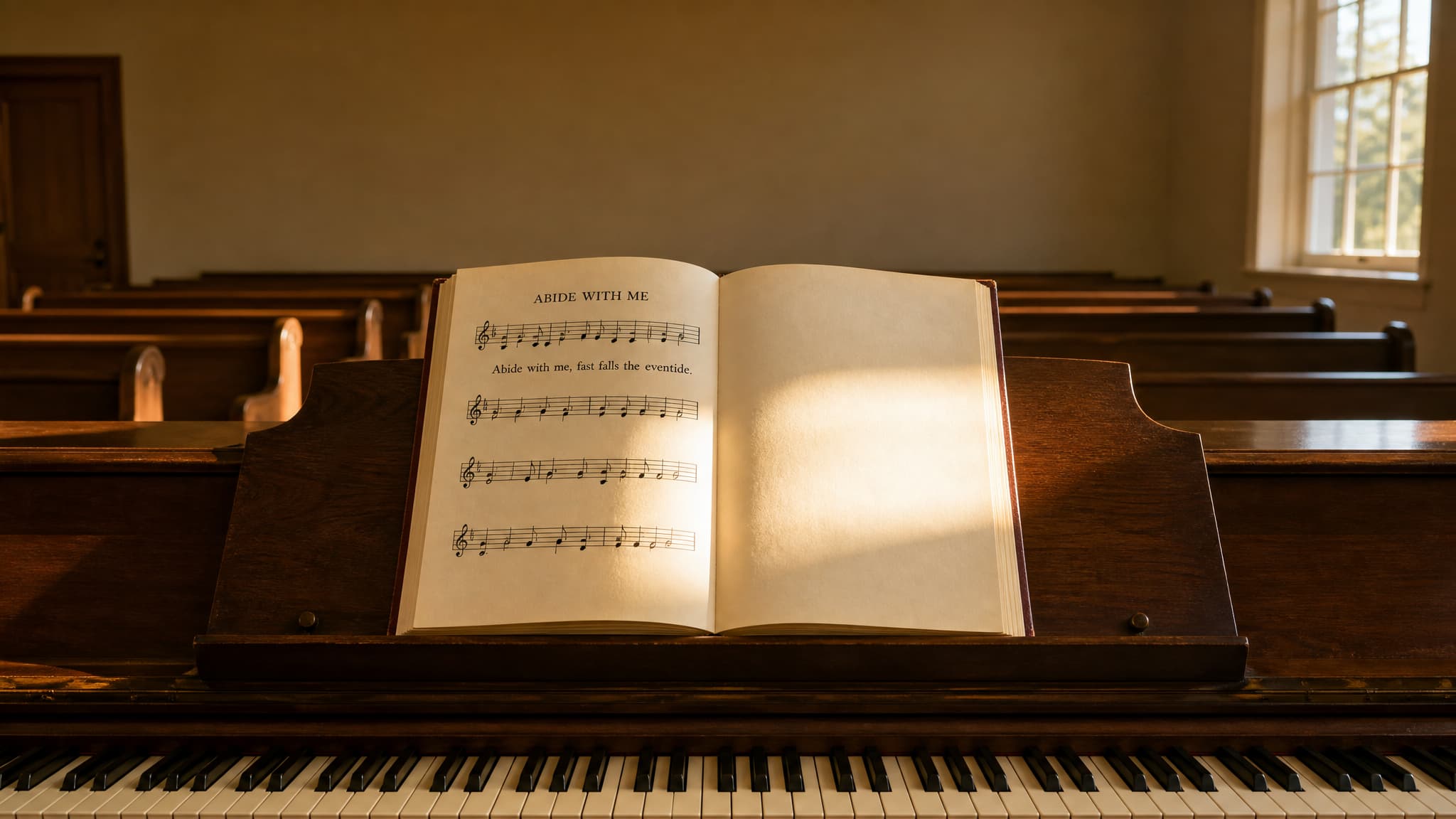
Most families are not choosing between Latin settings. If you want a funeral song Christian congregations can actually sing together, the answer is nearly always a hymn, because a hymn is built to be sung by people who cannot sing. "Amazing Grace" by John Newton and "Abide with Me" by Henry Francis Lyte have carried more funerals than any requiem ever will, and both work with an organ, a guitar, or nobody accompanying at all. African American spirituals occupy a similar place and are often read as coded farewell songs — "Swing Low, Sweet Chariot" and "Deep River" both describe a crossing, and that reading is a common one rather than a settled fact.
Scripture set to music is the other durable choice, and one text outruns the rest. Psalm 23 in the King James Version — The Lord is my shepherd; I shall not want — has been set as a metrical hymn, a choral anthem, and a solo, and a congregation that knows nothing else will know that. If ashes rather than a burial are involved, there is a separate question about which readings fit; we cover it in the guide to Bible verses for scattering ashes.
The dove threads through all of it — in the words, in the windows, and sometimes released outside afterward. What a dove represents in this setting is peace and the departing soul at once, which is why it turns up in hymn texts far more often than any other bird.
Songs for Scattering Ashes at Sea
People looking for songs for scattering ashes at sea are asking a narrower question than it appears, and the difficulty is acoustic rather than emotional. A boat deck is the worst venue you will ever choose music for. There is engine noise, there is wind across the microphone of whatever phone you brought, there is no seating and no sound system, and everyone is standing up holding something. A piece that filled a chapel will vanish completely.
Three things actually work out there. A single unaccompanied voice carries further than a recording, because a human voice cuts through wind in a way a small speaker cannot. A short piece beats a long one — two minutes on a moving deck is longer than it sounds. And playing the music before the ashes go, rather than during, spares you the problem of a track still running while people are trying to work out whether the moment has ended.
Sea-themed choices are the obvious route and they are obvious for a reason: a hymn like "Eternal Father, Strong to Save" was written for people at sea, and "Amazing Grace" on a single pipe or a single voice is close to unbeatable in open air. But the person's own music beats the theme every time. If they sailed, use what they played on the boat.
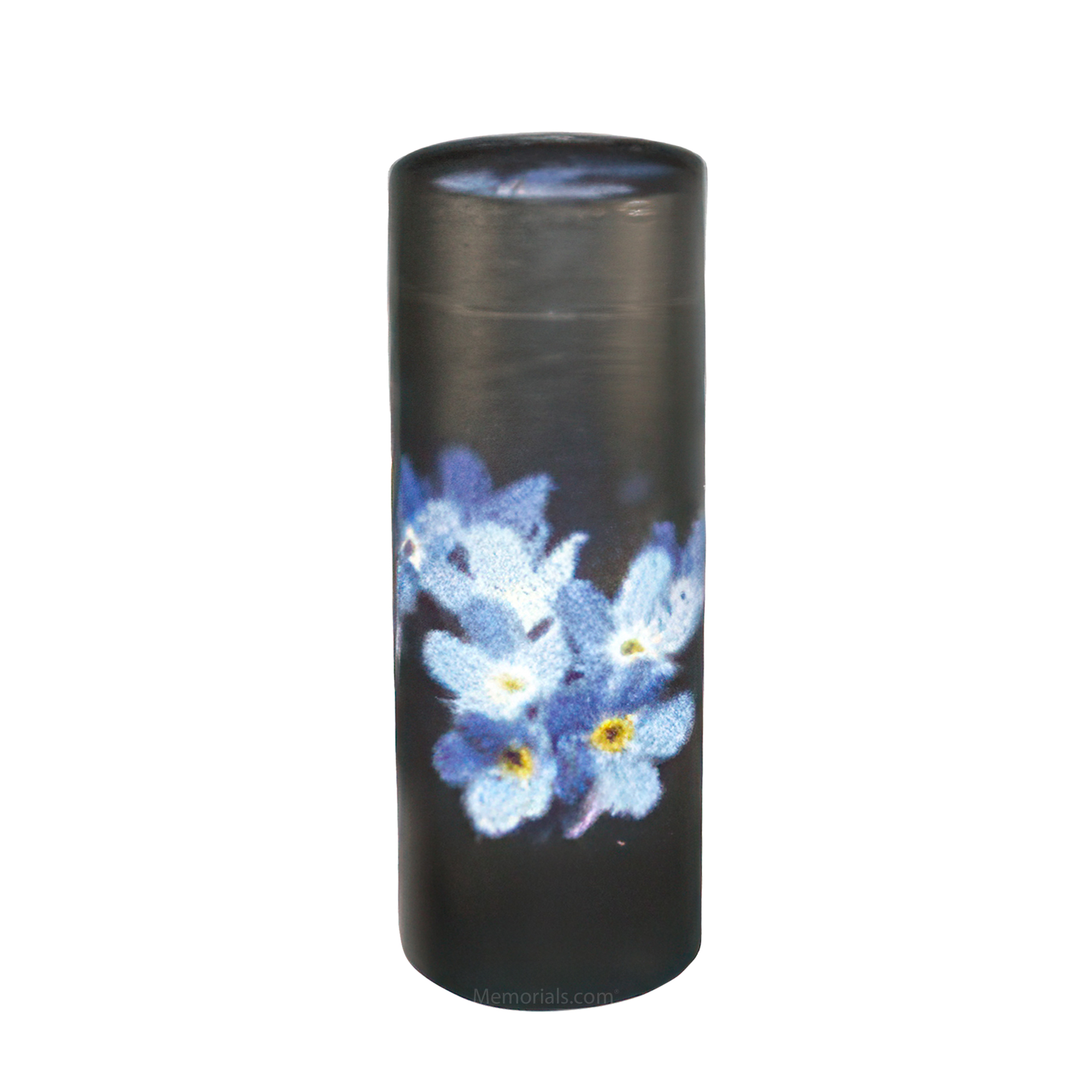
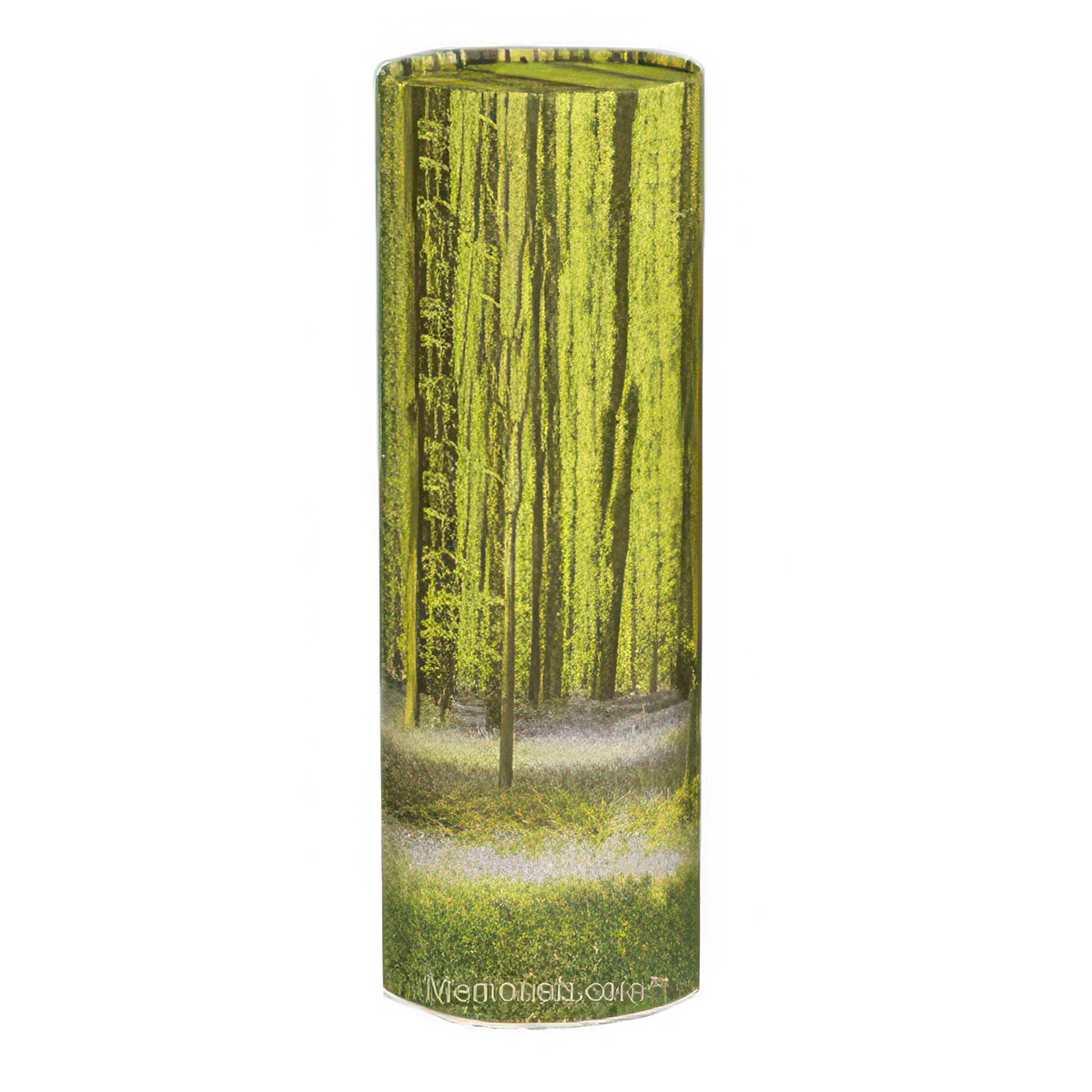
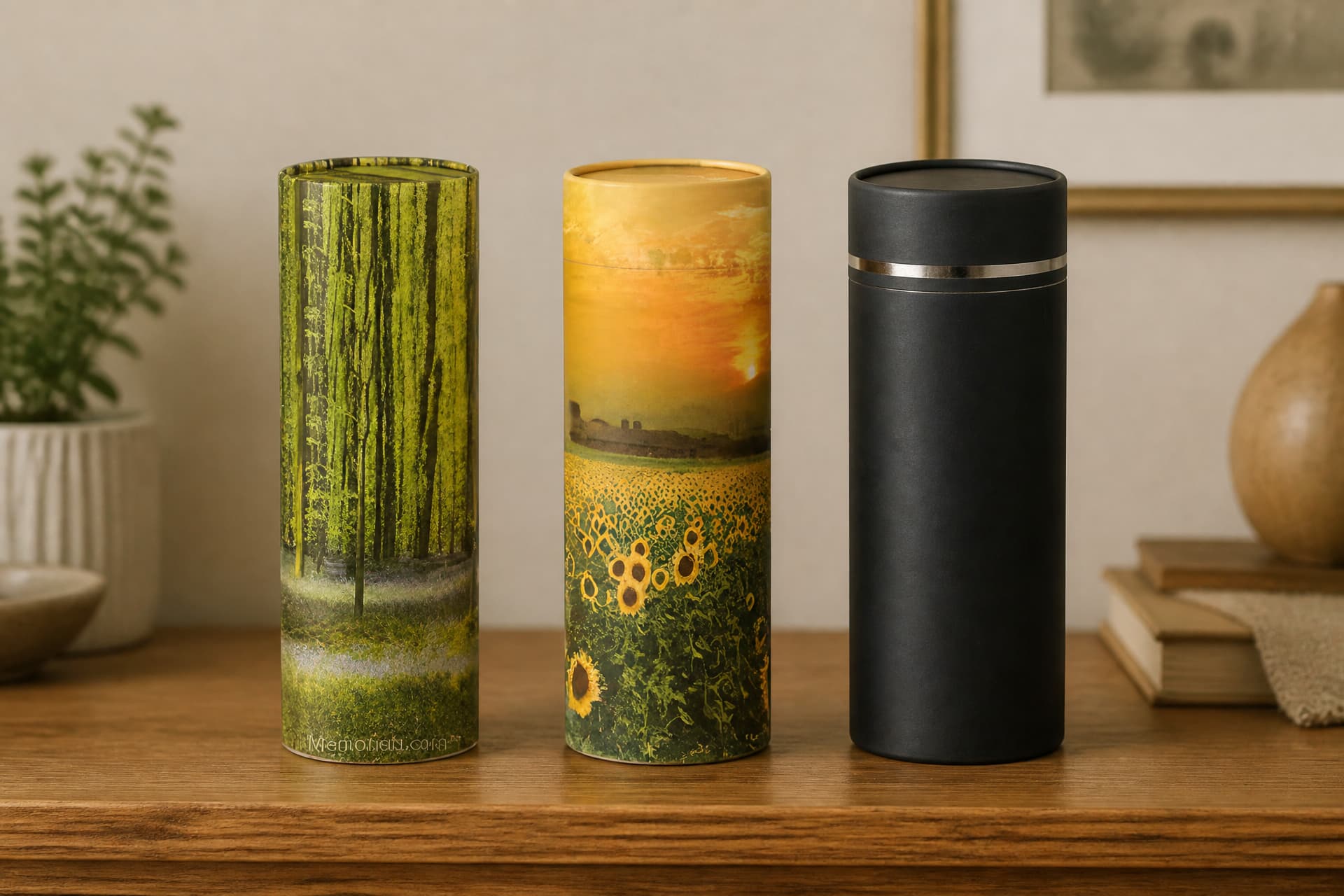
The container matters more here than at any other kind of service, because it is the only piece of equipment in the ceremony. A scatter urn is designed to release ashes in a controlled stream instead of a cloud, which is the difference between a dignified moment and a scramble; some are made to be lowered into the water and dissolve. Our guide to scattering ashes covers the mechanics and the permissions, and there is a companion piece on what to say when scattering ashes for the words that go around the music.
Most people arriving at this decision are not weighing traditions. They have a service in a few days and a list of songs that all seem wrong. Three questions settle it faster than any list will.
Whose taste is this? The strongest choice is almost always the music the person actually loved, even when it is loud, unserious, or embarrassing. A room can hold one song that makes people laugh. What a room cannot hold is a piece chosen because it seemed appropriate and meant nothing to anybody in it.
Where does it sit? A song played as people arrive is doing a completely different job from one played at the committal. The first is furniture and can be almost anything. The second is the emotional center of the day and needs to be short, familiar, and survivable.
Who performs it? A recording is the safe answer and there is no shame in it. Live singing is stronger and riskier, and the risk is not the singer's ability — it is that grief takes the voice without warning. If someone is singing, have the recording queued.
After that it is a matter of picking, and there is no reason to start from nothing. Our list of the best funeral songs is the broad one, and uplifting funeral songs is the one to open if the family has asked for a celebration rather than a mourning. A song and a eulogy do the same job by different means, so if you are writing one as well, the guide to writing a eulogy is worth reading before you commit to either.
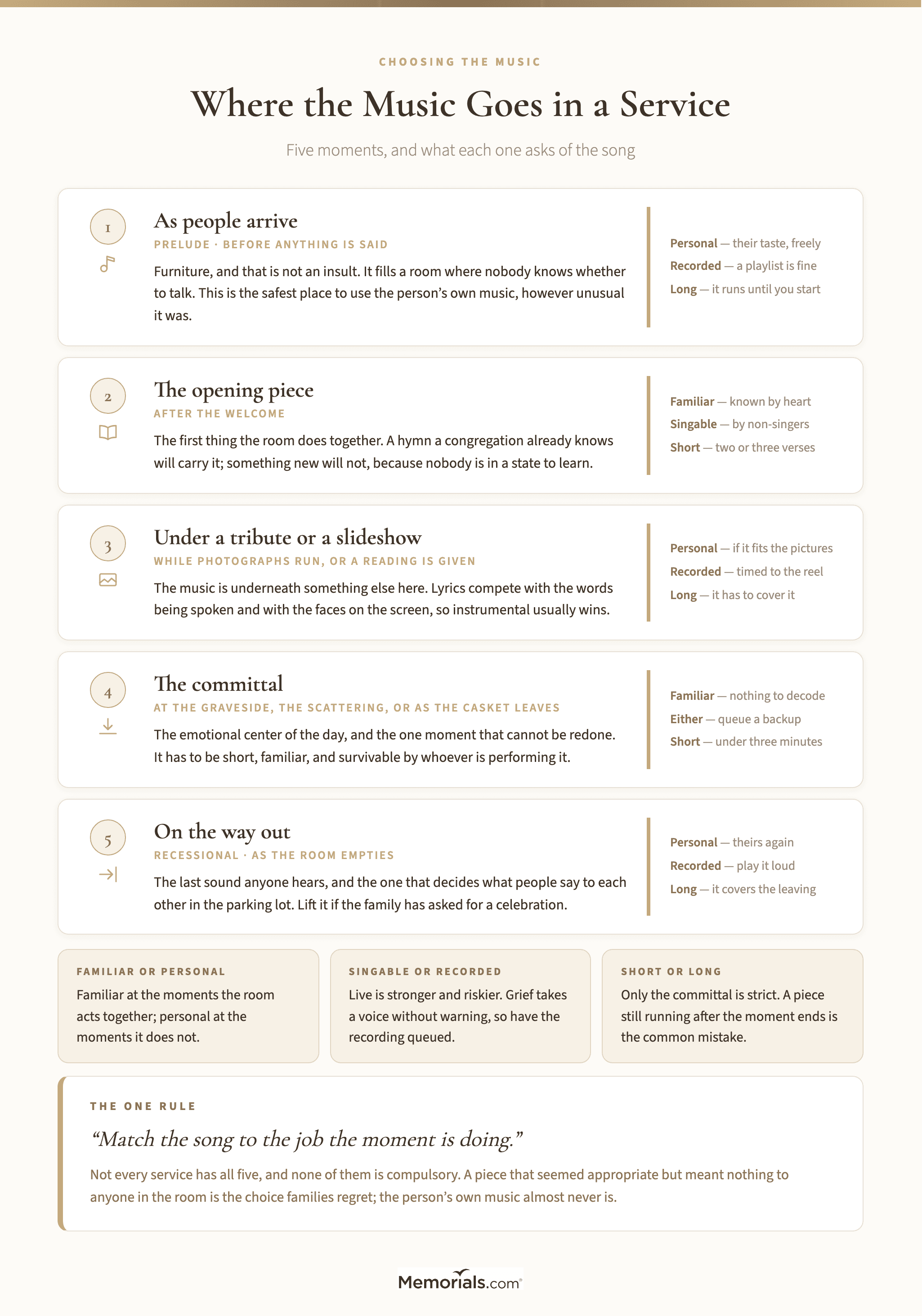
Music enters a service at five points, and each one asks for something different — familiar or personal, singable or recorded, short or long.
Frequently Asked Questions
What is a death song?
In its original sense, a song composed or sung by a person who knows they are dying, understood as their last statement. The term is also used for a lament sung by mourners for someone who has died, and loosely for any song chosen to be played at a funeral or memorial. The three senses differ by who is singing and who the song belongs to.
Is a swan song the same as a death song?
It comes from the same idea. Ancient Greek belief held that the mute swan sang once as it died, and Plato has Socrates invoke it in the Phaedo. English kept the phrase for any final performance and mostly dropped the funeral meaning, so a swan song today is a retirement, not a death.
What is the difference between a dirge and a lament?
A lament is any sung expression of grief for the dead, of any speed or setting. A dirge is a specific kind — slow, heavy, and usually processional, written to be played while people are walking. Every dirge is a lament; most laments are not dirges.
What is a good Christian funeral song?
A hymn the congregation already knows, because it can be sung by people who are not singers and who are not in a state to learn anything. "Amazing Grace" and "Abide with Me" are the two most-used in English, and a setting of Psalm 23 is the most durable scriptural choice. Ask the officiant what the church usually sings; they will have three suggestions ready.
What music works for scattering ashes at sea?
Something short, and either a single unaccompanied voice or a recording you have tested outdoors. Wind and engine noise will erase anything subtle. Play it before the scattering rather than during, so the piece is not still running while people are working out whether the moment has finished.
When the Song Is the Last Thing You Do
Almost every funeral rite saves the music for the end. The band on the way back from the cemetery, the In paradisum as the body leaves the church, the one song at the rail of a boat — the pattern is consistent enough across unrelated traditions that it is probably telling us something about how endings work. A speech closes a subject. A song does not close anything; it just stops, and leaves the room with the feeling still in it. That is a better shape for a goodbye than a conclusion is.
The words said over a committal are almost always older than anyone present, and ashes to ashes, dust to dust is the line most people can supply from memory without knowing where it comes from. Music does the same work in the same moment, and the two were designed to be used together: a fixed text, said by the officiant, and a chosen piece that belongs to this family and no other.
If a scattering is where your service is heading, the container is the one thing worth choosing carefully in advance, because it is what everybody will be looking at while the music plays. It is a small decision with a long memory attached, and it is easier made now than on the morning.