🏬Supersize Online Funeral Retailer🪦1000's of Headstones⚱️Over 10,000 Cremation Urns⚰️Caskets Overnight Delivery🛒Funeral & Memorial Superstore🚚FREE Shipping on ALL Orders👨👩👧👦Helping Families for over 20 Years💰Lowest Price Guarantee🏬Supersize Online Funeral Retailer🪦1000's of Headstones⚱️Over 10,000 Cremation Urns⚰️Caskets Overnight Delivery🛒Funeral & Memorial Superstore🚚FREE Shipping on ALL Orders👨👩👧👦Helping Families for over 20 Years💰Lowest Price Guarantee
🏬Supersize Online Funeral Retailer🪦1000's of Headstones⚱️Over 10,000 Cremation Urns⚰️Caskets Overnight Delivery🛒Funeral & Memorial Superstore🚚FREE Shipping on ALL Orders👨👩👧👦Helping Families for over 20 Years💰Lowest Price Guarantee🏬Supersize Online Funeral Retailer🪦1000's of Headstones⚱️Over 10,000 Cremation Urns⚰️Caskets Overnight Delivery🛒Funeral & Memorial Superstore🚚FREE Shipping on ALL Orders👨👩👧👦Helping Families for over 20 Years💰Lowest Price Guarantee
A black band on a coat sleeve. A cardinal at the feeder on the morning of a funeral. A stone lamb on a child's grave. Symbols of grief do a job that sentences usually cannot: they make a private loss legible to strangers, so that the person carrying it does not have to keep explaining. A neighbor who sees the band knows not to ask how your week has been. That is the whole function, and it is why almost every culture on earth has invented some version of it.
This page is the map. It gathers the icons mourners have used across faiths, centuries and continents, says what each one traditionally meant, and points to the article that goes deeper on any one of them. It is the front door to our death symbolism guide, which covers omens, mythology and mourning customs in more detail than any single page can.
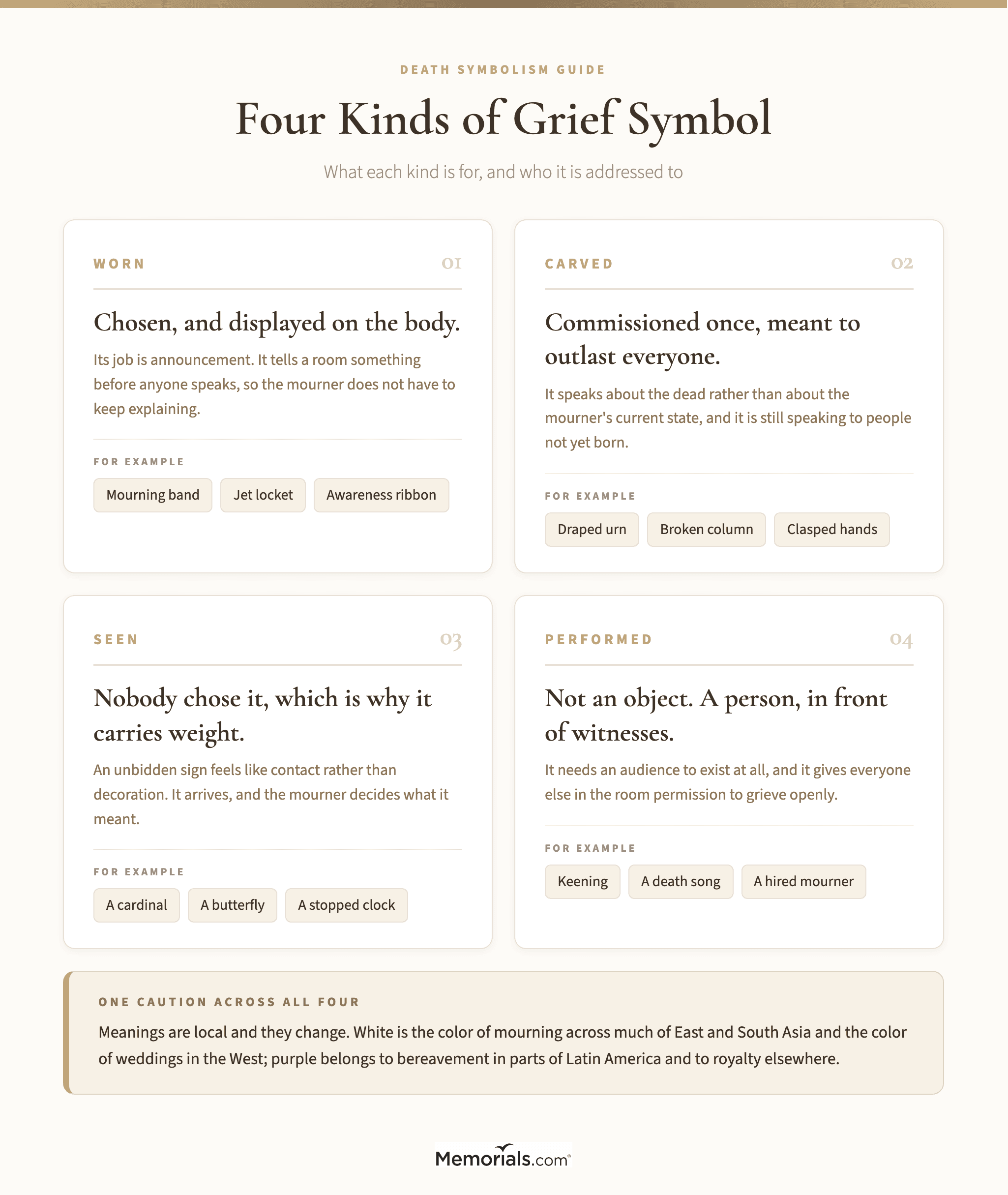
It helps to notice that mourning symbols are not all the same kind of object. They fall into four groups, and the group tells you what the symbol is for.
Some are worn. An armband, a black dress, a locket, a ribbon. These are chosen deliberately and displayed on the body, and their job is announcement — they tell a room something before anyone speaks.
Some are carved. A draped vessel, a broken column, two hands clasped in farewell. These are commissioned once and meant to last for generations, so they say something about the dead rather than about the mourner's current state.
Some are seen. A bird that lands on the railing. A butterfly in a room with the windows shut. A clock that stops. Nobody chose these, which is exactly why they carry so much weight: an unbidden sign feels like contact rather than decoration.
And some are performed. Keening at a graveside, a song sung for the dying, a professional mourner hired to weep in public. Here the symbol is not an object at all. It is a person doing something in front of witnesses.
One caution runs through all four. Meanings are local, and they change. White is the color of mourning across much of East and South Asia and the color of weddings in the West. Purple belongs to bereavement in parts of Latin America and to royalty elsewhere. If you want the color question answered properly, we have a full guide to what color represents remembrance and how those associations differ by country.
Symbols You Can Keep
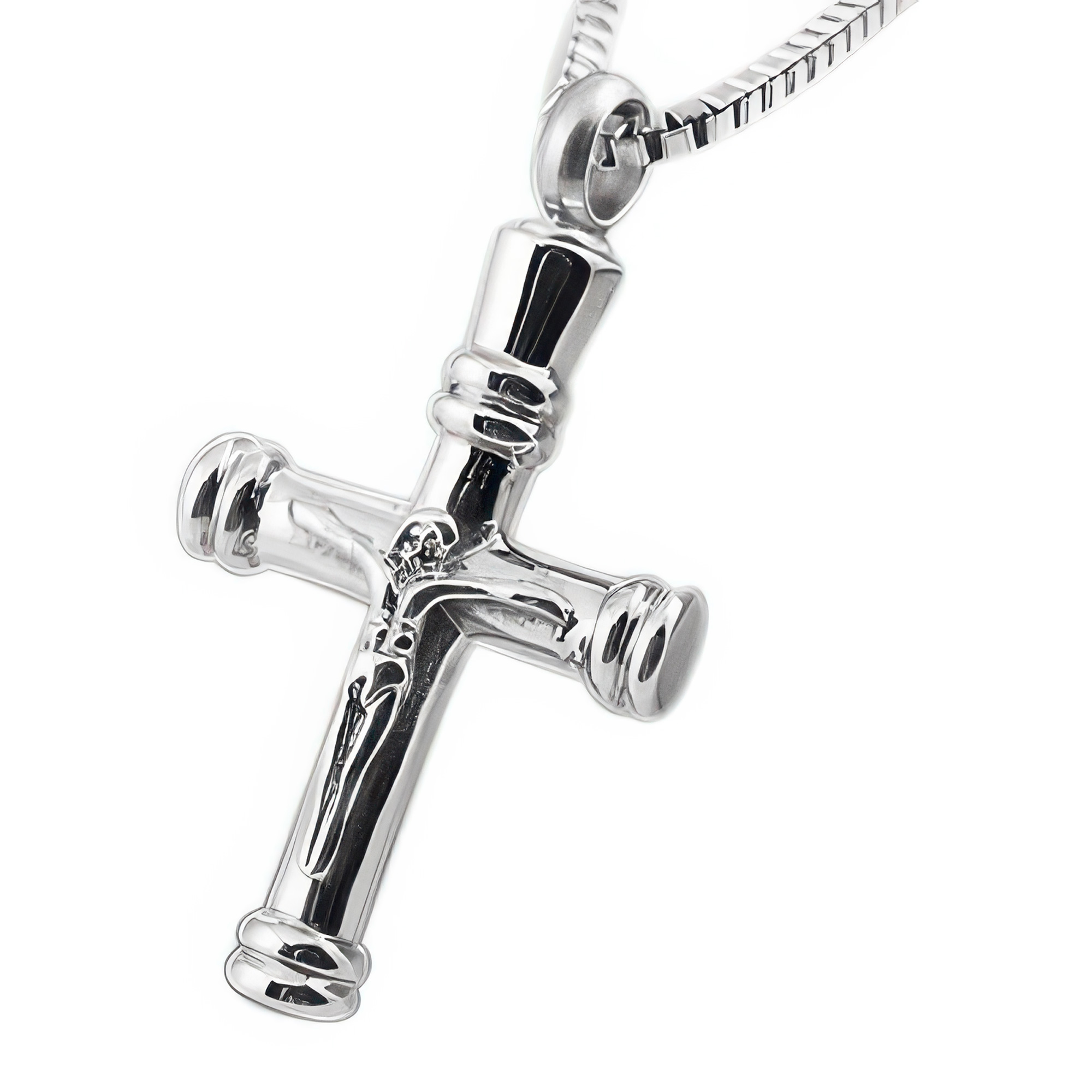
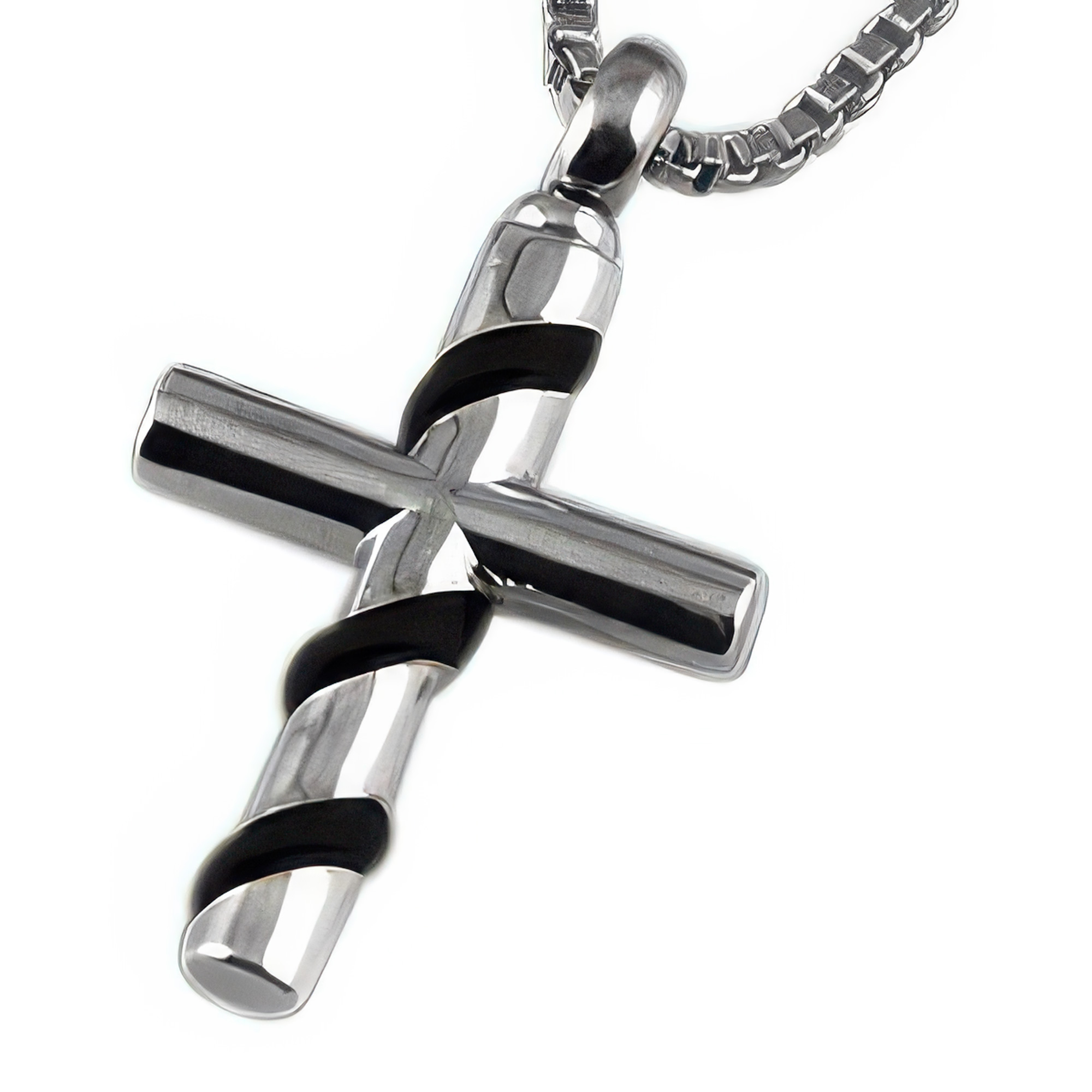
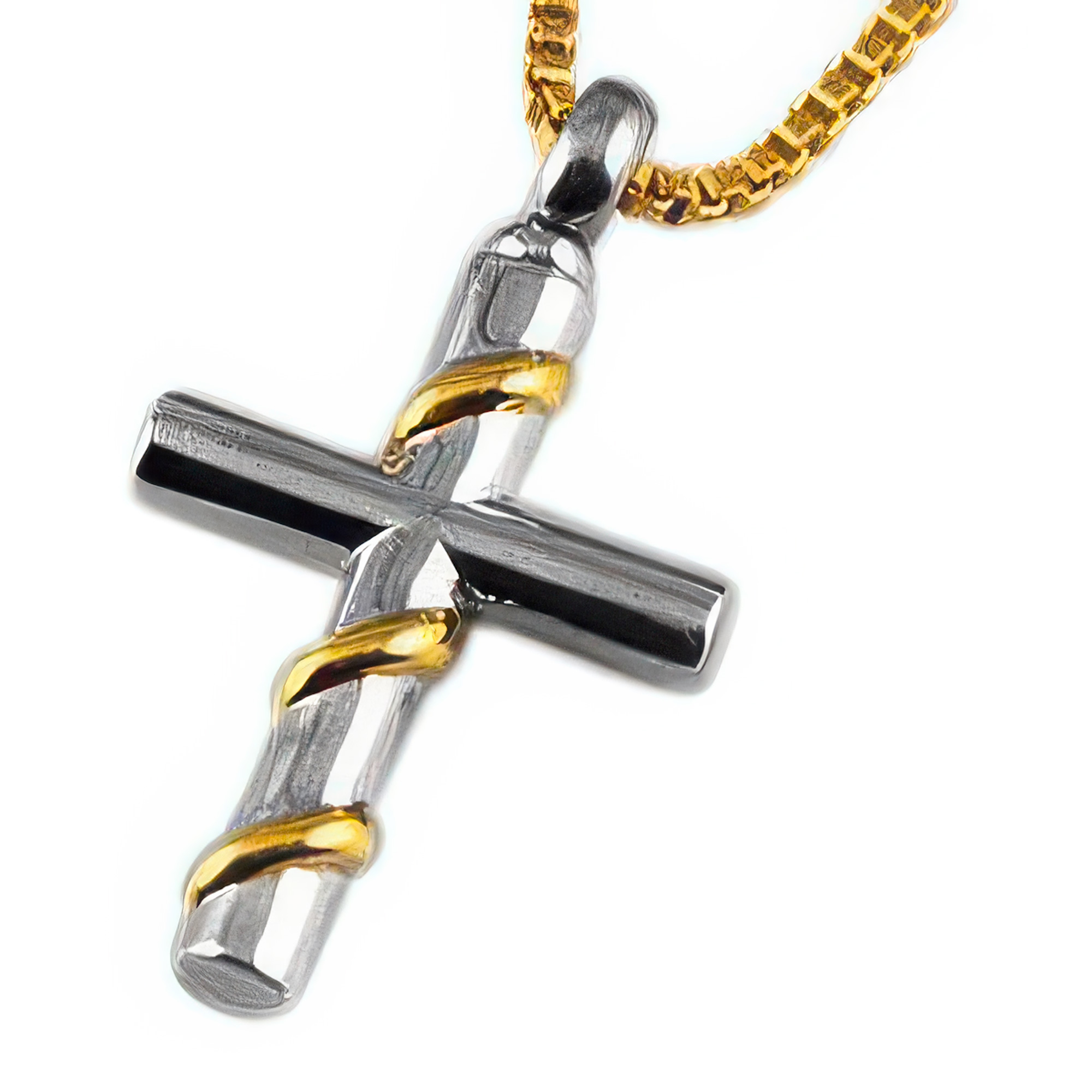
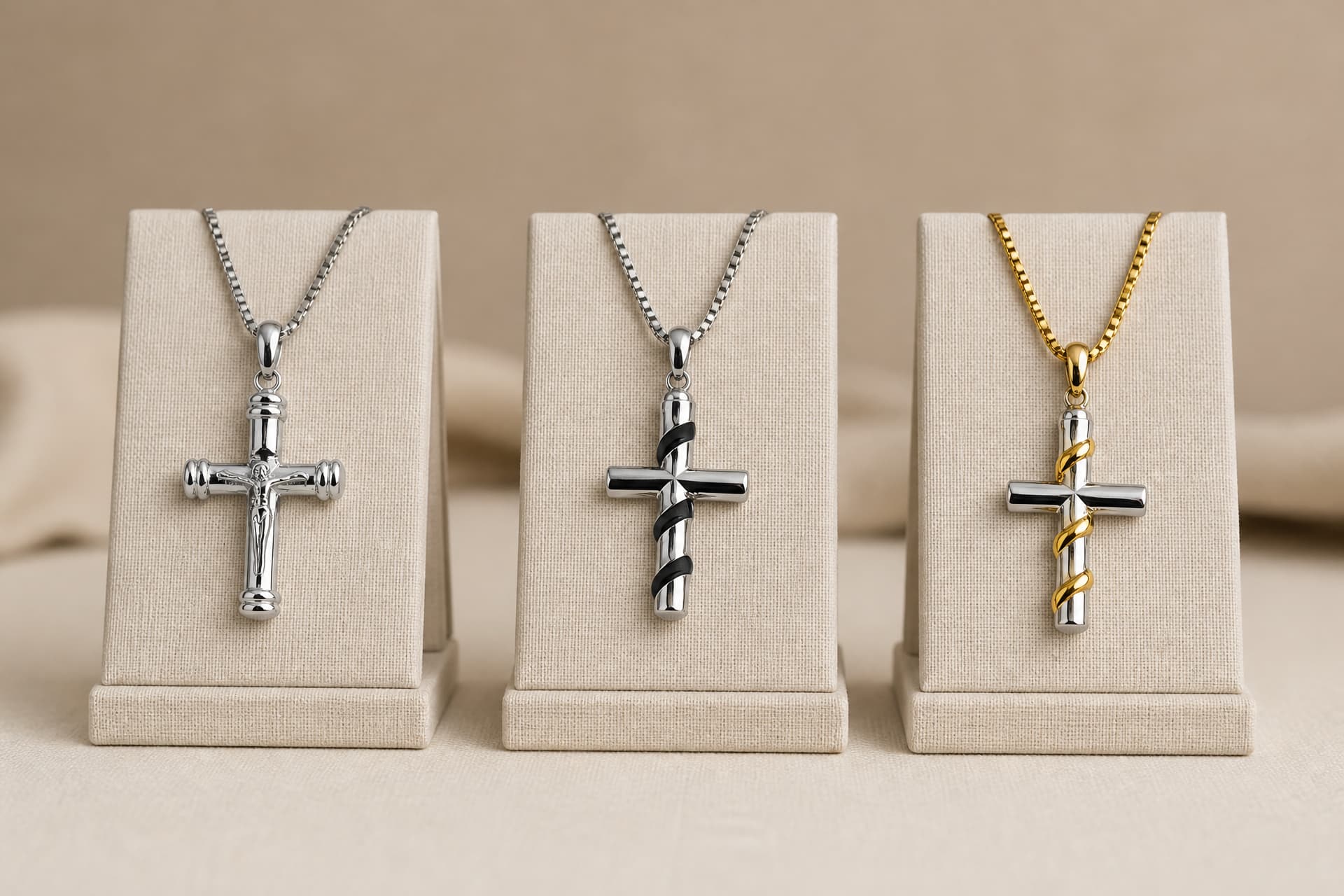
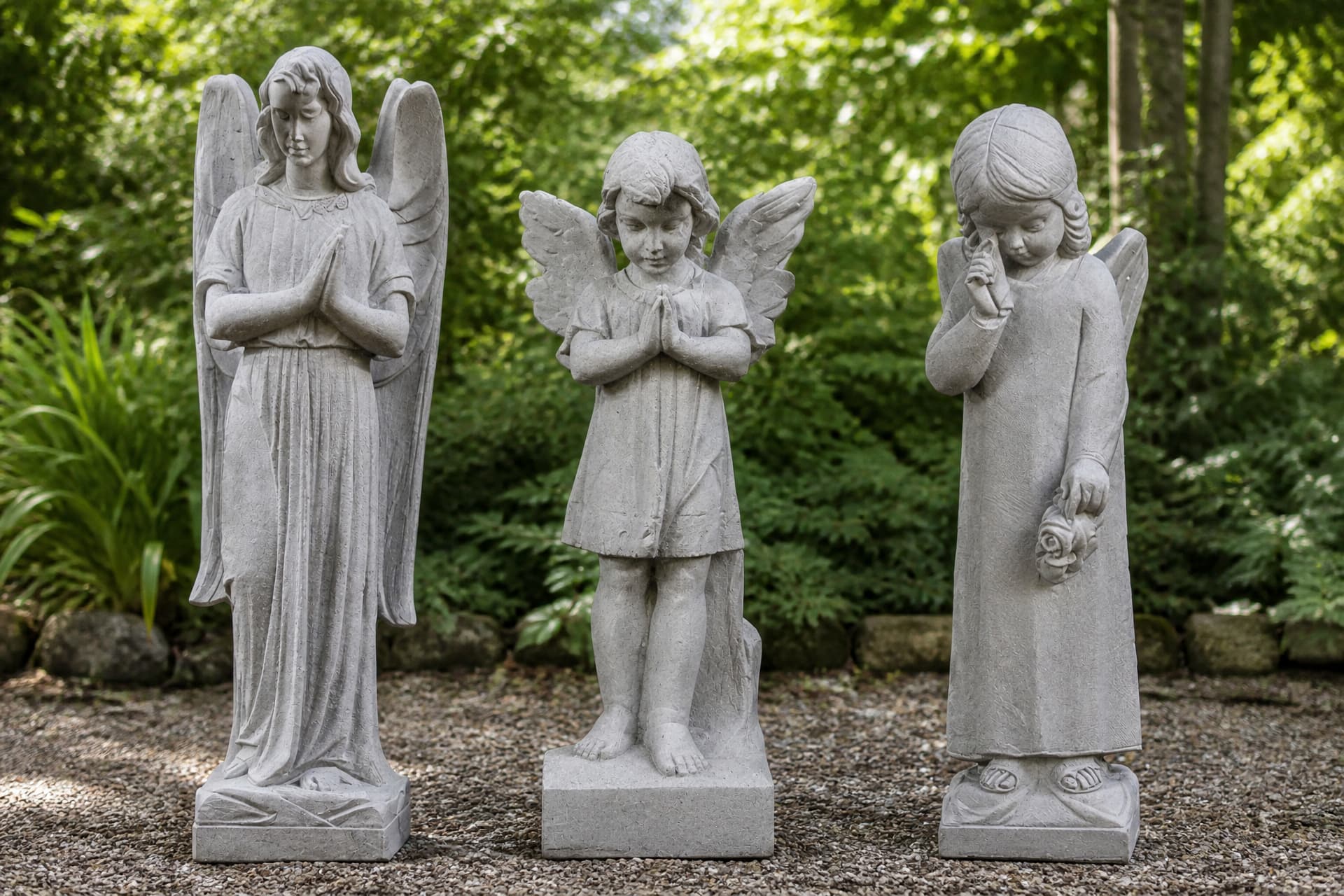
Cross pendants and memorial angels from the Memorials.com catalog
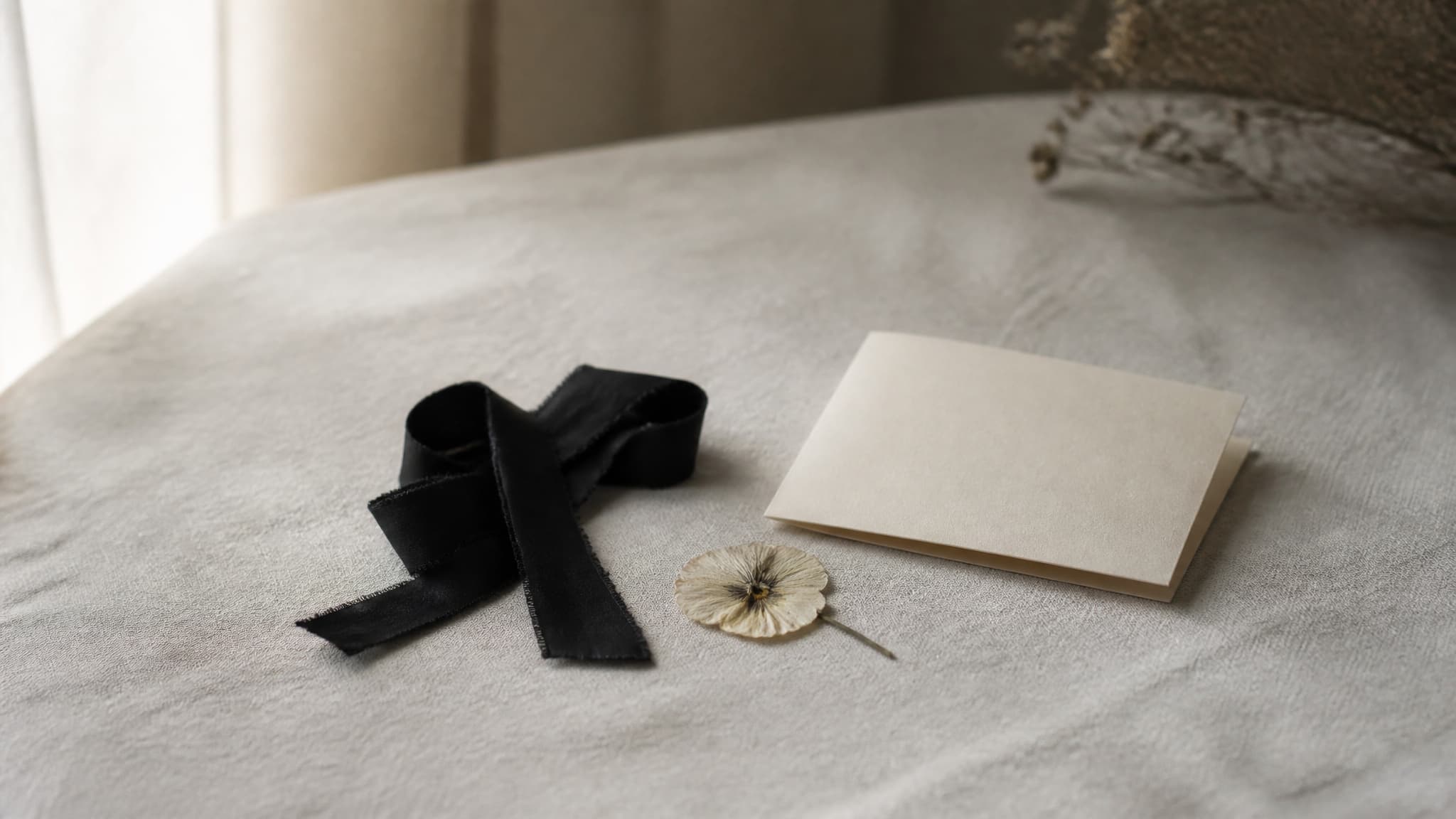
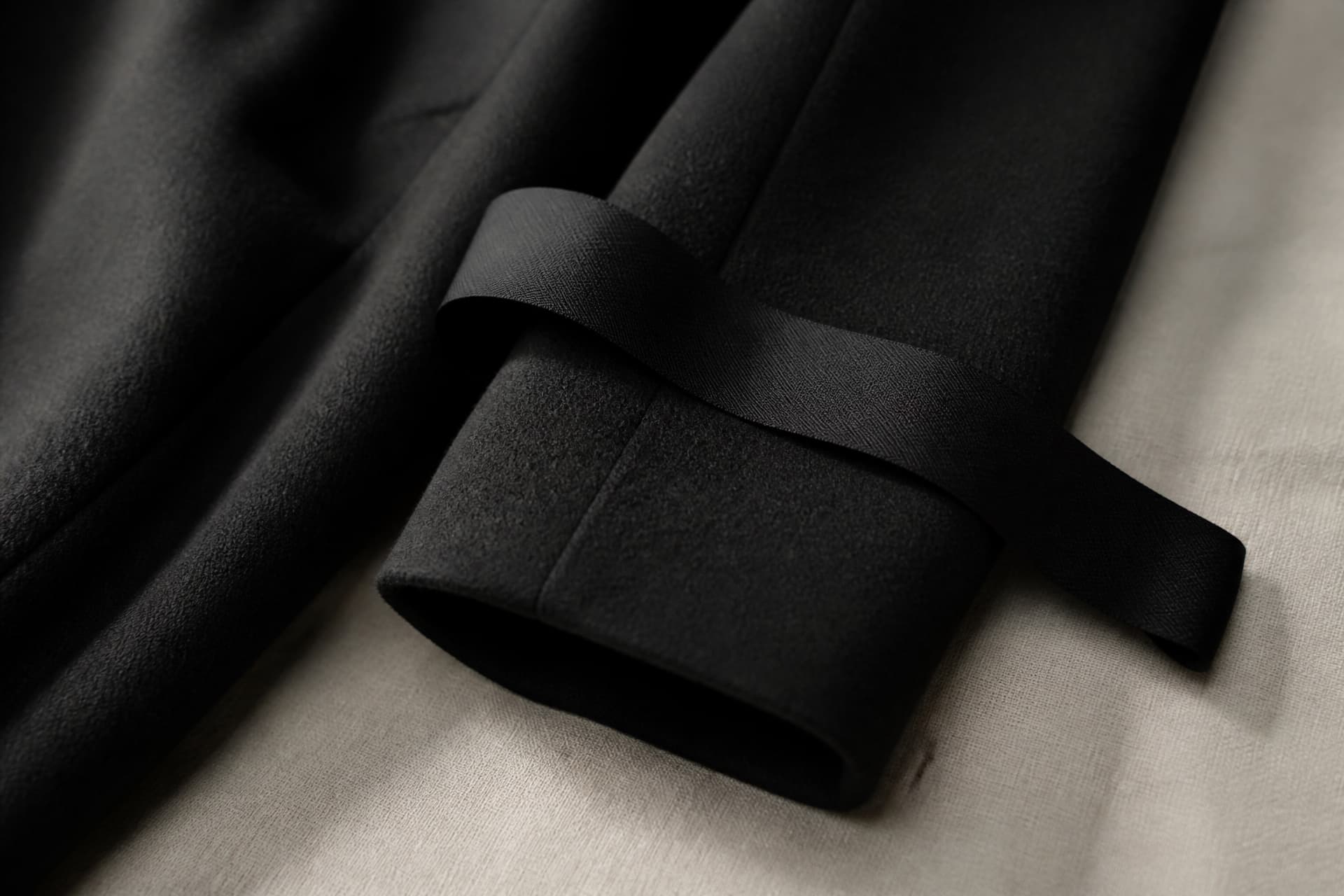
The plainest of all bereavement symbols is a strip of black cloth on the upper arm. The mourning band asks nothing of anyone and costs almost nothing, which is why it outlived the elaborate customs around it. Police departments still stretch a black band across the badge after a line-of-duty death. Sports teams still wear one for a season. In both cases the message is identical to the Victorian original: someone connected to us has died, and we are not pretending otherwise today.
Jewelry did the same work in a more permanent form. Rings, brooches and lockets were made specifically for the bereaved, often in jet — a black fossilized wood that could be carved and polished but stayed matte enough to be considered appropriate. Many pieces held a lock of the dead person's hair, woven or coiled under glass, which is the closest thing the nineteenth century had to a photograph you could carry. The history of that tradition and its modern descendants is covered in our guide to mourning jewelry.
The mourning band survived every other Victorian custom because it is the cheapest possible way to say something difficult. Police and fire departments still band the badge after a line-of-duty death.
The awareness ribbon is the direct descendant. A folded loop of colored fabric, pinned to a lapel, standing for a cause and often for a specific person lost to it. It works on the same logic as the armband — visible, wordless, immediately understood — and it is worn by people who have never heard of half mourning.
Mourning Dress and the Rules That Came With It
For roughly a century, Western mourning was a dress code with published rules, and the rules were strictest for widows. Full mourning meant unrelieved black, in fabrics chosen for how little they shone. Crape — a stiff, dull, crimped silk — was the signature material precisely because it looked wretched and could not be repurposed into anything cheerful afterward. Veils, black-edged writing paper and black sealing wax extended the code to a household's correspondence.
Mourning then loosened in stages. Second mourning allowed some trim and better fabric. Half mourning admitted gray, lavender, mauve and white, which is why those colors still read as subdued rather than festive. Etiquette manuals assigned each stage a length according to how close the relationship was, and a widow's obligation was by far the longest.
Two things are worth saying plainly about this period. It was expensive, and it fell hardest on women — a man in mourning wore a band and a dark suit while his wife rebuilt her entire wardrobe. And it was not only performance. A code that announced your status to every stranger also protected you from a hundred small conversations you were in no condition to have, which is the same service the armband still performs.
Grief symbols divide into four kinds by how they reach an audience. Worn symbols announce, carved symbols endure, seen symbols arrive unbidden, and performed symbols require a witness. Knowing which kind you are looking at explains most of what a symbol is doing.
Symbols of Faith
Religious icons are the largest single group of grief icons, and the most likely to be chosen by a family rather than inherited from a tradition they no longer practice.
The cross is the most common memorial symbol in the Western world. On a monument it marks a Christian burial; worn, it is usually a statement about the person wearing it as much as the person who died. Families who want that symbol close rather than displayed sometimes choose a gold cross necklace for ashes, a pendant with a sealed chamber holding a small portion of cremated remains. If the choice matters to your family's practice, our guide to cross and rosary cremation jewelry covers the distinctions that come up.
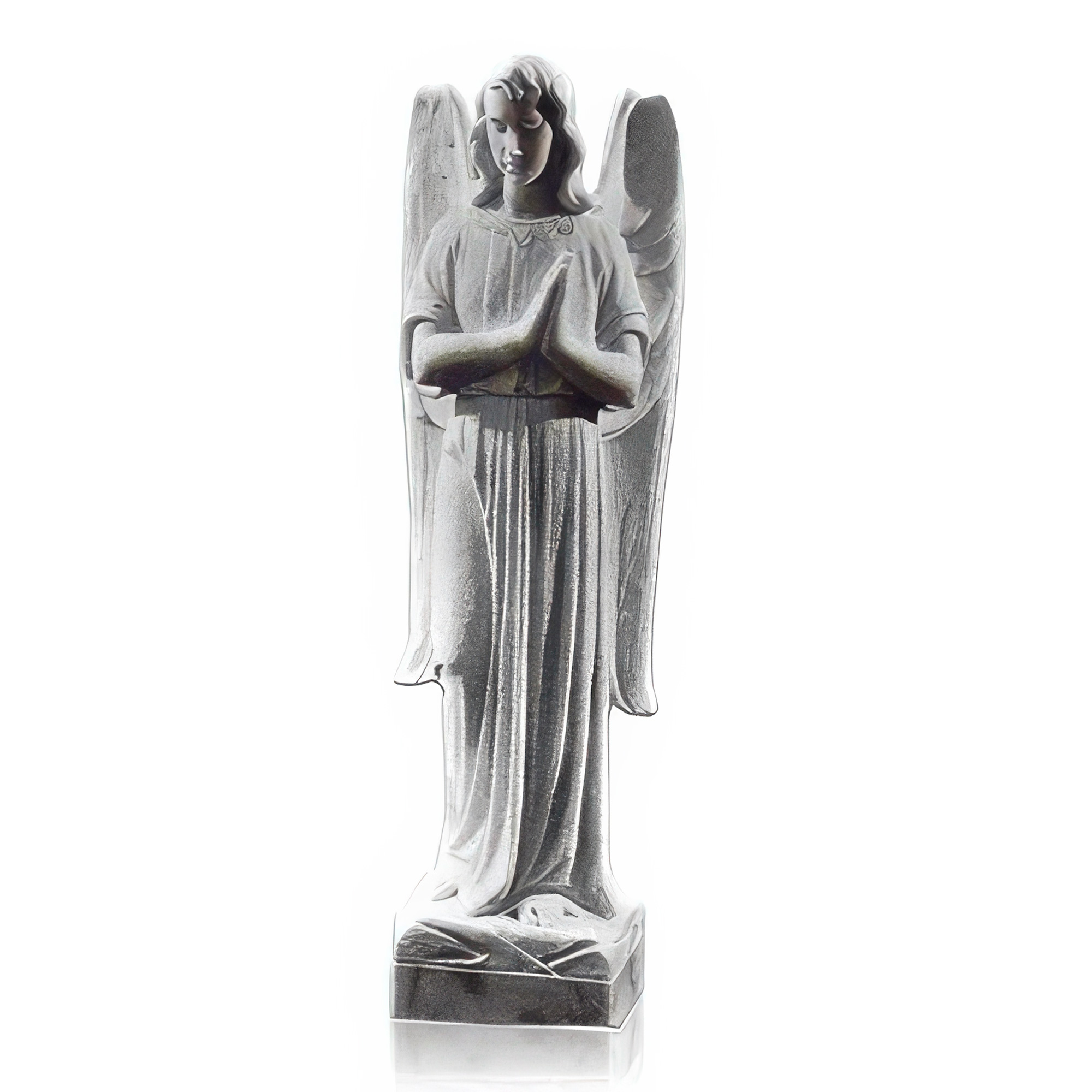
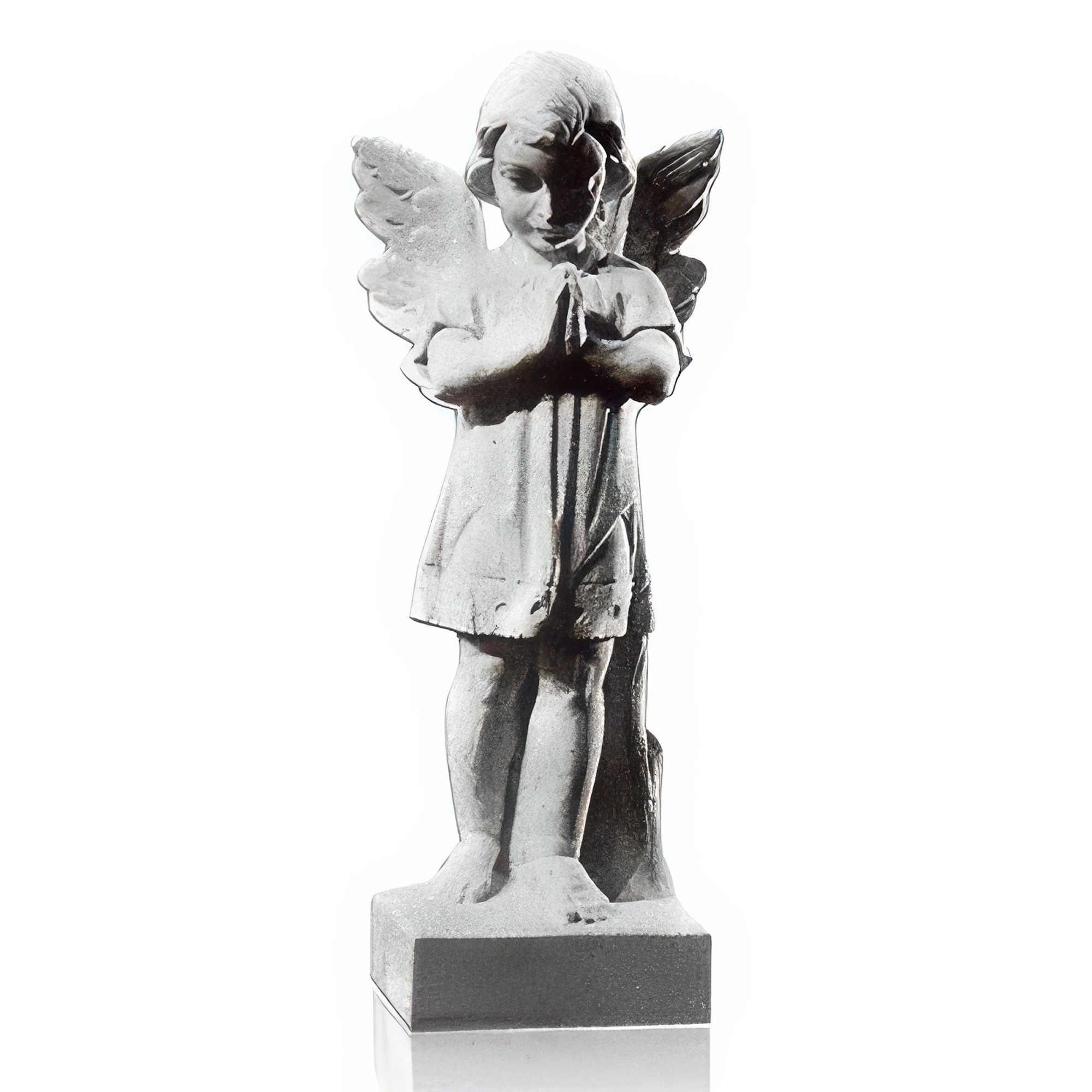
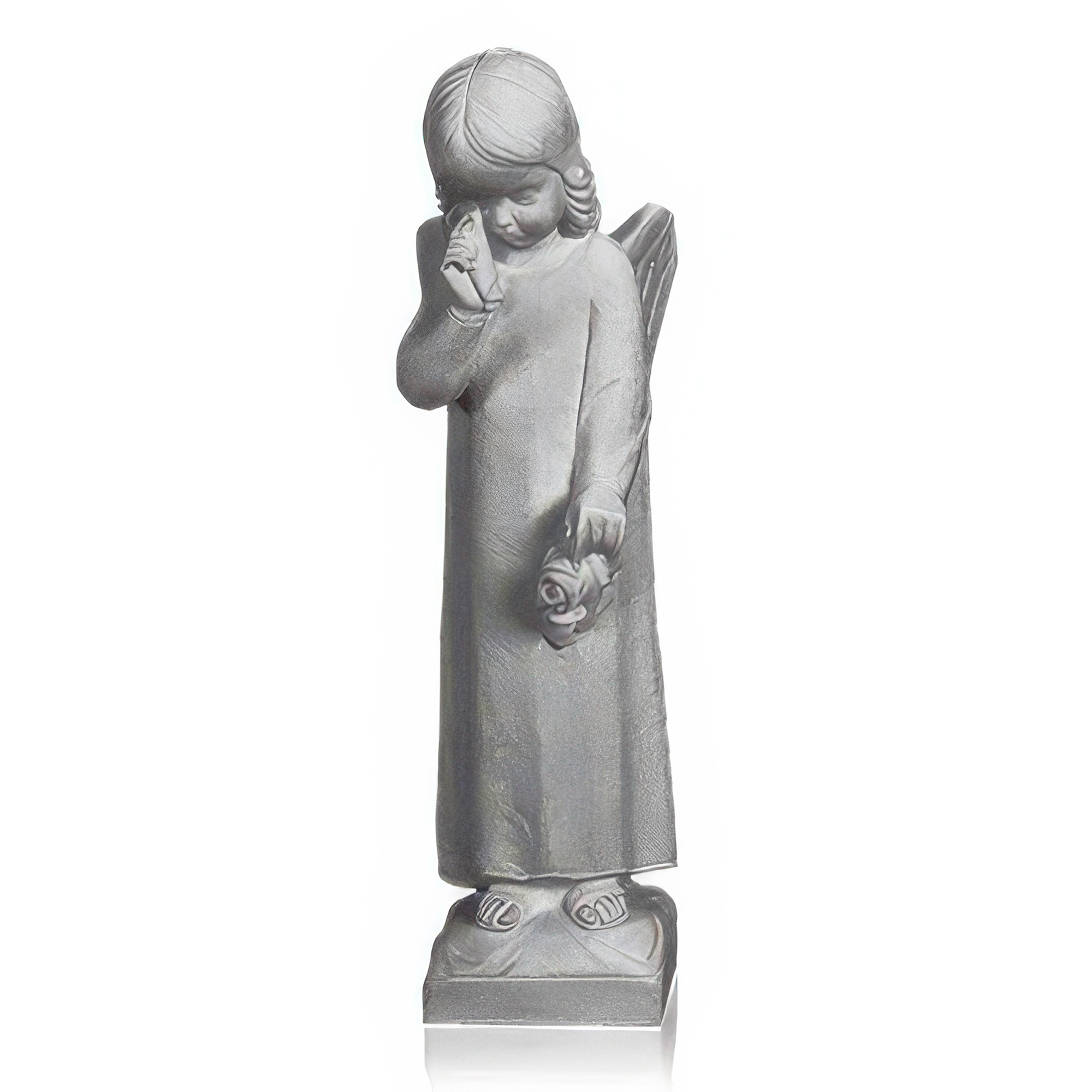
The angel is the other giant. In cemetery sculpture an angel is a guardian, a messenger, or a mourner in her own right — the grieving figure draped over a tomb is a distinct tradition of its own, which we cover in Angel of Grief. An angel statue placed at a graveside or in a memorial garden carries that inheritance without requiring anyone to declare a doctrine, which is a large part of why it remains the most requested figure in memorial statuary.
The dove carries peace, the soul in flight, and — in Christian iconography — the Holy Spirit, which is three meanings that rarely conflict. That density is why doves appear on so many services and so many stones; we untangle it in what a dove represents.
The candle is the symbol of presence. One flame stands for one life, which is why vigils scale so naturally and why a single lit candle on a kitchen table on an anniversary needs no explanation. Our guide to memorial candles covers the customs around lighting them.
Some symbols belong to a fraternity rather than a faith. The sprig of acacia carried at a Masonic funeral is one of these: evergreen, and therefore a statement about what does not die, understood completely by the people in the room and by almost nobody outside it.
Symbols from the Natural World
Nature supplies the symbols that arrive rather than the ones that are chosen, and that is what gives them their force.
The butterfly is transformation — a creature that is unrecognizably one thing and then another. It is the single most common symbol on a child's memorial, and our article on butterfly symbolism explains where the association came from and why it took hold so completely.
The red cardinal is the one people report most often. A bright bird at the window in the days after a death is read, across a great deal of North America, as a visit. Whether you take that literally or not, the experience is common enough to have its own folklore, and we treat it seriously in a guide of its own. Birds in general do a lot of work here — messengers, souls, escorts — and the wider pattern is set out in bird symbolism in grief and remembrance.
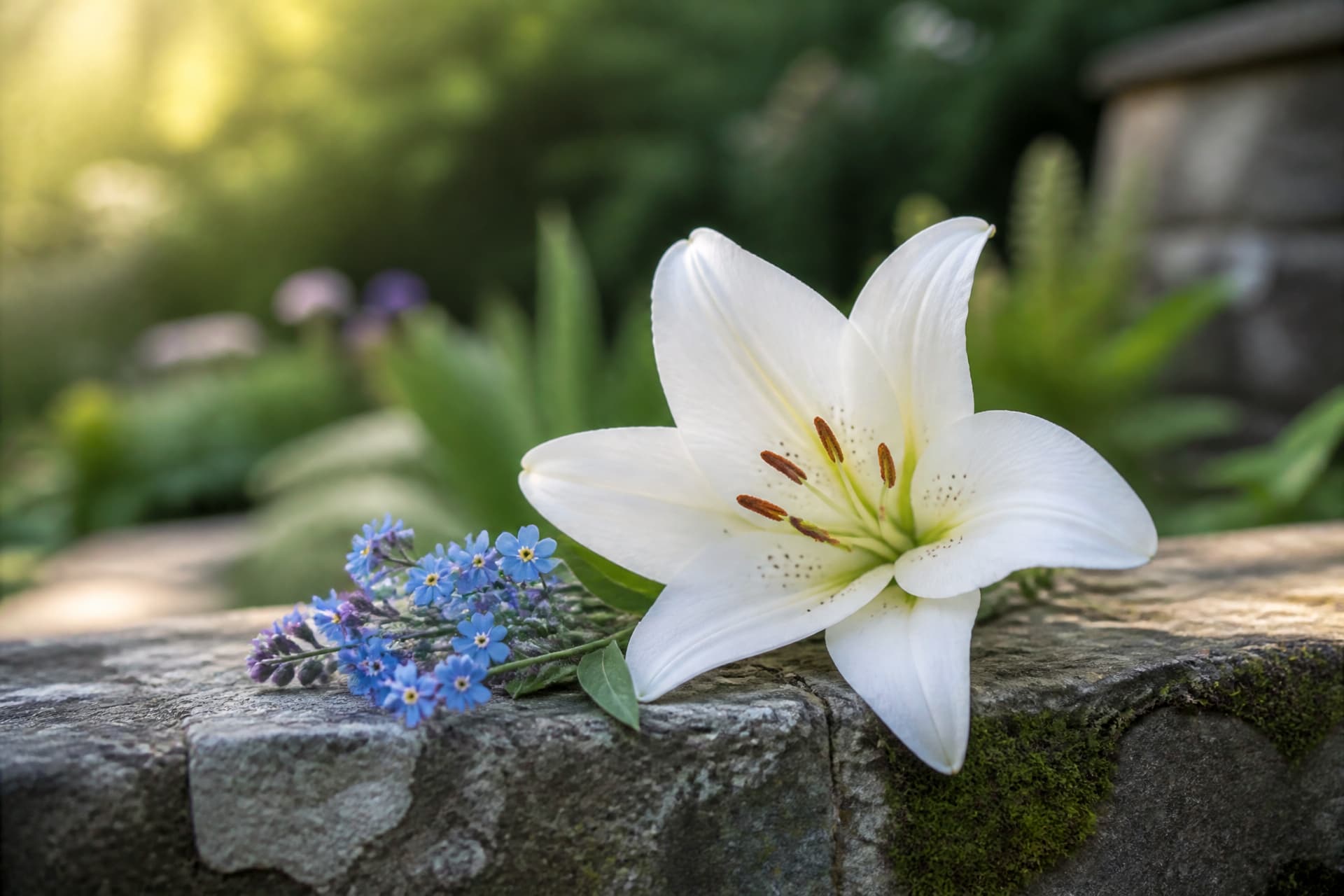
Flowers carry the most specific vocabulary of any grief symbol. The lily means restored innocence, the forget-me-not means exactly what it says, and the white rose is reserved for the young.
Flowers have the most precise vocabulary of all. The lily stands for innocence restored to the soul. The forget-me-not needs no gloss. The white rose is traditionally reserved for the death of someone young. And the black carnations that appear in modern sympathy arrangements are a genuinely recent invention with a much stranger history than most people assume.
The weeping willow rounds out the group. A tree that bends without breaking, planted in graveyards and carved onto stones long before anyone thought of it as a garden ornament.
Symbols Carved in Stone
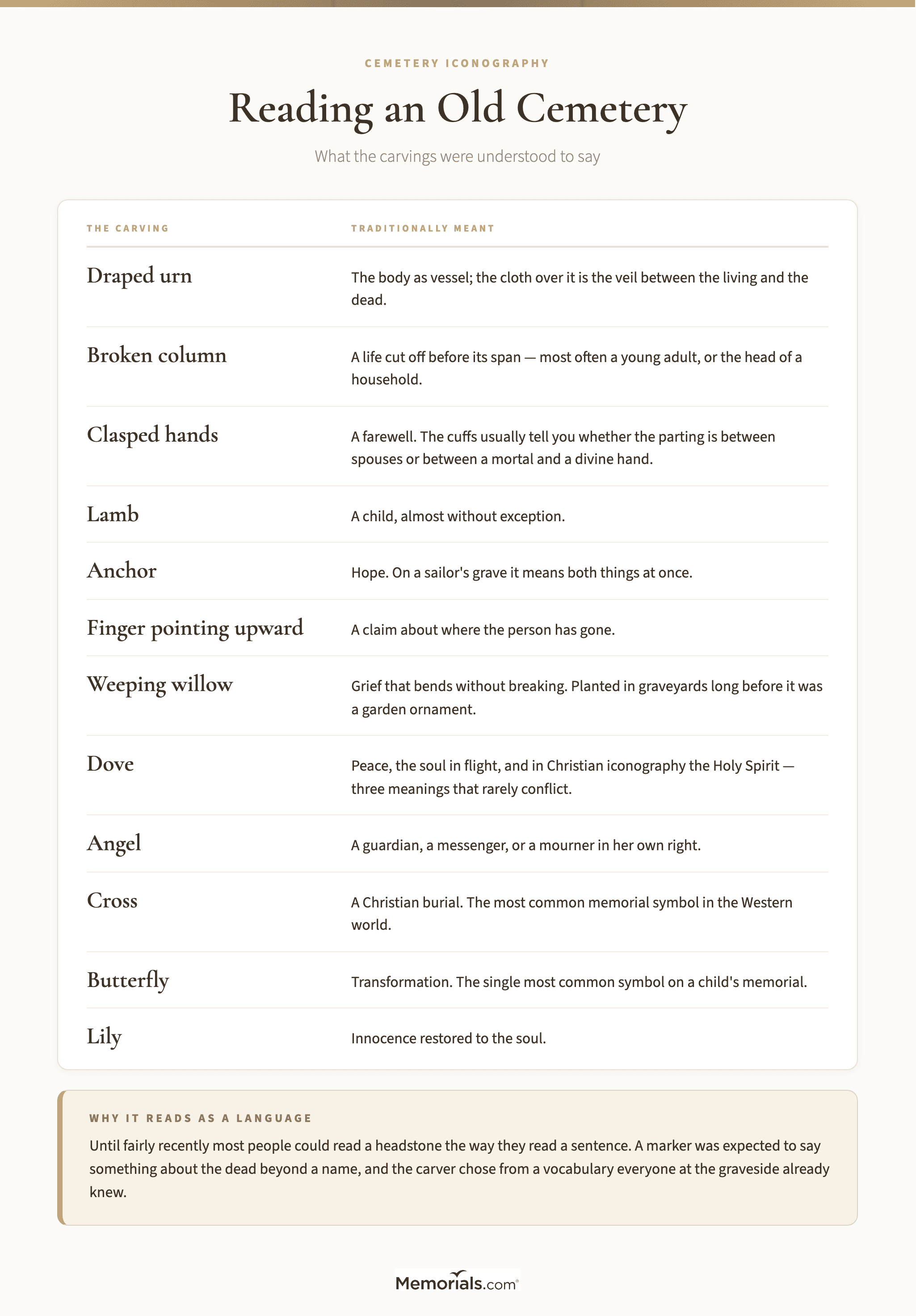
Cemetery iconography is a written language, and until fairly recently most people could read it. A gravestone was expected to say something about the dead beyond a name.
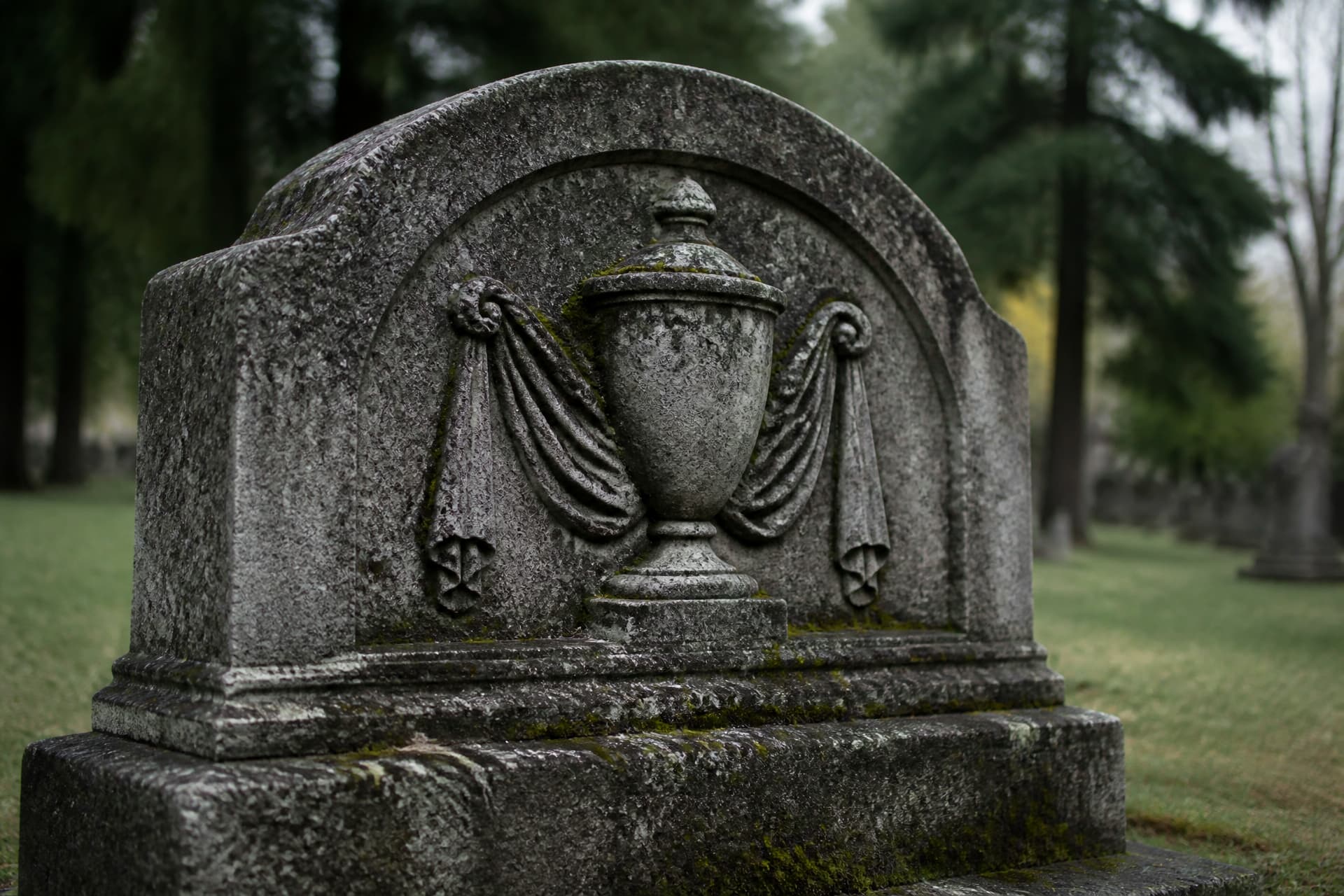
The draped urn is the most common carving in older American cemeteries. The vessel represents the body, the cloth over it represents the veil between the living and the dead, and together they say that what remains is only the container. The same shape survives in the urns families choose today, which is why a carving designed for a world before modern cremation still reads clearly.
The draped urn is the most common carving in older American cemeteries. The vessel is the body and the cloth is the veil between the living and the dead.
A broken column marks a life cut off before its span — most often a young adult, or the head of a household. Clasped hands are a farewell, and the cuffs will usually tell you whether the parting is between spouses or between a mortal and a divine hand. A lamb almost always marks a child. An anchor means hope, and on a sailor's grave it means both things at once. A finger pointing upward is a claim about where the person has gone.
Our companion article on headstone symbols and their meanings catalogs well over a hundred of these carvings, and it is the place to go if you are trying to identify one you have actually seen. Inscriptions work the same way — the reason a phrase like forever in our hearts appears on so many markers is that a short phrase functions as a symbol too, doing in four words what a carving does in an image.
A reader's glossary for an old cemetery: draped urn for the body as vessel, broken column for a life cut short, clasped hands for farewell, lamb for a child, anchor for hope, willow for grief that bends without breaking.
Symbols of Passage
A distinct family of symbols is not about the mourner at all. It is about equipping the dead for a journey.
The coin for the ferryman is the best known. A small coin placed in or near the mouth of the dead paid Charon for passage across the river, and the custom persisted long after anyone believed the story literally — our article on the obol traces where it came from and where it survives. The escorting figure, the psychopomp, appears under many names; the Greeks gave the task to Hermes, and the role recurs across unrelated traditions with striking consistency.
Burned offerings do the same job in reverse, sending goods to the dead rather than paying their fare. The practice of burning paper offerings — money, houses, whole paper cars — is alive and widespread, and it is one of the few grief customs where the symbol is destroyed on purpose as part of its working.
Then there are the household omens. A clock stopped at the moment of death is the classic: some families stopped the clocks deliberately, and a good many report clocks that stopped on their own. The death song sung by or for a dying person belongs to the same category — a marker of the crossing rather than of the loss.
The words most often said at the graveside are themselves a symbol of passage. Ashes to ashes, dust to dust states the return of the body to the material world as plainly as language can, and it is spoken at burials by people who could not tell you where the phrase comes from.
Symbols That Belong to a Culture
Some of the most striking mourning imagery in the world belongs to a specific community, and that matters when you are deciding what to put on a stone or a body.
The sugar skull of Día de los Muertos is not a memento mori and not a Halloween decoration. It is a bright, named, personal object made for a festival of return, and the details of how it works are set out in that article.
The veve and the funerary iconography of Haitian Vodou are religious instruments rather than decorative motifs — drawn to summon a specific spirit, with rules about who may draw them. We describe them, carefully, in voodoo symbols for death.
The plague doctor's mask has become shorthand for mass death, largely through art and costume rather than history. The beaked mask was a piece of protective equipment before it was an image of mortality, and the same period produced the danse macabre — the skeletal procession leading pope and peasant alike — which is a symbol of death's impartiality rather than of any individual's grief.
The rule of thumb is simple. A symbol that is open to anyone, like a candle or a dove, is yours to use. A symbol that belongs to a living religion or a closed tradition is worth asking about first, because getting it wrong is visible to exactly the people it would matter most to.
When the Mourner Is the Symbol
The oldest mourning symbol is a person. Professional mourners — moirologists, keeners, paid weepers — have been hired to grieve in public across the Mediterranean, the Middle East, West Africa, China and Ireland, and the practice has not died out. Their work is not deception, and it is not usually understood as such by anyone present. A funeral needs visible, audible grief to function as a public event, and a bereaved family is often the group least capable of producing it on schedule.
Keening served the same purpose in Irish tradition: a formal, sung, improvised lament performed by women who knew how, sometimes for the family and sometimes with them. What the hired mourner supplies is permission. Once someone in the room is weeping openly, everyone else is allowed to.
It is a useful corrective to a page like this one. Objects are easy to catalog, so they dominate any list of grief icons — but for most of human history the loudest symbol at a funeral was not on the coffin. It was standing beside it, making noise.
Grief Symbols in Tattoos
A grief symbol tattoo is the modern version of the mourning ring: permanent, worn on the body, and chosen by the mourner rather than prescribed by anyone. The vocabulary is largely the one described above — the butterfly, the semicolon, the cardinal, a date, a handwritten signature traced from a letter.
Two things are worth knowing before you sit down. First, a symbol read one way in your family may be read another way by strangers, and a tattoo is a public statement in a way a locket is not; the cardinal memorial tattoo is a good example of an image with a very clear meaning inside North America and almost none outside it. Second, some people ask about mixing cremated remains into the ink, which is a real practice with real risks — we cover what artists actually say about ashes in tattoo ink in a separate article.
Frequently Asked Questions
What is the universal symbol of grief?
There isn't one. The closest candidates are the color black in Western tradition and white across much of Asia, which are opposites, and that tells you how local these things are. If you need a symbol that will be understood almost anywhere, a single lit candle comes nearest.
What is the oldest symbol of mourning?
Burial goods and grave offerings predate any carved icon by a very long way — the act of leaving something with the dead is older than writing. Among symbols we can still read, the coin for passage and the evergreen branch are both ancient, and both are still in use.
What color represents grief?
Black in Europe and the Americas, white in much of East and South Asia, and purple or lavender in several traditions as a stage of partial mourning. Our guide to memorial colors goes through the regional differences in detail.
What animals mourn their dead?
Elephants, corvids, primates and cetaceans are the most frequently documented. Elephants return to the remains of herd members and handle the bones; crows gather around a dead crow. Researchers are careful not to claim these behaviors are grief in the human sense, but the pattern of attending to a dead member of one's own species is not unique to us.
Is it acceptable to use a symbol from another culture?
It depends entirely on whether the symbol is open or closed. A dove, a candle or a willow belongs to no one. A veve, a Masonic emblem or a sugar skull carries obligations, and the honest move is to ask someone from that tradition rather than to guess.
Choosing a Symbol of Your Own
Most families do not choose a symbol so much as notice which one has already attached itself to the person. A bird that turned up at the wrong time of year. A flower from the garden. A shape carved into a wedding ring. The traditions on this page are worth knowing because they tell you what a symbol will say to other people — but the meaning that matters is the one your family already carries, and no etiquette manual has a claim on it.
If you are choosing something to keep, the practical question is where it will live. A carving on a stone speaks to visitors and to people not born yet. A pendant or a small keepsake speaks to one person, several times a day. A statue in a garden sits somewhere in between, and it is the option families most often pick when they want a place to go rather than a thing to wear.
Whichever direction you take, start from a symbol that already means something to you rather than from a list. Every one of the icons above began as somebody's private association before it became a convention, and any of them can go back to being private again.