🏬Supersize Online Funeral Retailer🪦1000's of Headstones⚱️Over 10,000 Cremation Urns⚰️Caskets Overnight Delivery🛒Funeral & Memorial Superstore🚚FREE Shipping on ALL Orders👨👩👧👦Helping Families for over 20 Years💰Lowest Price Guarantee🏬Supersize Online Funeral Retailer🪦1000's of Headstones⚱️Over 10,000 Cremation Urns⚰️Caskets Overnight Delivery🛒Funeral & Memorial Superstore🚚FREE Shipping on ALL Orders👨👩👧👦Helping Families for over 20 Years💰Lowest Price Guarantee
🏬Supersize Online Funeral Retailer🪦1000's of Headstones⚱️Over 10,000 Cremation Urns⚰️Caskets Overnight Delivery🛒Funeral & Memorial Superstore🚚FREE Shipping on ALL Orders👨👩👧👦Helping Families for over 20 Years💰Lowest Price Guarantee🏬Supersize Online Funeral Retailer🪦1000's of Headstones⚱️Over 10,000 Cremation Urns⚰️Caskets Overnight Delivery🛒Funeral & Memorial Superstore🚚FREE Shipping on ALL Orders👨👩👧👦Helping Families for over 20 Years💰Lowest Price Guarantee
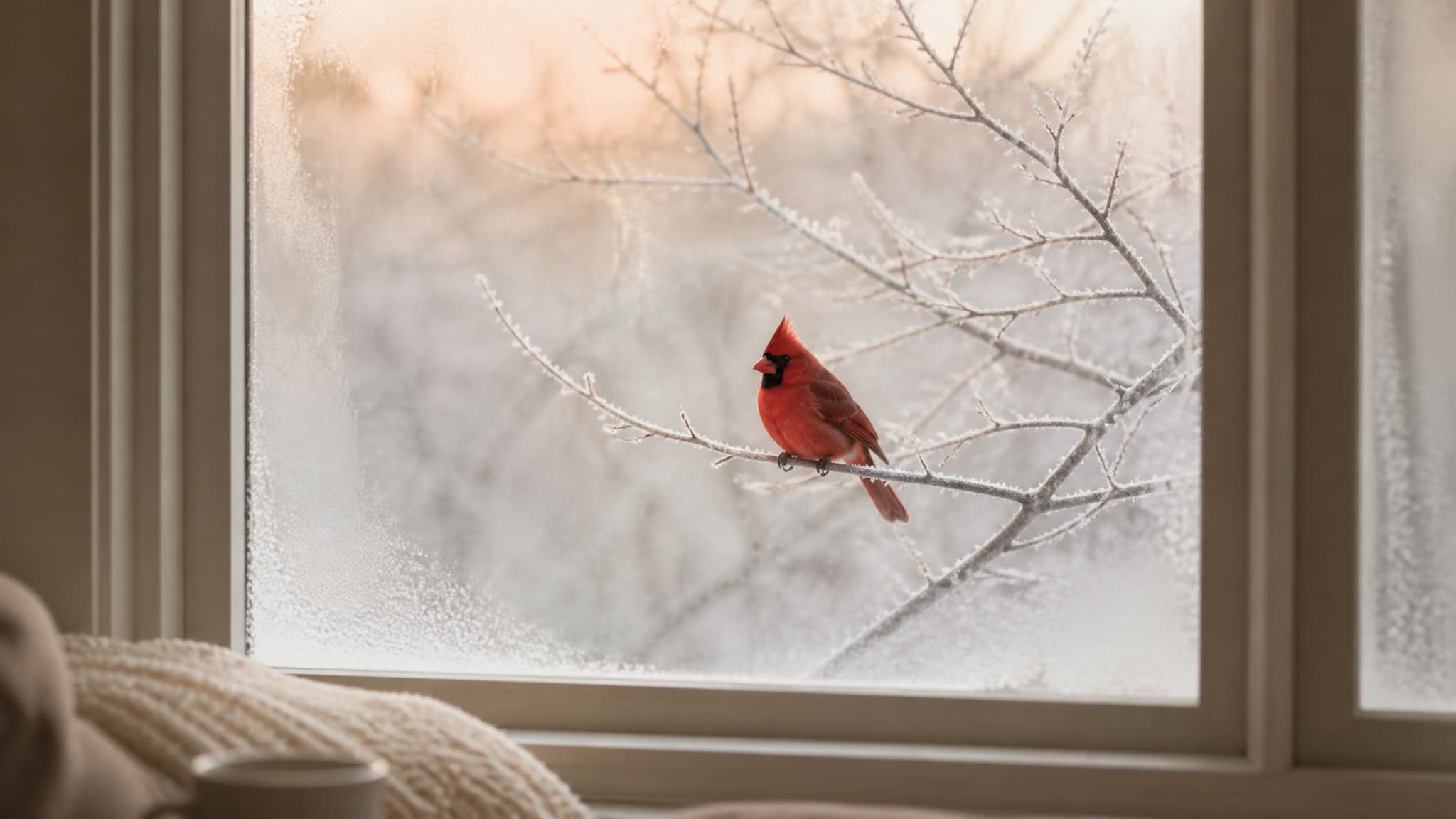
Three days after the funeral, a cardinal lands on the fence and stays. A bird gets into the house on the morning of the burial. One taps at the kitchen window every day for a week and then never comes back. Most people arrive at bird symbolism from that direction — not from an interest in folklore, but from something that happened and will not leave them alone, and a quiet worry that they are reading too much into it.
There is a long answer, and it is worth giving properly. Birds have carried more meaning in mourning than almost anything else that moves, in nearly every culture that has recorded its beliefs. This page covers which birds have been read as omens, which as messengers, and what the traditions actually say, as part of our wider death symbolism guide. It also covers the part most pages skip: what to do when a sign helps, and what to do when waiting for one begins to hurt.
Why Birds Carry So Much Meaning After a Death
Ask what do birds symbolize and you will get a different answer in every century, but the underlying logic barely changes. A bird moves between the ground and the sky, which is where almost every tradition has put the living and the dead. It arrives without being called. It leaves, and it may come back. For a family that has just watched someone go somewhere they cannot follow, that shape of movement is unbearably close to the thing they are trying to think about.
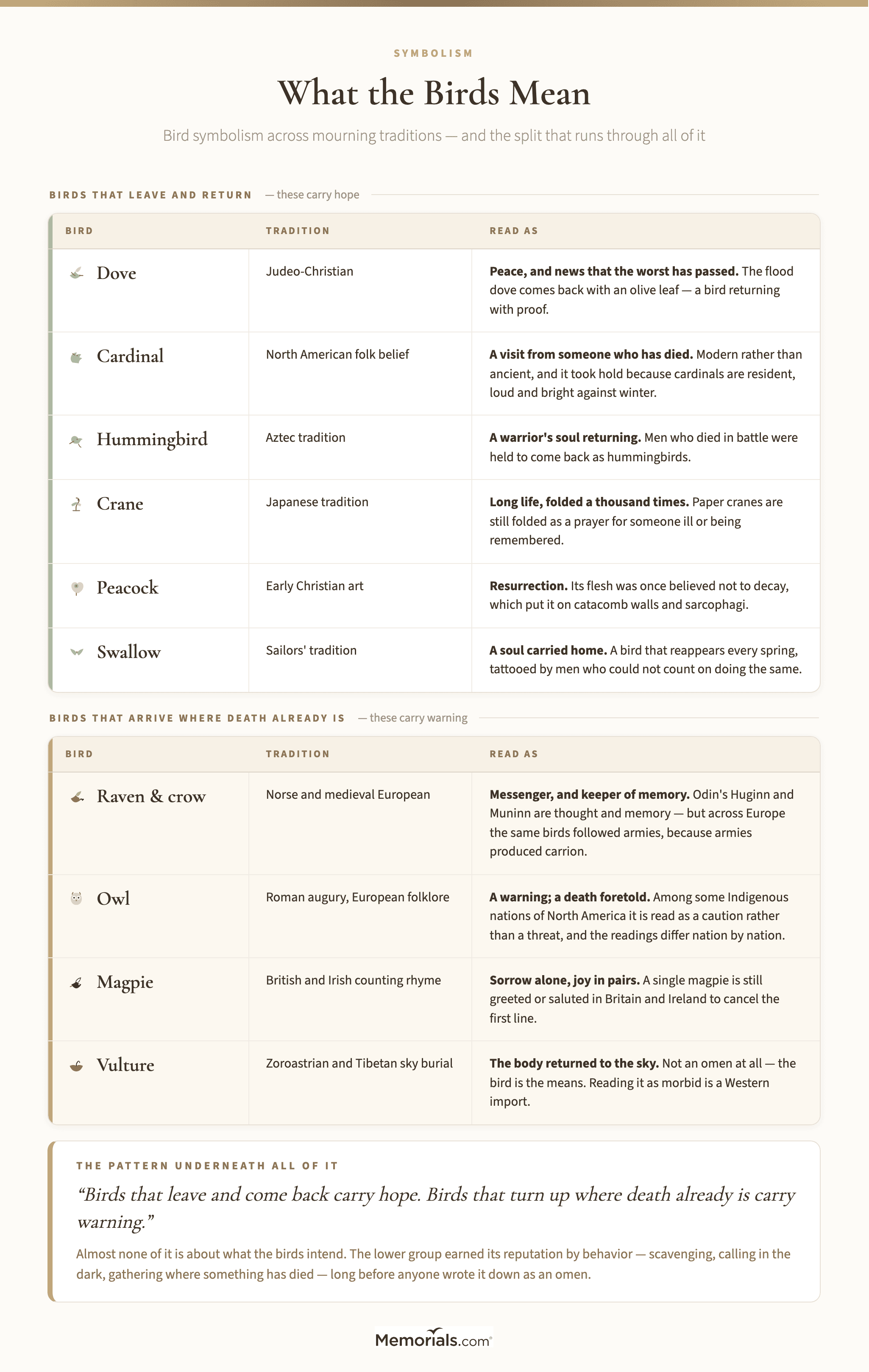
The bird meanings grief fastens on are almost always meanings about return. That is the pattern underneath all of it. The birds that represent life after death in most traditions are the ones that migrate and reappear, or that were believed to renew themselves — the crane, the swallow, the phoenix, the peacock whose flesh was once thought not to decay. Birds read as final, rather than returning, are usually the ones that eat the dead or call in the dark.
It also matters that a bird is small enough to be personal. A storm can be an omen, but a storm belongs to everybody. A single cardinal on a specific fence, at a specific hour, in a yard where somebody used to sit, belongs to one family. Grief makes people watchful, and watchfulness finds the smallest thing in the frame.
Birds as Messengers Between This World and the Next
Ancient Egyptian belief gave each person a ba — a part of the self that survived the body and was drawn as a bird with a human head, able to leave the tomb and return to it. Greek art gave the soul wings for the same reason. The idea that people describe today as birds as messengers from heaven is not a modern invention or a greeting-card sentiment; it is one of the oldest images humans have for the same problem.
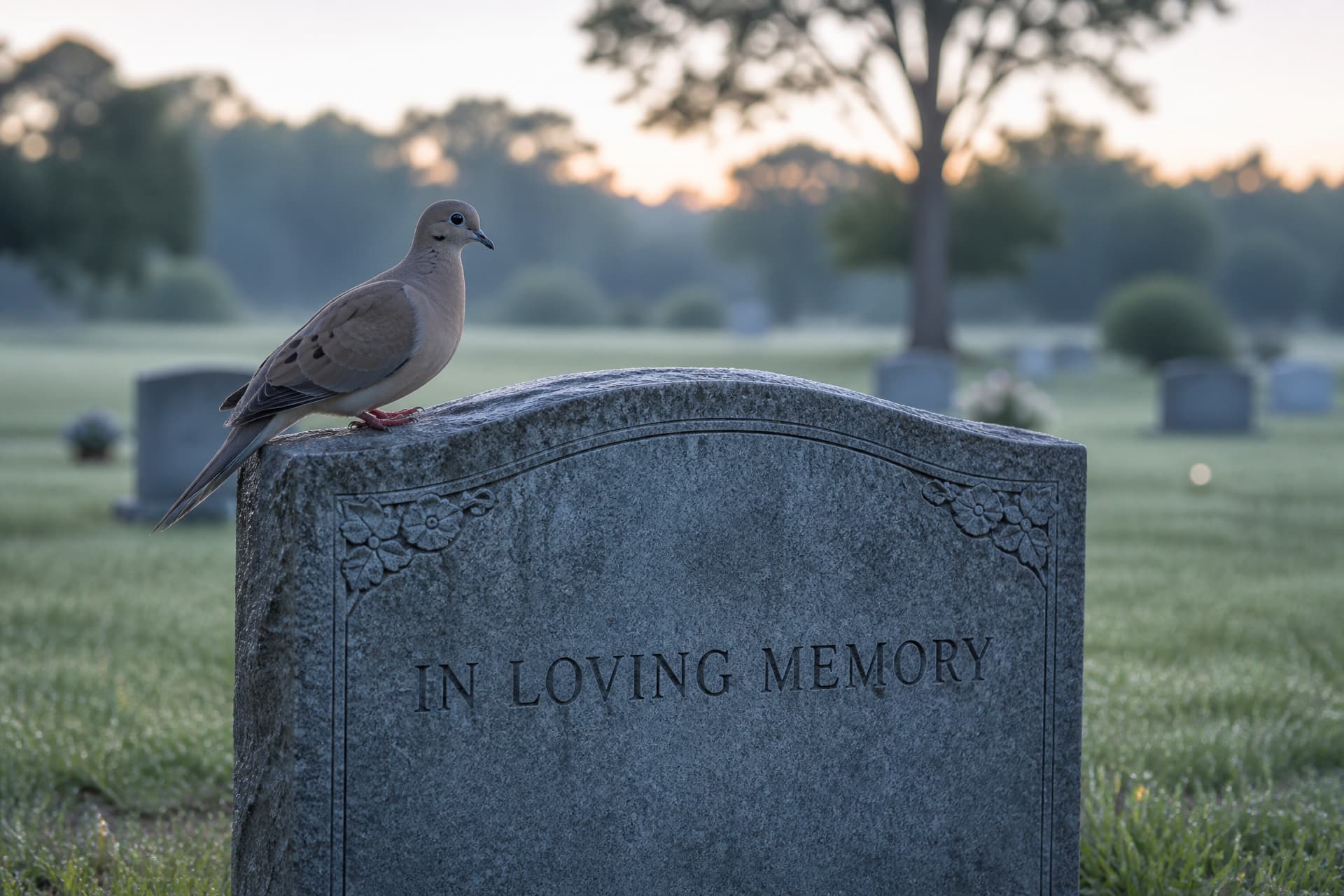
A dove on a marker is the one bird image nearly every mourning tradition in the West agrees on — peace, and news that the worst has passed.
The dove is the clearest case. In the flood account in Genesis, the dove is sent out and comes back carrying evidence that the water has fallen: "And the dove came in to him in the evening; and, lo, in her mouth was an olive leaf pluckt off" (Genesis 8:11, King James Version). That single image — a bird returning with proof that the worst is over — is why doves appear on headstones, on programs, and on urns more than any other creature. Our page on what does a dove represent follows that thread through Christian, Jewish and classical use.
Elsewhere the same instinct produces different birds. Japanese tradition treats the crane as a symbol of long life, and folding a thousand paper cranes is still done as a prayer for someone who is ill or being remembered. Japanese folklore also personifies death directly rather than through an animal, in the shinigami, a figure closer to a guide than to a reaper. Aztec belief held that warriors who died in battle returned as hummingbirds. Irish and Scottish folk tradition kept a quieter version, in which certain birds around a house were understood to be ancestors checking on the household.
The birds that represent passed loved ones in each of these traditions are local birds. That is the honest pattern. People do not report signs from species they have never seen. Whatever bird is common in the yard is the bird that carries the message, which tells you something true about how the belief works.
Which Birds Are Associated with Death
The question arrives in fragments, and the fragments are nearly identical. What bird symbolizes death. Which bird represents death. What bird is the symbol of death. People type it three or four ways in one evening because the first answer never quite matches what they saw. The plain truth is that there is no single bird that symbolizes death, and the traditions that produced the idea disagree with each other about which one it is.
What people are usually reaching for when they search bird symbolism death is not one animal but a category of them, and the category has a logic. The birds associated with death in European folklore share a few practical features: they eat carrion, they call at night, they are black, or they gather in numbers around something that has died. The association was earned by behavior long before it was written down as an omen.
Ravens and crows. Ask which bird symbolizes death in Norse tradition and the answer is the raven — Odin kept two, Huginn and Muninn, thought and memory, who flew out over the world and reported back. Across medieval Europe ravens and crows followed armies, because armies produced carrion, and a bird that appears reliably after a battle acquires a reputation quickly.
Owls. Roman augury recorded the owl's call as an ill omen, and the reputation stuck across most of Europe. Among some Indigenous nations of North America the owl is read as a warning rather than a threat, and the specifics differ enough between nations that it is a mistake to state one meaning for all of them. What owls have in common everywhere is night, silence and a face that reads as watching.
Vultures. Zoroastrian funerary practice placed the dead on raised structures for vultures to consume, and Tibetan sky burial does something similar. In both, the bird is not an omen at all — it is the means by which the body is returned. The Western reading of the vulture as morbid is a foreign one.
Magpies. The English counting rhyme that begins "one for sorrow, two for joy" is still recited seriously enough in Britain and Ireland that a single magpie is greeted or saluted to cancel it.
The whip-poor-will. In Appalachian folk belief its call near a house where someone is sick was taken as a sign that the person would not recover — a bird identified almost entirely by sound.
Asked what birds are associated with death, most people in Britain or North America will name three of those five without hesitating. It is worth noticing how much of the list is about scavenging and darkness rather than about anything the birds intend. The birds that signify death in folklore are, almost without exception, birds that turned up where death already was.
The association ran deep enough to shape objects. The beaked bubonic plague mask worn by plague doctors gave the physician the silhouette of a long-billed bird, and the figure became one of the most recognizable images of death in European memory — a person made to look like a bird, walking into houses where people were dying.
Ten birds and what mourning traditions have read into them. The split is consistent: birds that leave and return carry hope, and birds that arrive where death already is carry warning.
The Cardinal, and the Other Birds People Read as a Sign
Red bird symbolism in North America is almost entirely about one species. The northern cardinal does not migrate, it is loud, it is startlingly visible against winter, and it will use the same yard for years — so it is the bird most likely to be there on the worst week of someone's life and still there a month later.
The sentence people write is nearly always the same: I saw a red cardinal the morning after we buried her. The questions underneath it are what does it mean when a cardinal comes to visit, and whether it is allowed to mean anything at all. A phrase that turns up on memorial keepsakes and garden stones — cardinals appear when angels are near — is modern rather than ancient, but it has become the common shorthand. Our fuller answer to what does it mean when you see a red cardinal takes the question on its own terms, including what does it mean when cardinals visit again and again rather than once. Red is also one of the strongest colors of remembrance in Western mourning, which is part of why the bird registers so hard.
The cardinal is not the only bird that gets read this way.
Bluebirds and blue jays. The bluebird carries an old and cheerful association with happiness, and a quieter modern one with a message from someone gone. Blue jays, being bolder and noisier, tend to be read as a personality rather than a comfort — families often say a jay reminded them of a particular relative.
Robins. In British and Irish folk belief a robin in the garden, or one that comes close and stays, is widely taken to mean a loved one is nearby. It occupies roughly the place in Britain and Ireland that the cardinal holds in the United States.
Hummingbirds. Small, fast, and gone before you are sure you saw it, which is exactly the shape of the experience people are trying to describe. The Aztec association with returning warriors sits underneath the modern one.
Sparrows. Christian tradition gives the sparrow a specific weight through a single line: "Are not two sparrows sold for a farthing? and one of them shall not fall on the ground without your Father" (Matthew 10:29, King James Version). The point is not that sparrows are important; it is that nothing is too small to be noticed.
There is no settled answer to what bird is a sign of a loved one, because the folklore is regional and the species are local. The birds that represent death of a loved one in modern American folk belief are mostly small, bright and resident — the same birds people already have opinions about. When a bird visits after death, families notice which one it was and remember it, and that noticing is the mechanism the belief runs on. The same reading extends past birds entirely: butterfly symbolism works on exactly the same logic of something small, brief and unsummoned.
What It Means When a Bird Flies Into Your House
This is the encounter that unsettles people most, and it has the oldest and firmest folklore attached to it. Across a wide stretch of European tradition, a wild bird that gets inside a house was read as a death omen — sometimes for the household, sometimes as news of a death elsewhere. Regional versions vary: in some tellings the omen only counts if the bird cannot find its way out, in others only if it is a specific species, in others only if it touches a person.
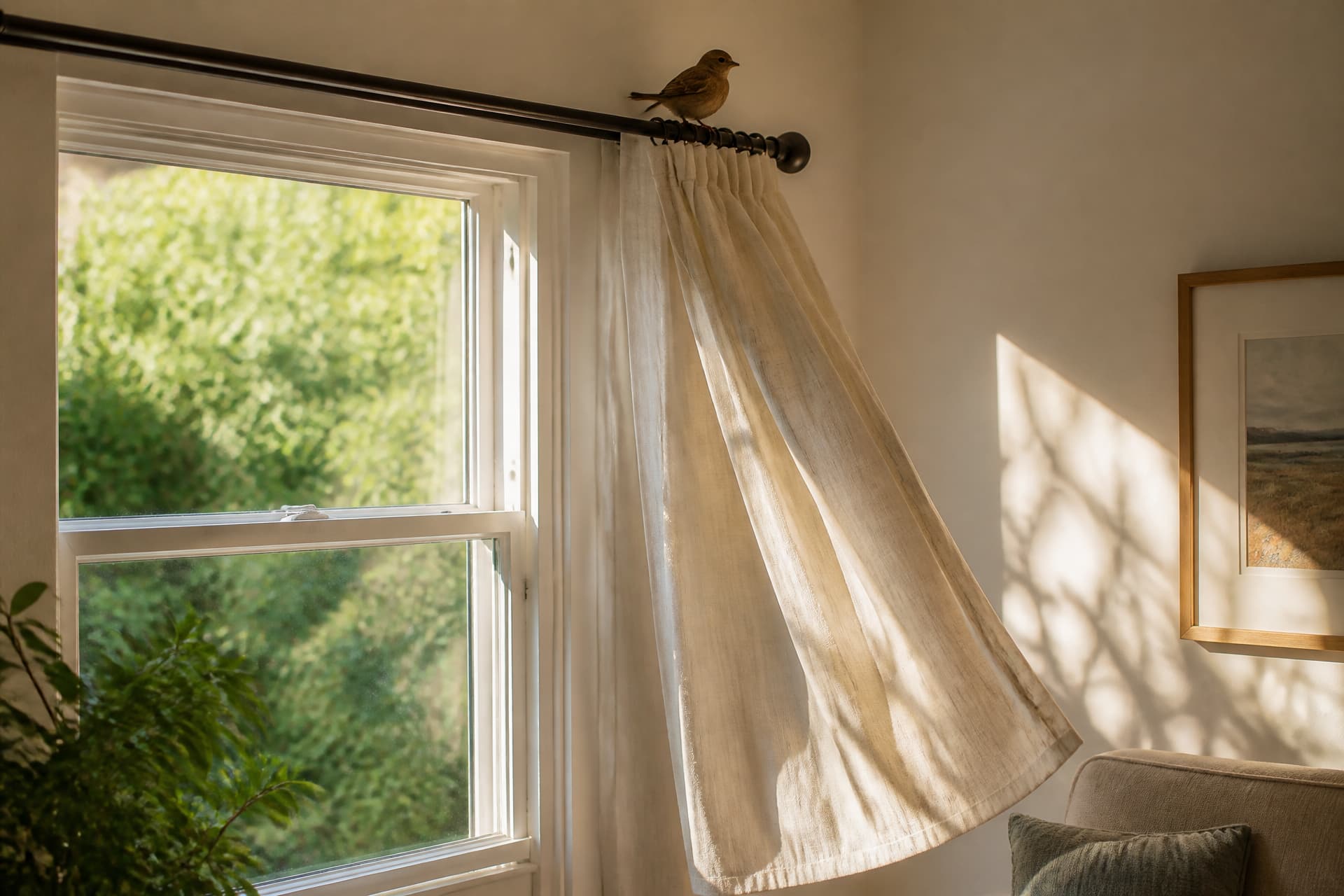
The oldest reading of a bird indoors is an omen. The likeliest one is an open window in nesting season — and both can sit in the same afternoon.
The ordinary explanation is worth having alongside the old one, because it is usually the true account of how the bird got in. Birds come down uncapped chimneys, which is why birds in a chimney is such a common problem in older houses in spring. They follow insects through open doors on warm evenings. They see a room through glass, read it as open sky, and fly at it. Nesting season concentrates all of this into a few weeks, which is also when most of these stories happen.
If one gets in, the practical steps are simple. Close the doors to the rest of the house so it cannot go deeper in. Open the largest window or door in that room fully and pull the curtains back. Dim the room so the opening is the brightest thing in it. Then leave, and give it several minutes alone — most birds find the gap once nobody is moving. If it is in a chimney or a flue, do not open the damper into an occupied room; call someone who does it for a living. Do not chase a bird with a towel or a broom, which exhausts it and injures it.
Holding both readings at once is not a contradiction. The bird came in because the window was open in May. It also came in on the day of the funeral. Neither fact cancels the other, and a great many people carry both without any difficulty at all.
What a Dead Bird Means
People find dead birds after a funeral and are frightened by them, and the folklore does not help — a dead bird found on a doorstep or a path has been read as a warning in more than one tradition, and occasionally as an ending or a closed chapter rather than a threat.
The ordinary causes account for nearly all of them. Birds strike windows, especially large ones reflecting trees or sky. Cats kill an enormous number of small birds. Cold snaps and long wet spells take the young and the old. None of it is aimed at anyone.
If it distresses you, move it. Use gloves or a bag turned inside out, put it somewhere out of sight in the yard or in the trash, wash your hands, and keep pets away from it. If you are seeing repeated window strikes, marking the glass with decals or cords on the outside face is the standard fix and it works. Do the practical thing first; the meaning can be decided afterward, when the bird is not on the step.
When a Sign Helps, and When Waiting for One Hurts
Looking for patterns after a loss is not a failure of judgment. It is what minds do under strain, and it does not indicate that anyone is coping badly. A grieving person is scanning the world at unusual intensity, and a bright bird in an empty yard is the most conspicuous thing available. Whether that reading is literally true is a question this page cannot settle for anybody, and it is not the useful question. The useful question is what it does for the person holding it.
For most people it does something good. A recurring visitor gives grief a place to land, a small daily ritual, and something to say out loud that is easier than saying the rest. That is a real function, and nobody needs to justify it. Grief moves in stages that are far less orderly than the familiar model of the five stages of grief suggests, and a small fixed point in an unpredictable few months is worth having.
It becomes heavy in one specific way: when the sign is treated as a message that has to be earned, and it does not come. People wait for a bird and feel abandoned when the yard stays empty, or watch a cardinal stop appearing in July — which is what cardinals do — and read the absence as being let go of. If you notice that happening, it is worth naming plainly. The bird was never the relationship. It was a place the relationship rested for a while. Nothing has been withdrawn.
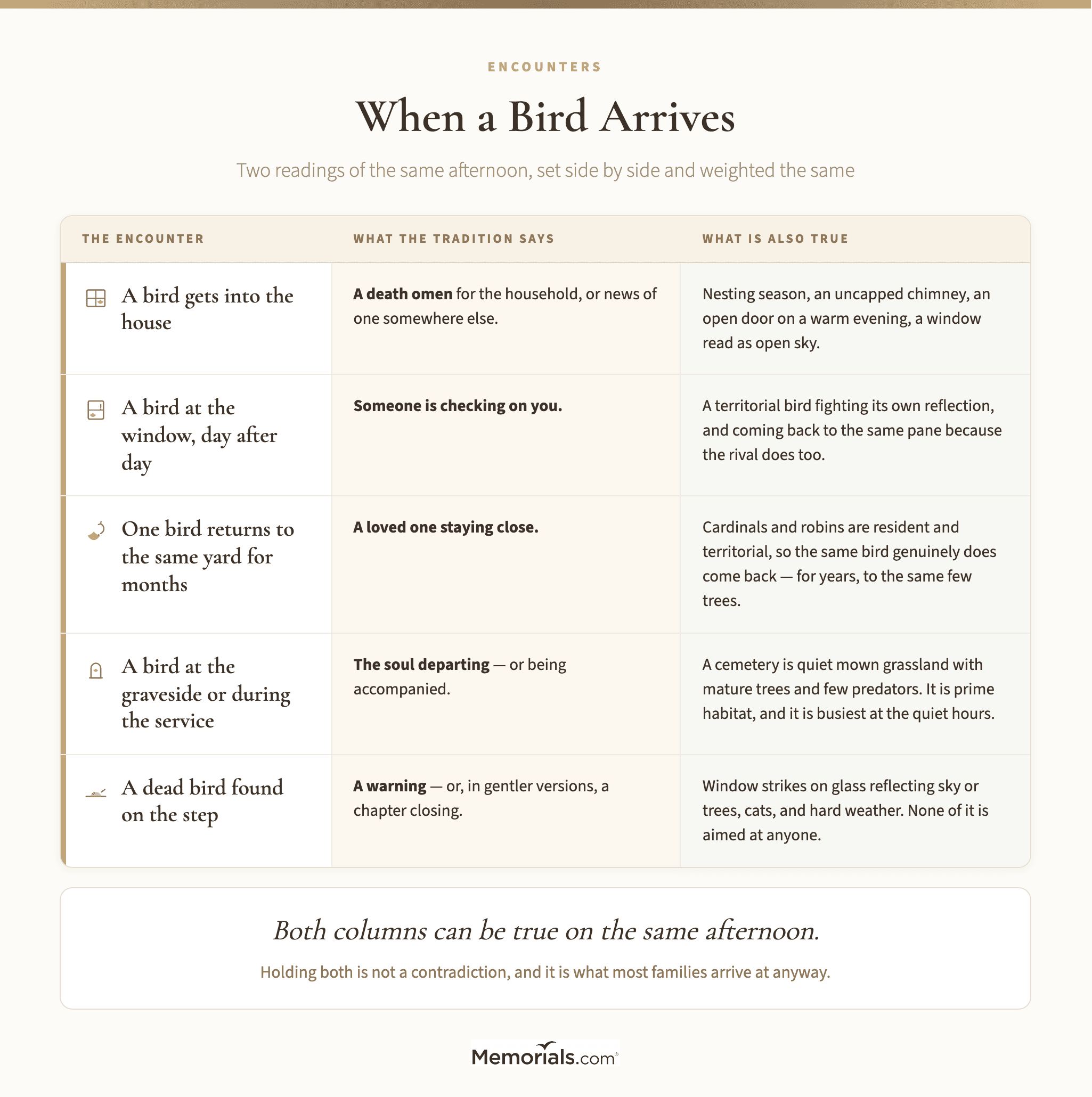
Five common encounters, each with the traditional reading beside the ordinary one. The argument of the table is that both columns can be true on the same afternoon.
Carrying a Bird Symbol into a Memorial
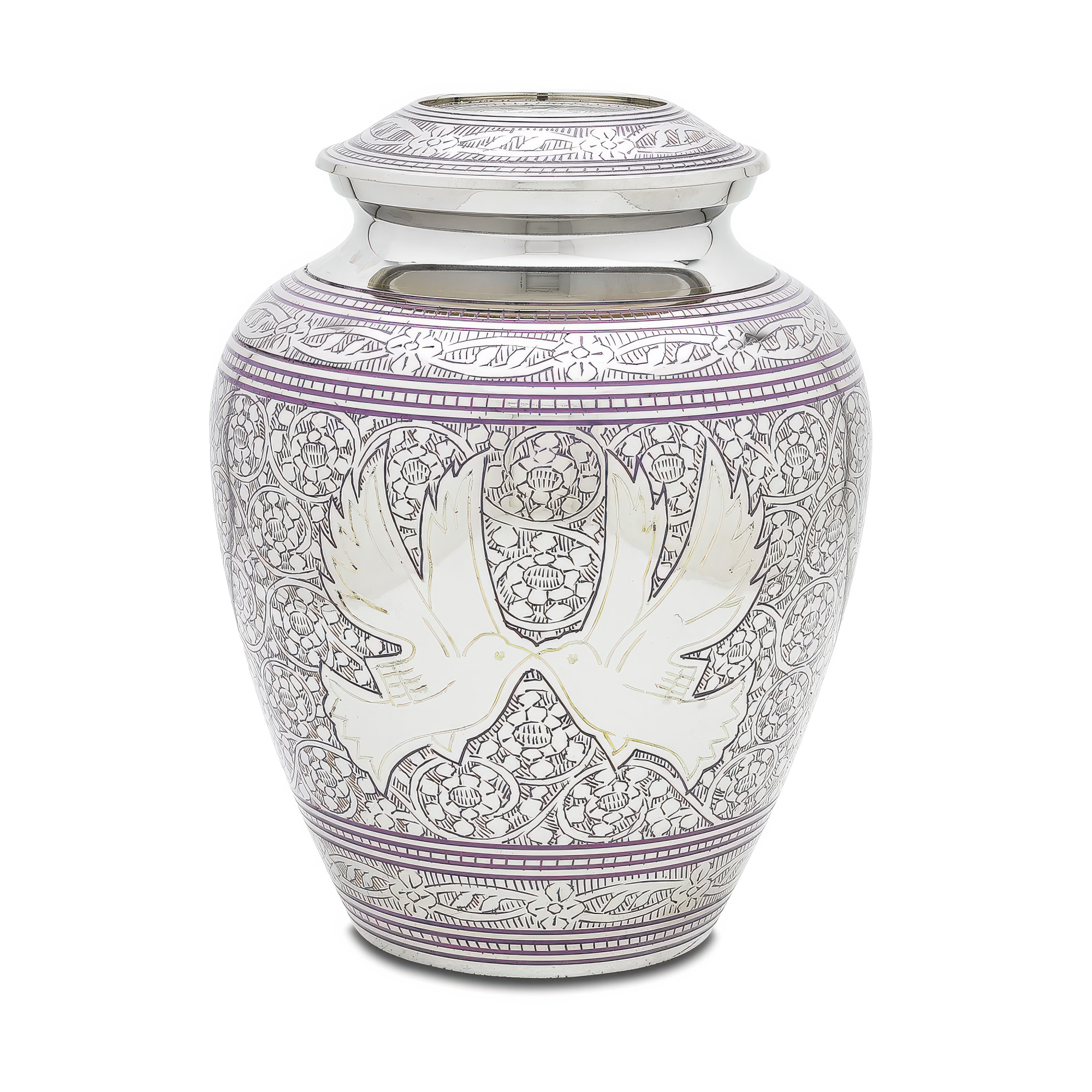
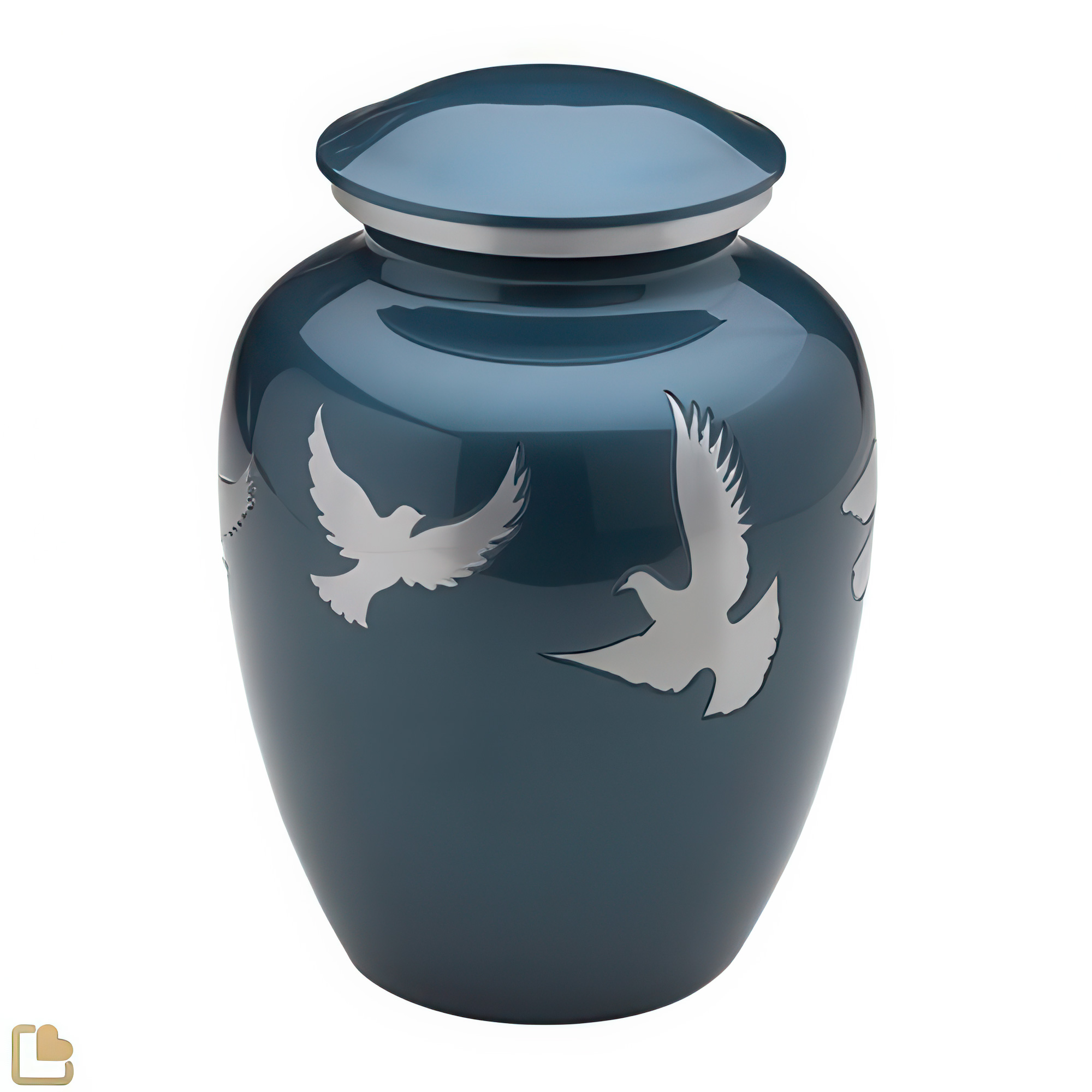
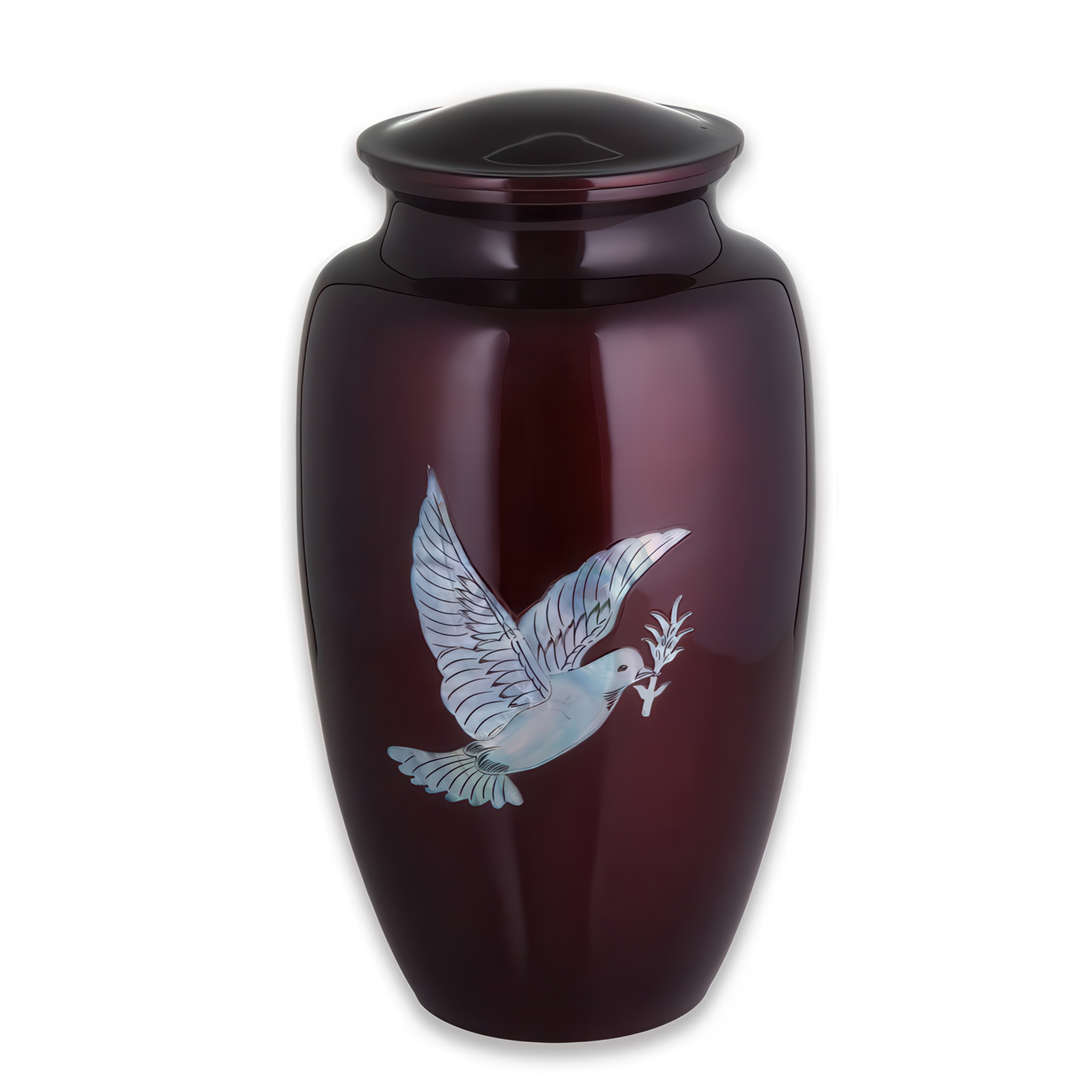
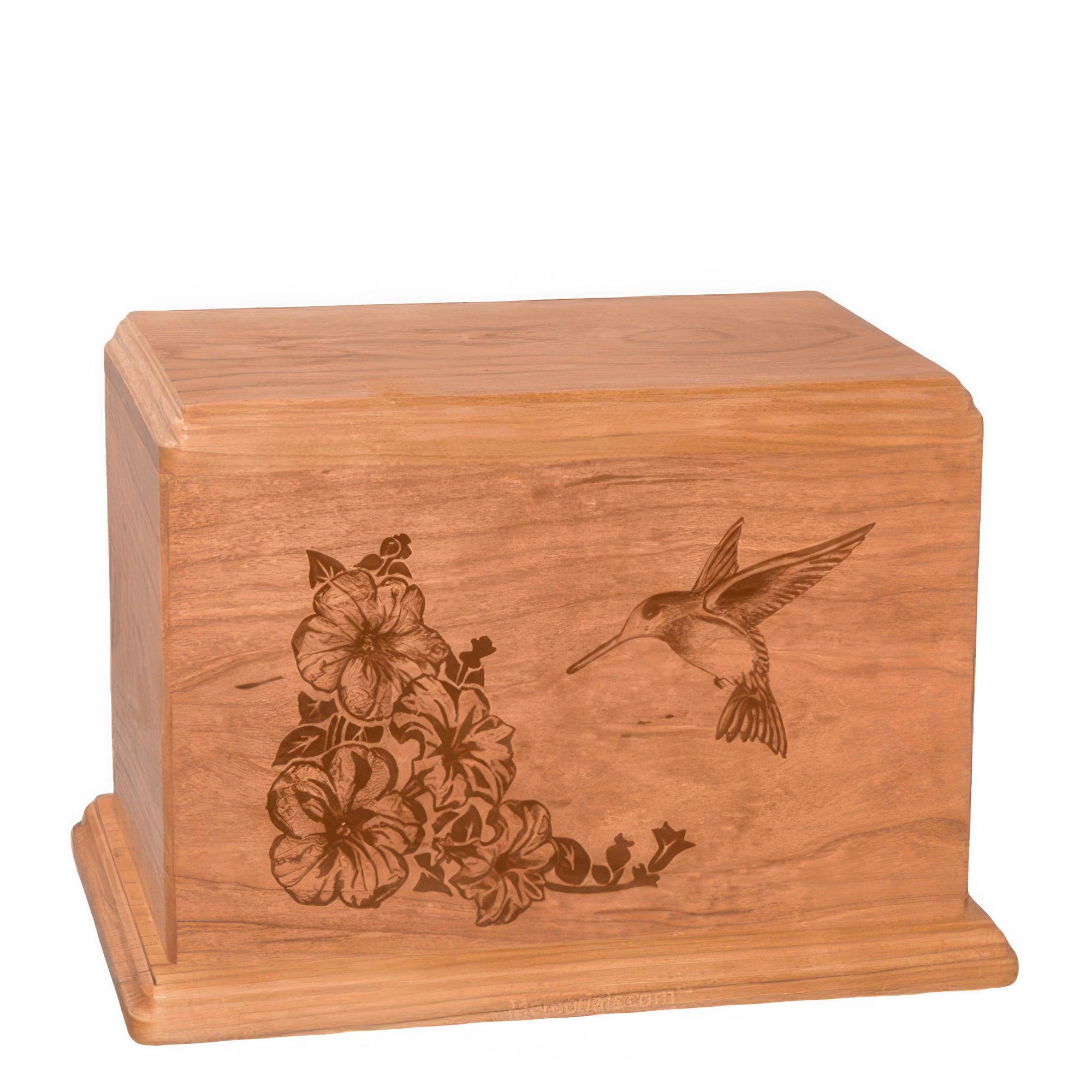
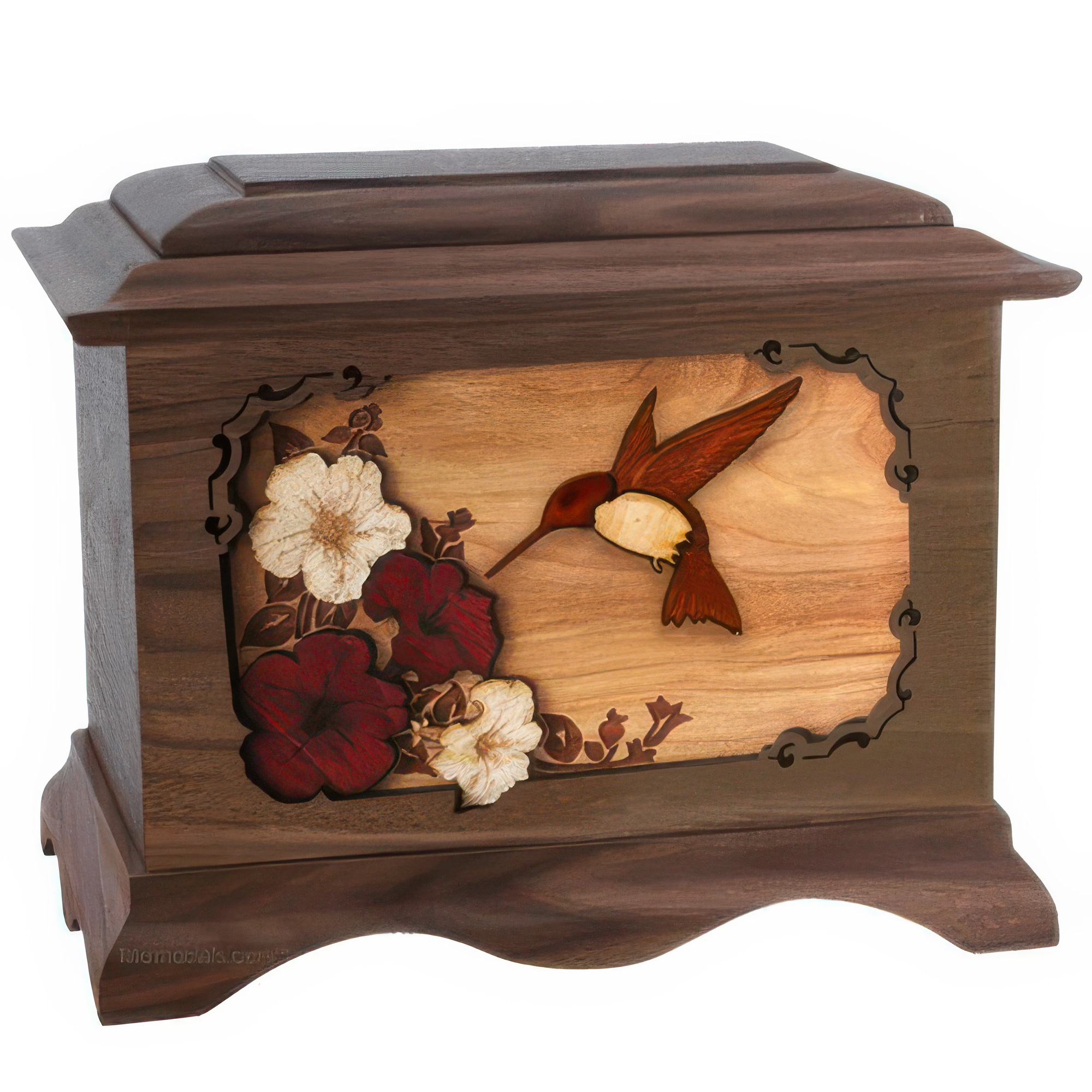
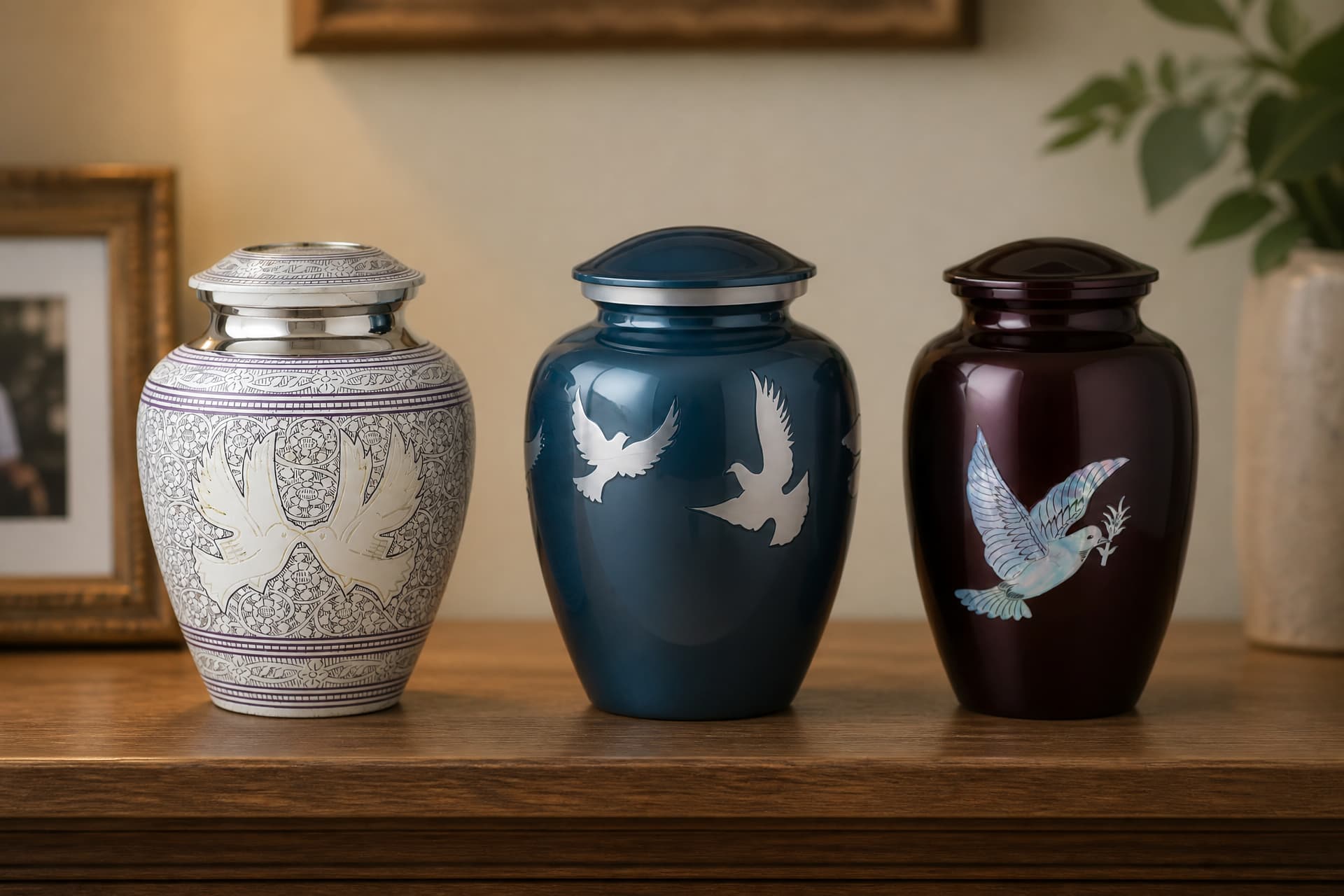
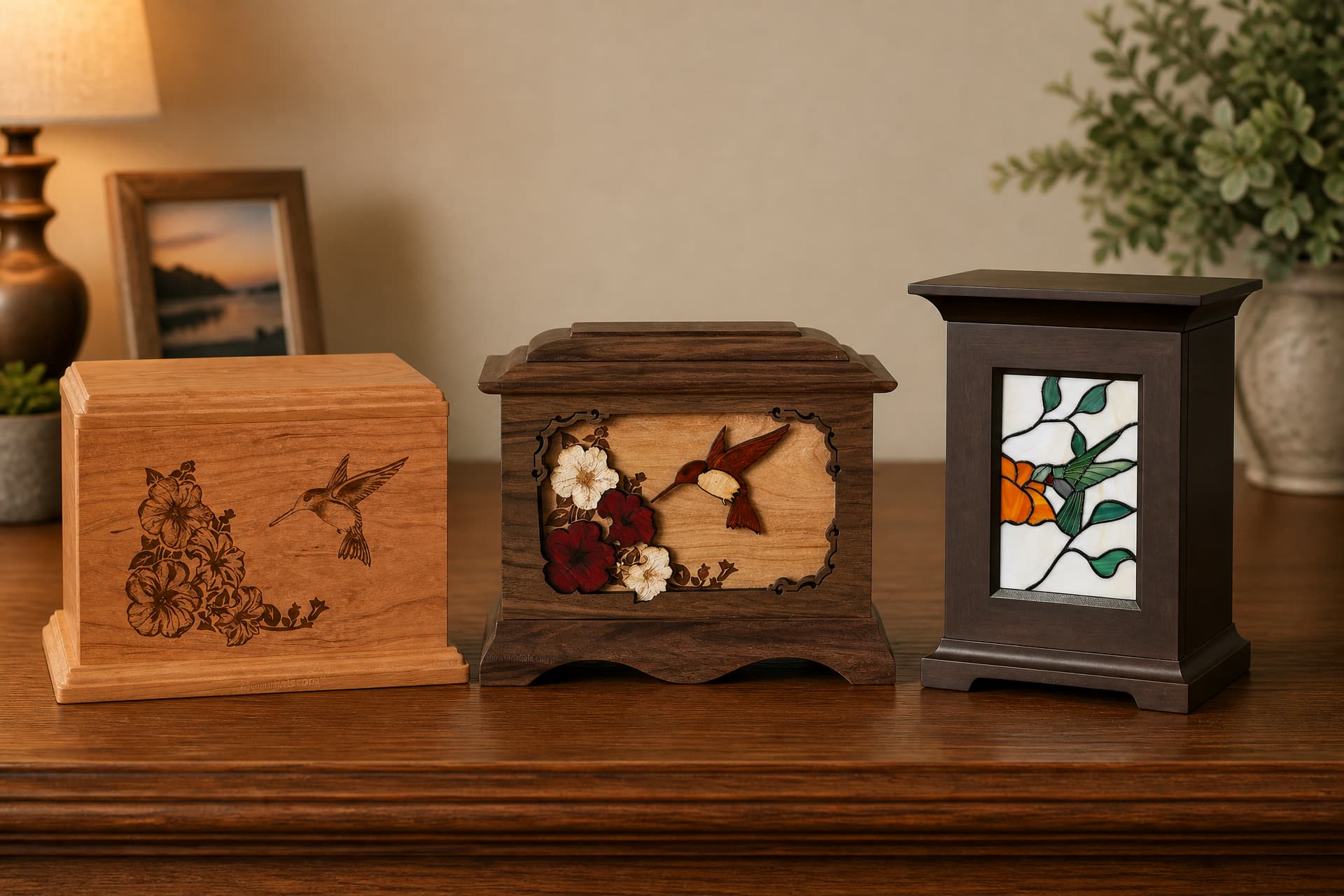
If a bird has come to mean something in a family, it usually wants somewhere to go. The most common place is the urn itself. Doves lead in metal and hummingbirds lead in wood, with cardinals and cranes behind them, and the motifs run across nearly every material a family might choose. Among metal urns for ashes the bird designs run from a facing pair of doves etched across the whole body to a single mother-of-pearl dove inlaid on a plain enamel field, in brass, pewter and bronze finishes.
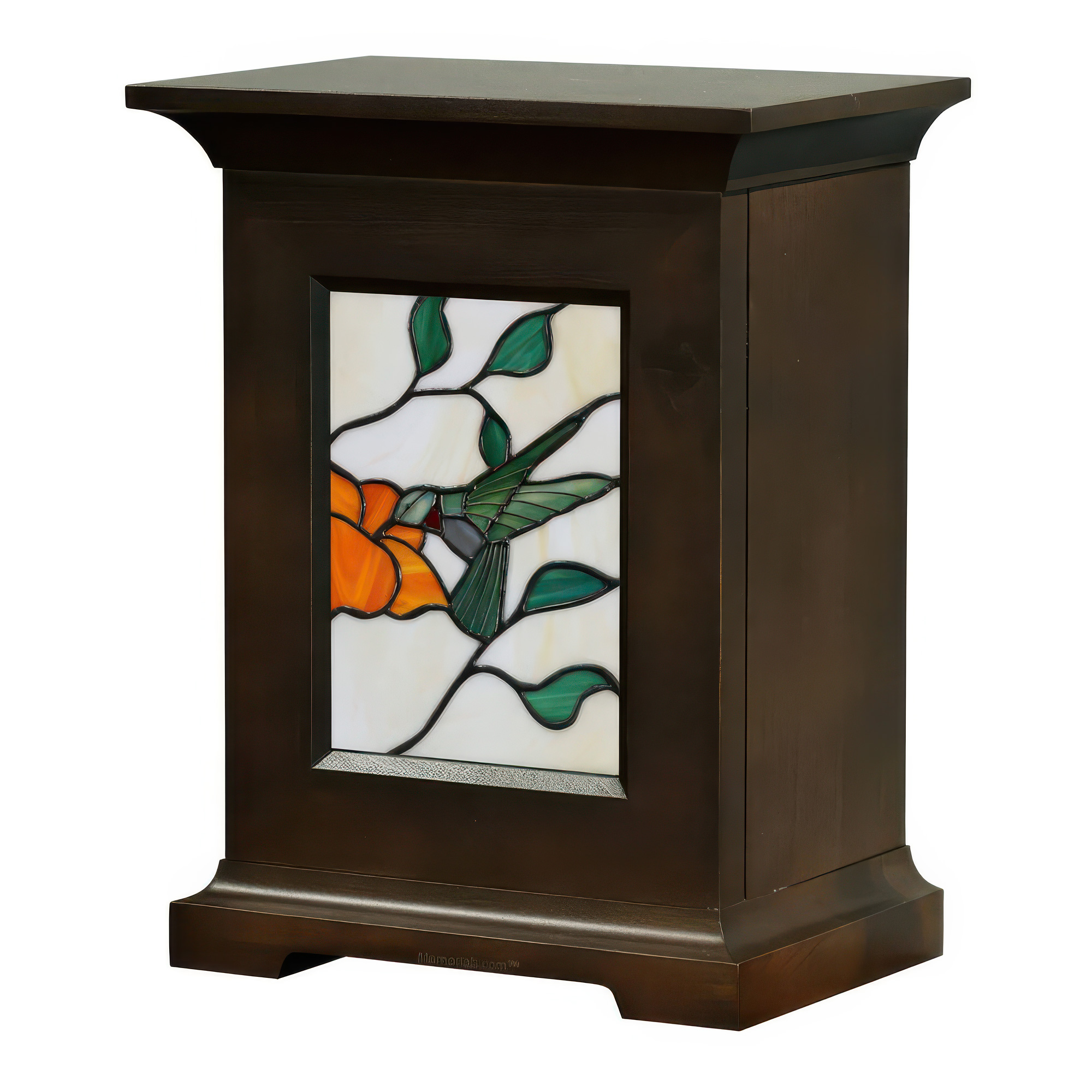
Wood takes the same imagery differently. Where metal casts or etches the bird, wood tends to inlay or carve it, and the result is quieter. Several of the wooden urns for ashes sets carry doves or hummingbirds worked into oak, maple, walnut and cherry, and a few use stained glass panels set into the front. If the bird in question is a specific one — the cardinal on that fence — a carved or inlaid version tends to hold up better over decades than a printed one.
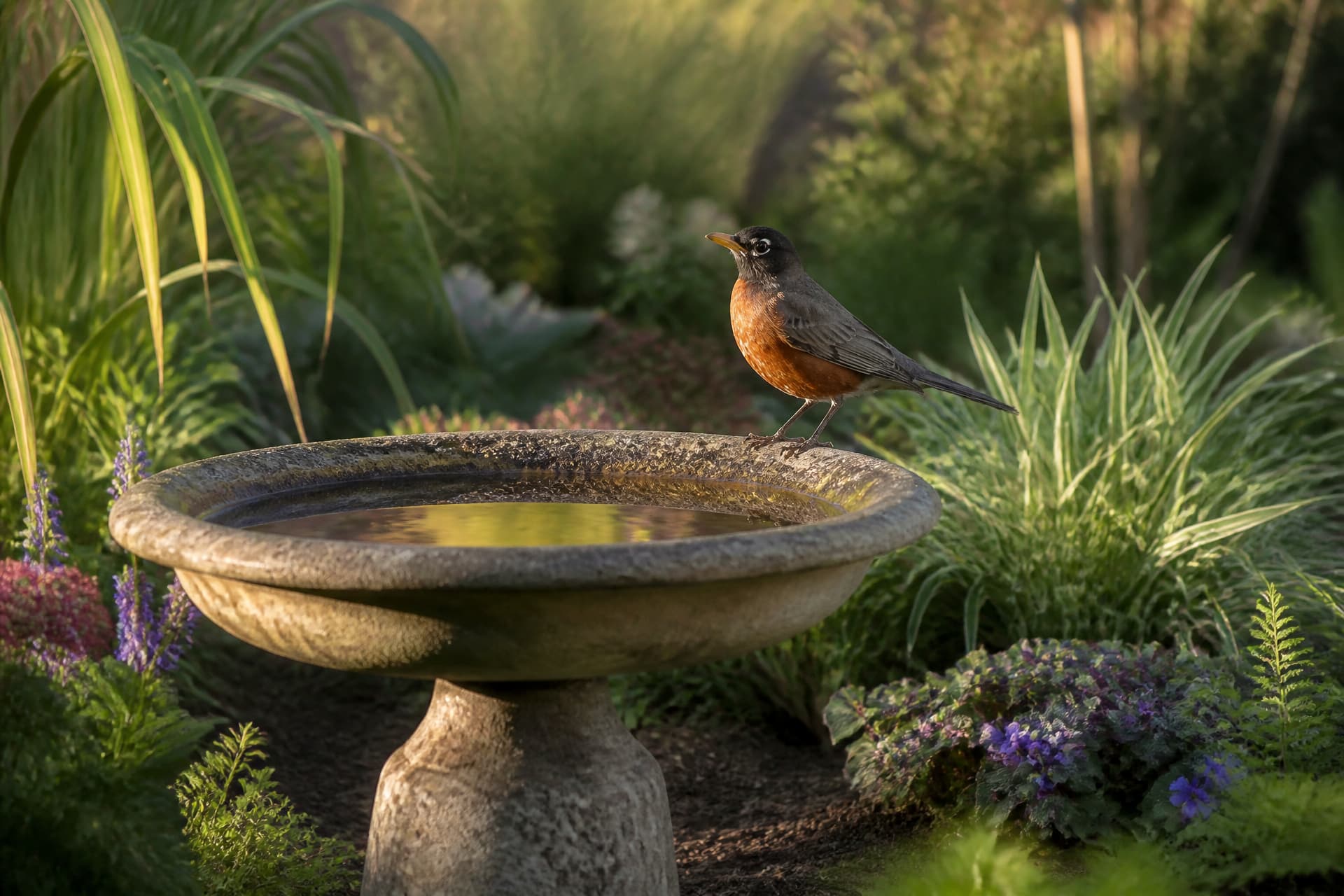
The other places a bird can go are less obvious and often more used. Carved birds are among the oldest motifs on markers, and our guide to headstone symbols covers what a dove, a rising bird or an empty perch has traditionally meant on a stone. A garden works even harder: a feeder placed where someone used to sit turns the sign into something the family maintains, and a stone bird bath does the same on a larger scale. If that is the direction, our memorial garden ideas cover planting for the species you actually want to attract rather than for birds in general.
A feeder or a bath makes the sign into a practice. It is the one memorial that asks something small of the family every week, which is exactly why people keep it up.
Some people carry it on the body instead. A cardinal memorial tattoo is a common way to do that, usually paired with a name or a date. And a bird is only one entry in a much older vocabulary — the symbols of grief that appear on stones, cards and jewelry include a dozen others that were once read as fluently as writing.
Frequently Asked Questions
What bird symbolizes death of a loved one?
There is no single answer, and people asking what bird symbolizes death of a loved one are usually asking something narrower than the folklore does. In European tradition the ravens, crows, owls and magpies carry the association with death itself. In modern American and British folk belief the birds connected specifically to a person who has died are the cardinal and the robin — small resident birds that show up in the same yard repeatedly.
What does it mean when a cardinal comes to visit?
The common modern reading is that a cardinal is a visit from someone who has died, or a sign that they are near. It is a recent belief rather than an ancient one, and it took hold because cardinals are bright, loud, non-migratory and territorial, so the same bird really does return to the same yard for years. Whether it means more than that is not something anyone can settle for you.
What does it mean when a bird flies into your house?
Traditionally it was read as an omen of a death, either in the household or reported to it. In practice, a bird indoors is nearly always a bird that came down a chimney, followed an open door, or misread a window during nesting season. Both readings can be held at once, and many people do.
Which birds represent passed loved ones?
The cardinal in North America and the robin in Britain and Ireland are the two most commonly named. Hummingbirds, bluebirds, doves and butterflies come up often as well. The pattern in every case is a small, visible, local species that appears near the home — people report signs from birds they already know.
Is it bad luck to see a dead bird?
Some traditions read a dead bird on a doorstep as a warning, and others as the closing of a chapter rather than a threat. The likeliest causes are window strikes, cats and hard weather. Move it with gloves, wash your hands, and mark large windows on the outside if strikes keep happening.
Letting the Bird Mean What It Means
Nobody who writes about this can tell you whether the cardinal on your fence is your mother. What the traditions can tell you is that the impulse to ask is not strange, not new, and not a sign that grief has gone wrong somewhere. People have been watching birds for news of the dead for as long as there are records of people watching anything, and they have reached remarkably similar conclusions on separate continents.
The useful stance is the one most families arrive at anyway. The bird has an ordinary explanation and it also arrived on the day it arrived. Hold both. Let it mean what it means to you, tell the person next to you about it, and do not put it under pressure to keep performing.
If it has come to mean enough that you want it somewhere permanent, the memorial is the place for it — a dove worked into the urn, a bird carved on the marker, a feeder in the corner of the yard where someone used to sit with their coffee. Those last decades, and unlike the bird, they show up every day.