🏬Supersize Online Funeral Retailer🪦1000's of Headstones⚱️Over 10,000 Cremation Urns⚰️Caskets Overnight Delivery🛒Funeral & Memorial Superstore🚚FREE Shipping on ALL Orders👨👩👧👦Helping Families for over 20 Years💰Lowest Price Guarantee🏬Supersize Online Funeral Retailer🪦1000's of Headstones⚱️Over 10,000 Cremation Urns⚰️Caskets Overnight Delivery🛒Funeral & Memorial Superstore🚚FREE Shipping on ALL Orders👨👩👧👦Helping Families for over 20 Years💰Lowest Price Guarantee
🏬Supersize Online Funeral Retailer🪦1000's of Headstones⚱️Over 10,000 Cremation Urns⚰️Caskets Overnight Delivery🛒Funeral & Memorial Superstore🚚FREE Shipping on ALL Orders👨👩👧👦Helping Families for over 20 Years💰Lowest Price Guarantee🏬Supersize Online Funeral Retailer🪦1000's of Headstones⚱️Over 10,000 Cremation Urns⚰️Caskets Overnight Delivery🛒Funeral & Memorial Superstore🚚FREE Shipping on ALL Orders👨👩👧👦Helping Families for over 20 Years💰Lowest Price Guarantee
Famadihana is a Malagasy ceremony in which a family opens the ancestral tomb, brings out the remains of the people buried inside, wraps them in fresh cloth, and dances with them before returning them to rest. It is not a funeral. The funeral happened years earlier, and the person being honored has been dead long enough to have finished the slow work of becoming an ancestor. What it is instead is a celebration — for many families the largest one they will hold in a decade, with live music, a feast, and relatives who came a long way to be there.
Two questions bring most people to this page: what the word means, and what actually happens on the day. This article answers both in that order, and then answers the one almost nobody writes down, which is whether families still hold the ceremony at all. It sits inside our funeral traditions guide alongside the other rites that treat the dead as people who can still be visited.
The famadihana meaning is literal and completely unglamorous. The word translates as "the turning of the bones," and that is precisely what the ceremony does — the remains are lifted, turned, rewrapped and put back. English-language accounts almost all reach for that same translation, and they are right to: this is the turning of the bones Madagascar's central highland families have kept up for generations.
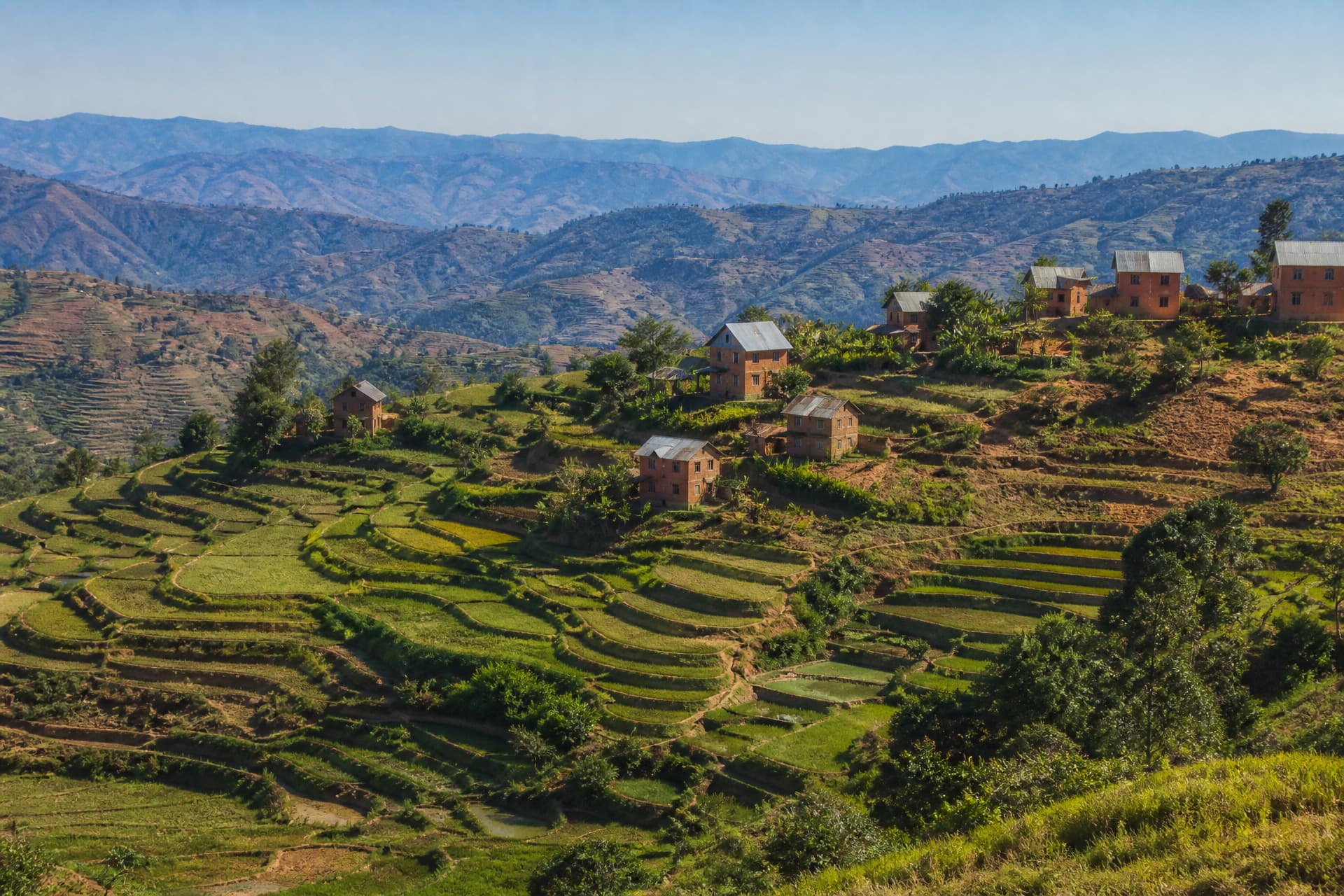
The ceremony belongs to the Merina and Betsileo peoples of the central highlands, with variations among other Malagasy groups. That distinction matters more than it looks. Madagascar is a large island with many peoples and many different ways of handling the dead, and saying that "Madagascar does this" flattens all of them into one. Most Malagasy people do not hold famadihana. The families who do are concentrated in the highlands, and they hold it as an inherited family obligation rather than a national custom.
Outside Madagascar famadihana is routinely described as a funeral, and that is the single most common error made about it. A famadihana definition that would actually help a reader is this: a second occasion, held years after the burial, at which a family brings its ancestors back into the daylight for a day, tells them what has happened since, and returns them to the tomb in new cloth. The first burial dealt with the death. This deals with the relationship, which in Malagasy thinking did not end.
The rite belongs to the central highlands, not to the whole island. Famadihana is a Merina and Betsileo practice, and most Malagasy families do not hold one.
Why Families Bring the Dead Back Out: the Razana
Behind the ceremony sits a single idea, and it is the one worth carrying away from this page. The Malagasy word is razana — the ancestors. In this way of seeing things, the dead are not gone and they are not elsewhere. They are a category of relative: senior members of the family who have moved into a different condition but who remain part of the household's affairs, and who are commonly held to act as intermediaries between the living and God, with the power to intervene in what happens on earth.
Becoming an ancestor is not instant, either. The spirits of the dead are understood to join the world of the ancestors only after the body has completely decomposed. That is the quiet reason famadihana happens years after a burial rather than months: the person has to finish arriving. Until then they are somewhere in between, and the family's job is to wait.
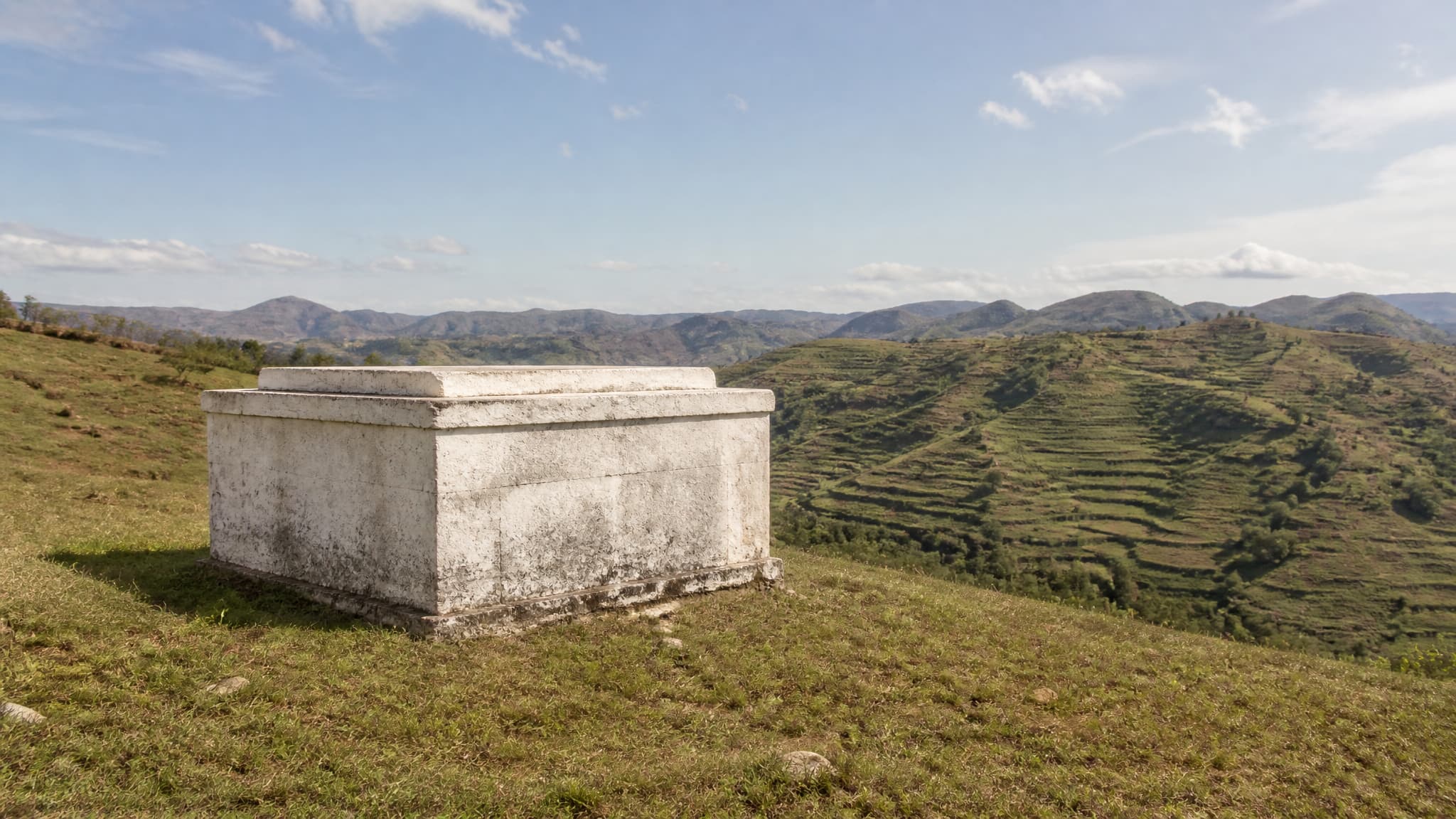
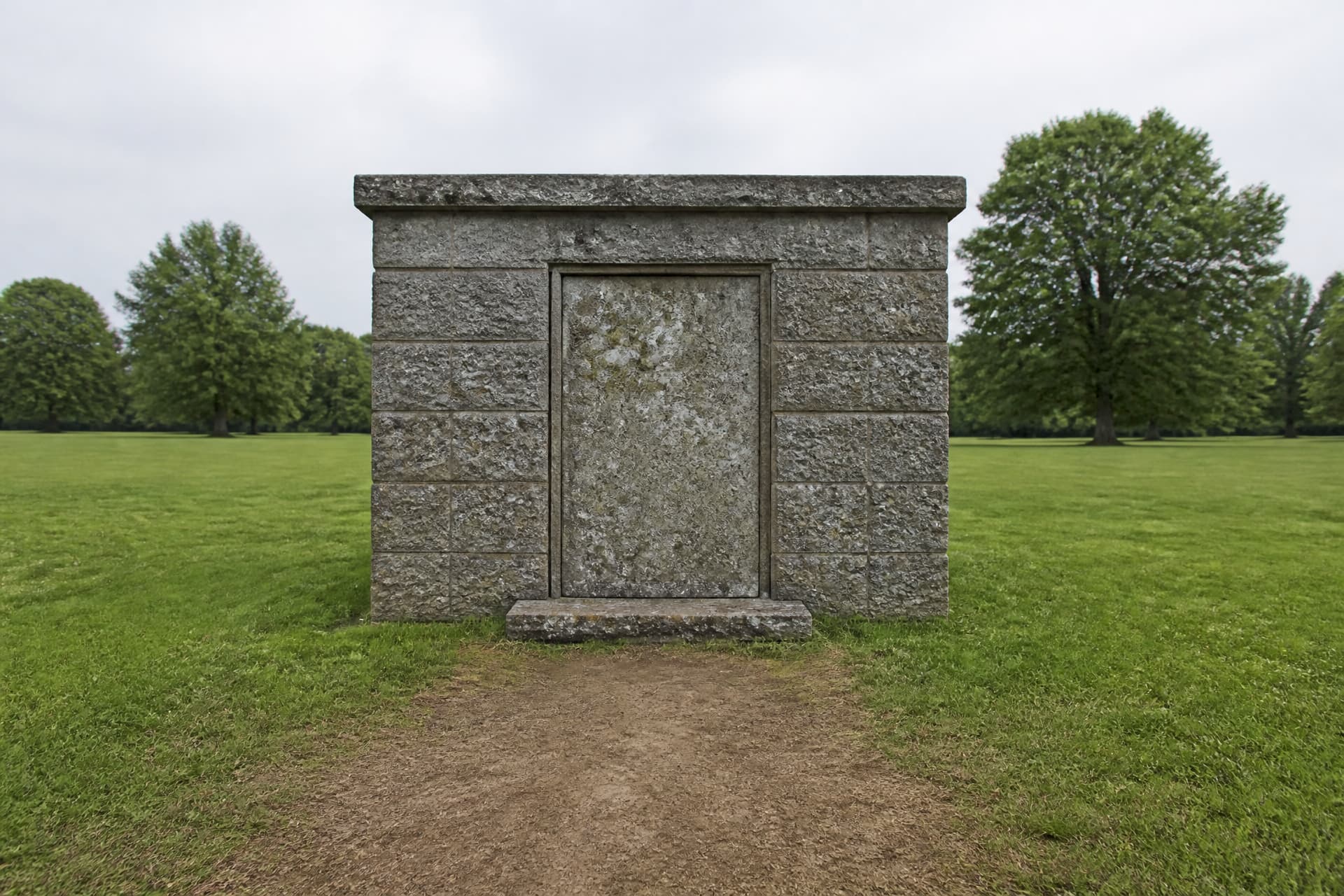
This is also why the tomb matters as much as it does. A Malagasy family tomb is not a plot with one occupant. It is a structure the family opens and closes across generations, holding many people, added to over decades, and understood as the place the lineage lives. The nearest thing most Americans have seen is a family mausoleum — an above-ground structure a family builds once and returns to as it needs it. Nearest, not equivalent: the American version is generally sealed between interments, while the Malagasy one is built on the understanding that it will be opened again by people who want to be inside it.
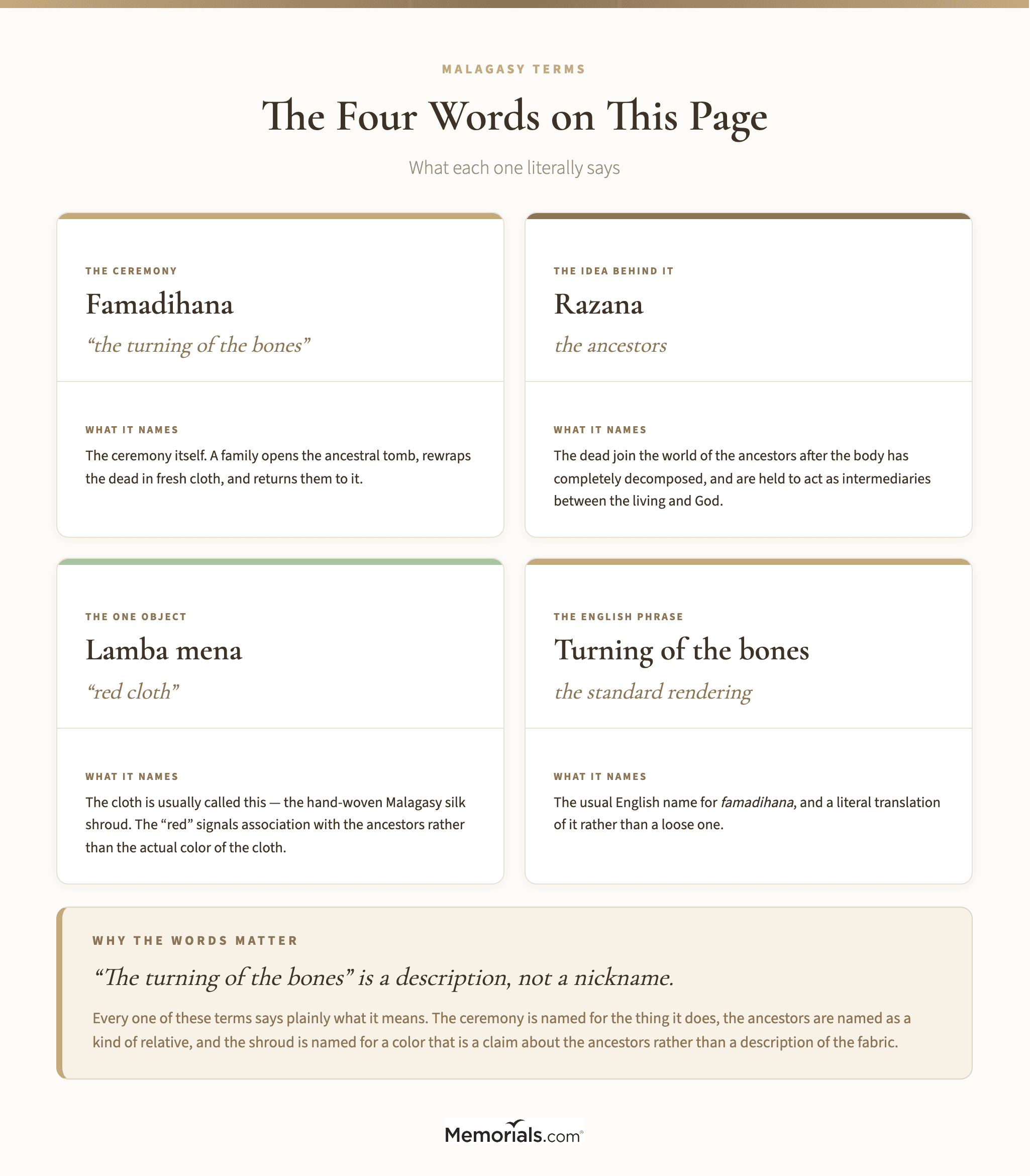
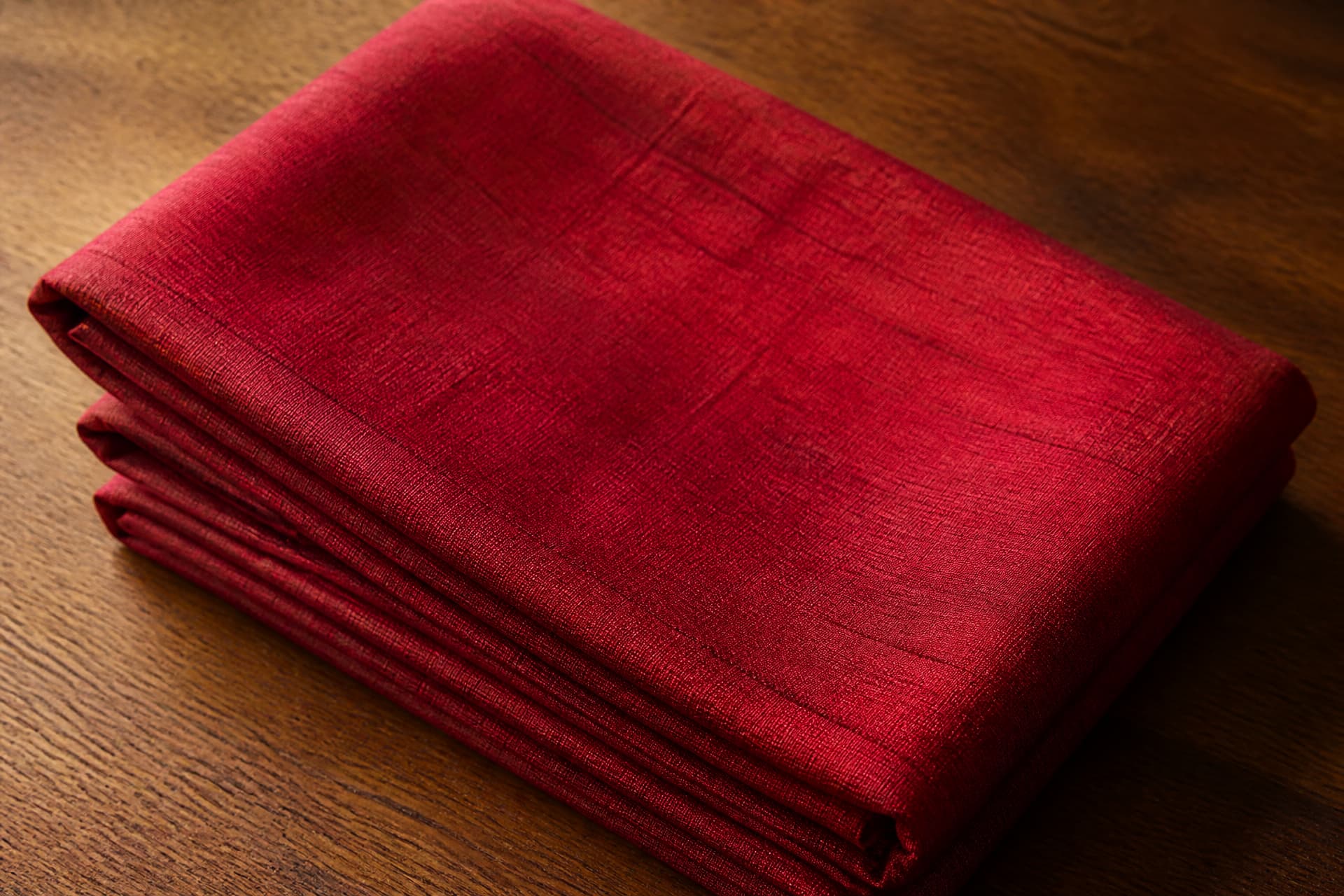
Four words do most of the work. Famadihana is the turning of the bones, razana means the ancestors, and lamba mena — literally "red cloth" — names a shroud whose color is a claim about the ancestors rather than a description of the fabric.
What Actually Happens at a Famadihana
A famadihana is held in the dry season. According to Bradt Guides, the specialist travel publisher for Madagascar, a famadihana may by law take place only between June and September, which puts the whole practice into a defined stretch of the year and gives families a window to plan around.
The family opens the tomb and brings out the remains of the ancestors being honored. Each is rewrapped in a new burial shroud, and the person's name is written again on the fresh cloth so that it will always be remembered. That detail is easy to skim past and it is close to the center of the whole thing: the point of the exercise is that a name should not be allowed to disappear.
Then the ancestors are carried. Relatives lift them overhead and dance with them to live music, going around the tomb several times, and in some places continuing through the village before the remains are replaced. Accounts describe families telling the dead the household's recent news while this is going on — who married, who was born, how the harvest went. The music and the dancing are not decoration around a solemn core; they are the occasion itself, in much the same way that a New Orleans second line funeral is not a somber event with a band attached but a procession whose whole meaning is carried by the brass and the walking.
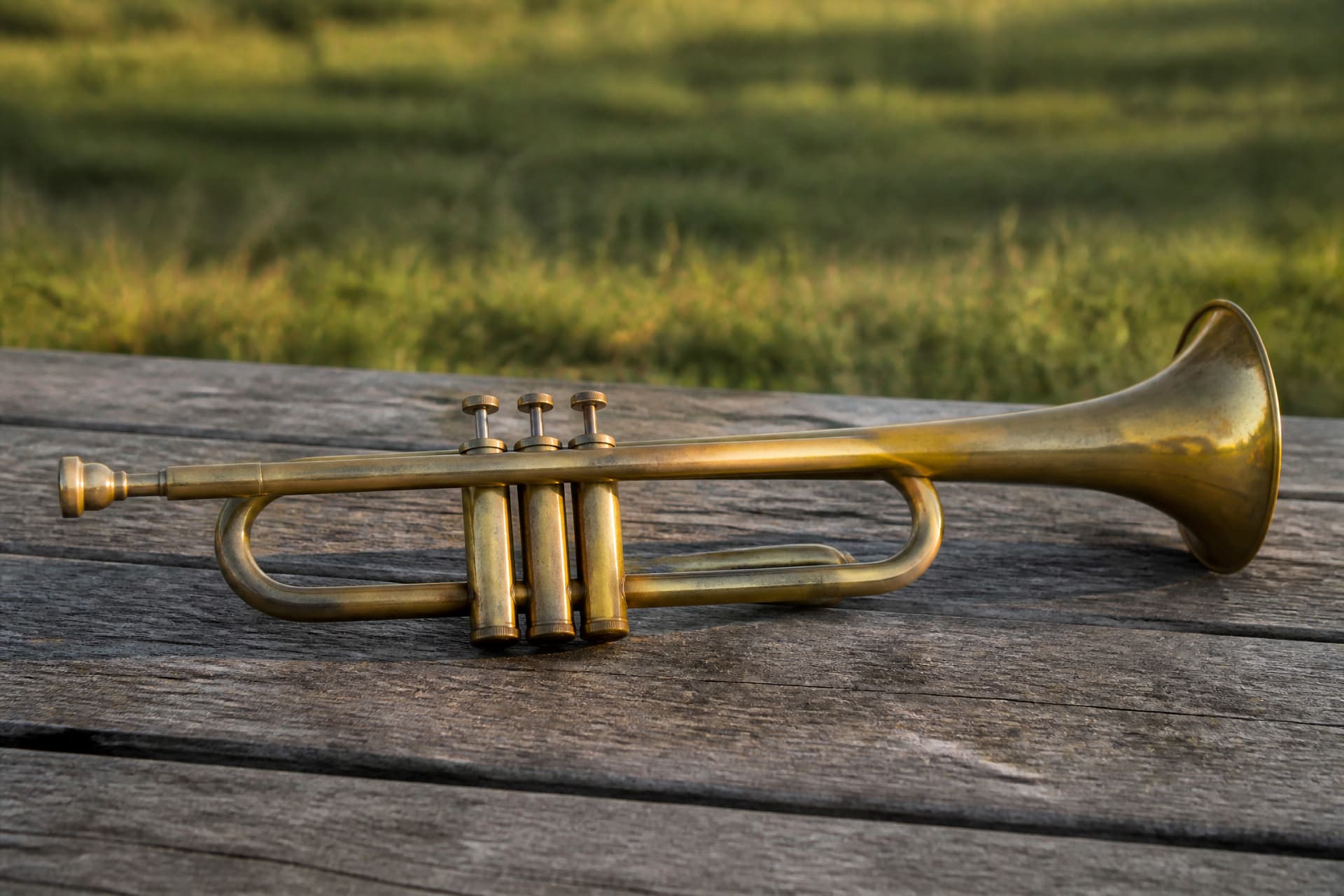
Live music is not an addition to the ceremony. Families dance with their ancestors to a band, and the sound is what tells the village a famadihana is happening.
Around the procession sits a party. Bradt describes generous quantities of alcohol consumed amid a festive atmosphere with much dancing and music, and notes that a famadihana can last up to a week and involves considerable expense, as befits the most important celebration any family will hold. Guests come from a long way. Food has to be provided for all of them, for days. A family does not slip a famadihana quietly into a weekend.
The Shroud, and What It Costs a Family
The cloth is usually called a lamba mena, sometimes written lambamena, and the phrase means "red cloth" — though the red is a statement of association with the ancestors rather than a description of the actual color of the fabric. It is Malagasy silk, hand-woven, and it is expensive.
That expense is doing two contradictory jobs at once. It is part of why a famadihana carries the prestige it does: providing good cloth for your ancestors, in front of the whole extended family, is a visible act of respect that costs something real. And it is one of the main reasons the practice is shrinking, because the price of doing it properly has not fallen.
The shroud is the one object the ceremony genuinely requires, and the one it is most often postponed for. Hand-woven Malagasy silk is a serious expense in a rural household.
There is a version of famadihana that shows how far the cloth carries the meaning. Accounts from the end of the nineteenth century describe families holding the ceremony simply to renew a worn-out shroud on an ancestor already lying in the tomb — no new burial involved, nothing to move, just cloth that had aged and a name that would be written out again on the new one. The impulse behind rewriting that name is not confined to Madagascar. It is the same reason a family here pays to have a name cut into a grave marker rather than trusting anyone to remember where the plot is.
Is Famadihana Still Practiced?
Less than it was, and for four reasons that pull in different directions.
The first is money. The silk is costly, the feast is costly, and a ceremony that requires both is the first thing a household postpones.
The second is religion. Early missionaries discouraged famadihana, and some evangelical Christian families have given it up entirely. The Catholic Church, however, no longer objects to the practice, because it regards famadihana as purely cultural rather than religious — a distinction that lets a Catholic Malagasy family hold one without any sense of contradiction. That reversal is worth stating plainly, because a great deal of writing on this subject still implies a standing church prohibition that is not there.
The third is fashion, in the ordinary sense. Some younger and more urban Malagasy regard the ceremony as old-fashioned, which is how most inherited obligations lose ground.
The fourth is public health. The practice is thought to be connected to pneumonic plague transmission in the region, and authorities have forbidden it for plague victims. That is the full extent of the honest claim: a restriction aimed at a specific category of remains, not a national ban and not an outbreak story.
Taken together, these have made famadihana rarer, more expensive to hold, and more concentrated among families with a strong sense of obligation to it. It has not disappeared.
How Famadihana Compares With Other Second Funerals
Famadihana belongs to a class of practice sometimes called a second burial or a double funeral: a first rite that deals with the body, and a later one that deals with what is left and what it means. It is not the only one, and the comparisons are useful as long as they are not overstated.
The closest relative in this guide is the Japanese bone picking ceremony, or kotsuage, in which family members handle the bones directly after cremation and place them into the urn together. Both practices put the family's own hands on the remains as an act of care rather than a duty to be delegated. The difference is timing and scale — kotsuage follows immediately, in a quiet room, and famadihana comes years later in front of a crowd.
A Tibetan sky burial shares the assumption that a body's exposure is not a desecration, but it goes the other way entirely: the remains are given up rather than kept, and there is no tomb to return to. The two are often filed together by outsiders because both unsettle Western expectations, which is a fact about the outsiders rather than about either tradition.
The one most American readers already have a feel for is Día de los Muertos, where families go to the graves, bring food and candles, and treat the dead as guests who are expected. The overlap is the register — festive, hospitable, unafraid — rather than the procedure. Día de los Muertos leaves the dead where they are; famadihana brings them out. Naming that similarity early is what keeps a reader from filing this page under curiosities.
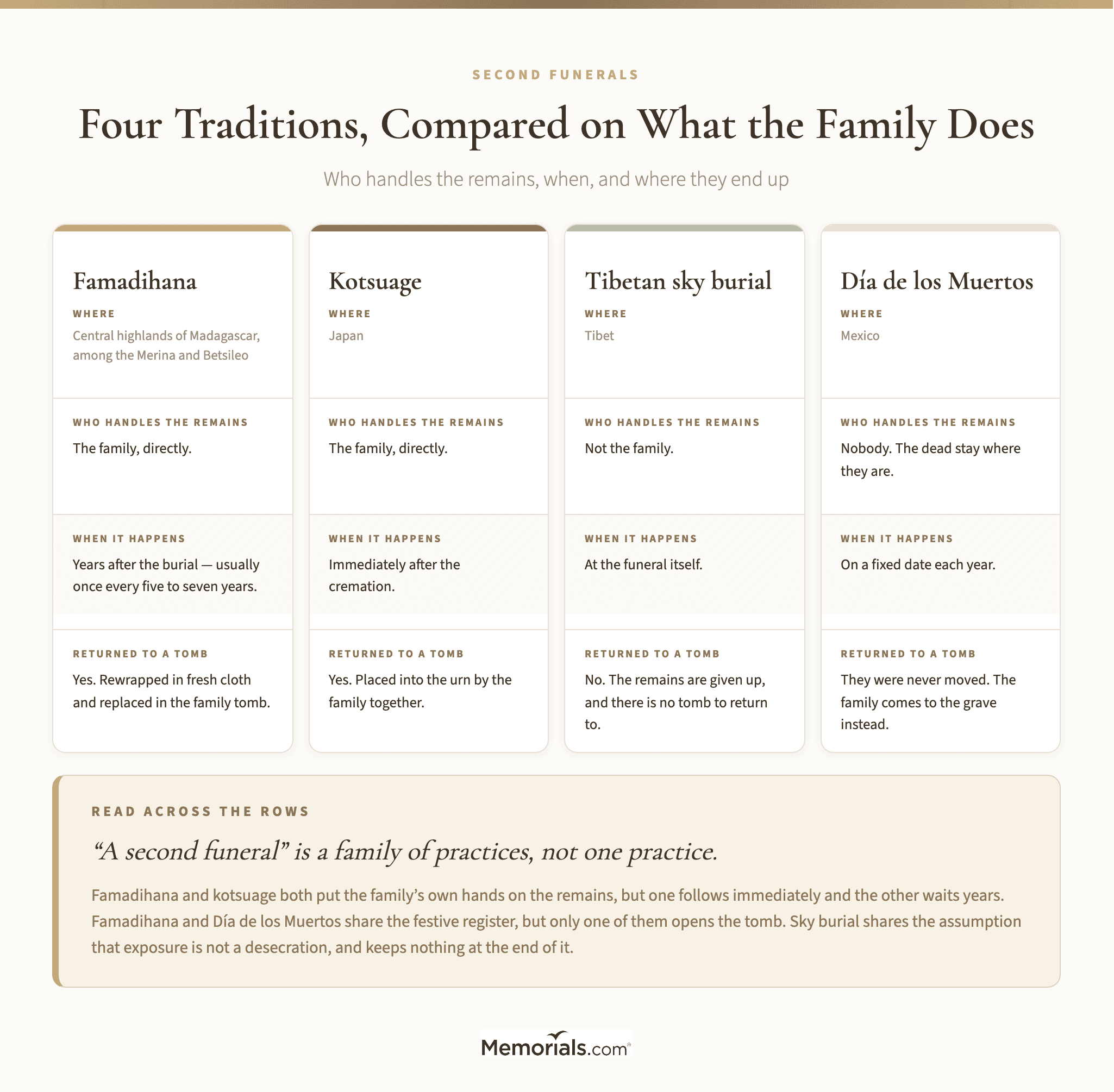
Four traditions, compared on what the family actually does. Famadihana and kotsuage both put the family's hands on the remains; famadihana and Día de los Muertos both treat the visit as a celebration; only famadihana does all of it at once, every five to seven years.
Could a Family Do Anything Like This in the United States?
Not really, and the reason is procedural rather than cultural. Reopening a grave in the United States is exhumation, and it is a legal process rather than a family decision. It generally requires a license or a court order, the consent of the next of kin, and the cooperation of the cemetery, and the requirements vary from state to state. It is also expensive. If you want the actual mechanics, our guide to moving a grave walks through the permissions, the costs and the situations where a cemetery will decline.
So the form does not transfer. The impulse behind it does, and it is not foreign at all.
The ground in front of a tomb tells you whether anyone comes. Every tradition in this comparison is a way of making sure somebody does.
American families already return to their dead on a schedule and do something when they get there. They visit on a birthday or a death anniversary, clean a stone, plant something, leave flowers at Memorial Day. Jewish families light a yahrzeit candle on the anniversary, every year, for as long as the family lasts — a fixed appointment with a specific person, kept whether or not anyone feels like keeping it that year. Famadihana is a larger, louder, more physical version of the same appointment. The interval is longer, the whole extended family attends, and the ancestors are present in a way that a photograph on a mantelpiece is not.
Frequently Asked Questions
How often does a famadihana happen?
Usually once every five to seven years after the first burial, though the interval is a custom rather than a fixed rule and depends heavily on what a family can afford. Because the ceremony is restricted to the dry season, families also have a defined window each year in which it can be held at all.
Why do families dance with the bodies?
Because the occasion is a celebration and the ancestors are the guests of honor. Relatives carry the remains overhead and dance around the tomb to live music, and while they do it they tell the dead the family's news. Read from inside the tradition, this is not a strange thing to do with a body — it is an obvious thing to do with a relative who has come to the party.
Is famadihana a religious ceremony or a cultural one?
Both readings exist, and the answer has practical consequences. The rite rests on beliefs about the ancestors and their power to intervene in the lives of the living, which is religious by most definitions. But the Catholic Church has taken the position that famadihana is purely cultural rather than religious, and no longer objects to it, which is what allows observant Catholic families in the highlands to take part.
Is famadihana dangerous?
The practice is thought to be connected to pneumonic plague transmission in the region, and governments have forbidden it in the case of plague victims. That restriction is specific and targeted rather than general, and it is one of several pressures that have made the ceremony less common than it once was.
What the Ceremony Is Actually For
Famadihana is often presented as the strangest thing a family can do with its dead. It is closer to the opposite. It is a refusal to accept that a relationship ends because a person stopped being alive — expressed by opening the tomb, saying the name out loud, writing it down again, and making sure the whole family is standing there when it happens. The particular form belongs to the Merina and Betsileo highlands and to nobody else. The instinct behind it belongs to everyone who has ever driven out to a cemetery on an anniversary because it felt wrong not to.