🏬Supersize Online Funeral Retailer🪦1000's of Headstones⚱️Over 10,000 Cremation Urns⚰️Caskets Overnight Delivery🛒Funeral & Memorial Superstore🚚FREE Shipping on ALL Orders👨👩👧👦Helping Families for over 20 Years💰Lowest Price Guarantee🏬Supersize Online Funeral Retailer🪦1000's of Headstones⚱️Over 10,000 Cremation Urns⚰️Caskets Overnight Delivery🛒Funeral & Memorial Superstore🚚FREE Shipping on ALL Orders👨👩👧👦Helping Families for over 20 Years💰Lowest Price Guarantee
🏬Supersize Online Funeral Retailer🪦1000's of Headstones⚱️Over 10,000 Cremation Urns⚰️Caskets Overnight Delivery🛒Funeral & Memorial Superstore🚚FREE Shipping on ALL Orders👨👩👧👦Helping Families for over 20 Years💰Lowest Price Guarantee🏬Supersize Online Funeral Retailer🪦1000's of Headstones⚱️Over 10,000 Cremation Urns⚰️Caskets Overnight Delivery🛒Funeral & Memorial Superstore🚚FREE Shipping on ALL Orders👨👩👧👦Helping Families for over 20 Years💰Lowest Price Guarantee
A second line funeral is a burial that walks. A brass band leads the family and the hearse out of the church at a slow, heavy tempo, plays hymns the whole way toward the cemetery, and then — once the body has been left — turns and plays something fast enough to dance to for the entire walk home. The crowd dancing behind the band is the second line, and here it is not a crowd of strangers intruding on a private grief. It is the reason the thing exists.
Two very different people read a page like this: a family deciding whether to give a father the send-off he would have wanted, and someone who watched a procession pass and wants to know whether it was all right to stand and watch. This answers both, in that order. It sits inside our funeral traditions guide alongside the other rites that treat a death as something a whole community turns out for.
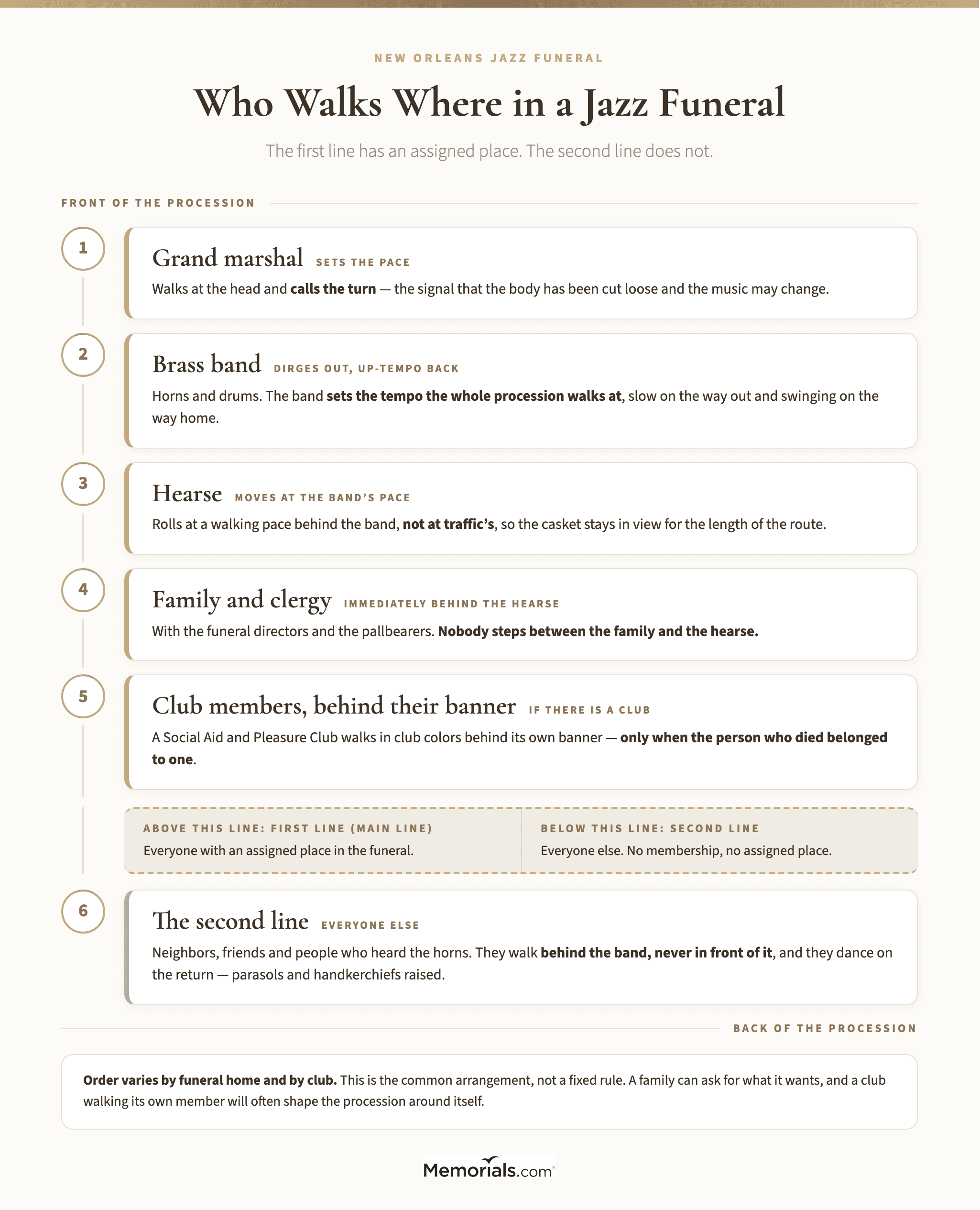
The first line — older residents often say the main line — is the funeral itself on the move: the hearse, the family, the clergy, the funeral directors, the pallbearers, the grand marshal in his sash, and the band. If the person who died belonged to a Social Aid and Pleasure Club, the members walk in the first line too, in club colors, behind their banner. These are the people with an assigned place.
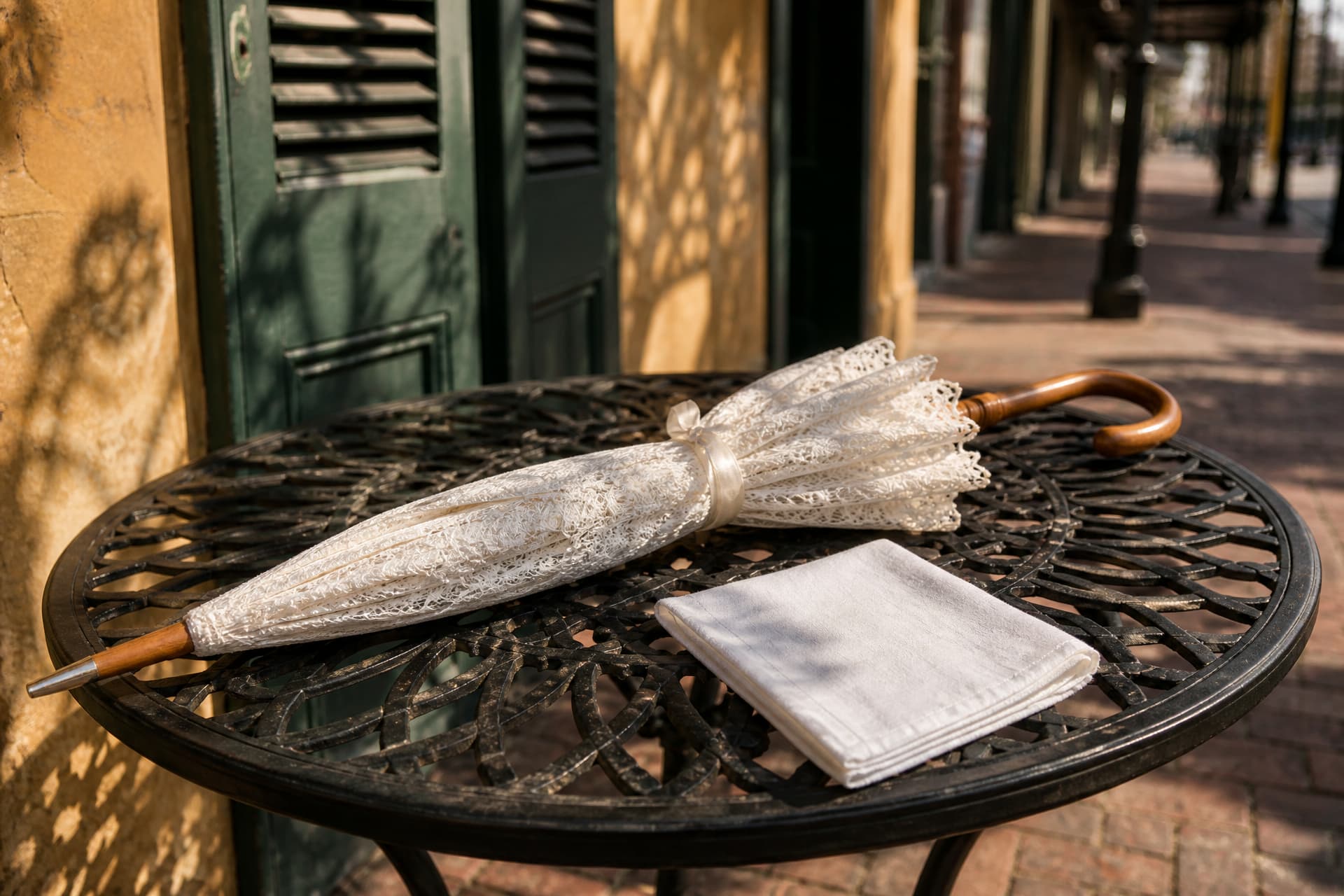
The second line is everybody else. Neighbors, friends, people who heard the horns two blocks away and came out onto the sidewalk, and, at the funeral of a well-known musician, several hundred people who never met him. They walk behind the band rather than in front of it, and they dance. A parasol and a white handkerchief are the second line's own equipment — held up and waved, the raised hand of a crowd that wants to be seen participating. A New Orleans funeral second line can be thirty people leaving the church and three hundred by the time it reaches the avenue, because it gathers them as it goes.
These two objects are what tells you someone is in the second line rather than watching it. Both go up on the return, never during the walk out.
Two clarifications are worth making early, because the vocabulary gets used loosely. People searching for a New Orleans funeral line usually mean this dancing crowd, not the receiving line inside the church where the family stands to greet mourners. And a funeral second line is a different event from a Sunday second line parade, which a club puts on to mark its own anniversary, on a published route, with nobody dead. Same name, same step, often the same band — and constantly confused.
Walking the dead through the streets on foot is not unique to Louisiana. The Muslim janazah is carried by whoever is present, and taking a turn under the bier is a duty rather than an intrusion — the same instinct that lets a stranger fall in behind a brass band here.
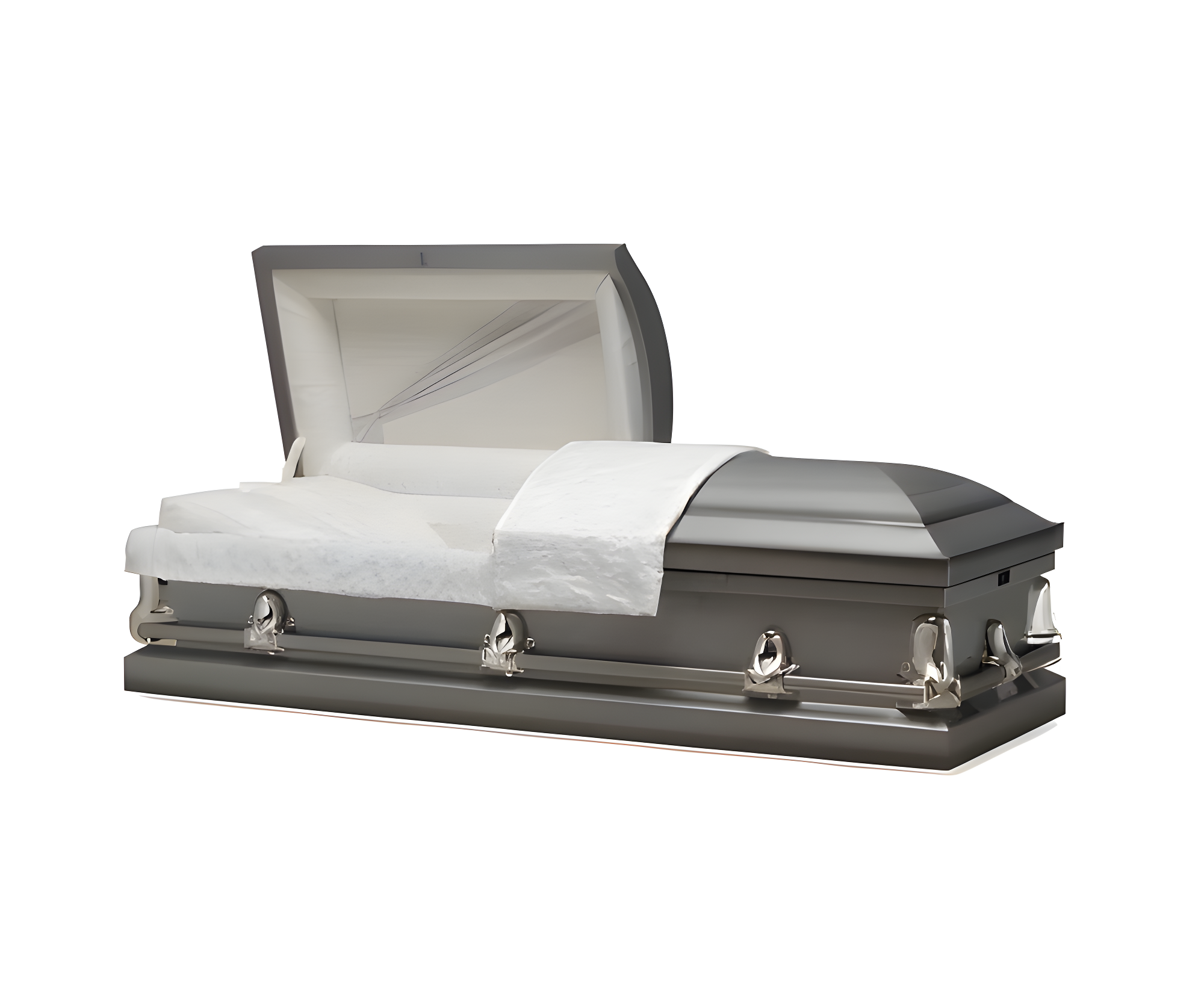
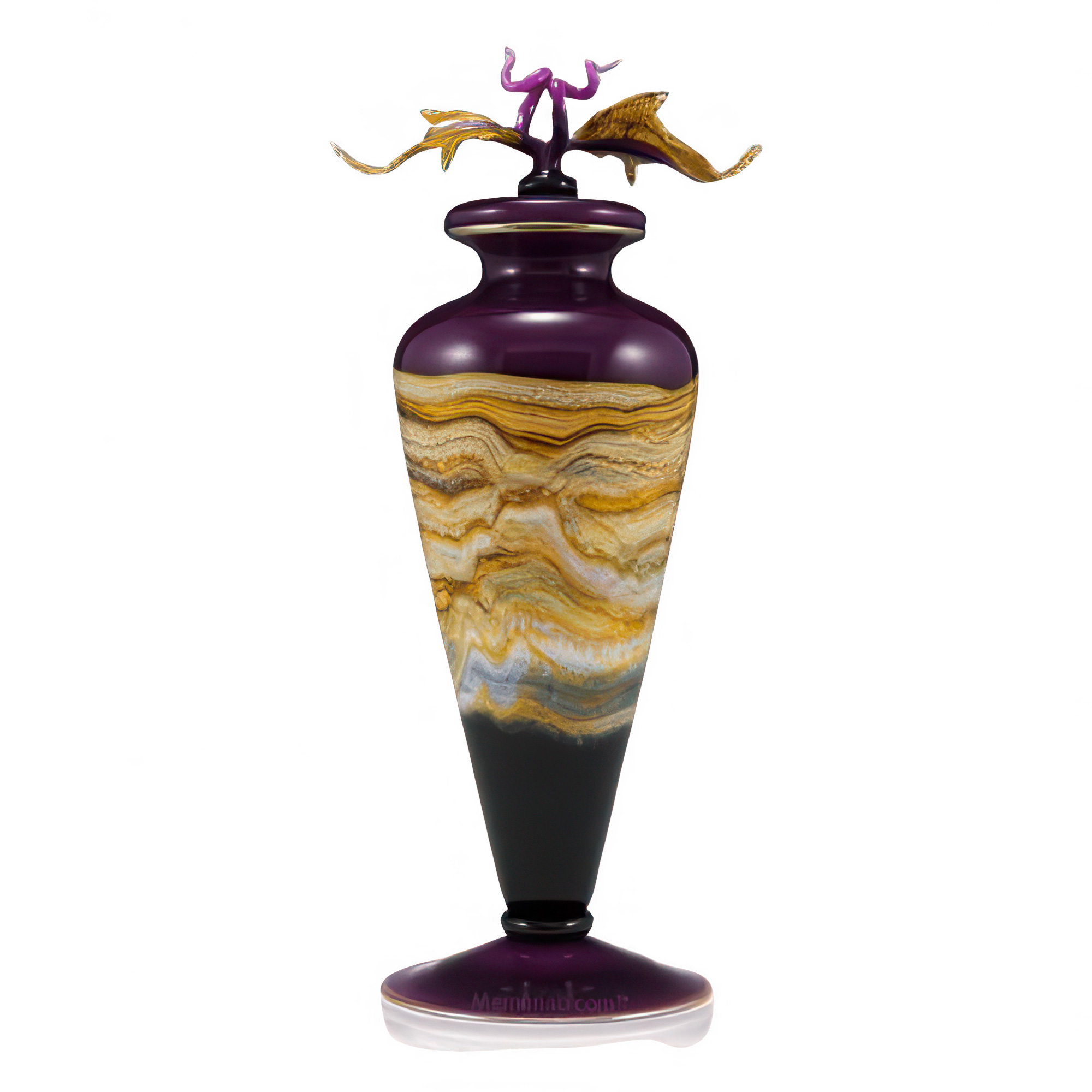
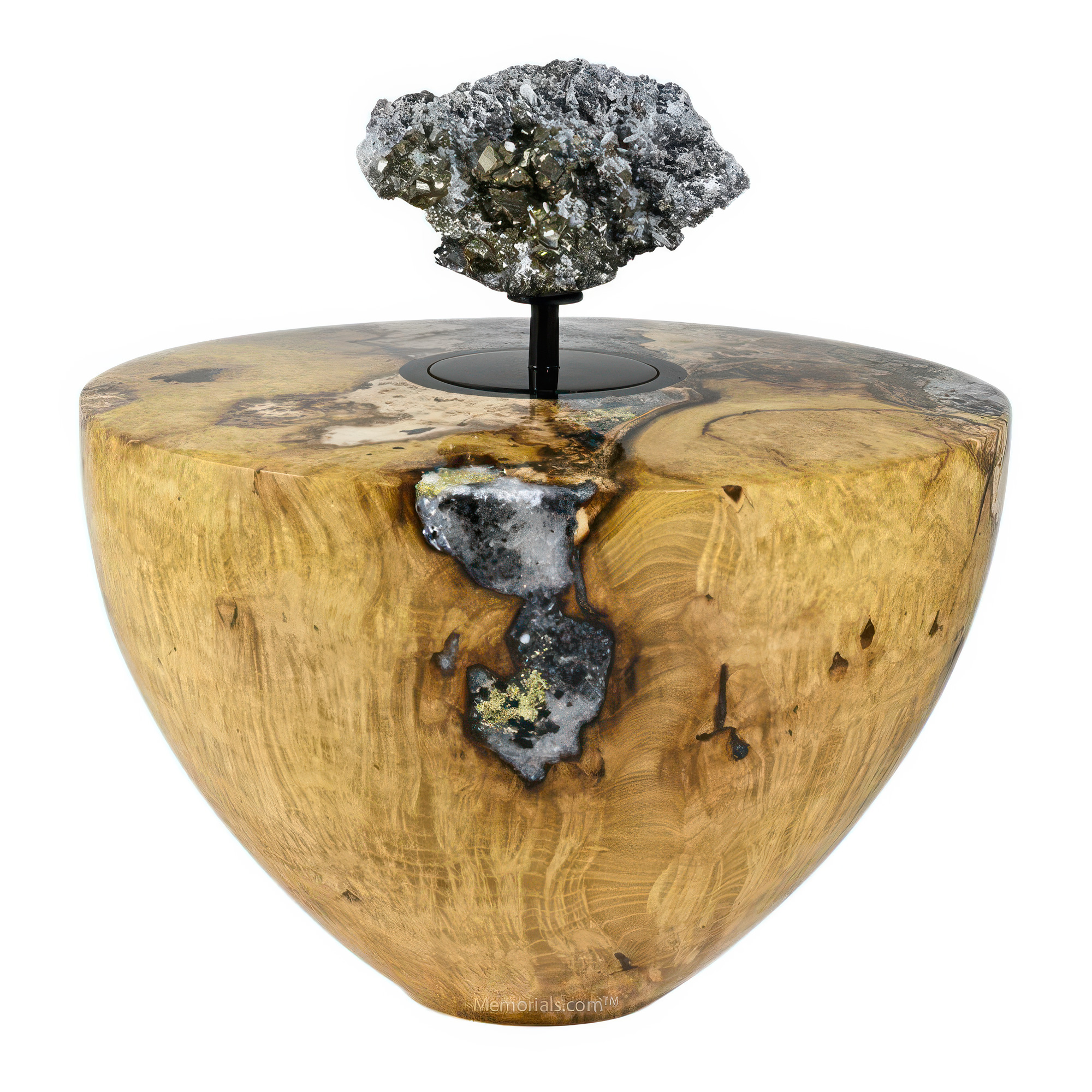
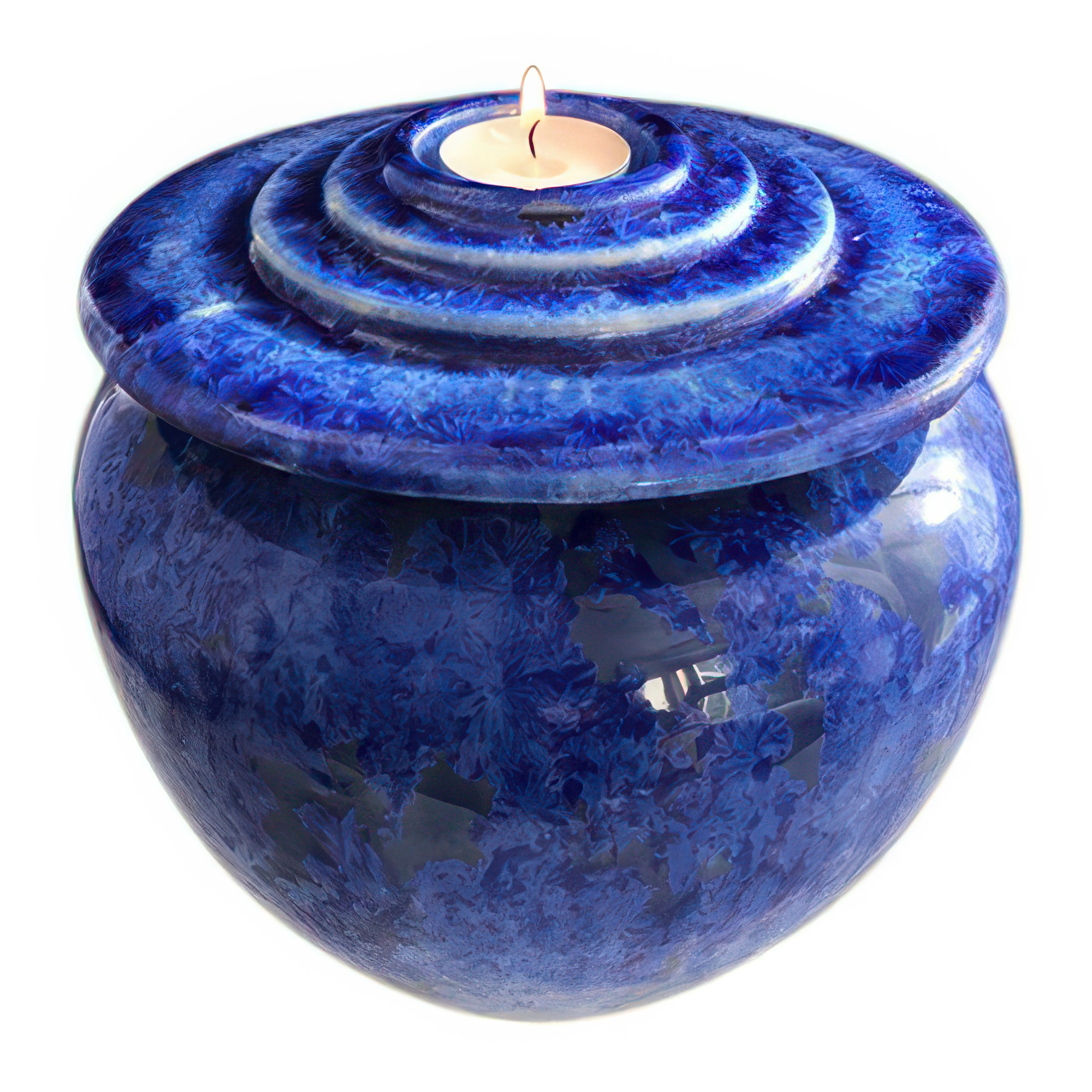
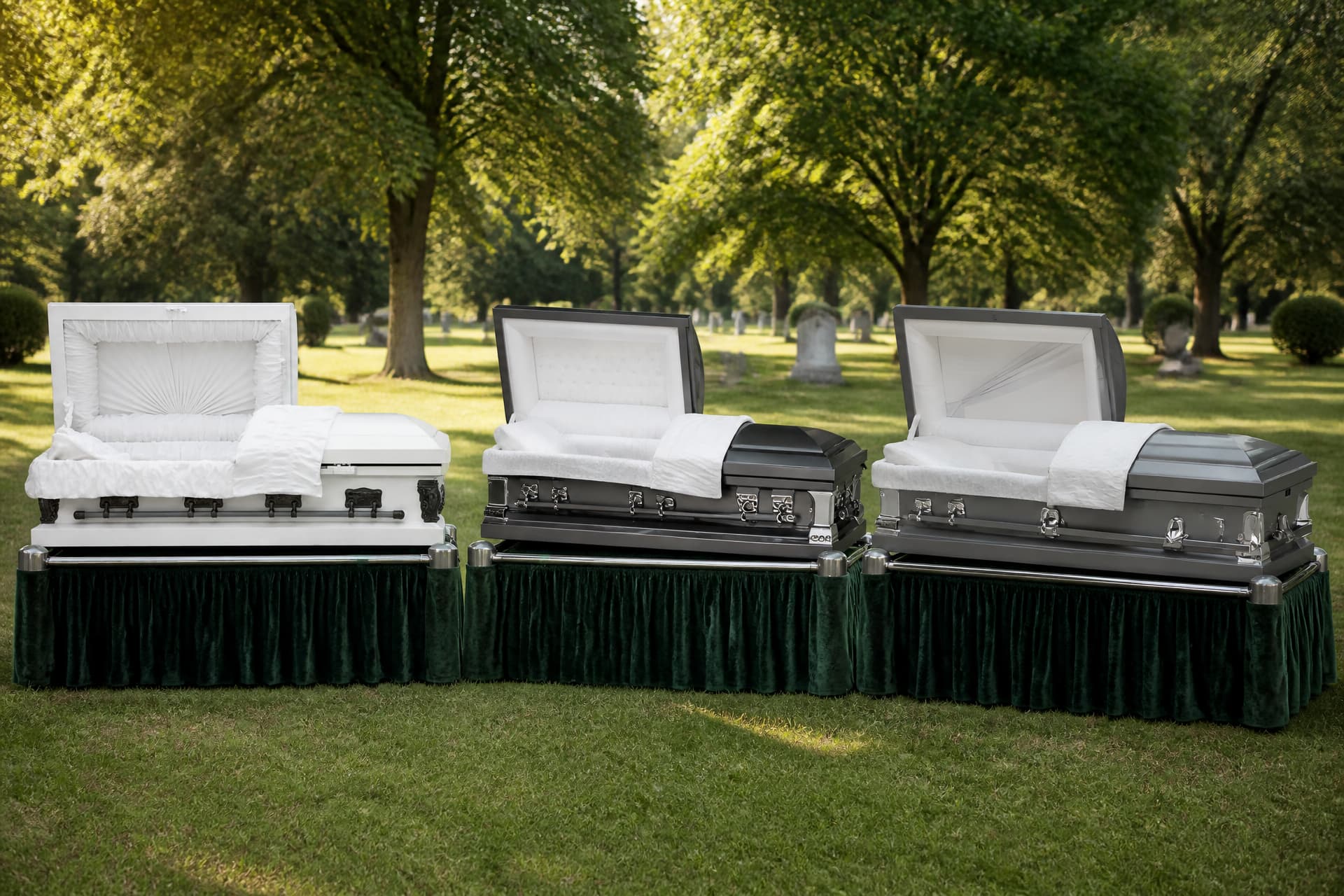
Caskets and Art Urns
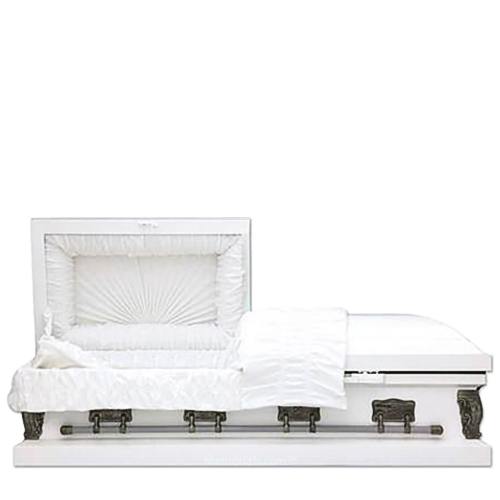
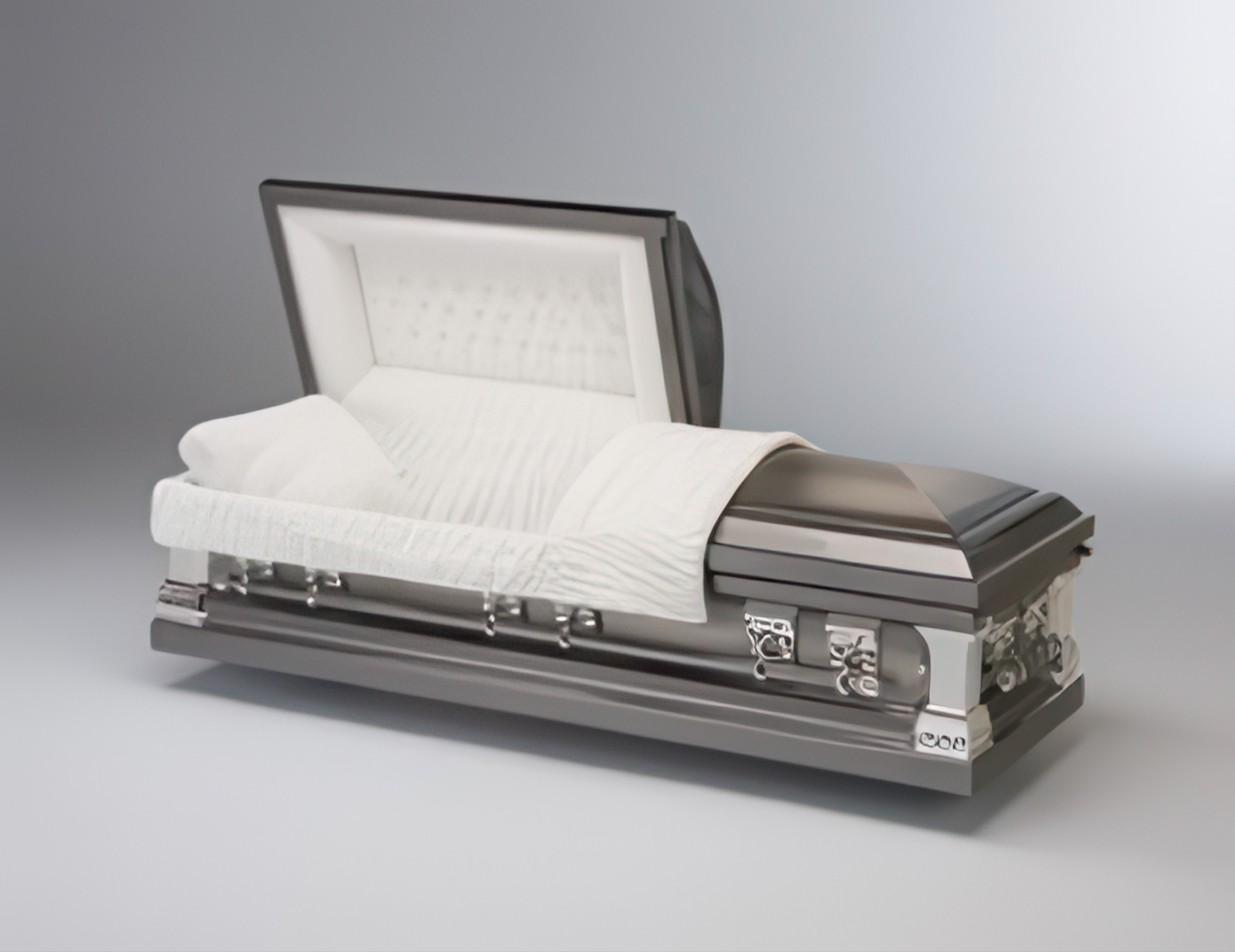
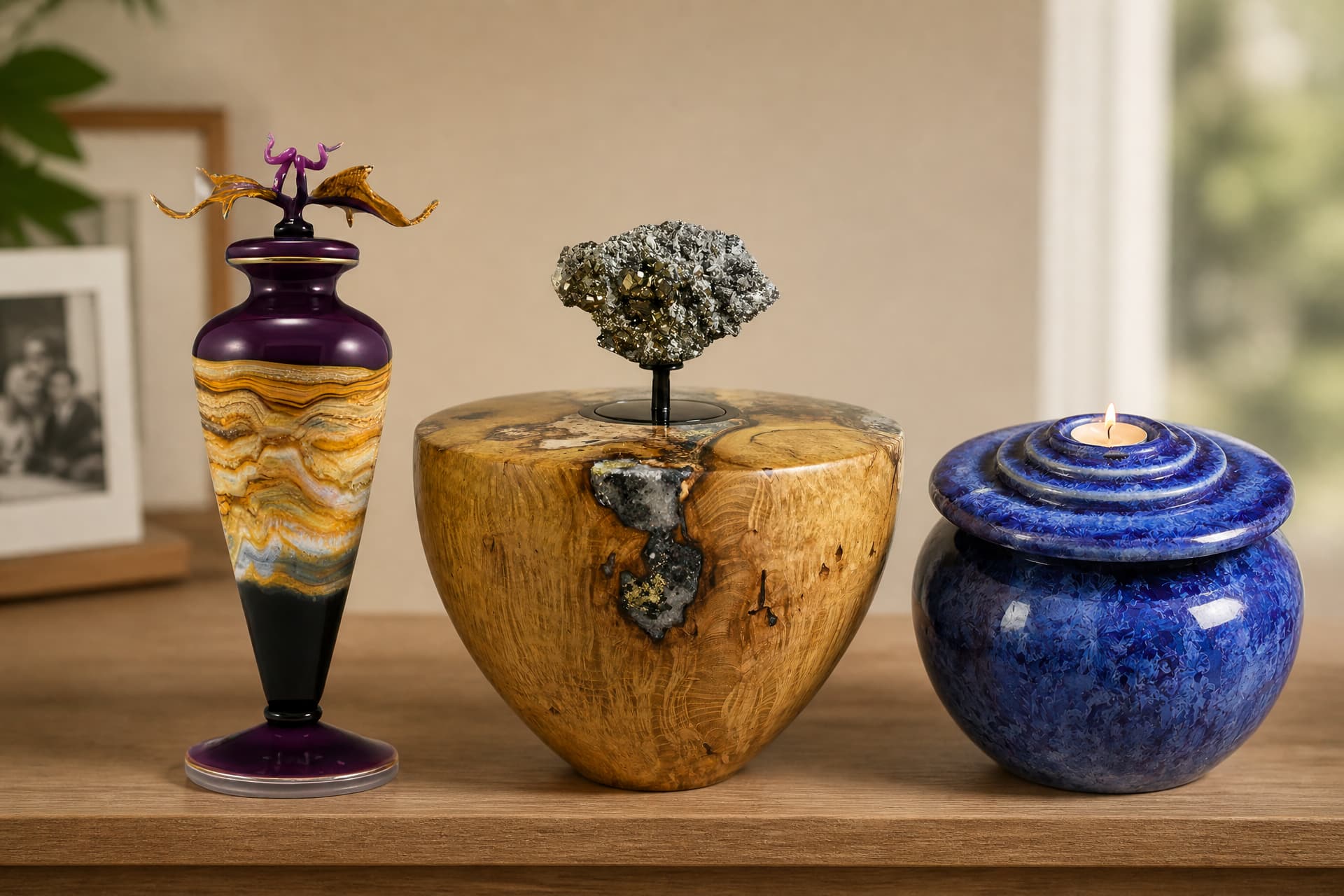
The vessels shown in this article — metal caskets for a burial, hand-made art urns for ashes
How a jazz funeral unfolds, from the church to the cemetery
The service comes first and it is an ordinary one: a chapel, scripture, a eulogy, perhaps nothing but an organ. Everything people picture when they picture a jazz funeral happens afterward, outdoors, once the band has formed up on the sidewalk.
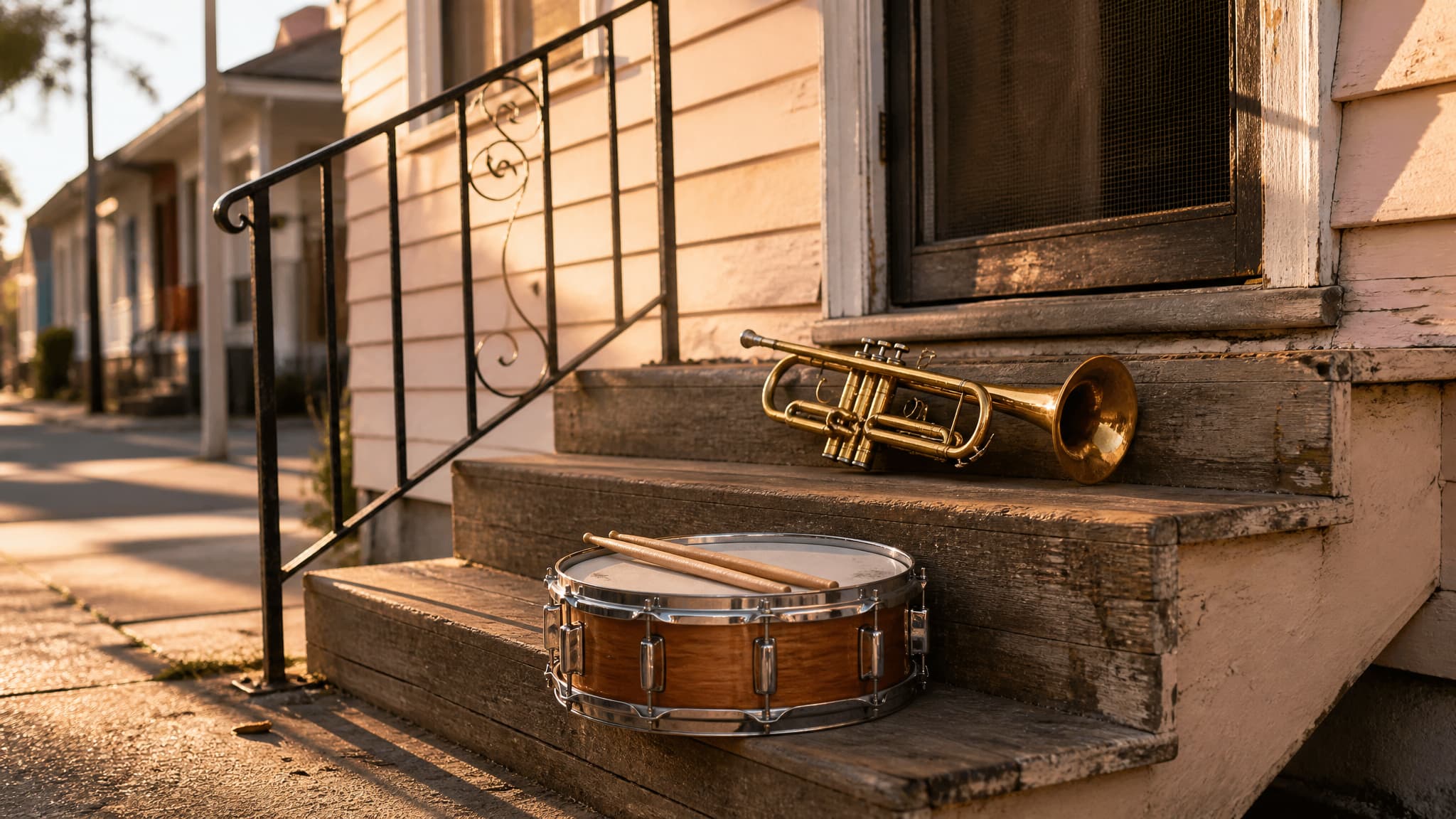
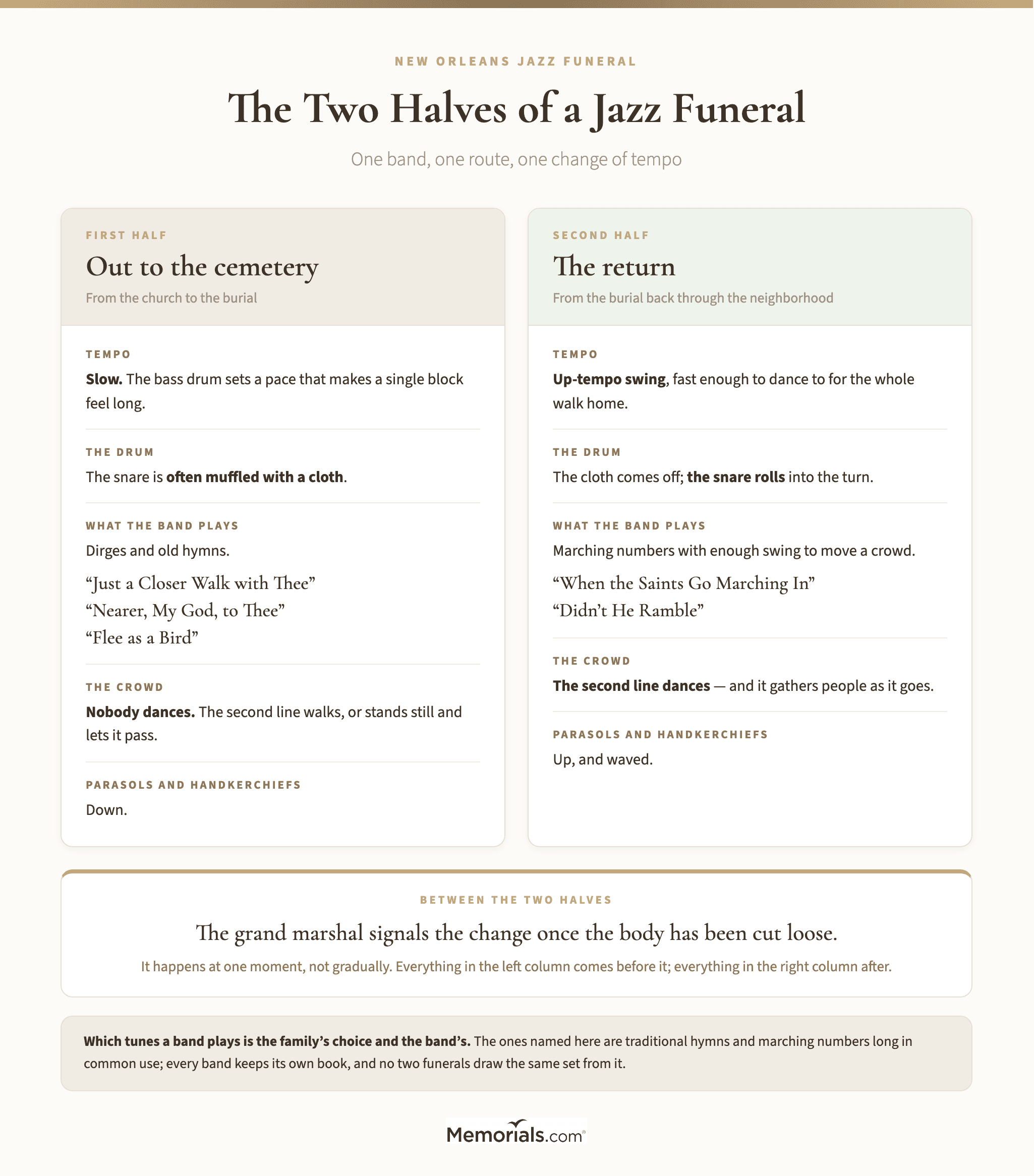
The walk out is slow. The bass drum sets a pace that makes a single block feel long, the snare is often muffled with a cloth, and the band plays dirges and old hymns — "Just a Closer Walk with Thee," "Nearer, My God, to Thee," "Flee as a Bird." The hearse rolls at a walking pace with the funeral casket inside and the family immediately behind it, and nobody dances. This half is grief performed in public and at full length, deliberately: the tempo does the work that silence does at other funerals.
Then comes the turn, the moment everyone remembers and almost nobody explains. Once the body has been delivered — interred in the family tomb, or in current practice once the hearse has pulled away for the cemetery — the dead are "cut loose." The grand marshal signals it with his body, the snare rolls, and the band comes back up-tempo: "When the Saints Go Marching In," "Didn't He Ramble," anything with enough swing to move a crowd. From that beat forward the walk home is a parade.
Everything ahead of the banner is the first line and has an assigned place; everything behind it is the second line and has none. The order shown is the common one, but funeral homes and clubs arrange it differently and a family can ask for what it wants.
Why the music changes, and where it came from
Two traditions met in this city and neither explains the jazz funeral alone. The first is West African: processions accompanied by drumming and dancing, carried into Louisiana through slavery and kept alive in the open-air gatherings at Congo Square, where a death was something a community played a person through rather than sat quietly beside. The second is European — the French and American military brass band, with its dead marches and its instrumentation, which is why the ensemble is horns and drums and not something else.
Together they produce a ritual whose two halves mean two different things. Going out, the music says a person is gone. Coming back, it says the living are still here and the dead one has been released. The second line funeral New Orleans is known for today — parasols, a dancing return, a horn line audible a neighborhood away — took its recognizable modern shape in the twentieth century, but the two-part structure is far older than the jazz in it.
Same band, same route, same afternoon — tempo is the only thing that changes, and it changes at one identifiable moment. Everything in the left column happens before the body is cut loose; everything in the right column after it.
It is not the only tradition that says a funeral can be a celebration out loud. Ghana's fantasy coffins make the same argument in wood rather than brass: the coffin is built to say what the person did with their life. Closer in form, a piper leading a Scottish funeral does the job a brass band does here — a musician, not a vehicle, setting the pace the mourners walk at.
The repertoire is mostly public-domain hymns and old marching numbers, which is part of why it has stayed stable for a century. Families still choose within it, and the choosing matters to them exactly the way picking the songs families play matters at funerals with no band at all.
The Social Aid and Pleasure Clubs that built the tradition
The most interesting fact about the jazz funeral is that it has an institution behind it, and the institution is not a musical one.
Through the nineteenth century, free Black New Orleanians and later freedmen organized benevolent societies: members paid dues and the society paid for a member's funeral. This was procurement, not sentiment. White insurers would not write policies for Black families, or priced them to be refused, and a burial society was the coverage you could actually buy. Many of the same societies paid sick benefits and retained doctors. Burying each other properly was the founding service, and the music was part of what "properly" meant.
Those societies are the ancestors of today's Social Aid and Pleasure Clubs, which still parade, still keep membership rolls, and still turn out for their own — the Black Men of Labor formed specifically to hold the older shape of the parade, a traditional brass band and nothing amplified, because the form itself is what is being preserved. This is why a jazz funeral is not a performance staged for onlookers. The band is being paid, often by an organization the dead person belonged to and paid into for years, and the crowd behind it is that membership plus the neighborhood.
Who gets a jazz funeral, and how a family arranges one
Traditionally the honor went to musicians and to club members, people whose lives were bound up in the organizations that do the parading, and their funerals are still the largest. But any family can ask for one now, and funeral homes in the city arrange them routinely for people who never played a note.
Ask for a second line New Orleans funeral and a local funeral director will know precisely what you mean. What families do not know is what to ask next:
Who books the band, and how big is it? The funeral home usually works with bands it knows and will make the booking, or you can hire directly. Size and hours are the two levers on price.
How long is the route? A few blocks is normal. It is walked, so the limit is what mourners in church clothes can manage in the heat.
Is a permit or a police escort required? A procession using the street generally needs both. The funeral home should handle it — do not leave this one assumed.
Who leads it? A grand marshal sets the pace and calls the turn. Some bands bring their own; some families ask a particular person.
May the club participate? If the person belonged to one, call the club early. Its members may want to walk behind their banner, and that changes the shape of the procession.
What a jazz funeral costs
There is no price list, and the phrase people type — how much does a jazz funeral cost — has no honest single answer, because it is not one purchase:
The band, hired by the number of players and the number of hours. A short route with a small band and a long route with a full band are nowhere near the same figure.
The funeral home's procession fee. Walking a funeral takes staff, vehicles and time that a graveside service does not.
Permits and police. Street use and traffic control are city costs, and they move with the route.
The hearse. A horse-drawn hearse, which some families want, costs considerably more than a car.
Anything quoting one number is quoting one family's day. What is documented is the rest of the bill, and the rest of the bill is most of it: our guide to what a funeral costs covers the service, the casket, the cemetery and the paperwork. When the estimate arrives, ask for the band and the procession as separate lines on it.
Etiquette: joining a second line without turning it into tourism
Ordinary funeral etiquette covers most of it. Five things are specific to this one:
Do not dance on the way out. During the dirge the second line walks or stands still. Starting early is the clearest way to mark yourself as someone who does not understand what is happening.
Join from the back. Never step in front of the band, and never put yourself between the family and the hearse.
Keep the camera down at the front. Filming the band on the return is normal. Filming a widow's face is not.
Follow, do not lead. If a club member or the grand marshal asks you to move, move, immediately and without discussion. They are running the procession.
Know which event you are at. A stranger falling in behind a funeral is expected and welcome; that is what the second line is for. It is not a license to treat a family's worst day as an attraction to go looking for, and a Sunday club parade is the right place to go if what you want is the experience.
As for what to wear, the second line is street clothes and shoes you can walk in. The first line dresses for a funeral.
Where the procession ends: New Orleans buries above ground
The walk finishes in a cemetery that looks like nowhere else in the country — rows of stone tombs at head height and above, with lanes between them, which is why visitors call them cities of the dead. The high water table is the reason usually given, and it is real, but the older reason is cultural: French and Spanish Creole New Orleans buried in family tombs by preference, generation after generation in the same structure.
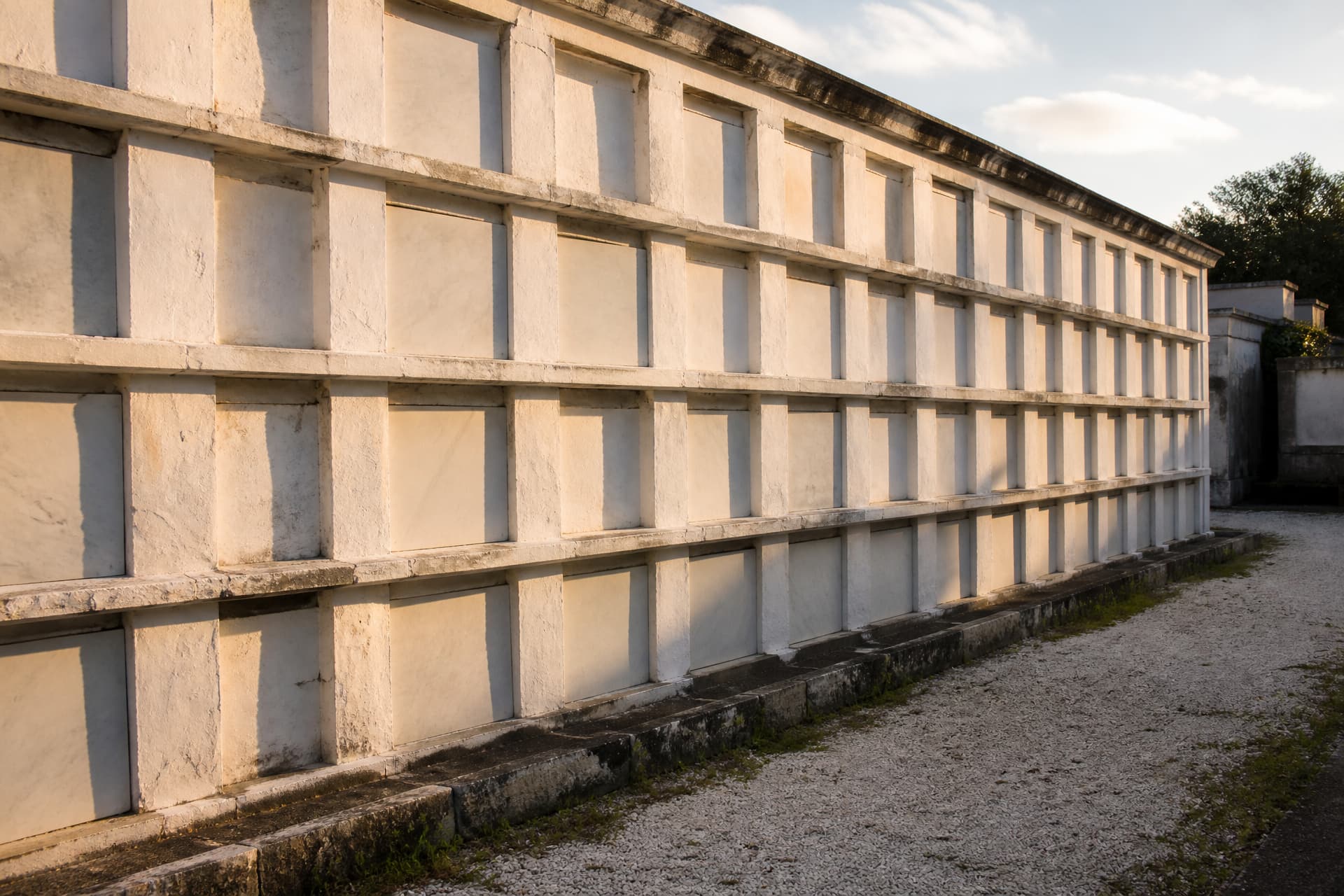
A wall of vaults, which New Orleans calls ovens, holds many families at once. The closure tablet on each front is the only place the names appear.
A family tomb takes one burial at a time and holds generations, because remains that have been inside long enough are moved down into the receiving chamber below to make room. Families without a tomb often use a wall vault, or a space in a mausoleum, which works the same way on a larger scale. The front of an older tomb is a marble or granite closure tablet carved with the names of everyone inside and recut each time; newer mausoleum walls more often take bronze mausoleum plaques, cast rather than carved and replaced as a unit when a name is added.
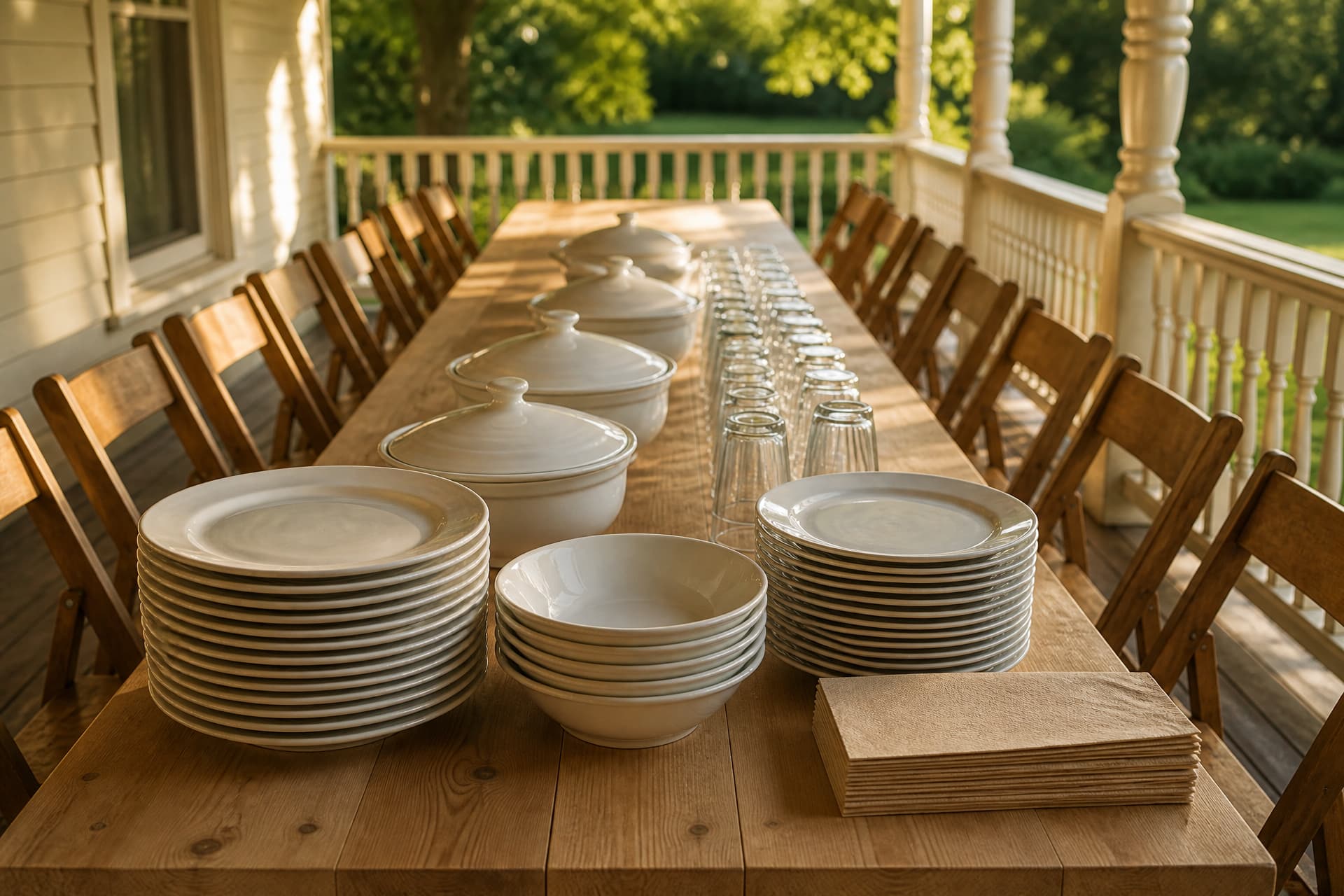
Then everybody eats. The repast is not an afterthought bolted onto the day — it is where the procession was heading all along, and it is where people who danced behind a stranger's band sit down with the family. Other traditions arrived at the same institution independently, which is how a dish like funeral pie came to exist in a completely different corner of the country.
What families keep afterward
The parade ends and the ordinary decisions are still waiting. Two of them come up often enough here to name.
A family that has just walked their father across the city frequently wants to keep him close in a much smaller way, and a necklace for ashes holds a pinch of them in something worn every day — a quiet version of what the procession did in public.
The other request, especially from musicians' families, is for an object with as much character as the person had. Standard shapes feel wrong for someone who spent forty years playing on Frenchmen Street, and artistic urns for ashes — hand-blown glass, turned wood, thrown ceramic, no two alike — are usually where that search ends.
Madagascar's famadihana brings families back to the tomb years after a death to rewrap the remains and dance with them: dancing as mourning rather than in spite of it, which is the thing outsiders find hardest to accept about a second line. An Irish wake makes the same argument with drink, storytelling and laughter in the house where the body lies. Three traditions, three continents, one conviction — that a funeral is for the living, and that grief and celebration are not opposites.
Frequently asked questions
How much does a jazz funeral cost?
There is no fixed price, because it is several separate purchases: the band, priced by size and hours; the funeral home's procession fee; city permits and police traffic control; and the hearse. Route length drives most of the variation. Ask your funeral director to quote the band and the procession as separate lines, and treat any single figure online as one family's bill rather than a market rate.
What is the difference between the first line and the second line?
The first line, or main line, is the funeral proper: hearse, family, clergy, funeral directors, grand marshal, band, and any club walking behind its banner. The second line is everyone who joins in behind them and dances on the return. The first line has a membership; the second line has none, and that is the point of it.
Can anyone join a second line?
At a funeral, yes — from the back, and after the music turns. Walking behind the band is what a New Orleans second line funeral is for, and nobody will ask who you are. Stand still during the dirge, stay out of the family's way, and keep the camera off their faces. A Sunday club parade is a public event and more open still, but it is a different occasion.
Why does the music change from sad to happy?
Because the ritual has two jobs and does them in order. Going out, the dirges say a person is gone and give mourners a public place to feel it. Once the body is cut loose, the band releases both the dead and the living, and the up-tempo return says the community is still standing. The change happens on a signal, at a specific moment, not gradually.
Can anyone have a jazz funeral, or only musicians?
Anyone. The tradition grew up around musicians and club members and their funerals are still the largest, but any family may request a band and a procession, and New Orleans funeral homes arrange them regularly. If the person belonged to a club, tell the club early — its members may want to walk.
Carrying the tradition somewhere else
A second line does not transplant, and it is worth being honest about why: it is held up by clubs, bands, above-ground cemeteries and a city whose neighbors come outside when they hear horns. What does travel is the argument underneath it — that a funeral can end in music and food instead of silence, and that walking somewhere together does something sitting in pews does not. If that is what you are after, our guide to planning a celebration of life is the practical version, wherever you happen to be burying someone.
Every version of this tradition ends at a table. The repast is where the second line stops being a crowd and turns back into the people who knew him.
And if you are the family, the last thing worth saying is the simplest: ask. Ask the funeral home, ask the club, ask the band leader. Every one of them has done this before, and none of them will think you presumptuous for wanting your mother walked home.