🏬Supersize Online Funeral Retailer🪦1000's of Headstones⚱️Over 10,000 Cremation Urns⚰️Caskets Overnight Delivery🛒Funeral & Memorial Superstore🚚FREE Shipping on ALL Orders👨👩👧👦Helping Families for over 20 Years💰Lowest Price Guarantee🏬Supersize Online Funeral Retailer🪦1000's of Headstones⚱️Over 10,000 Cremation Urns⚰️Caskets Overnight Delivery🛒Funeral & Memorial Superstore🚚FREE Shipping on ALL Orders👨👩👧👦Helping Families for over 20 Years💰Lowest Price Guarantee
🏬Supersize Online Funeral Retailer🪦1000's of Headstones⚱️Over 10,000 Cremation Urns⚰️Caskets Overnight Delivery🛒Funeral & Memorial Superstore🚚FREE Shipping on ALL Orders👨👩👧👦Helping Families for over 20 Years💰Lowest Price Guarantee🏬Supersize Online Funeral Retailer🪦1000's of Headstones⚱️Over 10,000 Cremation Urns⚰️Caskets Overnight Delivery🛒Funeral & Memorial Superstore🚚FREE Shipping on ALL Orders👨👩👧👦Helping Families for over 20 Years💰Lowest Price Guarantee
Light the yahrzeit candle at sundown on the evening before the Hebrew anniversary of the death, and let it burn out on its own. That is the rule, and if you are reading this in the late afternoon with a candle already sitting on the counter, you have the answer and can go light it.
The rest is detail, and the detail is where people get anxious — because two very different readers arrive at this question. One is a Jewish adult whose parent's anniversary is coming and who was never actually taught the mechanics. The other was handed a candle at a funeral, or married into a family that does this, and would rather look it up than ask. This page is written for both. It covers what the candle is, how to work out the date when the Hebrew calendar makes that hard, how long the thing burns, the four other times a year a memorial candle gets lit, and what families do on the day besides striking a match. It sits inside our , alongside the other customs a family meets in the year after a death.
Yahrzeit is Yiddish — yortsayt, "year time" — and it means the anniversary of a death, reckoned by the Hebrew calendar rather than the secular one. The candle lit for it has a Hebrew name too: ner neshama, the soul candle. You will see the word spelled several ways in English, and none of them is wrong; yarzeit candle is simply the spelling that falls out of how the word sounds.
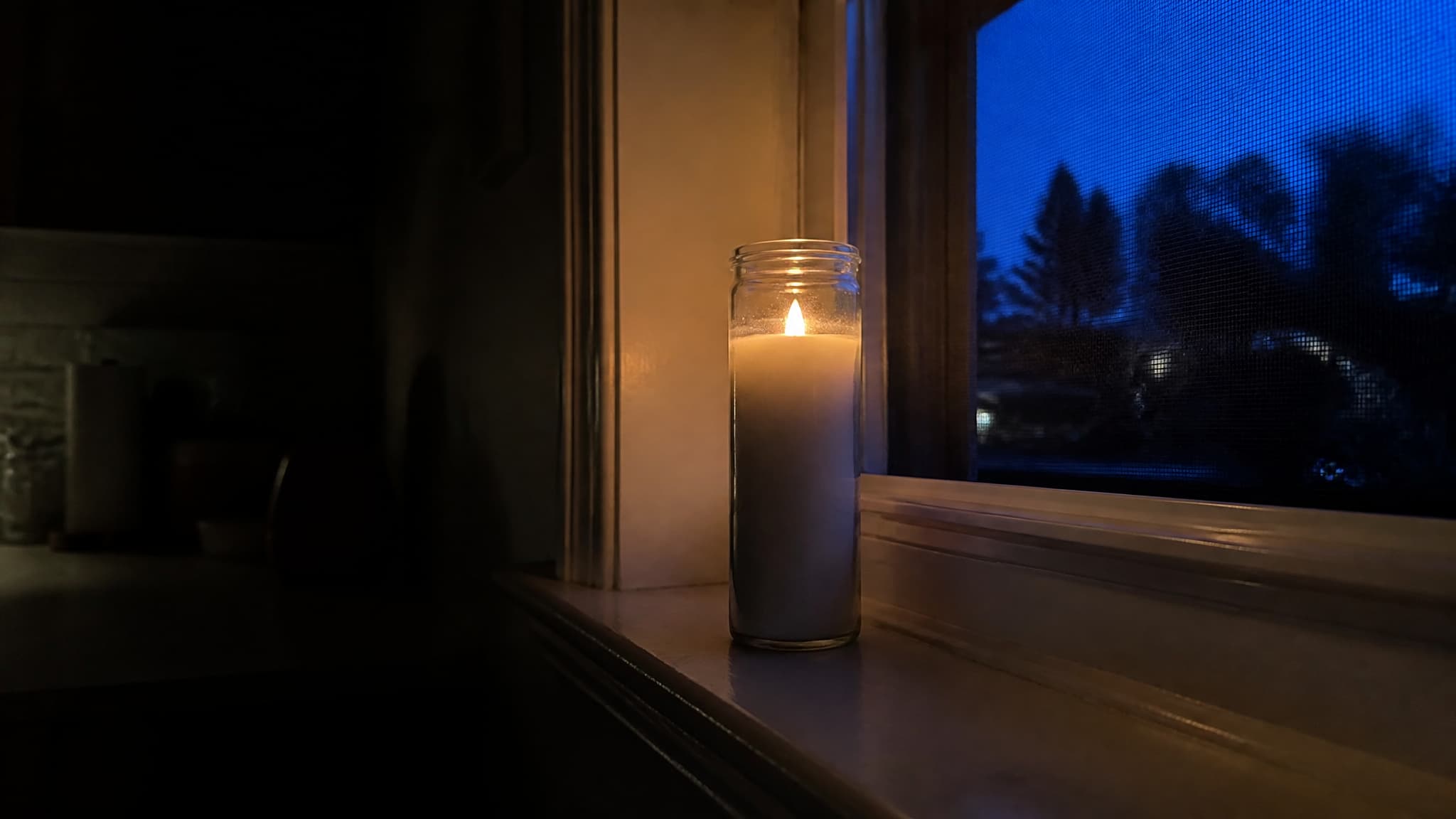
The object itself is plain on purpose. A yahrzeit candle is white wax in a straight glass jar or a small tin, with no decoration, no scent, and a wick sized to burn for about a day. Grocery stores in neighborhoods with a Jewish population stock them near the holiday food, usually for a dollar or two, and synagogues often keep a box in a closet for anyone who needs one. There is no blessing required to light it and no ceremony around it. Many people say something quietly, or nothing at all.
The image behind it comes from Proverbs. In the King James rendering the verse reads, "The spirit of man is the candle of the LORD" — the Hebrew is closer to the lamp of God is the soul of a person — and that is the whole idea the custom is built on. The flame is not a symbol of the person's presence in the room. It is a small, ordinary, physically real thing that lasts about as long as a day and then stops, and it gives a family something to do on an anniversary that otherwise has nothing to do in it.
If this is the first yahrzeit, it lands a year after a week that probably still feels close: tahara, the ritual washing, a plain linen burial shroud, a plain wooden coffin, and a burial arranged as quickly as the family could manage it.
When to Light a Yahrzeit Candle
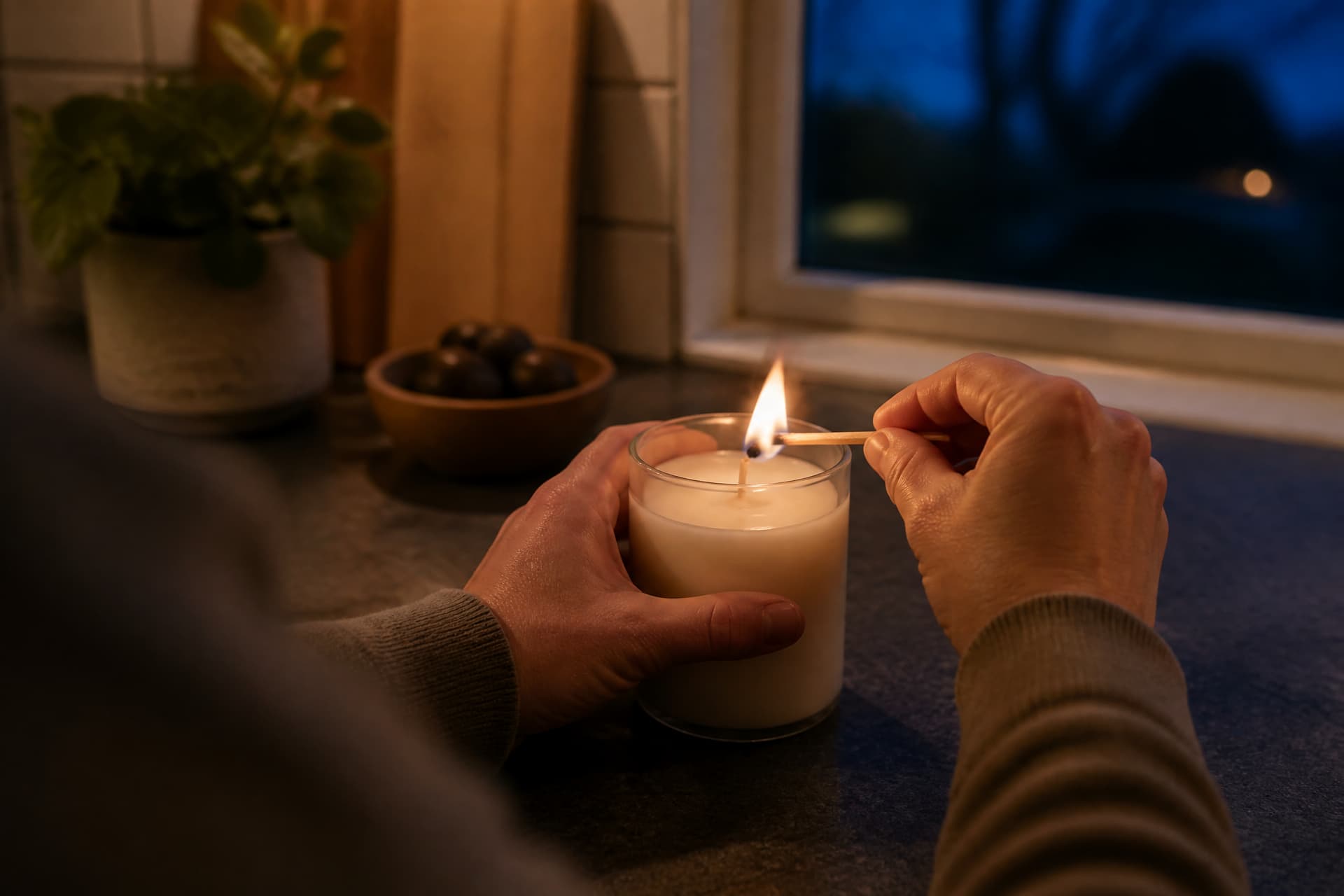
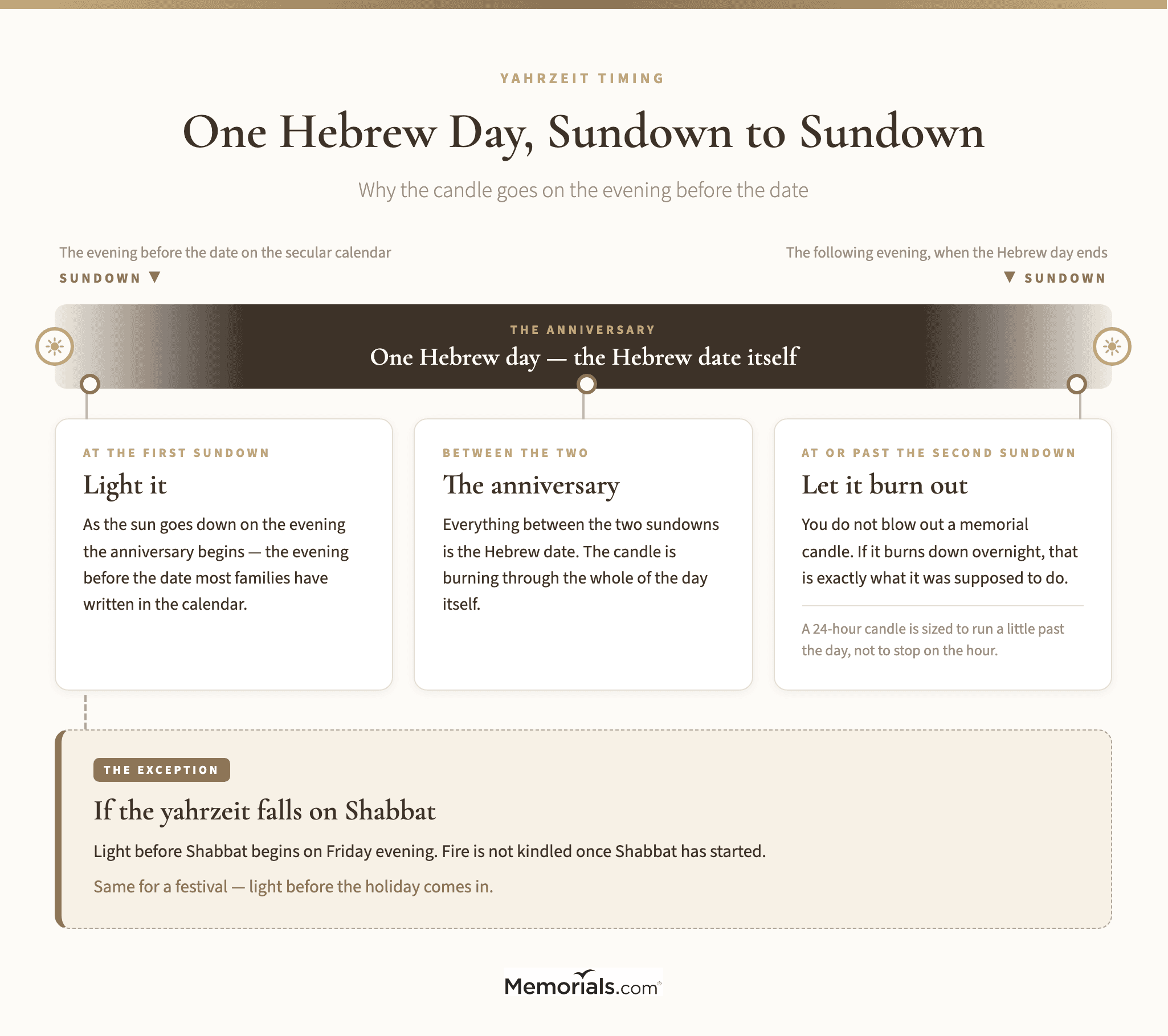
The Jewish day begins at sunset, not at midnight. So the Hebrew date of the anniversary starts the evening before the calendar square you have circled — and that is the single fact that trips everybody up. Light it as the sun goes down on the evening the anniversary begins, and it will be burning through the whole of the day itself.
If you have been typing yahrzeit candle when to light into a search box this afternoon, that is the answer: tonight, at sundown, if the Hebrew anniversary is tomorrow. People phrase this question every way there is — when to light a yahrzeit candle, when do you light the yahrzeit candle, and, for families marking two parents a few days apart, when to light yahrzeit candles in the plural — and the answer does not change with the wording.
Sundown is local, and it moves. The candle-lighting times synagogues publish for Shabbat, the ones people look up when they search candle lighting New York or the equivalent for their own city, are set a few minutes before sunset in that particular place on that particular date. A yahrzeit candle is not bound to those minutes the way Shabbat candles are, but if you want the local sunset, those tables are the easiest place to find it. Ten minutes either side changes nothing.
If the anniversary falls on Shabbat, light the candle before Shabbat begins on Friday evening — fire is not kindled once Shabbat has started. The same holds for a festival: light before the holiday comes in. And if the evening simply gets away from you and you light it the next morning, or at nine at night, or on the secular date because that is the one you have written down, the candle still counts. Lighting it late is not a failed observance. Not lighting it is the only thing that would be.
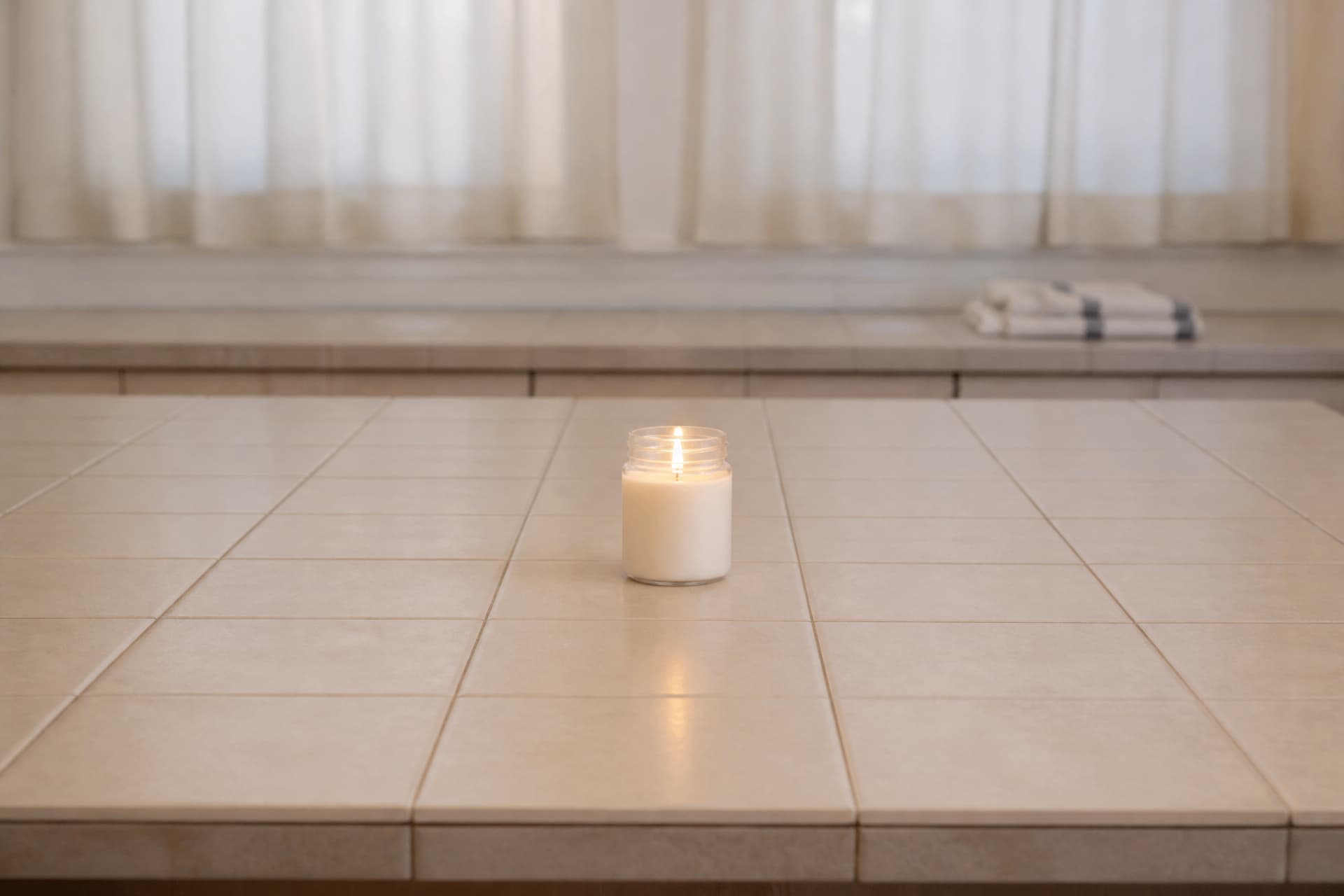
The candle goes on before the sun does. Because the Jewish day starts at sunset, the anniversary begins the evening before the date most families have written in the calendar.
One Hebrew day runs sundown to sundown, which is why the candle is lit the evening before the date on the calendar. When the anniversary falls on Shabbat, the candle goes on before Shabbat does.
Do You Light a Yahrzeit Candle When Someone Dies?
No — and this is worth answering plainly, because people ask each other rather than finding it written down anywhere. Do you light a yahrzeit candle when someone dies? You do not. The candle lit in the days right after a death is a different candle: the shiva candle, larger, made to burn for seven days rather than one, and lit when the mourners come back from the cemetery. It stays alight through the whole week of shiva, in the house where the family is sitting.
That week has its own customs, and several of them are about turning a home into a place that is not performing normality — including covering the mirrors in a house of mourning, which people notice first and ask about most.
After shiva comes shloshim, the thirty days, and then for a parent a fuller year of aveilut, mourning, during which a child traditionally says the Mourner's Kaddish for eleven months. The yahrzeit is what comes at the end of all of that: one evening, once a year, from the first anniversary onward. So the candles arrive in a sequence — one for the week, then one a year later, and one every year after that.
Working Out the Date — and What a Leap Year Does to It
Here is the part no other page bothers to finish, and it is the part that actually causes the phone call to the rabbi.
The yahrzeit follows the Hebrew date, so the first job is converting the secular date of death into a Hebrew one. Free converters do this in a second, and most synagogues will do it for you if you email the office. One catch: if the death occurred after sunset, the Hebrew date is already the next day. A death at ten o'clock at night on March 3rd carries the Hebrew date belonging to March 4th, and a family that converts the wrong day will observe the wrong day every year afterward. It is worth checking the time, not just the date, once — and then writing the Hebrew date down somewhere permanent.
Then there is the leap year, which the Hebrew calendar handles by inserting a whole extra month rather than a day. Seven years out of every nineteen have two months of Adar — Adar I and Adar II — and that creates a genuine ambiguity for anyone whose relative died in Adar of an ordinary year. Which Adar is the yahrzeit? Practice differs, and it differs along community lines rather than by anyone being wrong: many Ashkenazi families observe in Adar I, many Sephardi families in Adar II, and some observe both. If nobody in your family remembers what was decided the first time, ask the rabbi you are most likely to keep asking, pick one, and be consistent. Someone who died in Adar I or Adar II of a leap year keeps that specific month.
The first year has its own wrinkle. Where a burial was delayed well past the death, some practice reckons the first yahrzeit from the day of burial and every yahrzeit after that from the day of death. It sounds like a technicality until it is your family, in which case it is the difference between two dates on a calendar and worth one question to a rabbi.
And if the date of death is genuinely unknown — for a relative lost in the Holocaust, or in a family where the records simply do not exist — you are not stuck. Many families choose a fixed date and keep it: the day the news arrived, the day of a memorial service, or the tenth of Tevet, which is observed in Israel as a general day of Kaddish for those whose date of death nobody knows.
How Long a Yahrzeit Candle Burns
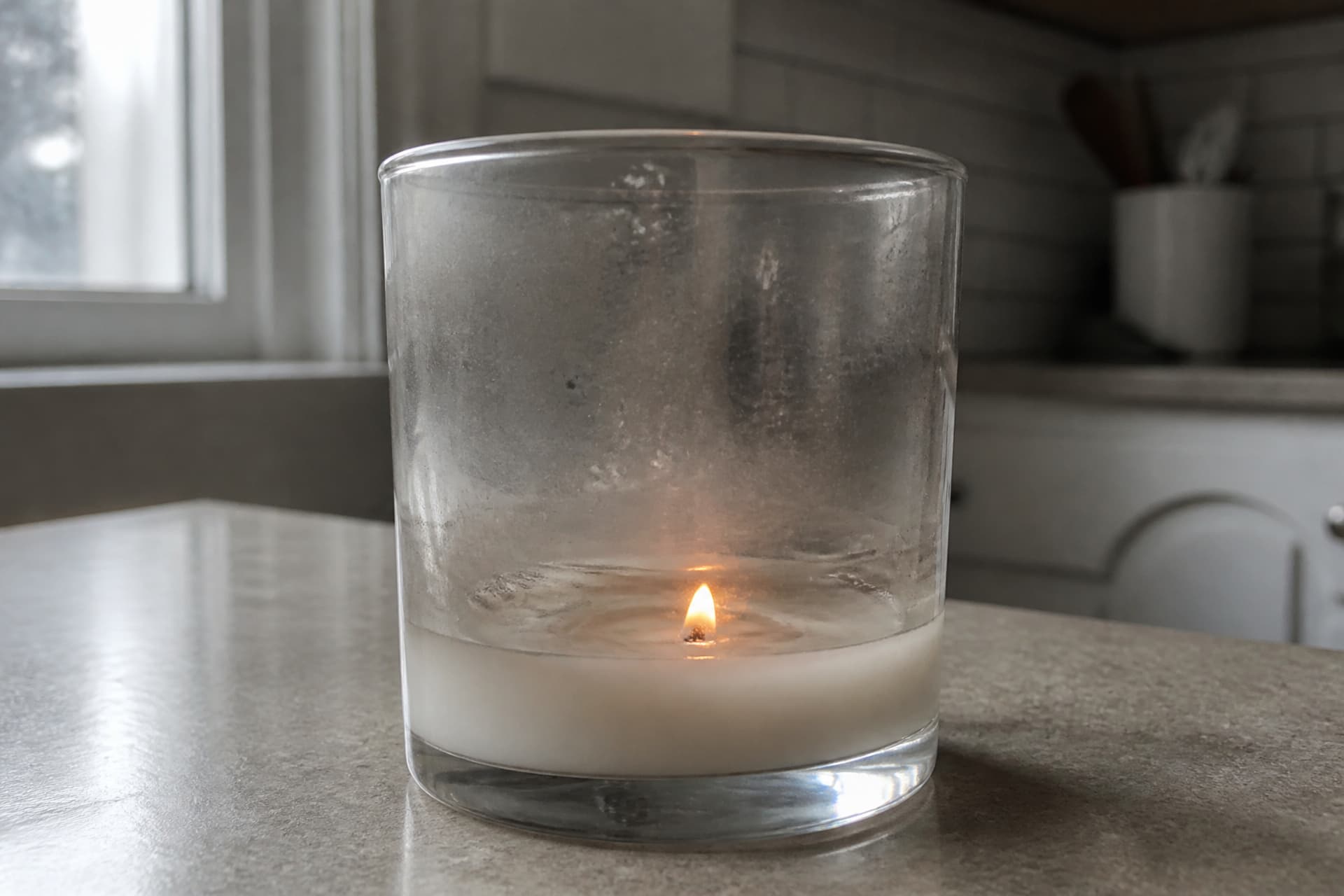
About a day. That is the design: a 24-hour candle, sized so that it is still burning when the next sundown comes, which usually means it runs somewhat past twenty-four hours rather than stopping exactly on the hour. Yahrzeit candles are not precision instruments and are not meant to be.
Let it go out by itself. That is the one piece of etiquette around the candle that most people do have a feeling about, and the feeling is correct — you do not blow out a memorial candle. If it burns down at four in the morning while the house is asleep, that is exactly what it was supposed to do. If it gutters and dies early, which cheap candles sometimes do, it is not a sign about anything. Light another one if you want to, or leave it.
For festivals that run two days, or a festival that runs straight into Shabbat, 48-hour and 72-hour candles exist and are sold for exactly that reason. They look the same, in a taller jar.
The next morning, two thirds down. A yahrzeit candle is meant to be let alone until it finishes — putting it out early is the one thing most families do feel strongly about.
Where to Put It, and How to Do It Safely
An open flame is going to be alight in your house for a full day and most of a night, probably unattended for part of it, so the placement question is a real one rather than a formality.
Put it on a stable, non-flammable surface with empty space around it: a kitchen counter, a stainless sink, an unlit stove top, a stone hearth, or a metal tray on a table. Look up as well as sideways — a cabinet directly overhead catches heat that a countertop does not. Keep it clear of curtains, paper, dish towels, and anything a draft can move. If there is a cat in the house, assume the cat will investigate the one thing you would rather it did not, and choose a spot it cannot reach. The bathroom sink and the kitchen sink are both unglamorous and both excellent.
An electric or LED memorial candle is a real option and does not need to be apologized for. Hospitals, nursing homes, dorms, and most rentals prohibit open flame outright, and a family sitting with someone in a hospital room on an anniversary should not have to choose between the custom and the rules. The memorial candle is a custom rather than a commandment, and an electric one keeps the custom. For an enclosed flame outdoors, memorial lanterns do the same job on a porch or a grave.
Where the candle sits often becomes, over a few years, a small memorial space at home — a shelf with a photograph, the candle on the anniversary, and not much else. That is a fine thing to let happen and an equally fine thing not to. Families who find the house heavy on the anniversary sometimes pair the day with cleansing a house where someone died, which is a custom in plenty of traditions and not a specifically Jewish one.
The clearance is the point. A day-long flame wants a hard surface, nothing overhead, and nothing a draft can push into it.
Yizkor — the Other Four Times a Year
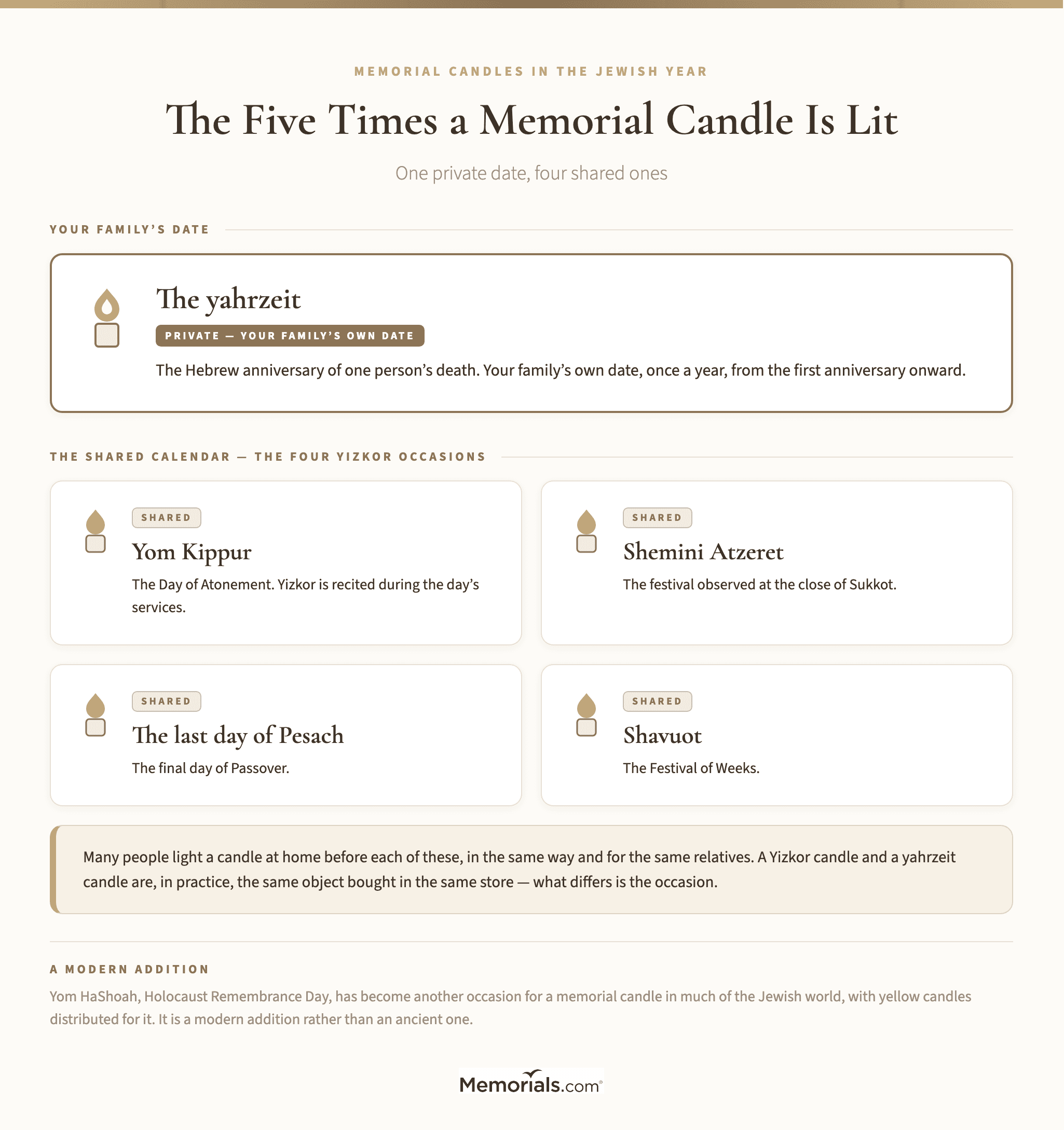
The yahrzeit is not the only occasion for a memorial candle. Yizkor, the memorial service, is recited four times in the Jewish year: on Yom Kippur, on Shemini Atzeret, on the last day of Pesach, and on Shavuot. Many people light a candle at home before each of them, in the same way and for the same relatives.
A Yizkor candle and a yahrzeit candle are, in practice, the same object bought in the same store. What differs is the occasion — one is tied to your family's own date, the other to the calendar everybody shares. Yizkor is also a service rather than a private moment: it includes El Malei Rachamim, the memorial prayer chanted for the dead, and in many congregations it is the one point in the year when the whole room is doing the same remembering at once.
Yom HaShoah, Holocaust Remembrance Day, has become a fifth occasion in much of the Jewish world, with yellow memorial candles distributed for it. It is a modern addition rather than an ancient one, which is worth knowing if an older relative does not observe it.
The yahrzeit is a private date; the four Yizkor occasions are shared ones. Yom HaShoah has become a fifth for much of the Jewish world, and is a modern addition rather than an ancient one.
What Else Families Do on a Yahrzeit
The candle is the part everybody knows. Several other things traditionally belong to the day, and none of them is all-or-nothing.
Kaddish. The Mourner's Kaddish is said on the yahrzeit, and it requires a minyan — a quorum of ten adults — which is the practical obstacle for most people. If there is a weekday service within reach, going to it is the straightforward answer, and it is normal to tell the gabbai it is your yahrzeit so the congregation knows. If there is not, that is a common situation and not a failure. Many synagogues now hold a daily minyan online, and plenty of people mark the day with something they can actually do alone.
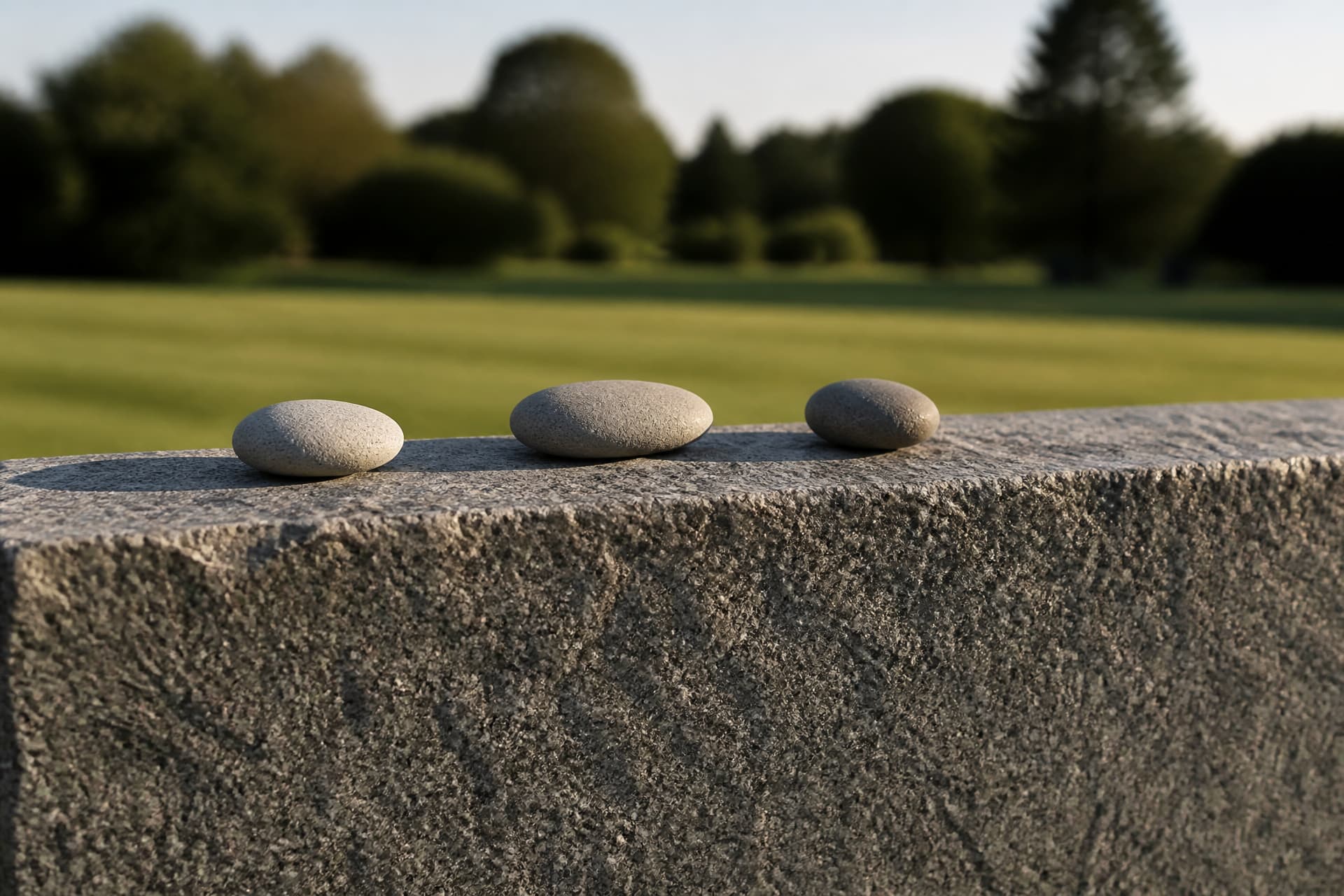
Visiting the grave. Where distance allows, families go to the cemetery on or near the yahrzeit, and it is customary to place a small stone on the marker rather than to bring flowers. The habit of leaving a stone on the grave has spread well beyond Jewish cemeteries, but it started in one — a stone lasts, and a stone says someone came.
Tzedakah, and learning. Giving charity in the person's memory on their yahrzeit is long-standing practice, and some families keep a set amount they give every year. So is studying a chapter of Mishnah in their memory, on the traditional note that the letters of Mishnah rearrange to spell neshamah, soul. The first anniversary is often also when the last practical things finally get done, and what to do with a person's clothes is a question a surprising number of families are still carrying a year on.
The synagogue memorial board. Most congregations keep a wall of names with a small light beside each one, lit during the week of that person's yahrzeit, and most will send a reminder card in the mail a few weeks before the date. Getting a name added is usually a phone call to the office.
The unveiling. The setting of the matzevah, the headstone, is its own small ceremony, and in much of the diaspora it is held around eleven or twelve months after the death — which places it on or near the first yahrzeit. Practice varies widely: in Israel the stone often goes up at thirty days instead. There is no obligation to hold it on the anniversary itself, and no rule against holding it later than a year.
A stone rather than flowers. Flowers say someone thought of the person; a stone stays there and says someone came.
Candles in Other Traditions
Lighting something on an anniversary is close to universal, and the yahrzeit is one of the more precisely regulated versions of a very widespread instinct. The candles lit for Día de los Muertos mark a path home rather than a soul, and they are lit for everyone at once instead of for one person on one date. The Orthodox Christian panikhida is the closest structural cousin: a short memorial service held at fixed intervals after a death and then on the anniversary, year after year, with candles held by everyone present.
For families outside any of these traditions who want to mark a date with a flame and are not sure how, our guide to memorial candles covers the general practice — what to light, where, and what to say.
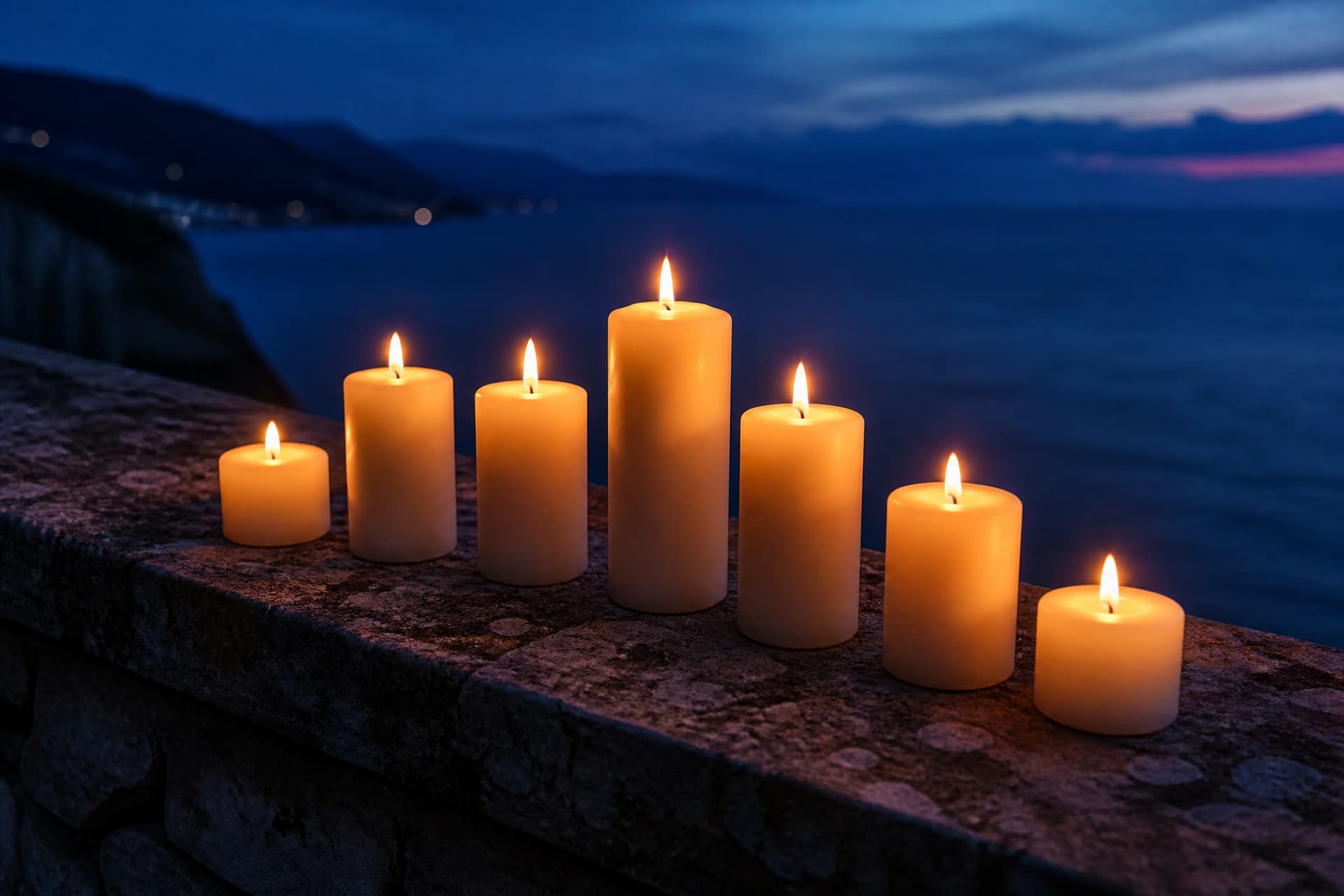
Nearly every tradition marks an anniversary with a flame. What differs is the calendar it is tied to and how long it is meant to last.
If Your Family Chose Cremation
Orthodox and Conservative halacha prohibits cremation, and the position is not a soft one. It is also true that a number of Jewish families choose it anyway, for cost, for a parent's stated wishes, or because the family is not observant and the question never came up in those terms. The candle does not become inappropriate. A yahrzeit is the anniversary of a death, and the death is what is being marked. If this is a live question in your family rather than a settled one, Jewish views on cremation sets out what the different movements actually hold and why.
Frequently Asked Questions
Do you light a yahrzeit candle when someone dies?
No. The candle lit at the time of a death is the shiva candle — larger, made to burn seven days, and lit when the mourners return from the burial. The yahrzeit candle comes a year later and every year after that, and burns for about a day.
What if the yahrzeit falls on Shabbat or a festival?
Light the candle before Shabbat or the holiday begins, since fire is not kindled once it has started. In practice that means lighting on Friday afternoon, before or alongside the Shabbat candles, and leaving it to burn into the anniversary itself.
How do I work out the yahrzeit date if I only know the secular date of death?
Convert the secular date to its Hebrew equivalent — an online converter or your synagogue office will do it. Check the time of death as well: if the person died after sunset, the Hebrew date is the following day. Write the Hebrew date down once and you never have to do this again.
Can I use an electric or LED candle instead of a flame?
Yes. The memorial candle is a custom rather than a legal obligation, and an electric one is the normal answer wherever open flame is prohibited — hospitals, nursing homes, dorms, rentals, and hotel rooms. Many families use one every year without giving it a second thought.
Do you blow a yahrzeit candle out, or let it burn out?
Let it burn out on its own, including overnight, provided it is somewhere safe. If it goes out early by itself, nothing has gone wrong and no meaning attaches to it.
One Evening a Year
The mechanics take about four minutes: find the Hebrew date, put the candle somewhere it cannot set anything alight, and light it as the sun goes down the evening before. Everything else on this page is optional, and most families do some of it in some years and none of it in others.
What the day is actually for is an hour or two in which the person is the subject rather than a background fact. The candle is good at that precisely because it does nothing — it does not require you to feel a particular way or say a particular thing, and it stays lit whether you sit with it or go to work.
If it gets lit late, or on the secular date, or on the wrong Adar, or alone in a kitchen with nobody else in the house who knows what it is for, it still counts. The point was never the accuracy. It was that somebody remembered the date at all.