🏬Supersize Online Funeral Retailer🪦1000's of Headstones⚱️Over 10,000 Cremation Urns⚰️Caskets Overnight Delivery🛒Funeral & Memorial Superstore🚚FREE Shipping on ALL Orders👨👩👧👦Helping Families for over 20 Years💰Lowest Price Guarantee🏬Supersize Online Funeral Retailer🪦1000's of Headstones⚱️Over 10,000 Cremation Urns⚰️Caskets Overnight Delivery🛒Funeral & Memorial Superstore🚚FREE Shipping on ALL Orders👨👩👧👦Helping Families for over 20 Years💰Lowest Price Guarantee
🏬Supersize Online Funeral Retailer🪦1000's of Headstones⚱️Over 10,000 Cremation Urns⚰️Caskets Overnight Delivery🛒Funeral & Memorial Superstore🚚FREE Shipping on ALL Orders👨👩👧👦Helping Families for over 20 Years💰Lowest Price Guarantee🏬Supersize Online Funeral Retailer🪦1000's of Headstones⚱️Over 10,000 Cremation Urns⚰️Caskets Overnight Delivery🛒Funeral & Memorial Superstore🚚FREE Shipping on ALL Orders👨👩👧👦Helping Families for over 20 Years💰Lowest Price Guarantee
Most people use the two words interchangeably, and in ordinary conversation nobody will correct you. But cemetery vs graveyard is not a distinction somebody invented to be pedantic about. The two words describe two different things, they arrived in English several centuries apart, and the gap between them records one of the largest changes in how the Western world buries its dead.
Here is the short version, followed by why it happened and when it still matters.
The Short Answer
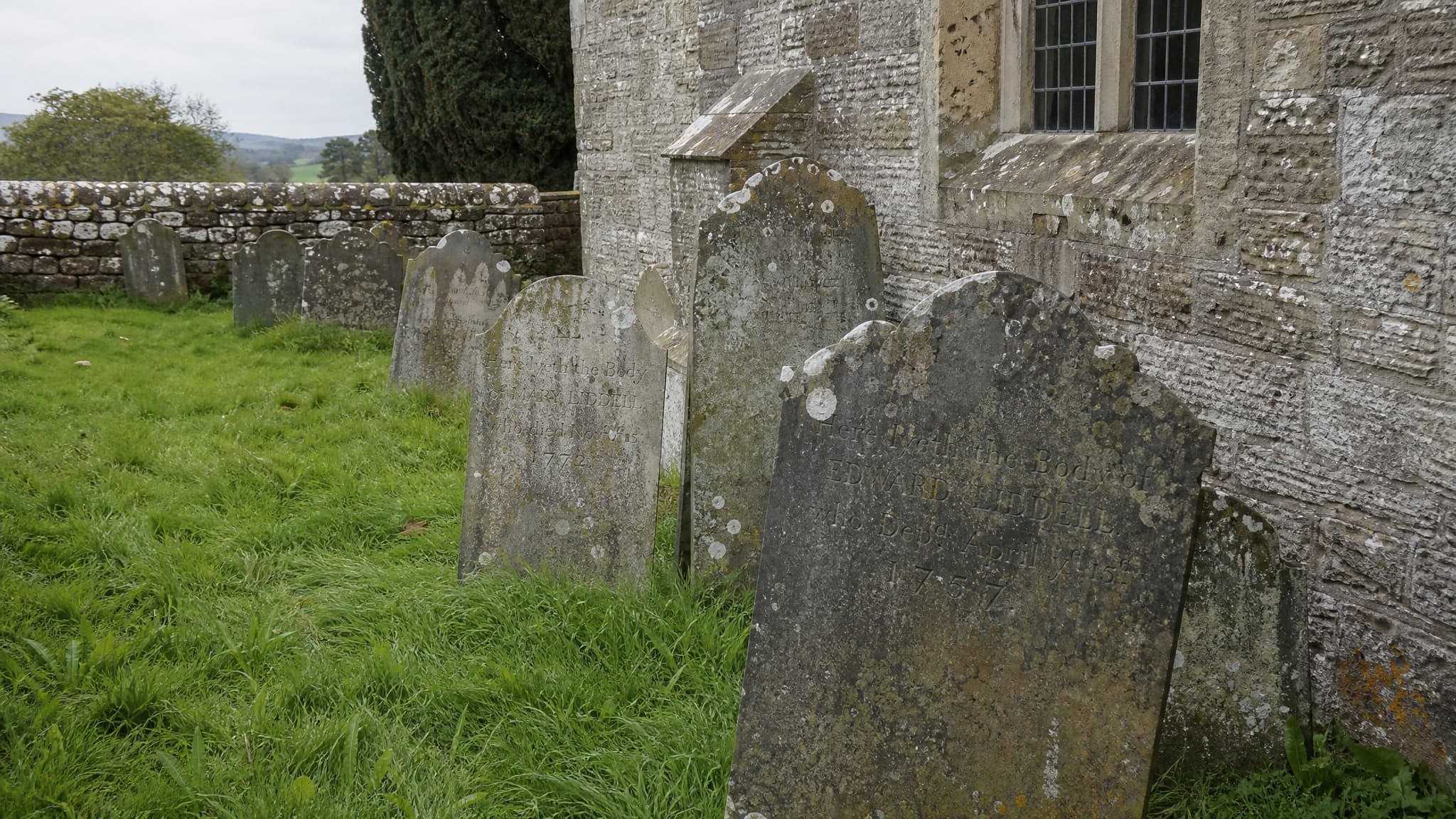
A graveyard is a burial ground attached to a church. It sits in the churchyard, on consecrated ground, under the authority of that church, and historically it accepted the parish's own dead.
A cemetery is a burial ground that stands on its own. It is not attached to a church, it is usually much larger, it may be owned by a municipality, a private company, a fraternal order or a religious body, and it accepts whoever meets its own conditions.
So every graveyard is a burial ground, but only the ones beside a church are graveyards. That is the whole of the difference between cemetery and graveyard, and everything below is the history that produced it.
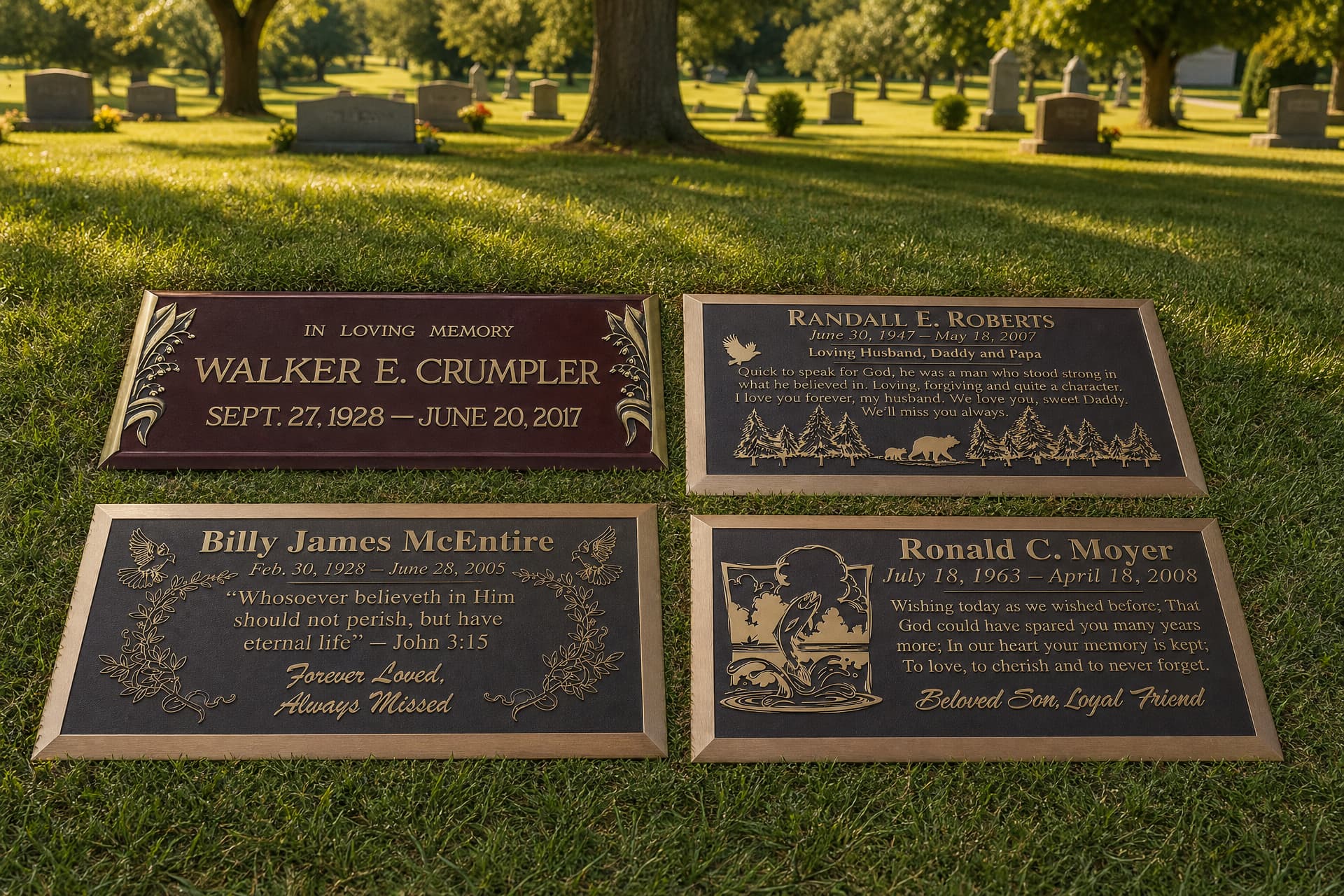
Shop Cemetery Memorials
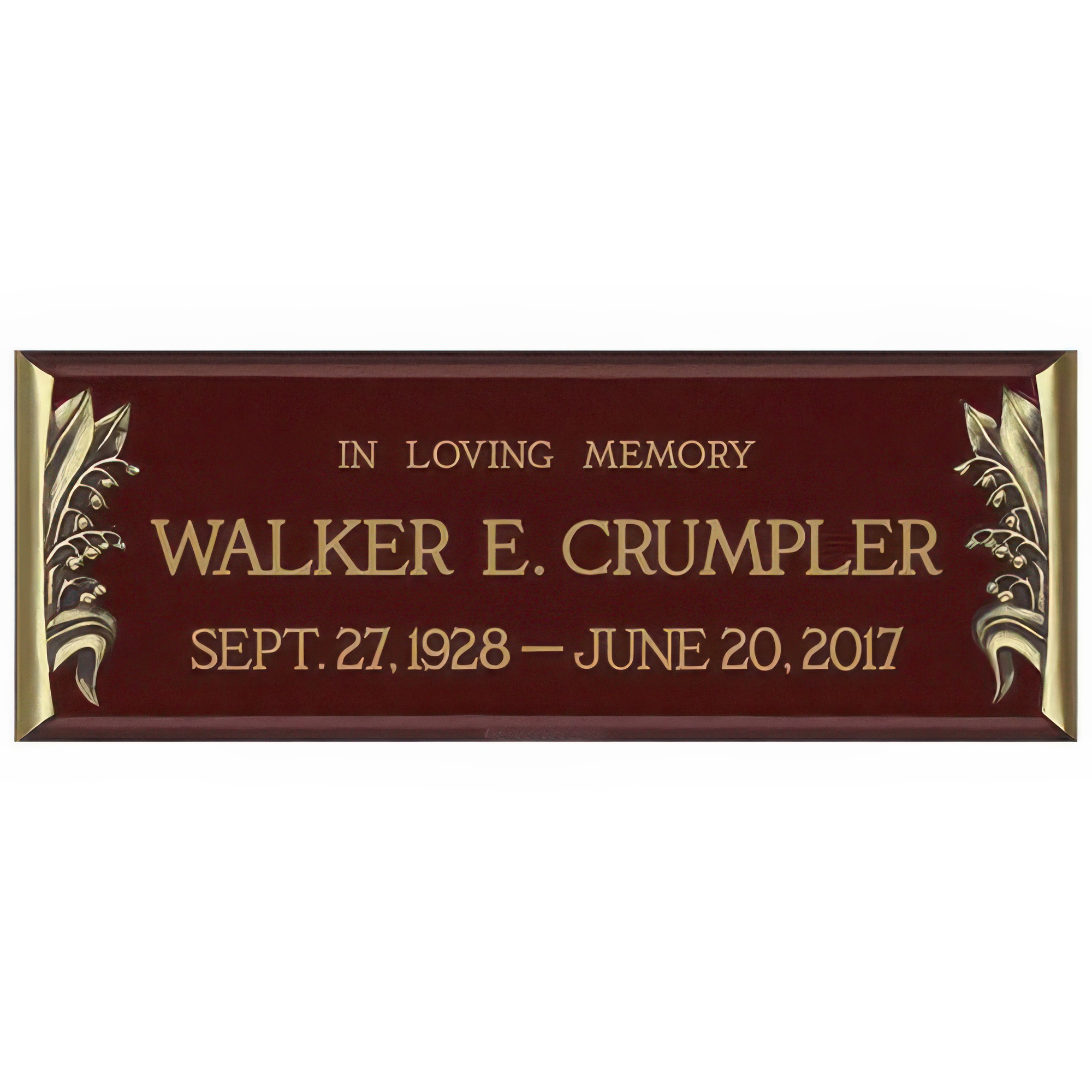
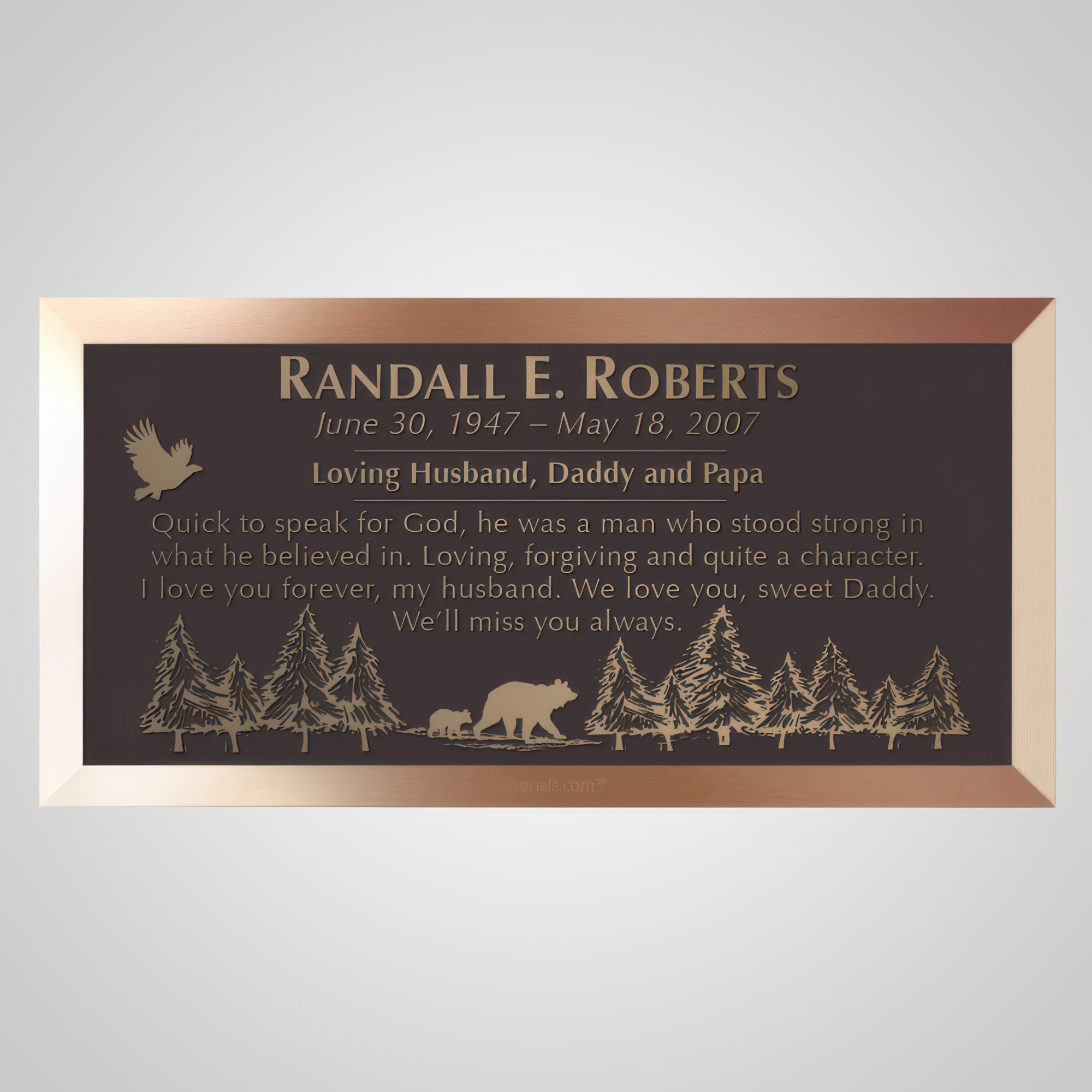
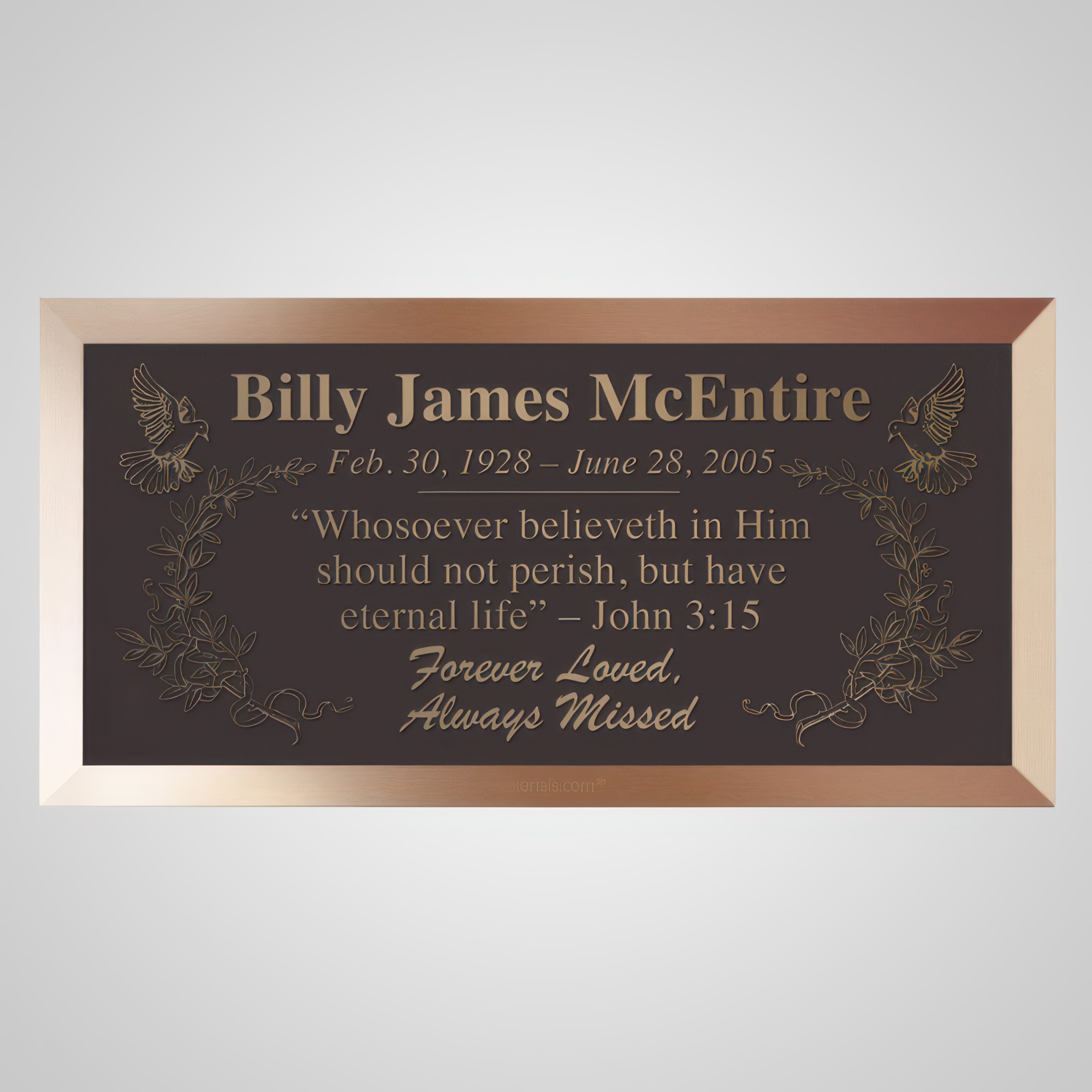
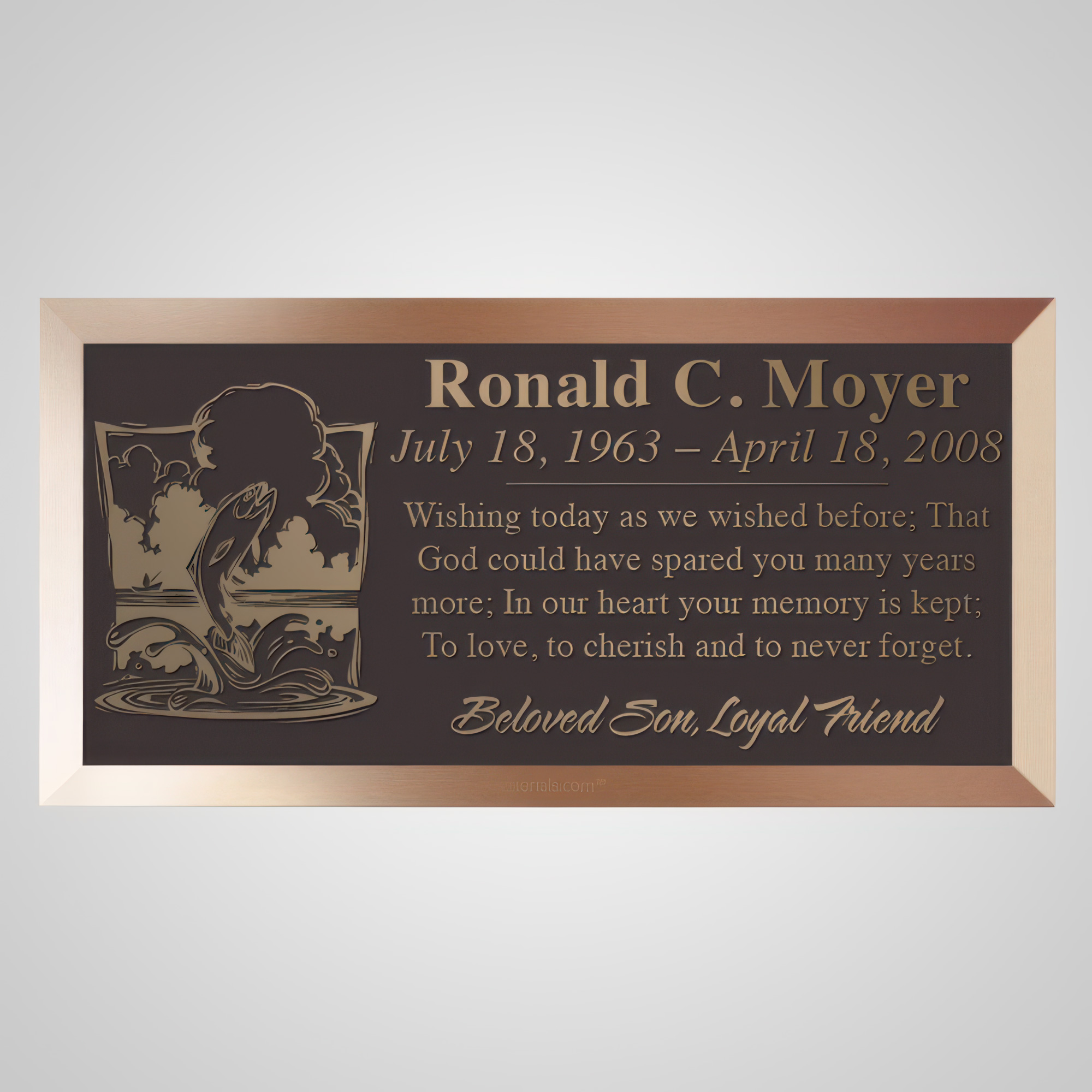
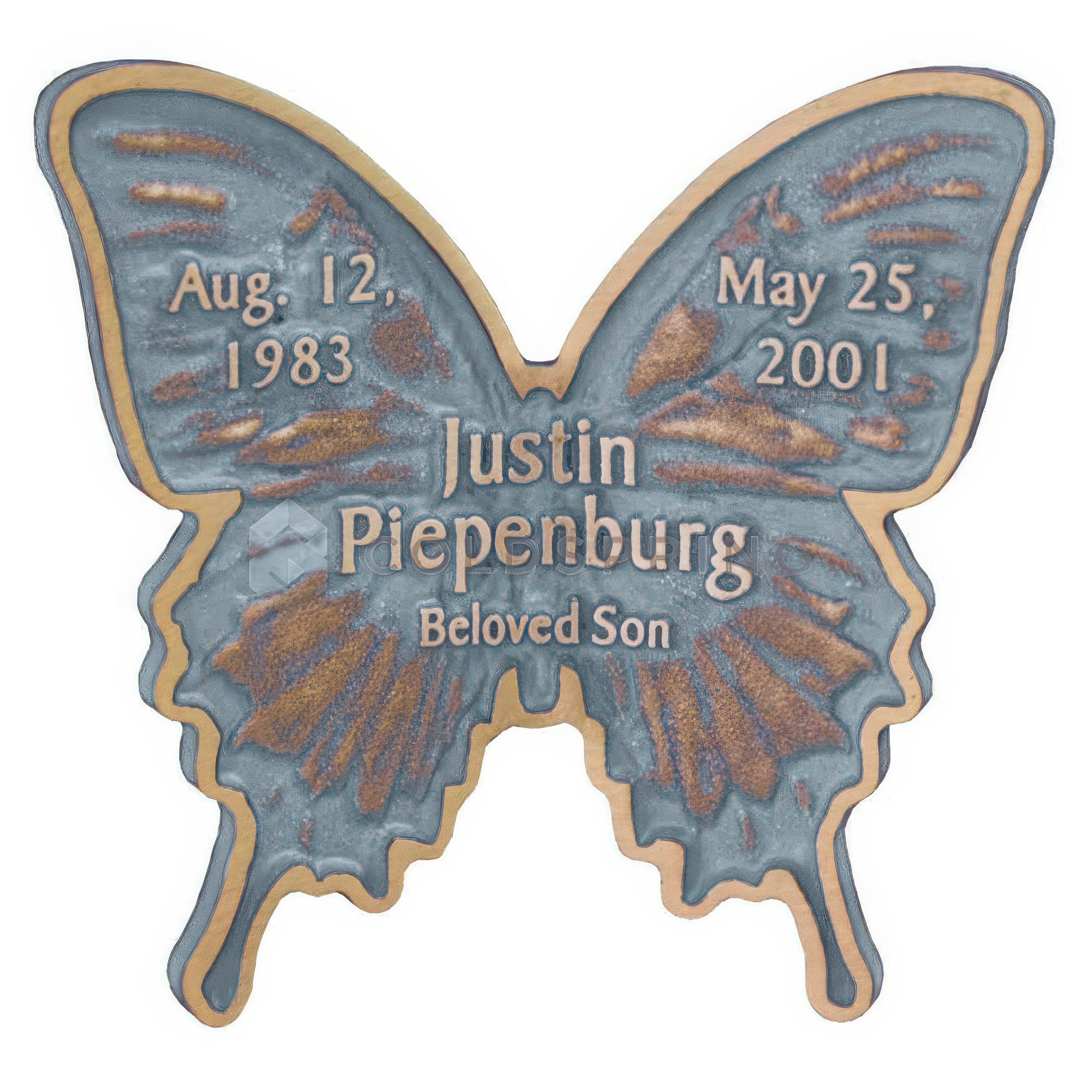
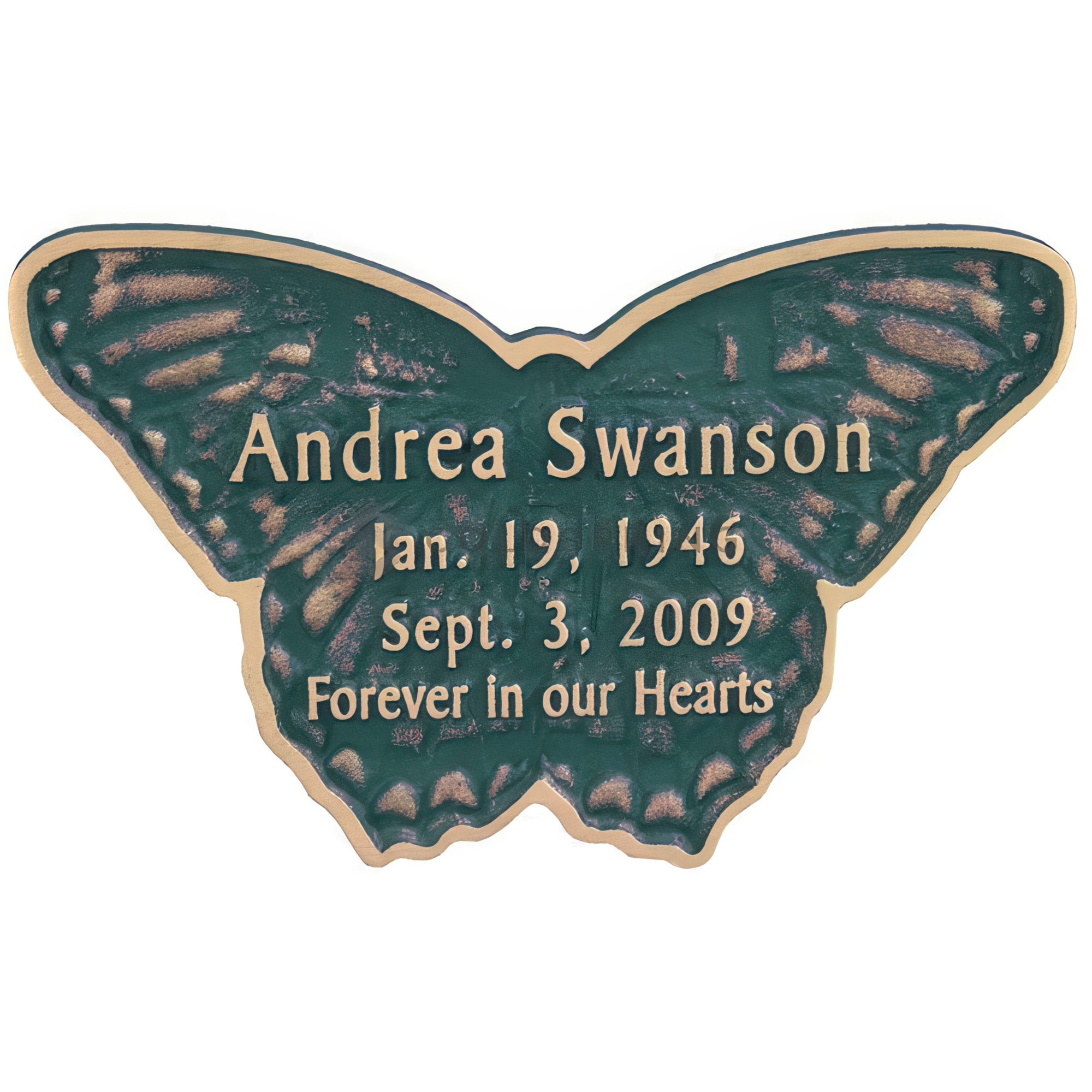
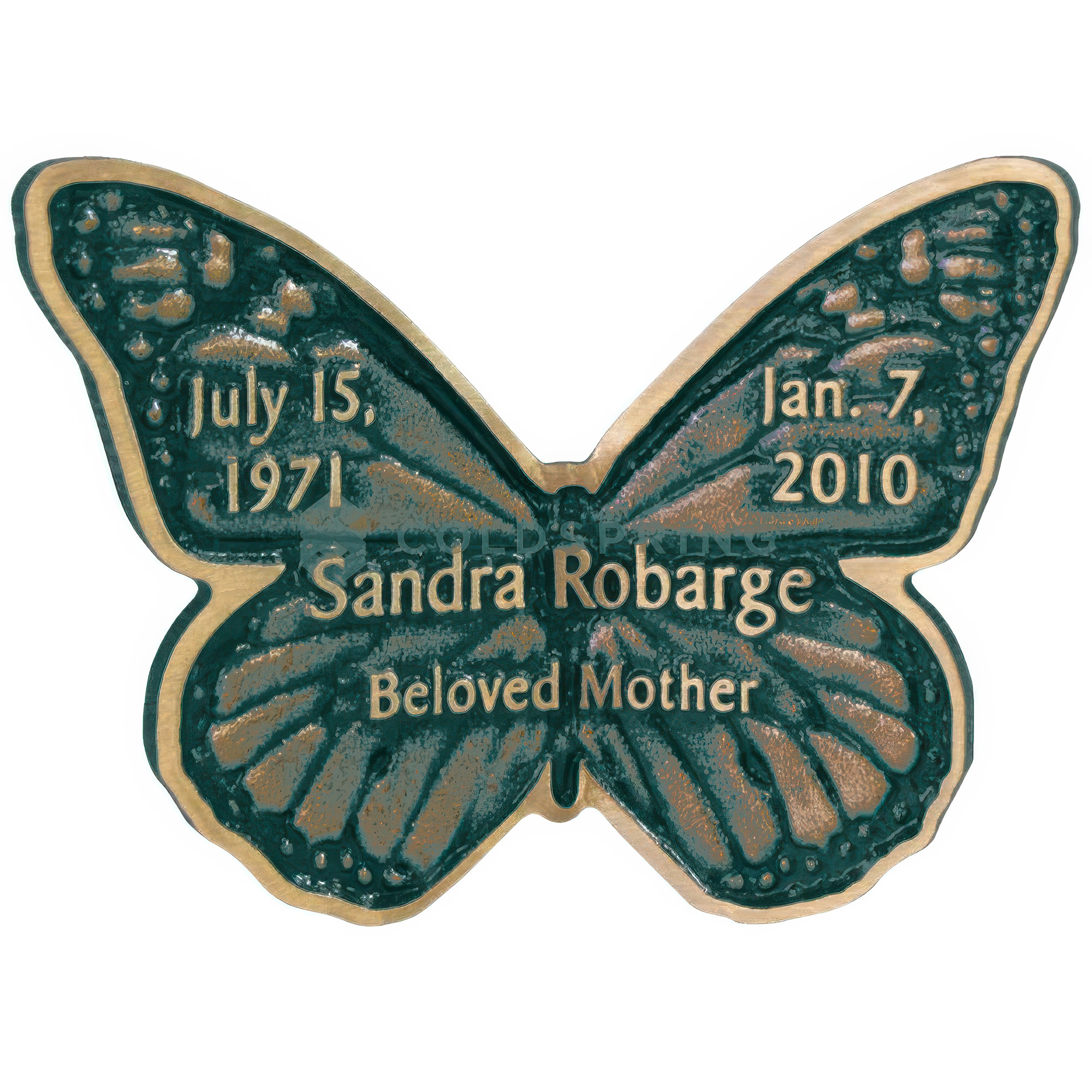
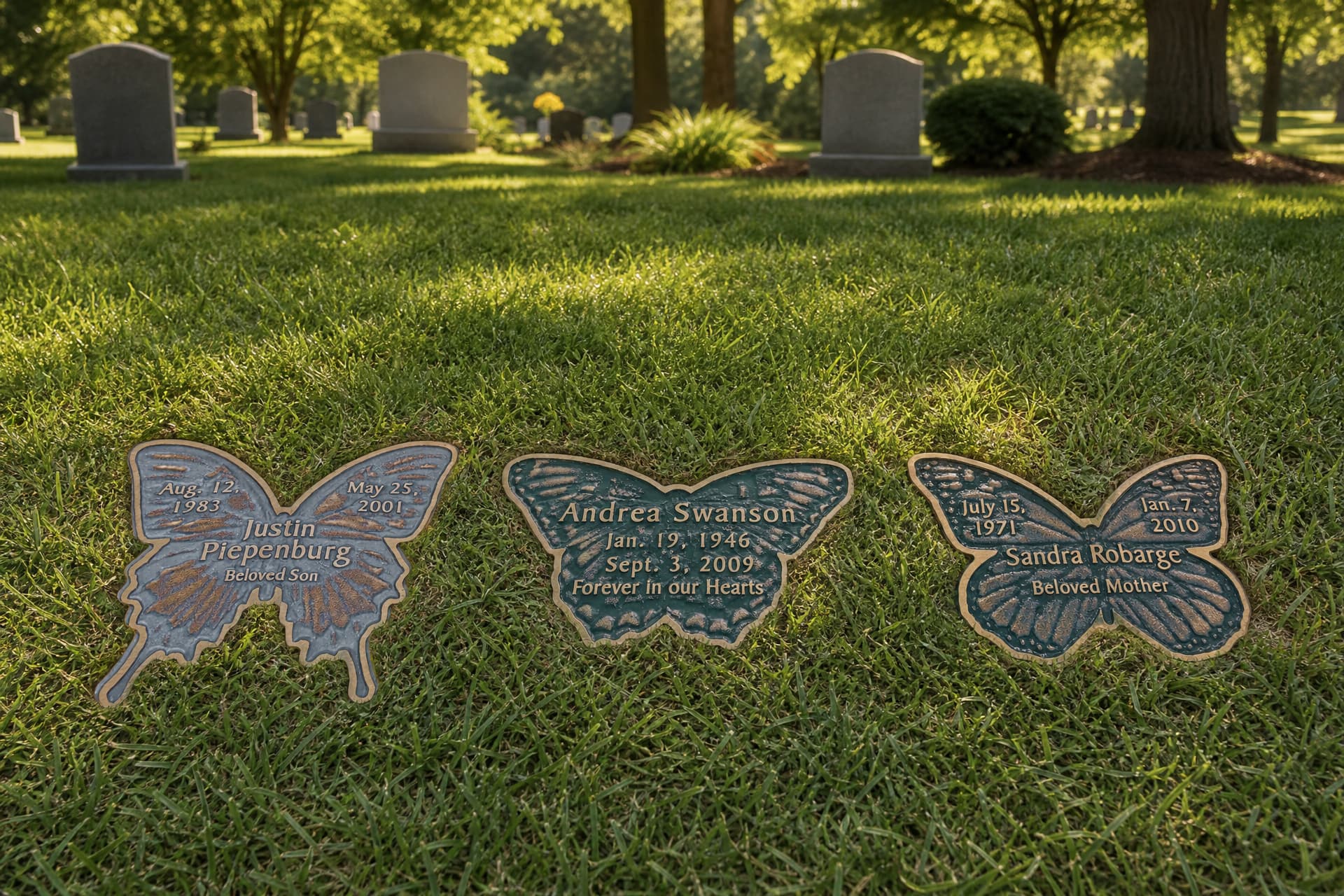
Bronze plaques and flush markers for a grave in any kind of burial ground
Graveyard is plain English, assembled from parts anybody can see: a yard of graves. The yard in question is the churchyard, which is why the word carries a church with it even when nobody says so. It describes a place by what is in it and where it is.
Cemetery came into English from Latin and, before that, from the Greek koimeterion, meaning a sleeping place or dormitory. Early Christian writers used it for burial grounds deliberately, because it framed death as sleep rather than as an end. The word is older than the institution it now names in English, and it was waiting when a new kind of burial ground needed something to be called.
That difference in register survives. Graveyard is the blunter, older-feeling word; cemetery is the formal one. It is why a horror film is set in a graveyard and a funeral director says cemetery.
The Change That Created Cemeteries
Through the medieval period and well beyond, burial in most of Europe meant the churchyard. It was consecrated ground, it was where the parish had always buried its dead, and the space was finite in a way that nobody planned around.
By the eighteenth century, in growing cities, it had stopped working. Urban churchyards were full — in some cases catastrophically so, with graves reopened after a few years and remains moved to make room. The grounds were small, hemmed in by buildings, and expanding populations kept arriving. The health concerns raised at the time were framed in the language of miasma and bad air rather than the germ theory that came later, but the overcrowding was real and visible.
The answer was to move burial out of the churchyard entirely. Père Lachaise opened in Paris in 1804 on land outside the city, laid out as a landscaped park with plots sold to families. It was slow to catch on and then extraordinarily influential. In the United States the same idea arrived as the rural cemetery movement, with Mount Auburn in Cambridge, Massachusetts founded in 1831 as the first of its kind: large, deliberately picturesque, sited outside the built-up area, and open to subscribers rather than to a single parish.
These were not churchyards made bigger. They were a different institution: non-denominational or multi-denominational, commercially or municipally run, planned as landscape, and sold as real estate. English needed a word for them, and cemetery was the one it took.
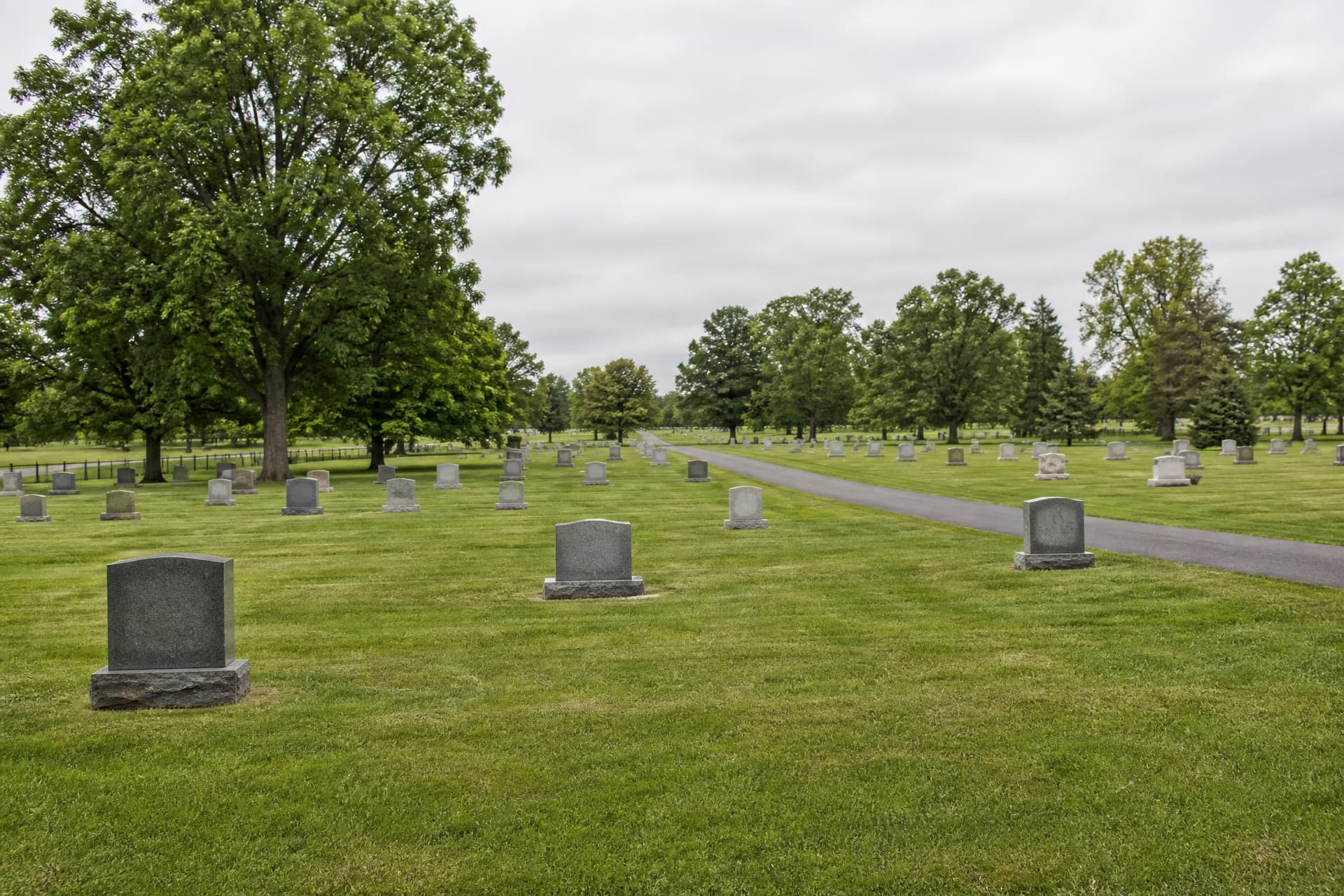
The same morning, a different institution. Planned in advance, surveyed into sections, laid out around roads rather than around a church.
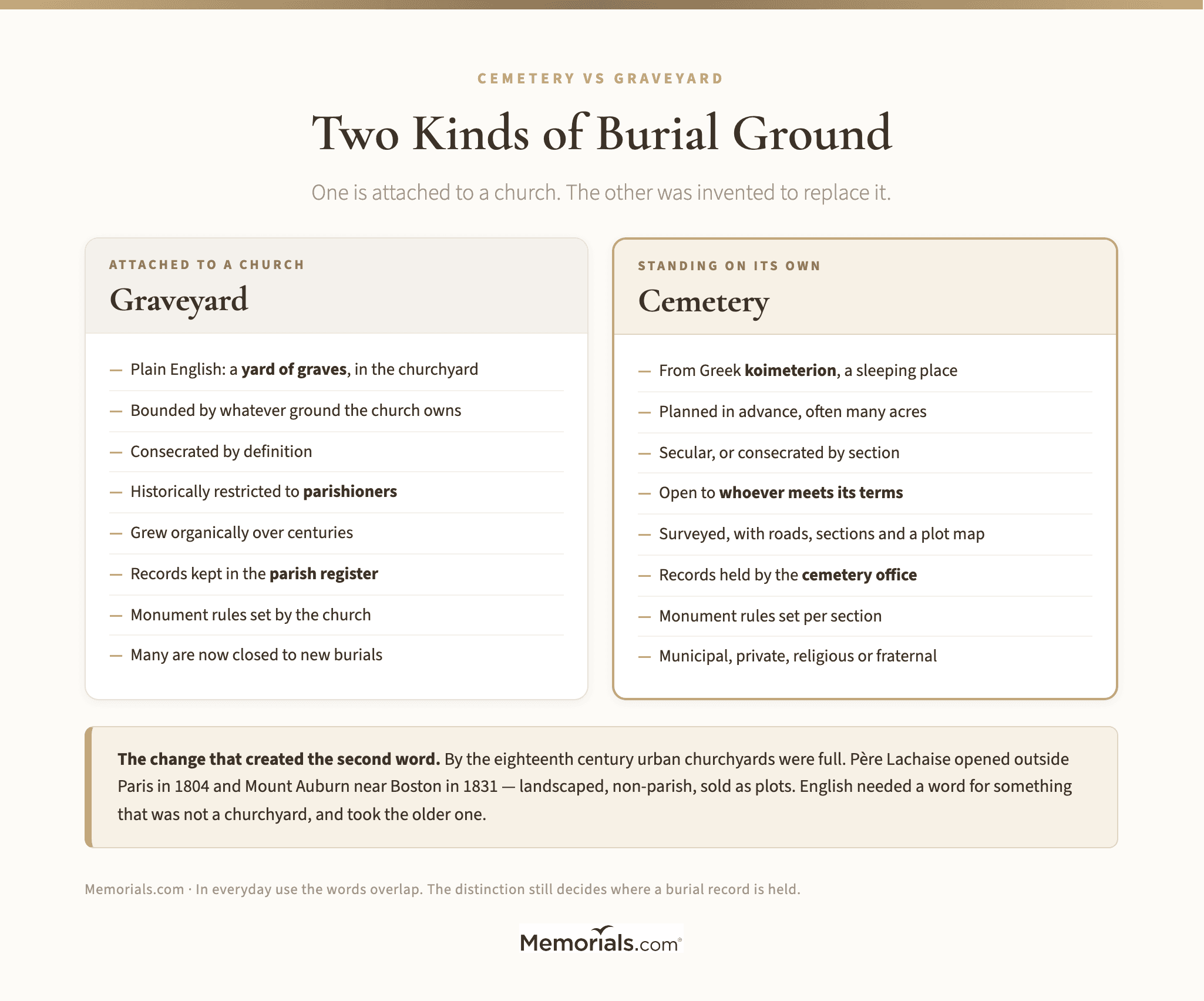
One is attached to a church and bounded by its ground. The other was invented when that stopped working.
What Actually Differs
Set the two side by side and the differences are practical rather than semantic.
Ownership. A graveyard belongs to its church. A cemetery may be owned by a city, a private company, a religious organization, a fraternal order, or a non-profit association. Our guide to types of cemeteries covers the full range and how each is governed.
Who may be buried. Churchyard burial was traditionally limited to parishioners and members of that faith. A cemetery sets its own eligibility, and most modern ones accept anyone who buys a plot.
Size and layout. A graveyard is bounded by whatever ground the church happens to own. A cemetery is laid out in advance with surveyed sections, roads and plot maps.
Consecration. A graveyard is consecrated ground by definition. A cemetery may be entirely secular, or may set aside consecrated sections for particular faiths.
Records. Churchyard burials were recorded in parish registers. Cemetery records belong to the cemetery, which matters enormously if you are trying to find a grave.
Side by Side
Graveyard
Cemetery
Attached to a church
Yes, by definition
Not usually
Typical size
Limited to the church's own ground
Planned, often many acres
Who may be buried
Historically parishioners and co-religionists
Whoever meets the cemetery's own terms
Ground status
Consecrated
Secular, or consecrated by section
Laid out
Organically, over centuries
Surveyed in advance, with roads and sections
Records held by
The church and its archive
The cemetery office
Who sets monument rules
The church
The cemetery, and often per section
Is It a British or an American Distinction?
Neither, though the two countries feel it differently.
In Britain and Ireland the graveyard is a living category. Parish churches with burial grounds around them are everywhere, many are still in use, and the word describes something a person passes on the way to the shops. The distinction stays legible because both kinds of ground are common.
In the United States the churchyard is much rarer, largely confined to the older eastern states and to particular traditions — New England meeting houses, Moravian and Quaker grounds, Spanish mission churches, rural Southern congregations. Most American burial happens in cemeteries, so graveyard has drifted further toward meaning any burial ground at all, and further toward the informal and slightly spooky register that horror films use.
The result is that an American and a British reader can use the same two words with different degrees of precision and both be speaking correctly for where they are. If you are writing for both, burial ground is the term that carries no assumptions.
Why the Distinction Faded
Two things blurred it.
The first is simply that the churchyard stopped being the default. Once most burials happened in cemeteries, most people's experience of a burial ground was a cemetery, and graveyard drifted into use as a general word for any place with graves in it. Language follows what people actually see.
The second is that the difference stopped having consequences for the average family. When the question was which parish you belonged to, the distinction decided where you could be buried. When the question is which plot you can afford and which grounds have space, it does not. Our guide to how to buy a cemetery plot covers the questions that replaced it.
When It Still Matters
Four situations where using the words precisely is worth the effort.
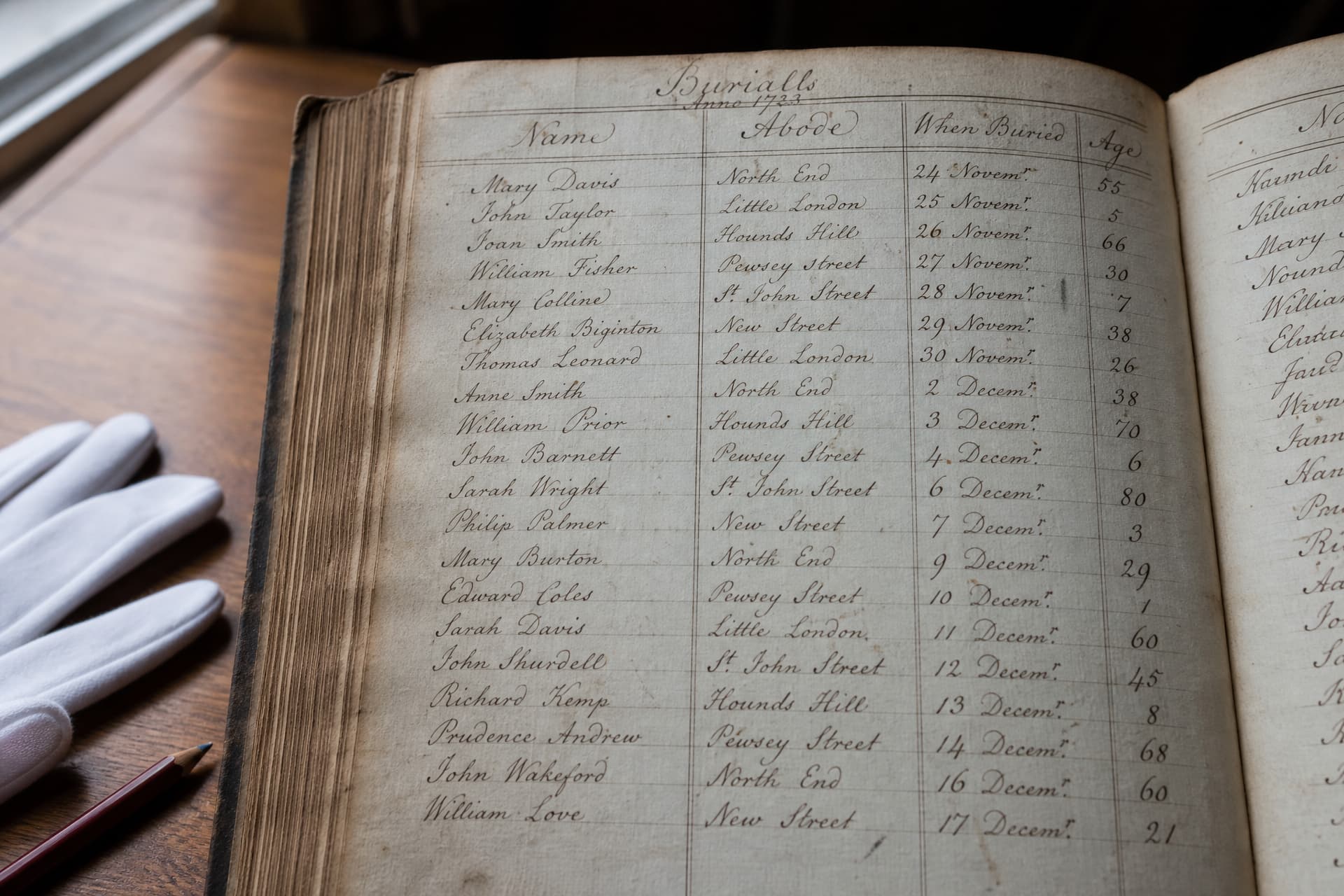
Genealogy. This is the big one. If an ancestor was buried in a graveyard, the record is probably in a parish register, held by the church or by a diocesan or county archive. If they were buried in a cemetery, the record belongs to the cemetery and may never have been part of any church's books. Searching the wrong institution is the most common reason a burial cannot be found.
A graveyard burial is recorded here, in the parish register. A cemetery burial is recorded by the cemetery, and the two collections may have never been in the same building.
There is a second trap underneath it. When a churchyard filled and the parish began burying in a new municipal cemetery instead, the record-keeping usually moved with it — so a single family can appear in parish registers up to a certain decade and in cemetery ledgers afterwards, with nothing connecting the two. If a line of burials seems to stop abruptly, that break is often administrative rather than a family leaving the area. Look for a cemetery founded near that date and check its earliest sections.
Burial eligibility. Some churchyards still restrict burial to parishioners, members of the congregation, or existing family plots, and some have closed to new burials entirely because they are full. That is a live constraint, not a historical one.
Reading a landscape. A crowded ground of leaning stones pressed up against a church is telling you its age and its limits. A wide lawn with avenues and sections was planned. Our guide to types of old gravestones covers what the monuments themselves add, and our overview of what you find in a cemetery covers the features you will encounter in each.
Rules and permissions. Who to ask about a headstone, a repair, or a decoration differs. In a graveyard it is the church, often through a faculty or permission process. In a cemetery it is the cemetery office. Asking the wrong one wastes weeks.
The Other Words You Will Meet
Burial vocabulary did not stop at two words.
Burial ground is the neutral umbrella term for any of these, and the one to use when you do not know which you are describing.
Memorial park is a twentieth-century cemetery style that permits only flush markers, so the grounds read as open lawn. It is a cemetery with a design rule.
Necropolis, literally a city of the dead, is used for very large or very old burial complexes, and for some Victorian cemeteries that adopted the name deliberately.
Churchyard is the ground around a church, of which the graveyard is the part used for burial.
Potter's field is ground set aside for the indigent and the unidentified, and the term is still used by some American municipalities.
Columbarium is a structure of niches for cremated remains rather than a burial ground at all. Ours is covered in the columbarium versus burial plot comparison, and a mausoleum is its equivalent for caskets.
Does the Difference Change What You Can Put on a Grave?
Yes, and this is where an academic distinction turns practical.
Churchyards tend to be more restrictive about monuments and far more restrictive about decoration, because the ground is small, historically significant, and governed by a church with its own conventions about what is fitting. Many will specify permitted materials and forbid curbs, glass, plastic and artificial flowers outright — so the gravestone decorations that are ordinary in a lawn cemetery can be prohibited a mile away in a churchyard.
Cemeteries vary enormously — some memorial parks allow nothing above ground level, while traditional sections permit full upright monuments. Either way the rules come from the section you are buying into, not from the word on the gate. Our range of cemetery memorials and of headstones covers the formats in common use, and our cemetery etiquette notes cover the conventions that apply in both.
Confirm with whoever holds the rules before you order anything. That advice does not change with the vocabulary.
Frequently Asked Questions
Is a graveyard older than a cemetery? Usually, yes. Graveyards are attached to churches and most churches predate the cemetery movement of the nineteenth century. But new church burial grounds are still created, so age is a strong hint rather than a rule.
Can a cemetery be on church land? It can, and a large church-owned burial ground separate from the churchyard is normally called a cemetery. The test most people apply is whether the ground sits around the church building.
Which word should I use when talking to a funeral director? Cemetery, unless you specifically mean a churchyard. It is the working term in the industry and it covers every case.
Is a memorial park a cemetery? Yes. Memorial park describes a design convention — flush markers only, so the grounds mow as open lawn — not a different kind of institution.
What is the difference between a cemetery and a graveyard in terms of cost? There is no consistent difference attached to the words. Cost is driven by location, section, and whether the ground is public or private. Our guide to cemetery plot cost breaks down what actually moves the number.
Do graveyards still accept new burials? Some do, many do not. A churchyard that has run out of room is described as closed to new burials, and that status is common in cities. Ask the church directly.
If a churchyard is full, can a family still be buried together there? Sometimes. A ground closed to new graves will often still permit a burial in an existing family plot that has space, or the interment of cremated remains, which takes far less room. Both are decided by the church rather than by any general rule, and both usually require proof of the family's right to the plot.
One Word Replaced the Other for a Reason
The move from graveyard to cemetery was not a change of vocabulary. It was a change in who owned the ground, who was allowed in it, how it was laid out, and who kept the records — and the new word arrived because the old one no longer described the thing.
If you are choosing a burial ground rather than reading one, the decisions that matter are covered in our cemetery planning guide.