🏬Supersize Online Funeral Retailer🪦1000's of Headstones⚱️Over 10,000 Cremation Urns⚰️Caskets Overnight Delivery🛒Funeral & Memorial Superstore🚚FREE Shipping on ALL Orders👨👩👧👦Helping Families for over 20 Years💰Lowest Price Guarantee🏬Supersize Online Funeral Retailer🪦1000's of Headstones⚱️Over 10,000 Cremation Urns⚰️Caskets Overnight Delivery🛒Funeral & Memorial Superstore🚚FREE Shipping on ALL Orders👨👩👧👦Helping Families for over 20 Years💰Lowest Price Guarantee
🏬Supersize Online Funeral Retailer🪦1000's of Headstones⚱️Over 10,000 Cremation Urns⚰️Caskets Overnight Delivery🛒Funeral & Memorial Superstore🚚FREE Shipping on ALL Orders👨👩👧👦Helping Families for over 20 Years💰Lowest Price Guarantee🏬Supersize Online Funeral Retailer🪦1000's of Headstones⚱️Over 10,000 Cremation Urns⚰️Caskets Overnight Delivery🛒Funeral & Memorial Superstore🚚FREE Shipping on ALL Orders👨👩👧👦Helping Families for over 20 Years💰Lowest Price Guarantee
Almost nobody arrives at butterfly symbolism death out of curiosity. They arrive because something happened first — a butterfly stayed on a shoulder through an entire graveside service, or turned up in a kitchen in November, or circled the yard on the morning of a funeral and would not leave. The question comes afterward, and it usually gets asked a little sheepishly.
The connection between butterflies and death is genuinely old and genuinely widespread, and it was not invented by grief websites. But it does not mean one thing. Depending on where you are standing on the map, a butterfly at a funeral is a soul arriving, a soul leaving, a promise of resurrection, or a straightforward warning that somebody in the house is about to die. This page walks through all of it. It is one of a set — our death symbolism guide covers the other omens, icons and mourning customs people go looking for after a loss.
It is worth separating two searches that look identical. Butterflies and death in the abstract is a question about folklore. Butterflies and death of a loved one is a question about last Tuesday. The first has a tidy answer and the second does not, and most of what follows is written for the second.
What the Butterfly Has Stood For, and Why Death Is Only Half of It
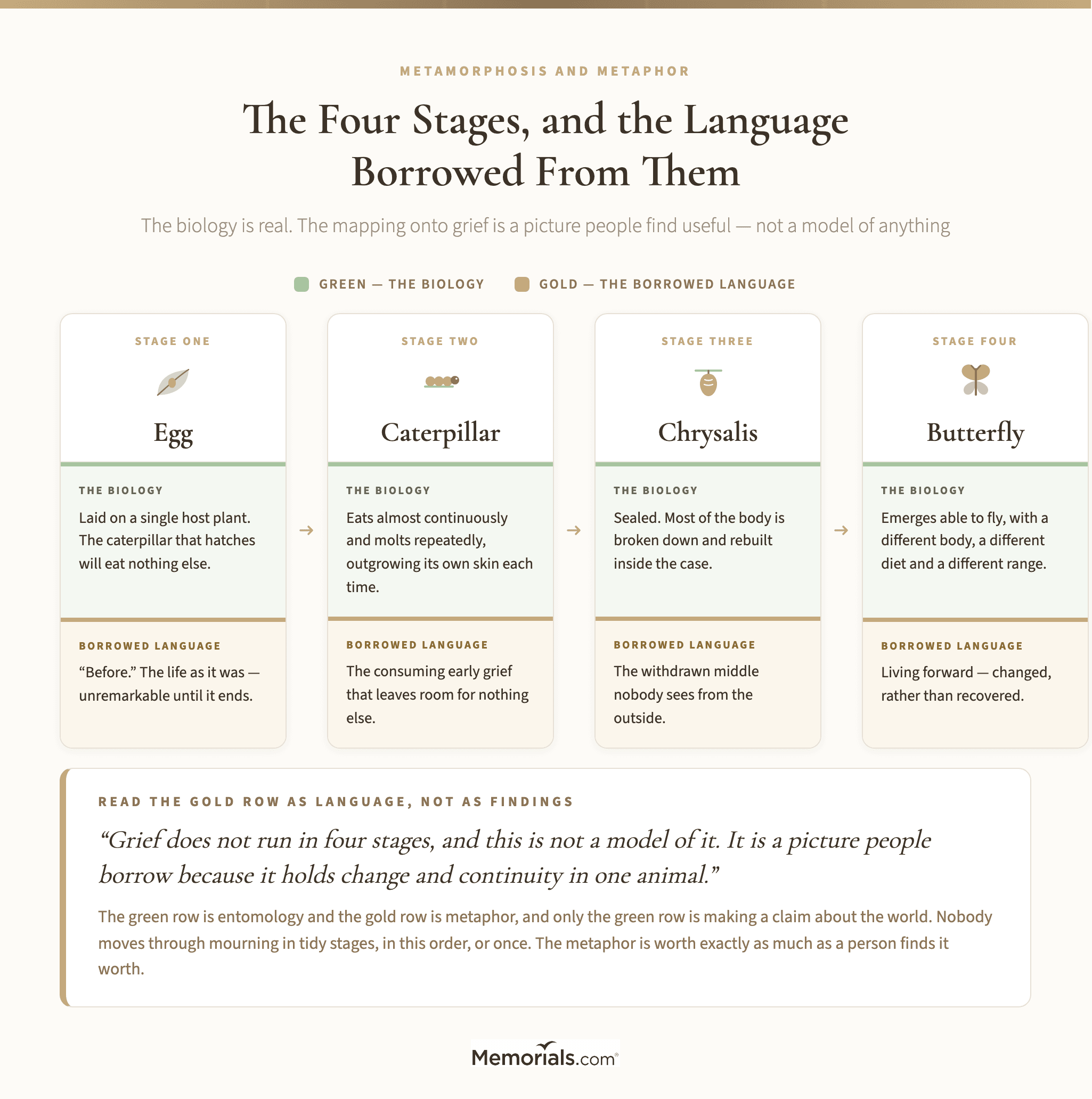
Every version of this symbol runs on the same engine: the animal changes completely and survives the change. A butterfly starts as an egg, hatches into a caterpillar that does almost nothing but eat, seals itself into a chrysalis, dissolves most of what it was, and comes out able to fly. Nothing else people see in an ordinary backyard does that. Butterfly death symbolism is really transformation symbolism aimed at one particular transformation.
That is also why the same insect turns up at weddings and christenings. A symbol about becoming something else is not fussy about which becoming it decorates, and a butterfly can carry hope in the morning and mourning in the afternoon without contradicting itself.
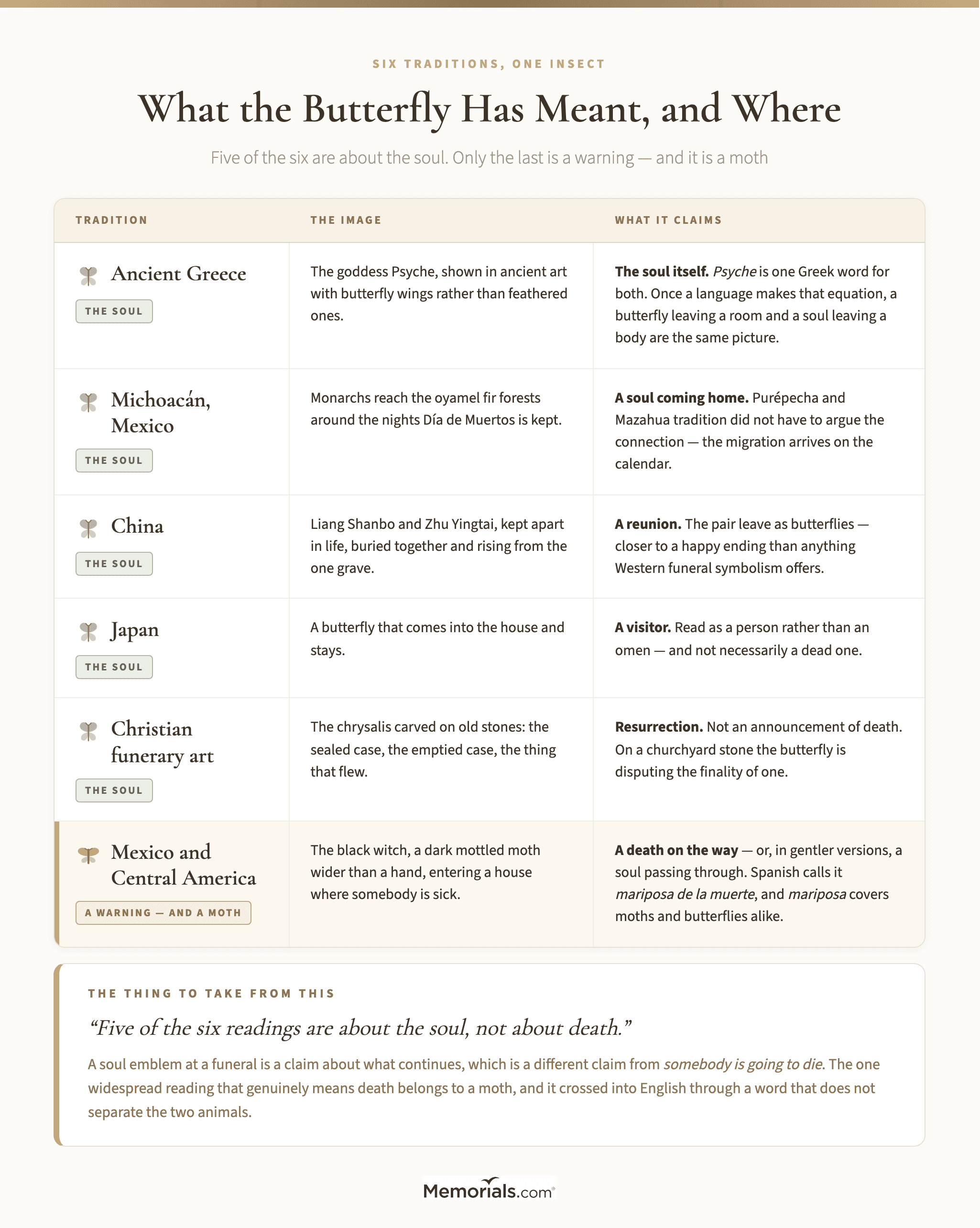
The oldest version anyone can name is Greek. Psyche is the Greek word for the soul, and it is also the Greek word for butterfly — one word, both meanings — and the goddess Psyche is shown in ancient art with butterfly wings rather than feathered ones. Once a language has made that equation, a butterfly leaving a room and a soul leaving a body are the same picture.
Christian funerary art took the chrysalis and used it directly: the sealed case, the emptied case, the thing that flew. It is carved on old stones for the same reason a lamb or an anchor is, and it argues resurrection rather than departure. So a butterfly representing death in a churchyard is not announcing a death at all. It is disputing the finality of one.
Search engines get asked about this in a dozen near-identical ways — butterfly meaning death, butterfly meaning in death, butterfly meaning after death, butterfly significance death, butterflies symbolism death — and the phrasing changes nothing underneath. All of them are one question: did that mean something. Where the butterfly sits among the other emblems people carve, wear and send is covered in our guide to the symbols of grief and mourning.
Every fall, monarch butterflies from across eastern North America fly south to a narrow band of high-altitude fir forest in the mountains of Michoacán, in central Mexico. They arrive in numbers that turn the oyamel firs orange and bend the branches. And they arrive around the days when Día de Muertos is kept — the nights when families clean graves, build altars, light the candles on an ofrenda, and set out food for the dead, who are expected home.
The Purépecha and Mazahua people of that region did not have to invent a connection. The calendar handed them one. The returning monarchs are read as the returning souls. That is the monarch butterfly meaning death traditions in Mexico actually rest on: not a vague sense that butterflies are spiritual, but a specific animal that appears in a specific place on a specific set of nights, year after year, within living memory of everybody who lives there.
The monarchs reach the Michoacán fir forests around the nights Día de Muertos is kept. Nobody had to argue the two events together — the migration arrives on the calendar, and the reading followed.
North of the border, most people meet the tail of that same migration in September and October, which is why the monarch is the one that gets photographed and posted. The nights at the other end of it also produced the imagery Americans usually recognize first, the painted faces and decorated calaveras; if that is the part you know, our page on sugar skull meaning covers where it came from and what it is for.
The same insect is read six different ways. Greece makes it the soul itself; Michoacán makes it a soul coming home; China makes it a reunion; Japan makes it a visitor; Christian funerary art makes it resurrection. Only the Latin American reading — and that one is a moth — makes it a warning.
The Butterflies That Really Are Death Omens
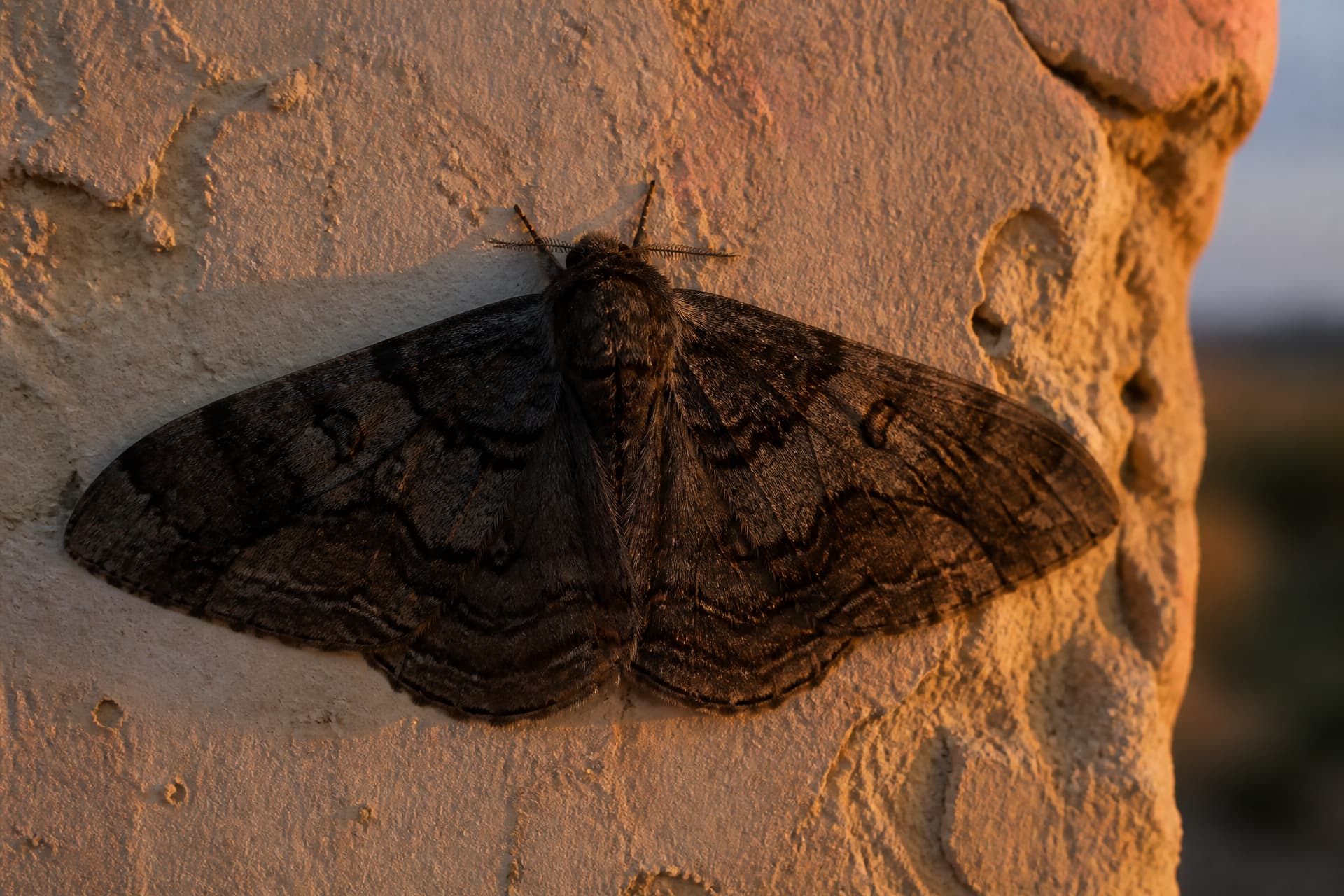
The butterflies that symbolize death most directly are not butterflies. Across much of Mexico and Central America the creature people mean is the black witch: a large, dark, mottled moth with a wingspan wider than a hand, known in Spanish as the mariposa de la muerte, the butterfly of death. Spanish uses mariposa for moths and butterflies alike, which is how the confusion crossed into English. If one comes into a house where somebody is sick, the folk reading is that a death is on the way — or, in gentler versions, that a soul is passing through on its way out.
Whether that frightens or comforts depends entirely on the household, and both responses turn up in the same town. It is the one clearly negative butterfly death meaning in wide circulation, and it belongs to a moth.
The black witch moth is the animal behind almost every "butterfly means death" story that actually means death. It is nocturnal, it is drawn indoors by light, and a sickroom lamp burning late is exactly the kind of light it finds.
Elsewhere the reading inverts. Japanese tradition treats a butterfly in the house as a visiting soul — a person rather than an omen, and not necessarily a dead one. In the Chinese legend of Liang Shanbo and Zhu Yingtai, two lovers kept apart in life are buried together and rise as a pair of butterflies, which is closer to a happy ending than anything Western funeral symbolism offers.
Does the Color Mean Anything?
People ask what color butterfly means death more often than they ask almost anything else in this subject, and the honest answer is that the readings contradict each other so completely that the contradiction is the finding.
A white butterfly is a departed soul in one tradition and a bride in another. Black is mourning across most of Europe and carries the black witch's freight in Latin America — and black is also simply what a mourning cloak looks like, which overwinters as an adult and is often the first butterfly out in a northern yard in early spring. Yellow gets read as hope in some places and as illness in others. Orange is the monarch, so it carries whatever the monarch carries wherever you happen to be standing.
Color, in other words, is a local dialect rather than a language. If it helps to assign one, assign one — that is what the tradition has always been, people deciding what a thing means in the place they live. Our piece on the colors of remembrance covers the same question for the colors families choose deliberately, where the meaning is settled because somebody sat down and settled it.
When a Butterfly Turns Up After a Death
People report seeing butterflies after death more often than they report seeing anything else, and there is a plain reason sitting on top of whatever other reason you prefer. Funerals cluster in the warm months across most of the country. Gardens are planted with the things butterflies feed on. And the bereaved spend an unusual amount of time standing still outdoors — at gravesides, on porches, in backyards, doing nothing in particular. The butterflies were always there. The standing still is new.
That account is true and it is not the whole account, because it explains the butterfly and not the noticing. The first butterfly after death rarely registers. The third one does. What changed is attention, and attention is not nothing: grief re-tunes what a person picks out of a scene, and it tends to pick out things that move, things that are brief, and things that were not there a moment ago.
So the butterfly symbolism grief counselors reach for is transformation, not proof. Nobody in a support group is claiming the insect carries a message. The claim is that the image is useful — it holds change and continuity in one animal, which is the exact combination a grieving person is trying to believe in.
Egg, caterpillar, chrysalis, butterfly. The biology is real and the mapping onto grief is borrowed language, not a model — nobody moves through mourning in four tidy stages, and the metaphor is worth exactly as much as a person finds it worth.
The same conversation happens with birds, usually with more conviction attached. A red bird at a window gets read as a visit far more readily than a butterfly does; our page on what it means when you see a red cardinal covers why that particular bird collected the tradition, and the wider pattern of which birds get read as messengers is in our guide to bird symbolism in grief and remembrance.
The Butterfly and the Death of a Child
Parents type butterfly symbolism death of child into a search bar at hours nobody else is awake, and it is worth saying plainly why this symbol attaches to children more than any other.
Part of it is the shape of the story. A caterpillar's life is short and it is not the point of the life; the point comes afterward. That is a shape bereaved parents get offered constantly, often clumsily, and it is one of the few offerings that does not require them to agree the death was for the best. Part of it is simpler than that: butterflies are a child's animal. They are on the wallpaper, on the cake, in the drawings, sometimes on the last card.
A symbol that exists only in a moment is hard to hold onto, which is why butterfly remembrance almost always ends up attached to an object. The moment passes. The object stays where you put it.
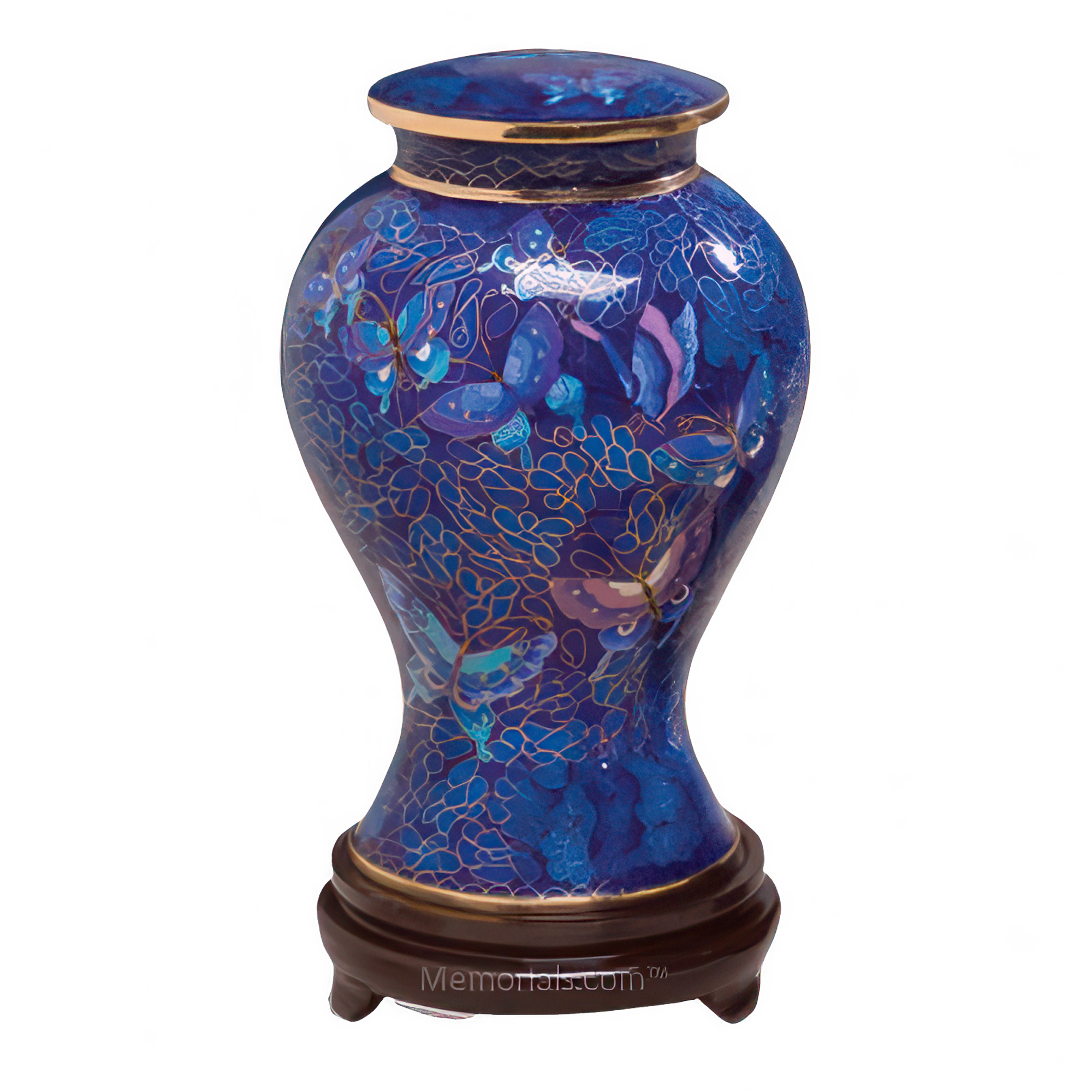
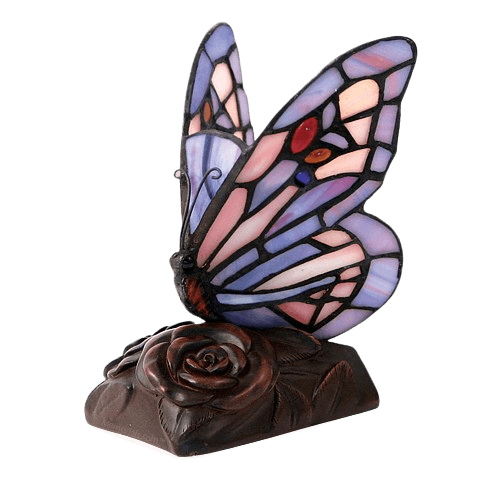
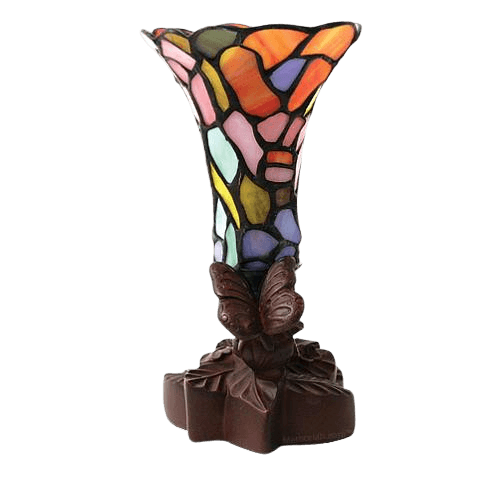
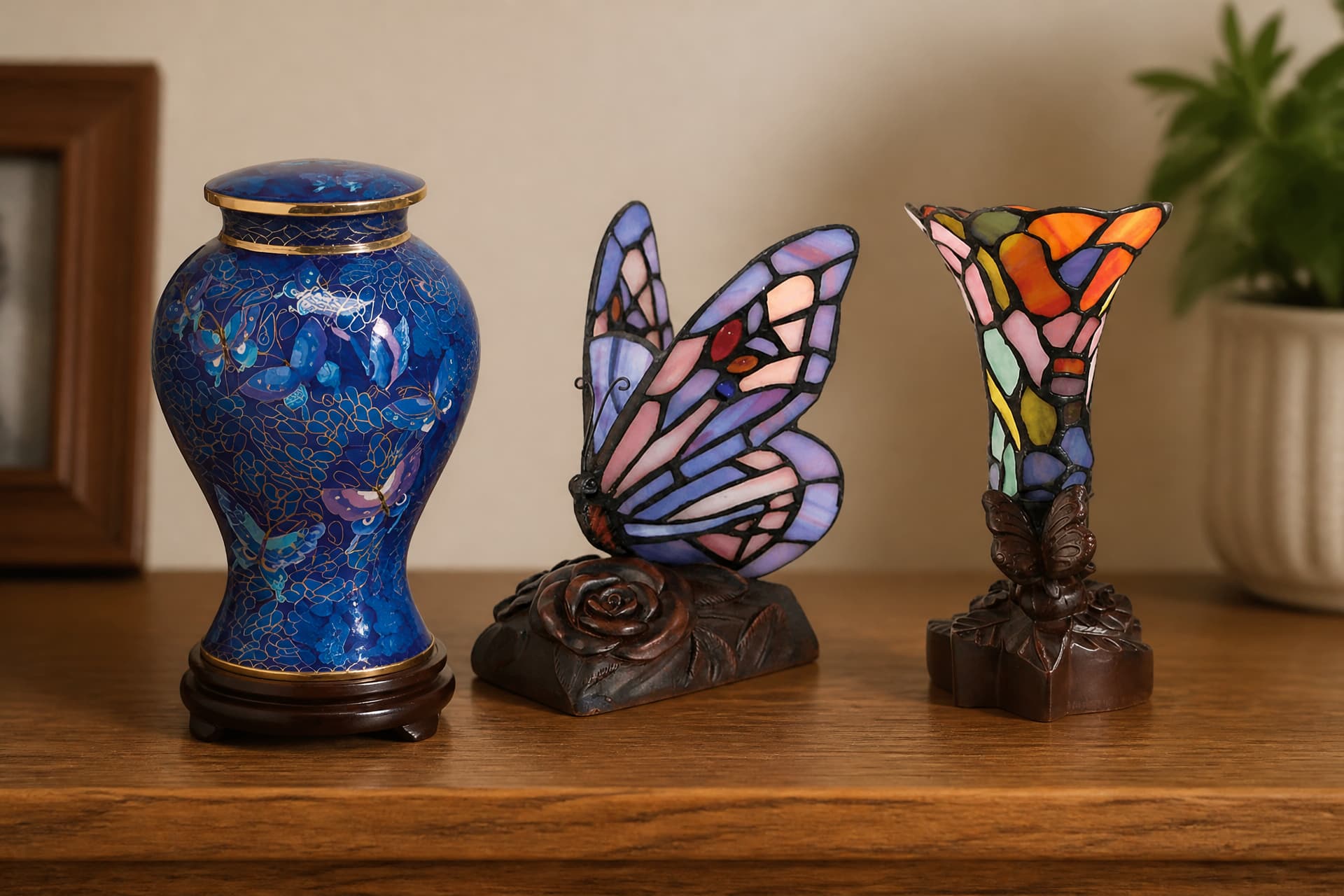
The most direct version is the vessel itself. A butterfly urn puts the motif on the thing that holds the ashes — cast into metal, painted onto ceramic, cut into wood — so the symbol is not an accessory to the memorial, it is the memorial. Where a family divides the ashes, the same motif runs down through the small keepsake sizes and into pendants, and a butterfly necklace meaning something specific to one person is worth a great deal more than a generic one.
The motif is handled very differently by material. Cloisonne sets the wings in enamel between threads of wire; leaded glass throws colour when light passes through it; the sculpted bases carry the butterfly in bronze-finished metal. Families almost always know which one is right within a few seconds of seeing them side by side. Products from left to right: Indigo Butterfly Cloisonne Urn, Harmony Butterfly Keepsake Urn and Summer Bloom Keepsake Urn.
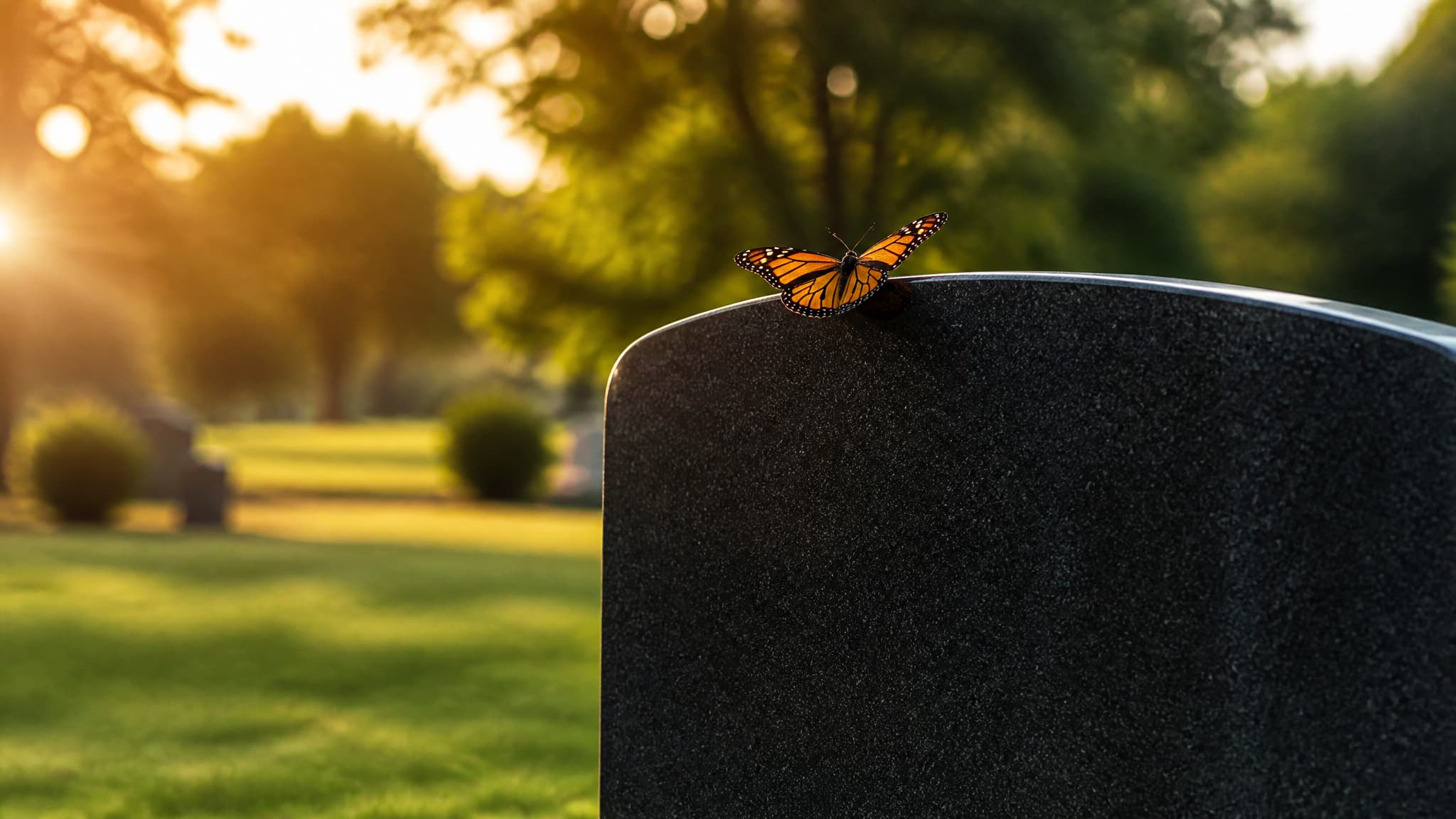
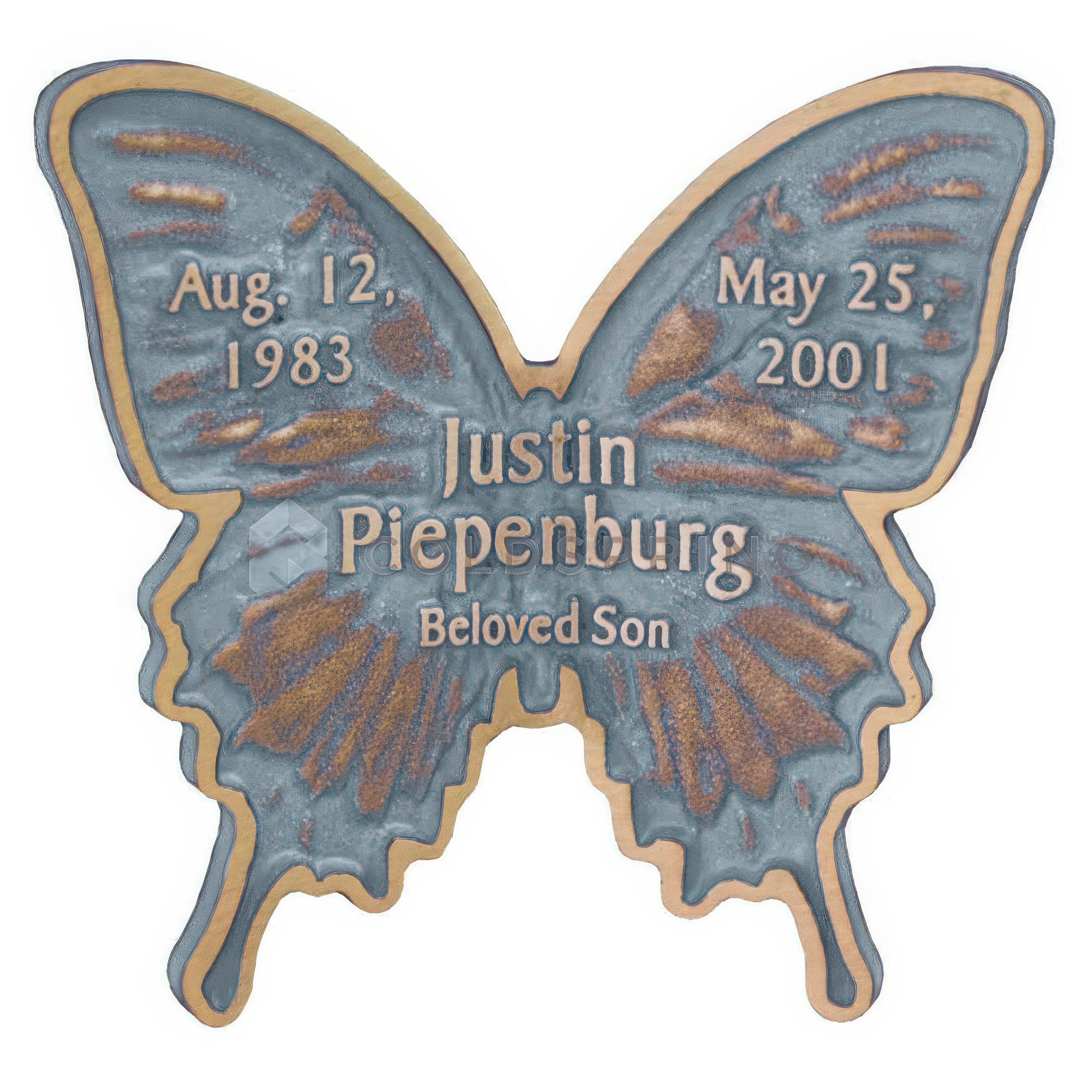
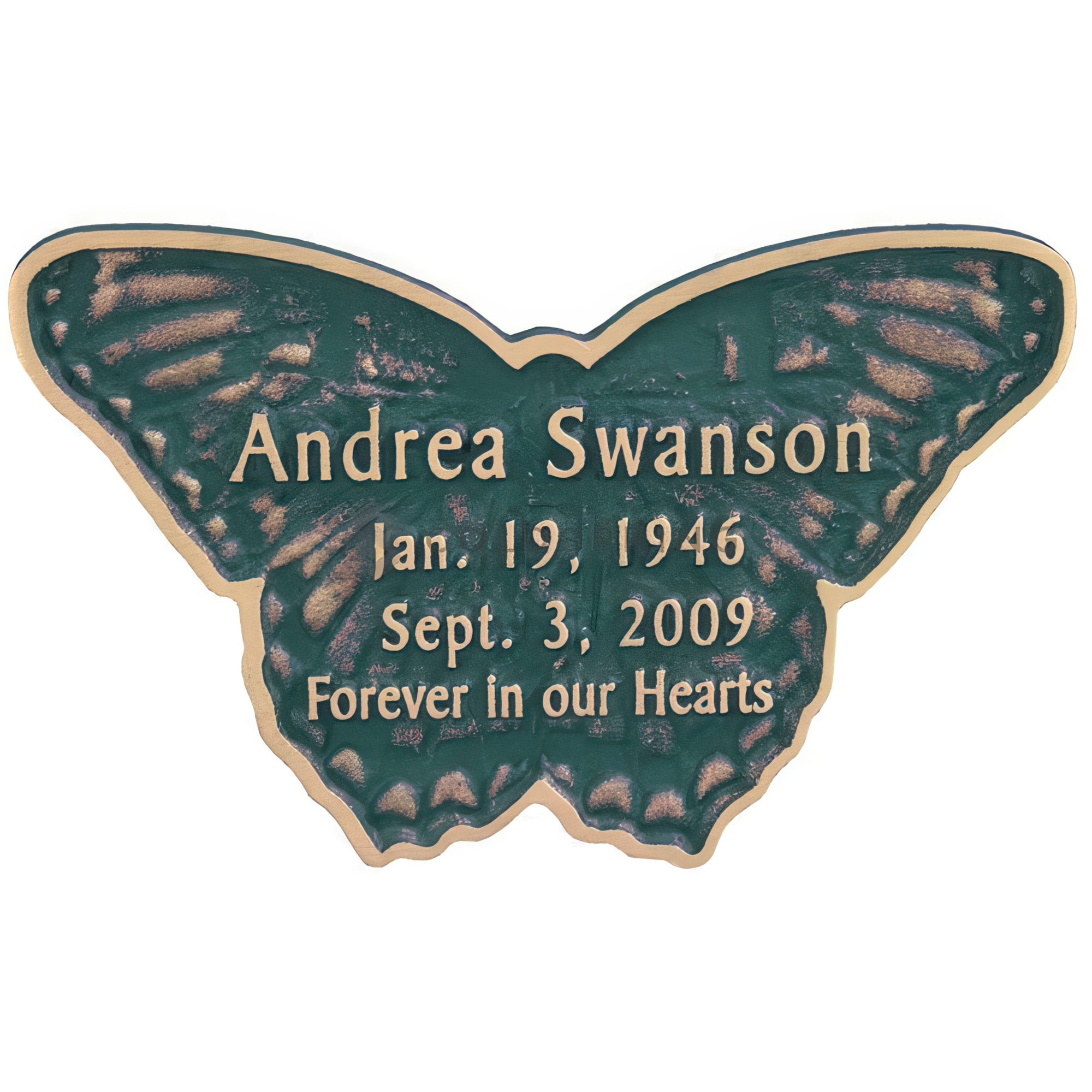
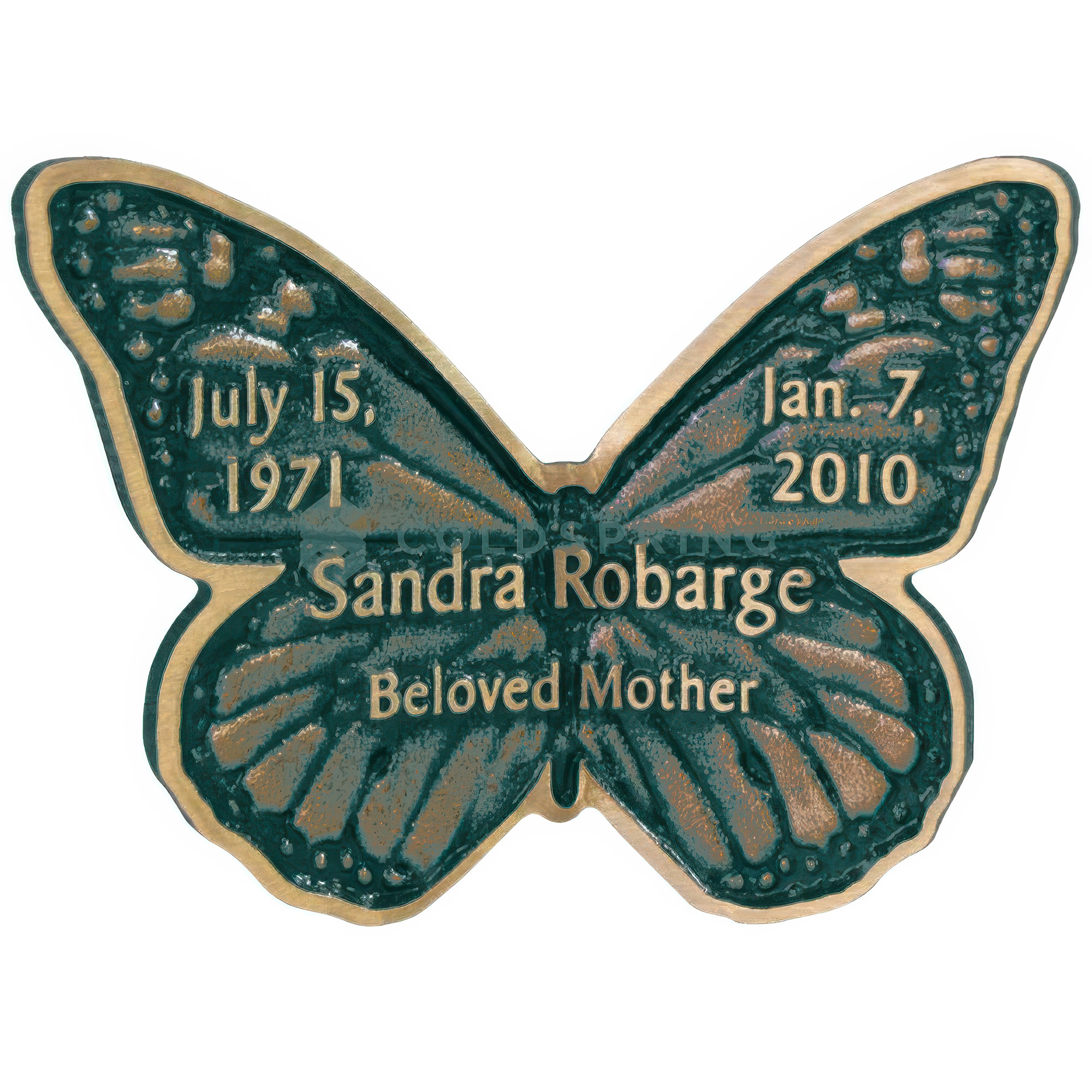
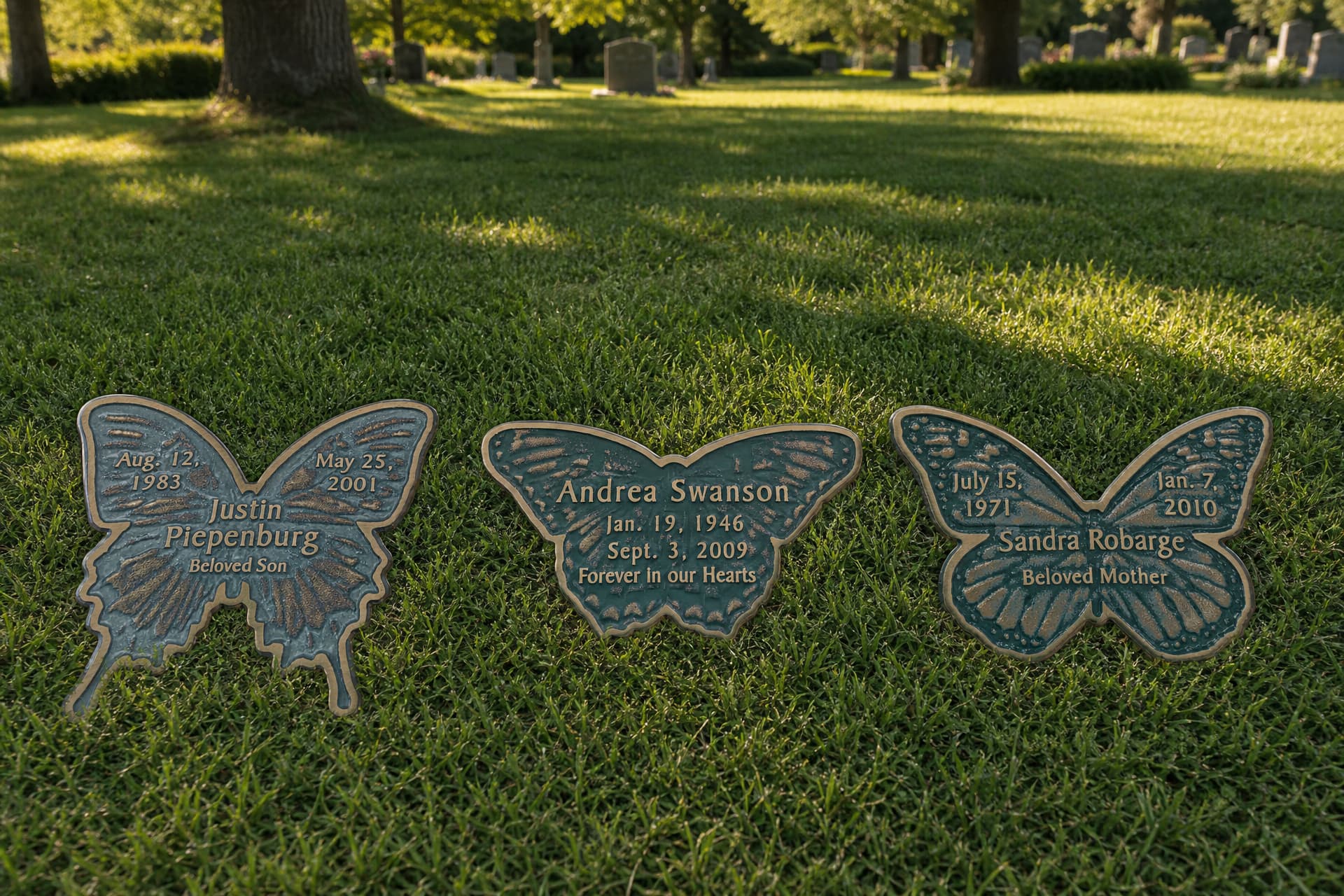
At the grave the symbol goes outdoors. A butterfly tombstone ornament — a cast-bronze butterfly, engraved with a name and dates if you want them, that mounts onto the stone or lies in the grass beside it — holds up to weather and does not need watering, which is more than most graveside tributes manage. Every cemetery has its own rules about what may be left on a plot, so ask the office before buying anything you cannot take home again. Carved into the stone itself, the butterfly joins a much older vocabulary; our guide to headstone symbols and their meanings covers what the markers on either side are saying.
Bronze weathers rather than fades, so a graveside butterfly looks the same in its fifth year as its first. Wing shape matters more than color here: at a distance the silhouette is all anybody reads, and the lettering is cast into the wings rather than added to them. Products from left to right: Baby Blue Bronze Swallowtail Butterfly, Biscay Bronze Admiral Butterfly and Biscay Bronze Monarch Butterfly.
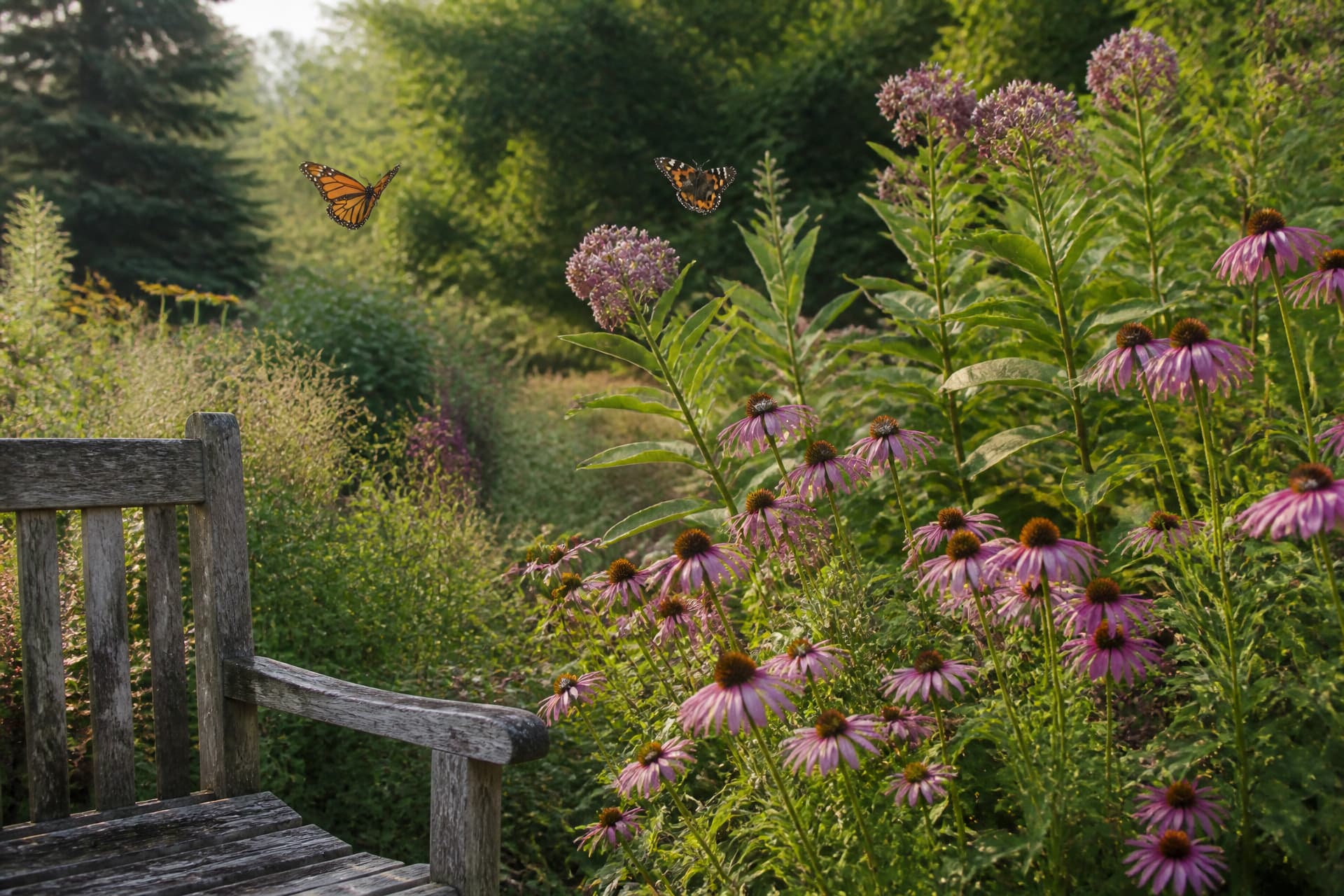
A planted garden is the version that keeps producing the original experience instead of a picture of it. Milkweed for monarchs, coneflower, joe-pye weed, something in flower across the whole season — plant it and the butterflies come back on their own, which is a different kind of memorial from anything that sits on a shelf. Our memorial garden ideas page covers how to lay one out.
This is the only memorial on the list that gets better without you. Milkweed is the one plant worth insisting on — monarch caterpillars eat nothing else, so a bed without it will be visited but never used.
Some people put it on their skin. A butterfly is among the most common memorial tattoo subjects for the same reasons it is among the most common urn motifs, and the decisions are the ones covered in our piece on cardinal memorial tattoos — a different animal, an identical set of questions.
And there is the release. A live butterfly release at a graveside can be the most memorable minute of the day when it works. Two cautions before booking one: releases are regulated in the United States and which species may be released varies by region, so ask the supplier what is approved where you are; and butterflies will not fly in cold or wet weather, so an outdoor release in the wrong month is a box of insects that stays put. What gives a butterfly memorial meaning is never the scale of the gesture. A release is not more meaningful than a planted seed.
Frequently Asked Questions
Do butterflies symbolize death?
Sometimes, and rarely on their own. In Greek, Japanese and Mexican tradition a butterfly is tied to the soul rather than to death directly, and that is a meaningful difference — a soul emblem at a funeral is about what continues, not about what ended. The one widespread reading that genuinely means death is Latin American, and it attaches to a moth rather than a butterfly.
Do butterflies symbolize anything, or is it wishful thinking?
They symbolize whatever the culture doing the looking has assigned them, which is how symbols work everywhere — a butterfly does not carry meaning the way it carries pollen. That is not the same thing as wishful thinking. The meaning is made by people rather than found in the insect, and it has been made, independently, in places with no contact with one another, for a very long time.
What color butterfly means death?
No color means death everywhere. Black is the closest thing to a consistent reading and even that is regional. White is a departed soul in several traditions and a bride in others, while yellow, orange and blue readings vary so widely that they cancel each other out. If a particular color mattered to the person you lost, use that one — it will mean more than any inherited rule.
Is it a sign if a butterfly lands on you?
Butterflies land on people for salt. Warm skin at a summer graveside is close to ideal, and the species that do it — red admirals especially — will do it to a stranger at a picnic just as readily. Knowing that spoils nothing. Whether it was a sign is a question about you rather than about the insect, and nobody else gets a vote on it.
Should we do a butterfly release at the funeral?
If the weather is right and the family wants it, yes. Check three things first: whether the cemetery or venue permits it, whether the species is approved for release where you live, and what the forecast says. Cold or rain and the butterflies stay in the box. A supplier who cannot answer the first two questions is the wrong supplier.
What to Do With It
Nothing on this page can tell you whether the butterfly at your mother's graveside was your mother. Folklore does not answer that question, and the traditions that take it most seriously — the ones in Michoacán, in Japan, in that old Greek word — do not really argue the point either. They behave as though it were true, on certain days, in certain places, and let the behavior carry the weight.
What you can decide is what to do with it. Plant something that brings them back on their own schedule. Put the motif where you will actually see it: on the stone, on the vessel, on a pendant you wear on the days that are hard. The families who get the most out of this symbol are not the ones who settled the metaphysics. They are the ones who gave it somewhere to live.
If you are at the stage of choosing a vessel, it is worth looking at the butterfly designs beside the plain ones. For some families the motif is the entire reason a particular piece feels right, and for others it is a decoration on a decision already made. Either answer is a good answer. The symbol does not need your agreement to have meant something.