🏬Supersize Online Funeral Retailer🪦1000's of Headstones⚱️Over 10,000 Cremation Urns⚰️Caskets Overnight Delivery🛒Funeral & Memorial Superstore🚚FREE Shipping on ALL Orders👨👩👧👦Helping Families for over 20 Years💰Lowest Price Guarantee🏬Supersize Online Funeral Retailer🪦1000's of Headstones⚱️Over 10,000 Cremation Urns⚰️Caskets Overnight Delivery🛒Funeral & Memorial Superstore🚚FREE Shipping on ALL Orders👨👩👧👦Helping Families for over 20 Years💰Lowest Price Guarantee
🏬Supersize Online Funeral Retailer🪦1000's of Headstones⚱️Over 10,000 Cremation Urns⚰️Caskets Overnight Delivery🛒Funeral & Memorial Superstore🚚FREE Shipping on ALL Orders👨👩👧👦Helping Families for over 20 Years💰Lowest Price Guarantee🏬Supersize Online Funeral Retailer🪦1000's of Headstones⚱️Over 10,000 Cremation Urns⚰️Caskets Overnight Delivery🛒Funeral & Memorial Superstore🚚FREE Shipping on ALL Orders👨👩👧👦Helping Families for over 20 Years💰Lowest Price Guarantee
The forever in our hearts meaning is simpler than most people expect, and the simplicity is the point: it is a promise made by the people who are still here. It does not say the person is at peace, or in heaven, or watching. It says that the people who loved them intend to carry them, and that they do not expect to stop.
That is a different kind of statement from most memorial wording, and it is worth knowing which kind you are choosing before you pay to cut it into granite. This page covers what the phrase claims, the difference between our and my, why forever and always both work, and where four words physically fit once you are looking at a real surface. It sits inside our death symbolism guide, which covers the wider vocabulary of symbols and phrases families reach for after a death.
One thing to say early, because a lot of people arrive here quietly worried about it: yes, it is a common phrase. It is on a great many stones. Common is not the same as empty, and a phrase becomes common by being right for a lot of families rather than by being lazy.
What the Phrase Actually Claims
Most memorial wording points at the person who died. Rest in peace is a wish for them. Gone but not forgotten is an argument with the fact of it. In loving memory is a dedication, the way a bench or a scholarship is dedicated — the words that follow name who the thing is for.
This phrase points the other way. It is about the mourners. It makes no claim about an afterlife, no claim about where the person is now, and no claim that anybody is watching over anybody. It commits the living to something instead. That is why it turns up in families of every faith and none: there is nothing in it to disagree with.
The second-person version makes the direction obvious. When a card or a stone says you are forever in our hearts, the sentence is addressed to the person who died — spoken to them rather than about them. It is the same words rearranged into direct address, and families who choose it are usually the ones who talk to the person out loud at the graveside anyway.
It also has a family resemblance to the dedication phrases without being one, which is a distinction worth understanding before you commit; our page on in loving memory versus in memory of covers what those two are doing and when each is correct.
Shop Granite Markers Engraved Forever In Our Hearts
Flat ground markers and companion stones carrying the phrase
The pronoun is the first real decision, and it gets made carelessly more often than any other part of the wording.
Our commits everybody. On a shared marker, in a shared plot, on a stone that a whole family visits, that is usually right and often moving — it is the family speaking with one voice, which is a thing families are rarely able to do in the weeks after a death. But it does speak for people whose names are not on the stone. If there is a sibling who has not been consulted, or a second marriage, or an estrangement nobody wants to name at the funeral home, our quietly includes them.
My commits one person, and it can afford to be more particular because of it. The forever in my heart meaning is not a smaller version of the plural — it is a different sentence, and a truer one on an object that belongs to one person. A pendant, a bracelet, a small keepsake on a shelf: those are singular objects, and singular wording sits naturally on them. Nobody reads "in my heart" on a necklace and wonders who my is.
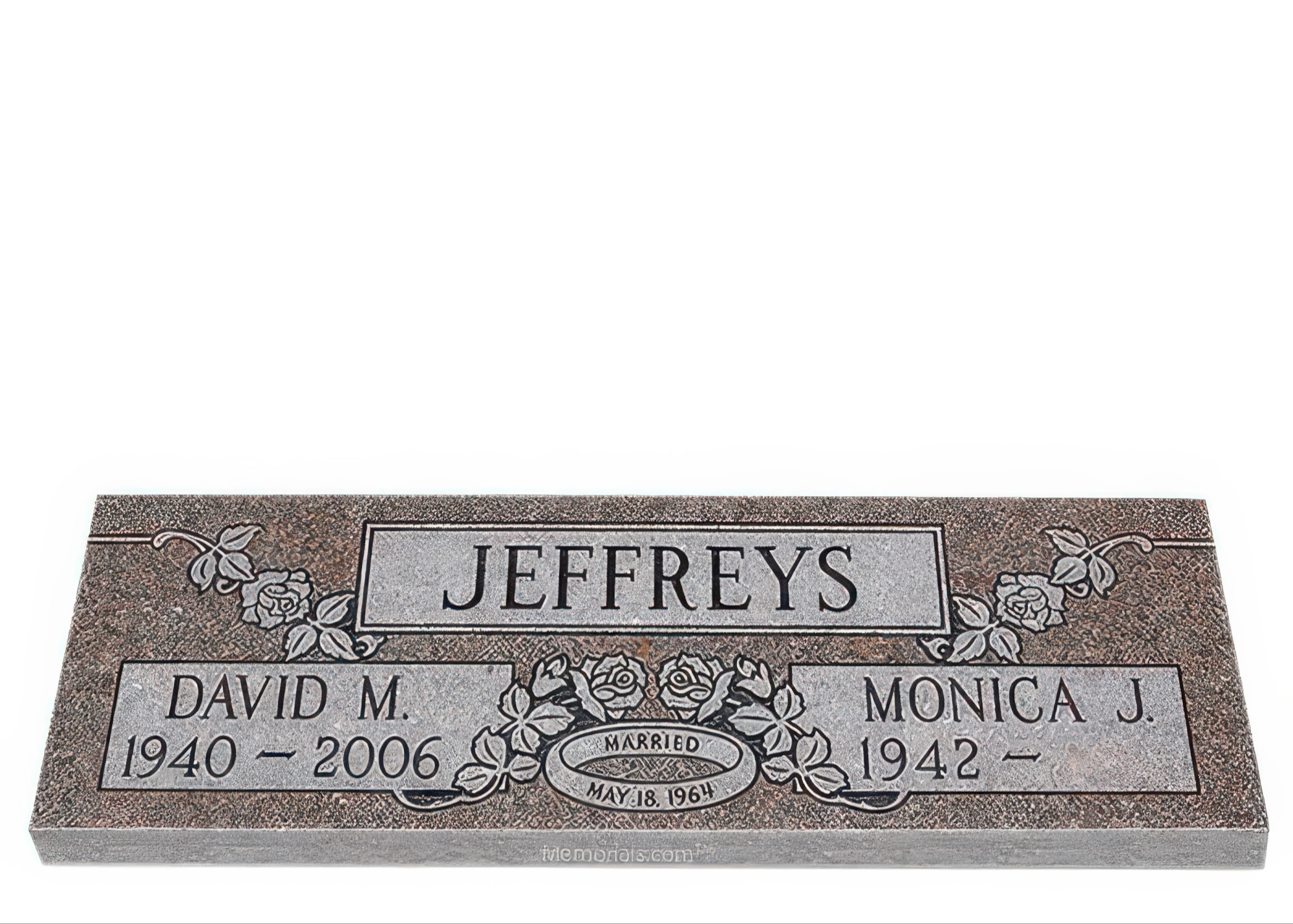
Two situations change the answer. On a companion memorial, where two people share one stone and one of them is still alive, the pronoun has to survive being read by the survivor for years — our guide to a shared urn for two covers the same problem for a shared vessel, and the reasoning transfers. And on a spouse's memorial, my is frequently the honest choice even on a full-size stone, because the person paying for it and the person visiting it are the same person; our page on inscriptions for a husband or wife works through that wording in detail.
Forever, Always, and the Order of the Words
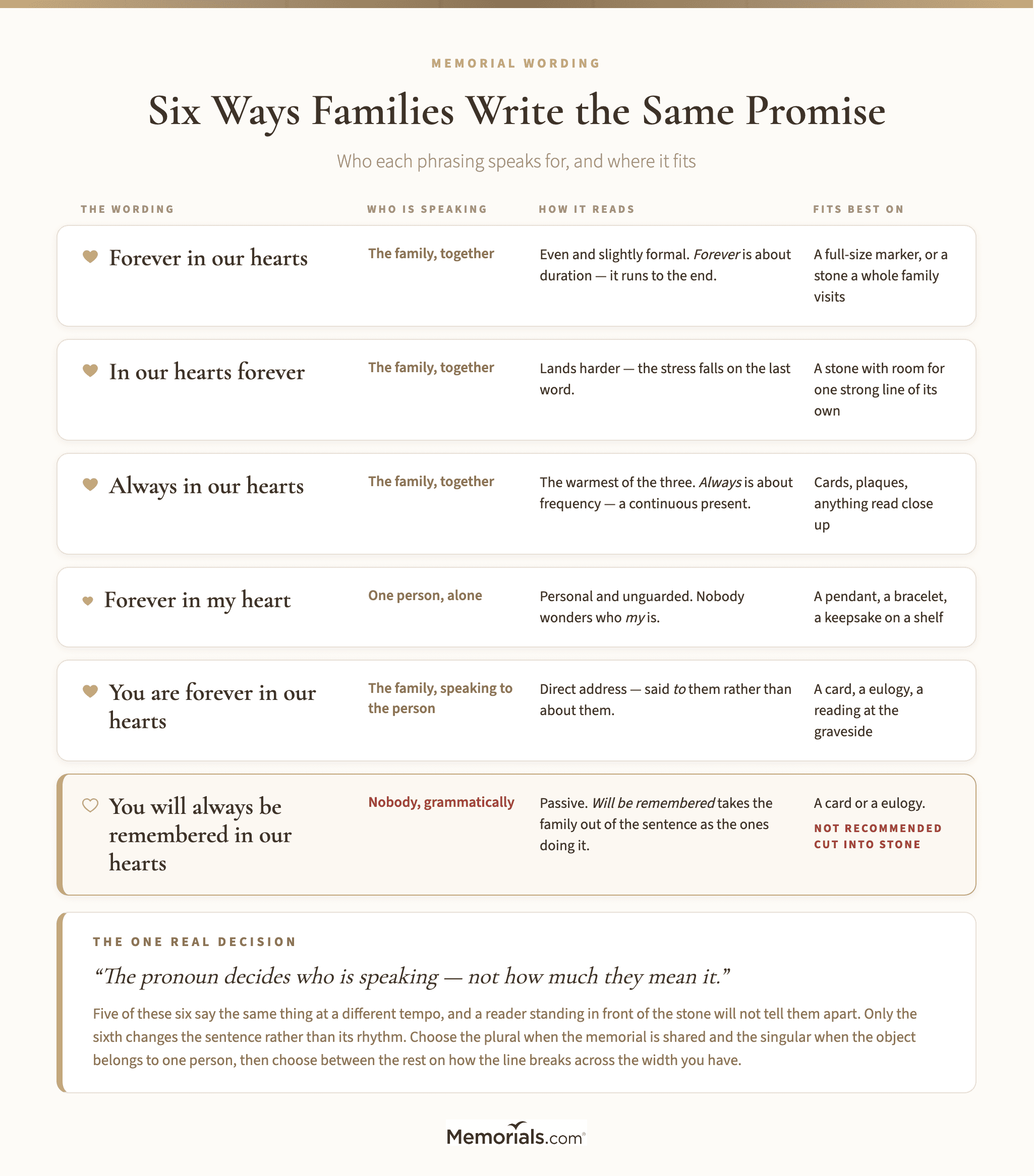
People search this family in every possible arrangement — in our hearts forever, always in our hearts meaning, forever in our hearts quote — and the honest finding is that a reader standing in front of the stone will not distinguish between them. All of them say the same thing.
There is a shade of difference if you want one. Forever is about duration: it runs to the end and does not stop. Always is about frequency: every moment, without a gap. So always in our hearts is very slightly the warmer of the two, because it describes a continuous present rather than a long future, and forever in our hearts is very slightly the more formal. That is a real distinction and it is a small one. Choose on rhythm and on how the line breaks across the width you have.
Word order does the same small work. In our hearts forever puts the emphasis on the last word and lands harder; forever in our hearts front-loads it and reads more evenly. Read both out loud before ordering, because that is how they will be read — memorial wording is nearly always read aloud at some point, at the graveside or at the dedication.
The long form is where a genuine caution applies. You will always be remembered in our hearts meaning is what people are asking about when they encounter the extended version, and the answer is that it means exactly the same thing in seven more words. The passive construction — will be remembered — takes the family out of the sentence as actors and turns the promise into something that happens by itself. On a card it is fine. Cut into stone it reads like committee language, and stone is unforgiving about that.
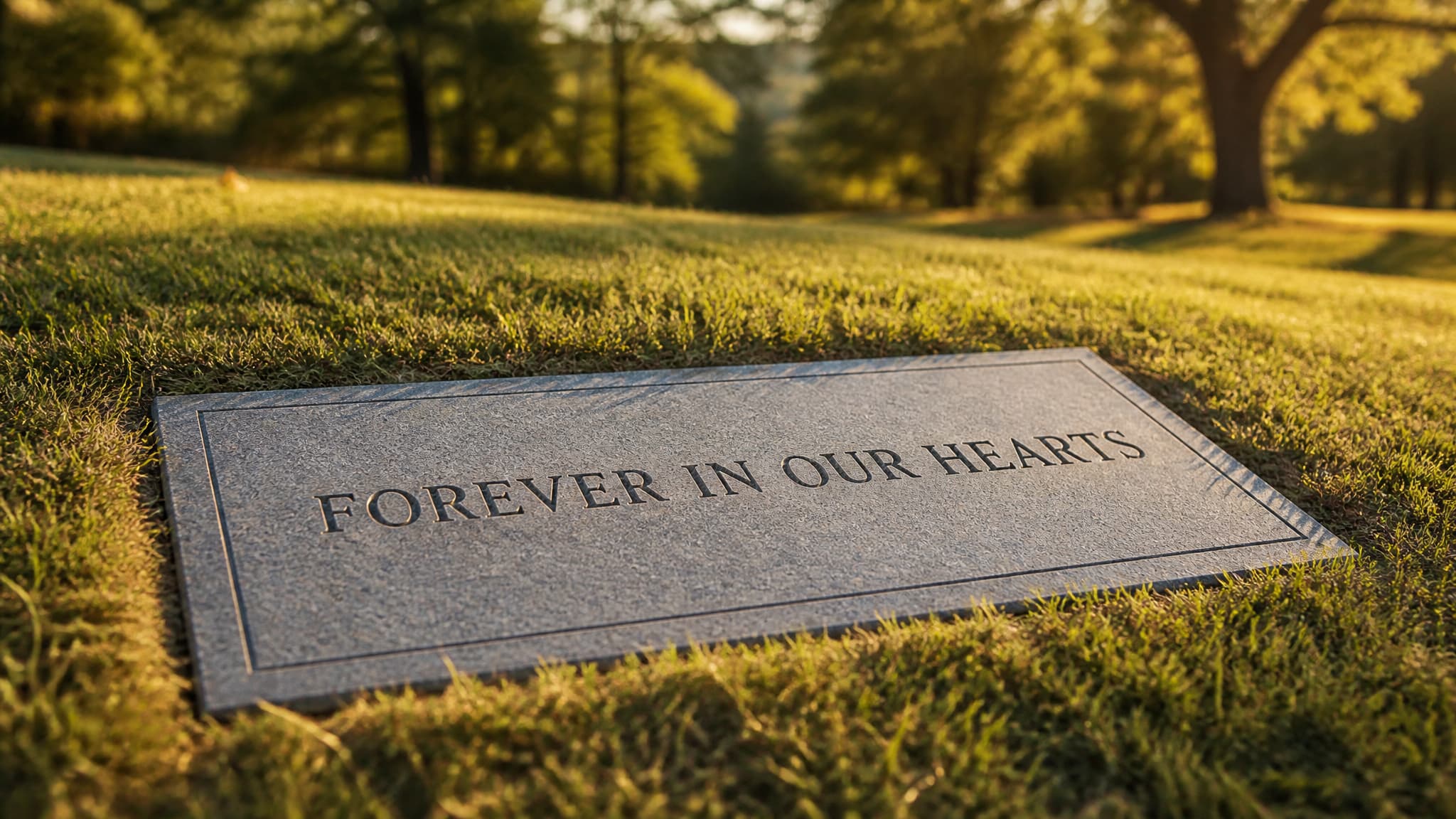
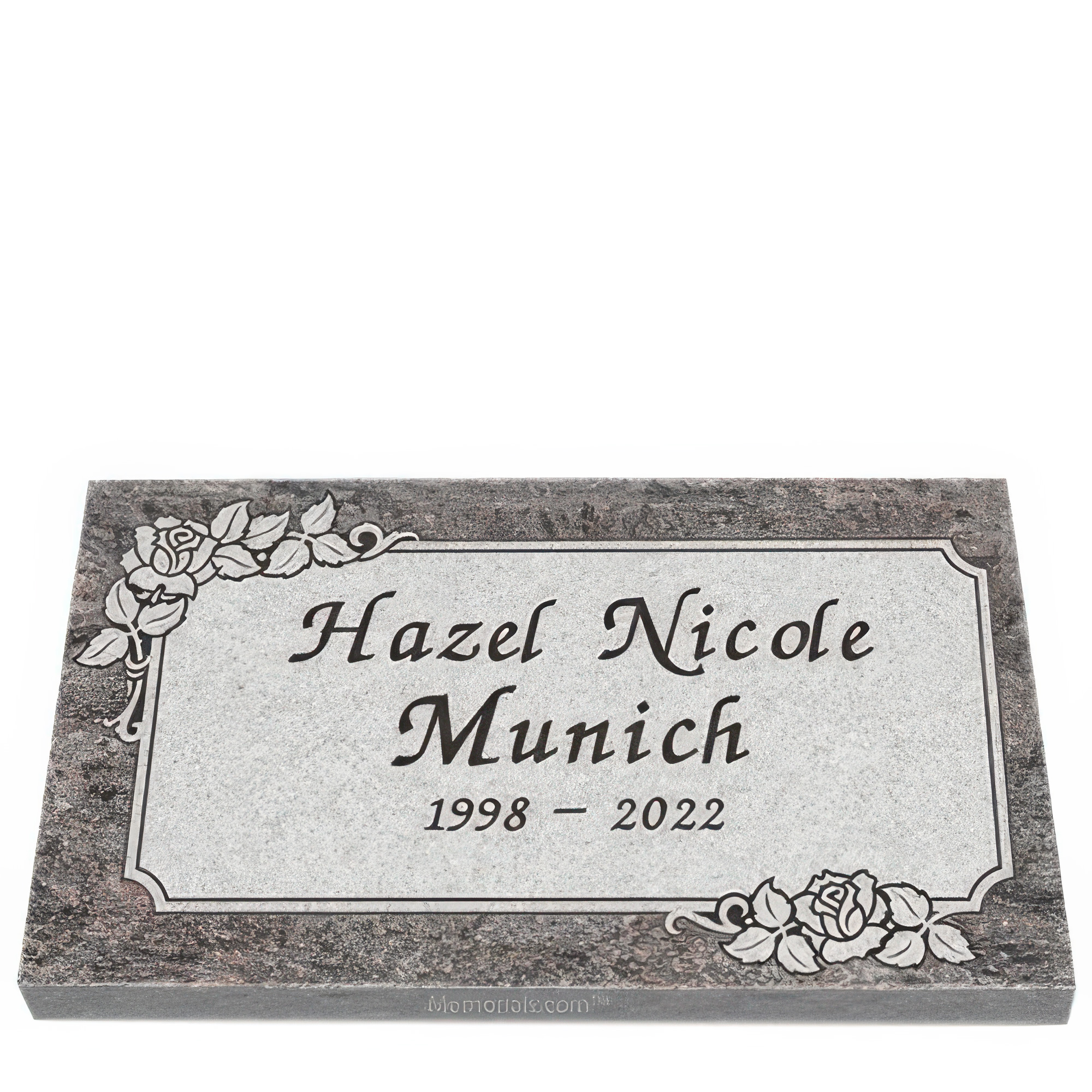
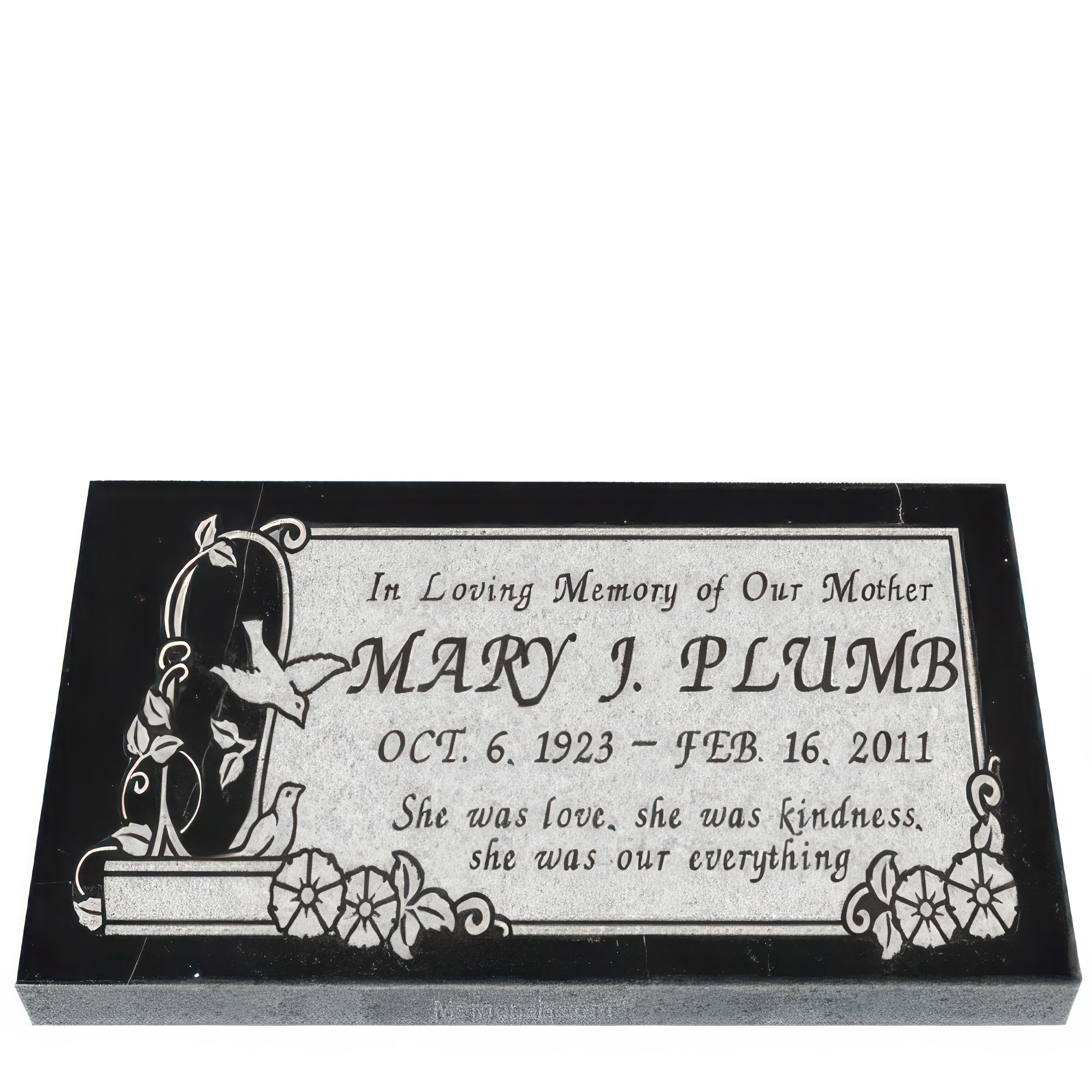
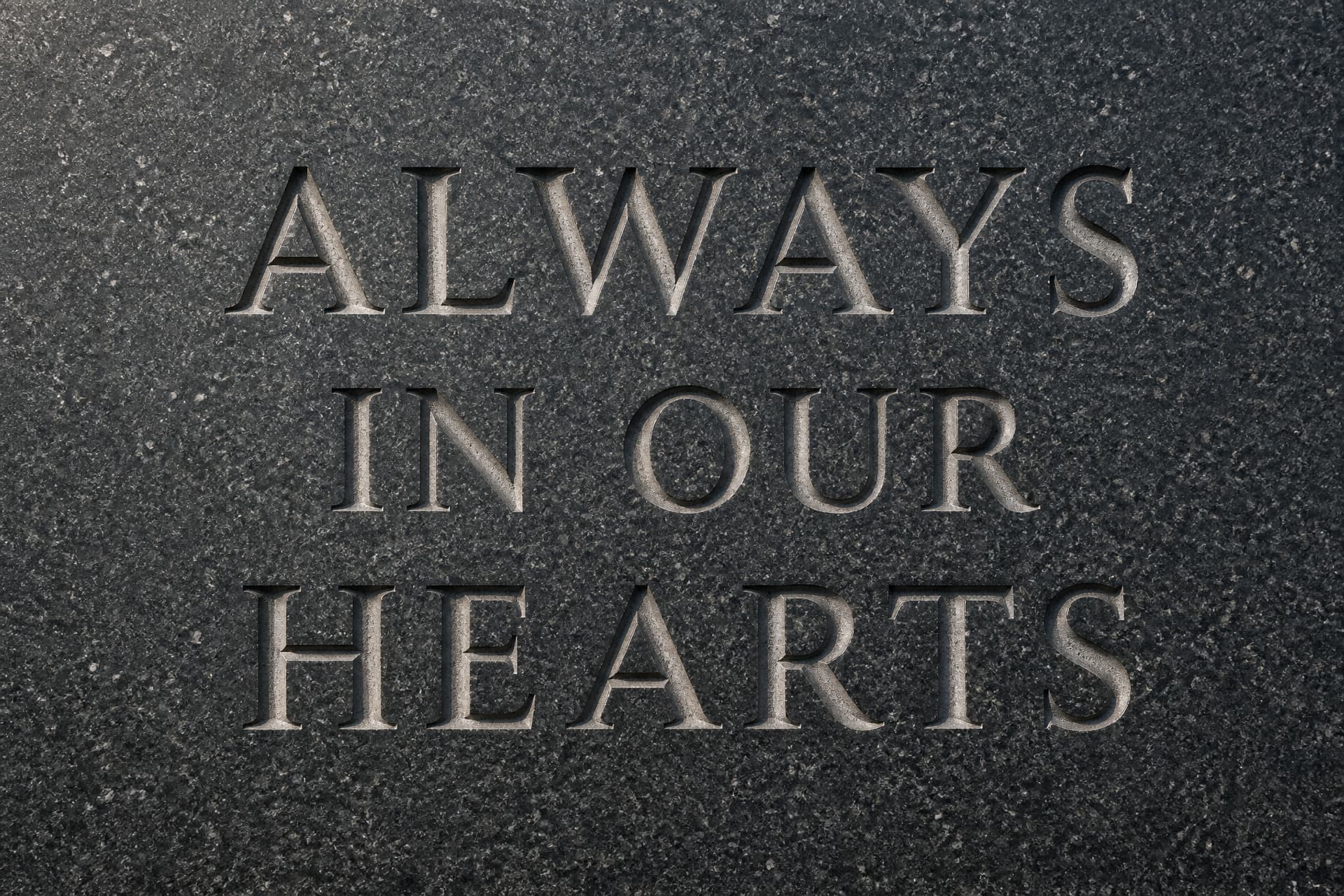
Sandblasted letters are cut, not printed — each one a shallow frosted trough sunk below the polished face. On a dark polished stone like this they read by contrast; on a weathered gray one they read by shadow alone, which is why lettering that looks crisp on a screen proof can look thin in the ground at noon, and why monument dealers photograph their proofs in the late afternoon.
The six phrasings families actually choose between. The pronoun decides who is speaking, not how much they mean it; the passive form is the only one that changes the sentence rather than its rhythm, because it removes the family as the ones doing the remembering.
Where the Phrase Actually Goes
Wording is chosen on a screen and lives on an object, and the object has edges. This is the part most wording articles skip.
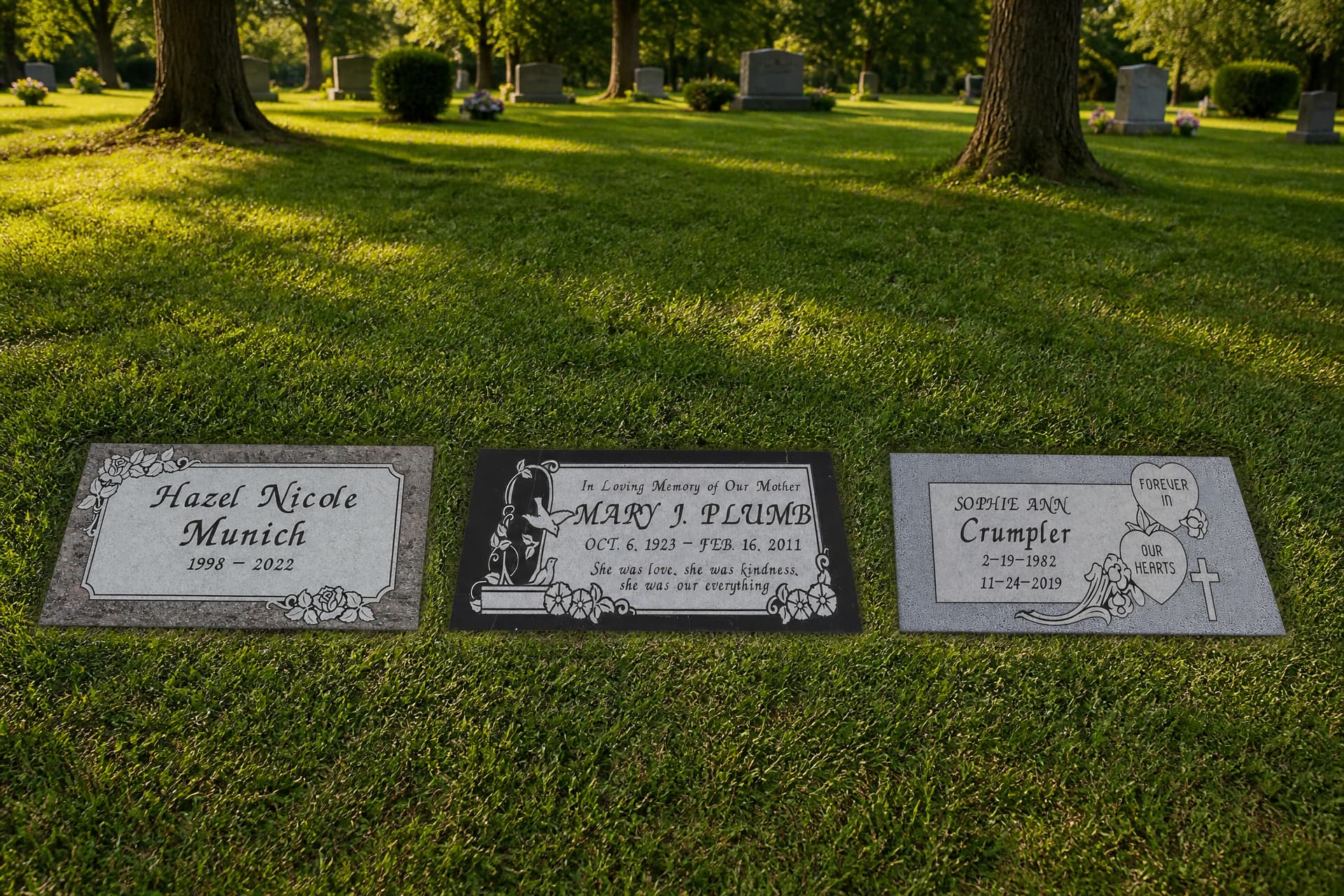
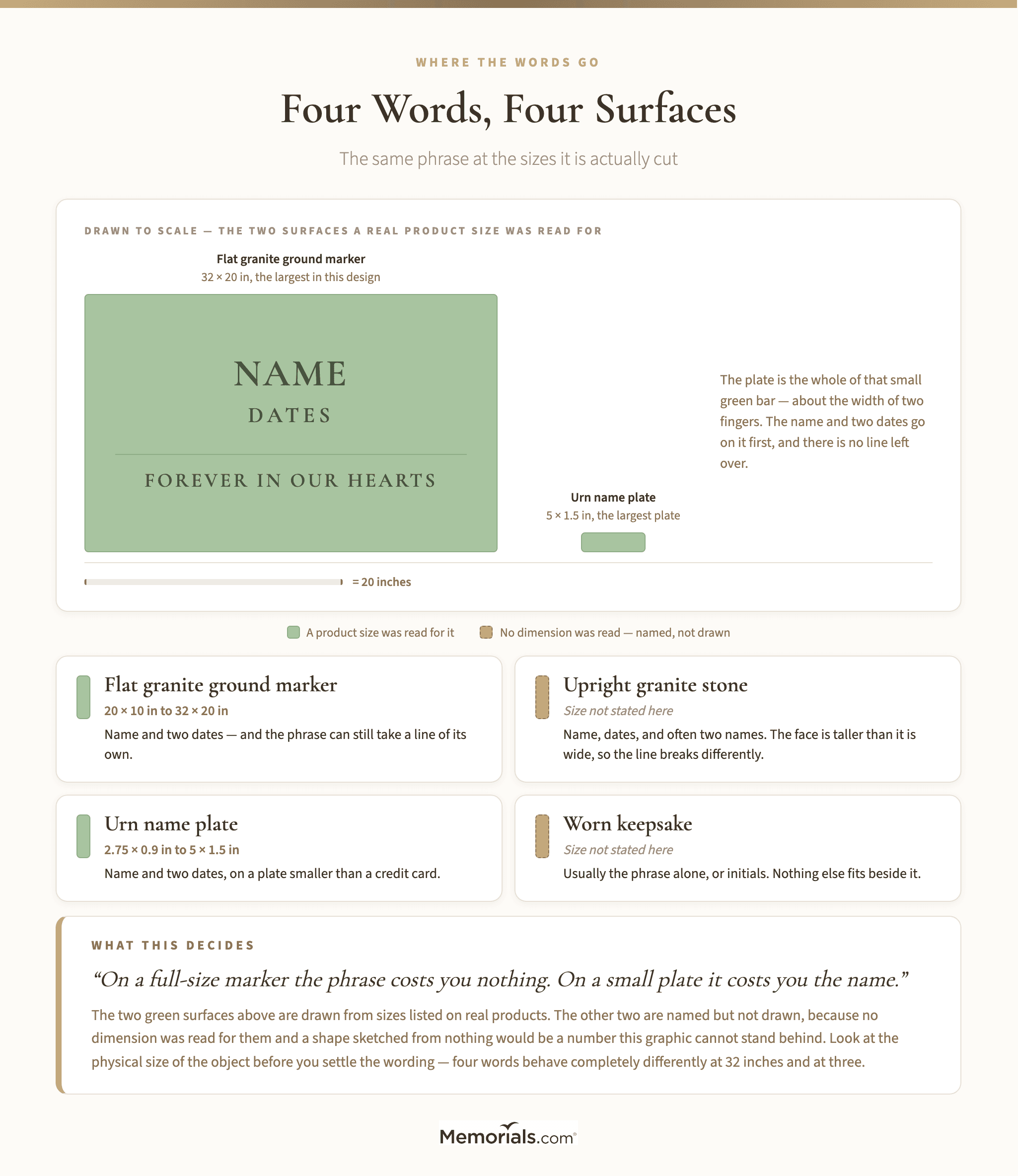
The largest surface is the ground marker: flat headstones in granite are the standard where a cemetery requires memorials to sit level with the turf so the grounds can be mowed over them, and in this design they run from 20 × 10 inches up to 32 × 20. Four words at that scale are comfortable — they can take a full line to themselves above or below the name without crowding anything. Granite holds a sandblasted letter for decades and the edges stay legible, which is why it remains the default for anything that lives outdoors.
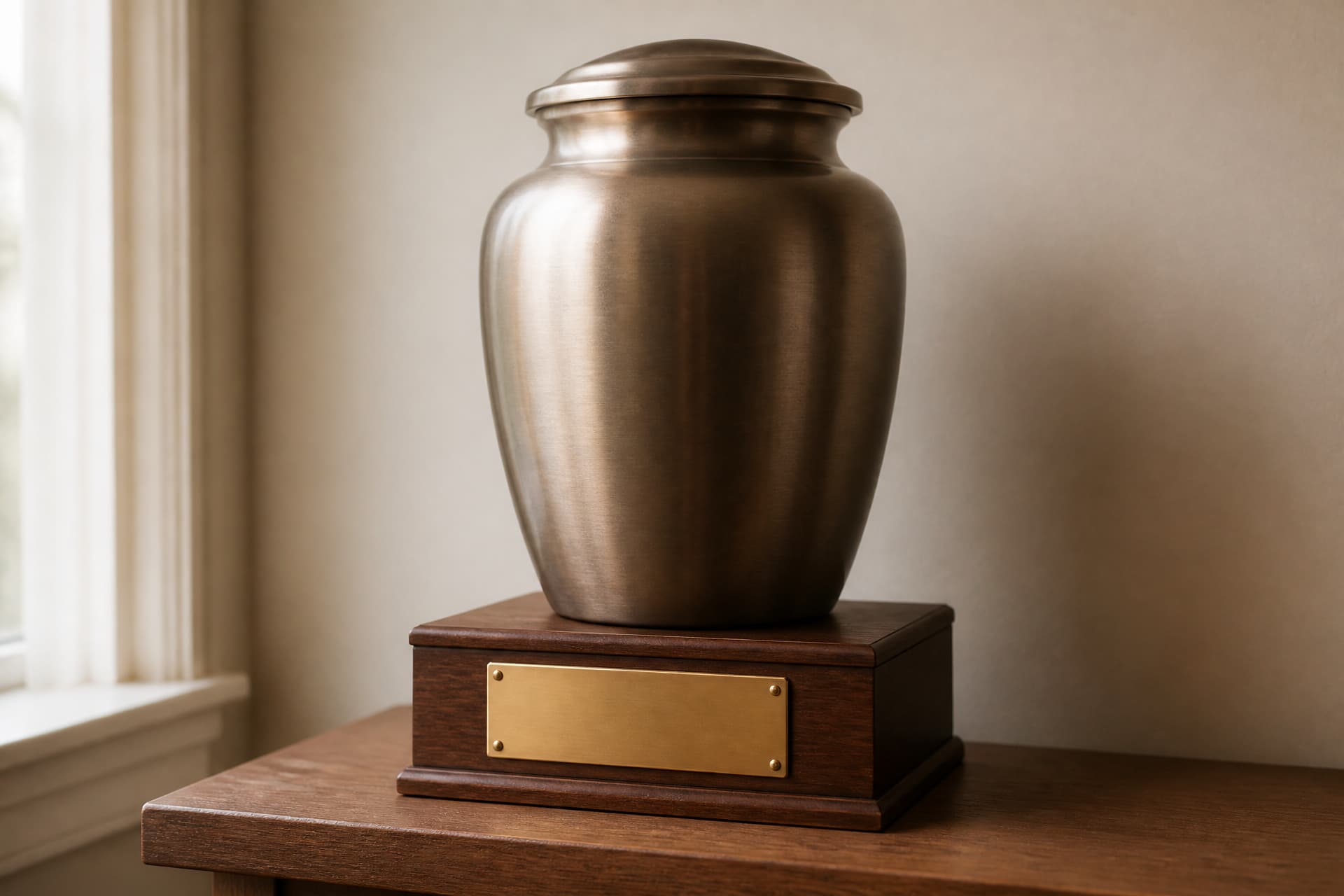
The smallest surfaces change the arithmetic completely. An urn name plate is a metal plate that mounts on the face of a vessel or on the base beneath it, and the plates in this range run from 2.75 × 0.9 inches to 5 × 1.5 inches. That is a strip of metal about the width of two fingers, and it has to carry a name and two dates before it carries anything else. On a plate that size, four words are a real cost. Many families put the name and dates on the plate and the phrase somewhere else entirely: on the vessel itself, on a keepsake, on the card that goes out with the notice.
A plate is the one surface where the phrase competes directly with the name. Engravers charge by the character on most small plates, so the wording decision and the invoice are the same decision here in a way they are not on granite.
The ground marker and the urn plate are drawn to scale against one another, at the largest size each is made in; the upright stone and the worn keepsake are named rather than drawn, because no measurement was taken for them. The marker gives four words a line of their own. The plate makes them compete with the name and dates, and anything worn is smaller again — which is why singular wording tends to migrate onto jewelry.
Two practical pages cover what happens after the wording is settled. If the memorial is a vessel rather than a stone, our guide to urn engraving ideas covers what can be cut into which material and what has to be a plate instead. And if you are budgeting, what headstone engraving costs explains why adding a line to an existing stone is priced very differently from ordering the line with the stone.
It Is Already a Product Name
Here is the fact nobody tells families, and it explains most of why the phrase feels so familiar: it is a stock design.
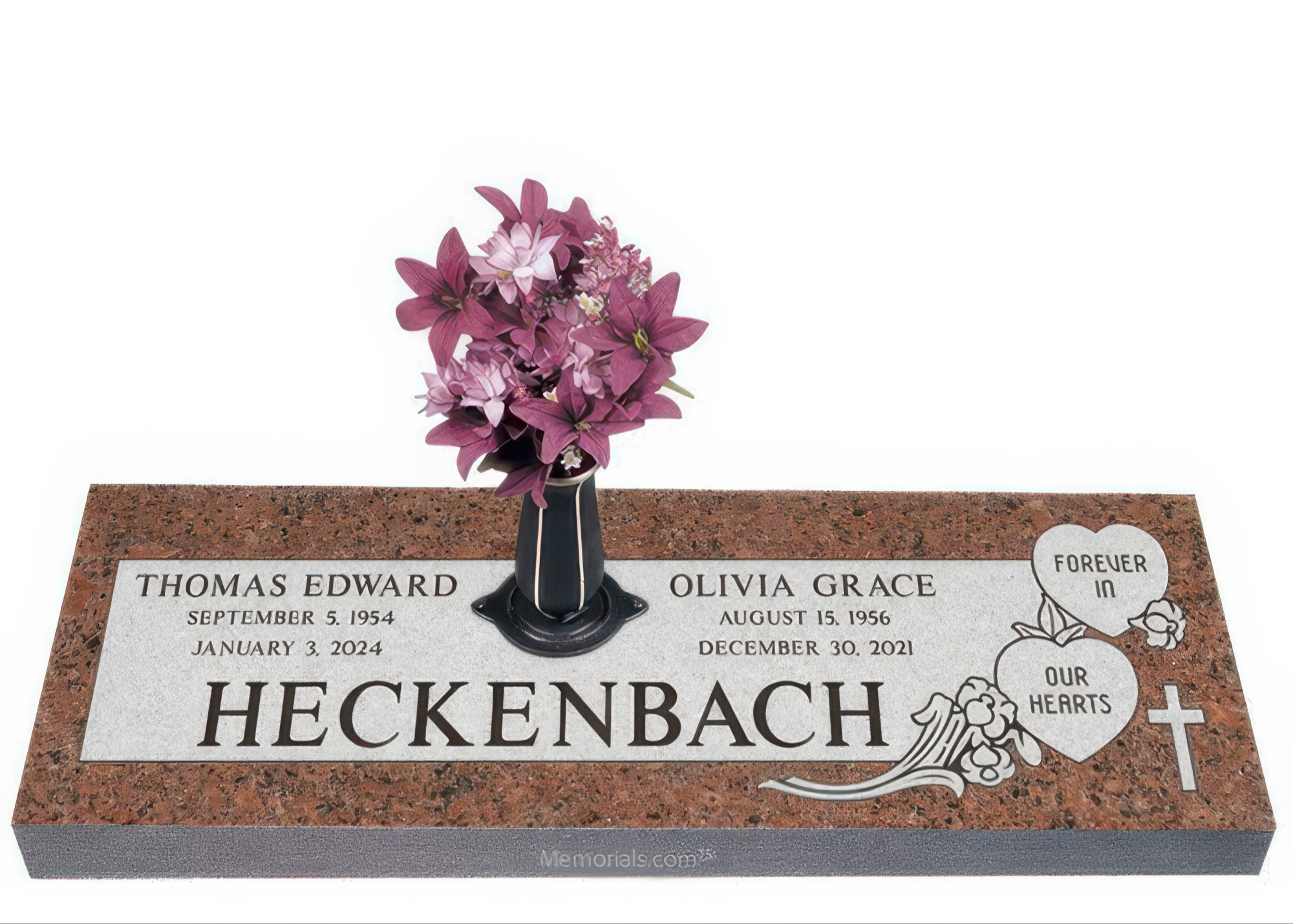
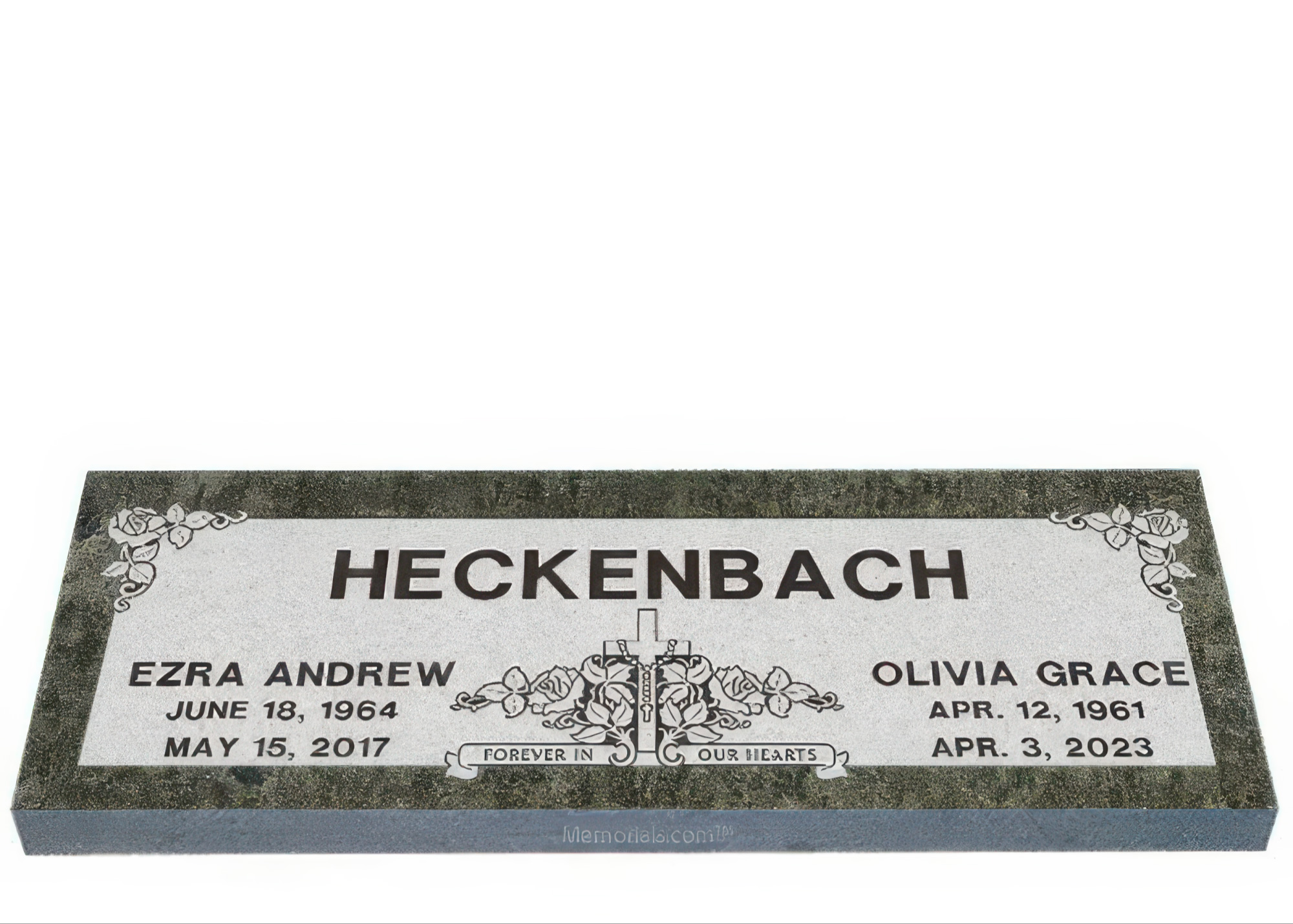
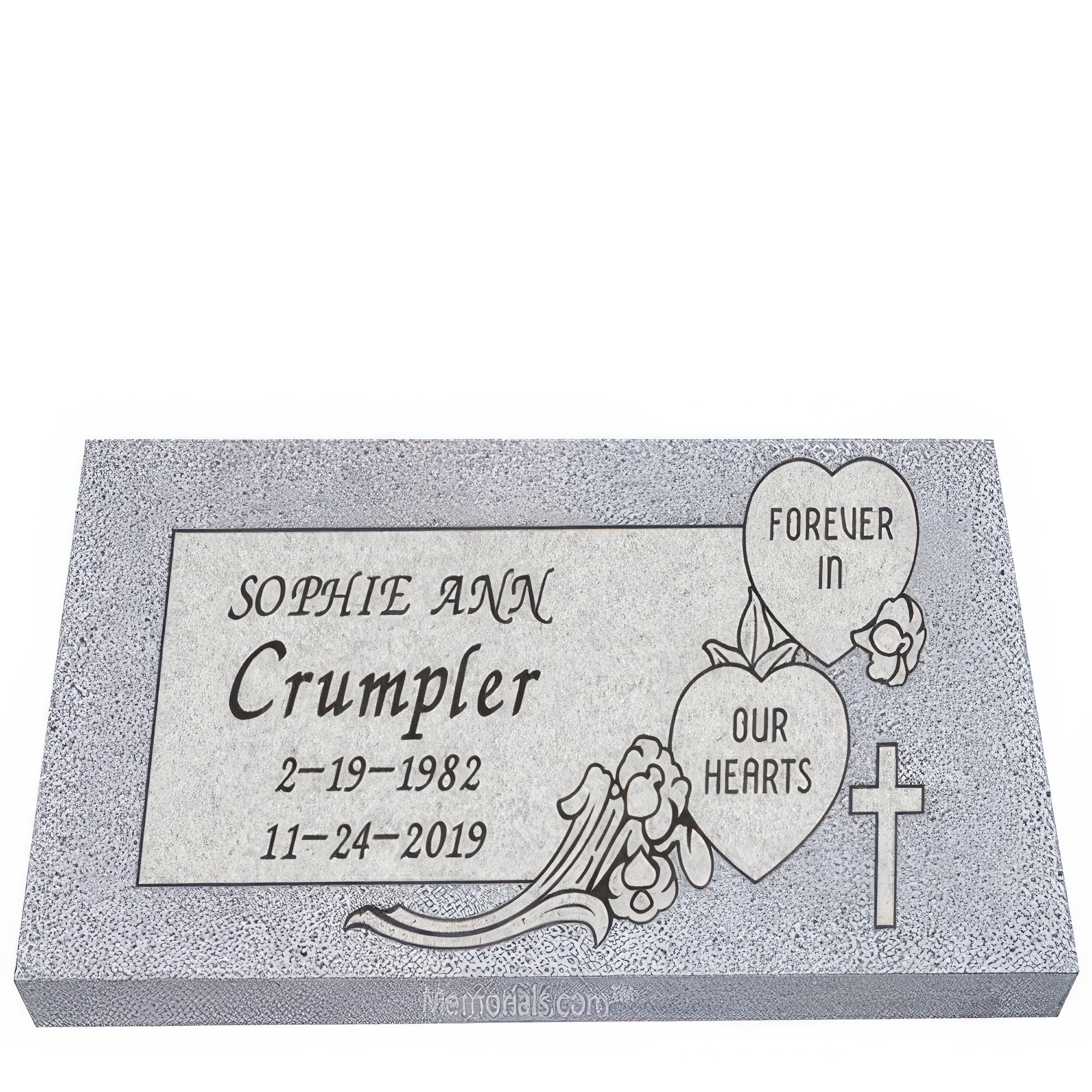
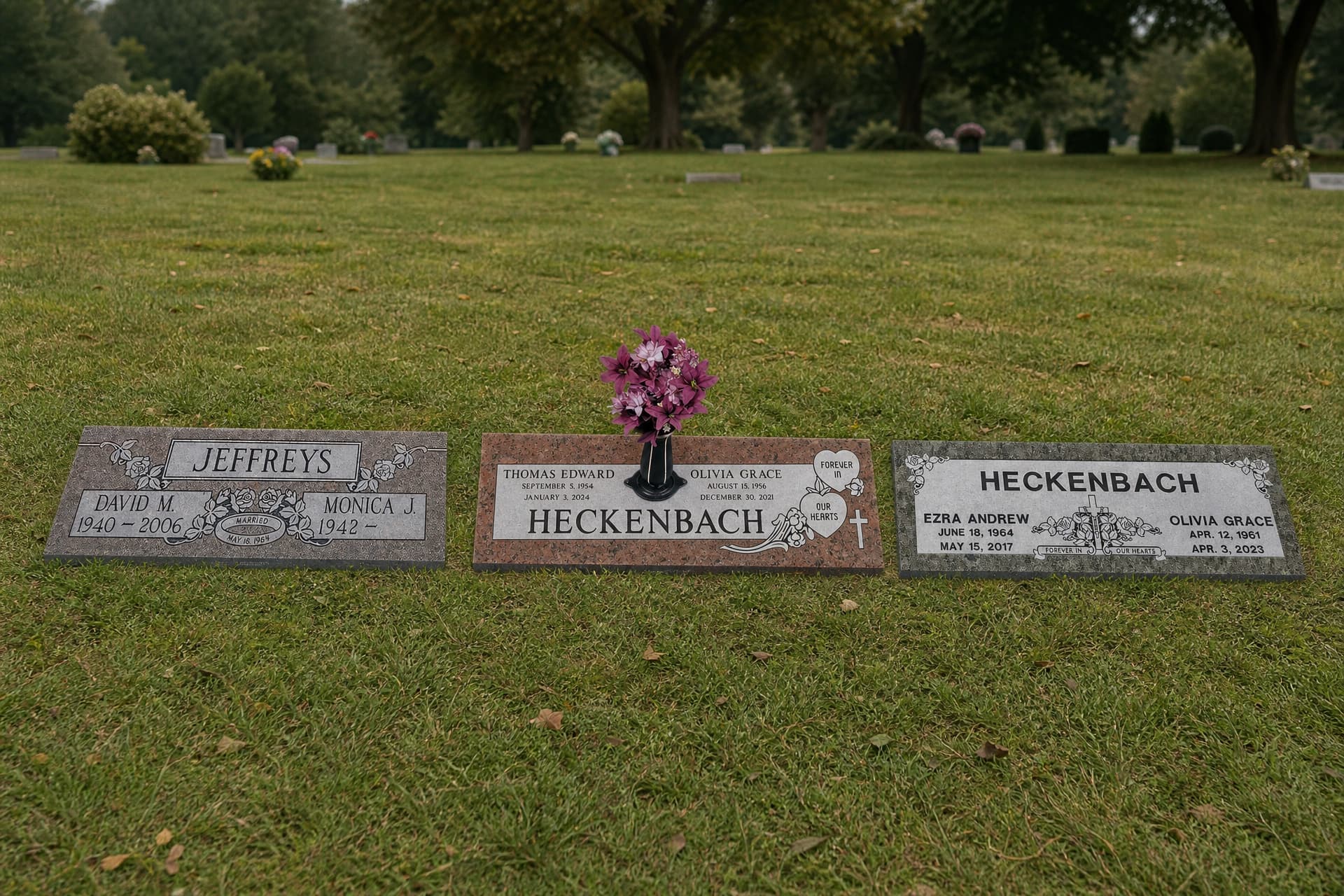
On our own site, Forever In Our Hearts is not a suggestion in a wording list. It is the name of a granite grave marker that ships in eight sizes, and there are separate versions for a child's marker and for an upright stone. The layout already exists — the phrase set in a chosen typeface, positioned, proportioned, with space left for the name and dates. You are not commissioning it. You are buying a design that a monument company drew once and has cut many times.
That has two consequences worth weighing. The first is money: stock lettering is generally cheaper than custom lettering, because the setup is already done. The second is the reason some families walk away from it — a stock design is, by definition, the same one other families chose. Whether that bothers you is a genuine question and not a rhetorical one. Some people find it comforting to be in company. Some want their mother's stone to say something no other stone says.
Neither answer is wrong, and it is a good idea to see the design cut in granite before deciding. Photographs flatten sandblasted lettering, and a phrase that looks generic in a catalog thumbnail often does not look generic at all standing in the grass in front of you.
The Heart Behind the Words
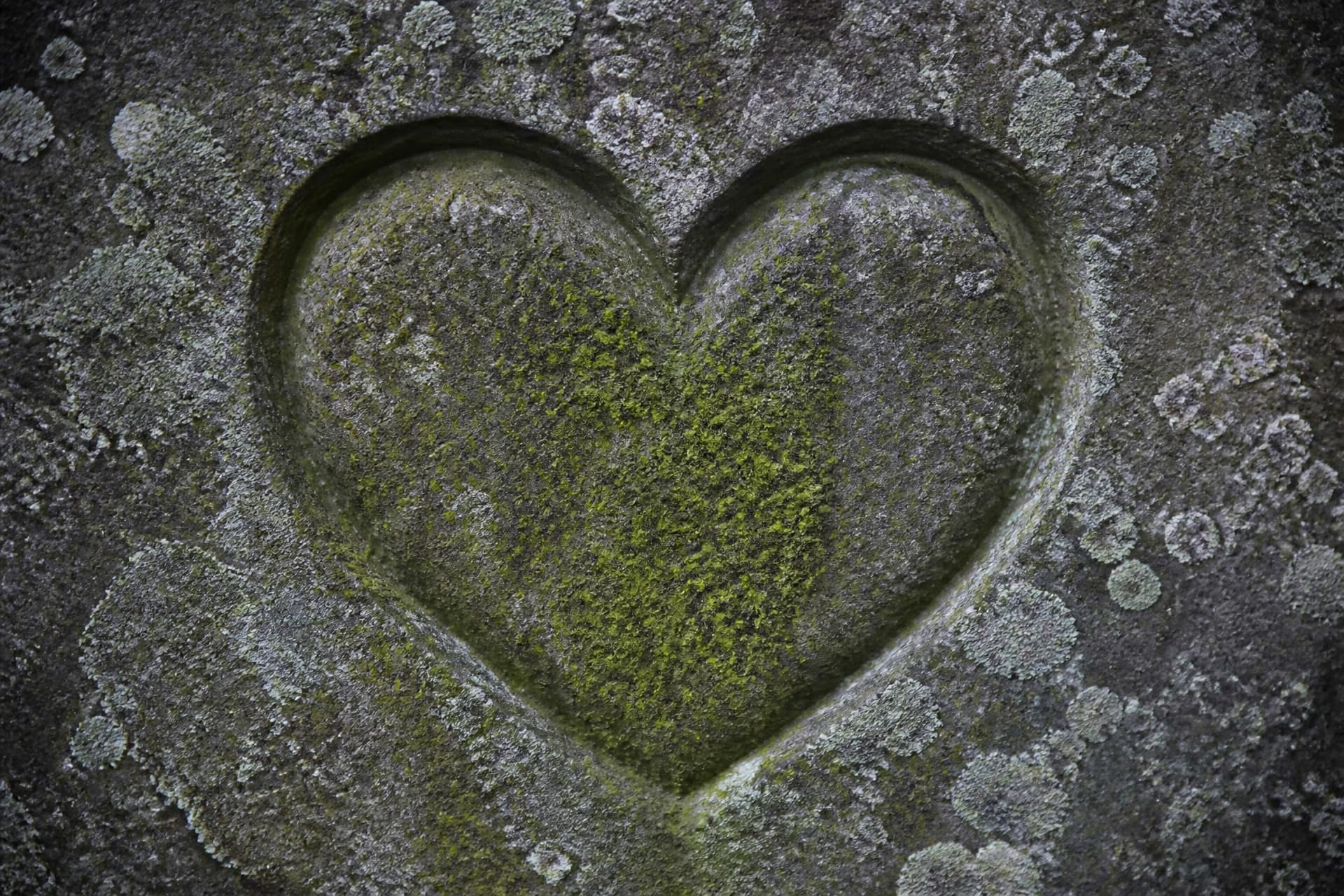
The heart in this phrase is a figure of speech, but it is also one of the oldest images carved into memorials, and the two reinforce each other. A heart cut into a stone means devotion and the bond that outlasts the person — the same claim the words make, in a form you do not have to read.
A carved heart weathers differently from lettering: the outline softens but the shape stays legible for as long as the stone lasts. On older memorials it is often the only element still readable at a distance.
Two hearts joined or overlapping is the standard treatment on a companion memorial, where it does the work the plural pronoun does in the wording. Our guide to headstone symbols and their meanings covers the wider carved vocabulary — the doves, the lambs, the clasped hands — and where each one came from.
Where the heart sits among the broader emblems people wear, send and carve is covered in our page on symbols of grief and mourning. Families who want an image beside the words rather than a heart most often reach for the butterfly symbolism that runs through so much memorial art, and the choice between a symbol and a second line of text is usually a question of how much clear stone is left once the name and dates are placed.
The phrase has a digital descendant, too. A white heart typed under a photograph of someone who died is doing exactly what this wording does — signaling that the person is being carried, without making any claim about where they are. It has become the default condolence mark in comment threads and group messages, and it is the closest thing this generation has to a mourning convention. If that is the register you are writing in, our page on which emoji to send covers what each one is understood to mean and which ones land badly.
When to Choose Different Words
The strongest reason to choose something else is that the person left you something better.
If they had a line — a thing they said at every departure, a lyric they sang badly, the greeting they answered the phone with — use theirs. Wording that only the family fully understands is not a failure of the memorial; it is the memorial working. The visitors who do not get it will still read the name and the dates, which is what they came for.
The second reason is that the phrase does not describe the relationship. It is a warm, general statement of continuing love, and it is wonderful when that is the whole truth. It is a poor fit where the relationship was complicated, where the person was difficult, or where the family is honoring someone they loved without liking. There is no obligation to inscribe a sentiment you have to brace yourself to read. Our guide to what an epitaph is covers how these lines have been written across centuries, and short beautiful words for a gravestone collects alternatives that are short enough to fit the same space.
The third reason is space, covered above. If the surface is small, a name cut well beats a phrase cut small.
One note for the many people who arrive at this phrase for an animal rather than a person: the wording works identically, and the same pronoun logic applies — but pet memorials have their own conventions, their own surfaces, and their own catalog. Our page on what to engrave on a pet urn is written for that, and it is the better starting point.
Frequently Asked Questions
What does "forever in our hearts" mean?
It means the people who loved someone intend to keep carrying them, permanently. It is a statement about the living rather than about the dead — it makes no claim about an afterlife, which is why it is used comfortably by families of every faith and none. That neutrality is most of its appeal.
Is it "forever in our hearts" or "in our hearts forever"?
Both are correct and both are common. Putting forever last lands harder because the emphasis falls on the final word; putting it first reads more evenly. Say both out loud and look at how each one breaks across the width of the surface, because that is what will decide it in practice.
What is the difference between "forever" and "always in our hearts"?
Very little, and nobody reading the stone will notice. Forever describes duration and always describes frequency, which makes always fractionally warmer and forever fractionally more formal. Neither is more sincere than the other, and the choice is safely made on sound.
What does "forever in my heart" mean when one person says it?
The same thing, spoken by an individual instead of a family. It suits objects that belong to one person — a pendant, a bracelet, a keepsake on a shelf — where the plural would raise the question of who else is included. On a shared family memorial the plural is usually the better fit.
What does "you will always be remembered in our hearts" mean?
The same promise in a longer, more formal construction. The passive phrasing takes the family out of the sentence as the ones doing the remembering, which makes it read as a little more distant. It works well in a card or a eulogy and less well cut into stone, where shorter and more direct wording usually holds up better.
Choosing the Words
Nothing on this page can decide the wording for you, and it should not. What it can do is separate the parts of the decision that get tangled together at the funeral home: what the phrase claims, who it speaks for, and whether it fits.
The claim is modest and it is honest — we will carry you, and we do not expect to stop. The pronoun is the part worth slowing down on, because our speaks for people who are not in the room. And the fit is arithmetic: on a full-size marker the phrase costs you nothing, and on a small plate it costs you the name.
If you are choosing between a ground marker and a plate for a vessel, look at the physical size of each one before you look at any wording. Four words behave completely differently at 32 inches and at three. The families who are happiest with the result almost always looked at the object first and the sentence second.