🏬Supersize Online Funeral Retailer🪦1000's of Headstones⚱️Over 10,000 Cremation Urns⚰️Caskets Overnight Delivery🛒Funeral & Memorial Superstore🚚FREE Shipping on ALL Orders👨👩👧👦Helping Families for over 20 Years💰Lowest Price Guarantee🏬Supersize Online Funeral Retailer🪦1000's of Headstones⚱️Over 10,000 Cremation Urns⚰️Caskets Overnight Delivery🛒Funeral & Memorial Superstore🚚FREE Shipping on ALL Orders👨👩👧👦Helping Families for over 20 Years💰Lowest Price Guarantee
🏬Supersize Online Funeral Retailer🪦1000's of Headstones⚱️Over 10,000 Cremation Urns⚰️Caskets Overnight Delivery🛒Funeral & Memorial Superstore🚚FREE Shipping on ALL Orders👨👩👧👦Helping Families for over 20 Years💰Lowest Price Guarantee🏬Supersize Online Funeral Retailer🪦1000's of Headstones⚱️Over 10,000 Cremation Urns⚰️Caskets Overnight Delivery🛒Funeral & Memorial Superstore🚚FREE Shipping on ALL Orders👨👩👧👦Helping Families for over 20 Years💰Lowest Price Guarantee
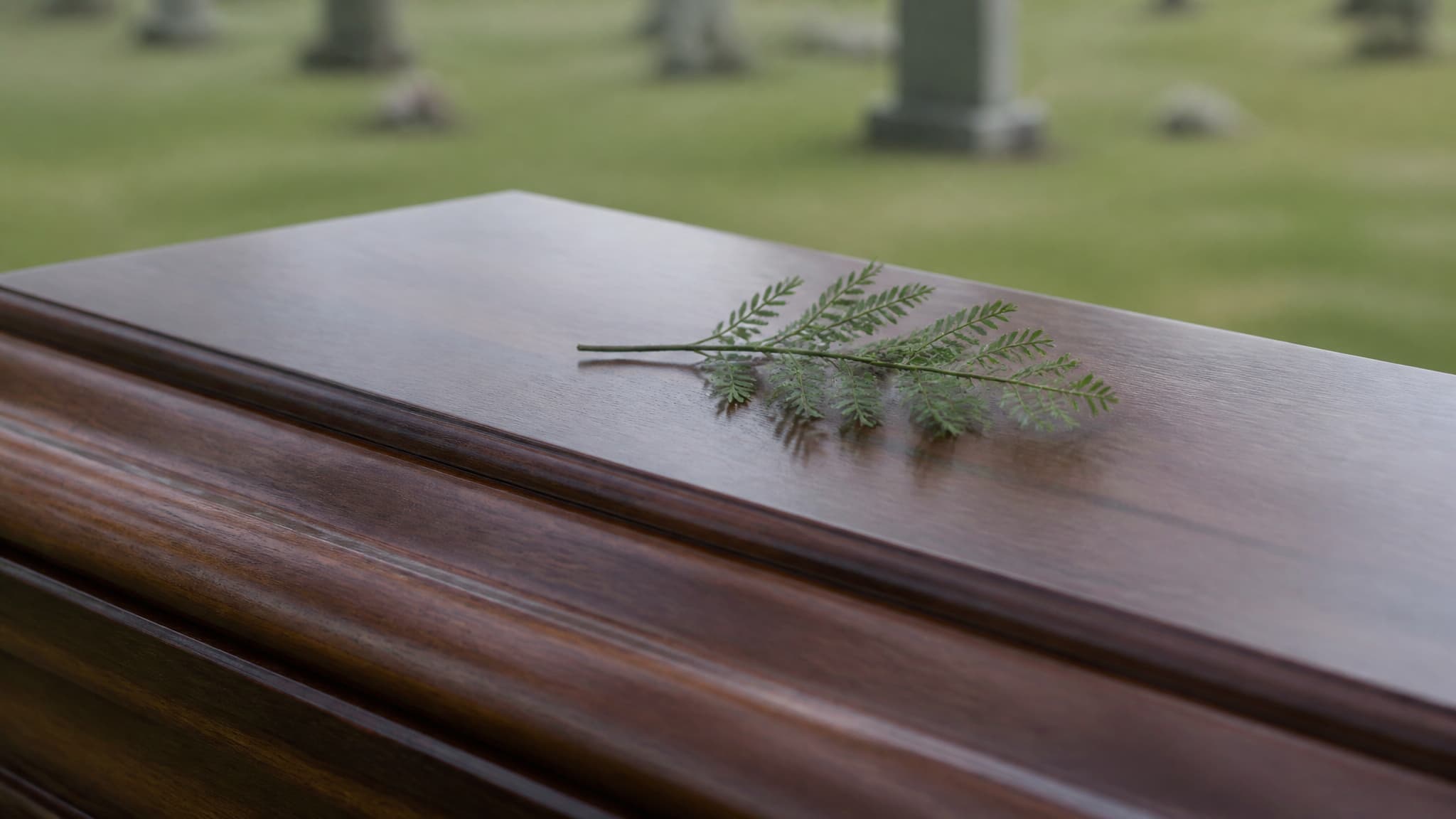
If you have come home from a funeral where men in white aprons filed past the grave and each one dropped a small green branch onto the casket, the thing you watched was a sprig of acacia. It is the most recognizable symbol in Masonic funeral practice, and the meaning is not a secret: the evergreen stands for the immortality of the soul — the conviction that the part of a person that matters is not what goes into the ground. Nobody outside the fraternity is expected to know that. The men conducting the service do not assume you do, and none of them would think less of you for asking.
This page explains the symbol, the service it belongs to, and what to expect if you have been invited to one. It sits inside our guide to death symbols and mourning customs, which collects the emblems, omens and rituals that different traditions use to say the same small number of things about death.
The acacia comes from the central legend of the fraternity's third degree, which is a story about a grave.
In it, Hiram Abiff — the master builder of King Solomon's Temple — is killed and his body hidden in a shallow grave outside the city. The grave is unmarked and would have stayed unfound, except that a sprig of acacia had been set at its head, and a searcher noticing the branch pulls it up and discovers the disturbed earth beneath. The whole drama turns on that detail. A living green thing growing where something was hidden is what leads the searchers to the truth.
Everything the acacia is used to say at a funeral comes out of that scene. The branch is evidence that a grave is not the end of the story. It is a plant that stays green when the surrounding landscape does not, which is the oldest available shorthand for something that outlasts a season. And it marks a place, so that a spot of ground nobody would otherwise notice becomes a spot people return to.
That combination is not unique to Freemasonry. Yew was planted in English churchyards for centuries, cypress lined Mediterranean burial grounds, and evergreen wreaths still arrive at American funerals in December for reasons most of the people sending them could not articulate. Our overview of the symbols of grief and mourning walks through the wider vocabulary; the acacia is one of the few emblems in it that still gets used the same way, by the same organization, at an actual graveside, every week.
Acacia leaves are bipinnate — each leaf divides into feathery rows of small leaflets — which is why a single sprig looks delicate in a hand and reads clearly from a distance.
Why Acacia, and Not Some Other Evergreen
Three reasons are usually given, and they reinforce each other.
The first is geography. The legend is set in and around Jerusalem, and acacia is a tree that actually grows in that landscape — a hardy, thorny, drought-tolerant plant that survives ground where softer species fail. A symbol of endurance works better when the plant itself is famous for enduring.
The second is scripture. The shittim wood of the Hebrew Bible, from which the ark and the tabernacle furniture were built, is traditionally identified with acacia. That gives the wood an association with sacred construction, which matters a great deal in a fraternity whose entire symbolic language is borrowed from building. The timber is also genuinely hard, dense and resistant to insects and rot, so its reputation for incorruptibility was earned before anyone made a metaphor out of it.
The third is simply that it is an evergreen, and an evergreen placed with the dead is a habit far older than any lodge. People have been putting meaningful objects into graves for as long as there have been graves — food, tools, flowers, coins. The obol placed in the mouth of the Greek dead to pay the ferryman is the same instinct wearing different clothes: the living put something in the ground that says what they hope is happening next.
What Happens at a Masonic Funeral
A note on the words first, because it explains a lot of confused searching. Many people type masonic rights funeral when what they mean is rites. A rite is a ceremony with a fixed form; the phrase describes the service, not an entitlement anyone holds. Masonic funeral rites are a ceremony a lodge performs for one of its own.
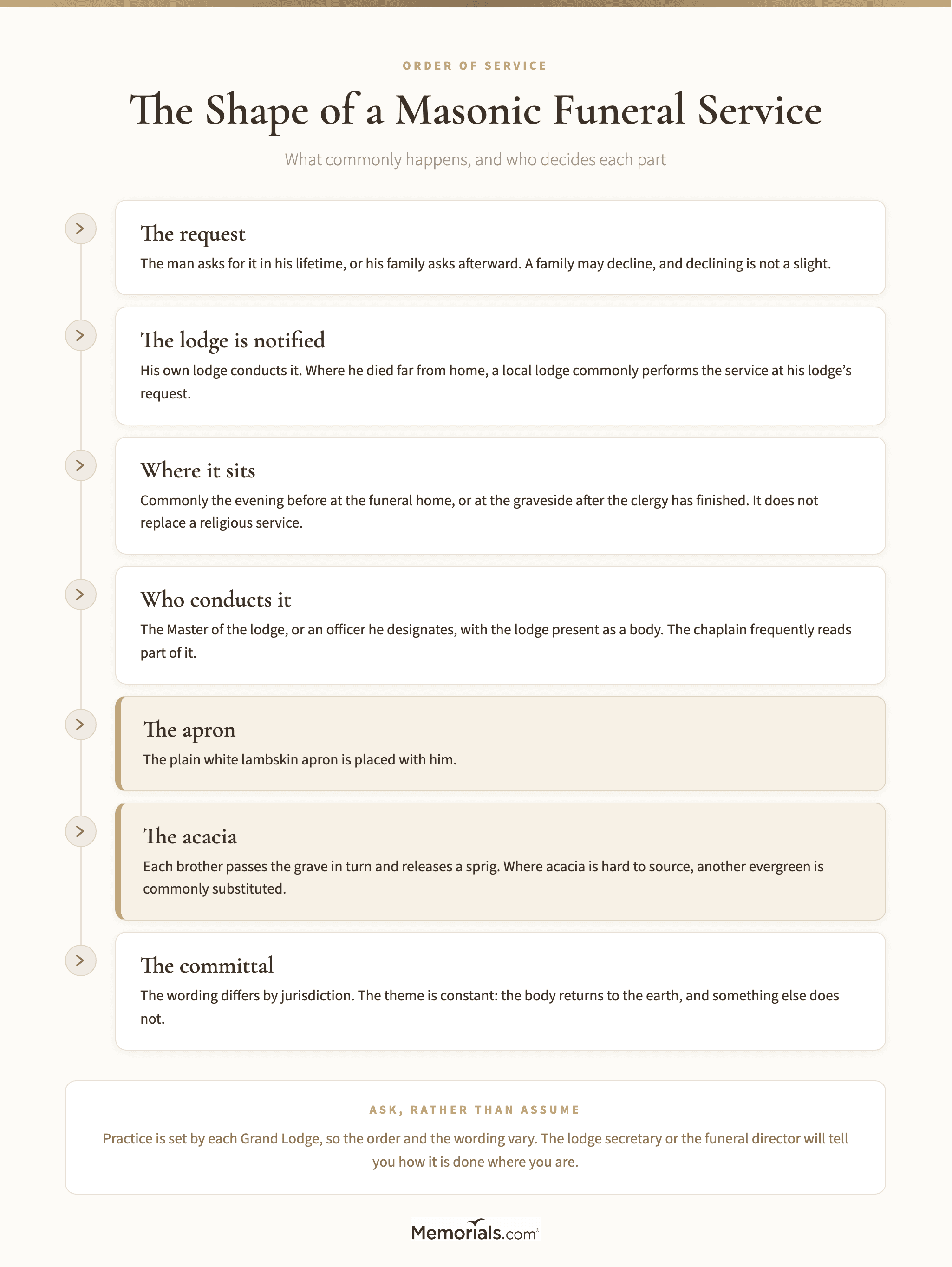
They are not automatic. In most jurisdictions the service happens because the man asked for it during his life, or because his family requests it after his death, and a family that would rather not have it can decline without giving a reason. Practice is set by each Grand Lodge — the state or national body a lodge belongs to — so the details below describe what is common rather than what is universal. The lodge secretary or the funeral director will tell you exactly how it is done where you are, and neither will mind being asked.
The service has a fixed shape but no fixed national script. Each Grand Lodge sets its own wording and its own order, so treat this as the outline you will probably recognize rather than a program to follow.
The service is usually conducted by the Master of the lodge or an officer he designates, with members of the lodge present as a body. It is not a substitute for a religious service and is rarely presented as one. Most often it is held the evening before the funeral at the funeral home, or at the graveside after the clergy has finished, so that the family's own faith tradition keeps the main service and the lodge takes a defined part of it.
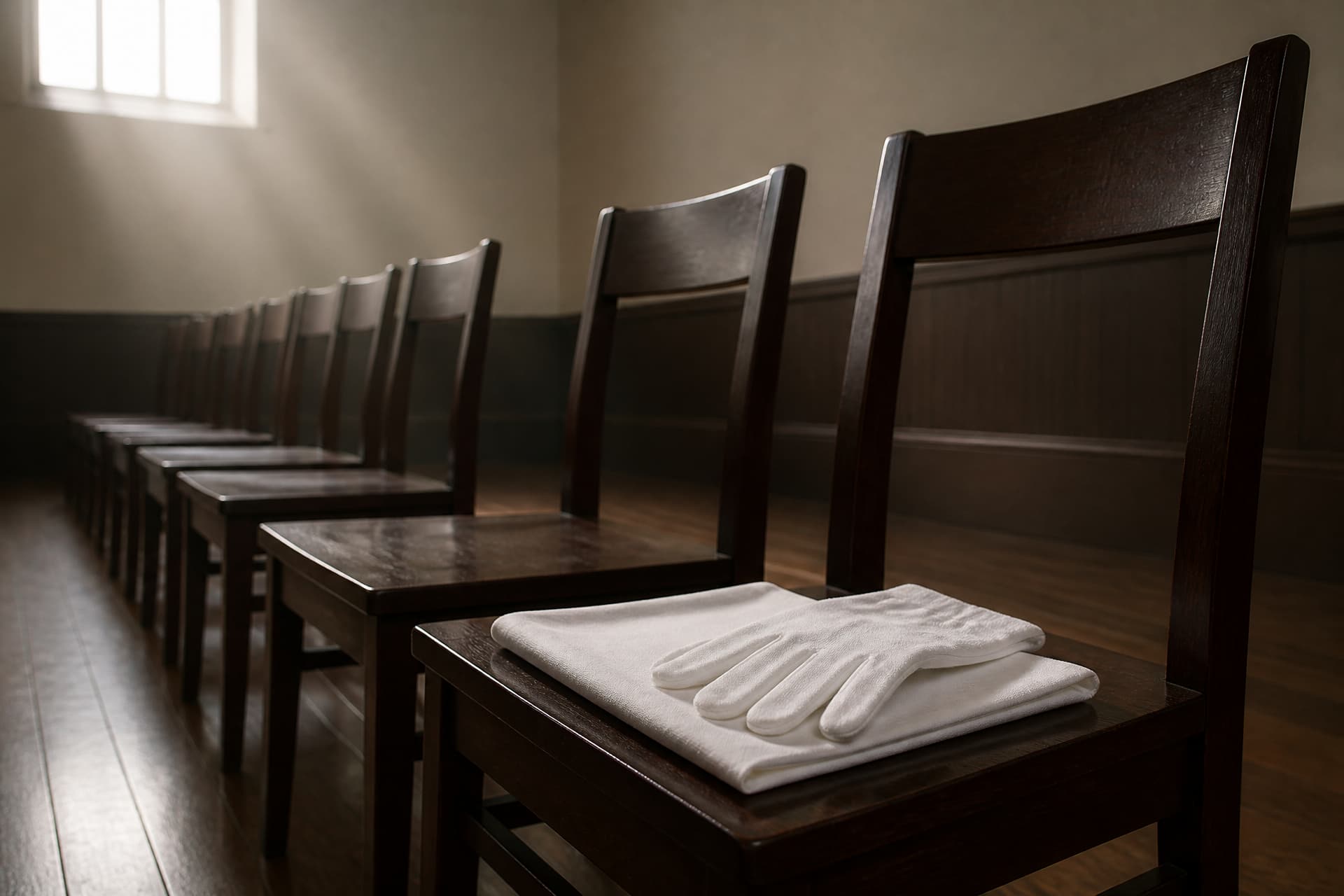
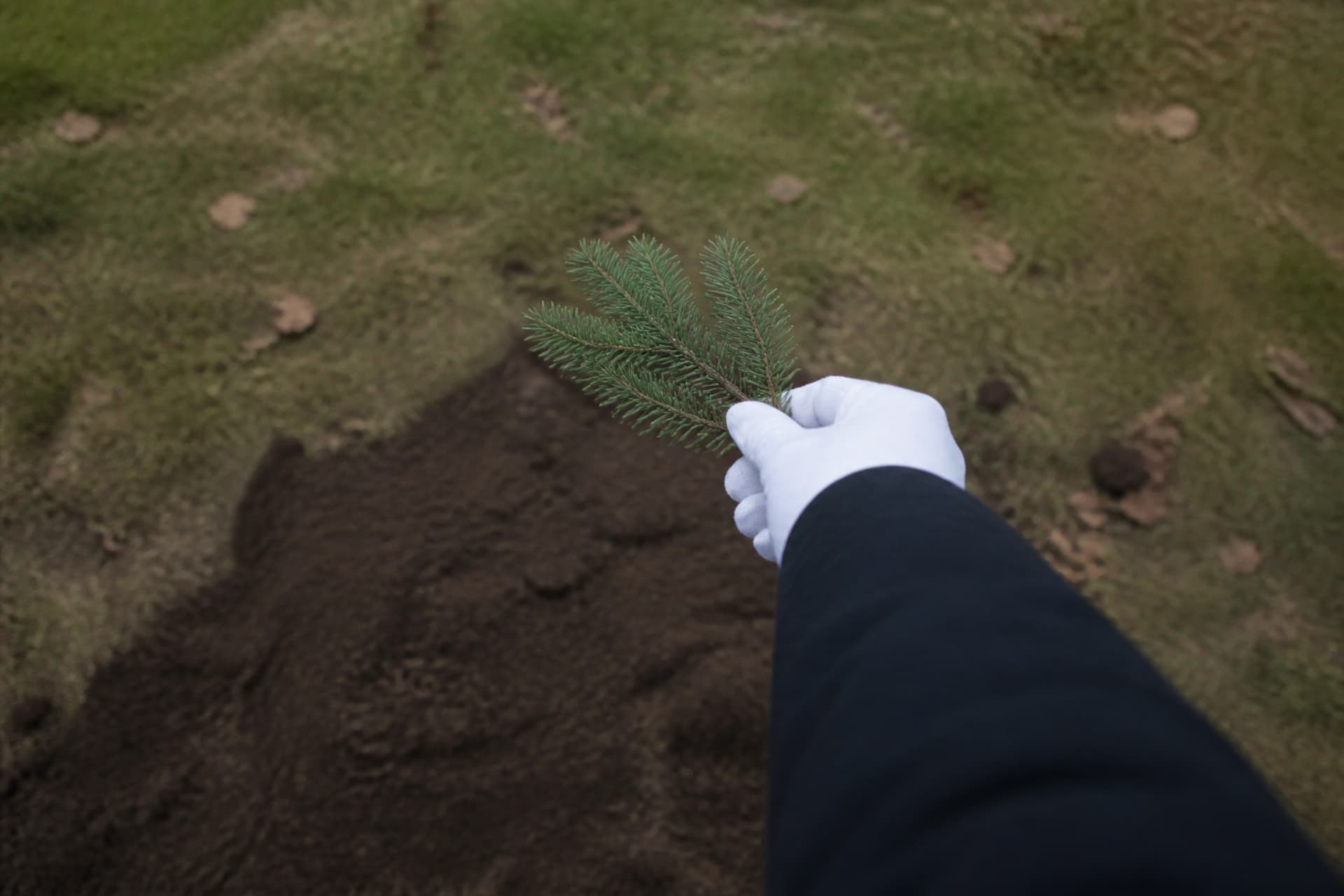
Members attend in dark suits, wearing the white apron and, in many jurisdictions, white gloves. The apron of the man who has died is placed with him. Then, at the grave, the brothers pass the open ground in turn and each drops a sprig of acacia — sometimes onto the casket, sometimes into the grave itself. Where acacia is hard to source, lodges commonly substitute another evergreen, which nobody treats as a compromise; the plant is standing in for an idea and any green thing that does not wilt will carry it.
Lodges usually gather before the service rather than arriving individually, which is why a Masonic funeral often begins with a room of men who are already quiet.
The words spoken over the grave differ by jurisdiction and are not identical anywhere, but the recurring theme is the one the acacia already states: the body returns to the earth and something else does not. Families sometimes notice how close this sits to the committal language of a Christian burial service — the ashes to ashes, dust to dust formula most people know from film, if not from a graveside. Both descend from the same verse. In the King James Version, Ecclesiastes 12:7 reads: "Then shall the dust return to the earth as it was: and the spirit shall return unto God who gave it."
If you are attending as a guest, the ordinary rules apply and nothing special is asked of you. Our guide to funeral etiquette covers arriving, seating, when to speak to the family and what to do with your phone; none of that changes because a lodge is present. You will not be asked to participate in the Masonic portion, and you are not expected to.
The White Apron, and Why Masons Are Buried in It
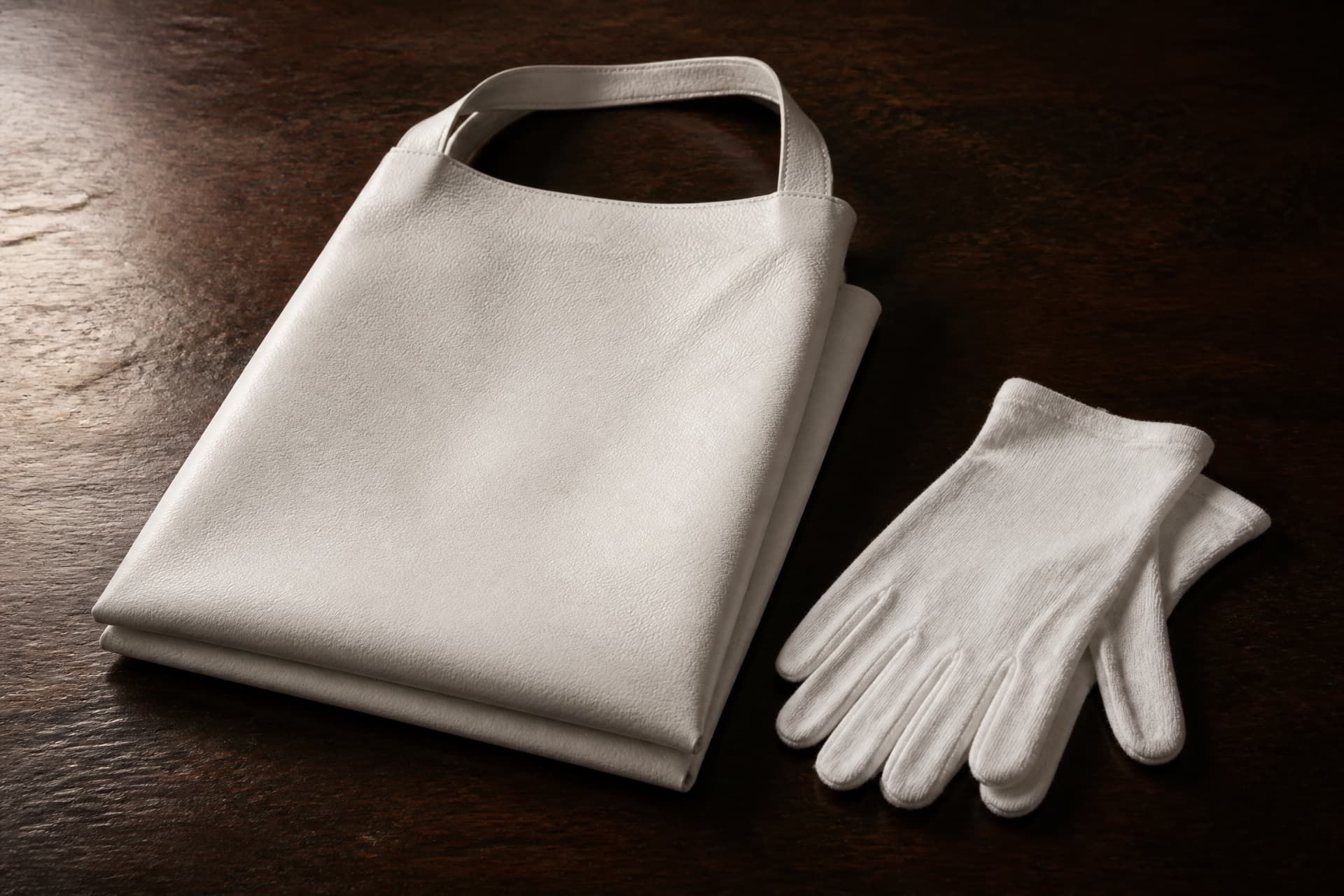
Ask about the freemason apron meaning and every jurisdiction gives roughly the same answer. The plain white lambskin apron is presented to a man at his initiation, before he has held any office or learned anything much, and the traditional monitor language describes it as an emblem of innocence and the badge of a Mason. It is the first thing he is given and, in the sense that matters here, the last thing he keeps.
That is why the questions people actually type — why are masons buried with their aprons, and its twin, why do masons wear aprons at funerals — have a single answer. The apron is not a costume for ceremonies. It is the badge of membership itself, the physical statement that this man was one of us, and burying him in it is the same gesture as a folded flag on a veteran's casket or a jersey retired to a rafter. A masonic funeral apron and a masonic burial apron are not two different garments and not a special edition made for the occasion. They are the plain white apron, doing the last thing it was made to do.
Two details often surprise families. The first is that officers wear aprons with trim, edging or emblems that indicate rank or office, and those vary by jurisdiction — but the burial apron is customarily the plain one, because the point being made is membership rather than rank. The second is that the apron is genuinely leather. Lambskin was chosen for its color and its associations rather than for durability, and a much-used apron looks used, which most families find they prefer.
The burial apron is the plain one. Aprons with trim or emblems mark office and rank, and those are set aside for a funeral because the statement being made is membership, not seniority.
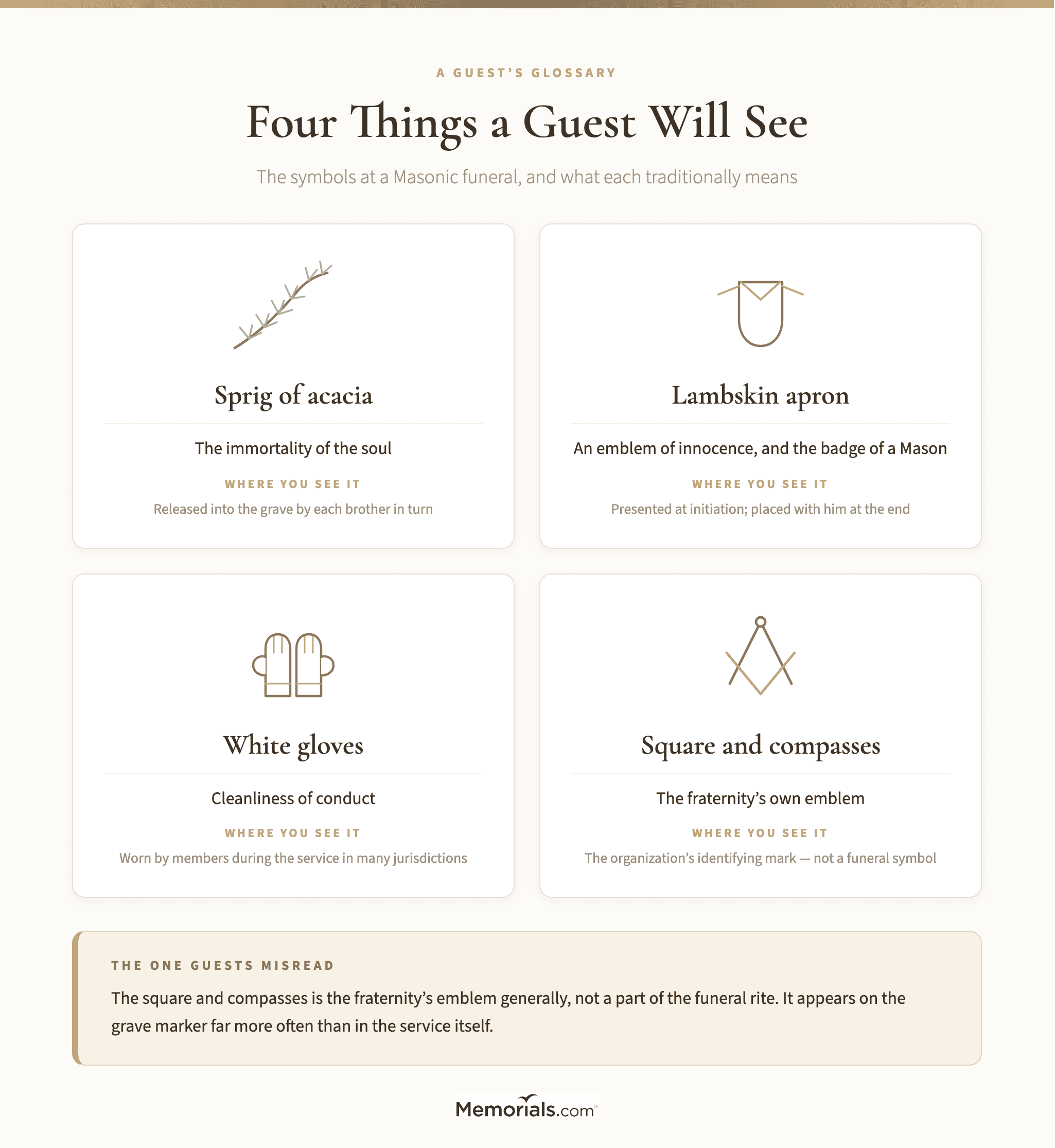
Four things a guest will see and may not recognize. The acacia stands for the immortality of the soul, the plain white apron for innocence and membership, the white gloves for cleanliness of conduct, and the square and compasses is the fraternity's emblem rather than a funeral symbol at all.
What to Wear to a Masonic Funeral
For members, masonic funeral attire is set by the lodge and communicated in advance: a dark suit, the apron, and in many jurisdictions white gloves. Nobody has to guess.
For everybody else the answer is simpler than the question suggests. Wear what you would wear to any other funeral. Dark, plain, covered, comfortable enough to stand outside in — our guide to what to wear to a funeral has the specifics for men, women and children, and the presence of a lodge changes none of it. Graveside services run longer than chapel services and stand on uneven ground, so flat shoes and a coat are the practical notes worth taking seriously.
One thing to avoid: do not wear or carry a fraternal emblem you are not entitled to, even as a tribute. Members will notice, it will read as a claim rather than a kindness, and no part of the service asks it of you. If you want to bring something, bring what you would bring to any funeral.
Each brother passes the grave in turn and releases his sprig. It takes only a minute or two for a whole lodge, and it is the part of the service most guests remember.
Marking the Grave: Emblems, Medallions and Markers
The square and compasses is one of the most common fraternal emblems in American cemeteries, and families arranging a stone after the funeral often want it there for the same reason the lodge came: it says something about the man that his name and dates do not. Our guide to headstone symbols and their meanings covers the wider vocabulary of carved emblems, including the fraternal and military ones that sit alongside religious symbols on the same stone.
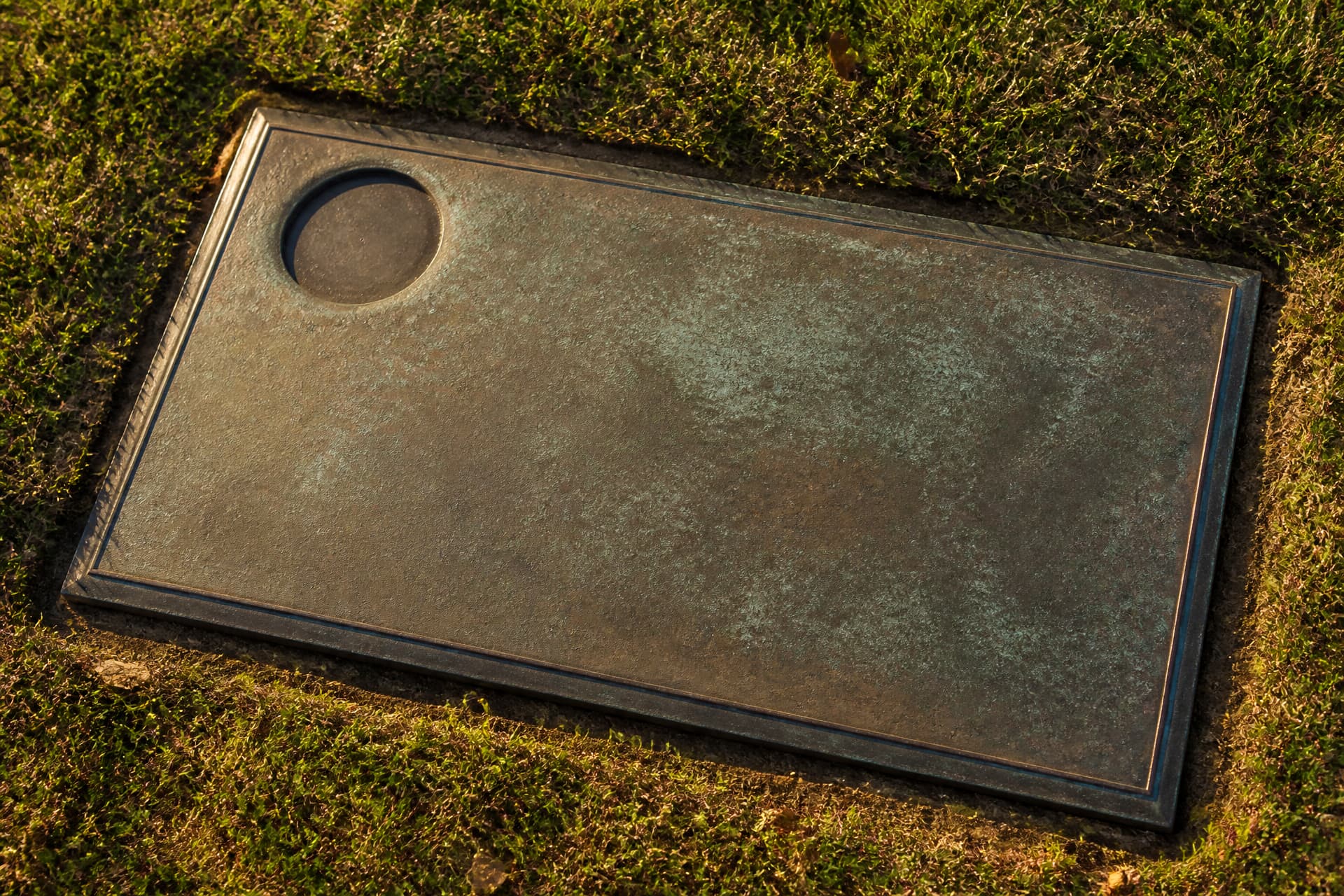
There are two ways to get an emblem onto a memorial, and they cost very different amounts. It can be carved or etched into the stone itself, which is permanent, matches the material, and has to be specified when the monument is ordered. Or it can be a cast disc fixed to the surface — memorial emblems of this kind are made to be set into a recess or mounted flush, they can be added to a memorial that already exists, and they can be changed later. Plenty of grave markers are cast or cut with a circular recess for exactly this purpose. If a stone is already in place and the family only afterward decided they wanted the emblem, the disc is usually the only option that does not mean recutting the monument.
The same choice appears in cremation. There is no such thing as a dedicated Masonic urn as a product category, and searches for a masonic urn or masonic cremation urns are really searches for two decisions taken separately: choose a cremation urn whose material and size suit where it will rest, then add the emblem to it. Our guide to religious and cultural urn choices works through the first decision, which is the one families find harder.
Inscriptions follow the same principle. An emblem says which community a man belonged to; the words underneath say who he was to the people paying for the stone, which is why phrases like forever in our hearts outnumber every fraternal motto in every cemetery in the country. A stone has room for both, and most families use it.
The circular recess in a flat marker is designed to take a cast emblem. It is why a family can commission the stone now and settle the question of an emblem later.
Frequently Asked Questions
Why do Masons put a sprig of acacia on the casket?
Because of the legend of Hiram Abiff, whose hidden grave was found by a sprig of acacia growing at its head, and because the acacia is an evergreen. Each brother dropping a branch is making the same statement in turn: this grave is not the end of the man. It belongs to the same family of graveside gestures as coins, rocks and other graveside tributes, where an object left behind says something the visitor would struggle to say out loud.
Can a non-Mason attend a Masonic funeral?
Yes. The funeral service is public in a way lodge meetings are not, and family, friends and colleagues are expected. You will not be asked to take part in the Masonic portion, and there is no point in the service where a guest is put on the spot. If you are unsure about anything — where to stand, when it starts, whether to come to the graveside — ask the funeral director rather than guessing.
Can a Catholic attend a Masonic funeral?
Attending a funeral as a mourner is not the same question as joining an organization, and the Catholic Church has consistently distinguished between the two. The prohibition that gets quoted is on membership, not on standing at the grave of a friend or a family member. If the question is weighing on you, the person to ask is your own parish priest, who knows your situation and the local practice. If you are also arranging a Mass, our guide to planning a Catholic funeral covers how a graveside rite fits around it.
Do Masons have to be buried in their apron?
No. Nothing is compulsory. The service happens at the request of the man or his family, and the apron is placed with him as part of that service — so a family that declines the Masonic rites is not doing anything wrong, and a man who never asked for them does not receive them by default. Some families keep the apron instead, which lodges generally understand.
Who conducts a Masonic funeral service?
Usually the Master of the lodge the man belonged to, or an officer he appoints, with the lodge present as a body. Where the man belonged to a lodge far from where he died, a local lodge will often perform the service at the request of his own. The chaplain of the lodge frequently reads part of it, and in some jurisdictions the Order of the Eastern Star or another affiliated body has its own separate service for its members.
If You Have Been Asked to Attend
The anxiety people bring to this is almost always the same one, and it is worth naming: the fear of getting something wrong in a setting whose rules you do not know. It is a reasonable fear and, in this case, an unnecessary one. A Masonic funeral is not a test. The portion of it that belongs to the lodge is short, the men performing it have done it many times, and the entire remainder of the day is a funeral like any other funeral — you sit, you listen, you say something inadequate to the family afterward, and that is enough.
If you are the family rather than a guest, the decisions that follow the service are the ones worth taking slowly. The stone and the emblem do not have to be settled in the first weeks, and a marker ordered in the numb part of grief is the one families most often wish they had thought about longer. There is no deadline that anyone in the industry will admit to.
And if you came here because you saw something at a graveside and did not know what it was: it was a sprig of acacia, it meant that the men who dropped it believe he is not finished, and asking what it meant is exactly the response they would have hoped for.