🏬Supersize Online Funeral Retailer🪦1000's of Headstones⚱️Over 10,000 Cremation Urns⚰️Caskets Overnight Delivery🛒Funeral & Memorial Superstore🚚FREE Shipping on ALL Orders👨👩👧👦Helping Families for over 20 Years💰Lowest Price Guarantee🏬Supersize Online Funeral Retailer🪦1000's of Headstones⚱️Over 10,000 Cremation Urns⚰️Caskets Overnight Delivery🛒Funeral & Memorial Superstore🚚FREE Shipping on ALL Orders👨👩👧👦Helping Families for over 20 Years💰Lowest Price Guarantee
🏬Supersize Online Funeral Retailer🪦1000's of Headstones⚱️Over 10,000 Cremation Urns⚰️Caskets Overnight Delivery🛒Funeral & Memorial Superstore🚚FREE Shipping on ALL Orders👨👩👧👦Helping Families for over 20 Years💰Lowest Price Guarantee🏬Supersize Online Funeral Retailer🪦1000's of Headstones⚱️Over 10,000 Cremation Urns⚰️Caskets Overnight Delivery🛒Funeral & Memorial Superstore🚚FREE Shipping on ALL Orders👨👩👧👦Helping Families for over 20 Years💰Lowest Price Guarantee
If you have been invited to a funeral in Japan, or to a Japanese family's service here in the United States, the first useful thing to know is that the order is fixed. Japanese funeral traditions follow a sequence that changes very little from one family to the next: a wake on the evening after the death, a farewell ceremony the following morning, cremation the same afternoon, and then a calendar of memorial days that runs for forty-nine days and, at longer intervals, for decades. Almost every funeral in Japan is Buddhist, and almost every one ends in cremation.
This page walks that sequence in order, names the words you will hear said out loud, and marks the two or three moments where a guest is expected to do something rather than watch. It sits inside our wider funeral traditions guide, which asks the same questions of other countries and faiths.
One caution before the sequence. Japan has several major Buddhist schools and a great deal of regional variation, and the differences are real rather than cosmetic: Jōdo Shinshū, the largest school, teaches that the person is reborn in the Pure Land immediately, so several ideas described below — the forty-nine-day journey, the wooden grave boards, the salt handed out at the door — are absent or explicitly rejected in its temples. Where this page says usually or in most families, that is the accurate answer rather than a hedge. The family's own instruction overrides everything here, and asking whoever invited you what will happen is an ordinary question that nobody finds rude.
Why a Japanese Funeral Is Almost Always Buddhist
Japan has two living religious traditions that most people participate in at once. Births, weddings, New Year and the blessing of a new car belong to Shinto. Death belongs to Buddhism, and the split is close to absolute.
The reason is kegare — ritual impurity, the condition that contact with death produces. Shinto treats it as something to be kept away from the shrine and cleared afterward, not as sin but as a state that has to be resolved before a person approaches the gods again. A household with a death in it covers the kamidana, the small Shinto shelf on a high wall, with white paper for the mourning period. Shinto did not want the funeral, so Buddhism took it.
The arrangement hardened during the Edo period, when every household was required to register with a temple. That relationship — danka — made a particular temple responsible for a particular family's dead, and it still decides which priest a family calls at two in the morning. A Japanese Buddhist funeral is therefore rarely a matter of the family's personal belief; it is a matter of which temple the family has belonged to for generations, and many people who would describe themselves as non-religious will be buried by a priest whose predecessors buried their great-grandparents.
Shinto funerals do exist. Shinsōsai is a real rite with its own vocabulary, held for a small minority of families, and there are Christian funerals in Japan too. Both are the exception, and the practices on this page are the ones you are overwhelmingly likely to meet. The doctrine underneath the ceremony — merit, chanting, the transfer of both to the person who died — is shared with Buddhist funeral customs across the rest of Asia; what follows is the specifically Japanese form of it.
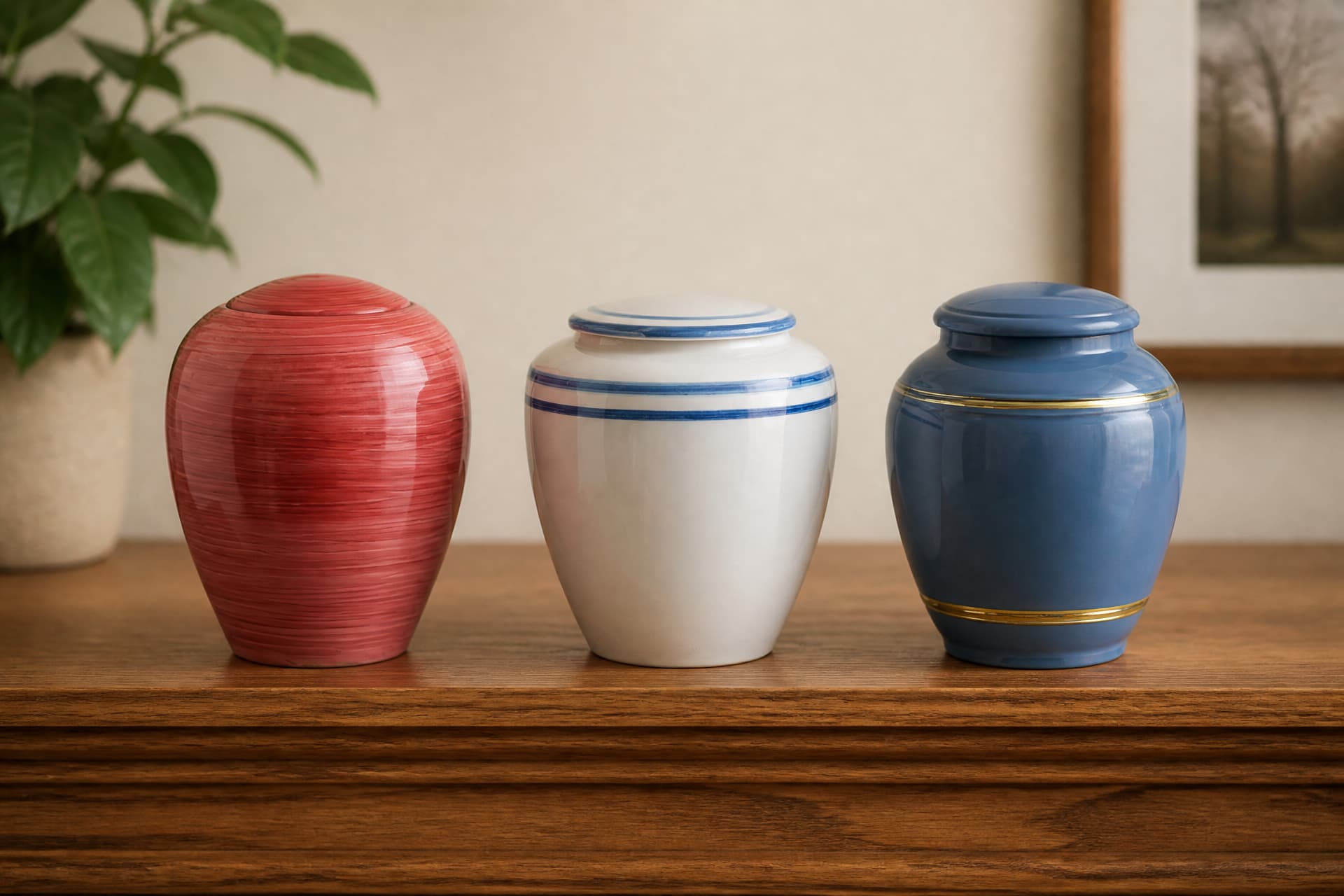
Plain Ceramic and Porcelain Urns
The straight profiles and sealing lids that suit this rite
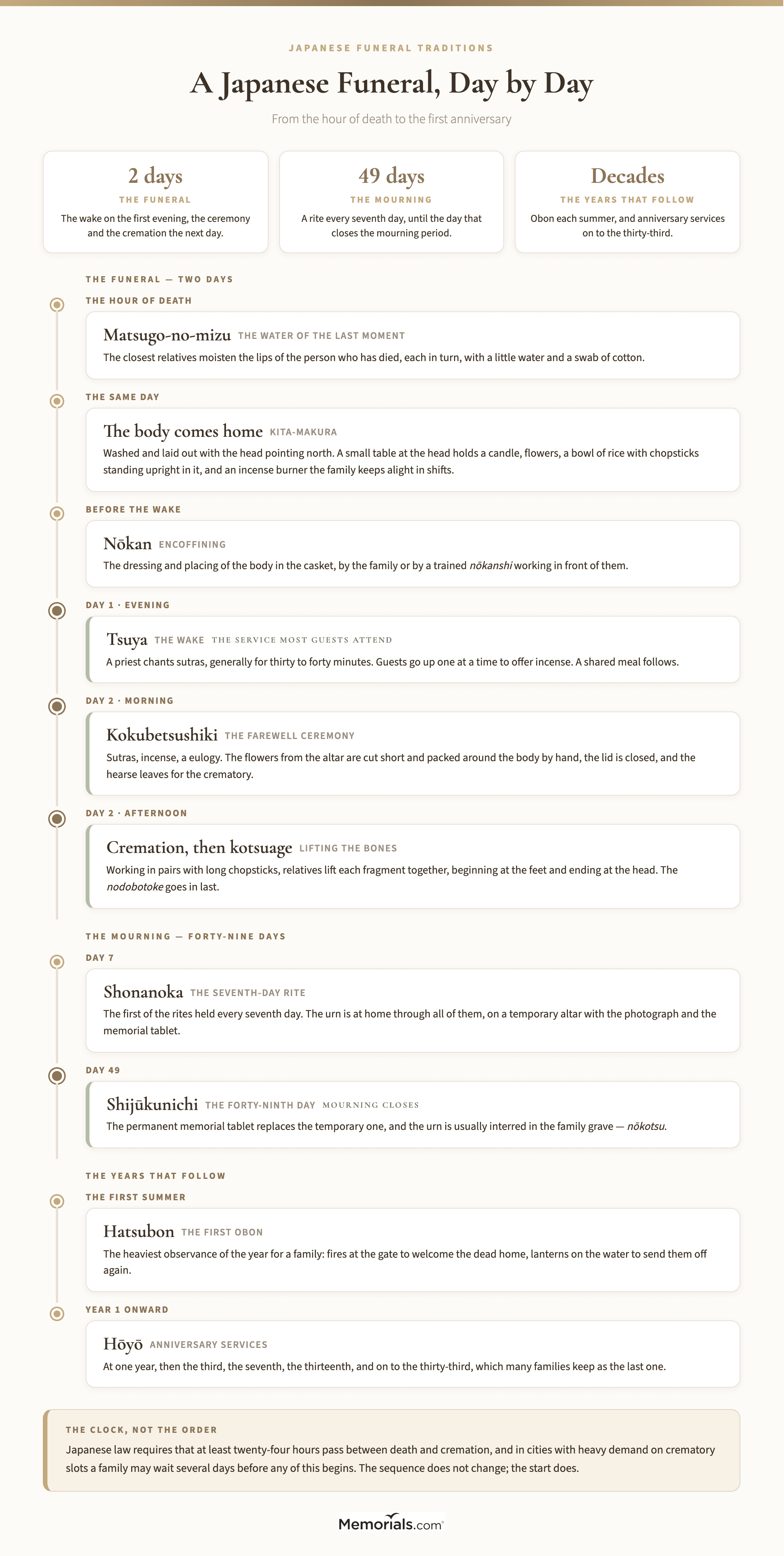
The question people actually type into a search box is japanese funeral how many days, and the honest answer has two halves. The funeral itself occupies two days. The mourning it opens occupies forty-nine.
The hour of death. The closest relatives perform matsugo-no-mizu, the water of the last moment: each person in turn moistens the lips of the person who has died, using a little water and a swab of cotton. It is the last act of care given to the living body and the first of the funeral.
The body comes home. The body is washed and laid out, traditionally at home and now often at a funeral hall, with the head pointing north — kita-makura, north pillow, after the direction the Buddha lay in at his death. A small table goes at the head of the futon holding a candle, flowers, a bowl of rice with chopsticks standing upright in it, and an incense burner that the family keeps alight in shifts. Standing chopsticks in rice is one of the sharpest taboos at a Japanese dinner table, and this is why.
Encoffining.Nōkan is the dressing and placing of the body in the casket, performed by the family or, increasingly, by a trained nōkanshi who does it in front of them as a small ceremony of its own.
Day one, evening: the wake.Tsuya — literally passing the night — begins in the early evening and now usually runs a couple of hours rather than until dawn.
Day two, morning: the farewell ceremony.Kokubetsushiki is the funeral proper, held the next morning, often in the same room.
Day two, afternoon: cremation. The hearse leaves for the crematory directly from the ceremony, and the family goes with it. Cremation on the same day as the funeral is the norm, not an option chosen for convenience.
Then forty-nine days. The urn comes back to the house, and a rite is held every seventh day until the forty-ninth, which is the day most families treat as the end of the intense mourning period.
One national complication is worth knowing if you are following a case in the news: Japanese law requires that at least twenty-four hours pass between death and cremation, and in cities with heavy demand on crematory slots the family may wait several days before any of this begins. The order does not change; the clock does.
The whole sequence at a glance. Two days carry the funeral itself; the forty-ninth day closes the mourning period and is usually when the urn is placed in the family grave. Everything after that is a memorial the family returns to rather than an event guests attend.
The Wake — Tsuya
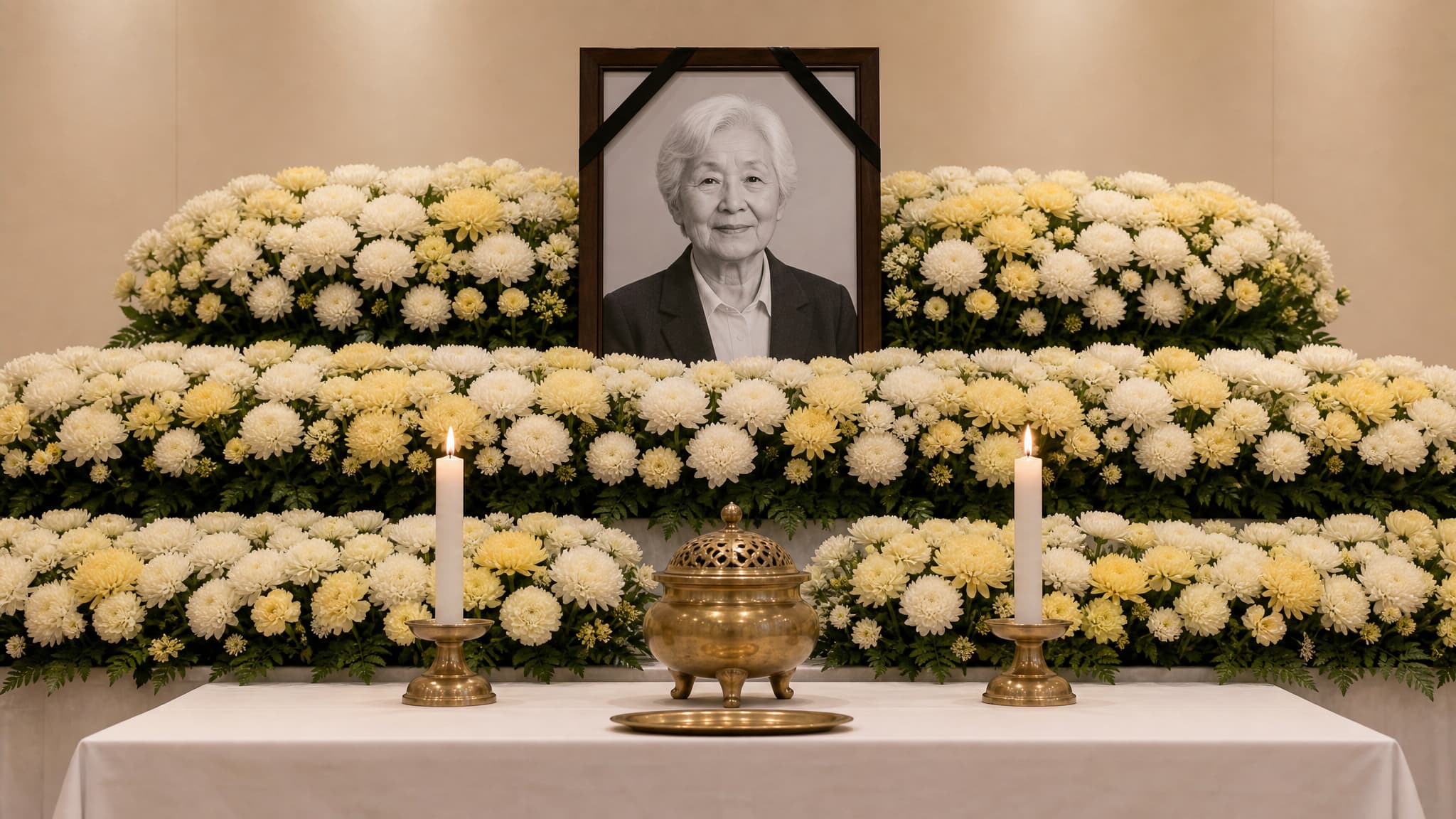
The room is arranged around an altar rather than around the casket. A framed photograph of the person who died sits at the center, draped or edged in black, with white and yellow chrysanthemums banked in tiers around it, candles, and a burner for incense. Japanese funeral customs concentrate a great deal into this one evening: it is the service most guests attend, and for colleagues and neighbors it is often the only one.
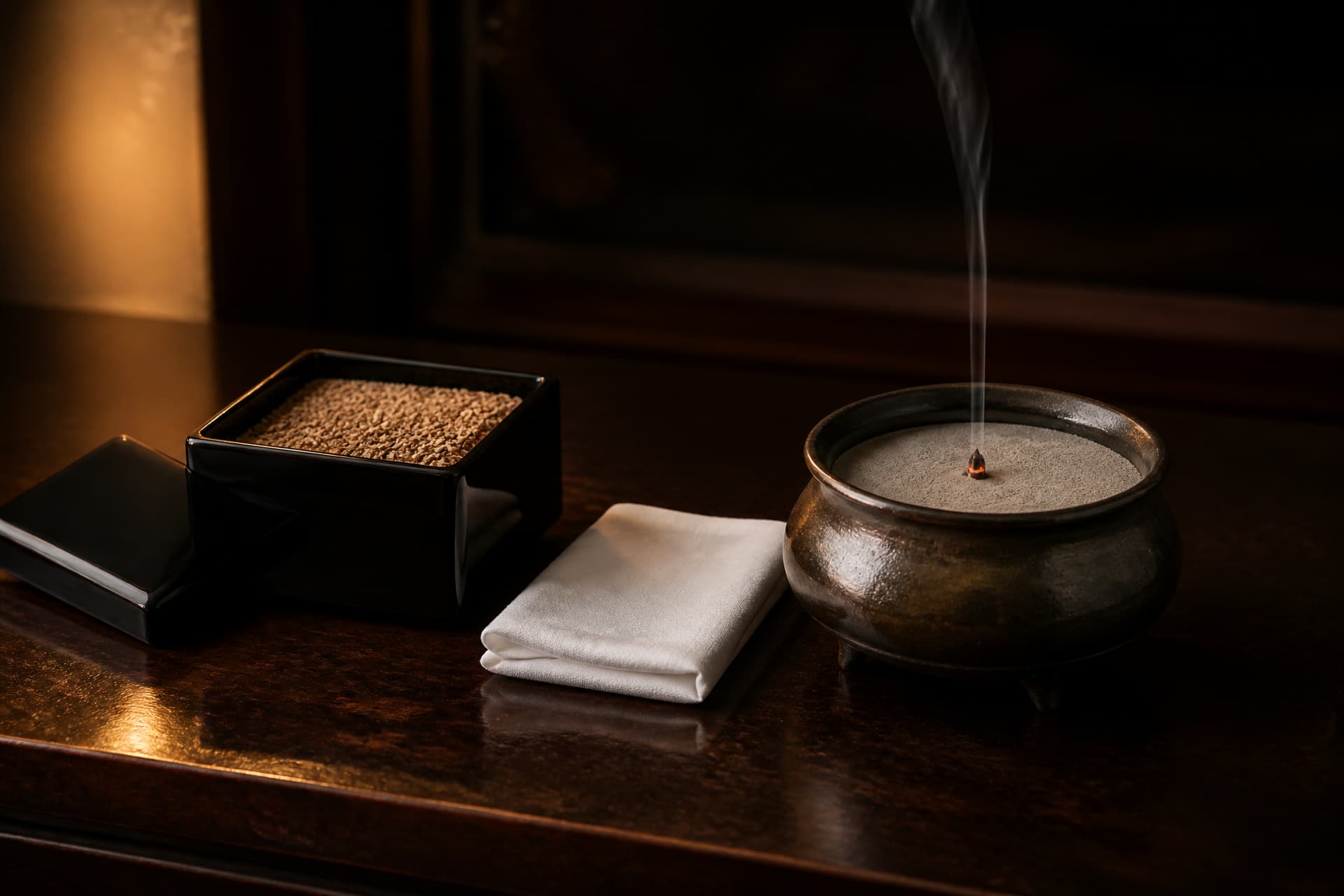
A priest arrives and chants sutras, generally for thirty to forty minutes. While he chants, guests go up one at a time to offer incense — shōkō. The form varies by school, and the whole of the guidance you need is to watch the person ahead of you and do what they did: bow to the family, bow to the altar, take a pinch of granulated incense between finger and thumb, raise it toward your forehead if the person ahead did, let it fall onto the burning coal, put your palms together, bow again, step back. Doing it once instead of three times is not a failure. Nobody is counting.
Afterward there is food and drink — tsuya-burumai — and it is not a solemn meal. Sharing it is part of the courtesy, and staying for a short while before leaving is right.
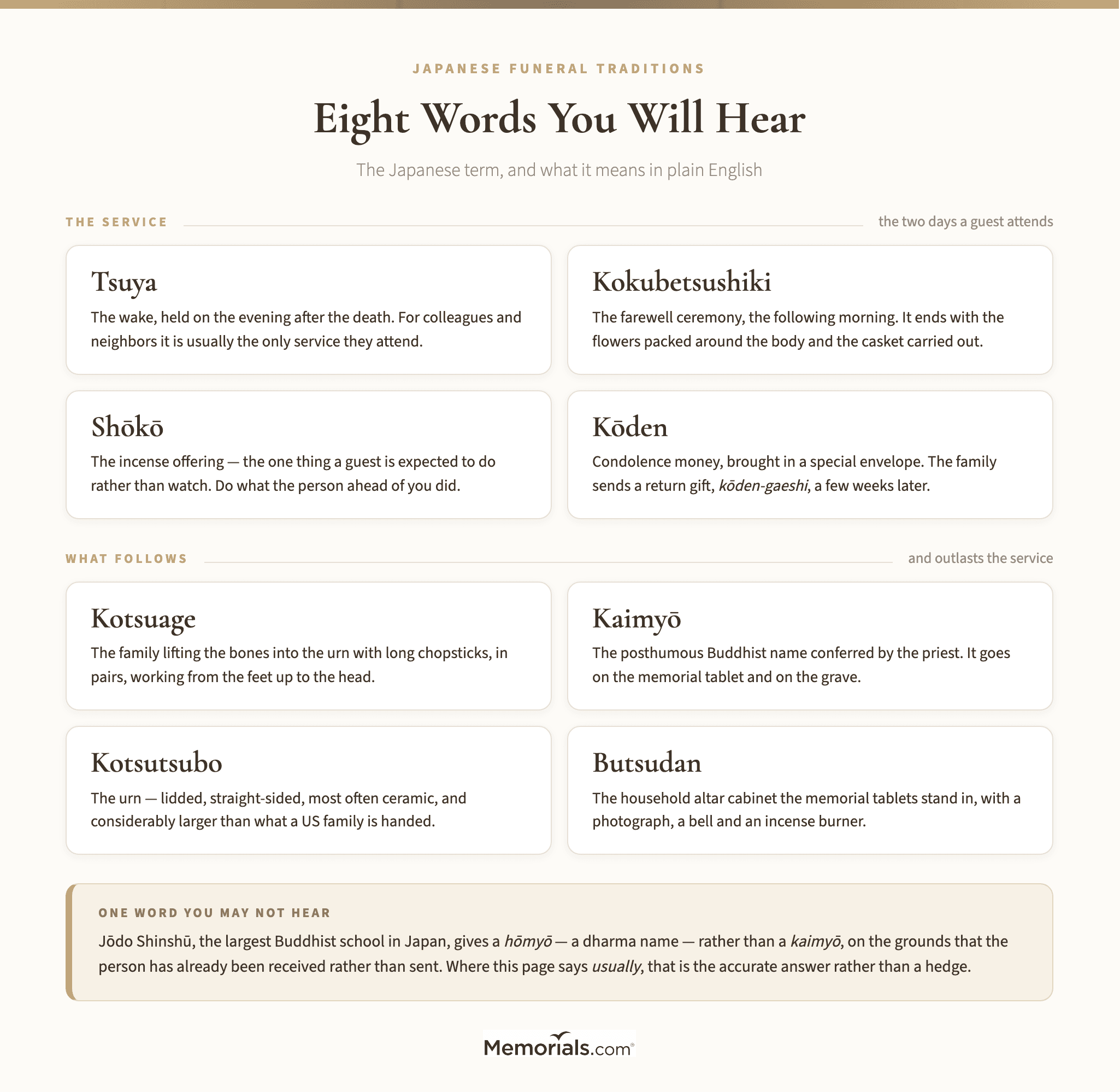
Two practical things guests bring. Plain black formal clothing, and condolence money in a special envelope called a kōdenbukuro; the money itself is kōden, and the family sends a return gift, kōden-gaeshi, a few weeks later. Both are covered properly, with the amounts and the envelope conventions, in our guide to what to wear as a guest at a Japanese funeral, so they are named here and left there.
The incense offering is the one moment a guest is expected to act rather than sit. Take the pinch, let it fall on the coal, put your palms together, bow, step back — and if you are unsure how many times, do what the person in front of you did.
Eight words, and the whole vocabulary a guest needs. Four of them name moments in the service, and four name objects that outlast it — which is a fair summary of how a Japanese funeral is built.
The Farewell Ceremony and the Posthumous Name
Kokubetsushiki the next morning follows a similar shape to the wake: sutras, incense, a eulogy, and a formal farewell. It closes with the part people remember. The casket is opened, and the flowers that filled the altar are cut short and placed by hand around the body by the family and the closest guests, until it is packed in white and yellow chrysanthemums. Then the lid is closed, and in many families it is nailed shut with a stone rather than a hammer, each relative striking twice. The casket is carried out feet first, and the hearse — often an ornate, gilded thing that looks like a small temple mounted on a car — leaves for the crematory.
Somewhere in the ceremony the priest confers a kaimyō: a posthumous Buddhist name. It is written on a wooden tablet and later carved on the grave, and from that point the person is referred to by it in a ritual context rather than by the name they used in life. The reasoning is that the dead person is being ordained — received into the Buddhist community as a disciple, so that they can take the path from there — and the new name marks the change of status.
Two honest notes about it. The name has grades, some longer and more honorific than others, and the donation a family makes to the temple rises with them; this is openly discussed and openly resented in Japan, and there are families who now ask for a plain one or none at all. And Jōdo Shinshū does not use the word: it gives a hōmyō, a dharma name, on the grounds that the person has already been received, not that they are being sent. No competitor page on this topic explains any of that, and it is the detail that makes the priest's role legible.
Cremation, and the Bones the Family Gathers
Japanese death rituals are more uniform than in almost any comparable country, and cremation is the reason. The national cremation rate is widely reported as more than 99% — effectively everyone. Land scarcity is part of the explanation and Buddhist practice is the rest of it, and there is no live debate about the choice in the way there is in the United States.
What differs from an American cremation is what the family does afterward, and the difference begins with how the cremation is run. In the United States, the cremation process ends with the remains processed to a uniform ash. In Japan it deliberately does not: the operation is managed so that skeletal structure survives recognizably, because the family is going to handle it.
The family waits, usually an hour or two, sometimes over a meal. Then the tray is brought out, and they perform kotsuage. Working in pairs with long chopsticks, two relatives lift the same fragment together and place it in the urn, or pass it from one pair of chopsticks to another. They begin at the feet and end at the head, so that the person stands upright in the vessel. The last piece is the nodobotoke, the second cervical vertebra, whose shape resembles a seated Buddha; it is placed on top, usually by the closest relative, and it is the one everybody looks for. If you have wondered why passing food chopstick-to-chopstick is forbidden at a Japanese table, this is the reason — that gesture belongs to this room only. The full ritual, including who lifts what and what is said, is set out in our page on the bone-picking ceremony.
Western visitors often expect to find this ordeal grim, and it usually is not. It is the last practical thing a family can do for a person, done together and with attention, and it is closer in feeling to washing and dressing a body than to anything a US funeral offers.
The Urn, and What the Family Takes Home
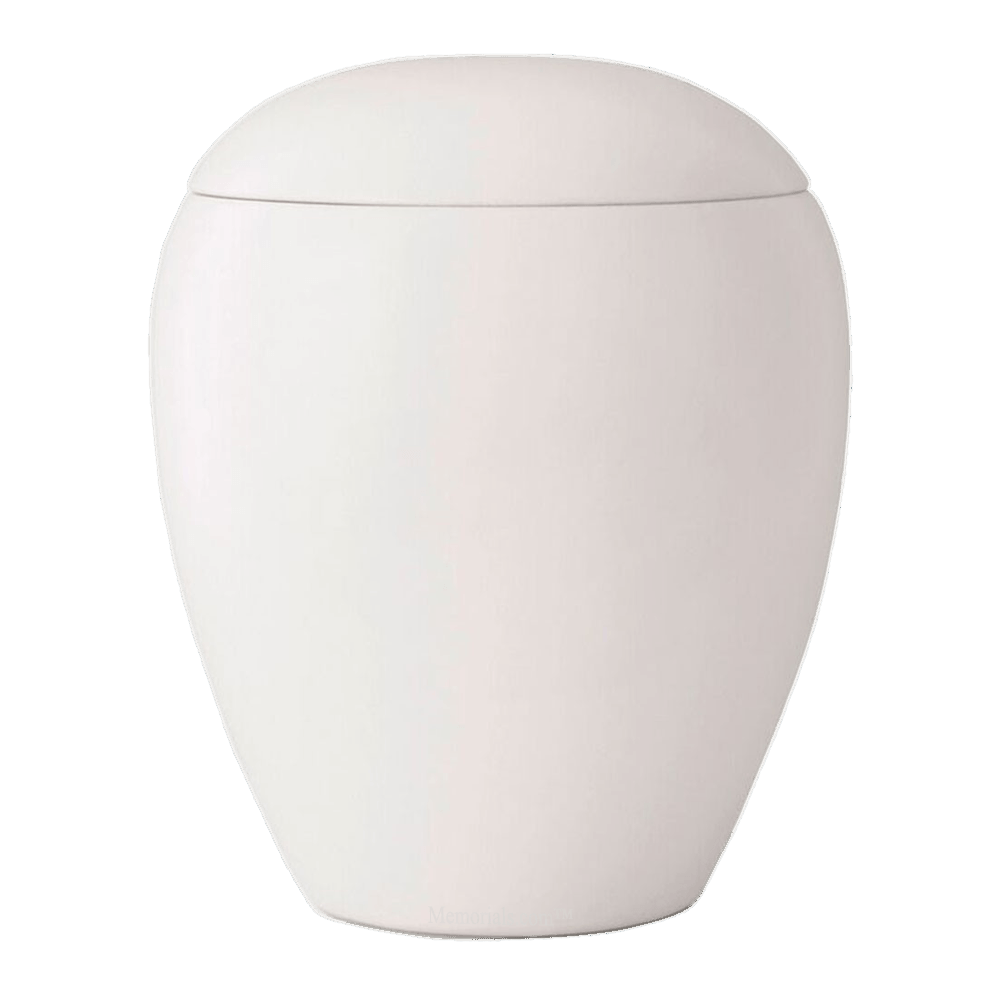
Because so much of the skeleton is retained, the Japanese urn — kotsutsubo — is considerably larger than what an American family would be handed for the same person. It is a lidded, straight-sided vessel, most often ceramic and, in the finer examples, a white porcelain urn with a plain glaze and no ornament at all. It is placed inside a wooden box and wrapped in a cloth for the journey home, and it is carried by the closest relative.
The shape is doing something specific. It is meant to be interred whole into a chamber under the family grave and to sit on a shelf at home for the seven weeks before that, so it needs a flat base, a lid that seals against damp, and a size that suits a chamber holding a dozen of its predecessors. That is a different set of demands from the American cremation urn, which is designed to be looked at on a mantel or fitted into a columbarium niche sized in cubic inches.
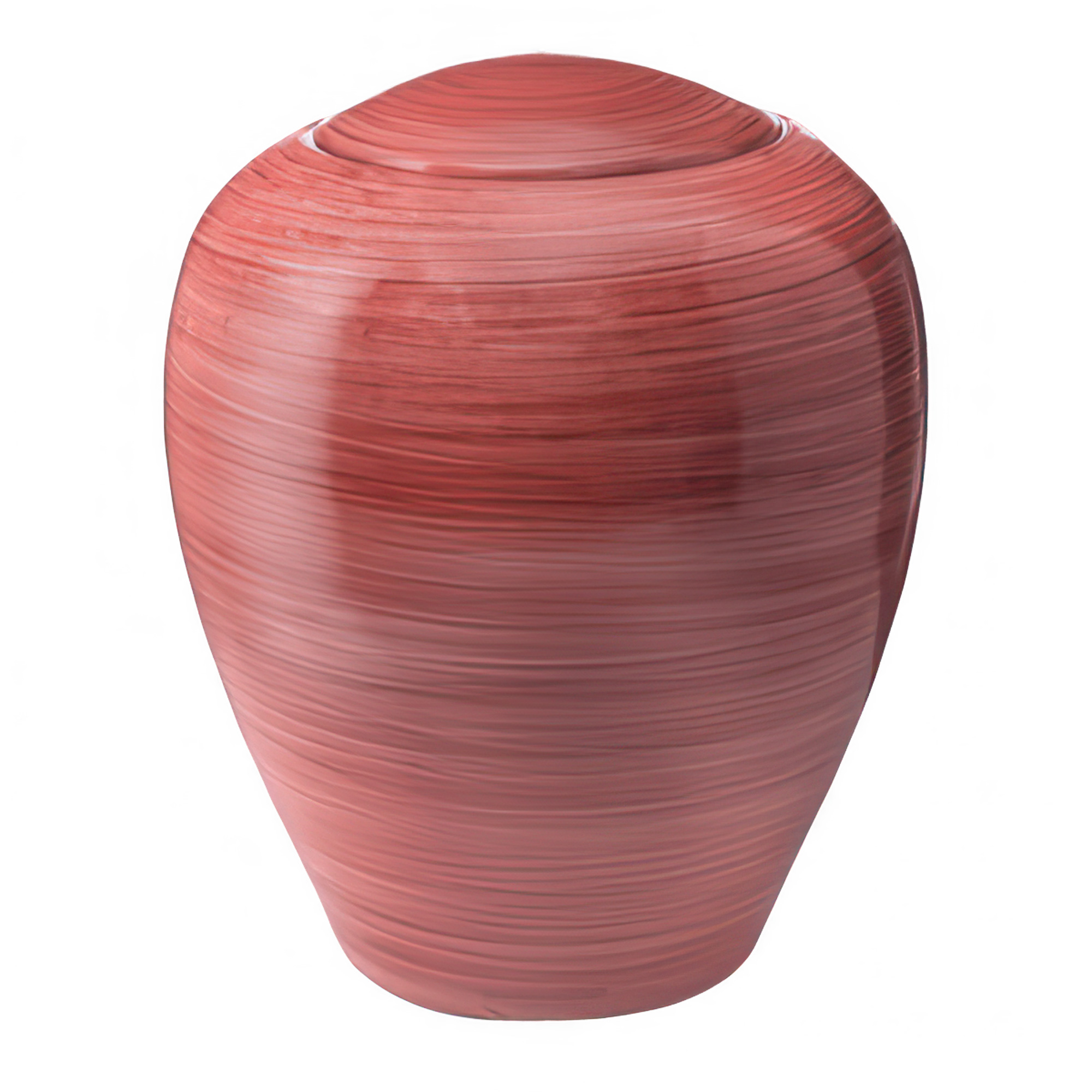
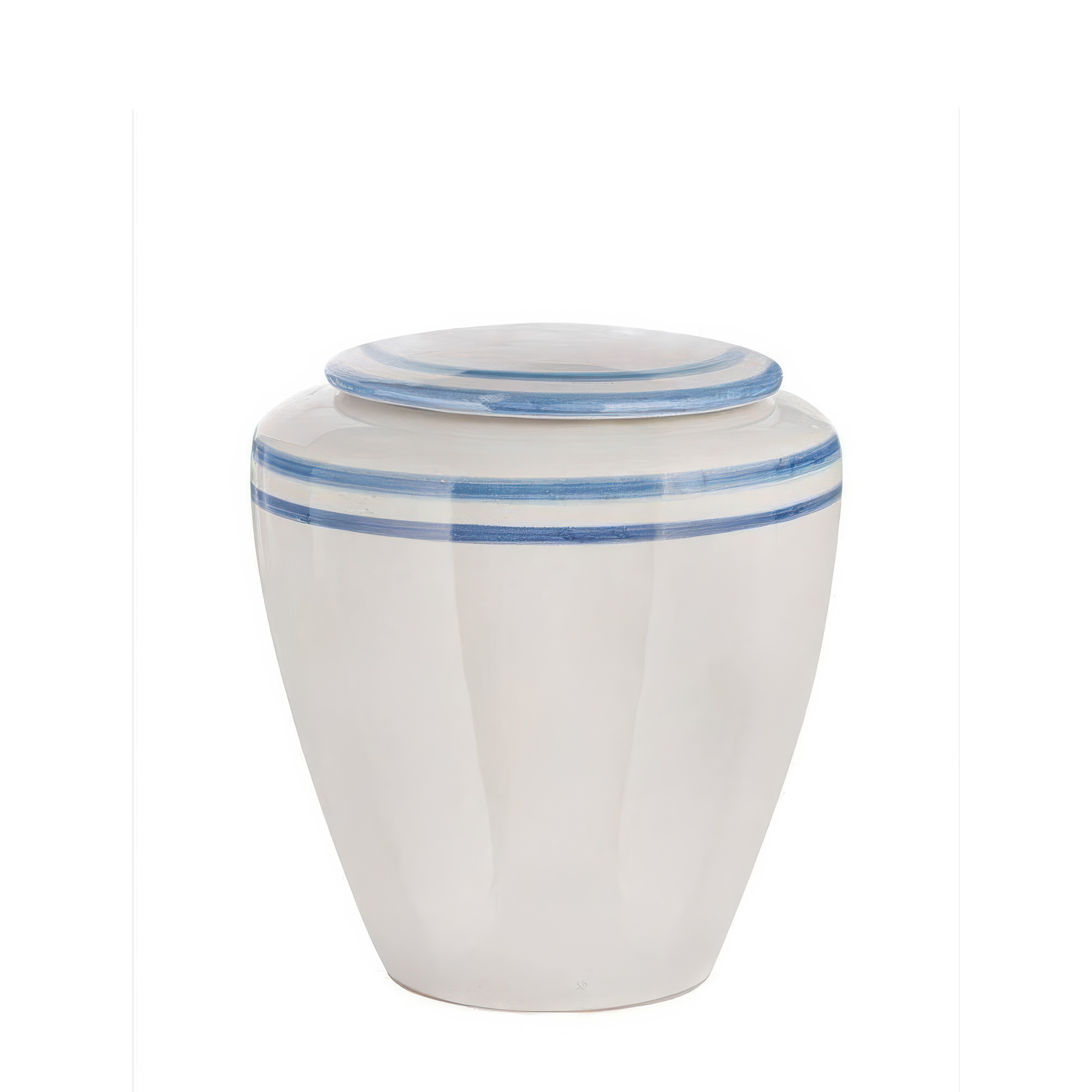
A family observing this rite in the United States will not find a Japanese vessel in a US catalog, and it is more honest to say so than to pretend otherwise. What they will find is a general selection of ceramic and porcelain forms, and the ones that suit are the plainest: a straight profile, a sealing lid, a single glaze, nothing applied to the surface. Size is the question to settle first, since a US urn sized for ashes alone will not hold remains collected the Japanese way.
What suits this rite in a US catalog is the plainest end of it — a straight profile, a lid that seals, a plain glaze with little or no ornament — because the vessel is meant to be lived beside for seven weeks and then interred whole. Products from left to right: Amare Ceramic Urn, Rimini Medium Ceramic Cremation Urn and Maritime Porcelain Cremation Urn.
The Memorial Services That Follow
The urn does not go to the cemetery on the day of the funeral. It comes back to the house and sits on a temporary altar with the photograph and the memorial tablet, and the family marks a rite every seventh day: shonanoka on the seventh, and so on to shijūkunichi on the forty-ninth.
The traditional understanding is that the person is between states for that period, and the forty-ninth day is when the passage completes. That is the day the family gathers with the priest, the permanent memorial tablet replaces the temporary one, and the urn is usually interred — nōkotsu — in the family grave. Most families treat it as the end of formal mourning. Our page on the 49 days after death covers the weekly rites, what happens at each one, and why the number is forty-nine.
The calendar does not stop there; it only spreads out. The first Obon after a death — hatsubon — is the heaviest of them, the summer festival when the dead are welcomed home with fires at the gate and sent off again with lanterns on the water. The equinox weeks, higan, bring the family to the grave twice a year. Then the anniversary services, hōyō, at one year, at the third, the seventh, the thirteenth, and on to the thirty-third, which many families keep as the last one.
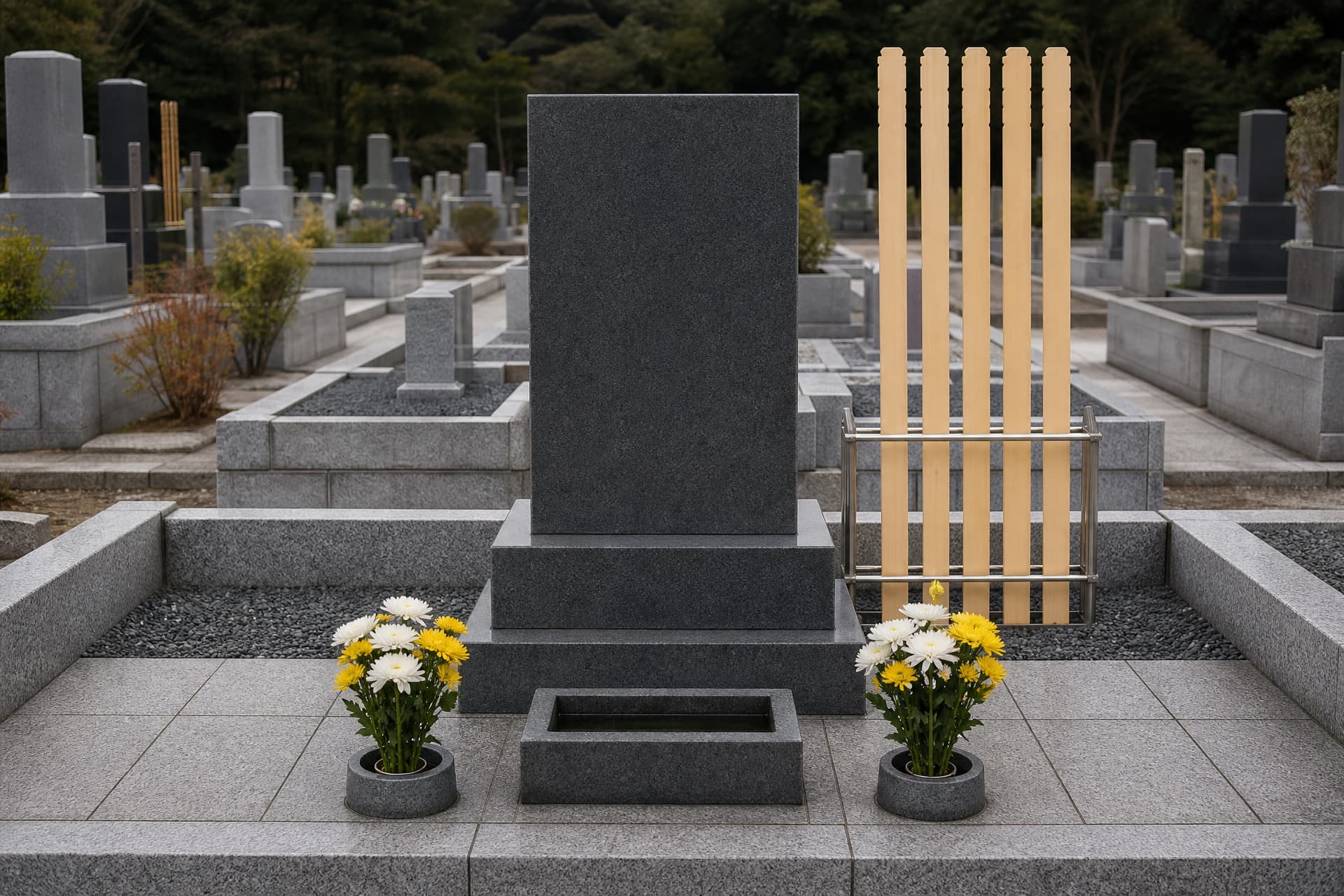
The tall boards behind the stone go up at each memorial service and weather away between them, which makes a family grave legible at a glance: recently visited, or not for years.
Where the Ashes Live Afterward
Two places hold the dead in a Japanese family, and both are permanent.
At home there is a butsudan, a wooden altar cabinet, often the size of a small wardrobe in an older house and now frequently a compact piece that suits an apartment. Inside it stand the ihai — lacquered memorial tablets carrying the posthumous names of everyone in the family line — with a photograph, a bell, an incense burner, and small vessels for the daily offering of rice and water. Someone opens the doors in the morning, offers, rings the bell, and says something to the person. It is a household routine rather than a formal devotion, and it is the main reason Japanese families do not experience their dead as far away.
At the cemetery there is the haka, the family grave. Japanese burial customs, in the sense an American reader means the word, are really interment customs: what is buried is the urn, and the plot belongs to the household rather than to an individual. An upright stone carries the family name, a chamber underneath — the karōto — holds the urns of successive generations, and tall wooden boards called sotōba are set behind the stone at memorial services in most schools. Visiting means washing the stone with water, filling the flower holders, lighting incense, and cleaning the plot.
That structure is under real strain now, and it is worth knowing about if you are trying to understand a Japanese family's decisions from the outside. A grave has to be inherited and maintained by someone, and when the children have moved to Tokyo and nobody is left in the home prefecture, families increasingly choose an urban locker-style columbarium, an eitai kuyō grave where the temple takes over perpetual care, or a grave dismantled on purpose in an arranged closure. Scattering exists but remains uncommon; the strong expectation is still that ashes are kept, housed and visited.
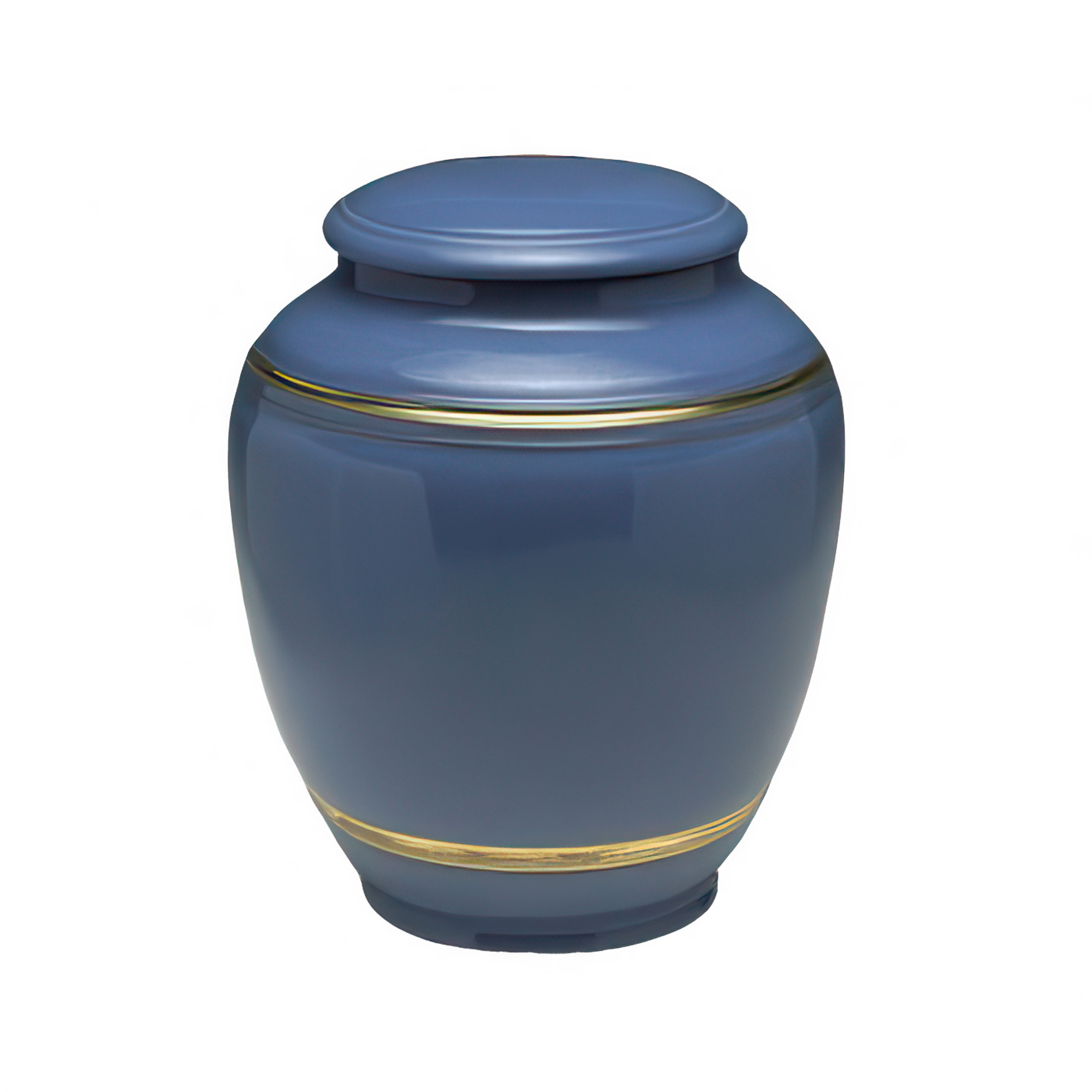
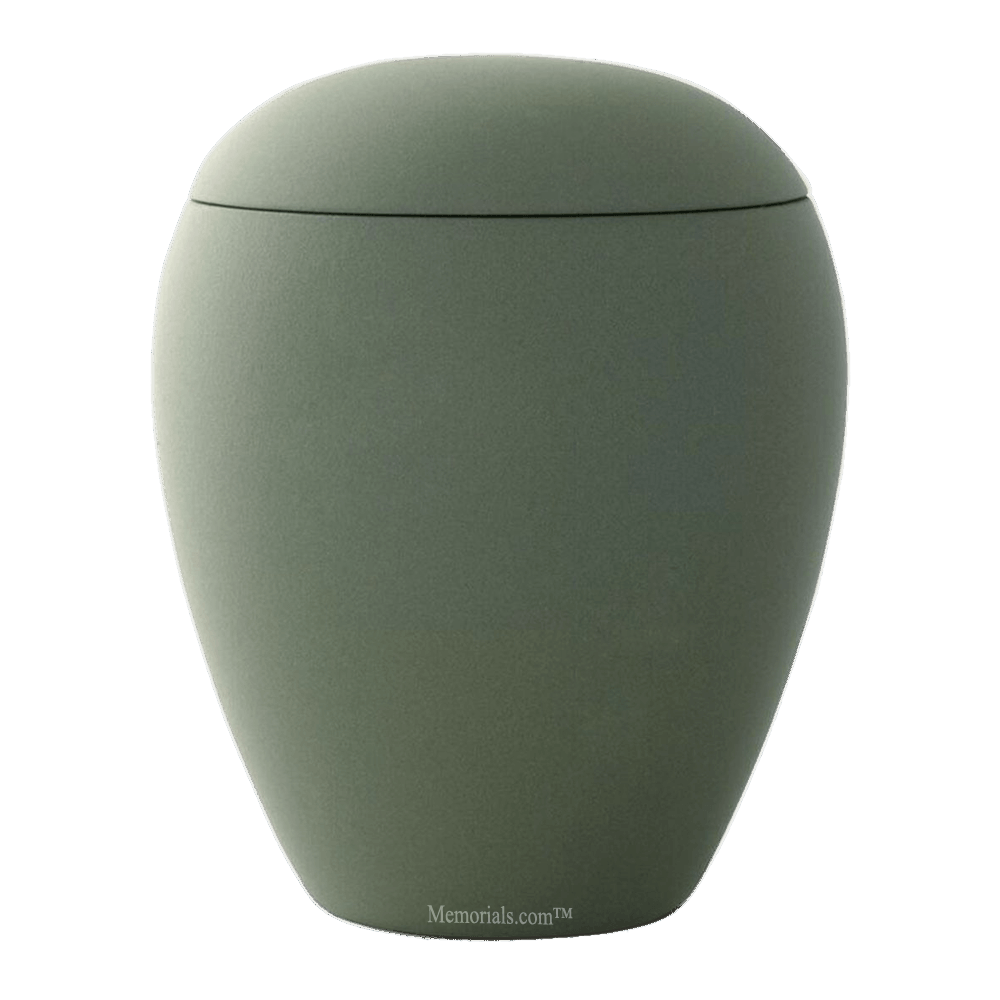
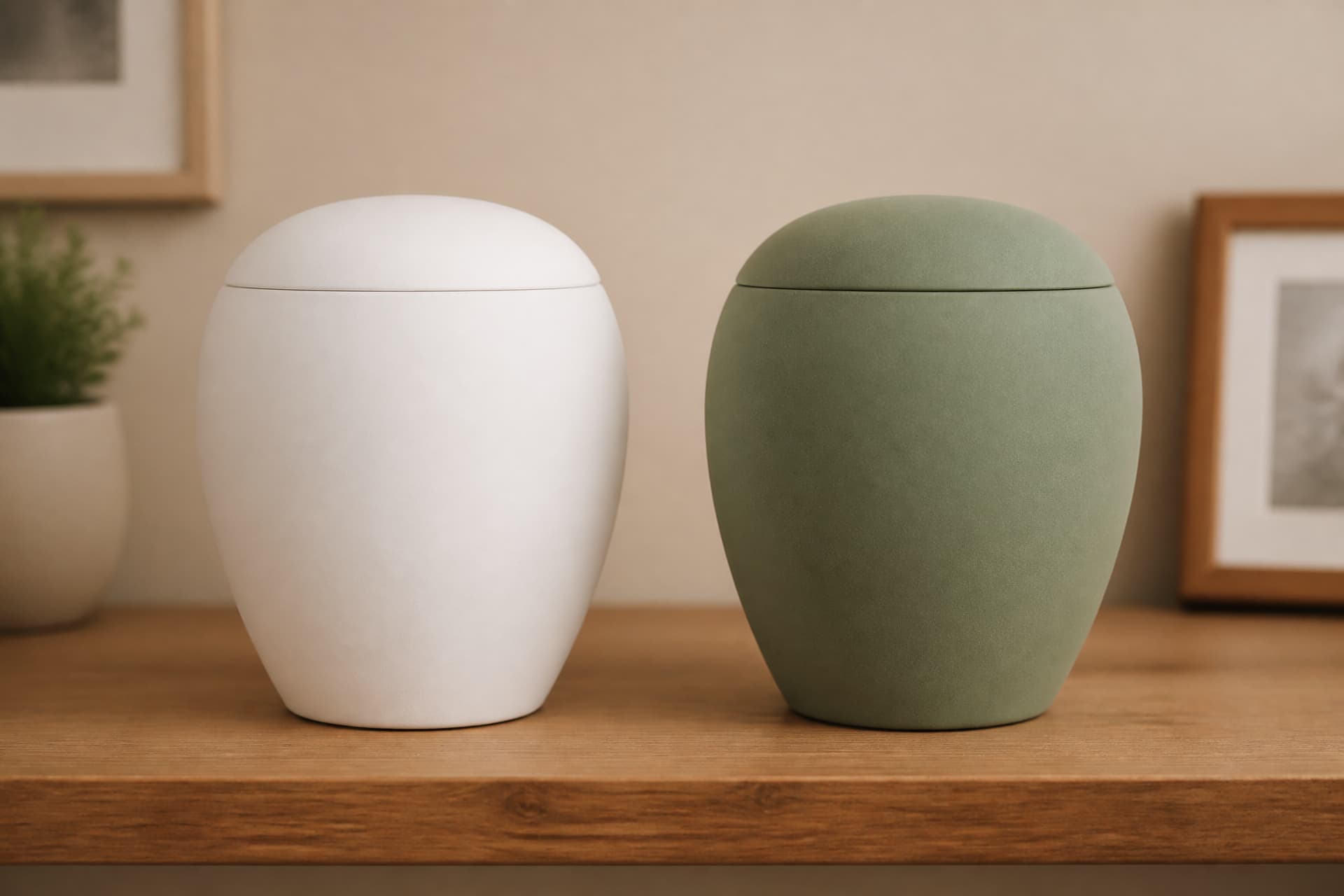
Dividing the remains is ordinary in Japan — a portion to a head temple, or one small vessel per household while the main urn goes to the family grave. A US shelf holds the same idea in a smaller form. Products from left to right: Blanco Ceramic Keepsake Urn and Terra Olive Ceramic Keepsake Urn.
How Japanese Practice Compares With Other Traditions
Setting Japan beside its neighbors makes what is distinctive about it obvious, and the sharpest contrast is with a tradition that shares its central act.
Cremation is universal in Japan and effectively universal in Hindu funeral traditions, yet the ashes then go in opposite directions. Hindu practice immerses them in flowing water, ideally the Ganges, and the release is the point: what is left should not be kept. Japanese practice retains as much of the skeleton as the fire leaves, hands it to the family, houses it in a stone chamber, and expects visits for a century. Two traditions with the same fire and completely different answers to the question of what remains.
Set it instead against a Muslim funeral and the whole timetable inverts. Islamic practice requires burial of the intact body, usually within a day, with speed as the mark of respect. Japan takes two days to reach the cremation, then keeps the person at home for seven weeks and in the family grave indefinitely. Neither is slower or faster in any moral sense; they disagree about where the person should be.
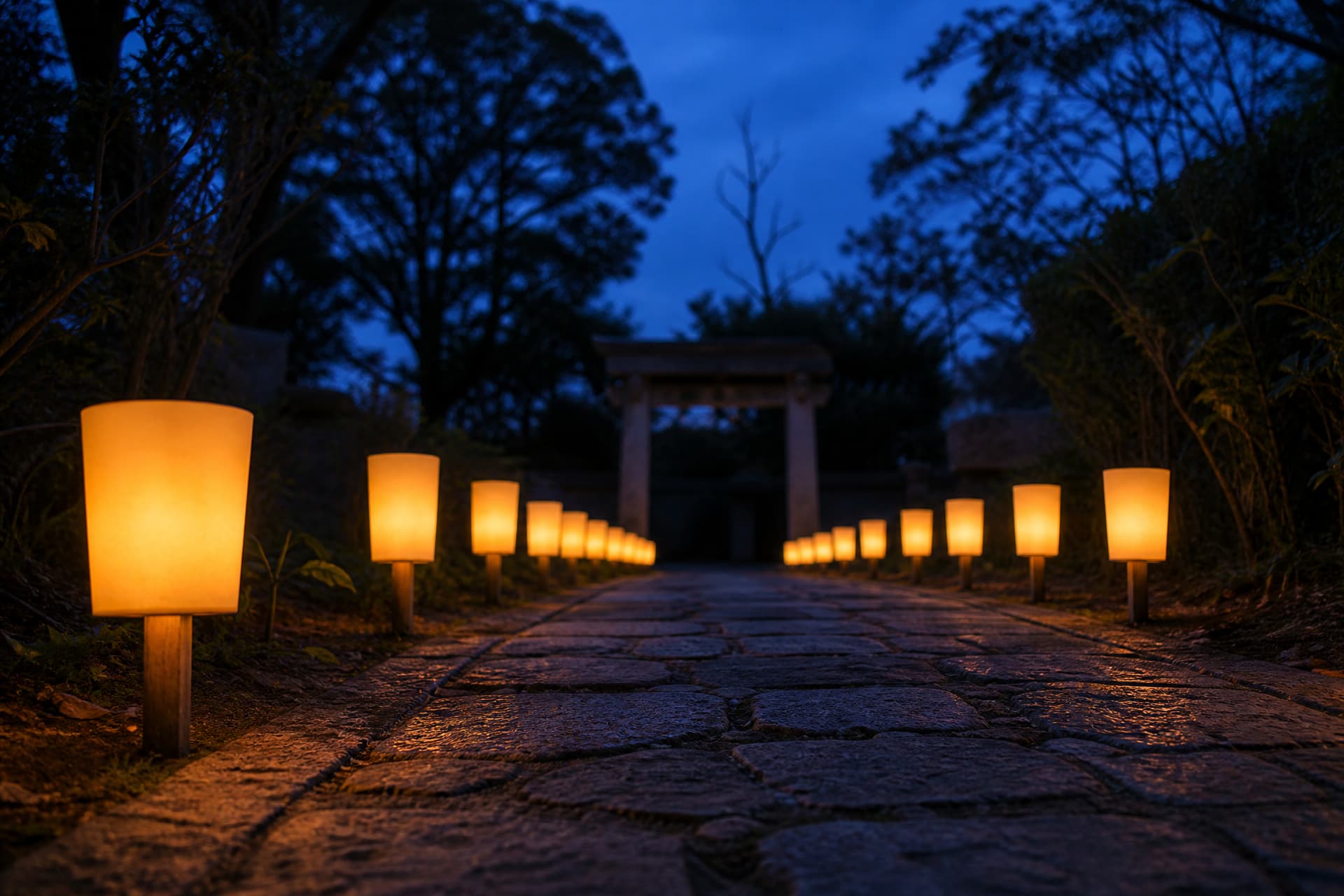
Obon lanterns light the way home for the dead in midsummer and send them back at the end of it. The first Obon after a death is the year's heaviest observance for a family.
Frequently Asked Questions
How many days does a Japanese funeral last?
Two days for the funeral itself: the wake on the first evening, the farewell ceremony the following morning, and the cremation that same afternoon. The mourning period runs for forty-nine days after the death, with a rite every seventh day, and memorial services continue at intervals for decades afterward. Law requires twenty-four hours between death and cremation, and crematory availability in large cities can push the start back by several days.
Why do Japanese families pick up bones with chopsticks?
Because the cremation is run so that the skeleton survives recognizably, and collecting it is understood as the family's work rather than the crematory's. Two people lift each fragment together, working from the feet upward so the person stands upright in the urn, and the vertebra shaped like a seated Buddha goes in last. The everyday taboo against passing food from chopstick to chopstick comes directly from this rite.
Are Japanese funerals Buddhist or Shinto?
Buddhist, almost without exception. Shinto treats contact with death as a state of ritual impurity to be kept away from the shrine, so it stepped back from funerals centuries ago and Buddhism took them over. Shinto funerals do exist, and so do Christian ones, but both are a small minority.
Do Japanese families keep ashes at home?
For the first forty-nine days, yes — the urn sits on a temporary altar at home with the photograph and the memorial tablet. After that it is normally interred in the family grave, while the memorial tablet stays at home in the household altar permanently. Some families also keep a divided portion, and some send one to a head temple.
What is a kaimyō, and why is a new name given?
A kaimyō is a posthumous Buddhist name conferred by the priest at the funeral. It marks the person's reception into the Buddhist community as a disciple, so that they can take the path onward, and it is what appears on the memorial tablet and on the grave. The names have grades, the donation to the temple varies with them, and Jōdo Shinshū uses a different term, hōmyō, for its own doctrinal reasons.
Before You Go
If you are the guest, your job is smaller than it feels. Wear plain black, bring the envelope, offer incense the way the person ahead of you did, say something short and ordinary to the family, and stay for a little of the meal. Watching and copying is not a fallback in a Japanese funeral — it is the expected behavior, and everyone in the room learned the sequence the same way. If salt is handed to you on the way out, it is for scattering on yourself at your door; and if it is not offered, that is a Jōdo Shinshū temple declining to treat death as something you need cleaning from.
If you are the family, arranging a service in the United States, the decision that outlasts the afternoon is not the ceremony but the vessel and where it will sit. Almost nothing about a Japanese rite is negotiable in Japan, and almost all of it is here — which parts you keep, whether the forty-nine days are marked at home or at a temple, whether the remains go to a grave, a niche, or a shelf beside a photograph. That is worth deciding on purpose. The seven weeks between the funeral and the forty-ninth day exist precisely so the answer does not have to be found in a single week.