🏬Supersize Online Funeral Retailer🪦1000's of Headstones⚱️Over 10,000 Cremation Urns⚰️Caskets Overnight Delivery🛒Funeral & Memorial Superstore🚚FREE Shipping on ALL Orders👨👩👧👦Helping Families for over 20 Years💰Lowest Price Guarantee🏬Supersize Online Funeral Retailer🪦1000's of Headstones⚱️Over 10,000 Cremation Urns⚰️Caskets Overnight Delivery🛒Funeral & Memorial Superstore🚚FREE Shipping on ALL Orders👨👩👧👦Helping Families for over 20 Years💰Lowest Price Guarantee
🏬Supersize Online Funeral Retailer🪦1000's of Headstones⚱️Over 10,000 Cremation Urns⚰️Caskets Overnight Delivery🛒Funeral & Memorial Superstore🚚FREE Shipping on ALL Orders👨👩👧👦Helping Families for over 20 Years💰Lowest Price Guarantee🏬Supersize Online Funeral Retailer🪦1000's of Headstones⚱️Over 10,000 Cremation Urns⚰️Caskets Overnight Delivery🛒Funeral & Memorial Superstore🚚FREE Shipping on ALL Orders👨👩👧👦Helping Families for over 20 Years💰Lowest Price Guarantee
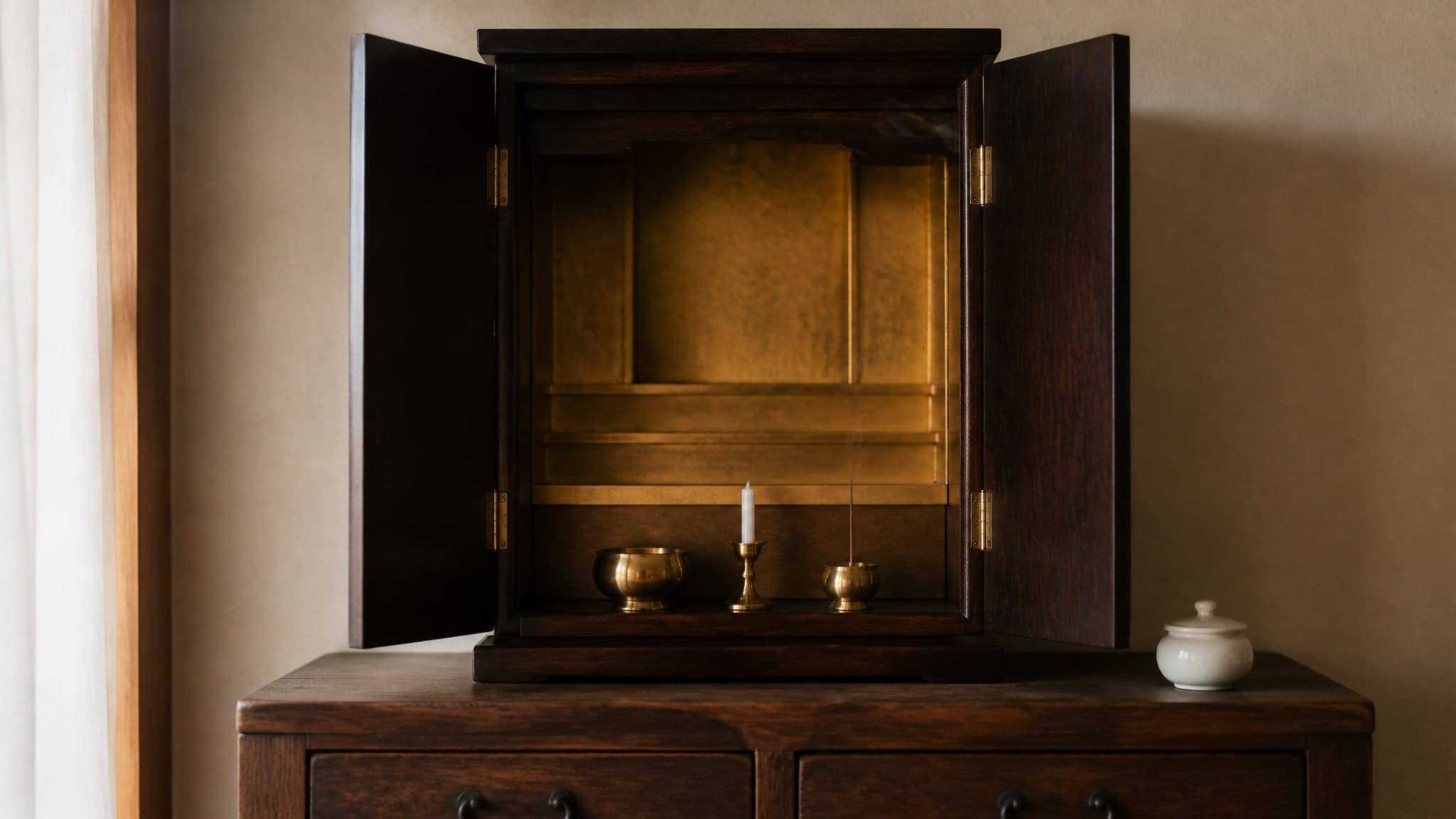
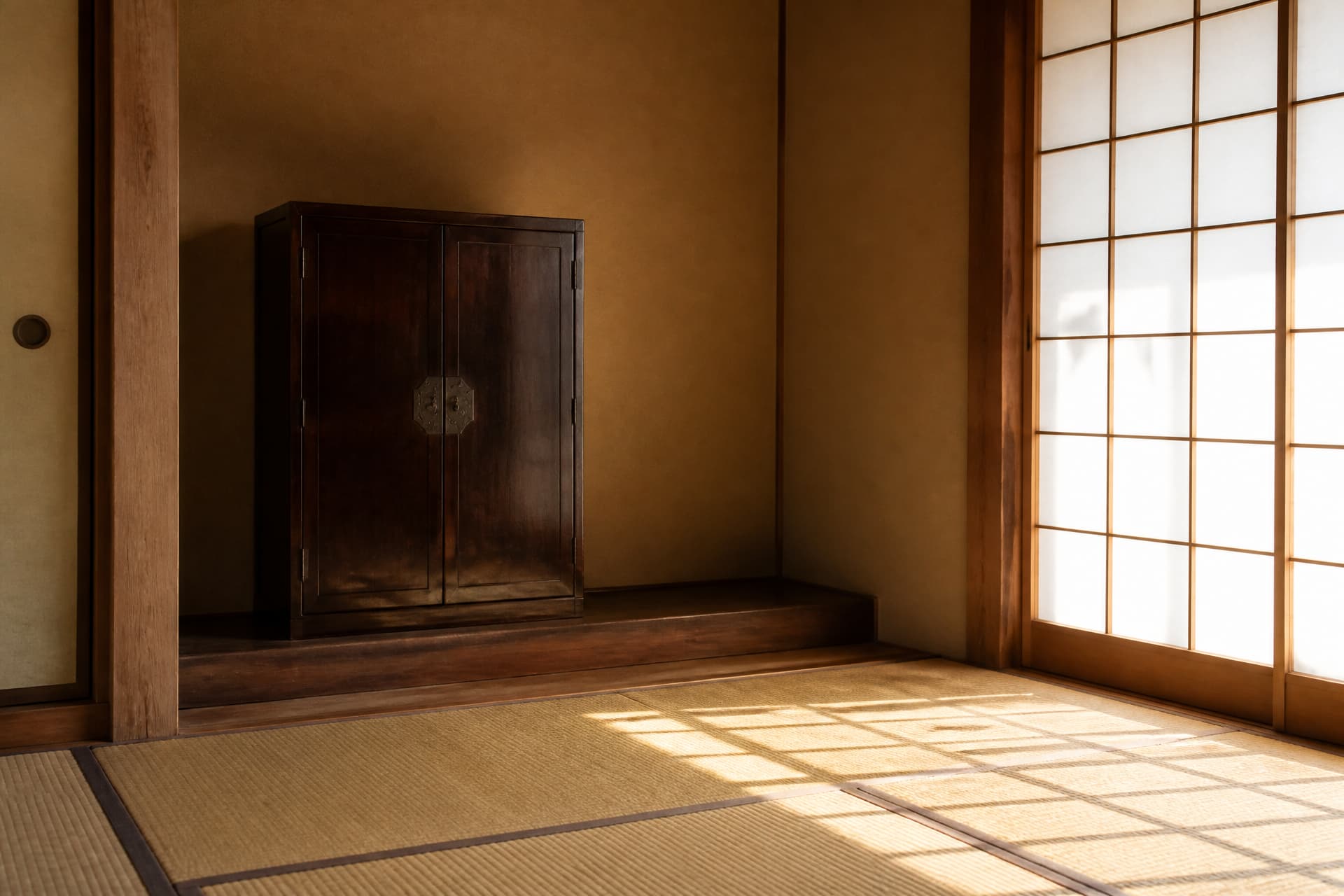
In a great many Japanese homes the day begins at a cabinet. Someone slides open its two lacquered doors, sets down a small covered bowl of rice from the first pot of the morning, lights one stick of incense, strikes a brass bowl-bell once, presses their palms together, and says something to a grandmother who died eleven years ago. The cabinet is a butsudan, and it is neither a museum piece nor a monument to grief. It is working furniture in an ordinary household, tended most mornings before anyone leaves for work.
This page covers four things: what the object actually is, what goes inside one, how a family uses it across a day and across a year, and what an American family can honestly take from the practice. It sits in our funeral traditions guide beside the customs it grew out of and the ones it resembles.
仏壇 translates as "Buddha altar," and the first word is doing work that most English pages drop. The cabinet exists to house a honzon — the central object of reverence, which may be a seated Buddha figure, a painted image, or a scroll, depending on the school the family belongs to. The dead are honored there as well. But they are honored inside the Buddha's house, not in a house built for them.
That ordering is the most common thing to get wrong. Readers arrive at this topic searching for a Japanese home shrine for the dead, a phrase that describes what the object does about two-thirds of the time and misses what it is. The more accurate description is a house of the Buddha and the bodhisattvas in which deceased relatives are also present — a distinction a Japanese-American reader notices immediately, and one nearly every English-language page flattens.
The naming in English is a mess, and it is worth knowing before you search or shop. The same cabinet is sold as a butsudan altar, a butsudan shrine, a Japanese butsudan, and — in listings that have been through translation software — a Japanese altar butsudan. All four name the object described on this page.
One boundary before anything else: in Japan this is not where the ashes are kept. After cremation the urn normally goes into the family grave on a schedule set by the memorial calendar, and the altar holds the memorial tablets and the photograph rather than the remains. Families outside Japan often do keep a portion at home, which is a real adaptation rather than a mistake, and it is taken up further down this page.
The altar is also the last step of a long sequence rather than the first. Japanese funeral traditions run from the wake through the cremation and the interment; what follows all of that is a cabinet in the front room and forty years of mornings.
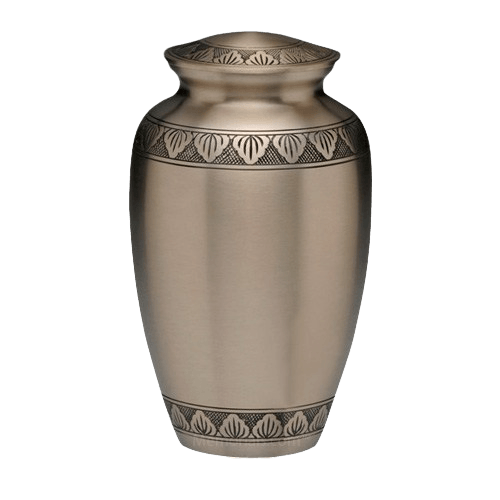
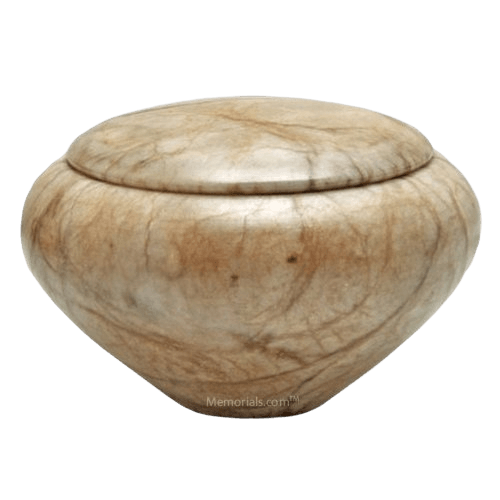
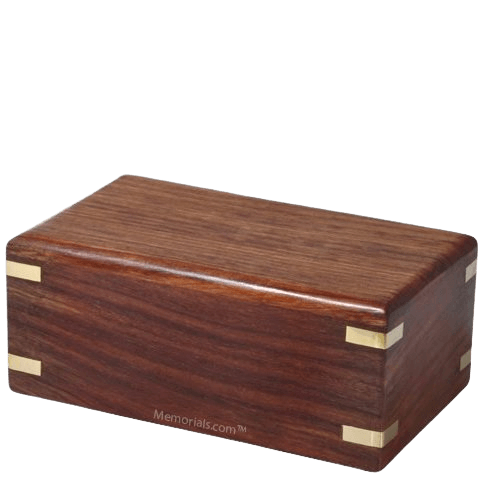
Small Urns to Stand Beside an Altar
Keepsake vessels for a share of the ashes kept at home
Household altars were not always ordinary. The form standardized and spread during the Edo period, when the danka system tied every household to a Buddhist temple and made memorial rites a domestic duty as much as a devotional one. A cabinet at home was the practical answer — a temple's furniture, scaled to a room.
Older houses set aside a butsuma: an alcove or a small room built for the altar and kept clear of anything else. Apartments rarely have one. Placement has become more flexible as a result, and the doors are part of why that works — a cabinet that closes can share a room with a television without either one embarrassing the other.
How common is it now? Surveys have put household ownership above 60 percent nationally, above 90 percent in rural villages, and under 60 percent in cities and suburbs. Those figures circulate widely and are rarely dated. Read them as the shape of a pattern — deep in the countryside, thinning in the cities — rather than as a current census.
The butsuma — an alcove built specifically for the altar — is a feature of older houses. Most modern homes place the cabinet wherever there is room, which is one reason the closing doors matter.
What Goes Inside a Butsudan
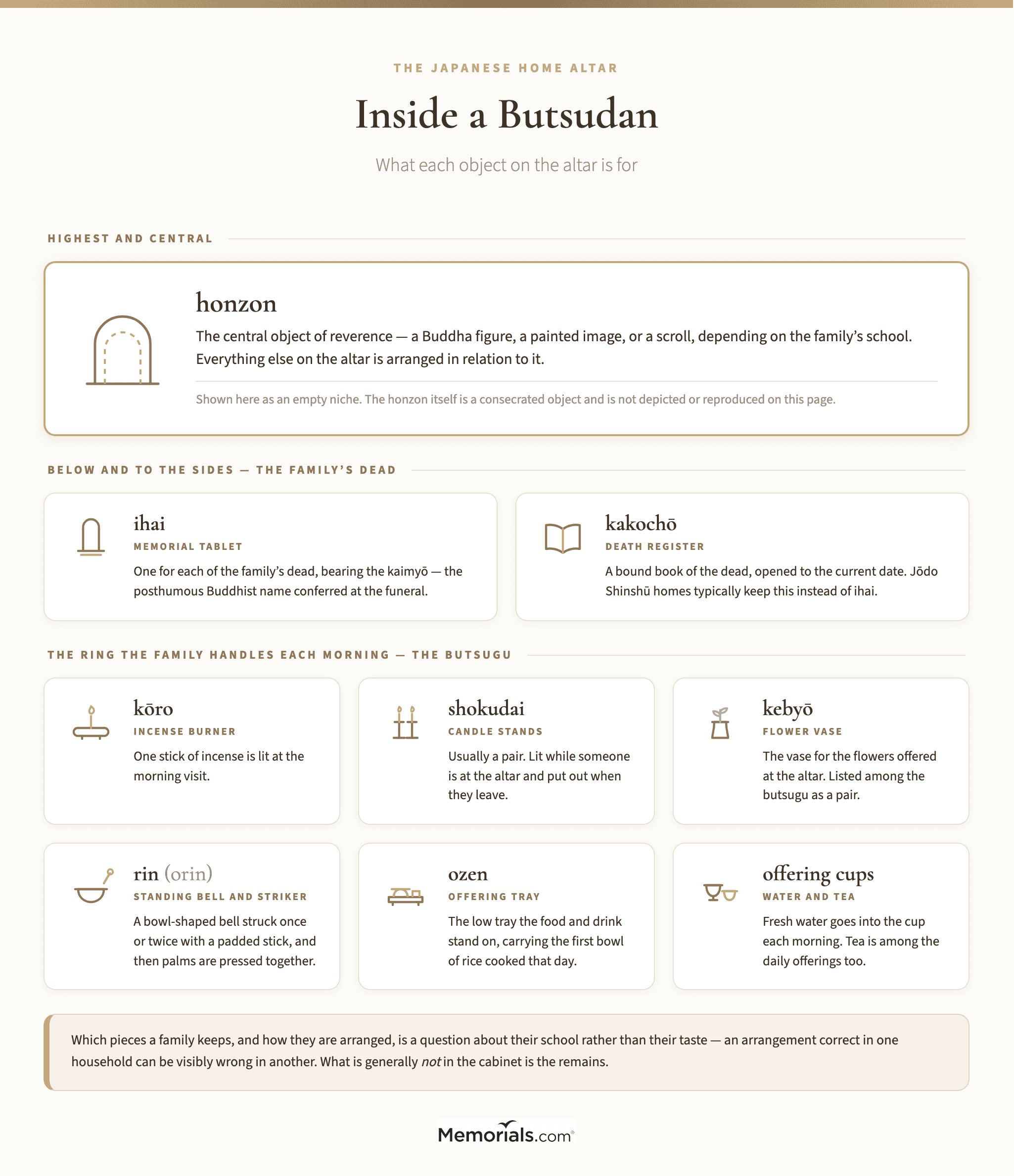
At the center is the honzon. In Jōdo Shinshū homes it is usually an image of Amida Buddha; in Sōtō Zen, Shakyamuni; in Nichiren schools it is a scroll, the gohonzon, a consecrated object with its own rules about handling and reproduction. Whatever form it takes, it occupies the highest and most central position, and everything else is arranged in relation to it.
Around and below it sit the ihai: memorial tablets, usually black lacquer with gold characters, one for each of the family's dead. The characters are the kaimyō — the posthumous Buddhist name conferred at the funeral, which is what a person is called at the altar rather than the name they used in life.
Not every family uses them. Jōdo Shinshū, the largest school in Japan and the tradition most Japanese-American temples belong to, typically keeps no ihai at all. It uses a kakochō instead — a bound register of the dead, opened to the page for the current date — often alongside photographs. A visitor who has read one page on the subject and expects a rank of tablets may find a book and a framed picture, and nothing is missing.
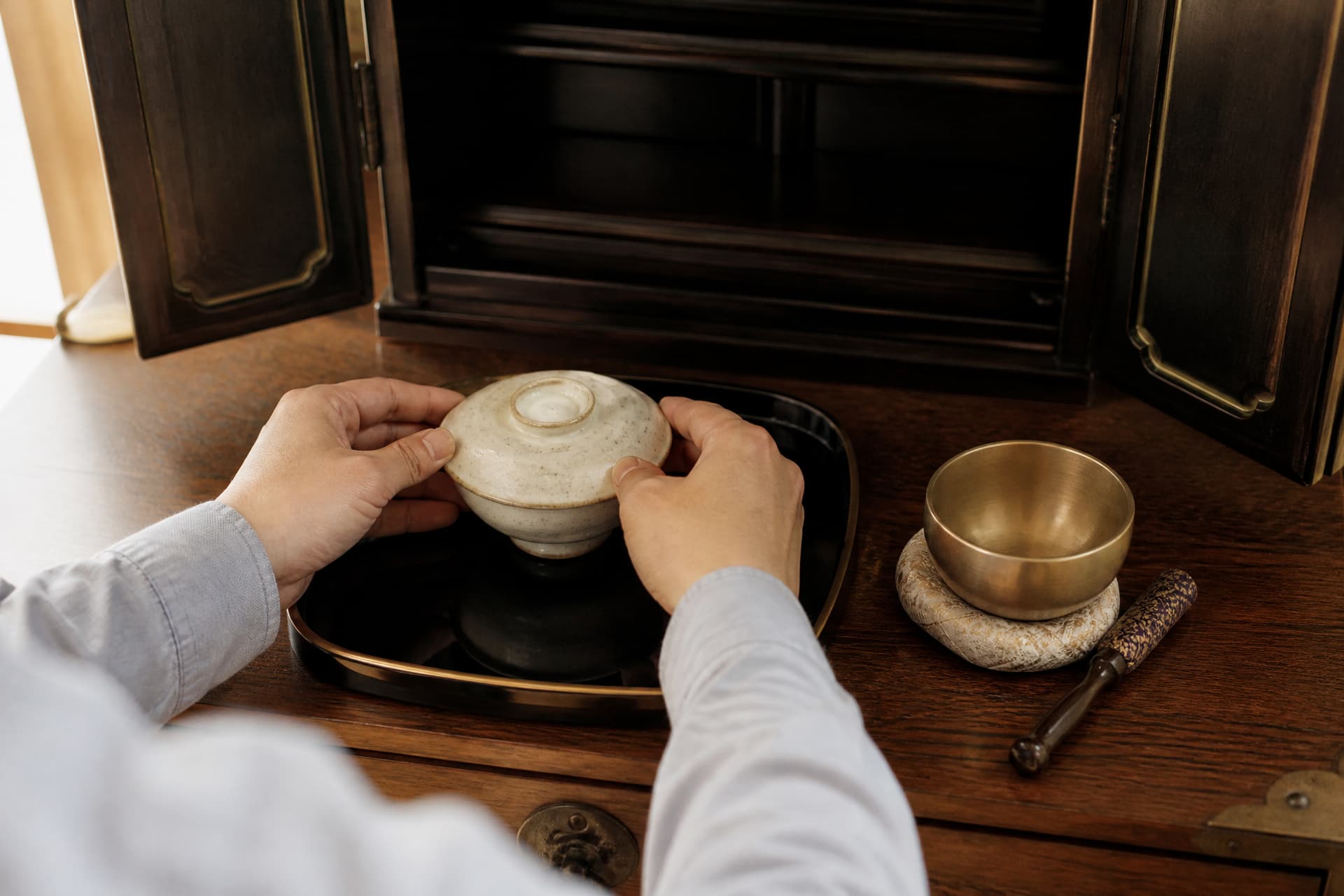
Then the butsugu, the implements, which come as a set: the kōro (incense burner), shokudai (candle stands, usually a pair), kebyō (flower vases), the rin or orin (a bowl-shaped standing bell struck with a padded stick), and small cups and an ozen tray for food and drink.
Which pieces a family keeps, and how they are arranged, is a question about their school rather than their taste. Buddhist funeral customs differ enough between Jōdo Shinshū, Sōtō Zen, Shingon and Nichiren that an arrangement correct in one household would be visibly wrong in another, and the altar is where those differences are easiest to read.
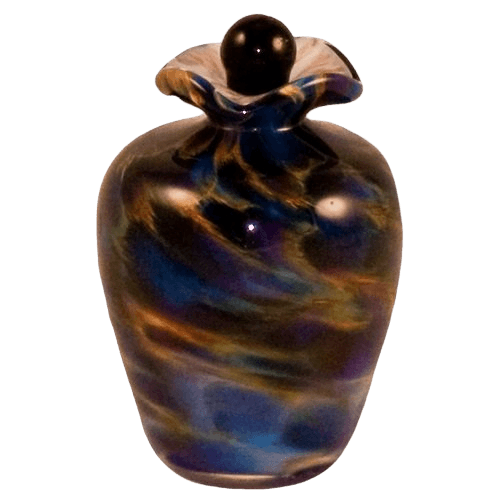
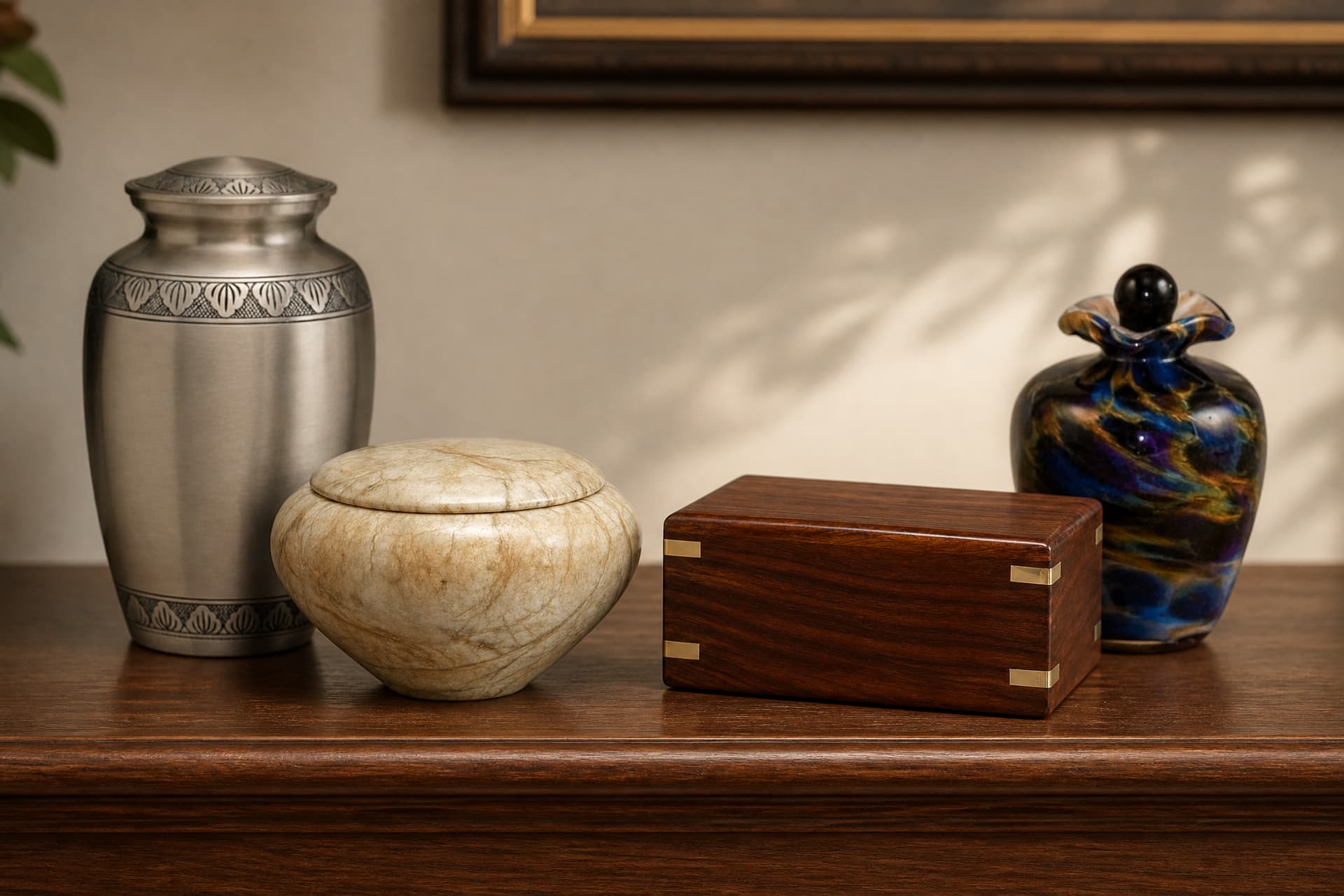
What is generally not in the cabinet is the remains. Japanese cremated remains go into a kotsutsubo, the tall glazed vessel used for interment, and our guide to Japanese urns covers how those are sized and chosen. Where a family divides the ashes and keeps a share at home — common in the diaspora, and increasingly common in Japan — that share is held in one of the small urns that stand a few inches high and sit beside the altar rather than inside it.
Other traditions place the vessel differently, and the reasoning is rarely arbitrary. Our religious cremation urn guide sets the Buddhist expectations beside Catholic, Jewish, Hindu and Muslim ones.
Every object on a butsudan has a job, and the arrangement is hierarchical rather than decorative. The honzon takes the highest central position, the memorial tablets sit below and to the sides, and the implements — incense, light, flowers, sound and food — form the ring the family actually handles each morning.
The daily round takes a minute or two, and it is almost always the same minute or two.
The doors are opened in the morning. Fresh water goes into the cup, and the first rice cooked that day — the gohan — goes into a small covered bowl on the tray before anyone in the house eats. One stick of incense is lit. The bell is struck once or twice, palms are pressed together, and something is said. It may be a sutra passage. It may be "morning, Dad." The doors are often closed again at night.
The offerings surprise Western visitors most, because they are not symbolic. A peach a neighbor brought over, the brand of beer he drank, the first slice of a birthday cake, a postcard from a trip he would have wanted to hear about: these go on the tray, sit for a while, and are then eaten and drunk and read by the living. Feeding the dead and feeding the family are the same act, about twenty minutes apart.
The candle is lit while someone is at the altar and put out when they leave. A butsudan is not left burning — the same practical rule that governs memorial candles in American remembrance, where what stays lit and what gets extinguished is most of the etiquette.
None of this is structurally unique to Japan. A household altar tended with light and food, where the dead are fed rather than only remembered, is one of the most widely distributed religious forms there is. The Día de los Muertos velas burning on a Mexican ofrenda do a job a Japanese family would recognize on sight, down to setting out the food the person actually liked.
The first rice of the day goes to the altar before the household eats, and comes back to the kitchen twenty minutes later. Almost nothing offered here is wasted, which is part of why the practice survives in small apartments.
The Butsudan Through the Year
The altar keeps a calendar, and it is denser than most Americans expect.
It starts before the cabinet is involved at all. After the cremation the family performs kotsuage, the bone-picking ceremony, lifting the bones into the vessel with chopsticks, two people to a bone. That is the step by which the remains physically enter the family's keeping.
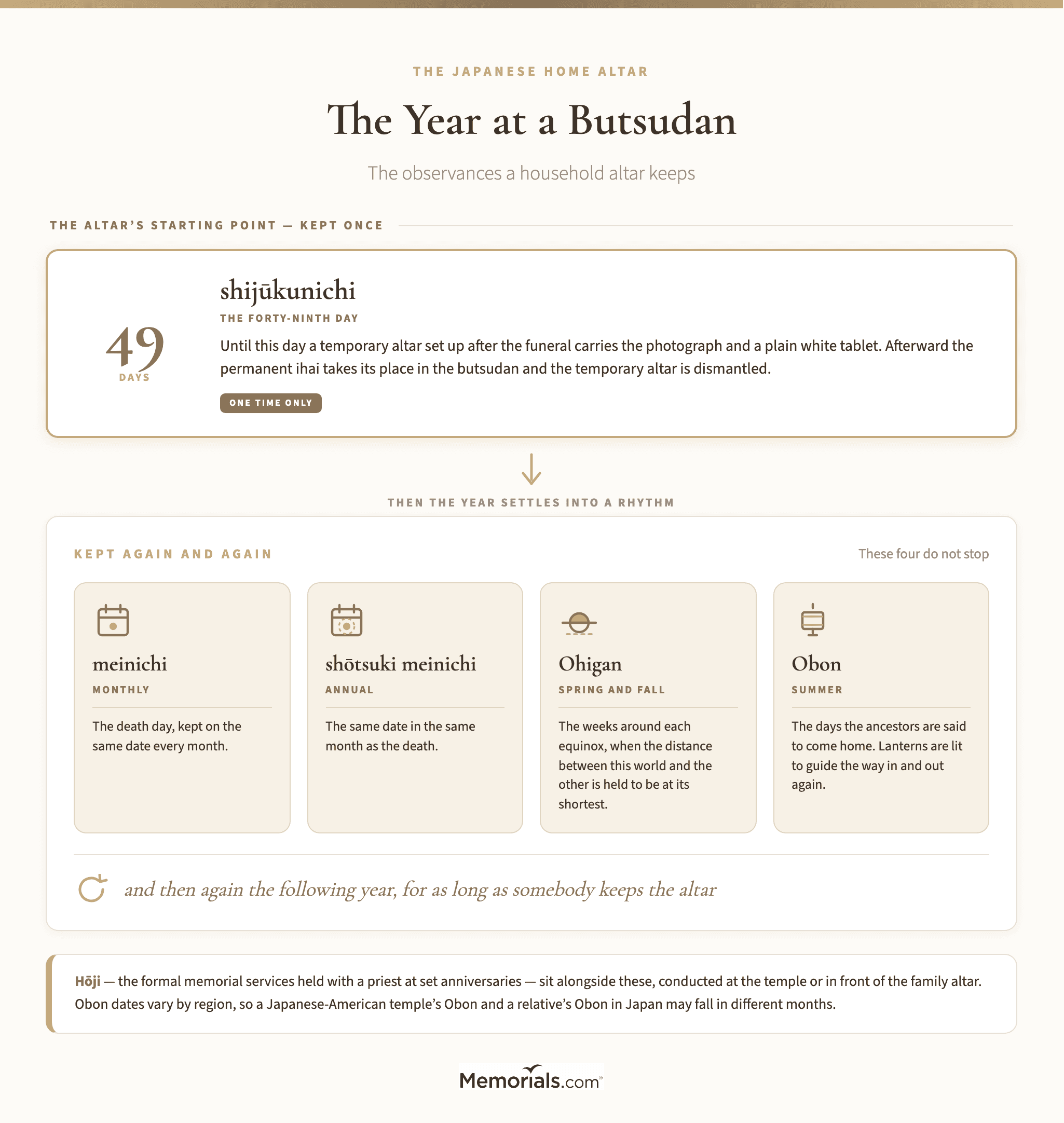
The first fixed marker is shijūkunichi, the forty-ninth day. Until then a temporary altar set up after the funeral carries the photograph and a plain white tablet; afterward the permanent ihai takes its place in the butsudan. The observances across those seven weeks have their own article — 49 days after death — and this page will not repeat them.
After that the year settles into a rhythm. Meinichi is the death day: the monthly one falls on the same date each month, and the annual one, shōtsuki meinichi, falls on the same date in the same month as the death. Hōji are the formal memorial services held with a priest at set anniversaries, conducted at the temple or in front of the family altar. Ohigan falls in the weeks around each equinox, when the distance between this world and the other is held to be at its shortest.
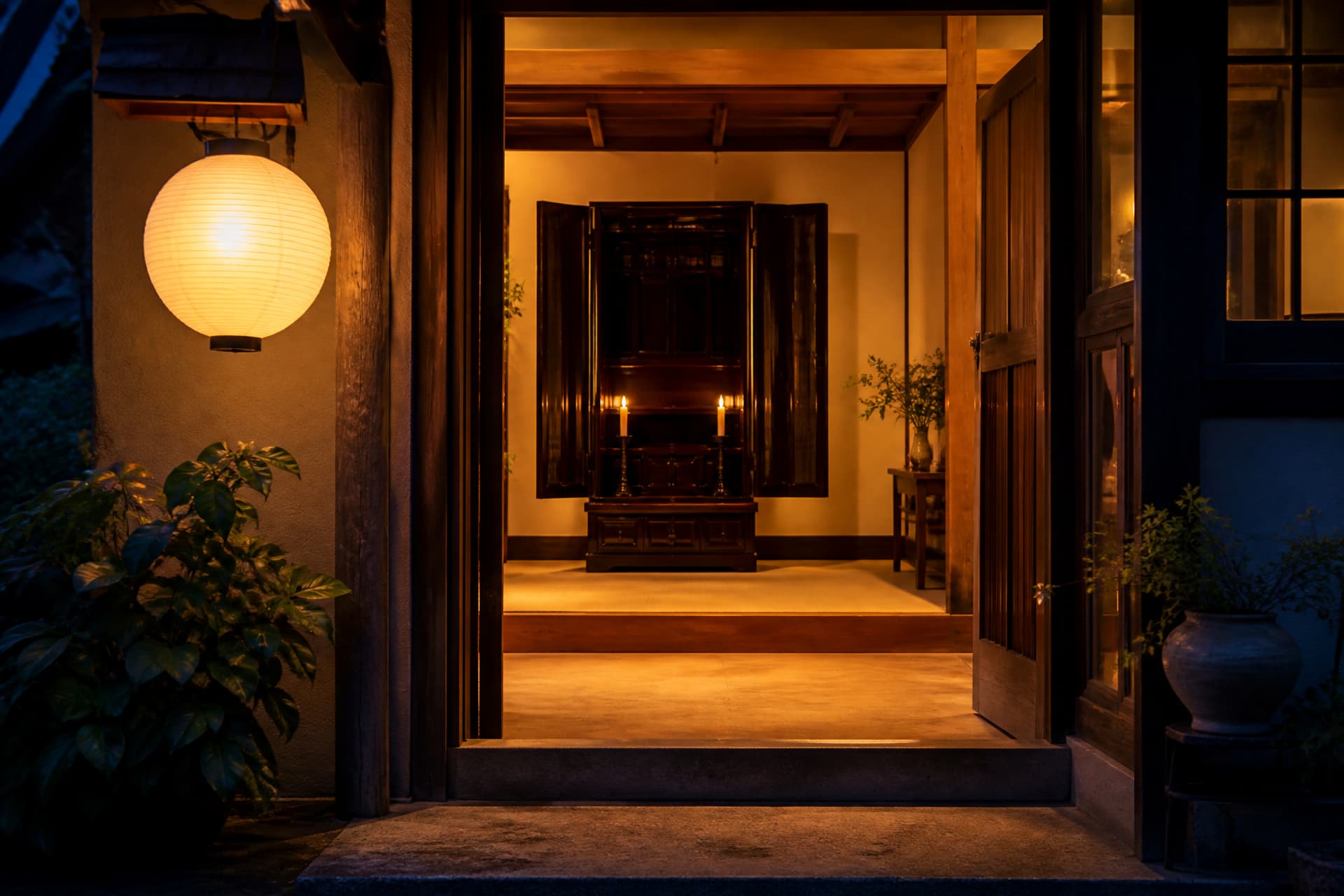
Obon, in summer, is the year's centerpiece: the days when the ancestors are said to come home. The cabinet is cleaned, extra offerings go out, lanterns are lit to guide the way in and out again, and the family visits the grave. The dates vary by region, so a Japanese-American temple's Obon and a relative's Obon in Japan may fall in different months.
The memorial calendar is what turns a cabinet into a practice. Four of its five markers repeat forever — the monthly death day, the annual one, the two equinox weeks and Obon — which is why a butsudan is described as a piece of furniture a family keeps rather than an event a family holds.
Obon is the one stretch of the year when the altar is the center of a gathering rather than a quiet minute. The lanterns are wayfinding rather than decoration — lit to bring the ancestors in, and at the end of the festival to see them back out.
Butsudan and Kamidana: What the Difference Is
Many Japanese homes hold both, and confusing the two is the most common error in English writing on the subject.
A butsudan is Buddhist. It holds the honzon and the family's dead, sits at chest height or lower, often on or inside a chest of drawers, and receives rice, tea, water, flowers and incense. You greet it silently, palms together.
A kamidana — the "god shelf" — is Shinto. It is mounted high on a wall, ideally above head height, and holds a talisman from a shrine rather than anything belonging to a particular dead person. Its offerings are rice, salt, water and sometimes sake. Its greeting is audible: commonly two bows, two claps, and a bow.
The dead are the dividing line. Shinto treats death as a source of ritual impurity, so the deceased have no place on the kamidana at all — and in many households the kamidana is covered with white paper for a mourning period after a death in the family, while the butsudan does the opposite and takes the person in. Two shelves, two theologies, one living room.
Can an American Family Have a Butsudan?
The short answer is yes, and the question is more interesting than the answer.
If you practice Japanese Buddhism, the altar is ordinary equipment rather than a cultural artifact, and the temple is where you start. The Buddhist Churches of America has served Jōdo Shinshū congregations here since the early twentieth century — through the wartime internment of Japanese-American families, which is part of why so many household altars in this country carry a history the cabinet itself does not show — and its membership has not been exclusively Japanese for a long time. A priest advises on the honzon and consecrates it, which is the step that turns a cabinet into an altar.
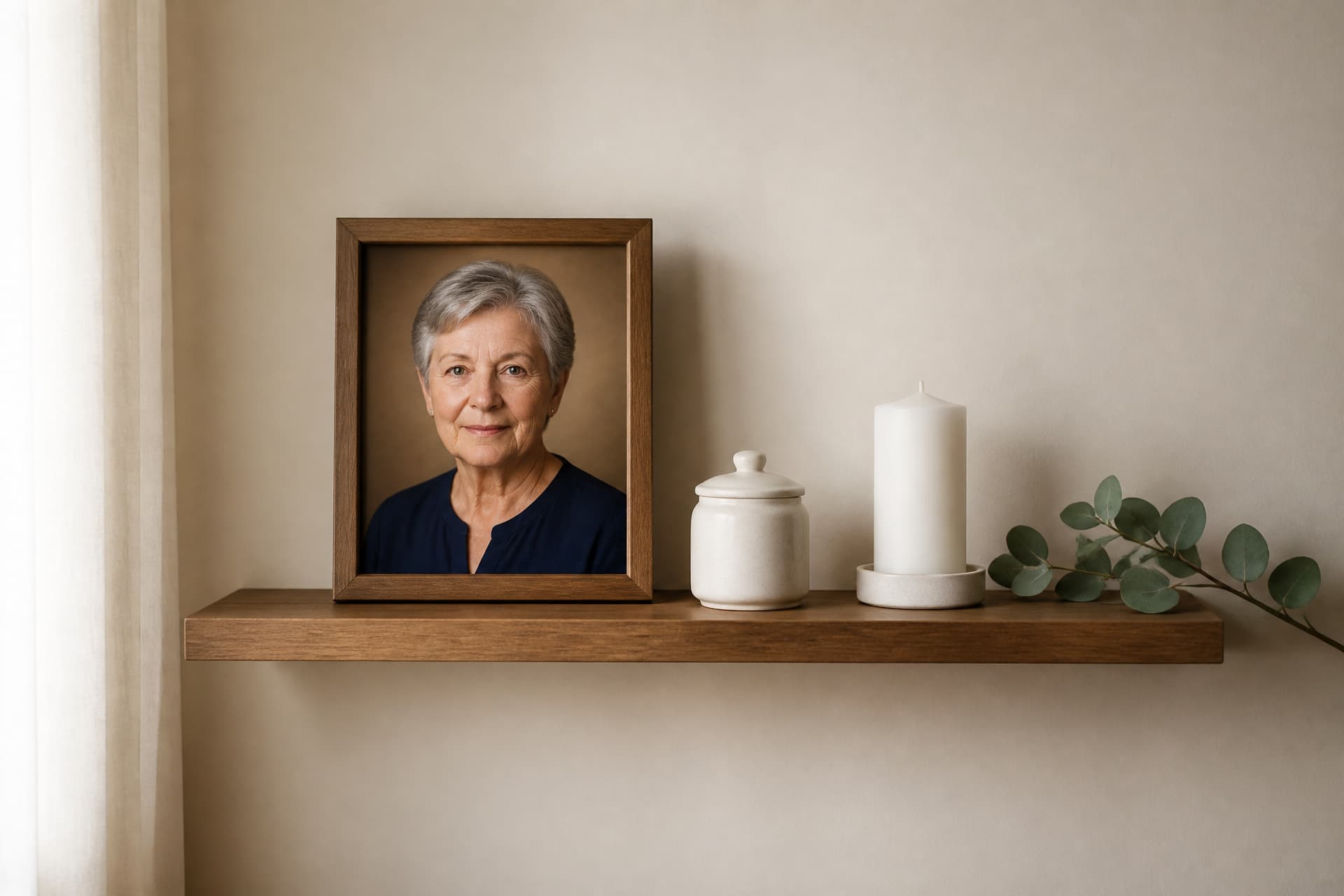
If you do not practice, the honest line runs somewhere else. Buying a consecrated religious object because it is beautiful is the part that reads badly, and a butsudan with a honzon installed is not furniture. What you can do without any awkwardness at all is build the shape of the practice without claiming the content: a shelf, a photograph, a candle, water changed each morning, one minute before the day starts. That is a remembrance space, it owes nobody an explanation, and it delivers most of what the practice delivers.
Prices, if you are pricing a real one: new cabinets in Japan run from a few hundred dollars for a small modern unit to several thousand for a traditional lacquered and gilded piece, with commissioned work far above that. Published figures disagree by close to an order of magnitude, largely because some count the cabinet alone and others include the full butsugu set. Treat any single number you are quoted — including this one — as the middle of a wide range.
American readers often want to know whether keeping ashes at home is unlucky, improper, or somehow unfinished business. This tradition is a standing counterexample: an entire culture that has kept its dead in the main room on purpose, for centuries. The question of whether is it bad luck to keep ashes in the house has its own article, and the answer there is the one this practice has been giving for four hundred years.
If you are actually building the shelf, our guide to how to display a cremation urn at home covers the practical decisions a butsudan solved long ago — height, light, what it stands beside, and where it will not be knocked by a door.
The portable part of the practice is a shelf, a photograph, a light and a minute. Nothing on this shelf makes a religious claim, and it still does most of the work the cabinet does.
When No One Can Keep the Altar
Butsudan-jimai — closing the butsudan — is the part of this subject nobody writes about, and it is the part a growing number of families face. Somebody dies, the house is sold, the surviving children live in apartments in another city or another country, and a cabinet the size of a wardrobe has nowhere to go and nobody to open it.
It is not simply thrown out. A priest performs a rite that withdraws the consecration — takes the spirit out of the object — after which the cabinet is an item of furniture and may be sold, dismantled or disposed of without offense. The ihai are usually entrusted to the temple, which can hold them and continue the memorial observances on the family's behalf.
Families in the Japanese-American community meet this a generation earlier than families in Japan do, because the altar often arrived with a grandparent and the grandchildren cannot read the kaimyō written on the tablets. If that is where you are, the temple your family belonged to is the first call, and it will have done this many times before.
Frequently Asked Questions
What is a butsudan used for?
Daily devotion and daily remembrance, in that order. A family opens it in the morning, offers rice, water, incense and light, and speaks to the dead in front of an image of the Buddha. It is also the site of formal memorial services on death anniversaries and during Obon.
What do you put in a butsudan?
A honzon at the center, the ihai or a kakochō for the family's dead, and the butsugu set around them: an incense burner, a pair of candle stands, flower vases, a standing bell, offering cups and a small tray. Photographs and daily offerings of rice, water, tea, fruit and flowers complete it.
Can you keep an urn or ashes in a butsudan?
Traditionally no. In Japan the remains go to the family grave and the altar holds the tablets and photographs. Families who keep a share of the ashes at home usually stand a compact vessel beside the altar rather than inside it, which leaves the cabinet's own arrangement intact. If you are unsure, ask the temple — the answer varies by school and by family.
Do you have to be Buddhist to have a butsudan?
To have a consecrated one, effectively yes: the honzon is the point of the object and a priest installs it. Anyone can build a remembrance space with a photograph, a candle, flowers and fresh water, which is the part of the practice that carries across without a claim attached to it.
What happens to a butsudan when no one in the family can keep it?
A priest performs butsudan-jimai, the closing rite that withdraws the consecration, and the memorial tablets are usually entrusted to the temple. The cabinet can then be sold or disposed of. It is a normal request, and temples handle it routinely.
A Place, and a Minute
Strip this tradition of everything specific to Japan and what is left is a place and a minute: a fixed spot in the house that belongs to the people who are gone, and sixty seconds at the start of the day that belong to them too. The cabinet, the gold leaf, the tablets and the bell are machinery for making those two things happen every morning for forty years without anybody having to decide to do it again.
That is the portable part, and it does not require a cabinet. A shelf you pass on the way to the kitchen, a photograph, a candle you light and put out, water changed each morning, and — if your family kept a share of the ashes — a compact vessel standing where you will see it. Whatever you believe about what comes after, the practice runs on one observation: grief that has somewhere to go, every day, in small amounts, is easier to carry than grief that has to be summoned once a year.
If you are putting that shelf together, choose the vessel with the room in mind rather than the catalog. Height, finish, and whether it sits comfortably next to a photograph is most of the decision, and it is a decision worth making slowly.