🏬Supersize Online Funeral Retailer🪦1000's of Headstones⚱️Over 10,000 Cremation Urns⚰️Caskets Overnight Delivery🛒Funeral & Memorial Superstore🚚FREE Shipping on ALL Orders👨👩👧👦Helping Families for over 20 Years💰Lowest Price Guarantee🏬Supersize Online Funeral Retailer🪦1000's of Headstones⚱️Over 10,000 Cremation Urns⚰️Caskets Overnight Delivery🛒Funeral & Memorial Superstore🚚FREE Shipping on ALL Orders👨👩👧👦Helping Families for over 20 Years💰Lowest Price Guarantee
🏬Supersize Online Funeral Retailer🪦1000's of Headstones⚱️Over 10,000 Cremation Urns⚰️Caskets Overnight Delivery🛒Funeral & Memorial Superstore🚚FREE Shipping on ALL Orders👨👩👧👦Helping Families for over 20 Years💰Lowest Price Guarantee🏬Supersize Online Funeral Retailer🪦1000's of Headstones⚱️Over 10,000 Cremation Urns⚰️Caskets Overnight Delivery🛒Funeral & Memorial Superstore🚚FREE Shipping on ALL Orders👨👩👧👦Helping Families for over 20 Years💰Lowest Price Guarantee
In the Buddhist traditions that keep it, the 49 days after death are a period of transition, marked by a memorial every seventh day — seven of them — with the last and largest falling on the 49th day. That is the whole shape of it. If an older relative has told you that something happens next week and you cannot work out which day they mean, or why, the answer is below, along with the arithmetic nobody writes down.
Two things are worth saying before anything else. Not all Buddhists observe this period; it is common in Tibetan, Chinese, Korean, Vietnamese and Japanese practice and largely absent from Theravāda communities in Thailand, Sri Lanka, Myanmar and Cambodia. And among the communities that do keep it, families keep it in very different measure — some hold all seven services at a temple, many hold the first and the last at home, and plenty do something in between. This page sits inside our funeral traditions guide alongside the other customs a household meets in the year after a death.
What follows is the calendar first, because that is the practical question: which days, counted how, and what happens on each. Then what families do, where the ashes physically stay for seven weeks, what the final service looks like, how four traditions differ, and what a guest should do if they have been invited to one.
Why 49 Days
Seven periods of seven days. The number is arithmetic laid over a doctrine, and the doctrine is worth stating carefully because most pages state it as a flat fact.
In Mahāyāna and Vajrayāna sources, the span between one life and the next is not instantaneous. It is described as an intermediate state — antarābhava in Sanskrit — through which consciousness passes before rebirth, and those sources give its maximum duration as seven weeks. Each week is treated as a threshold. That is where the seven observances come from: at each one, the living generate merit through chanting, offerings and generosity, and direct it toward the person who has died, on the understanding that it may improve what comes next for them.
Two caveats belong right here. First, this is a doctrinal position held by particular schools, not a universal Buddhist teaching. Theravāda tradition does not hold an intermediate state of this kind at all; the merit-making it practices after a death is real and important, but it is not organized around a 49-day countdown. Second, "rebirth happens on day 49" is a common English shorthand and an oversimplification even inside the traditions that teach the intermediate state — many hold that a person may pass through it in far less time, and the 49 days are the outer limit rather than a scheduled event.
The funeral itself is a separate matter, held in the days immediately after the death and governed by its own customs. If you need the service rather than the seven weeks that follow it — who officiates, what is chanted, what mourners wear — that is covered in our guide to Buddhist funeral customs.
Bardo is a Tibetan word meaning a gap, an interval, an in-between. It does not refer only to death. Tibetan Buddhist teaching describes several bardos — the interval of ordinary waking life, the interval of dream, the interval of meditation, the interval of dying, and the intervals after death — so a reader who meets the word for the first time in an article about funerals will reasonably assume it means "the afterlife," and that is not what it means.
The bardos most people are asking about are the three that follow death: the bardo of the moment of dying, the bardo of luminous reality, and the bardo of becoming, which ends in rebirth. Search results and dharma-center listings tend to collapse the idea into a phrase — bardo 49 days — that treats the intermediate state and its outer duration as one thing, when the tradition treats the second as a limit on the first. The text most often named in English is the Bardo Thödol, published in translation as the Tibetan Book of the Dead: a set of instructions read aloud to guide the person through those intervals. Every English version of it is a modern translator's copyrighted work, so we will not quote from one here; if you want to read it, ask a Tibetan Buddhist center which translation they use.
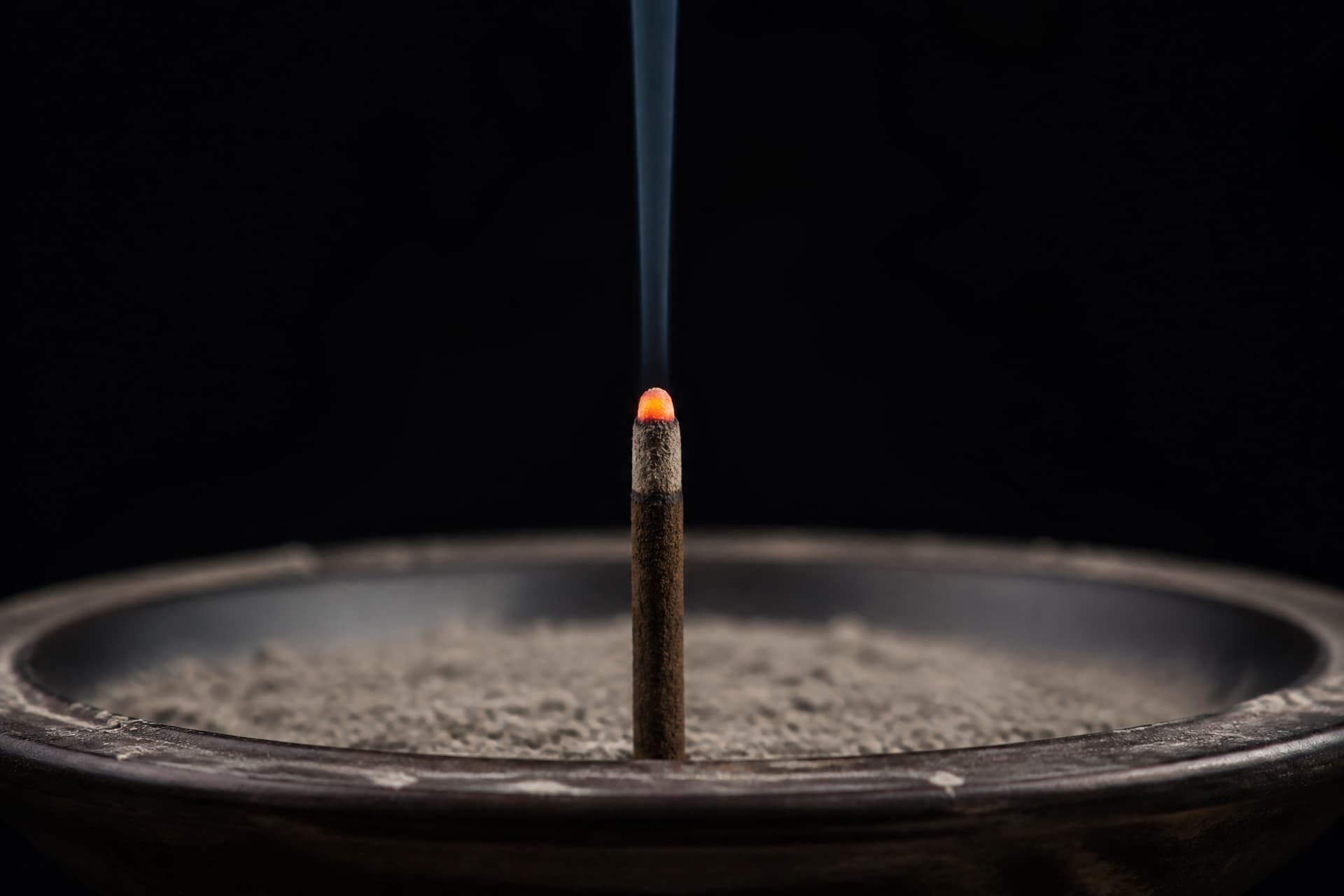
A stick of incense burns for roughly the length of a short sitting. That is the practical unit of these seven weeks — not a vigil, but a small measured span, repeated.
One thing to clear up while the vocabulary is on the table. People searching tibet burial rituals are usually asking about sky burial, the practice of leaving a body on a high, open site for vultures. That is a method of disposition, driven by geography and by an attitude toward the body as something to be given away once it is finished with. It is a different subject from the mourning period, and we cover it separately in our article on Tibetan sky burial. Cremation, sky burial and, at high altitude, water burial all lead into the same seven weeks of observance afterward.
How to Count the 49 Days
Here is the part that sends people to a search engine at eleven at night, and the part almost nobody answers.
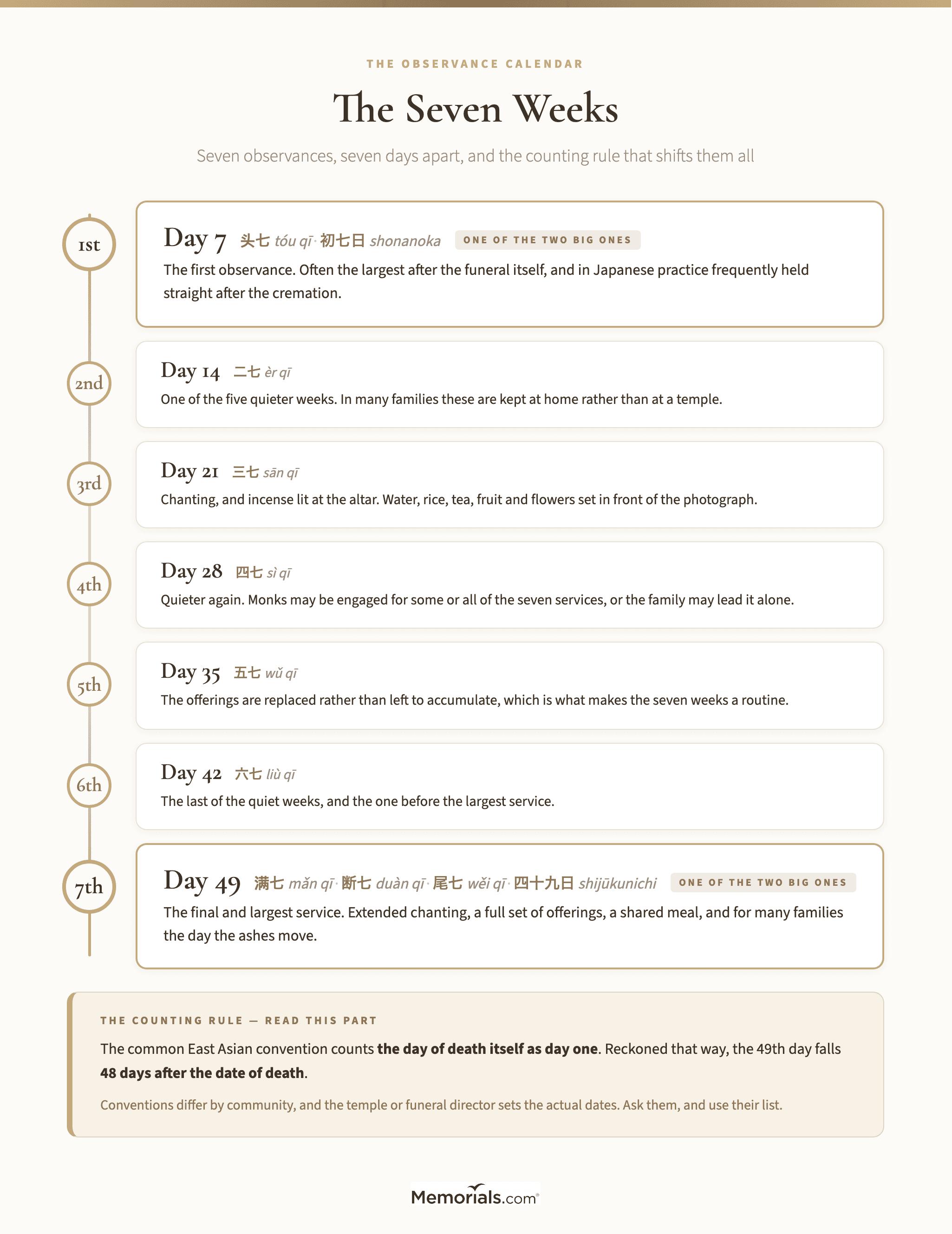
The common East Asian convention counts the day of death itself as day one. Under that convention the seventh-day observance falls six days after the date of death, and the 49th day after death falls forty-eight days after it — one day earlier than most people get by counting forward on a calendar. That single day of offset is the most frequent source of confusion in mixed-generation families, where one person has counted the funeral director's way and another has counted from the day after.
The seven observance days are days 7, 14, 21, 28, 35, 42 and 49. Counted with the day of death as day one, they land on the same weekday as the death every time, which is why families often describe them as "every Tuesday" rather than by number.
Three things complicate this in practice, and all three are normal:
Conventions differ by community. Some families and some temples count from the day after the death. Some Japanese temples calculate from the date of the cremation. Both are ordinary.
The temple or the funeral director sets the dates. This is not a calculation a family is expected to perform alone. When a service is arranged, the officiant works out the dates and gives them to you, and that list is the one to use.
Services get moved. In Japan especially, the seventh-day and 49th-day services are commonly shifted to the nearest weekend so relatives can travel. Nobody regards this as a failure to observe them.
So: do the arithmetic to know roughly where you are, then ask whoever is leading the service to confirm. It is an ordinary question and asking it will not embarrass anyone.
The seven observance days, in order, with the names they are called by in Chinese and Japanese practice. The counting note at the bottom is the part that matters: reckoned with the day of death as day one, the final service lands 48 days after the date on the death certificate.
What Happens on Each Seventh Day
The first and the last of the seven are the big ones. The five in between are often quieter, and in many families they are kept at home rather than at a temple.
A typical observance has three parts: chanting, offering, and a shared meal. A monk or a lay leader recites sutras — commonly the Amitābha Sutra, the Heart Sutra, or the Kṣitigarbha Sutra, depending on the tradition and the school — or the family recites the name of Amitābha Buddha, the practice called nianfo in Chinese and nembutsu in Japanese. The merit generated by the recitation is then formally dedicated to the person who died. That act, the transfer of merit, is the point of the whole cycle; everything else supports it.
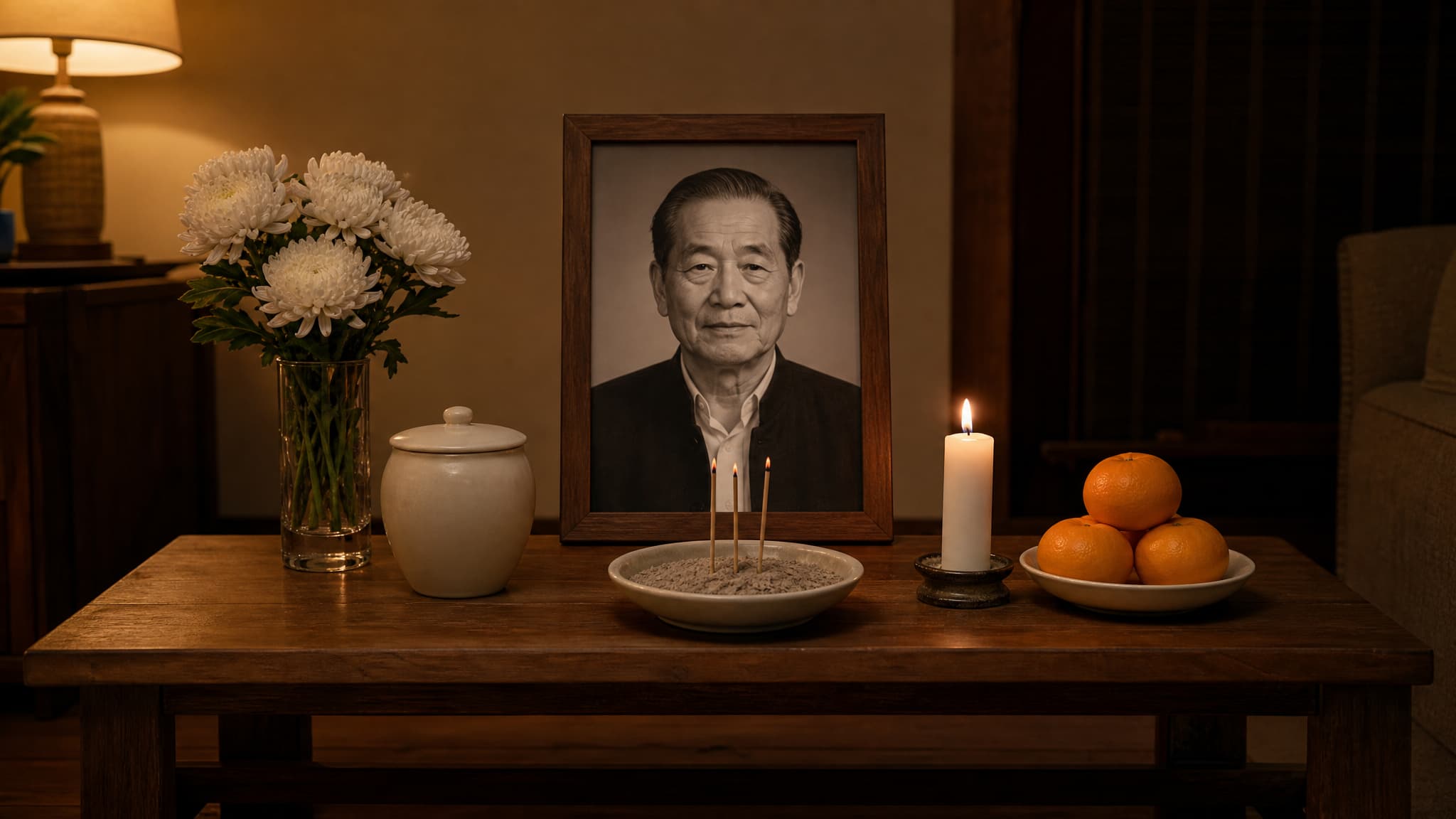
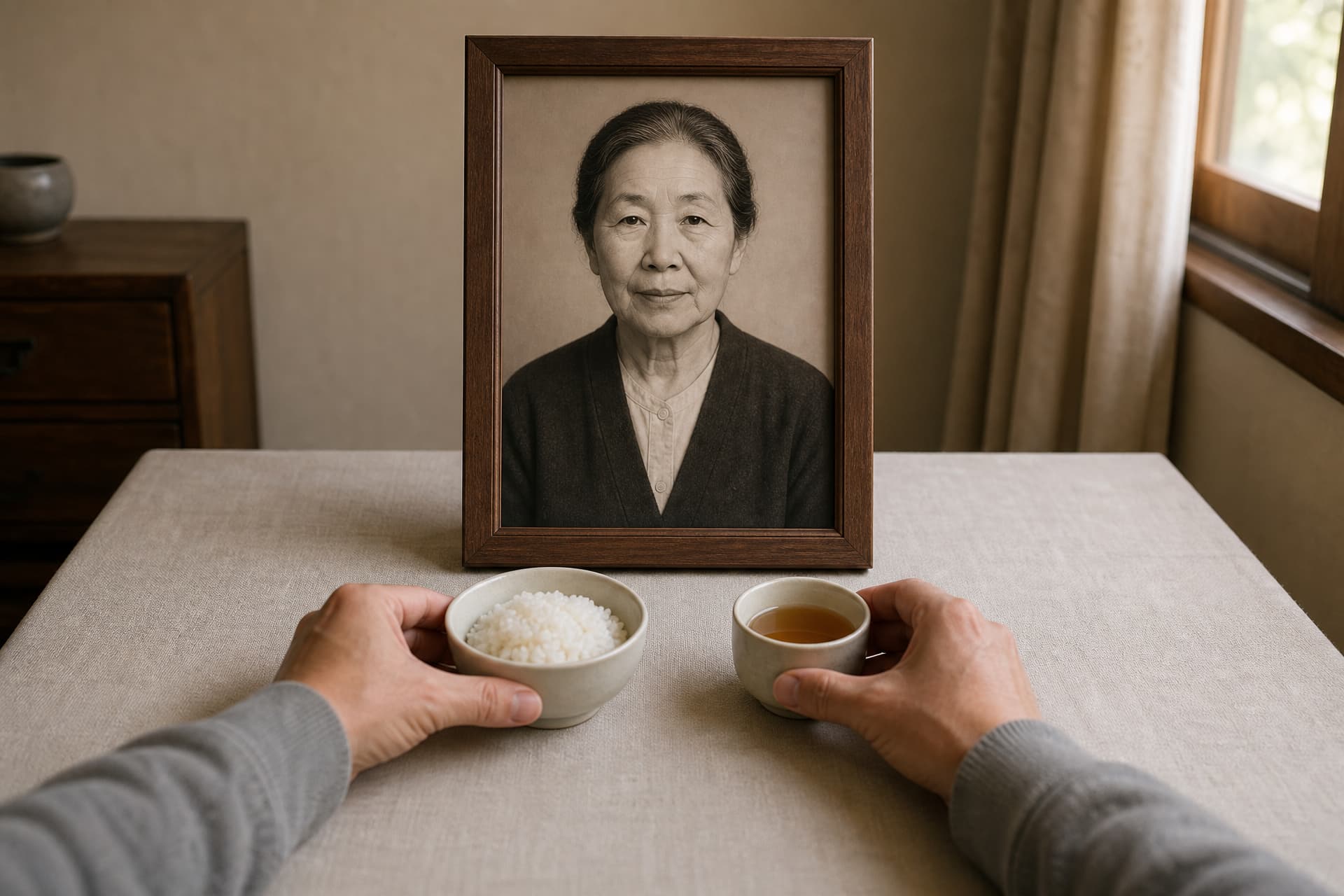
The offerings are domestic and specific. Fresh water, cooked rice, tea, fruit, and flowers are set in front of a photograph of the deceased, refreshed rather than left to sit. Incense is lit at each visit. Many Chinese families burn joss paper — spirit money and paper goods — at the seventh-day observances, a practice with a long history and a meaning worth understanding rather than guessing at, which we unpack in our article on the spiritual meaning of burning paper. Vegetarian eating is kept by many families through the whole period and by many others only on the observance days themselves; both are widespread.
The altar is usually temporary. A small table, a white cloth, the photograph, an incense bowl, a candle and the ashes. In Japanese homes there is often a permanent household Buddhist altar as well — a butsudan — which the temporary altar sits beside until the 49th day, after which the memorial tablet moves into it. In Chinese practice the temporary arrangement is called 安灵, an ling, and it is dismantled at the end of the period.
Rice, tea, water, fruit. The offerings are replaced rather than accumulated, which is what makes the seven weeks a routine instead of a shrine.
Families who are not sure what to keep lit between services often settle on one candle and one stick of incense a day, which is a reasonable and unofficial answer; our guide to memorial candles covers the practical side of burning one safely for weeks at a stretch.
Where the Ashes Stay During the 49 Days
This is the question families ask each other and almost nobody writes down: for seven weeks, where do the ashes actually live?
Usually at home, on the temporary altar. In Chinese practice a family may instead place them at a temple for the duration — 寄灵, ji ling — and collect them at the end. Either is correct. What is nearly universal is that the placement during the 49 days is understood as temporary: the permanent decision is made at the end of the period, not at the funeral.
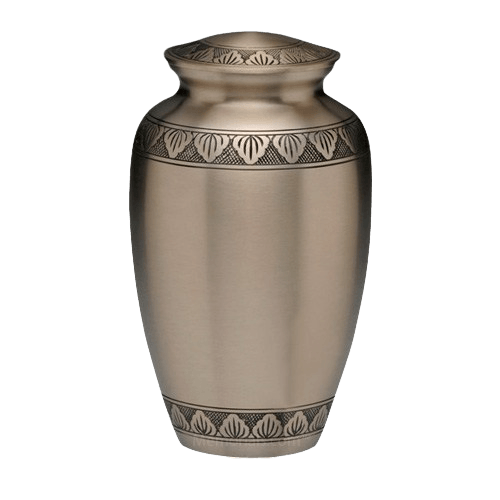
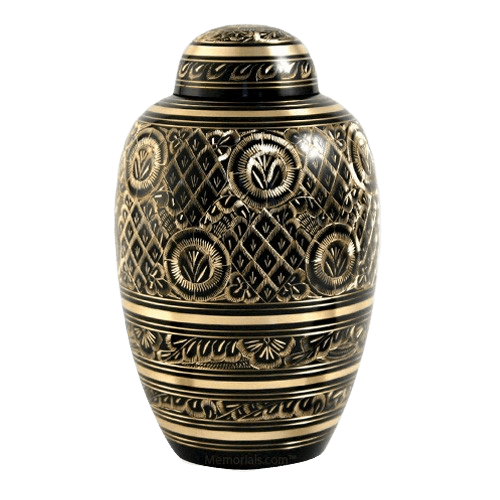
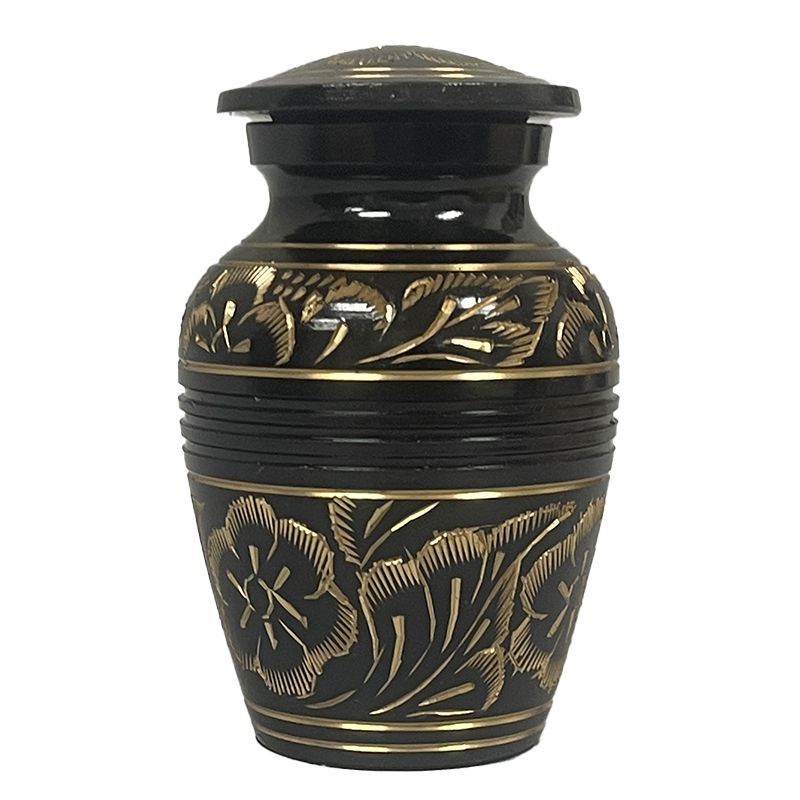
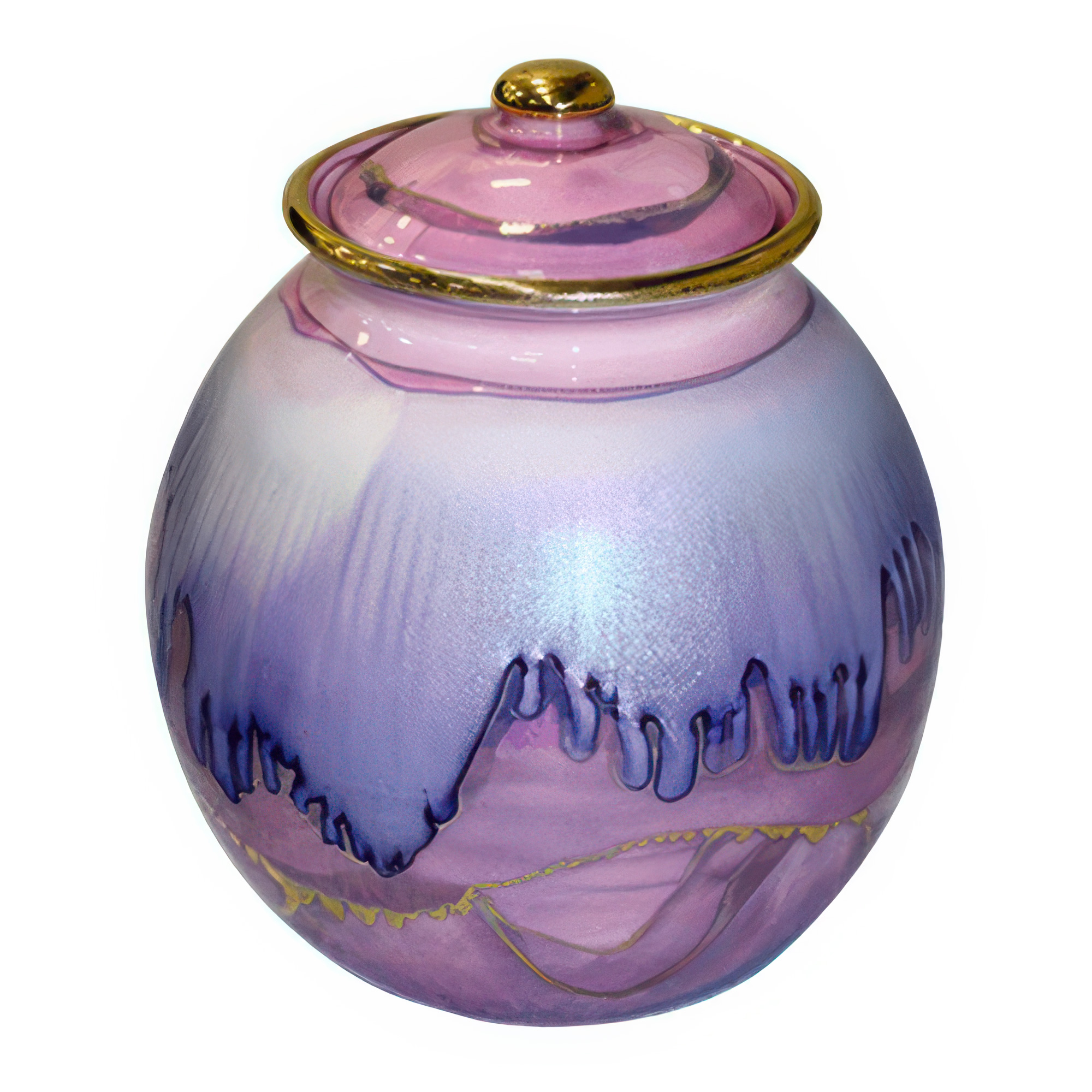
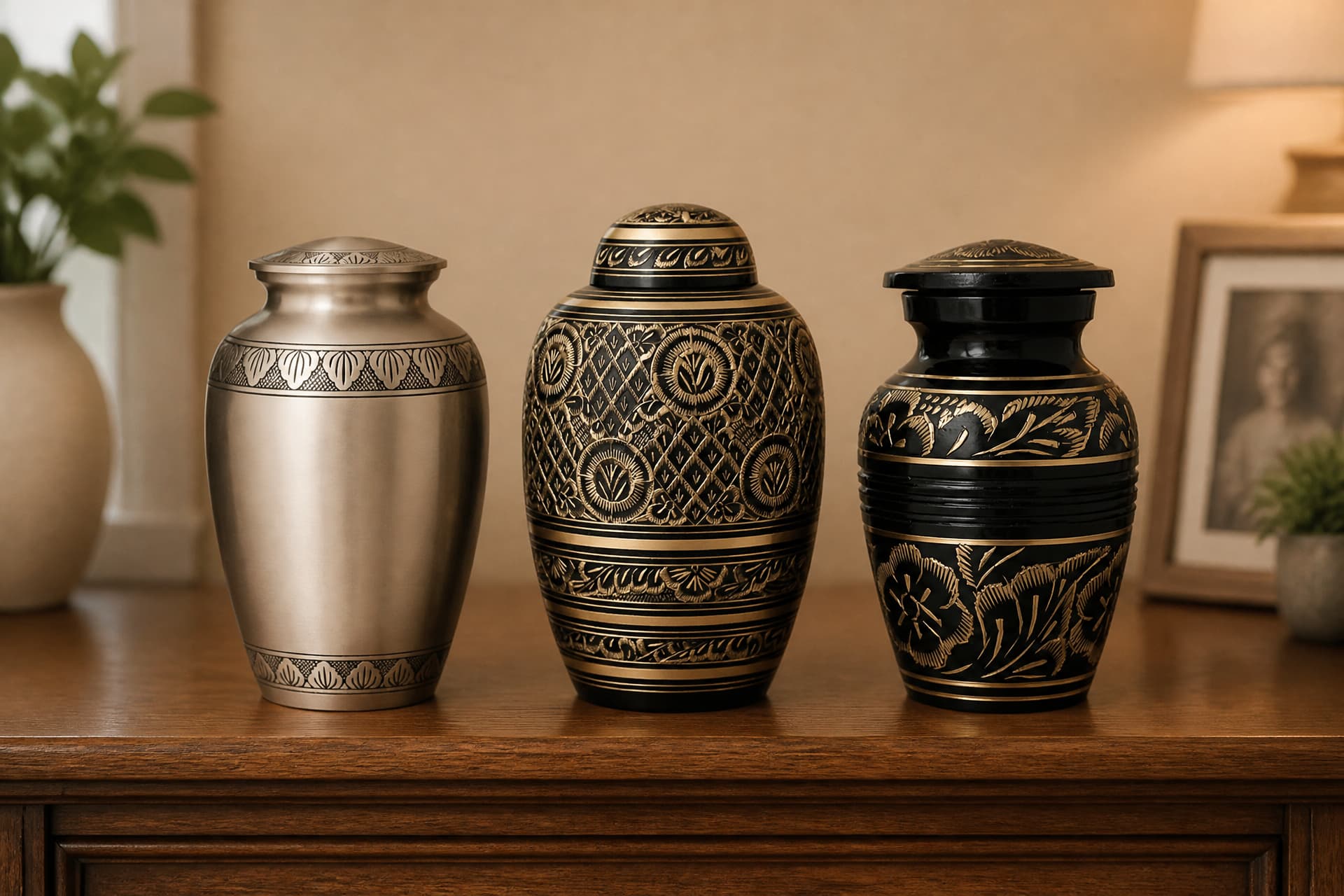
That temporary stretch is why so many families end up with more than one vessel. Ashes are frequently divided among relatives — a portion for the household altar, a portion for a sibling in another city, sometimes a portion set aside for a grave or a niche later — and the pieces used for those portions are small urns for ashes rather than one full-size vessel. A family keeping everything together needs the opposite: one vessel, chosen once. The general run of urns for ashes covers both cases, and our comparison of the difference between a keepsake and a full-size urn is the shortest way through the decision if you are making it this week.
If the altar is going to stand in a shared room for seven weeks, the practical questions are ordinary ones — height, light, what sits behind it, how not to build something the family has to edge around. Our guide to how to display a cremation urn at home works through them. Families outside the tradition sometimes worry about whether it is bad luck to keep ashes in the house; in the traditions described on this page, keeping them at home for the 49 days is not a superstition to be managed, it is the practice.
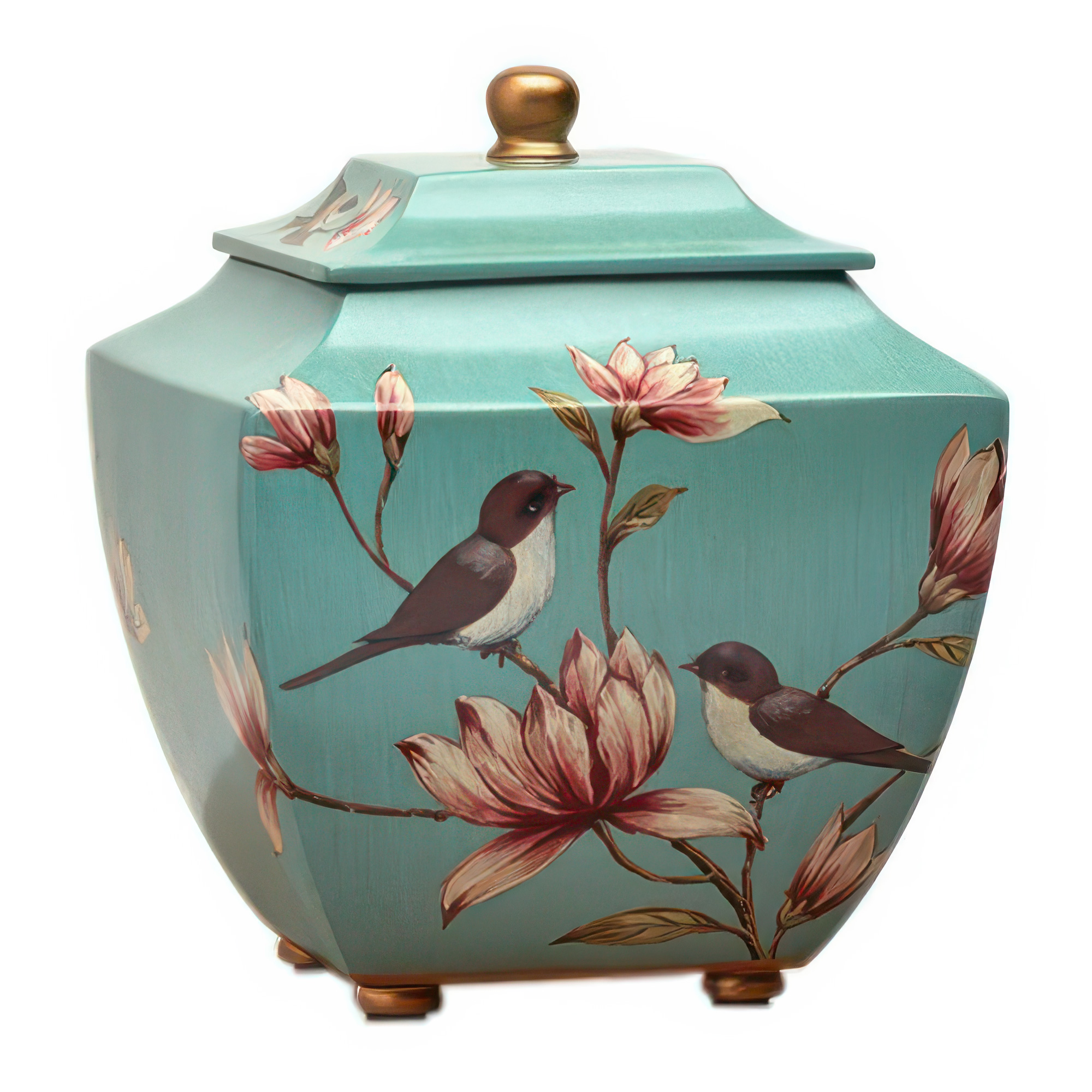
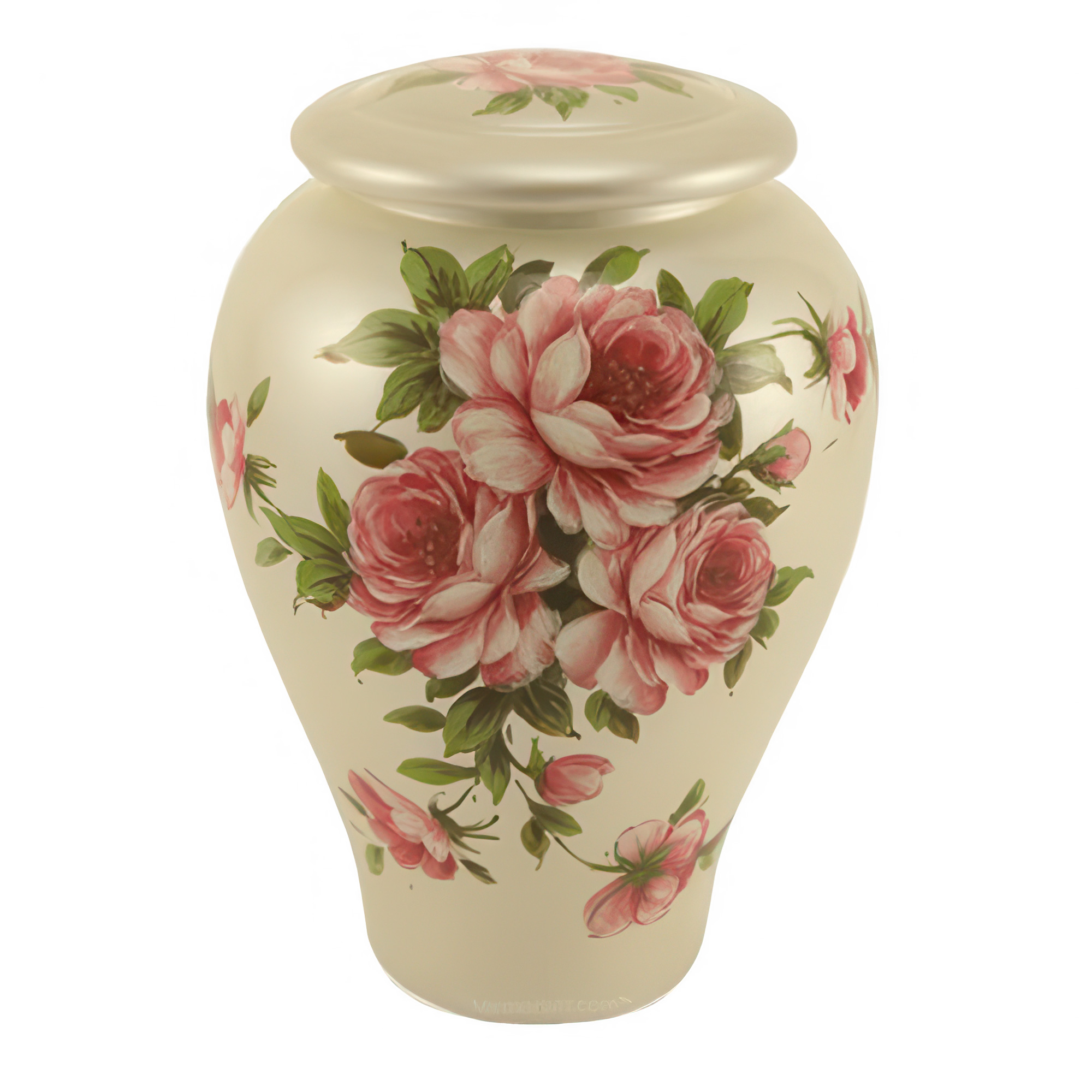
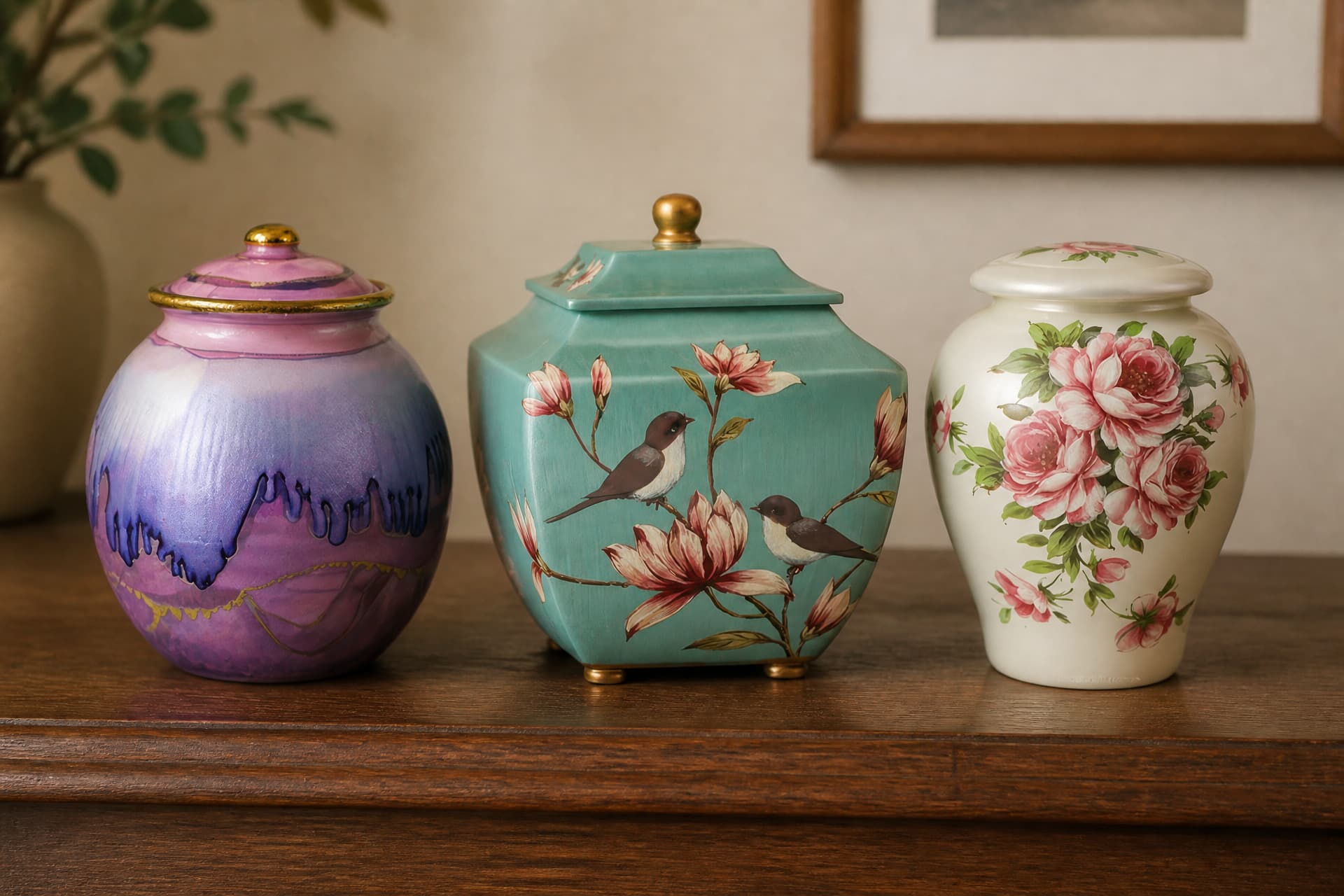
Choosing the vessel itself is a separate matter, and one where tradition and taste both have a say — glazed and porcelain forms are the East Asian norm, and our guide to religious and cultural cremation urns covers what different communities look for.
One note on how the ashes get into the vessel at all. In Japanese practice the family does it themselves, immediately after the cremation, in the bone-picking ceremony — relatives transferring the remains in pairs with long chopsticks. It happens on day one or two of the 49, and for many families it is the moment the period begins.
The 49th Day
The final service is the largest of the seven. More relatives come, more of them travel, and in many families it is the first gathering since the funeral where people are not entirely raw.
The structure is the same as the weekly observances, extended: longer chanting, a full set of offerings, and afterward a shared meal, commonly vegetarian, that runs well past the ceremony. In Japanese practice this is shijūkunichi, and it is also the day the temporary paper memorial tablet is replaced by the permanent lacquered ihai that will live in the household altar. In Chinese practice the last of the sevens has several names — 满七, 断七, 尾七 — all of which mean some version of "the sevens are complete."
It is also, for a great many families, the day the ashes move. The temporary altar comes down; the permanent decision is made and acted on. That may mean interment in a family grave, placement in a temple ossuary, or a columbarium — our guide to what a columbarium placement involves covers how those spaces work and what they cost to hold. Some families keep the ashes at home permanently, some scatter a portion, and some do not decide on the 49th day at all and take another year over it. If that is where you are, our overview of what to do with the ashes after cremation lays out the options without pushing one.
After the 49th day the intensity drops but the calendar does not stop. Many families mark the 100th day, then the first anniversary — isshūki in Japanese — and then a long, thinning sequence of memorials over the following decades.
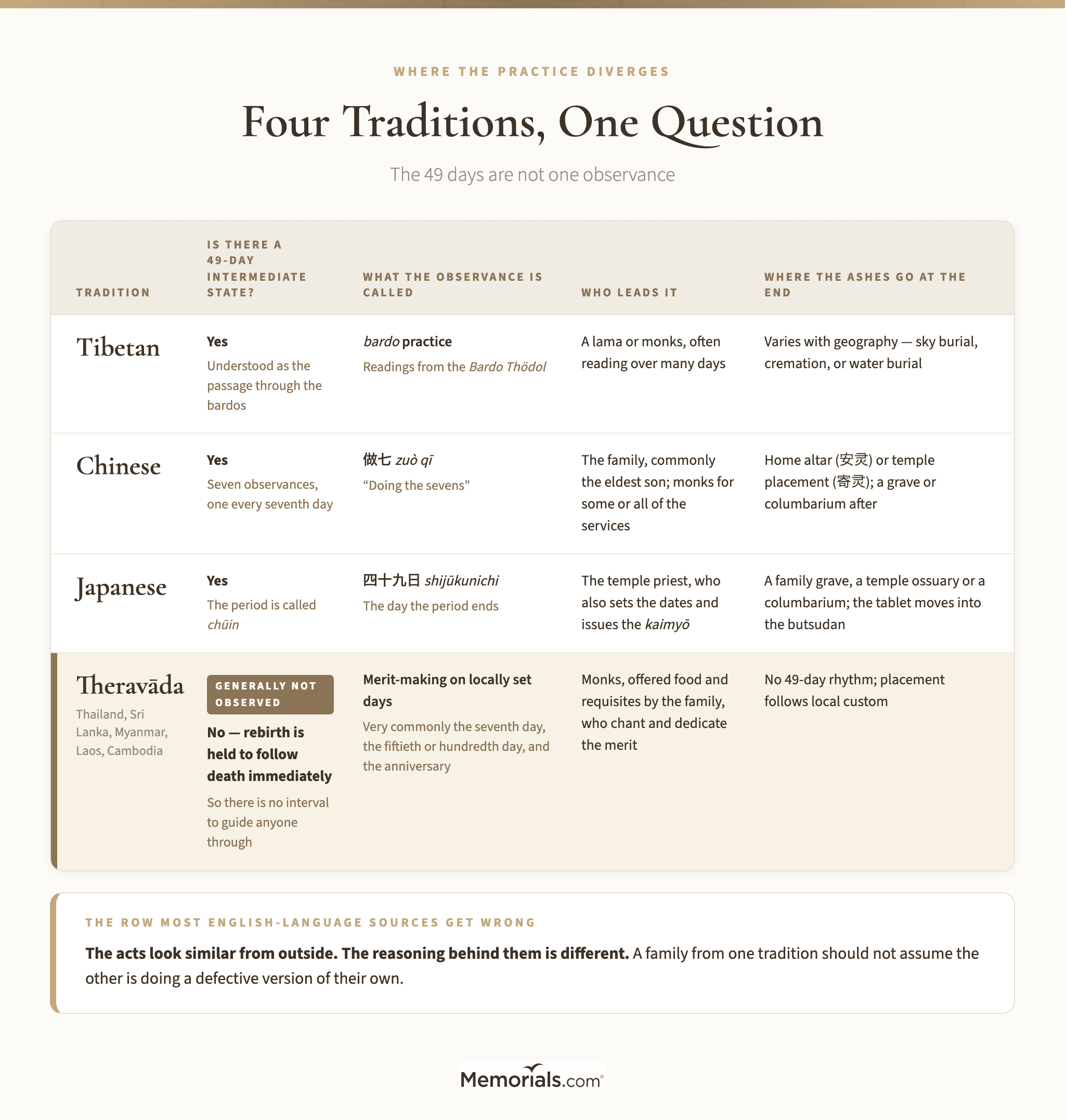
How the Practice Differs — Tibetan, Chinese, Japanese and Theravāda
Nearly every English-language page on this subject treats the 49 days as one Buddhist observance. It is not. The traditions share a source and diverge sharply in vocabulary, who leads, and what happens at the end.
Tibetan
The most doctrinally explicit of the four. The period is understood as the passage through the bardos, and practice is centered on guiding the consciousness: a lama or monks read the Bardo Thödol aloud, often over many days, along with prayers and rituals commissioned by the family. Tibetan funeral customs also include the practice of dedicating extensive merit on the person's behalf — sponsoring butter lamps, releasing animals, funding the recitation of texts. Disposition varies with geography rather than doctrine: sky burial where the ground is rock, cremation where fuel allows, water burial in some river valleys.
Chinese
Called 做七, zuò qī — "doing the sevens." It blends Buddhist practice with Taoist and folk elements and has the densest vocabulary of the four: 头七, tóu qī, is the first seven, traditionally the night the deceased is said to return home once; the last is 满七 or 断七. The distinguishing features are the home altar arrangement (安灵) versus temple placement (寄灵), and the burning of joss paper as an offering. Monks may be engaged for some or all of the seven services, and in many families the observance is run by the eldest son.
Japanese
Called chūin for the period and shijūkunichi for the day it ends. The most institutionally organized of the four: the temple sets the dates, provides the priest, and issues the kaimyō, a posthumous Buddhist name, which is written on the memorial tablet. The seventh-day service, shonanoka, is frequently held immediately after the cremation for practical reasons, and the 49th-day service is the one relatives fly in for. Our article on Japanese funeral traditions walks through the full sequence, of which the 49 days are the second act.
Theravāda
Generally no 49-day intermediate state at all. Theravāda Abhidhamma teaching holds that rebirth follows death immediately, so there is no interval to guide anyone through. What Theravāda communities in Thailand, Sri Lanka, Myanmar, Laos and Cambodia do instead is make merit for the deceased at intervals set by local custom — very commonly on the seventh day, the fiftieth or hundredth day, and the anniversary — by offering food and requisites to monks, who chant and dedicate the merit. The acts look similar from outside. The reasoning behind them is different, and a family from one tradition should not assume the other is doing a defective version of their own.
Four traditions, four different answers. The Theravāda row is the one most English-language sources get wrong: there is generally no 49-day intermediate state in Theravāda teaching, and merit-making follows a different calendar.
Numbered mourning intervals are not unique to Buddhism, and readers who have met one may recognize the shape. Orthodox Christianity marks the third, ninth and fortieth days after a death with a memorial service — the Orthodox panikhida — which is the closest non-Buddhist parallel to the seven sevens. Hindu funeral traditions share the vocabulary of karma and rebirth but run on a thirteen-day cycle followed by an annual observance, not a 49-day one. And the Catholic novena for the dead is nine consecutive days of structured prayer said by a community for one person — a different number, a different theology, and the same underlying instinct that grief needs a fixed count of days with something to do in them.
If You Are Invited to a 49th-Day Memorial
You are almost certainly there because you mattered to the family, not because you are expected to know the liturgy. A few things make it easier.
Ask. Ask whoever invited you what the family is doing and what they would like you to do. It is an ordinary question, it will not offend anyone, and the answer will be more accurate than anything on this page — practice varies by family more than it varies by tradition.
Dress conservatively and darkly, with one caution about color. Black or dark, muted clothing is safe almost everywhere. In Chinese custom, red is the color of celebration and should be avoided entirely, and white carries mourning associations rather than festive ones; our guide to what to wear to a Chinese funeral covers the detail. Japanese memorial services have their own conventions, which are stricter than most Western funerals about formality — see Japanese funeral attire.
On money and flowers. In many Chinese and Japanese communities a condolence gift of money in a specific envelope is customary and flowers are not; in others the reverse is true. This is the single most useful thing to ask about in advance, because getting it wrong is visible and getting it right is easy.
At the altar. Watch the person in front of you and copy them. Typically you approach, bow, offer incense — often a pinch of granulated incense placed on a burner rather than a lit stick — bow again, and step back. If you are unsure whether to bow, join your hands, or do nothing, doing what the person ahead of you did is always correct. Our general guide to funeral etiquette covers the rest.
Eat. The meal after the service is part of the observance, not an optional social event. Staying for it is a kindness.
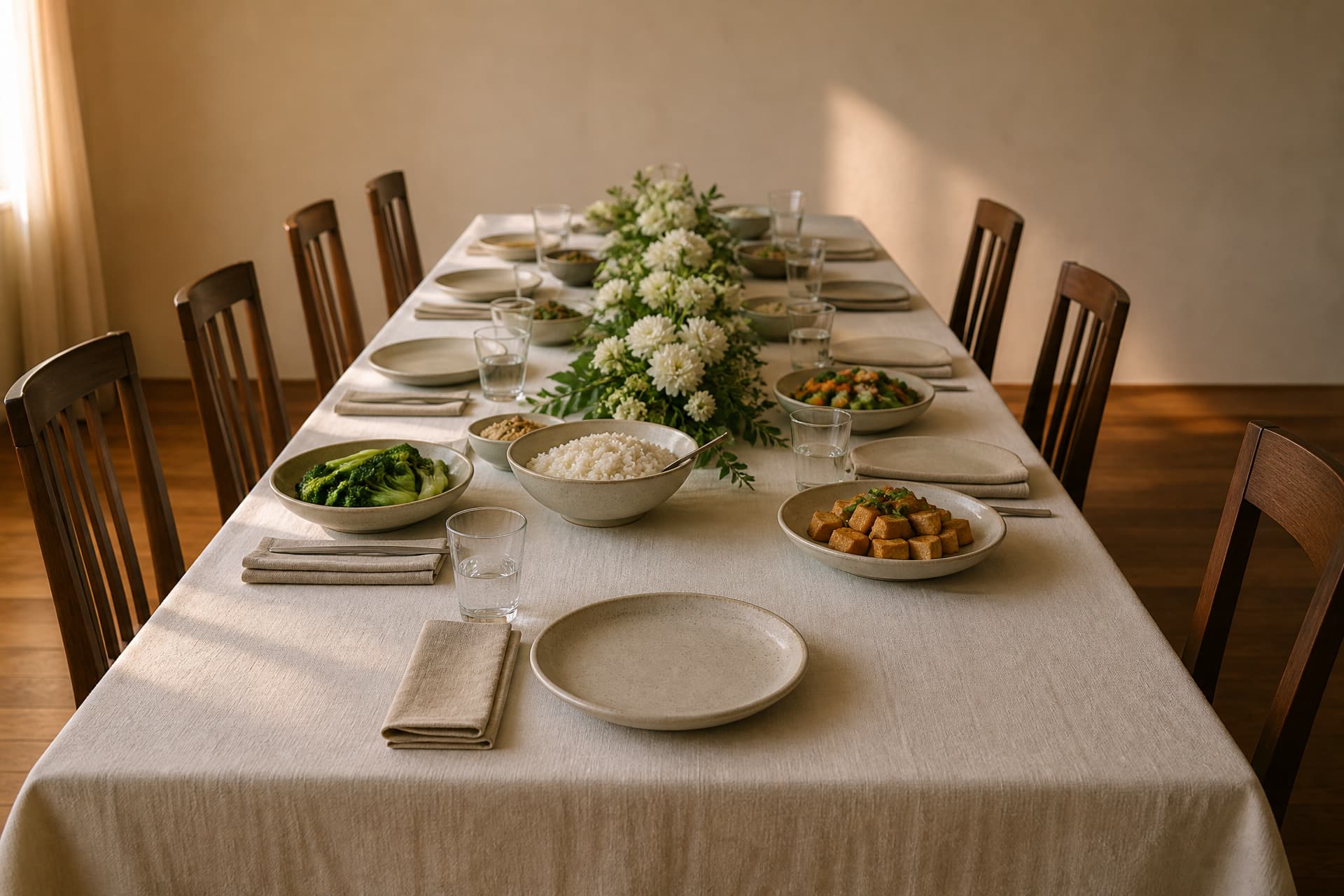
The meal after the final service is part of the day rather than an afterthought to it — commonly vegetarian, and it usually runs well past the ceremony.
Frequently Asked Questions
What happens 49 days after death in Buddhism?
In the traditions that hold an intermediate state, the 49th day marks its outer limit and is observed with the largest of the seven memorial services — extended chanting, a full set of offerings, and a shared meal. It is also, for many families, the day the temporary altar comes down and the ashes go to their permanent place. In traditions that do not hold an intermediate state, a memorial on or near that day is a service for the living and for the merit it generates, not a transition being marked.
How do you count the 49 days — from the day of death or the day after?
The common East Asian convention counts the day of death itself as day one, which puts the final service forty-eight days after the date of death. Conventions genuinely differ, though: some communities count from the day after, and some temples count from the cremation. Whoever is leading the services will give you the dates, and those are the dates.
Do all Buddhists observe the 49 days?
No. The observance is common in Tibetan, Chinese, Korean, Vietnamese and Japanese practice and is largely absent from Theravāda communities, whose teaching holds that rebirth follows death immediately. Theravāda families make merit for the deceased on a different schedule, often the seventh day, the hundredth day and the anniversary.
Where do the ashes stay during the 49 days?
Usually at home, on a temporary altar with a photograph, an incense bowl and offerings. Some families place them at a temple for the period instead. Either way the arrangement is understood as temporary, and where the ashes go permanently is generally decided at the end of the seven weeks rather than at the funeral.
Do you have to be vegetarian for the whole 49 days?
Practice varies widely. Many families eat vegetarian for the full period, many observe it only on the seven observance days, and many do not observe it at all. Where it is kept, it is understood as an act of merit rather than a rule, so keeping it partially is not a failed observance.
Doing Part of It Is Still Doing It
Most families reading this will not hold all seven services. They will hold the first and the 49th, keep something lit in between, and get on with the rest of their lives in the weeks between the two. That is not half an observance. Across every tradition described here, the merit is in the doing, and there is no threshold below which it stops counting.
If you are the person in your family who has been handed this and does not feel qualified, the honest position is that almost nobody is. The vocabulary belongs to a monastic tradition, the calendar belongs to the temple, and the part that belongs to you is showing up on the days you can, putting fresh water in front of a photograph, and telling relatives which Tuesday to come. That has always been the family's part of it.
Other traditions organize the same seven weeks completely differently, and several of them are worth reading beside this one — the rest of our guide to how different faiths mourn their dead covers the customs a household meets in the first year after a death, from the days immediately following a funeral through the first anniversary.