🏬Supersize Online Funeral Retailer🪦1000's of Headstones⚱️Over 10,000 Cremation Urns⚰️Caskets Overnight Delivery🛒Funeral & Memorial Superstore🚚FREE Shipping on ALL Orders👨👩👧👦Helping Families for over 20 Years💰Lowest Price Guarantee🏬Supersize Online Funeral Retailer🪦1000's of Headstones⚱️Over 10,000 Cremation Urns⚰️Caskets Overnight Delivery🛒Funeral & Memorial Superstore🚚FREE Shipping on ALL Orders👨👩👧👦Helping Families for over 20 Years💰Lowest Price Guarantee
🏬Supersize Online Funeral Retailer🪦1000's of Headstones⚱️Over 10,000 Cremation Urns⚰️Caskets Overnight Delivery🛒Funeral & Memorial Superstore🚚FREE Shipping on ALL Orders👨👩👧👦Helping Families for over 20 Years💰Lowest Price Guarantee🏬Supersize Online Funeral Retailer🪦1000's of Headstones⚱️Over 10,000 Cremation Urns⚰️Caskets Overnight Delivery🛒Funeral & Memorial Superstore🚚FREE Shipping on ALL Orders👨👩👧👦Helping Families for over 20 Years💰Lowest Price Guarantee
The oldest cemetery in the world is usually named as Taforalt Cave in northeastern Morocco, where at least 34 people were buried inside one cave over generations, roughly 15,000 years ago. That answer has real evidence behind it and it is the one most sources give. It is also not the only defensible answer, because the word is carrying most of the weight in the question.
Three sites have a legitimate claim and each wins under a different definition. Taforalt is the oldest known burial ground that a community of modern humans returned to again and again. Uyun al-Hammam in Jordan is older still, and is described as the earliest formal cemetery in its region. Rising Star Cave in South Africa may push deliberate burial back past 200,000 years, although the remains there are not ours and the claim is disputed. This page belongs to our funeral traditions guide, which asks the same kinds of questions about living practices rather than buried ones.
What follows is each of those places in turn, what was actually found at them, how archaeologists decide that a site counts as a cemetery rather than a grave, and where grave marking — as opposed to grave digging — enters the story. That last part is far more recent than most people expect.
What Is the Oldest Cemetery in the World?
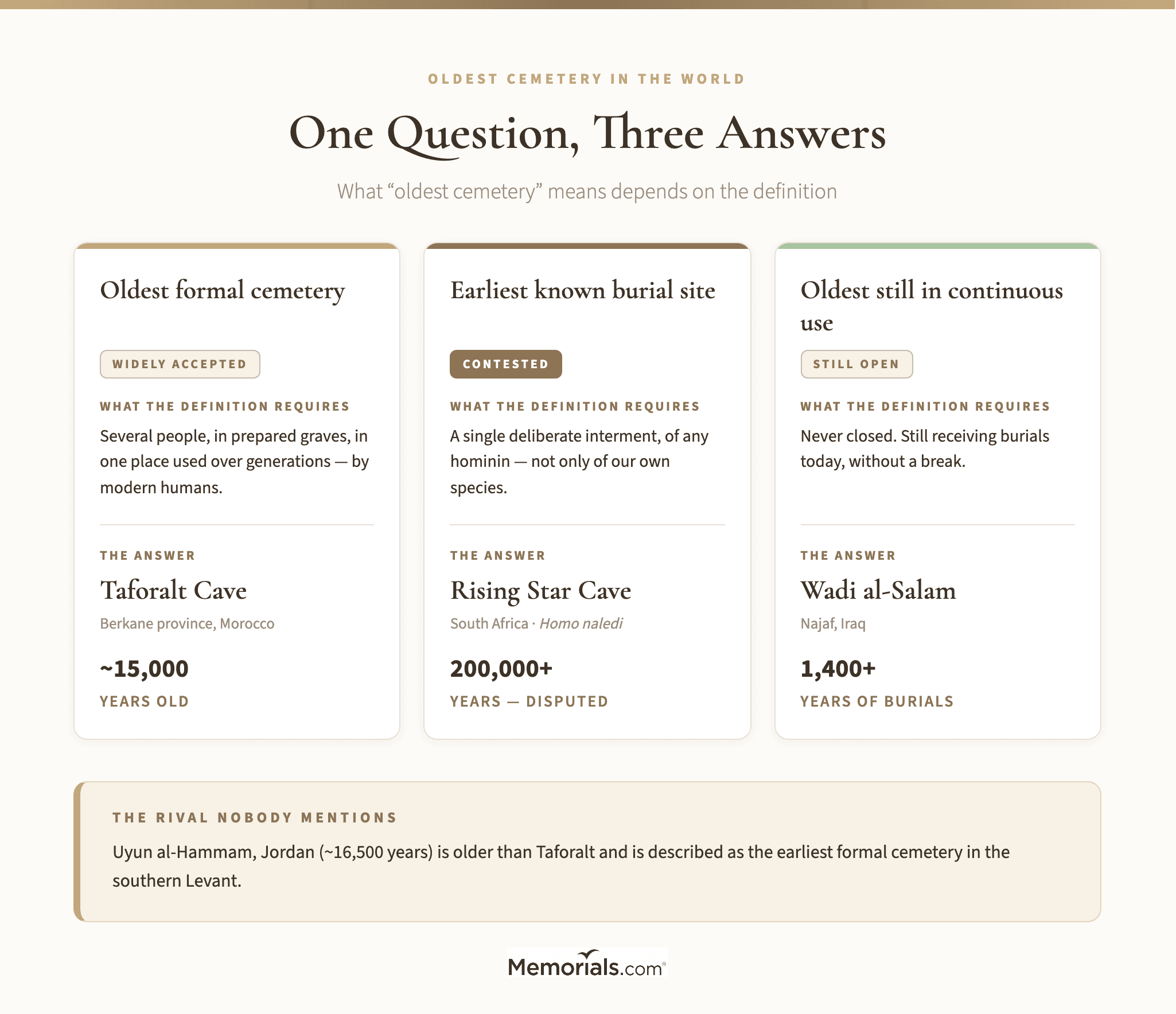
Ask what is the oldest cemetery in the world and you are asking three questions at once. They have three different answers, and none of them is wrong.
The oldest formal cemetery of modern humans. This is Taforalt, at about 15,000 years, with one significant rival: Uyun al-Hammam in Jordan, at roughly 16,500 years, which is older and far less famous. Both are burial grounds in the ordinary sense — several people, laid in prepared graves, in a place used for that purpose over time.
The earliest known burial site of any kind. This is Rising Star Cave in South Africa, where deliberate interment has been argued at more than 200,000 years. The bodies were not Homo sapiens, and the interpretation is contested by other archaeologists, which is exactly why it is a separate question rather than the headline answer.
The oldest cemetery still in continuous use. This is Wadi al-Salam in Najaf, Iraq, which has been receiving burials for more than 1,400 years without a break and is still open today.
Most people typing the question want the first of those. It is worth knowing the other two exist, because they are why two reputable sources will hand you two different place names for what looks like one simple fact.
One question, three definitions, three correct answers. Which site is "oldest" depends entirely on whether you are asking about a burial ground, a single burial, or a cemetery that has never closed.
Headstones and Grave Markers
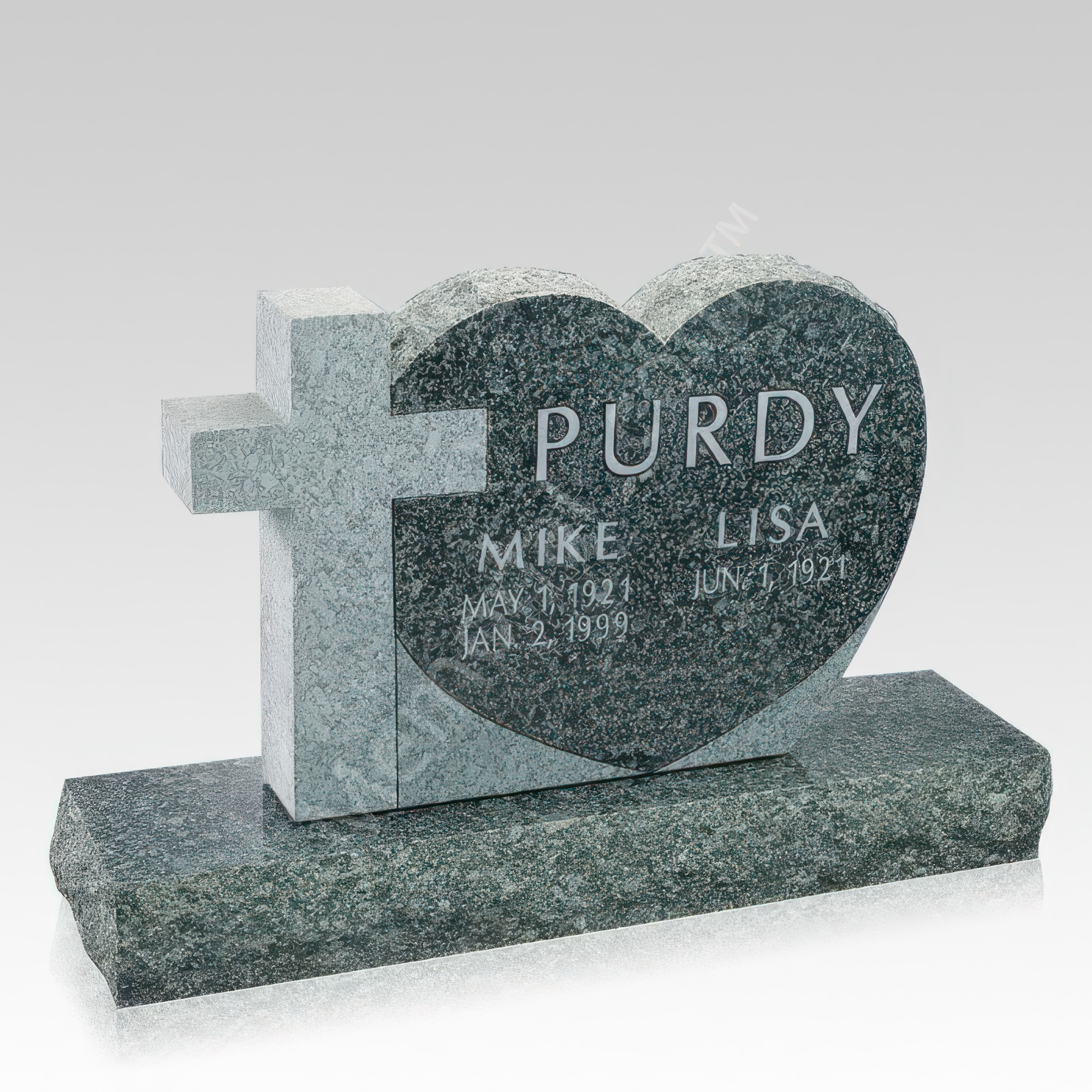
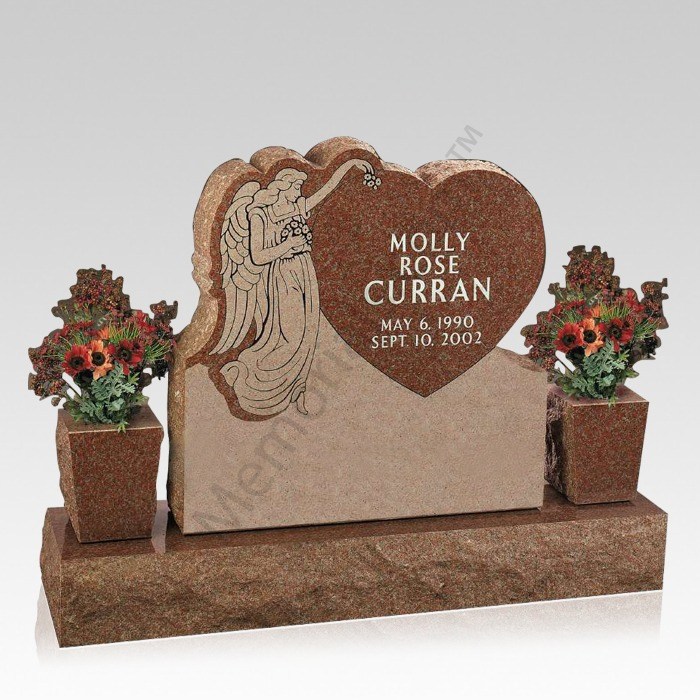
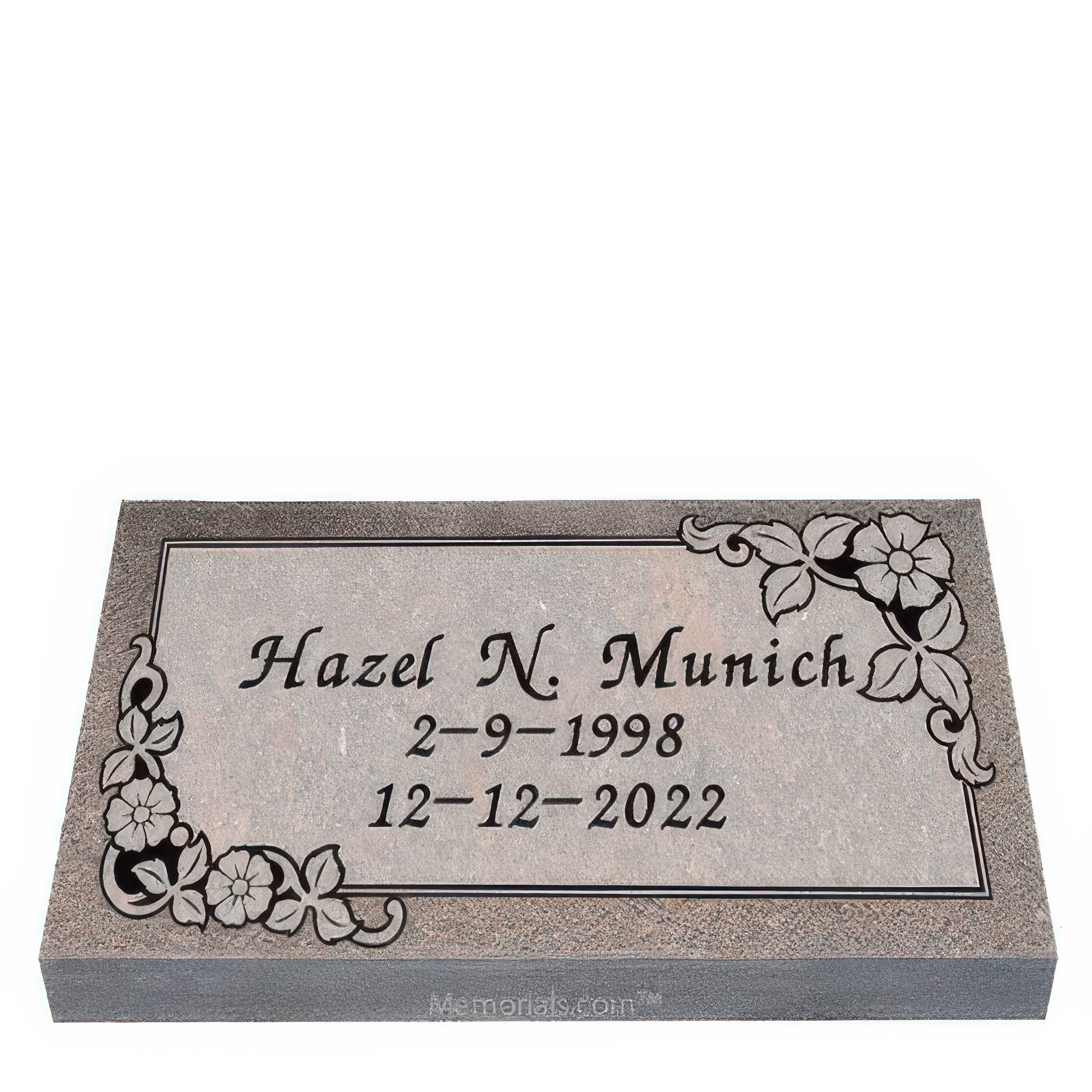
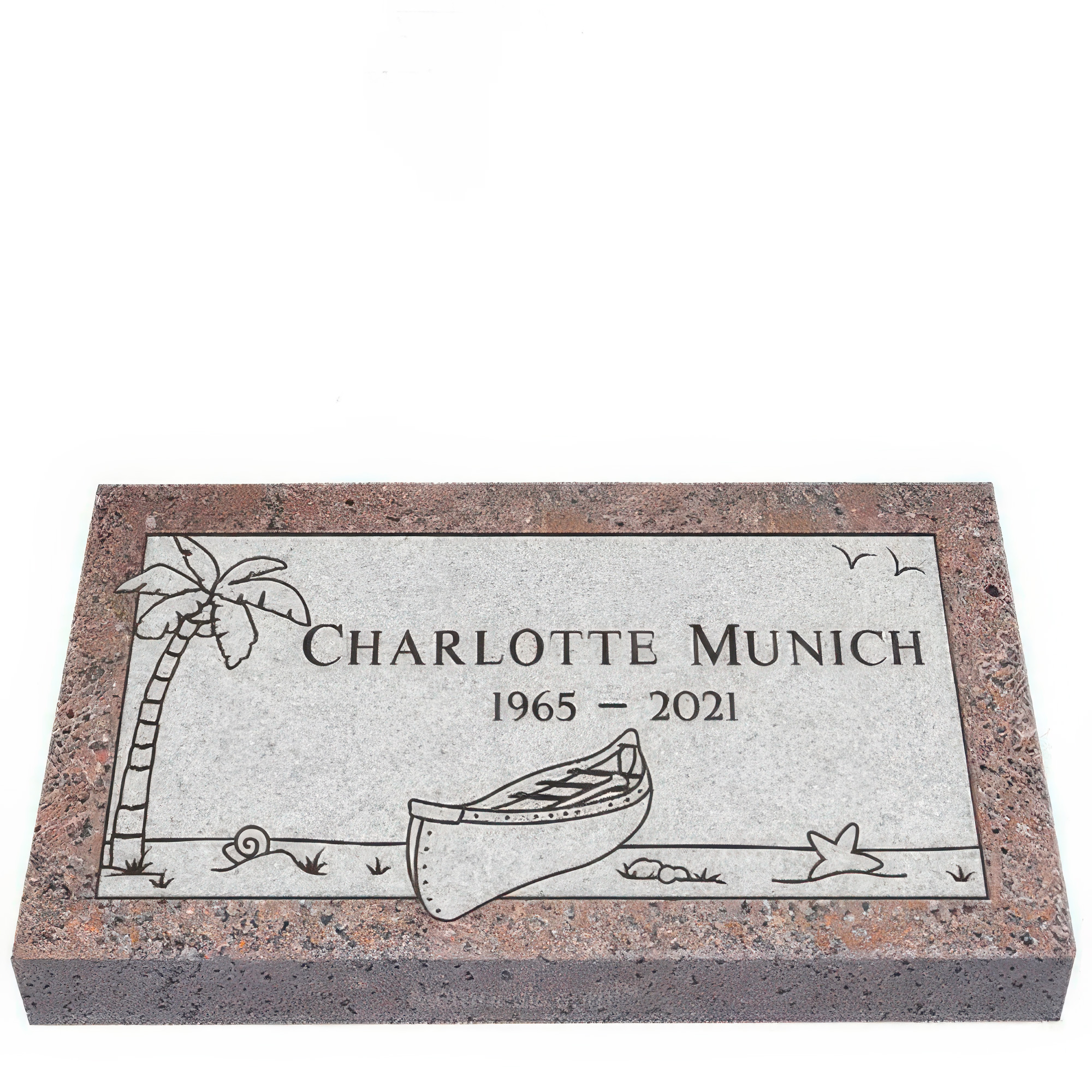
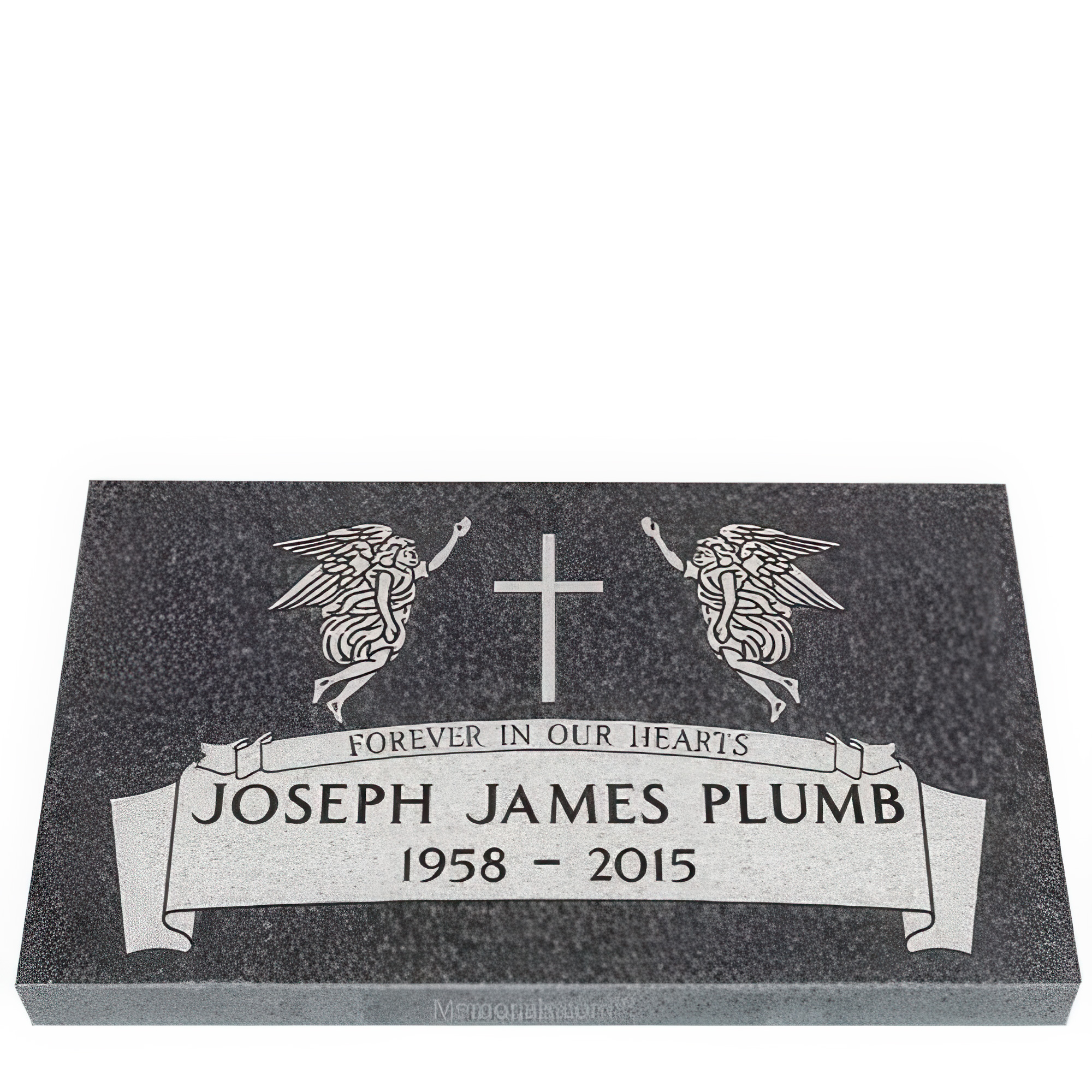
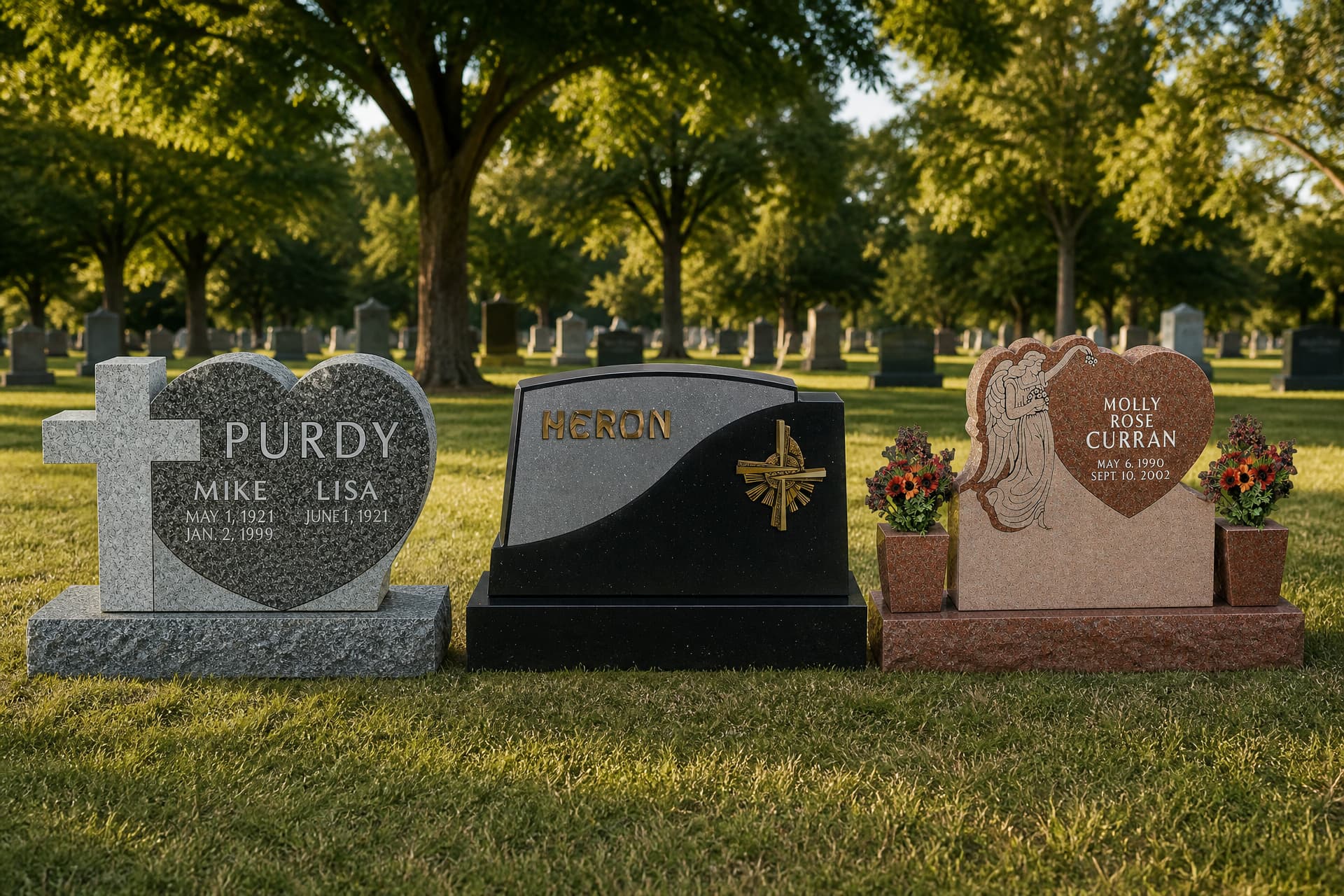
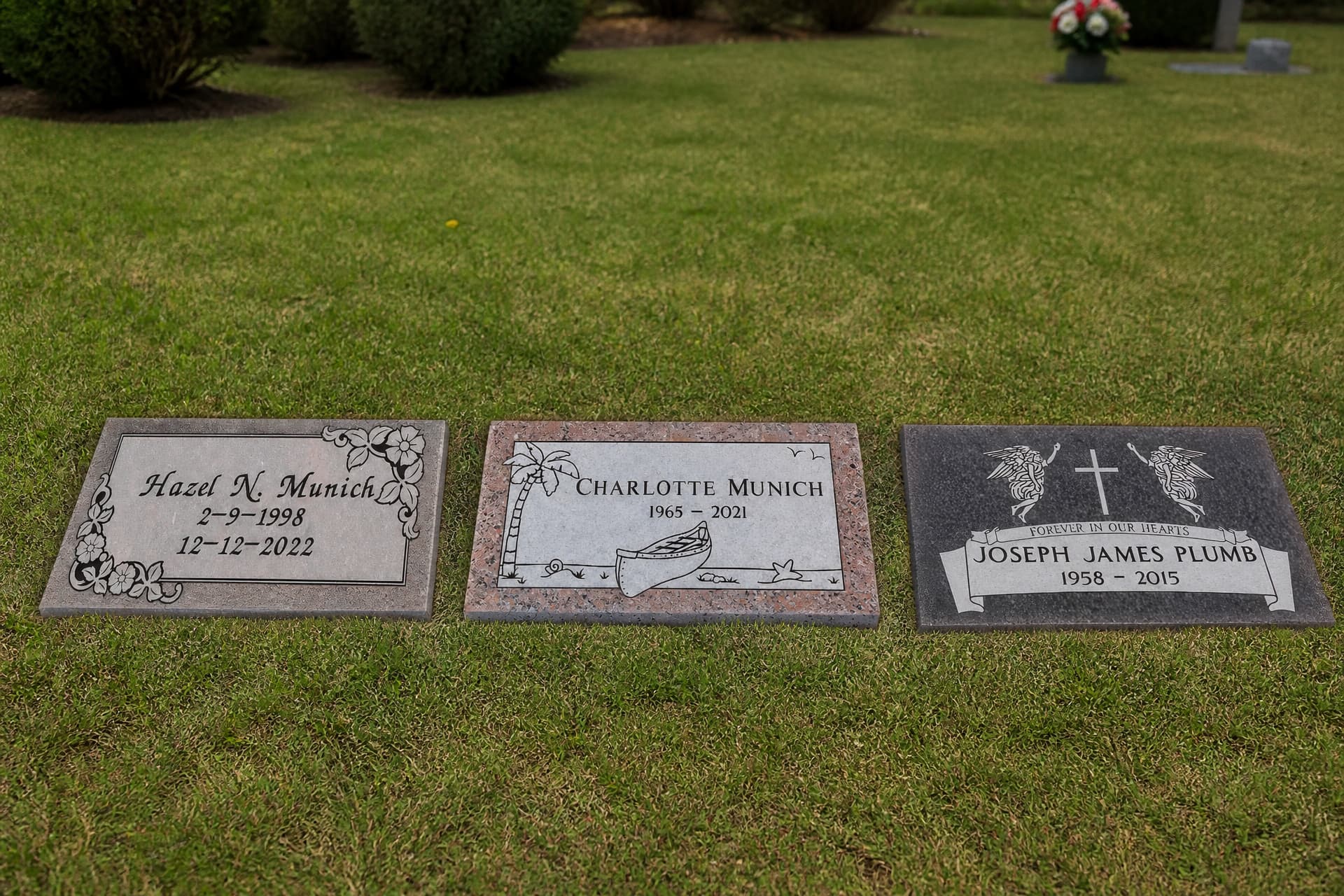
The upright stones and flat markers shown on this page
Taforalt Cave, Morocco: The Oldest Known Human Cemetery
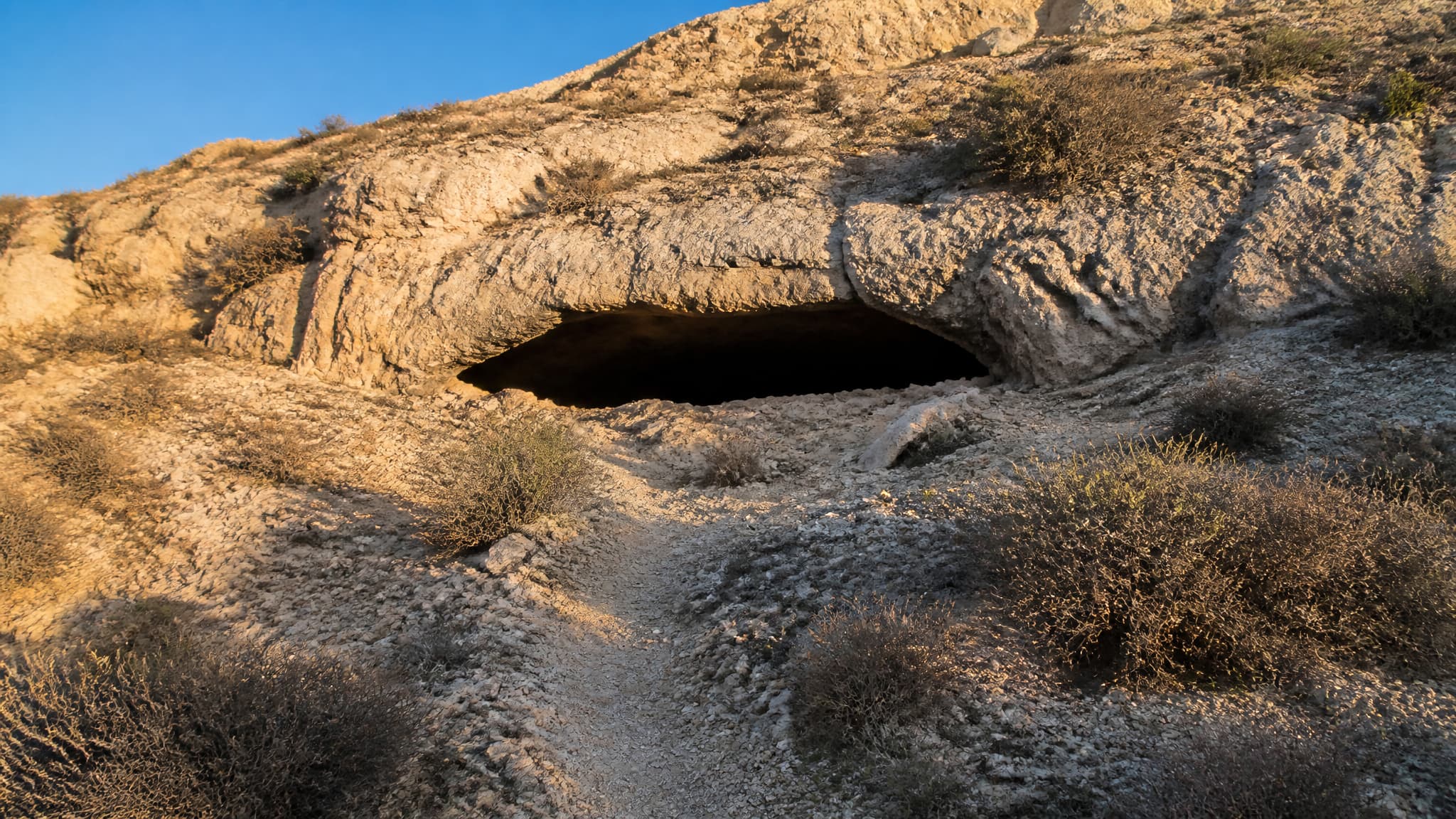
Taforalt is a limestone cave in the Aït Iznasen mountains of Berkane province, in the northeast corner of Morocco. It is known locally and in the literature as Grotte des Pigeons, and it has been excavated on and off since 1908 — which makes it one of the longest-studied prehistoric sites in North Africa.
The cave was occupied for an extraordinarily long time. The earliest Aterian occupation reaches back around 85,000 years. Pierced shell ornaments found there date to roughly 82,000 years, among the oldest personal adornment anywhere. A later people, the Iberomaurusians, moved in from about 23,000 years ago and left stone tools dated to around 22,000 years.
The burials belong to that later occupation. At least 34 Iberomaurusian skeletons have been recovered from the cave, dating to approximately 15,000 years ago. That number is the whole point. One body in a cave is a grave, and graves that old are not rare. Thirty-four people, placed in the same location by the same community across generations, is something else: a place set aside for the dead and returned to deliberately, which is what the word cemetery actually describes.
Repeated communal use is the criterion that does the work here, and it is why Taforalt outranks older single burials in most rankings. The people who used the cave were not passing through and improvising. They knew where their dead were, they went back, and they added to them.
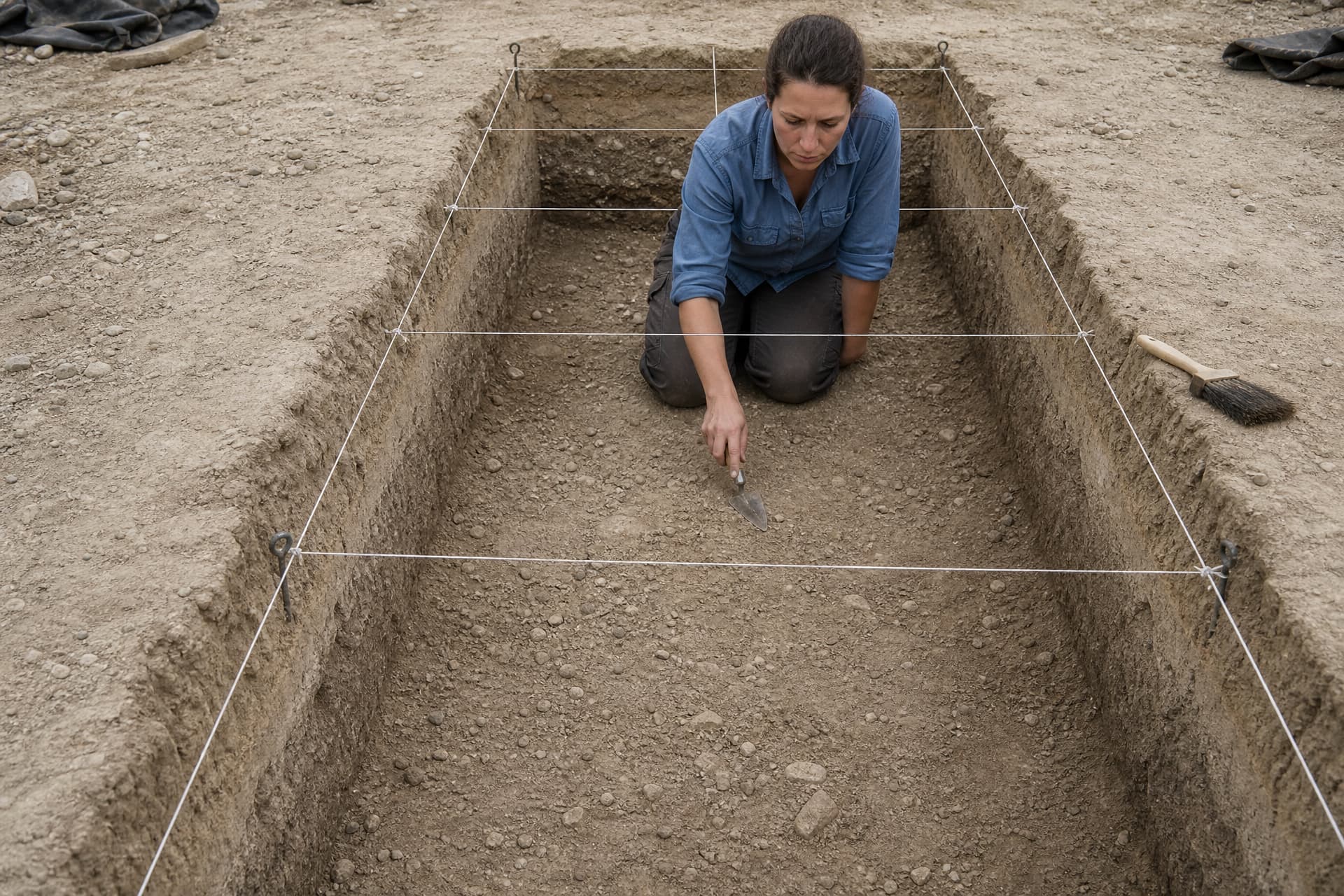
The grid is how a site becomes evidence. Position, depth and the layer a find sits in are what separate a deliberate burial from a body that ended up underground some other way — and all of it is recorded by hand, before anything is lifted.
Uyun al-Hammam and the Case for an Older Cemetery
If the test is "several people, prepared graves, one place, used over time," then Taforalt is not the earliest site that passes it. Uyun al-Hammam, in northern Jordan, holds at least 11 individuals in 8 graves and dates to around 16,500 years ago — roughly a millennium and a half before the Taforalt burials.
It is generally described as the earliest known formal cemetery in the southern Levant, and it rarely appears in popular articles on this subject at all. Both sites belong to the long stretch archaeologists call the Epipalaeolithic, the period between the last Ice Age hunting cultures and the first farmers, and both show the same behavior appearing independently in two regions.
So which is the oldest cemetery? Honestly stated: Taforalt is the most-cited answer and holds the largest group of burials from that era, and Uyun al-Hammam is older. Sources that name Taforalt are usually ranking by the size and clarity of the burial population rather than by date alone. Sources that name Uyun al-Hammam are ranking strictly by age. Neither is making an error, and a page that gives you one name without mentioning the other has simply not told you the whole thing.
The Oldest Grave in the World Is Older Still
Searches for the world's oldest grave in the world land somewhere else entirely, because a grave and a cemetery are different claims. A cemetery needs repetition. A single grave needs only one person, once — and that record runs far deeper.
That is why what is the oldest grave in the world produces a different list of sites. Qafzeh and Skhul, two caves in what is now Israel, hold burials dated between 90,000 and 120,000 years ago, some of the earliest deliberate interments attributed to anatomically modern humans. Panga ya Saidi in Kenya has produced a burial at roughly 78,000 years, the earliest known human burial in Africa. And Rising Star Cave in South Africa, where bodies attributed to Homo naledi appear to have been placed underground more than 200,000 years ago, would push the behavior back past our own species entirely if the interpretation holds. Other archaeologists dispute it, and that argument is not settled.
There is one more reason the grave record looks the way it does, and it is easy to miss. Burial preserves; fire does not. A community that placed its dead on a funeral pyre left almost nothing for an excavation to find 15,000 years later. What survives in the ground is the practice that put things in the ground, which means the archaeological record of death is systematically tilted toward burial and away from everything else people did.
Other Ancient Burial Sites That Changed What We Know
Two later sites are worth knowing because they show the practice becoming organized rather than merely repeated.
Gross Fredenwalde, in Germany, is around 8,500 years old and is the largest Mesolithic cemetery in north-central Europe. It is Germany's oldest, it was used for centuries, and — unlike a cave that a group kept returning to — it was laid out. Graves were positioned in relation to each other on an open hilltop, which is the point at which a burial ground starts to resemble a plan rather than a habit.
Jericho, in the West Bank, carries burials from around 7000 BCE, at the moment when settled farming villages were replacing mobile camps. Once people stopped moving, their dead stopped moving too, and the cemetery became a fixed feature of a settlement.
Neither burial mounds nor grave goods stop with prehistory. The same grammar — a marked mound, objects placed with the dead, a location everyone in the community knows — turns up thousands of years later and much better documented in the Norse world, which is what a Viking funeral is built around. It appears in cliff faces too: the hanging coffins of southern China and Southeast Asia are communal, deliberately sited, centuries old and still visible from the ground, which is a cemetery by any definition except the one that requires digging.
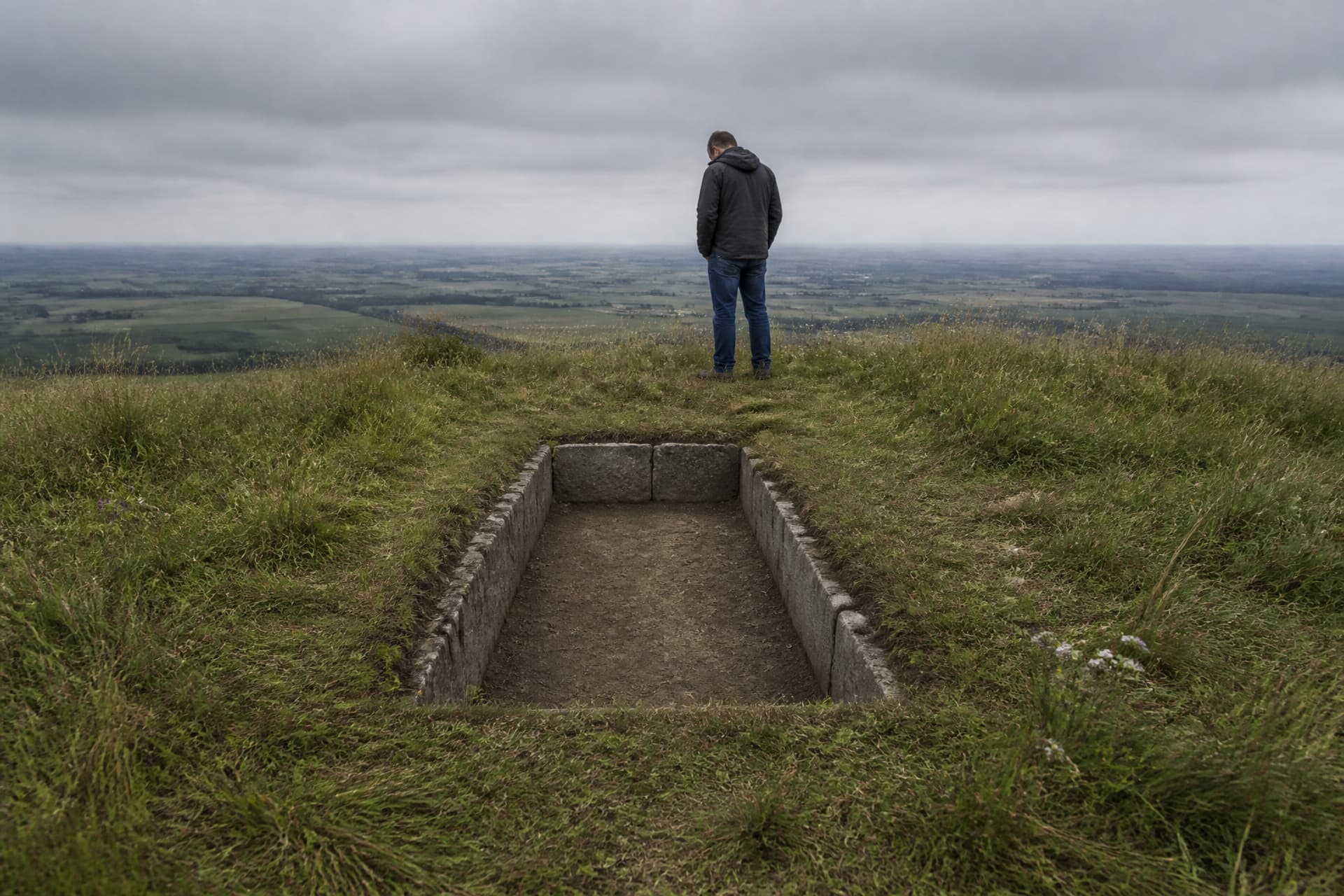
Stones set in a deliberate rectangle are a decision, not an accident of geology. At a site like Gross Fredenwalde the arrangement of the graves relative to each other is itself the evidence that somebody planned the place.
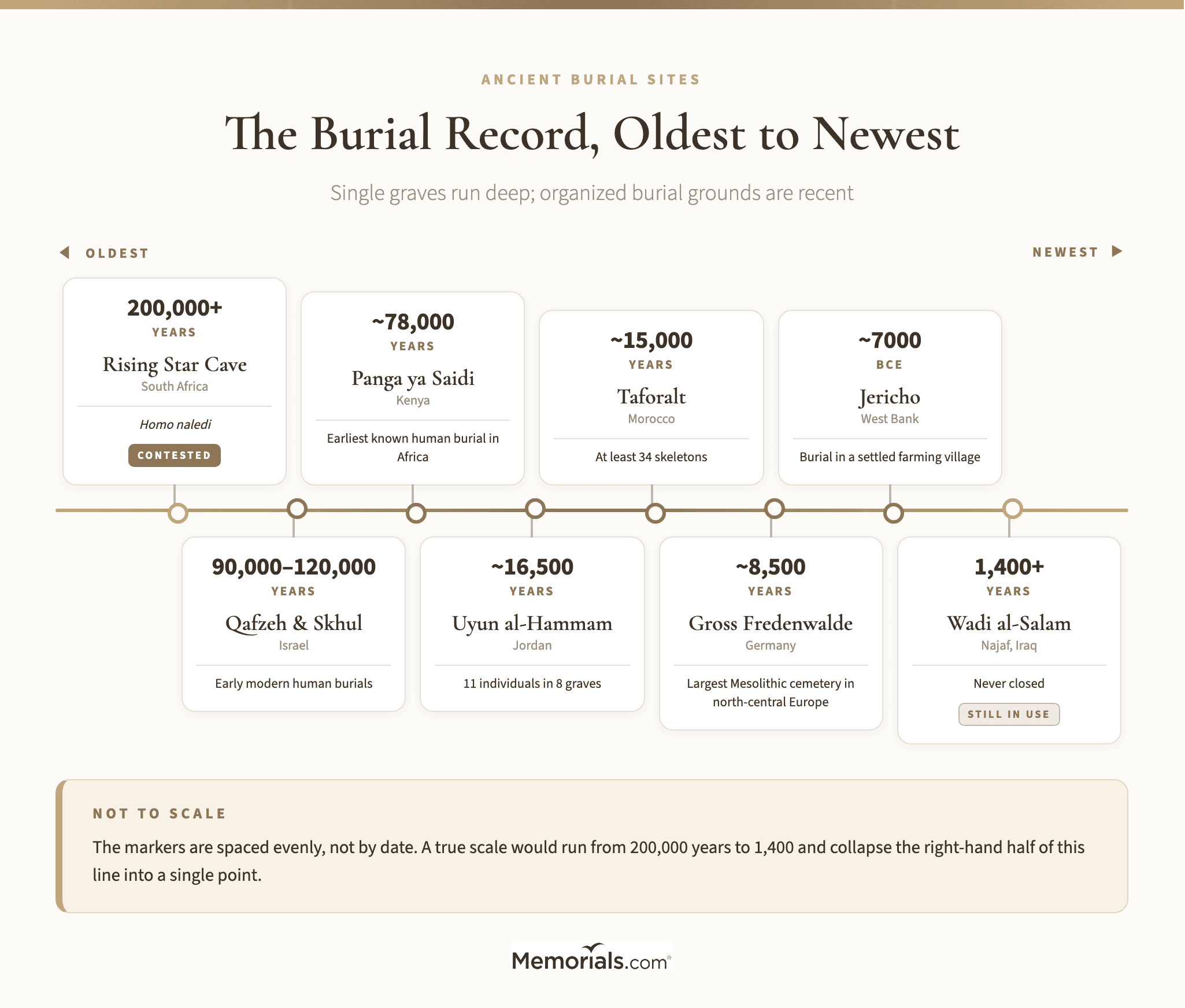
Laid out on one line, the pattern is clear: single burials run back hundreds of thousands of years, organized burial grounds appear only in the last twenty thousand, and continuous use is younger than that again.
How Archaeologists Decide Something Is a Cemetery
A body underground is not automatically a burial, and a burial is not automatically a cemetery. Several signals have to line up, and they are the same signals whichever site is being argued about.
Deliberate positioning. A flexed burial — knees drawn up, body arranged — is very hard to explain by accident. So is consistent orientation across several graves.
A prepared grave. A cut in the ground, sometimes lined with stone, is a structure. Stratigraphy shows whether the cut was made from the surface people were standing on, which distinguishes a dug grave from a body covered by later sediment.
Grave goods. Tools, ornaments and food placed with the dead say the burial was a formal act carrying meaning, not a disposal.
Red ochre. Powdered iron oxide appears with burials across an enormous span of time and geography. It has no practical function in a grave, which is precisely why it registers as ritual.
Secondary burial. Some communities handle the dead twice: an initial burial or exposure, then a later gathering of the bones for their final placement. It leaves a distinctive signature — disarticulated remains in deliberate arrangements — and it is one of the strongest indicators that a place was managed rather than simply used. It is also a practice that never died out. The Japanese bone picking ceremony, in which relatives lift the bones into their final container together after cremation, is the same idea carried into the present.
Repeated use. The one that finally decides it. Radiocarbon dating across multiple burials shows whether they happened in one event or over generations, and a place used over generations was a place people held in mind.
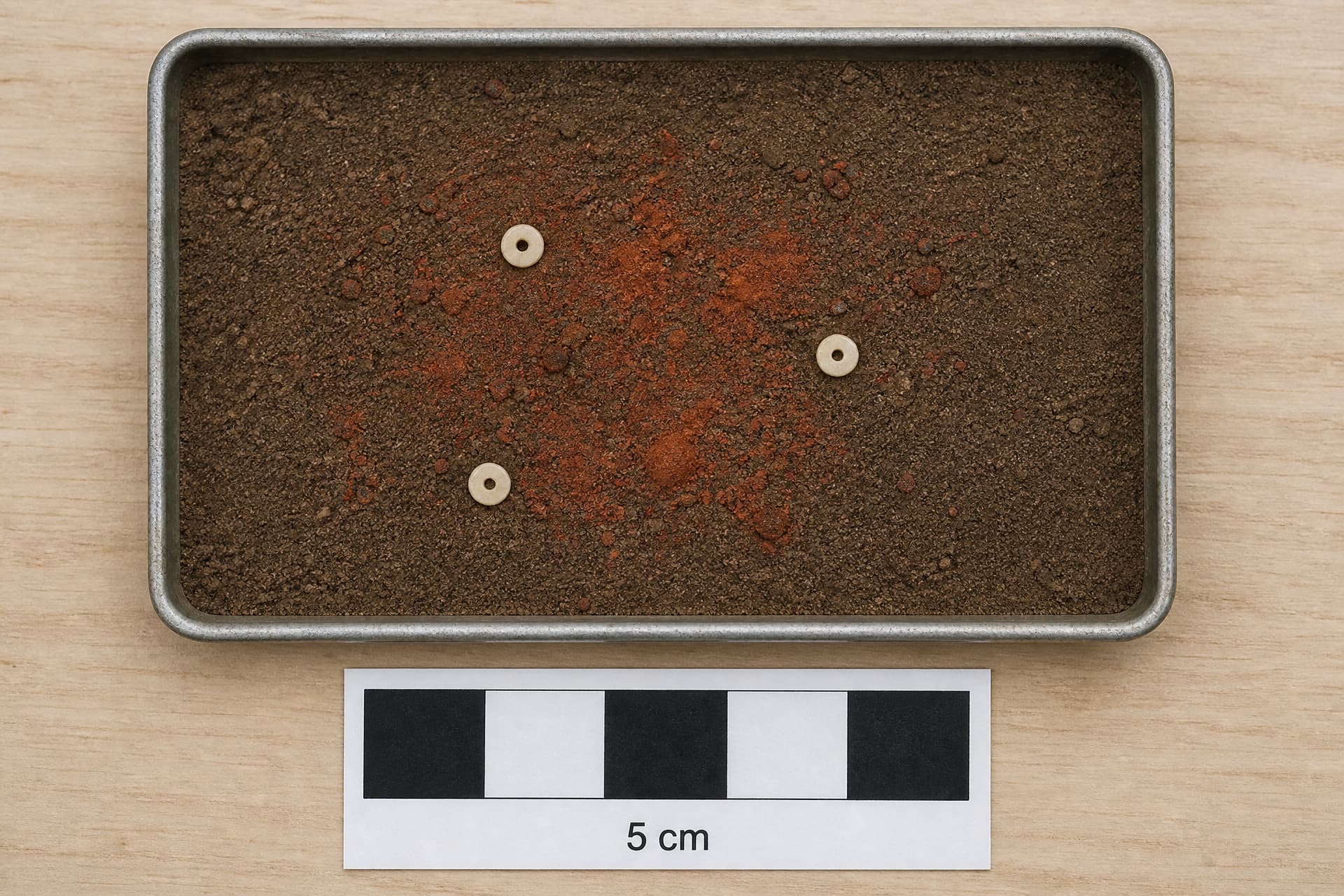
Ochre and pierced shell beads do nothing useful for a body in the ground, and that is why they matter. Objects with no practical purpose are the clearest evidence that a burial was a deliberate act with meaning attached.
The Oldest Tombstone in the World and When Grave Marking Began
There is no honest single answer to the oldest tombstone in the world, and the reason is worth stating plainly rather than dodging. Marking a grave and digging one are separate inventions, separated by a very long time.
For most of the record, graves were marked with whatever the landscape offered: an unworked stone, a cairn of rocks, a low mound, a tree. All of those work perfectly well for a community that already knows where its dead are and does not need a stranger to be able to read the location. None of them survives as an identifiable marker, and none of them carries a name.
A tombstone in the sense the question means — a shaped stone bearing an inscription — requires writing, and writing is younger than farming. Which means the marker most people picture arrives long after cemeteries themselves, and belongs to the historical era rather than the prehistoric one. The distance between a cairn of unshaped rocks and a modern grave stone is mostly a distance in tools and in literacy, not in intent. Both do the same job: they say a particular person is here.
What happened after that is a different article, and a good one. Carved markers change enormously by material, region and century, and in the American record that story runs from colonial slate through marble to granite. Our guide to the types of old gravestones picks the thread up exactly where this page puts it down.
The oldest graveyard in the world that is still taking burials is not in Africa or the Levant. It is Wadi al-Salam in Najaf, Iraq — the Valley of Peace — which has been in continuous use for more than 1,400 years and is still receiving the dead today.
Continuous use is a harder standard than age, and much rarer. Taforalt was abandoned. Gross Fredenwalde was abandoned. Most ancient burial grounds are archaeology precisely because somebody stopped going. Wadi al-Salam never stopped, which makes it the closest living link between the practice at Taforalt and a cemetery a reader can drive to this weekend.
The distance between the two is also smaller than it looks. A modern burial ground is still a defined piece of land set aside for the dead, still organized, still returned to, and still full of objects placed there for reasons that have nothing to do with utility. If you have ever wondered what you find in a cemetery and why each element is there, most of the answers are old — considerably older than any of the institutions that manage them. What has changed is ownership and administration rather than intent, and the modern types of cemeteries — municipal, private, religious, green — are mostly answers to questions about land and law, not about mourning.
Burial is one of a very small number of behaviors that show up everywhere humans do, in every era, with no evidence of anyone having taught it to anyone else. That is what makes these sites interesting beyond their dates. Taforalt is not remarkable because it is old; caves and bones are common. It is remarkable because the people using it were doing something recognizable.
The practical explanations only go so far. Hygiene and predators account for removing a body, but not for arranging it, not for putting ornaments in the grave, and certainly not for coming back. Grave goods in particular are the tell: a community with very little to spare gave some of it away permanently, to somebody who could not use it.
Burial is also not the only answer humans have reached. Where the ground is frozen, rocky or sacred, other practices developed and persist. A Tibetan sky burial meets the same need — treating the body with deliberate care through a prescribed ritual — with no grave at all, which is a useful correction to the assumption that a cemetery is the natural form. It is the impulse that is universal. The cemetery is one very successful expression of it.
Frequently Asked Questions
What is the oldest cemetery in the world?
Taforalt Cave in northeastern Morocco is the usual answer, holding at least 34 burials from about 15,000 years ago. Uyun al-Hammam in Jordan is older at roughly 16,500 years and is described as the earliest formal cemetery in the southern Levant, so which site you name depends on whether you rank by age or by the size of the burial population.
What is the oldest grave in the world?
Individual burials are far older than any burial ground. Qafzeh and Skhul in Israel hold interments dated between 90,000 and 120,000 years ago, and Panga ya Saidi in Kenya has produced one at roughly 78,000 years, the earliest known human burial in Africa. Rising Star Cave in South Africa may reach past 200,000 years, though the remains are attributed to Homo naledi and the interpretation is contested.
What is the oldest cemetery still in use?
Wadi al-Salam in Najaf, Iraq, has been in continuous use for more than 1,400 years and still receives burials. Continuous use is a much rarer distinction than age, because nearly every ancient burial ground we know about is known to us precisely because it was abandoned.
When were headstones first used?
Later than most people assume, and no single date can be given. Graves were marked for thousands of years with unworked stones, cairns and mounds, none of which carried a name. An inscribed marker requires writing, which puts the recognizable carved stone well inside the historical era rather than the prehistoric one.
Did cavemen bury their dead?
Yes, and the evidence is not marginal. Deliberate burials at Qafzeh and Skhul reach back 90,000 to 120,000 years, complete with prepared graves and objects placed alongside the body. Whether even earlier hominins buried their dead is the live argument at Rising Star Cave, and it is genuinely unresolved.
Fifteen Thousand Years of the Same Impulse
The thing that connects Taforalt to a cemetery down the road is not the stone or the ritual, both of which have changed beyond recognition. It is the decision to give a person a place, and then to keep going back to it.
Everything else in this story is variation on that. The cave becomes a hilltop; the hilltop becomes a village burial ground; the village becomes a city with a cemetery it maintains and a register it keeps. The cairn of loose rocks becomes a shaped stone with a name and two dates cut into it, and the objects placed in the grave become flowers left on the surface. What none of it changes is the underlying act, which we have now been performing continuously for at least fifteen thousand years and probably far longer.
That is worth remembering when a family sits down to choose a marker. The choice can feel small and administrative — a size, a material, a few lines of text. It is not. It is the newest instance of the oldest thing our species reliably does, and the reason anyone will know who lies there in a hundred years is the same reason we know anything at all about the people who used that cave in Morocco.