🏬Supersize Online Funeral Retailer🪦1000's of Headstones⚱️Over 10,000 Cremation Urns⚰️Caskets Overnight Delivery🛒Funeral & Memorial Superstore🚚FREE Shipping on ALL Orders👨👩👧👦Helping Families for over 20 Years💰Lowest Price Guarantee🏬Supersize Online Funeral Retailer🪦1000's of Headstones⚱️Over 10,000 Cremation Urns⚰️Caskets Overnight Delivery🛒Funeral & Memorial Superstore🚚FREE Shipping on ALL Orders👨👩👧👦Helping Families for over 20 Years💰Lowest Price Guarantee
🏬Supersize Online Funeral Retailer🪦1000's of Headstones⚱️Over 10,000 Cremation Urns⚰️Caskets Overnight Delivery🛒Funeral & Memorial Superstore🚚FREE Shipping on ALL Orders👨👩👧👦Helping Families for over 20 Years💰Lowest Price Guarantee🏬Supersize Online Funeral Retailer🪦1000's of Headstones⚱️Over 10,000 Cremation Urns⚰️Caskets Overnight Delivery🛒Funeral & Memorial Superstore🚚FREE Shipping on ALL Orders👨👩👧👦Helping Families for over 20 Years💰Lowest Price Guarantee
Yes, they are real, and yes, there are people inside them. Hanging coffins are wooden boxes fixed to the face of a cliff — lashed to beams driven into the rock, wedged onto natural ledges, or stacked inside caves — rather than buried in the ground. They exist in three separate places: the mountains around Sagada in the northern Philippines, the river valleys of Sichuan and Yunnan in China, and the highlands of Tana Toraja in Indonesia. Three peoples, three sets of reasons, and one thing held in common — a refusal to put the dead underground and out of reach.
Photographs of those cliffs travel much further than any explanation of them, which is how a burial custom with living descendants attached to it became a piece of internet trivia. This page is the explanation. It sits inside our funeral traditions guide alongside the other customs that decide where a body finally goes, and if it is the object itself you are curious about — where it came from, and why it is shaped the way it is — the history of coffins covers that ground.
What follows is what is known and what is not. How the coffins are made, who qualifies for one, and what holds them to the rock are all reasonably well documented. Why the Bo people of China did it is not, and where the evidence runs out this page says so instead of choosing the most satisfying answer.
What a Hanging Coffin Actually Is
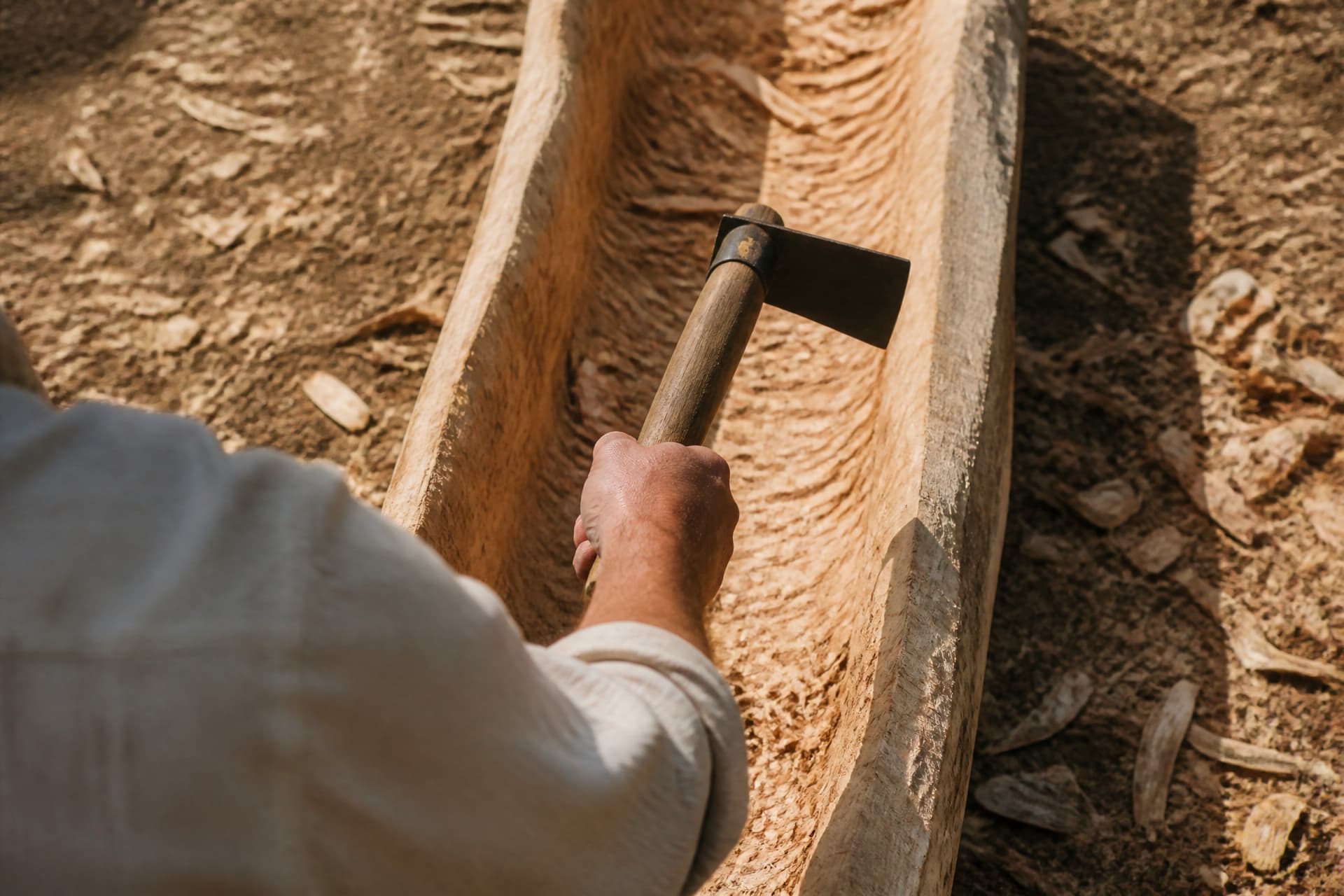
Begin with the object, because most of the confusion starts with picturing the wrong thing. This is not a box built up from sawn planks. It is a single log, split lengthwise and hollowed out with an adze into a trough and a lid, then closed again around the body and bound. In Sagada the wood is usually pine, cut from the forest above the town; in China and in Sulawesi it is whatever hardwood the valley grows. Making one is weeks of work with hand tools, and the marks of those tools are still visible on coffins that have sat on the rock for generations.
They are also short — much shorter than a person. Photographs make that look like a trick of scale, or like a coffin built for a child, and it is neither. The body is bound into a fetal position with the knees drawn up to the chest, and the coffin is cut to fit the folded body rather than a body lying flat. The Kankanaey explanation is direct: a person should leave the world in the position they entered it.
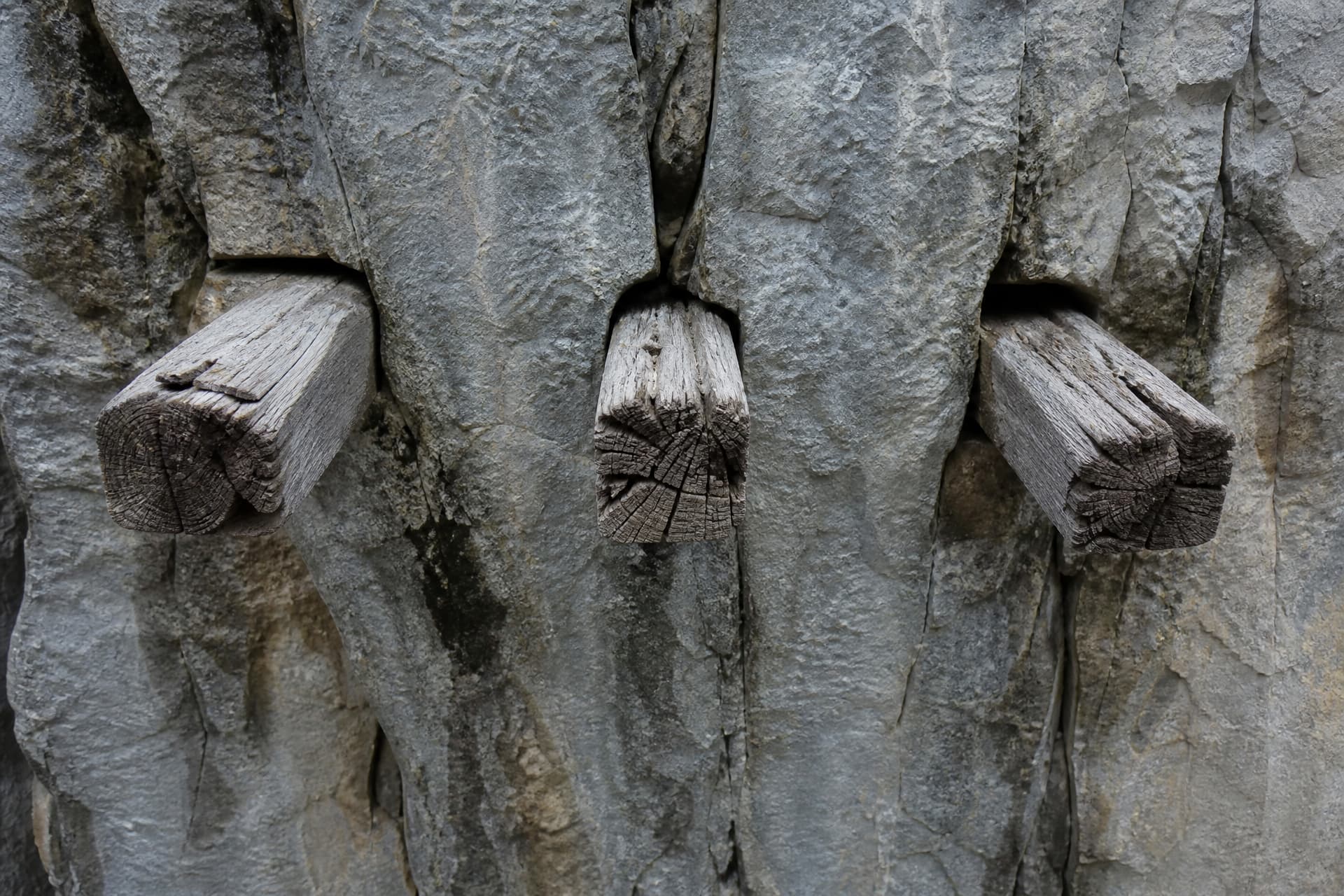
Getting one onto a cliff is a separate problem, and it is solved three ways. Wooden stakes or beams are driven into fissures in the rock, and the coffins rest across them like shelving. Natural ledges and overhangs take a coffin that is wedged in and lashed down. And caves — the mouth of one, or a chamber set back in the dark — hold coffins stacked in rows, which is where the oldest examples tend to survive, because rain never reaches them.
The work begins with one log, not with sawn boards. The trough and its lid are cut from the same tree, so the grain still lines up when the lid goes back on.
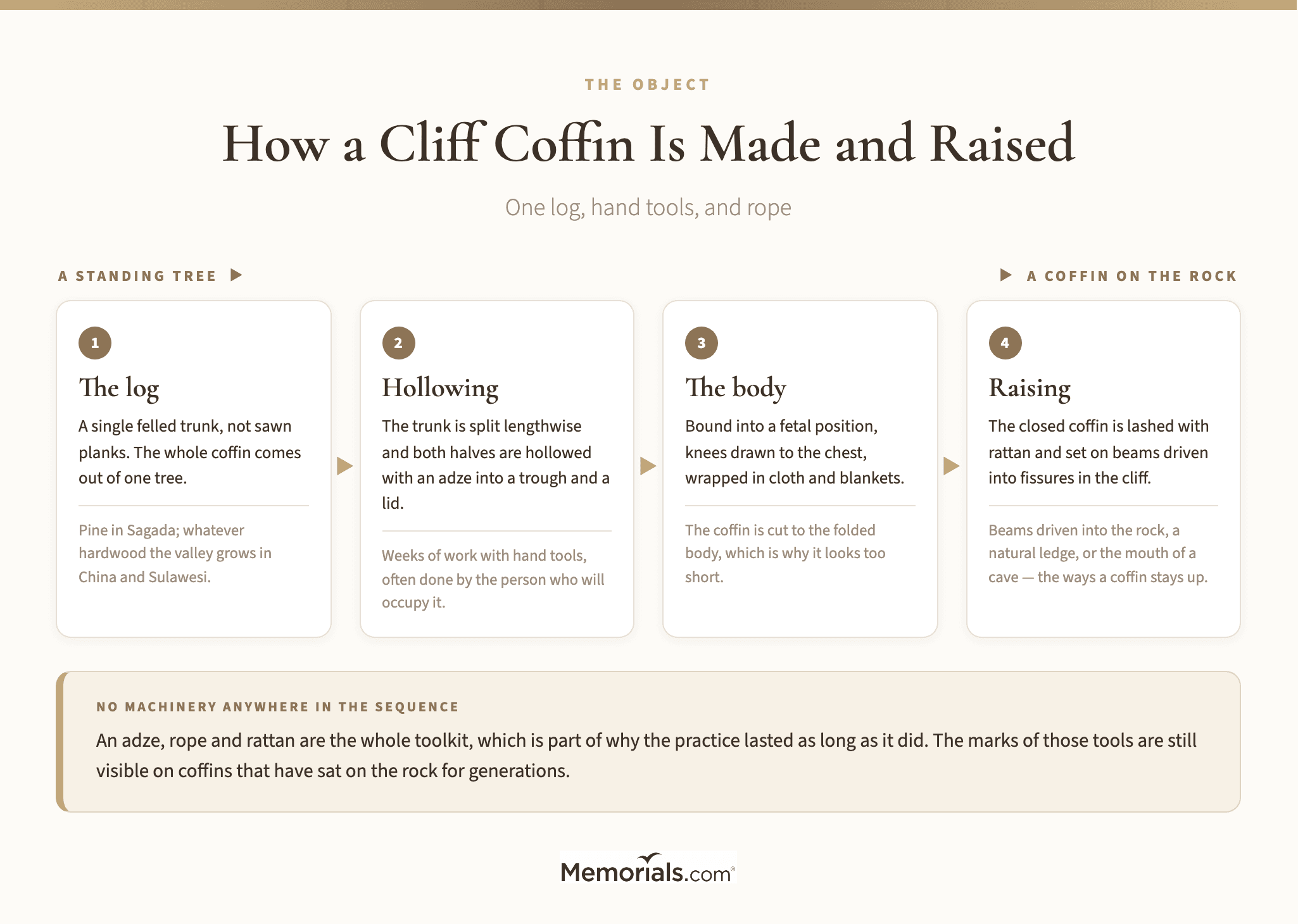
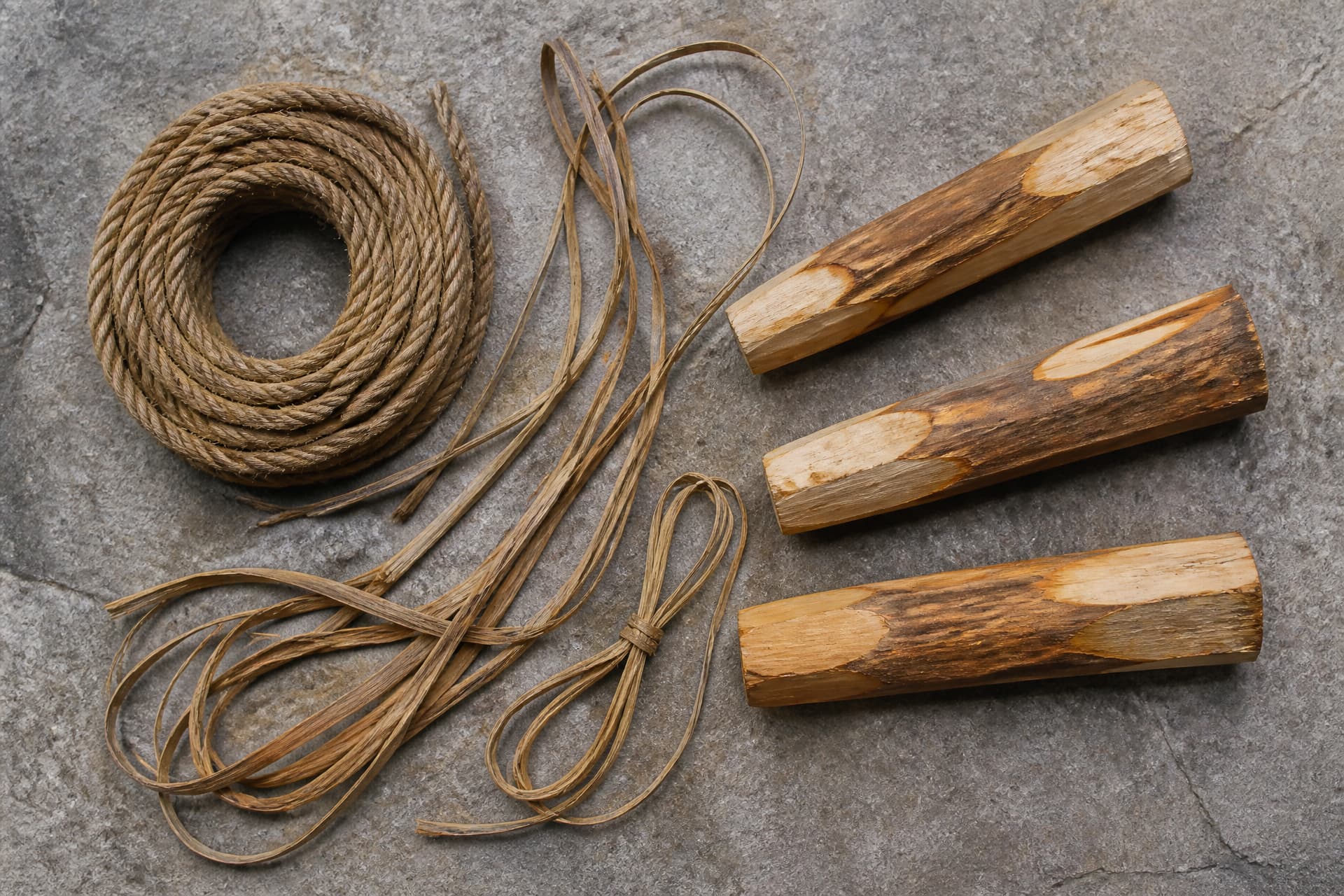
Four steps and no machinery: fell and split the log, hollow both halves with an adze, bind the body into a fetal position, then raise the closed coffin and lash it to beams set in the rock. The shortness of the coffin follows from step three.
Sagada, Philippines: The Kankanaey Cliff Burials
The Sagada hanging coffins are the ones in the photographs. Sagada is a small town in Mountain Province, in the Cordillera Administrative Region of northern Luzon, sitting in limestone country full of caves and vertical rock. The people who bury this way are the Kankanaey, one of the Igorot peoples of the Cordillera, and the practice belongs to them and to a handful of neighboring communities. In the Philippines hanging coffins are not a national custom, and treating them as one is the most common mistake made about them.
That distinction is worth holding onto. Most of the country is Roman Catholic and buries its dead in cemeteries, and a death there is commonly followed by nine nights of prayer — the observance described in our guide to the nine-day novena for the dead. Sagada went a different way. The town was evangelized by the Episcopal Church in the early 1900s, Kankanaey families there are largely Anglican, and the cliff burials have continued alongside the church rather than being displaced by it. The hanging coffins in the Philippines that a visitor can actually see are all within a short walk of this one town.
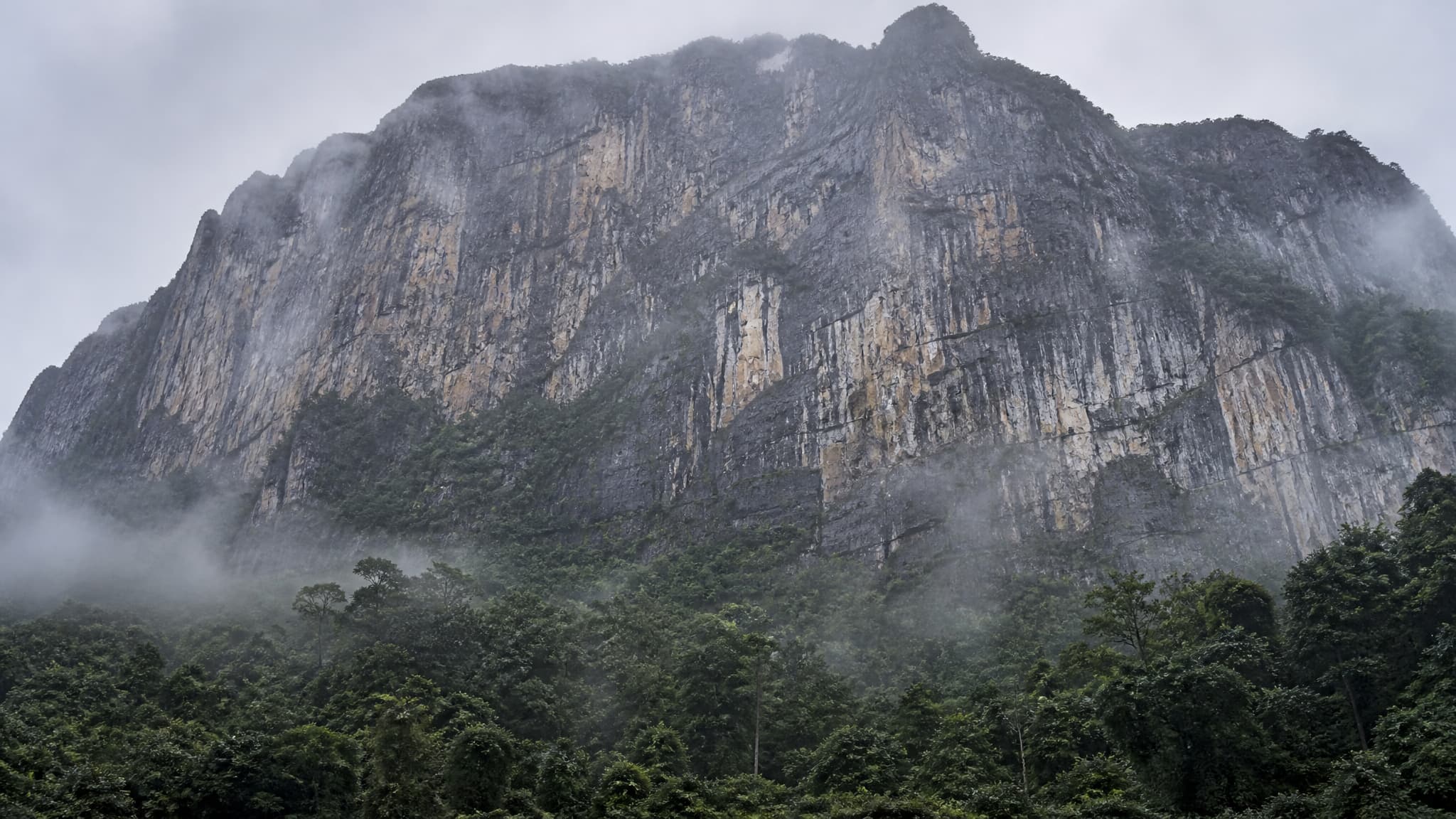
Sagada sits in limestone country where vertical rock is ordinary and level ground is not. Geography is part of the explanation, though nowhere near the whole of it.
Who Gets a Hanging Coffin
Not everyone, and this is the fact most retellings leave out. A hanging coffin is an honor with conditions attached: traditionally the person should have been married, should have had grandchildren, and should have died of natural causes in old age. Standing in the community matters, and so does having lived long enough to be owed something by it.
Height carries the same message. The more respected the dead, the higher the coffin, which is why the cliffs read from the ground as a kind of record of who mattered. A death that fails the conditions — one that came too young, or violently — is buried in the ordinary way. What is on those walls is a selection, not a population.
The Days Before the Burial: The Death Chair
The most distinctive part of a Sagada funeral happens before anyone goes near the rock. The body is seated upright in a wooden chair called a sangadil, placed by the door of the house or on the dap-ay, the community ground at the center of the village. It is bound in place, covered, and left seated for several days while relatives arrive from wherever they now live. A fire is kept burning nearby, and its smoke helps preserve the body in a warm climate with no refrigeration.
By the time the body is taken down and bound into its coffin, it has been wrapped in layers of cloth and blankets — burial shrouds in everything but name, and a reminder that wrapping the dead rather than dressing them is one of the oldest funeral habits there is. The chair is what makes those days recognizable in old photographs, and it is the part of the rite that outside accounts skip most often.
Carving and Raising the Coffin
Many of these coffins were carved by the people who would eventually lie in them. Someone still strong enough to swing an adze makes their own, and if they become too ill or too old to finish, a son or a nephew completes the work. That single detail says more about the relationship between the Kankanaey and their own deaths than any amount of interpretation could.
Raising it is a community job. The coffin, bound with rattan and carried on shoulders through the town, goes up the rock by rope and by climbers working the ledges, and being part of that procession is considered fortunate rather than something to avoid. Most of what circulates as hanging coffins Sagada history repeats the same few paragraphs and names no source at all; the reliable material is oral, kept in families, and thinner than the confident retellings suggest.
Where They Are: Echo Valley and Lumiang Cave
Two sites carry most of the attention. Echo Valley, a short walk out of town, is where the hanging coffins the Philippines is best known for are visible from the trail, tiered up a limestone wall in groups. Lumiang Cave is a burial cave rather than an open cliff, its mouth stacked with coffins, some very old and carved with lizard figures. There are other clusters on the rock faces around the valley, Sugong among them.
We are not going to publish directions, fees or trail advice, because those change and because this is a burial ground rather than an attraction. What is worth saying is that the sites sit close together, that they are in active use by the families concerned, and that none of it is behind glass.
China: The Cliff Coffins of the Bo People
The Chinese cliff coffins are older, higher, and attached to a people who are no longer there. They belong to the Bo, who lived along the river valleys of what is now southern Sichuan and northeastern Yunnan, with the densest surviving concentration around Gongxian. The construction is the same idea at greater scale: single trunks hollowed out and set on wooden stakes driven into sheer rock, high above tributaries feeding the Yangtze.
The Bo were pressed by a Sinicized empire and then broken by it. A Ming dynasty military campaign in 1573 ended them as a distinct people, and they are usually described as extinct from that point; the Ku, who live in the same region today, are sometimes identified as their descendants, though that connection is argued rather than settled. What survives is the cliffs themselves and a small amount of outside testimony — Marco Polo, traveling through the region centuries earlier, recorded that the dead there were placed in caves or hung up where nobody could reach them.
Why they did it is the honest gap. Several answers get offered — height as protection, height as status, height as nearness to the sky — and none of them is confirmed by anything the Bo left behind, because they left almost no writing of their own. The most careful sources say plainly that the reasons remain unclear. That is a better position than the single confident explanation most retellings choose, and it is worth knowing which of the two you are reading.
The engineering is this simple and this durable: beams driven into fissures, with coffins resting across them. Some beams in Sichuan have held for centuries longer than the people who set them.
Indonesia: Toraja's Erong and the Hanging Graves
The third tradition is separate, not a variant. In Tana Toraja, in the highlands of South Sulawesi, the dead of founding and wealthy families were placed in erong — coffins carved in the shape of a boat, and sometimes of a buffalo — hung or stacked on rock faces and in chambers cut into the cliffs. The practice is dated to roughly 780 AD, which makes it the oldest of the three by a wide margin.
Two features are unmistakably Toraja. A rock grave is a liang, hollowed into the cliff itself, and a hanging grave is a liang tokek. Above many of them stand tau-tau: carved wooden figures dressed in clothes, with painted faces, made to represent the dead and to keep watch. The tau-tau became guardians partly because the graves were looted, and many of the figures have themselves been stolen since. Lemo and Kete Kesu are the sites described most often.
The Toraja also keep going back to their dead. Remains are periodically retended, cleaned and re-clothed years after the first burial. Handling a relative's remains again long after the funeral is not unique to Sulawesi — Japanese families do something formally comparable at the bone-picking ceremony that follows a cremation — though the setting, the timing and the meaning are entirely different in each case.
Why Hang a Coffin at All?
Four explanations recur, and they are not equally well supported.
Protection is the most practical. A coffin on a cliff is out of reach of animals, above flood level in a valley that floods, and awkward for grave robbers to get to. This is attested in the plain sense that it demonstrably works, and it is the reason offered most often in the Philippines.
Height as nearness is the spiritual version: the higher the dead are placed, the closer they are to the sky, to ancestors, or to whatever is understood to be above. In Sagada this is stated by the people who do it, which is the strongest evidence available for any claim about meaning. For the Bo, it is inference.
Height as status is different again, and it is the one that can be checked against the sites themselves. Where the most respected dead are consistently placed highest, position is carrying social information whether or not anyone explains it that way.
Scarcity of ground is the least romantic and probably the most underrated. In steep limestone country, level arable land is the resource you do not spend on graves, and rock face is the thing there is plenty of.
A single answer keeps getting printed because a single answer is easier to write. The traditions are three, separated by thousands of miles and by centuries, and there is no reason they should share one motive. What they do share is the decision to make the coffin itself the visible thing. Ghana's fantasy coffins work the same way from the opposite direction — there the coffin is carved to say who the person was, here its position says where they stand — and Tibetan sky burial belongs to the same broad family of dispositions that leave the dead above the ground in high country, where digging a grave is the harder option.
Rope, rattan and split timber are the whole technology. None of this requires a workshop, which is part of why the practice lasted as long as it has.
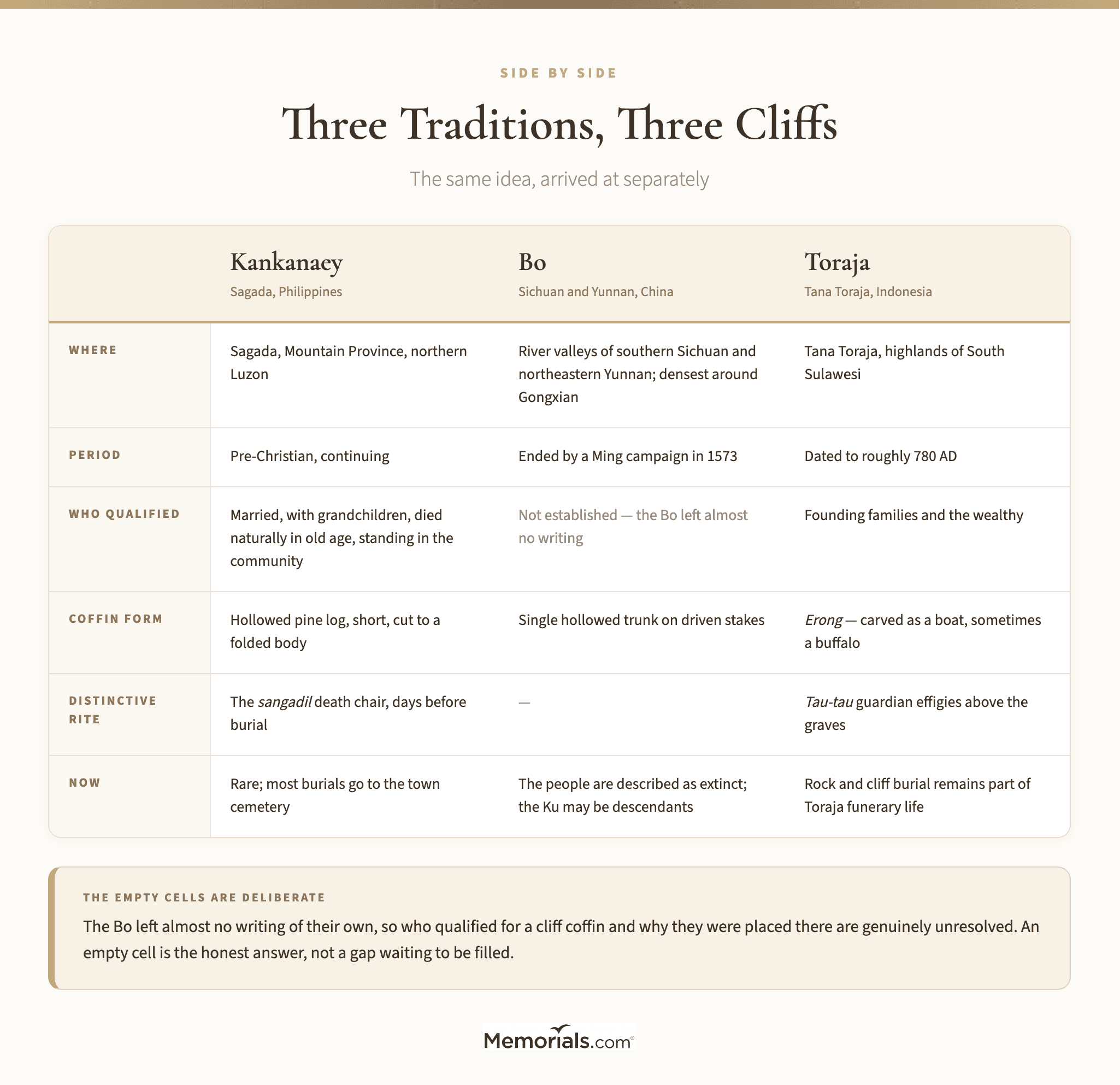
Three peoples, three answers. The Kankanaey reserve cliff burial for elders who died naturally and still practice it rarely; the Bo were ended as a people by a Ming campaign in 1573 and their motives remain unclear; the Toraja have used boat-shaped erong since roughly 780 AD for founding and wealthy families.
Visiting a Living Burial Ground
Everything on these cliffs belongs to somebody. In Sagada especially, families can name the people in particular coffins, and a visitor standing in Echo Valley is standing in a cemetery rather than at a monument. That reframing settles most questions of behavior on its own.
Photography is the contested one. It is not banned and it is not welcomed either, and the honest position is that a picture taken from the trail at a distance is a different act from one taken up against a coffin. Vandalism and theft are why anyone has to think about it at all: coffins in Sulawesi have been broken into for the goods buried with them, tau-tau have been stolen and sold, and in the Philippines coffins have been damaged by people climbing on them. Sites that were once open have been restricted because of it.
Being visited is not itself the problem. Famadihana in Madagascar, where families periodically bring out and rewrap their dead, has drawn outsiders for the same reason and has survived the attention. What damages a burial ground is not being seen; it is being treated as scenery.
Coffin or Casket? Why the Word Matters Here
Most American families never buy a coffin. What a funeral home sells is a casket: a rectangular box with parallel sides, usually hinged, generally lined and fitted with hardware. A coffin in the strict sense is the older, tapered shape — wide at the shoulders, narrow at the head and the feet — cut to the outline of a body rather than to a rectangle.
A hanging coffin is a coffin by that definition and then some, because it is cut to the outline of a folded body. If the distinction interests you, we have written the difference between a coffin and a casket up properly elsewhere. It matters on this page only because the two words are not interchangeable here: nothing on those cliffs is a rectangle, and the shape is doing work.
What This Tradition Offers a Family Here
You cannot do this. Nobody in the United States is going to be lashed to a limestone wall, and it would be dishonest to close a page like this by implying otherwise. But the instincts underneath the practice are not foreign at all, and each of them has an ordinary American answer.
Above the ground, and not buried. That is above-ground entombment in a mausoleum — a crypt rather than a grave, in a building rather than in soil. Cemeteries across the country sell crypt space in community mausoleums, and private family structures are built as well.
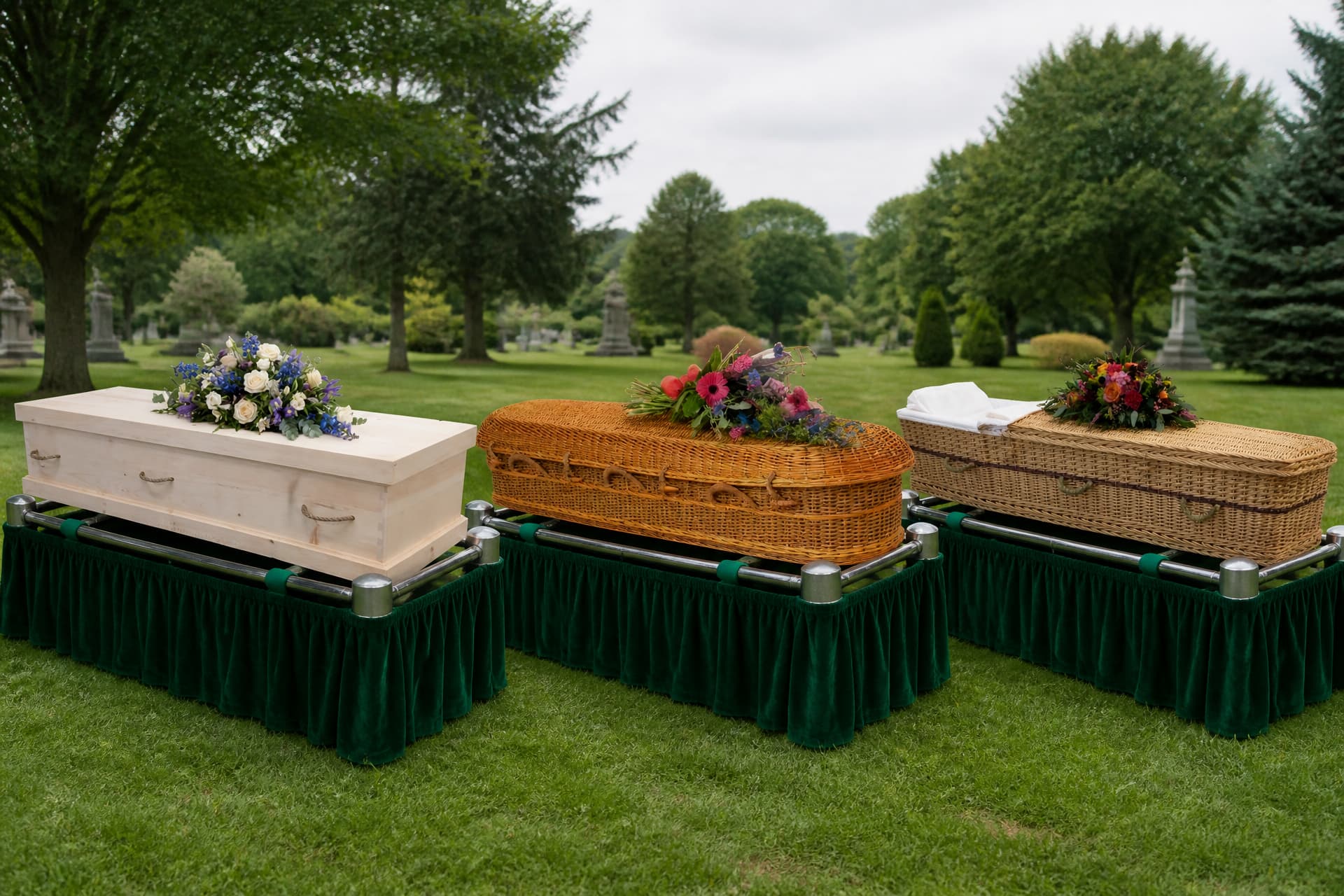
Wood, worked by hand, and nothing else. A plain wooden coffin with visible grain and little hardware is the closest thing on an American price list to a hollowed log, and families who ask for one usually want it for the same reason the Kankanaey use pine: it is honest material and it came from somewhere.
Unfinished wood and woven fiber are the nearest thing an American catalog carries to a coffin cut from a single tree — no gloss, no hardware, no vault beneath it. Products from left to right: Hope Wood Casket, Seagrass Green Casket and Willow Green Coffin.
Back into the landscape, and nothing that outlasts the body by centuries. That is green burial: no embalming, no vault, a container that breaks down. A coffin carved from one tree and left to weather on a cliff meets every standard the modern movement uses, several hundred years early.
Frequently Asked Questions
Why do they hang coffins on cliffs?
Several reasons, and they differ by place. Protection from animals, floods and grave robbers is the most practical one. Height as nearness to ancestors or to the sky is the reason the Kankanaey give themselves. Height as a marker of status is visible in how the sites are arranged. And in steep limestone country, level ground is scarce while rock face is not. For the Bo of China, the motive is genuinely unresolved.
Are hanging coffins still used today?
In Sagada, rarely. The practice continues, but most burials in the town now happen in the cemetery, and the most recent cliff burials are within living memory rather than in the distant past. Popular sources disagree about exactly when the last one took place and we are not going to pick a year. In China the practice ended with the Bo. In Tana Toraja, rock and cliff burial remains part of Toraja funerary life.
Who is allowed to be buried in a hanging coffin?
In Sagada it is an honor with conditions. Traditionally the person should have been married, had grandchildren, and died of natural causes in old age, with a recognized standing in the community. Anyone who does not meet those conditions is buried in the ordinary way. Among the Toraja, the equivalent honor belonged to founding families and to the wealthy.
How do the coffins stay on the cliff?
Three ways, and often two at once. Wooden stakes or beams are driven into cracks in the rock and the coffins sit across them. Natural ledges hold a coffin that is wedged in and lashed with rattan or rope. Caves hold them stacked and out of the rain, which is why the oldest surviving examples tend to be cave burials rather than open-face ones.
Are there hanging coffins outside the Philippines?
Yes, and they are older. The cliff coffins of the Bo people in Sichuan and Yunnan predate the Philippine sites, and the Toraja hanging graves in Sulawesi are dated to roughly 780 AD. The Philippine sites draw the attention because they are the ones where the tradition is still recognizably alive and where the coffins are easy to reach.
Above the Ground, and Within Reach
What the three traditions share is not a technique. The wood is different, the tools are different, and the reasons are different. What they share is a refusal: none of these peoples was willing to put their dead in the ground and out of sight, and each went to considerable trouble, with hand tools and rope, to keep them visible and above the living rather than beneath them.
That is not an exotic instinct. It is the same one behind a crypt with a name plate at eye level, behind ashes kept on a shelf at home rather than buried, behind every family that wants somewhere to go and something to look at. The Kankanaey answered it with a cliff because a cliff is what they had. Most families answer it with something smaller and closer to hand, and the answer is no less serious for being ordinary.
If this page has done its job, the coffins on that limestone wall look a little less strange than they did at the top of it, and the question underneath them looks a little more worth answering: what you want done with your own body, and who you want to be able to reach it.