🏬Supersize Online Funeral Retailer🪦1000's of Headstones⚱️Over 10,000 Cremation Urns⚰️Caskets Overnight Delivery🛒Funeral & Memorial Superstore🚚FREE Shipping on ALL Orders👨👩👧👦Helping Families for over 20 Years💰Lowest Price Guarantee🏬Supersize Online Funeral Retailer🪦1000's of Headstones⚱️Over 10,000 Cremation Urns⚰️Caskets Overnight Delivery🛒Funeral & Memorial Superstore🚚FREE Shipping on ALL Orders👨👩👧👦Helping Families for over 20 Years💰Lowest Price Guarantee
🏬Supersize Online Funeral Retailer🪦1000's of Headstones⚱️Over 10,000 Cremation Urns⚰️Caskets Overnight Delivery🛒Funeral & Memorial Superstore🚚FREE Shipping on ALL Orders👨👩👧👦Helping Families for over 20 Years💰Lowest Price Guarantee🏬Supersize Online Funeral Retailer🪦1000's of Headstones⚱️Over 10,000 Cremation Urns⚰️Caskets Overnight Delivery🛒Funeral & Memorial Superstore🚚FREE Shipping on ALL Orders👨👩👧👦Helping Families for over 20 Years💰Lowest Price Guarantee
Walk through a cemetery laid out before about 1920 and you will notice something modern sections do not have. Many graves are marked twice. There is the tall stone you expect at one end, and then, six or seven feet away, a much smaller stone sitting low in the grass. That smaller stone is a footstone, and for most of the history of American burial it was considered as ordinary a part of a grave as the headstone itself.
Today it is unusual enough that most families first hear the word from a monument dealer or a cemetery office. This guide explains what a footstone is, how it pairs with the headstone, what can be carved on it, why cemeteries stopped allowing them, and what to check before you order one.
What a Footstone Is
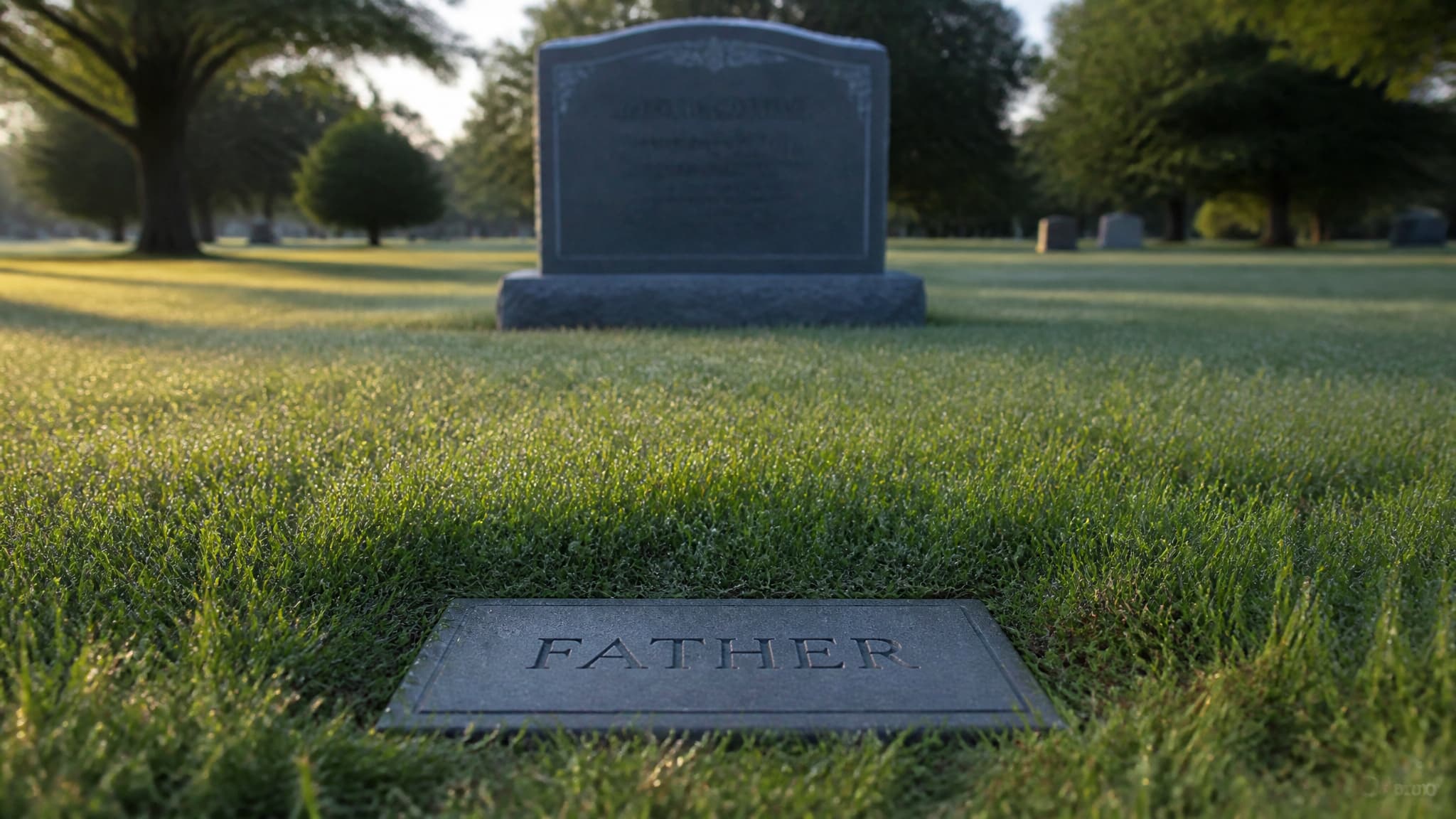
A footstone is a grave marker placed at the foot of a burial plot, opposite and matching the headstone at the other end. It is almost always smaller than the headstone, and it is usually set flush with the ground or raised only slightly above it.
The purpose is not decorative. A footstone does two plain jobs. It shows where the grave ends, which matters in a cemetery where plots sit shoulder to shoulder and the boundaries are otherwise invisible. And it completes the outline of the grave as a defined space rather than a stretch of open lawn.
Cemeteries and monument companies use several names for the same object. You will see footstones, foot stones written as two words, foot markers for graves, and grave foot markers, all describing the same small marker at the lower end of the plot. If you are talking to a cemetery office, the phrase most of them use is simply foot marker.
Shop Flat Grave Markers
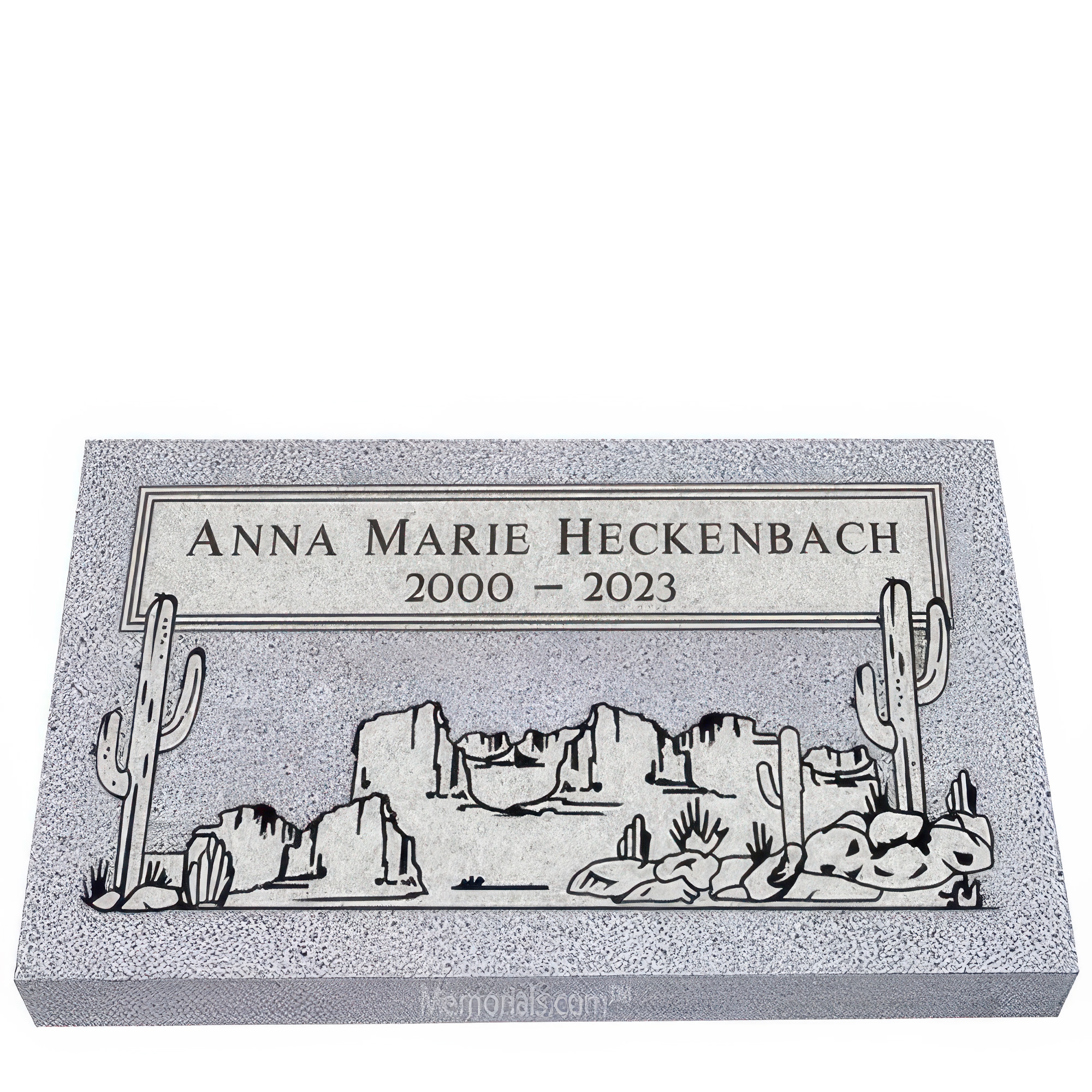
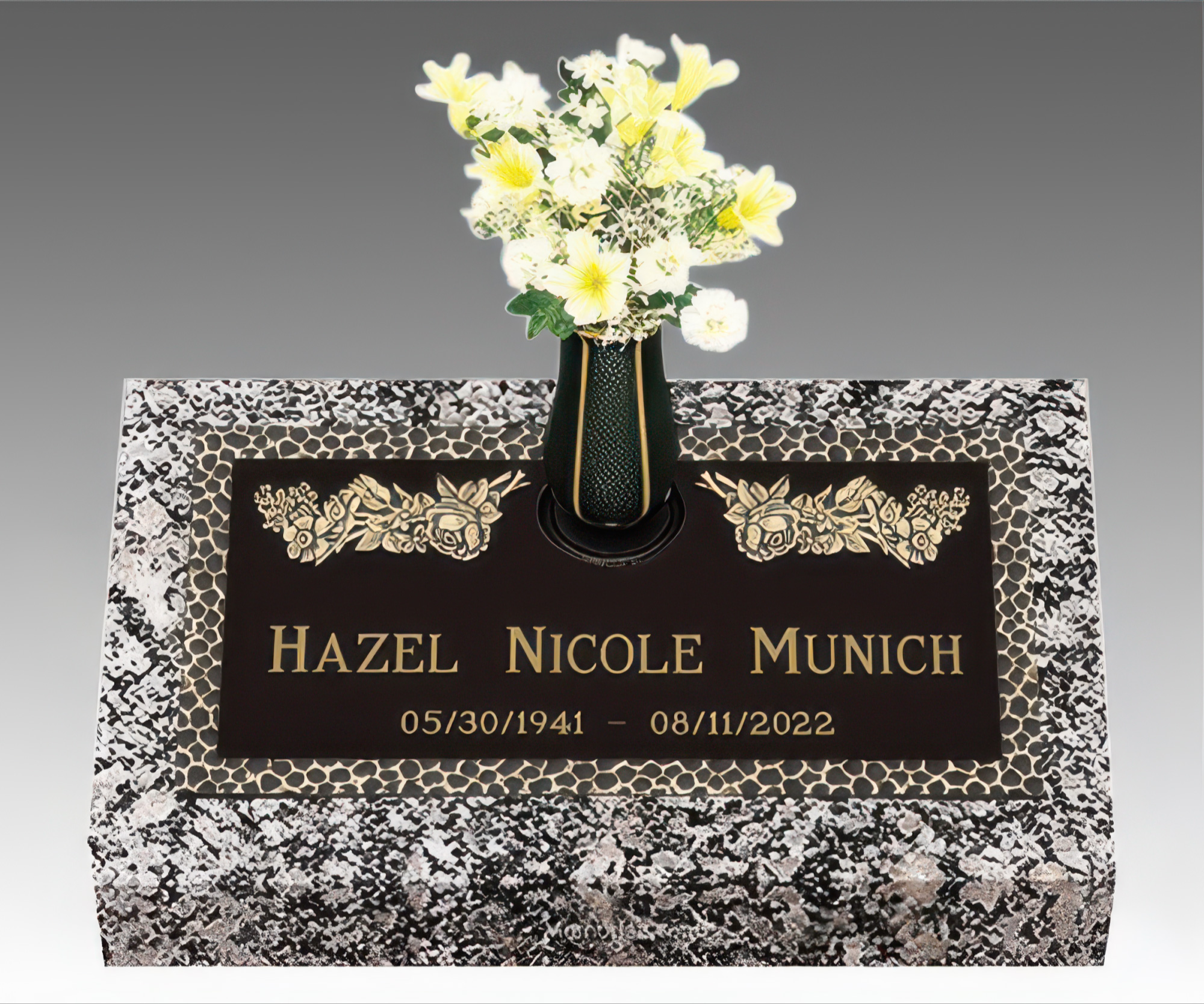
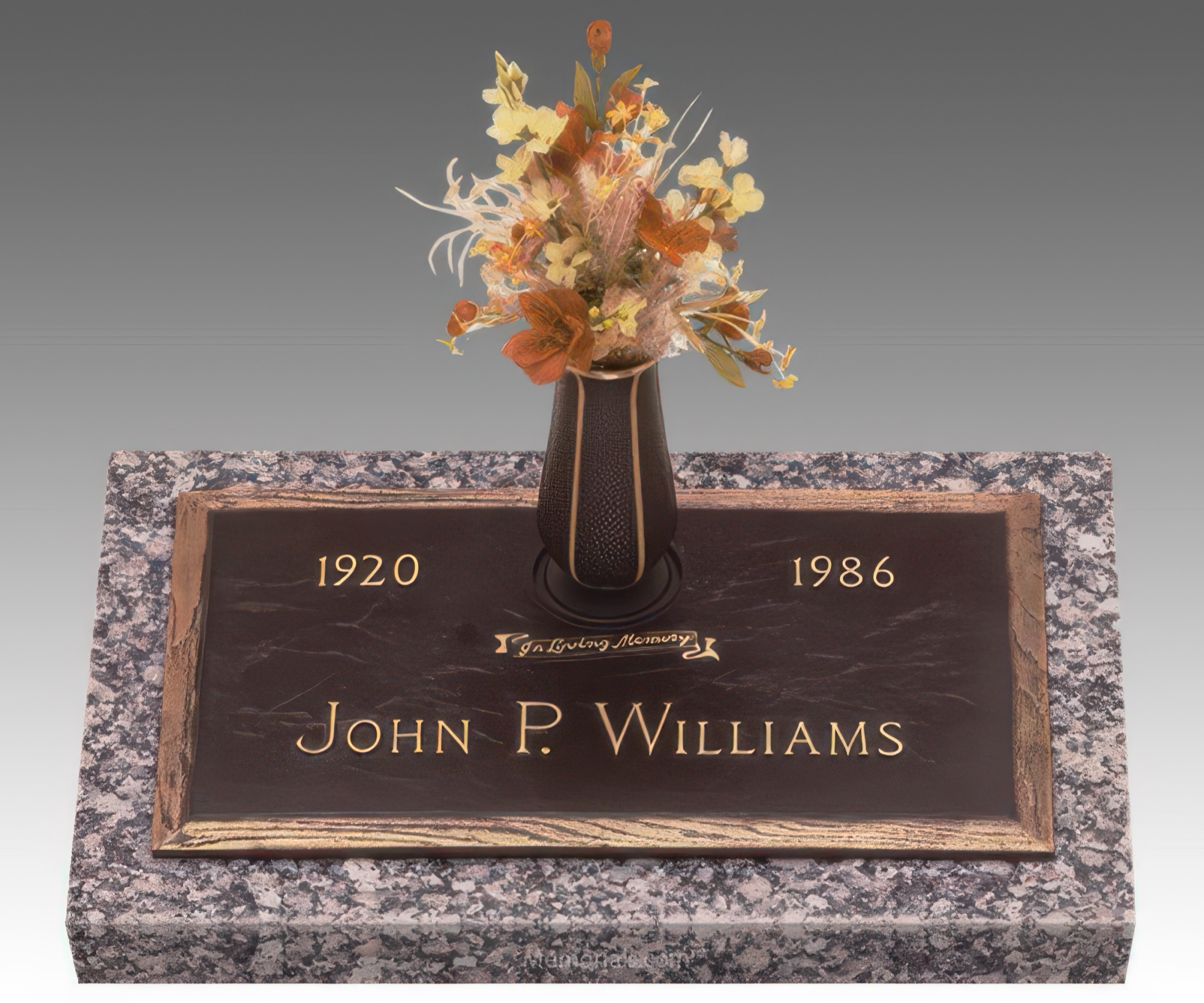
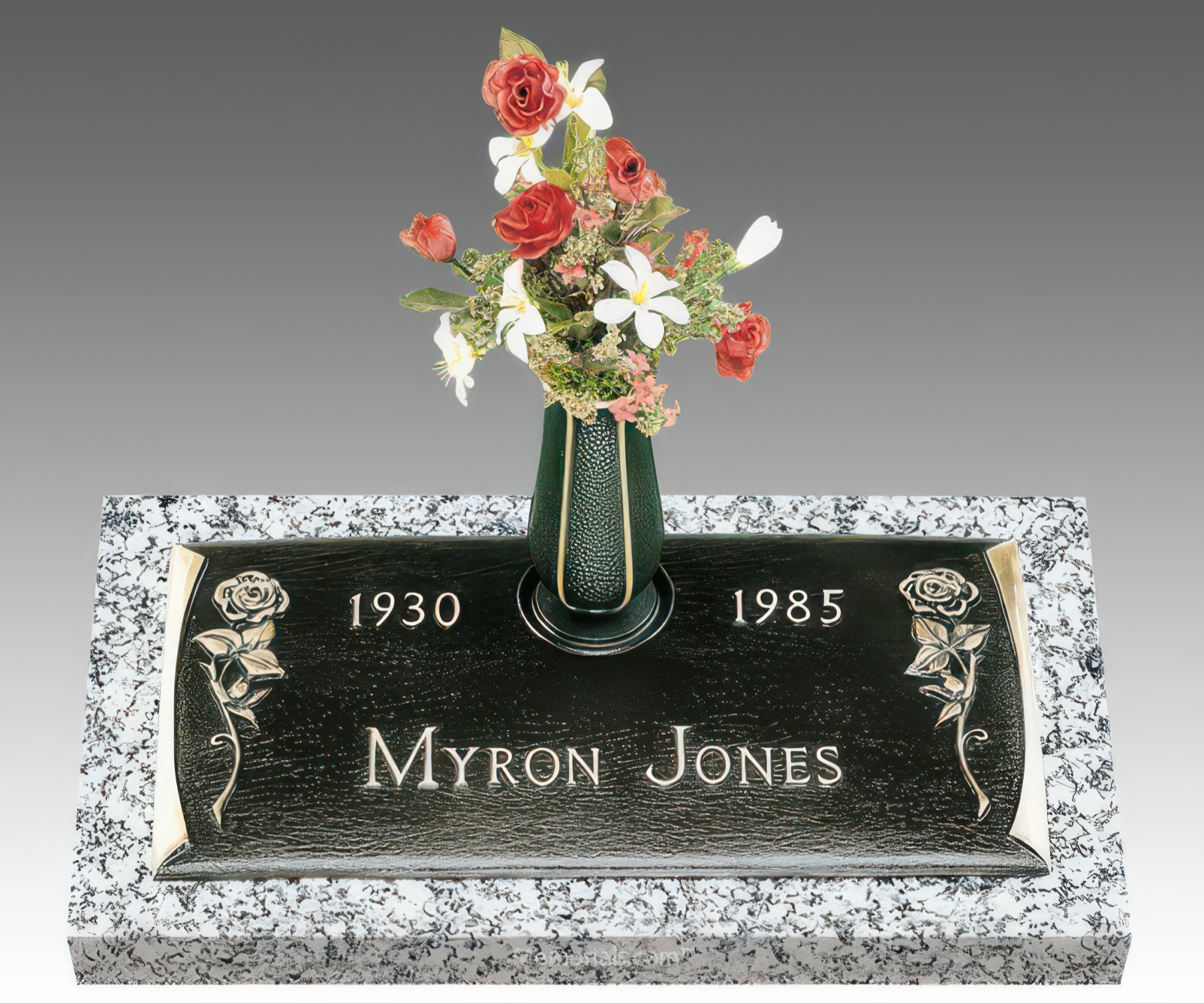
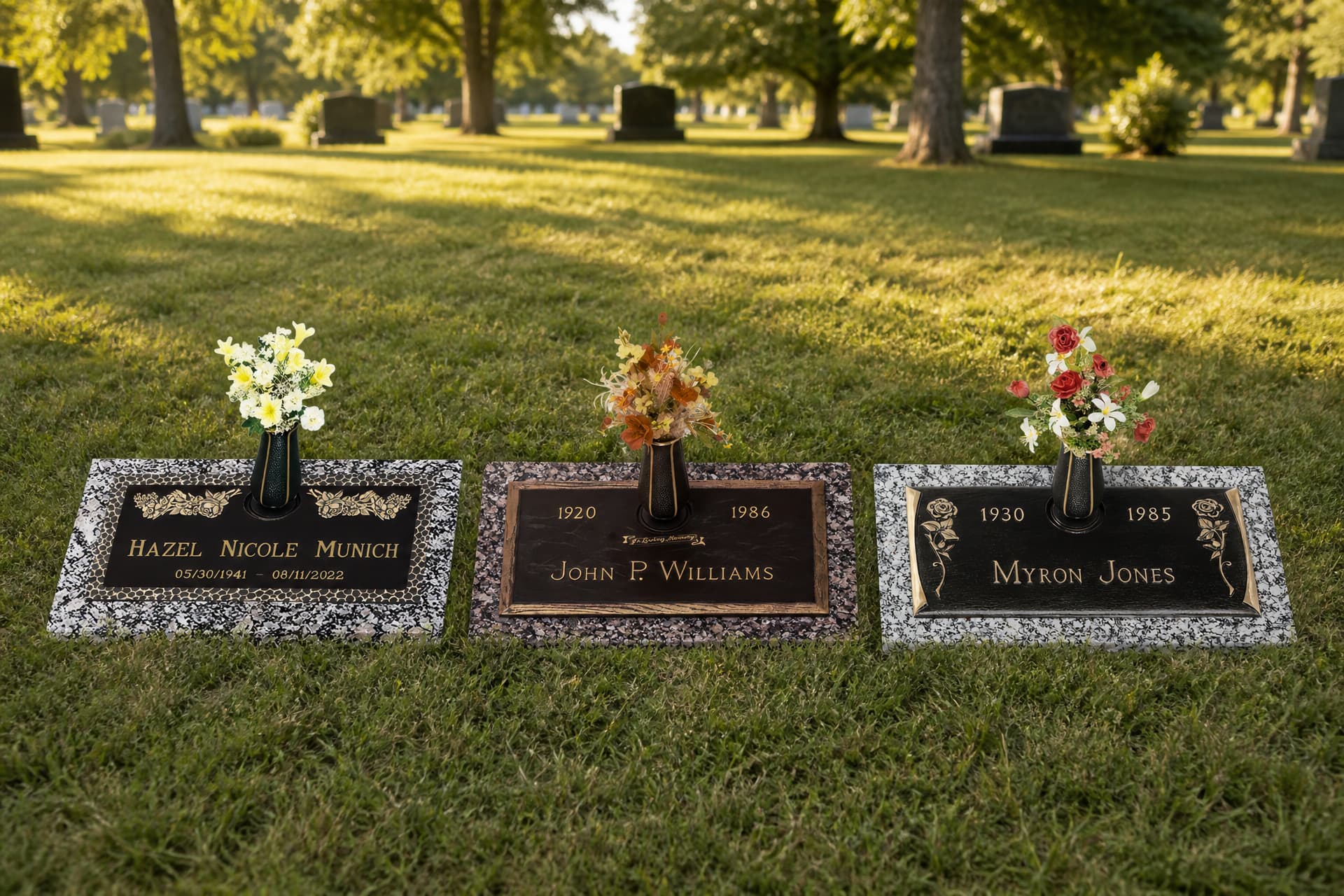
Granite and bronze markers in the flush format cemeteries permit at the foot of a grave
The most common question about these markers is a positional one: is the headstone at the head or feet of the grave?
The headstone goes at the head. The deceased is traditionally buried with the head nearest the larger stone, so a visitor standing at the headstone and reading the inscription is standing above the head of the grave and looking down its length toward the feet. The footstone sits at the far end, above the feet.
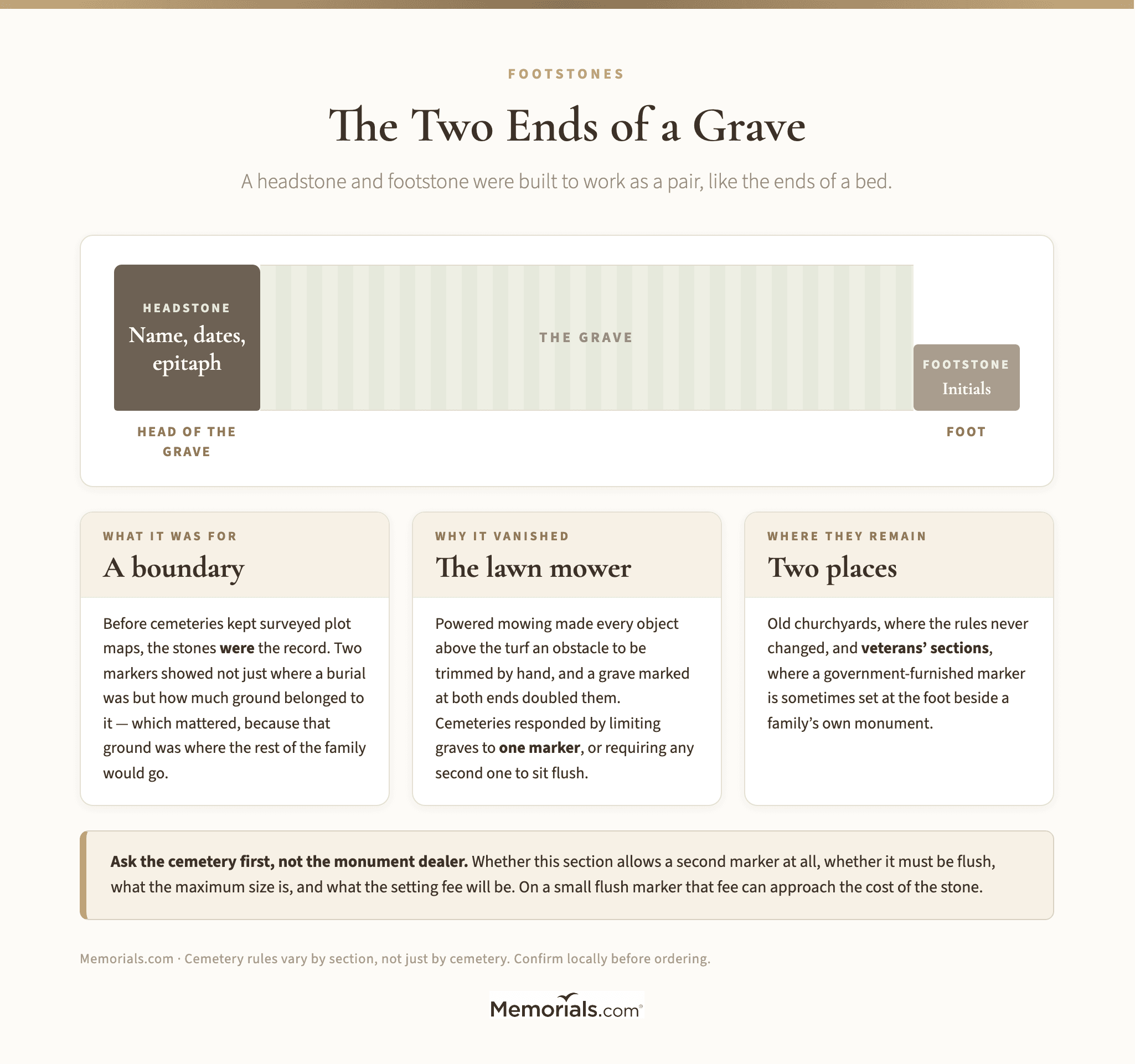
This is why the pairing exists at all. A headstone and footstone together reproduce the shape of a bed, with a headboard and a footboard, and that resemblance was entirely deliberate. Early American and English burial grounds treated the grave as a bed and the dead as sleeping, a metaphor that shows up constantly in the inscriptions of the period. Our guide to types of old gravestones covers how much the rest of the design vocabulary from that era was working the same way.
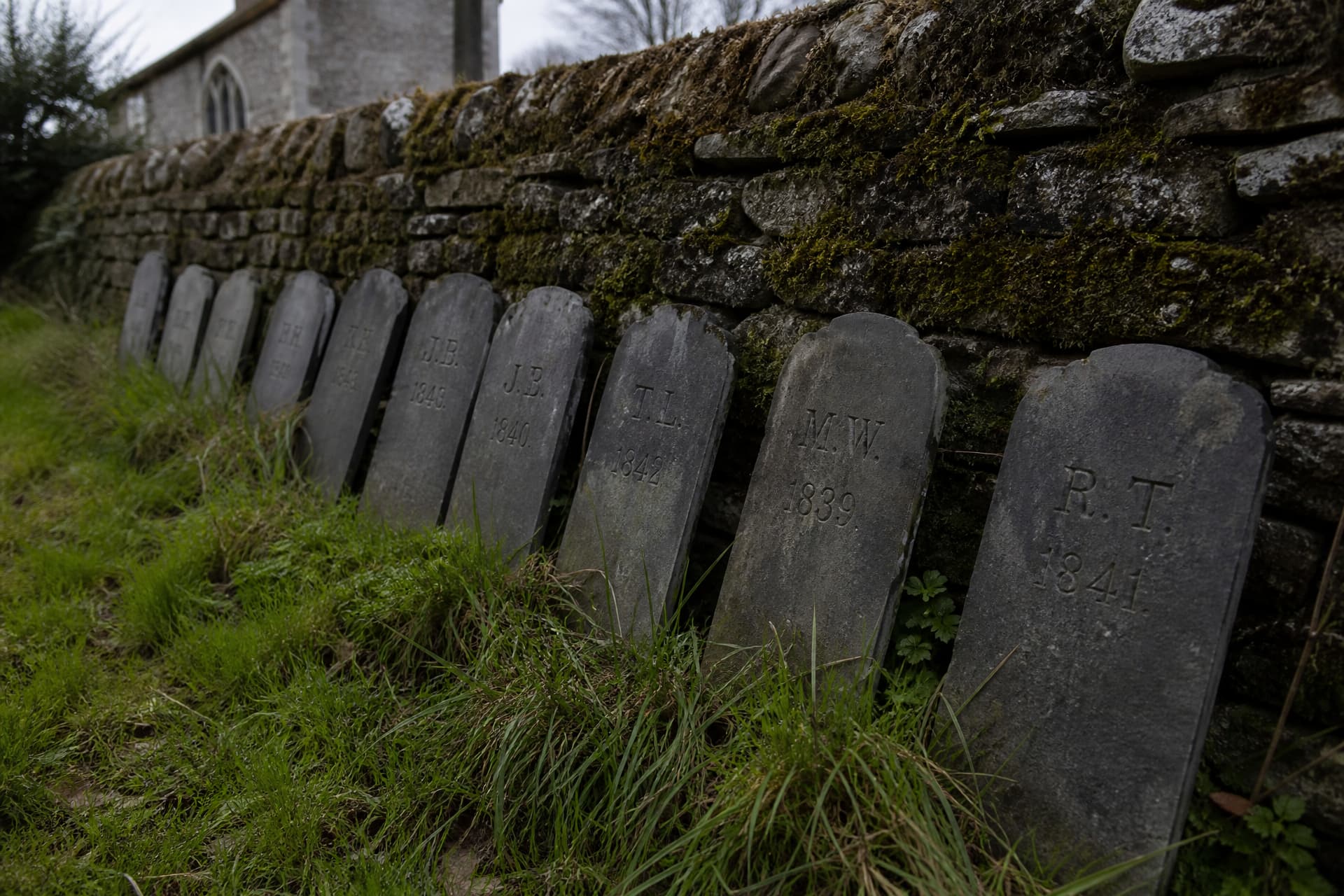
One consequence is worth knowing if you are reading an old cemetery. When a footstone has been moved, which happens often, the grave it belongs to is the one whose headstone faces it, not the one it is nearest. Groundskeepers over the years have lined up displaced foot stones against fences and walls, and a stone leaning on a wall is evidence of a grave somewhere else entirely.
Removed to make mowing easier and stacked rather than discarded. A footstone against a wall belongs to a grave somewhere else in the ground, which is why it cannot be used to identify the plot it is leaning on.
Why Cemeteries Once Marked Both Ends
The double marking made practical sense in the burial grounds where it developed.
Before cemeteries kept surveyed plot maps, the grave itself was the record. A family returning after twenty years needed to know not only where the burial was but how much ground belonged to it, because the space around a grave was where later family members would be buried. Two stones defined that space in a way that one stone could not.
There was also a matter of respect that a modern visitor rarely thinks about. With both ends marked, the area in between was unmistakably a grave, and people walked around it rather than across it. That instinct is still with us, which is why cemetery etiquette guidance, including our own notes on cemetery etiquette, still tells visitors to walk between the rows rather than over the plots.
What the pair was for, why the second stone disappeared, and the four questions that decide whether you can still have one.
Why Footstones Became Rare
Footstones did not fall out of fashion. They were mostly regulated out of existence, and the reason was lawn maintenance.
Through the nineteenth century, cemetery grounds were cut by hand or grazed. The arrival of powered mowing equipment changed the economics of a cemetery completely, and every object standing above the turf became an obstacle that had to be trimmed around by hand. A grave marked at both ends doubled the number of those obstacles. Many cemeteries responded by restricting monuments to one per grave, requiring any second marker to be set flush with the soil, or moving to the fully flush layout that lawn-park and memorial-garden cemeteries still use today.
The same pressure is what produced the modern flat marker, and it is the underlying reason behind the choice covered in our comparison of flat versus upright headstones. Footstones were an early casualty of the same policy.
There is a second reason, less often mentioned. As plots became more expensive and cemeteries more densely laid out, the ground a footstone occupied became ground the cemetery could otherwise sell or plant. A marker that served mainly to say where a grave ended was the easiest thing to give up when the map could say it instead.
What a Footstone Looks Like Today
Where footstones are still permitted, they are almost always one of two things.
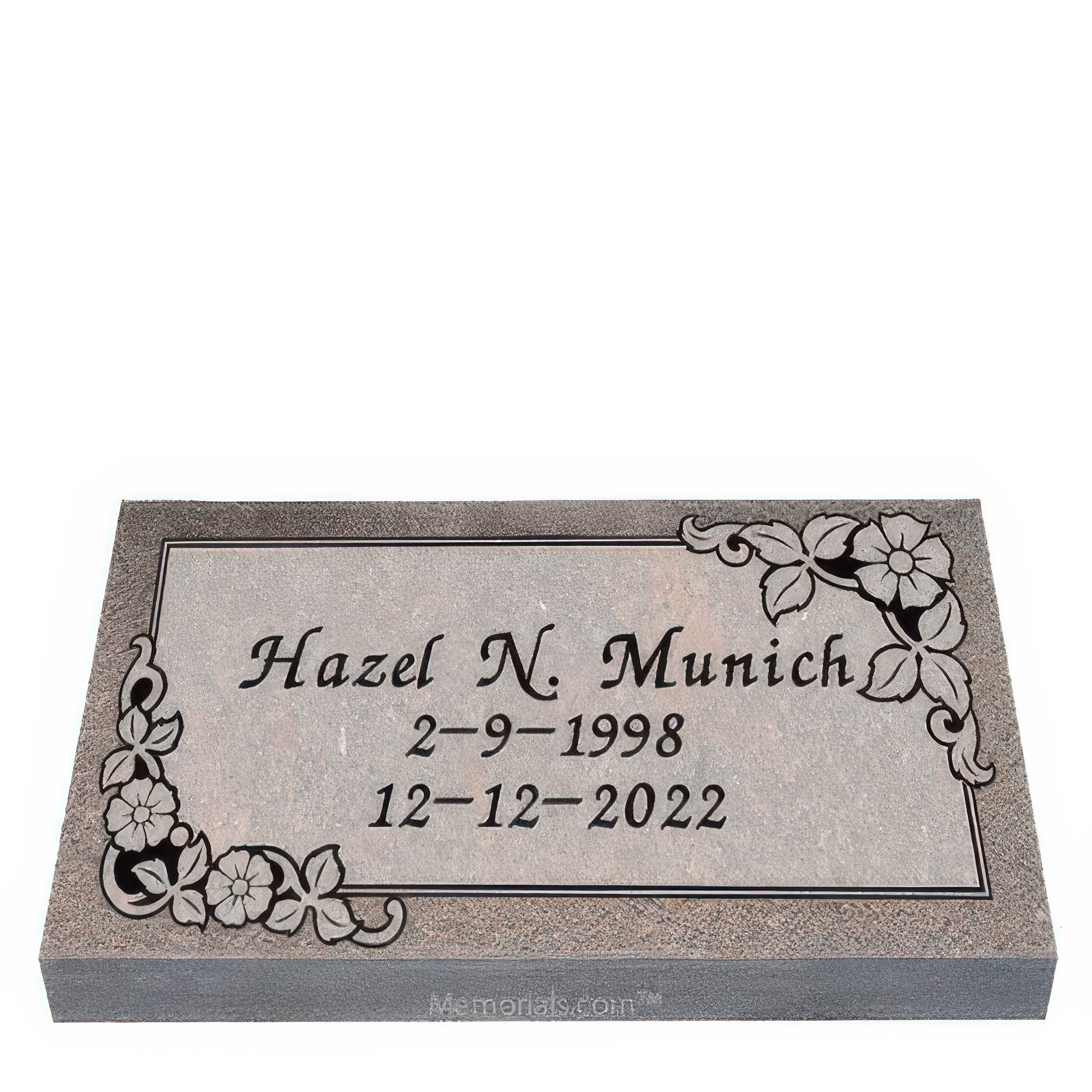
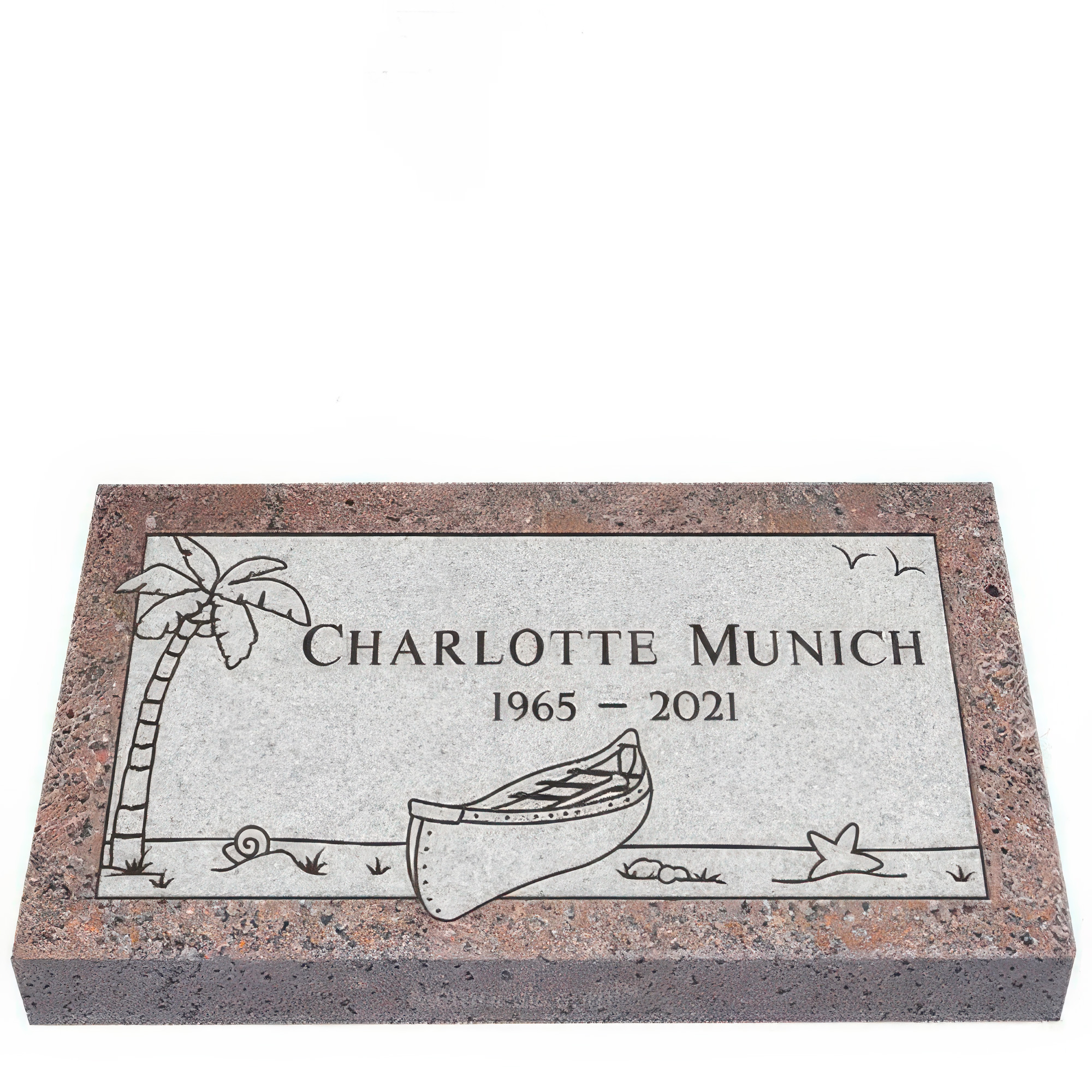
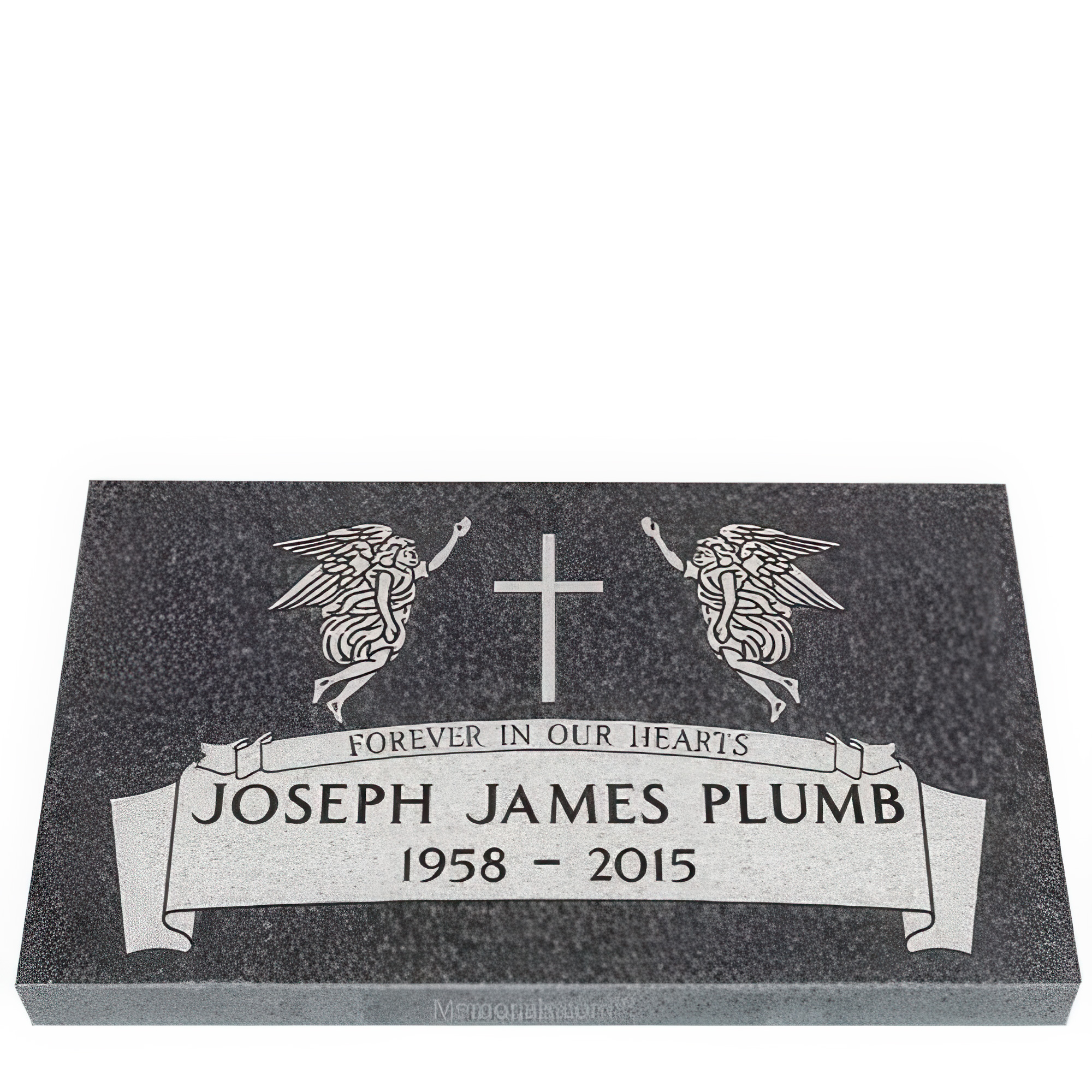
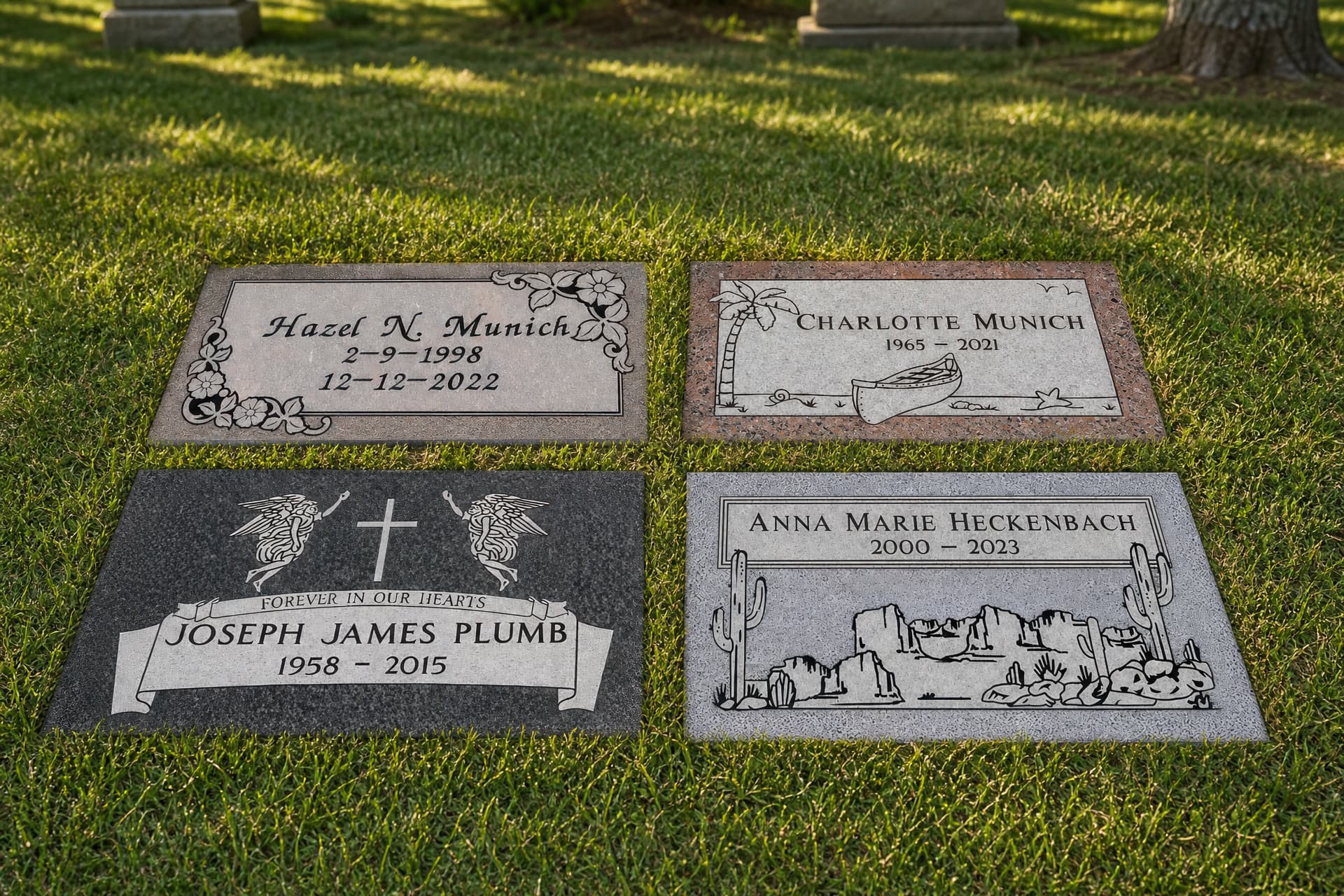
Flush granite. A rectangular granite tablet set level with the ground, typically between about sixteen and twenty-four inches wide and eight to twelve inches front to back, with a polished top face and rough sides. Granite is chosen for the same reason it dominates the rest of the memorial trade, which our guide to what headstones are made of goes through in detail. Our granite grave markers range covers the flush format in the sizes cemeteries commonly permit for a second marker.
Cast bronze on a granite base. A bronze plaque bolted to a granite foundation and set flush. Bronze is the standard in most lawn-park cemeteries because it will not chip under a mower blade and its raised lettering stays legible for decades. Our range of flat bronze grave markers shows the format, which is the same whether the marker is being used at the head or the foot of the plot.
Exact dimensions are not yours to choose freely. Cemeteries publish maximum sizes for every class of marker they allow, and a footstone is usually capped well below the headstone. The sizes involved, and how they interact with the plot, are covered in our headstone size guide.
What Goes on a Footstone
A footstone inscription is short, and deliberately so. It is not a second epitaph.
Historically the footstone carried only initials, sometimes with a year. On a grave whose headstone read in full, the foot marker for grave might say nothing more than "M.T. 1847." That economy was partly about cost and partly about hierarchy. The headstone was the memorial; the footstone was the boundary.
Modern footstones, where allowed, usually carry one of the following:
Initials, or a first name only
A surname, when the footstone terminates a family plot rather than a single grave
Dates of birth and death, when the headstone is shared between two people and the footstone identifies which grave is which
A military emblem and service details
A short phrase of two or three words, such as "At Rest" or "Together Again"
That third case is the most common practical use today. When a couple shares one upright memorial, the headstone carries both names and the individual footstones mark who lies where. Our guide to double headstones for couples covers how those shared memorials are laid out.
If you want anything longer than a line or two, it belongs on the headstone. The full set of options, and how inscriptions are actually cut into stone, is in our memorial engraving guide.
Military and Veteran Foot Markers
Veterans' sections are where you are still most likely to see footstones in regular modern use, and they follow their own rules.
The Department of Veterans Affairs furnishes a headstone or marker for an eligible veteran's grave at no cost to the family, and in some cemeteries the furnished marker is set at the foot rather than the head. Where a family has already purchased a private monument, the government marker may be placed as a foot marker beside it, so the grave carries both the family's memorial and the official record of service. Eligibility, formats and how the VA-furnished option compares with buying privately are covered in our guide to veteran grave marker options.
Families who want a privately purchased veteran marker rather than the government one, or who want a second marker for a spouse, usually order a bronze plaque in the same format. Our military grave markers for veterans range is set up for exactly that placement.
Check the Cemetery Rules First
This is the step that decides whether the rest of the decision matters, and it should happen before you contact a monument dealer.
Ask the cemetery office four questions:
Does this section permit a second marker on a single grave at all?
If so, must it be flush with the ground, and what is the maximum size?
Is there a setting or foundation fee for a second marker, and what is it?
Does the cemetery require the footstone to be ordered through its own supplier?
The last one catches people out. Some cemeteries restrict who may install a marker even when they do not restrict who may sell it, and installation is a real cost with real requirements. Our guide to headstone installation explains what the work involves and why cemeteries care about it.
Older cemeteries and church burial grounds are usually the most permissive, because footstones are already part of the landscape there. Newer lawn-park cemeteries are the most restrictive, and a number of them prohibit second markers outright.
What a Footstone Costs
Because a footstone is smaller and carries less lettering than a headstone, the stone itself is the cheaper part of the decision. The costs that catch families by surprise are the ones attached to it rather than the ones on the price tag.
Budget for three separate things: the marker, the inscription, and the setting fee the cemetery charges to install it. That third item is set by the cemetery rather than by whoever sells you the stone, it is charged per marker, and on a small flush foot marker it can approach or exceed the cost of the marker itself. Ask for it in writing before you order.
For what the primary memorial costs and how the pricing of stone, lettering and installation fits together, our guide to how much a headstone costs breaks down the full bill. Our own range of grave markers covers the flush and upright formats a footstone is usually matched to.
Caring for a Footstone
A flush marker collects everything the lawn throws at it, and a footstone sits lower and gets less attention than the headstone above it. Two things follow.
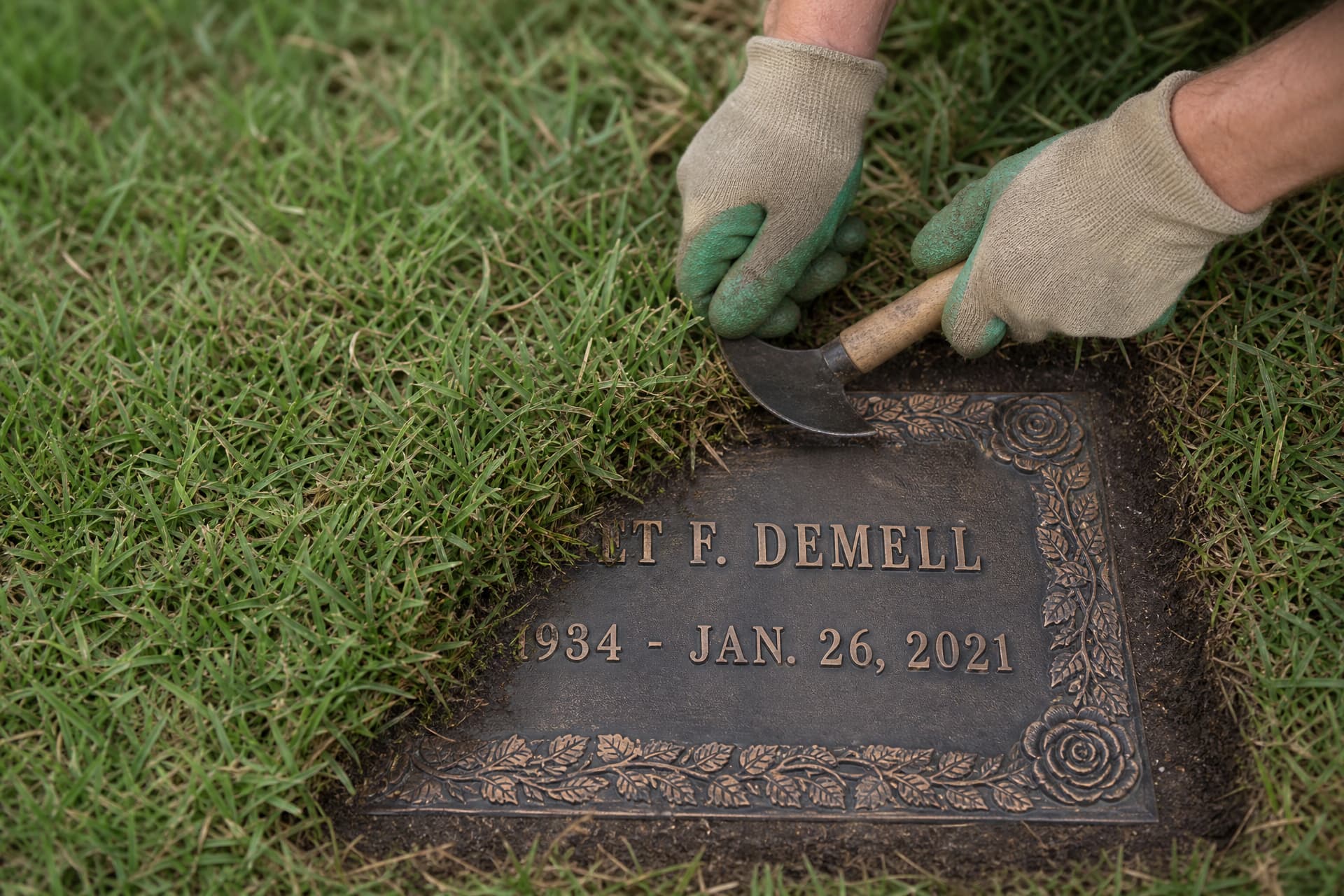
It disappears. Turf creeps over the edges of a flush stone at a rate of roughly an inch a year in good growing conditions, and a foot marker that nobody edges will be under the grass within a decade. Cutting the turf back to the stone's edge once a year is all it takes.
It stains differently. Bronze develops a protective patina that should not be stripped, while granite shows lichen and organic staining that can be safely removed with water and a soft brush. The wrong cleaning method does permanent damage to both. Our step-by-step guide to how to clean a headstone covers the right approach for each material, and it applies equally to markers at either end of the grave.
Turf creeps over the edge of a flush marker at roughly an inch a year. Cutting it back once a year is the whole of the maintenance, and skipping it is how a footstone disappears inside a decade.
Frequently Asked Questions
Is the headstone at the head or the feet of the grave? At the head. The deceased is buried with the head toward the larger stone, so a visitor reading the inscription is standing at the head of the grave. Any second marker at the opposite end is the footstone.
Do footstones for graves still get installed today? Yes, but far less often than they once were, and only where the cemetery permits a second marker. Veterans' sections and older church burial grounds are where they remain most common.
Can I add a footstone to a grave that already has a headstone? Often yes, if the section allows a second marker and the plot has room within its boundaries. Confirm with the cemetery office before ordering, because the answer varies by section within a single cemetery.
What is the difference between a footstone and a grave marker? Footstone describes position, not format. A grave marker is any stone or plaque identifying a burial, and a footstone is one placed at the foot of the plot. Our explainer on headstone versus grave marker covers the wider vocabulary.
Why are old footstones lined up against cemetery walls? Because they were removed to make mowing easier, usually decades ago, and stacked rather than discarded. A stone against a wall belongs to a grave elsewhere in the cemetery, which is why it should not be used to identify the plot it is resting beside.
Are footstones used for cremation burials? Yes. A flush marker is a common choice for an urn burial, where the plot is smaller and an upright monument may not be permitted. Our guide to cremation headstones and grave markers covers the formats available.
Marking Both Ends of a Life
A footstone is a small object with a long history behind it. It began as a practical boundary marker in burial grounds that had no maps, it borrowed the shape of a bed because that is how earlier generations pictured death, and it survives today mostly in veterans' sections and old churchyards where the rules never changed.
If you are considering one, the order of operations is simple. Ask the cemetery what it permits, confirm the setting fee in writing, and only then decide on material and wording. For the memorial at the other end of the grave, and every decision that goes into it, start with our complete guide to buying a headstone.