🏬Supersize Online Funeral Retailer🪦1000's of Headstones⚱️Over 10,000 Cremation Urns⚰️Caskets Overnight Delivery🛒Funeral & Memorial Superstore🚚FREE Shipping on ALL Orders👨👩👧👦Helping Families for over 20 Years💰Lowest Price Guarantee🏬Supersize Online Funeral Retailer🪦1000's of Headstones⚱️Over 10,000 Cremation Urns⚰️Caskets Overnight Delivery🛒Funeral & Memorial Superstore🚚FREE Shipping on ALL Orders👨👩👧👦Helping Families for over 20 Years💰Lowest Price Guarantee
🏬Supersize Online Funeral Retailer🪦1000's of Headstones⚱️Over 10,000 Cremation Urns⚰️Caskets Overnight Delivery🛒Funeral & Memorial Superstore🚚FREE Shipping on ALL Orders👨👩👧👦Helping Families for over 20 Years💰Lowest Price Guarantee🏬Supersize Online Funeral Retailer🪦1000's of Headstones⚱️Over 10,000 Cremation Urns⚰️Caskets Overnight Delivery🛒Funeral & Memorial Superstore🚚FREE Shipping on ALL Orders👨👩👧👦Helping Families for over 20 Years💰Lowest Price Guarantee
Human Ashes: What Cremains Are & What to Do With Them | Memorials.com Info Center
🏬Supersize Online Funeral Retailer🪦1000's of Headstones⚱️Over 10,000 Cremation Urns⚰️Caskets Overnight Delivery🛒Funeral & Memorial Superstore🚚FREE Shipping on ALL Orders👨👩👧👦Helping Families for over 20 Years💰Lowest Price Guarantee🏬Supersize Online Funeral Retailer🪦1000's of Headstones⚱️Over 10,000 Cremation Urns⚰️Caskets Overnight Delivery🛒Funeral & Memorial Superstore🚚FREE Shipping on ALL Orders👨👩👧👦Helping Families for over 20 Years💰Lowest Price Guarantee
When a loved one passes, deciding what to do with their remains is one of the most personal choices a family faces. Cremation has become the most common method of final disposition in the United States, with rates surpassing 60% and the National Funeral Directors Association projecting that figure will approach 80% by 2035. That means millions of families each year will receive cremated remains and share the same fundamental questions about what they are, how they were created, and what comes next.
This guide covers every aspect of human ashes — from their chemical composition and the difference between "cremains" and "ashes" to memorialization options, safe handling, and the legal landscape. For families weighing all their end-of-life decisions together, our cremation planning guide walks through every step from first arrangements to final disposition.
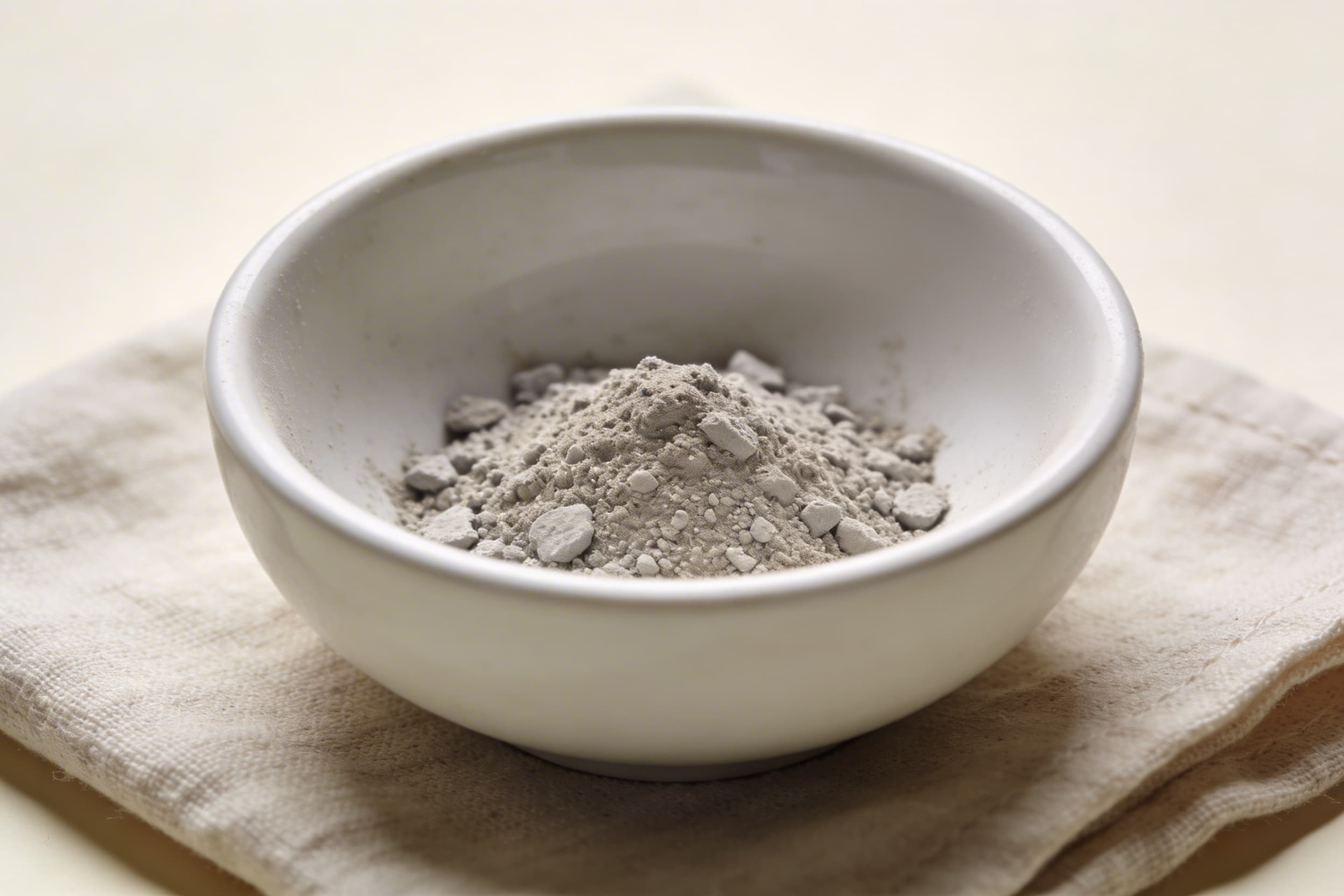
Human ashes — formally known as cremated remains — are the mineral residue left after a body undergoes cremation. Despite the common term "ashes," the material is not fine or powdery like wood ash. Cremated remains consist primarily of processed bone fragments that have been ground into a coarse, sand-like consistency using a machine called a cremulator. Their color typically ranges from pale gray to off-white, sometimes with a faint tan hue.
The composition is almost entirely inorganic. Calcium phosphate accounts for roughly 47% of the material, followed by calcium at about 25%, with smaller amounts of sulfate, potassium, sodium, and chloride making up the rest. Trace elements like strontium, manganese, and iron are also present in varying amounts that differ from person to person, influenced by diet, geographic environment, and overall health during their lifetime.
Because the cremation process eliminates all organic matter, cremated remains are chemically stable and do not decompose. As long as they are stored in a dry, sealed container, they will remain unchanged indefinitely.
Cremains vs. Ashes: What's the Difference?
The word "cremains" is a portmanteau — a blend of "cremated" and "remains" — that entered common usage in the mid-20th century. Merriam-Webster dates its first known use to 1947, and it now appears in most major dictionaries. While some funeral professionals use "cremains" and "ashes" interchangeably, the terms carry slightly different connotations, and understanding the distinction matters if you are navigating conversations with funeral homes, crematories, or family members.
Ashes is the everyday term most families use. It is intuitive and widely understood, though technically inaccurate — cremated remains are not ash in the way that burned wood produces ash. They are ground bone mineral, not a combustion byproduct.
Cremains is a more clinical term favored in parts of the funeral industry. However, the Cremation Association of North America has actually discouraged its use, noting that "cremated remains" maintains a more identifiable human connection, while "cremains" can feel impersonal. Many funeral directors share this preference and use "cremated remains" in professional settings.
Cremated remains is the most precise and widely accepted formal term. It is the language used on official documents, in cremation authorizations, and by most professional organizations.
In practice, all three terms describe the same material: the processed bone fragments that families receive after cremation. No version is wrong, and the best term to use is whichever feels most comfortable and respectful to your family.
Physical Properties: Weight, Volume, and Appearance
One of the most common questions families have is how much material they will actually receive. An average adult produces approximately 3 to 7 pounds of cremated remains, which translates to about 200 cubic inches in volume. The general industry guideline is that one pound of pre-cremation body weight yields roughly one cubic inch of remains. For a detailed breakdown of how weight varies by body size, frame, and gender, see our guide on how much cremation ashes weigh.
Height and bone density play a larger role than body weight in determining the final volume, since soft tissues are entirely consumed during the process. Cremated remains from adult men tend to weigh more — averaging around 6 pounds — while remains from adult women average closer to 4 pounds.
What Do Human Ashes Look Like?
The appearance is closer to coarse beach sand than to the fine, powdery ash most people imagine. The granules are somewhat gritty, and small flecks of off-white or tan bone material are often visible. This is entirely normal and simply reflects the natural mineral variation in human bone. The cremulator grinds the fragments to a consistent size, but the texture will never be perfectly uniform.
Are Cremation Ashes Mixed with Other Remains?
No. Crematoria follow strict protocols to ensure only one body occupies the cremation chamber at a time. Between each cremation, the chamber is swept and inspected so that remains of different individuals are never commingled. The only other materials occasionally found alongside the processed remains are trace residues from dental fillings, surgical implants, or cremation container hardware — all of which are carefully separated during processing.
Do Cremated Remains Decompose?
Cremated remains do not decompose. The cremation process eliminates all organic material, leaving behind only inorganic minerals that are chemically stable and sterile. Stored in a properly sealed container, they will remain unchanged for centuries.
How Are Human Ashes Created?
The cremation process involves more precision and regulation than most people realize. Certified professionals oversee every step, from receiving the body to delivering processed remains to the family. For a comprehensive walkthrough of every stage, see our guide to the cremation process step by step.
Overview of the Process
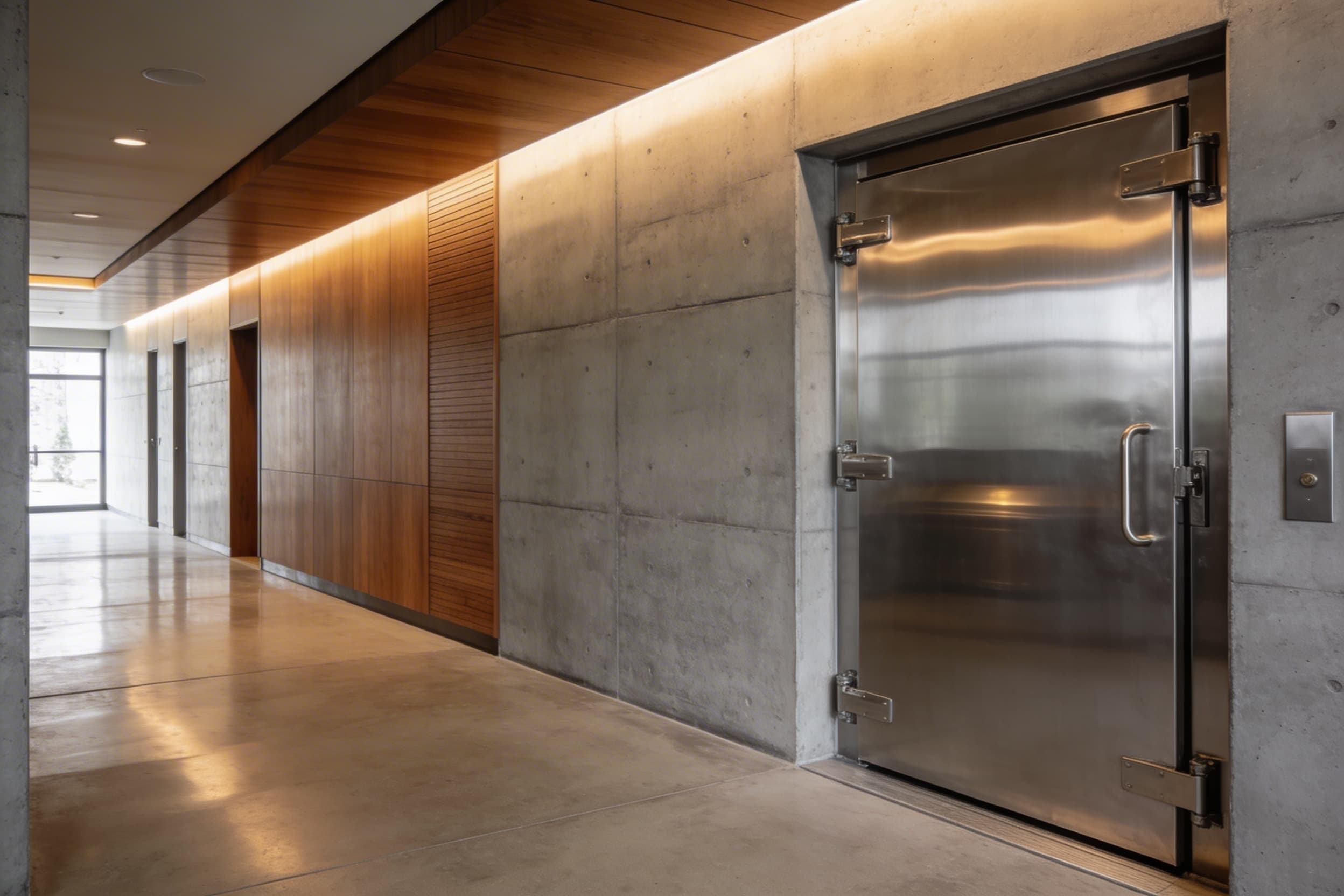
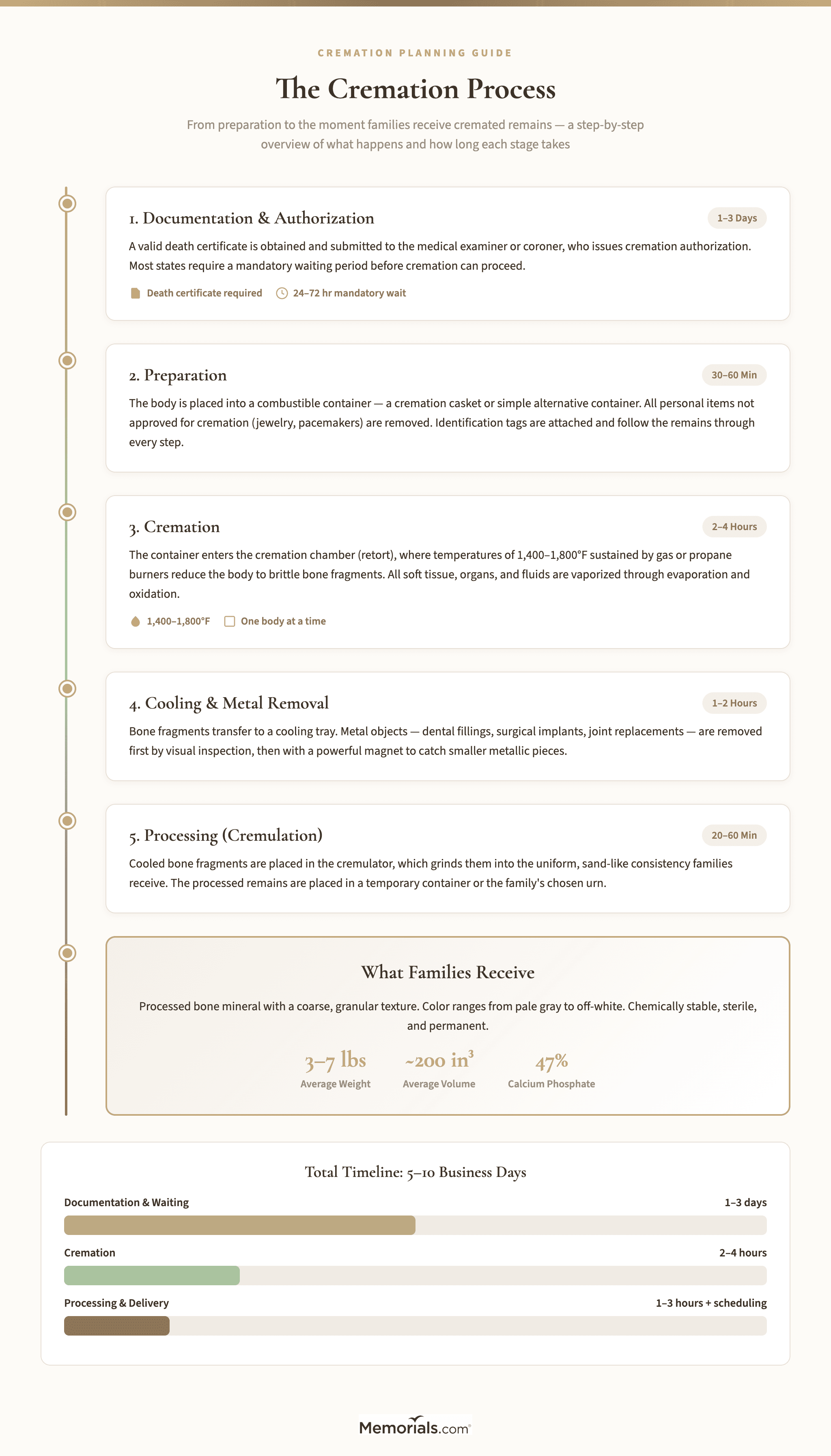
The body is placed inside a combustible container — either a cremation casket or a simpler alternative container — and transferred into the cremation chamber, also called a retort. The chamber is heated to temperatures between 1,400°F and 1,800°F, sustained by gas or propane-fueled burners and insulated by heat-resistant refractory bricks.
At these extreme temperatures, all soft tissue, organs, and bodily fluids are vaporized through evaporation and oxidation. Water vapor and gases exit through the furnace exhaust system. After two to four hours of sustained heat, what remains are brittle bone fragments and any non-combustible materials such as dental work, surgical screws, or joint replacements.
These raw bone fragments are transferred to a cooling tray, where metal objects are removed — first by visual inspection, then with a powerful magnet. Once cooled, the fragments are placed in the cremulator, which grinds them into the uniform, granular consistency that families receive. This processing stage takes an additional one to three hours.
Timeline: When Do Families Receive Ashes?
The cremation itself runs two to four hours depending on body size. Processing adds another one to three hours. However, the total wait for families is significantly longer due to legal requirements.
Most U.S. jurisdictions impose a mandatory waiting period of 24 to 72 hours before cremation may proceed. This period does not begin until a medical examiner or coroner has issued cremation authorization, which itself requires a valid death certificate. Between obtaining the death certificate, receiving authorization, scheduling the cremation, and completing processing, families typically receive remains within five to ten business days.
What Does Cremation Cost?
Cremation costs generally range from $2,000 to $7,000 depending on location and the scope of services. Direct cremation — cremation without a preceding funeral or memorial service — is the most affordable option, often costing between $1,000 and $2,500. A full funeral service followed by cremation falls at the higher end of the range.
Purchasing memorial products independently rather than through a funeral home can save hundreds of dollars. Families have every legal right to provide their own urn or container, and doing so avoids the substantial markups many funeral homes apply.
What to Do with Ashes After Cremation
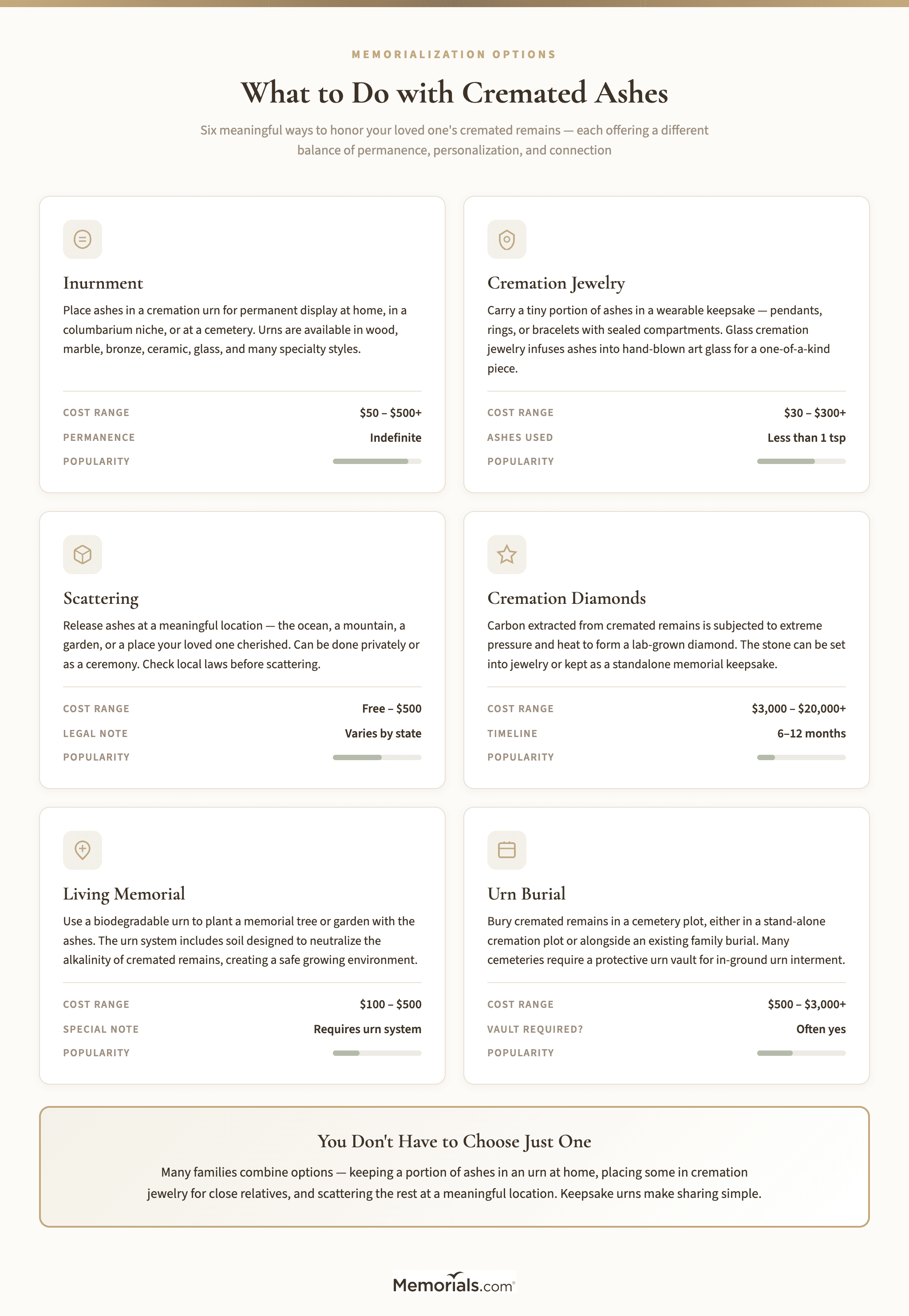
Once you receive cremated remains from the crematory, they arrive in a basic temporary container — typically a plastic bag inside a cardboard or plastic box. Most families choose a more permanent and meaningful way to honor their loved one. The options range from traditional inurnment to highly personal alternatives, and many families combine more than one approach.
For help navigating the selection, our guide to choosing the right urn for ashes walks through every factor from material and size to budget and intended placement.
To determine which vessel fits your needs, the standard sizing formula uses one cubic inch per pound of pre-cremation body weight. Our urn sizing guide provides a detailed walkthrough of standard, keepsake, companion, and oversize urn dimensions.
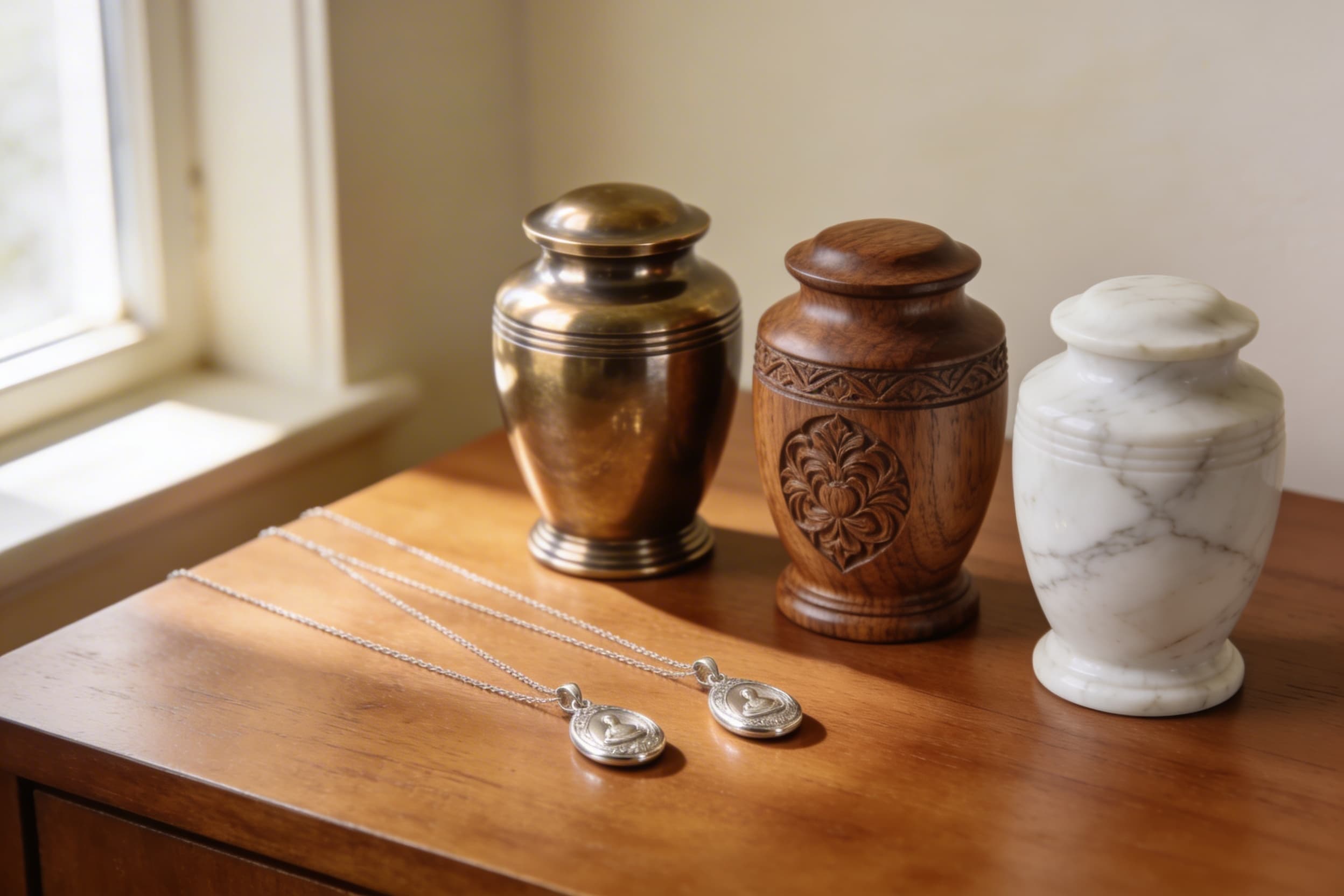
For families wishing to share remains among multiple relatives, keepsake urns hold a small portion of the ashes while a full-size urn stores the rest. Our article on whether it's wrong to separate cremated ashes explores the cultural, religious, and legal considerations of dividing remains.
Personalization options add a deeply meaningful touch. Engraved urn nameplates can be affixed to most urn styles, inscribed with a name, dates, or a short message.
Cremation Jewelry
Cremation jewelry allows you to carry a tiny portion of your loved one's ashes in a wearable keepsake. Cremation pendants and necklaces contain a small hollow compartment — typically holding less than a teaspoon of remains — that is sealed with a threaded screw closure. Glass cremation jewelry takes this concept further by infusing the actual ashes into hand-blown glass, creating a one-of-a-kind wearable work of art.
Scattering Ashes
Scattering remains in a meaningful location is a beautiful and increasingly popular choice. Favorite locations include the ocean, a mountain summit, a garden, or a place that held special significance to the person who passed. Before scattering, check local and state regulations — laws vary significantly, and some locations prohibit the practice entirely. Our guide to scattering ashes laws and etiquette covers federal rules for ocean scattering, national park permits, and state-by-state considerations.
Cremation Diamonds
Companies now offer the technology to transform a small amount of cremated remains into a lab-grown cremation diamond. The carbon extracted from the ashes is subjected to extreme pressure and heat, replicating the conditions that form natural diamonds. The resulting stone can be set into jewelry or kept as a standalone memorial. Prices vary widely based on carat size, cut, and color.
Living Memorials
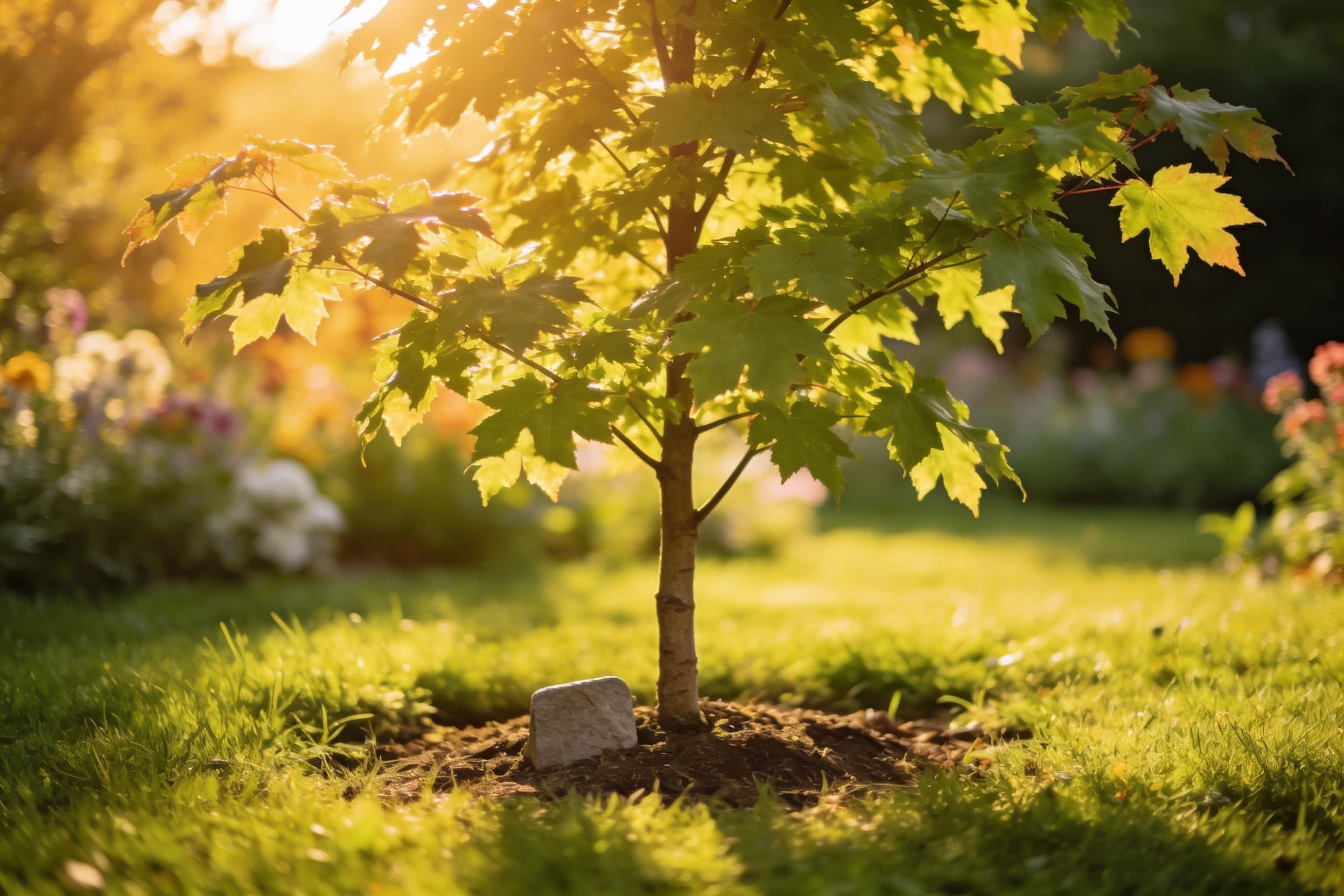
Memorial tree programs use biodegradable urns to plant a seedling with the remains, creating a living tribute that grows over the years. Untreated ashes are highly alkaline (pH 11–12.5) and contain significant salt content, which can damage plant roots. Purpose-built biodegradable urn systems include a soil mixture that neutralizes the alkalinity and creates a hospitable growing environment for the tree seedling.
Urn Vaults and Cemetery Burial
For families planning to bury cremated remains in a cemetery plot, urn vaults provide a protective outer shell that prevents ground settlement and shields the urn from moisture and earth pressure. Many cemeteries require a vault for in-ground urn burials. Remains can also be placed in a columbarium niche — a wall-mounted compartment designed specifically for inurnment.
Are Human Ashes Safe to Handle?
This is one of the most frequently asked questions families have, and the answer is reassuring. Cremated remains are sterile and pose no health risk upon skin contact. The extreme temperatures of the cremation process — 1,400°F to 1,800°F — destroy all organic matter, bacteria, and pathogens. What remains is inorganic mineral that is chemically inert.
Can You Touch Cremated Ashes?
Yes. There is no biological hazard. The main concern is purely practical: ashes cling easily to skin and fabric, and once scattered or spilled, they are extremely difficult to recover. Use care when transferring ashes between containers, and avoid handling them in windy or damp conditions. Some families choose to wear gloves during transfer simply for cleanliness rather than safety.
Do Human Ashes Have a Smell?
Typically, cremated remains carry no detectable odor. Since all organic matter is destroyed during cremation, there is no biological material to produce a scent. A very small number of people report a faint metallic quality, but this is uncommon and may originate from the storage container rather than the ashes themselves. Keeping remains in a properly sealed vessel prevents any moisture absorption that could eventually lead to a musty smell.
Will Ashes Dissolve in Water?
Cremated remains are not water-soluble and will not dissolve. However, the fine particles scatter and disperse easily when carried by moving water. If exposed to rain or a current, the remains will be carried away permanently. Handle them with care in any environment where moisture is present.
Proper Handling and Etiquette
Treating cremated remains with respect matters to most families, and there are widely shared expectations around how ashes should be handled. If you are uncertain about what is considered appropriate, our guide on things to avoid with cremated remains covers common etiquette questions and cultural considerations.
Laws About Handling Human Ashes in the United States
Cremated remains are considered personal property under U.S. law, and there is no federal prohibition on keeping them in your home. However, regulations around scattering, burial, and transport vary significantly by state and municipality.
Is a Casket Required for Cremation?
Most crematoria require the body to be placed in a rigid, combustible container, but this does not have to be an expensive casket. Cardboard alternative containers and simple wood cremation containers satisfy the requirement and keep costs low.
Where Can You Scatter Ashes?
State regulations differ widely. In general, scattering on private property with the owner's permission and on most public lands is permitted. Scattering at sea is allowed under the federal Clean Water Act as long as it is done at least three nautical miles from shore. National parks require a permit and may designate specific areas. Always verify local rules before proceeding.
Can You Fly with Cremated Remains?
Yes. The Transportation Security Administration allows cremated remains in both carry-on and checked luggage. However, TSA officers must be able to screen the container by X-ray. If the urn is made of a material that blocks X-ray scanning — such as thick metal or stone — officers may not clear it. A TSA approved urn made from wood, plastic, or lightweight material ensures a smooth screening process.
For international travel, check the entry requirements of your destination country. Most nations allow the import of cremated remains with proper documentation, including a death certificate, cremation certificate, and sometimes a consular letter.
Can Ashes Be Used as Fertilizer?
Cremated remains are not effective as fertilizer. The high alkalinity (pH 11–12.5) and significant sodium content can damage plant roots and inhibit growth. Planting remains with a tree is a meaningful memorial option, but it requires a specially designed biodegradable urn system that buffers the soil chemistry. Spreading raw ashes directly in a garden will likely harm plants rather than nourish them.
Cremation vs. Burial: Which Is Right for Your Family?
The choice between cremation and burial comes down to personal, cultural, religious, and financial considerations. Cremation offers flexibility — you can keep remains at home, scatter them, divide them among family members, or inter them in a cemetery. Burial provides a fixed, traditional resting place that some families find grounding.
Neither choice is inherently better. The right option is the one that honors the wishes of the person who passed and brings comfort to those left behind.
Cremation and Religious Beliefs
Religious views on cremation span a wide spectrum. Hinduism, Buddhism, Jainism, and Sikhism consider cremation a sacred or preferred practice. Islam and Orthodox Judaism generally prohibit it. Christianity's stance varies widely by denomination — the Roman Catholic Church permits cremation while expressing a preference for burial, and most Protestant denominations leave the decision to individual families. For a deeper look at one perspective, see our guide on what the Bible says about cremation.
Is Cremation Environmentally Friendly?
Compared to traditional burial, cremation carries a smaller ecological footprint. It eliminates the need for embalming chemicals, concrete vaults, and dedicated cemetery land. A single cremation does consume energy and produces some emissions, but the overall environmental impact is considerably lower than maintaining a permanent burial site.
For families seeking an even greener option, aquamation — also called alkaline hydrolysis or water cremation — uses water and an alkaline solution instead of flame, producing remains with a finer, whiter texture while using substantially less energy than traditional cremation.
A Brief History of Cremation
Cremation is nearly as old as human civilization. Archaeological evidence from Lake Mungo in Australia — dated to roughly 17,000 years ago — includes signs of complex ritual burning, making it one of the earliest known funerary practices.
Bronze Age Europeans embraced cremation as their primary method of disposition before Iron Age cultures shifted toward burial. Ancient Rome accepted both cremation and interment. With the rise of Christianity, cremation fell out of favor and was banned in many regions during the Middle Ages.
The modern cremation movement began in the late 19th century as urbanization and public health concerns made traditional burial increasingly impractical. In the United States, just 4% of deaths in the 1950s involved cremation. That number has since climbed past 60%, and the trend continues to accelerate with every passing year.
Frequently Asked Questions About Human Ashes
What are cremains?
Cremains is a portmanteau — a blend of "cremated" and "remains" — first used in 1947. It refers to the processed bone fragments families receive after cremation. The term is used interchangeably with "ashes" and "cremated remains," though industry organizations like the Cremation Association of North America prefer the more formal "cremated remains" for its stronger human connection.
What do human ashes look like?
Cremated remains have a coarse, granular texture similar to coarse sand, not the fine powder many people expect. Color typically ranges from pale gray to off-white, sometimes with tan flecks. This is because the remains are primarily processed bone mineral rather than combustion ash.
Are cremated remains really the person?
Yes. Crematories follow strict identification and chain-of-custody protocols. Only one body occupies the cremation chamber at a time, identification tags follow the remains through every step, and the chamber is thoroughly cleaned between cremations. The bone mineral you receive belonged exclusively to your loved one.
How much do cremated remains weigh?
An average adult produces 3 to 7 pounds of cremated remains, occupying roughly 200 cubic inches. The amount depends more on height and skeletal frame than on weight at the time of death. Male remains tend to average about 6 pounds; female remains average closer to 4 pounds.
Can you keep cremated remains at home permanently?
Yes. There is no federal law in the United States prohibiting you from keeping cremated remains in your home indefinitely. Some states have specific rules about notification or documentation, so checking your local regulations is always a good practice.
What is the difference between cremation and aquamation?
Cremation uses intense heat (1,400–1,800°F) to reduce the body to bone fragments. Aquamation — also called alkaline hydrolysis or water cremation — uses warm water and an alkaline solution to achieve the same result over several hours. Aquamation produces remains with a finer, whiter texture and uses roughly one-tenth the energy of flame-based cremation. Both processes result in remains that can be stored, scattered, or memorialized in the same ways.
Is it safe to touch human ashes?
Completely safe. Cremated remains are sterile, inorganic, and pose zero health risk upon skin contact. The cremation temperatures of 1,400–1,800°F destroy all biological matter. The only practical concern is that the fine granules cling to skin and fabric and are difficult to recover once spilled.
Choosing the Right Memorial for Your Loved One
Losing someone you love is never easy, and the decisions that follow can feel overwhelming. Taking time to understand your options — from the urn or keepsake you choose to where and how you store or scatter remains — helps ensure that the memorial you create feels right for years to come.
Memorials.com carries thousands of cremation urns, cremation jewelry pieces, and memorial keepsakes — all with free ground shipping and a lowest price guarantee. Explore our full collection to find the perfect tribute for the person who mattered most.