🏬Supersize Online Funeral Retailer🪦1000's of Headstones⚱️Over 10,000 Cremation Urns⚰️Caskets Overnight Delivery🛒Funeral & Memorial Superstore🚚FREE Shipping on ALL Orders👨👩👧👦Helping Families for over 20 Years💰Lowest Price Guarantee🏬Supersize Online Funeral Retailer🪦1000's of Headstones⚱️Over 10,000 Cremation Urns⚰️Caskets Overnight Delivery🛒Funeral & Memorial Superstore🚚FREE Shipping on ALL Orders👨👩👧👦Helping Families for over 20 Years💰Lowest Price Guarantee
🏬Supersize Online Funeral Retailer🪦1000's of Headstones⚱️Over 10,000 Cremation Urns⚰️Caskets Overnight Delivery🛒Funeral & Memorial Superstore🚚FREE Shipping on ALL Orders👨👩👧👦Helping Families for over 20 Years💰Lowest Price Guarantee🏬Supersize Online Funeral Retailer🪦1000's of Headstones⚱️Over 10,000 Cremation Urns⚰️Caskets Overnight Delivery🛒Funeral & Memorial Superstore🚚FREE Shipping on ALL Orders👨👩👧👦Helping Families for over 20 Years💰Lowest Price Guarantee
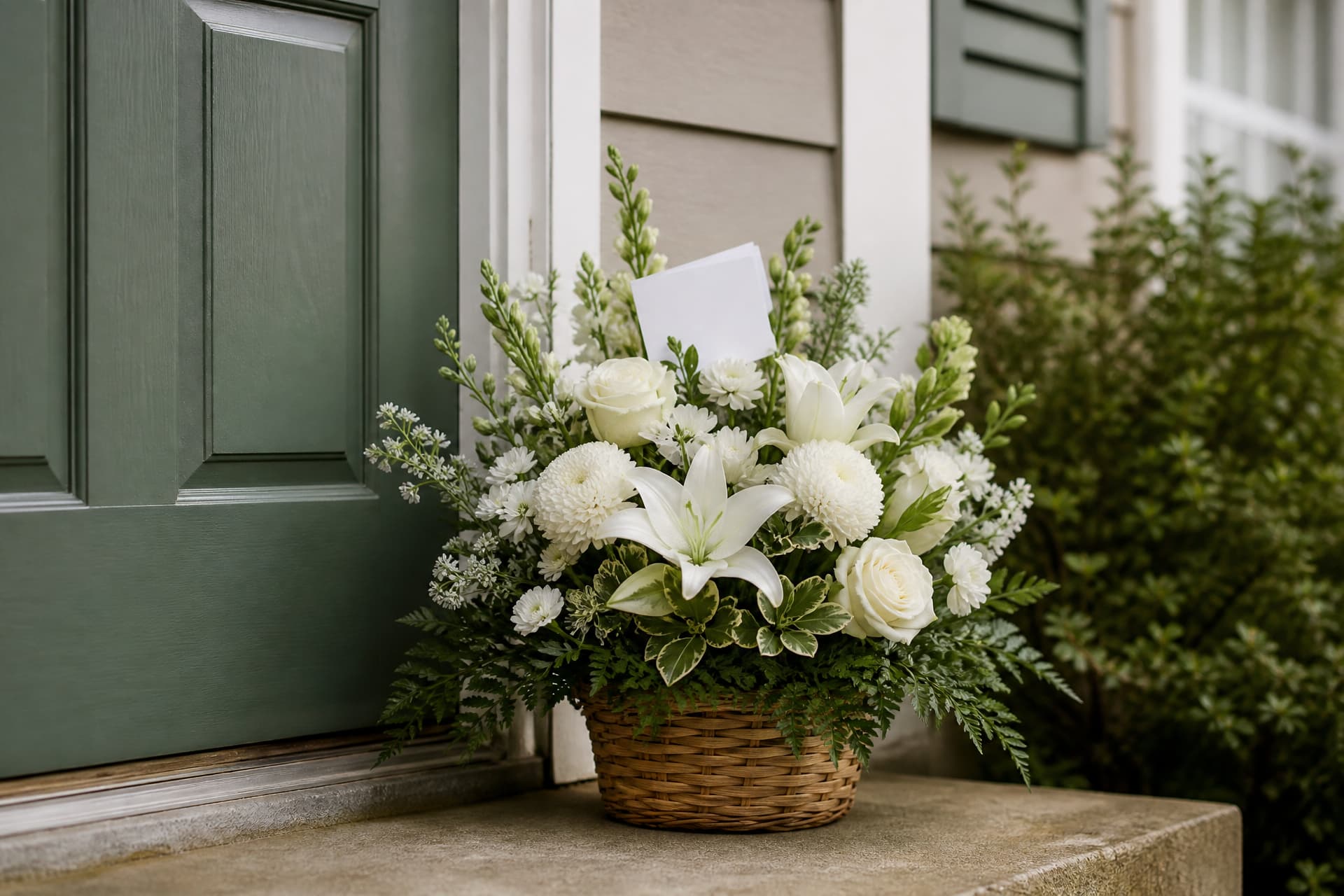
When an obituary says in lieu of flowers, it is asking you to send something else — usually a donation to a named charity — instead of a floral arrangement. Lieu is French for place, so the phrase means, literally, in place of flowers.
Two different people arrive at this page. If you read the line in an obituary and want to know what is being asked of you, start here. If you are the family writing the notice and need words for it, skip to the wording section — it is written for you and you do not need the rest.
The short version for the first group: it is a request, not a rule, and the family has told you exactly how to help. The sympathy and condolence guide is the wider starting point if you are working out what else to do.
The in lieu of flowers meaning is narrow and practical: please direct what you would have spent on flowers somewhere the family would rather it went.
Funeral notices run on set phrases like this one — formulas everyone recognizes and few could define precisely. The condolences meaning is the other one people most often stop to look up, and for the same reason: the words are old, borrowed, and used almost nowhere else in English.
Families ask for this for reasons that are rarely about disliking flowers.
The cause mattered to the person who died. By far the most common. Forty arrangements wilt in a week; forty donations fund something.
There is nowhere to put them. A graveside-only service, a small apartment, a chapel that does not permit them.
Allergies, in the family or among the mourners.
The family cannot face the aftermath. Someone has to move, water, redistribute and eventually throw away every arrangement, usually in the worst week of their life.
Nothing at all is wanted. Occasionally the line is in lieu of flowers, please simply remember him, and that is the whole request.
Reading it as a rebuff is the one mistake to avoid. It is the opposite — the family has done you the favor of saying what would actually help.
No. It means you have been asked not to, and the request deserves respect.
Nobody will be angry if flowers arrive anyway — this is a mild discourtesy, not an offense, and grieving families have larger concerns. But there are cases where it genuinely matters, and you cannot tell which from the notice:
A graveside-only service may have no venue to receive them at all.
A tiny apartment with an elderly widow in it does not want nine arrangements.
Allergies are real and unstated more often than not.
So the sensible reading is: do what was asked, and if you feel the gesture is missing something, add a card rather than a bouquet. A note in your own handwriting does what the flowers were going to do. Short condolence messages has sixty of them if the words are the hard part.
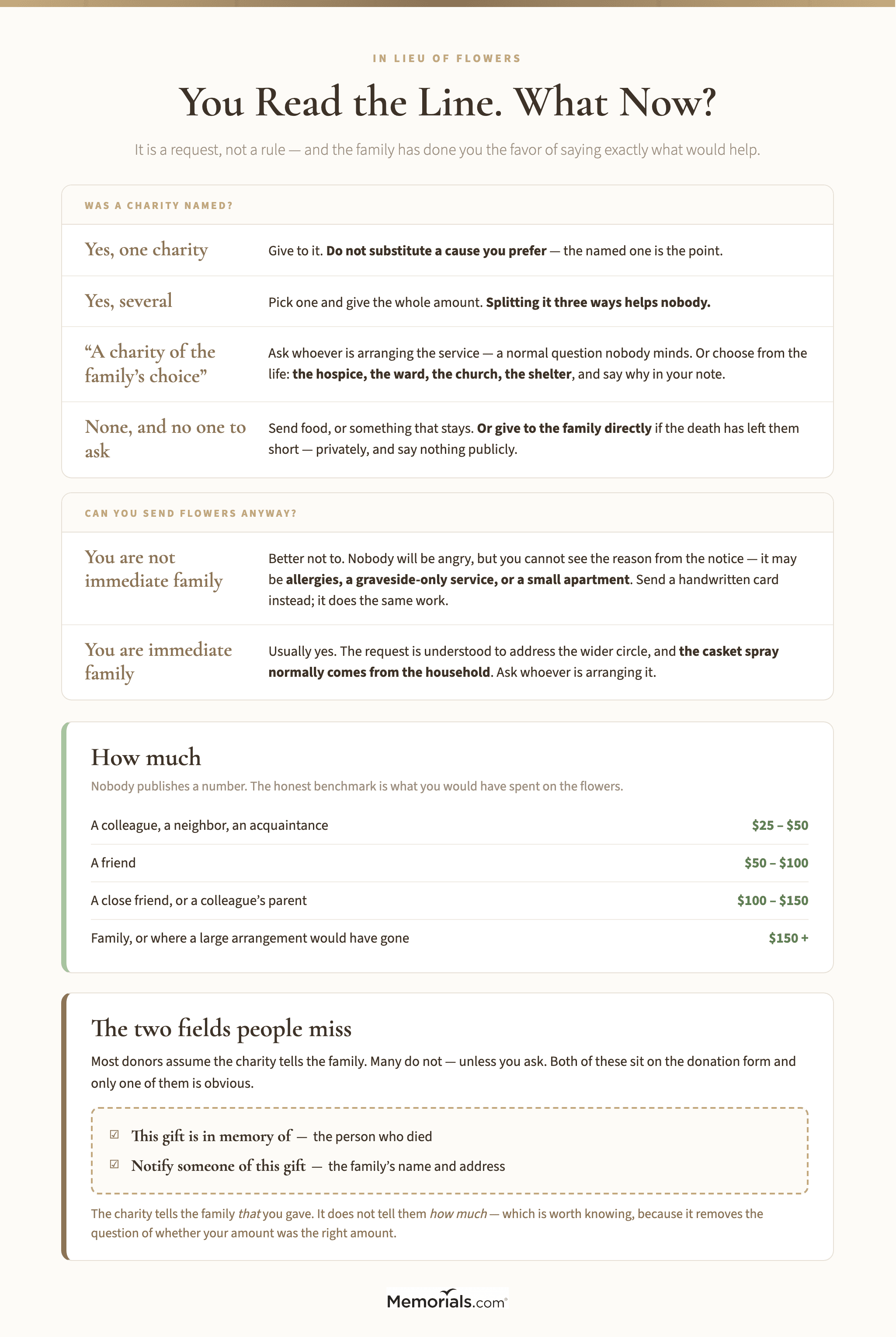
The one exception worth naming: immediate family often still send flowers. The request is generally understood to be addressed to the wider circle, and the casket spray or the family arrangement usually comes from within the household. If you are a sibling or a child and you are unsure, ask whoever is arranging the service.
Nobody will be angry. But you cannot see from the notice whether the reason was allergies, a graveside service, or a small apartment.
How Much to Give
Nobody publishes a number, and everybody wants one.
Give roughly what you would have spent on flowers. That is the honest benchmark for a memorial donation, and it is what the phrase is asking. A standing sympathy arrangement runs $75–$150; a smaller bouquet $40–$60. So:
Your relationship
A reasonable memorial donation
A colleague, a neighbor, an acquaintance
$25–$50
A friend
$50–$100
A close friend, or your own colleague's parent
$100–$150
Family, or where you would have sent a large arrangement
$150+
Two things that matter more than the figure:
Give something rather than nothing because the amount feels small. Charities count donors as well as dollars, and the family is told how many people gave far more often than they are told who gave what.
Nobody is told your amount. More on that below, because it is the thing people most often get wrong.
Who Finds Out That You Gave
Most people assume the charity tells the family. Often it does not — unless you ask it to.
Almost every donation form has a field for this and it is easy to miss. Look for "this gift is in memory of" and then, separately, "notify someone of this gift." Fill in both. The second one is where you put the family's name and address.
The charity tells the family that you gave. It does not tell them how much. That is standard practice and it is worth knowing, because it removes the anxiety about whether your amount is the right amount. The family receives a note saying you gave in their person's name, and nothing else.
If the notice named no charity, or you gave through a funeral home's donation page, send the family a line yourself: I made a donation to the Heart Foundation in your mother's name. One sentence, and it saves them wondering.
Thirty seconds on a phone. The field that matters is the second one — the family's name and address.
When the notes go the other way afterward, thank the people who gave covers what a family writes back — including the rule that you acknowledge the gesture and never the amount.
The two form fields people miss are "in memory of" and "notify someone of this gift." Fill in both.
What to Send Instead of Flowers
Once you have decided on donations instead of flowers, the question of what to send instead of flowers is still open — sometimes no charity is named, sometimes the cause does not fit, and sometimes you want to send a thing as well as give money. Reasonable options, roughly in order of how welcome they usually are:
A donation to a cause the person cared about. Even unnamed, you can usually work it out — the hospice that cared for them, the research charity for the illness, the animal shelter, the church, the school. Say what you chose and why in one line.
Food. Consistently the most useful thing anyone sends and it never competes with the request, because it is not a flower and not a donation. A delivered meal in the second week beats one in the first, when the fridge is already full.
Left on the step in the second week, when the fridge has emptied and the visitors have stopped.
A living plant. Worth a paragraph of its own, because it is the most common workaround and it is a genuine judgment call. A peace lily or an orchid is not a floral arrangement — it does not wilt, and it is still there in March. But it is also a plant to keep alive, and a family that asked for no flowers because of allergies or space will feel the same way about one. Read the reason if you can guess it.
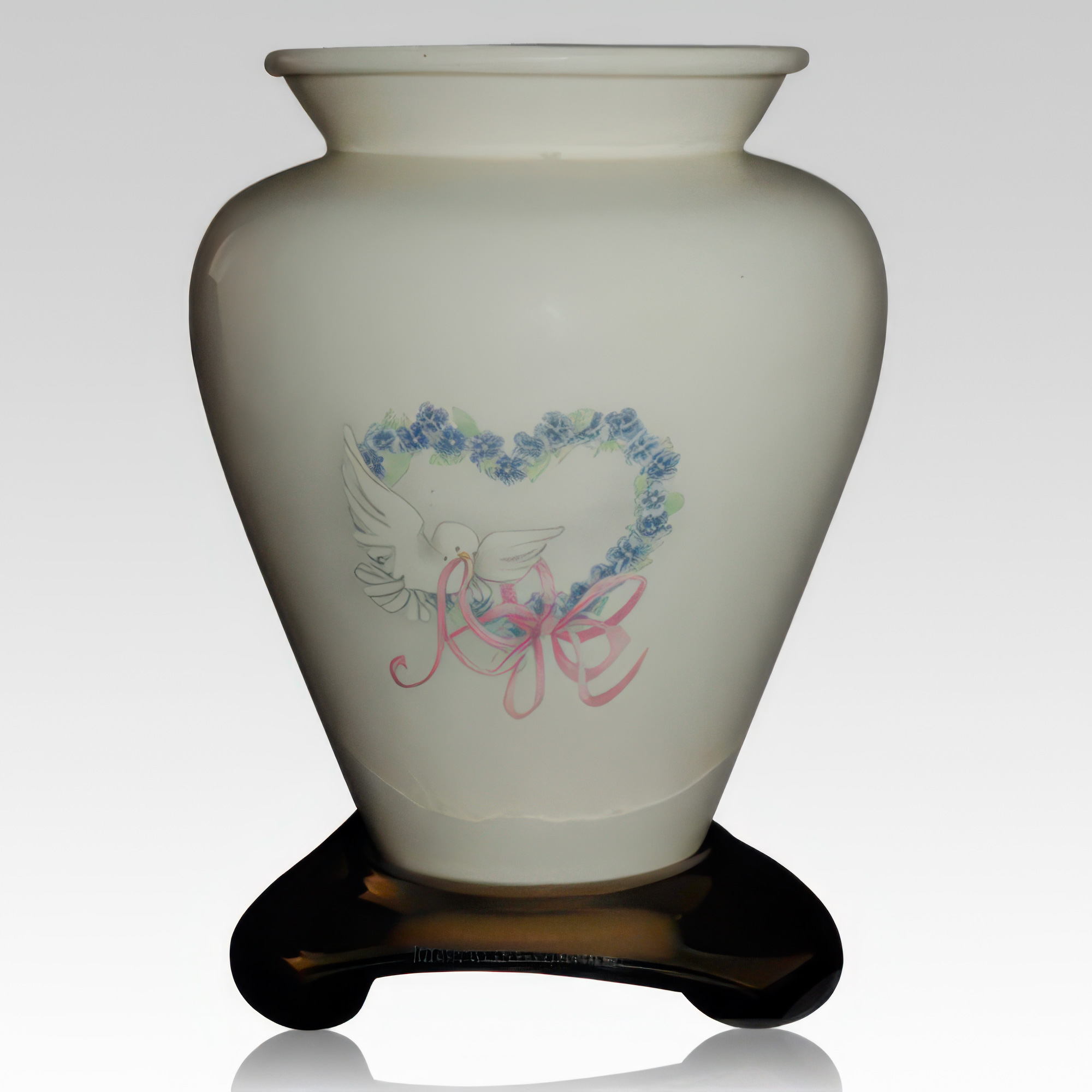
Something that stays. This is where a memorial keepsake earns its place: it arrives after the week of casseroles, and it is still in the house a year later when everything else has gone. Among remembrance gifts for loss, the pieces that work are small and self-contained — a keepsake box, an engraved dish — rather than anything that demands display space. Funeral keepsakes covers that range.
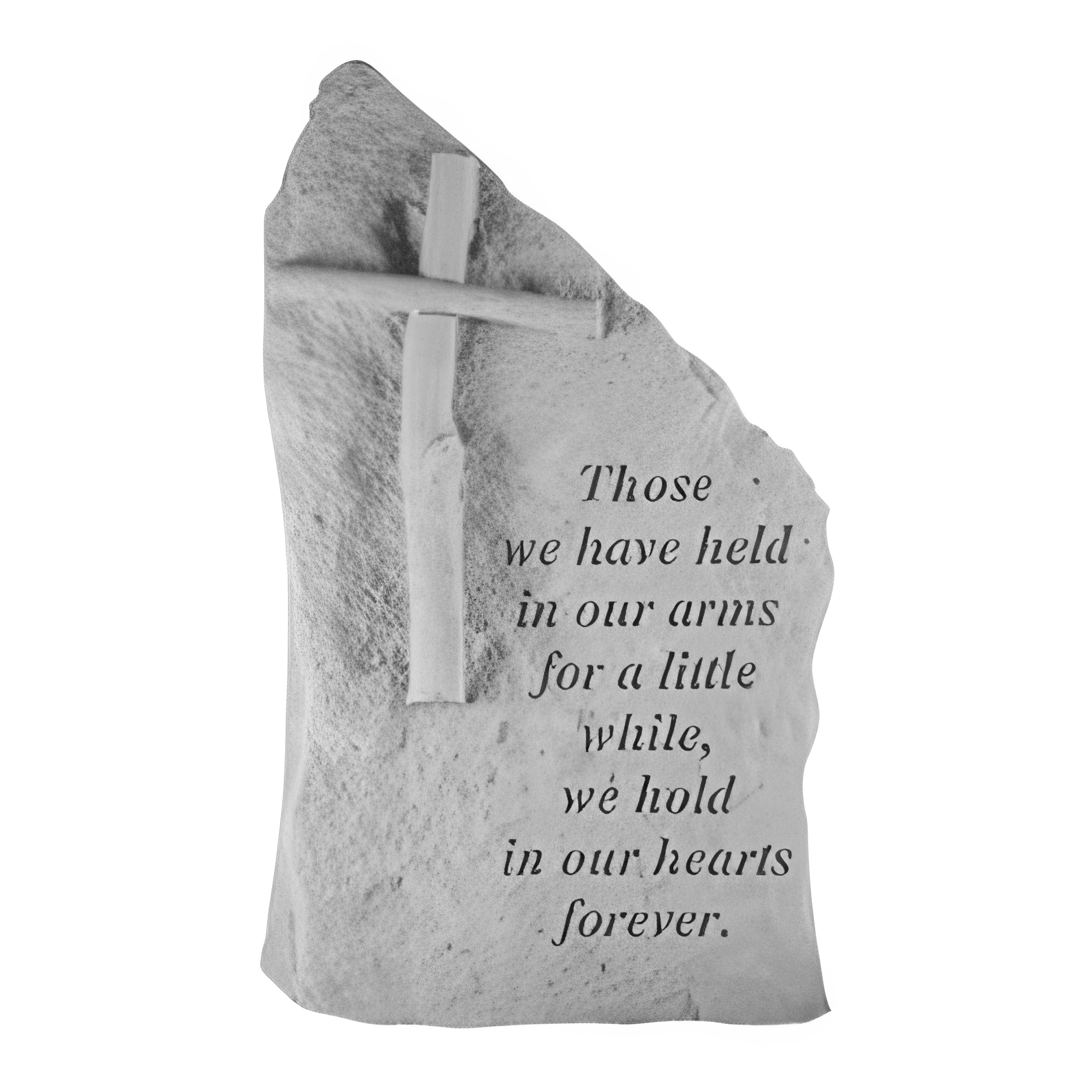
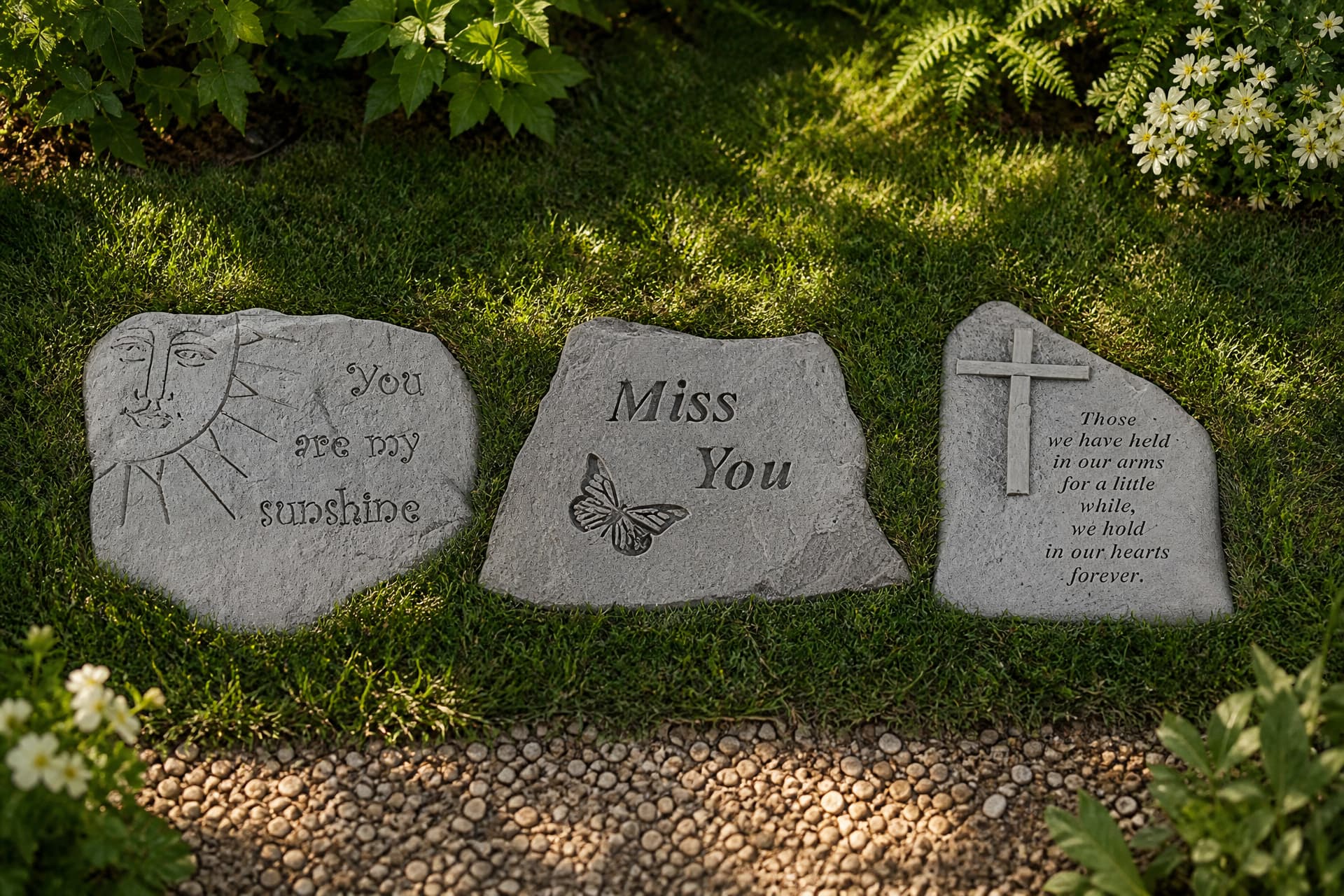
A stone for the garden. For a family with a yard, an engraved stone set among the planting is the closest thing to a permanent version of what flowers were for. A memorial rock garden piece is weatherproof, needs nothing, and gets seen every day.
Your time. The least sent and the most valuable. Lawn mowing, airport runs, a standing Tuesday phone call in month three.
In lieu of flowers, donations may be made to the family's chosen charity is common, unhelpful, and usually means nobody had the energy to decide.
You have three good options:
Ask. Whoever is handling arrangements — a sibling, the funeral home — will know or will find out. This is a normal question and nobody minds it.
Choose from the life. The hospice, the hospital ward, the illness, the church, the shelter, the veterans' organization, the school. Name it in your note and say why: I gave to the hospice because of how they looked after him in October.
Give directly to the family, if the death has left them in difficulty. Unfashionable to say, but a funeral is expensive and a young family that has lost an earner needs money more than a charity does. Discretion matters here; send it privately and say nothing about it publicly.
For the Family: How to Word the Request
This half is for whoever is writing the obituary or the service notice. The how to write an obituary guide covers the full document; this is just the one line.
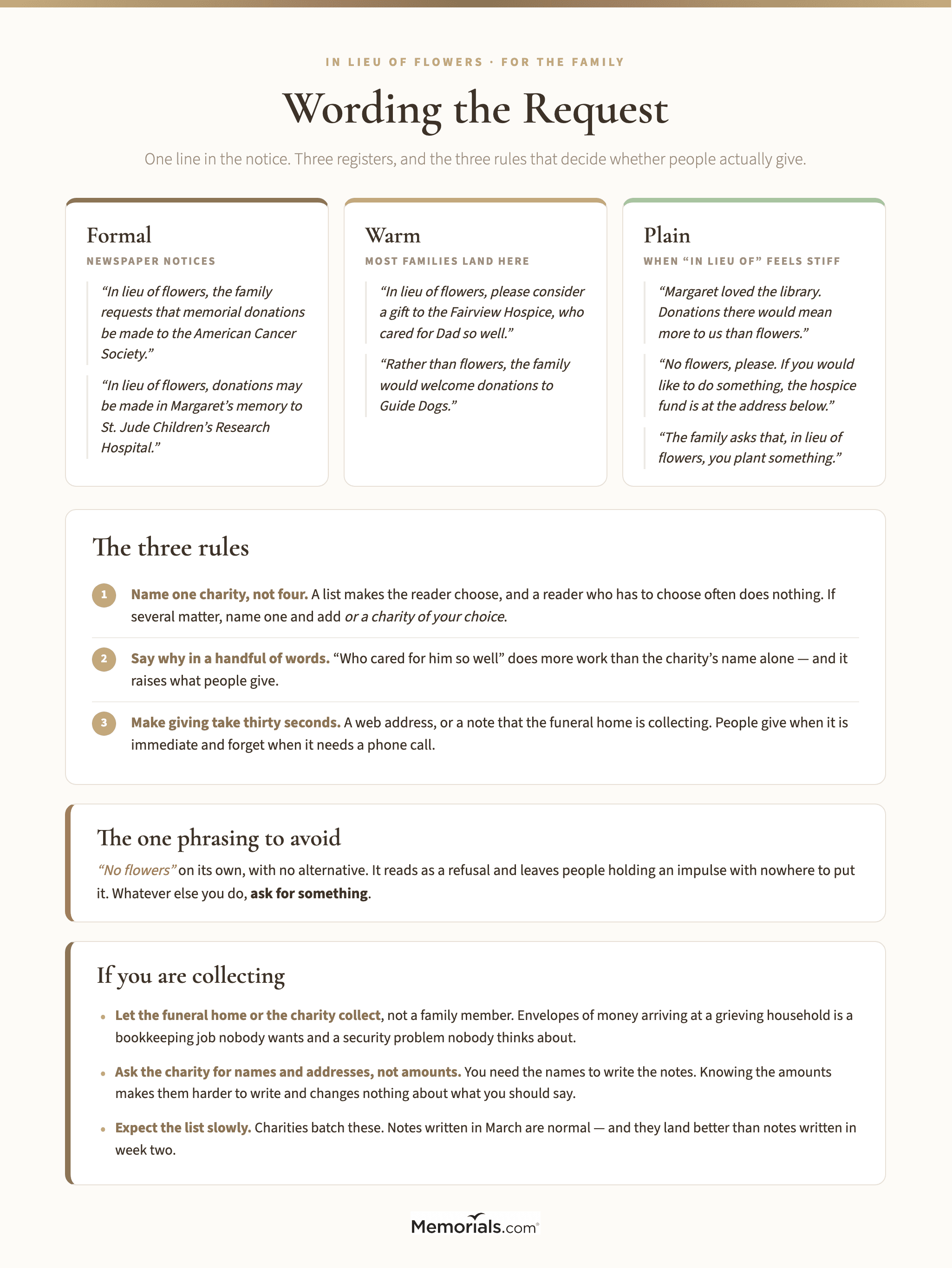
The standard forms, from most to least formal:
In lieu of flowers, the family requests that memorial donations be made to the American Cancer Society.
In lieu of flowers, donations may be made in Margaret's memory to St. Jude Children's Research Hospital.
In lieu of flowers, please consider a gift to the Fairview Hospice, who cared for Dad so well.
The family asks that, in lieu of flowers, you plant something.
In lieu of flowers, please simply raise a glass to him.
Softer forms, when in lieu of feels stiff:
Rather than flowers, the family would welcome donations to Guide Dogs.
Margaret loved the library. Donations there would mean more to us than flowers.
No flowers, please. If you would like to do something, the hospice fund is at the address below.
Good in lieu of flowers wording follows three rules:
Name one charity, not four. A list makes the reader choose, and a reader who has to choose often does nothing. If several matter, name one and add or a charity of your choice.
Say why in a handful of words.Who cared for him so well does more work than the charity's name alone, and it raises what people give.
Give them the practical detail. A web address or a note that the funeral home is collecting. People give when it takes thirty seconds and forget when it takes a phone call.
And one thing to avoid: do not write no flowers alone, without an alternative. It reads as a refusal and leaves people with nothing to do with the impulse. Ask for something.
If You Are Collecting the Donations
A practical note for families, because this is the part that goes wrong.
Let the funeral home or the charity collect, not a family member. Money arriving at a grieving household in envelopes is a bookkeeping job nobody wants and a security problem nobody thinks about. Most funeral homes will run a memorial fund page at no cost, and most charities have a tribute page you can set up in ten minutes.
Ask the charity for donor names and addresses, not amounts. You need the names to write the thank-you notes, and you specifically do not want the amounts — knowing them makes the notes harder to write and changes nothing about what you should say.
Expect the list to arrive slowly. Charities batch these. Notes written in March are normal and land better than notes written in week two. Our funeral planning checklist puts this in sequence with everything else.
Name one charity, say why in a handful of words, and make giving take thirty seconds.
Frequently Asked Questions
What does in lieu of flowers mean? It means in place of flowers. The family is asking you to send something else — nearly always a donation to a named charity — rather than a floral arrangement.
Is it rude to send flowers anyway? Not rude, but it disregards a request the family made for a reason you cannot see from the notice. Send what was asked, and add a handwritten card if the gesture feels incomplete.
How much should I donate instead of flowers? Roughly what you would have spent on an arrangement: $25–$50 for an acquaintance, $50–$100 for a friend, $100–$150 for someone close. Giving something matters more than the figure.
Will the family know I donated? Only if you tell the charity to say so. Look for the "notify someone of this gift" field and fill in the family's name and address. The charity reports that you gave, never how much.
What if no charity is named? Ask whoever is arranging the service, or choose from the person's life — the hospice, the church, the shelter — and say in your note what you chose and why.
Can I send a plant instead? Usually yes, and a peace lily or orchid is a genuine alternative because it lasts. But if the request came from allergies or lack of space, a plant has the same problem the flowers did.
Do immediate family still send flowers? Generally yes. The request is understood to address the wider circle, and the casket spray usually comes from within the household.
In Closing
The phrase is not a barrier and it is not a rebuff. It is the one moment in a funeral where the family tells you plainly what would help, and the only wrong response is to do nothing because you were not sure.
Give roughly what the flowers would have cost, tick the box that tells them you gave, and write one line about why you chose what you chose. That is the whole of it.