🏬Supersize Online Funeral Retailer🪦1000's of Headstones⚱️Over 10,000 Cremation Urns⚰️Caskets Overnight Delivery🛒Funeral & Memorial Superstore🚚FREE Shipping on ALL Orders👨👩👧👦Helping Families for over 20 Years💰Lowest Price Guarantee🏬Supersize Online Funeral Retailer🪦1000's of Headstones⚱️Over 10,000 Cremation Urns⚰️Caskets Overnight Delivery🛒Funeral & Memorial Superstore🚚FREE Shipping on ALL Orders👨👩👧👦Helping Families for over 20 Years💰Lowest Price Guarantee
🏬Supersize Online Funeral Retailer🪦1000's of Headstones⚱️Over 10,000 Cremation Urns⚰️Caskets Overnight Delivery🛒Funeral & Memorial Superstore🚚FREE Shipping on ALL Orders👨👩👧👦Helping Families for over 20 Years💰Lowest Price Guarantee🏬Supersize Online Funeral Retailer🪦1000's of Headstones⚱️Over 10,000 Cremation Urns⚰️Caskets Overnight Delivery🛒Funeral & Memorial Superstore🚚FREE Shipping on ALL Orders👨👩👧👦Helping Families for over 20 Years💰Lowest Price Guarantee
When someone searches for a japanese urn, they are usually asking one of two different questions without realizing the two have different answers. One is practical and urgent: a family is arranging a Buddhist service and needs the vessel that tradition calls for. The other is quieter: someone has seen an urn with a cloisonné blossom or a raku glaze, loves it, and wants to know whether choosing it would be respectful.
Both are good questions. They just do not have the same answer, because the traditional Japanese vessel and the Japanese-style urn sold in the United States are genuinely two different objects — different shapes, different materials, different sizing systems, and different jobs.
This article sorts them out. If you are early in this and still weighing materials, sizes, and where the urn will eventually go, our covers the ground underneath all of it. What follows is specific to the Japanese side.
In Japan, the vessel that holds cremated remains is a kotsutsubo (骨壺) — literally "bone jar." It looks almost nothing like the urns most Americans picture.
A kotsutsubo is a plain cylinder with straight sides and a flat lid that sits on top rather than screwing in. It is usually unglazed-looking white porcelain, undecorated, sometimes with a single thin band. It is not meant to be displayed as an object of beauty. Its job is to hold remains securely for a defined period and then be placed inside a family grave or a temple niche, and its plainness is deliberate — Buddhist practice in Japan leans away from ornament in this particular object.
It also rarely travels alone. The urn goes into a wooden box called a kotsubako (骨箱), and the box is wrapped in a cloth cover. What a family carries home from the crematorium is a cloth-wrapped parcel, not a visible urn.
The other reason the shape looks unfamiliar is the ceremony it is filled during. Japan cremates virtually all of its dead — the rate is above 99 percent — and the family typically participates directly in placing the remains into the urn, working from the feet upward so the body is oriented correctly inside. That practice shapes the vessel: a wide straight-sided cylinder with a removable lid is what that ceremony requires. A narrow-necked decorative vase would make it impossible.
That is the traditional object. Almost everything sold in the US as an asian urn is something else — and that is not a criticism, only a distinction worth being clear about before you buy. The shape is the quickest tell: American Japanese-style urns are almost always rounded, shouldered jars rather than straight-sided cylinders, and they are made to be looked at rather than boxed and buried. If you need an actual kotsutsubo, a Japanese funeral supplier or a temple is the place to ask, not a US memorial retailer.
Japanese-Style Cremation Urns
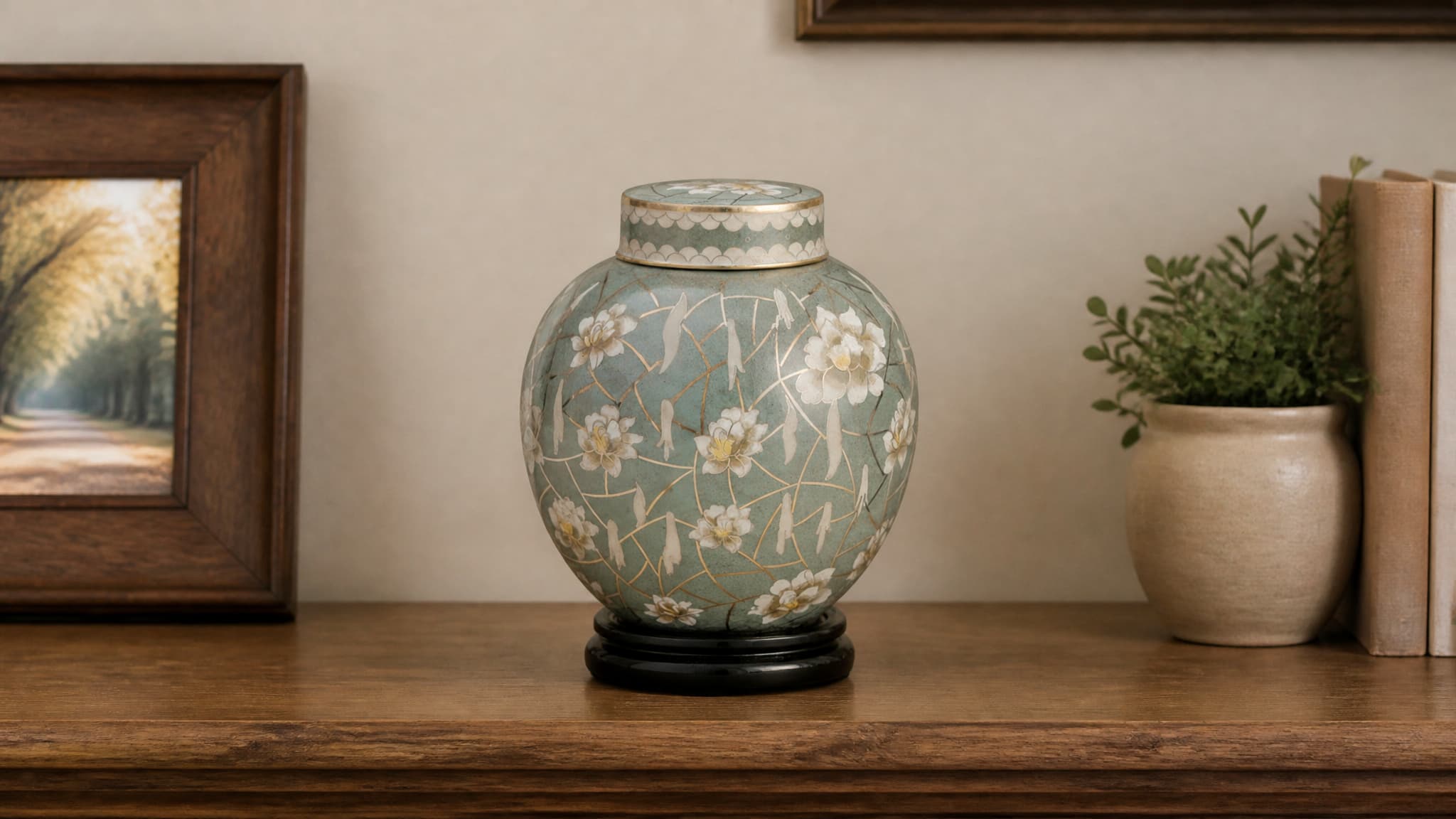
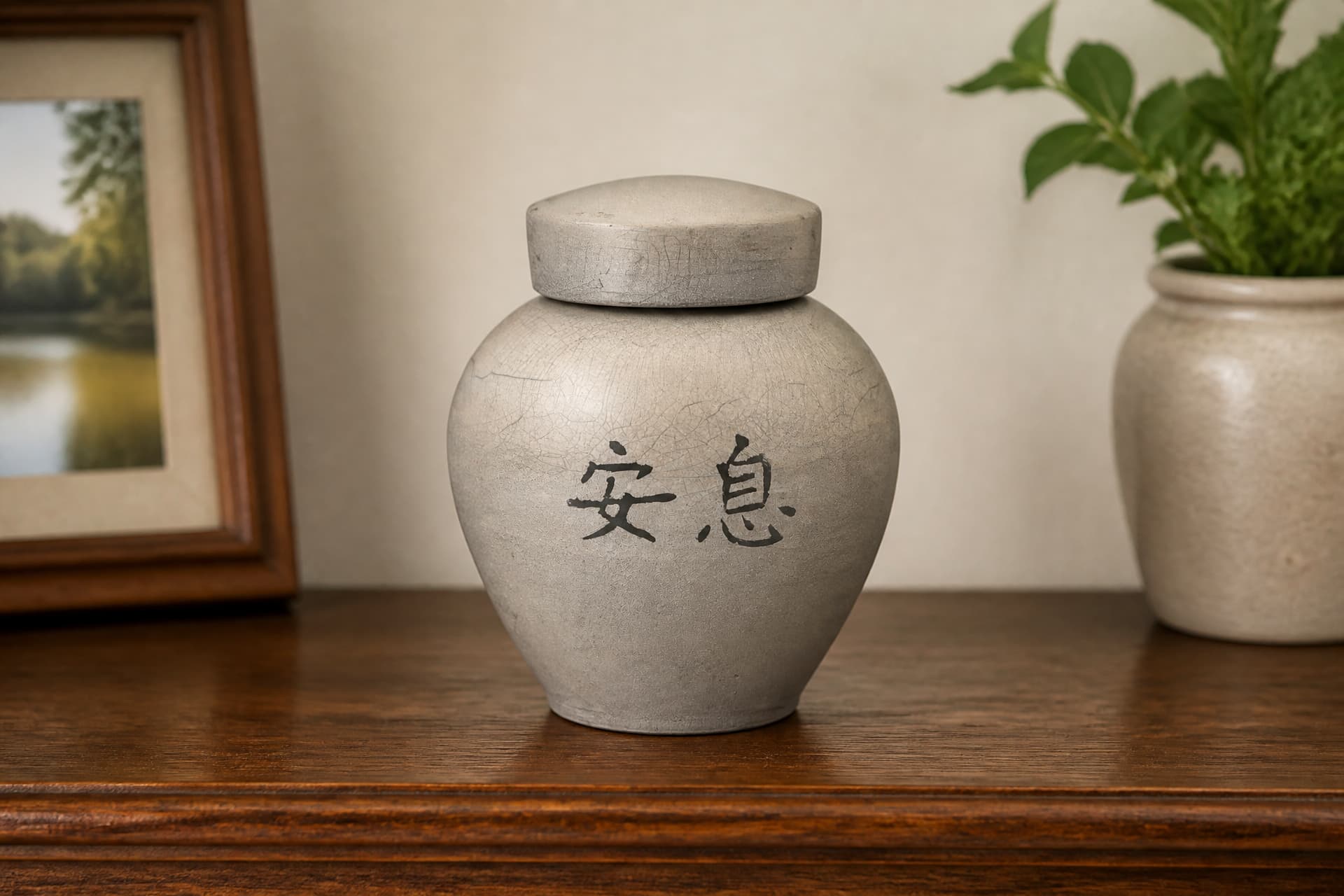
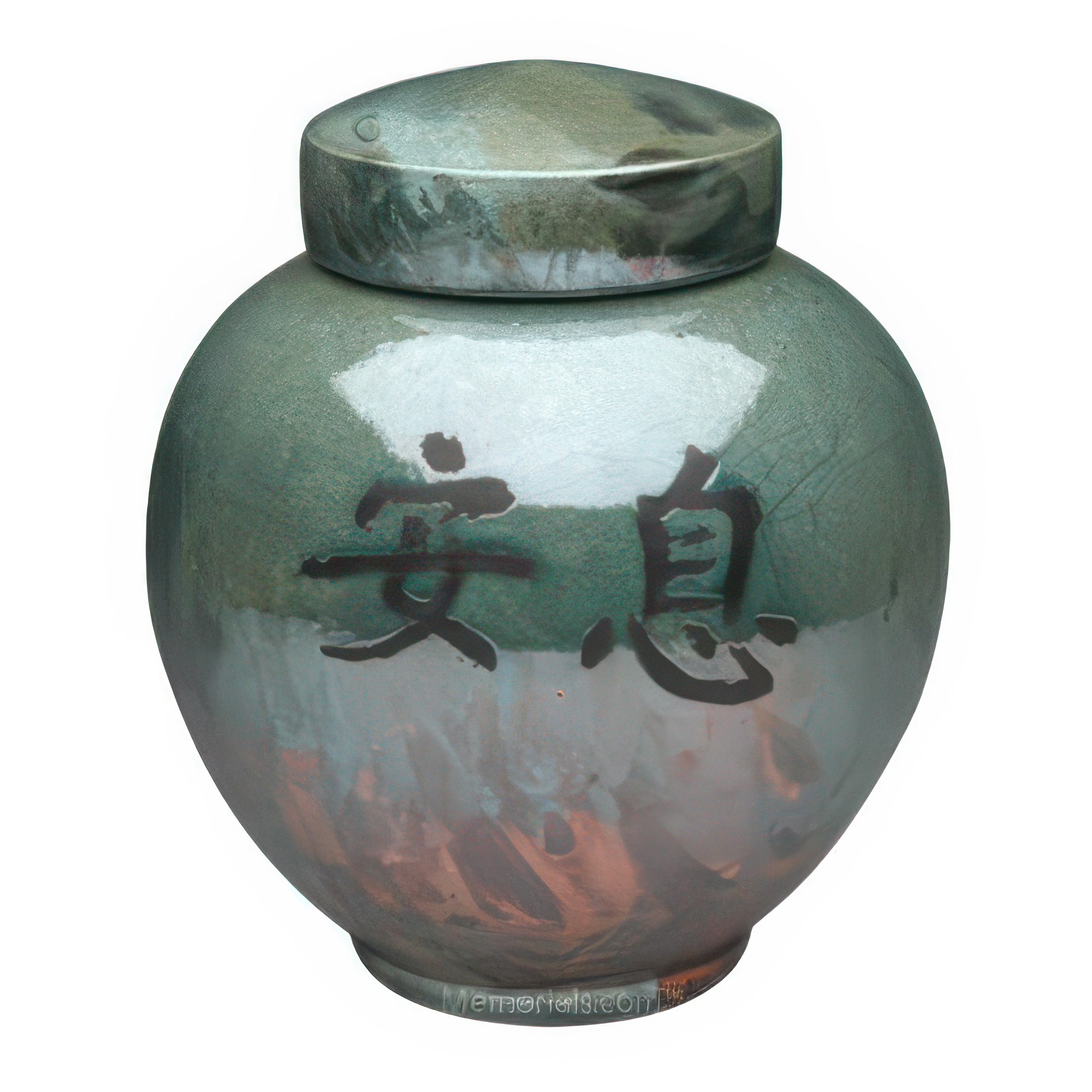
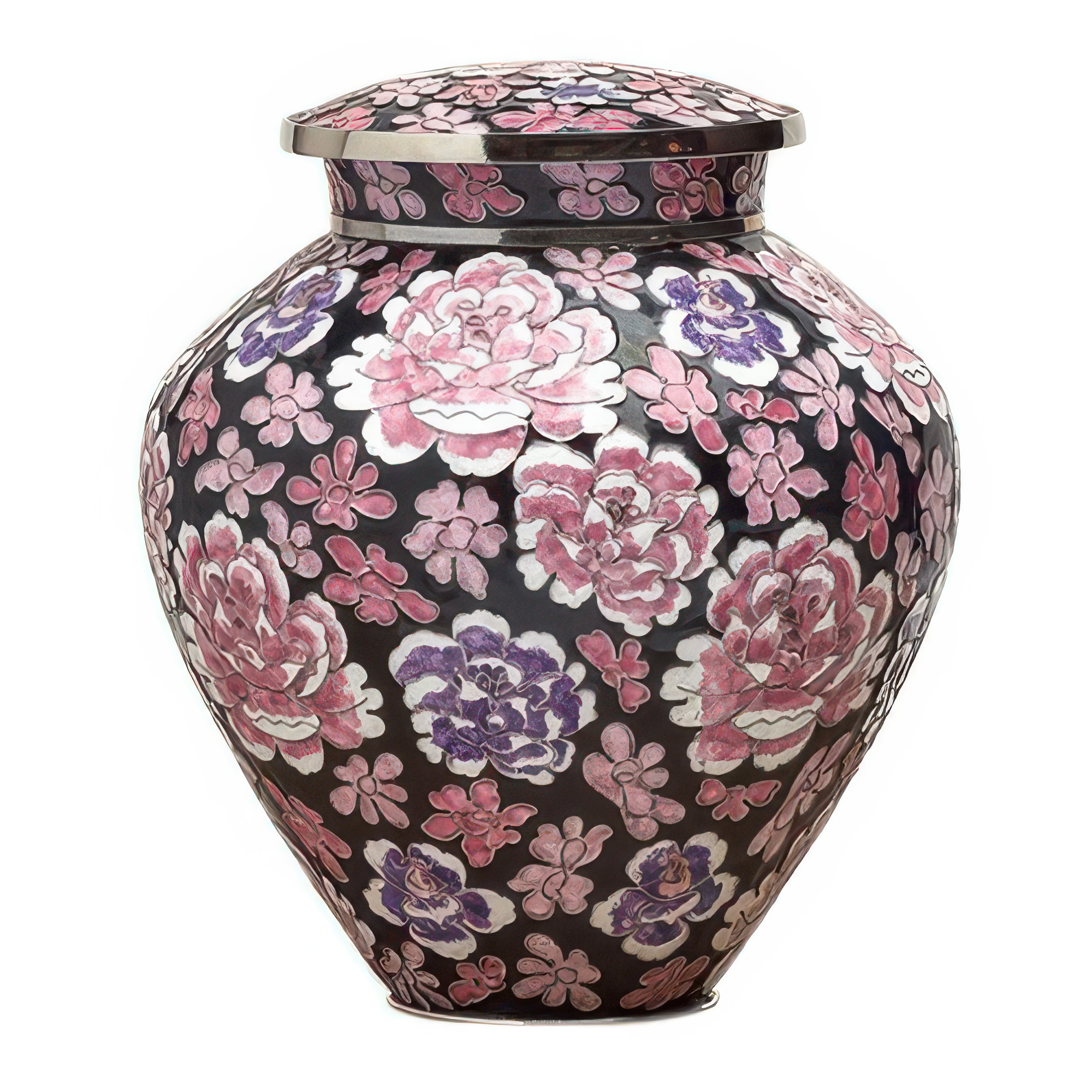
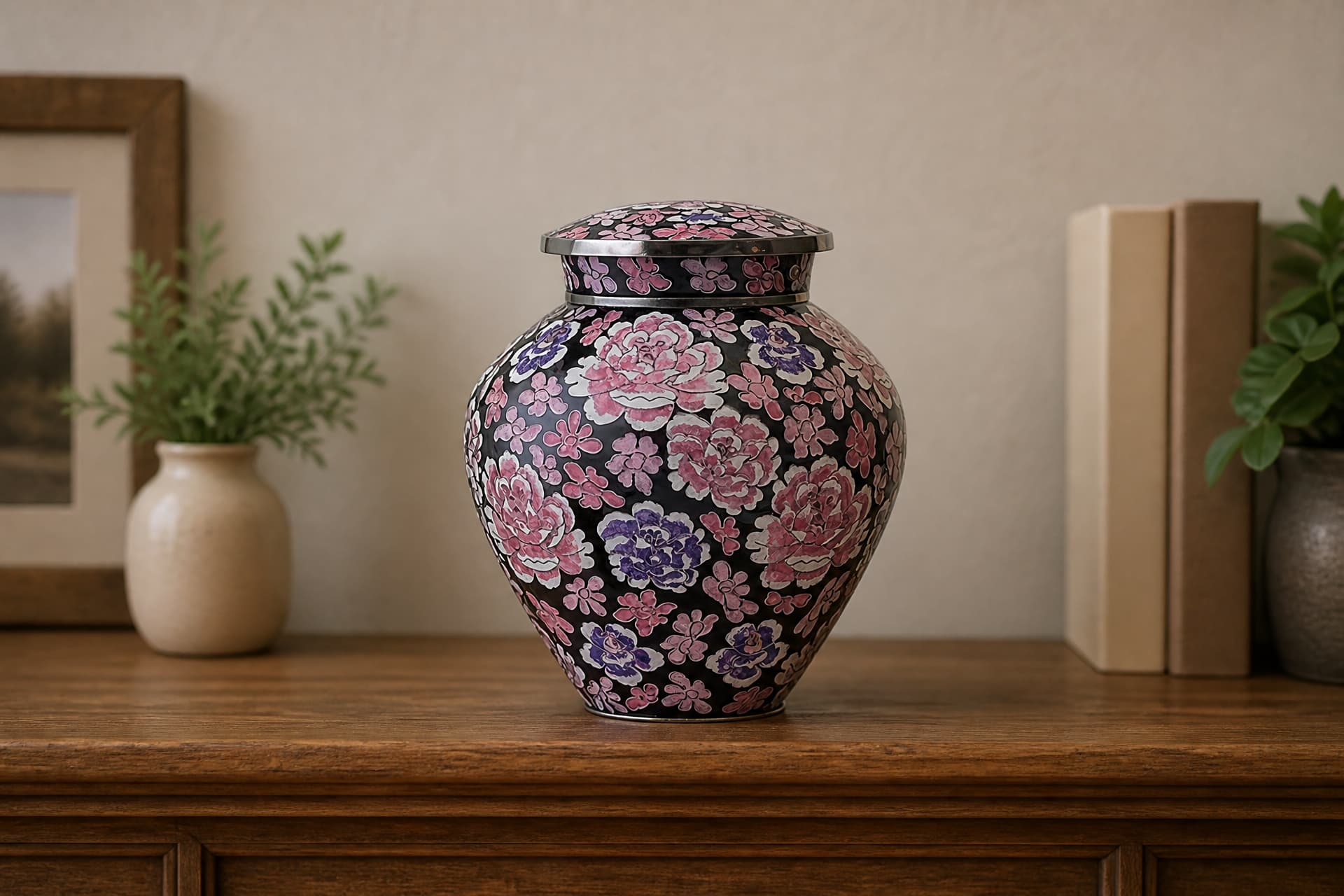
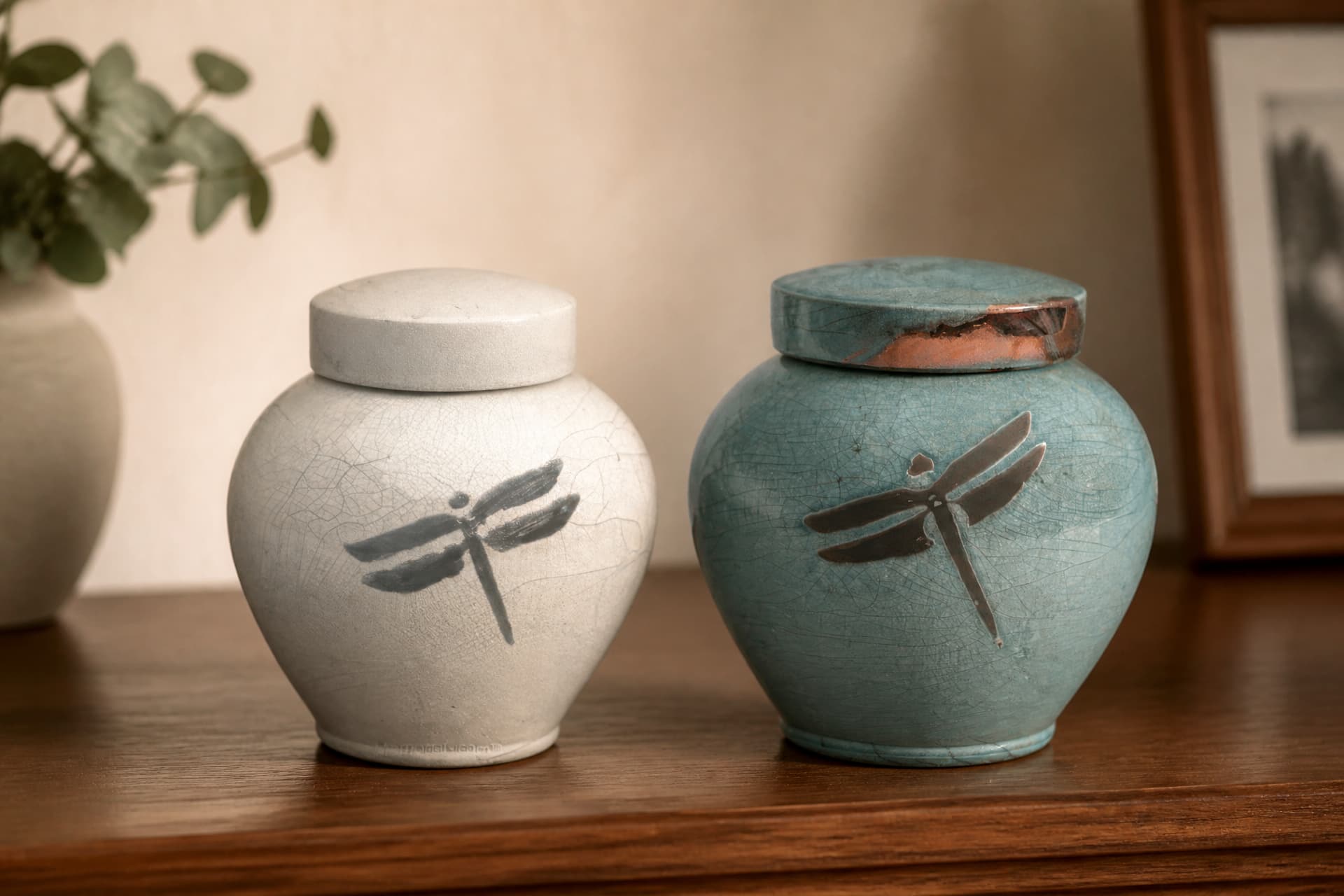
The cloisonné and raku urns shown throughout this guide
How Japanese urns are sized, and why the number looks unfamiliar
If you have looked at a Japanese urn listing and seen a size like "7-sun," here is what that means.
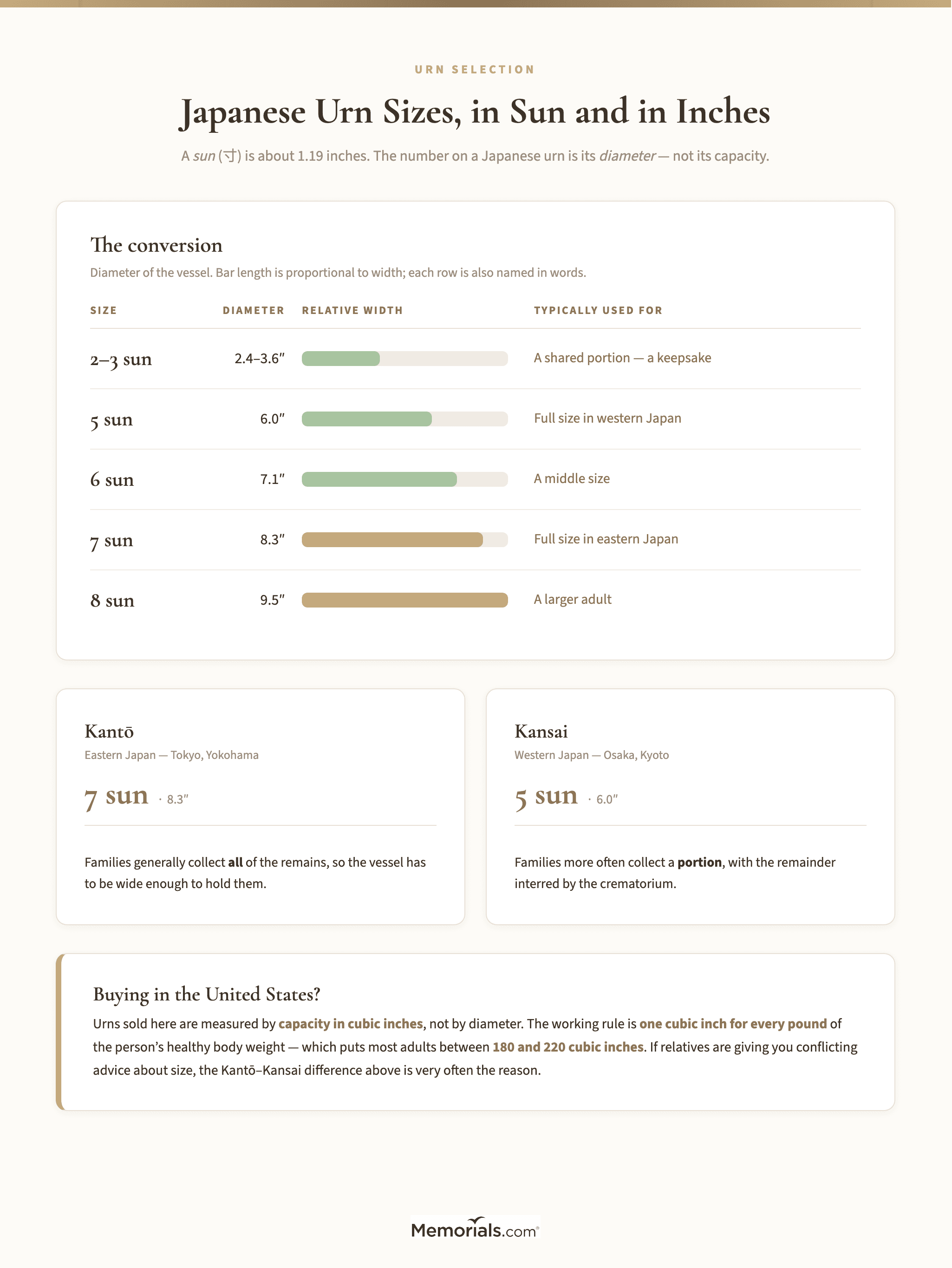
Japanese urns are measured in sun (寸), a traditional unit of about 3.03 centimeters, or roughly 1.19 inches. The number refers to the diameter of the cylinder, not its volume — which is the first place American buyers go wrong, because every urn sold here is measured in cubic inches of capacity.
A rough translation:
2–3 sun (about 2.4–3.6 inches across) — a sharing size, comparable to what we call keepsake urns
5 sun (about 6 inches) — a common size in western Japan
6 sun (about 7.1 inches) — a middle size
7 sun (about 8.3 inches) — the common full size in eastern Japan
8 sun (about 9.5 inches) — used for a larger adult
The genuinely surprising part is that the customary size is not the same across Japan. In the Kantō region around Tokyo, families generally collect all of the remains, so a 7-sun urn is standard. In the Kansai region around Osaka and Kyoto, families more often collect a symbolic portion, with the remainder interred by the crematorium at a communal site — so a 5-sun urn or smaller is normal there. Neither is more correct. If relatives are telling you different things about what size is right, this is very often why.
For a service in the United States, you are almost certainly buying by capacity rather than by sun. The standard guidance holds: roughly one cubic inch of urn capacity for each pound of the person's healthy body weight, which puts most adults between 180 and 220 cubic inches. If the family plans to divide remains among several relatives — a common arrangement in Japanese-American families spread across a country or an ocean — small urns for ashes let each household keep a portion, and a full-size urn holds the rest.
If two people will eventually share one vessel, companion urns run roughly double the capacity, and our companion urns guide walks through how families usually handle the timing when the two deaths are years apart.
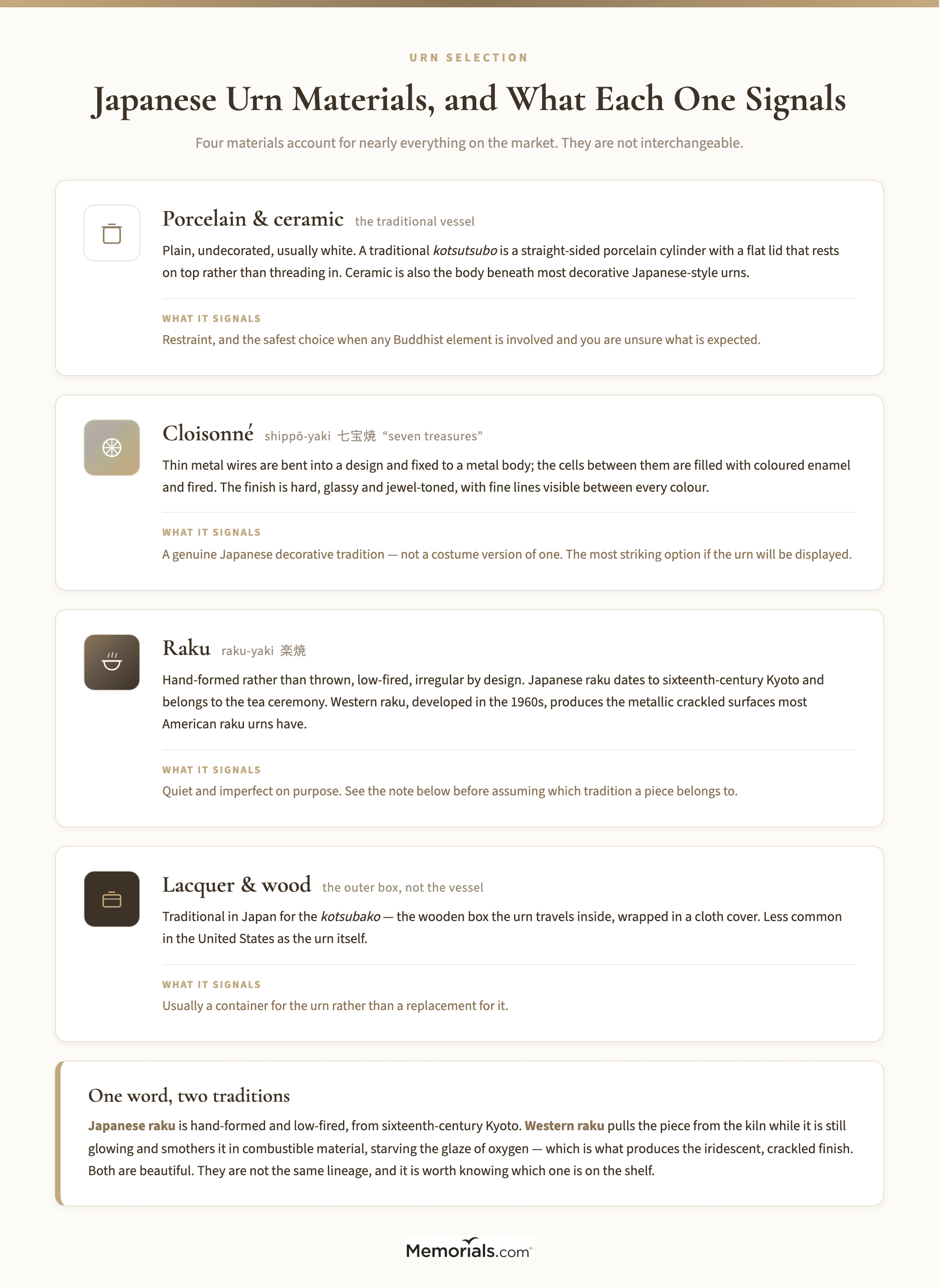
Four materials account for nearly everything you will see, and they carry quite different meanings.
Porcelain and ceramic. The traditional choice, and still the most common. A plain white ceramic urn is the closest thing to a kotsutsubo you will find sold domestically, and it is the safest choice if the service has any Buddhist element and you are unsure what is expected. Ceramic also takes glazes beautifully, which is why most decorative Japanese-style urns are ceramic underneath.
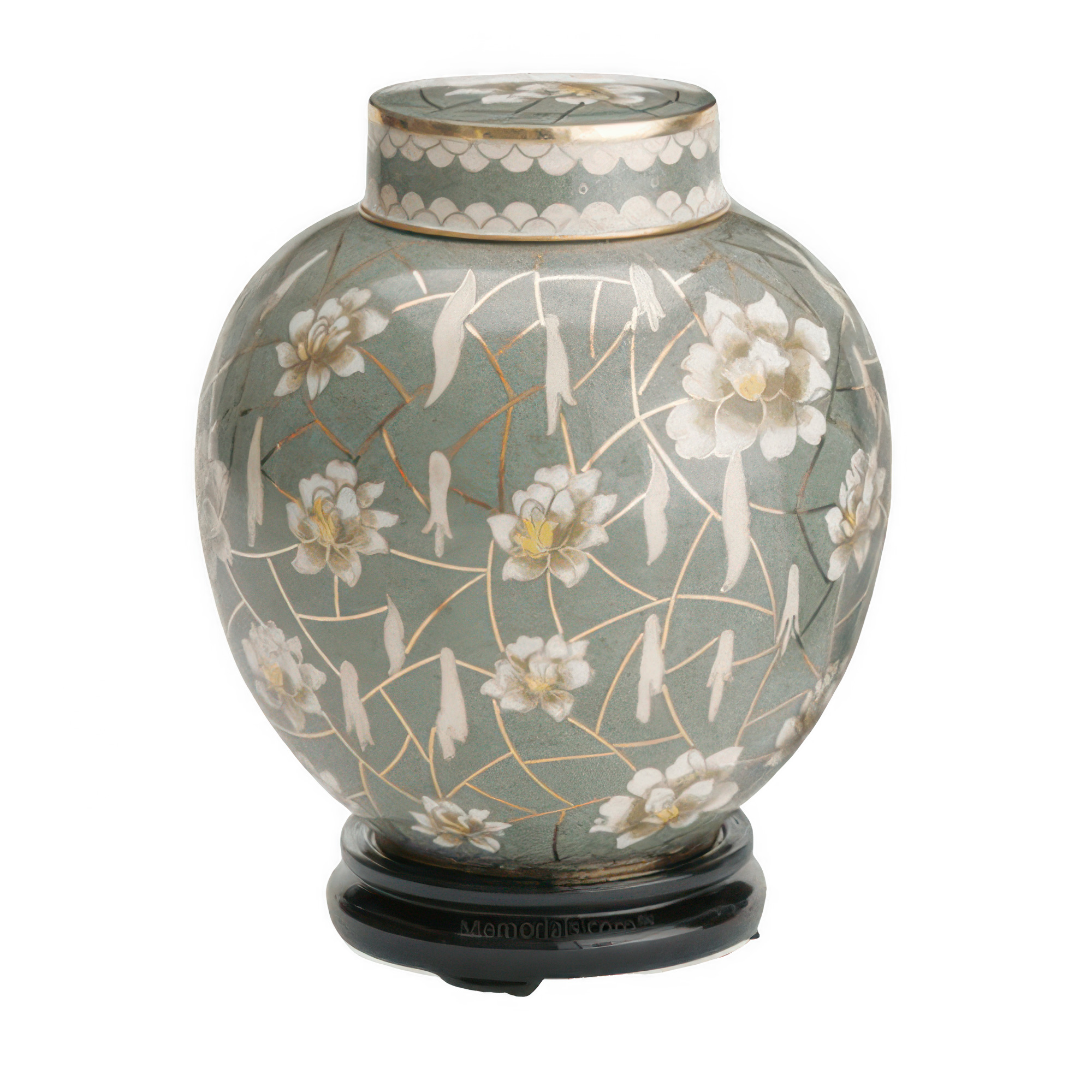
Cloisonné. Called shippō-yaki (七宝焼) in Japan — "seven treasures ware." Thin metal wires are bent into a design and fixed to a metal body, and the cells between them are filled with colored enamel and fired. The result is a hard, glassy, jewel-toned surface with visible fine lines between the colors. It is genuinely a Japanese decorative tradition, and a cloisonne urn with a cherry blossom or chrysanthemum motif is a legitimate choice rather than a costume version of one. It is also the most visually striking option, which matters if the urn will be displayed rather than interred.
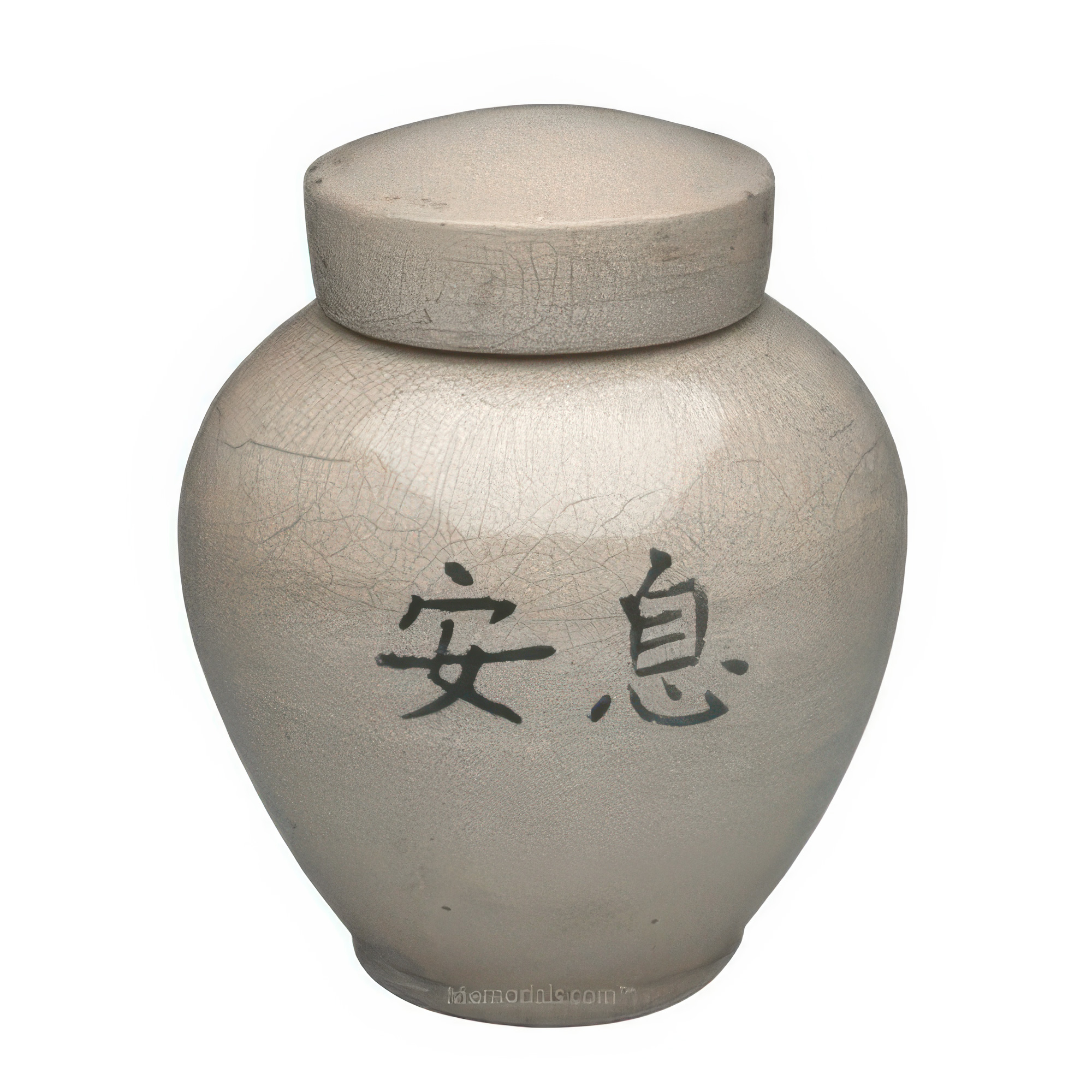
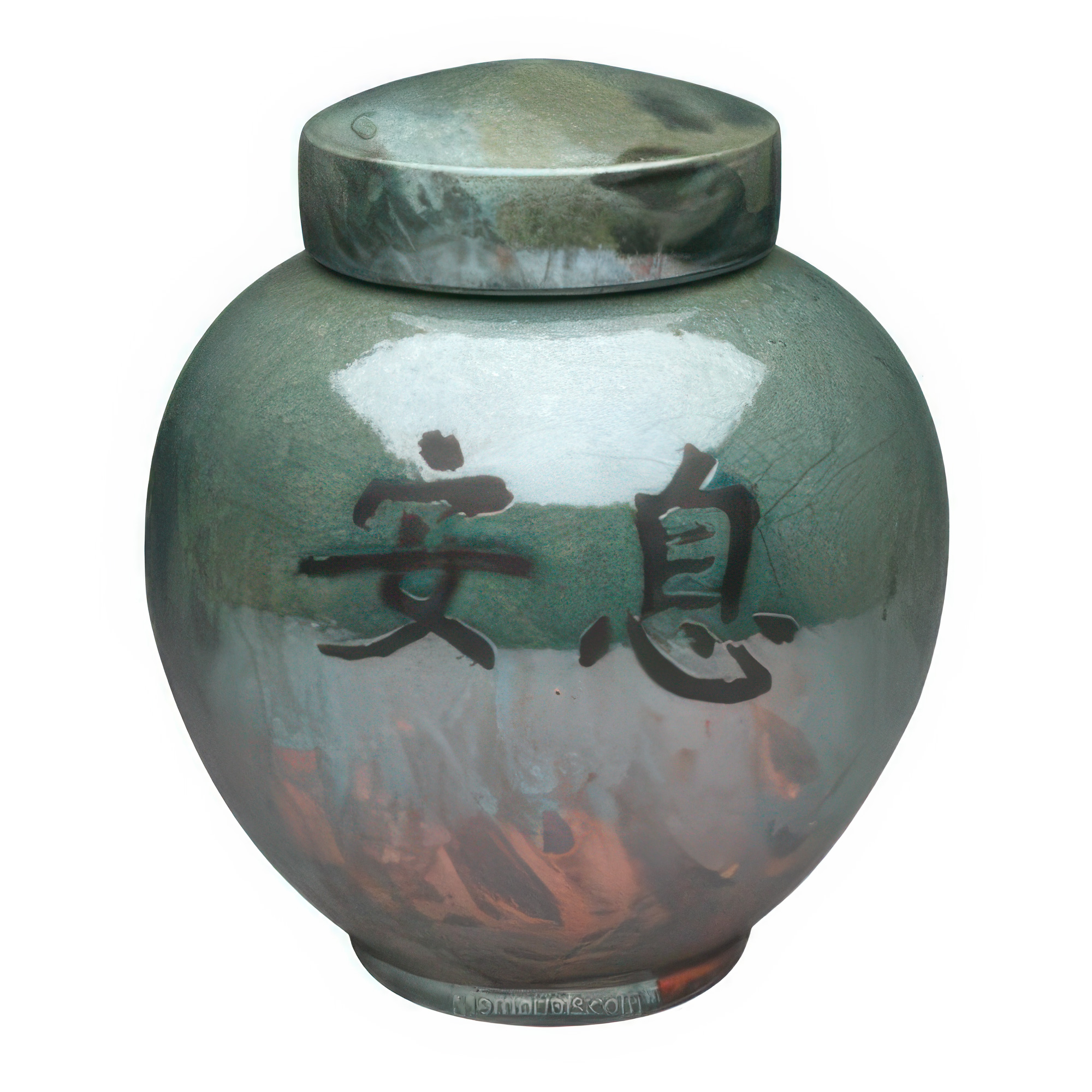
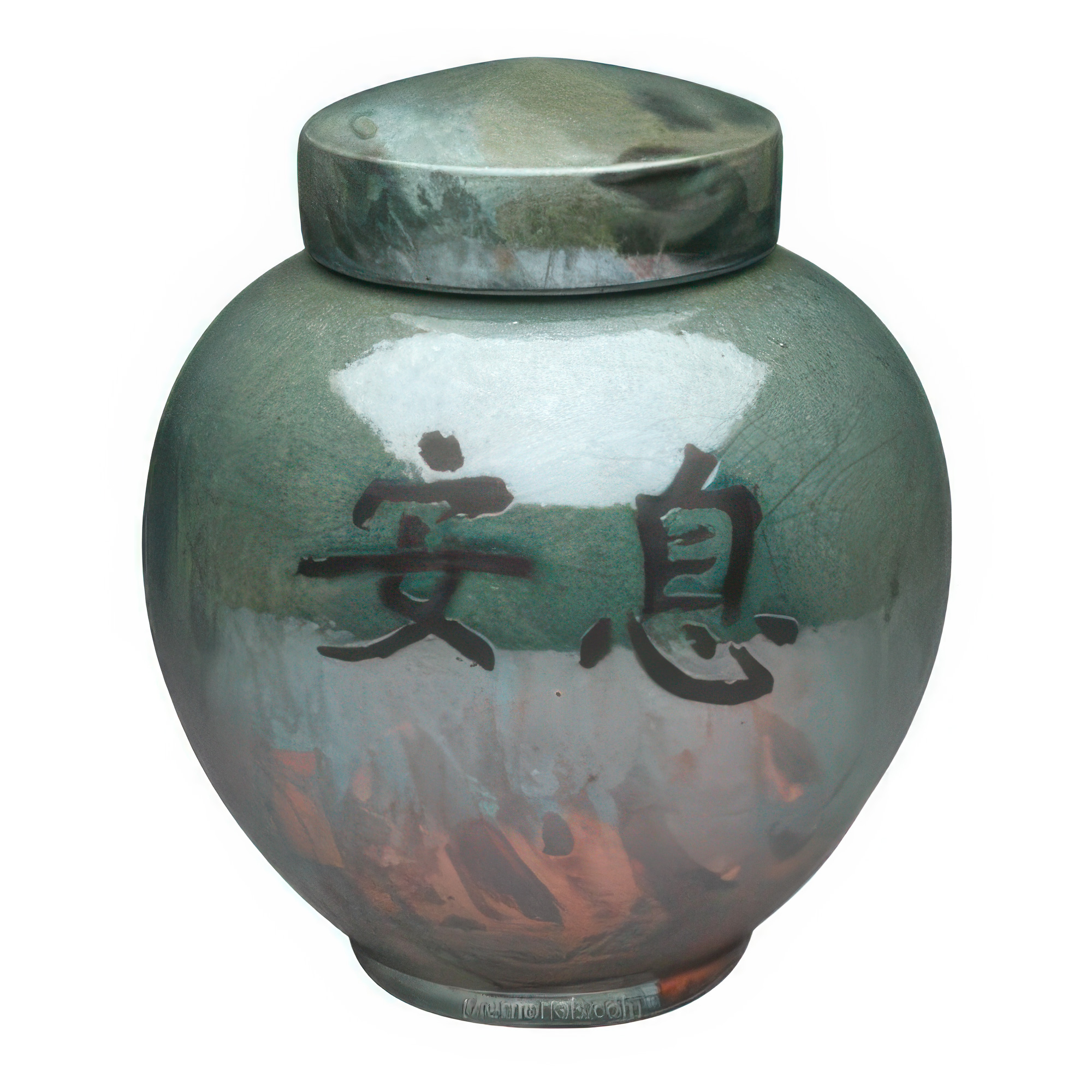
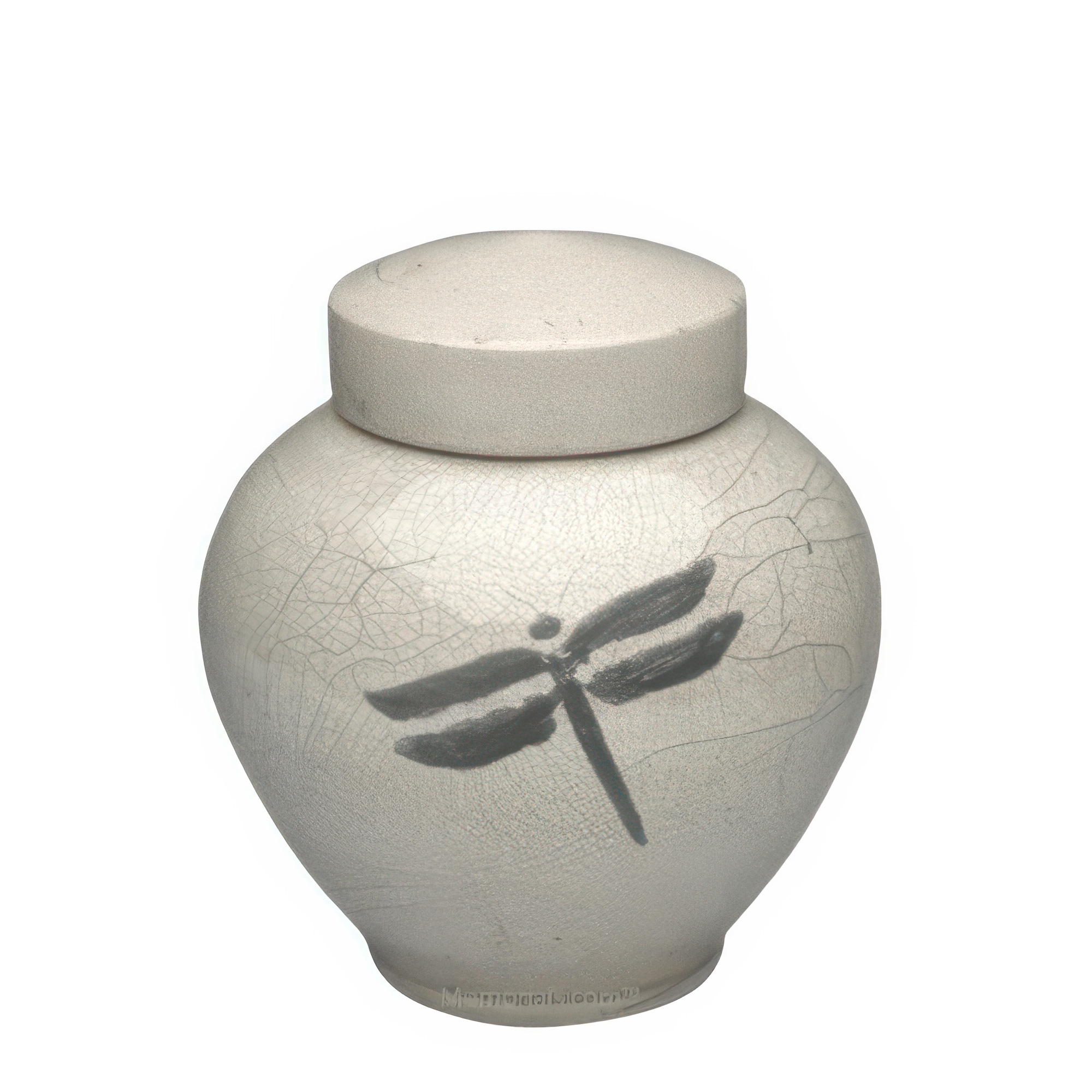
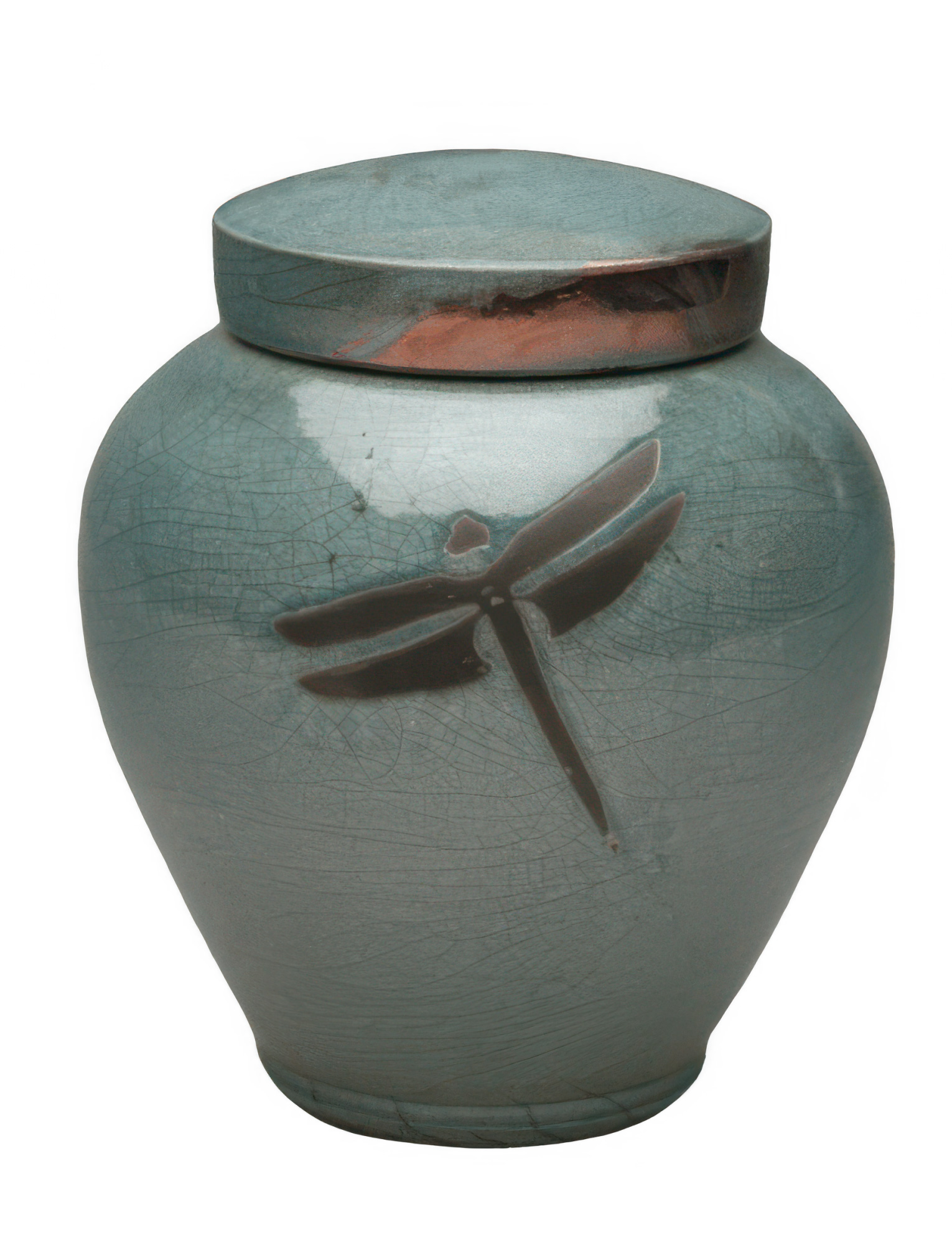
Raku. Worth a paragraph, because the word means two things. Japanese raku-yaki (楽焼) dates to sixteenth-century Kyoto and is tied to the tea ceremony: hand-formed rather than thrown on a wheel, low-fired, quiet and irregular by design. Western raku, developed in the 1960s, pulls the piece from the kiln while glowing and smothers it in combustible material, which starves the glaze of oxygen and produces the metallic, iridescent, crackled surfaces most American raku urns have. Both are beautiful. They are not the same tradition, and if a family cares about authenticity it is worth knowing which one is on the shelf.
Lacquer and wood. Less common in the US market but traditional in Japan for the outer box rather than the vessel itself.
For a fuller comparison across every material the catalog carries, our guide to types of cremation urns sets them side by side.
One note on vocabulary, because it affects what you will find while searching. Most retailers file all of this under asian urns, a single label covering Japanese, Chinese, and Korean design traditions that are not interchangeable — a Chinese funerary jar and a kotsutsubo have different shapes and different histories. Older listings go further and still use "oriental": you will find an oriental urn or oriental urns in the same catalogs that group oriental vases and urns into one decorative category, drawing no distinction between a vase and a vessel meant to hold a person. That word has fallen out of use for good reason, and the grouping was never accurate. If those terms are what is returning results for you, you are in the right place — just be aware the listing may not have thought carefully about what it is selling.
Where the urn goes: the first weeks, and then after
In Japan the urn does not go straight to a grave. It comes home.
A temporary altar is set up — a small stand near the family's household altar, holding the wrapped urn, a photograph, incense, and offerings. The urn stays there through a mourning period conventionally counted as forty-nine days, marked by memorial observances along the way. At the end of it, the urn is interred in the family grave or placed in a temple niche.
One correction worth making, because Western sources get it wrong constantly: the urn is not placed inside the butsudan, the household Buddhist altar. The butsudan holds memorial tablets and images. The urn sits on its own temporary stand nearby, and then it leaves. If someone has told you the urn belongs in the butsudan, they are describing something that does not happen.
The ceremony that fills the urn, the forty-nine days, and how the observances are counted are covered properly in our guide to religious and cultural urn traditions, which handles the Buddhist practices alongside Catholic, Jewish, Hindu, and Islamic ones — this article is about the vessel rather than the rite.
For a family in the United States keeping the urn at home permanently rather than interring it, the practical questions are different: light, stability, where in the house, and what to say to guests. Our guidance on how to display a cremation urn at home covers those.
A temporary home altar holds the urn for the first weeks after a cremation.
Choosing respectfully when you are not observing the full tradition
This is the question underneath a large share of these searches, so here is a direct answer: choosing a Japanese-style urn for a service that is not a Japanese Buddhist funeral is not disrespectful. It is not appropriation to bury someone in a vessel whose design tradition you admire. Cloisonné and raku urns are made and sold as memorial vessels; that is what they are for.
The things actually worth being careful about are narrower:
If a temple is involved, ask the temple. Practice varies by sect and by congregation, and a five-minute question answers what no article can. If the remains will be interred at a Japanese temple or in a family grave in Japan, the size and form may genuinely be specified, and a decorative Western urn may not fit the niche.
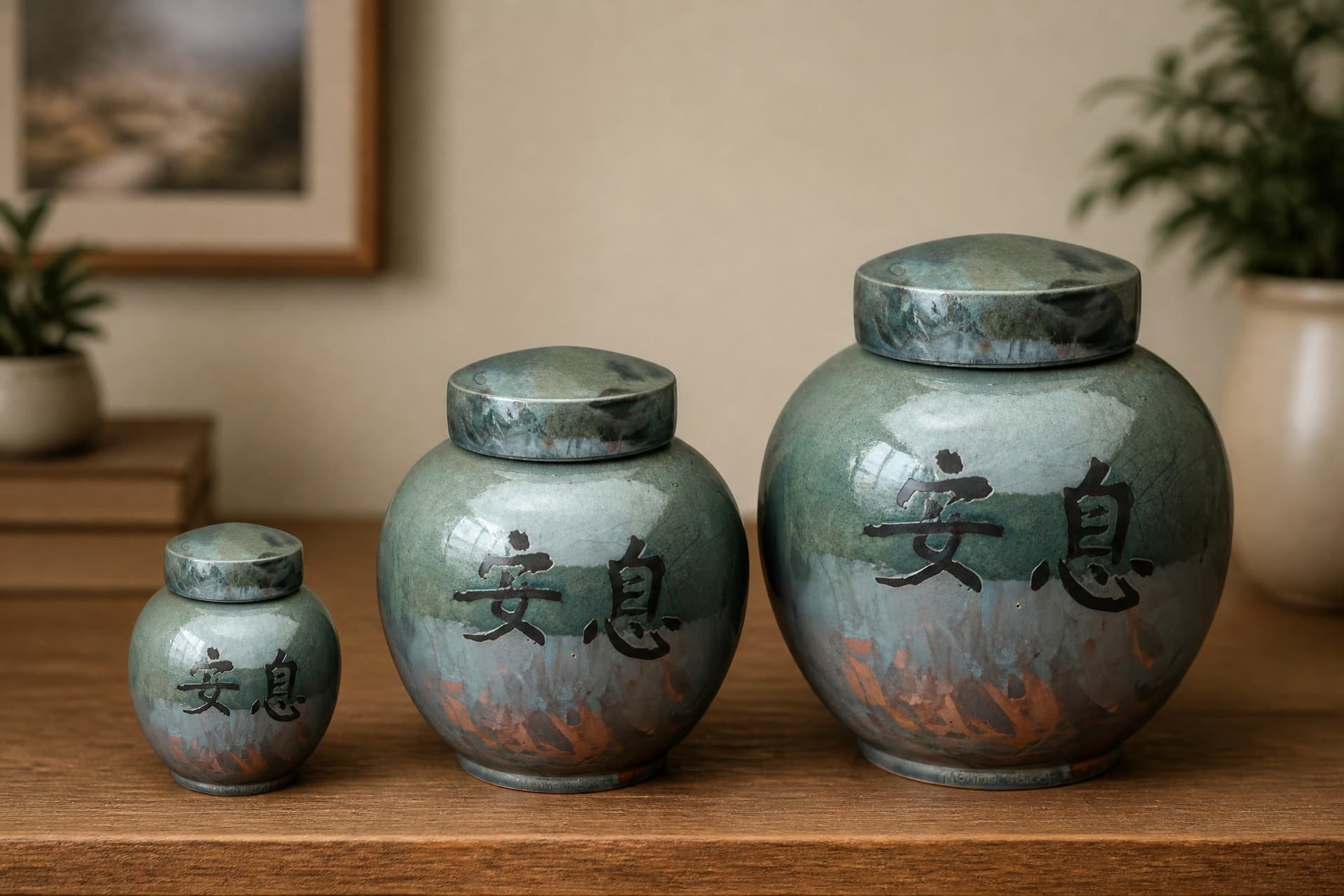
Watch the motifs. Chrysanthemum and cherry blossom are both associated with mortality and memorial in Japan, and both are appropriate. A design that is decorative rather than symbolic is fine too. The one thing to avoid is text you cannot read — an urn with Japanese characters you have not had translated is a risk not worth taking.
Do not mix systems. If the family is following Japanese practice, follow it in the parts that matter — size and interment plans — rather than in the decorative parts only.
Beyond that, choose the one the family will be glad to look at. An urn is kept for a long time, and it should not be a compromise nobody liked.
What is a Japanese urn called? A kotsutsubo (骨壺), which translates as "bone jar." The wooden box it sits inside is a kotsubako. In the American market the same phrase is used loosely for any urn with a Japanese design, so it is worth checking which one a listing means.
How many days does a Japanese funeral last? The funeral itself is usually two days — a wake the first evening, the funeral and cremation the next day. The mourning period during which the urn stays at home is conventionally forty-nine days, with observances at intervals along the way, and a first-anniversary memorial after that.
What size Japanese urn do I need? If you are buying in Japan or for interment there, sizing is in sun: 7-sun is standard around Tokyo, 5-sun or smaller around Osaka and Kyoto. If you are buying in the United States, ignore sun and buy by capacity — about one cubic inch per pound of healthy body weight, so most adults need 180 to 220 cubic inches.
Do Japanese urns have lids? Yes. A traditional kotsutsubo has a flat lid that rests on top rather than threading in, because the urn is filled by hand during the ceremony and then sealed inside its wooden box. Decorative Japanese-style urns sold in the US usually have a threaded or gasketed lid instead, which is the better choice if the urn will be moved or shipped.
Can a Japanese urn be buried? Yes, and in Japan that is the normal outcome — the urn is interred in a family grave or temple niche after the mourning period. For burial in the United States, check the cemetery's rules first: many require an urn vault, and some specify materials. Ceramic and porcelain are generally accepted inside a vault.
Choosing an urn that honors both the tradition and the person
The distinction this article started with is the one worth carrying away. If you need the vessel that Japanese practice calls for — plain, cylindrical, sized in sun, headed for a family grave — that is a specific object, and buying a decorative urn instead will create a problem later. If what you want is an urn whose beauty comes from a Japanese tradition, for a person and a service that are your own, then cloisonné and raku are honest choices and there is nothing to apologize for.
Most families land in the second case, and most of the worry attached to it turns out to be unnecessary. The question that actually matters is not whether the urn is authentic. It is whether the family can look at it for twenty years.
When you are ready to compare what is available, our full range of urns for ashes includes the ceramic, cloisonné, and raku pieces described here, in every size from a small sharing keepsake to a companion urn for two.