🏬Supersize Online Funeral Retailer🪦1000's of Headstones⚱️Over 10,000 Cremation Urns⚰️Caskets Overnight Delivery🛒Funeral & Memorial Superstore🚚FREE Shipping on ALL Orders👨👩👧👦Helping Families for over 20 Years💰Lowest Price Guarantee🏬Supersize Online Funeral Retailer🪦1000's of Headstones⚱️Over 10,000 Cremation Urns⚰️Caskets Overnight Delivery🛒Funeral & Memorial Superstore🚚FREE Shipping on ALL Orders👨👩👧👦Helping Families for over 20 Years💰Lowest Price Guarantee
🏬Supersize Online Funeral Retailer🪦1000's of Headstones⚱️Over 10,000 Cremation Urns⚰️Caskets Overnight Delivery🛒Funeral & Memorial Superstore🚚FREE Shipping on ALL Orders👨👩👧👦Helping Families for over 20 Years💰Lowest Price Guarantee🏬Supersize Online Funeral Retailer🪦1000's of Headstones⚱️Over 10,000 Cremation Urns⚰️Caskets Overnight Delivery🛒Funeral & Memorial Superstore🚚FREE Shipping on ALL Orders👨👩👧👦Helping Families for over 20 Years💰Lowest Price Guarantee
There is no sympathy message loss of child that helps. Nothing you write will make this better, and everyone who has been through it knows that already.
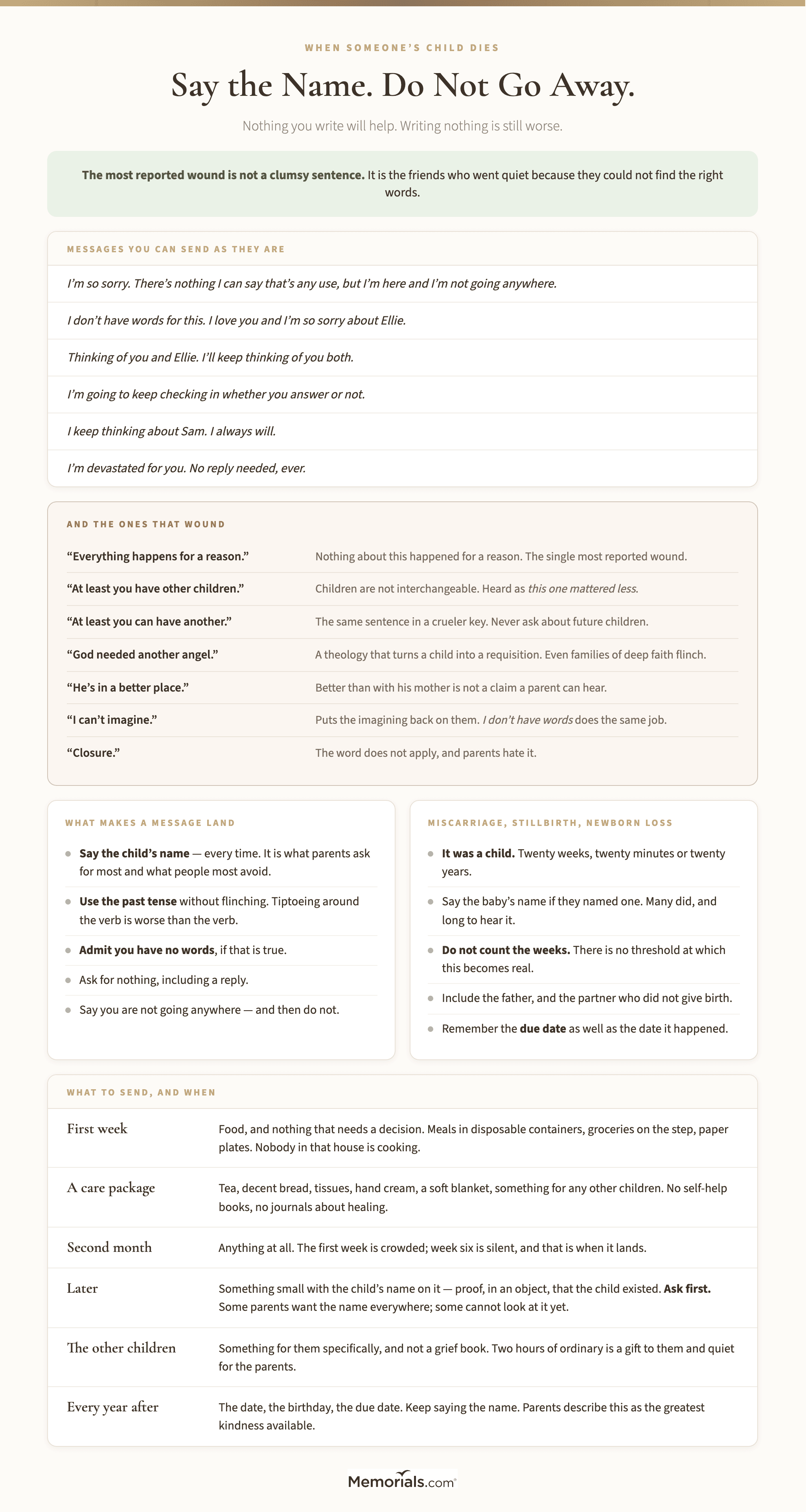
Saying nothing is still worse. The most common wound bereaved parents describe is not a clumsy sentence — it is the friends who went quiet because they could not find the right words. Say their child's name, say you are sorry, and do not go away. That is the whole of it, and the rest of this page is detail.
These pages are organized by relationship because the wording genuinely changes with it — condolences for loss of mother, sympathy message for loss of father, , . This is the one that least resembles the others, and the one where the usual advice about finding the right words is worst.
Short. Their name in it. No explanation of the death, no reason for it, no silver lining.
I'm so sorry. There's nothing I can say that's any use, but I'm here and I'm not going anywhere.
I don't have words for this. I love you and I'm so sorry about Ellie.
Thinking of you and Ellie. I'll keep thinking of you both.
I'm so sorry. I'm going to keep checking in whether you answer or not.
There's nothing right to say. I'm so sorry, and I'm here.
I keep thinking about Sam. I always will.
I'm devastated for you. No reply needed, ever.
Say the child's name every time. It is the single thing bereaved parents ask for most and the thing people most avoid, out of a fear of causing pain that is exactly backward. Not saying the name does not protect anyone; it makes the child disappear from the conversation.
Use the past tense without flinching.He was funny.She loved that dog. Tiptoeing around the verb is more painful than the verb.
And admit you have no words, if that is true. Words for loss of child do not exist and pretending otherwise reads as performance. I don't know what to say is honest and welcome.
The most common wound is not a clumsy sentence. It is the friends who went quiet because they could not find the right words.
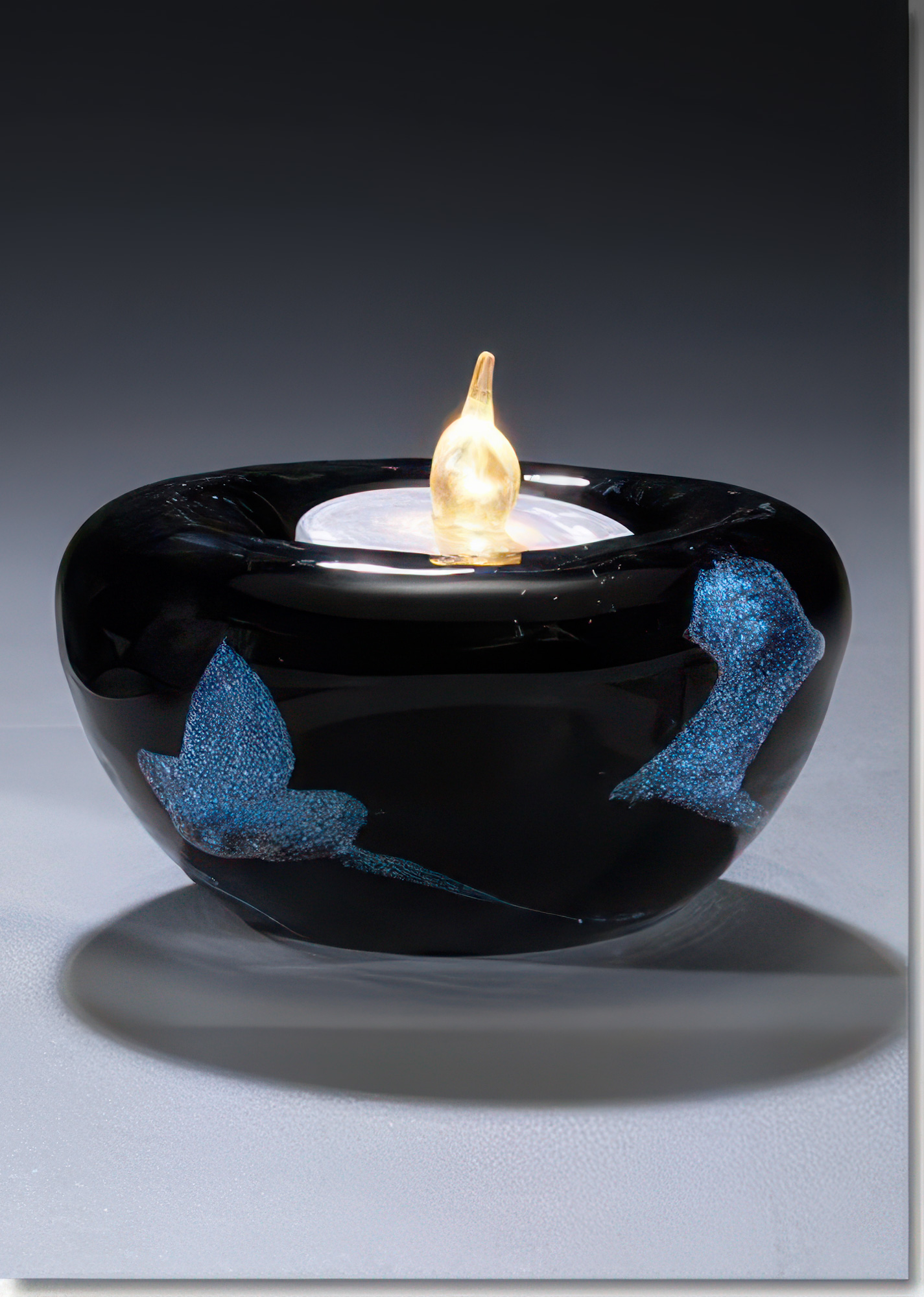
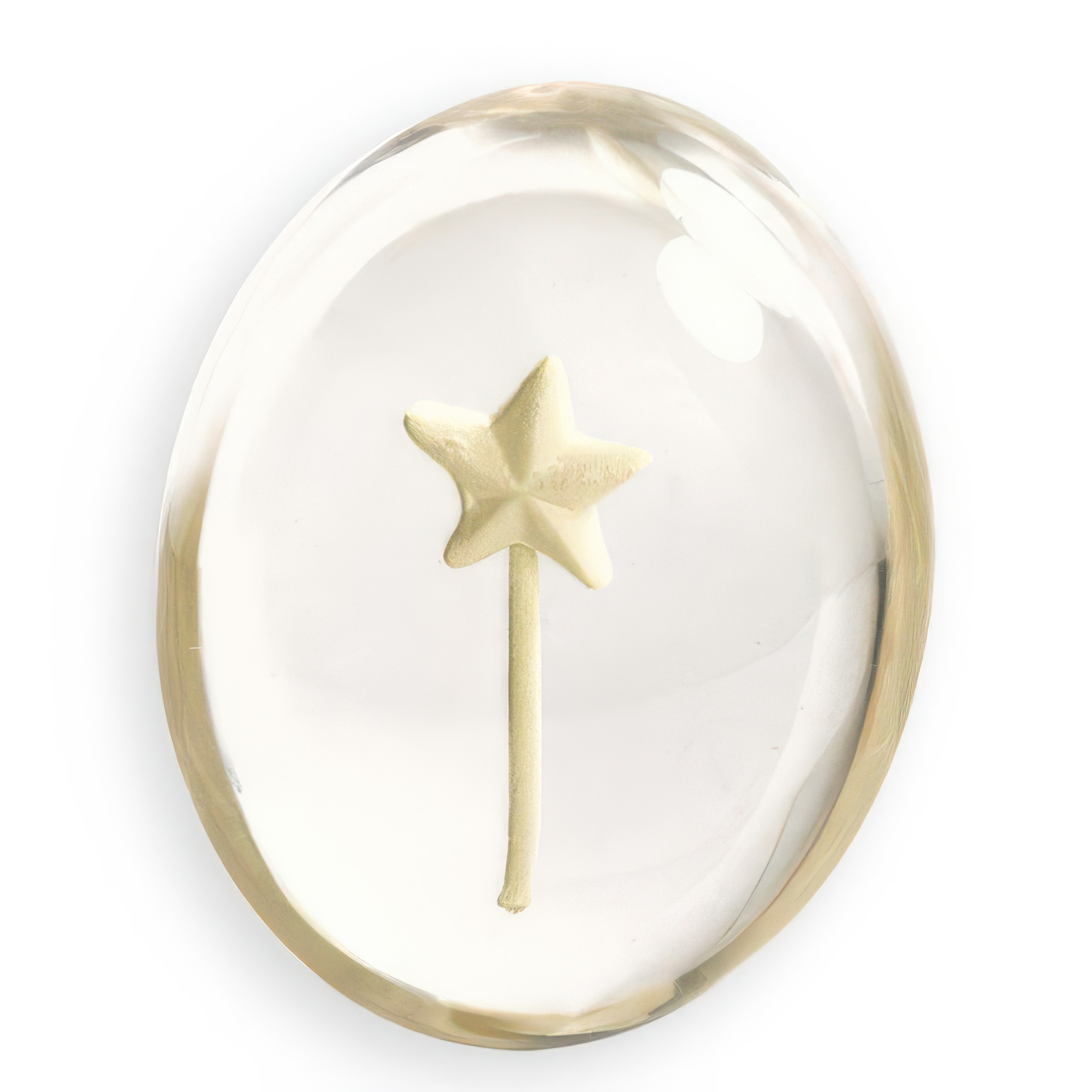
Quiet Keepsakes
Small, unengraved, and easy to add a name to later
A condolence message for baby loss is written to parents whose grief is routinely treated as smaller than it is, often by people who mean well.
It was a child. Whether they lived twenty weeks, twenty minutes or twenty years. Say the baby's name if they named one — and many do, and they long to hear it out loud.
Do not count the weeks. Not to them, not to anyone else. There is no threshold at which this becomes real.
Never say "at least it was early." Sympathy for loss of infant fails on the same at least as every other version.
Acknowledge the mother's body as well as her heart if you are close enough. She may be recovering physically from a birth with no baby, and almost nobody mentions it.
Include the father, and the partner who did not give birth. They are asked how she is doing and rarely how they are.
And the due date matters. So does the date it happened. Put both in your calendar.
What Not to Ask
How it happened. Ever. If they want to tell you, they will.
Whether they are going to try again.
Whether they had other children.
Whether the child suffered.
Anything about the cause, medical, accidental or otherwise.
When they are going back to work.Grief at work covers that from their side.
When You Barely Know Them
Distance is not a reason to stay silent, and short is fine.
Three lines, and say who you are.This is Priya from the school run. I heard about Ellie and I am so sorry.
Do not ask for anything, including a reply.
Say one true specific thing if you have one.She always waved at my dog on the way past. A near-stranger with a real memory of that child is giving them something nobody else can.
And if you have no memory of the child at all, say what you know of the parent. That is honest and it still lands.
Say the child's name. It is what bereaved parents ask for most and what people most avoid.
What to Send
This is what most people searching for this are actually asking. They type it as what to send someone who lost a child, as gifts for parents who lost a child, as a gift for someone who lost a child, as loss of a child gifts, and as what to give someone who lost a child weeks later when the first wave has gone. Neither question is crass. Both are somebody trying to do something with their hands because words have run out.
In the first week: food, and nothing that needs a decision. Meals in disposable containers, groceries on the step, paper plates. Nobody in that house is cooking or shopping. Grief groceries is the practical list.
A care package for someone who lost a child works when it is unremarkable: tea, decent bread, tissues, hand cream, a soft blanket, phone chargers, something for any other children in the house. No self-help books, no journals about healing, no candles that say hope.
In the second month: anything at all. The house is empty by then, and this is when bereavement gifts for loss of a child actually land. The first week is crowded; week six is silent.
Something with the child's name on it, eventually. A memorial gift for loss of a baby boy or girl is most often a small engraved keepsake, and it is what parents themselves ask for — proof, in an object, that the child existed. Among sympathy gifts the small engraved pieces are what to look at, and the keepsake gifts range is where the name-bearing ones sit.
Ask before you engrave anything, and ask before you send an image of the child. Some parents want the name everywhere; some cannot look at it yet. One text settles it.
And what not to send: anything with a timeline on it, anything that says everything happens for a reason, angel figurines unless you know they want one, and nothing at all that frames the child as a lesson. What not to send as a sympathy gift covers the wider category, and sympathy gift etiquette covers the timing.
Sympathy Gifts for Loss of a Son or Daughter, by Who You Are
The right gesture depends on how close you are, and getting this wrong is common.
Immediate family and closest friends — practical help first, an object much later. Take the laundry, drive the other children, answer the door.
Friends — food, then presence. Sympathy gifts for loss of a son or daughter from a friend should be small and unbranded. The gesture is that you thought of them in month three.
Colleagues — one thing from the group, and a card everyone signs. Do not each send something. Condolence messages for a coworker covers the register.
People at a distance — a delivery, a gift card for food, a donation in the child's name if the family has named a cause.
Anyone unsure of the budget — sympathy gifts by budget sets out what is appropriate at every price. A loss of a child gift is not judged by its cost and never has been, and a memorial gift for loss of son or daughter is chosen for the name on it rather than the price of it.
Comforting Words for a Mother Who Lost Her Daughter
Mothers and fathers are treated differently after a child dies, and it is worth knowing how.
Comforting words for a mother who lost her daughter should not be about strength.You're so strong is heard as an instruction to keep performing. Say the opposite: You don't have to hold anything together with me.
Fathers get asked how their wife is doing. Ask him how he is. Then ask again in a month, because almost nobody will.
Do not compare the two. Grief is not a competition and each parent will be somewhere different on any given day.
Both of them will be worse at three months than at three weeks. That is normal, and it is when the messages stop. How long grief lasts is honest about the shape of it, and normal grief versus grief depression covers when to be concerned.
Ask before you engrave anything. Some parents want the name everywhere; some cannot look at it yet.
The Other Children
Siblings are the most overlooked people in the house, and a message that remembers them is rare enough to be remembered.
Name them too.Thinking of you, Dan, and of Molly. The surviving children are grieving a sibling and watching their parents come apart at the same time.
Send something for them specifically. Not a grief book. A game, a comic, an ordinary treat — something that says a person outside the house noticed they exist this week.
Offer to take them somewhere ordinary. The park, a film, your kitchen for an afternoon. Two hours of normal is a gift to the child and two hours of quiet is a gift to the parents.
Do not ask them how their parents are. They are already being asked that by everybody, and it makes them the family spokesperson at ten years old.
And do not tell them they have to be brave or look after their mother. It is the most common thing said to a bereaved sibling and it costs them years.
Staying, Which Is the Whole Job
Everything above is the easy part. This is the part that matters and almost nobody does it.
Diarize the dates. The date it happened, the birthday, and the due date if there was one. Message on each, every year, for as long as you know them.
Keep saying the name. Years later. I thought about Ellie today. Parents describe this as the greatest kindness available, and it costs nothing.
Do not wait for them to raise it. They are managing everyone else's discomfort and will not bring it up first.
Keep inviting them, and accept every no without comment. Being left off the list because people assumed is its own injury.
Keep inviting them, and accept every no without comment. Being left off the list because people assumed is its own injury.
Expect anniversaries to be worse than the day, and the second year to be harder than the first, when the shock has gone and the permanence has not.
What do you say to someone who lost a child? Say the child's name, say you are sorry, and say you are not going anywhere. I don't have words for this. I love you and I'm so sorry about Ellie.
Should I mention the child by name? Yes, always. It is what bereaved parents ask for most often and what people most avoid.
What should I never say?Everything happens for a reason.At least you have other children.God needed another angel. Anything beginning with at least, and the word closure.
What do you send someone who lost a child? Food in the first week, and something ordinary and useful in the second month when everyone else has stopped. Something with the child's name on it later, after asking.
Is it too late to say something? No. Months later is welcome, and often more welcome, because by then almost everyone has gone quiet.
What if they do not reply? Keep sending. Say once that no reply is needed, then carry on at the same pace.
What about miscarriage or stillbirth? The same rules. Use the baby's name if they named one, never count the weeks, and remember the due date as well as the date it happened.
In Closing
Send the message even though it is inadequate. Say the child's name in it.
Then put three dates in your calendar and keep saying that name for years, which is the part that actually helps and the part almost nobody manages.