🏬Supersize Online Funeral Retailer🪦1000's of Headstones⚱️Over 10,000 Cremation Urns⚰️Caskets Overnight Delivery🛒Funeral & Memorial Superstore🚚FREE Shipping on ALL Orders👨👩👧👦Helping Families for over 20 Years💰Lowest Price Guarantee🏬Supersize Online Funeral Retailer🪦1000's of Headstones⚱️Over 10,000 Cremation Urns⚰️Caskets Overnight Delivery🛒Funeral & Memorial Superstore🚚FREE Shipping on ALL Orders👨👩👧👦Helping Families for over 20 Years💰Lowest Price Guarantee
🏬Supersize Online Funeral Retailer🪦1000's of Headstones⚱️Over 10,000 Cremation Urns⚰️Caskets Overnight Delivery🛒Funeral & Memorial Superstore🚚FREE Shipping on ALL Orders👨👩👧👦Helping Families for over 20 Years💰Lowest Price Guarantee🏬Supersize Online Funeral Retailer🪦1000's of Headstones⚱️Over 10,000 Cremation Urns⚰️Caskets Overnight Delivery🛒Funeral & Memorial Superstore🚚FREE Shipping on ALL Orders👨👩👧👦Helping Families for over 20 Years💰Lowest Price Guarantee
Someone has died, and you have been asked to lead the nine days of prayer that follow. If you have been searching for a 9 day novena prayer for the dead PDF — something you can print, put on the table, and hand to people at the door so you do not have to explain it nine separate times — that is exactly the right instinct, and this page is built to give you one. A novena for the dead is nine consecutive days of prayer offered for one person who has died. Many families call it a novenario. Almost nobody who leads one has led one before.
Families do this differently, and the differences are not mistakes. A Filipino family prays the pasiyam. A Mexican family prays a novenario in the front room and takes down the cross on the ninth night. A family in Ohio may gather with a rosary, a photograph and a plate of sandwiches, and never once use a word anyone would call liturgical. All of them are praying the same nine days. If the funeral itself is still ahead of you, our guide to planning a Catholic funeral covers the decisions that come first; this one picks up where that ends.
What follows is the part almost no page gives you in one place: the shape of a single evening, and a straight answer about when to start. If you also want to see how different faiths mark the days after a death, the wider guide sets the novena beside the traditions it grew up alongside.
What a novena for the dead is
A novena prayer for the dead is a prayer offered on nine consecutive days for one person who has died, asking that God grant them rest. The word comes from novem, the Latin for nine. Catholics pray novenas for almost every intention there is — for a sick child, for work, for a decision that will not resolve — and the version prayed for someone who has died is among the oldest and by far the most common.
Many families know it instead as the 9 days of prayer after death, which is a plainer name for the same thing. Nothing about it is complicated and almost nothing about it is required. There is no sign-up, no minimum attendance, no correct hour of the evening. The novena for the dead Catholic families keep at home has no clergy in it at all. A priest may offer a Mass for the person during the nine days, and often does, but the nine evenings themselves belong to the family.
What holds it together is that it is the same intention, prayed nine times, by people who loved the same person. That is the entire architecture. Everything below is detail you can take or leave.
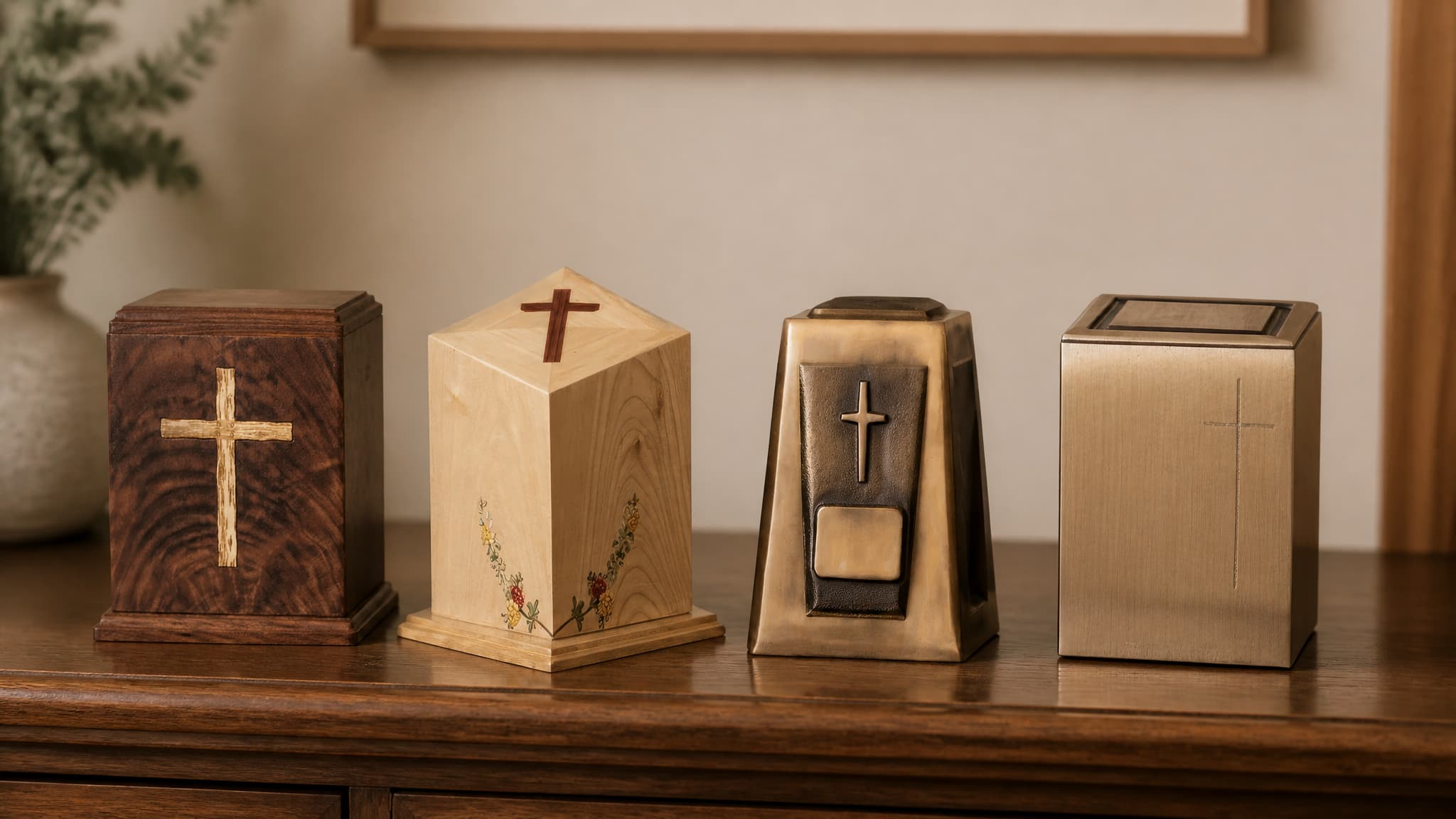
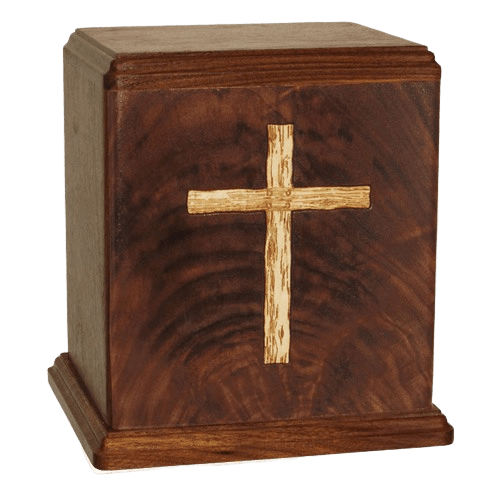
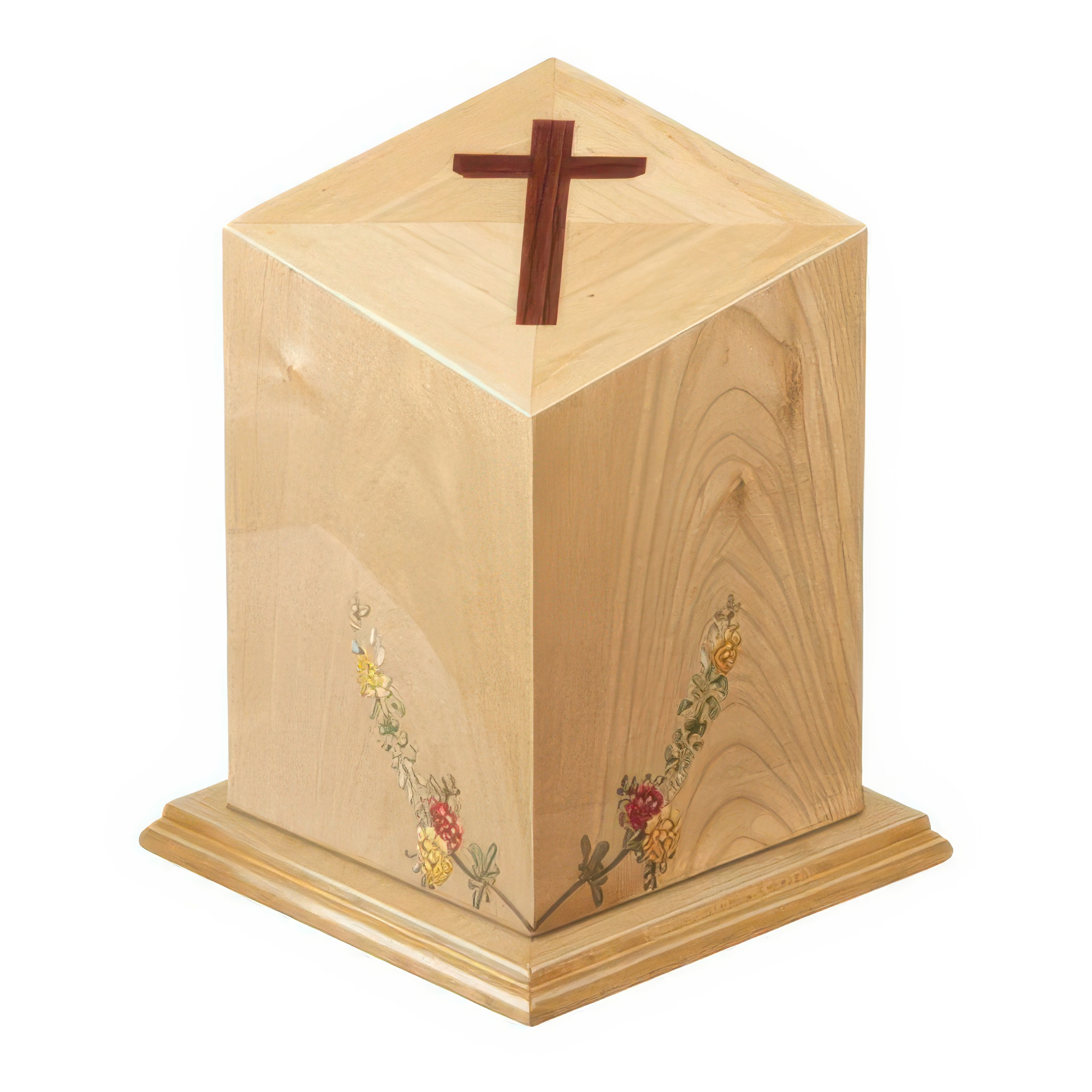
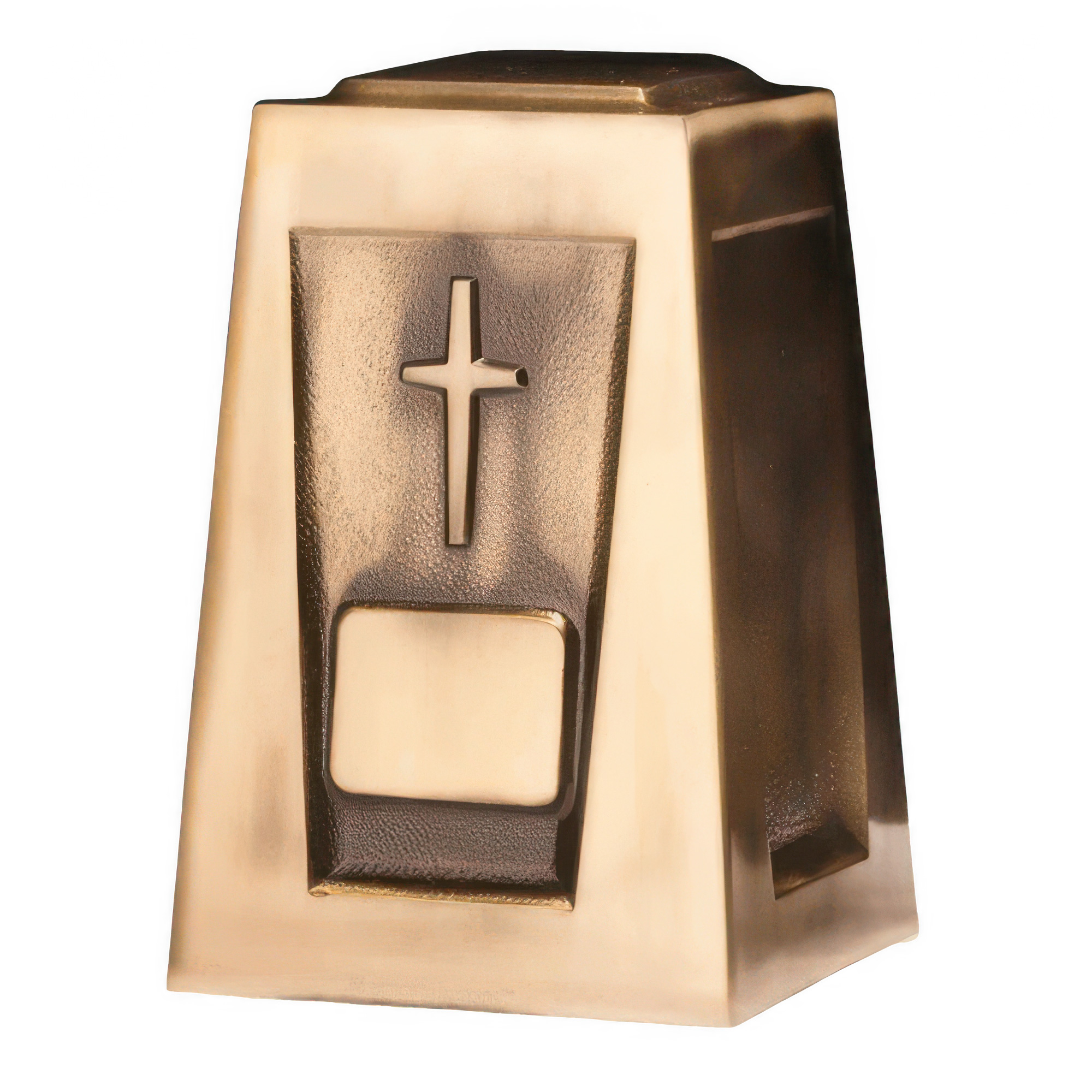
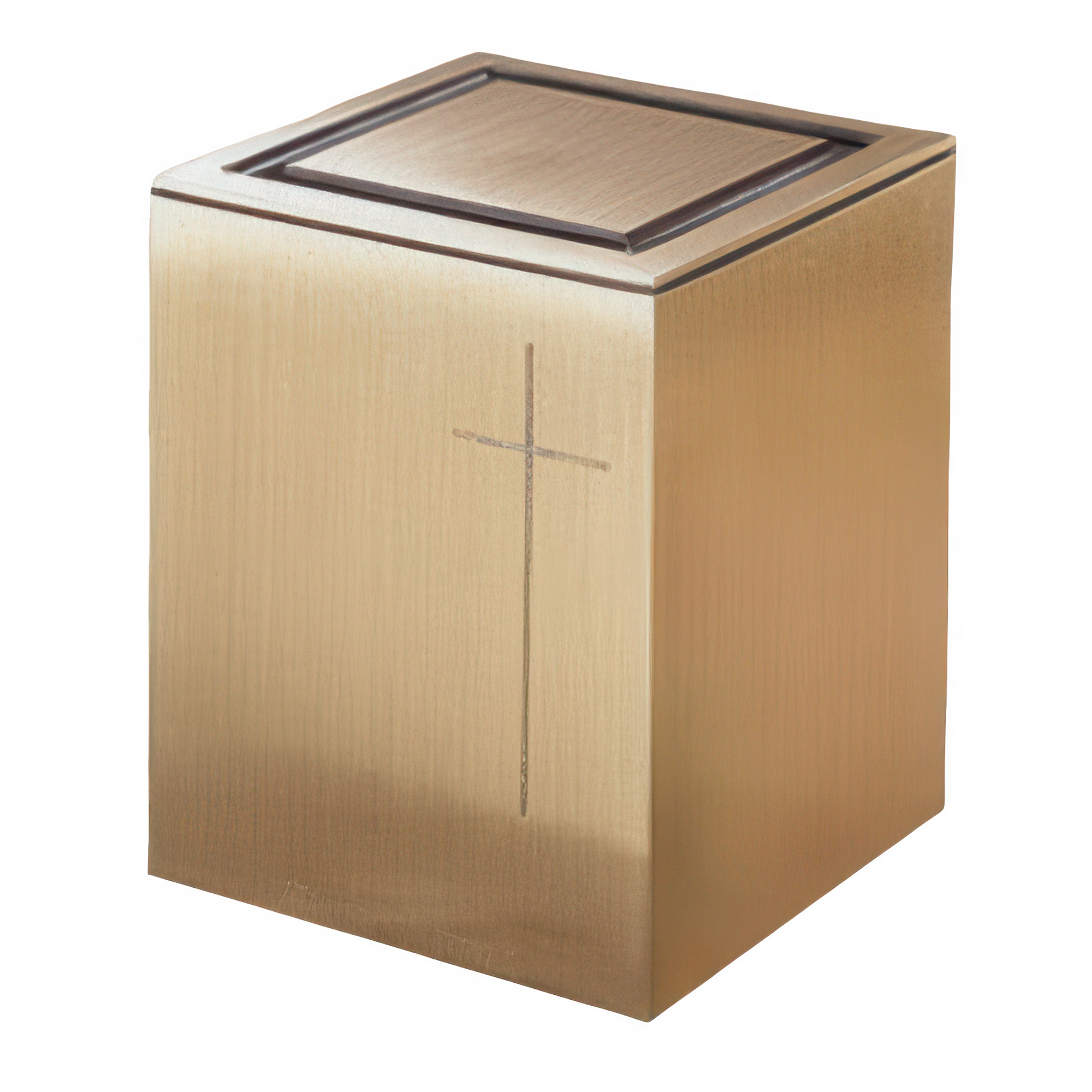
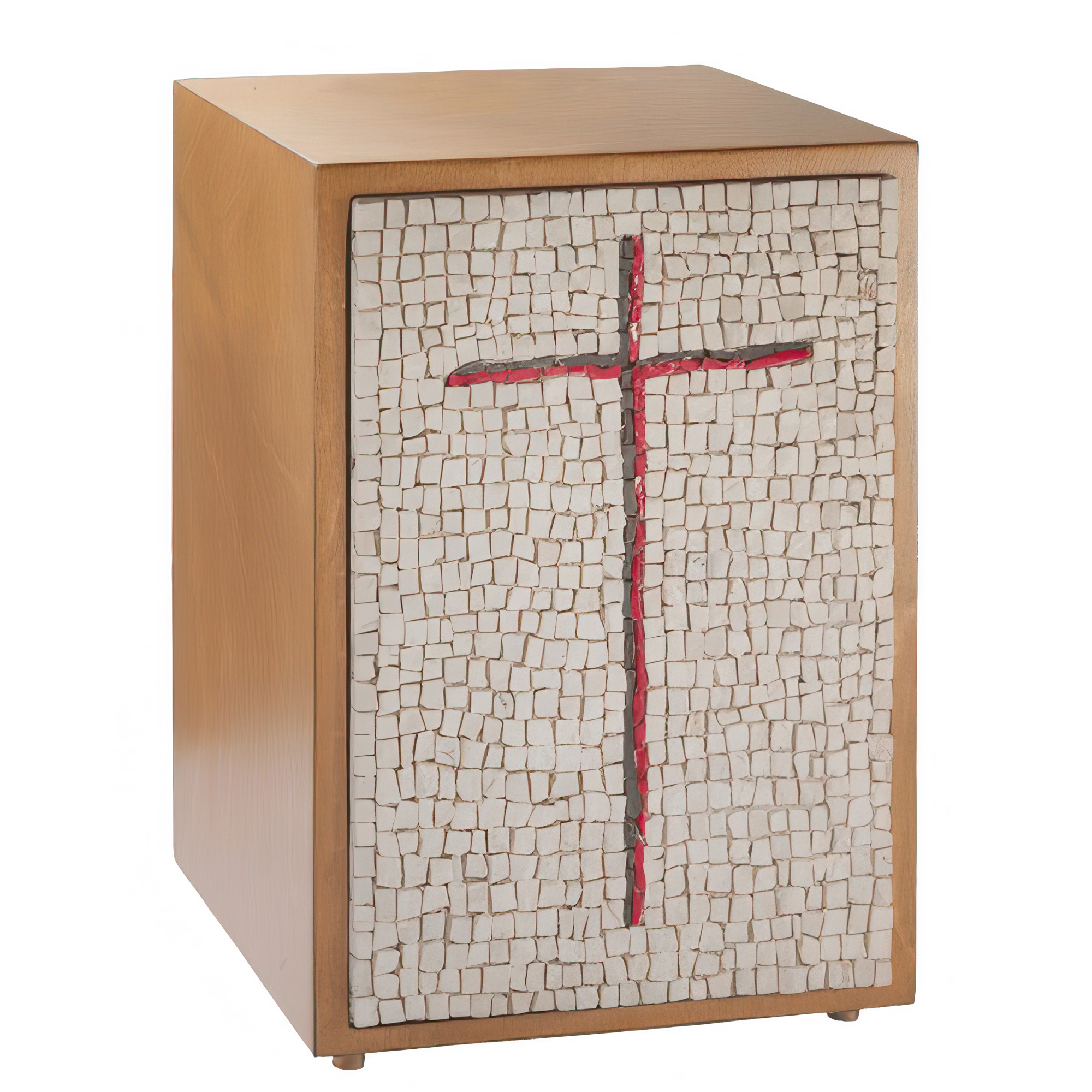
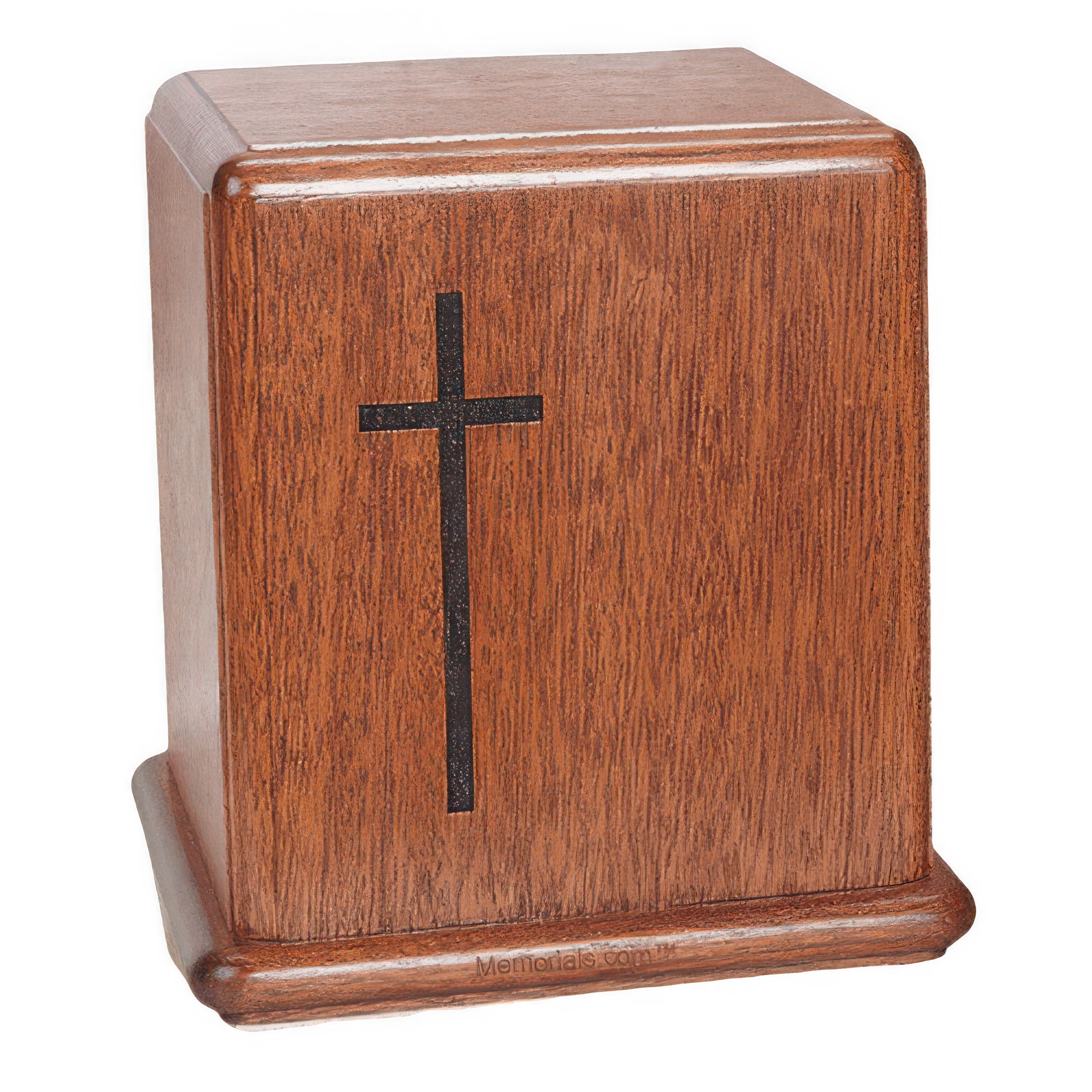
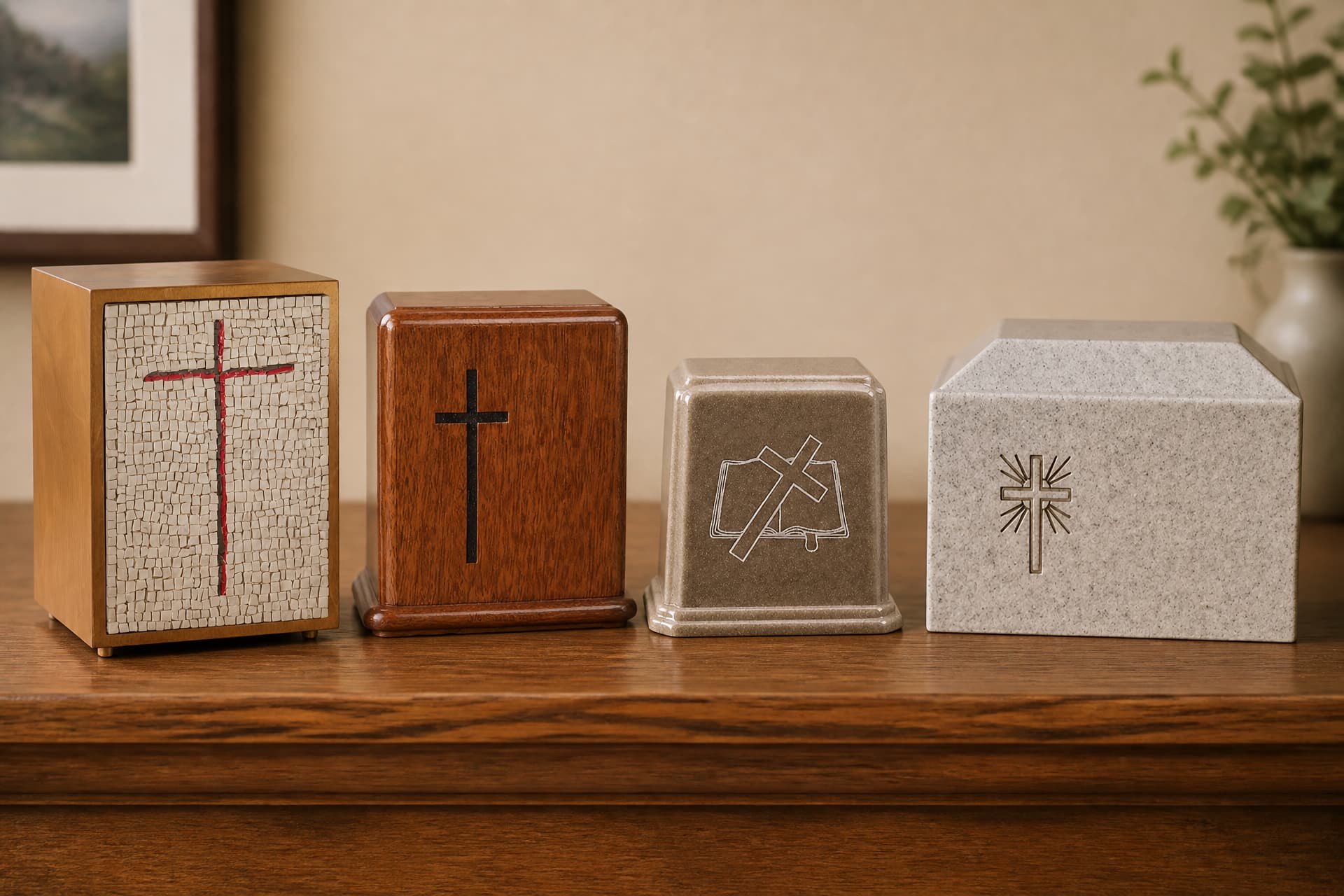
Urns for a Home Altar
Cremation urns with a cross worked into the design, for the table the family prays at
If you have been looking up novenario meaning since the funeral — probably because a relative used the word and assumed you knew it — here it is in one sentence. Novenario is the Spanish word for the nine days, and in Mexican, Central American and many Filipino-American families it names not only the prayers but the whole occasion: the visitors, the food, the altar in the front room, and the gathering on the ninth night that closes it.
That is the distinction that trips up American readers. A parish novena is a set of prayers. A novenario is nine evenings of a house being full. Both are the same nine days, and a family can do either without doing the other. If your grandmother says novenario and your parish bulletin says novena, nobody is correcting anybody.
Filipino families keep the same nine days under a different name again — the pasiyam, from the word for nine, with the ninth-day gathering called the pagpapasiyam. A longer observance called the babang luksa, the "descent from mourning," often follows a year later. The vocabulary changes at every border. The nine days do not.
Why nine days
The traditional answer is the one every parish gives, and it is a good one: the apostles and Mary spent nine days praying together between the Ascension and Pentecost, waiting for the Holy Spirit. That interval became the pattern for every novena that followed. The Church has never made the number a rule. It is something the faithful kept because it worked.
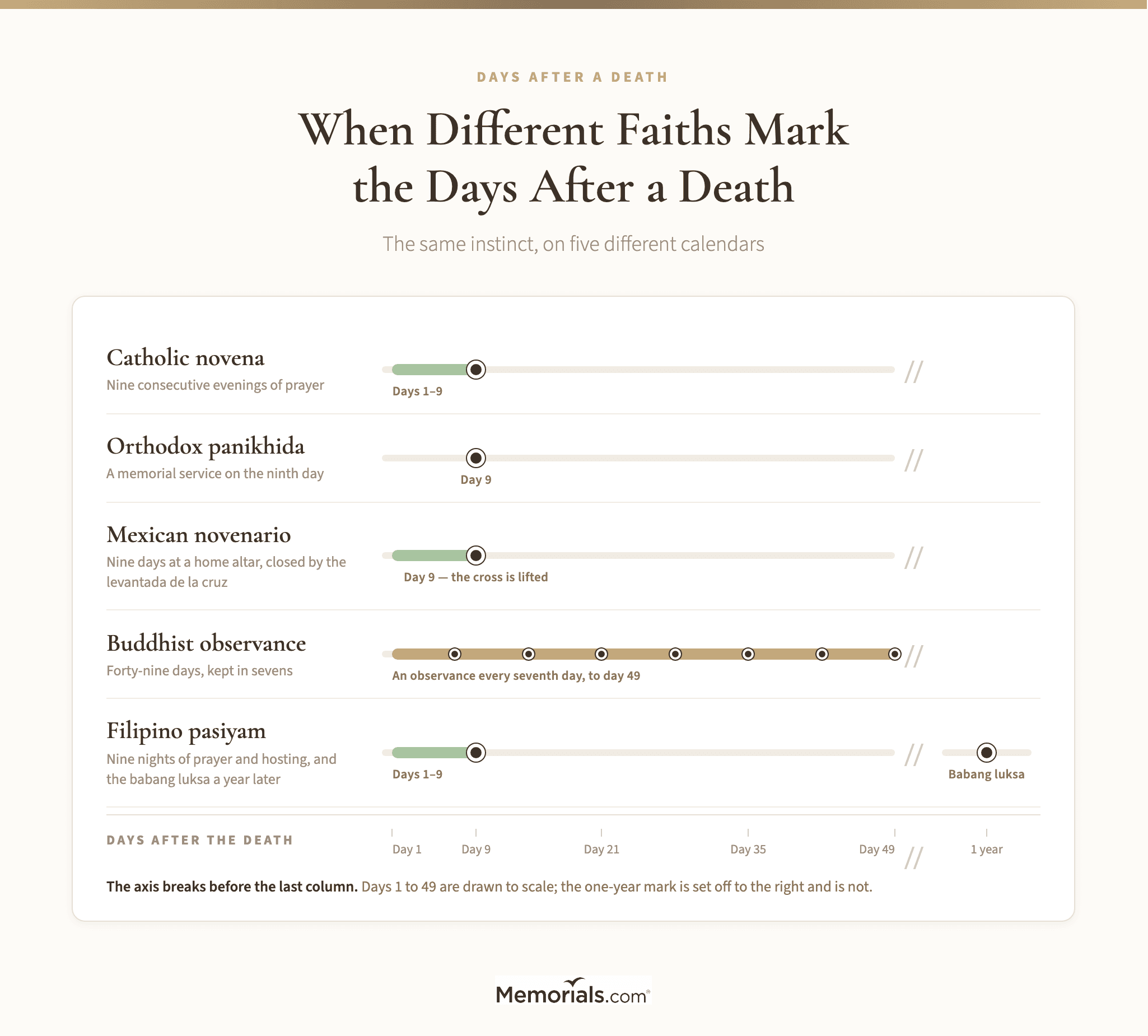
The number is not only Catholic, which is the part nobody tells you. Orthodox Christians hold a memorial service on the ninth day after a death, and the Orthodox panikhida on the ninth day marks the same interval from inside a different church. Buddhist families count further and in sevens: a forty-nine-day period with an observance every seventh day.
Some traditions do not count forward from the death at all. Jewish practice concentrates its care in the hours before the burial, in the ritual washing called tahara, and then measures the mourning that follows in seven days, thirty days and a year. Seen side by side, what the traditions share is not the number. It is the conviction that the first stretch after a death should be structured rather than left empty.
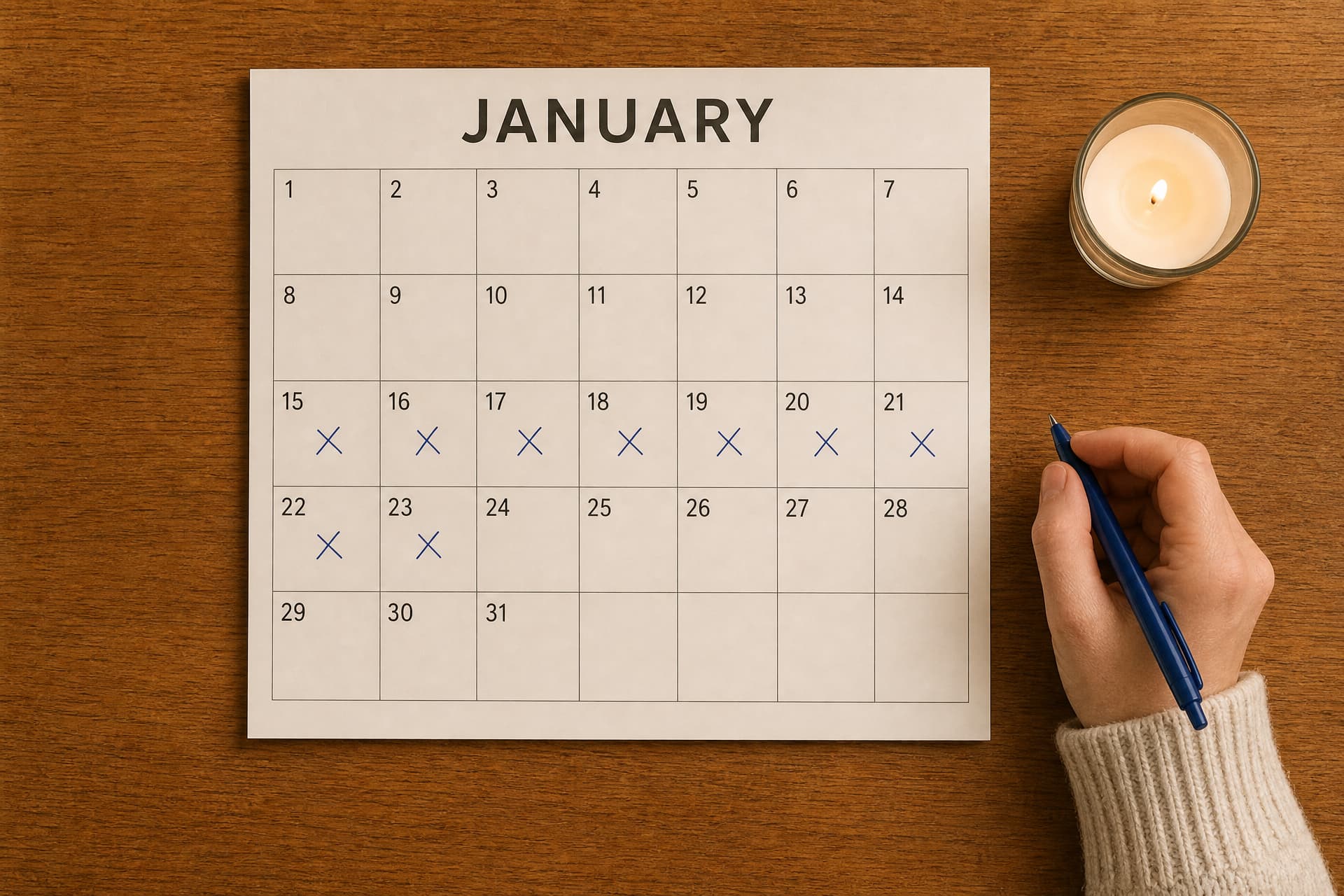
Nine consecutive evenings, marked in advance. Deciding the dates before the first night is the single thing that keeps a novena from quietly stopping on day four.
Five traditions, one instinct. The Catholic novena, the Orthodox ninth-day panikhida and the Mexican levantada de la cruz all land on day nine; Buddhist practice runs to forty-nine days and the Filipino babang luksa closes at a year.
When the nine days begin
This is the question families actually argue about, and every competing answer is legitimate. Three conventions are in common use:
Beginning the evening after the death, so that the nine days carry the family through the wake and the funeral rather than starting after them.
Beginning the day after the burial, which is the usual practice where the funeral is delayed by travel or by waiting on relatives.
Counting backward from a date that matters — a birthday, a wedding anniversary, All Souls' Day on November 2 — so that the ninth night lands on it.
If your family is split, the tiebreaker most parishes offer is entirely practical: choose the version that lets the most people be in the room. A 9 day novena for the dead prayed by six people who could actually come is worth more than a technically correct one prayed by two.
A word on the wake, because the two get tangled. The wake is the vigil before the funeral, not the first night of the novena, even when the same people gather in the same room on the same evening. If this week is one long blur of names for the same few days, the difference between a wake, a funeral and a viewing sorts them out in about two minutes.
And if a week has already passed, or a year, you have not missed the window. A novena can be prayed for someone who died decades ago. Late is a category the practice does not recognize.
What one evening looks like
Half an hour. That is the honest answer to how long a night takes, and it is shorter than most people brace for.
What follows is a shape rather than a script. Nothing here is prescribed, the order can move, and a family that prays three of these five things has prayed a novena.
Begin with the sign of the cross and say the person's name out loud. Naming them is what makes the evening theirs rather than generic.
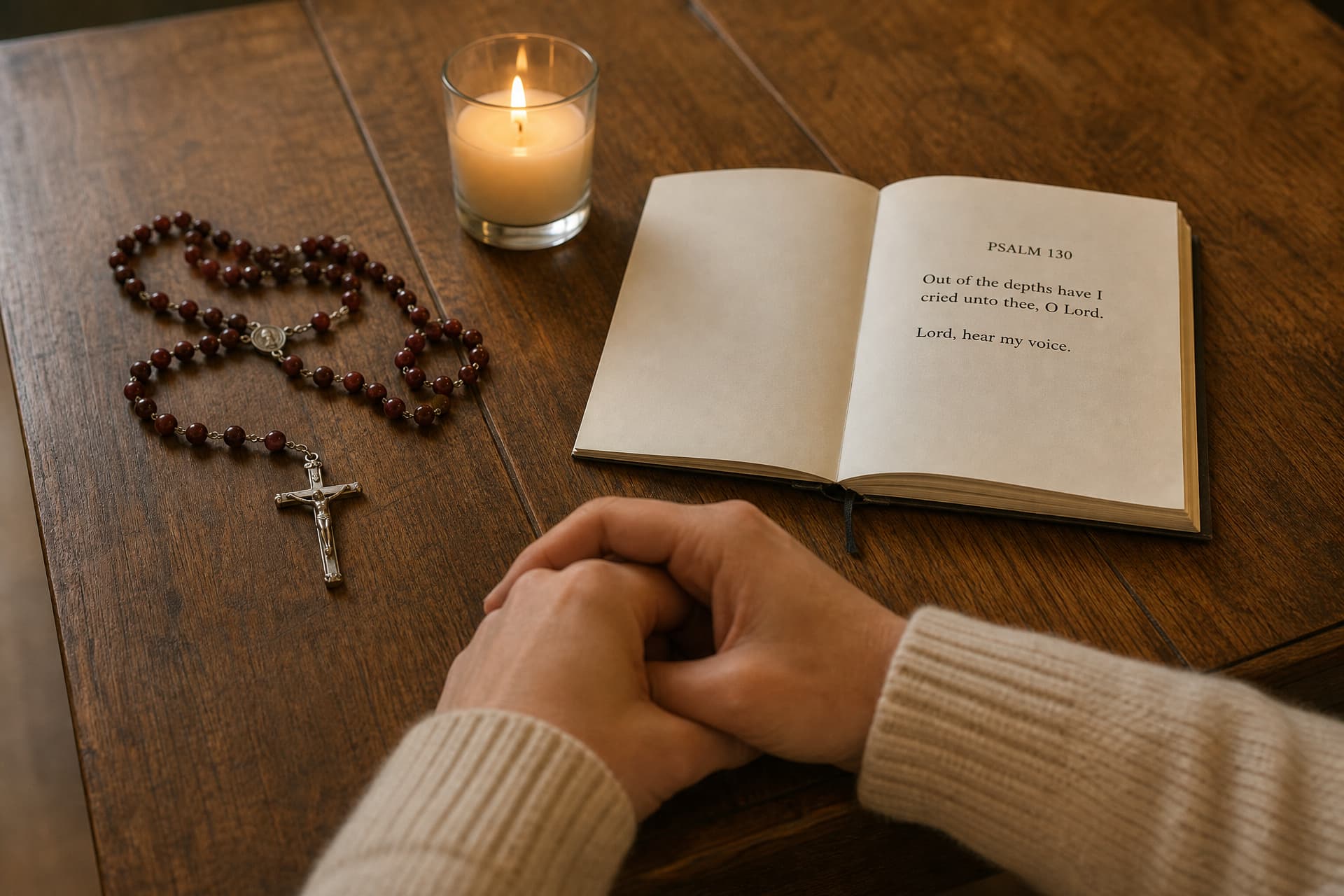
Pray a decade of the rosary, or read a psalm. Psalm 130, the De Profundis, is the traditional choice: "Out of the depths have I cried unto thee, O Lord," in the King James wording.
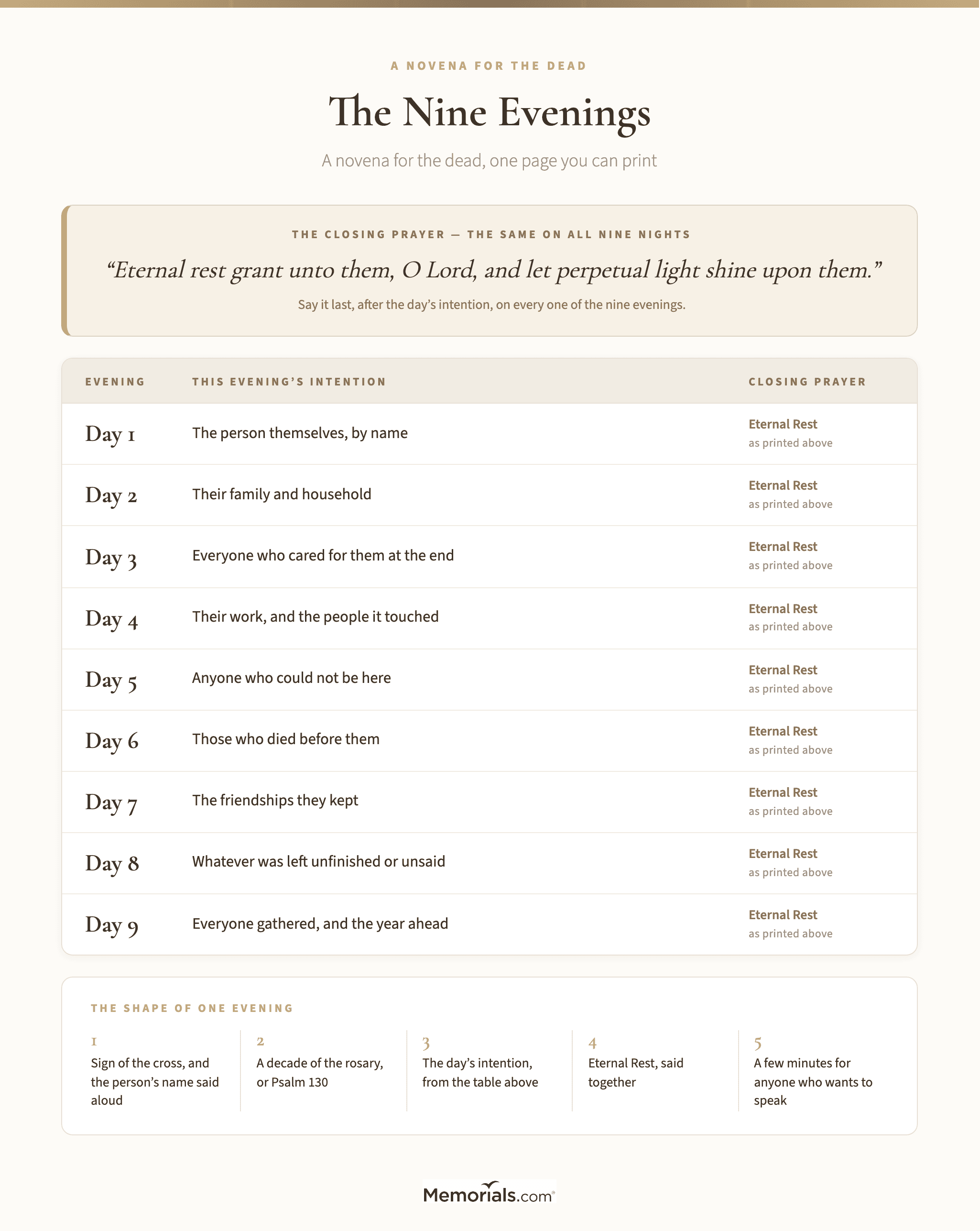
Say the day's intention. Give each of the nine evenings something of its own — the person's family on one night, their work on another, everyone who cared for them at the end, everyone who could not be there. Writing the nine down in advance is the single most useful thing the person leading can do.
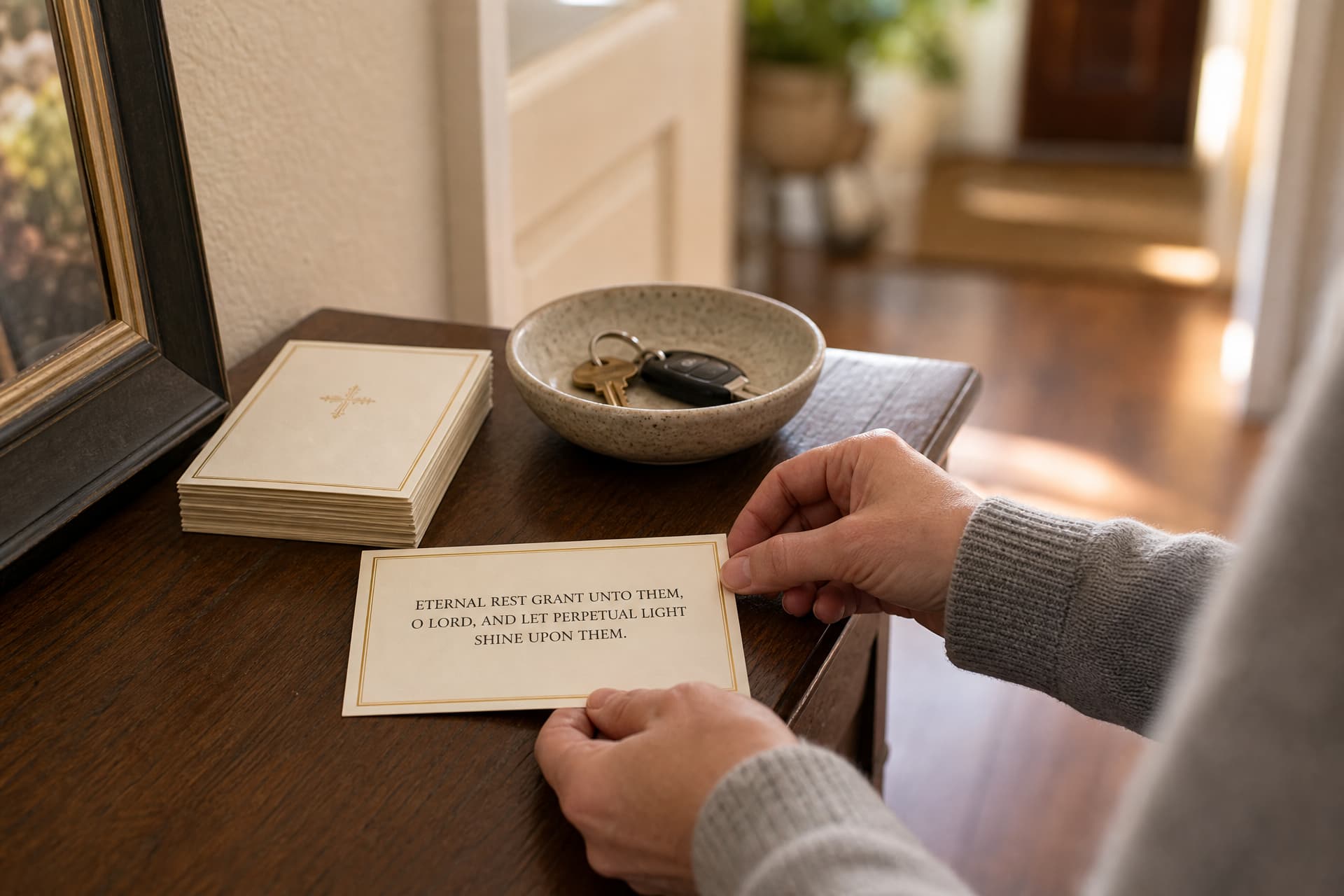
Close with the traditional prayer: "Eternal rest grant unto them, O Lord, and let perpetual light shine upon them."
Leave a few minutes at the end for anyone who wants to say something. Most nights nobody will. On two or three of them, someone will say the thing they have been carrying all week.
A 9 day novena prayer for the dead Catholic families have prayed for generations is not a performance, and the person leading it is not being assessed. If you lose your place, if a child interrupts, if only one person comes on Thursday — none of that damages anything.
Whoever leads usually holds a rosary, and some families give each person something to keep for the nine nights and afterward. A rosary urn necklace holds a small measure of ashes in the crucifix or a bead, so that the person being prayed for is present in the hands of the people praying. Our guide to cross and rosary cremation jewelry walks through how the pieces are filled and sealed, and what to ask before ordering one.
A decade of the rosary and a short reading fill most of an evening. Half an hour is a full night; anything longer is a choice, not a requirement.
The nine evenings on one page, each with its own intention. Print this and put it on the table — it is the sheet to hand people at the door on the first night.
Setting up a place to pray at home
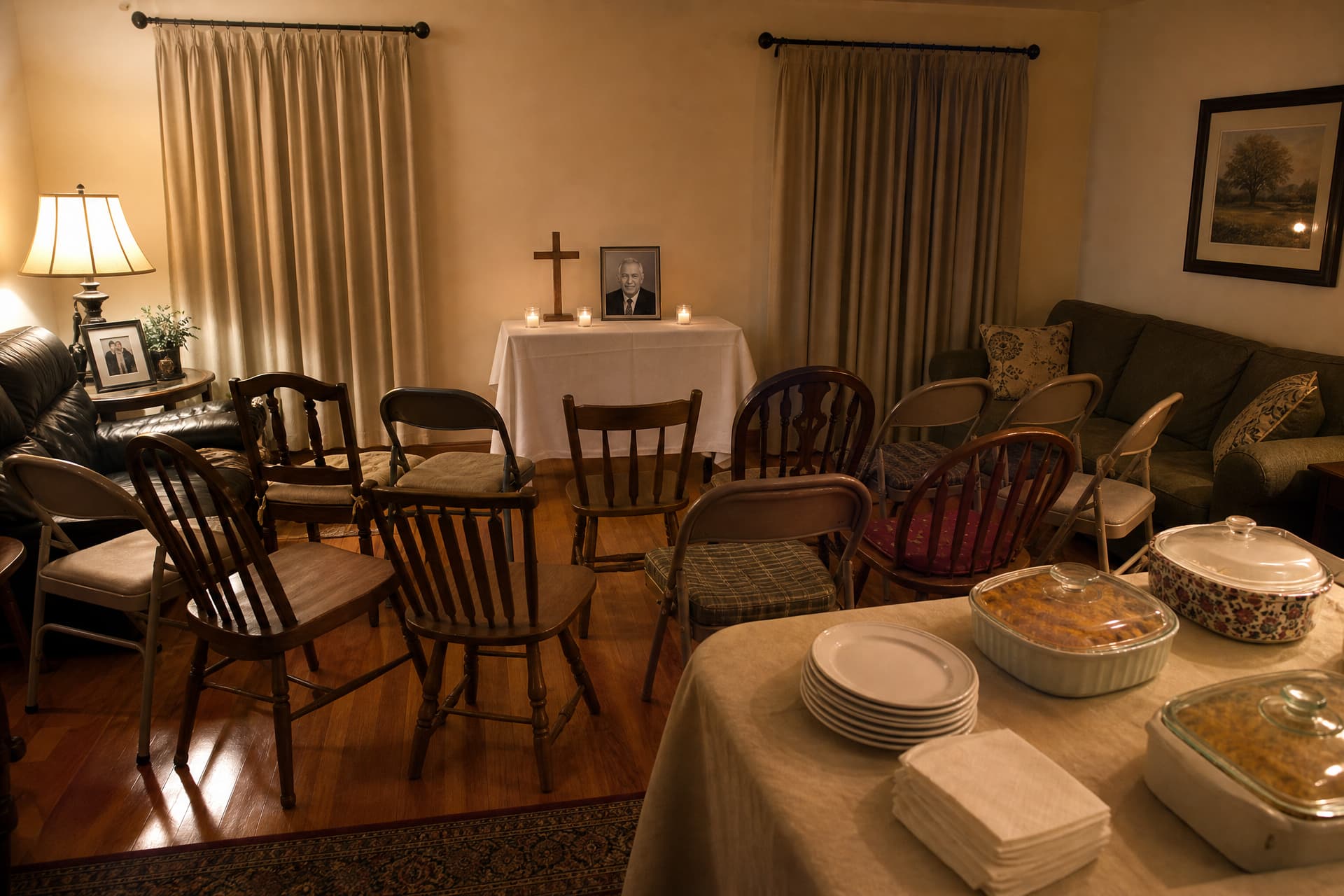
You do not need an altar in the ecclesiastical sense. You need a surface people can face. A side table, the top of a bookcase, one end of the dining table cleared for nine days — any of them works, and the point is only that the family walks into the room and knows where to look.
Four things go on it in most homes: a photograph, a candle, a cross or crucifix, and something that belonged to them. The urn belongs here too if the ashes have come home, and for many families it becomes the natural center of the table. Families who want the table to carry their faith plainly often choose christian urns with a cross worked into the lid or an engraved verse on the face.
If cremation is newer territory for your family than the novena is, the short answer is yes — whether Catholics can be cremated has been settled since 1963, with the Church asking that the ashes be kept whole and in one place rather than divided or scattered. That is worth knowing before the nine days start, because it is the question a relative will ask on night one.
Light a candle each evening and put it out at the end. Nine lightings is a small ritual that does an unreasonable amount of work: it starts the evening without anyone having to announce that it is starting. Memorial candles covers the practical side, including how long a votive actually burns and what to do about the candle on the ninth night.
The household shrine is not a Catholic invention, incidentally. A Japanese Buddhist family keeps a butsudan in the same corner of the same kind of room, with a photograph, an offering and a light, for recognizably the same reason.
The nine days look different depending on whose living room they happen in, and the differences are worth knowing if you are marrying into a tradition or leading one for a side of the family that is not your own.
In Filipino families, the pasiyam is nine nights of prayer that are also nine nights of hosting. People come after work, the rosary is led by whoever has the strongest voice, and food follows every single night — not a gesture toward hospitality but a full table. The ninth night is the largest. A year later the babang luksa marks the formal end of mourning.
In Mexican and Central American families, the novenario centers on an altar built for the nine days, with the velación — the keeping of a light — running through them. Candles are the constant, as they are through so much of the Mexican year; the candles lit for Día de los Muertos belong to the same visual language. On the ninth day comes the levantada de la cruz: a cross of lime, sand or flower petals laid at the foot of the altar through the novenario is lifted, carried to the grave, and the nine days are formally closed.
Neither version is more correct. If your family has both, pick the one the oldest person in the room expects, and let everyone else follow it.
In Filipino and Mexican households the nine nights are as much hosting as praying. Expect to borrow chairs, expect people to stay, and expect the ninth night to be the biggest.
Inviting others, including family who don't pray
The hardest part of leading a novena is usually not the praying. It is the text message.
Say what it is, say how long it takes, and say plainly that nobody has to say anything. "We're praying for Dad at 7 each night this week, about half an hour, at Mom's. Come to whichever nights you can." That is a complete invitation. It contains no obligation, so nobody has to invent an excuse.
For relatives who are not Catholic, or not religious at all, the useful framing is that they are being invited to be in the room, not to profess anything. Sitting quietly through a decade of the rosary asks nothing of anyone's beliefs. Plenty of people come for the person who died and for the person leading it, and that is a real reason to be there.
Many families print something to hand out on the first night. Funeral prayer cards with the photograph on one side and the Eternal Rest prayer on the other let someone who has never prayed a novena follow along without asking, and people keep them in wallets and glove compartments for years afterward. Print the nine-day schedule above alongside them and the two together answer every question a guest would have hesitated to ask.
For anyone who cannot come at all and wants to send something instead, our guide to sympathy card messages has wording for the note that is harder to write than it should be.
A card by the door does the explaining for you. The photograph on one side and the Eternal Rest prayer on the other is enough for a guest who has never prayed a novena.
The ninth night
The ninth evening is different, and most families discover that without being told.
More people come. The prayers are usually the same, but a Mass is often offered for the person that day or that week, and where there is an altar it comes down afterward rather than being left standing. In Mexican households that is the levantada de la cruz. In Filipino households it is the largest table of the nine. In a great many American parishes it is simply the night everyone stays for coffee.
Something else tends to happen on the ninth night, and it is the reason the practice has lasted. For nine evenings the family has had somewhere to be at seven o'clock. On the tenth, they do not. The novena does not prevent that drop, but it does place it nine days out from the funeral rather than the morning after it, when the casseroles stop arriving and the house goes quiet. Many families mark the month's mind a month later for exactly that reason.
Frequently Asked Questions
When does the 9-day novena for the dead start?
There is no single rule, and three answers are all in ordinary use: the evening after the death, the day after the burial, or counted backward so that the ninth night falls on a date that matters to the family. Where relatives disagree, choose whichever version lets the most people attend. Starting late, or starting years later, is permitted.
What is a novenario?
Novenario is the Spanish word for the nine days of prayer after a death, and in Mexican, Central American and Filipino-American families it usually names the whole occasion rather than only the prayers — the altar, the visitors, the food and the ninth-night gathering that ends it. A parish novena is a set of prayers; a novenario is nine evenings of a house being full.
How do you pray a novena for the dead?
Gather at the same time each evening for nine days. Begin with the sign of the cross and the person's name, pray a decade of the rosary or read a psalm, say an intention chosen for that day, and close with "Eternal rest grant unto them, O Lord." Leave a moment for anyone who wants to speak. Half an hour is a full evening.
Is the novena for the dead the same as the rosary?
Not quite. A rosary novena is one common form of it — the same decades prayed on nine consecutive days — but a novena can just as well be built around a psalm, a short scripture reading or intentions said aloud. The nine days and the single intention are what make it a novena, not the beads.
What is the Filipino novena for the dead?
The Filipino observance is called the pasiyam, from the word for nine. It runs as nine nights of prayer and hosting, with the ninth night the largest, and the ninth-day gathering is the pagpapasiyam. A further observance, the babang luksa, is often kept a year after the death to mark the formal end of mourning.
You will not get this wrong
If you take one thing from this page, take this: there is no version of nine evenings spent praying for someone you loved that counts as a failure. The families who worry hardest about doing it correctly are, without exception, the ones already doing it correctly.
Print the nine-evening schedule above, write the nine intentions in whatever handwriting you have, and put both on the table before the first night. That is the whole of the preparation. Everything else is showing up at seven o'clock for nine days, which is the part that was always going to be the work.
When the nine days are over and the table comes down, some families want something that stays — a candle kept for anniversaries, a keepsake one of the grandchildren can hold. There is no hurry on that decision, and the ninth night is not the evening to make it.