🏬Supersize Online Funeral Retailer🪦1000's of Headstones⚱️Over 10,000 Cremation Urns⚰️Caskets Overnight Delivery🛒Funeral & Memorial Superstore🚚FREE Shipping on ALL Orders👨👩👧👦Helping Families for over 20 Years💰Lowest Price Guarantee🏬Supersize Online Funeral Retailer🪦1000's of Headstones⚱️Over 10,000 Cremation Urns⚰️Caskets Overnight Delivery🛒Funeral & Memorial Superstore🚚FREE Shipping on ALL Orders👨👩👧👦Helping Families for over 20 Years💰Lowest Price Guarantee
🏬Supersize Online Funeral Retailer🪦1000's of Headstones⚱️Over 10,000 Cremation Urns⚰️Caskets Overnight Delivery🛒Funeral & Memorial Superstore🚚FREE Shipping on ALL Orders👨👩👧👦Helping Families for over 20 Years💰Lowest Price Guarantee🏬Supersize Online Funeral Retailer🪦1000's of Headstones⚱️Over 10,000 Cremation Urns⚰️Caskets Overnight Delivery🛒Funeral & Memorial Superstore🚚FREE Shipping on ALL Orders👨👩👧👦Helping Families for over 20 Years💰Lowest Price Guarantee
Ask why are funerals so expensive and you will usually get an answer about greed. That answer is satisfying and it is mostly wrong. In September 2026 we collected and read 461 General Price Lists published by funeral homes in 49 states, and what those documents show is not an industry of villains. It is a market built in a way that almost guarantees a high bill: a fee you are not allowed to refuse, a purchase made once in a room with no comparison, a second business that bills separately, packages that hide which parts are optional, and a customer who is grieving and out of time. Each of those is a structure, not a decision. Together they produce the number on the invoice.
This article explains the structure. The prices themselves, and the tables behind them, live in our main guide to what a funeral costs.
Start with the one charge that appears on every price list in the country and that no family can decline.
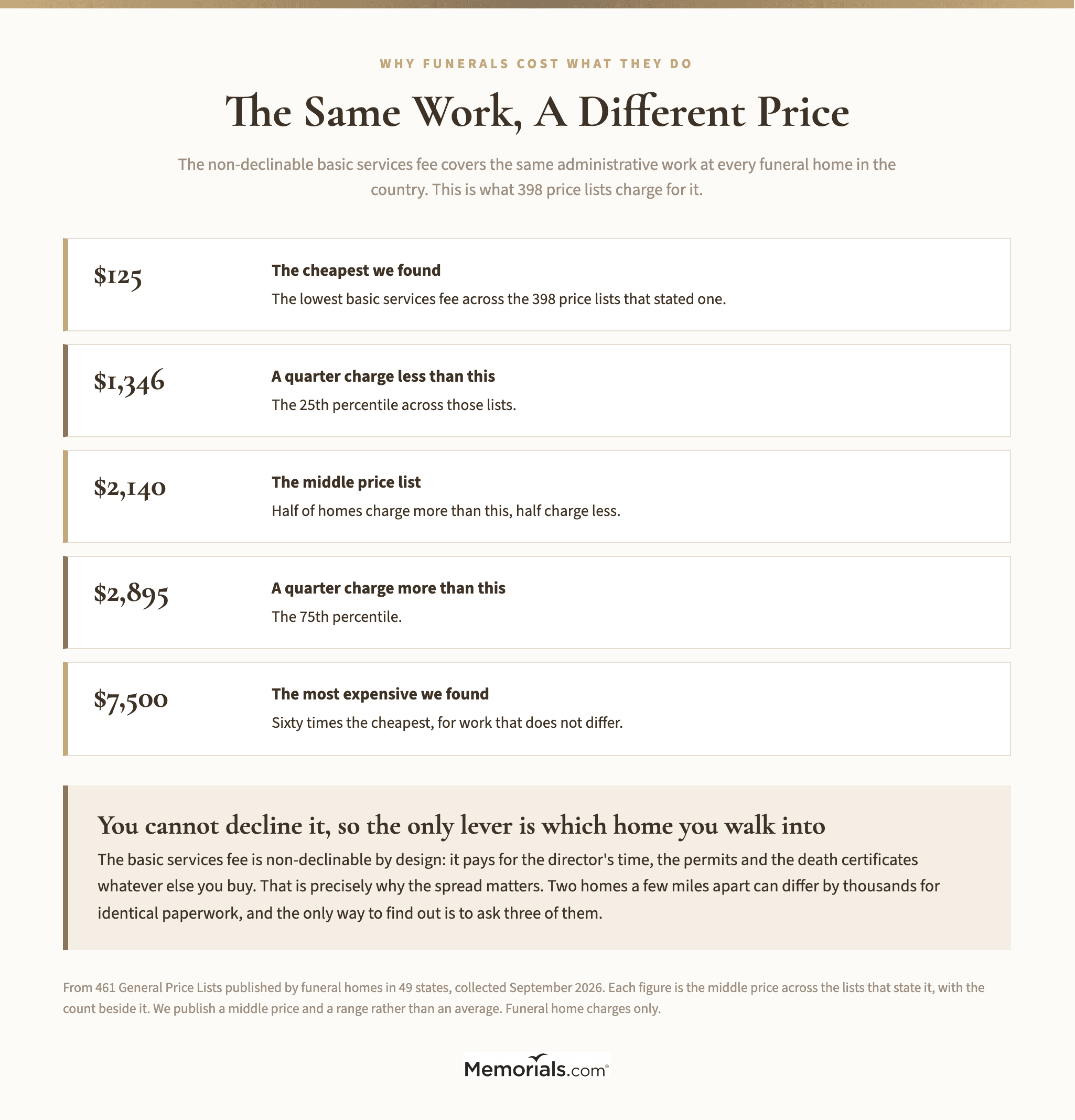
The basic services fee covers the funeral director's time, the permits, the death certificates, the coordination with a cemetery or crematory, and a share of the building's overhead. It is described on price lists as non-declinable, which is exactly what it sounds like. Whatever else you say no to, you pay this.
Across the 398 price lists that stated it, the middle basic services fee was $2,140, with half of homes between $1,346 and $2,895. That is not the interesting part. The interesting part is the full range, which ran from $125 to $7,500.
Sit with that for a second. Two funeral homes, doing the same legally defined work, filing the same permits and ordering the same certificates, and one list says $125 while another says $7,500. Nothing about the service explains a spread that wide. What explains it is that nobody compares. The fee is presented as a fixed cost of doing business, families read the word non-declinable and assume it is set by regulation, and the number is never tested against the home three miles away.
That is the first structural answer to why do funerals cost so much. The single largest fixed charge on the bill sits in a market where almost no price comparison happens, and prices in markets with no comparison do not converge. They scatter. Our reading found exactly that scatter.
Now the casket, which is the other half of most bills.
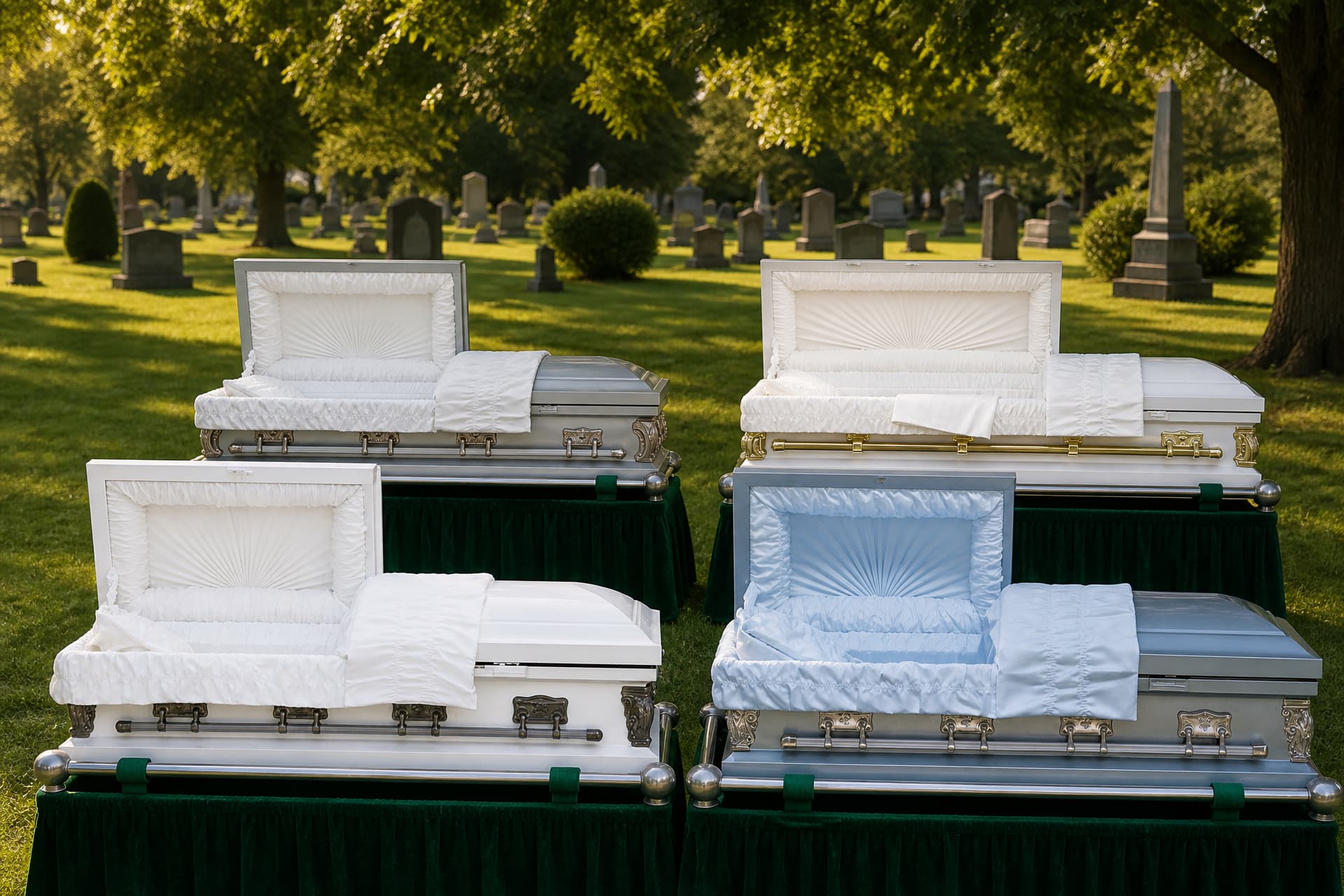
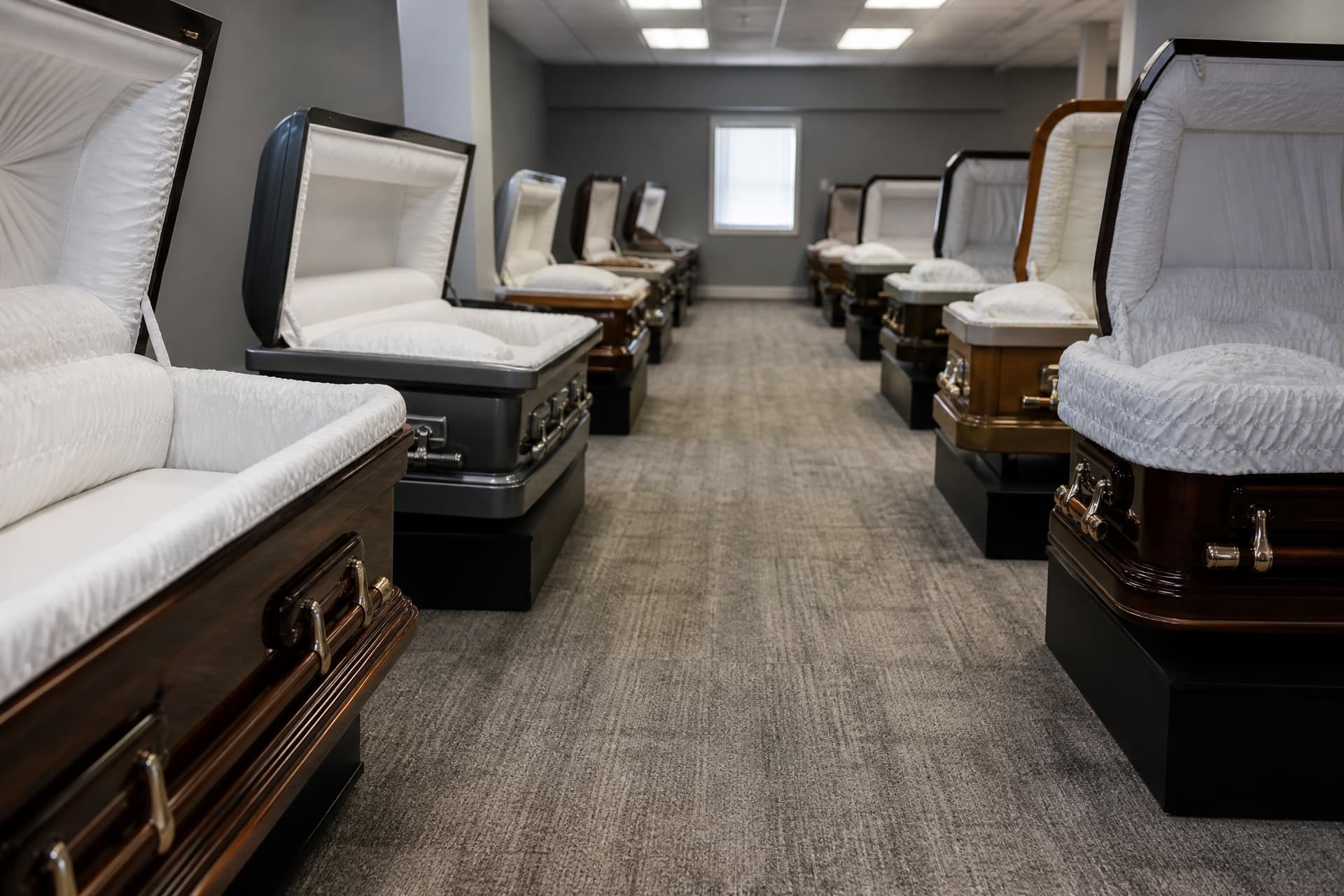
Think about how every other significant purchase in your life works. You look at several. You go away. You read about them. You check a price somewhere else, sleep on it, and come back. Most people buy a casket having done none of those things, in a display room, a day or two after a death, in front of a director who is being kind to them.
Every condition that normally produces a good price is absent. There is no shopping around because there is no time and no second showroom nearby. There is no negotiating because negotiating feels obscene when the subject is your mother. There is no waiting for a sale. And there is a powerful, entirely human instinct that the cheapest one in the room would say something about how much you loved the person, which is the most expensive feeling in the building.
This is what makes a funeral expensive more reliably than any single line item: not the price of the box, but the conditions under which the box is chosen. A captive display, a grieving buyer, a one-time purchase, and no reference price.
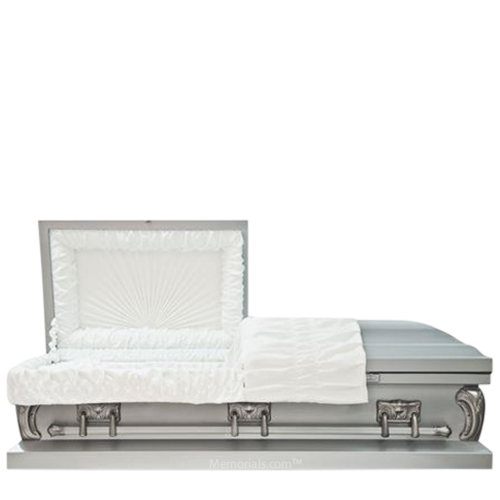
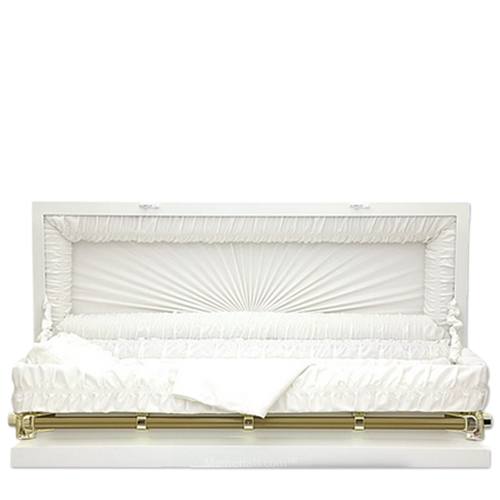
The reference price is the part you can fix. Across our own caskets range we currently list 63 adult caskets from $284 to $13,200, with a middle price of $1,880. You do not have to buy from us to use that. Knowing roughly what a class of casket costs outside a funeral home's display room turns an unanchored decision into a comparison, which is all a price ever needs to become negotiable. The materials, the construction and the reason the numbers run where they do are covered in our guide to why caskets are expensive.
One right is worth knowing before you walk into that room. Under the Federal Trade Commission's Funeral Rule, in force since 1984, a funeral home must accept a casket or urn you bought somewhere else, must use it, and cannot charge you a handling fee for doing so. It cannot refuse and it cannot add a surcharge. Families use this right far less than they could, mostly because they do not know it exists at the moment it would help.
A room that sits empty between services is a real cost, and it is one of the honest answers to this question. The basic services fee is where it is recovered.
Two in Three Quoted Prices Are Missing the Casket
Here is where the confusion becomes measurable.
Of the full-service burial packages we read where the price list said one way or the other, two out of three did not include the casket. The quoted package covered the director, the staff, the facilities, the hearse and the ceremony. The casket was priced from a separate list, and it is usually the single most expensive item on the final bill.
Among those price lists, packages that included a casket had a middle price of $6,543 across 48 lists, and packages that priced the casket separately had a middle price of $5,115 across 98. Resist the arithmetic. Those are two different groups of funeral homes, not the same homes quoted twice, so the gap between them is not the price of a casket and subtracting one from the other tells you nothing.
What the two rows do tell you is more useful. The cheaper-looking quote is frequently the one missing the costliest thing you are about to buy. A family comparing two homes on the headline number, without asking which of the two things each home is quoting, is not comparing anything at all.
So part of the answer to why funerals feel more expensive than expected is that the expectation was set by a number that was never the whole bill. The shock is not always overcharging. Often it is the arrival of a cost that was always coming and was never quoted.
The Cemetery Is a Second Business
Every figure above is the funeral home's. If anything is being buried, a body or an urn, there is a separate company with a separate bill still to come, and it is the one families forget.
Of the 774 burial packages we read, only 44 included the outer burial container. One price list stated the position plainly:
"This package does not include outer burial container (vault), grave space or open close fees." — one of the price lists we read, stating it plainly.
That single sentence describes most of the burial market. The grave, the opening and closing of it, and usually the required vault are bought from the cemetery, which sets its own prices, publishes them on its own schedule, and has no obligation to coordinate with the funeral director who quoted you a package an hour earlier.
Geography drives cemetery pricing harder than anything else on this page, which is why we treat it as its own subject in our guide to cemetery plot cost. The container itself is a requirement most families have never heard of until it appears, and our explainer on what a burial vault is covers why cemeteries ask for one.
The structural point is simple. A single service is sold by two or three businesses that do not quote each other's prices. No one at any point in the process hands you the total. You assemble it yourself, usually after you have already agreed to the largest piece of it.
This is where the largest single decision gets made, usually within a day of the death, with no other prices in the room to compare against.
Packages Blur What You Can Refuse
Read enough price lists and a pattern emerges that nothing in the law forbids and everything about it works against a careful buyer.
A package fuses the non-declinable charge to a set of declinable ones. The basic services fee has to be paid. Embalming usually does not, at a middle price of $750 across 369 price lists. A viewing does not, at $300 across 372. The ceremony at the funeral home does not, at $590 across 358. The hearse does not, at $380 across 371. Those are separate decisions, every one of them yours, and a package presents them as a single product with a single price.
Those six figures, by the way, do not add up to a funeral. Each is a separate middle price over a different subset of homes, and totaling them would produce a number that describes no actual bill. A funeral cost breakdown is not a sum to be checked against a package price. It is a list of decisions, and we report the figures individually for the same reason a funeral home is required to: itemized is the only form in which a price can be examined at all.
Some lists take the blur further. We read price lists running to twenty or more packages that were the same funeral with a different casket in each, which makes a merchandise menu look like a menu of services. Others name a package after one item inside it, so a line reading "Hearse" carries a five-figure price because it is not a hearse at all. None of this is illegal. All of it makes the cheapest adequate option harder to find than it should be.
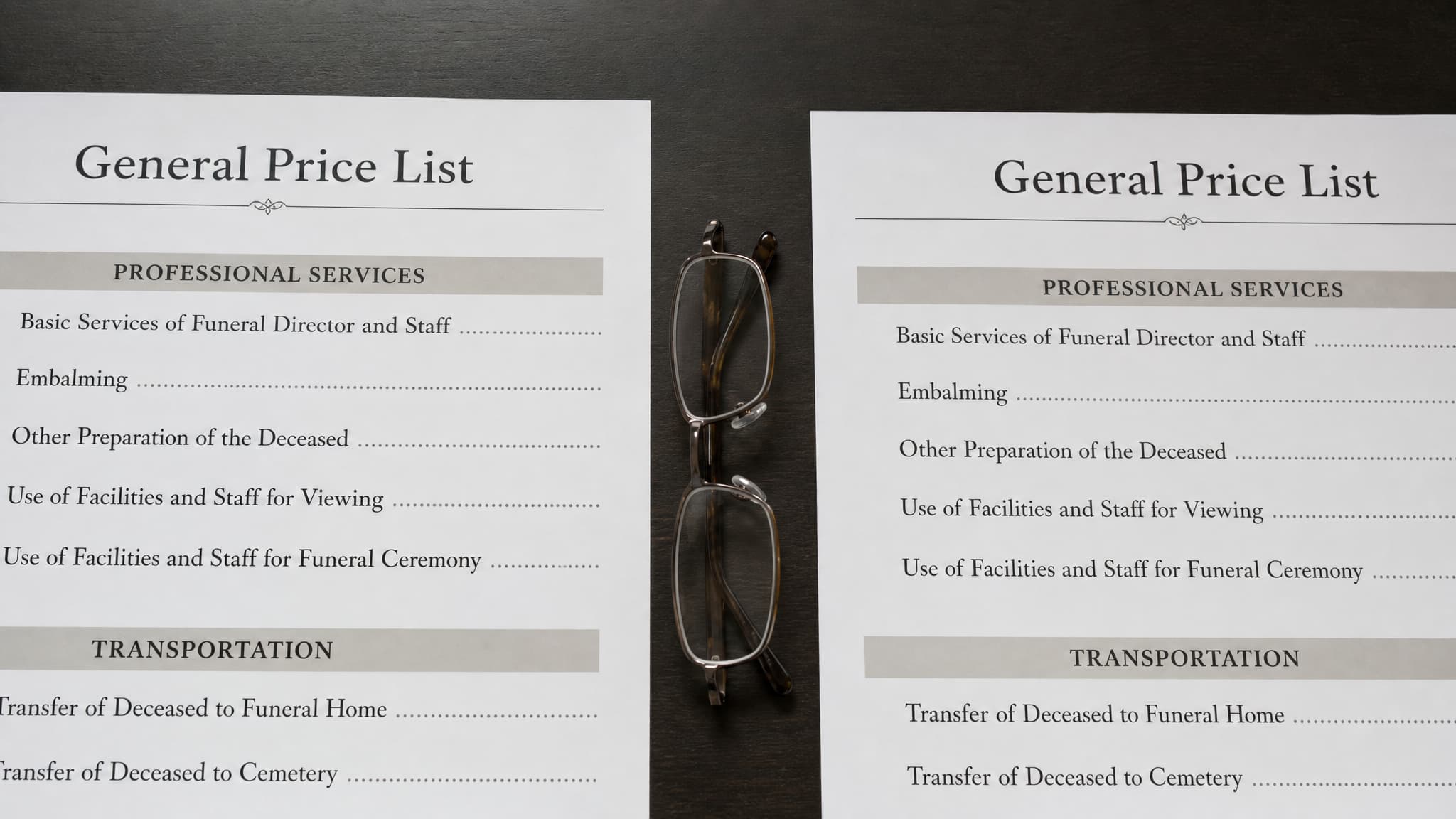
The counter to it is a document you are entitled to before any of this begins. Our guide to the General Price List every funeral home must show you walks through the itemized list section by section, including which columns tell you what you can decline.
The Customer Who Cannot Shop
Now the part that no regulation can fix.
A family arranging a funeral is buying under conditions that would be considered coercive in any other market, except that nobody arranged them. The decision window is a few days at most. The buyer is exhausted and probably has not slept. The purchase happens in the presence of a professional who has done it ten thousand times, against a buyer who has done it once or twice in a lifetime. There is no rehearsal, no returns, no second attempt. And the product is symbolic, which means that any attempt to economize carries a private accusation about the depth of your feeling.
Those are the least price-sensitive conditions any industry ever encounters. If you designed a market to produce high prices without anyone behaving badly, you would design this one.
It also explains why the cost-cutting advice that circulates so freely is so hard to follow. Everyone knows in principle that you should compare three price lists. Almost nobody does it in the days right after a death. The practical version of that advice is to do it before there is a death, and our guide to direct cremation is where most families start when they want to understand the floor of the market rather than its middle.
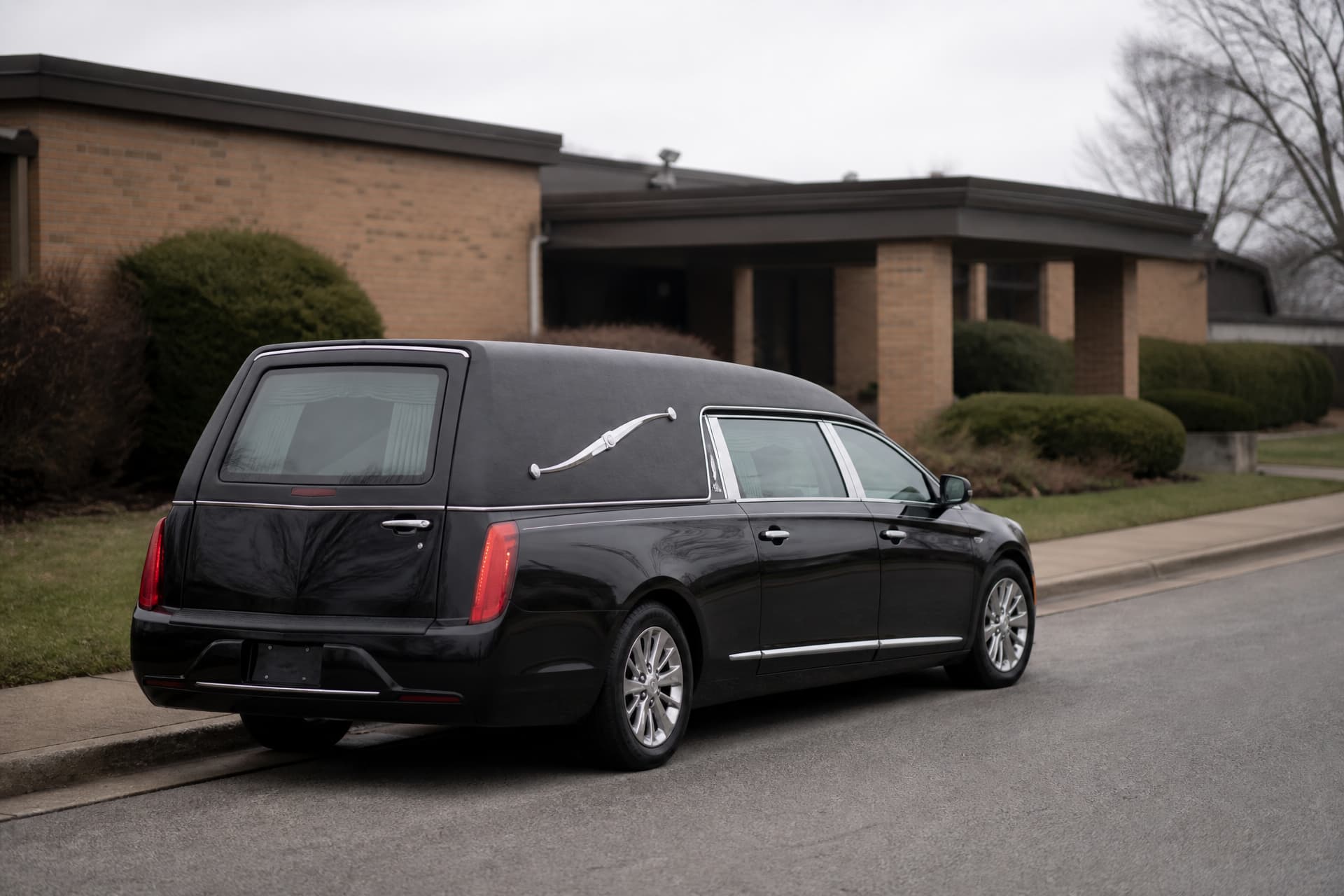
The hearse had a middle price of $380 across 371 price lists. It is one of the smaller charges on the bill, and one of the most visible, which is not the same thing.
Being Fair to the Funeral Home
There is a version of this article that ends with the industry as the villain, and the price lists do not support it.
A funeral home answers the phone at three in the morning, every night, forever. Someone has to be awake, licensed and able to drive to a hospital or a house within the hour. That is a staffed capability, not a service, and it costs the same whether anyone dies that week or not.
The building is a similar problem. A funeral home maintains a chapel, a viewing room, a preparation room with the ventilation and equipment that licensing requires, and parking for a crowd, and those rooms are empty most of the time. A restaurant with that occupancy rate would close. Preparation of a body is licensed work carried out by trained staff under state regulation, which is why we explain it rather than treat it as a markup.
Volume is the quiet factor underneath all of this. Many homes handle a small number of services in a year. Every fixed cost, the staff, the vehicles, the building, the license, divides across that small number, which is a large part of why a funeral home in a thin market charges more than one in a dense city and why the basic services fee scatters as widely as it does.
None of that justifies the top of that range sitting where it does while another list a few miles away prices the same filing near the bottom. It does explain why the floor is not near zero, and why a funeral cannot be made cheap simply by asking harder.
What Actually Moves the Number
The structural reading suggests where the leverage really is, and it is not where most advice puts it.
Compare the non-declinable fee before anything else. It ranged from $125 to $7,500 across 398 price lists, which is a wider spread than any other choice you will make. Two phone calls can beat every other saving on this list combined. The Funeral Rule requires homes to quote prices by telephone.
Set a reference price for the casket before you see one. The captive room is only captive if you arrive without a number in your head.
Ask what the quote excludes, not what it includes. Two in three full-service burial packages we read excluded the casket. The question that matters is which list the casket is coming from.
Call the cemetery the same day you call the funeral home. The second bill exists whatever the first one says, and 44 of 774 burial packages covered the container.
Separate the ceremony from the disposition. The gap between a direct cremation at a middle price of $1,695 across 334 price lists and a full-service cremation at $5,150 across 190 is not the cremation. It is the event, and an event can be held anywhere.
Find out what is already paid for. Veterans may be entitled to a grave, a marker and a burial allowance, which removes the cemetery bill described above. Our guide to VA burial benefits covers eligibility, and the Social Security Administration pays a small lump-sum death benefit to a surviving spouse or child.
The Honest Answer
Funerals are expensive because a service with real fixed costs is sold under conditions that suppress every mechanism that normally holds a price down. The largest single fee cannot be declined and is almost never compared. The largest single item is chosen once, in a display room, by someone in no condition to choose. A second business bills separately and is never introduced. Packages fuse what you must buy to what you may refuse. And the buyer has two days, no experience, and a reason to believe that spending less means loving less.
The last of those is the one worth putting down. The families who spend least are not the families who cared least. They are the ones who saw an itemized list early enough to read it somewhere quiet, asked which charges were theirs to decline, and found out what the cemetery wanted before the funeral home's bill arrived. Every one of those is available to anyone, and none of them requires haggling at a table on the worst week of a life.
Where to Take This Next
If the answer you want is practical rather than structural, three of these go further. Start with unnecessary funeral expenses, which walks the bill charge by charge and says which ones you can refuse outright. The single largest saving is not refusing extras at all but changing the shape of the service, and direct burial cost and direct cremation are where that decision actually lives.
Two smaller pieces close the gap between the price list and the final bill. How much to pay a pastor for a funeral covers the charges the home only passes through, which are the ones people most often mistake for its own. And if you are reading this years ahead rather than days, prepaid funeral plans explains what a preneed contract locks in and, more usefully, what it does not.
If money is the constraint right now rather than the principle, charities that help with funeral costs lists what is actually available and roughly what each is worth.