🏬Supersize Online Funeral Retailer🪦1000's of Headstones⚱️Over 10,000 Cremation Urns⚰️Caskets Overnight Delivery🛒Funeral & Memorial Superstore🚚FREE Shipping on ALL Orders👨👩👧👦Helping Families for over 20 Years💰Lowest Price Guarantee🏬Supersize Online Funeral Retailer🪦1000's of Headstones⚱️Over 10,000 Cremation Urns⚰️Caskets Overnight Delivery🛒Funeral & Memorial Superstore🚚FREE Shipping on ALL Orders👨👩👧👦Helping Families for over 20 Years💰Lowest Price Guarantee
🏬Supersize Online Funeral Retailer🪦1000's of Headstones⚱️Over 10,000 Cremation Urns⚰️Caskets Overnight Delivery🛒Funeral & Memorial Superstore🚚FREE Shipping on ALL Orders👨👩👧👦Helping Families for over 20 Years💰Lowest Price Guarantee🏬Supersize Online Funeral Retailer🪦1000's of Headstones⚱️Over 10,000 Cremation Urns⚰️Caskets Overnight Delivery🛒Funeral & Memorial Superstore🚚FREE Shipping on ALL Orders👨👩👧👦Helping Families for over 20 Years💰Lowest Price Guarantee
The voodoo symbols for death are fewer, older and considerably stranger than the internet suggests. There is no long occult alphabet behind them. Almost everything a person recognizes as voodoo death imagery — the skull in the top hat, the cross planted in a graveyard, the black and purple, the coffin, the cigar and the bottle of rum — belongs to a single family of spirits and to the figure who leads it.
That figure has a name and a job, and once you know both, the rest of the iconography stops looking like decoration and starts looking like a description of what he does.
This article covers what each symbol means, who the spirit at the center of them is, why the tradition uses three different names for itself, and which parts of the picture came from Haiti and which came from a film studio. It sits alongside the other death symbols and mourning customs across cultures in this hub — the personifications, the omens and the colors that different traditions reached for when they needed to say something about dying.
Voodoo, Vodou, Vodun: Three Words That Are Not Interchangeable
The spelling changes the subject, so it is worth two minutes at the start.
Vodun is the West African root, from the Fon and Ewe peoples of what is now Benin and Togo. The word means something close to spirit.
Vodou is the religion that grew in Haiti. Enslaved West and Central African people, taken to the French colony of Saint-Domingue, held onto Fon, Kongo and Yoruba practice and folded it together with Roman Catholicism — often because Catholic saints were the only images they were permitted to keep. It is a full religion with a cosmology, a priesthood and a calendar, and it has millions of living practitioners.
Voodoo, spelled that way, usually means one of two things: the distinct tradition that developed in Louisiana, particularly in New Orleans, or the vague pop-culture idea that borrowed the name. This article uses Vodou for the Haitian religion and Voodoo for the Louisiana tradition and the search term, because those are the words each community tends to use.
Variation is the norm inside all three. Practice differs by region, by family, by house and by generation, and no single page speaks for any of it. What follows is what is commonly observed and commonly written down, not a rule anyone is bound by.
The Gede: the Family of Spirits Who Hold Death
Vodou does not have one god who deals with the dead. It has a great many spirits, called lwa, organized into families or nations. The family that holds death, the cemetery and the ancestors is the Gede — also spelled Ghede or Guédé.
The Gede are not what an outsider expects. They are loud, funny and obscene. They drink, they make jokes at funerals, they mock the dignified, and they are famously fond of the living. In a tradition where death is understood as a doorway rather than an ending, the spirits who guard the doorway behave less like executioners and more like the relative who says the unsayable thing at the wake and makes everyone laugh through it.
That is the single most useful correction on this page. There is no voodoo death symbol in this tradition that means harm is coming. The imagery marks a boundary and names who keeps it. A skull here is closer in spirit to a memento mori carved on an eighteenth-century gravestone than to a warning label.
Their colors are black and purple. Their day is the start of November. And their head is a spirit almost everyone has seen without knowing his name.
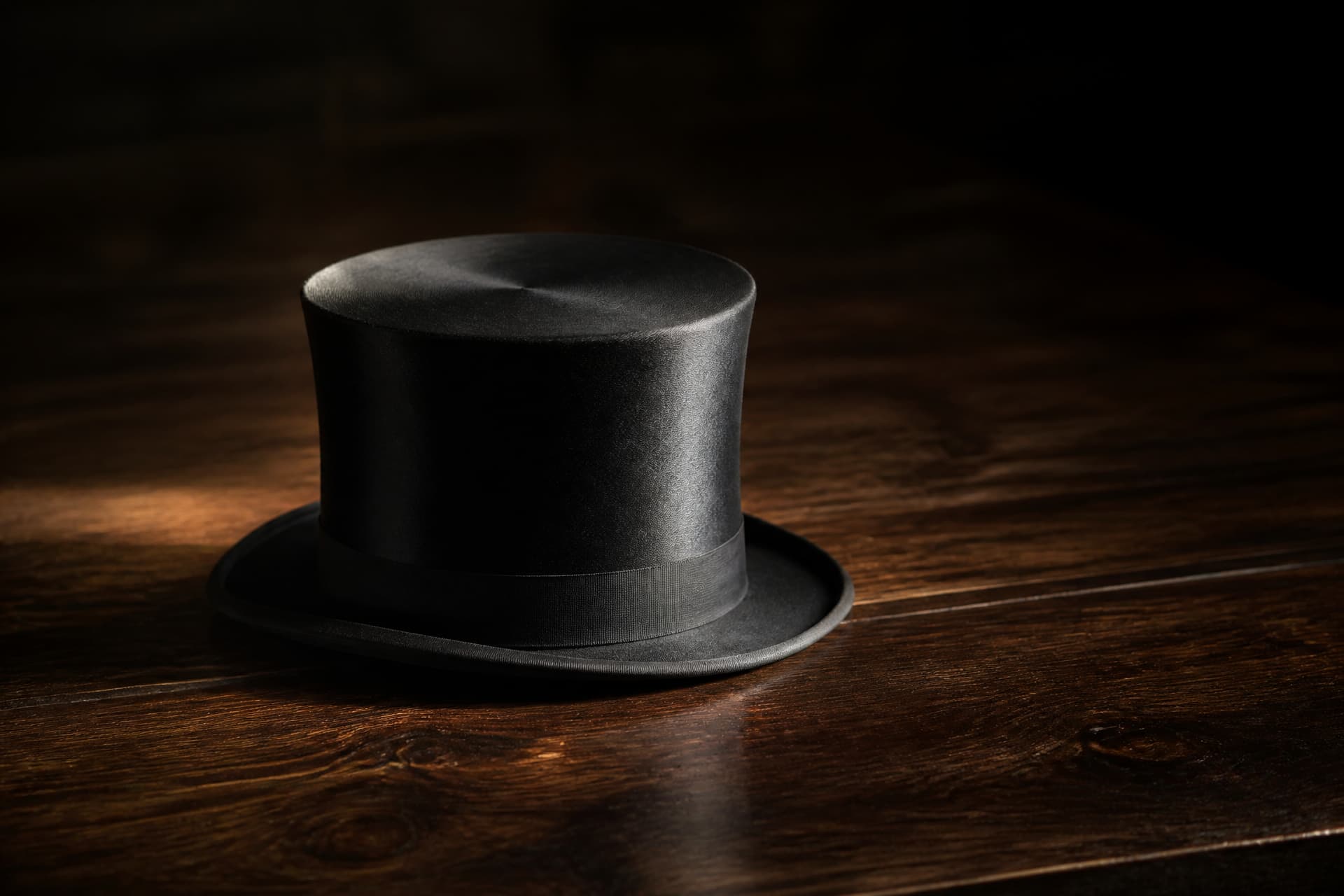
The hat does most of the recognition work by itself. Strip away every other attribute and a top hat on a skull still reads as Baron Samedi to people who could not name a single other lwa.
Who Is Baron Samedi
If you have arrived here wondering who is Baron Samedi, the short version is this: he is the head of the Gede, the master of the cemetery, and the spirit who has to accept a soul before it can pass into the realm of the dead. His name is Saturday. In Haitian Creole he is Bawon Samdi, and the spellings blur online — voodoo Baron Samedi, baron voodoo, Baron Saturday, Bawon Samdi all point at one figure with one very specific job.
He is not a devil, and he is not a grim reaper. Both comparisons get made and both mislead. A reaper collects. Baron Samedi negotiates, jokes, drinks, demands his due, and sometimes refuses.
What Baron Samedi Wears, and Why Each Piece Is There
Every element of his appearance is a piece of funeral wear, read slightly sideways.
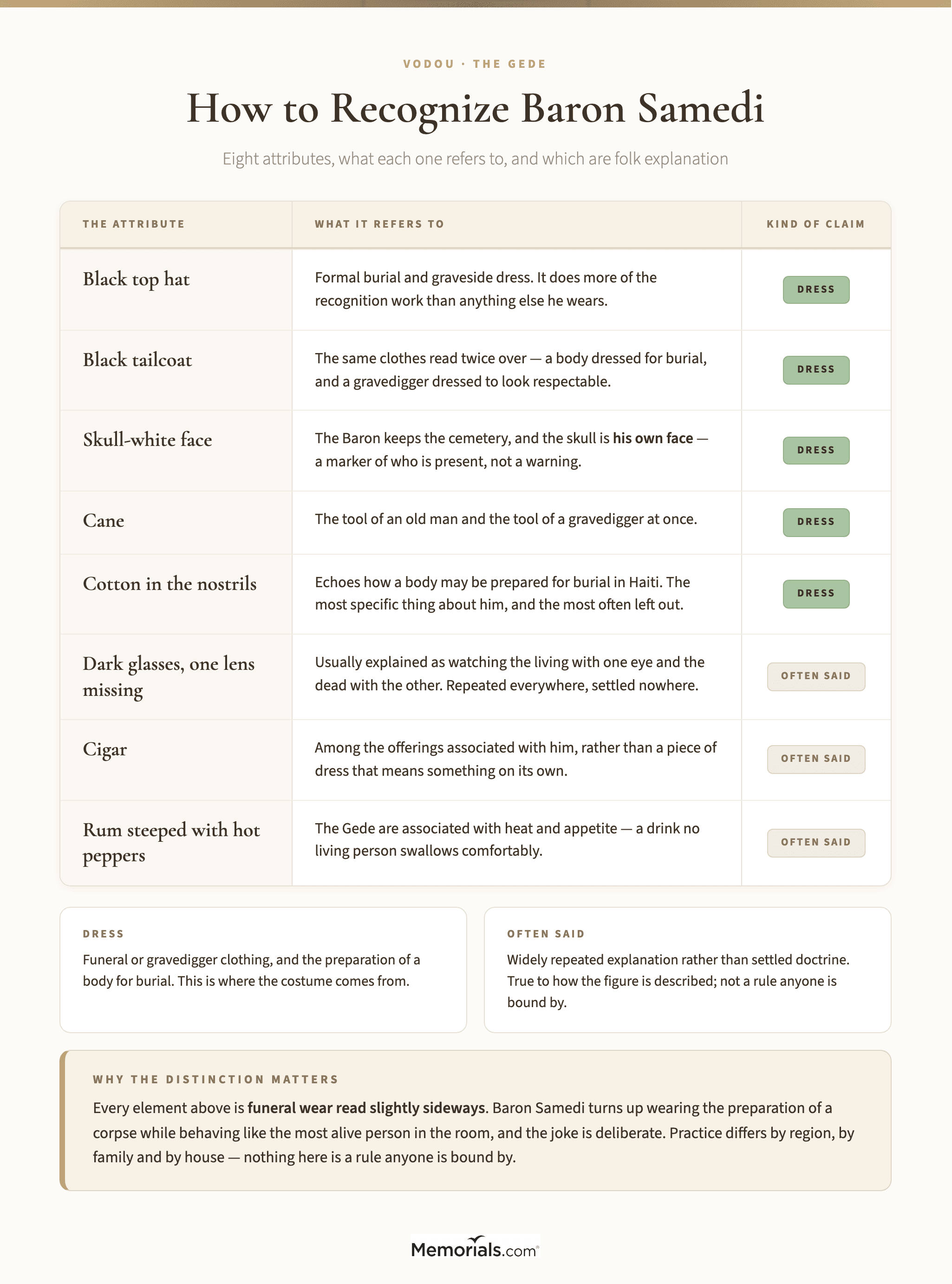
The black tailcoat and top hat are formal burial clothes — what a Haitian family would once have dressed a body in, and what a gravedigger of a certain era would have worn to look respectable at a graveside. The cane is the tool of an old man and the tool of a gravedigger both.
The dark glasses are the detail people remember, and the usual explanation is that one lens is missing so that he can watch the world of the living with one eye and the world of the dead with the other. Treat that as folk explanation rather than doctrine; it is repeated everywhere and settled nowhere.
The cotton in the nostrils is the most specific thing about him, and the one most often left out. A body prepared for burial in Haiti may have cotton packed in the nose and ears. Baron Samedi wears the preparation of a corpse while behaving like the most alive person in the room, and the joke is entirely deliberate.
The cigar and the rum steeped with hot peppers are what he is offered and what he is said to enjoy. The pepper is not incidental — the Gede are associated with heat and with appetite, and a drink no living person could swallow comfortably is exactly the sort of thing they are described as taking without blinking.
Eight attributes and what each one refers to. The tailcoat, top hat and cane are funeral and gravedigger dress; the cotton echoes how a body is prepared for burial; the missing lens and the pepper-steeped rum are widely repeated explanations rather than settled ones, and are marked as such.
Baron Samedi's Actual Job
He digs the grave. That is the literal description of his role, and everything else follows from it. No soul enters the realm of the dead until Baron Samedi has dug the grave and accepted it, which means he stands at the boundary in both directions.
The consequence surprises people: he is invoked in healing. If the Baron will not dig the grave, the person cannot die. A family with somebody desperately ill may petition him for exactly that reason, and a spirit of death becomes a spirit of last resort against death without any contradiction at all.
That gatekeeper role is one of the most widely repeated ideas in the world's death traditions, and reading it beside its cousins makes it clearer. The Greek pair Thanatos and Hades split the same job between a personification of dying and a ruler of the dead. The Greek and Roman practice of leaving a coin placed with the dead assumed the same thing Vodou assumes — that passage has a keeper, and the keeper expects to be acknowledged.
Maman Brigitte and the Other Barons
Baron Samedi is not alone. Baron La Croix and Baron Cimetière are named alongside him, and in some houses they are aspects of one spirit rather than three separate ones. Accounts differ, and a page that tidies the difference away is tidying away something real.
Maman Brigitte is his counterpart — a Gede spirit of the cemetery, profane and funny in the same register, and the one who guards graves. She is frequently linked to the Irish and Scottish presence in the Caribbean and to the figure of Brigid, which is a plausible and often-repeated connection rather than a proven one.
There is also a widely told convention that the first man buried in a cemetery becomes its Baron and the first woman its Brigitte. It is a lovely idea and it explains why the cemetery itself, not just a shrine inside it, is treated as the Gede's ground.
Voodoo Symbols for Death, One by One
With the Gede established, the iconography reads quickly. These are the symbols an outsider actually encounters, and what each one is doing. They work the way carved headstone symbols and their meanings work in a Western cemetery: a small vocabulary, used precisely, by people who all knew what it meant.
The vèvè. A vèvè is a ritual drawing traced on the ground in cornmeal, flour, ashes, coffee grounds or powdered brick. Each lwa has its own, and the design functions as a summons and a marker of presence — a beacon, not a spell. Baron Samedi's is built around a cross, usually set on a base or a tomb, sometimes with coffin shapes worked into it. A vèvè is made for an occasion and swept away afterward, which is worth knowing before treating one as a decorative motif.
The coffin. Straightforward, and used as an emblem rather than a threat. It turns up worked into vèvè designs and into Gede imagery generally, for the same reason a coffin appears on Victorian mourning stationery: it names the subject.
The cane, the hat and the tailcoat. Covered above, and worth repeating here because they function as a set. Any one of them signals the Baron. All three together are unmistakable.
Rum, cigars and pepper. These are offerings rather than symbols in the strict sense, but they are so tightly associated with the Gede that a bottle and a cigar together read as Gede imagery on their own.
What the Skull Means
The voodoo skull meaning most people expect — a curse, a hex, a warning — is not what the skull is doing here. The skull is the Baron's own face. It marks the presence of the spirit who runs the cemetery, and by extension it marks the boundary he keeps.
The closest comparison is not a pirate flag. It is the Mexican sugar skull, which is also a smiling skull, also tied to a specific autumn observance for the dead, and also routinely mistaken for something macabre by people meeting it as decoration. Both traditions use a skull to say the dead are present and welcome here, which is close to the opposite of what a Western horror poster uses one to say.
The Cross and the Cemetery Gate
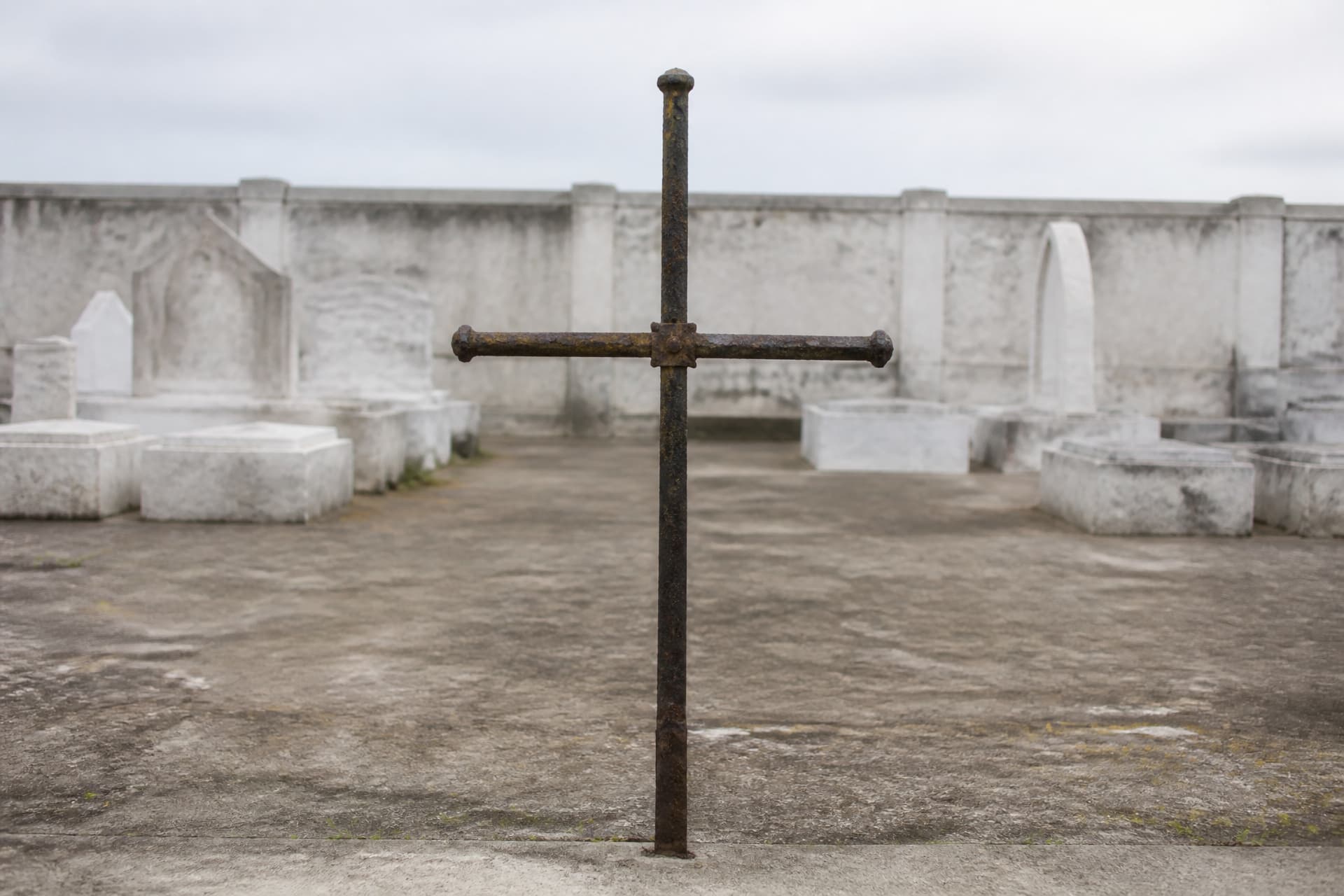
The cross in Gede imagery is not primarily the cross of the crucifixion, though centuries of Catholic overlay mean the two are not cleanly separable either. It is a crossroads: the intersection of the road of the living and the road of the dead, and the point at which one can be addressed from the other.
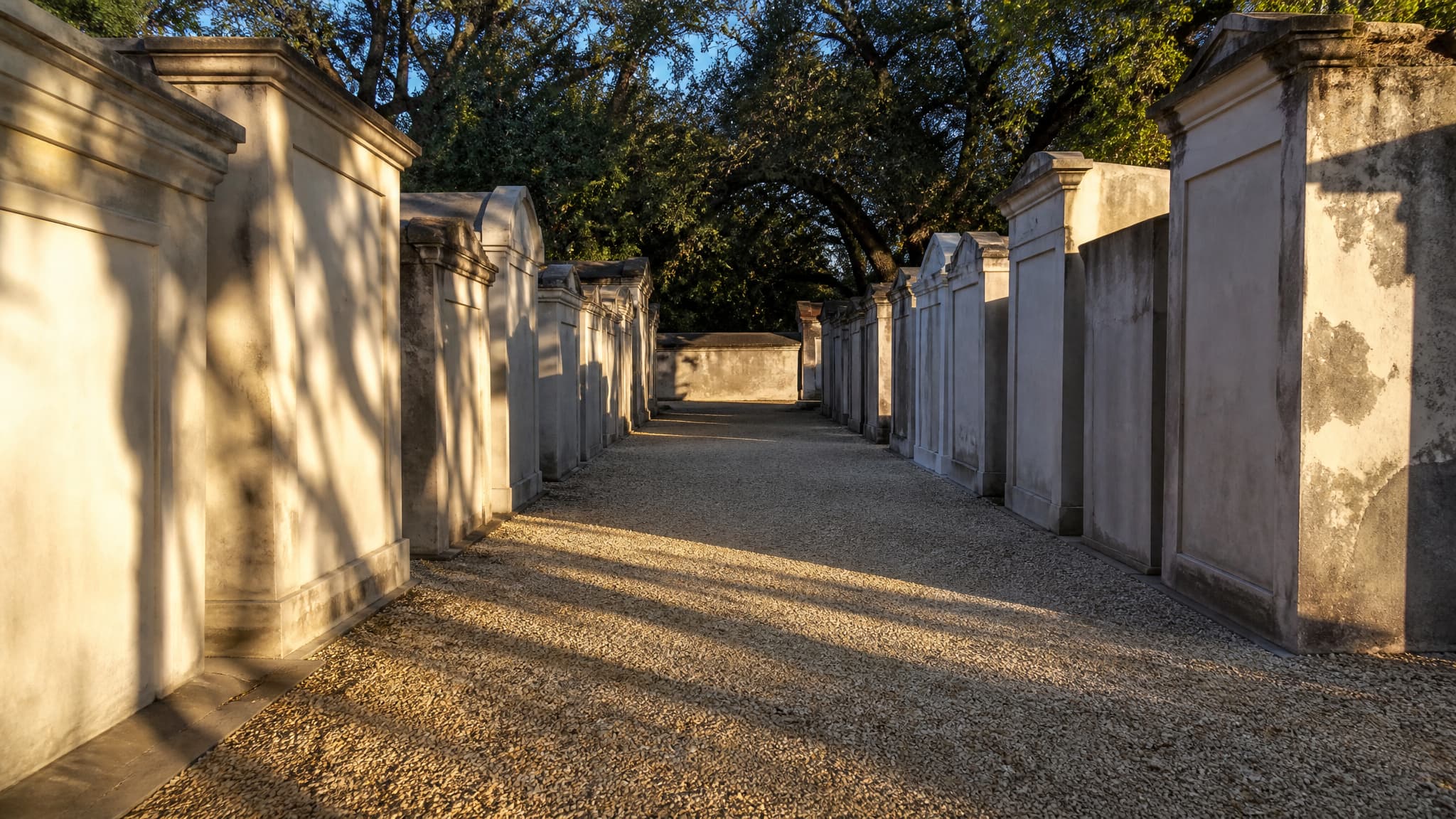
This is why the cemetery matters so much. In Haitian practice the large cross standing in a cemetery is understood as the Baron's, and the ground around it as his. Reading that against the way above-ground tombs work in Louisiana and the Caribbean explains something about both: where the dead are kept above ground, behind a wall, in a place you walk into rather than across, the cemetery is much more obviously a place with a keeper.
In Haitian practice the cemetery's central cross belongs to the Baron, which is why so much Gede imagery is architectural rather than personal. The symbol is a location as much as an emblem.
Color: Black and Purple
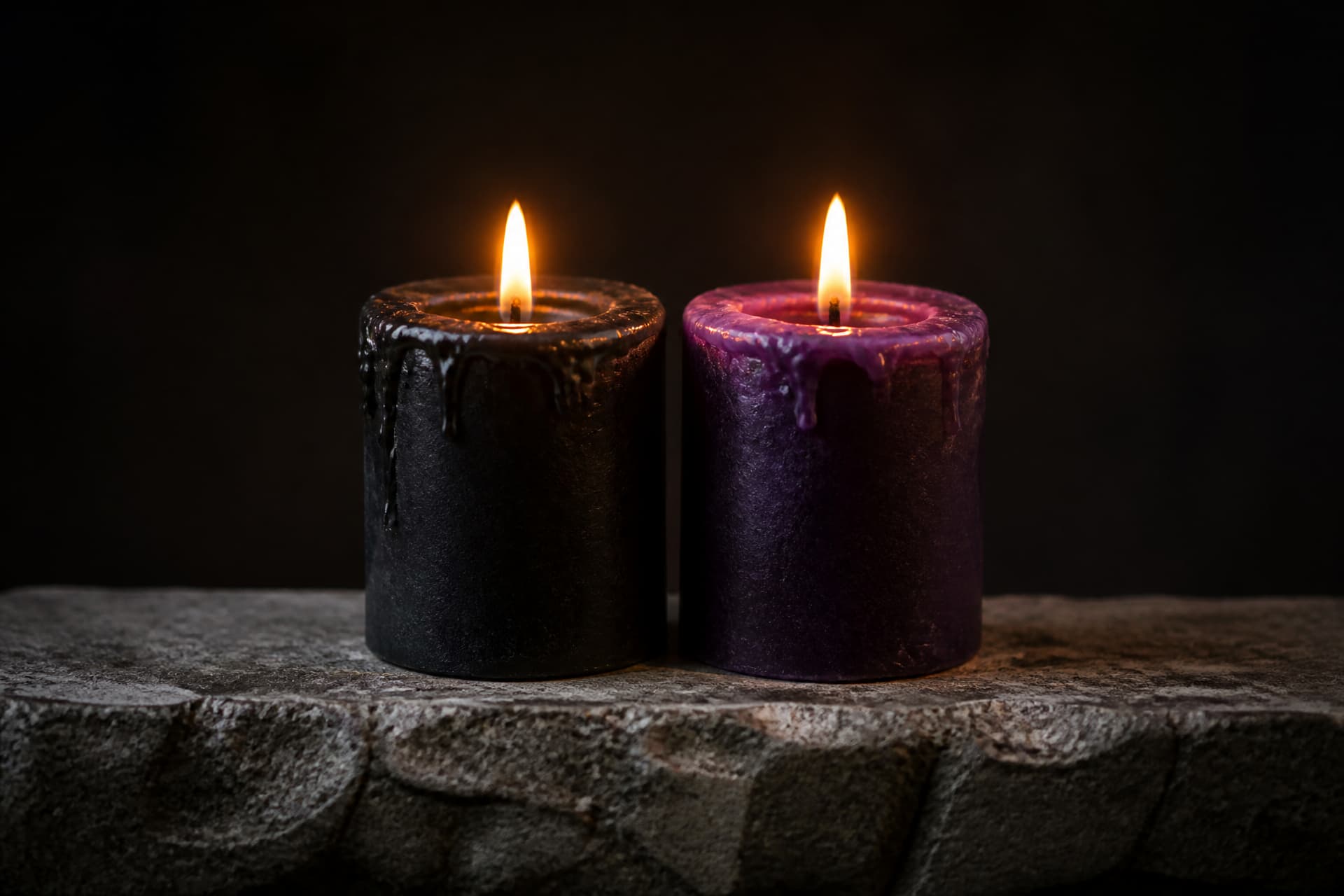
Black and purple are the Gede's colors, and they are one of the easiest ways to identify Gede imagery when nothing else in it is familiar. Purple carries the association it carries almost everywhere in the Atlantic world — mourning, and the half-step out of deep black that Western mourning dress also used. Black and purple cloth, black and purple beads and black and purple candles all mark the same thing.
Candles are worth a note, because the association is close to universal. Lighting one for the dead is not a Vodou invention and not a Vodou monopoly; memorial candles do similar work in Catholic, Jewish and secular remembrance, and the velas on a Día de los Muertos ofrenda are lit to guide the dead home for the night. What changes is the color and who is being addressed.
Black and purple together is the fastest identifier there is. If Gede imagery carries no skull, no hat and no cross, it will usually still carry these two colors.
Fet Gede: the Days the Cemetery Belongs to the Dead
On November 1 and 2, alongside All Saints' Day and All Souls' Day in the Catholic calendar, Haiti observes Fet Gede — the festival of the Gede. Cemeteries fill. Families clean and repaint tombs. Offerings are brought. It is the most visible expression of everything above, and it overlaps in date and in feeling with Mexico's Day of the Dead, without either being derived from the other.
Bringing something to the dead is one of the least culturally specific things human beings do. Chinese and Vietnamese families have long practiced burning paper for the dead, sending goods across rather than leaving them. American military tradition has its own precise grammar of leaving objects on a grave, where a coin says who visited and how well they knew the person. Fet Gede belongs to that family of practices: the currency differs, the gesture does not.
Fet Gede falls on the same two days as All Saints' and All Souls', which is not a coincidence — Vodou grew up braided with Catholic practice, and the calendar is one of the places the braid still shows.
What Films and Games Made of It
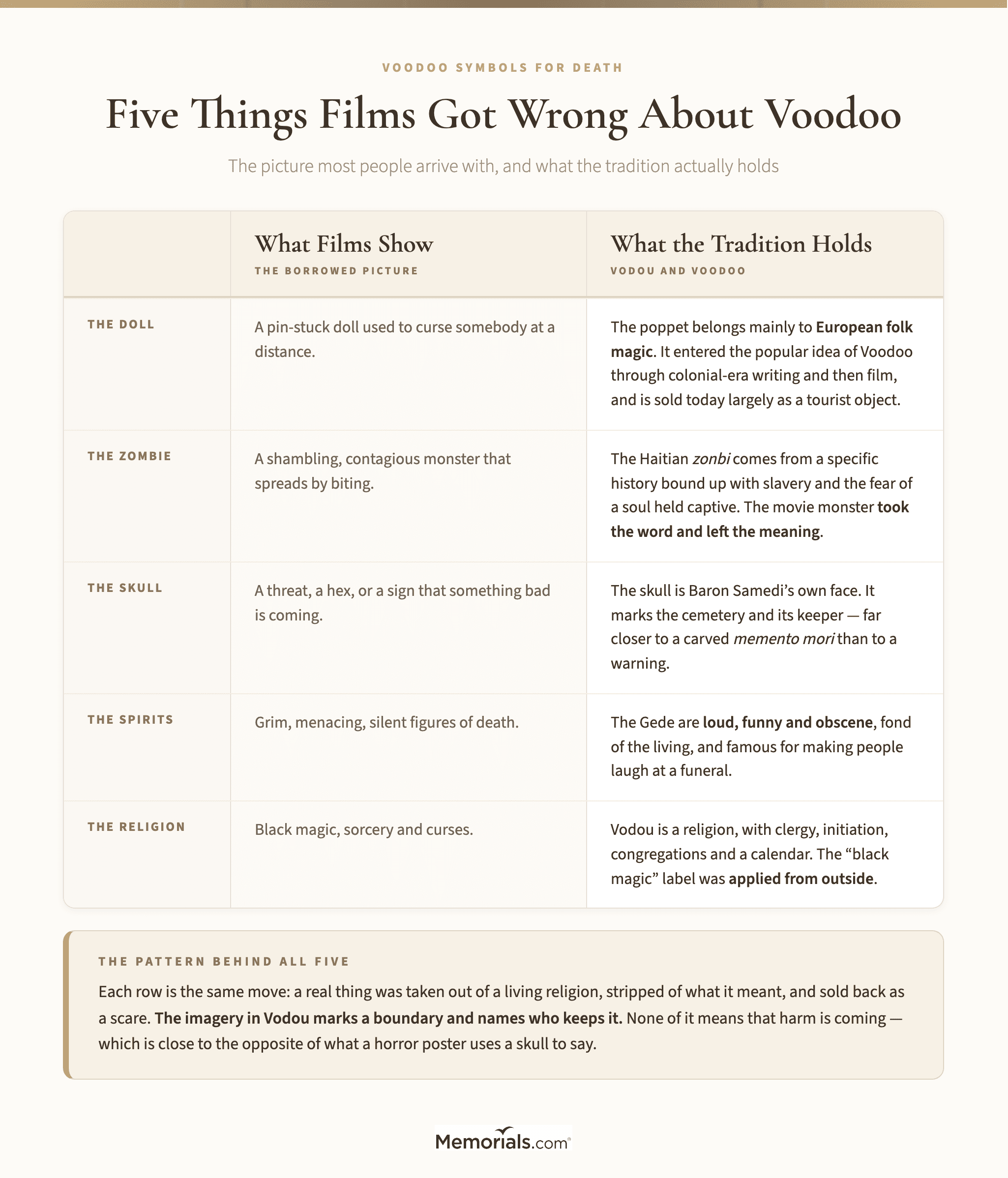
Most of the Samedi voodoo imagery in circulation reached us through fiction — a Bond villain, several video games, a great deal of album art — and fiction had reasons to make it frightening that the tradition never had. Three corrections are worth making plainly.
The voodoo doll is largely not a Vodou thing. The pin-stuck poppet belongs mainly to European folk magic, and it arrived in the popular idea of Voodoo by way of colonial-era writing and then Hollywood. It is sold heavily in tourist shops in New Orleans, which keeps the association alive commercially long after it stopped being descriptive.
The zombie is a real word that has been carried a long way from home. The Haitian zonbi comes out of a specific and genuinely painful history bound up with slavery and with the fear of a soul held captive rather than freed. The shambling, contagious movie monster is a twentieth-century American invention that took the name and left everything else.
Vodou is a religion, not sorcery. It has clergy, initiation, a moral framework and congregations. Describing it as black magic is an inherited slander with a specific origin — it made a colonized people's practice sound like a threat requiring suppression — and it is worth refusing on accuracy grounds alone.
Set beside other traditions, the Gede stop looking exotic almost immediately. A named figure who meets the dead at the boundary is one of the most common ideas in religion: the Angel of Death in Islam does structurally similar work, as do the Greek psychopomps and the Japanese shinigami. Vodou's version happens to wear a top hat and tell jokes.
Five familiar beliefs and what the tradition holds instead. The pin doll is European folk magic rather than Vodou; the movie zombie borrowed a Haitian word and discarded its meaning; the skull marks a guardian, not a curse; the Gede are bawdy rather than menacing; and Vodou is a religion with clergy and congregations, not sorcery.
If You Visit a Cemetery Associated with Voodoo
This is where the subject stops being reading and starts being behavior, because a lot of people who look this up are going to New Orleans.
The best-known example is the tomb widely believed to hold Marie Laveau, the nineteenth-century New Orleans practitioner remembered as the Voodoo Queen, in one of the city's oldest cemeteries. For years, visitors marked her tomb with rows of X's, believing that doing so and leaving an offering would grant a wish. The practice has no basis in the tradition, it damaged the tomb repeatedly, and access to that cemetery has since been restricted to visitors accompanied by a licensed guide.
It is a clean illustration of the difference between interest and intrusion. The tomb is a grave, in an active cemetery, belonging to a family. Ordinary cemetery etiquette covers nearly all of it: stay on the paths, do not touch or climb the tombs, do not mark anything, do not move what somebody else left, ask before photographing a burial or a gathering, and if a family or a practitioner is present, give them the space you would want.
If you want to engage with the tradition rather than photograph it, the Vodou and Voodoo communities in Haiti, New Orleans and the diaspora have museums, cultural centers, musicians and writers who present it themselves. That is a better door than a graveyard at night.
A flower left and nothing else disturbed is the whole of it. The visitor practices that caused real damage were all additive — marks, coins pressed into plaster, objects wedged into joints.
Frequently Asked Questions
Who is Baron Samedi in Voodoo?
He is the head of the Gede, the family of lwa who hold death and the cemetery in Haitian Vodou. He is the master of the graveyard and the spirit who must accept a soul before it passes to the dead. He appears in a black top hat and tailcoat with a skull-white face, and he is bawdy and comic rather than menacing.
What is the Voodoo symbol for death?
There is no single one. The clearest markers are Baron Samedi's own attributes — the top hat, the cane, the skull face — together with the cross that stands in a cemetery, the coffin motif, and the colors black and purple. Baron Samedi's vèvè, the ritual ground drawing that summons him, brings several of those elements into one design.
What does the skull mean in Voodoo?
It marks the presence of the Gede rather than danger or a curse. The skull is the Baron's face, and it identifies the cemetery and its keeper. It functions much more like a Mexican sugar skull or a carved memento mori than like a horror-film warning.
Is Baron Samedi evil?
No. He is neither a devil nor a punisher. He is a boundary keeper with a strong personality, a fondness for rum and jokes, and a genuine role in healing, since a person cannot die while he declines to dig the grave. The devil framing came from outside the tradition.
What is a vèvè?
A ritual drawing traced on the ground in cornmeal, flour, ash, coffee grounds or brick dust, unique to each lwa, used to call that spirit and mark its presence. It is made for a particular occasion and swept away afterward, which is part of why it is a poor fit for use as decoration.
What the Symbols Are Actually For
Every symbol on this page points at a boundary and at somebody who keeps it. The skull, the cross, the coffin, the black and the purple, the hat and the cane do not threaten anybody. They say the dead are here, this ground belongs to them, and there is a spirit standing at the gate who can be spoken to.
The reason the Gede are funny is the part worth carrying away. A tradition that had every reason to picture death as horror pictured it instead as a rude, cheerful, cigar-smoking relative in a good coat, who takes his rum with hot pepper and has to be talked round. That is not a lack of seriousness about dying. It is a different answer to it, arrived at by people who had seen a great deal of it.
Reading the iconography beside the rest of the world's mourning vocabulary is the best way to see how ordinary it actually is. Our guide to the symbols of grief and mourning covers the birds, flowers, colors and figures that other traditions reached for, and the overlaps are more striking than the differences.