🏬Supersize Online Funeral Retailer🪦1000's of Headstones⚱️Over 10,000 Cremation Urns⚰️Caskets Overnight Delivery🛒Funeral & Memorial Superstore🚚FREE Shipping on ALL Orders👨👩👧👦Helping Families for over 20 Years💰Lowest Price Guarantee🏬Supersize Online Funeral Retailer🪦1000's of Headstones⚱️Over 10,000 Cremation Urns⚰️Caskets Overnight Delivery🛒Funeral & Memorial Superstore🚚FREE Shipping on ALL Orders👨👩👧👦Helping Families for over 20 Years💰Lowest Price Guarantee
🏬Supersize Online Funeral Retailer🪦1000's of Headstones⚱️Over 10,000 Cremation Urns⚰️Caskets Overnight Delivery🛒Funeral & Memorial Superstore🚚FREE Shipping on ALL Orders👨👩👧👦Helping Families for over 20 Years💰Lowest Price Guarantee🏬Supersize Online Funeral Retailer🪦1000's of Headstones⚱️Over 10,000 Cremation Urns⚰️Caskets Overnight Delivery🛒Funeral & Memorial Superstore🚚FREE Shipping on ALL Orders👨👩👧👦Helping Families for over 20 Years💰Lowest Price Guarantee
Somebody died, and a clock stopped. Perhaps it was the one in the hallway that has run for thirty years. Perhaps it was the watch on their wrist, which the nurse handed you in a plastic bag, and which is showing a time that is not the time now. You have probably not told anyone you looked this up. The spiritual meaning of clock stopping is one of those questions people search for at three in the morning, half hoping there is something in it and half embarrassed to be asking, and the honest answer has two halves that do not cancel each other out.
The first half is that there is almost always a mechanical reason, and it is worth knowing what it is. The second is that for most of the last two centuries, families in Britain, Ireland, Germany and across rural America did not wait for a clock to stop on its own. They stopped it themselves, deliberately, within minutes of a death, and they had reasons for it that were neither superstitious nor sentimental in the way we would assume. This page covers both, and it sits inside our , which follows the same subject through omens, mythology and mourning customs from other directions.
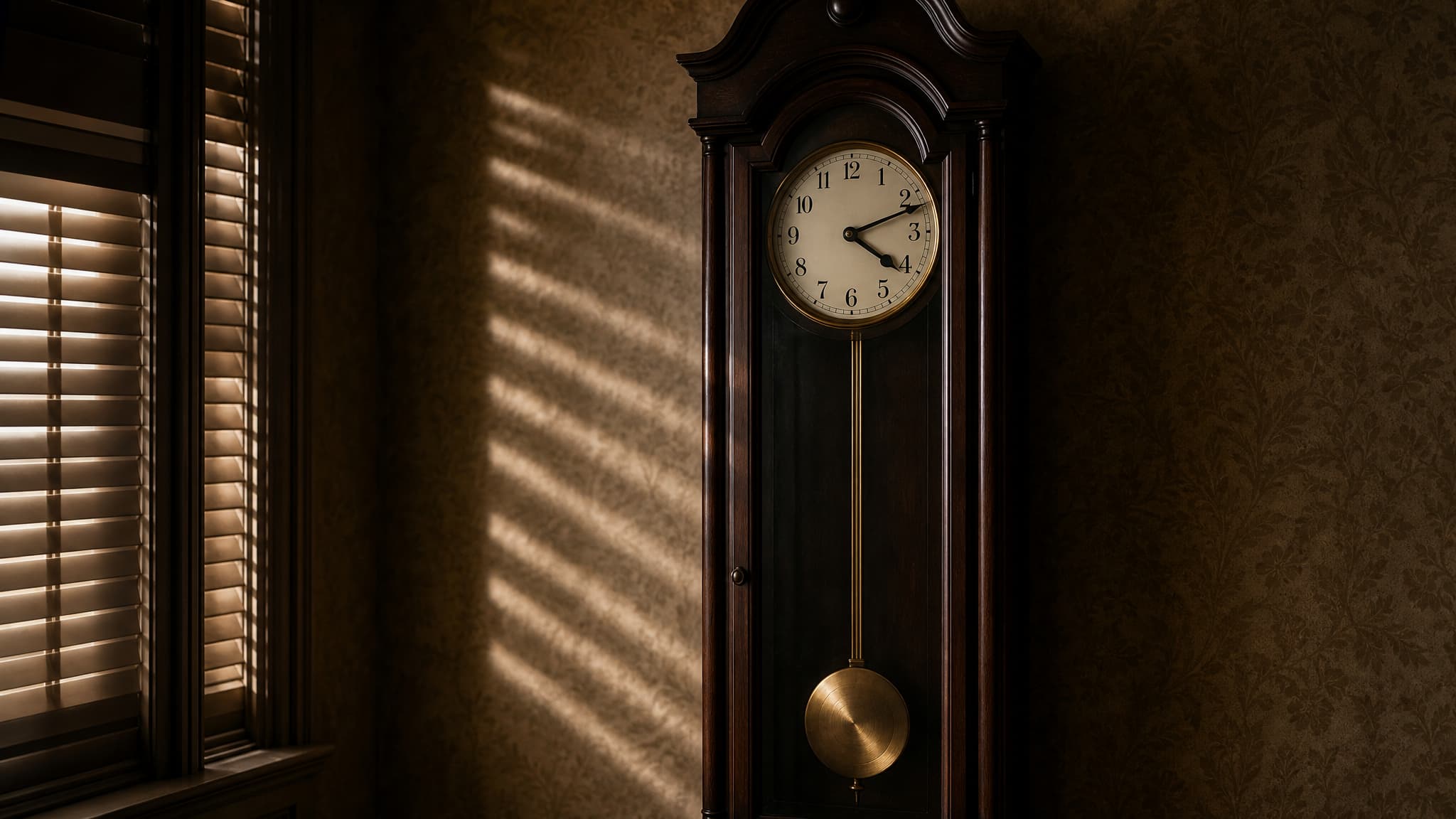
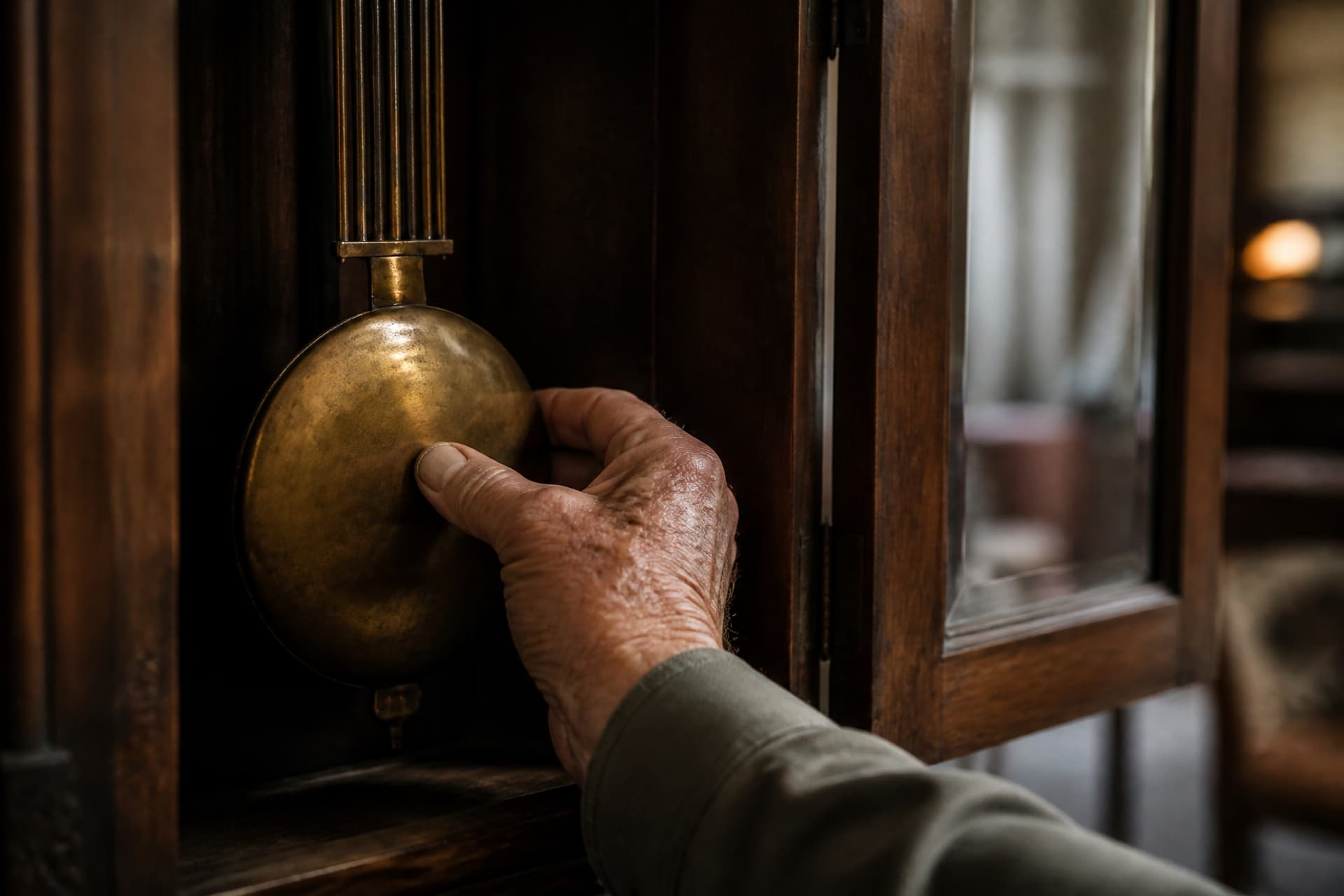
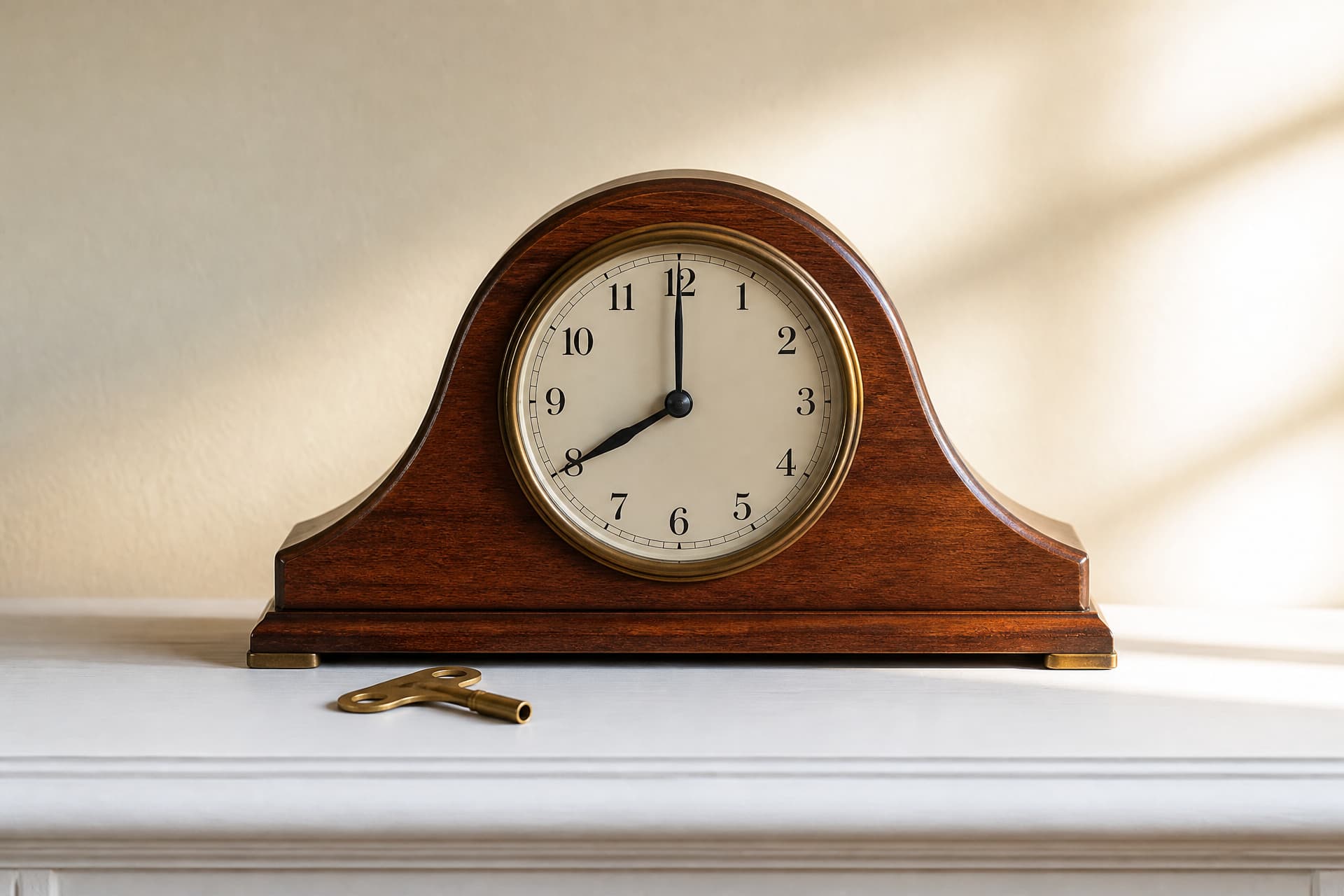
The custom was simple enough to describe and it was done immediately. At the moment of death, or as soon afterward as anyone in the house could manage it, somebody went to the nearest clock, opened the case, and put a hand on the pendulum to hold it still. The hands were left exactly where they were. In a house with several clocks, all of them were stopped. In some places the practice extended to the church bell, which was rung once for the death and then not rung again for its usual hours until after the burial.
Stopping clocks when someone dies is documented across a very wide area — English and Irish households, German-speaking regions, Appalachia, the Ozarks and across central Europe, each with a slightly different reason attached. That spread is the first thing worth noticing about it. A custom that appears independently in that many places is not usually one idea that traveled. It is more often several different ideas that arrived at the same gesture, because the gesture is such an obvious one to make.
The stopped clock was also a message to anyone who walked in. A visitor coming to the door of a house in mourning could see, in the first room, that the clock had stopped and the mirror had been covered, and would know before anyone spoke. That is the same work done by a wreath on the door and a black band on a sleeve — the symbols of grief and mourning that exist so that a family does not have to say the sentence out loud to every caller.
The whole ritual is one gesture: open the case, still the pendulum, leave the hands where they are. In houses with more than one clock, every one of them was stopped.
Why Households Did It — Four Answers, and Nobody Agrees
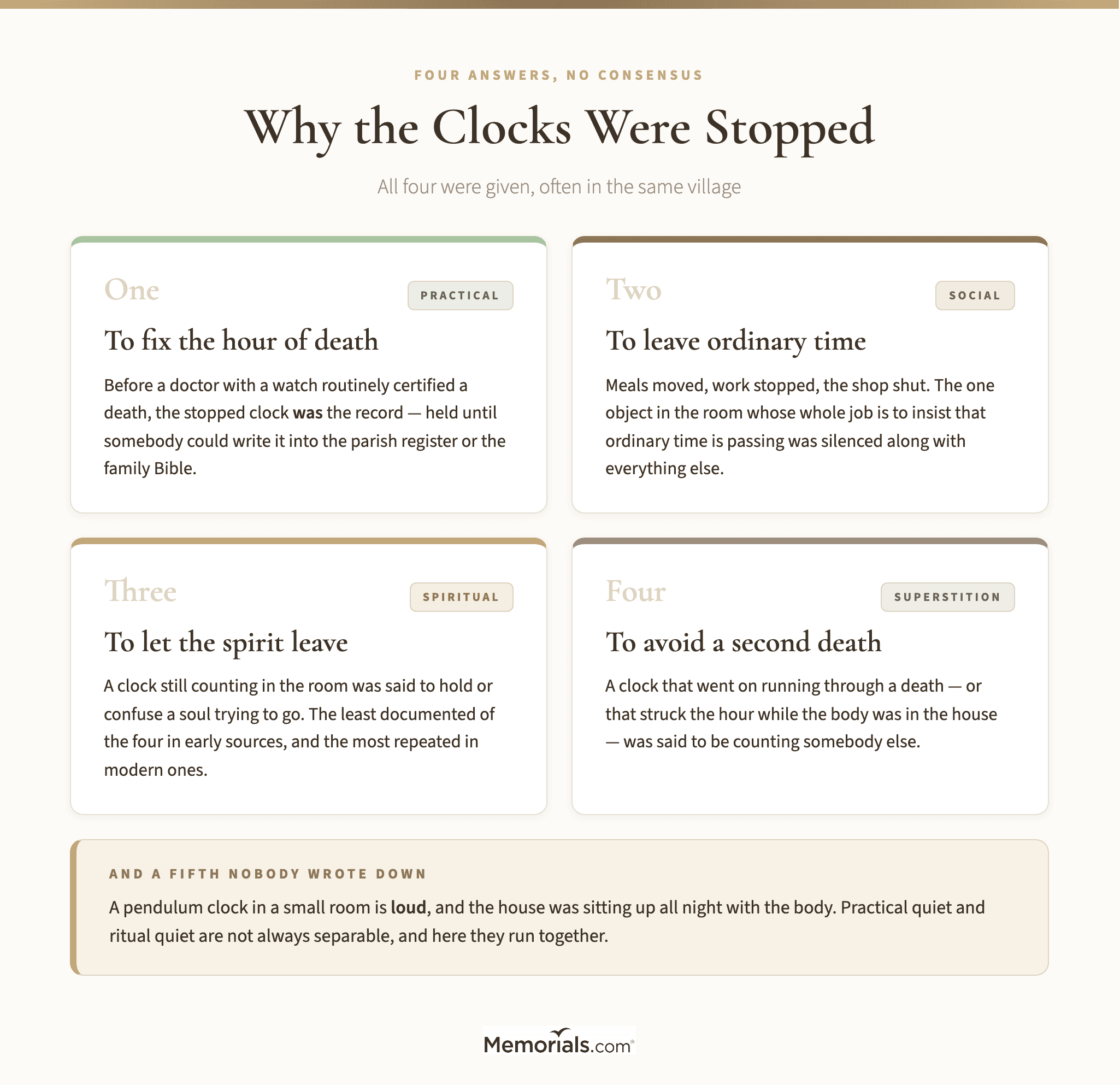
Ask why the clocks were stopped and you will get four different answers, depending on who you ask and where their family came from. All four are attested. None of them is the reason, and the folklorists who have collected the custom generally record several explanations coexisting in the same village.
To fix the hour of death. The most practical answer, and probably the oldest. Before a death was routinely certified by a doctor with a watch, the stopped clock was the record. It held the time until somebody could write it down for the parish register, the coroner, or the family Bible. This explanation has the advantage of being useful, which is usually a good sign that a custom will survive.
To declare the household out of ordinary time. A house with a body in it was not running on the same schedule as the street outside. Meals moved, work stopped, the shop shut, and the clock — the object in the room whose entire job is to insist that ordinary time is passing — was silenced. Read this way the custom is not superstitious at all. It is a household telling itself that the rules are suspended.
To let the spirit go, or to avoid trapping it. The explanation people usually mean when they search for a spiritual reading. In its commonest form the belief runs that the dead should not be held to the hour of their death, and that a clock still counting in the room can hold or confuse a soul that is trying to leave. The same logic sits behind the opened window and the covered mirror. It is the least documented of the four in early sources and the most often repeated in modern ones, which is worth knowing before anyone presents it as the original meaning.
To avoid the next death. The darker version, collected mostly in rural districts: a clock that goes on running through a death, or that strikes while the body is in the house, was said to summon another one. In some tellings the offense is the sound rather than the running — a clock striking the hour during a wake was thought to be counting somebody else. This one is straightforwardly a superstition, and the households that held it usually held several others alongside it.
There is a fifth reason, rarely written down because it is too obvious to record: a pendulum clock in a small room is loud. A house holding a body was a house full of people sitting up all night with it, and a ticking case and a striking hour make that vigil harder. Practical quiet and ritual quiet are not always separable, and here they run together.
Four explanations, all attested, none of them the single original. Notice that two are practical, one is social, and only one is about the soul — the reverse of the emphasis the custom usually gets today.
Why a Clock or a Watch Really Does Stop
Before the meaning, the mechanism, because a reader who is unsettled deserves the physical answer first and it is not a dismissive one.
A weight-driven longcase clock runs for about a week and then needs winding. Somebody in the house wound it, on the same day each week, for years — and in many households that somebody was the person who has just died, or the person who has spent the last month sitting at their bedside instead. A clock that stops within days of a death very often stopped because the hand that wound it stopped first. This is not a small effect: an old clock is a weekly obligation, and a household in the middle of a long illness has usually been failing to meet it for some time before anyone notices the silence.
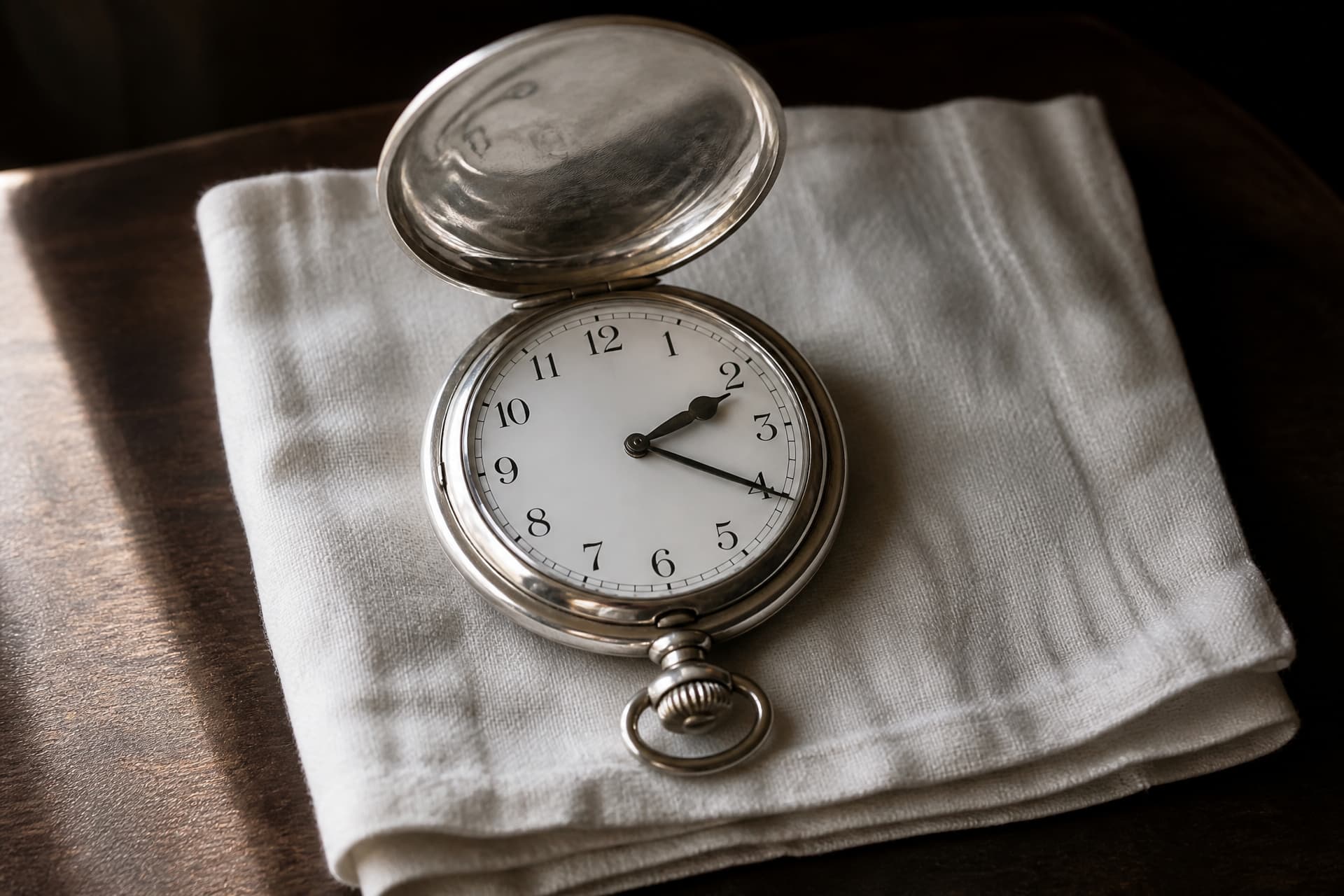
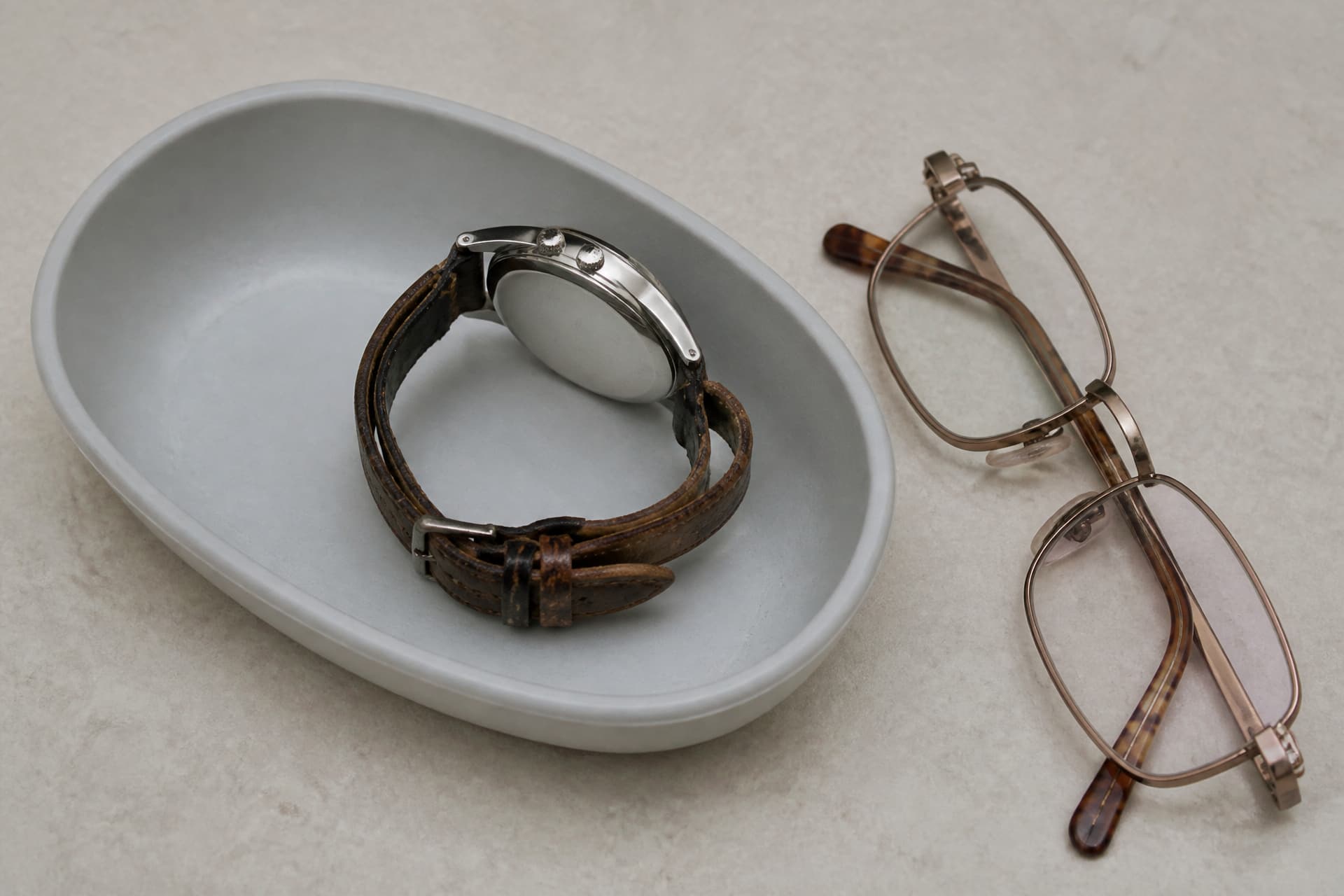
The narrower version of the question — why do watches stop when someone dies — has an answer just as physical. A mechanical watch runs on a wound mainspring and stops when it unwinds. An automatic watch winds itself from the movement of the wearer's arm, so it keeps running only while it is being worn and moved; on a wrist that has stopped moving, or on a nightstand, it winds down and stops by itself within a day or two. Somebody who has been in bed for a week is not winding anything. Somebody in their last hours is not moving their arm. The watch stopping near the death is not a coincidence at all, in the sense that matters: it has the same cause, one step removed.
Quartz watches are different and worth separating out, because they are the ones that genuinely puzzle people. A quartz watch stops when its battery dies, and batteries run for years, so a quartz watch stopping in the same week as a death really is chance. Chance of that kind is much commoner than it feels. A house holds a great many clocks, watches, timers and displays; over the weeks around a death somebody is watching all of them very closely, and one of them stopping is close to inevitable. What has changed is not the rate at which clocks stop. It is the attention.
A mainspring runs down whether or not anyone dies. What changes around a death is that somebody is watching, and that the person who used to wind it has stopped.
The Customs That Traveled With It
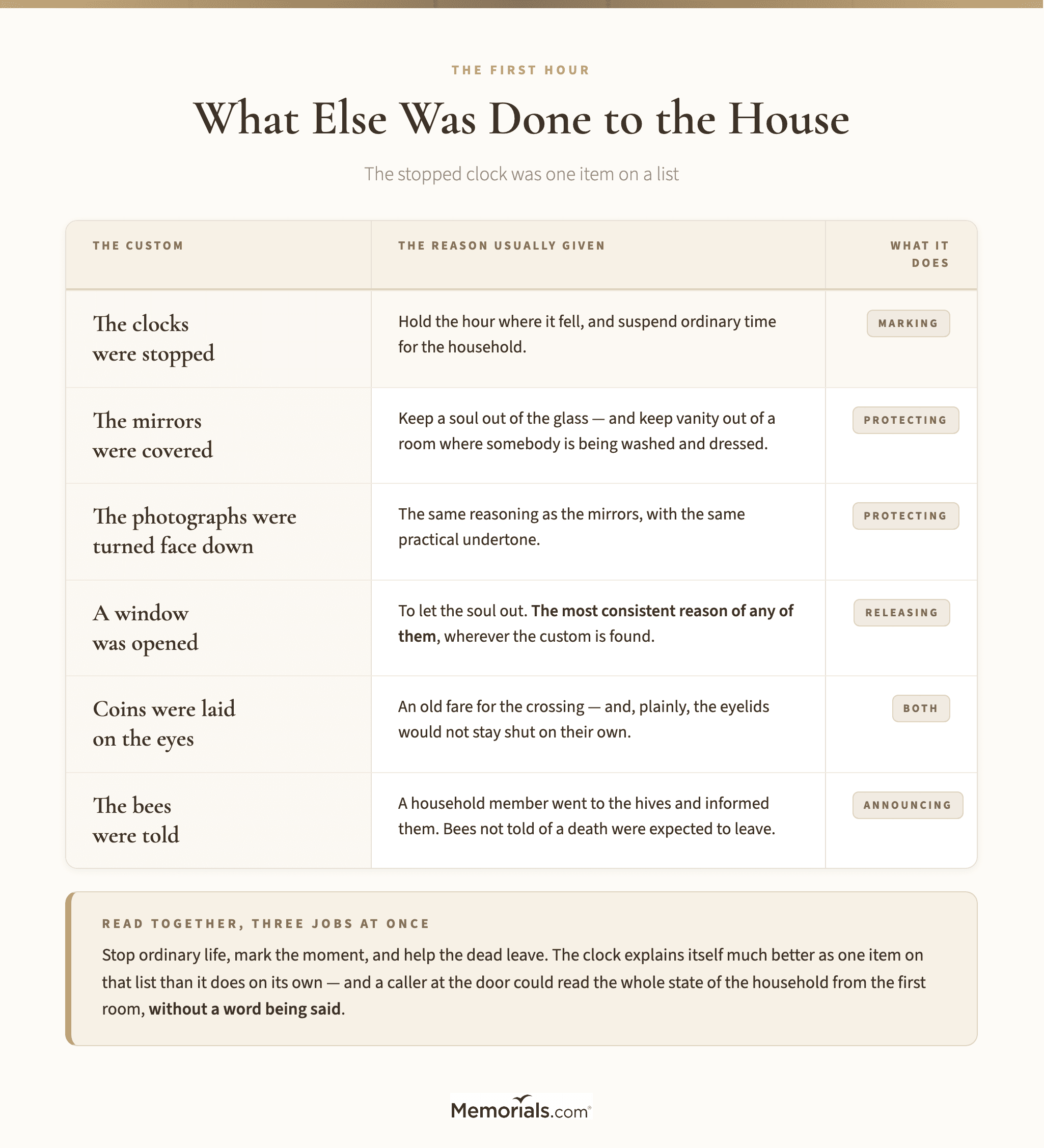
The stopped clock almost never appeared on its own. It belonged to a set of things done to a house in the first hour after a death, and the set explains the clock better than the clock explains itself.
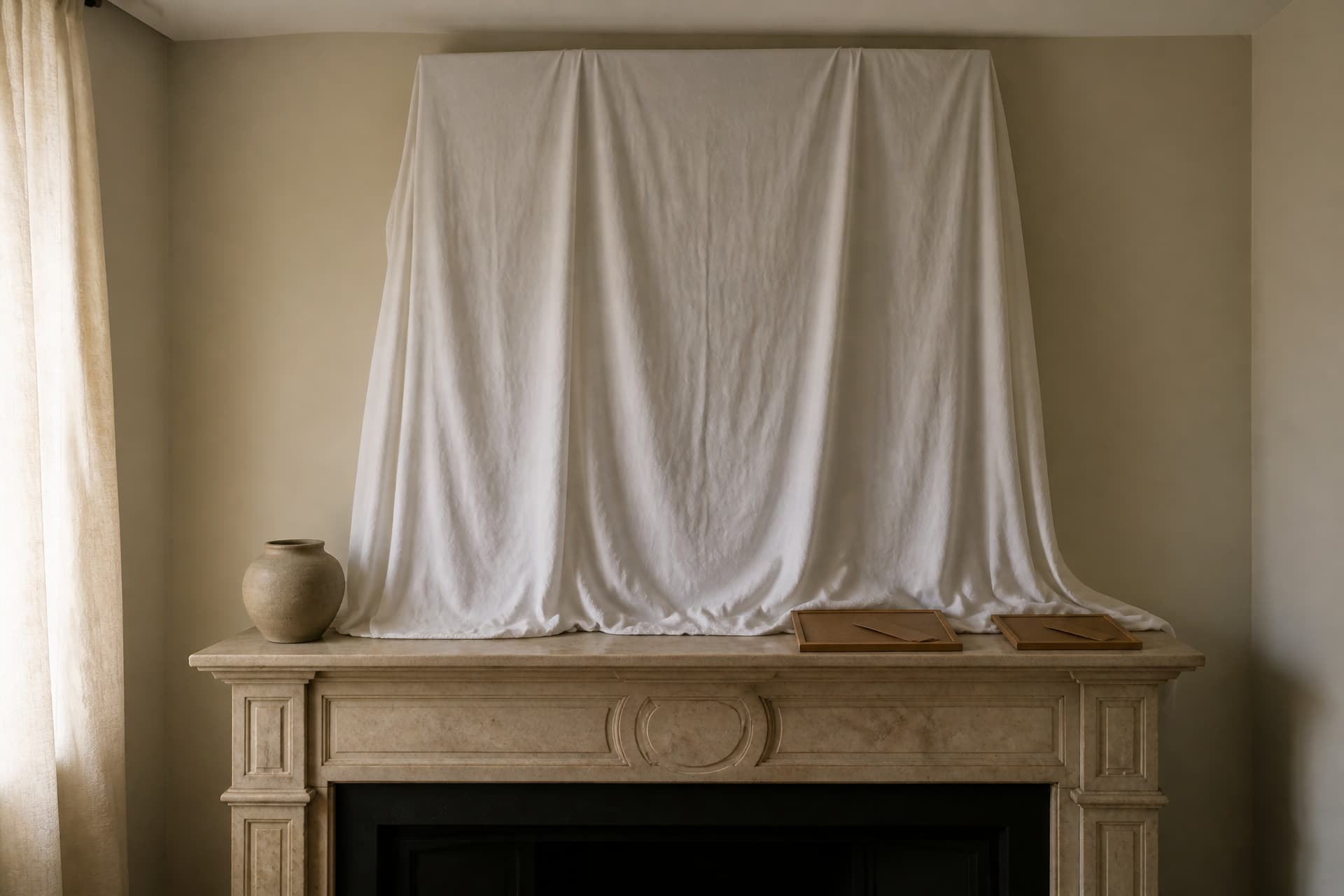
The mirrors were covered, with a sheet or a cloth or by being turned to the wall. Explanations vary: that the soul could be caught in the glass, that seeing your own reflection in a house of death invited your own, or — the plainest one — that vanity has no place in a room where somebody is being washed and dressed. Covering mirrors is also formal practice in a Jewish house of mourning, for reasons of its own that have nothing to do with folk belief about souls.
Photographs were turned face down. Same reasoning as the mirrors in most tellings, and the same practical undertone.
A window was opened, usually the one nearest the bed, and left open for a set number of hours. Of all these customs this is the one whose stated purpose is most consistent everywhere it is found: to let the soul out.
Something was placed on the eyes. Coins, most often, in Europe and North America. The custom has an ancient ancestor in the coin left for the ferryman, and by the nineteenth century the everyday reason given was simply that the eyelids would not stay closed on their own. Both explanations were held at once by the same people, which is normal for customs of this kind.
The bees were told. In parts of England and New England a member of the household went to the hives and informed them of the death, sometimes draping the hives in black. Bees that were not told were expected to leave or to die.
Things were burned. Letters, clothing, and in some traditions objects meant to travel with the dead. The spiritual meaning of burning paper runs through several cultures at once, and where it appears the reasoning tends to be the mirror image of the stopped clock: the clock holds a moment in place, the fire sends something on.
The clock was one item on a checklist. A caller at the door could read the whole state of the household from the first room without a word being said.
Six customs, and the reason each was given. Read together they show a household doing three jobs at once — stopping ordinary life, marking the moment, and helping the dead leave.
Where the Custom Held On Longest
In Britain and America, stopping the clocks belonged most visibly to the nineteenth century. The Victorians formalized a great deal of mourning that had previously been improvised — how long a widow wore black, what a caller said, what jewelry was permitted — and household customs like this one were absorbed into that system. The same era produced hair kept under glass and jet worn for a year, the whole apparatus of Victorian mourning jewelry, and the floral vocabulary that still governs which flowers get sent to a funeral, including the dyed black carnations that arrived late and picked up the meaning anyway.
The custom held on longest where the dead stayed home. That is the connection people miss: stopping the clocks makes sense in a house where the body is lying in the front room and neighbors are calling for three days. It makes much less sense once the body goes to a funeral home the same afternoon. So the practice survived best wherever the wake survived best — and above all in Ireland, where the tradition of sitting up with the dead at home is old, unbroken and still practiced. Among Irish wake traditions the stopped clock sits alongside the covered mirror, the opened window and the lit candles as part of the standard preparation of the room.
It also held on in Appalachia and the Ozarks, in Pennsylvania German households, and in rural districts of Germany and Austria, all places where home vigils lasted longest. Where the custom is remembered today it is usually remembered by people whose grandparents did it, which is roughly the lifespan you would expect for a household practice that lost its setting.
The custom is familiar to a great many people who have never heard of any of that, because of a poem. W. H. Auden's "Funeral Blues" opens by ordering the clocks stopped, and it has been read aloud at so many funerals since that the instruction is now better known than the practice it came from. A great deal of what people believe about the custom's meaning has arrived by that route rather than from any household.
Older still, and less often mentioned: Henry Clay Work's 1876 parlor song My Grandfather's Clock, which ends with the clock that "stopped short, never to go again, when the old man died." The song is about a clock stopping by itself, not about anybody stopping it — which means the coincidence you may be sitting with tonight was already common enough in 1876 to build a popular song around.
Starting the Clock Again
The half of the ritual that almost never gets written down is the end of it. The clocks did not stay stopped.
They were restarted after the burial — in most accounts on the day of the funeral, once the household had come back from the churchyard and the callers had gone. Sometimes the same person who had stopped it started it again; in some tellings it had to be a different person, or the eldest surviving member of the household. The hands were reset to the correct time and the pendulum given a push, and the sound of a clock ticking in the front room again was the signal that ordinary time had resumed.
That is what makes the custom coherent rather than merely mournful. The stopped clock was not a monument. It was a pause with a defined end, and restarting it was a small formal permission for the household to go back to living. Families who have kept nothing else of this practice sometimes keep that instinct: the day somebody opens the curtains, answers the mail, and puts the clock right is a real threshold, whether or not anybody names it.
Where the stopped clock did become permanent, it moved into stone. A clock or watch face with the hands fixed at a particular hour is a recognized motif in nineteenth-century cemetery carving, usually taken to mark the hour of death or the passing of earthly time, and it turns up alongside the broken column, the draped urn and the downturned torch in the vocabulary of headstone symbols that Victorian monument masons worked from.
Restarting the clock after the funeral was the formal end of the ritual, and the part almost always left out of retellings. The pause had a defined finish, which is what kept it from becoming a monument.
If a Clock Stopped and You Are Reading It as a Sign
If you are here because something stopped, this is the section that is actually for you.
Nothing in this article can tell you whether it meant anything. What it can tell you is that reading it as a sign does not make you credulous, and that the mechanical explanation and the meaning you have attached to it are not competing for the same space. A watch that stopped because nobody wound it can still be the object you keep. The cause and the significance are answers to different questions, and only one of them has an answer that anybody can check.
It is worth knowing how ordinary the experience is. A great many people who sit with somebody through the final hours come away with something like this — a clock, a bird at the window, a light, a phone that rang with nobody on it. The mind of somebody who has just lost a person is doing what minds do: looking hard at everything, and finding pattern, because the alternative is a world in which the person simply is not there and nothing marked it. That is not a malfunction. It is close to universal, and the same impulse that stops a clock is the one that fixes a red bird permanently in ink as a cardinal memorial tattoo.
The only advice worth giving is the advice the custom itself gives. The Victorians stopped the clock and then started it again. They gave the moment a marker and gave the marker an end. If a stopped watch has become important to you, there is nothing wrong with keeping it stopped — plenty of families do, and it is a quieter memorial than most. But decide that, rather than letting it happen. A watch nobody has chosen to leave stopped is different from one somebody has.
The watch that comes back in a bag from the hospital has usually stopped for the plainest reason there is — nobody has worn it for days. Keeping it stopped is still a choice worth making deliberately.
Frequently Asked Questions
Is it bad luck if a clock stops when someone dies?
In the folklore, no — a clock stopping at a death was read as fitting rather than ominous. The unlucky version of the belief is the opposite one: it was a clock that kept running, or that struck the hour while the body was in the house, that some rural traditions said would call for another death. Either way this is superstition rather than a rule anyone is bound by, and traditions in neighboring villages contradicted each other freely.
Why did people stop the clocks at the time of death?
Four reasons were given, and households held more than one at a time: to fix the hour of death for the record before there was a doctor's certificate; to mark that the household had left ordinary time; to avoid holding or confusing a soul that was trying to leave; and, in the darker versions, to avoid inviting a second death. Practical quiet during a long vigil belongs in the list too.
Do you have to stop a clock when someone dies?
No. There is no religious requirement and no funeral-industry expectation anywhere in the United States that a family stop a clock. If a relative has asked for it, it costs nothing and it means something to them. If nobody has asked, nothing is owed.
What does a stopped clock mean spiritually?
The reading most often given is that time has stopped for that household — that the ordinary count of hours has been suspended while the dead are still present, and that the moment has been marked and held rather than allowed to slide past. Whether a stopped clock is a message from the person who died is not something anybody can answer for you, and pages that answer it confidently are guessing.
When should the clocks be started again?
In the tradition, after the burial — the day of the funeral, once the household is home. There is no rule beyond that, and the restarting mattered as much as the stopping: it was the household's own signal that ordinary life had resumed.
Marking the Hour Without Stopping Anything
What the custom was really for is not mysterious. A death is the largest thing that will ever happen in a room, and it leaves no mark on the room. Everything in the house goes on exactly as it did an hour before, which is unbearable in a specific way that people who have not been through it do not expect. Stopping the clock puts a mark on it. That is the whole function, and it explains why the practice arose in so many places at once.
The equivalents people reach for now do the same job by other means: the hour written into the death notice, the photograph taken of a hand, the phone left uncleared, the ring taken off a finger and put somewhere safe. Coins left on a soldier's grave do it too — why people leave coins on headstones has an entirely different origin, but the impulse behind it is the same one: leave a physical trace so the moment is not carried by memory alone.
If you are in the first days of this and looking for what to do rather than what things mean, our guide to the first week after a loss is the more practical page, and it is written for exactly that stretch. Come back to the symbolism later. It keeps.