🏬Supersize Online Funeral Retailer🪦1000's of Headstones⚱️Over 10,000 Cremation Urns⚰️Caskets Overnight Delivery🛒Funeral & Memorial Superstore🚚FREE Shipping on ALL Orders👨👩👧👦Helping Families for over 20 Years💰Lowest Price Guarantee🏬Supersize Online Funeral Retailer🪦1000's of Headstones⚱️Over 10,000 Cremation Urns⚰️Caskets Overnight Delivery🛒Funeral & Memorial Superstore🚚FREE Shipping on ALL Orders👨👩👧👦Helping Families for over 20 Years💰Lowest Price Guarantee
🏬Supersize Online Funeral Retailer🪦1000's of Headstones⚱️Over 10,000 Cremation Urns⚰️Caskets Overnight Delivery🛒Funeral & Memorial Superstore🚚FREE Shipping on ALL Orders👨👩👧👦Helping Families for over 20 Years💰Lowest Price Guarantee🏬Supersize Online Funeral Retailer🪦1000's of Headstones⚱️Over 10,000 Cremation Urns⚰️Caskets Overnight Delivery🛒Funeral & Memorial Superstore🚚FREE Shipping on ALL Orders👨👩👧👦Helping Families for over 20 Years💰Lowest Price Guarantee
His sweater is folded on the end of the bed and you have already worn it once. Then somebody said something — an aunt, a neighbor, a warning your grandmother used to repeat — and now you are looking up a question you never expected to be asking: is it bad luck to wear a dead person's clothes? No. There is no tradition anywhere on earth that puts misfortune on the living person who puts on a dead one's coat, and there is nothing waiting in the wool.
The belief is real, though. It is old, it turns up on several continents, and it did not come from nowhere — which is why "it's only a superstition" is not much of an answer. It explains nothing, and it does not stop the small cold feeling that arrives halfway through the day. So here is the rest of it: where the rule came from, what the major traditions actually hold about a deceased person's clothing, what becomes of the garments a person dies in, and what to do with a closet you are not ready to open.
And if the death is only days old, the first week after a loss holds more pressing decisions than this one. The sweater will keep.
Where the superstition came from
For most of human history people died at home, and a great many of them died of something catching. Tuberculosis, typhus, smallpox, cholera and influenza moved through households rather than only through cities, and the sickroom was where they concentrated. The bedding and the clothing a person had been ill in were, in plain practical terms, among the most dangerous objects in the house.
Families worked that out long before anyone could explain it. Germ theory did not become general medical understanding until the late nineteenth century, and the rules that protected people in the meantime were handed down as rules rather than as reasons: burn what he died in, boil the sheets, do not let the children have his shirt. That is sound public health wearing the costume of a taboo. The instruction survived intact. The disease that made it sensible did not.
That is the whole origin of it, and it is also why the warning still lands with weight. A rule that once kept children alive does not stop feeling important merely because its reason expired.
It belongs to a family of household rules that all appeared in roughly the same centuries and all concern the objects in a house where a death has just happened. Some families still cover the mirrors when someone dies, and the practice of stopping the clocks at the hour of death survived into living memory in Britain and in Appalachia alike.
The same instinct sits behind cleansing a house where someone died — smudging it, airing it, washing the walls before anyone new sleeps there. None of these rules is about punishing the living. Every one of them is a way of marking a boundary between before and after, inside a house where nothing else has visibly changed.
Which makes the practical answer short. The sweater in your hands is not the shirt somebody died of typhus in. It has been washed. Whatever that rule was protecting people from is not in there.
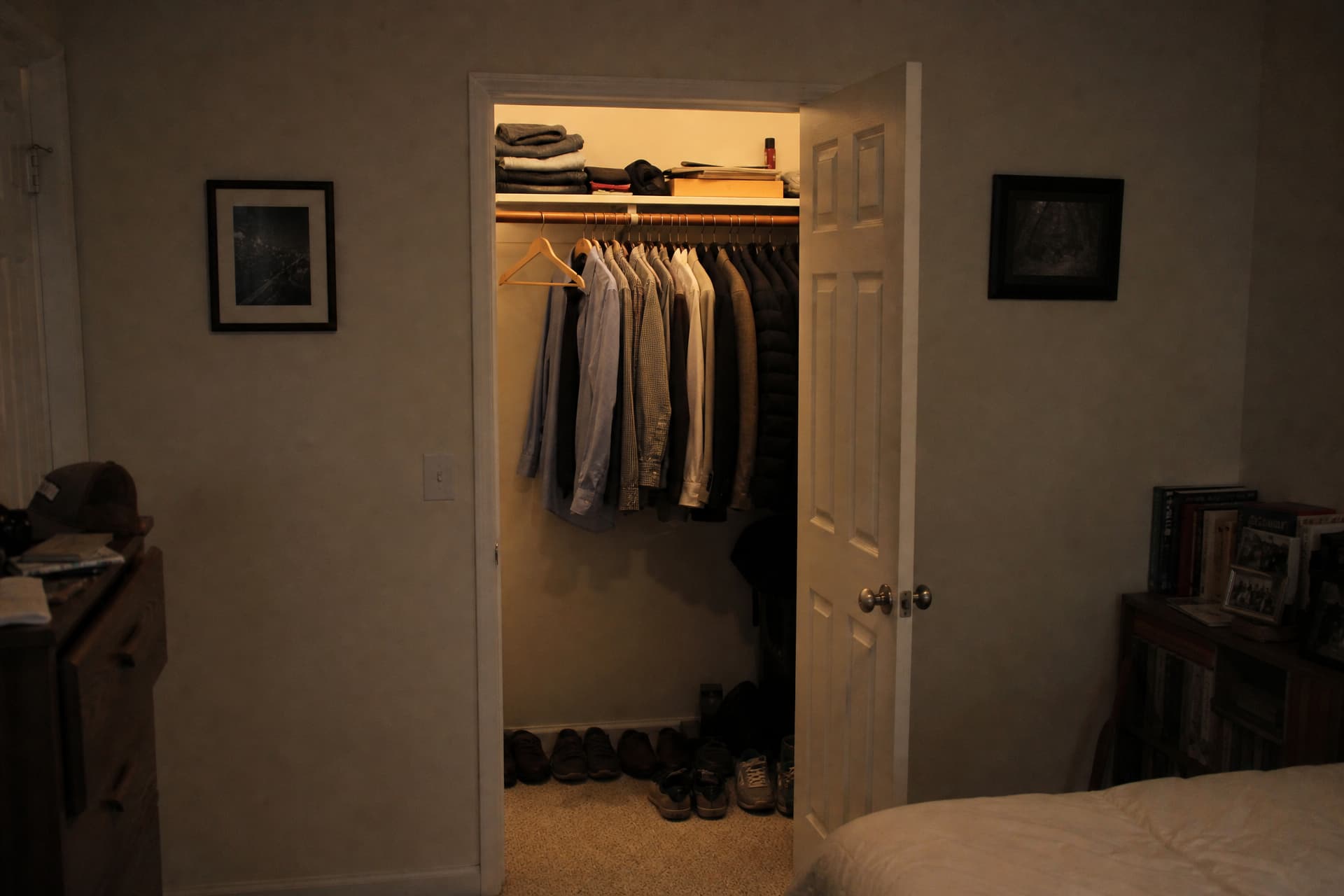
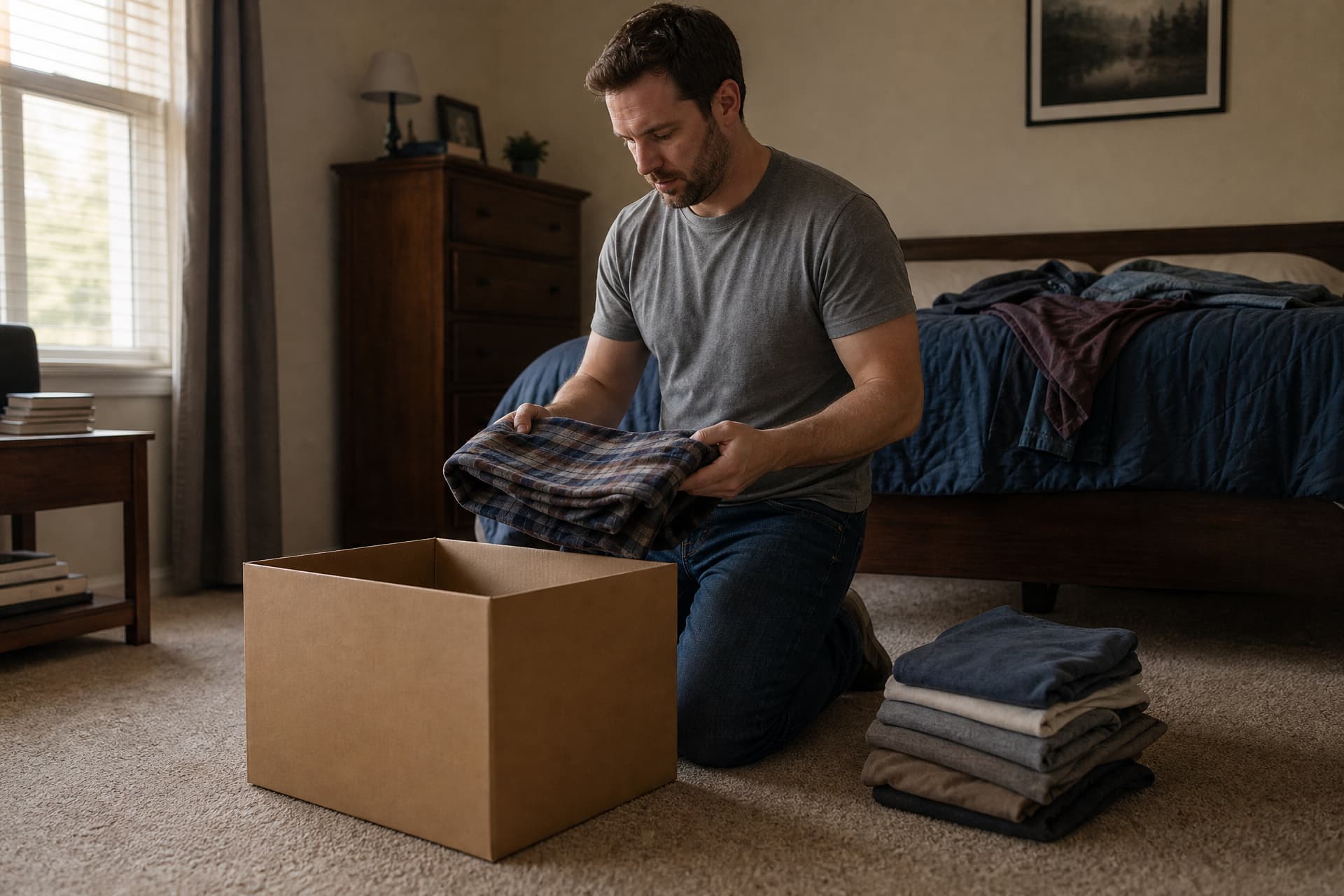
The rail nobody has touched. Families who leave a closet intact for months usually do it for the same reason, and it is not a rule — emptying it makes the death more permanent than the funeral managed to.
Ways to Keep One Thing
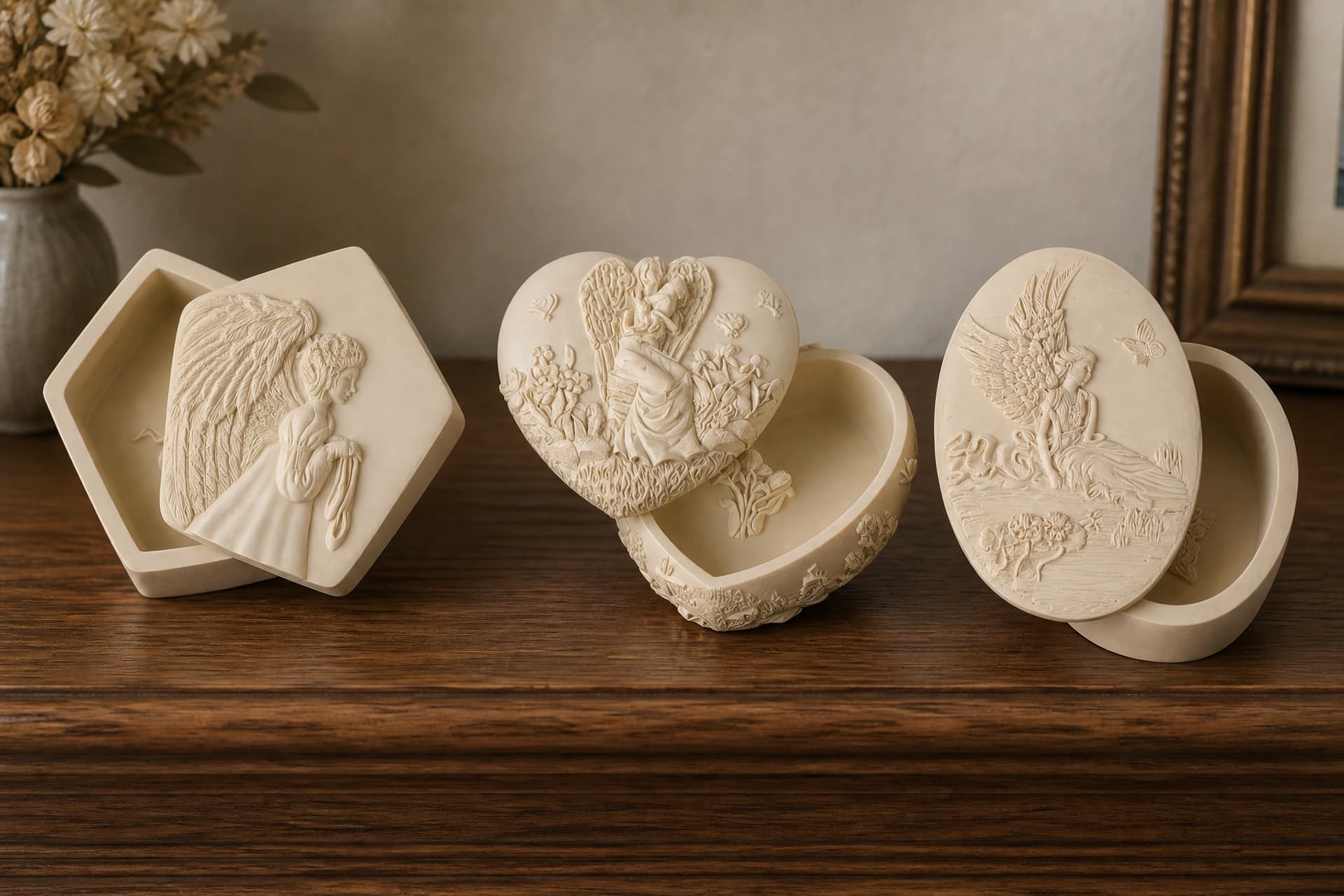
Hair keepsakes and memory boxes, for the few things you decide to keep
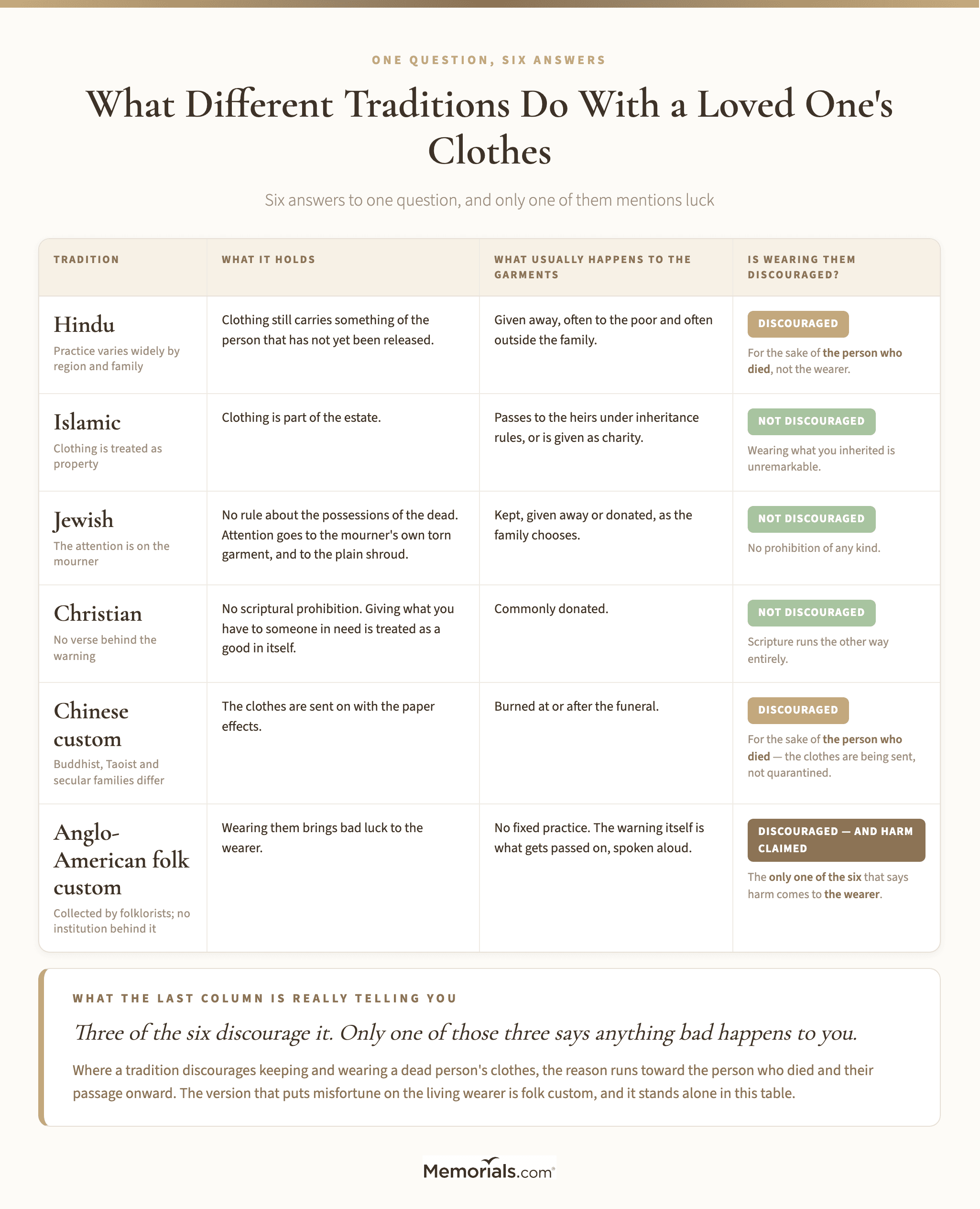
Ask six traditions and you get six answers, which is itself the first useful fact. A genuine spiritual law would not vary this much by longitude.
Many Hindu families treat a person's clothing as still carrying something of them that has not yet been released, and the garments are given away — often to the poor, often outside the family — rather than kept and worn. The reasoning runs through the person who died and their passage onward, not through any danger to whoever wears the shirt. Our guide to Hindu funeral traditions sets that alongside the rites it belongs to.
Islamic practice takes the opposite view without hesitation. A deceased person's clothing is part of their estate: it passes to the heirs under inheritance rules, or it is given as charity, and wearing what you inherited is unremarkable. Islamic funeral customs are precise about a great many things and simply silent about this one.
Jewish practice carries no prohibition on wearing a dead relative's clothes either. Its attention goes to the mourner's own garment — k'riah, the tear made in a shirt or a lapel — and to the plain shroud everyone is buried in, rich and poor without distinction. Where other traditions place a rule on the possessions of the dead, Jewish practice marks the anniversary with a light instead: a yahrzeit candle burned for twenty-four hours each year.
Christian teaching contains no prohibition of any kind. There is no verse behind the warning. What scripture says about clothing runs in the other direction entirely — giving what you have to someone who needs it is treated as a good in itself, which is what most families end up doing with a wardrobe anyway.
In many Chinese families the deceased's clothing is burned along with the paper effects sent on at the funeral, and wearing it afterward is avoided. Here too the logic runs toward the dead rather than against the living: the clothes are being sent, not quarantined.
And the version you were actually told — that wearing them will bring bad luck down on you — is Anglo-American and British folk custom, collected by folklorists alongside warnings about hats on beds and shoes on tables. It has no institution behind it and never did.
Read side by side, they fall into two groups, and neither one is the group your aunt described. Some traditions discourage keeping and wearing a dead person's clothes for the sake of the person who died. The rest do not discourage it at all. Not one of them says that harm will come to the wearer.
Six traditions, side by side. Three of the six discourage wearing a deceased person's clothing, and only one of those three — the Anglo-American folk rule itself — claims that any harm comes to the wearer.
The Victorian families who did the opposite
For roughly a century, Anglo-American families did the exact reverse of this rule, in public, as a matter of etiquette. Mourning dress was a formal code with a calendar attached, and a widow moved through its stages in intervals measured in months. Keeping the dead close was not considered morbid. It was considered correct.
The strongest evidence sits one step past the clothing. Mourning jewelry — brooches, rings and lockets woven from the hair of the person who had died — was ordinary, fashionable and worn where everybody could see it. For generations, on both sides of the Atlantic, enormous numbers of people wore a piece of a dead relative against their skin on purpose.
The quiet modern descendant of that habit is the lock of hair keepsake, which does the same work without the etiquette manual. If a taboo about the belongings of the dead were as ancient and as universal as it sounds when somebody says it to you, none of that could have happened at all.
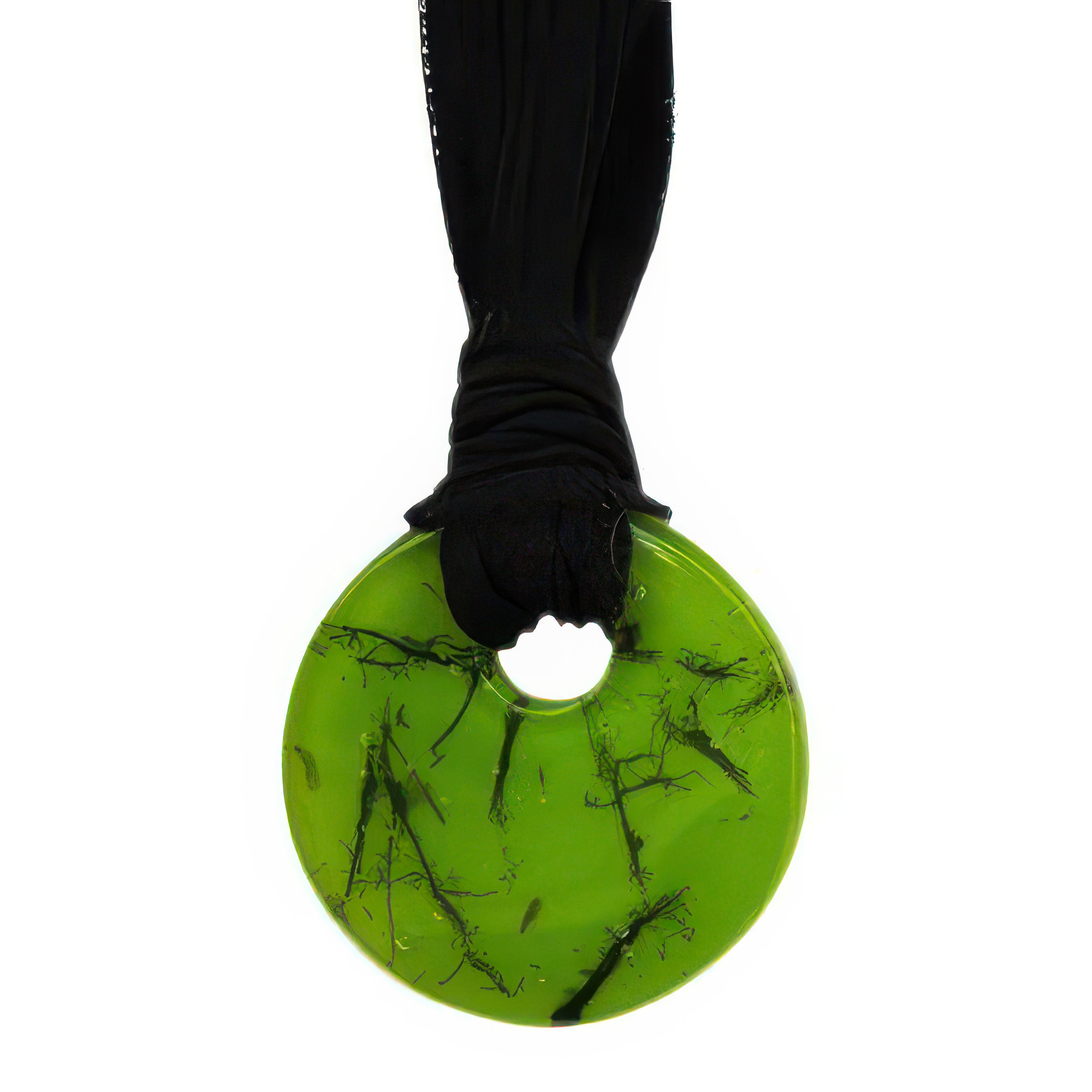
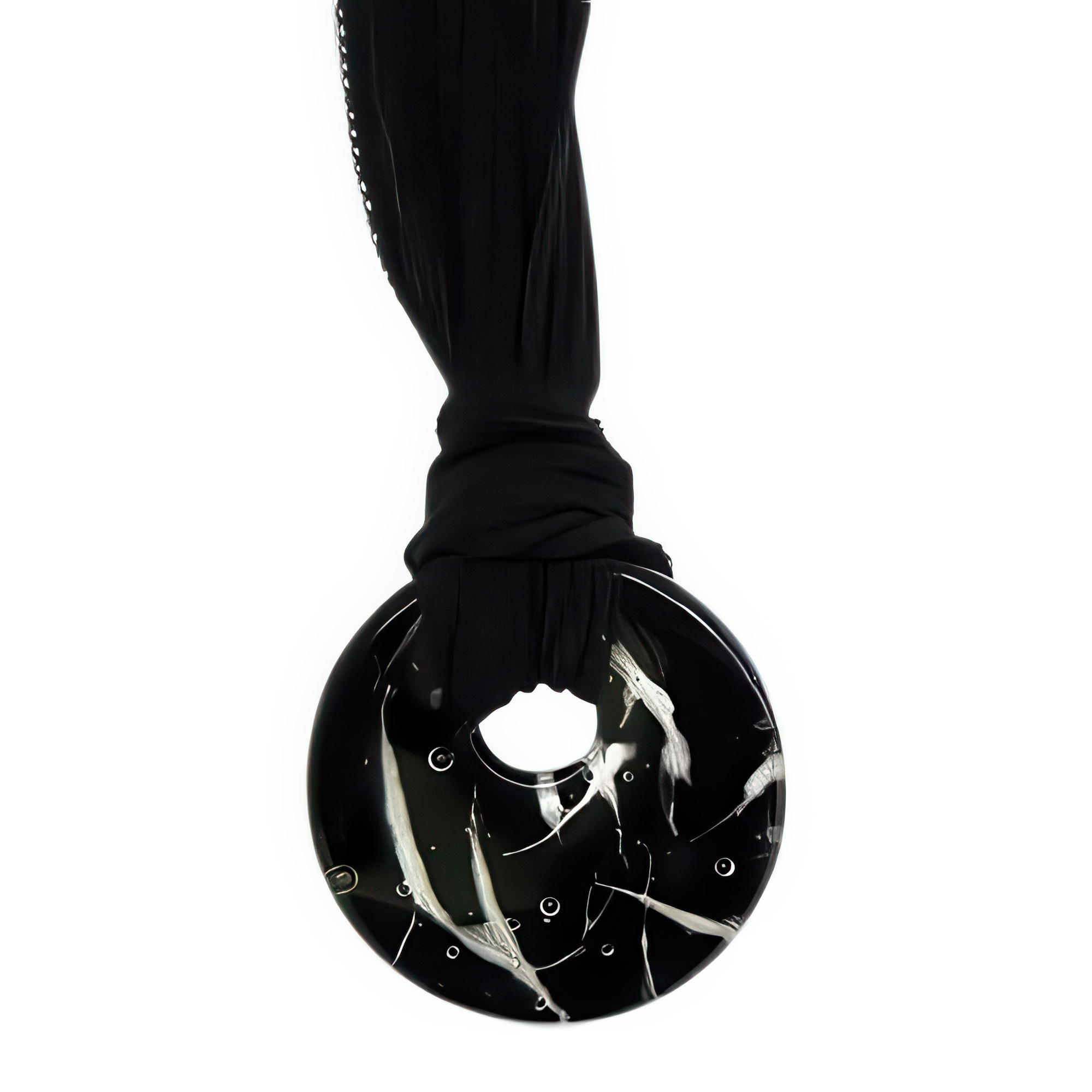
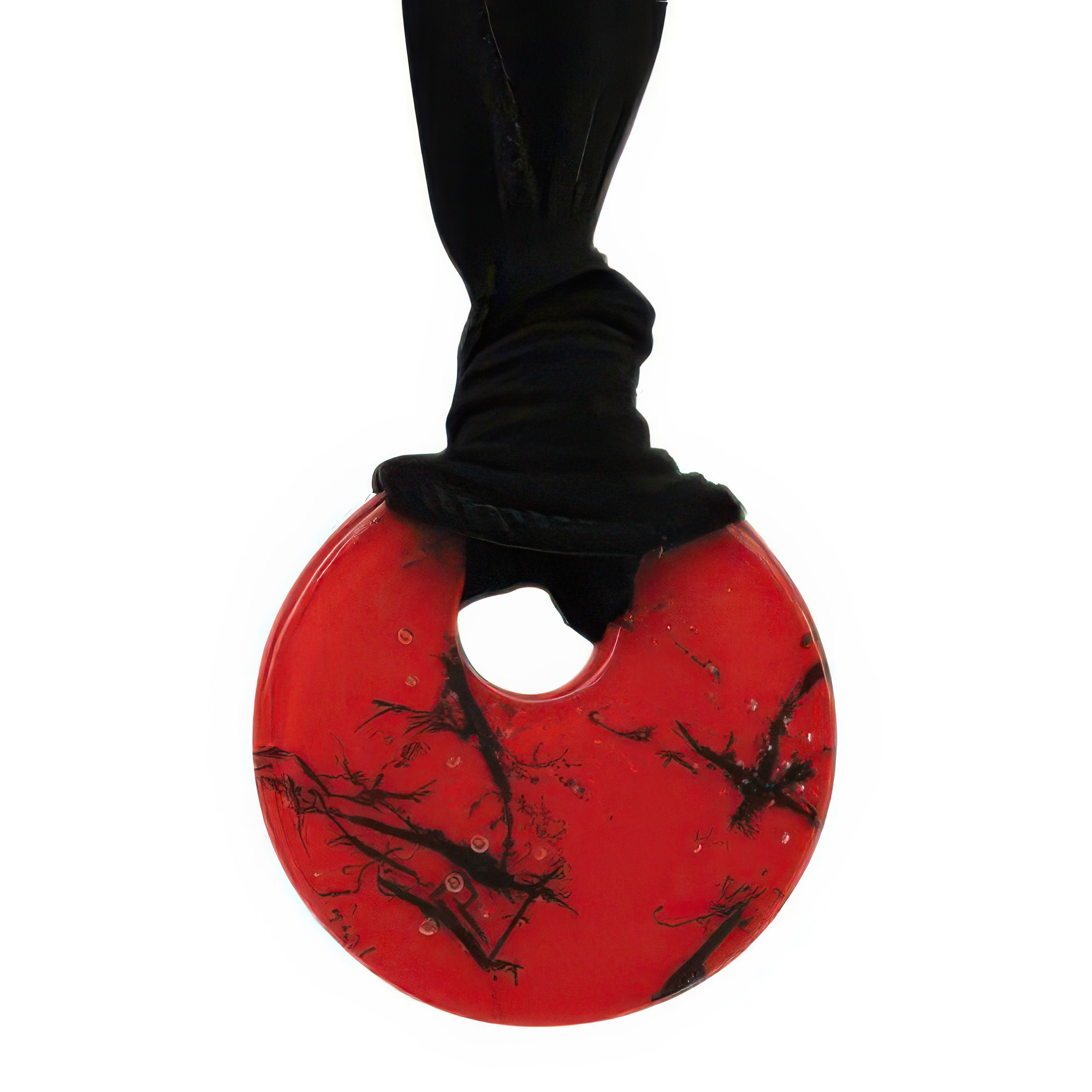
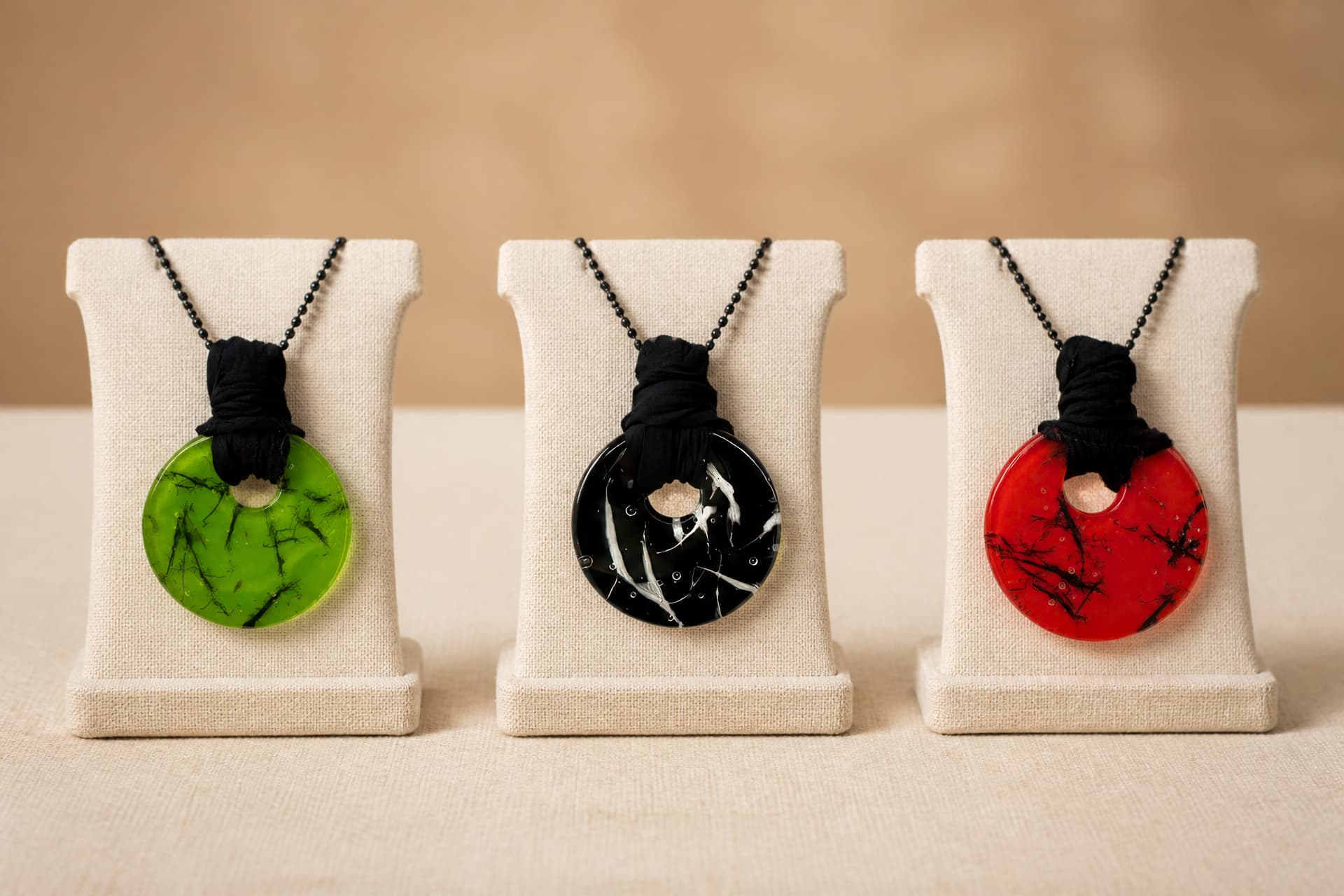
The Victorian habit, still in production. A pendant made to hold a lock of hair is the same object nineteenth-century families wore in public — without the manual that told them for how many months. Products from left to right: Lime Hair Memorial Necklace, Black Hair Memorial Keepsake and Orange Hair Necklace.
What happens to the clothes someone dies in
This is a different question from the one above, and it usually belongs to a different reader: somebody standing at a hospital desk holding a paper bag. If you have been wondering what happens to your clothes when you die, the answer is procedural rather than traditional, and it depends almost entirely on where the death takes place.
In a hospital or a care home, what happens to the clothes someone dies in follows the facility's property procedure. Personal effects are inventoried, bagged and released to the next of kin, usually within a day or two. Anything cut away during resuscitation is generally disposed of rather than returned, and staff will not always volunteer that unless asked. Families are sometimes surprised by what comes back, and sometimes by what does not.
The funeral home then asks the family to bring an outfit for the person to be dressed in. There is no rule about what it should be. People choose a suit, a favorite sweater, a team shirt, a wedding dress — and plenty of families choose nothing at all and leave it to the funeral home, which will provide something plain. Where the cremation is direct, with no viewing beforehand, the person is often cremated in what they were wearing or in a simple gown, and the crematory will ask for certain items to be removed first.
Several traditions answer this question by taking clothing out of it entirely. Jewish and Muslim burial both use a plain burial shroud, identical for everyone, which settles what a person is buried in before anybody has to hold an opinion about it.
What a hospital hands over is a bag and an inventory, not a ritual. Asking what is in it before you leave the building saves one phone call, and asking what is missing from it saves a longer one.
When wearing them helps, and when it stops helping
Grief researchers have a name for the object somebody cannot put down: a linking object, something that holds a relationship in physical form. Wearing a dead person's clothes is one of the commonest versions there is, and for most people it does exactly what it is supposed to do. It makes the day passable. It is also, quietly, one of the ways people go on talking to somebody who has died.
There is no schedule for any of this, and anyone offering you one is inventing it. How long grief lasts has no clean answer, and the stage models people quote at funerals were never intended as a timetable.
One signal is worth watching, and it is not about the clothing at all. A shirt that makes a hard day easier is doing its job. A bedroom nobody may change, a closet nobody may open, a rule the rest of the household has to live around — that is a different thing, and it usually means the person needs support rather than a deadline. Even then, the answer is not to take the shirt away from them.
And if you stopped wearing it after a month, that is not a failure of love either. Most people set the thing down eventually and are surprised by how little it costs them.
Keeping them without wearing them
Keeping clothes of a dead person is not the same as being unable to let go, and treating it as a symptom is one of the crueler things a well-meaning relative can do. Plenty of people want the connection without wanting the coat. There are three honest versions of that, and not one of them has a deadline attached.
The first is to keep a few things properly. A handful of objects — a scarf, a watch, the letters — in a keepsake box is a completely different proposition from four sacks in a spare room, and it is the version that survives a house move. Some families give those things a place rather than a drawer, and a small home memorial space on a shelf does more for most people than a full closet ever did.
The second is to remake them. A quilt from a dozen shirts, a bear sewn out of a bathrobe, a pillow cut from the back of a jacket — these are made by people who do this every week, and they are considerably better than the phrase makes them sound. It keeps the cloth and removes the wardrobe, which is often what finally lets a family open the room.
The third is to wear something else. Ashes jewelry is made to be worn, which his coat was not: a small sealed chamber holding a pinch of ashes, reading as an ordinary necklace to everybody who passes you.
A memory pendant does the same job with a photograph instead of ashes, for families who kept none or did not want to. And the oldest version of all, keeping a lock of their hair, needs no cremation and no purchase whatsoever — worth knowing before anybody spends money on this.
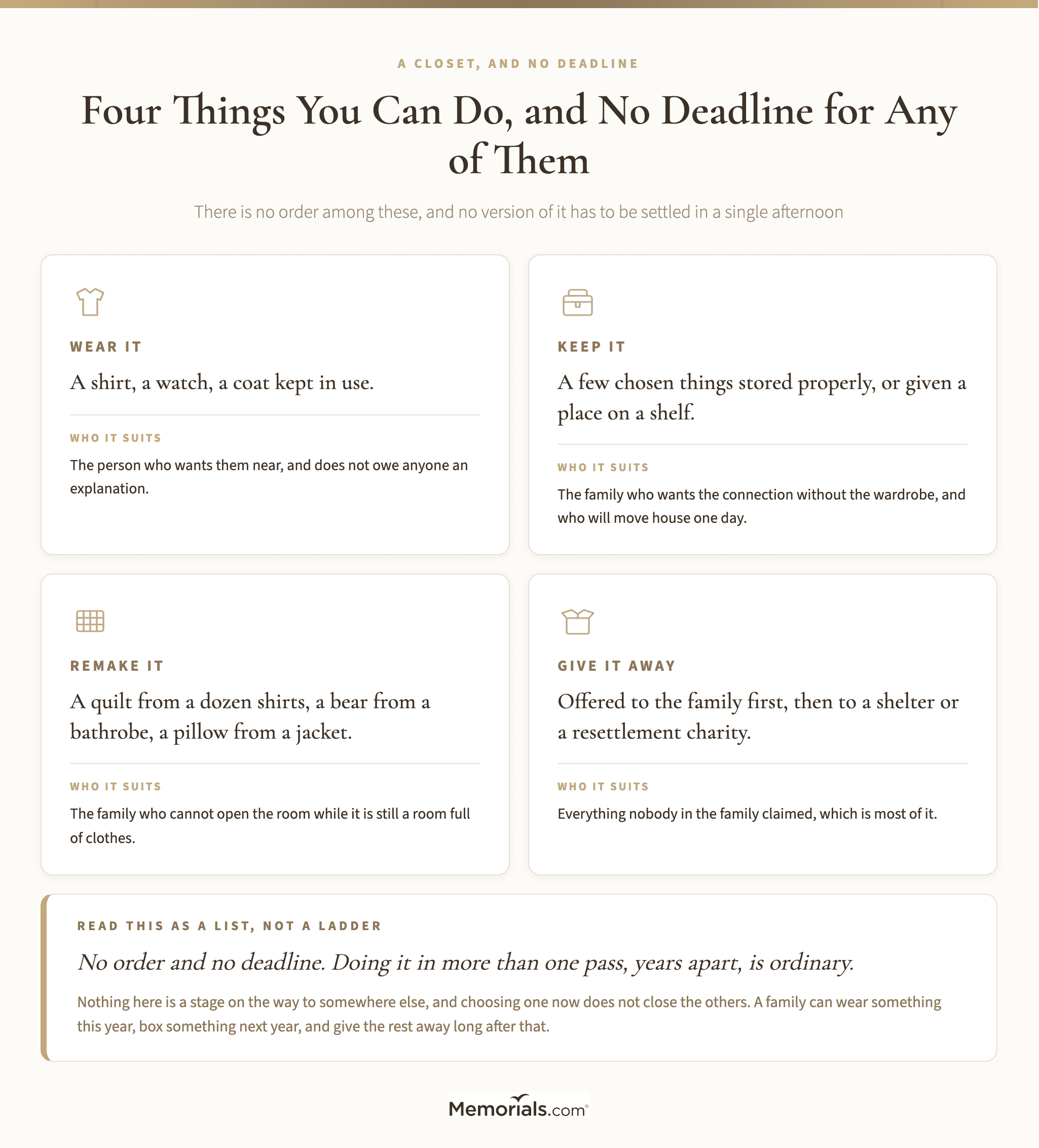
Four options, no order and no deadline. Families often work through more than one of them, years apart, and no version of this has to be settled in a single afternoon.
Giving the rest away
Most of it will go, and that is the part carrying the guilt. So it is worth saying plainly: giving a dead person's clothes away is not giving the person away. Nobody who loved them believes that, including you, on the days you are not standing in the doorway.
The order that causes the fewest arguments is to offer first and donate second. Ask the family — the children, the siblings, the friend who came to everything — and let them take what they want without explaining why. Somebody will want the ugly fishing hat. Give people a real window instead of one Saturday afternoon, and take the choosing seriously, because the person who quietly wanted the watch will not ask twice.
For the rest, a shelter, a job-readiness program or a refugee resettlement charity will take good clothing and put it directly on somebody who needs it, which is more than most donation bins manage. Worn-out items are worth more as textile recycling than as guilt in a bag by the door. And there is no shame in doing this in three passes over two years. That is what the majority of families actually do.
Offer to the family first and donate second. The order matters more than the timing, because the person who quietly wanted the fishing hat will not ask for it twice.
Frequently Asked Questions
Is it normal to wear a dead person's clothes?
Yes, and it is common enough that grief counselors expect it rather than remark on it. People sleep in a spouse's T-shirt, wear a father's watch for twenty years, leave a coat on the hook in the hall that nobody uses. It helps some people and does nothing at all for others, and neither reaction says anything about how much they loved the person.
What happens to the clothes someone dies in?
In a hospital or care home, personal effects are inventoried, bagged and released to the next of kin, though anything cut away by emergency staff is usually disposed of rather than returned. If there is a funeral, the family is asked to bring an outfit and the funeral home dresses the person in it. In a direct cremation the person is generally cremated in what they were wearing or in a plain gown the crematory provides.
Are you allowed to wear a dead person's jewelry?
Yes. A watch, a wedding ring and a pair of earrings carry the same non-existent prohibition the clothes do, and inherited rings in particular have been worn continuously for as long as families have had rings to leave. If the estate has not been settled, the only real question is a legal one about who inherits the piece — not a spiritual one about whether it is safe to put on.
When should I stop wearing a deceased loved one's clothing?
When you want to, and not before. No interval is too long and none is too short. The only thing worth watching is whether the clothing has stopped being a comfort and turned into a rule everybody else has to live around, and that is a reason to find support rather than a reason to empty a closet on a schedule.
Is it wrong to give away or donate their clothes?
No, and in several traditions it is the expected thing rather than the permitted thing. Hindu practice gives the clothing away as a matter of course, Islamic practice treats it as inheritance or charity, and Christian teaching treats clothing someone who needs it as a good in itself. The urge to keep everything and the urge to clear the house both come out of the same grief, and neither one of them is the correct answer.
Whatever you decide about the sweater
The luck was never the question. Nothing is going to happen to you because you wore his coat to the store, and nothing would have happened if you had given every last thing away the week after the funeral. The rule that unsettled you was a public health measure from an age of tuberculosis, handed down so faithfully and for so long that the reason fell off it somewhere along the way.
What is left is a decision about a closet, and the decision is yours. Wear it, box it, cut it into something else, give it to somebody who is cold. You can do one of those this year and a different one in five years, and no combination of them is a verdict on how much you loved them.
So if you are still standing in the doorway holding the sweater: put it on, or fold it and shut the door. Both of those are things people who loved somebody do.