🏬Supersize Online Funeral Retailer🪦1000's of Headstones⚱️Over 10,000 Cremation Urns⚰️Caskets Overnight Delivery🛒Funeral & Memorial Superstore🚚FREE Shipping on ALL Orders👨👩👧👦Helping Families for over 20 Years💰Lowest Price Guarantee🏬Supersize Online Funeral Retailer🪦1000's of Headstones⚱️Over 10,000 Cremation Urns⚰️Caskets Overnight Delivery🛒Funeral & Memorial Superstore🚚FREE Shipping on ALL Orders👨👩👧👦Helping Families for over 20 Years💰Lowest Price Guarantee
🏬Supersize Online Funeral Retailer🪦1000's of Headstones⚱️Over 10,000 Cremation Urns⚰️Caskets Overnight Delivery🛒Funeral & Memorial Superstore🚚FREE Shipping on ALL Orders👨👩👧👦Helping Families for over 20 Years💰Lowest Price Guarantee🏬Supersize Online Funeral Retailer🪦1000's of Headstones⚱️Over 10,000 Cremation Urns⚰️Caskets Overnight Delivery🛒Funeral & Memorial Superstore🚚FREE Shipping on ALL Orders👨👩👧👦Helping Families for over 20 Years💰Lowest Price Guarantee
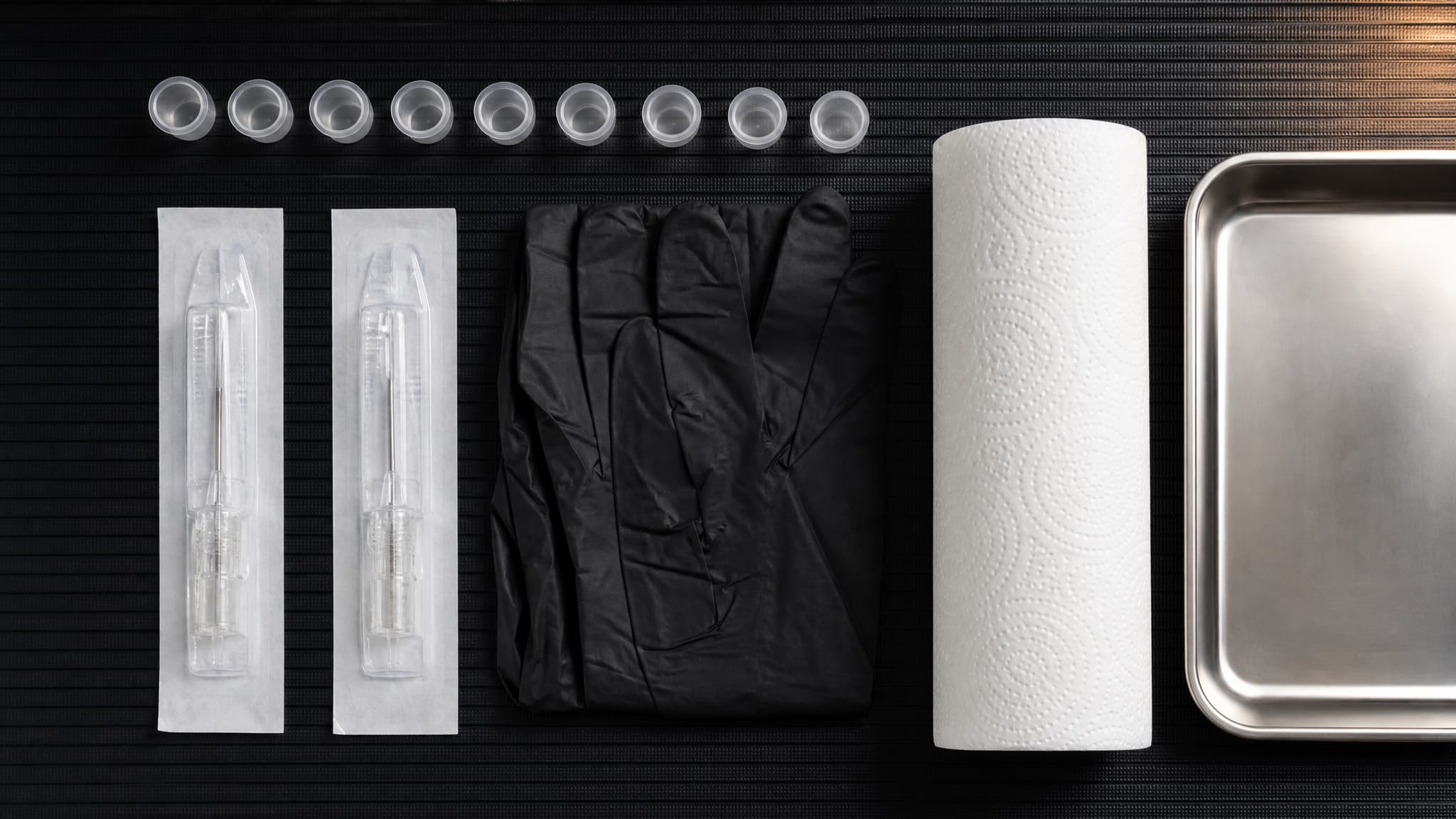
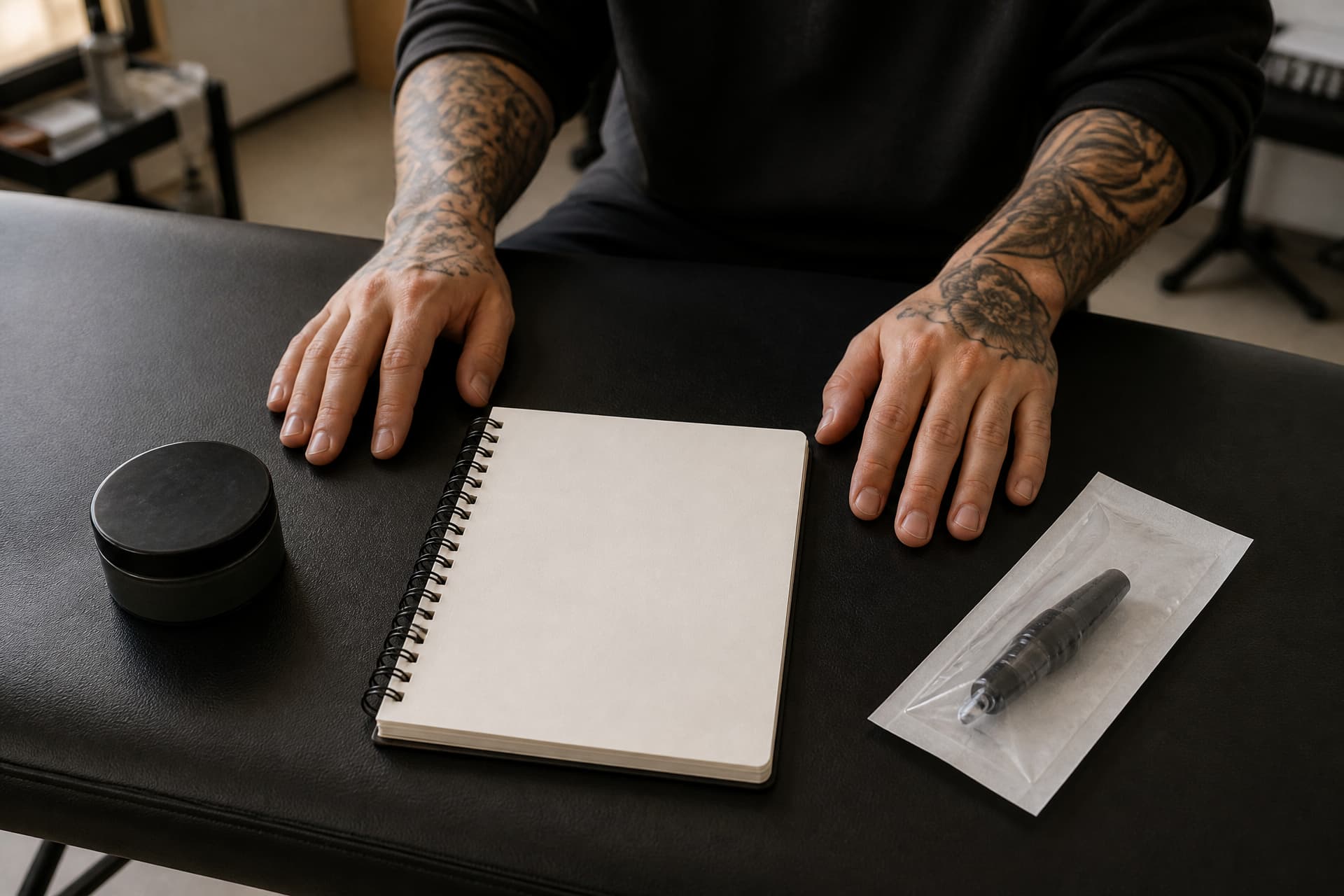
Can you put human ashes in tattoo ink? Physically, yes — a very small quantity of cremated remains can be ground fine and mixed into ink, and it is done. The practice has a name in the trade, commemorative or memorial ink, and mixing ashes with tattoo ink is the phrase most artists will recognize.
Is it safe? That is a different question, and the honest answer is nobody can tell you it is. Not because it is known to be dangerous, but because it has not been studied the way a medical implant is, and the material was never made to go under skin.
Most of what is written about this online answers the wrong question. It says cremation runs at 1,400 to 1,800°F, so the remains are sterile, so it is fine. The first two parts are true. The conclusion does not follow.
Most people asking about ashes in a tattoo are asking one of two different things — whether a tattoo with ashes in ink is physically possible, or whether it is wise. This page separates them, because the answers point in opposite directions.
Sterile Is Not the Same as Safe
Heat that high does destroy pathogens, so infection from the ashes themselves is not the main worry. The worry is what your body does with the particles afterward.
Cremated remains are mostly calcium phosphate — bone mineral, ground to a coarse powder. Under a microscope it is angular and abrasive, not smooth. It is also alkaline. None of that is what tattoo pigment is engineered to be.
What can follow from putting insoluble foreign particulate into the dermis:
A foreign-body reaction. The immune system walls off material it cannot break down, forming a raised nodule — a granuloma. It can appear months or years later, and it is the most commonly cited concern.
Patchy or blown-out lines. Ash particles are far larger and less uniform than pigment, so the tattoo can heal grainy, spread at the edges, or lose definition in a way that is difficult to correct.
Prolonged healing or rejection. Some of the material may be pushed back out during healing, taking pigment with it.
Scarring, if the artist has to work the area harder to get the mixture to take.
None of this is certain to happen, and plenty of people report no trouble at all. That is exactly the problem: there is no body of evidence either way, no standard for how much ash or how finely ground, and no way to know in advance which outcome you will get.
This is the part that surprises people. Tattoo ink is not regulated as an implanted medical device. It is a manufactured product with its own safety profile, and adding anything to it puts the mixture outside whatever assurance the ink came with.
So the practical position is:
No manufacturer will stand behind a mixed ink. You are outside the product's terms the moment anything is added.
Most insurers and many shops prohibit it, which is why a refusal is often about liability rather than squeamishness.
What is sold as prepared cremation tattoo ink exists precisely because of this gap — a milled, sterilized, packaged product with a tested base. Some jurisdictions restrict it, and the position varies. Ask your artist and your local health authority rather than trusting a general claim, including this one.
The conversation is the first step and most people skip it. A studio that has done this before will have a process and a set of conditions; a studio that has not will usually say no, and that refusal is worth more than a yes from someone improvising.
Will an Artist Even Do It?
Many will not, and the reasons are worth hearing.
Liability. If a client reacts badly to a mixture the artist made on the day, that sits with the artist.
They cannot control the material. Ash brought in a bag from a family is of unknown grind, unknown handling and unknown contamination.
Sterility of the container, not the ashes. The remains may be pathogen-free from the cremation itself, but the urn, the bag, the spoon and the room are not.
Craft. Some artists simply will not risk a piece healing badly when the client cannot get a second attempt at a memorial tattoo.
If you want to pursue it, the sequence is:
1.Ask the studio before you do anything else. Not by email — go in.
2.Expect to be asked to use a prepared product. Several companies sterilize, mill and package a small quantity of ashes into a tested ink base. An artist willing to do this at all will usually insist on one of those rather than a home mix.
3.Ask for a patch test, in an inconspicuous place, and wait the full healing period.
4.Talk to a doctor first if you have any history of keloid scarring, eczema, psoriasis, autoimmune conditions, or a previous reaction to a tattoo.
5.Accept that it may be refused, and that a refusal is a professional judgment rather than an obstacle to route around by finding someone less careful.
How Much Ash Are We Talking About?
Less than people imagine — a pinch, well under a teaspoon, and a reputable preparer uses a fraction of that. This matters for two reasons.
First, it means the decision is not all-or-nothing. A tattoo does not consume a meaningful portion of someone's remains, so it does not preclude burial, scattering or an urn.
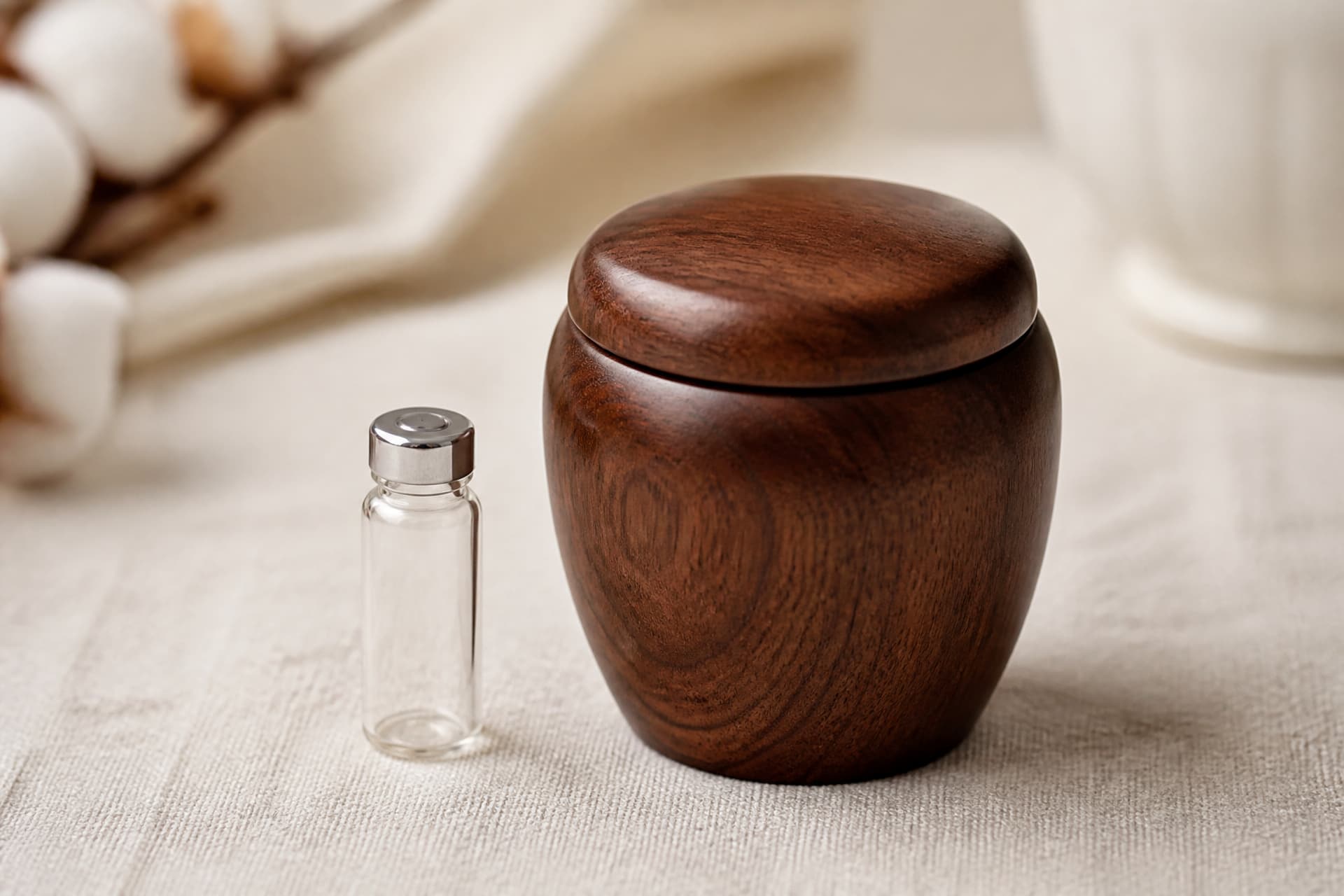
Set the portion aside early. This is the single most practical thing on this page. Once remains are scattered or interred, the option is gone — and the decision about a tattoo is often made months later, when the idea has had time to arrive.
Set a portion aside before anything is scattered or interred. Most people decide about a memorial tattoo months after the funeral, by which point the choice has usually already been made for them without anybody meaning to make it.
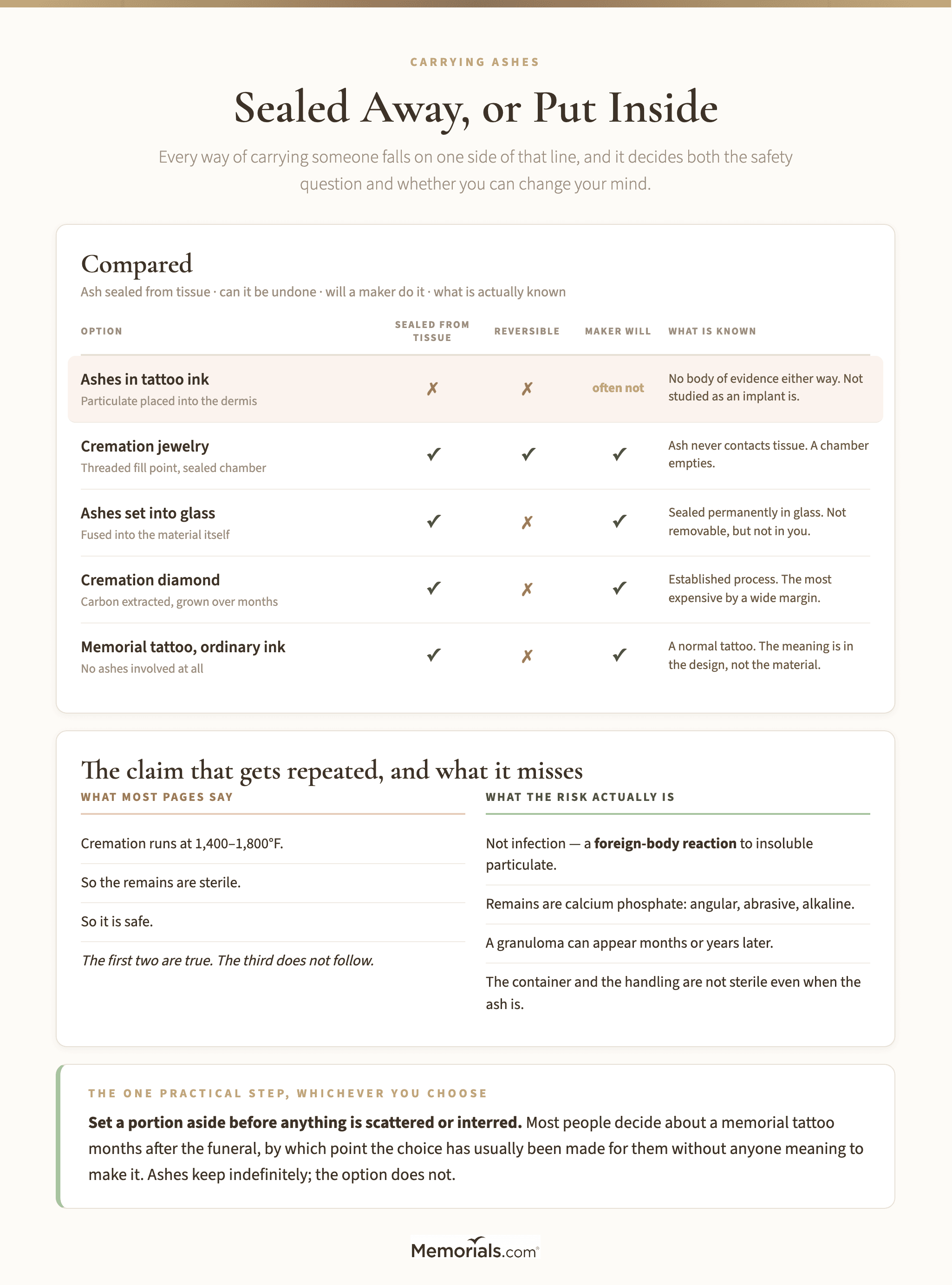
The dividing line is whether the ash is sealed away from the body or put into it. Everything except the first row encapsulates — glass, metal, a sealed chamber — which is why those options answer the safety question and the tattoo does not. Reversibility is the column people wish they had thought about.
If It Is Your Dog or Cat
Everything above applies unchanged. A pet ashes tattoo raises exactly the same question as a human one, because the material is the same material: cremated remains are bone mineral in both cases, coarse, angular and insoluble, and the dermis does not distinguish between species. So if you are asking can you put pet ashes in tattoo ink, or can you get a tattoo with dog ashes, the answer is the one on this page — physically yes, nobody can call it safe, and many artists will decline. Read the mechanics above as written for you, because they are.
Four things are genuinely different for a dog ashes tattoo or a cat's, though, and three of them matter more than the species question does.
You may not have ashes at all. This is the one that stops most people, and it is worth checking before anything else. Pet cremation is frequently arranged as a communal cremation, often as the default option through a veterinary practice, and communal cremation does not return ashes. Families sometimes discover this months later, when the idea of a dog ash tattoo arrives and there is nothing to use. If you are reading this before the cremation rather than after, that single choice decides whether the option exists.
The portion is a larger share of what you have. A tattoo uses a pinch either way — well under a teaspoon — but a cat's cremated remains are a fraction of a person's by volume, and a small dog's are not much more. The same pinch that is negligible from an adult's ashes is a visible amount from a cat's. It still does not foreclose an urn or scattering, but divide it deliberately rather than assuming it will not show.
The grind can be coarser. Pet cremated remains vary in texture more than people expect, and fragments are common rather than unusual — our page on what dog ashes look like describes what actually comes back. That is the exact property that makes dog ashes in tattoo ink harder for an artist to work with, and it is the practical reason a studio willing to do this at all will insist on a prepared, milled product rather than a bag from home.
The family part is usually simpler. The religious and family objections to dividing human remains, covered above, rarely attach to a pet. If you want to set a portion aside, in most households that is your decision to make and nobody else's.
And there is a pet-specific alternative that human memorials do not have. A paw print is a real, physical impression of the animal — unique to them, taken from them, and tattooable in ordinary ink. For a great many people this turns out to be what they actually wanted from a pet ash tattoo: something of the animal rather than something about them. Our paw print tattoo stencil guide covers taking the impression and getting it to a usable stencil, including how to do it from an ink print you already have. A nose print works the same way. Neither carries any of the risk on this page, and neither is irreversible in the way that mixed ink is.
What People Choose Instead
Almost everything else that carries ashes encapsulates them — the ash is sealed inside glass or metal and never in contact with tissue. That is why these do not raise the same question. What to have drawn is a separate decision from what goes into the ink, and the most requested memorial design in the US has considerations of its own — see the cardinal memorial tattoo.
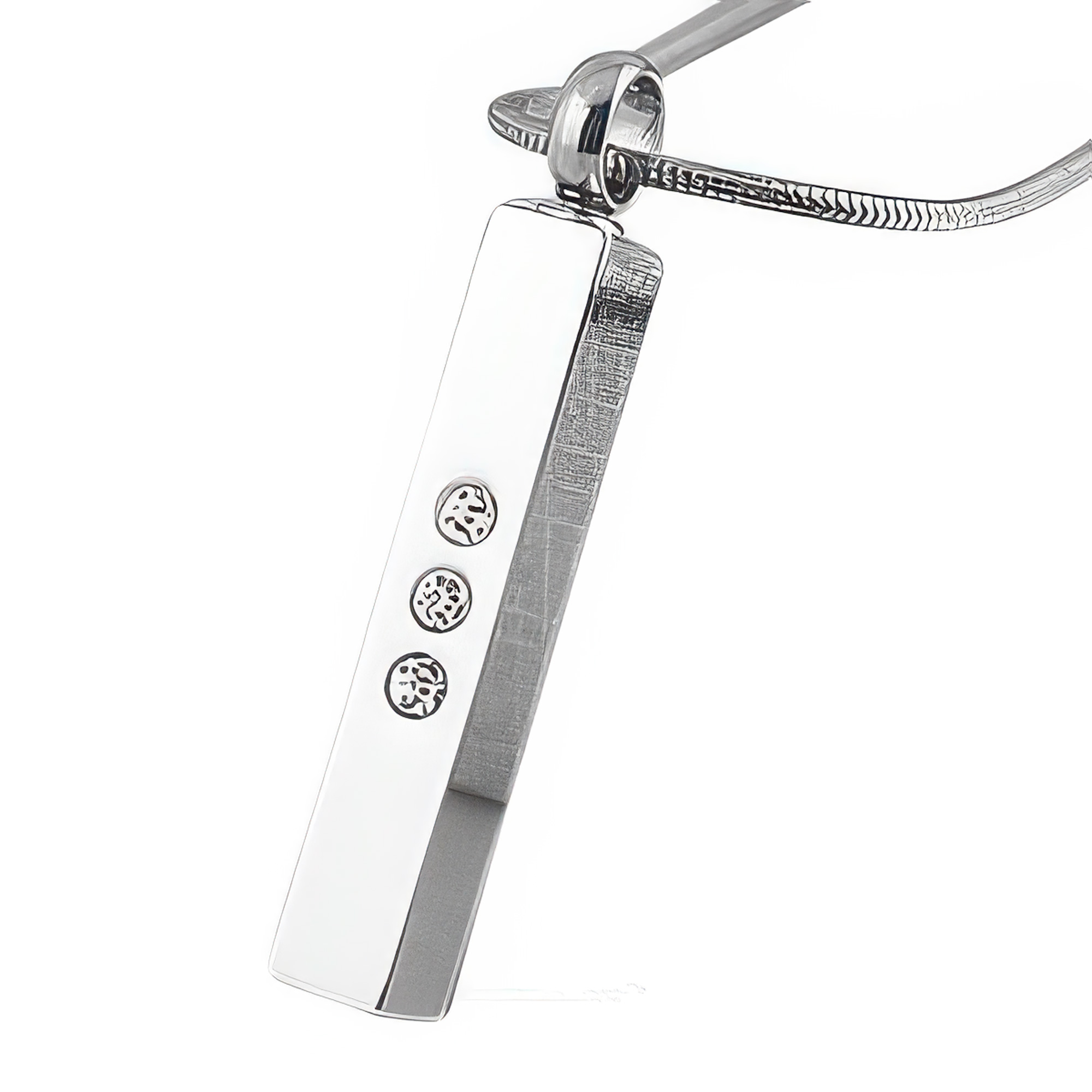
Cremation jewelry is the direct substitute: a small sealed chamber in a pendant, ring or bracelet holding a pinch of ashes. Our cremation jewelry range covers the whole category, and is cremation jewelry safe answers the equivalent question for it — with a much shorter answer, because the ash is sealed. How to fill cremation jewelry covers the practical part.
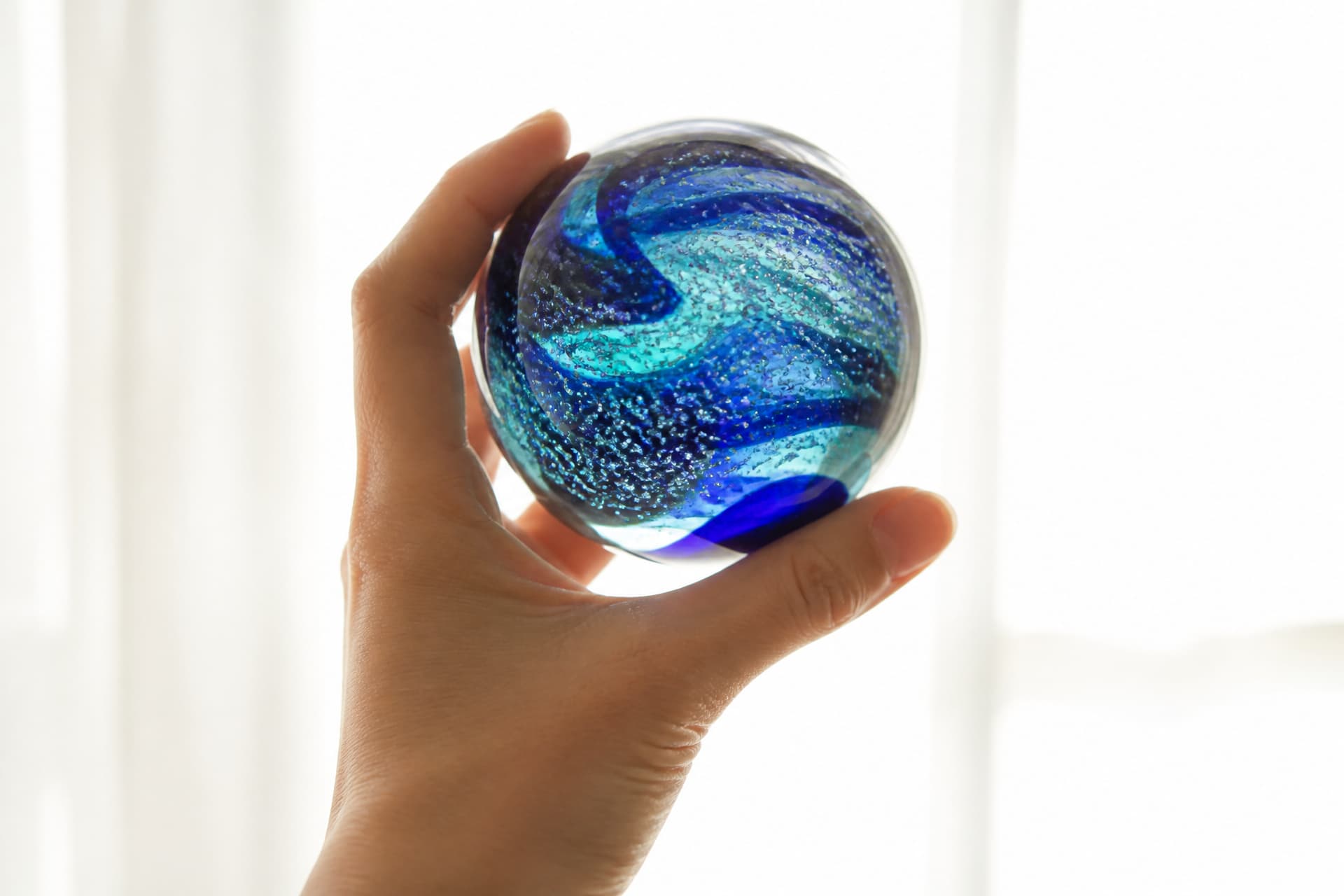
Ashes set into the material itself.Ashes into jewelry and glass art keepsakes fuse a portion into hand-blown glass, so the ash is visibly part of the object rather than hidden in a chamber. For many people this is closer to what they wanted from the tattoo idea — the remains genuinely incorporated, not just contained. Cremation glass art covers how it is made.
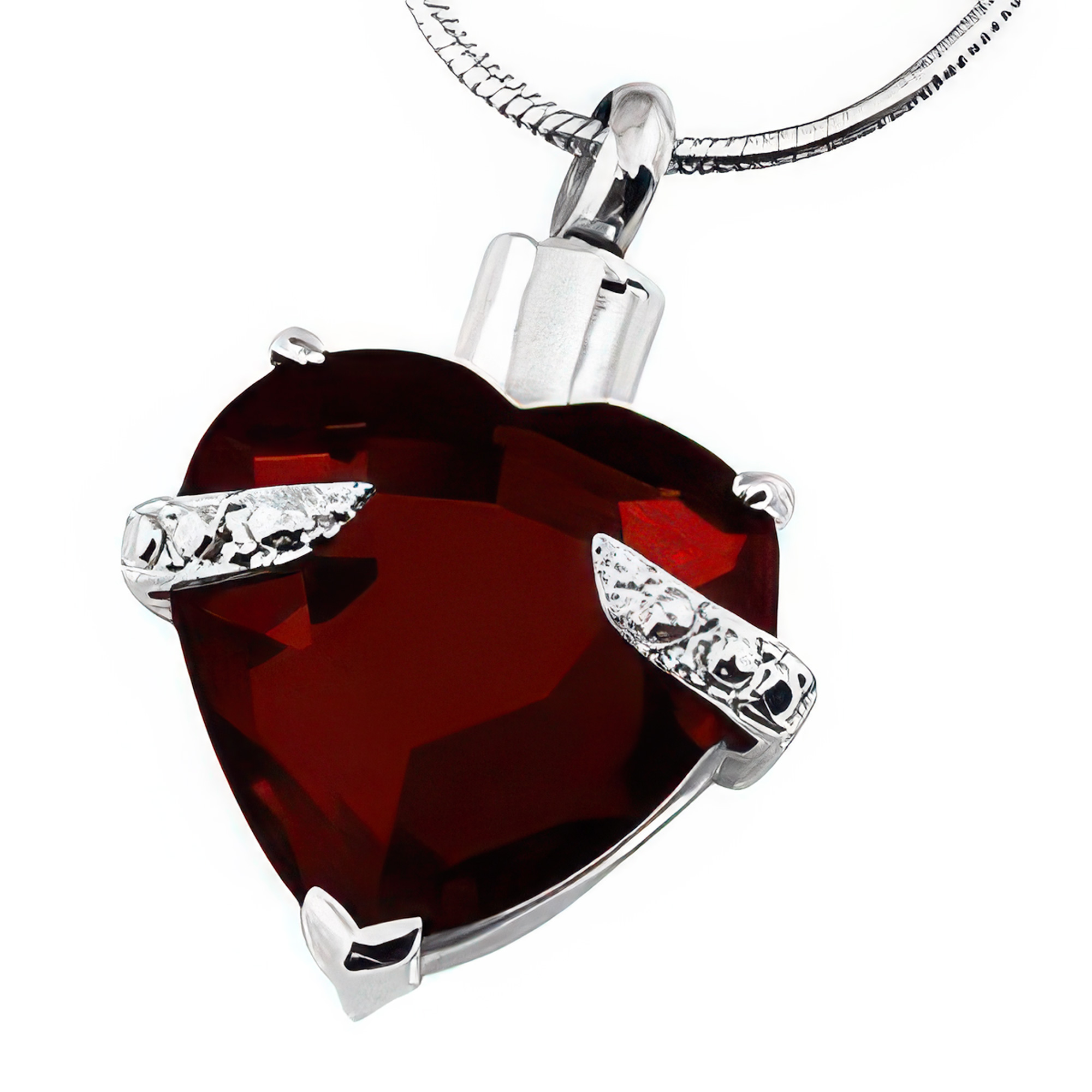
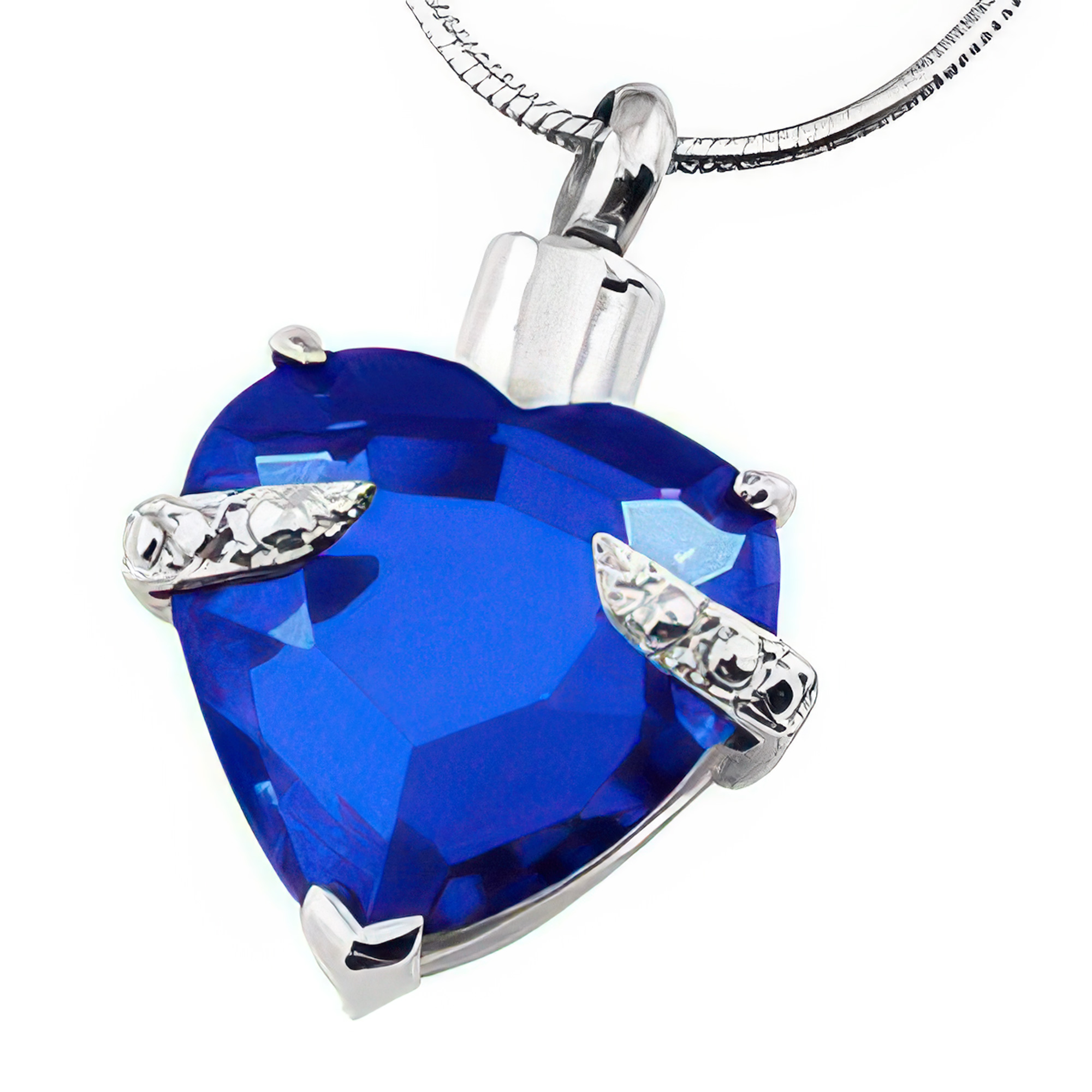
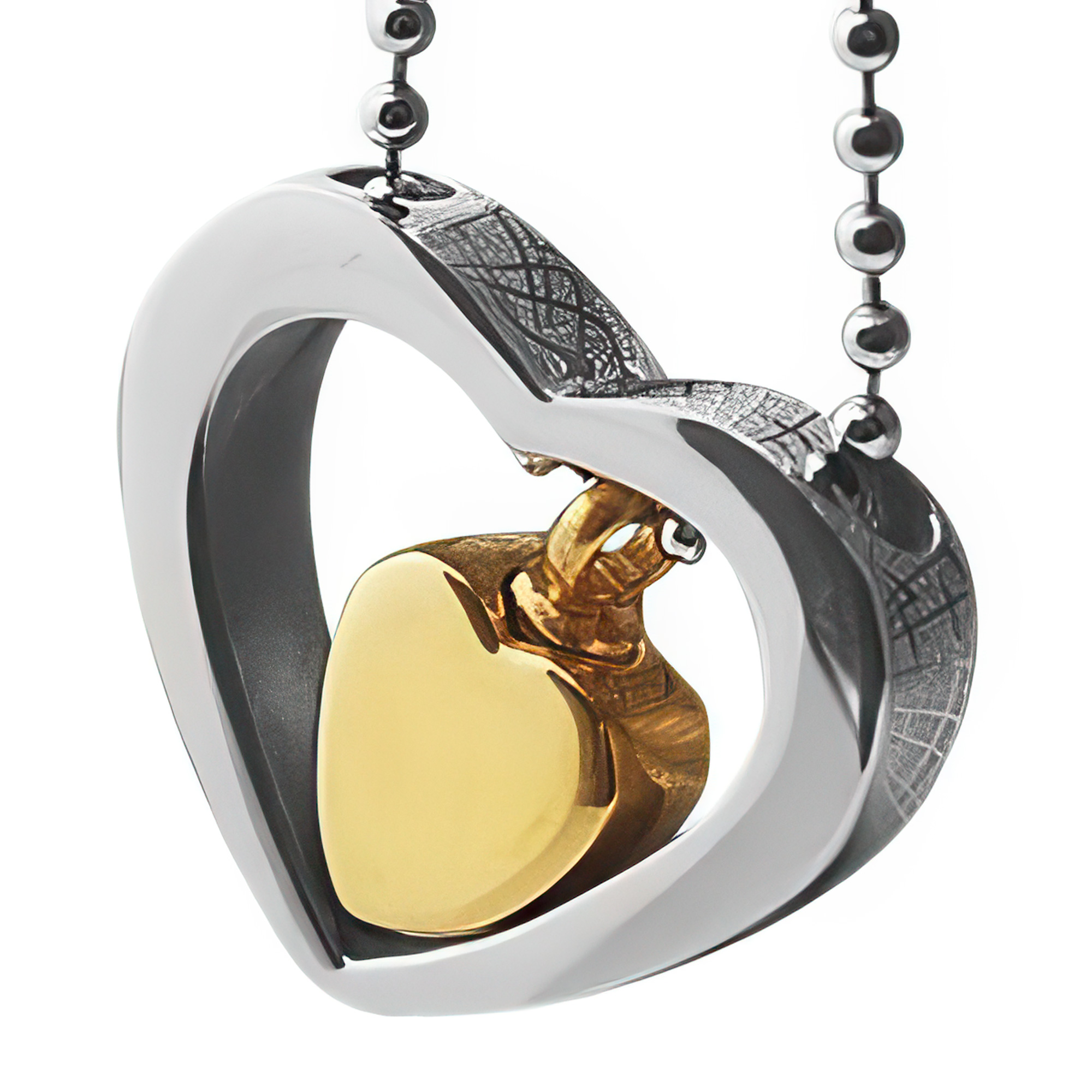
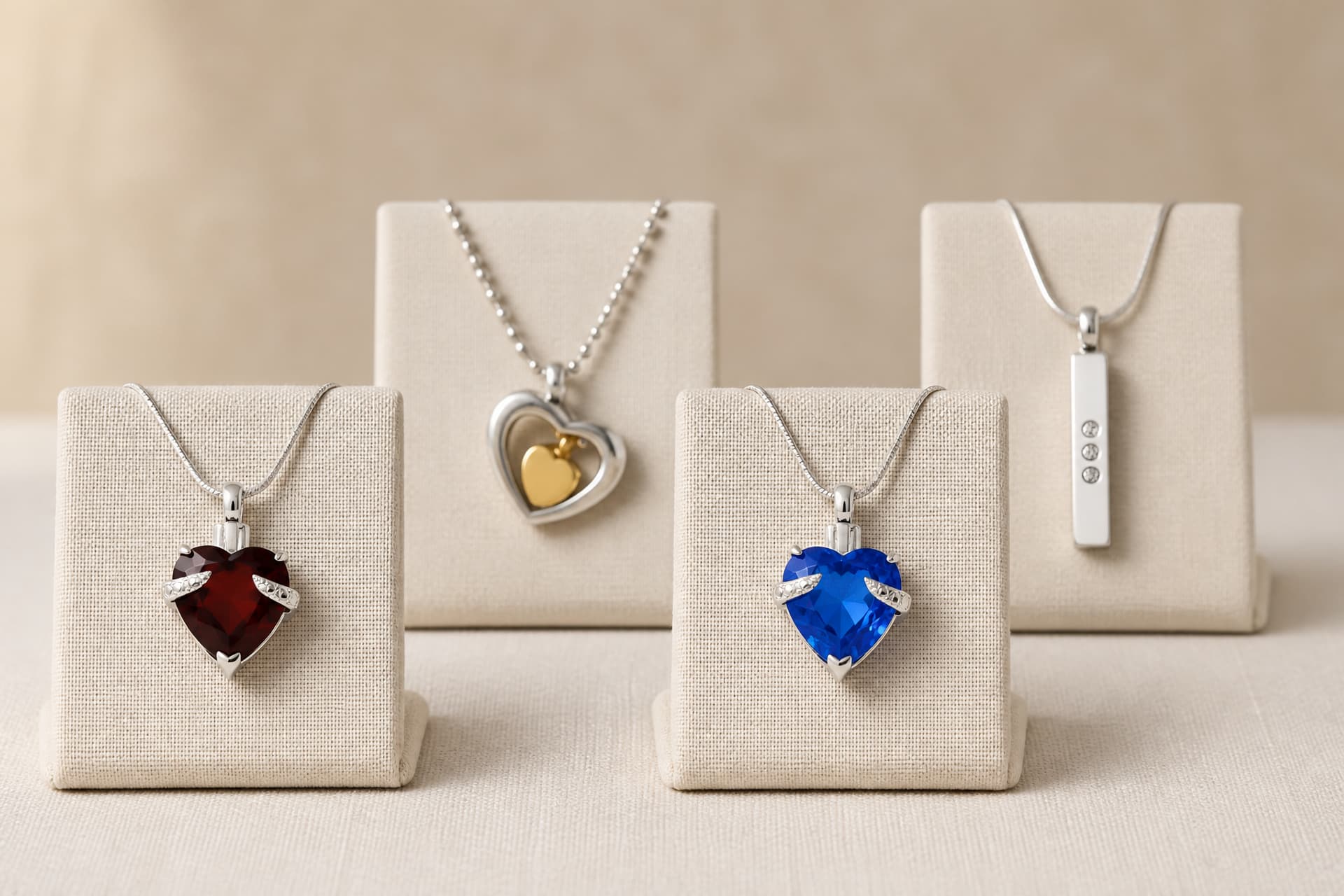
The dividing line in one image. Each of these has a threaded fill point and a sealed chamber — visible as the small screw at the top of the two stone settings — so the ashes are carried without ever touching tissue. That is why the safety question occupying most of this page simply does not arise for them, and why it can be undone: a chamber empties. Products from left to right: Red Heart Necklace for Ashes, Blue Heart Necklace For Ashes, Double Heart Urn Necklace for Ashes and Stainless Classic Necklace for Ashes.
A cremation diamond goes furthest: carbon extracted from the remains, grown into a stone over months. It is the most expensive option by a wide margin and cremation diamonds covers what the process actually involves.
A tattoo with ordinary ink. Worth saying plainly: a memorial tattoo does not need to contain ashes to be a memorial tattoo. Most are ordinary ink, and the meaning is in the design and the decision rather than the material. If the ashes are the part giving you pause, you can have the tattoo without them and keep a keepsake urn portion instead.
A shape for the ashes that nobody carries. Everything above is worn or held by one person, which is both its appeal and its limit. Memorial lanterns are the other instinct: the lantern-form urns hold a portion the way a pendant does, and the evening a family builds around one gives everybody else a part in the same decision.
What It Costs, and What You Cannot Undo
The tattoo costs roughly what the same design costs in ordinary ink, plus the prepared ink if the studio requires one — which is usually a modest amount, in the range of a small keepsake rather than a piece of jewelry. Cost is not what makes this decision hard.
What makes it hard is that it is the only option on this page you cannot reverse.
A pendant can be emptied and the ashes returned to the urn.
Glass art can be given to somebody else, or kept in a drawer for a decade until you want it again.
A tattoo is permanent, and laser removal on ink containing inorganic particulate is not a straightforward proposition — the laser is designed to fragment pigment, and nobody can tell you how the rest of the material will behave.
That asymmetry is worth sitting with. Every other way of carrying someone can be undone, moved, passed on, or quietly stopped. This one cannot, and grief in the first year is a poor time to make the one permanent choice on the list.
A reasonable rule: if the idea is less than six months old, wait. Set a portion aside so the option stays open, and decide when the decision is yours rather than the shock's. The ashes will keep indefinitely; the choice does not expire.
Aftercare Is Not Different, and That Is a Problem
If you go ahead, the aftercare instructions you get will be the standard ones, because there are no special ones. Watch for what is not standard:
A raised area that does not settle after the normal healing window.
Itching or swelling that returns weeks or months later.
A patch that heals a different texture from the rest of the piece.
Any of those is worth a doctor rather than a forum. And tell them what is in it — a clinician assessing a lump will proceed very differently if they know it contains inorganic particulate.
Frequently Asked Questions
Can you put human ashes in tattoo ink? Physically yes, and it is done. Whether an artist will, and whether it is advisable, are separate questions with less comfortable answers.
Can you put dog ashes in tattoo ink? The same answer, for the same reasons — pet cremated remains are the same bone mineral and behave the same way in the dermis. The two pet-specific checks are whether you have ashes at all, since communal pet cremation does not return them, and whether the grind is workable, which is why a studio will want a prepared product rather than a bag from home.
Is there a way to get a tattoo with dog ashes that avoids the risk? Not with the ashes in the ink; that is the risk. The alternative that gets closest is a tattoo of your dog's own paw print in ordinary ink, which is unique to them and carries none of it.
Is it safe to put ashes in tattoo ink? Nobody can tell you it is. Cremation destroys pathogens, but the risk is a foreign-body reaction to insoluble particulate, and there is no body of evidence establishing safety either way.
Are the ashes sterile? Generally free of pathogens from the cremation itself, yes. The container, the handling and the room are a separate matter, which is why prepared and packaged ink is what careful artists insist on.
How much ash is used? A pinch — well under a teaspoon, and prepared products use a fraction of that. It does not consume a meaningful portion of someone's remains.
Will a tattoo artist refuse? Many will, usually for liability and because they cannot verify the material. A refusal is a professional judgment, not an obstacle to work around.
Is it legal? The position varies by jurisdiction and by shop. Ask your artist and your local health authority rather than relying on a general answer.
What is a safer way to carry ashes with me? Anything that seals them: cremation jewelry, ashes set into glass, or a cremation diamond. All keep the ash out of contact with tissue.
For a lot of people this is closer to what the tattoo idea was reaching for — the remains genuinely part of the object rather than sealed in a compartment inside it, and visible when the light goes through.
The Decision Under the Decision
What people are usually after is not the ink. It is the idea that the person is carried rather than visited — that they come along instead of being somewhere you go to. A memorial shelf at home is the same want answered the other way round, and a good many families end up with both.
Every option here does that. The tattoo is the only one that does it by putting the material into your body rather than sealing it in something you wear, and it is the only one where nobody can tell you what happens next. That is worth knowing before you decide, and it is a decision worth making slowly.